The Holy Bible is the most influential book ever written. According to Wikipedia it has been translated in its entirety into 724 languages, and the New Testament has been translated into 1617 languages. At least one part of the Bible has bee translated into 3,589 languages, and more translations are coming every year, especially from the Wycliffe translators.
Both the New Testament and the Old Testament begin with the words “In the beginning”.
Genesis 1 deals with the physical creation with spiritual emphasis, laying the groundwork for spiritual understanding of how and why we exist.
We are existing in time and space. The question is: What was there before time and space existed, before the beginning?
Answer: God, existing in three persons, God the Father, God the Son (the Word) and God’s Spirit, (the Holy Ghost).
The Three-in-one God alone are eternal, everything else, including time and space, is created.
Another Question: Why did God say “it was good” for day 1,3,4 and 5 but not for day 2 and it was very good after day 6?
Answer: The ecosystem is a work in progress and will function differently for each phase and finally come to completion when all parts are set in place, which includes people. We are responsible to God to be good stewards of the earth and leave it a better place than we found it. The main regulator of temperature on earth is the clouds. They cool by day and warm by night. The time of day they appear is also very important, and there is no risk for the earth to overheat.
We find this in Genesis 1:6-8 (NIV) And God said, “Let there be an expanse between the waters to separate water from water.” 7 So God made the expanse and separated the water under the expanse from the water above it. And it was so. 8 God called the expanse “sky.” And there was evening, and there was morning—the second day. But God did NOT say: “It was good” The creation story is interesting reading. God takes a whole day out His busy schedule of creation just to form an environment with water in all its forms in what we call the atmosphere or “sky”. He has yet to create life. Could it be, that water in all its forms are necessary to form and sustain life, so a sustainable ecosystem had to be prepared first?
God created the earth too be just heavy enough to hold on to water vapor, and water is unique because its melting point and boiling point is within the range of bring able to participate in sustaining life. It also has the second (after ammonia) highest specific heat capacity of all known substances. To melt 1 gram of ice takes 80 calories, to heat it takes 1 calorie per gram and to boil it at ground levels takes 539 calories. (The calories you eat are actually kilo-calories). This makes water the ideal substance to moderate and regulate climate. Water vapor evaporates from the ocean, cooling it down and water vapor, being lighter than air rises and condenses as clouds form. The clouds are the most important temperature regulator, much more important than all other greenhouse gases combined. Clouds transport heat from the equator to the temperate areas and to the poles. Without this the equator temperature would be in excess of 145 F. In addition clouds have a high reflection of incoming sunlight, reflecting incoming heat back into space. The earth has never been to warm to sustain complicated life, nor is there any danger of overheating unless clouds disappear. In fact, the next major climate change is the next ice age.
The picture above shows the friendly earth we are living in today. On the second “day” of creation situation was quite different. The sun was not fully created yet, and the earth was still in its chaotic state. All God did was to prepare the ecosystem. The earth was still cooling down from creation, and water evaporated and formed a cloud that covered the whole earth. This is why God did NOT say “it was good” on the second day, it was just the preparation.
The Holy Bible is the most influential book ever written. According to Wikipedia it has been translated in its entirety into 724 languages, and the New Testament has been translated into 1617 languages. At least one part of the Bible has bee translated into 3,589 languages, and more translations are coming every year, especially from the Wycliffe translators.
Both the New Testament and the Old Testament begin with the words “In the beginning”.
Genesis 1 deals with the physical creation with spiritual emphasis, laying the groundwork for spiritual understanding of how and why we exist.
We are existing in time and space. The question is: What was there before time and space existed, before the beginning?
Answer: God, existing in three persons, God the Father, God the Son (the Word) and God’s Spirit, (the Holy Ghost).
The Three-in-one God alone are eternal, everything else, including time and space, is created.
Another Question: Why did God say “it was good” for day 1,3,4 and 5 but not for day 2 and it was very good after day 6?
Answer: The ecosystem is a work in progress and will function differently for each phase and finally come to completion when all parts are set in place, which includes people. We are responsible to God to be good stewards of the earth and leave it a better place than we found it. The main regulator of temperature on earth is the clouds. They cool by day and warm by night. The time of day they appear is also very important, and there is no risk for the earth to overheat.
By far, the strongest greenhouse gas is water vapor, not because it is very strong of itself, but it absorbs nearly all outgoing energy in the infrared spectrum except in the so called atmospheric window, where it only partially absorbs. Yet water vapor is missing from the IPCC AR6 chart seen here:
IPCC has consistently treated the effect of greenhouse gasses as additive, but it is impossible to absorb more than 100% of all emitted energy for a given wavelength. This leads to an overestimation of absorption when 2 or more gasses are present. For example, if CO2 absorbs 90% of available energy at 13 μm and water vapor another 50%, the sum is 90% + (1 -0.9} * 0.5 = 95%, not 140%
This will change the relative importance of greenhouse gasses drastically so it must be tested against reality. We now have a good global satellite temperature record from 1980 to 2022 or 43 years:
During this time the temperature rise was 0.5 C, which translates to 2.375 W/m2 ERF
Water vapor.
This is a good chart to see the relative importance of all major greenhouse gasses:
It is to be noted that water vapor also absorbs the incoming solar radiation in certain wavelengths, but solar influx is assumed to be constant.
When average temperature rises 0.5 C, the possible absorption rises by 2.375 W/m2 minus the energy that escapes through the atmospheric window.Water vapor through saturation: is responsible for all of this increase except where other gasses also absorb in the atmospheric window, and in the atmospheric window the absorption must be proportionally shared, subject to the 100% absorption limitation.The atmospheric window is about 26% of all the emitted radiation so net water absorption is 0.74 * 2.375 = 1.6 W.m2 or 0.34 C. However, the relative humidity is also decreasing, see picture:
Between 1980 and 2022 the net humidity increase is 3.6% minus 0.75% relative humidity for a net increase of 3.54%. This increase only matters in the atmospheric window which is on average 25% saturated, so the total increase from water vapor increase is 0.26 * 2.375 * 0.25 * 0.9925 = 0.15 W/m2 or 0.03 C., to be added to the total before increase in humidity.This means that for a 0.5C temperature increase between 1980 and 2022 the total sensitivity to water vapor is 1.75 W/m2 or 0.37 C. A confirming picture of the total cloud cover shows the , but temperature sensitivity to the decline in cloud cover between 1980 and 2015
This is of course a very crude method, since it incorporates all temperature rises from all sources, which is 0,5C degrees, from which should be deducted the 0.08C rise from all. This is of course a very cruse assessment of the influence of clouds vary greatly between low clouds, middle clouds and high clouds; as well as when they occur, day or night, and even what time of day they appear. Because of this complexity IPCC has consistently failed to give clouds their full respect. The clouds are the main regulator of temperature on earth!
Carbon dioxide
CO2 is the strongest greenhouse gas after water vapor. The only wavelength band that is meaningful is 13 to 17.4 μm and absorption occurs from both CO2 and water vapor. Since they exist together, the effect of each of them must be proportionally allocated, or the sum of them added would exceed 100%
Between 1980 and 2022 the CO2 levels rose from 335 ppm to 415 ppm or 24% increase. The temperature increase 0.5 C. The net temperature increase or ERF in the 13 to 17.4 μm band is 0.035C or +0.17 W/m2 for the water vapor and 0.04C or +0.19 W/m2 for the CO2. To see how the calculation was made, go to Appendix 1.
Methane.
Methane gas is created from a variety of sources, both man made and natural. See pie chart
The good thing about methane is that its lifetime in the atmosphere is only 10 to 15 years, and the real contribution to climate change is only 1/5th of what is commonly advertised, since iits absorption bands occur together with partly saturated absorption from water vapor. See appendix 2.
In 1980 the CH4 concentration was 1.6 ppm and will be 2.0 ppm in 2022 which results in an increase of the greenhouse effect of 0.035 C or 0.17 W/m2 ERF from rising levels of Methane since 1980.
N2O.
Atmospheric N2Olevels averaged 336 ppb (parts per billion) during 2022, about and was 301 ppb in 1980. It is a 300 times stronger greenhouse gas than CO2 by itself, because its absorption is not saturated in the atmosphere. When water vapor is dominant it is diminished by over 70% since it is at the edges of the Atmospheric window. For calculations see Appendix 3.
In 1980 the N2O concentration was 0.3 ppm which results in an increase of the greenhouse effect of 0.0065 C or 0.031 W/m2 ERF from rising levels of N2O since 1980 .
Ozone.
Ozone occurs as stratospheric O3 which is good. It protects us from uv radiation. O3 in the troposphere is considered harmful if it is over 0.08% It is normally around 0,01% in the troposphere. For calculations and figures, see appendix 4.
When the earth’s temperature rises by 0.5C, from 1980 to 2022, the amount of tropospheric O3 probably rises by 2% (Lacking good data I am guessing wildly, in urban areas it may be much more, but this is global average). This comes to 0.0034C temperature increase or 0.016 W/m2 ERF from O3, from 1980 to 2022.
CFC gasses.
CFC’s are cheap and efficient gasses to use in refrigerators and air conditioners.Their use rose rapidly until it was discovered they destroyed the protective ozone layer in the stratosphere, so its use, got banned in 1994, later diminished including its use in inhalers. CFCs has since diminished slowly and is maybe already below the levels in 1980. See also Appendix 5.
HFC gasses.
HFCs replaced CFCs and are rapidly growing in use, and the compressor seals still leak. For pictures on why they are a growing concern for the future, see Appendix 6.
The temperature increase from 1980 to 2022 was 0.0015 C or 0.007 W/m2 ERF.
Summary of all greenhouse effect causes for temperature rise from 1980 until 2022:
Effect from water vapor increase: 0.37 C or 1.75 W/m2; 80.9% of total
Effect from rising CO2: 0.04C or 0.19 W/m2; 8.78% of total
Effect from rising Methane: 0.036 C or 0.17 W/m2, 7.86% of total
Effect from rising N2O: 0.0065 C or 0.031 W/m2 1.4% of total
Effect from rising Ozone: 0.0034C or 0.016 W/m2 0.7% of total
Effect from rising HFCs : 0.0015 C or 0.007 W/m2 0.3% of total
TOTAL TEMPERATURE CHANGE 1980 to 2022: 0.4544C or 2.164 W/m2
Conclusion
CO2 amounts to less than 10% if the temperature increase since 1980, and so does Methane. The green new deal is a pipe dream that does not solve the climate problem, but will make it worse.the price of lithium carbonate used in batteries has risen sixteen-fold between 2020 and late 2022. Since then, it has dropped to one third of its peak price. China has corned the market in Lithium for now. There is not enough Lithium to be economically and ecologically justifiable to mine to meet demand in the future. Since solar and wind power are intermittent supplier of electricity they can never be used as base supplier of energy. Other solutions must be offered
Actions to be taken
What congress is doing to solve the problem.
Congress has passed the anti-inflation bill that included over 300 billion to fight climate change, and it included more solar panels and wind turbine motors to be imported from China. The experience from Europe is that electricity from solar panels and windmills is 5.7 times as expensive as conventional power generation.
This analysis was done for 2019, before COVID. The situation is worse now, with electricity rares up to 80 c/kWh, topping $1 /kWh last winter in some countries before subsides.
Even at the current increased European Gas prices, the estimated excess expenditures on Weather-Dependent “Renewables” in Europe is still very large: $0.5 trillion in capital expenditures and $1.2 trillion excess expenditures in the long-term.
These simple calculations show that any claim that Wind and Solar power are now cost competitive with conventional fossil fuel (Gas-fired) generation are patently false. The figures give an outline of the financial achievements of Green activists in stopping fracking for gas in Europe, close on to $1.2 trillion of excess costs.
It would be better not to import any solar panels and wind power generators from China and let them pay for the extra cost rather than building more coal burning plants. After all they were planning to build over a thousand new plants between now and 2030, all legal under the Paris accord. This would benefit the world climate much more, since Chinese coal plants are far more polluting, since China has far less stringent environmental regulations than U.S.
U.S. uses 13.5% of the world’s coal, and eliminating U.S. CO2 emissions would in time reduce the world temperature by 0.023C, providing no other country, such as China and India would increase their use of Coal, which they are, to the total of 1300 new coal plants between now and 2030. This would raise global temperature by more than 0.06 C.
What congress should do instead.
a. What congress should do immediately.
Immediately stop downblending U 233 and pass The Thorium Energy security act SB 4242a. See more here.
2. Remove Thorium from the list of nuclear source material. The half-life of Thorium232 is 14 billion years, so its radioactivity is barely above background noise. More importantly, while Thorium is fertile, it is not fissile and should therefore not be included in the list. This would make it far easier to mine rare earth metals, as long as the ore consists of less than 0.05% Uranium, but any amount of Thorium is allowed without classifying the ore “Source material”.
3. Separate nuclear power into 3 categories. a. conventional nuclear power. b. Thorium breeder reactors that make more U233 than it consumes.c. Thorium reactors that reduce nuclear waste, and d. Plutonium and other trans uranium depletion reactors.
4. Stop buying solar panels from China. Stop buying wind turbine generators from China. Let them install those in China and pay 5 times as much for their electricity.
5. Immediately form a commission led by competent people, not politicians; to decide how to best expand the electric grid and to best harden it against electro-magnetic pulses, whether solar or nuclear and to safeguard it against sabotage.
6. Remove all subsidies on electric cars, solar panels and wind generators, but continue to encourage energy conservation.
7. Encourage research and development of Thorium fueled reactors, especially liquid salt reactors by drastically simplifying and speeding up the approval process. President Trump issued an executive order in the last month of his presidency EO 13972 specifying that the United States must sustain its ability to meet the energy requirements for its national defense and space exploration initiatives. The ability to use small modular reactors will help maintain and advance United States dominance and strategic leadership across the space and terrestrial domains. This EO should be expanded to include civilian small modular reactors, including Liquid salt Thorium reactors less than 200 MW, which are the only valid reactors for space exploration.
Appendix 1, CO2
The following chart shows both CO2 and H2O are absorbing greenhouse gases, with H20 being the stronger greenhouse gas, absorbing over a much wider spectrum, and they overlap for the most part. But it also matters in what frequency ranges they absorb.
For this we will have to look at the frequency ranges of the incoming solar radiation and the outgoing black body radiation of the earth. It is the latter that causes the greenhouse effect. Take a look at this chart:
The red area represents the observed amount of solar radiation that reaches the earth’s surface. the white area under the red line represents radiation absorbed in the atmosphere. Likewise, the blue area represents the outgoing black body radiation that is not absorbed. The remaining white area under the magenta, blue or black line represents the retained absorbed energy that causes the greenhouse effect.
Let us now take a look at the Carbon Dioxide bands of absorption, at 2.7, 4.3 and 15 μm. Of them the 2.7 and 4.3 μm bands absorb where there is little black body radiation, the only band that counts is at 14.9 μm, and that is in a band where the black body radiation is near its maximum. Let us first consider the CO2 alone in a dry atmosphere, that is one with no water vapor at all. We will investigate the concentration of 335 ppm (in 1980) and 415 ppm (in 2022)
The very top line of the top black band represents total absorption at 415 ppm, the bottom of the black black band represents absorption at 335 ppm. Divide the frequency spectrum in 3 parts, below 14 μm, 14-16 μm, and above 16 μm, In the 13 to 14 μm band 66% of available energy is absorbed at 335 ppm, 70% at 415 ppm. in the 14 to 16 μm band 100% of available energy is absorbed at both 335 and 415 ppm. In the > 16 μm the numbers are also 66 and 70%. In addition, temperature is 0.5 C higher at 415 than at 335 ppm, so available energy is 0.7 % higher at 415 ppm.
The net result is greenhouse gas contribution for CO2 is 5.10 C at 335 ppm and 5.26 C at 415 ppm and 1.5C higher ambient temperature for a dry atmosphere.
The normal way to account for greenhouse gasses contribution is to simply add together the CO2 contribution and the contribution from water vapor. This leads to the wrong result for in doing so, the total result is more than 100% for some energy band, because it is impossible to add more than 100% of all available energy for a given wavelength. Again, the spectrum of interest is 13 to 17.4 μm.
The first thing to notice is that no absorption exceeds 100% , so at 14.9 μm wavelength CO2 absorbed 100%, and water vapor absorbed another 75%, the total sum is still 100%. It is impossible to absorb more than 100% of the total energy available for that wavelength. Therefore between the wavelengths 14 and 16 μm all energy was absorbed regardless of CO2 concentration and water vapor concentration. The only fair way to allocate the absorption is proportionally, 57% to CO2 and 43% to water vapor. Likewise, the 13 to 14 μm band is not fully saturated, so the total absorption is 62% of available energy for CO2 and 33% for water vapor. In the 16 to 17.4 μm range the total absorption is 44% for CO2 and 55 % for water vapor. For CO2 at 335 ppm and average temp 13.5 C the total temperature rise, when proportionally allocated comes to 2.73 C for the CO2 and 2.30 C for the water vapor. For CO2 at 415 ppm and an average temp 0.5 C higher, at 14 C average the net temperature increase or ERF in the 13 to 17.4 μm band is 0.035C or +0.17 W/m2 for the water vapor and 0.04C or +0.19 W/m2 for the CO2.
Appendix 2, Methane
Atmospheric methanelevels averaged 2.0 ppm (parts per million) during 2022, or around 25% greater than in 1980. It is a 28 times stronger greenhouse gas by itself unlike CO2, because its absorption is not saturated in the atmosphere. On the other hand the lifetime of Methane in the atmosphere is 10 to 15 years, some of the Methane eating bacteria will do its job. There is only one significant absorption band that absorbs in the atmospheric window at 7.7 μm, at the edge of the atmospheric window.
The picture shows a small peak at 7.7μm. This is because at lower wavelengths absorption from water vapor has nearly eliminated the CH4 contribution. Remember that total absorption can never exceed 100 %, so the maximum absorption from CH4 occurs at 7.7μm. At 1.6 ppm it amounts to a greenhouse effect of 0.68 C for a dry gas.
The only major absorption line at 7.7 μm has two side lobes, at 7.5 and 7.9 μm. In the 7.5 μm sideband water vapor already absorbs nearly all energy, so the NH4 is of little effect. In the 7.9 μm sideband water vapor is 50% saturated at that level and the NH4 net absorption is 20% the net greenhouse effect is one fifth of the effect for a dry gas, or 0.14 C. In 1980 the CH4 concentration was 1.6 ppm and will be 2.0 ppm in 2022 which results in an increase of the greenhouse effect of 0.035 C or 0.17 W/m2 ERF from rising levels of Methane since 1980
Appendix 3, N2O.
Atmospheric N2Olevels averaged 336 ppb (parts per billion) during 2022, about and was 301 ppb in 1980. It is a 300 times stronger greenhouse gas than CO2 by itself, because its absorption is not saturated in the atmosphere. When water vapor is dominant it is diminished by over 70% since it is at the edges of the Atmospheric window. On the other hand the lifetime of N20 in the atmosphere is short and is typically greatest at 5 p.m. One of the major reasons for the N2O increase is the increase of fertilization with nitrates, the other is from diesel fumes from trains, boats, ships, trucks and mining equipment
The picture shows a double N2O peak at 7.4 and 7.8 μm. . At 0.336 ppm in 2022it amounts to a greenhouse effect of 0.325 C for a dry gas. In the 7.4 μm band water vapor is saturated, in the 7.8 μm band 80% is saturated by water vapor.In 1980 the N2O concentration was 0.3 ppm which results in an increase of the greenhouse effect of 0.0065 C or 0.031 W/m2 ERF from rising levels of N2O since 1980 .
N2O is commonly called laughing gas, and is hazardous in high concentrations, and should be limited in confined places, but in concentrations of under 1 ppm nobody laughs because of that.
Appendix 4, Ozone.
Ozone or 03 is good if it is in the stratosphere. There it helps to absorb the ultraviolet and cosmic rays from the sun and other cosmic radiation. Ozone is bad if it is near the ground. The total proportion of O3 in the troposphere is about 0.01 ppm, yet it is a substantial greenhouse gas because it forms by uv radiation in the stratosphere and mesosphere, and thus protecting us from uv damage. See figure:
The O3 in the troposphere on the other hand is bad. It is normally around 0.01 ppm, but is considered damaging if people are exposed to more than 0.08 ppm in an 8 hour period. This can happen in urban environments in warm and stagnant weather, typically through car traffic. It is a great greenhouse gas because its main absorption band is at 9.5 μm, right in the atmospheric window where the outgoing black body radiation is the greatest. See fig:
The dotted blue line at 9.5 μm represents the tropospheric absorption, the total absorption is between the brown and the solid blue line. The total greenhouse effect from O3 is 0.88C, but the stratosphere does not interact very much with the troposphere, so the stratospheric O3 does not count as a greenhouse gas, only tropospheric O3. The total contribution to the greenhouse effect from tropospheric O3 is about 1/5 of the total, because atmospheric O2 absorbs in the same band limits the temperature rise to 0.17C When the earth’s temperature rises by 0.5C, from 1980 to 2022, the amount of tropospheric O3 probably rises by 2% (Lacking good data I am guessing wildly, in urban areas it may be much more, but this is global average). This comes to 0.0035C temperature increase or 0.016 W/m2 ERF from O3, from 1980 to 2022.
Appendix 5, CFC gasses.
ChloroFluoroCarbon (CFC) gasses started to be manufactured at the beginning of the refrigeration age, replacing ice as the refrigerant. It soon appeared in the atmosphere, mostly due to leaks in the air conditioner compressor seals. It didn’t amount to much as a greenhouse gas even though it was five thousand times more efficient than CO2 as a greenhouse gas. It was discovered that CFCs ate up the Ozone in the stratosphere, and if it continued to increase it could deplete the protective Ozone layer faster than it could be produced. In fact it created an Ozone hole over Antarctica. So it got forbidden Jan 17, 1994, In 2020 even China stopped production. Since 1994 CFC are decreasing by about 1% per year, but cheating persisted, especially among poorer nations and China. By 2022 it will probably have a greenhouse effect of 0.01C or 0,05 W/m2 ERF.
Appendix 6, HFC gases.
CFC started to be phased out and replaced by HydroFluoroCarbons (HFC), less efficient and more expensive, but at least they do not deplete the Ozone layer that protects us from cancer. Some of the HFCs are even bigger greenhouse effect generators than CFC, but well worth it to protect the Ozone layer. Their biggest absorption bands are in the middle of the atmospheric window.
If nothing is done to control them they will increase from nothing in 1980 until 2022 and beyond. See fig: NOAA Research News
The temperature increase from 1980 to 2022 was 0.0014 C or 0.007 W/m2 ERF..
The Earth has warmed 1.1 to 1.2 degree Celsius since the little ice age, coinciding with the beginning of the industrial age and the rate of increase increase is increasing. To better understand how much of this warming is due to greenhouse gases look at this chart:
From this chart we can see that water vapor is by far the most important greenhouse gas, followed by CO2 with Methane and Nitrous oxide far behind. Oxygen is part of the atmosphere, and so is Nitrogen and their concentrations are assumed to be constant. Ozone concentration is too small to have any effect. Raleigh scattering is why the sky is blue and it is constant regardless of other factors.
Before we go any further let’s examine one absorption band for CO2, the 14,9 μm band. at a concentration of 400 ppm it is fully saturated from 14 to 16 μm and tapers off from there, see picture:
The black band shows the difference in total absorption from CO2 concentration of 280 ppm to 400 ppm.
The white area under the shaded area is the absorption at 280 ppm. The shaded area is the additional absorption at 400 ppm, an increase of 6%. The reason it is not more is that it is impossible to absorb more than 100% of the total energy available for that wavelength. Therefore between the wavelengths 14 and 16 microns all energy was absorbed regardless of CO2 concentration.
. But the top chart is deceiving, for it does not fully explain the net effect on radiation, from the sun or from the earth. The chart below is much better:
The incoming solar radiation includes ultraviolet radiation, visible light and near infrared radiation. This is all the heat incoming to the earth, except the heat that is radiating from the earth’s core. All area under the curves of the right halves represent greenhouse gases absorption, except the blue area which represents energy radiated into space under a cloud-free sky. The all dominant geenhouse gas is water vapor but CO2 contributes with 2 absorption bands, at 4.3 microns and 14.9 microns. The 4.3 micron absorption is of almost no importance since it occurs at a wavelength where very little radiation is available, neither from the sun, nor from the earth’s blackbody radiation, but water vapor absorbs nearly all radiation anyhow. The only wavelength that counts for CO2 absorption is at 14.9 microns, because it occurs in the so called atmospheric window and the blackbody radiation is near its maximum.
Let us take a closer look at the outgoing blackbody radiation and the atmospheric window:
The first thing to notice is that no absorption exceeds 100% , so at 14.9 micron wavelength CO2 absorbed 100%, and water vapor absorbed another 80%, the total sum is still 100%. It is impossible to absorb more than 100% of the total energy available for that wavelength. Therefore between the wavelengths 14 and 16 microns all energy was absorbed regardless of CO2 concentration and water vapor concentration. The olive area represents the extra absorption of CO2 at 280 ppm when the water vapor is taken out (you cannot absorb more than 100%). The small yellow slivers represent the extra CO2 absorption at 400 ppm. The white area between the brown total absorption area and the red earth emission line is the total emitted energy through the atmospheric window. Methane and N2O gas greenhouse absorption occur at wavelengths where water vapor already absorbs nearly 100%, so their contribution to greenhouse gases is negligible. Likewise Ozone absorption occurs where O2 also absorbs. From the picture below (thanks, NASA) we can see that the total amount of energy escaping through the atmospheric window from clouds and from the ground is on average (29.9 + 40.1) = 70 W/m2. In pre-industrial times the value would have been around 70.7 w/m2.
NASA update 9 August 2019
NASA has made a good estimate of the earth’s energy budget. Total incoming energy is 340.4 W/m2 and escaping through the atmospheric window is 70 W/m2, or 20.56%. Before the industrial age the value was about 70.7 W/m2 or 20.77%, an increase of 0.24%. A black body radiation is proportional to the fourth power of absolute temperature (Kelvin). The current average temp on earth is 287 degree Kelvin, so the temperature rise since pre-industrial times from the sum of increasing CO2, Methane, Nitrous oxide and ozone is 287 * fourth root of (1-0.0024) = 286.83 K, or 0.17 degree Celsius less.
This is but a small portion of the temperature rise experienced, and it so happens that there exists a good measuring point, where the all dominant greenhouse gases are CO2, Methane, NO2 and O3. At the South Pole in the winter the air is clean, there is almost no water vapor and the winter temperature at the Amundsen–Scott South Pole Station between April and September 2021, a frigid minus-78 degrees (minus-61 Celsius), was the coldest on record, dating back to 1957, and the trend is 1 C colder per century. In the summer the trend is increasing temperatures.
In the rest of the world the dominant greenhouse gas is water vapor, H20 and is responsible for most of of the greenhouse effect, and some of it can be attributed to the warming caused by increasing CO2 levels that warmed the world 0,17C, and if the relative humidity stays the same this leads to an increase in water vapor of about 1 % on average. The increase of absorption occurs in the atmospheric window, and in some bands of the incoming sunlight in the near infrared region. The bands are 0.7, 0.8, 0.9, 1.1, 1.4 and 1.9 μm. Together, when water vapor increases by 1% on average the total absorption of water vapor increases by 0.2 W/m2, mostly by shrinking the atmospheric window. This amounts to 0.06% 0f the total incoming solar radiation. The current average temp on earth is 287 degree Kelvin, so the temperature rise since pre-industrial times from increasing H2O levels is 287 * fourth root of (1-0.0006) = 286.95 K, or 0.05 degree Celsius less.
The temperature increase from increased greenhouse gases total only 20% of the temperature increase since pre-industrial times, so something else must have caused the increase, and the answer lies in looking to the skies. Water vapor is a condensing gas, and when water vapor is saturated and there are enough aerosols (air pollution) in the air clouds will appear. How much can be attributed to changing cloud patterns?
2. The effect from decreasing cloud cover.
White = 100% cloud cover, Dark blue = o% cloud cover
This is a world map showing the average cloud cover in August 2009. It shows the cloud free areas of the earth in blue. Another way to look at it is to see how much total water vapor there is in the atmosphere:
Nowhere on earth can it rain out more than two inches without more humidity being transported in from another place. Over the ocean humidity gets replenished by evaporation, over land only areas that has vegetation or swamps or lakes will replenish humidity by evaporation. keep these charts in mind for later. For now concentrate on the decreasing average cloud cover. It has only been measured for the last 40 years, but here are the results:
There are many different clouds, low, mid-level and high clouds, and they have changed differently over the same time span:
Of these clouds, the low level clouds are reflecting the most, so the 2.4% loss in average cloud cover is an assumption on the low side on the loss of reflection.
In 1984 the average cloud cover was 63.7%, in 2019 it was 61.1%, a loss of 2.6%. The total reflection from clouds and atmospheric scattering is 77 W/m2, of which 60 is from cloud reflection. A 2.6% loss of area of reflection leads to a decreasing of incoming energy of 60 * 0.026 = 1.56 W/m2. This results in a temperature increase to 287 * fourth root of (1- (1.56 / 340)) = 287.33 K, or 0.67 degree Celsius.
When temperature increases by 0.67C water vapor increases by 4% on average; the total absorption of water vapor increases by 0.8 W/m2, mostly by shrinking the atmospheric window. This amounts to 0.24% 0f the total incoming solar radiation. The current average temp on earth is 287 degree Kelvin, so the temperature rise since pre-industrial times from increasing H2O levels is 287 * fourth root of (1-0.0024) = 286.83 K, or 0.17 degree Celsius less.
3. The effects from air and water pollution. . a. The warming of the Northern Arctic region.
North America has great rivers, none greater than the mighty Mississippi. It used to be a meandering river with frequent floods that resulted in depositing its silt over large areas and thus fertilizing the land. The Indians living by the river moved to its new location after the water receded, and they could use the newly fertilized land. After the Louisiana purchase river traffic grew rapidly, but shifting sandbars and the excessively winding river became a problem, so the Mississippi river was converted to be the main transportation artery of the middle USA, the river banks were reinforced and the course of the river straightened. This meant that more of the silt was transported out into the Mexican Gulf, some of the silt that used to fertilize the soil instead fertilized the Mexican gulf. In addition, the Mississippi river used to be very polluted, but is now clean enough that it can be used for drinking water after treatment all the way down into Louisiana. There remains elevated concentration of nitrogen compounds so the Mexican Gulf suffers from excessive algae blooms and even red tide from time to time. This leads to more cloud formation and more rain in the United States east of the 98th meridian. This also occurs in Northern Europe, especially in the North Sea; the rivers flowing into the North Sea are rich in nutrients. The Baltic Sea was near oxygen death, but after the Baltic countries and Poland joined the EU, their rivers got partially cleaned up. In the far East the Yellow Sea and the South China sea are suffering major pollution. All these regions produce more clouds, and through prevailing winds some end up in the Arctic, where they snow out, except in the Summer when they rain out except on Greenland where it snows 12 months of the year. This leads to increasing winter temperatures of about 5.5 C above the 80th latitude, 2.5 C in spring and fall and a decrease of about 0.5 C in the summer (it takes a long time to melt that extra snow). This affects about 4% of the earth’s surface, so the total temperature increase from over-fertilizing the rivers is 0.04 * 2.5 = 0.1 C. No such effect occurs in the Antarctic. To illustrate the current yearly temperature trend in the Arctic, see this current polar temperature chart:
Even more illustrative is the development of ice on Greenland. In 2012 it looked like all of Greenland was going to melt in less than 1000 years, and the polar ice cap would be gone altogether in late summer of 2020. The ice over Greenlnd is now growing ever so slightly again:
b. The effect of various air pollution.
The major effect from air pollution is that it generates aerosols that act as condensation points for cloud formation if the air is oversaturated with moisture. In the last 40 years the air has gotten cleaner in the industrial west, not so much in China, India and Africa. The net result was a 2 % drop in cloud cover and the resulting temperature rise is already accounted for. There are no good worldwide analyses of ancient cloud cover, but air pollution was rising rapidly until the clean air act, enacted in 1963 was beginning to show results in the 70’s. However, ancient method of heating with coal, wood, peat and dried cowdung was far more polluting and harmful to your lungs. If U.S is eliminating all remaining coal plants the CO2 will still be rising since China is planning to build another 1070 coalburning power plants, ane their coal is inferior to ours and their pollution control is far less strict than ours resulting in more aerosols over China and some of the soot to be transmitted all the way to the Arctic, resulting in a black layer of soot on old snow and old ice.
This is the official IPCC AR5 assessment of forcing factors, and we can see that CO2 is over-estimated by a factor of 2.5 and Methane by a factor of 10. When this is taken into account the net forcing from all other factors is neutral within the margin of uncertainty.
c. The effect of greening of most of the earth.
There is one great benefit of increased CO2, the greening of the earth.
Thanks to this greening, done with only the fertilizer of CO2, the earth can now keep another 2 billion people from starvation, not to mention what good it does for plants and wildlife.
The greening of the earth should cause temperature to increase, but if there is enough moisture in the earth the evapotranspiration from the leaves have a cooling effect and more than offsets the lower albedo from green leaves versus dry earth. In addition, with rising CO2 levels the leaves need less water to perform the photosynthesis, so the net result from lowering the albedo by 0.05 % over 17% of the world leads to a cooling down. The average albedo of the earth is 30%, and 17% of the earth lowers the albedo by 5% this lowers the total albedo of the earth by 0.25%.
The total reflection of sunlight from the earth is 22.9 W/m2, so 0.25% of that is 0.057 W/m2, which translates to a net temperature increase of 287 * fourth root of (1- (0.057/ 340)) = 287.33 K, or 0.012 degree Celsius.
d. The areas that are becoming more like a desert.
Most of the earth displays an increase of leaf area, but there are areas in red that are becoming less green. The areas are: The American Southwest, The Pampas area of South America, a 100 mile band in Southern Sahara, part of East Africa, Madagascar, South East Africa, Western Australia, Part of the Volga region, Kazakhstan east of Lake Aral and various parts of China, and the Mekong river. These areas have this in common, the aquifers ate being depleted, the rivers are diminishing and some of them no longer reach the ocean, lakes are almost disappearing, but people still move to those areas “for the good climate”.
The areas so affected are about 900,000 sq miles of the American Southwest and about 3 million square miles total to suffer from becoming more like a desert. The common theme of all these areas is depletion of the aquifers, rivers diminishing, lakes drying up and soil erosion.
The only part of the world US can control directly is The American Southwest. It can expect more frequent and longer droughts, since there is no amplification of clouds from the relatively cool and clean Pacific ocean, and the long term temperature trend is cooling. The Colorado River no longer feeds the Gulf of California with nourishment. The Colorado river used to all the water allocation for all the participating states, but around 2000 the water use had caught up with supply, and since then it has become much worse with demand far outstripping supply.
In addition the Great Salt Lake is now less than a third of the size it was in the 1970’s. A second level water shortage has been issued and for example Arizona will get a million Acre-feet lass per year from the river. The aquifers will be further depleted leading to less rainfall and the few remaining springs will dry out. If nothing is done, the American southwest will become desertified.
Ironically, deserts have a higher albedo than green soil, so letting the American Southwest become a desert would have a cooling effect by the increasing albedo, but the effect from the disappearing clouds would have a far greater heating effect, so letting the American Southwest become a desert is not a solution to the problem.
However, the area subject to desertification is about 0.6% of the world’s land area and rising the albedo by 0.05 leads to a cooling down. The average albedo of the earth is 30%, and before desertification the albedo was 25%, this rises the albedo of the earth by 0.03%. The total reflection of sunlight from the earth is 22.9 W/m2, so 0.03% of that is 0.007 W/m2, which translates to a net temperature decreasee of 287 * fourth root of (1- (0.007/ 340)) = 286.9995 K, or a cool down of 0.0005 degree Celsius.
Summary of all causes for climate change:
Direct effect from rising CO2: 0.17C
Secondary effect from increasing water vapor from rising CO2: 0.05C
Effect from rising Methane: less than 0.01C
Effect from N20 and Ozone: less than 0.01C
Temperature rise from decreasing cloud cover 0.67C
Secondary effect from increasing water vapor from temperature rise from decreasing clouds: 0.17C
Temperature increase from greening of the earth 0.12C
Temperature decrease from areas of desertification 0.0005C
TOTAL TEMPERATURE RISE: 1.2C and that is about where we are today.
What congress is doing to solve the problem.
Congress has passed the anti-inflation bill that included over 300 billion to fight climate change, and it included more solar panels and wind turbine motors to be imported from China. The experience from Europe is that electricity from solar panels and windmills is 5.7 times as expensive as conventional power generation.
This analysis was done for 2019, before COVID. The situation is much worse now, with electricity rares up to 80 c/kWh, topping $1 /kWh this winter in some countries.
Even at the current increased European Gas prices, the estimated excess expenditures on Weather-Dependent “Renewables” in Europe is still very large: $~0.5 trillion in capital expenditures and $~1.2 trillion excess expenditures in the long-term.
These simple calculations show that any claim that Wind and Solar power are now cost competitive with conventional fossil fuel (Gas-fired) generation are patently false. The figures give an outline of the financial achievements of Green activists in stopping fracking for gas in Europe, close on to $1.2 trillion of excess costs.
It would be better not to import any solar panels and wind power generators from China and let them pay for the extra cost rather than building more coal burning plants. After all they were planning to build over a thousand new plants between now and 2030, all legal under the Paris accord. This would benefit the world climate much more, since Chinese coal plants are far more polluting, since China has far less stringent environmental regulations than U.S.
U.S. uses 13.5% of the world’s coal, and eliminating U.S. CO2 emissions would in time reduce the world temperature by 0.023C, providing no other country, such as China and India would increase their use of Coal, which they are, to the total of 1300 new coal plants between now and 2030. This would raise global temperature by more than 0.06 C.
What congress should do instead.
a. What congress should do immediately.
Immediately stop downblending U 233 and pass The Thorium Energy security act SB 4242a. See more here.
2. Remove Thorium from the list of nuclear source material. The half-life of Thorium232 is 14 billion years, so its radioactivity is barely above background noise. More importantly, while Thorium is fertile, it is not fissile and should therefore not be included in the list. This would make it far easier to mine rare earth metals, as long as the ore consists of less than 0.05% Uranium, but any amount of Thorium is allowed without classifying the ore “Source material”.
3. Separate nuclear power into 3 categories. a. conventional nuclear power. b. Thorium breeder reactors that make more U233 than it consumes, and c. Thorium reactors that reduce nuclear waste.
4. Stop buying solar panels from China. Stop buying wind turbine generators from China. Let them install those in China and pay 5 times as much for their electricity.
5. Immediately form a commission led by competent people, not politicians; to decide how to best expand the electric grid and to best harden it against electro-magnetic pulses, whether solar or nuclear and to safeguard it against sabotage.
6. Remove all subsidies on electric cars, solar panels and wind generators, but continue to encourage energy conservation.
7. Encourage research and development of Thorium fueled reactors, especially liquid salt reactors by drastically simplifying and speeding up the approval process. President Trump issued an executive order in the last month of his presidency EO 13972 specifying that the United States must sustain its ability to meet the energy requirements for its national defense and space exploration initiatives. The ability to use small modular reactors will help maintain and advance United States dominance and strategic leadership across the space and terrestrial domains. This EO should be expanded to include civilian small modular reactors, including Liquid salt Thorium reactors less than 200 MW, which are the only valid reactors for space exploration.
b. Longer term developments, but extremely urgent.
Of the long term warming of the globe of 1.1 C since the beginning of industrialization only 0.17 C is attributable to rising CO2, NH4 and NO2 levels, of which United states is currently responsible for 13.5% and decreasing, or 0.023C. The disappearance of clouds is responsible for twice as much globally or 0.33 C of which probably 1/6 is occurring in the American Southwest, causing an increase in temperature of 0.055C. However, the temperature rise in say the Grand Canyon has been in excess of 2 C,, and in the urban areas it has been even more. These are my long term suggestions:
Build a TransContinental Aqueduct. A realistic way to save Lake Mead and reverse the desertification of the American SouthWest.Build a TransContinental Aqueduct. A realistic way to save Lake Mead and reverse the desertification of the American SouthWest.
The problem:
Lake Mead will be emptied in less than 10 years with the current usage pattern. Then what?
The hydroelectric power from Lake Mead (and Lake Powell) is diminishing as the lakes are emptied.
The aquifers in Arizona, especially in the Phoenix and Tucson area, and to some extent New Mexico and the dry part of Texas are being drawn down and are at risk of being exhausted.
The Salton Sea in the Imperial Valley of California is maybe the most polluted lake in all of U.S.A. It is even dangerous to breathe the air around it sometimes. The area contains maybe the largest Lithium deposit in the world.
The Colorado River water is too salty for good irrigation .
The Colorado river no longer reaches the Gulf of California. Fishing and shrimp harvesting around the Colorado River Delta is no more.in less than 10 years with the current usage pattern. Then what?
The hydroelectric power from Lake Mead (and Lake Powell) is diminishing as the lakes are emptied.
40 million people depend on the Colorado River for drinking water. The population is still rising rapidly in the West. Will they have water in the future.
Except for California there is not much pumped Hydro-power storage in the American Southwest.
Texas has plenty of wind power, but no pumped hydro-power storage. This makes it difficult to provide peak power when the sun doesn’t shine and the wind doesn’t blow. Nuclear power is of no help, it provides base power only. Peak power has to come from coal and natural gas plants.
New Mexico has some ideal spots for solar panels, but no water is available for pumped storage.
Arizona has a surging population, wind and solar power locations are abundant, but no pumped hydro-power storage.
Arkansas and Oklahoma have a good barge traffic system. This proposal will increase flood control and improve barge traffic by increasing the maximum barge draft from 9 feet to 12 feet and during dry periods reverse the flow of the Arkansas River. The Arkansas river yearly water flow is nearly double that of the Colorado River.
The solution:
Build a transcontinental aqueduct from the Mississippi River to the Colorado River capable of transporting 12 million acre-ft of water yearly through Arkansas, Oklahoma, Texas, New Mexico and Arizona. It will be built similar to the Central Arizona Project aqueduct, supplying water from the Colorado river to the Phoenix and Tucson area, but this aqueduct will be carrying four times more water over four times the distance and raise the water nearly twice as high before returning to near sea level. The original Central Arizona Project cost $4.7 billion in 1980’s money, the Transcontinental Aqueduct will in Phase 1 cost around $200 Billion in 2022 money applying simple scaling up principles.
The Mississippi River has a bad reputation for having polluted water, but since the clean water act the water quality has improved drastically. Fecal coli-form bacteria is down by a factor of more than 100, the water is now used all the way down to New Orleans for drinking water after treatment. The lead levels are down by a factor of 1000 or more since 1979. Plastic pollution and pharmaceutical pollution is still a problem, as is the case with most rivers. The Ph is back to around 8 and salt content is negligible. Mississippi water is good for irrigation, and usable for drinking water after treatment. The Arkansas River is used as a drinking water source.
But the aqueduct will do more than provide sweet Mississippi water to the thirsty South-west, it will make possible to provide peak power to Texas, New Mexico and Arizona. In fact, it is so big it will nearly triple the pumped Hydro-power storage for the nation, from 23 GW for 5 hours a day to up to 66 GW when fully built out.
The extra pumped hydro-power storage will come from a number of dams built as part of the aqueduct or adjacent to it. The water will be pumped from surplus wind and solar power generators when available. This will provide up to 50 GW of power for 5 hours a day. If not enough extra power has been generated during the 19 pumping hours, sometimes power will be purchased from the regular grid. The other source of pumped hydro-power storage is virtual. There will be up to 23 GW of LFTR (Liquid Fluoride salt Thorium Rector) power stations strategically stationed along the waterway providing pumping of water for 19 hours and providing virtual hydro-power output for the remaining 5, when the aqueduct is fully built.
These 43 GW of hydro-power capacity will be as follows: Oklahoma, 0.2 GW; Texas, 18,5 GW (right now, Texas has no hydro-power storage, but plenty of wind power); New Mexico, 10.5 GW; Arizona 13.6 GW. In Addition, when the Transcontinental Aqueduct is fully built out, the Hoover dam can provide a true 2.2 GW hydro-power storage by pumping water back from Lake Mojave; a 3 billion dollar existing proposal is waiting to be realized once Lake Mead is saved.
The amount of installed hydroelectric power storage is:
Most hydroelectric pumped storage was installed in the 70’s. Now natural gas plants provide most of the peak power. This aqueduct will more than double, triple the U.S. pumped peak storage if virtual peak storage is included. By being pumped from surplus wind and solar energy as well as nuclear energy it is true “Green power”. Some people like that.
What follows is a description of each leg of the aqueduct. Each leg except legs 9 and 10 ends in a dam, which holds enough water to make each leg free to operate to best use of available electricity and provide peak power on demand.
The Transcontinental Aqueduct will serve the Lower Colorado River Basin, Southern New Mexico and Western Texas. It will pump up to 12 million acre-ft of water annually from the Arkansas river and Mississippi river all the way to southern Colorado River.
The total electricity needed to accomplish this giant endeavor is about 60 billion kWh annually. or about one and a half percent of the current US electricity demand. In 2020 the US produced 1,586 billion kWh from natural gas, 956 from coal, 337.5 from wind and 90.9 from solar.
For this giant project to have any chance of success there has to be something in it to be gained from every state that will be participating. Here are some of the benefits:
Arizona: Arizona needs more water. The water from Mississippi is less saline and better suited for agriculture and the people growth makes it necessary to provide more water sources. Right now the aquifers are being depleted. Then what? One example: The San Carlos lake is nearly dry half the time and almost never filled to capacity. With the aqueduct supplying water it can be filled to 80 +- 20% of full capacity all the time. In the event of a very large snow melt the lake level can be reduced in advance to accommodate the extra flow. Likewise during Monsoon season the aqueduct flow can be reduced in anticipation of large rain events. Arizona together with New Mexico has the best locations for solar power, but is lacking the water necessary for hydro-power storage. This proposal will give 600 cfs of water to Tucson, 3,100 cfs to the Phoenix area and 3,900 cfs to the lower Colorado River in Phase 1. I phase 2 it will add 3,100 cfs to Lake Havasu and an extra 4,700 cfs to the lower Colorado River. It will also also add 28 GW of hydro-power storage capable of adding 140 GWh of electric peak power daily when it is fully built out in Phase 3.
Arkansas: The main benefit for Arkansas is better flood control and river control of the Arkansas River and allowing it to deepen the draft for canal barges from 9,5 feet to 12 feet, which is standard on the Mississippi river.
California: The water aqueduct serving Los Angeles will be allowed to use maximum capacity at all times. Additional water resources will be given the greater San Diego area. The Imperial valley will be given sweet Mississippi and Arkansas River water, which will improve agriculture yield. The polluted New River will be cut off at the Mexico border. There will be water allocated to the Salton Sea. There is a proposal to mine the world’s largest Lithium ore, mining the deep brine, rich in Lithium. (about a third of the world supply according to one estimate). This requires water, and as a minimum requirement to allow mining in the Salton Sea the water needs to be cleaned. This requires further investigation, but the area around the Salton Sea is maybe the most unhealthy in the United States. It used to be a great vacation spot.
Mexico: During the negotiations about who was going to get the water in Lake Mead Mexico did not get enough water, so they have been using all remaining water for irrigation, and no water is reaching the ocean anymore. In addition the water is too salty for ideal irrigation. This proposal will provide sweet Mississippi and Arkansas River water to Mexico, ensure that some water reaches the Colorado river delta. This will restore the important ecology and restore aquatic life in the delta and the gulf. The town of Mexicali will get some water in exchange for shutting off New River completely.
Nevada: Las Vegas is a catastrophe waiting to happen unless Lake Mead is saved. With this proposal there will be ample opportunity to make the desert bloom.
New Mexico: The state is ideally suited for solar panels. In addition to give much needed water to communities along the length of the aqueduct, it will provide 13.5 GW of pumped storage power to be made available at peak power usage for up to 5 hours a day.
Oklahoma: The main advantage for Oklahoma is a much improved flood control. It will provide the same advantage for river barge traffic as benefits Arkansas.
Texas: The state has a big problem. It has already built up too much wind power and can not give up their coal burning power plants until the electricity is better balanced. They have no hydro-electric power storage at all, and we saw the result of that in a previous year’s cold snap. This proposal will give the Texas electric grid 8.8 GW of hydro-electric power for up to 5 hours a day.
Utah: The state will no longer be bound to provide water to Lake Mead, but can use all of its water rights for Utah, especially the Salt Lake City region, and to reverse the decline of the Great Salt Lake that is now shrunk to less than a third of the size it had in the 1970’s.
Wyoming: The state will be free to use the water in the Green River and all the yearly allocated 1.05 million acre-feet of water can be used by the state of Wyoming.
The cost to do all these aqueducts will be substantial, but it can be done for less than 350 billion dollars in 2022 money, and that includes the cost of providing power generation. Considering it involves 40 million people dependent on the Colorado River now and another 10 million east of the Rocky Mountains, it is well worth doing, much more important to do than other “green” projects, since it will save the American Southwest from becoming an uninhabitable desert.
This proposed solution cannot be made possible without changing our approach to power generation. The mantra now is to solve all our power needs through renewables. Texas has shown us that too much wind power without any hydroelectric power storage can lead to disaster. In addition, windmills kill birds, even threatening some species, such as the Golden Eagle and other large raptors that like to build their aeries on top of the generators. Solar panels work best in arid, sunny climate, such as Arizona and New Mexico, but the panels need cooling and cleaning to work best, and that takes water. They are even more dependent on hydro-power storage than wind. The transcontinental aqueduct will triple the hydro-electric power storage for the nation. Without pumped power storage we still need all the conventional power generation capacity for when the sun doesn’t shine and the wind doesn’t blow.
Conventional Nuclear power plants doesn’t work in most places since they depend on water for their cooling, and most of these aqueducts pump water in near deserts, and there would be too much evaporation losses to use water from the aqueducts for cooling.
The only realistic approach would be to use LFTR power plants. (Liquid Fluoride Thorium Reactors). There are many advantages for using LFTR. Here are 30 reasons why LFTRs is by far the best choice.
For this project to succeed there must be developed a better way to build SMRs (Small Modular Reactors, less than 250 MW) more effectively. The price to build a LFTR plant should be less than $2.50 per watt. While the LFTR science is well understood, the LFTR engineering is not fully developed yet, but will be ready in less than 5 years if we get to it. In the mean time there should be built one or more assembly plants that can mass produce LFTR reactor vessels small enough so they can be shipped on a normal flatbed trailer through the normal highway system. My contention is that a 100 MW reactor vessel can be built this way and the total cost per plant will be less than 250 Million dollars. To save the American Southwest we will need about 350 of them, or 87,5 billion dollars total. This cost is included in the total calculation. There will be many more of these plants produced to produce all the electric power to power all the electric vehicles that are going to be built. This is the way to reduce fossil fuel consumption. Just switching to electric vehicles will not do the trick. The electric energy must come from somewhere. To convert all cars and trucks and with unchanging driving habits will require another 600 GW of generating capacity by 2050, our present “net zero emissions” goal.
To do this project we need cooperation from all states in providing eminent domain access. The Federal government will need to approve LFTR as the preferred Nuclear process and streamline approval process from many years to less than one year.
Some of the power will come from solar panels and wind turbines, which will reduce the need for LFTR’s. One tantalizing idea is to cover the aqueduct with solar panels. This will do many things, it will not take up additional acreage, water needed to keep the panels clean is readily available, and can even be used to cool the solar panels if economically beneficial. The area available is 152 feet times 1100 miles = 1.6 billion square feet, and one square foot of solar panel produces around 1 W, which means covering the aqueduct with solar panels would produce 882 MW of power. It would also reduce evaporation. The second source of energy will be 165,000 5kW vertical wind turbines producing 825 MW when the wind is blowing. The rest of the power will cme from LFTRs. This idea requires further analysis. Here is one possible implementation of the idea:
C. Further developments to save the American Southwest.
When the Transcontinental aqueduct is well under way it is time to start the Trans-Rocky-Mountain Aqueduct. in a few years the population growth will require again to save Lake Powell and Lake Mead, and rejuvenate the American South-west.
The problem:
Lake Powell and Lake Mead will be emptied in less than 10 years with the current usage pattern. Then what?
The hydroelectric power from Lake Mead (and Lake Powell) is diminishing as the lakes are emptied.
the aquifers are drawn down everywhere in the Southwest, but also the Ogallala Aquifer in Colorado and Kansas, and are at risk of being exhausted.
The Colorado River water is too salty for good irrigation .
The Colorado river no longer reaches the Gulf of California. Fishing and shrimp harvesting around the Colorado River Delta is no more.
40 million people depend on the Colorado River for drinking water. The population is still rising rapidly in the West. Will they have water in the future? Think 20 million future population growth in the next 40 years, people want to move there even with the current water problems.
The solution:
Build a Trans-Rocky-Mountain aqueduct from the Mississippi River to the San Juan River. In the first 391 miles the aqueduct joins the McClellan–Kerr Arkansas River Navigation System by adding the capability of pumping 7,500 cfs of water through 16 dams that service the locks. This will lead to reversing the flow of water during low flow. This also facilitates the navigation channel to be deepened from 9 feet to 12 feet to service fully loaded barges, a step authorized but not funded by Congress. The Arkansas river will then be capable of transporting 8 million acre-ft of water yearly through Arkansas, Oklahoma, Kansas, Colorado and New Mexico, supplying water from the Colorado river to Lake Powell. All that is needed to do in this stage is provide the dams and locks with a number of pumps and pump/generators to accommodate this, at a cost of less than 2 billion dollars. The next phase is pumping up water in the Arkansas river for 185 miles. To accommodate this there will be 17 small control dams built that are closed when normal pumping occurs and open during flood conditions. The cost for this segment, including pumps will be less than 3 billion dollars. The third segment is a 465 mile aqueduct to cross the Rocky Mountains much like the Central Arizona project but this aqueduct will carry three times more water 1.27 times the distance and raise the water four times higher. The original Central Arizona Project cost $4.7 billion in 1980’s money, the aqueduct part of the Trans-Rocky-Mountain aqueduct will cost around $50 Billion in 2021 money applying simple scaling up principles.
Power requirements for the 3 stages are 310 MW for the canal stage, 600MW for the river stage and 6.2 GW for the aqueduct stage. The aqueduct stage can be controlled by the power companies to shut off the pumps and provide 6.4 GW of virtual peak power for up to 5 hours a day on average, and each leg can be controlled individually since they are separated by large dams. There will be 64 one hundred MegaWatt LFTR (Liquid Fluoride salt Thorium Rector) power stations strategically stationed along the waterway providing pumping of water for 19 hours and providing virtual hydro-power output for on average 5 hours. There will also be 910 MW of power needed that is controlled by the river authorities.
The building cost of providing LFTR power should be around $2.50 per Watt of installed energy if a plant is built to manufacture via an assembly line a standardized version of 100 MW LFTR reactor core vessels assemblies capable of being transported on truck to the installation point. The total power cost should then be 16 billion dollars to build, and 5 cents per kWh or about 2.5 billion dollars a year to provide power.
The Mississippi River has a bad reputation for having polluted water, but since the clean water act the water quality has improved drastically. Fecal coli-form bacteria is down by a factor of more than 100, the water is now used all the way down to New Orleans for drinking water after treatment. The lead levels are down by a factor of 1000 or more since 1979. Plastic pollution and pharmaceutical pollution is still a problem, as is the case with most rivers. The Ph is back to around 8 and salt content is negligible. Mississippi water is good for irrigation, and usable for drinking water after treatment. The Arkansas River water quality is pretty good, good enough in Kaw Lake to be used for municipal water supply. Nitrates and phosphates are lower than in most Eastern rivers, Ph is around 8 and coli-bacteria low.
Most hydroelectric pumped storage was installed in the 70’s. Now natural gas plants provide most of the peak power. This aqueduct will add 6.4 GW to the U.S. pumped peak storage if virtual peak storage is included. By being pumped from surplus wind and solar energy as well as nuclear energy it is true “Green power”. Some people like that.
What follows is a description of each leg of the aqueduct. Legs 3, 4, 5 and 6 ends in a dam, which holds enough water to make each leg free to operate to best use of available electricity and provide peak power on demand.
Leg 1 of The Trans-Rocky-Mountain aqueduct. From the Mississippi river to Webbers Falls lock and dam. Total length 15miles of aqueduct and 335 miles of river. Cost of water 333 kWh per acre-ft.
Leg 2 of The Trans-Rocky-Mountain aqueduct. From Webbers Falls to Keystone Dam, a distance of about 75 miles that is river and 25 miles, which is canal. Cost of water 593 kWh per acre-ft.
Leg 3 of the Trans-Rocky-Mountain aqueduct. From Keystone Dam to Kaw Dam.The Keystone Lake is 38 miles long and the river part is about 110 miles. Cost of water 901 kWh per acre-ft.
Leg 4 of the Trans-Rocky-Mountain aqueduct. From Kaw Lake to John Martin Reservoir, a distance of about 200 miles. Cost of water 4,446 kWh per acre-ft.
Leg 5 of the Trans-Rocky-Mountain aqueduct. From John Martin Reservoir to Trinidad Lake, a distance of about 120 miles. Cost of water 7,300 kWh per acre-ft.
Leg 6 of the Trans-Rocky-Mountain aqueduct. From Trinidad Lake to Abiquiu Reservoir, a distance of 90 miles. Cost of water 7,910 kWh per acre-ft.
Leg 7 of the Trans-Rocky-Mountain aqueduct. From the Abiquiu Reservoir to the San Juan River, a distance of 55 miles. Cost of water 7,395 kWh per acre-ft.
Once these two aquifers are completed and running successfully filling the rivers again it is time to refill the aquifers. This requires a change in the water rights laws. The rain water is a property of the land and can be locally retained via small catch basins and ditches. This will restore the aquifers, reduce soil erosion and rejuvenate vegetation as has been successfully done in the dry parts of India. They needed to capture the monsoon rains, and so does Arizona and New Mexico.
One more thing:
Build aSouth Platte River aqueduct. This will solve the water needs for the greater Denver ares and help preserve the northern Ogallala aquifer.
The rise in CO2 is on balance positive, it has already helped to keep 2 billion people from starvation. With food famine coming the very worst thing we can do is declare a climate emergency and unilaterally reduce our electric supply eliminating much of our fossil fuel source to produce electricity and at the same time push electric cars.
This cannot be solved unless there will be a deep commitment to Nuclear power, streamline government permit processes and let private industry find the best solutions without government playing favorites and slowing down the process. Regular U235 power is not sufficient for this, Only Thorium power will do, and there are many reasons for it. Here are 30 of them:
My favorite Thorium power plant would be a 100 MW Liquid Fluoride Thorium Reactor (LFTR). It is also called a Small Modular Reactor (SMR). It is small enough that all core elements will fit in three standard truck containers and be made on an assembly line. It can be constructed many ways, one is a normal fast breeder reactor, another is adapted to burn nuclear waste. The cost for these reactors, when built on an assembly line will be less than $2 per Watt. They can be placed anywhere, since they are inherently safe, no need for an evacuation zone. Since they are operating at 500C temperature with either gas or liquid lead as heat transfer media there is no need for water as a cooling medium. When mass produced it will be able to produce electricity at 5 c per kWh and the mining to produce the materials is a fraction of what is needed for solar, and wind power, especially when taking into account the intermittent nature of these power sources.The only thing better would be fusion power, but that is at least 20 years away as a power producing source, but it is coming. These are exciting times!
In 1995 a girl was born with undeveloped optical nerves and mild cerebral palsy. She was not expected to live more than at most one year. But God had other plans for her. At age two she began to sing. Her love for singing praises to God has never ceased. And so, in God’s providence she was chosen to sing at the 2017 inauguration interfaith prayer service. And sing she did! Her name is Marlana VanHoose, a little girl, but with a voice.
Meanwhile, the media was busy tracking the protest rallies all around Washington that day. I watched all day and never saw it.
How did the audience that was privileged to watch react? It is worth to listen to it a second time, this time around watching the reaction of the public in attendance, notably Melania Trumps reaction.
After the song Melania led the standing ovation to acknowledge God’s grace, not only for the song, but for the whole day and for the whole presidency.
This is what give us evangelicals hope. She not only sang it, she also sang the third and fourth verses, so often omitted in public settings, especially in interfaith services. Why is that so important?
Let us look at the history of “O store Gud”, and how it came to be the most favored Hymn of at least three presidents before Donald Trump!
Clouds have always been my fascination. They come and go, form and disappear, cool by day and warm by night. But most impressive of all are thunderstorms, forming when the temperature and humidity are high, transport a lot of water vapor to higher elevations, there condensing as rain or ice, coming down, cooling and watering the earth. Clouds and thunderstorms are the thermostat of the earth. Without it the earth would respond like climate models, predicting a sharp temperature rise as carbon dioxide levels increase. The models are all flawed, since they predict a hot spot in the troposphere over the equator, but there is none. The thunderstorms in the tropical doldrums take care of that. “Settled science” instead has settled on ignoring the lack of the hot spot, for to acknowledge it would make the global warming claim invalid.
I thank God for providing us with a thermostat that protects the earth from overheating, and especially for thunderstorms!
Such was the case in July 1885, when Carl Boberg, a 26 year young pastor of a small congregation of the Swedish Missionary society was the honored guest of the ladies’ auxiliary annual picnic, held in a meadow near Mönsteråsviken, (a bay of the Baltic Sea in southeastern Sweden). The day was perfect, the sky was clear, pleasant temperatures, the cows were grazing on the meadow, the birds were singing, in short, a pastoral idyll. Then it happened. In a few short minutes thunderclouds appeared out of nothing. There was no time to go home, so they all sought shelter in a barn close by. The rain came down hard, and lightning struck a nearby tree. Then as suddenly as it started the rain stopped and all was calm. In Sweden it turns much cooler after a thunderstorm, and the birds sing like they got a new lease on life.
They all went home, and the young pastor pondered the events of the day. He
080419-11, digital 28,8 mb RAW, 12-00 Koltrast, Turdus merula Uppland
heard the Koltrast singing its melodic, beautiful drill
and in a distance he heard the church bells ringing from Kronobäck’s church. The bay was calm like a mirror, and inspired he started penning the song “O store Gud”. Here are the first four verses in Swedish:
O store Gud, när jag den värld beskådar Som du har skapat med ditt allmaktsord Hur där din visdom väver livets trådar Och alla väsen mättas vid ditt bord /: då brister själen ut i lovsångs ljud: O store Gud, o store Gud!
När jag hör åskans röst och stormar brusa Och blixtens klingor springa fram ur skyn När regnets kalla, friska skurar susa Och löftets båge glänser för min syn – /: då brister själen ut i lovsångs ljud: O store Gud, o store Gud!
När sommarvinden susar över fälten När blommor dofta invid källans strand När trastar drilla i de gröna tälten Vid furuskogens tysta, dunkla rand /: då brister själen ut i lovsångs ljud: O store Gud, o store Gud!
När jag i Bibeln skådar alla under Som Herren gjort sen förste Adams tid Hur nådefull han varit alla stunder Och hjälpt sitt folk ur livets synd och strid /: då brister själen ut i lovsångs ljud: O store Gud, o store Gud!
He continued to write and write of all the mighty works that God has made and what He has given us through His word, and continued long into the night. Before going to bed he had penned over twenty verses. The next Sunday he wove the poem into his sermon. The congregation loved it, but that was about it. Slowly the word got around that the poem was pretty good, and after much editing 9 verses were published in the local newspaper Mönsteråstidningen in 1886. Carl Boberg didn’t make any efforts to publish it further, and was surprised when he heard it sung a few years later to a Swedish folk melody (in 3/4 tempo). This was then published in the periodical “Sanningsvittnet” (witness of the truth) in 1891.
It was translated into German by an Estonian, Manfred von Glehn. Five years later it was translated into Russian by Ivan S. Prokanoff, the Martin Luther of modern Russia. It was published in a book with the title “Cymbals”.
Later, while in the Carpathian Mountains of what is now Western Ukraine the English Missionary couple Mercy and Stuart Hine heard the song sung in Russian, this time as a wandering song in march tempo. He got impressed by God’s great works in the Polish mountains, and as Stuart Hine heard the people singing it on their way to church he penned a translation. This became the first and second verse:
O Lord my God, When I in awesome wonder, Consider all the works Thy Hands have made; I see the stars, I hear the mighty thunder, Thy power throughout the universe displayed.
Refrain: Then sings my soul, My Savior God, to Thee, How great Thou art, How great Thou art. Then sings my soul, My Savior God, to Thee, How great Thou art, How great Thou art!
When through the woods, and forest glades I wander, And hear the birds sing sweetly in the trees. When I look down, from lofty mountain grandeur And see the brook, and feel the gentle breeze.
Refrain:
From now on the English version is different from the Swedish original, and it is time to step back and look at a very brief history of Eastern Europe. Before World War I Eastern Europe was basically under the Russian Tsar. Finland was a grand Duchy under Russia, Estonia, Latvia and Lithuania were separate entities but under Russia. Poland was under Russian rule. Belarus didn’t exist and what is now Ukraine was part Russian and part of the Austrian/Hungary empire. The Russians tried to stamp out the Ukraine language but were only partly successful. Then came the Great War and the world changed. Finland, Estonia, Latvia, Lithuania and Poland and some more became independent states . During the Great War the Russian Revolution started and civil wars broke out. Nowhere was the fighting worse than in what was to become independent Ukraine. Up to six armies were fighting for control, and the corruption was unimaginable. Finally the Bolsheviks took control of Ukraine and Joseph Stalin “restored order”. One of the Bolshevik ideals was to control all production and that included all farming. Ukraine was then known as “the bread basket of Europe”. It was during this time the Hines started their ministry in Ukraine. The collectivization of the farms was disastrous to say the least. Farmers know the right time to sow and harvest, they look at the clouds in the sky, pray and go ahead. This is far more efficient than centrally planning when to sow and harvest by order from bureaucrats in a city far, far away, and so there was famine in both Russia proper and Ukraine. But the Ukrainians had put up a lot of resistance, so Joseph Stalin decided to punish the Ukrainians by taking away all their harvest and dole it out to the starving Russians. This resulted in the Holodomor (death by hunger) and at least 3.9 million Ukrainians died. This was in 1932-33 and the Hines were forced to evacuate to Poland, in what is now South West Ukraine.
This is the origin of the third verse: It was typical of the Hines to ask if there were any Christians in the villages they visited. In one case, they found out that the only Christians that their host knew about were a man named Dmitri and his wife Lyudmila. Dmitri’s wife knew how to read — evidently a fairly rare thing at that time and in that place. She taught herself how to read because a Russian soldier had left a Bible behind several years earlier, and she started slowly learning by reading that Bible. When the Hines arrived in the village and approached Dmitri’s house, they heard a strange and wonderful sound: Dmitri’s wife was reading from the gospel of John about the crucifixion of Christ to a houseful of guests, and those visitors were in the very act of repenting. In Ukraine (as I know first hand!), this act of repenting is done very much out loud. So the Hines heard people calling out to God, saying how unbelievable it was that Christ would die for their own sins, and praising Him for His love and mercy. They just couldn’t barge in and disrupt this obvious work of the Holy Spirit, so they stayed outside and listened. Stuart wrote down the phrases he heard the Repenters use, and (even though this was all in Russian), it became the third verse that we know today: And when I think, that God, His Son not sparing; Sent Him to die, I scarce can take it in; That on the Cross, my burden gladly bearing, He bled and died to take away my sin.
Refrain:
The second world war broke out, and the Hines were forced to return back to England, but they continued their ministry. The fourth verse was was added by Stuart Hine after the Second World War had ended. His concern for the exiled Polish community in Britain, who were anxious to return home, provided part of the inspiration for Hine’s final verse. Hine and David Griffiths visited a camp in Sussex, England, in 1948 where displaced Russians were being held, but where only two were professing Christians. The testimony of one of these refugees and his anticipation of the second coming of Christ inspired Hine to write the fourth stanza of his English version of the hymn. According to Ireland: One man to whom they were ministering told them an amazing story: he had been separated from his wife at the very end of the war, and had not seen her since. At the time they were separated, his wife was a Christian, but he was not, but he had since been converted. His deep desire was to find his wife so they could at last share their faith together. But he told the Hines that he did not think he would ever see his wife on earth again. Instead he was longing for the day when they would meet in heaven, and could share in the Life Eternal there. These words again inspired Hine, and they became the basis for his fourth and final verse to ‘How Great Thou Art’:
When Christ shall come, with shout of acclamation, And take me home, what joy shall fill my heart. Then I shall bow, in humble adoration, And then proclaim: “My God, how great Thou art!”
Refrain
The complete song was soon published, not in England but in the Soviet Union (in English). The famous Gospel singer George Beverly Shea got hold of it, liked it a lot, but he wanted to change two words in the first verse: Instead of works, he wanted to use worlds, and instead of mighty he wanted to use rolling. Very reluctantly Stuart Hine agreed, but only for use in the Billy Graham Crusades. It was first sung in Canada in 1955.
It became so popular that in Billy Graham’s 1956 New York Crusade it was sung at all 99 events, and from there the song spread throughout all the world, even back in Sweden where the new version became the popular one. One of the visitors to this Crusade was the little boy Donald Trump, who went with his Father and Mother and Brother (and Sisters?) to listen. God’s word never returns void.
Years have passed since Donald Trump was inaugurated. This is one exchange of views he had with Jens Stoltenberg, Secretary General of NATO:
The main stream media interpreted this as President Trump wanted to weaken NATO
Joe Biden is now President. Again Ukraine is the center of events, and Putin has decided to invade and subdue Ukraine because they decided to direct their corruption to the West rather than go along with the corruption of Russia. The battle of Kyiv is in its third day, and the people of Kyiv has decided to battle it out rather than surrender. It is beginning to look more like the battle of Stalingrad in WW II where the citizens fought and prevailed, so Germany could not get at the Russian oil in Baku. The Ukrainians hatred for Russia is that great. They remember the Holodomor as told them by their grandparents.
Putin seems to have miscalculated badly. He had his eyes on quickly absorbing Ukraine, then taking the Baltic countries, and maybe even Poland. He is getting more and more desperate and has begun to threaten Finland, and even Sweden to not even think of joining NATO.
The people of Ukraine are joining the military, all males 18 to 60 are forbidden to leave the country, forced to join the defense forces in one form or another, and even many women are joining. They are issued a gun, mostly AR 15 or equivalent and some ammunition. What they lack is military training, so the major purpose is to prevent an easy takeover of the cities. There will be many lives shed. When I saw on the TV the heart rendering farewells of the men separating from their loved ones, knowing full well they may never see each other again in this life, the fourth verse of “how great thou art” flashed back in my mind, and when Putin threatened even neutral Sweden, I realized the song had made its journey around the world, and I realized that after the thunder, the still small voice of the Koltrast singing: God is still in charge, but we must still do what we can, and above all, pray for a revival and a great awakening. As the song was sung in Billy Graham’s Crusades to about two billions all around the world, so will our prayers be a part of the greatest revival and awakening the world has ever seen.
Back in 2012 the Greenland ice sheet had an unprecedented melt, and the prediction was that all the Arctic ice would be melted in September of 2015, having reached the Climate tipping point from which there is no return to a normal climate unless we reorganized society into a more totalitarian global governance.
Well, the tipping point didn’t happen, so hopefully global governance will not happen either, even though many are trying.
These are the latest charts for arctic temperatures, ice and snow for August 15:
The ice-pack on Greenland has been melting much less than normal during the melting season
And yesterday’s snowfall over Greenland
Remember, H2O is a condensing gas, when cooled off it condenses into clouds.
Clouds cool by day and warm by night, a one percent difference in cloud cover means more than the increase in CO2.
The only place this doesn’t work is in deserts, if no clouds form Forget CO2, but let us not make any more deserts. The American South-west is in danger of being “desertified” unless we restore the fragile water balance in the region.
Back in 2012 the Greenland ice sheet had an unprecedented melt, and the prediction was that all the Arctic ice would be melted in September of 2015, having reached the Climate tipping point from which there is no return to a normal climate unless we reorganized society into a more totalitarian global governance.
Well, the tipping point didn’t happen, so hopefully global governance will not happen either’ even many are trying.
These are the latest charts for arctic temperatures, ice and snow for Jan 11:
Notice the temperature has been below normal for the first half of the melting season.
The icepack on Greenland has barely started melting during the melting season
Notice the difference between this year and 2012
And yesterday’s snowfall over Greenland
Notice, Greenland only melts at the edges, the ice pack is always frozen
Remember, H2O is a condensing gas, when cooled off it condenses into clouds.
Clouds cool by day and warm by night, a one percent difference in cloud cover means more than the increase in CO2.
The only place this doesn’t work is in deserts. Forget CO2, but let us not make any more deserts.
I am a climate realist, that means I look at the totality of what is happening to the climate with increasing CO2 levels, and what it means for our future.
Climate alarmists and IPCC believe that the thermal response to increasing CO2 has a positive feedback from the increasing water vapor that results from higher ocean temperatures, melting permafrost releasing Methane and melting of the polar ice caps. All this leads to much higher temperatures. Current climate model averages indicate a temperature rise of 4.7 C by 2100 if nothing is done, 4.65 C if U.S keeps all its Paris commitments and 4.53 C if all countries keep their part of the agreement. In all cases, with or without Paris agreement we are headed for a disaster of biblical proportions.
As the chart indicates, implementing all of the Paris agreement will delay the end of mankind as we know it by at most 4 years.
Myself and quite a few scientists, meteorologists and engineers believe the feedback loop in nature is far more complicated than that, in fact, there is a large negative feedback in the system, preventing a temperature runaway, and we have the observations to prove it. The negative feedback manifests itself in 2 ways:
Inorganic feedback, represented by clouds. If there were no clouds, the tropics would average a temperature of 140 F thanks to the greenhouse effect. The clouds reflect back up to 300 W/m2 into space rather than the same energy being absorbed into water or soil. Clouds are highly temperature dependent, especially cumulus and cumulonimbus clouds. The figure below shows temperatures at the equator in the Pacific Ocean.
Cumulus clouds are formed in the morning, earlier the warmer it is, and not at all if it is cold, thunderstorms appear when it is warm enough. The figure shows how temperature in the equatorial Pacific rises until about 8:30 a.m, then actually declines between 9 and 12 a.m. even as the sun continues to rise. The feedback, which was positive at low temperatures becomes negative at warmer temperatures, and in the equatorial doldrums, surface temperature has found its equilibrium. No amount of extra CO2 will change that. Equatorial temperatures follow the temperature of the ocean, warmer when there is an el niño, cooler when there is a la niña. Here is a chart of temperature increases since satellite measurements began as a function of latitude.
The tropics follow the ocean temperature closely, no long term rising trend, the extratropics are also stable.
Not so at the poles. the temperature record indicate a noticeable warming with large spikes up and down, up to 3 degree Celsius difference from year to year, especially the Arctic. So, how much has the Arctic melted? Here is a chart of Arctic ice cover for 31 May for the last 39 years.
If this trend continues, all ice may melt altogether in May in 300 to 400 years, faster if there is further warming and nothing else is changing. Let’s take a look at the Arctic above the 80th latitude, an area of about 3,85 million square kilometers, less than 1% of the earth’s surface, but it is there where global warming is most pronounced. Here are two charts from the last 2 years, ending with Sep 23 2019. (Source: Danish Meteorological Institute.)
We see clearly that the winter temperatures are rising at the poles, but the summer temperatures have remained steady ore below average year after year.
Something else must be going on. Take a look at the fall snow cover in the northern hemisphere: (Thanks, Rutgers Global Snow lab)
Yes the fall snowfall is increasing with increasing CO2!
The counter-intuitive conclusion is that it may very well be that warmer temperatures produces accumulation of snow and ice, colder temperatures with less snow accumulate less. What happens during the short Arctic summer? With more snow accumulated it takes longer to melt last years snow, so the temperature stays colder longer. This year the Arctic temperature has been running colder than normal every day between early June and late August. If this melting period ends without melting all snow, multi year ice will accumulate, and if it continues unabated, a new ice age will start.
The second feedback loop is organic. More CO2 means more plant growth. According to NASA there has been a significant greening of the earth, more than 10% since satellite measurements begun. This results in a cooling effect everywhere, except in areas that used to be treeless where they have a warming effect. The net effect is that we can now feed 2 billion more people than before without using more fertilizer. Check this picture from NASA, (now they can publish real science again) showing the increased leaf area extends nearly everywhere.
In addition, more leafs changes the water cycle, increases evapotranspiration, but, ant that is the good news, with more CO2 photosynthesis works better even in droughts, and more trees and vegetation reduces erosion and unwanted runoff. Good news all around.
In short, taking into account the negative feedback occurring, the earth will warm up less than 0.5 degrees with a doubling of the CO2 content, not at all in the tropics, and less than 6 degrees at the poles. Without the Paris agreement there will be no increase in the death rates in the cities, except from the slight increase of city temperatures due to the urban heat effect. With the Paris agreement we will have to make draconian cuts in our use of electricity, meaning using much less air conditioning and even less heating, and life expectancy will decline.
We need energy. It takes a lot of energy to clean up the planet. Developing nations should be encouraged to use electricity rather than cooking by dried cow-dung. Coal is limited, and we should leave some for our great great grandchildren. Oil and gas should be preserved for aviation, since there is no realistic alternative with a high enough energy density. Therefore I am an advocate for Thorium based nuclear energy, being safer than Uranium based nuclear energy, and, properly implemented will produce about 0.01% of the long term radioactive waste compared to conventional nuclear power plants. And there is a million year supply of Thorium available. Once the electricity power plants have fully switched away from coal and gas, then and only then is it time to switch to electric cars, since they will until then have to be recharged by electricity generated from coal. https://lenbilen.com/2017/07/14/twenty-five-reasons-to-rapidly-develop-thorium-based-nuclear-power-generation/
The cause of Climate Change is still up in the air. Sherlock Holmes: “It is a capital mistake to theorize before one has data. Insensibly one begins to twist facts to suit theories instead of theories to suit facts”. From: “Scandal in Bohemia” by A. Conan Doyle.
The first Earth Day in Philadelphia 1970, April 22 (the 100 year anniversary of Lenin’s Birth) featured Ira Einhorn (The Unicorn Killer) as master of Ceremonies. The big environmental scare of the day was the threat of a new Ice Age. The clarion call was: “In the year 2000 temperatures will have fallen 10 degrees”, the culprit was pollution, especially acid rain. The acid rain was so bad in the Adirondacks, Canada, Norway and Sweden that the Rainbow Trout died in droves, and even the oceans were said to be in danger of getting too acid. Regulations were enacted to add scrubbers to power stations, waste water was purified, and – wouldn’t y you know it, the cooling trend reversed itself and was followed by warming.
Since the cooling trend was “obviously man-made” they had to find a reason for the sudden warming. Never mind that around the year 1200 there was at least one farm on South West Greenland that exported, among other things, cheese. How do we know that? They have excavated the ruins of a farm, “Gården under Sanden”, buried under permafrost for five centuries. During these five centuries the Northern Hemisphere experienced what is called “the little ice age” a time when the winters could be so cold that in 1658 the Swedish army, cavalry and artillery crossed the Belts in the southern Baltic over ice and sacked Copenhagen.
Picture left: Gården under sanden excavation.
Picture right: The crossing of the Great Belt 1658.
To predict future climate changes many computer models have been developed dealing with how the earth responds to changes in atmospheric conditions, especially how it responds to rising CO2 levels. Most were developed in the 1970 to 2000 time frame, a time of rapid temperature rise and as such they were all given a large factor for the influence of rising CO2. Since 2000 we have had what is called “the pause”, a time with no statistically significant temperature rise, so the models cooperated less and less and produced more and more unreliable predictions. It is no wonder then that they all have failed to model the past. None of them have reproduced the medieval warm period or the little ice age. If they cannot agree with the past there is no reason to believe they have any ability to predict the future. The models are particularly bad when it comes to predict cloud cover and also what time of day clouds appear and disappear.
Below is a chart of a number of climate models and their prediction of cloud cover versus observed data. Note especially to the right where they completely fail to notice the clear skies over Antarctica.
Is there a better way to predict future temperature trends? When you go to the doctor for a physical, at some point and without warning he hits you under the knee with a hammer and watches your reaction. He is observing your impulse response. Can we observe impulse responses for the earth? One obvious case is volcanic explosions. Sometimes the earth burps a lot of carbon dioxide or methane. But the most interesting response would be how the earth responds to a solar flare with a sudden change in the amount of cosmic radiation hitting the earth. That would give the best indication how the sun and cosmic radiation affects cloud formation.
A couple of solar flares lately have been giving us a hint how the cloud cover responds to changes in cosmic radiation, and they are consistent with the latest results from the CLOUD project conducted using the CERN particle accelerator, a confirmation of a theory forwarded by the Danish Physicist Henrik Svensmark. He first presented the theory in 1997 and finally got the results verified and published in 2007, but the prevailing consensus has been slow to accept the theory that the sun as the primary driver of climate change.
We have many reasons to be concerned about the well-being of the earth, but rising levels of CO2 is not one of them. In fact, CO2 is our friend. Rising CO2 levels increases crop yields, makes the impact of land use changes less pronounced and the photosynthesis process more efficient, using less water and allowing us to grow crops on land once deemed unprofitable.
James Hansen, a world famous climate science activist/NASA physicist writes in one of his publications, called “Earth’s Energy Imbalance and Implications“.
It contains a quote that fits nicely with Sherlock Holmes observation: The precision achieved by the most advanced generation of radiation budget satellites is indicated by the planetary energy imbalance measured by the ongoing CERES (Clouds and the Earth’s Radiant Energy System) instrument (Loeb et al., 2009), which finds a measured 5-year-mean imbalance of 6.5 W/m2 (Loeb et al., 2009). Because this result is implausible, instrumentation calibration factors were introduced to reduce the imbalance to the imbalance suggested by climate models, 0.85 W/m2 (Loeb et al., 2009).
There we have it. The observed data does not fit the climate models. Change the observed data! Then use that data to validate the climate models! How convEEnient, as the SNL Churchlady used to say.
Shenanigans like this have been exposed in what has been named “Climategate1.0”, followed by “Climategate2.0” and “Climategate3.0” This is what happens when politicians take over science and make further funding contingent on obtaining desired results. James Hansen arrested Aug 29 2011 at a Keystone XL pipeline protest outside the White House.
And now, this is the official basis for enacting the Green New Deal. They have come a long way since then, but the science they claim is settled is not. It is just flawed. Look at the clouds! They provide the negative feedback that keeps the climate from overheating.
Yet I am hopeful that the scientists are catching on to the major fallacy of the models, their failure to correctly model the clouds and their changing behavior with increasing CO2.
This is an excerpt from the IPCC Fifth Assessment.
Box 2.1 | Advances, Confidence and Uncertainty in Modelling the Earth’s Climate System Improvements in climate models since the IPCC Fourth Assessment Report (AR4) are evident in simulations of continental-scale surface temperature, large-scale precipitation, the monsoon, Arctic sea ice, ocean heat content, some extreme events, the carbon cycle, atmospheric chemistry and aerosols, the effects of stratospheric ozone and the El Niño-Southern Oscillation. Climate models reproduce the observed continental-scale surface temperature patterns and multi-decadal trends, including the more rapid warming since the mid-20th century and the cooling immediately following large volcanic eruptions (very high confidence). The simulation of large-scale patterns of precipitation has improved somewhat since the AR4, although models continue to perform less well for precipitation than for surface temperature. Confidence in the representation of processes involving clouds and aerosols remains low. {WGI SPM D.1, 7.2.3, 7.3.3, 7.6.2, 9.4, 9.5, 9.8, 10.3.1}The ability to simulate ocean thermal expansion, glaciers and ice sheets, and thus sea level, has improved since the AR4, but significant challenges remain in representing the dynamics of the Greenland and Antarctic ice sheets. This, together with advances in scientific understanding and capability, has resulted in improved sea level projections in this report, compared with the AR4. {WGI SPM E.6, 9.1.3, 9.2, 9.4.2, 9.6, 9.8, 13.1, 13.4, 13.5}There is overall consistency between the projections from climate models in AR4 and AR5 for large-scale patterns of change and the magnitude of the uncertainty has not changed significantly, but new experiments and studies have led to a more complete and rigorous characterization of the uncertainty in long-term projections. {WGI 12.4}
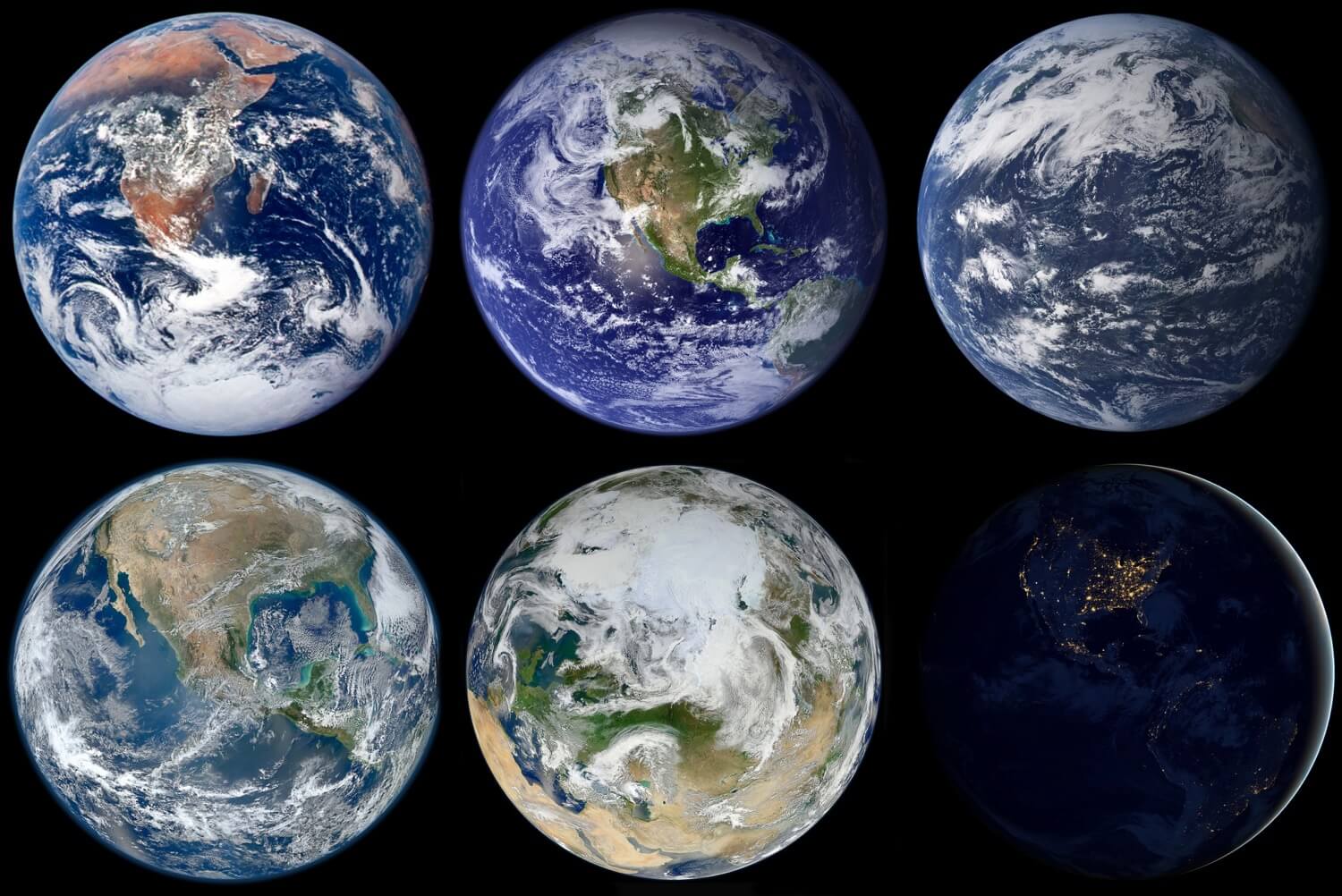
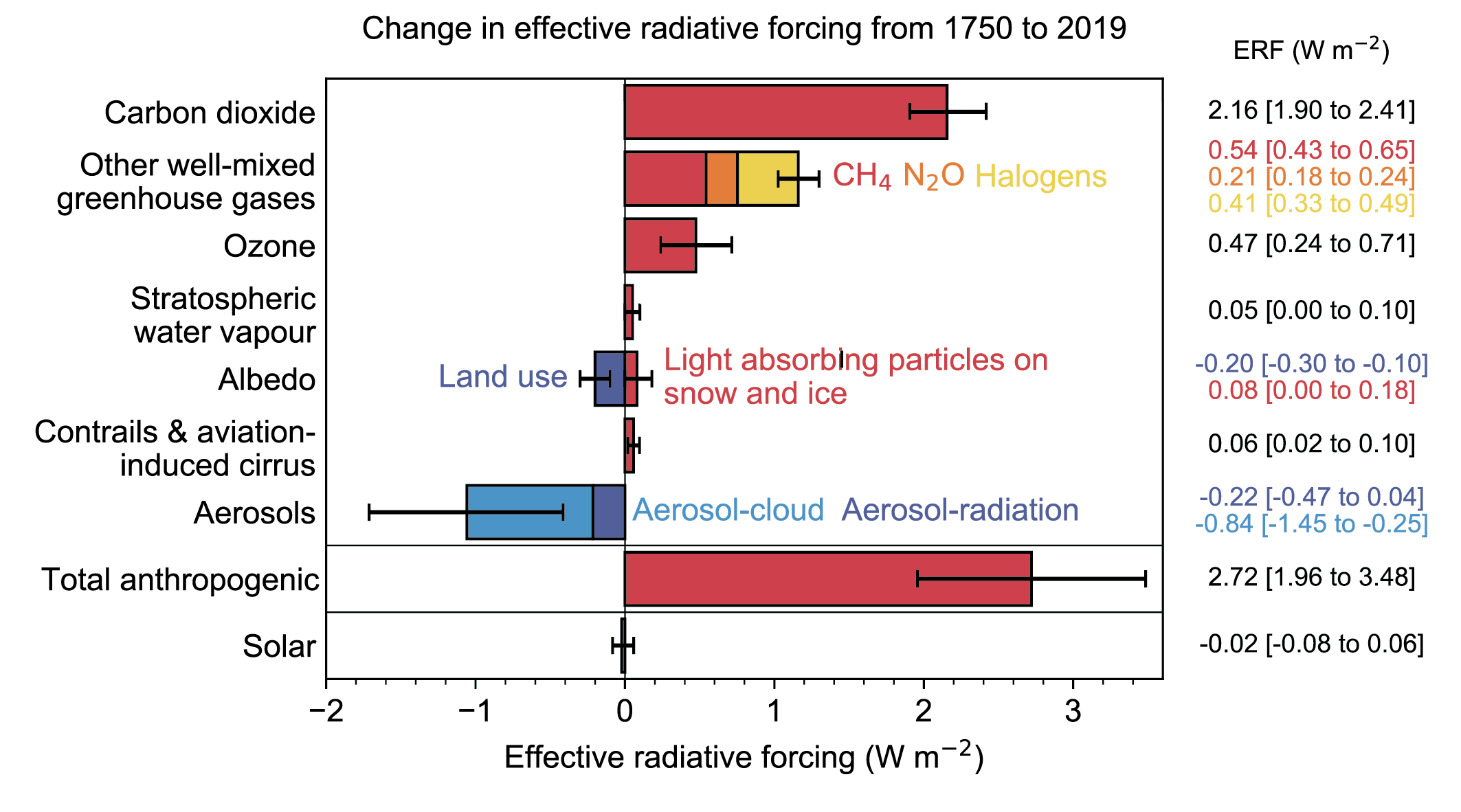
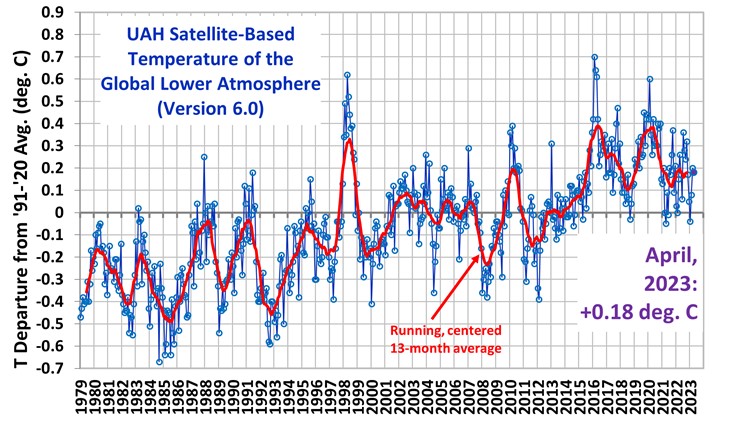
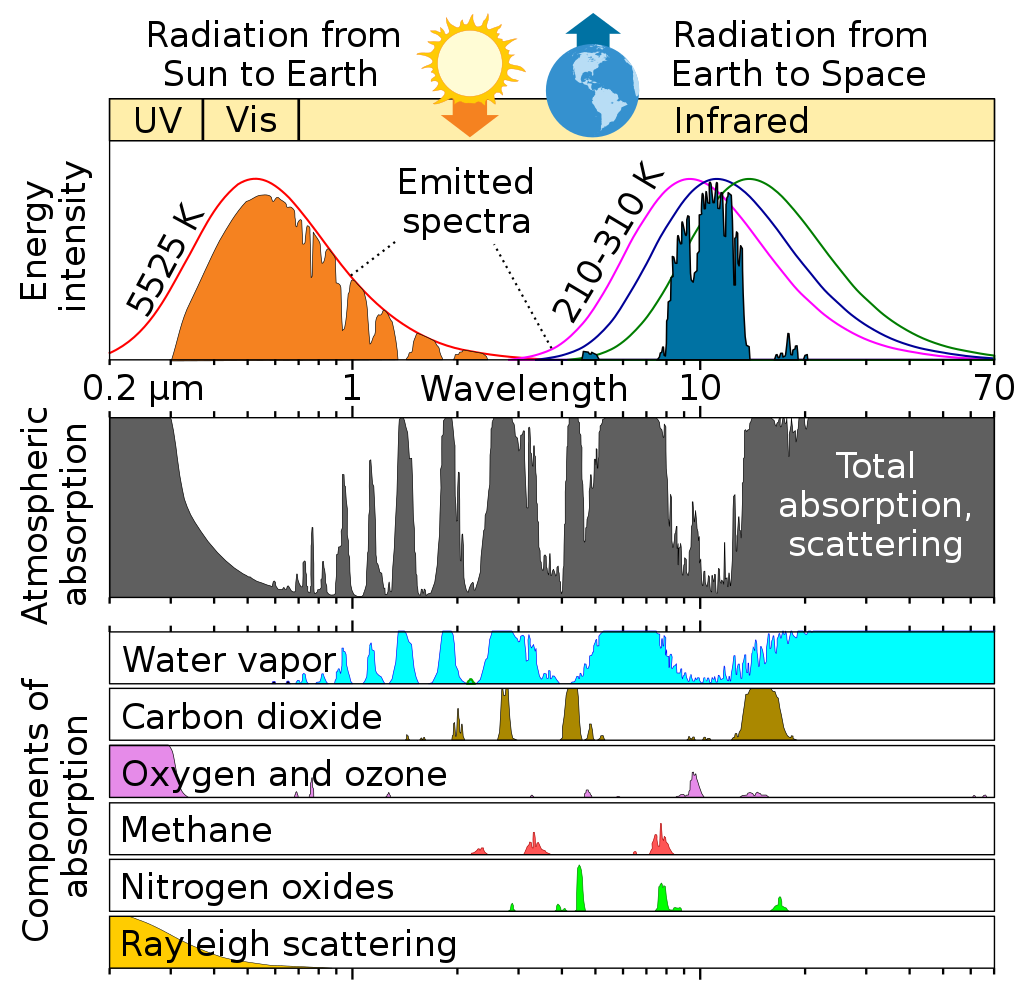
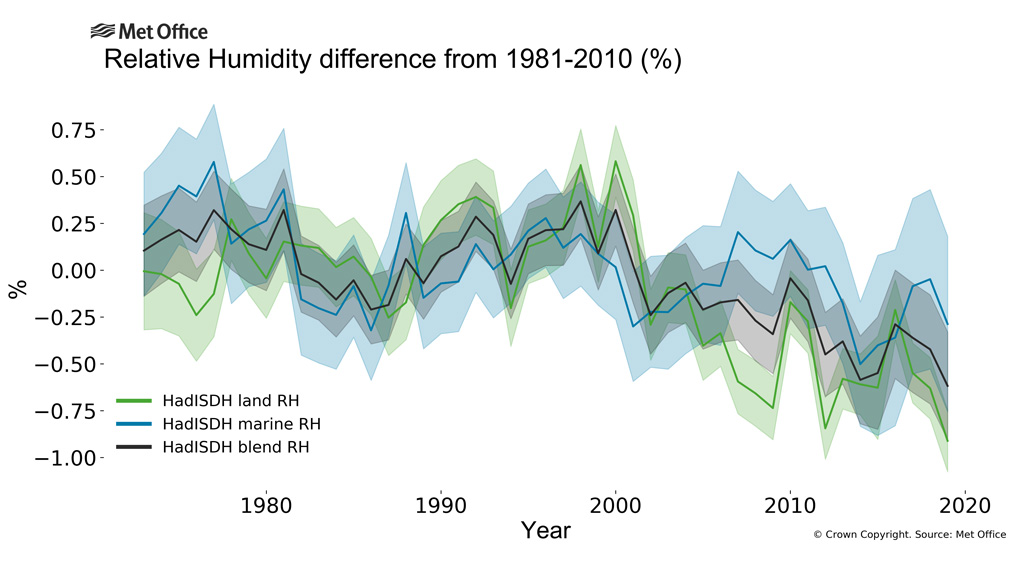
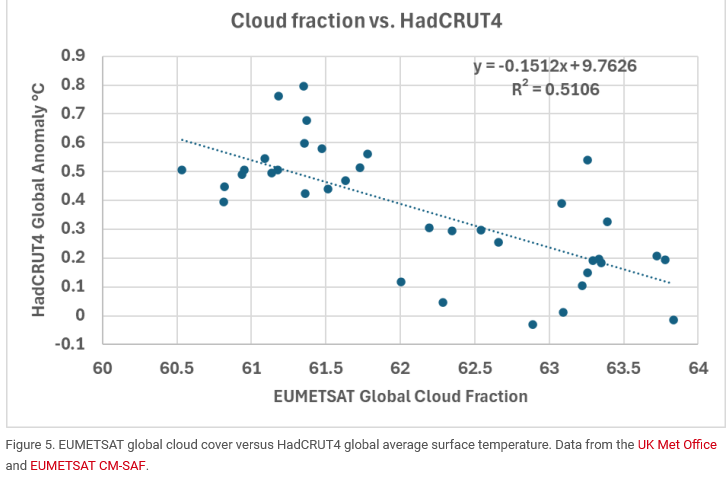
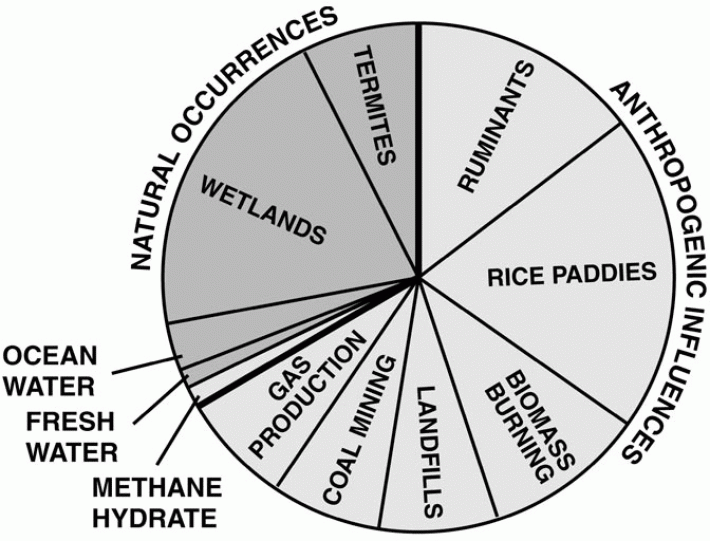
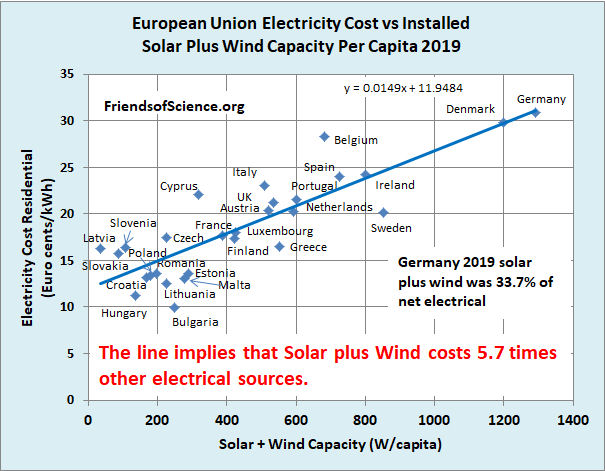

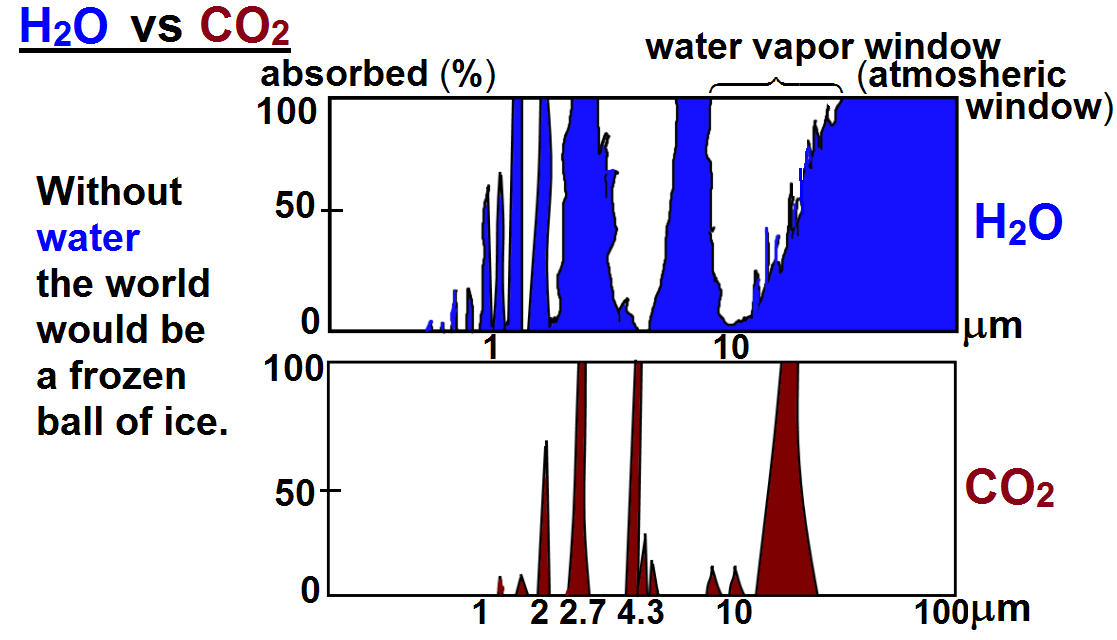
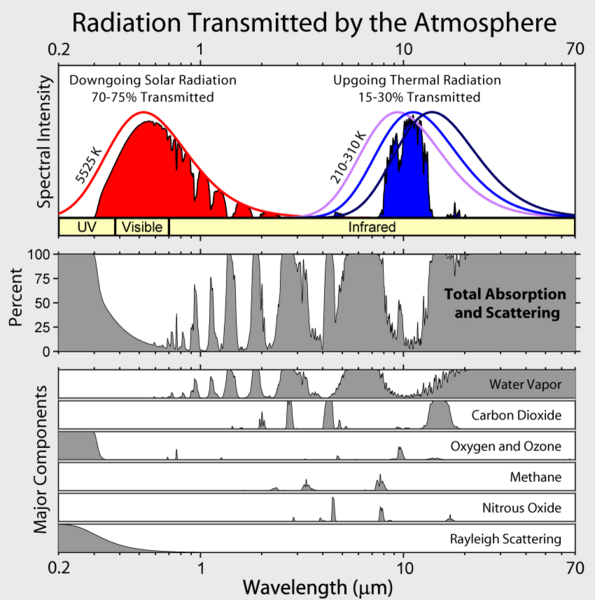
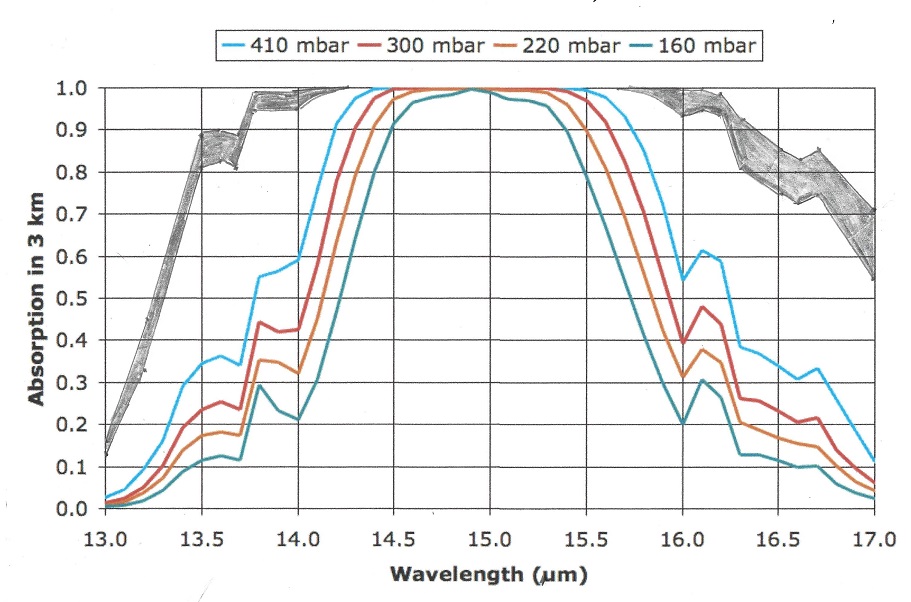
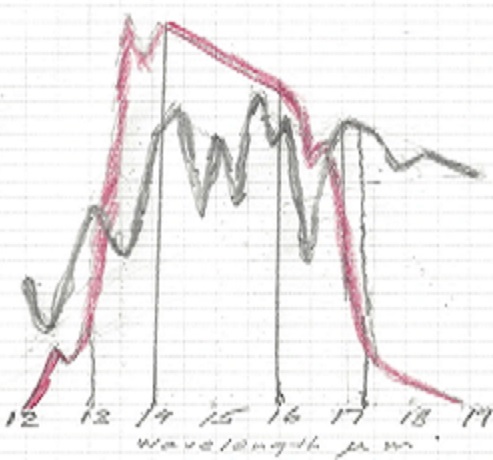
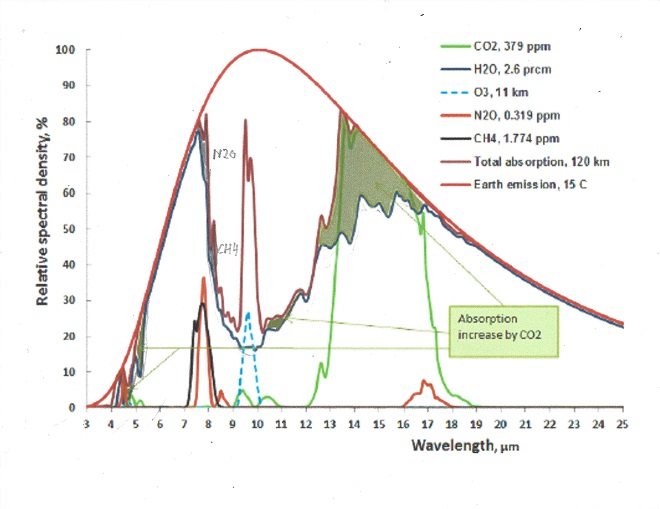
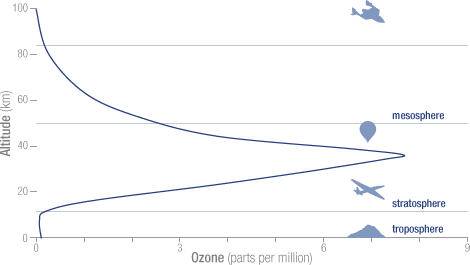
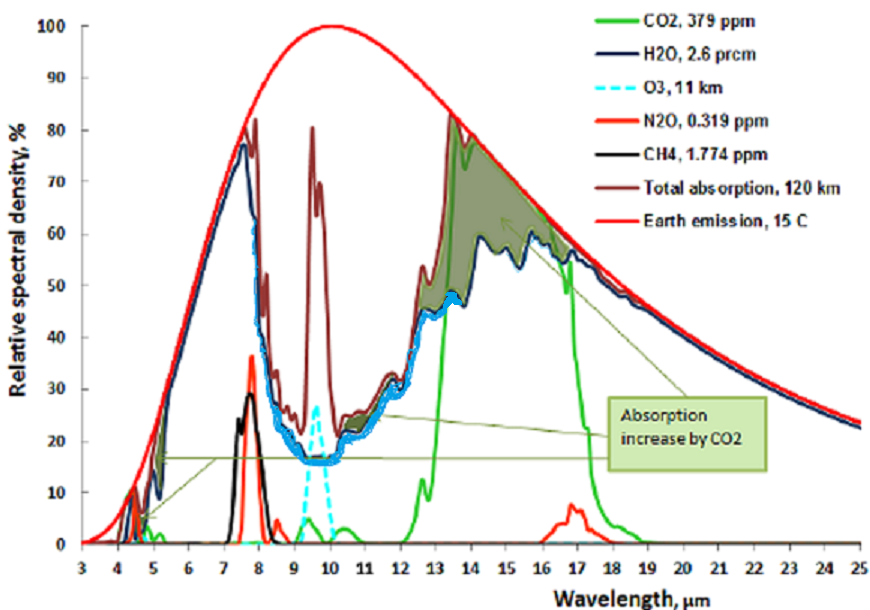
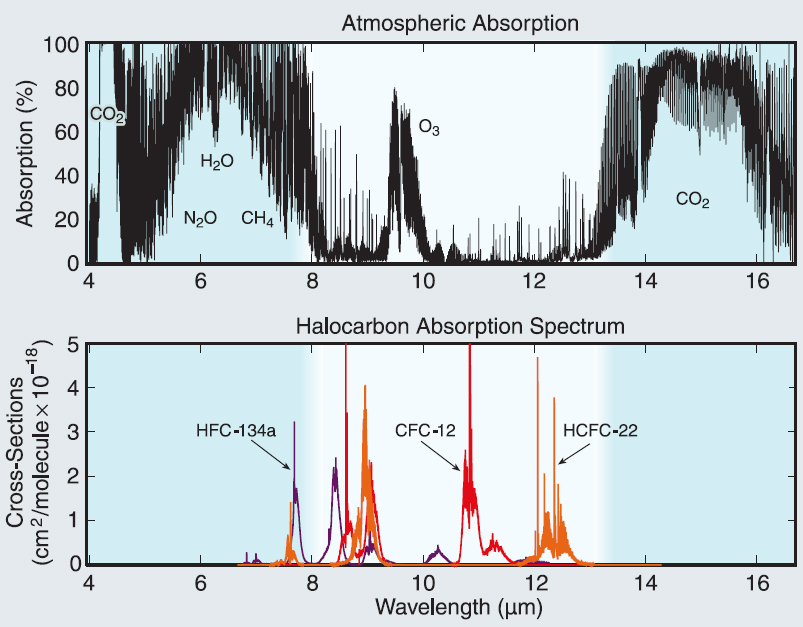
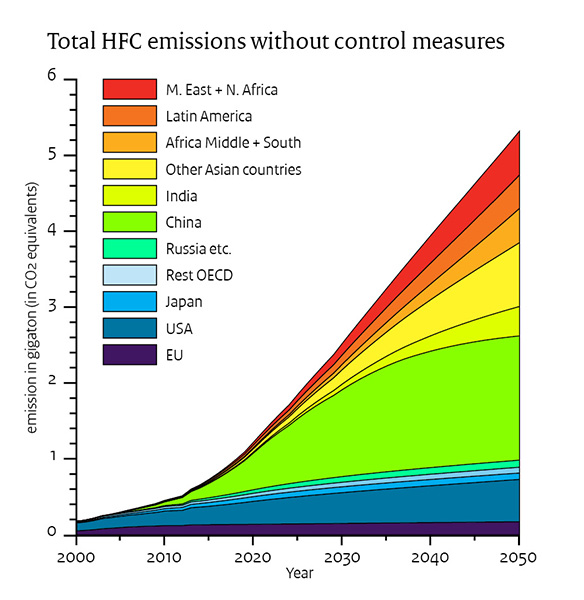
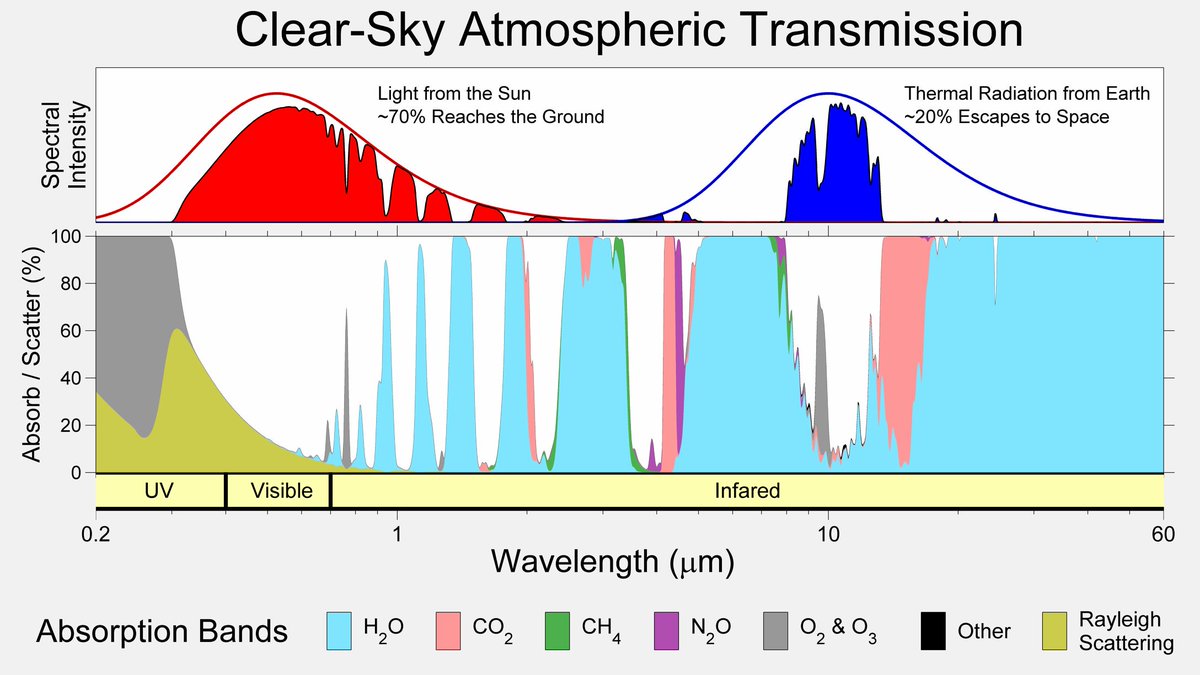

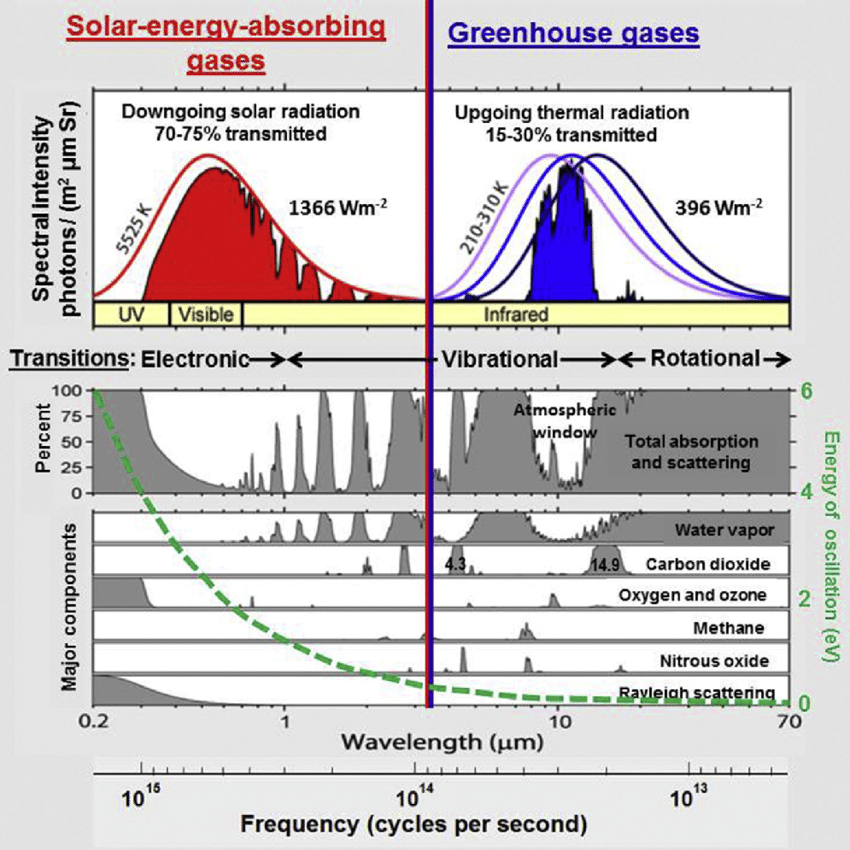
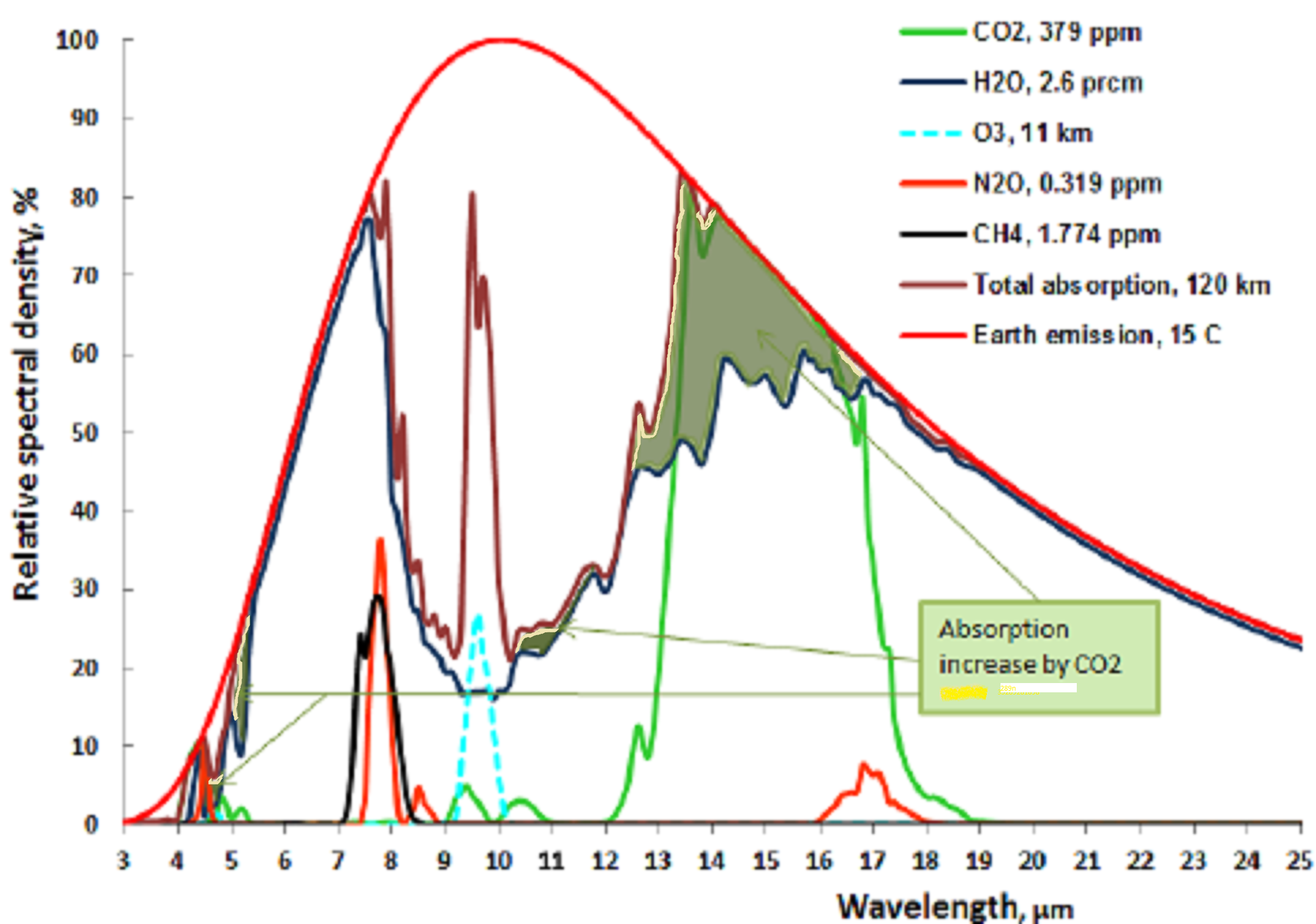
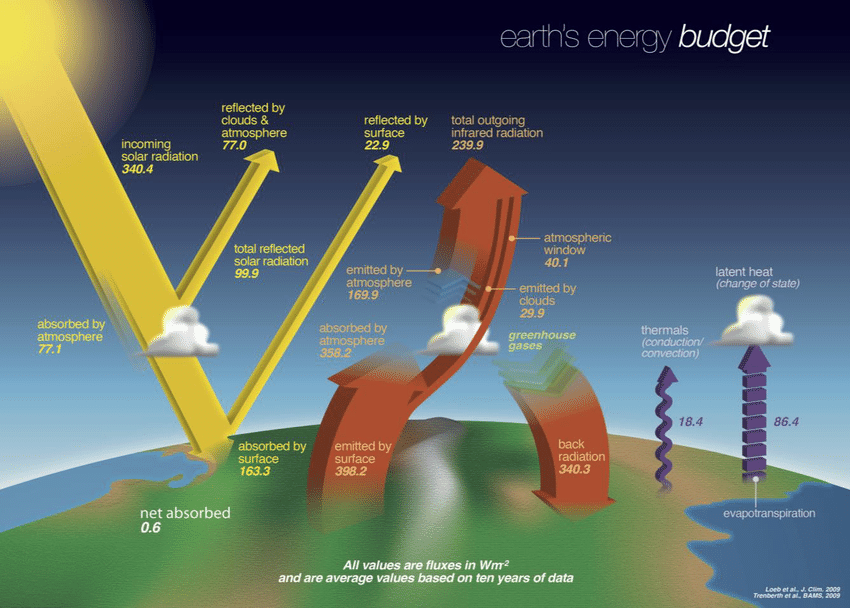
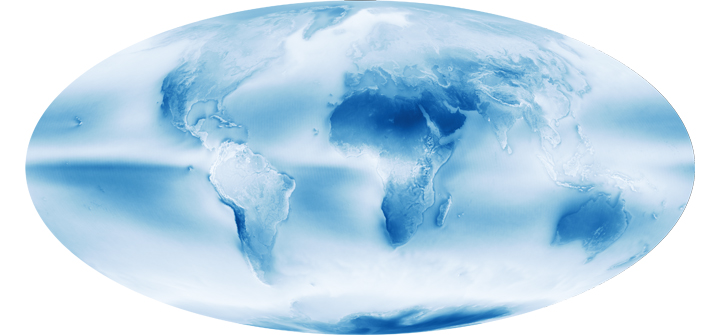
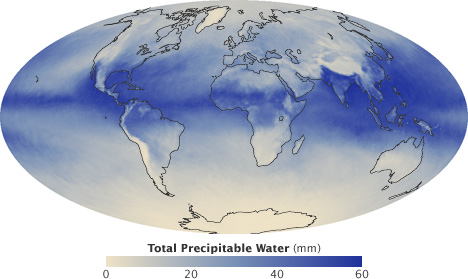
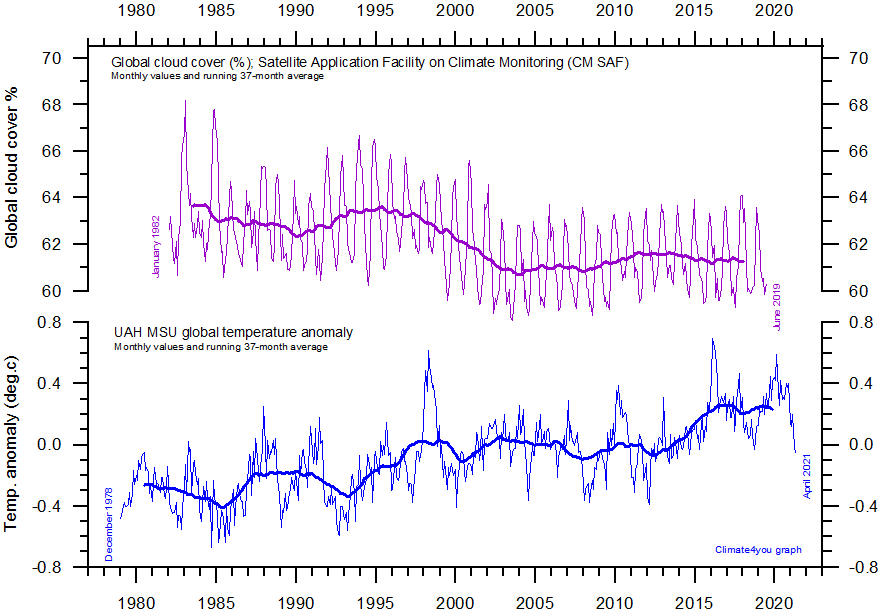

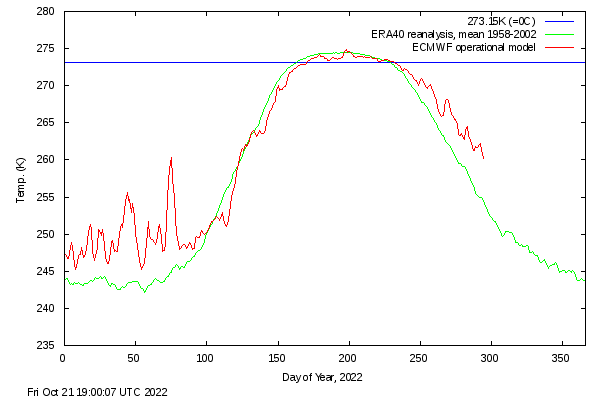
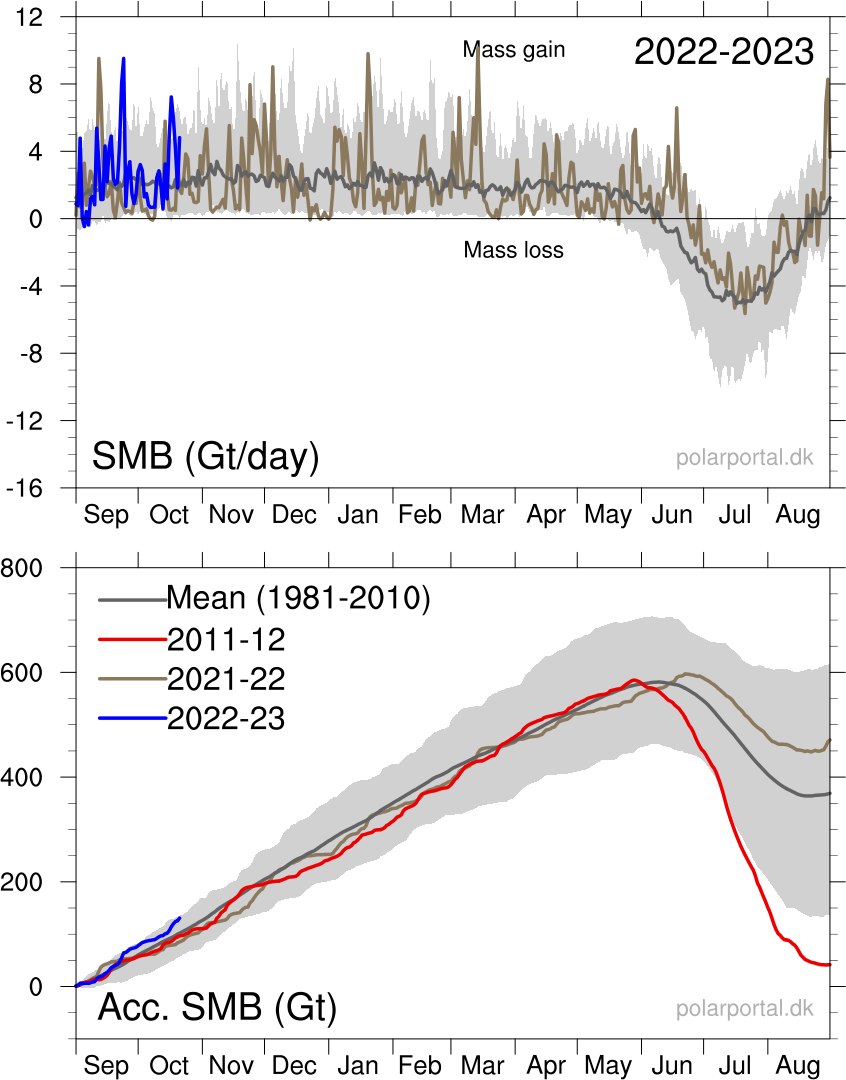
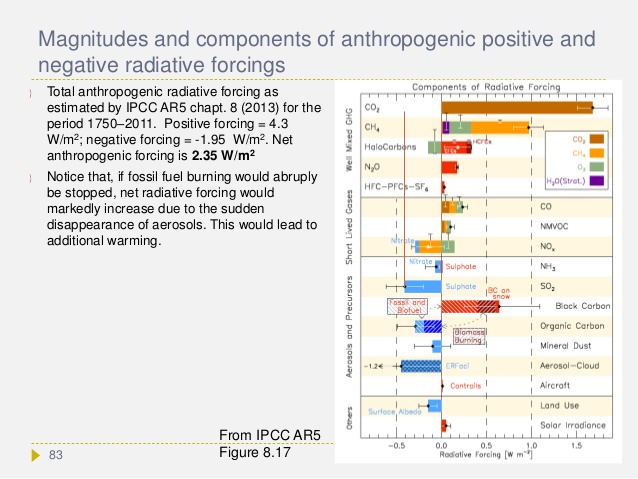
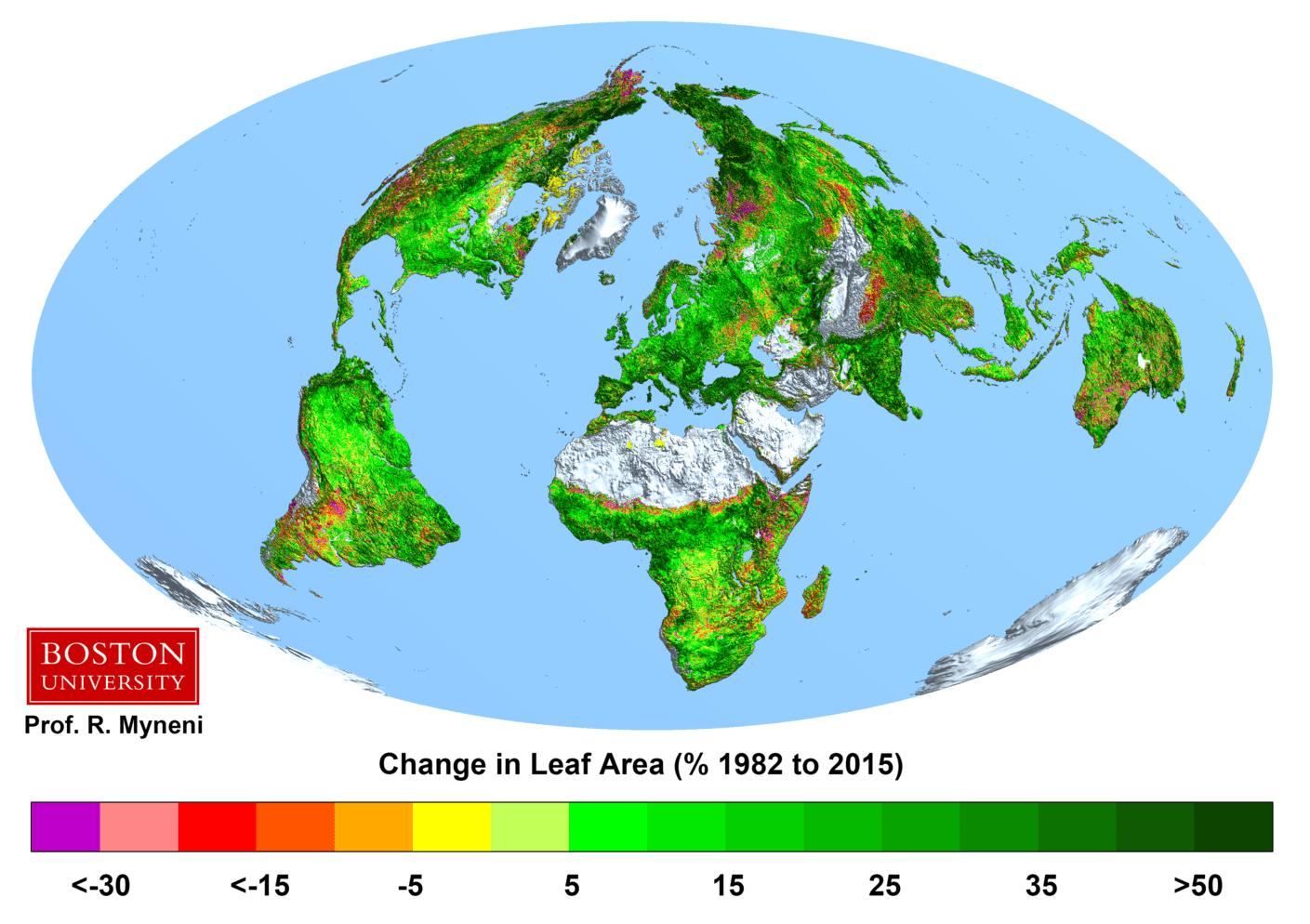
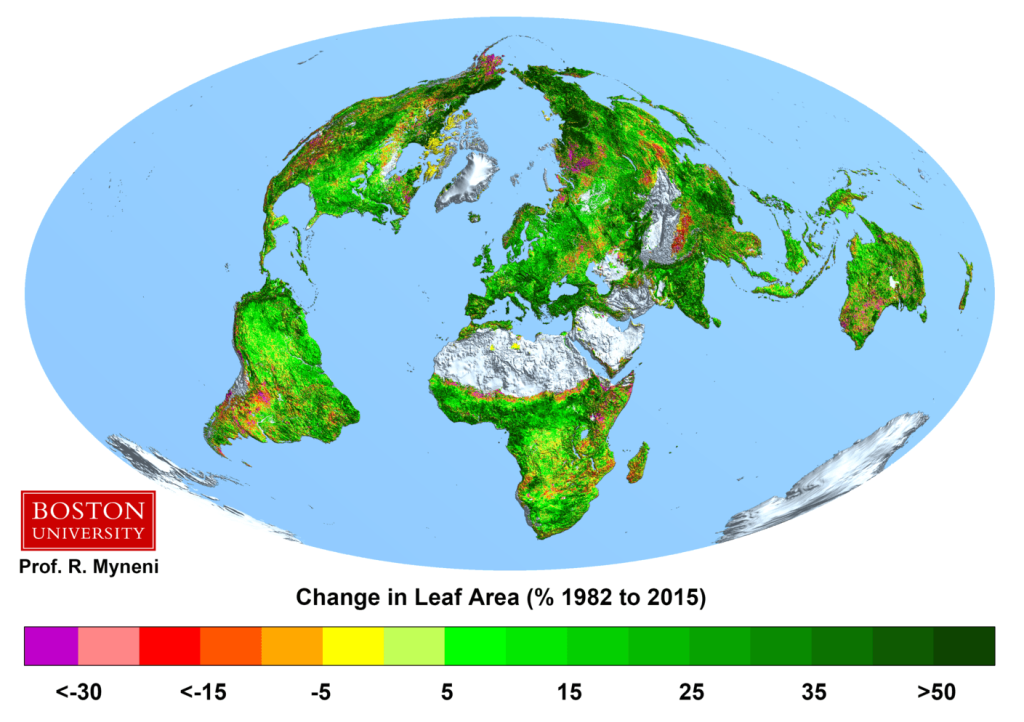

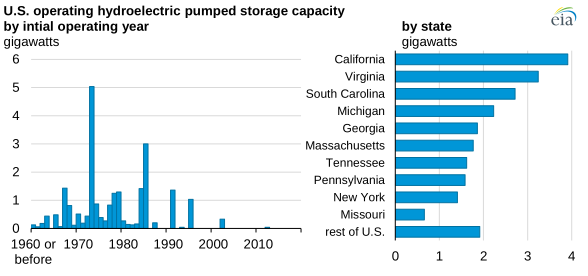
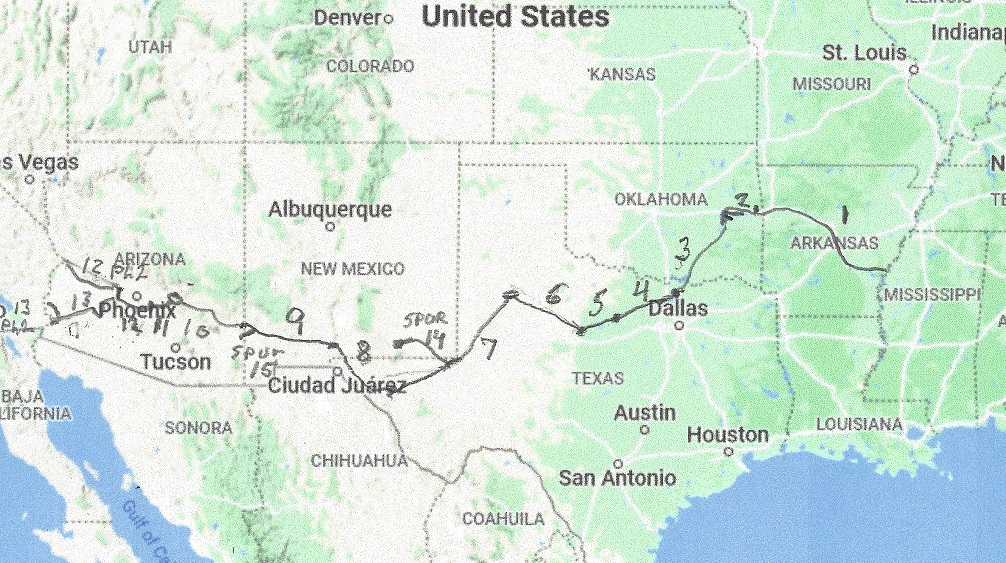
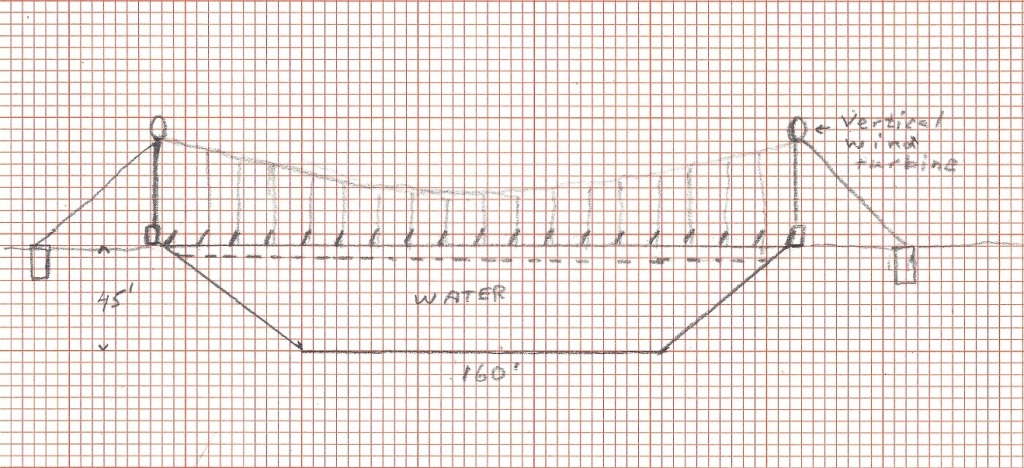
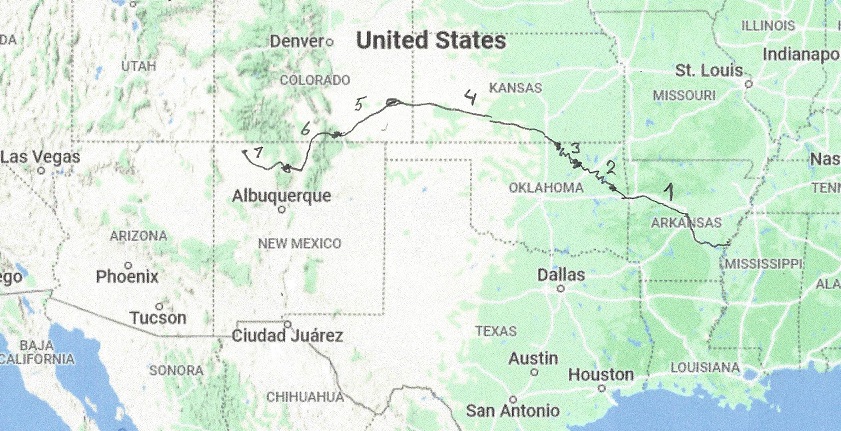

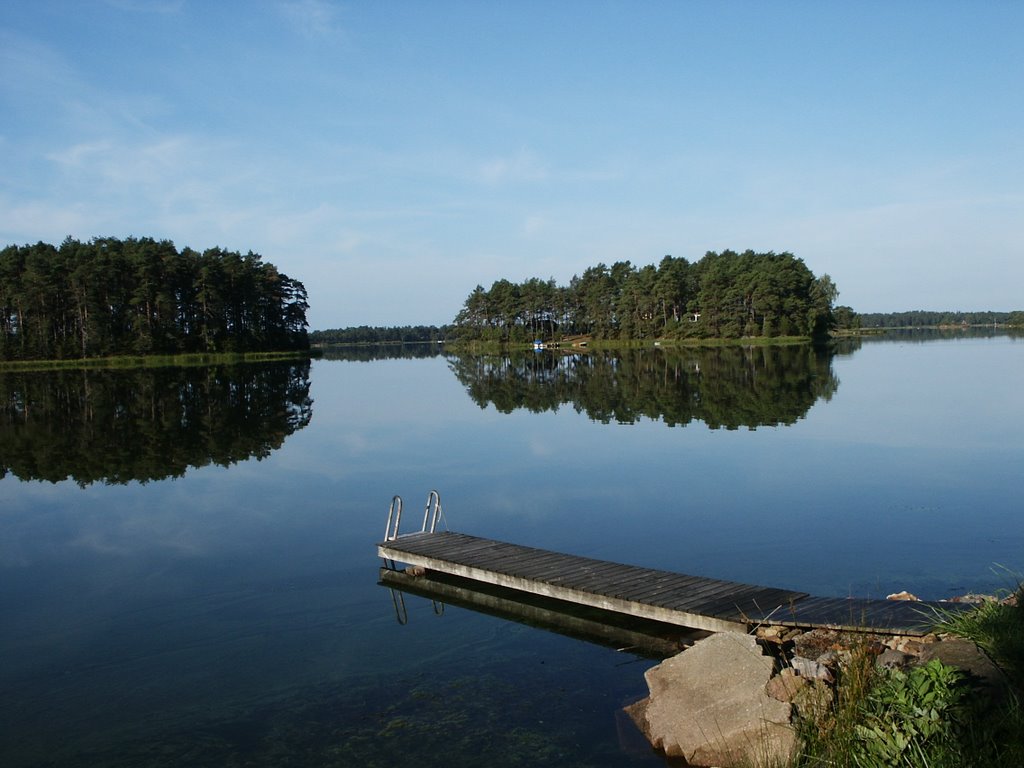


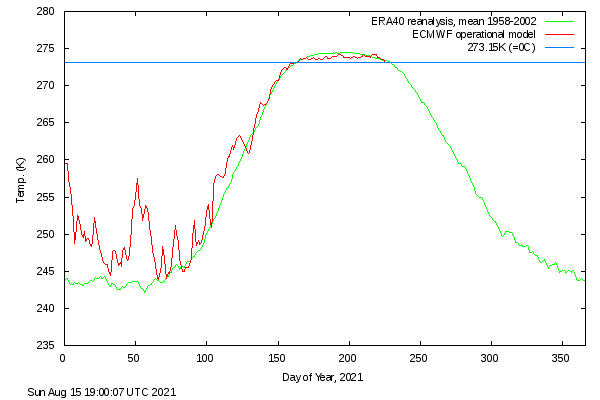
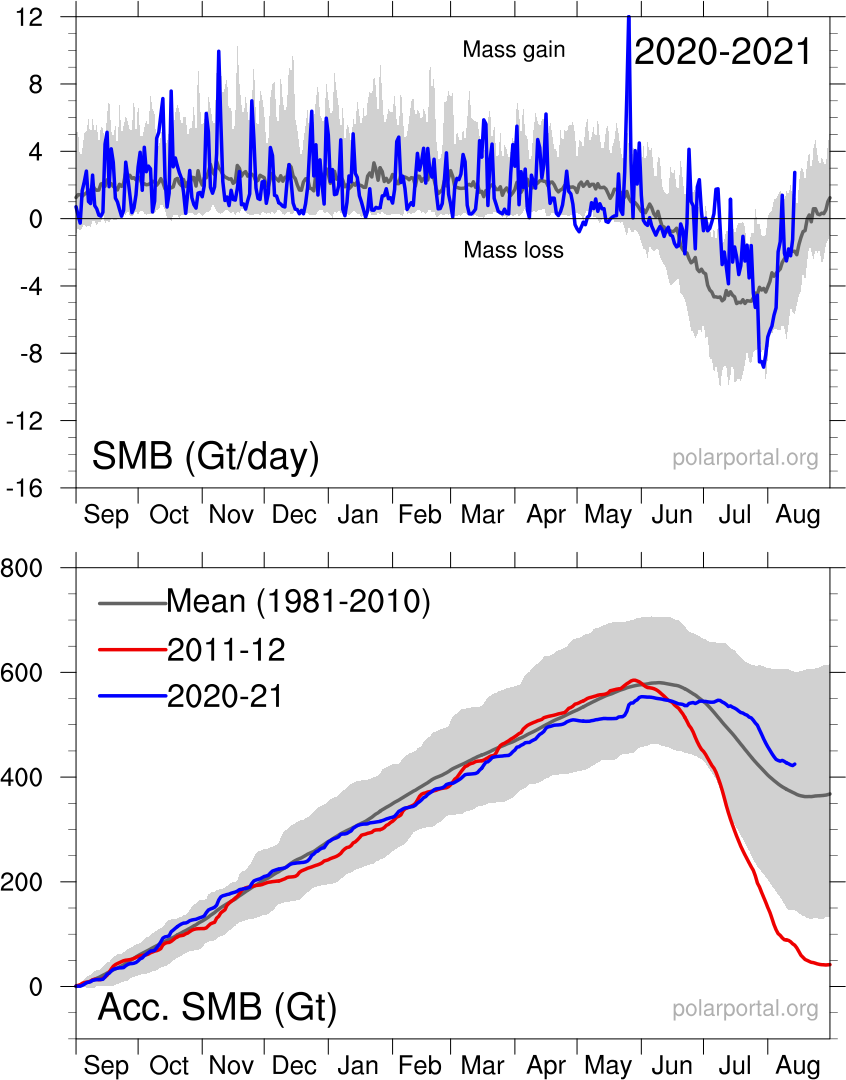
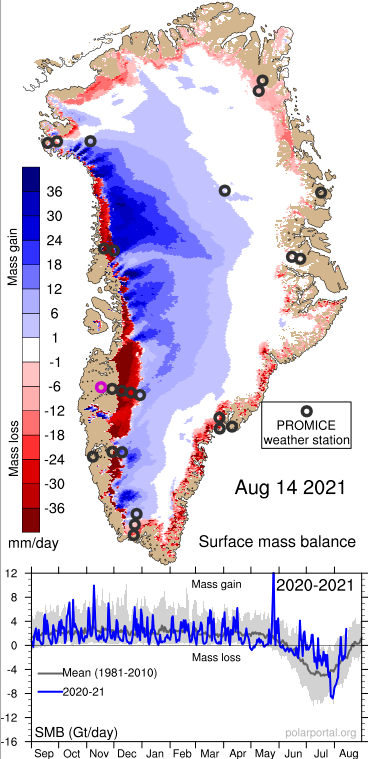
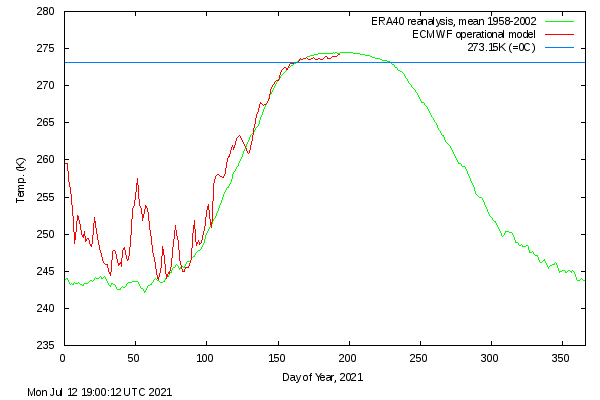
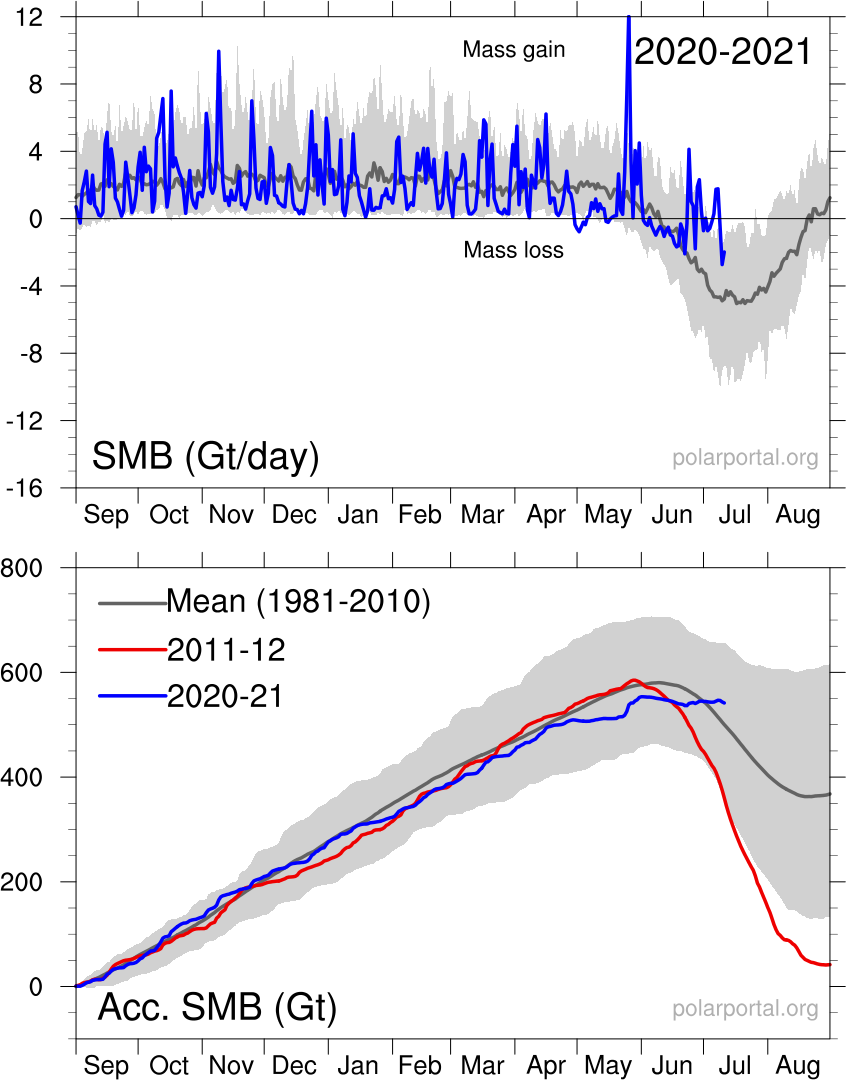
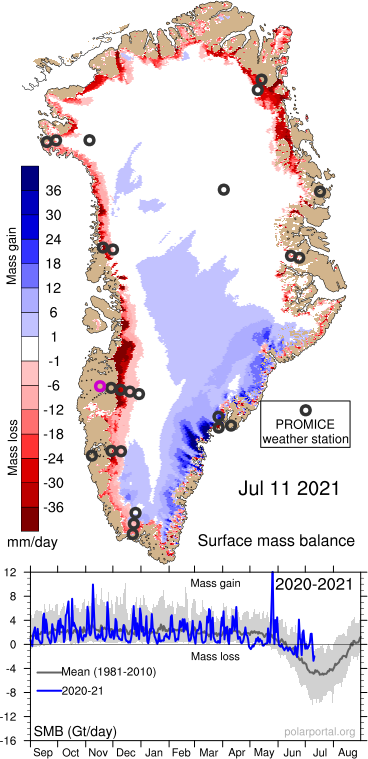
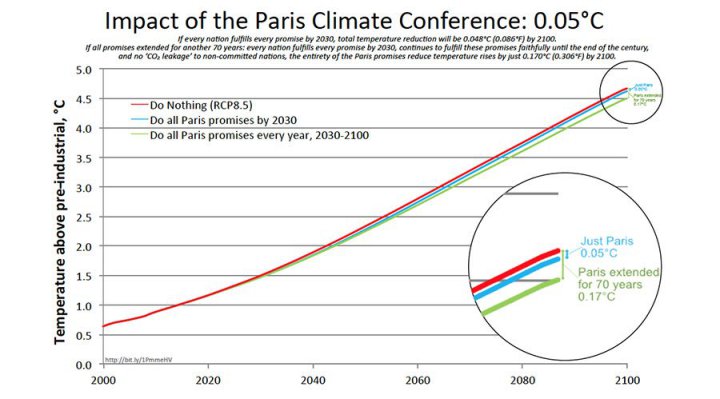
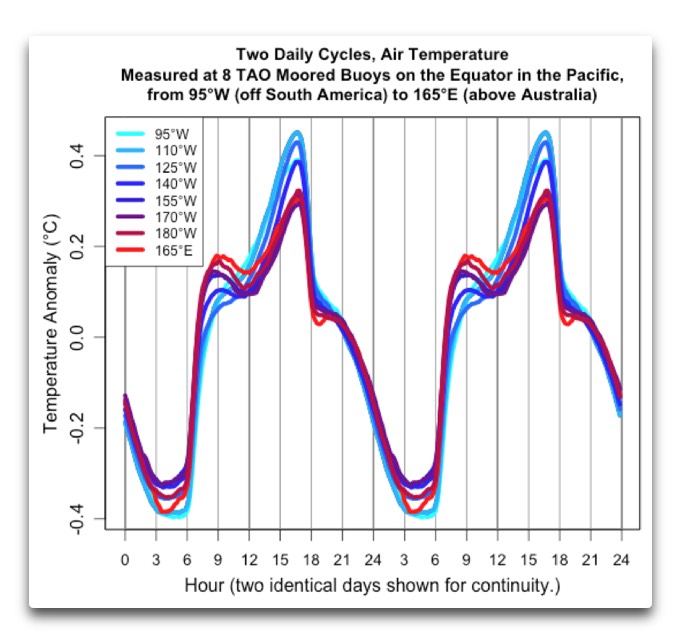
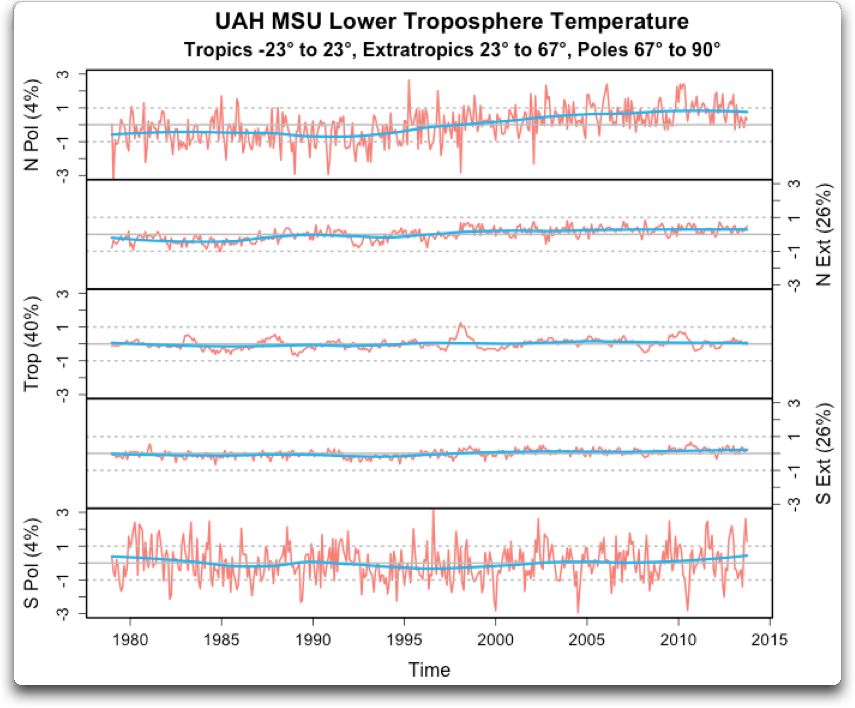
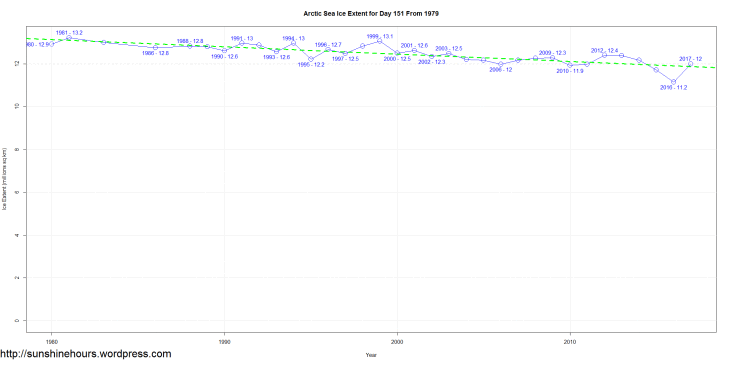


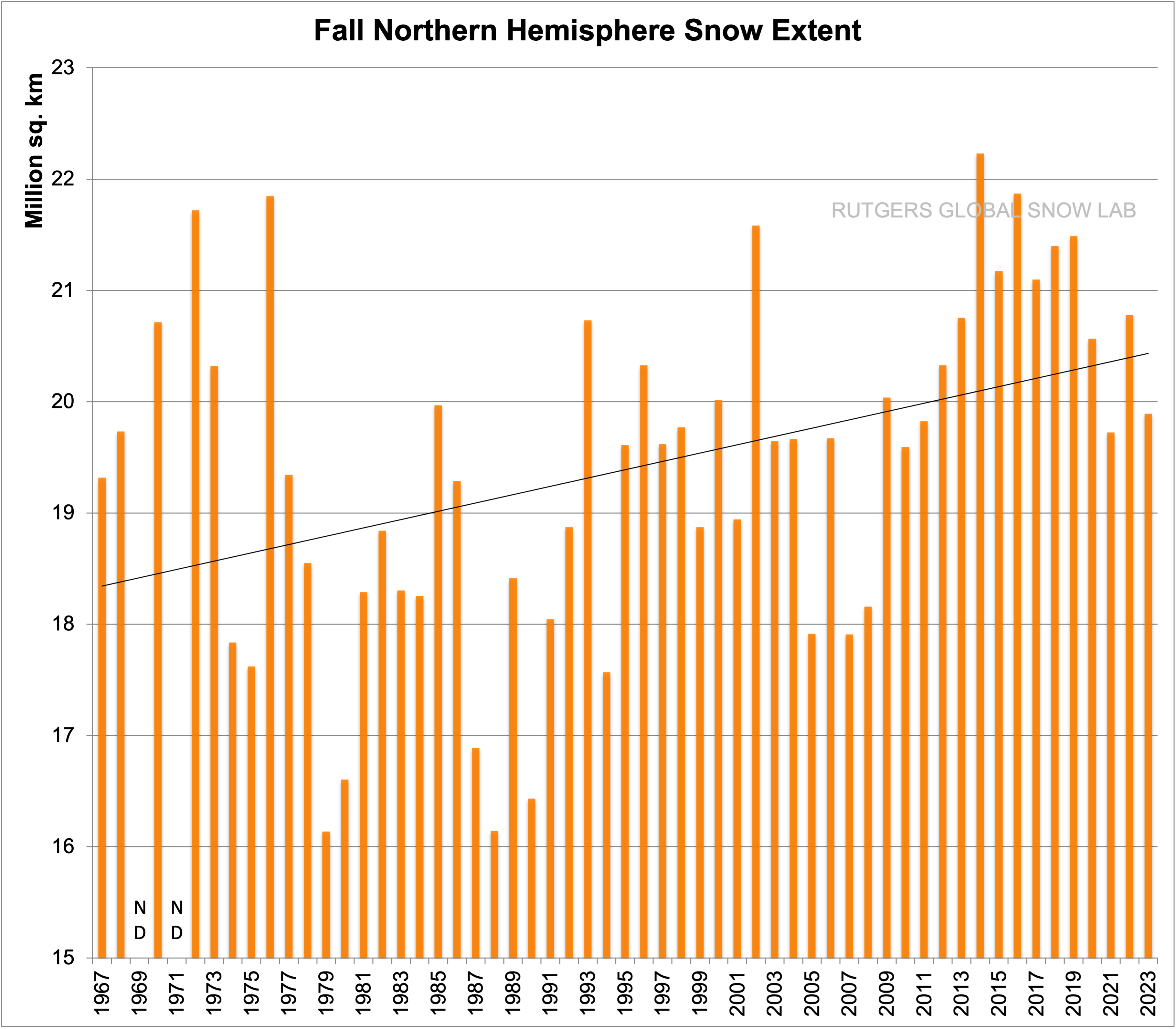
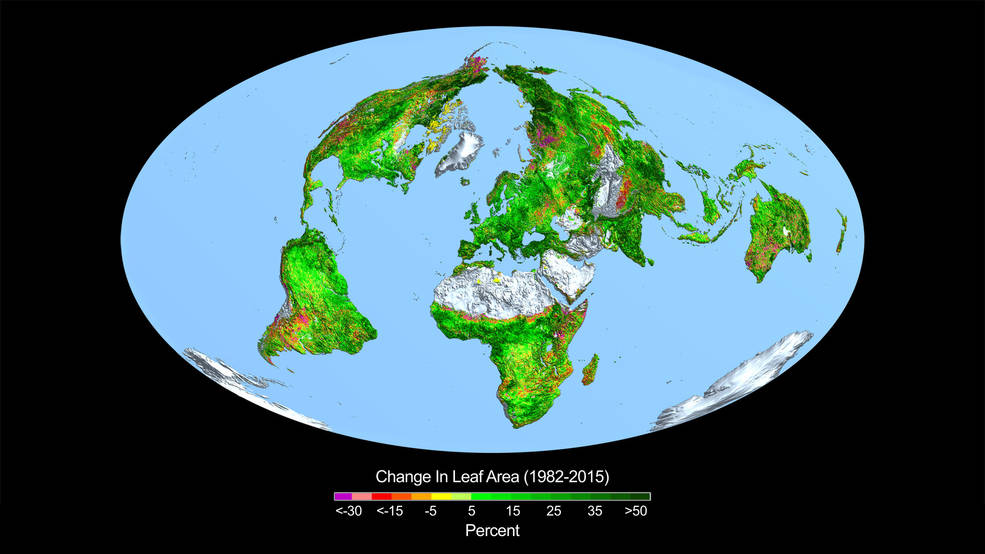


 Len Bilén's blog, a blog about faith, politics and the environment.