Yes, there is man-made climate change. It is land use change and results from the battle over water.

All sunshine makes a desert. Arabic proverb.

That ye may be the children of your Father which is in heaven: for he maketh his sun to rise on the evil and on the good, and sendeth rain on the just and on the unjust. Matthew 5:45 (King James version)

The rain that on the righteous falls,

falls also falls also on that other fella.

But mostly on the just, because

the unjust stole the just’s umbrella. (Author unknown)

There is no bad weather, Only bad clothes. (Norwegian saying).

Everybody complains about the weather, but nobody does anything about it. (Common British lament).

The last comment is not always true. There once was a lake in Central Asia, the fourth largest lake in the world. It provided a sensitive, but functioning Eco-system for a large portion of South East Soviet Union and western Afghanistan. Then the central planners wanted to improve the productivity of the area through central planning on improving land management. In the 1960s and 1970s the Soviets started using the Amu Darya and the Syr Darya rivers to irrigate extensive cotton fields in the Central Asian plain. The results can be seen in these 6 Satellite photos
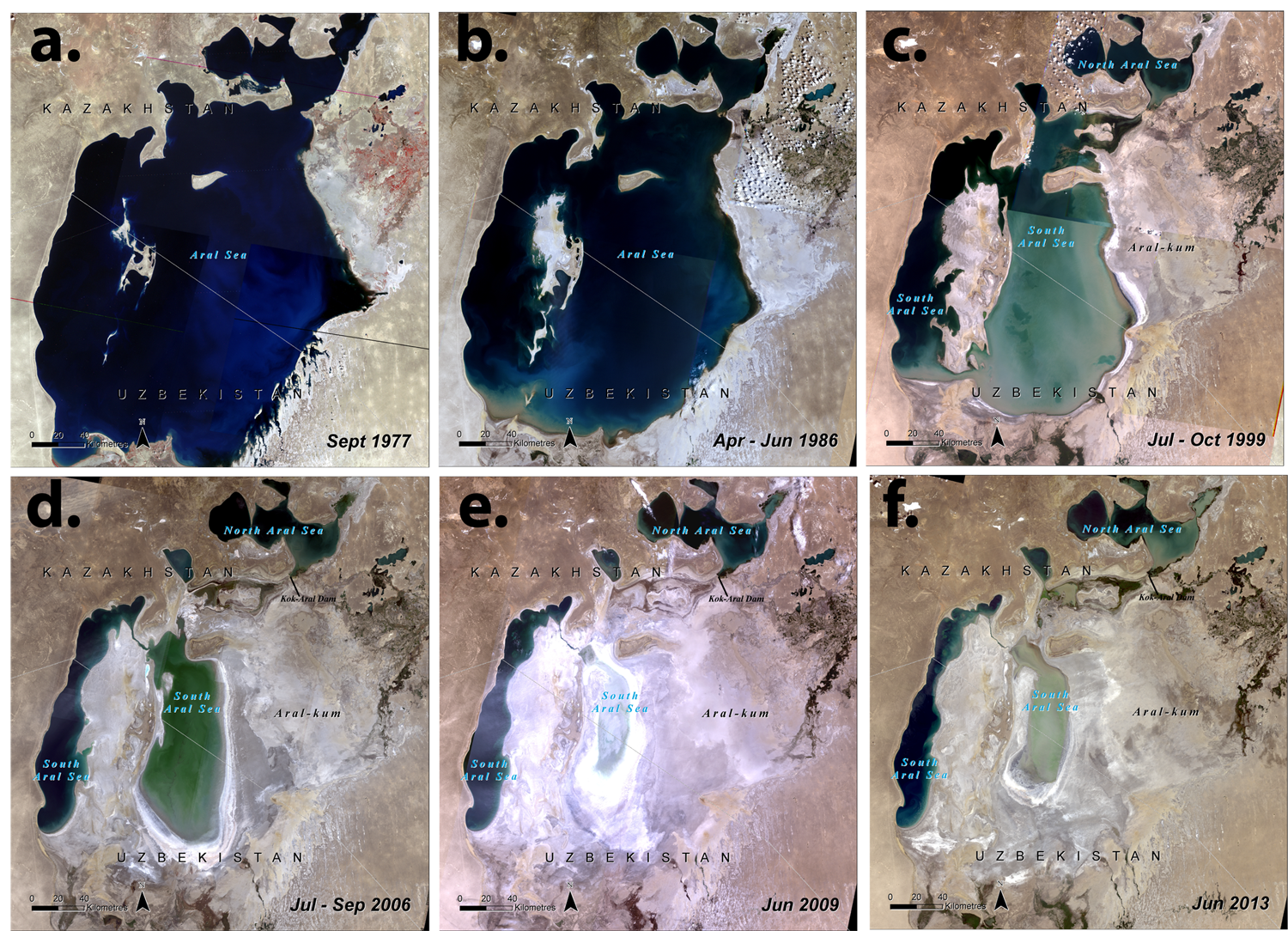
Disaster is a mild word. The lake was the source of the rains that fell up-stream. With the lake gone, the rivers dried up completely, and the whole upland became desert-like. There has been efforts to restore the upper part of the lake with a dam, but that will do nothing to stop the desertification. My suggestion to solve this is to divert the spring floods from the headwaters of the river Ob and tributaries. There is a gap in the mountains less than 600 feet above sea level, so it is very doable.

A much bigger challenge is facing the south western United States. Lake Mead is at its lowest point since it was first filled, and Lake Powell is faring even worse, with no spring flood adding to the water storage. lake Mead is at less than 40% of full pool
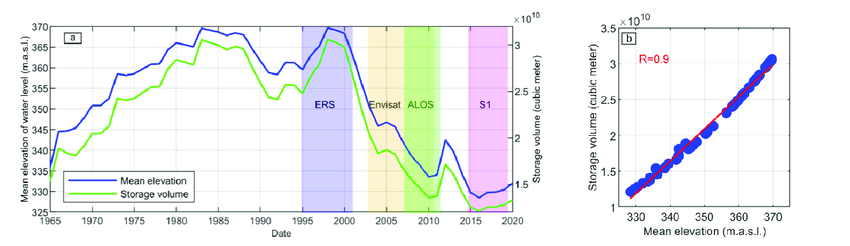
and Lake Powell is at less than 35% of full pool. If nothing is done both lakes will be emptied in less than 20 years, and that is counting on a stable climate. Beside the end of lawns, golf courses, swimming pools and even agricultural irrigation, the dams will no longer provide hydro-electrical storage for peak power, something that is of utmost importance when the wind doesn’t blow and the sun doesn’t shine, which actually happens from time to time. Renewable energy, wind and solar requires a large reserve of stored energy to use as peak power. How much stored energy do we have. This chart is scary:
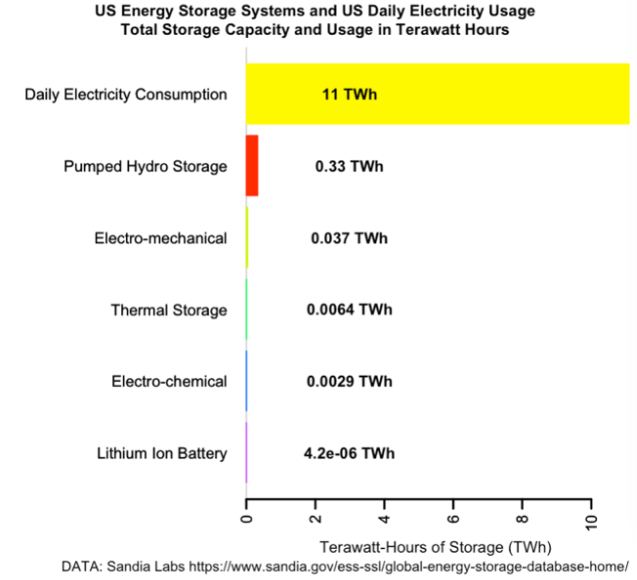
The lithium batteries we have all over, powering cellphones PCs an all kinds of electric equipment would be able to power the U.s power grid for three hundredths of a second. Large scale electro-chemical storage used by power stations, hospitals and other facilities that need uninterrupted services, also lithium-ion based, can power up the net for almost 23 seconds. And all pumped hydro-electric storage can power the grid for nearly five minutes. This means that nearly all extra peak power up to now has to be provided by Coal and natural gas electric power, since Uranium based nuclear power works as a base load.

There must be a better way to produce electricity. My suggestion will go a long way to provide more water to the Colorado river basin and reduce dependence on fossil fuel.

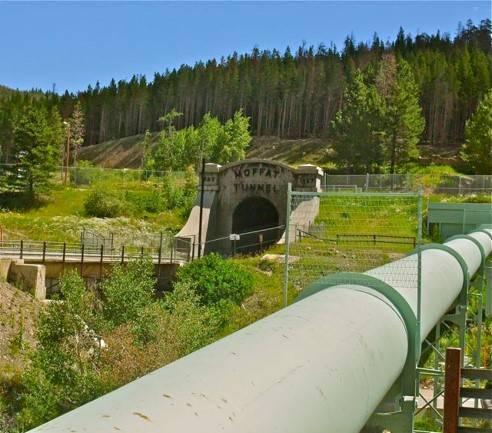
The Moffat water tunnel takes water from the Colorado river basin, diverts it under the Continental divide and provides some of the water for Denver and Colorado Springs and assorted communities. The yearly water drained from the Colorado river basin is about 74,000 Acre Foot, or about 0.5% of the total rainfall in the Colorado river basin, not much, but every little drop helps. This needs to be stopped. There is one problem, though: The greater Denver- Colorado Springs metropolitan area desperately need more water too, and the Ogalla aquifer is endangered already, so we must do something drastic. The answer is to pump water up-stream South Platte River, all the way from Omaha, Nebraska, lying east of the Ogalla aquifer. To do so we have to pump water 1,300 meter higher, and that requires energy, about 4,500 kWh per acre foot. At a price of 4 cents per kWh that would be about $190 per Acre foot. For an urban dweller or a rancher without water rights it is a bargain, but for a farmer, his water cost would be $250 to $400 per acre, so say the farmer grows corn, this would add $2.60 dollars per bushel in a year without rain at the right time. Any rain during thr growing season would reduce that amount.

The project is very doable and will even allow for increased irrigation, and the draw down of the Ogallala aquifer can stop. We need to pump about 300,000 acre foot per year, requiring 1,35 TWh/year, or about 150 MW of power. But the power stations are only to pump when the electricity demand is low, so it is best to provide 500MW of nuclear power, eliminating maybe 3 TWh/year of coal powered power, reducing CO2 emissions by 3 million metric tons per year. Every little bit helps.

Here is my proposal. Take a maximum of 2000 acre feet of water per day from the Missouri river just south of Omaha, Nebraska, about 3% of the average flow in the river, and pump it up to Colorado Springs, with major tap off stations in Denver and Greely and maybe many other stations. The power will be provided by Liquid Flouoride Nuclear Reactors, maybe five 100 MW reactors. When this project is finished the Moffat tunnel can be shut off, stopping the stealing of water from the Colorado river basin.

Why LFTR? Here is 30 reasons, and the list keeps growing

 1. A million year supply of Thorium available worldwide.

 2. Thorium already mined, ready to be extracted.

 3. Thorium based nuclear power produces 0.012 percent as much TRansUranium waste products as traditional nuclear power.

 4. Thorium based nuclear power will produce Plutonium-238, needed for space exploration.

 5. Thorium nuclear power is only realistic solution to power space colonies.

 6. Radioactive waste from an Liquid Fluoride Thorium Reactor decays down to background radiation in 300 years compared to a million years for U-235 based reactors. A Limerick.

 7. Thorium based nuclear power is not suited for making nuclear bombs.

 8. Produces isotopes that helps treat and maybe cure certain cancers.

 9. Liquid Fluoride Thorium Reactors are earthquake safe, only gravity needed for safe shutdown.

10. Molten Salt Liquid Fluoride Thorium Reactors cannot have a meltdown, the fuel is already molten, and it is a continuous process. No need for refueling shutdowns.

11. Molten Salt Nuclear Reactors have a very high negative temperature coefficient leading to a safe and stable control.

12. Atmospheric pressure operating conditions, no risk for explosions. Much safer and simpler design.

13. Virtually no spent fuel problem, very little on site storage or transport.

14. Liquid Fluoride Thorium Nuclear reactors scale beautifully from small portable generators to full size power plants.

15. No need for evacuation zones, Liquid Fuel Thorium Reactors can be placed near urban areas.

16. Liquid Fluoride Thorium Reactors will work both as Base Load and Load Following power plants.

17. Liquid Fluoride Thorium Reactors will lessen the need for an expanded national grid.

18. Russia has an active Thorium program.

19. India is having an ambitious Thorium program, planning to meet 30% of its electricity demand via Thorium based reactors by 2050.

 20. China is having a massive Thorium program.

21. United States used to be the leader in Thorium usage. What happened?

22. With a Molten Salt Reactor, accidents like the Three Mile Island disaster will not happen.

23. With a Molten Salt Reactor, accidents like Chernobyl are impossible.

24. With Molten Salt Reactors, a catastrophe like Fukushima cannot happen.

25. Will produce electrical energy at about 4 cents per kWh.

26. Can deplete most of the existing radioactive waste and nuclear weapons stockpiles.

27. With electric cars and trucks replacing combustion engine cars, only Thorium Nuclear power is the rational solution to provide the extra electric power needed.

28. The race for space colonies is on. Only Molten Salt Thorium Nuclear reactors can fit the bill.

29. President Donald J. Trump on Jan.12 issued an Executive Order on Promoting Small Modular Reactors for National Defense and Space Exploration. Only Liquid fluoride thorium reactors can meet all the needs

30. We have to switch from Uranium to Thorium as nuclear feed-stock. We are running out of domestic Uranium.

30. We have to switch from Uranium to Thorium as nuclear feed-stock. We are running out of domestic Uranium.

Uranium is the feed-stock for nuclear power. It is also the material necessary to make nuclear bombs and making isotopes for medicinal and industrial uses.

The United States has 245,000 tons of Uranium reserves recoverable at less than $100 per kilogram, 1.9% of the world total. The price of uranium oxide is today about $80 per kilogram. This is about 12.5 years worth of domestic production, and as the great conservationist Sarah Palin used to quip, “when it is gone, it’s gone.”

The United States has, as of 2019, mined 444,500 tons of Uranium, or about 13% of the world total.

The United States consumed in 2019 19,570 tons of Uranium, about 23% of the world total, about 99.6% of which was imported. This is a great strategic vulnerability.

Which brings up the following question: Why did the Obama administration sell 20% of our proven reserves of this strategically important material to Russia?

It is of utmost importance to immediately restart the development of nuclear reactors that use Thorium as its feed-stock. Uranium based nuclear power can never fill our long term energy needs

The greatest climate change crisis is water, not CO2.

The Fear spreads on Capitol Hill

And Climate change fear breaks their will.

AOC: In Ten years

our world disappears!

She acts as a New Green Deal shill.

Quote from Alexandria Occasio-Cortez in January 2019: “Millennials and Gen Z and all these folks that come after us are looking up, and we’re like, ‘The world is going to end in 12 years if we don’t address climate change, and your biggest issue is how are we gonna pay for it?’ ” she said.

I beg to differ.

We live in only one world. As a concerned citizen I realize we have immense environmental challenges before us, with water pollution; from plastics in the ocean, excess fertilizer in the rivers, poison from all kinds of chemicals, including antibiotics, birth control and other medicines flushed down the toilet after going through our bodies, animals fed antibiotics, pest control, weed control and so on. Increasing CO2 is not one of the problems, it will in fact help with erosion control, and allow us to feed more people on less agricultural land with proper management, and require less fertilizer and water to do so. In fact, proper water management is a larger problem, with some rivers no longer even reaching the ocean. All water is already spoken for, especially in the 10 to 40 degrees latitude, where most people live and want to live.

But before w go into that, allow me to be somewhat technical and give the background to why I know we will never experience the thermal runaway they are so afraid of.

Many years ago I worked at Hewlett Packard on an Atomic Absorption Detector. It was a huge technical success but a commercial failure, as it was too expensive to use for routine applications. However it found a niche and became the detector of choice when dismantling the huge nerve gas stockpiles remaining from the cold war. I was charged with doing the spectrum analysis and produce the final data from the elements. One day two salesmen came and tried to sell us  a patented device that could identify up to 21 different elements with one analysis. They had a detector that divided the visual band into 21 parts, and bingo, with proper, not yet “fully developed” software you could now analyze up to 21 elements with one gas chromatography analysis. What could be better? We could only analyze correctly four or five elements simultaneously. It turns out the elements are absorbing in the same wavelength bands, scientifically speaking they are not orthogonal, so software massaging can only go so far. It turned out that the promised new detector was inferior to what we already had and could only quantify three or 4 elements at the most.

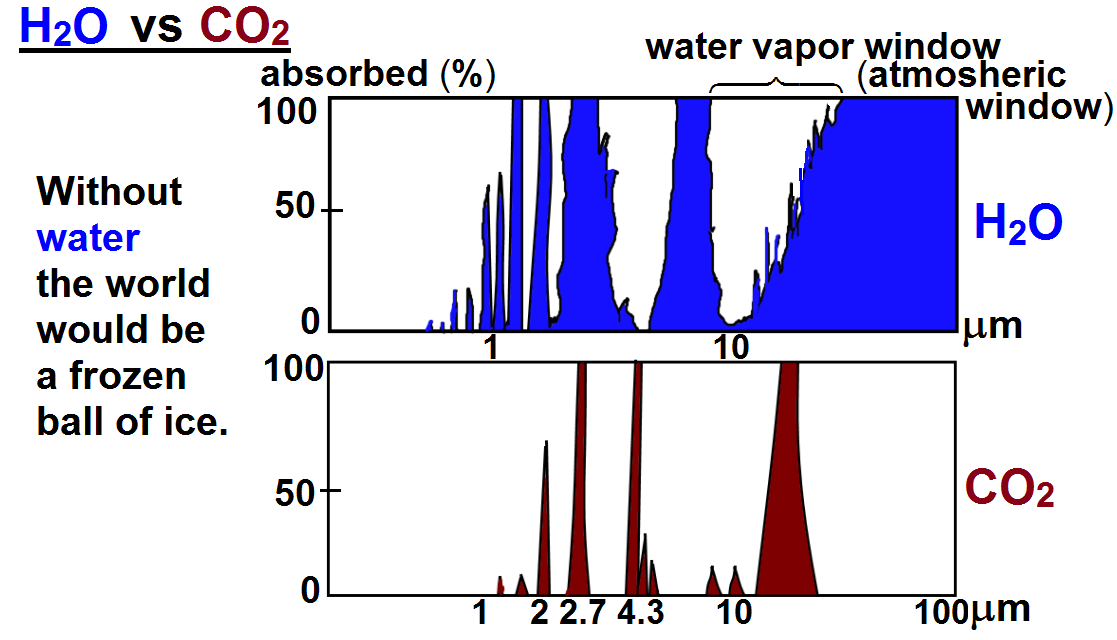
In the atmosphere the two most important greenhouse gases are water vapor and CO2 with methane a distant third. Water vapor is much more of a greenhouse gas everywhere except near the tropopause, high above the high clouds and around the poles when the temperature is below 0 F, way below freezing. A chart shows the relationship between CO2 and water vapor:

Image result for h20 and co2 as greenhouse gases

Source: http://notrickszone.com/2017/07/31/new-paper-co2-has-negligible-influence-on-earths-temperature/

Even in Barrow, Alaska (renamed Utqiaġvik since 2016), water vapor is the dominant greenhouse gas. Only around the South Pole (And North Pole) does CO2 dominate (but only in the winter).

All Climate models take this into account, and that is why they all predict that the major temperature increase will occur in the polar regions with melting icecaps and other dire consequences. But they also predict a uniform temperature rise from the increased forcing from CO2 and the additional water vapor resulting from the increased temperature.

This is wrong on two accounts. First, CO2 and H2O gas are not orthogonal, that means they both absorb in the same frequency bands. There are three bands where CO2 absorbs more than H2O in the far infrared band, but other than that H2O is the main absorber. If H2O is 80 times as common as CO2 as it is around the equator, water vapor is still the dominant absorber, and the amount of CO2 is irrelevant.

Secondly, gases cannot absorb more than 100% of the energy available in any given energy wavelength band! So if H2O did absorb 80% of the energy and CO2 absorbed 50%, the sum is not 130%, only 90%. (0.8 + 0.5×0,2 or 0.5 + 0.8×0.5). In this example CO2 only adds one quarter of what the models predict.

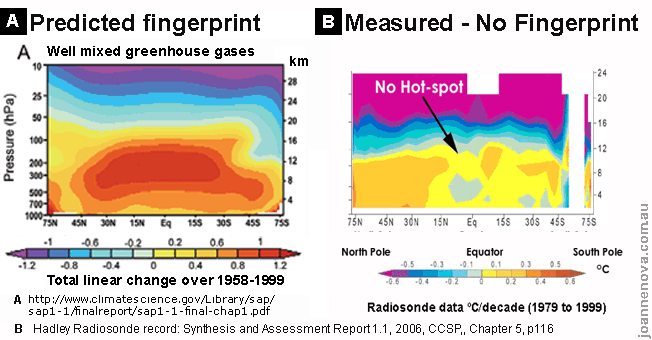
How do I know this is true? Lucky for us we can measure what increasing CO2 in the atmosphere has already accomplished. For a model to have credibility it must be tested with measurements, and pass the test. There is important evidence suggesting the basic premise is wrong. All greenhouse gases work by affecting the lapse rate in the tropics. They thus create a “hot spot” in the tropical troposphere. The theorized “hot spot” is shown in the early IPCC publications. (Fig A)

Fig. B shows observations. The hot-spot is not there. If the hot-spot is not there, the models must be wrong. So what is wrong with the models? This was reported in 2008 and the models still assume the additive nature of greenhouse gases, even to the point when more than 100% of the energy in a given band is absorbed.

How about Methane? Do not worry, it absorbs nearly exclusively in the same bands as water vapor and has no measurable influence on the climate.

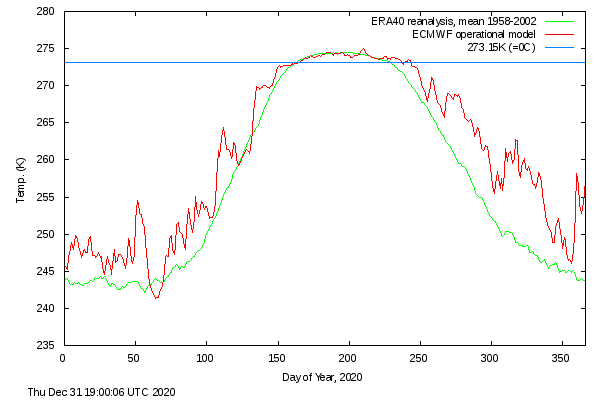
But it will get warmer at the poles. That will cause melting of the ice-caps? Not so fast. When temperature rises the atmosphere can hold more water vapor, so it will snow more at higher latitudes. While winter temperatures will be higher with more snowfall, this will lower the summer temperatures until the extra snow has melted. And that is what is happening in the Arctics

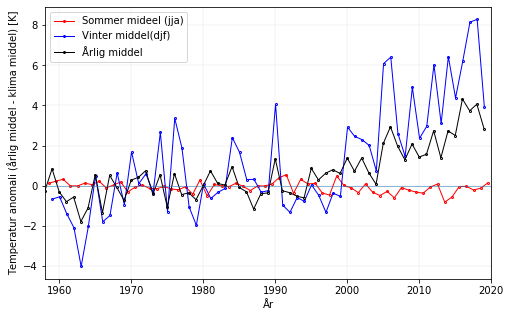
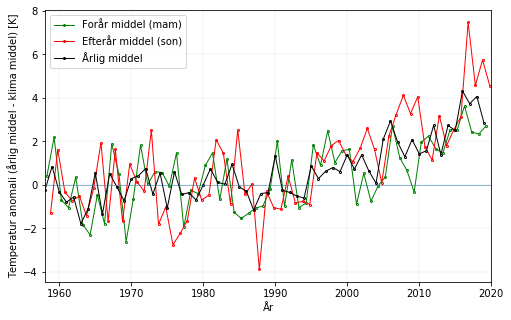
As we can see from this picture, the winters were about 5 degrees warmer, but starting from late May through early August temperatures were lower. It takes time to melt all the extra snow that fell because of the warmer winter air, able to contain more ice crystals.

No, the real climate crisis is water, not enough of it in the areas of the world where people want to live, and nothing in the U.S. is more precarious than the American southwest, or the Colorado river basin.

Many years ago the city of Denver had a problem. The land east of the Rocky mountains is dry, rain is sparse and the aquifers were being depleted. The city was growing rapidly, still small by today’s standard, but they were thinking big and looked for a really good water supply. There was one fairly nearby: the Colorado river. There was only one small problem, it was on the other side of the continental divide. They were building a railroad tunnel under the continental divide anyway, so for a few million dollars extra they added a water tunnel, with a capacity of 36 m3/s of water flow, and it has been draining water from the Colorado River basin since 1936.

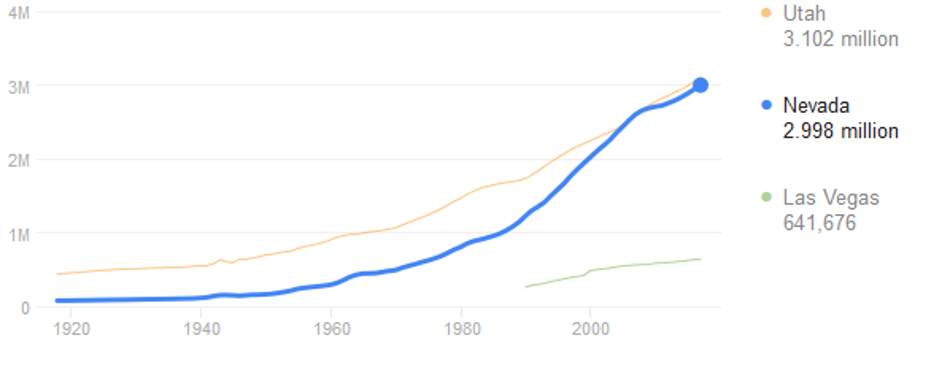
As an engineering feat it was quite impressive, and the population west of the Rocky Mountains was minuscule. This has changed and the demand for water in the Southwest is enormous and increasing. Las Vegas alone is now about the same size as the City of Denver. (The Denver Region is about 5.5 million)

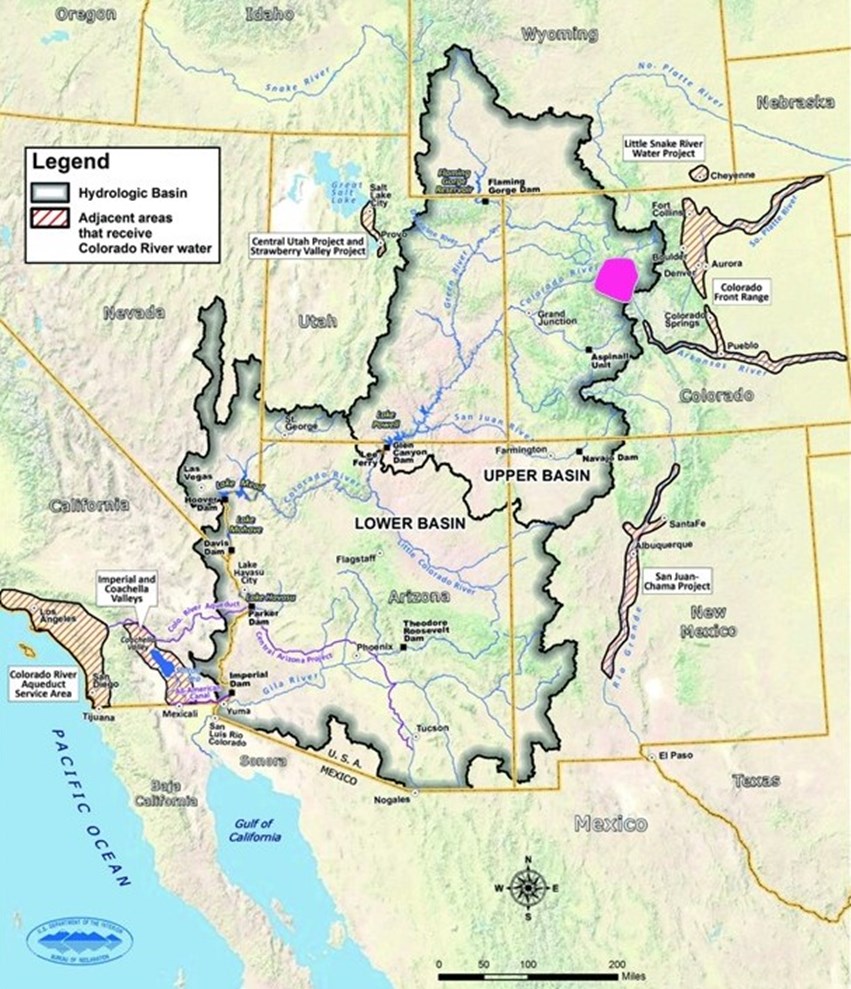
Let us take a look at the Colorado River watershed:

Beside the Moffet tunnel that diverts Colorado River basin water to Denver and Colorado springs, Water is diverted to Salt Lake City, the upper Rio Grande in New Mexico, and the big one, water is diverted to Los Angeles and the lower Imperial Valley in California

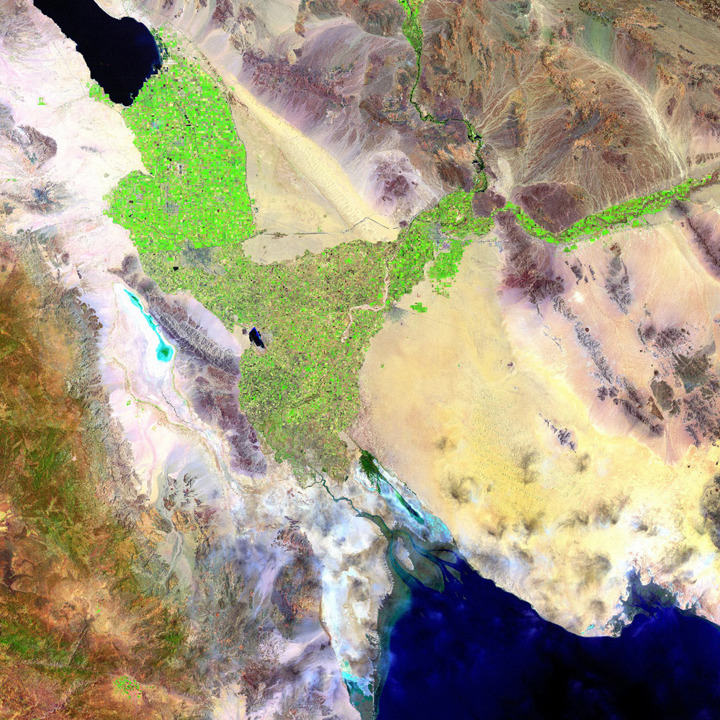
Much of the water from the Colorado River basin is used for agricultural purposes. This is a picture of the irrigation in the lower Imperial valley and Mexico.

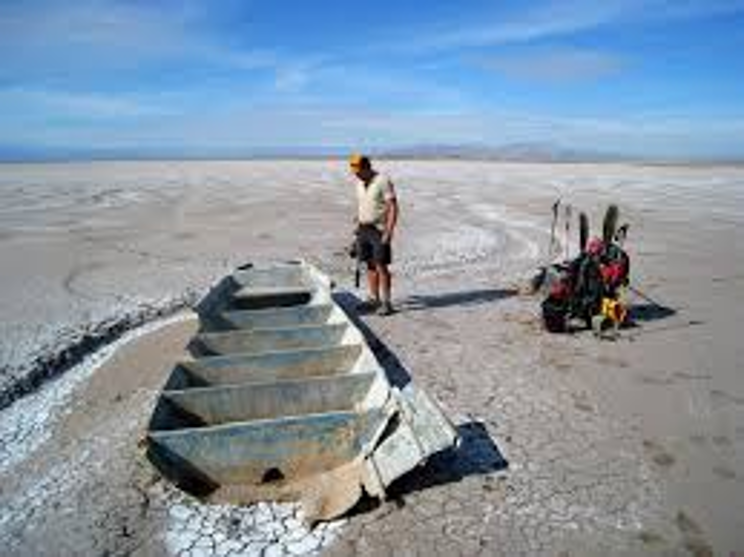
This is important: The Colorado River water is all spoken for. It never reaches the Gulf of California. Once upon a time there was a good shrimp harvest at the mouth of the Colorado River. No more.

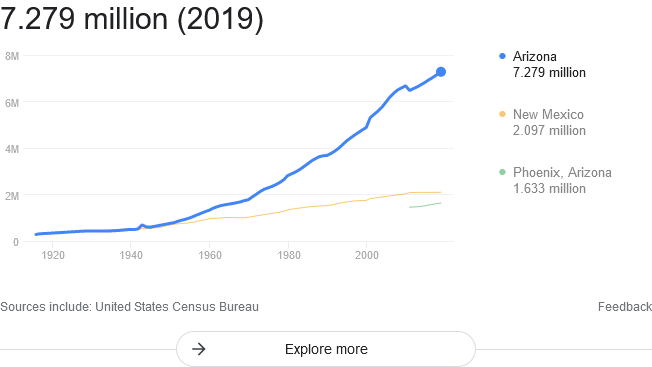
There is one state left, Arizona. It is one of the fastest growing states in the U.S

All their water has to be drawn from the Colorado River basin.

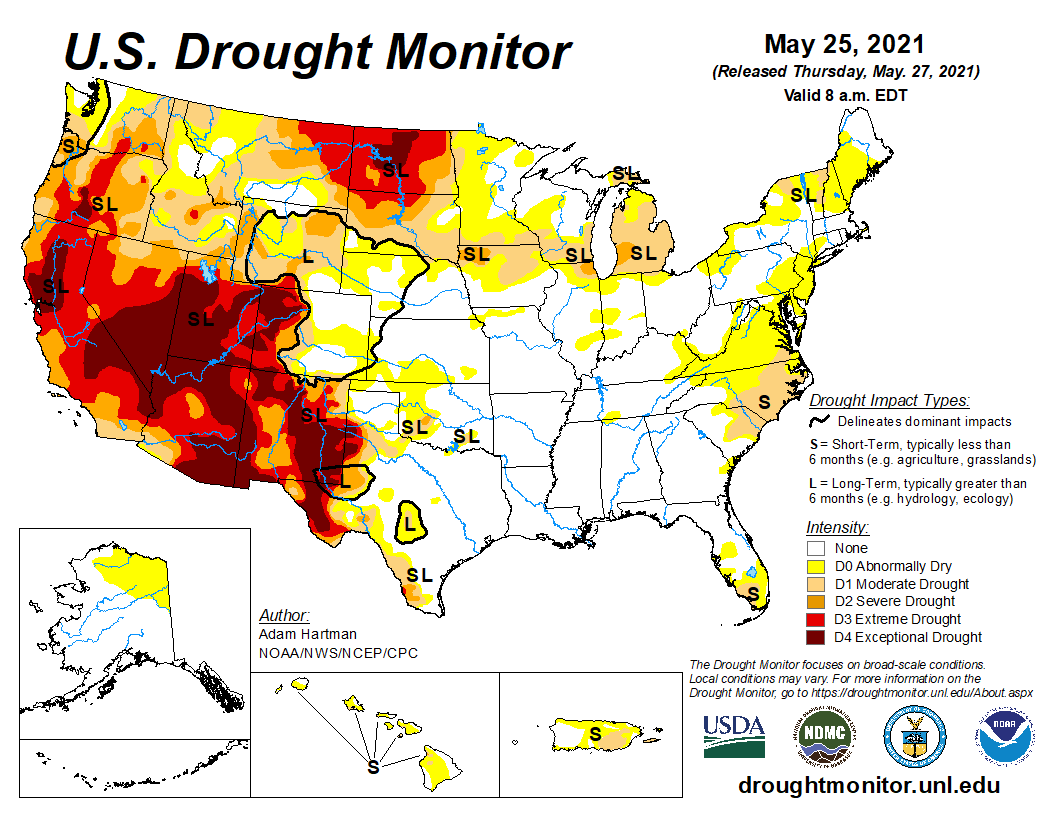
So, how is the water situation in the South-west? Right now they are in the most severe drought since 2016. Here is the map:

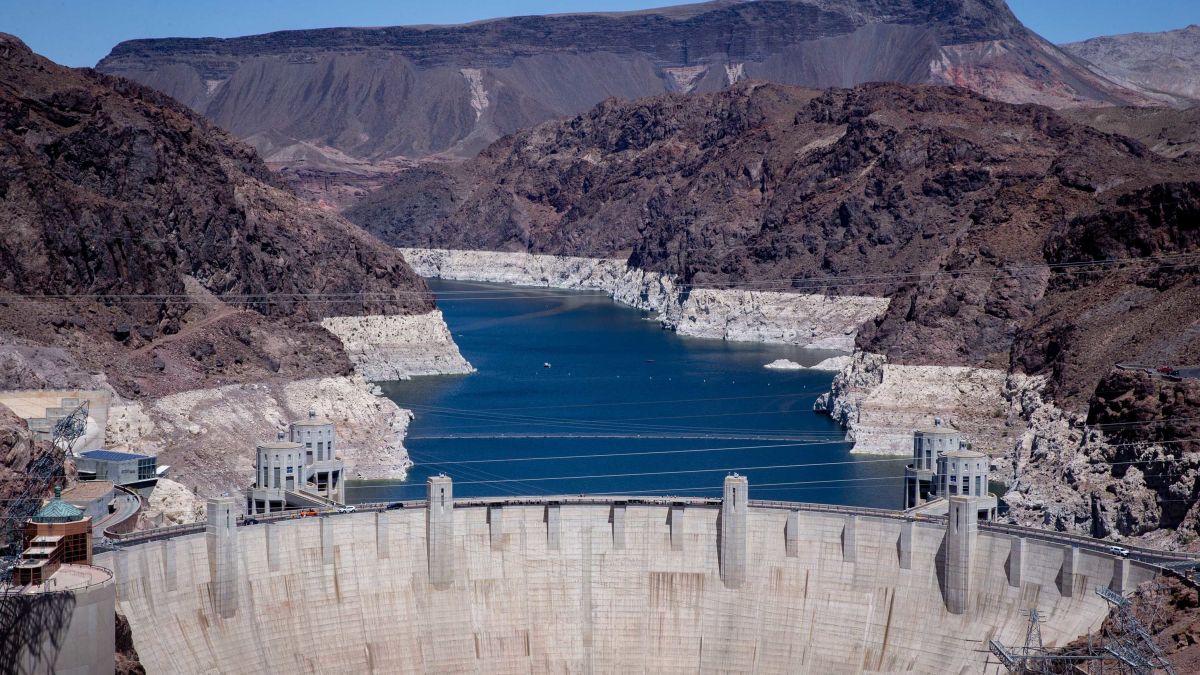
But there is plenty of water in Lake Mead, right? Take a look:

The water level is 155 feet below full pool. Lowest level since 2016
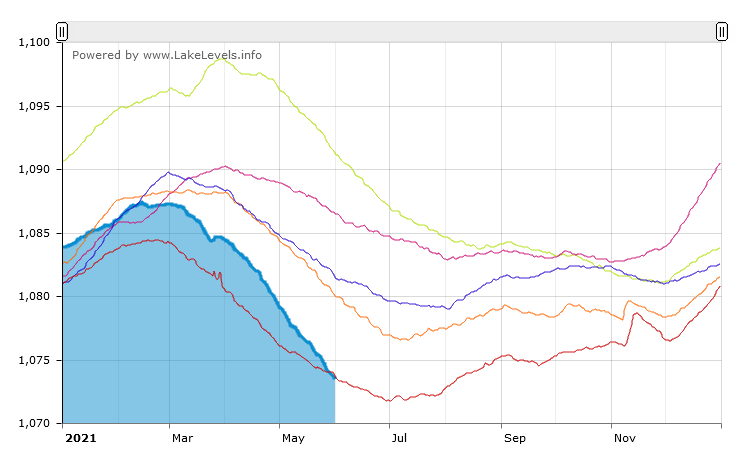
And the descent is much faster than in 2016.

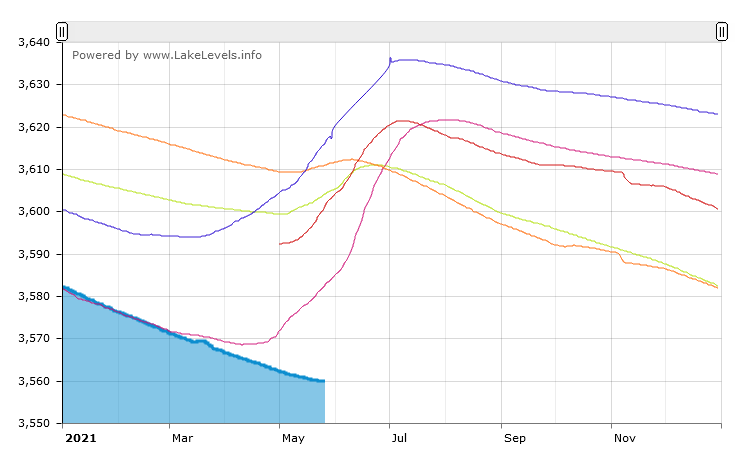
But the major feeder into Lake Mead is the output from Lake Powell. How does that look today?

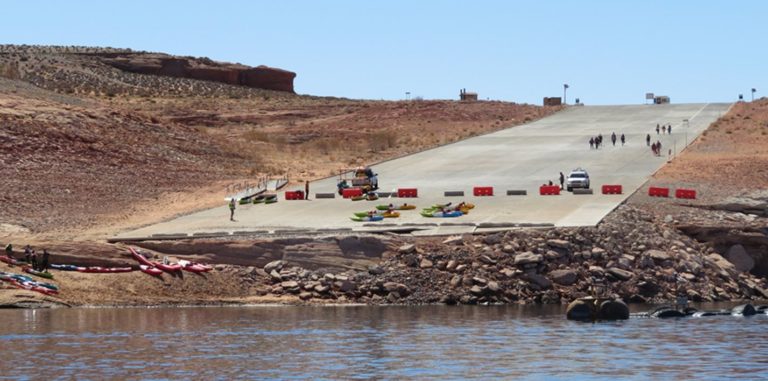
Oops: The water level is as of May 25 43 feet lower than in 2020, and the snow-pack of not yet melted snow is almost non- existent.

The extreme drought is nearly all over the South West. Mandatory water restrictions for the whole Colorado River basin seem inevitable this summer and for the foreseeable future. As long as people love to move to the U.S. Southwest, something must be done.

Yes, water is the critical resource we need to manage. It must be priority together with roads and bridges. The Eastern states has excess water. So let us build a large number of dams up the Missouri and Platte rivers and pump water up to Denver and Colorado Springs, and maybe even reverse the Moffet tunnel to supply the Colorado River basin with extra water.

This will take a lot of electrical energy. As long as we depend on fossil fuels to provide the electricity this is futile. We have to find another source to provide electricity.

These are my suggestions

  1. Do not worry about increasing CO2 levels. The major temperature stabilizer is clouds, and they will keep the earth from overheating by reflecting back into space a large amount of incoming solar radiation. Always did, and always will, even when the CO2 concentration was more than 10000 ppm millions of years ago. Ice ages will still come, and this is the next major climate change, maybe 10000 years from now, probably less.
  2. Clean up rivers, lakes and oceans from pollution. This is a priority.
  3. Limit Wind turbine electric energy to areas not populated by large birds to save the birds. Already over 1.3 million birds a year are killed by wind turbines, including the bald and Golden Eagles that like to build their aeries on top of wind turbines.
  4. Do not build large solar concentration farms. They too kill birds.
  5. Solar panels are o.k. not in large farms, but distributed on roofs and on city parking lots to provide backup power.
  6. Exploit geothermal energy in geologically stable areas.
  7. Where ever possible add peak power generation and storage capacity to existing hydroelectric power plants by pumping back water into the dams during excess capacity.
  8. Add peak power storage dams, even in wildlife preserves. The birds and animals don’t mind.
  9. Develop Thorium based Nuclear Power. Russia, China, Australia and India are ahead of us in this. Streamline permit processes. Prioritize research. This should be our priority, for when the next ice age starts we will need all the CO2 possible.
  10. Put fusion power as important for the future but do not rush it, let the research and development be scientifically determined. However, hybrid Fusion -Thorium power generation should be developed.
  11. When Thorium power is built up and has replaced coal and gas fired power plants, then is the time to switch to electric cars, not before.
  12. Standard Nuclear Power plants should be replaced by Thorium powered nuclear plants, since they have only 0,01% of the really bad long term nuclear waste.
  13. Start thinking about recovering CO2 directly from the air to produce aviation fuel. This should be done as Thorium power has replaced coal and gas fired power plants.
  14. This is but a start, but the future is not as bleak as all fearmongers state.

Thorium Nuclear Power is the only viable long term solution to our energy needs.

Here is a list why:

 1. A million year supply of Thorium available worldwide.

 2. Thorium already mined, ready to be extracted.

 3. Thorium based nuclear power produces 0.012 percent as much TRansUranium waste products as traditional nuclear power.

 4. Thorium based nuclear power will produce Plutonium-238, needed for space exploration.

 5. Thorium nuclear power is only realistic solution to power space colonies.

 6. Radioactive waste from an Liquid Fluoride Thorium Reactor decays down to background radiation in 300 years compared to a million years for U-235 based reactors. A Limerick.

 7. Thorium based nuclear power is not suited for making nuclear bombs.

 8. Produces isotopes that helps treat and maybe cure certain cancers.

 9. Liquid Fluoride Thorium Reactors are earthquake safe, only gravity needed for safe shutdown.

10. Molten Salt Liquid Fluoride Thorium Reactors cannot have a meltdown, the fuel is already molten, and it is a continuous process. No need for refueling shutdowns.

11. Molten Salt Nuclear Reactors have a very high negative temperature coefficient leading to a safe and stable control.

12. Atmospheric pressure operating conditions, no risk for explosions. Much safer and simpler design.

13. Virtually no spent fuel problem, very little on site storage or transport.

14. Liquid Fluoride Thorium Nuclear reactors scale beautifully from small portable generators to full size power plants.

15. No need for evacuation zones, Liquid Fuel Thorium Reactors can be placed near urban areas.

16. Liquid Fluoride Thorium Reactors will work both as Base Load and Load Following power plants.

17. Liquid Fluoride Thorium Reactors will lessen the need for an expanded national grid.

18. Russia has an active Thorium program.

19. India is having an ambitious Thorium program, planning to meet 30% of its electricity demand via Thorium based reactors by 2050.

 20. China is having a massive Thorium program.

21. United States used to be the leader in Thorium usage. What happened?

22. With a Molten Salt Reactor, accidents like the Three Mile Island disaster will not happen.

23. With a Molten Salt Reactor, accidents like Chernobyl are impossible.

24. With Molten Salt Reactors, a catastrophe like Fukushima cannot happen.

25. Will produce electrical energy at about 4 cents per kWh.

26. Can deplete most of the existing radioactive waste and nuclear weapons stockpiles.

27. With electric cars and trucks replacing combustion engine cars, only Thorium Nuclear power is the rational solution to provide the extra electric power needed.

28. The race for space colonies is on. Only Molten Salt Thorium Nuclear reactors can fit the bill.
29. President Donald J. Trump on Jan.12 issued an Executive Order on Promoting Small Modular Reactors for National Defense and Space Exploration. Only Liquid fluoride thorium reactors can meet all the needs

China has immense pollution problems. We must divest ourselves from the need of Chinese materials, they are destroying the world.

Give in to the evil Chinese

pollution will greatly increase;

for they lie, cheat and steal,

human rights they repeal.

We must stand, no more time to appease.

The United States, the world’s second-leading emitter after China, seeks to reclaim global leadership in the fight against global warming after former President Donald Trump withdrew the country from international efforts to cut emissions.  President Joe Biden unveiled the goal to cut emissions by 50%-52% from 2005 levels at the start of a two-day virtual climate summit attended virtually by leaders of 40 countries including China, Russia and India.

How can that be?

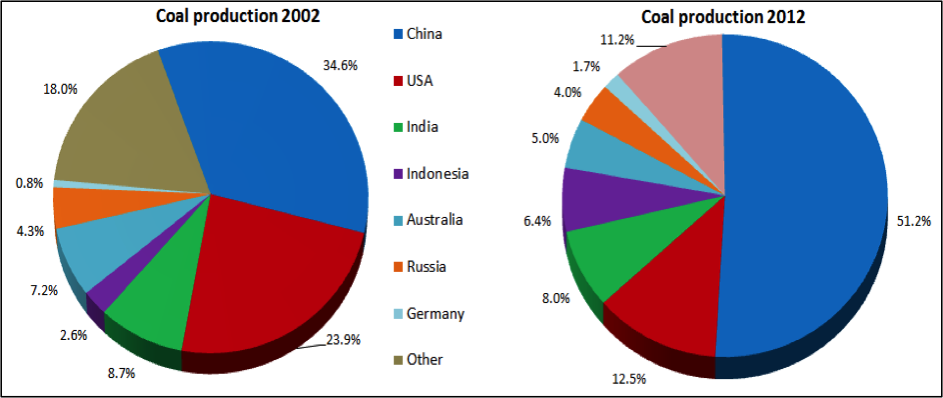
China burned 51.2% of the world’s coal in 2012, USA produced 12.5%. China’s production was more than four times larger. This has now stabilized and was in 2018 47%, because India and the real developing world are increasing their dependence on coal for electricity production, and also for cooking meals.

This of course is with the Paris accord in mind. U.S. and the European countries are to limit their emissions and slowly diminish them, down to a per capita emission comparable to the mid 1800’s, while China, being a “developing” country is allowed to increase their emissions until 2030, and then stabilize them, not decrease them.

How can they be burning nearly half the world’s coal mined?

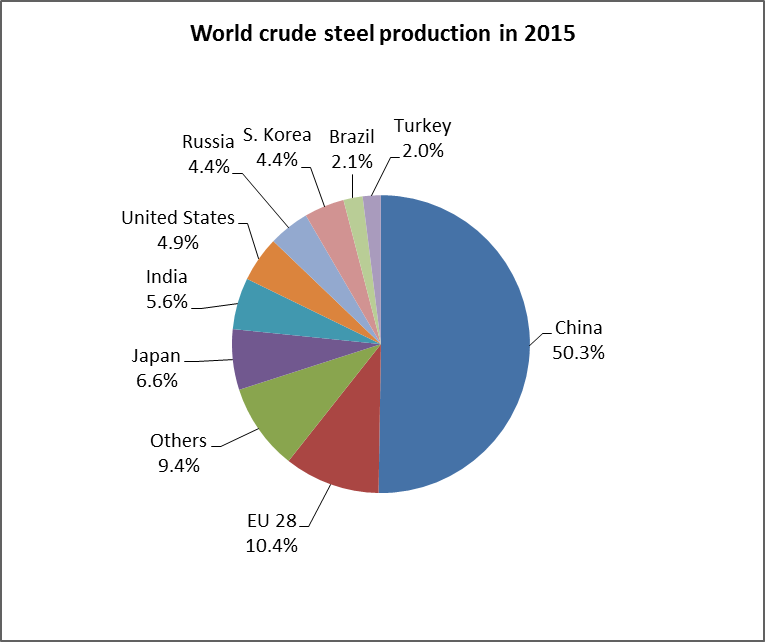
One reason is they are the world’s state controlled manufacturing company. They are also responsible for half the world’s Steel production. China produced 50.3% of the world’s crude Steel in 2015, USA produced 4.9%. China’s production was over 20 times larger than the U.S.Some of this steel was dumped below production cost to crush our domestic low end steel industry. An example: Rolled steel to make steel cans were exported at about $200 a ton, the production cost in the U.S. is more like $400 a ton. They can do this, since their environmental regulations only pay lip service to pollution. Remember how Pittsburgh was 60 years ago? China is much worse.

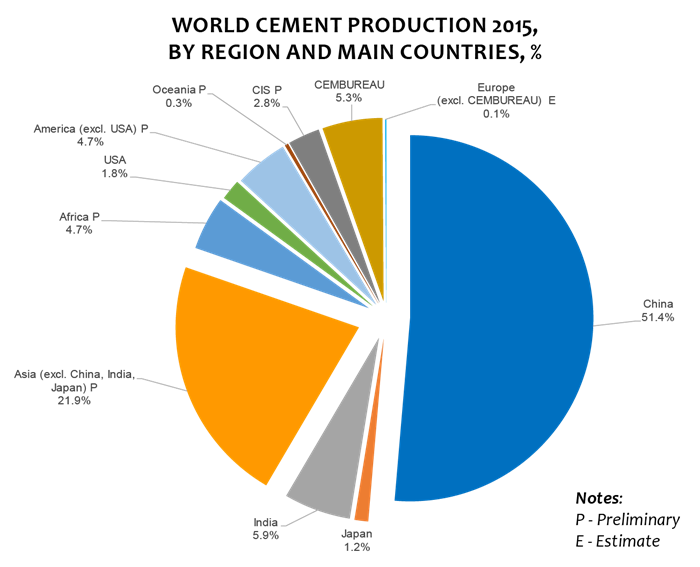
Cement production. China produced 51.4% of the world’s cement in 2015, USA produced 1.8%. China’s production was almost 30 times larger.

It takes a lot of concrete to build artificial islands so they can take control of the South China Sea. But they are building many other things,  Ghost Cities, but also an impressive infrastructure with high speed trains on elevated concrete tracks.

Worrisome as that may be, it is nothing compared to China’s dominance in Rare Earth Metals. Let me explain why rare earth metals are so important to our modern economy.

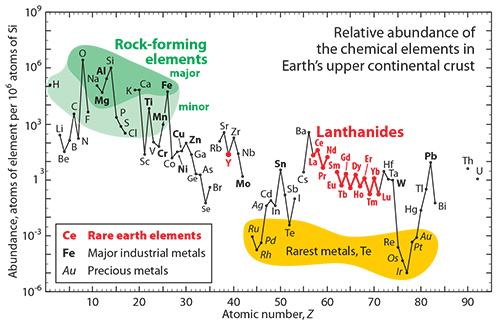
First, rare earth metals re not rare at all, they exist in small quantities together with Thorium and sometimes Uranium wherever other metals are mined.

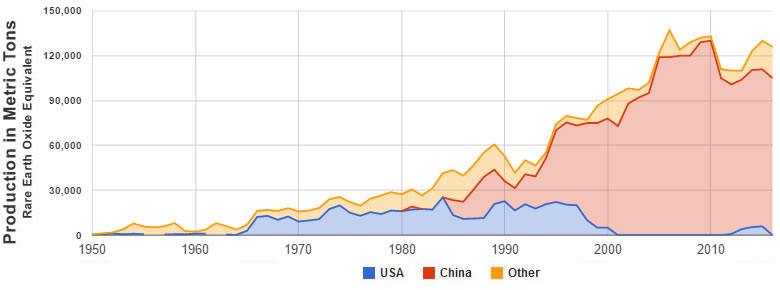
The Lanthanides occur in quantity in Monazite, a byproduct of mining Phosphates, but also as a byproduct of mining Titanium, and even from some Iron ores. The rare earth metals are free to begin extraction if it was not for one thing, they also contain Thorium, and Thorium is very weakly radio-active, so in the mid 1980’s the NRC and IAEA reclassified Monazite and anything containing Thorium as a “Source Material” and after that it became too costly to comply with all the regulations for nuclear material, so all production of rare earth minerals ceased in the U.S.

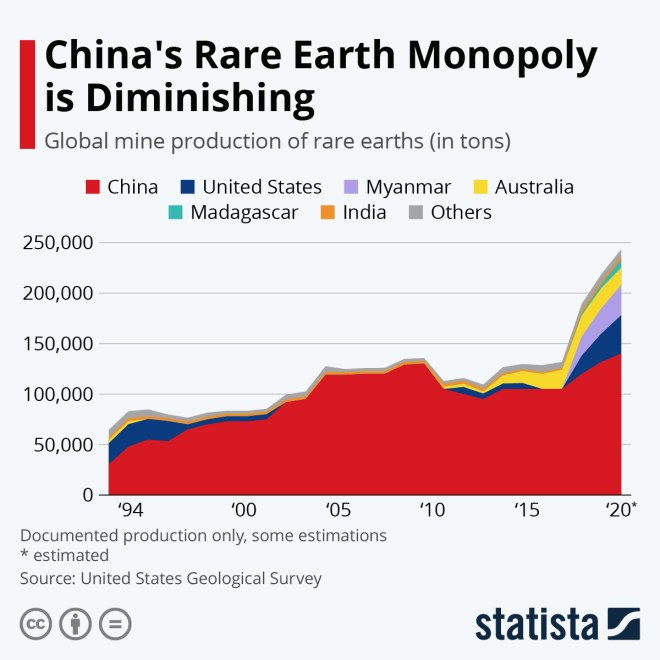
China saw an opportunity to grab the world market for Rare Earth Metals and is now controlling about 85% of the supply of all rare earth metals.

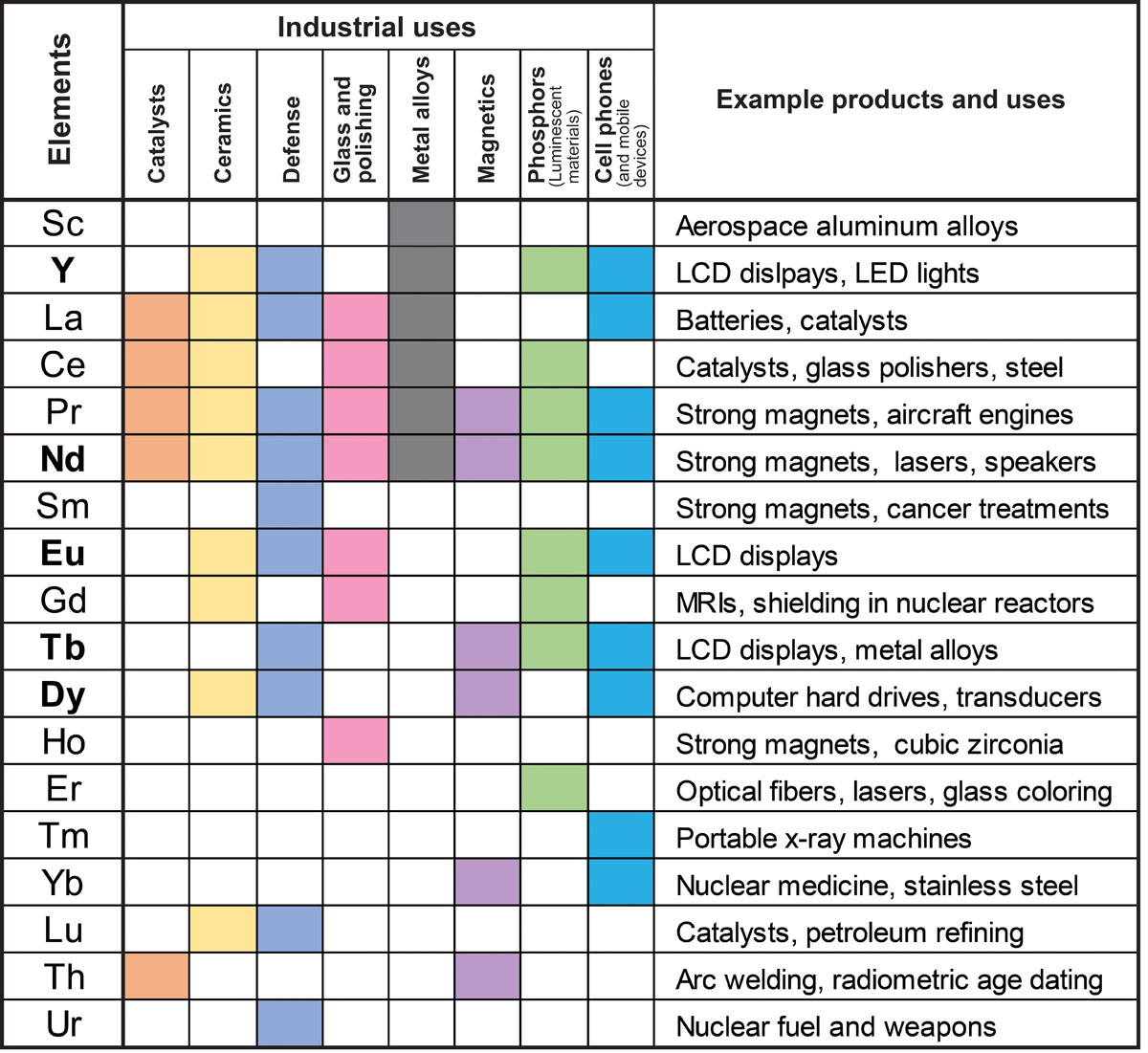
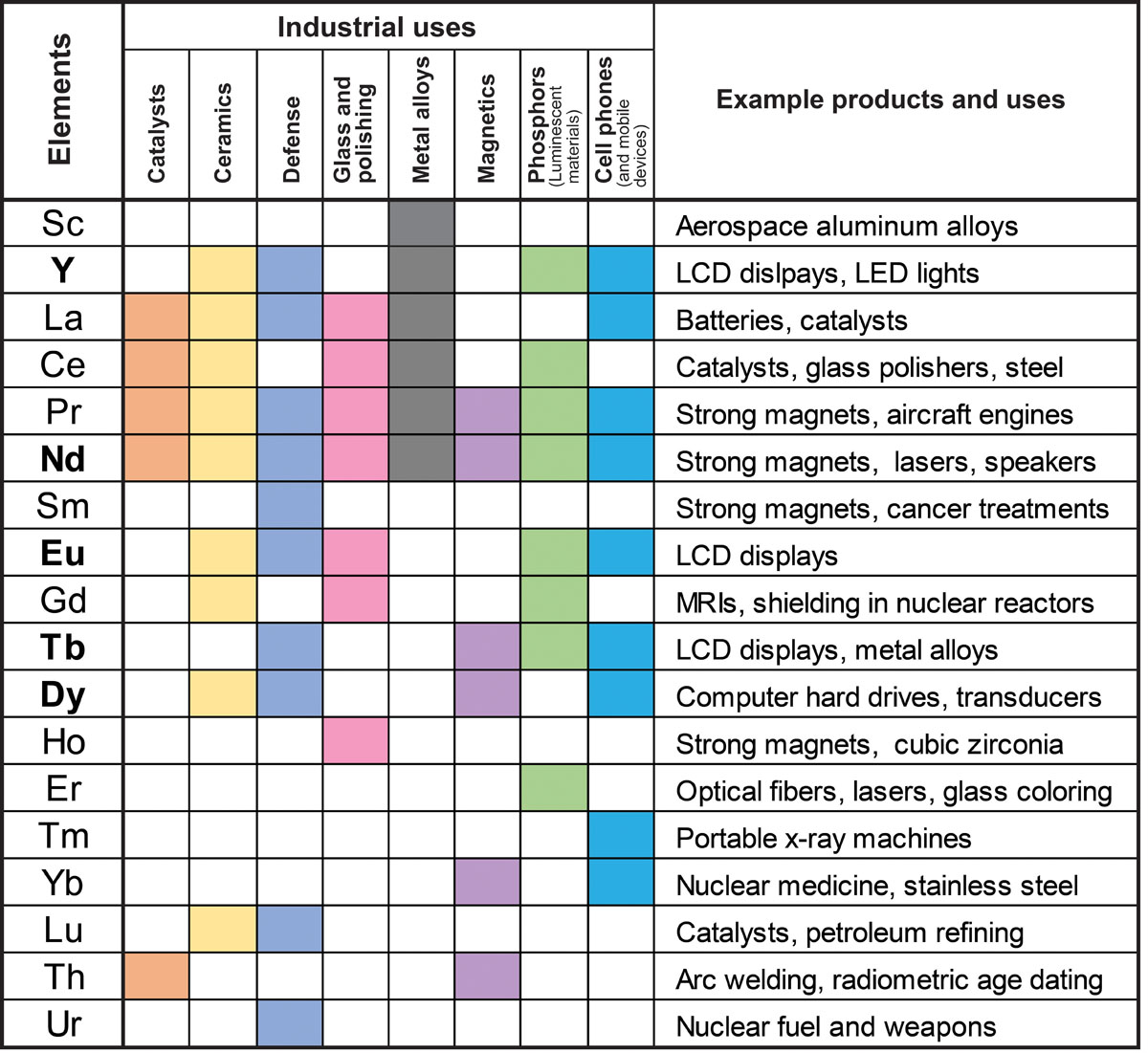
So what are rare earth metals used for?

China now has a de facto monopoly on all usages of rare earth metals, and in the case of war or an embargo, not only are our precious cell phones and computers in jeopardy, so is our defense, night vision goggles, aircraft engines, navigation systems, laser guidance, just to name a few uses.

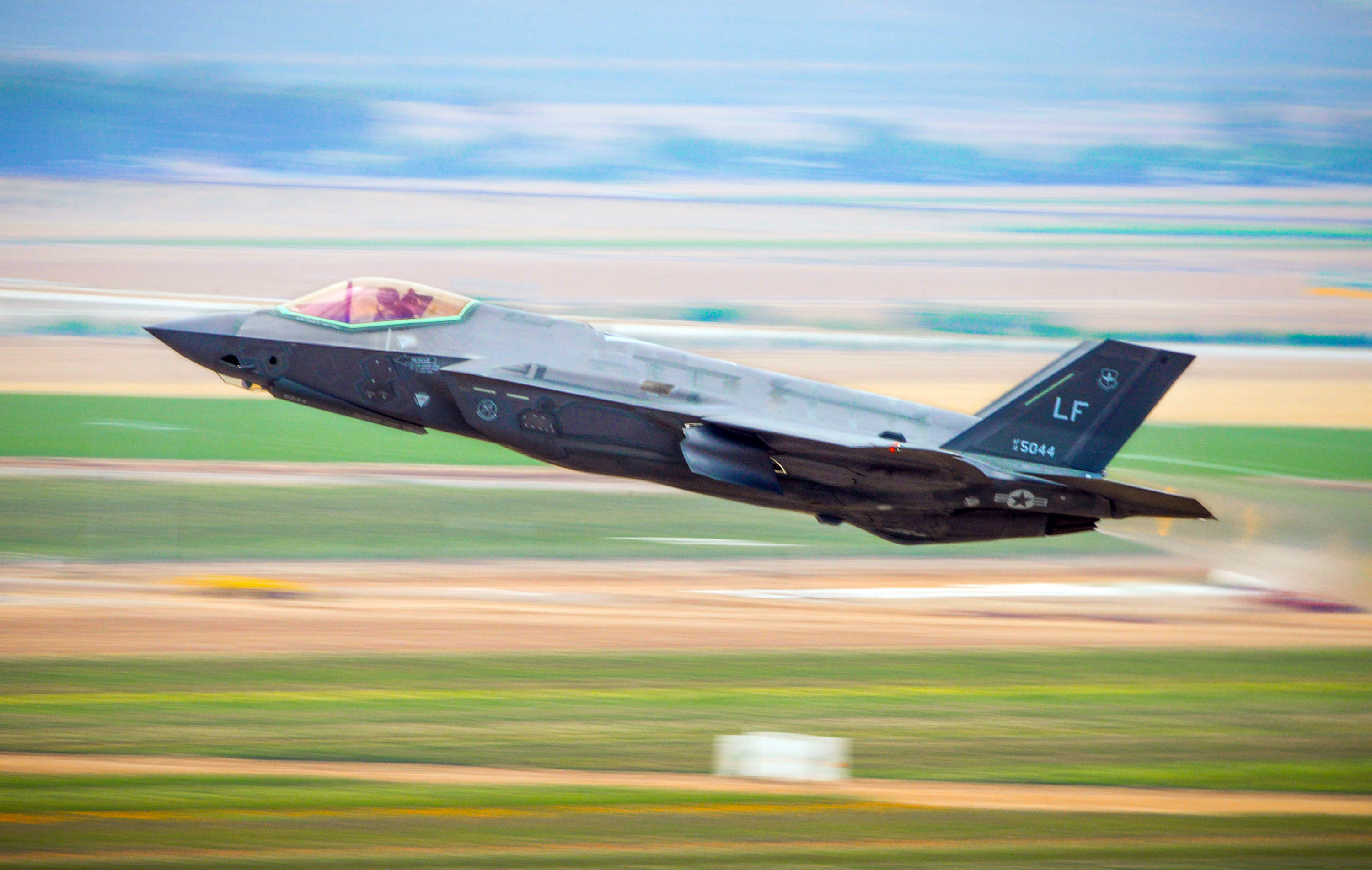
And not only that, we import the completed parts from China, even for our most sophisticated military equipment, such as the F35 aircraft, after telling the Chinese how to make the components. The very same components are now in China’s version of the F35, still under development, but in a year or so China will have their faithful copies made! A F35 aircraft contains about 935 pounds of rare earth metals.

This is clearly unsustainable, so in 2014  Congress tried to pass HR 4883 and         S 2006 to remedy the situation, but the bills got killed in review by none other than the defense department, citing National Security! Our only major rare earth metals mine reopened, only to go bankrupt in 2015. It has since reopened, but the ore is shipped to China for refining! One good point is that the Mountain Pass mine was scheduled to reopen the processing facilities late 2020, but full processing operations without the help from the Chinese rare earth refining giant corporation Shenghe Resources have been delayed to 2022

The idea was that we should change our electricity production into renewable sources, such as wind and solar.

Wind power uses a lot of rare earth metals to get the most efficient generators, all made by China. Wind power is about maxed out, that is, if you care about birds, especially eagles and raptors. The allowable bald eagle kill was upped from 1200 to 4200 a year for all U.S. wind turbines during the Obama administration. Killed golden eagles and storks has a S250,000 fine, paid by the electricity users, and if we build it out more, we may exterminate some species.

Solar power looked promising until pollution was taken into consideration.  China added 53 GW solar capacity in  2017.  The forecast for this year i 45 GW, and for next year 35 GW.

The efficiency of solar panels are drastically reduced by the layer of soot accumulating daily from air pollution. They have to be cleaned daily with water, and water is in short supply in northern China. The yellow river no longer reaches the ocean during large periods of the year, all water is spoken for. In southern India a solar farm used up so much water that the wells went dry and there was no more water for agriculture and people, except during the monsoon season. Germany has given up on their solar program except for special needs. The best places for large solar farms in the U.S. are in Arizona and Nevada, both are having severe and growing water problems. In addition, that is not where the energy is needed, so transmission losses must be taken into account, as well as the need to expand an increasingly vulnerable and in many parts undesirable national grid.

I am not against solar panels, and as soon as we are freed from total Chinese dominance on the material used in solar panels we should install them in open spaces, such as parking lots around factories and shopping malls, wherever there is adequate sunlight. Park the cars under them and the summer heat will be so much more bearable, and in the winter you will not have to scrape the windshield. When it snows, solar panels do not work anyway.

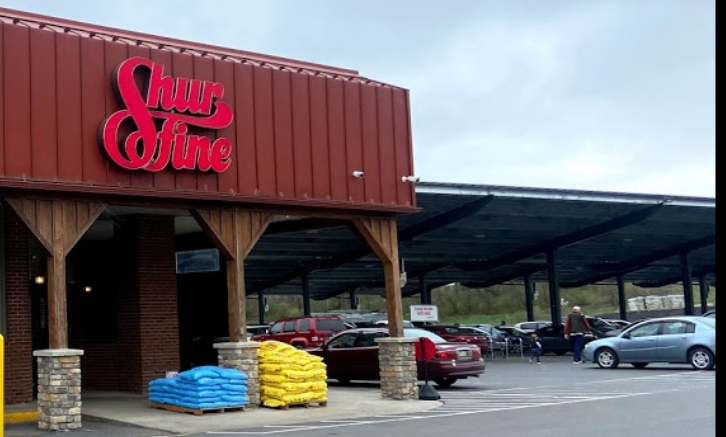
Burkholders grocery store on Rt 45 in central Pennsylvania, complete with solar panels over the parking lot.

Where it rains, China pollutes. The Yang -Tse  river carries nearly half the plastic waste that is dumped in the ocean. It can be stopped, but it will consume a lot of energy, both man-power and electricity  to do all the cleanup.

The most practical solution is found in creating a massive effort in developing and installing Thorium nuclear power. Here is a list of reasons why we should jump on the opportunity to solve the energy crisis:

 1. A million year supply of Thorium available worldwide.

 2. Thorium already mined, ready to be extracted.

 3. Thorium based nuclear power produces 0.012 percent as much TRansUranium waste products as traditional nuclear power.

 4. Thorium based nuclear power will produce Plutonium-238, needed for space exploration.

 5. Thorium nuclear power is only realistic solution to power space colonies.

 6. Radioactive waste from an Liquid Fluoride Thorium Reactor decays down to background radiation in 300 years compared to a million years for U-235 based reactors. A Limerick.

 7. Thorium based nuclear power is not suited for making nuclear bombs.

 8. Produces isotopes that helps treat and maybe cure certain cancers.

 9. Liquid Fluoride Thorium Reactors are earthquake safe, only gravity needed for safe shutdown.

10. Molten Salt Liquid Fluoride Thorium Reactors cannot have a meltdown, the fuel is already molten, and it is a continuous process. No need for refueling shutdowns.

11. Molten Salt Nuclear Reactors have a very high negative temperature coefficient leading to a safe and stable control.

12. Atmospheric pressure operating conditions, no risk for explosions. Much safer and simpler design.

13. Virtually no spent fuel problem, very little on site storage or transport.

14. Liquid Fluoride Thorium Nuclear reactors scale beautifully from small portable generators to full size power plants.

15. No need for evacuation zones, Liquid Fuel Thorium Reactors can be placed near urban areas.

16. Liquid Fluoride Thorium Reactors will work both as Base Load and Load Following power plants.

17. Liquid Fluoride Thorium Reactors will lessen the need for an expanded national grid.

18. Russia has an active Thorium program.

19. India is having an ambitious Thorium program, planning to meet 30% of its electricity demand via Thorium based reactors by 2050.

 20. China is having a massive Thorium program.

21. United States used to be the leader in Thorium usage. What happened?

22. With a Molten Salt Reactor, accidents like the Three Mile Island disaster will not happen.

23. With a Molten Salt Reactor, accidents like Chernobyl are impossible.

24. With Molten Salt Reactors, a catastrophe like Fukushima cannot happen.

25. Will produce electrical energy at about 4 cents per kWh.

26. Can deplete most of the existing radioactive waste and nuclear weapons stockpiles.

27. With electric cars and trucks replacing combustion engine cars, only Thorium Nuclear power is the rational solution to provide the extra electric power needed.

28. The race for space colonies is on. Only Molten Salt Thorium Nuclear reactors can fit the bill.
29. President Donald J. Trump on Jan.12 issued an Executive Order on Promoting Small Modular Reactors for National Defense and Space Exploration. Only Liquid fluoride thorium reactors can meet all the needs.

Time to rethink ethanol mandates for gasoline.

I just checked the price of corn. On May 7, the May 21, 2021 contract closed at $ 7.72 a bushel. A year ago, the price was a little over three dollars per bushel.
One bushel of corn makes 2.5 gallon of ethanol
That makes the feedstock price to make ethanol $3.08 a gallon. Add to that 50 cents to make the stuff and distribute it and the price per gallon is $ 3.58.
Since the heat content of ethanol is 67% of regular gasoline (no ethanol), the gasoline equivalent price of ethanol is $ 5.34 per gallon.
Over five bucks a gallon for ethanol! And that is before profit, blending, selling and taxes!
That’s the good news.
For the people that are worried about CO2 the bad news is:
To make corn you have to use 150 pounds of nitrogen fertilizer per acre. It takes the equivalent of 0.15 gallons of gasoline to produce one pound of nitrogen fertilizer. That comes to the equivalent of 22.5 gallons of gasoline to fertilize one acre. One acre of corn yields about 150 bushels of corn.
The fuel spent to produce one bushel of corn is therefore more than 0.15 gallons of gasoline. Since it also involves sowing, preparing the soil, cultivating, pesticides, phosphate fertilizer and harvesting it takes 0.25 gallons of fuel to produce one bushel of corn.
Here comes the kicker: When you ferment sugar into alcohol half the weight disappears as CO2! Let us examine the formula: C6H12O6 + Zymase → 2C2H5OH + 2CO2
The molecule weight of C2H5OH is 46 and the molecule weight of CO2 is 44.
Well almost half anyway.
Let us assume you have a car that gets 25 miles to the gallon and you drive 100 mile on pure gasoline. You have used 4 gallons of gasoline.
Now take the same car and drive 100 miles with a 10% ethanol mix, mandated by the EPA. Remember, they are concerned about CO2.
The ethanol has only 67% of the heat content of gasoline so the gas mileage will be lower. It will be consuming 0.04 x 0.9 +0.1 x 1.5 x 0.04 = 0.042 gallons per mile, 5% more or a total of 4.2 gallons for the 100 mile trip.
So you consumed 3.78 gallons of gasoline and 0.42 gallons of ethanol, for a total of 4.2 gallons. We have all experienced this increase in gas consumption. And this is best case.
What about CO2 up in the air? In the pure gasoline case we produced 4 gallons worth of CO2.
In the ethanol mix case we produced 4.2 gallons worth of CO2.
Add to that another .4 gallons equivalence of CO2 from the fermentation, and another .04 gallons worth of CO2 to produce the corn in the first place.
The sum total is 4.64 gallons worth of CO2, or about 16% more than in the gasoline only case.
But corn does absorb CO2 when it grows! Doesn’t that count?
Corn is one of the worst crops for soil erosion and uses up other nourishments that will not be used if you make ethanol from it. Granted the cattle are happy for the cakes that are left when the sugar and oil is removed.
In this age of looming food shortages nearly any other use of available tillable soil is to be preferred over ethanol production.
Oh, and one more thing. Assume that pure gasoline is 3 dollars a gallon at the pump, which includes 50 cents in taxes.
Unsubsidized ethanol blend should be $5.34 a gallon, before taxes
But we subsidize the ethanol production so the price is still 3 dollars a gallon at the pump.
If we used pure gasoline the hundred mile trip would cost twelve dollars.
If we paid full price for the ethanol blend we would pay $ 13.79 for the trip and produce 16% more CO2.
We are really paying $ 13.79 for the trip, produce 16% more CO2 and leave a bill of $1.79 for our grandchildren to pay, the subsidy of 0.42 gallons of ethanol.
This is EPA legislation at work, trying to combat the coming “climate catastrophe.”

There is a better way. remove ethanol subsidy guarantees and let the corn be used to produce more chicken and pork, and use some of the acreage to produce grain for a hungry world. This will help to prevent food prices inflation.

Earth day 2021. A Limerick.

It’s time for the annual Earth Day

to celebrate Lenin’s old birthday.

Population control

is their ultimate goal;

Choose life, not this bad Marxist way!

The theme for this earth day is still, sustainability, we must reduce the world population to about 700 million from present 7,6 billion, or the planet will be uninhabitable in 9 years.

Sherlock Holmes: “It is a capital mistake to theorize before one has data. Insensibly one begins to twist facts to suit theories instead of theories to suit facts”. From: “Scandal in Bohemia” A. Conan Doyle.

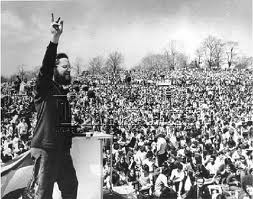
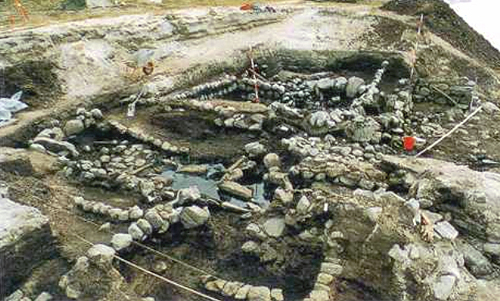
The first Earth Day in Philadelphia 1970, April 22 (the 100 year anniversary of Lenin’s Birth) featured Ira Einhorn (The Unicorn Killer) as master of Ceremonies. The big environmental scare of the day was the threat of a new Ice Age. The clarion call was: “In the year 2000 temperatures will have fallen 10 degrees”, the culprit was air pollution, especially acid rain. The acid rain was so bad in the Adirondacks, Canada, Norway and Sweden that the Rainbow Trout died in droves, and even the oceans were in danger of getting too acid. The stench from dead fish washing up the shores of lake Ontario was overwhelming. Regulations were enacted to add scrubbers to power stations, waste water was purified, and – wouldn’t you know it, the cooling trend reversed itself and was followed by warming. Since the cooling trend was “obviously man-made” they had to find a reason for the sudden warming. Never mind that around the year 1200 there was at least one farm on South West Greenland that exported, among other things, cheese. How do we know that? They have excavated the ruins of a farm, “Gården under Sanden”, buried under permafrost for six centuries.  During these six centuries the Northern Hemisphere experienced what is called “the little ice age” a time when the winters could be so cold that in 1658 the Swedish army, cavalry and artillery crossed the Great Belts in the southern Baltic over ice and sacked Copenhagen.

Picture left: Gården under sanden excavation.

Picture belowt: The crossing of the Great Belt 1658.

To predict future climate changes many computer models have been developed dealing with how the earth responds to changes in atmospheric conditions, especially how it responds to changes in CO2 levels.  Most were developed in the 1970 to 2000 time frame, a time of rapid temperature rise and as such they were all given a large factor for the influence of rising CO2. Since 2005 we have had a cooling trend, so the models cooperate less and less and are given more and more unreliable predictions. It is no wonder then that they all have failed to model the past. None of them have reproduced the medieval warm period or the little ice age. If they cannot agree with the past there is no reason to believe they have any ability to predict the future. The models are particularly bad when it comes to predict cloud cover and what time of day clouds appear and disappear. Below is a chart of a number of climate models and their prediction of cloud cover versus observed data. Note especially to the right where most models completely fail to notice the clear skies over Antarctica.

Is there a better way to predict future temperature trends? When you go to the doctor for a physical, at some point and without warning he hits you under the knee with a hammer and watches your reaction. He is observing your impulse response. Can we observe impulse responses for the earth? We can do even better. In the 51 years since the first Earth Day we have collected satellite data, not only temperature, but also cloud data, and the result differs quite a lot from the predicted model results.

Old Lenin stands tall in Seattle. It was the only statue safe in Seattle during the riots of 2020.

Quote from Alexandria Occasio-Cortez in January 2019: “Millennials and Gen Z and all these folks that come after us are looking up, and we’re like, ‘The world is going to end in 12 years if we don’t address climate change, and your biggest issue is how are we gonna pay for it?’ ” she said.

I beg to differ.

We live in only one world. As a concerned citizen I realize we have immense environmental challenges before us, with water pollution; from plastics in the ocean, excess fertilizer in the rivers, poison from all kinds of chemicals, including antibiotics, birth control and other medicines flushed down the toilet after going through our bodies, animals that are fed antibiotics, pest control, weed control and so on. Increasing CO2 is not one of the problems, it will in fact help with erosion control, and allow us to feed more people on less agricultural land with proper management, and require less fertilizer and water to do so. In fact, proper water management is a larger problem, with some rivers no longer even reaching the ocean. All water is already spoken for, especially in much of the 10 to 40 degrees latitude, where most people live.

In the atmosphere the two most important greenhouse gases are water vapor and CO2 with methane a distant third. Water vapor is much more of a greenhouse gas everywhere except near the tropopause, high above the high clouds and over the polar regions, when the temperature is below 0 F, way below freezing. If the temperature is above freezing, CO2 is of almost no importance. A chart shows the relationship between CO2 and water vapor:

Image result for h20 and co2 as greenhouse gases

Source: http://notrickszone.com/2017/07/31/new-paper-co2-has-negligible-influence-on-earths-temperature/

Even in Barrow, Alaska water vapor is the dominant greenhouse gas. Only at the South Pole (And North Pole) does CO2 dominate (but only in the winter).

All Climate models take this into account, and that is why they all predict that the major temperature increase will occur in the polar regions with melting icecaps and other dire consequences. But they also predict a uniform temperature rise from the increased forcing from CO2 and the additional water vapor resulting from the increased temperature.

This is wrong on two accounts. First, CO2 and H2O gas are nor orthogonal, that means they both absorb in the same frequency bands. There are three bands where CO2 absorbs more than H2O in the far infrared band, but other than that H2O is the main absorber. If H2O is 80 times as common as CO2 as it is around the equator, water vapor is still the dominant absorber, and the amount of CO2 is irrelevant.

Secondly gases cannot absorb more than 100% of the energy available in any given energy wavelength! So if H2O did absorb 80% of the energy and CO2 absorbed 50%, the sum is not 130%, only 90%. (0.8 + 0.5×0,2 or 0.5 + 0.8×0.5). In this example CO2 only adds one quarter of what the models predict.

How do I know this is true? Lucky for us we can measure what increasing CO2 in the atmosphere has already accomplished. For a model to have credibility it must be tested with measurements, and pass the test. There is important evidence suggesting the basic story is wrong. All greenhouse gases work by affecting the lapse rate in the tropics. They thus create a “hot spot” in the tropical troposphere. The theorized “hot spot” is shown in the early IPCC publications. (Fig A)

Fig. B shows observations. The hotspot is not there. If the hotspot is not there, the models must be wrong. So what is wrong with the models? This was reported in 2008 and the models still assume the additive nature of greenhouse gases, even to the point when more than 100% of the energy in a given band is absorbed.

How about Methane? Do not worry, it absorbs nearly exclusively in the same bands as water vapor and has no measurable influence on the climate.

But it will get warmer at the poles. That will cause melting of the ice-caps? Not so fast. When temperature rises the atmosphere can hold more water vapor, so it will snow more at higher latitudes. While winter temperatures will be higher with more snowfall, this will lower the summer temperatures until the extra snow has melted. And that is what is happening in the Arctics

As we can see from this picture, the winters were about 5 degrees warmer, but starting from late May through early August temperatures were lower. It takes time to melt all the extra snow that fell because of the less cold air, able to contain more water vapor.

These are my suggestions

  1. Do not worry about increasing CO2 levels. The major temperature stabilizer is clouds, and they will keep the earth from overheating by reflecting back into space a large amount of incoming solar radiation. Always did, and always will, even when the CO2 concentration was more than 10000 ppm, millions of years ago. Ice ages will still come, and this is the next major climate change, maybe 5000 years from now, probably less.
  2. Clean up rivers, lakes and oceans from pollution. This is a priority.
  3. Limit Wind turbine electric energy to areas not populated by large birds to save the birds. Already over 1.3 million birds a year are killed by wind turbines, including the bald and Golden Eagles that like to build their aeries on top of wind turbines.
  4. Do not build large solar concentration farms. They too kill birds.
  5. Solar panels are o.k. not in large farms, but distributed on roofs to provide backup power.
  6. Exploit geothermal energy in geologically stable areas.
  7. Where ever possible add peak power generation and storage capacity to existing hydroelectric power plants by pumping back water into the dams during excess capacity.
  8. Add peak power storage dams, even in wildlife preserves. The birds and animals don’t mind.
  9. Develop Thorium based Nuclear Power. Russia, China, Australia and India are ahead of us in this. Streamline permit processes. Prioritize research. This should be our priority, for when the next ice age starts we will need all the CO2 possible.
  10. Put fusion power as important for the future but do not rush it, let the research and development be scientifically determined. However, hybrid Fusion -Thorium power generation should be developed.
  11. When Thorium power is built up and has replaced coal and gas fired power plants, then is the time to switch to electric cars, not before.
  12. Standard Nuclear Power plants should be replaced by Thorium powered nuclear plants, since they have only 0,01% of the really bad long term nuclear waste.
  13. Start thinking about recovering CO2 directly from the air and produce aviation fuel. This should be done as Thorium power has replaced coal and gas fired power plants.
  14. This is but a start, but the future is not as bleak as all fearmongers state.

And here are the major advantages of developing Thorium Nuclear Power.

 1. A million year supply of Thorium available worldwide.

 2. Thorium already mined, ready to be extracted.

 3. Thorium based nuclear power produces 0.012 percent as much TRansUranium waste products as traditional nuclear power.

 4. Thorium based nuclear power will produce Plutonium-238, needed for space exploration.

 5. Thorium nuclear power is only realistic solution to power space colonies.

 6. Radioactive waste from an Liquid Fluoride Thorium Reactor decays down to background radiation in 300 years compared to a million years for U-235 based reactors. A Limerick.

 7. Thorium based nuclear power is not suited for making nuclear bombs.

 8. Produces isotopes that helps treat and maybe cure certain cancers.

 9. Liquid Fluoride Thorium Reactors are earthquake safe, only gravity needed for safe shutdown.

10. Molten Salt Liquid Fluoride Thorium Reactors cannot have a meltdown, the fuel is already molten, and it is a continuous process. No need for refueling shutdowns.

11. Molten Salt Nuclear Reactors have a very high negative temperature coefficient leading to a safe and stable control.

12. Atmospheric pressure operating conditions, no risk for explosions. Much safer and simpler design.

13. Virtually no spent fuel problem, very little on site storage or transport.

14. Liquid Fluoride Thorium Nuclear reactors scale beautifully from small portable generators to full size power plants.

15. No need for evacuation zones, Liquid Fuel Thorium Reactors can be placed near urban areas.

16. Liquid Fluoride Thorium Reactors will work both as Base Load and Load Following power plants.

17. Liquid Fluoride Thorium Reactors will lessen the need for an expanded national grid.

18. Russia has an active Thorium program.

19. India is having an ambitious Thorium program, planning to meet 30% of its electricity demand via Thorium based reactors by 2050.

 20. China is having a massive Thorium program.

21. United States used to be the leader in Thorium usage. What happened?

22. With a Molten Salt Reactor, accidents like the Three Mile Island disaster will not happen.

23. With a Molten Salt Reactor, accidents like Chernobyl are impossible.

24. With Molten Salt Reactors, a catastrophe like Fukushima cannot happen.

25. Will produce electrical energy at about 4 cents per kWh.

26. Can deplete most of the existing radioactive waste and nuclear weapons stockpiles.

27. With electric cars and trucks replacing combustion engine cars, only Thorium Nuclear power is the rational solution to provide the extra electric power needed.

28. The race for space colonies is on. Only Molten Salt Thorium Nuclear reactors can fit the bill.
29. President Donald J. Trump on Jan.12 issued an Executive Order on Promoting Small Modular Reactors for National Defense and Space Exploration. Only Liquid fluoride thorium reactors can meet all the need

No border crisis but a climate catastrophe is looming?

Climate change is now officially the new secular religion. House Speaker Nancy Pelosi (D-CA) said Sunday, March 14 on ABC’s “This Week” “My most recent trip to the northern triangle, that would be Honduras, Guatemala, El Salvador. You saw the impact of climate change. These people were leaving because of the drought. They couldn’t farm, and they were seeking other ways to survive. There are many reasons to go into this, but the fact we have to deal with it at the border, and some of the people coming there are seeking asylum.

The iconic Metronome digital clock sprawled across a 14th Street building in New York City facing Union Square normally counts time to and from midnight down to the fractions of a second, like a never-ending hour glass.

But in September 2020, the public installation was transformed into a “Climate Clock” that broadcasts the time remaining to avert an all-out climate catastrophe, or more specific, how much time we have left before the earth has warmed up 1.5 degree Celsius, the tipping point after which life as we know it would seize to exist.

Climate apocalypse alarmists also provide you with a climate clock to download which at the time of writing this blog looked like this:

The climate clock ticks down with remarkable precision, and the part of the total energy generated that is renewable is increased is displayed with ten digit precision.

So far, so good. But is it true? Let us take a look at the total ecosystem, including the clouds, rain and snow.

As CO2 warms up the poles

burned oil, gas and coal play their roles.

CO2 is still good;

makes plants green, grows more food,

and clouds are the climate controls.

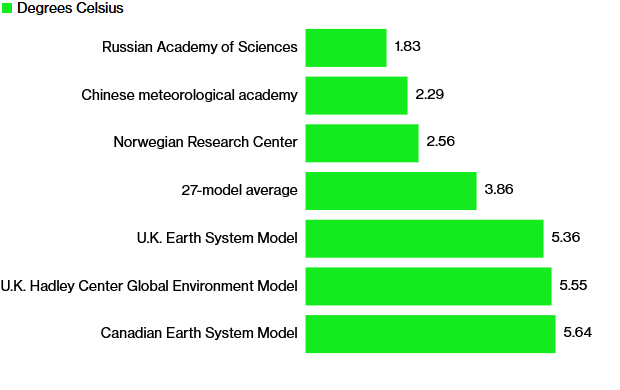
We live in interesting times, the CO2 concentration has increased 50% since the beginning of industrialization. In the last 30 years the level has risen 17%, from about 350 ppm to nearly 410 ppm. This is what scares people. Is is time to panic and stop carbon emissions altogether as teenage Climate activist Greta Thunberg and N.Y. congresswoman Alexandria Ocasio-Cortez have suggested? As if on cue the climate models have been adjusted, and they suddenly show a much higher rate of temperature increase, in this case what is supposed to happen to global temperatures for a doubling of CO2 from pre-industrial times, from 270ppm to 540ppm.

There are two ways to approach this problem. The models make certain assumptions about the behavior of the changing atmosphere and model future temperature changes. This is the approach taken by IPCC for the last 32 years. These models are all failing miserably when compared to actual temperature changes.

The other way i to observe what is actually happening to our temperature over time as the CO2 increases. We have 50 years of excellent global temperature data, so with these we can see where, when and by how much the earth has warmed.

The most drastic temperature rise on earth has been in the Arctic above the 80th latitude. In the winter of 2018 it was 8C above the 50 year average. See charts from the Danish Meteorological Institute:

Note, there is no increase at all in the summer temperatures!

The fall temperature saw an increase of 4C and the spring temperature saw an increase of about 2.5C.

The 2020 winter recorded an about 4c increase Source: DMI.

meanT_2020

Notice: In this chart the there is no recorded summer temperature increase at all!

The 5 thru 8C winter rise of temperature is significant, most would even say alarming, and my response is, why is that?

To get the answer we must study molecular absorption spectroscopy and explain a couple of facts for the 97% of all scientists who have not studied molecular spectroscopy. IPCC and most scientists claim that the greenhouse effect is dependent on the gases that are in the atmosphere, and their combined effect is additive according to a logarithmic formula. This is true up to a certain point, but it is not possible to absorb more than 100% of all the energy available in a certain frequency band! For example: If water vapor absorbs 90% of all incoming energy in a certain band, and CO2 absorbs another 50% of the energy in the same band, the result is that 95% is absorbed, (90% + 50% * (100% – 90%)),  not 140%, (90% + 50%).

The following chart shows both CO2 and H2O are absorbing greenhouse gases, with H20 being the stronger greenhouse gas, absorbing over a much wider spectrum, and they overlap for the most part. But it also matters in what frequency range s they absorb.

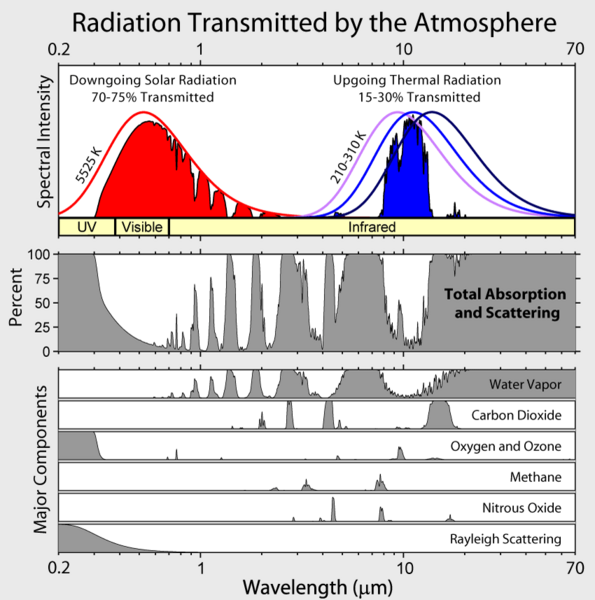
For this we will have to look at the frequency ranges of the incoming solar radiation and the outgoing black body radiation of the earth. It is the latter that causes the greenhouse effect. Take a look at this chart:

The red area represents the observed amount of solar radiation that reaches the earth’s surface, the white area under the red line represents radiation absorbed in the atmosphere. Likewise, the blue area represents the outgoing black body radiation that is re-emitted. The remaining white area under the magenta, blue or black line represents the retained absorbed energy that causes the greenhouse effect.

Let us  now take a look at the Carbon Dioxide bands of absorption, at 2.7, 4.3 and 15 microns. Of them the 2.7 and 4.3 micron bands absorb where there is little black body radiation, the only band that is of interest is at 15 microns, and that is in a band where the black body radiation has its maximum. However it is also in a band where water vapor also absorb, not as much as CO2,only about 20% to 70% as much. Water vapor or absolute humidity is highly dependent on the temperature of the air, so at 30C there may be 50 times as much water vapor, at 0C there may be ten times as much water vapor, and at -25C there may be more CO2 than water vapor. At those low temperatures the gases are mostly additive. In the tropics with fifty times more water vapor than CO2, increased CO2 has no influence on the temperature whatsoever. Temperature charts confirm this assertion:

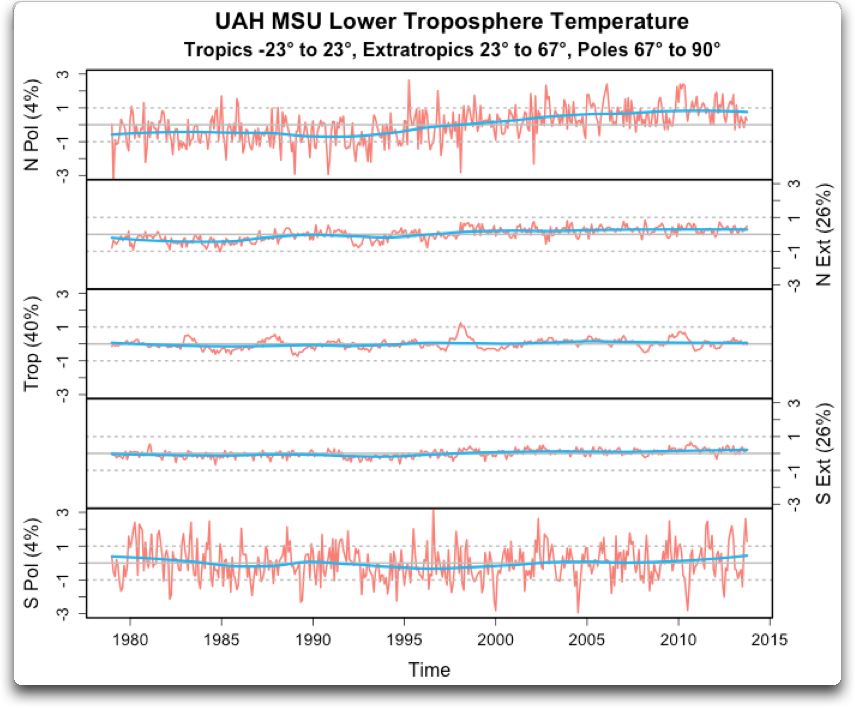
Here the temperature in the tropics displays no trend whatsoever. It follows the temperature of the oceans, goes up in an El Niño and down in a La Niña. The temperature in the southern hemisphere shows no trend. In the northern temperate region there is a slight increase, but the great increase is occurring in the Arctic. There is no increase in the Antarctic yet even though the increase in CO2 is greater in the Antarctic and the winter temperature in the Antarctic is even lower than in the Arctic. So CO2 increase cannot be the sole answer to the winter temperature increase in the Arctic.

There is an obvious answer. When temperatures increase the air can contain more moisture and will transport more moisture from the tropics all the way to the arctic, where it falls as snow. Is the snow increasing in the Arctic?

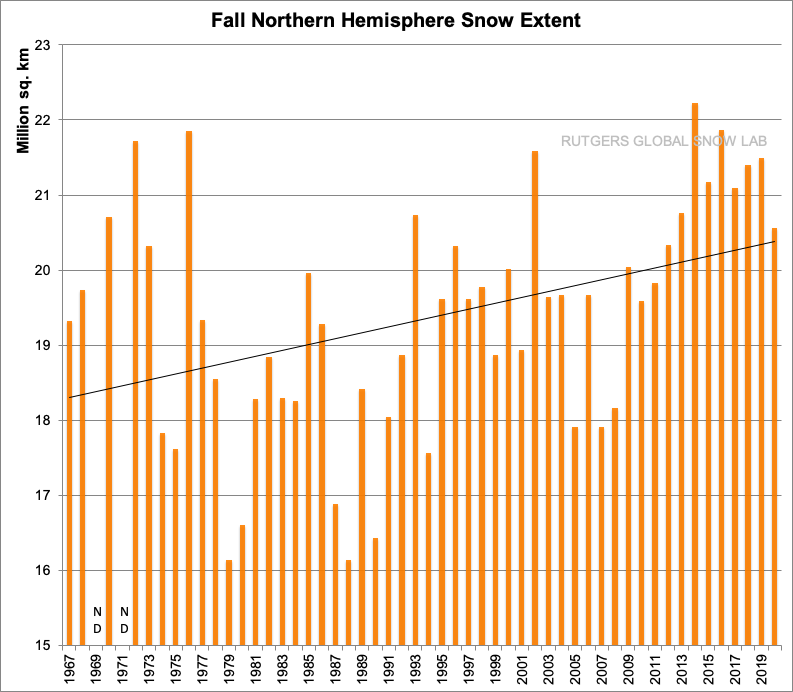
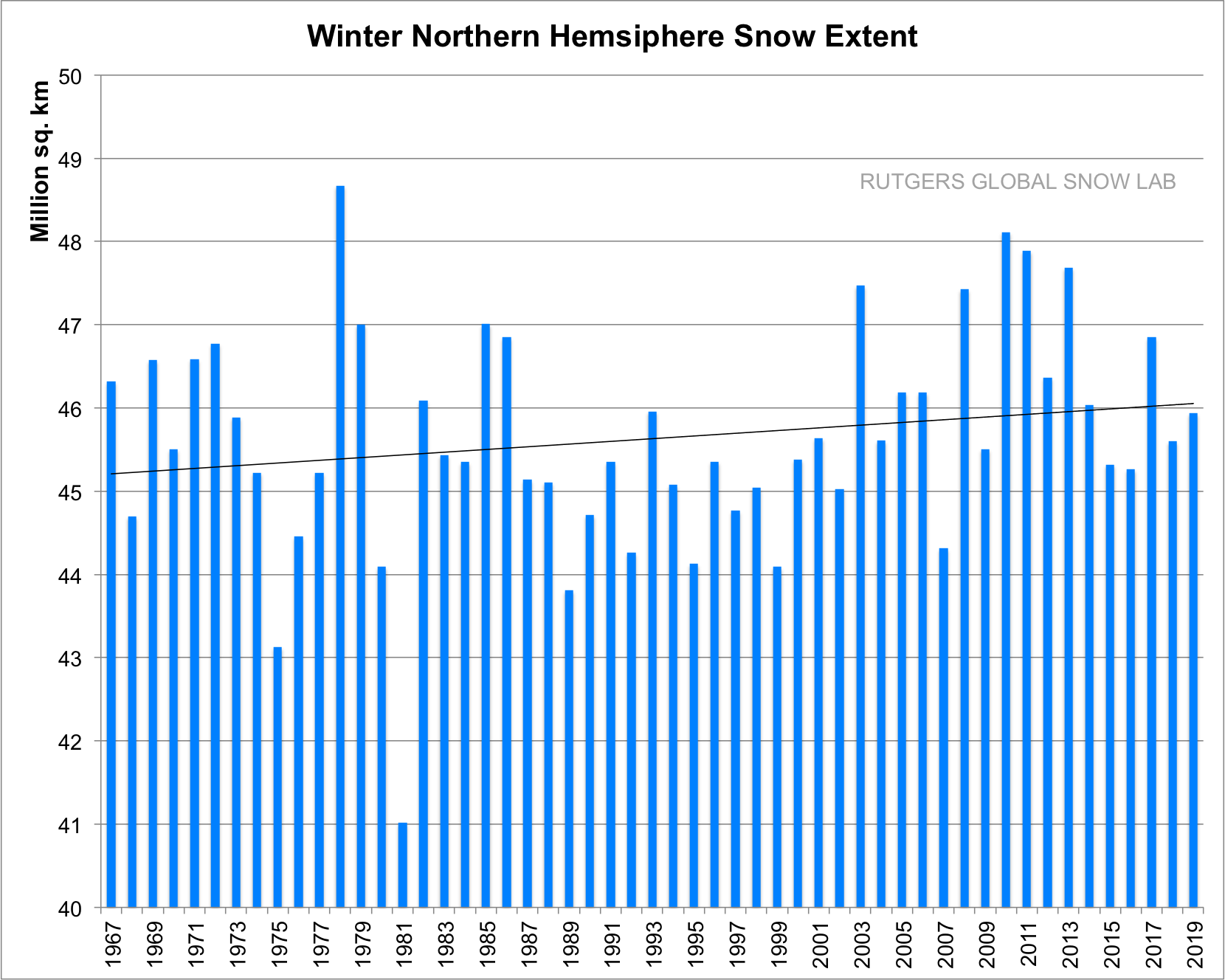
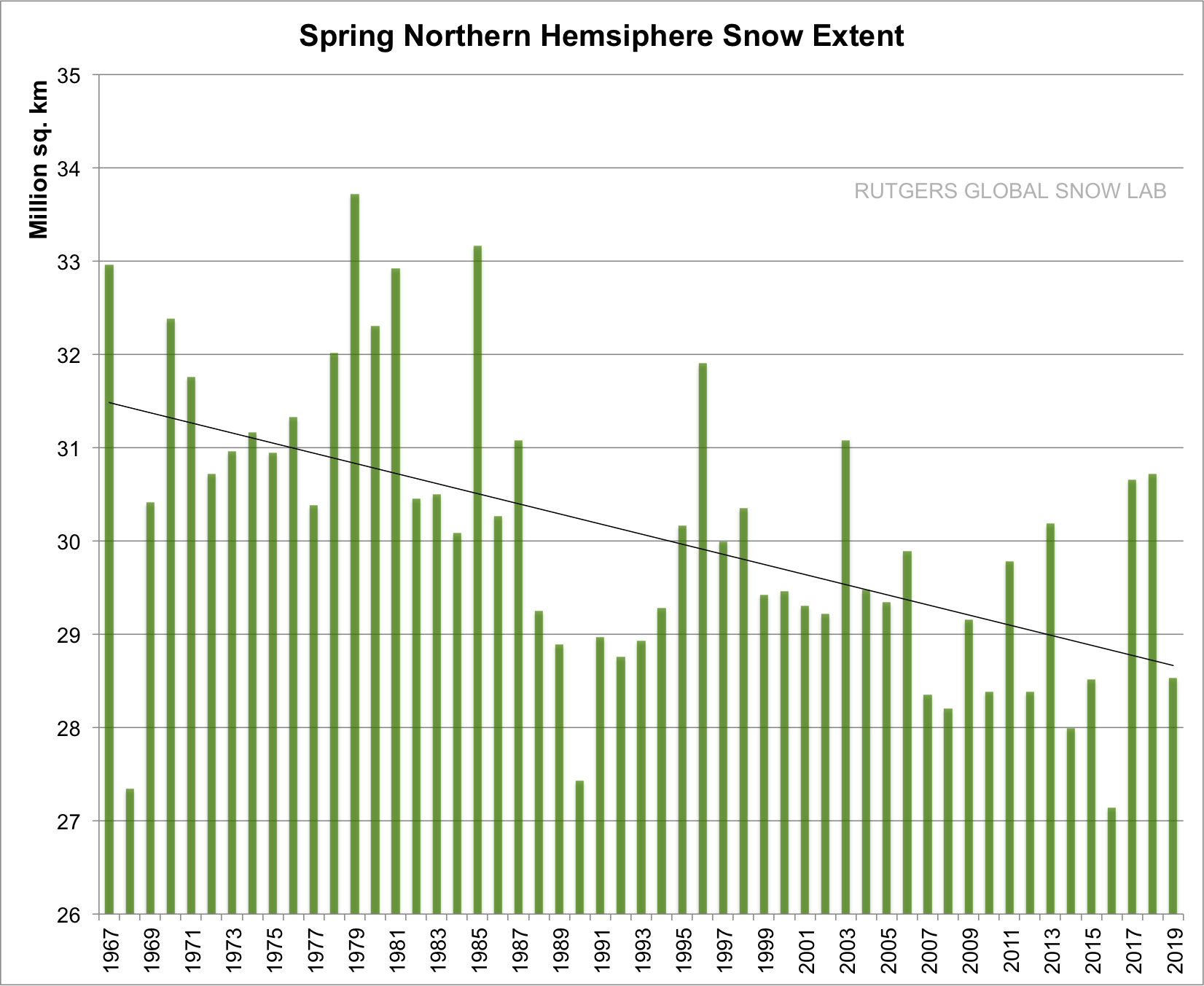
Let us see what the snow statistics show. These are from the Rutgers’ snow lab.

nhland_season4

The fall snow extent is increasing, and has increased by more than 2 percent per year.

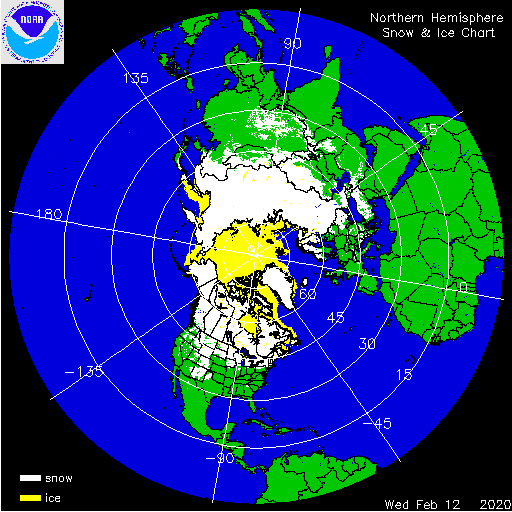
The winter snowfall has also increased but only by 0.04 percent per year. The snow covers all of Russia, Northern China, Mongolia, Tibet, Kashmir and northern Pakistan, Northern Afghanistan, Northern Iran, Turkey, Part of Eastern Europe, Scandinavia, Canada, Alaska, Greenland and part of Western and Northern United States.

In the spring on the other hand the snow pack is melting faster, about 1.6 percent less snow per year. One of the major reasons for an earlier snow-melt is that the air is getting dirtier, especially over China, and to some extent Russia. The soot from burning coal and mining and manufacturing changes the albedo of the snow. The soot is visible on old snow all the way up to the North Pole. The other reason is that the poles are getting warmer. In the fall and winter it is mostly due to increased snowfall, but in the spring, as soon as the temperature rises over the freezing point, melting occurs.

So the warming of the poles, far from being an impending end of mankind as we know it, may even be beneficial. Warmer poles in the winter means less temperature gradient between the poles and the tropics, leading to less severe storms. They will still be there, but less severe.

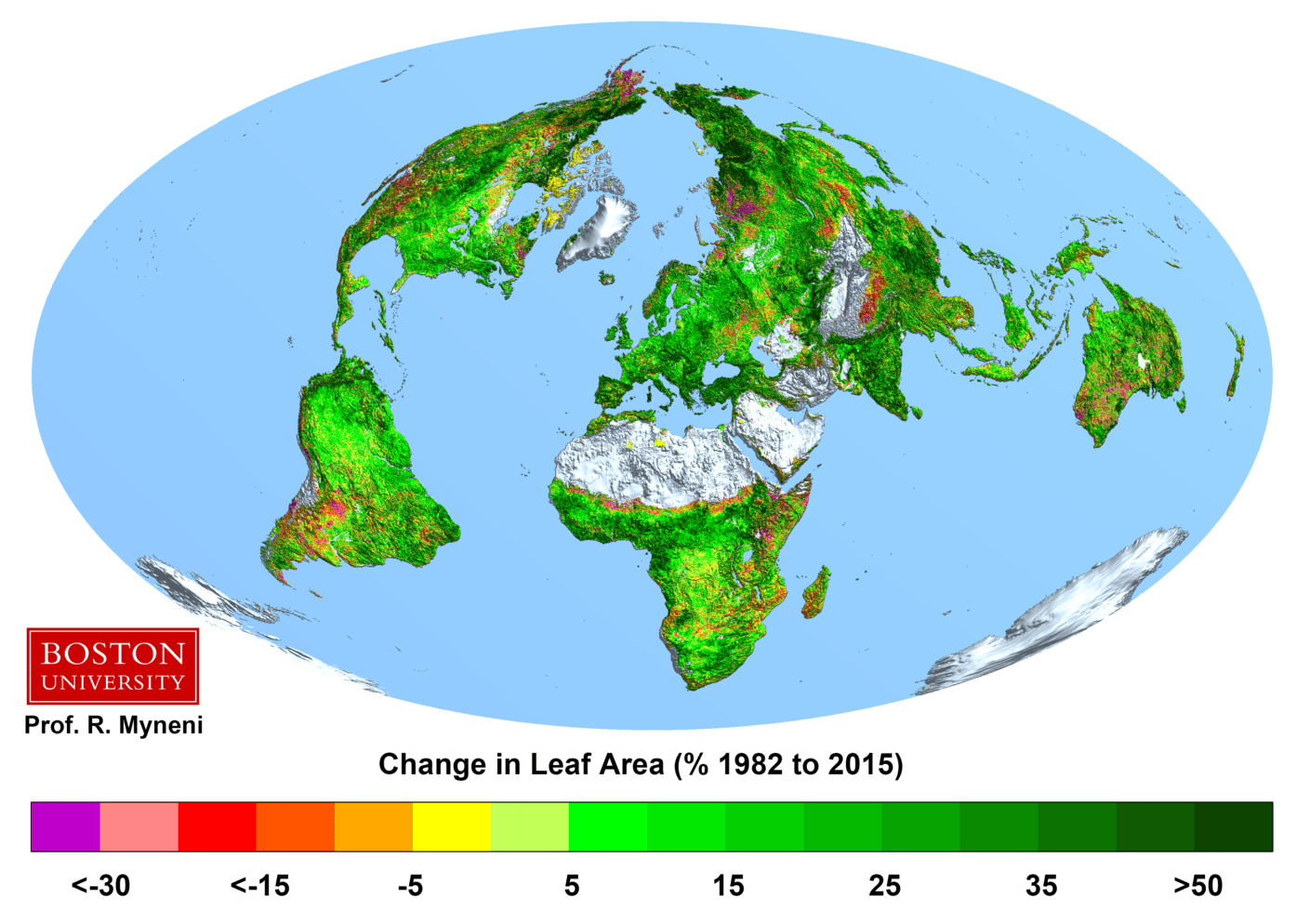
There is one great benefit of increased CO2, the greening of the earth.

Thanks to this greening, accomplished with only the fertilizing effect of CO2, the earth can now keep another 2 billion people from starvation, not to mention what it does to plants and wildlife. The people in El Salvador are, even with the drought, better off now with the air containing more CO2 than before. One extra benefit is that photosynthesis uses less water as CO2 increases.

Having said that, I am still a conservationist. Coal, oil and gas will run out at some time, and I for one would like to save some for my great grandchildren. In addition I would like to minimize the need for mining, which is quite destructive. As the great conservationist Sarah Palin so succinctly put it: “For when it’s gone, it’s gone.

The best solution is to switch most electricity generation to Thorium molten salt nuclear power. There are multiple reasons why this should be done as a priority.

Here are some of them:

 1. A million year supply of Thorium available worldwide.

 2. Thorium already mined, ready to be extracted.

 3. Thorium based nuclear power produces 0.012 percent as much TRansUranium waste products as traditional nuclear power.

 4. Thorium based nuclear power will produce Plutonium-238, needed for space exploration.

 5. Thorium nuclear power is only realistic solution to power space colonies.

 6. Radioactive waste from an Liquid Fluoride Thorium Reactor decays down to background radiation in 300 years compared to a million years for U-235 based reactors. A Limerick.

 7. Thorium based nuclear power is not suited for making nuclear bombs.

 8. Produces isotopes that helps treat and maybe cure certain cancers.

 9. Liquid Fluoride Thorium Reactors are earthquake safe, only gravity needed for safe shutdown.

10. Molten Salt Liquid Fluoride Thorium Reactors cannot have a meltdown, the fuel is already molten, and it is a continuous process. No need for refueling shutdowns.

11. Molten Salt Nuclear Reactors have a very high negative temperature coefficient leading to a safe and stable control.

12. Atmospheric pressure operating conditions, no risk for explosions. Much safer and simpler design.

13. Virtually no spent fuel problem, very little on site storage or transport.

14. Liquid Fluoride Thorium Nuclear reactors scale beautifully from small portable generators to full size power plants.

15. No need for evacuation zones, Liquid Fuel Thorium Reactors can be placed near urban areas.

16. Liquid Fluoride Thorium Reactors will work both as Base Load and Load Following power plants.

17. Liquid Fluoride Thorium Reactors will lessen the need for an expanded national grid.

18. Russia has an active Thorium program.

19. India is having an ambitious Thorium program, planning to meet 30% of its electricity demand via Thorium based reactors by 2050.

 20. China is having a massive Thorium program.

21. United States used to be the leader in Thorium usage. What happened?

22. With a Molten Salt Reactor, accidents like the Three Mile Island disaster will not happen.

23. With a Molten Salt Reactor, accidents like Chernobyl are impossible.

24. With Molten Salt Reactors, a catastrophe like Fukushima cannot happen.

25. Will produce electrical energy at about 4 cents per kWh.

26. Can deplete most of the existing radioactive waste and nuclear weapons stockpiles.

27. With electric cars and trucks replacing combustion engine cars, only Thorium Nuclear power is the rational solution to provide the extra electric power needed.

28. The race for space colonies is on. Only Molten Salt Thorium Nuclear reactors can fit the bill.
29. President Donald J. Trump on Jan.12 issued an Executive Order on Promoting Small Modular Reactors for National Defense and Space Exploration. Only Liquid fluoride thorium reactors can meet all the needs.

With over 116 million COVID-19 cases in the world, how is USA doing compared to the rest of the world?


The table below shows that USA came in as number 28 of the 40 countries with the largest outbreak of the Wuhan virus. This table reflects the first 40 days of the new U.S. administration. Most countries have a declining death rate, with the notable exceptions of Mexico, South Africa, Germany, United Kingdom, Colombia, Poland, Romania, France, Spain, Pakistan, Russia, Portugal, Ukraine, Iraq, and the United States of America.


  Country                Cases             Deaths                Death Rate    

                               Mar 5             Mar 5             Mar 5           Jan 24    

World        ,116,779,394         2,593,566          2.22%           2.15%

  1. Mexico           2,119,305             189,578           8.95%           8.51%
  2. China                   89,962                 4,636           5.15%
  3. Iran                 1,681,682              60.594            3.60%           4.16%
  4. Peru                1,358,294              47,491            3.50%           3.62%                
  5. South Africa  1,518,979              50,566            3.33%           2.94%
  6. Italy                3,023,129              99,271            3.28%           3.48%
  7. Germany         2,493,887             72,297            2.90%           2,51%
  8. UK                    4.312,181            124,261            2.88%           2.71%
  9. Belgium             783,010              22,215            2,84%           3.00%
  10. Indonesia        1,373,836             37,154            2.70%           2.81%
  11. Colombia        2,269,582             60,300            2.66%           2.55%
  12. Poland            1,781,345               45,159           2.54%           2.41%
  13. Romania            824,995              20,854            2.53%          2.51%
  14. Canada               881,761             22,192            2.52%           2.56%
  15. Chile                   845,450             20,928            2.48%           2.55%
  16. Argentina       2,141,854             52,784            2.46%           2.51%
  17. Brazil            10,871,843            262,948           2.42%           2.45%
  18. France             3.859,102              88,274            2.29%          2.01%
  19. Spain               3,149,012              71,138           2.26%           2.08% 
  20. Pakistan            588,728               13,166            2.24%           2.12%
  21. Philippines        591,138               12,465           2.11%   
  22. Russia             4,312,181               88,726           2.06%          1.88%
  23. Portugal             808,405               16,486           2.04%           1.68%
  24. Ukraine           1,394,061              26,919            1.93%          1.84%
  25. Sweden              684,961               13,003           1.90%           2.02%
  26. Iraq                    723,189               13,548           1.87%           2.11%
  27. Japan                  436,728                8,119           1.86%
  28. USA               29,594,742             535,566          1.81%          1.67%
  29. Switzerland       562,290               10,041           1.79% 
  30. Morocco             485,567                  8,673          1.79%
  31. Austria               472,871                  8,694           1.78%
  32. Czechia            1,312,164               21,558          1.64%           1.65%
  33. Bangladesh        549,724                  8,451           1.54%         
  34. India              11,192,088              157,693          1.41%           1,44%
  35. Netherlands    1,110,213                15,762          1.42%           1.43%
  36. Jordan                417,934                  4,862           1.16%
  37. Turkey             2,757,460                28,901          1.05%          1.04%
  38. Serbia                 478,878                  4,525           0.94%
  39. Israel                  796,465                  5,834           0.73%           0.73%
  40. UAE                     408,236                  1,310           0.32%

Weather and climate forecasting, a difficult science to master.

An old British saying used to be: “Everybody complains about the weather, but nobody does anything about it.” We may not be able to do much about the weather, but at least we can try to save the world from the “Climate Crisis”. The term used to be Climate Change, but with the new administration the term has been upgraded.

When I grew up a long time ago in Sweden the old folks used to say “If you make it through February, you will make it another year.” This was of course before electricity and central heating”.

There is a saying in Norway: “There is no bad weather, only bad clothes.” Here is an example, the souwester” It works well in freezing rain.

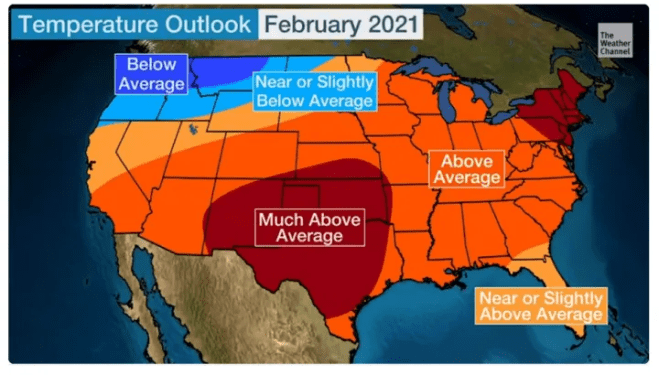
The long term weather forecast for February, issued January 21 by the weather channel looked like this:

Great, no need to buy that extra sweater, and Texans can go another season with thin t-shirts and designer pre-torn jeans.

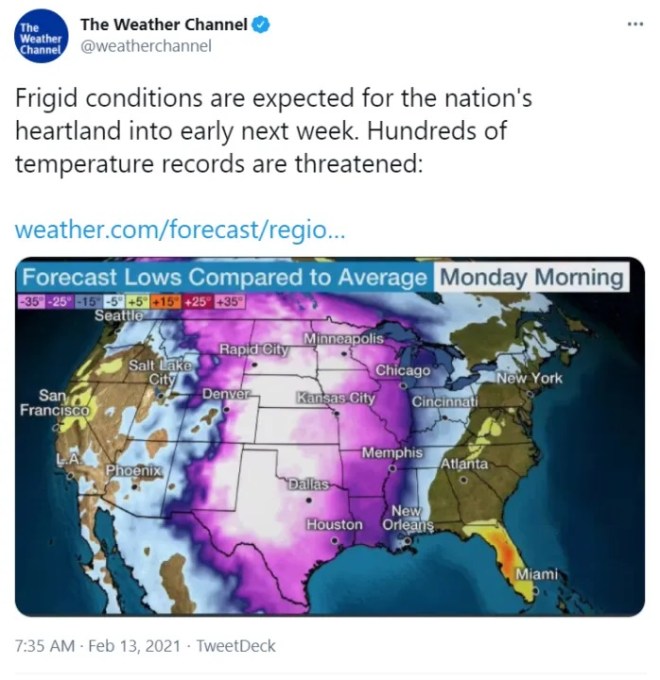
But the weather forecast three weeks later looked like this:

But the windmills don’t work in freezing rain, so the electric grid was challenged when over half of the windmills froze just as the demand spiked. Normally coal and natural gas electrical plants would have kicked in, but many of the coal plants had been shut down due to environmental regulations, and the emergency request to restart them were denied due to environmental concerns. The natural gas plants ran full bore until the natural gas pressure in the pipelines started dropping below safe levels. This lead to rotating power-outs to preserve gas line pressure. But in the wisdom of the authorities the gas line pressure compressors had been switched from natural gas to electricity (environmental concerns), so if the compressors were in an area of electric blackout, there went the gas pressure, causing a chain reaction, and the whole power grid came within hours of a total collapse. Only nuclear power hummed along as if nothing had happened, but nuclear power is a base load and cannot increase the power above a certain level. Back in 2017, Secretary of Energy Rick Perry proposed paying Coal and Nuclear Power Stations to keep at least 90 days worth of coal  onsite, for disaster resilience. At the time the resilience proposal was widely criticized as being a thinly disguised Trump scheme to pump government money into the coal and nuclear industries. So the plan was rejected by the bureaucracy. But in hindsight, a bit more resilience might have saved Texas from days of painful electricity blackouts, and even deaths.

The bill for these monumental miscalculations is yet to be paid. The cost of electricity for these 2 weeks off horror is yet to be paid. The Texans who were fortunate enough to have power have to pay the bill for intermittent electricity at a cost of two dollars per kilowatt-hour. A retired veteran on social security got a bill for over 16,000 dollars for part of February.

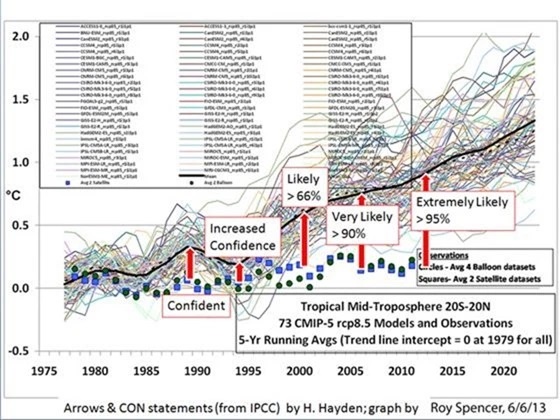
Since weather is so hard to predict, do we have any hope of being able to predict future climate? People keep trying. And they keep developing climate models. Here is a chart of most of them:

Not much has changed since this chart was first published. While the IPCC confidence in their climate models keep increasing, so does the difference between model prediction and actual temperature.

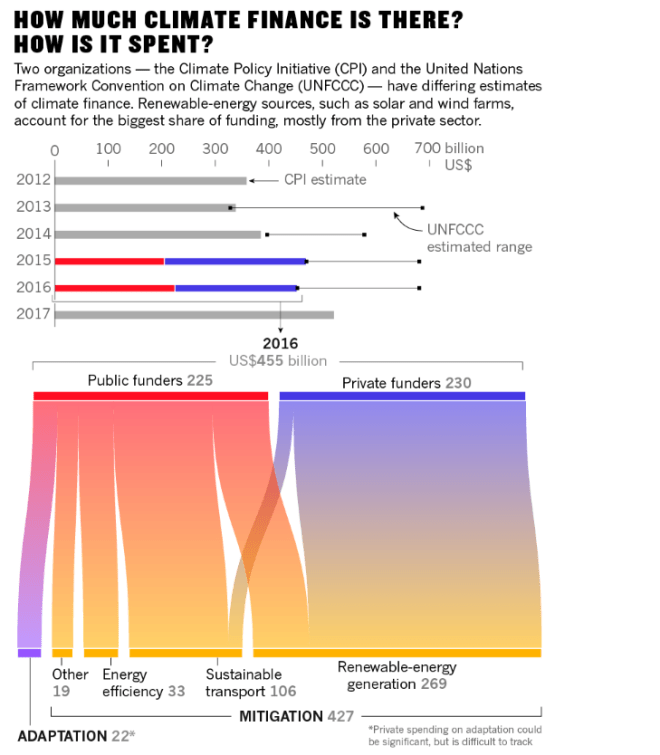
Climate finance continues to be the central issue in how the global community proposes to follow through with implementation of the Paris Agreement, which Joe Biden has decided to rejoin by executive fiat. This is in the opinion of his advisors, such as John Kerry appropriate in the context of the last IPCC report showing a USD 1.6-3.8 trillion energy system investment requirement to keep warming within a 1.5 degree Celsius scenario to avoid the most harmful effects of climate change (IPCC, 2018).

Does this still make sense?

Anyone?


China, Myanmar, U.S.A. and rare earth metals. This may be serious.

In early May, 2019, President Xi and Vice Premier Liu He, China’s top trade negotiator, visited a rare earth metals mine in Jiangxi province. This has led to the rumor that China is seriously considering restricting rare earth exports to the US. China may also take other countermeasures in the future. The trade negotiations between U.S. and China got a lot more serious. It extended far beyond tariffs and intellectual property, it began to involve control of strategic materials.

The first thing we must realize is that rare earth metals are not all that rare. They are a thousand times or more abundant than gold or platinum in the earth crust and easy to mine, but a little more difficult to refine. Thorium and Uranium will  also be mined at the same time as the rare earth metals since they appear together in the ore.

Related image

U.S. used to be the major supplier of rare earth metals, which was fine up to around 1984. Then the U.S. regulators determined that Uranium and Thorium contained in the ore made the ore radioactive, so the regulatory agencies decided to make rare earth metal ore subject to nuclear regulations with all what that meant for record keeping and control. This made mining of rare earth metals in the U.S. unprofitable, so in 2001 the last domestic mine closed down. China had no such scruples, such as human or environmental concerns, so they took over the rare earth metals mining and in 2010 controlled over 95% of the world supply, which was according to their long term plan of controlling the world by 2025.

Rare Earth Element Production

The U.S. used to have a strategic reserve of rare earth metals, but that was sold off in 1998 as being no longer cost effective or necessary. Two years later the one U.S. rare earth metals mine that used to supply nearly the whole world, the Mountain Pass Mine in California closed down, together with its refining capacity. From that day all rare earth metals were imported.

The U.S. used to have a strategic reserve of rare earth metals, but that was sold off in 1998 as being no longer cost effective or necessary. Two years later the one U.S. rare earth metals mine that used to supply nearly the whole world, the Mountain Pass Mine in California closed down, together with its refining capacity. From that day all rare earth metals were imported. In 2010 it started up again together with the refining capacity but went bankrupt in 2015, closed down the refining but continued selling ore to China. They restarted  refining again late 2020.


So, why is this important? Just take a look at all the uses for rare earth metals. The most sought after pays all the cost of mining and refining, and the rest are readily available at nominal cost.

The Chinese almost got away with it, and that is but one reason the trade negotiations were so complicated and hard fought, but necessary. Donald Trump fought for reciprocity and fair competition.

For example, according to a 2013 report from the Congressional Research Service, each F35 Lightning II aircraft requires 920 pounds of rareearth materials. Who is making the most critical parts to this airplane? You guessed it – China, from our drawings and according to our specifications.

Here is  a picture of the F-35

Image result for f-35

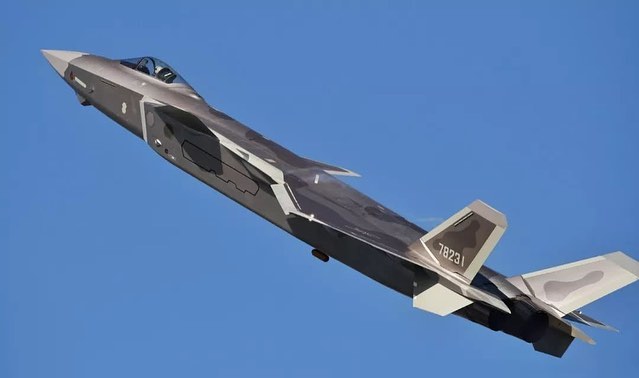
And here is a picture of the Chinese clone, the J-20, stealth capacity and all.
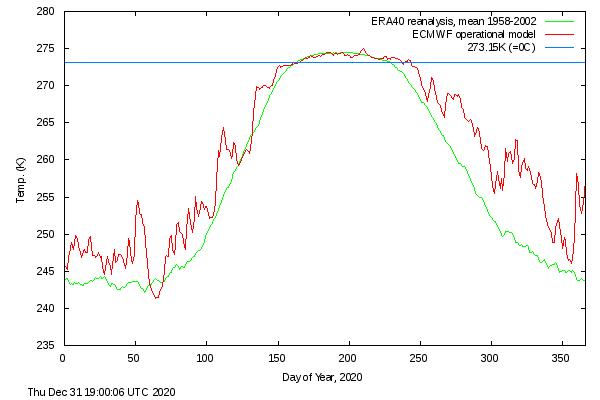
Image result for chinese j-20 vs f-35

It is a lot cheaper to steal technology than to develop your own.
Not all rare earth metals are of equal importance, and this is reflected in their price. The rare earth metals mined in Myanmar are high in the most sought after metals, such as neodymium and dysprosium 

November saw the prices of all major Chinese-sourced rare earths spike, but especially those used in magnets. In particular, the research note mentioned neodymium, which is the most common rare earth used in making magnets, which rose by 27% since early in November, up over 50% year to date. Several other key rare earths also increased in value last month, including dysprosium (+17%), gadolinium (+9%) and terbium (+27%).

Another factor in the price surge is a new law that came into force in China on December 1, Hamilton noted. Known as the Export Control Law, it creates new regulations that give the government more control over such exports as technology and rare earths.

It turns out that Myanmar provides half of China’s need for neodymium and dysprosium, so any disruption in the supply would be most unwelcome for China.

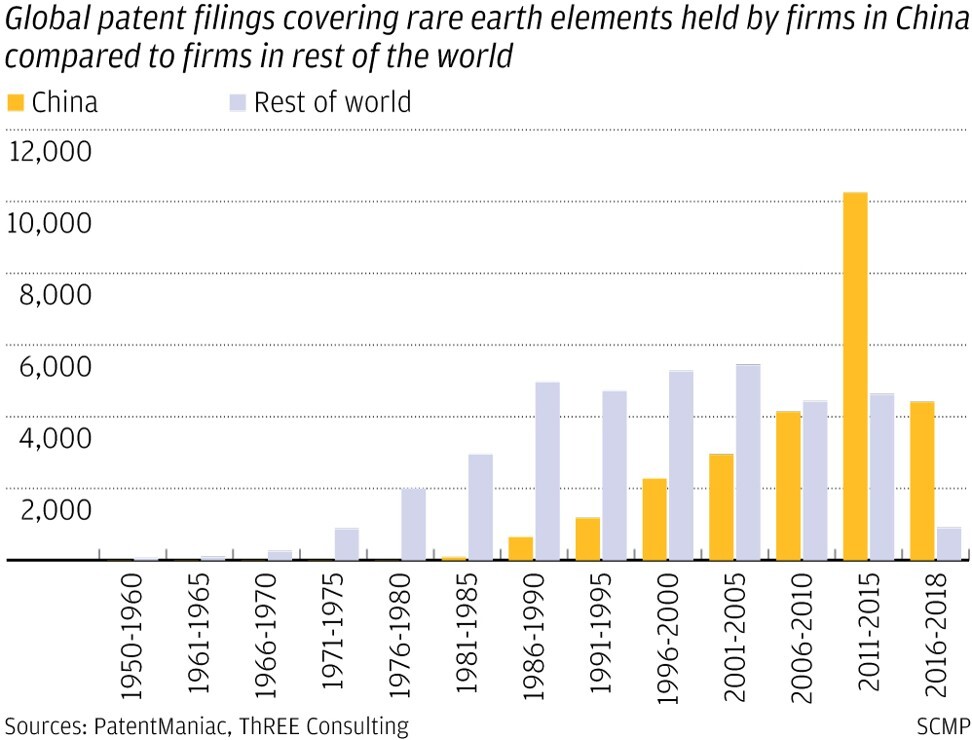
China has been hard at work trying to keep a near monopoly on rare earth metals, by securing patents> Here is a chart of recently issued patents

https://cdn.i-scmp.com/sites/default/files/d8/images/methode/2021/02/03/8e8a1524-65dd-11eb-bc00-908c10a5850a_972x_175322.jpg

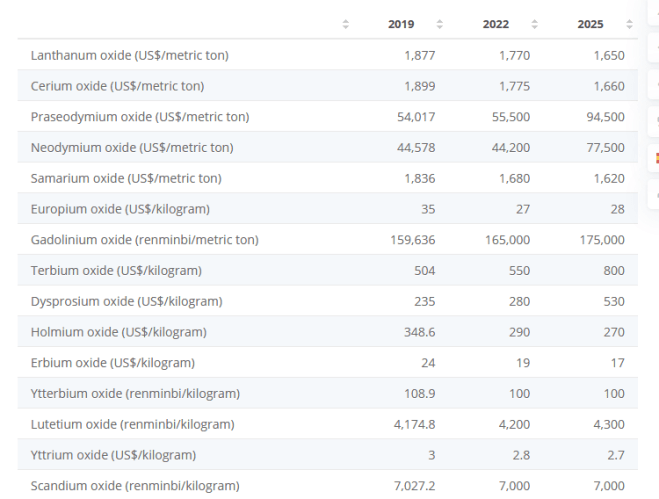
Yogi Berra once said: Predictions are hard, especially about the future Here are the predictions for rare earth metals prices:

On February 1 there was a coup in Myanmar, and the military took over power. Prices of some rare earth metals spiked to more than estimated 2025 levels.

China has been quietly exploring the economic damage it could inflict to US and European companies – including defense contractors – if they were to impose export ‘restrictions’ on 17 rare-earth materials, according to a report in the Financial Times.

FT added that “[t]he Ministry of Industry and Information Technology last month proposed draft controls on the production and export of 17 rare earth minerals in China, which controls about 80% of global supply.”

Before being voted out of office, President Trump and his administration sought to take steps that might help the US limit China’s resource dominance in this area, including signing an executive order declaring a “national emergency” in the US mining and minerals industry (much of which remains focused on digging coal out of the ground). China has been widely acknowledged as dominant in the rare-earth minerals market for decades.

But with Trump out, and a much more China-friendly administration back in power in Washington, it looks like Beijing is already considering playing hardball to get what it wants.

Meanwhile, the Biden administration is considering sanctions against Myanmar, a country that is poorer than Bangladesh.

China is the world’s dominant producer of rare earths, a group of 17 minerals used in consumer electronics and military equipment. But it relied on Myanmar for about half its heavy rare earth concentrates in 2020, says Adamas Intelligence managing director Ryan Castilloux.

Myanmar is therefore an “exceptionally critical supplier of … feedstocks that are essential ingredients in high-strength permanent magnets for electric vehicle traction motors, wind power generators, industrial robots and a wide array of defense-related applications”, he said.

There has been no sign of disruption for now, since Myanmar’s rare earth mines are under the control of autonomous militia groups, but the test will come after the Lunar New Year holiday, which has just ended.