The Supreme Court ruled 6-3 that the Green New Deal by administrative fiat is unconstitutional. CO2 is not a pollutant, it is on balance good.

The U.S. Supreme Court settled the issue: Whether, in 42 U.S.C. § 7411(d), an ancillary provision of the Clean Air Act, Congress constitutionally authorized the Environmental Protection Agency to issue significant rules — including those capable of reshaping the nation’s electricity grids and unilaterally decarbonizing virtually any sector of the economy — without any limits on what the agency can require so long as it considers cost, nonair impacts and energy requirements.

I have always been very interested in the environment. Nature teaches us so many lessons, the diversity of trees, birds, flowers and wildlife is breathtaking and giving cause to never cease to wonder. It would be a shame to destroy the beauty of it all. Yet we seem to make it worse by concentrating our effort by trying to limit CO2 emissions, rather than tackling the real and more urgent problems.

Let me first explain why I assert that rising CO2 levels, while real is only a minor player in the climate change equation.

The traditional way to approach this scientifically is making climate models. So far, nearly all, except the Russian model have failed to even remotely to predict future temperature changes. IPCC and all their climate models is still failing.

The other approach is to take measurements, and it so happens that we have really good global data for over 60 years. The Amundsen Scott – South Pole weather station, the average temperature of Winter season 2021 (April 2021 – September 2021) reached only -61,0°C / -78°F, and at this temperature CO2 is the dominant greenhouse gas by more than a factor of ten more important than water vapor. We have reliable measurements for the temperature change at the South Pole since 1957. During this time CO2 gas increased 31% to 413ppm, Methane increased 16% to 1.85 ppm and Nitrous oxide decreased, but this is a gas mostly confined to urban areas, and is now below 0.05 ppm worldwide. With CO2 increasing by 31% and water vapor negligible one would expect a temperature rise over 64 years of 0.65 C, or one degree Celsius warmer per century according to extrapolated lab measurements. This is the observed trend:
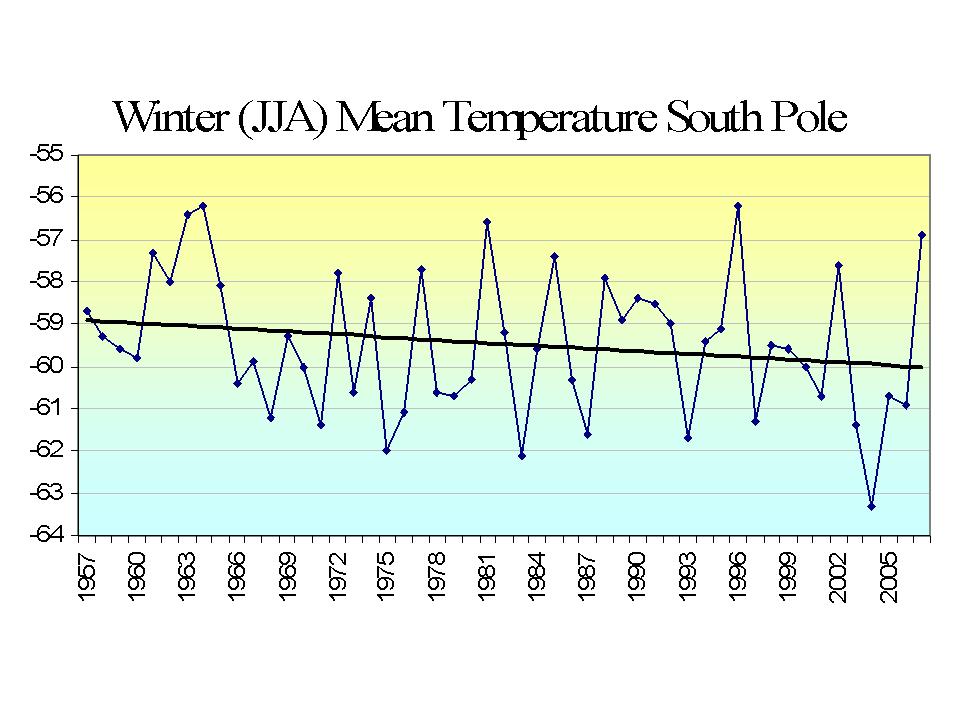
With 2021 value included the temperature trend is two degrees Celsius cooler per century!

At the South Pole snowfall is negligible in the winter, and for the whole year it is only 1.3 inches. No model would have predicted the cooling trend, so there must be other factors that are are more important, since real measurements beat models every time.

Ignoring the South Pole, the climate models are from time to time adjusted, and as the urgency among the ruling class grew, they suddenly showed a much higher rate of future temperature increases, in this case what is supposed to happen to global temperatures for a doubling of CO2 from pre-industrial times, from 270ppm to 540ppm.
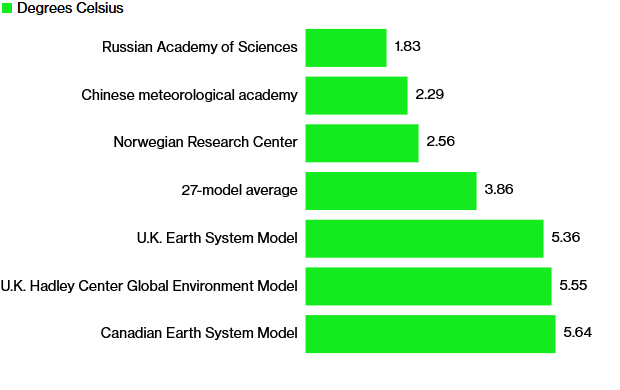
Source: Mark D Zelinka et al. ” Causes of higher Climate sensitivity in CMIP6 models” Geophysical Research Letters.

There are two ways to approach this problem. The models make certain assumptions about the behavior of the changing atmosphere and model future temperature changes. This is the approach IPCC has takenfor the last 34 years. These models all fail miserably when compared to actual future temperature changes.

The other way i to observe what is actually happening to our temperature over time as the CO2 increases. We have over 60 years of excellent global temperature data, so with these we can see where, when and by how much the earth has warmed.

The most drastic temperature rise on earth has been in the Arctic above the 80th latitude. In the winter of 2018 it was 8C above the 50 year average. Since then it has come down to the more normal 4C increase. See charts from the Danish Meteorological Institute:
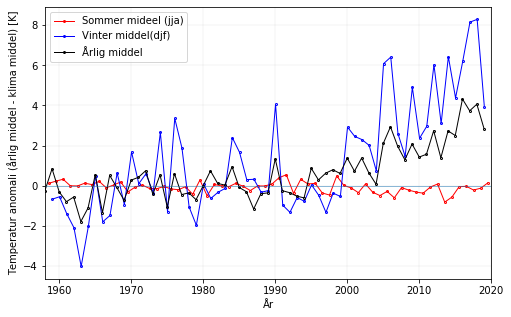
Summer: red, Jun,Jul, Aug. Winter: green, Dec, Jan, Feb Yearly: black

Note, there are no increase at all in the summer temperatures!
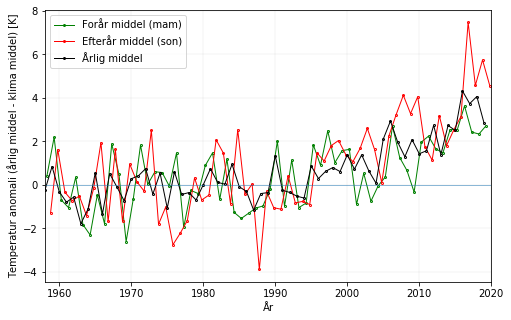
Spring: green, Mar, Apr, May. Fall: red, Sep Oct, Nov. Yearly: black

The fall temperature saw an increase of 4C and the spring temperature saw an increase of about 2.5C.

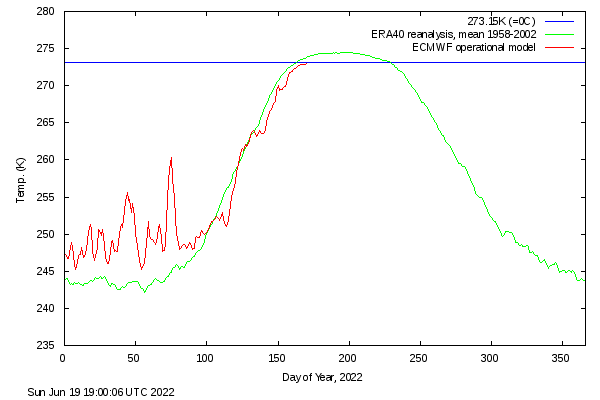
The 2022 winter saw an about 4c increase. The Spring temperatures have from the 10th of March were below or very close to the 1958 – 2002 average. Early Summer temperatures have so far been about 1C below normal. Source: DMI.
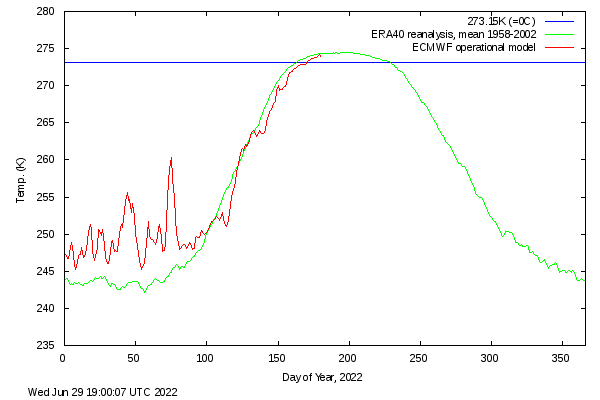
There seems to be no cause for immediate panic with the Arctic temperatures. If anything, they seem to moderate. In the Antarctic on the other hand temperatures have been decreasing! As we have seen before, the Amundsen Scott – South Pole weather station, the average temperature of Winter season 2021 (April 2021 – September 2021) reached only -61,0°C / -78°F, which is the coldest value in all-time history! This was 2,5°C /4.5°F degrees lower than the most recent 30-year average at this remote station.

Why are the temperatures not behaving like the models predict?

To get the answer we must study molecular absorption spectroscopy. IPCC and most scientists claim that the greenhouse effect is dependent on the gases that are in the atmosphere, and their combined effect is additive according to a logarithmic formula. This is true up to a certain point, but it is not possible to absorb more than 100% of all the energy available in a certain frequency band! For example: If water vapor absorbs 90% of all incoming energy in a certain band, and CO2 absorbs another 50% of the energy in the same band, the result is that 95% is absorbed, (90% + 50% * (100% – 90%)),  not 140%, (90% + 50%).

The following chart shows both CO2 and H2O are absorbing greenhouse gases, with H20 being the stronger greenhouse gas, absorbing over a much wider spectrum, and they overlap for the most part. But it also matters in what frequency range s they absorb.
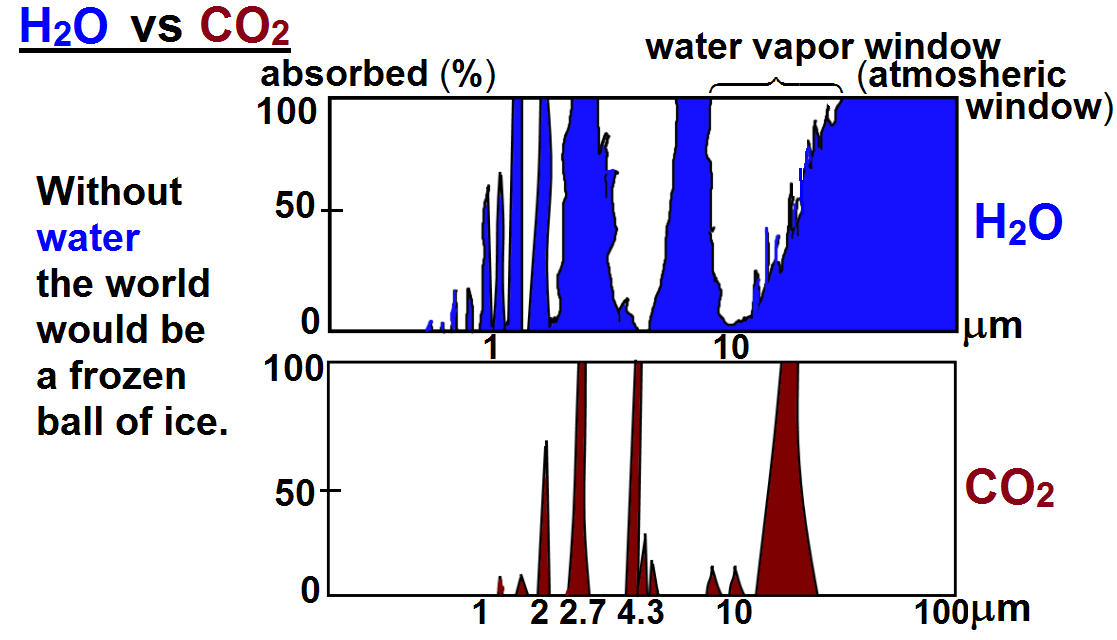
For this we will have to look at the frequency ranges of the incoming solar radiation and the outgoing black body radiation of the earth. It is the latter that causes the greenhouse effect. Take a look at this chart:
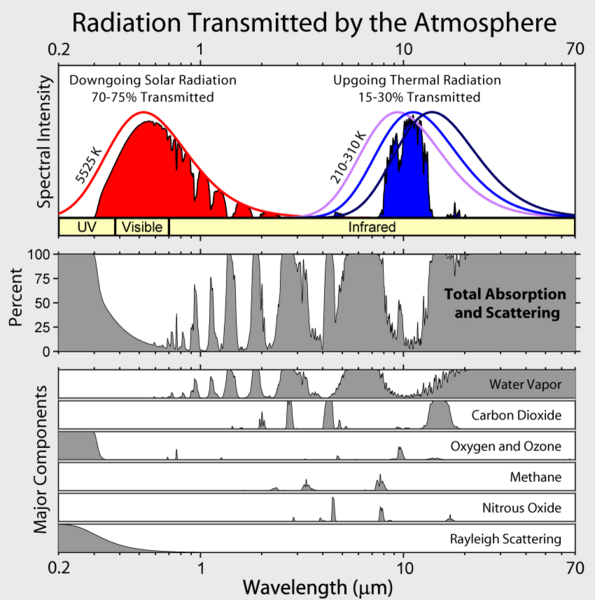
The red area represents the observed amount of solar radiation that reaches the earth’s surface. the white area under the red line represents radiation absorbed in the atmosphere. Likewise, the blue area represents the outgoing black body radiation that is re-emitted. The remaining white area under the magenta, blue or black line represents the retained absorbed energy that causes the greenhouse effect.

Let us now take a look at the Carbon Dioxide bands of absorption, at 2.7, 4.3 and 15 microns. The 2.7 and 4.3 micron bands absorb where there is little black body radiation, the only band that counts is at 15 microns, and that is in a band where the black body radiation has its maximum. However it is also in a band where water vapor also absorb, not as much as CO2,only about 20% to 70% as much. The important thing is that in the frequency band of 14.5 to 15.5 micron CO2 absorbs all the energy available in that spectral range, and it also did it before industrialization when CO2 levels were one third less than today!
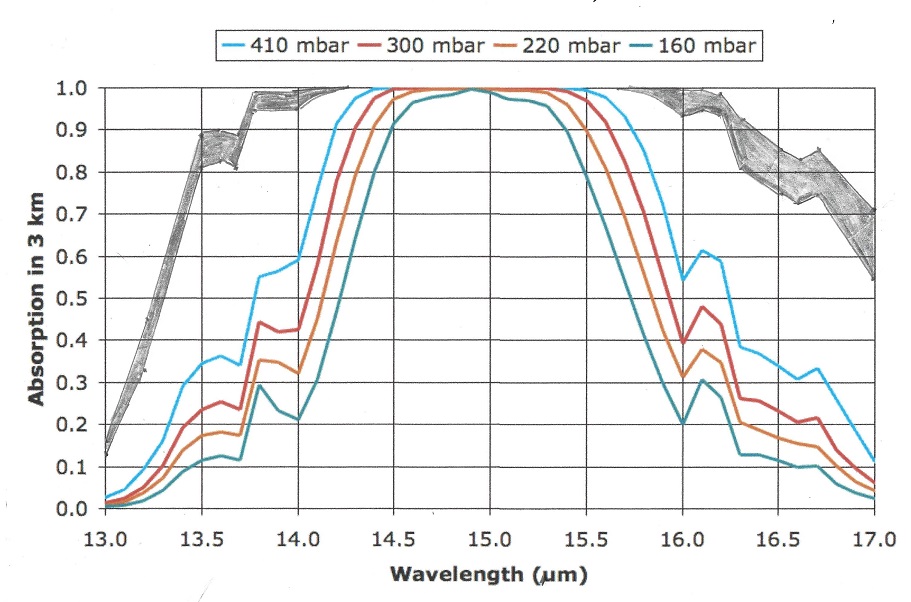
The grey area is the difference between total pre-industrial absorption and today, less than 5 % added absorption in the 13 to 17 micron band. Notice that total absorption from ground level to thermopause cannot exceed 100%

From this we can see that increasing CO2 levels is not the cause of climate change, if anything, it is only a only a very minor player. How about Methane?

Methane has only two major absorption bands, one at 3.3 microns, and the other at 8 microns. The 3,3 micron band is where incoming radiation is negligible, and so is outgoing black-body radiation. The 8 micron band is where water vapor is dominant, so Methane turns out to be the don’t care gas.

Water vapor or absolute humidity is highly dependent on the temperature of the air, so at 30C there may be 50 times as much water vapor as CO2, at 0C there may be ten times as much water vapor, and at -25C there is more CO2 than water vapor. At those low temperatures the gases are mostly additive. In the tropics with fifty times more water vapor than CO2, increased CO2 has no influence on the temperature whatsoever. Temperature charts confirm this assertion:
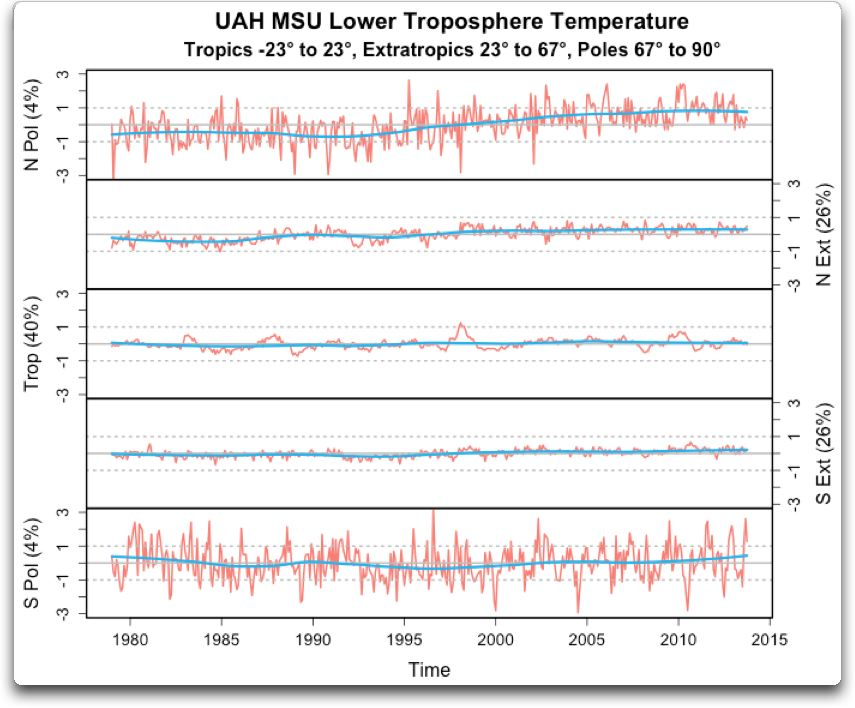
The temperature in the tropics displays no trend whatsoever. It follows the temperature of the oceans, goes up in an el niño and down in a la niña. The temperature in the southern hemisphere shows no trend. In the northern temperate region there is a slight increase, but the great increase is occurring in the Arctic. There is no increase in the Antarctic yet even though the increase in CO2 is as great in the Antarctic and the winter temperature in the Antarctic is even lower than in the Arctic. So CO2 increase cannot be the answer to the winter temperature increase in the Arctic.

There is an obvious answer. When temperatures increase the air can and will contain more moisture and transport this moisture from the tropics all the way to the arctic, where it ends up as snow. Is the snow increasing in the Arctic?

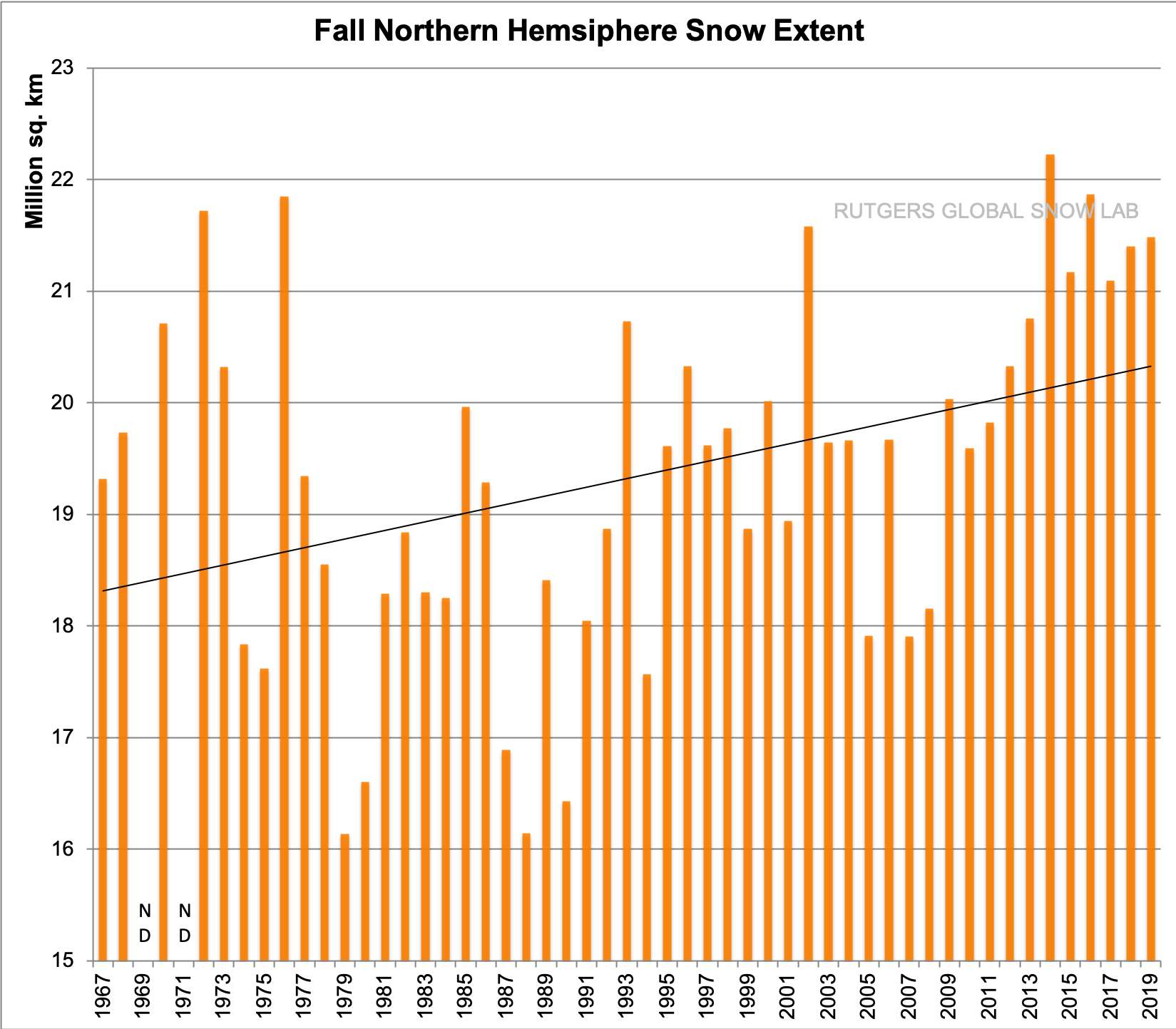
Let us see what the snow statistics show. These are from the Rutgers snow lab.
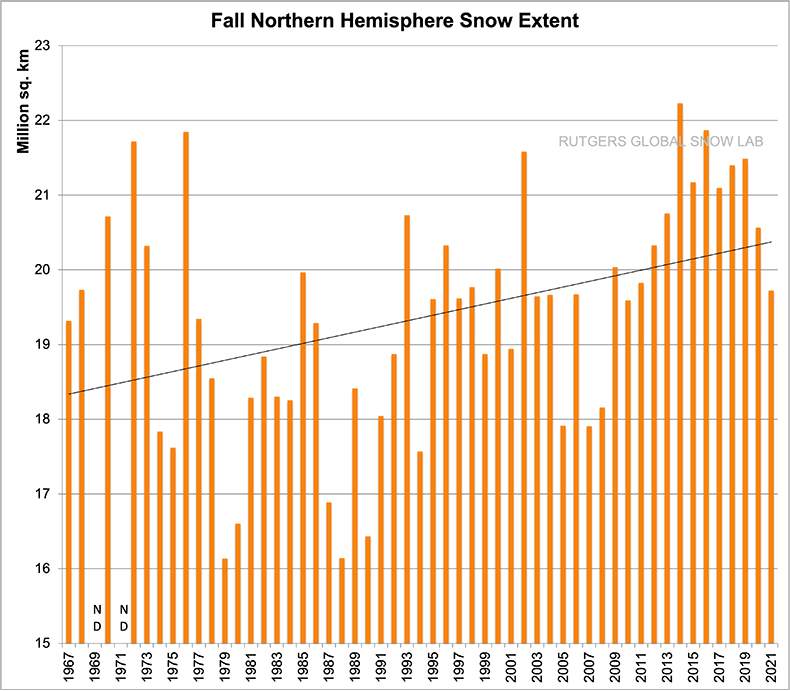
The fall snow extent is increasing, and has increased by more than 2 percent per year.
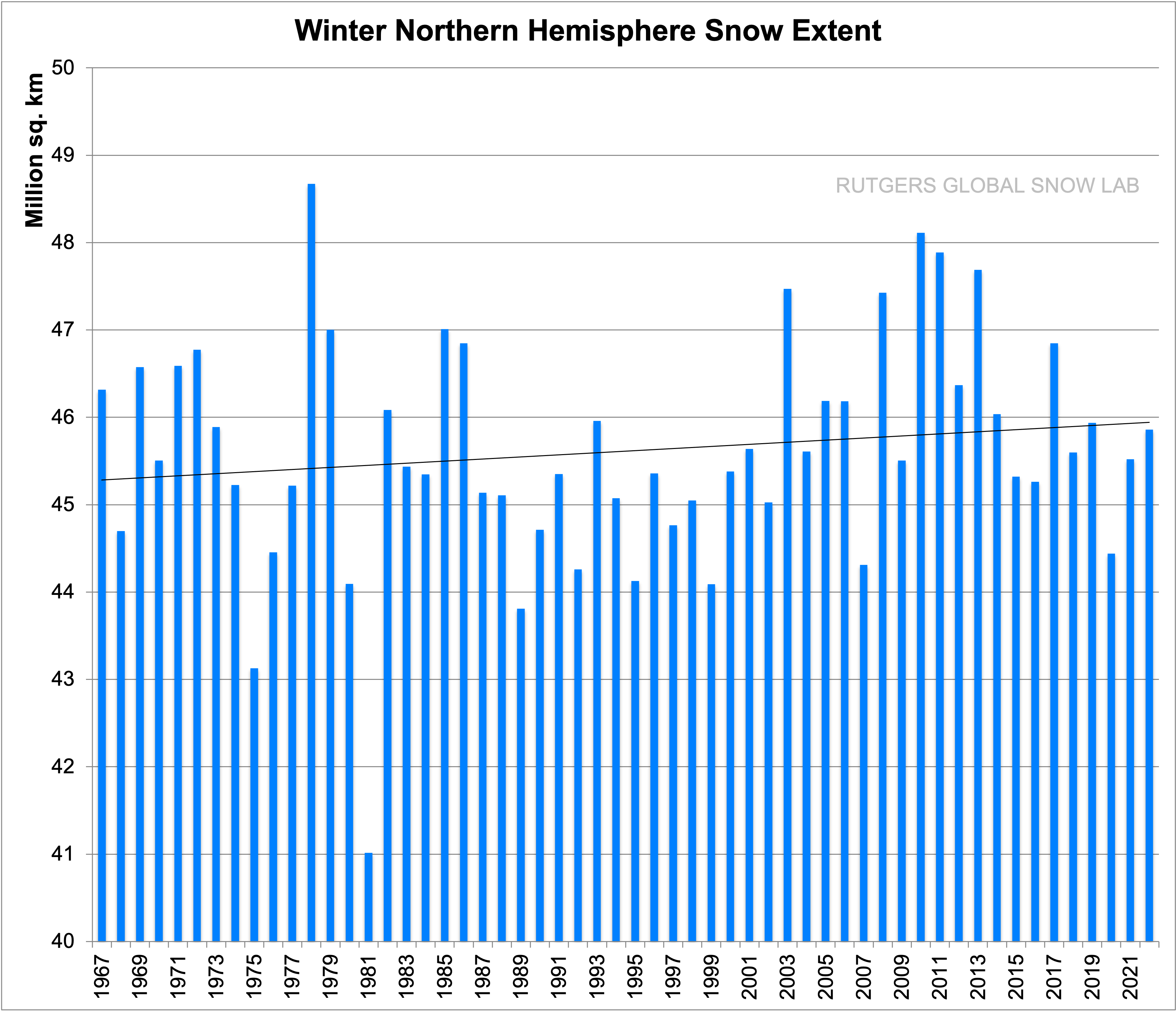
The winter snowfall has also increased but only by 0.04 percent per year. The snow covers all of Russia, Northern China, Mongolia, Tibet, Kashmir and northern Pakistan, Northern Afghanistan, Northern Iran, Turkey, most of Eastern Europe, Scandinavia, Canada, Alaska, Greenland and part of Western, Eastern and Northern United States.

Jan 16,2022

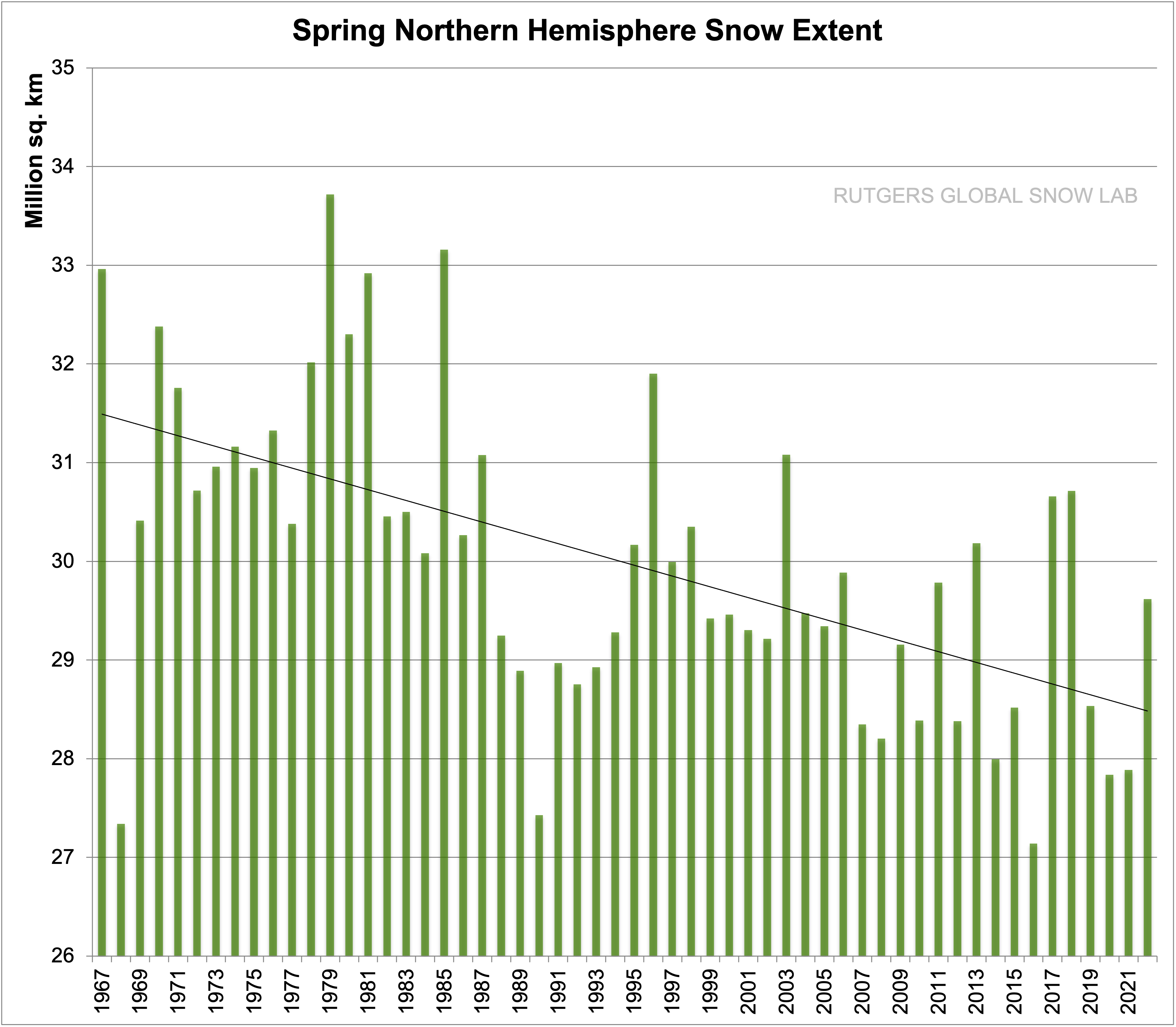
In the spring on the other hand the snow pack is melting faster, about 1.6 percent less spring snow per year. One of the major reasons for an earlier snow melt is that the air is getting dirtier, especially over China, and to some extent Russia. The soot from burning coal, wood and peat, and from mining dust changes the albedo of the snow. The soot is visible on old snow all the way up to the North Pole. The other reason is that the North Pole is getting warmer. In the fall and winter it is mostly due to increased snowfall, but in the spring, as soon as the temperatures rise over the freezing point, melting occurs earlier. But it takes longer time to melt the increasing snow, so the Summer temperatures remain unchanged or lower.

So the warming of the North Pole, far from being an impending end of mankind as we know it, may even be beneficial. A warmer North Pole in the winter means less temperature gradient between the pole and the tropics, leading to less severe storms. They will still be there, but less severe.

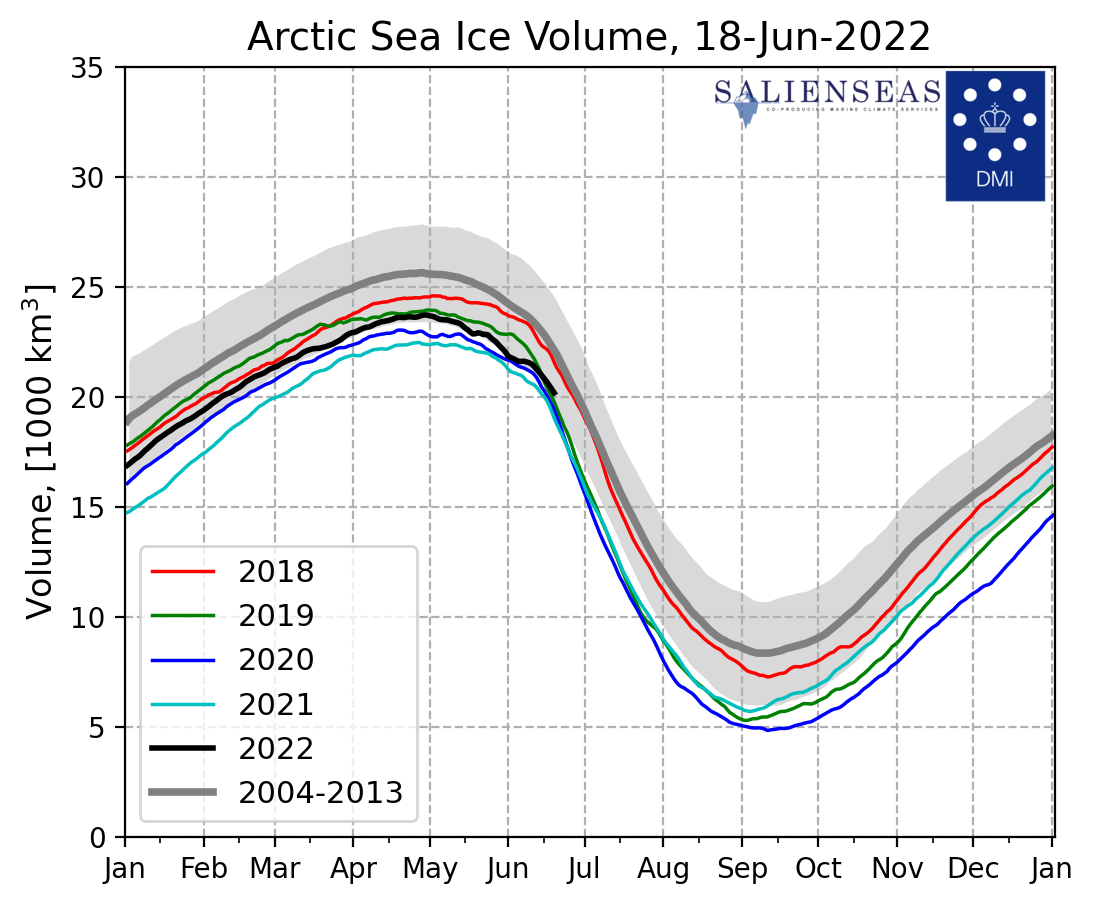
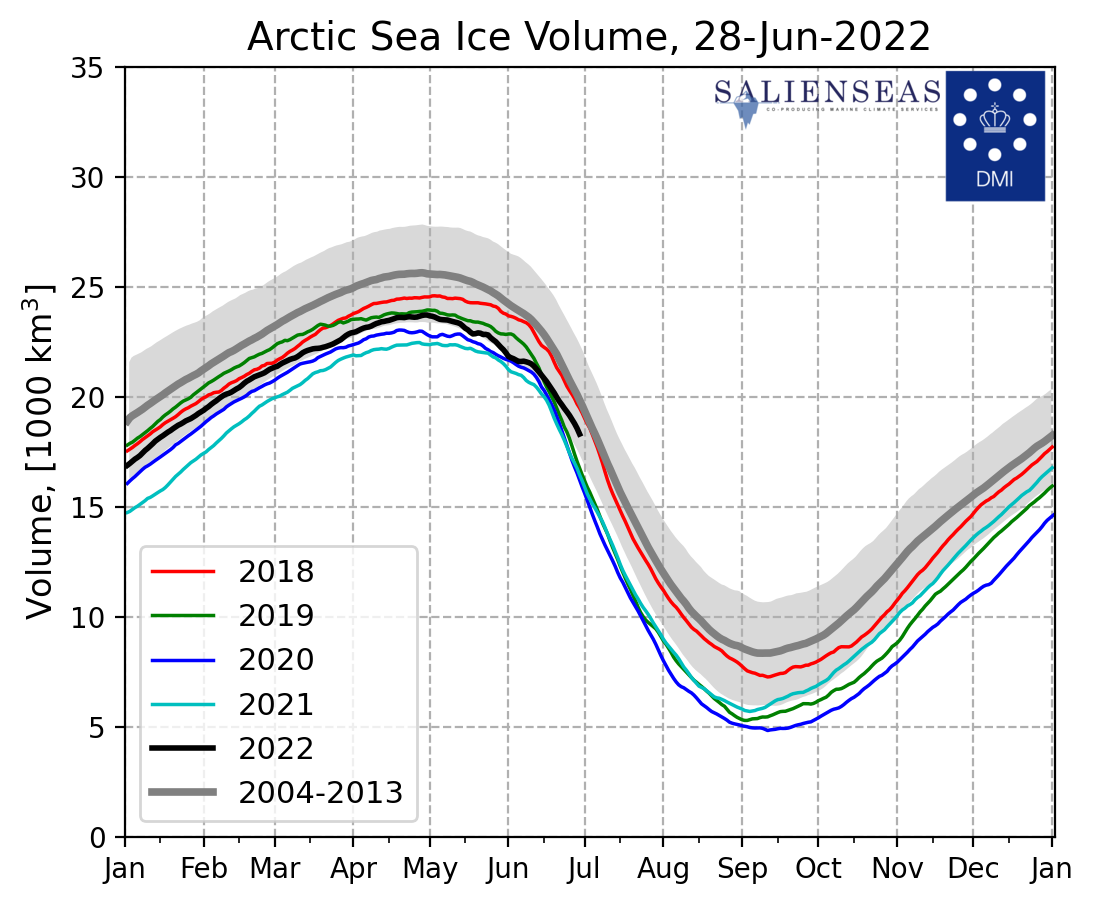
This year’s Arctic ice volume is greater ghan the previous 3 years. and the melting is slower. It is too early to tell if it is a real cooling of the climate, but it is worth noting
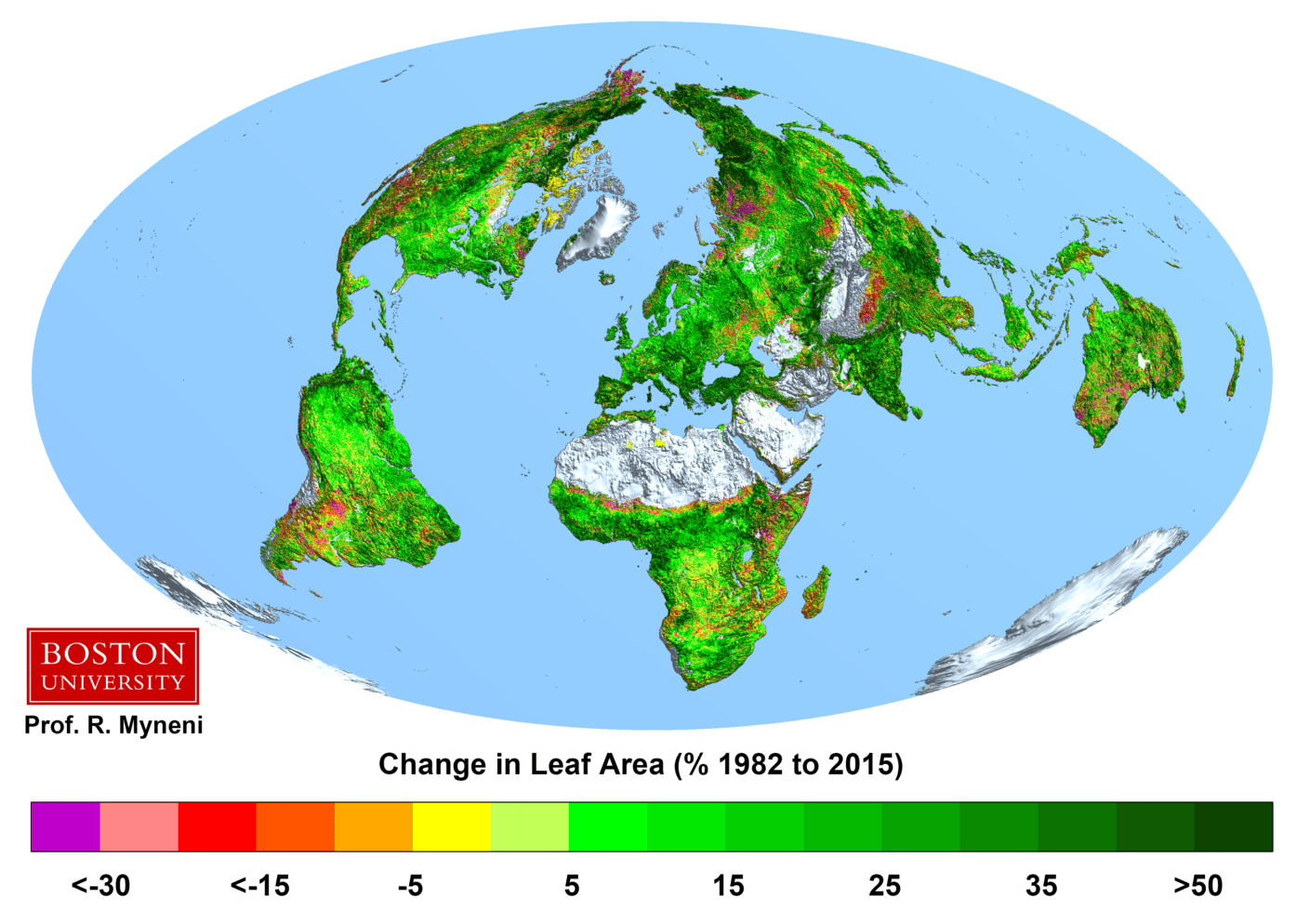
There is one great benefit of increased CO2, the greening of the earth!
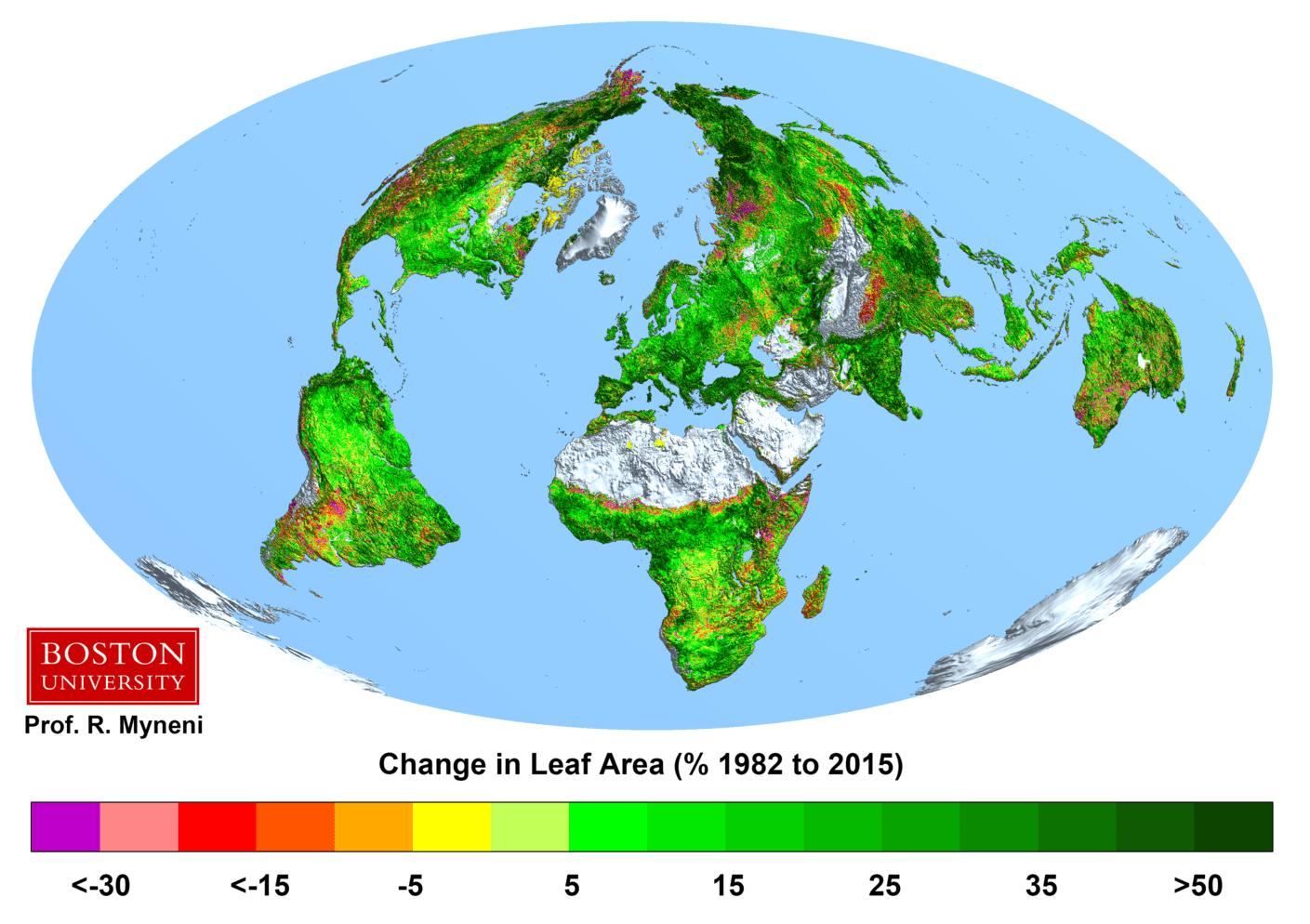
Thanks to this greening, done with only the fertilizing effect of increasing CO2, the earth can now keep another 2 billion people from starvation, not to mention what good it does for plants and wildlife.
Increasing CO2 is not the cause of climate change.

CO2 concentration has increased more than 50% since pre-industrial times. Is that good or bad?

As CO2 warms the North Pole

burning oil, gas and coal plays a role.

CO2 is still good;

makes plants green, grows more food,

The clouds are God’s climate control.

Greta Thunberg, 17; Times person of the year 2019 was at it again, this time in Davos at the annual World Economic Forum. She was allowed to give a 30 minute speech to all the dignitaries assembled, who had generated 18,090 metric tons of CO2 (source CNN) getting there in their jets. Her message was:

Let’s be clear. We don’t need a ‘low carbon economy.’ We don’t need to ‘lower emissions,” … “Our emissions have to stop if we are to have a chance to stay below the 1.5-degree target,” (The New York Times.)

We have experienced more than a 50% increase in CO2 levels since the beginning of industrialization. In the last 32 years the level has risen 20%, from about 350 ppm to 421 ppm. This is what scares people. Is is time to panic and stop carbon emissions altogether as Greta Thunberg suggested?

As if on cue the climate models have been adjusted, and they suddenly show a much higher rate of temperature increase, in this case what is supposed to happen to global temperatures for a doubling of CO2 from pre-industrial times, from 270ppm to 540ppm.

Source: Mark D Zelinka et al. ” Causes of higher Climate sensitivity in CMIP6 models” Geophysical Research Letters.

There are two ways to approach this problem. The models make certain assumptions about the behavior of the changing atmosphere and model future temperature changes. This is the approach from IPCC for the last 34 years. These models all fail miserably when compared to actual temperature changes.

The other way i to observe what is actually happening to our temperature over time as the CO2 increases. We have over 50 years of excellent global temperature data, so with these we can see where, when and by how much the earth has warmed.

The most drastic temperature rise on earth has been in the Arctic above the 80th latitude. In the winter of 2018 it was 8C above the 50 year average. Since then it has come down to the more normal 4C increase. See charts from the Danish Meteorological Institute:

Summer: red, Jun,Jul, Aug. Winter: green, Dec, Jan, Feb Yearly: black

Note, there are no increase at all in the summer temperatures!

Spring: green, Mar, Apr, May. Fall: red, Sep Oct, Nov. Yearly: black

The fall temperature saw an increase of 4C and the spring temperature saw an increase of about 2.5C.

The 2022 winter saw an about 4c increase. The Spring temperatures have from the 10th of March were below or very close to the 1958 – 2002 average. Early Summer temperatures have so far been about 1C below normal. Source: DMI.

There seems to be no cause for immediate panic with the Arctic temperatures. If anything, they seem to moderate. In Antarctic on the other hand the temperatures may even be decreasing! The Amundsen Scott – South Pole weather station, the average temperature of Winter season 2021 (April 2021 – September 2021) reached only -61,0°C / -78°F, which is the coldest value in all-time history! This was 2,5°C /4.5°F degrees lower than the most recent 30-year average at this remote station.

Why are the temperatures not behaving like the models predict?

To get the answer we must study molecular absorption spectroscopy and explain a couple of facts for the 97% of all scientists who have not studied molecular spectroscopy. IPCC and most scientists claim that the greenhouse effect is dependent on the gases that are in the atmosphere, and their combined effect is additive according to a logarithmic formula. This is true up to a certain point, but it is not possible to absorb more than 100% of all the energy available in a certain frequency band! For example: If water vapor absorbs 90% of all incoming energy in a certain band, and CO2 absorbs another 50% of the energy in the same band, the result is that 95% is absorbed, (90% + 50% * (100% – 90%)),  not 140%, (90% + 50%).

The following chart shows both CO2 and H2O are absorbing greenhouse gases, with H20 being the stronger greenhouse gas, absorbing over a much wider spectrum, and they overlap for the most part. But it also matters in what frequency range s they absorb.

For this we will have to look at the frequency ranges of the incoming solar radiation and the outgoing black body radiation of the earth. It is the latter that causes the greenhouse effect. Take a look at this chart:

The red area represents the observed amount of solar radiation that reaches the earth’s surface. the white area under the red line represents radiation absorbed in the atmosphere. Likewise, the blue area represents the outgoing black body radiation that is re-emitted. The remaining white area under the magenta, blue or black line represents the retained absorbed energy that causes the greenhouse effect.

Let us now take a look at the Carbon Dioxide bands of absorption, at 2.7, 4.3 and 15 microns. Of them the 2.7 and 4.3 micron bands absorb where there is little black body radiation, the only band that counts is at 15 microns, and that is in a band where the black body radiation has its maximum. However it is also in a band where water vapor also absorb, not as much as CO2,only about 20% to 70% as much. The important thing is that in the frequency band of 14.5 to 15.5 micron CO2 absorbs all the energy available in that spectral range, and it also did it before industrialization when CO2 levels were one third less than today!

The grey area is the difference between total pre-industrial absorption and today, less than 5 % added absorption in the 13 to 17 micron band. Norice that total absorption from ground level to thermopause cannot exceed 100%

From this we can see that increasing CO2 levels is not the cause of climate change, only a very minor player. How about Methane?

Methane has only two major absorption bands, one at 3.3 microns, and the other at 8 microns. The 3,3 micron band is where incoming radiation is negligible, and so is outgoing black-body radiation. The 8 micron band is where water vapor is dominant, co Methane turns out to be the don’t care gas.

Water vapor or absolute humidity is highly dependent on the temperature of the air, so at 30C there may be 50 times as much water vapor, at 0C there may be ten times as much water vapor, and at -25C there is more CO2 than water vapor. At those low temperatures the gases are mostly additive. In the tropics with fifty times more water vapor than CO2, increased CO2 has no influence on the temperature whatsoever. Temperature charts confirm this assertion:

Here the temperature in the tropics displays no trend whatsoever. It follows the temperature of the oceans, goes up in an el niño and down in a la niña. The temperature in the southern hemisphere shows no trend. In the northern temperate region there is a slight increase, but the great increase is occurring in the Arctic. There is no increase in the Antarctic yet even though the increase in CO2 is greater in the Antarctic and the winter temperature in the Antarctic is even lower than in the Arctic. So CO2 increase cannot be the sole answer to the winter temperature increase in the Arctic.

There is an obvious answer. When temperatures increase the air can contain more moisture and transport even more moisture from the tropics,all the way to the arctic, where it ends up as snow. Is the snow increasing in the Arctic?

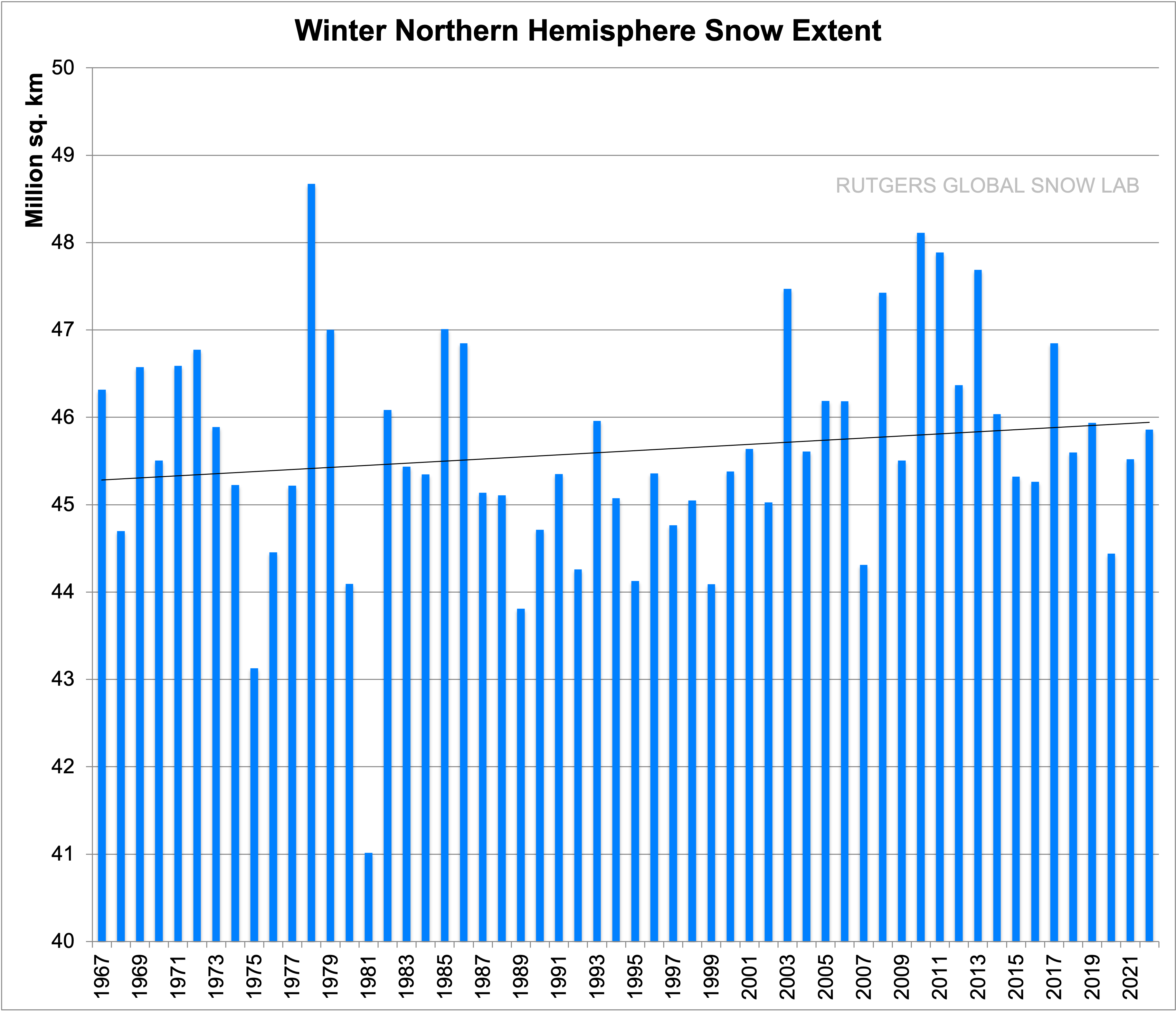
Let us see what the snow statistics show. These are from the Rutgers snow lab.

The fall snow extent is increasing, and has increased by more than 2 percent per year.

The winter snowfall has also increased but only by 0.04 percent per year. The snow covers all of Russia, Northern China, Mongolia, Tibet, Kashmir and northern Pakistan, Northern Afghanistan, Northern Iran, Turkey, Part of Eastern Europe, Scandinavia, Canada, Alaska, Greenland and part of Western and Northern United States.

Jan 16,2022

In the spring on the other hand the snow pack is melting faster, about 1.6 percent less spring snow per year. One of the major reasons for an earlier snow melt is that the air is getting dirtier, especially over China, and to some extent Russia. The soot from burning coal and mining dust changes the albedo of the snow. The soot is visible on old snow all the way up to the North Pole. The other reason is that the North Pole is getting warmer. In the fall and winter it is mostly due to increased snowfall, but in the spring, as soon as the temperatures rise over the freezing point, melting occurs.

So the warming of the poles, far from being an impending end of mankind as we know it, may even be beneficial. Warmer poles in the winter means less temperature gradient between the poles and the tropics, leading to less severe storms. They will still be there, but less severe.

There is one great benefit of increased CO2, the greening of the earth.

Thanks to this greening, done with only the fertilizer of CO2 the earth can now keep another 2 billion people from starvation, not to mention what it does for plants and wildlife.
Refocusing our attention on the South Pole, it set a new Winter half year record average temperature of -61 degree Celsius. At those temperatures CO2 is the dominant greenhouse gas, CO2 vapor is less than one tenth of the CO2. This means that most of the Greenhouse effect will come from CO2,

As CO2 is increasing, winter temperatures at the South Pole is decreasing. This means that CO2 cannot be a major factor in climate change, if anything, it could result in lower temperatures.

Now revisit the temperatures in the Arctic, what is happening to the ice cover:

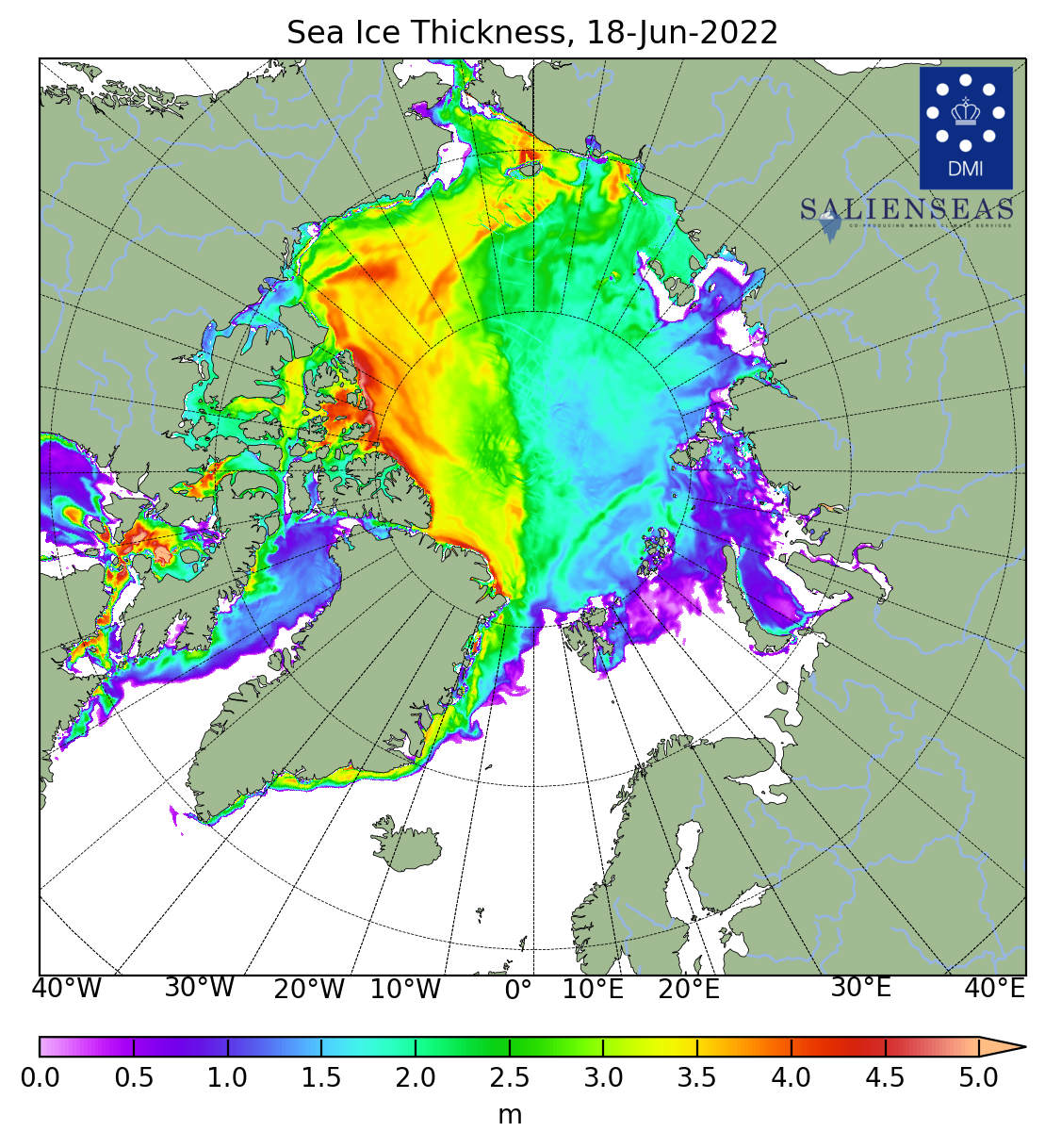
The current ice volume is higher than the previous 3 years but not yet back to normal.
The interesting thing in this picture is that the multi-year ice is increasing.

The Arctic Spring temperatures are the coldest in many years. So far it is only weather, but it is probably an early warning of the coming cooling trend.

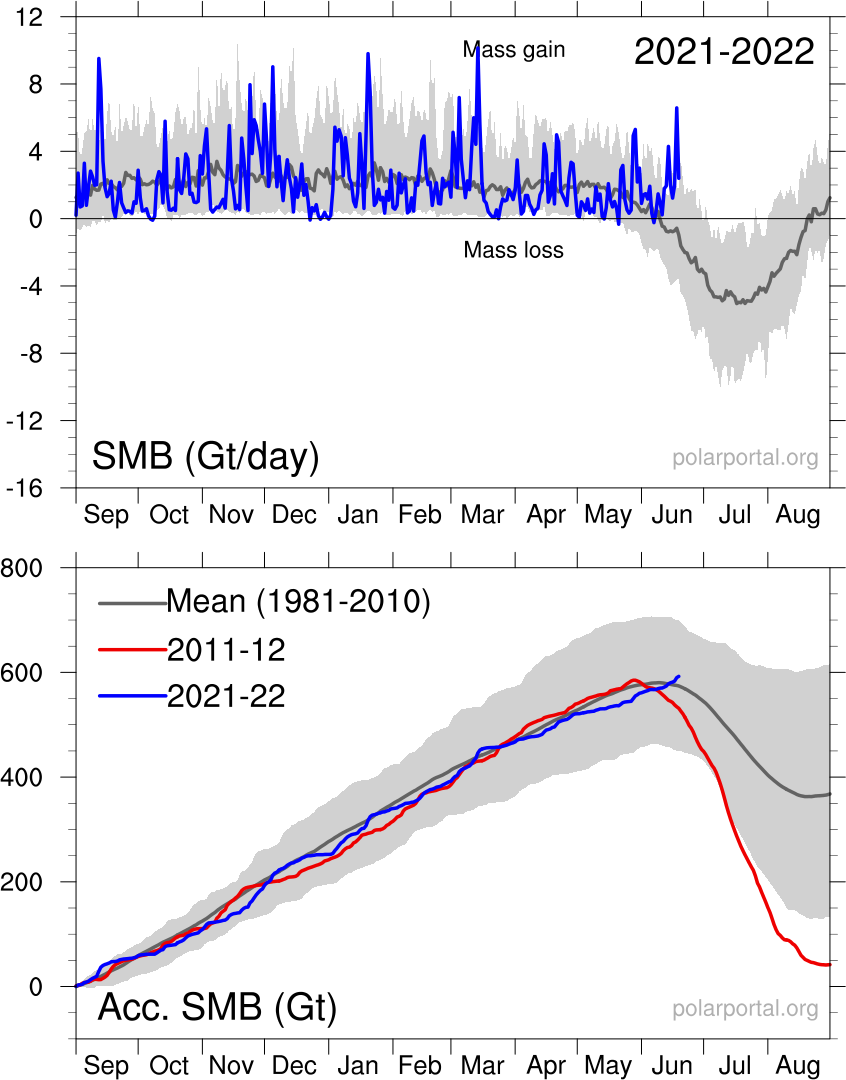
One interesting trend is the increasing ice on Greenland. 2012 was the uear of maximum ice-melt and the prediction was that the arctic may be ice-free in September of 2015, or at least before 2020. Since then Greenland ice is recovering and some glacier have started growing again. Today’s snapshot:

19 June 2022

The delay of the melting season is so far only weather, not yet climate change.

The greening of the world thanks to rising CO2 is substantial, but there are areas that are becoming desertified. In North America the concern is for the American Southwest by using up the aquifers and depleting the reservoirs.

The source of the climate change is not rising CO2 levels, not Methane. It is land use changes, the depletion of aquifers, especially between the tenth and the fortieth latitude. This leads to drying up the land and diminishing river flows. Exhibit A: The Colorado River and the depletion of Lake Mead and Lake Powell.

Having said that, I am still a conservationist. Coal, oil and gas will run out at some time, and I for one would like to save some for my great grandchildren, not yet born. In addition I would like to minimize the need for mining, which can be quite destructive.

We need to take a good look at our energy alternatives. Wind and Solar are good bets, but when the sun doesn’t shine and the wid doesn’t flow we need enormous battery parks to make up for the lack of solar and wind. For now this is provided mostly by natural gas, and coal. Until that is solved it makes no sense to convert the vehicle park to electric power.

The obvious solution is to switch from coal and gas to nuclear power. The total life cycle need of mined material is about 10% of a coal fired plan. The best solution is to switch to Liquid Fluoride Thorium Reactors. They are much cheaper to manufacture than conventional nuclear power. a 100 MW LFTR can be made on an assembly line and be shipped to site in 3 conventional large truck containers.

Here are the many cases why Thorium Nuclear Power is the only realistic solution to the world’s energy problems.

 1. A million year supply of Thorium available worldwide.

 2. Thorium already mined, ready to be extracted.

 3. Thorium based nuclear power produces 0.012 percent as much TRansUranium waste products as traditional nuclear power.

 4. Thorium based nuclear power will produce Plutonium-238, needed for space exploration.

 5. Thorium nuclear power is only realistic solution to power space colonies.

 6. Radioactive waste from an Liquid Fluoride Thorium Reactor decays down to background radiation in 300 years compared to a million years for U-235 based reactors. A Limerick.

 7. Thorium based nuclear power is not suited for making nuclear bombs.

 8. Produces isotopes that helps treat and maybe cure certain cancers.

 9. Liquid Fluoride Thorium Reactors are earthquake safe, only gravity needed for safe shutdown.

10. Molten Salt Liquid Fluoride Thorium Reactors cannot have a meltdown, the fuel is already molten, and it is a continuous process. No need for refueling shutdowns.

11. Molten Salt Nuclear Reactors have a very high negative temperature coefficient leading to a safe and stable control.

12. Atmospheric pressure operating conditions, no risk for explosions. Much safer and simpler design.

13. Virtually no spent fuel problem, very little on site storage or transport.

14. Liquid Fluoride Thorium Nuclear reactors scale beautifully from small portable generators to full size power plants.

15. No need for evacuation zones, Liquid Fuel Thorium Reactors can be placed near urban areas.

16. Liquid Fluoride Thorium Reactors will work both as Base Load and Load Following power plants.

17. Liquid Fluoride Thorium Reactors will lessen the need for an expanded national grid.

18. Russia has an active Thorium program.

19. India is having an ambitious Thorium program, planning to meet 30% of its electricity demand via Thorium based reactors by 2050.

 20. China is having a massive Thorium program.

21. United States used to be the leader in Thorium usage. What happened?

22. With a Molten Salt Reactor, accidents like the Three Mile Island disaster will not happen.

23. With a Molten Salt Reactor, accidents like Chernobyl are impossible.

24. With Molten Salt Reactors, a catastrophe like Fukushima cannot happen.

25. Will produce electrical energy at about 4 cents per kWh.

26. Can deplete most of the existing radioactive waste and nuclear weapons stockpiles.

27. With electric cars and trucks replacing combustion engine cars, only Thorium Nuclear power is the rational solution to provide the extra electric power needed.

28. The race for space colonies is on. Only Molten Salt Thorium Nuclear reactors can fit the bill.

29. President Donald J. Trump on Jan. 5 2021 issued an Executive Order on Promoting Small Modular Reactors for National Defense and Space Exploration. Only Liquid fluoride thorium reactors can meet all the needs.

30. We have to switch from Uranium to Thorium as nuclear feed-stock. We are running out of domestic Uranium.

The difference between Democrats and Republicans? The biggest difference is their view on Climate Change.

The latest Quinnipac University poll showed a remarkable difference in the answer to their greatest concern, especially between Democrats and Republicans. The Question was: In your opinion, what is the most urgent issue facing the country today: COVID-19, inflation, unemployment, climate change, health care, racial inequality, immigration, foreign policy, election laws, the Supreme Court, or crime?

The Democrats greatest concern was Climate Change, followed by Election Laws and Inflation. At the bottom of the list was the Supreme Court.

The Republicans greatest concern was Inflation, followed by Immigration and Crime. At the bottom of the list was Climate Change.

The Independents greatest concern was Inflation, followed by Immigration and COVID-19. At the bottom of the list was Unemployment.

For Blacks there was a tie between COVID-19 and Inflation as their greatest concern, followed by Racial Inequality. At the bottom of the list was the Supreme Court.

And for Hispanics the greatest concern was Inflation, followed by Climate change and COVID-19. At the bottom of the list was Supreme Court.

The biggest concern was Inflation for everybody but Democrats. Their biggest concern was Climate Change, but for Republicans that was the least of their worries.

Why is that?

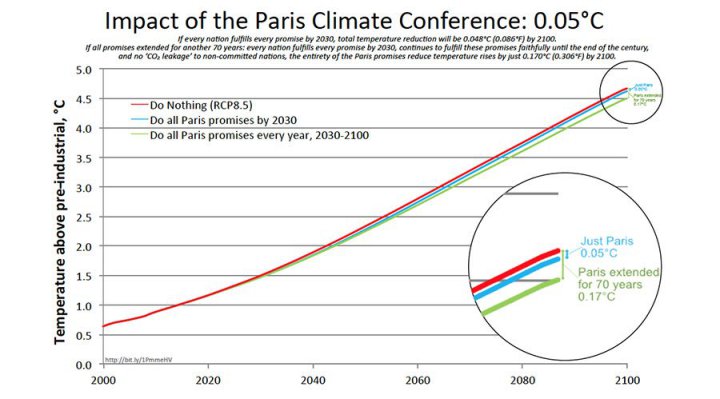
Some Democrats believe with religious fervor that we have only limited time to solve the climate crisis before we reach the point of no return. Alexandra Occasio Cortez said in January 2019 that if we didn’t abolish fossil fuel asap the world will end in 12 years. There is now less than 9 years left. President Trump ended our part in the Paris accord, and President Biden rejoined it in 2021. If we fulfill all the Paris accord demands, the world temperature, according to the UN agency IPCC will rise 0.05 C cooler by 2030, and a whopping 0.17C less by 2100. See analysis here. Meanwhile, China is in negotiations to buy another 100 million metric tons of Coal from Russia. They consume half the world’s coal mining.

For other Democrats it is another method of gaining control of all production and consumption, the Venezuelan model.

Then there is the sustainability crowd, and they point out the obvious fact, that unless something is done, we will run out of Coal, Oil and Gas sometimes in the not too distant future. Their suggested solution is to build Wind Turbines with generators made in China and western Europe. Solar panels are mostly built in China. But that is not the worst part. To build these generators and solar panels we need rare earth metals, 80% of which come from China. Details here. The problem is what to do when the sun doesn’t shine, which is most of the time, and the wind doesn’t blow. Energy must then be produced by other means. For now it is generated by coal and natural gas plus some diesel generators. Battery technology is not there yet, and hydro-power storage is way inadequate for today’s need.

And then there is John Kerry, who’s greatest fear is that the war in Ukraine will distract us from our greatest threat, Climate Change. His latest concern on Migration: “Wait until you see 100 million people for whom the entire food production capacity has collapsed.”

Some Republicans thank God for the increased CO2 levels because thanks to that the world can now keep an additional 2 billion people from starving. It seems hard to believe, but as food yield increases in greenhouses when additional CO2 is added, so does the greenhouse called earth benefit from more CO2. Don’t believe me? Look at this map:

This means more roots for plants, less erosion, and more food for animals. The exception is desert areas.

Others have noticed that the dire predictions from IPCC, a UN Climate Change Panel, have always been way off base. The temperature increase, while real has always been way below what is predicted. It is predicted that the largest temperature increases occur at the poles, so this summer the South Pole had its coldest winter on record. A weather station at the Amundsen-Scott South Pole Station registered record cold winter temperatures this season (April – September), averaging at -61.1 °C (-77.9 °F) and breaking the previous record set in 1976 at -60.6 °C (-77 °F). Weather records date back to 1957. The North Pole on the other hand is experiencing a warmer trend, but only in the winter. The summers are marginally cooler, but that is because there is more now to melt. Yes, the Snow over the Arctic is increasing. See the chart from Rutgers Snow Lab:

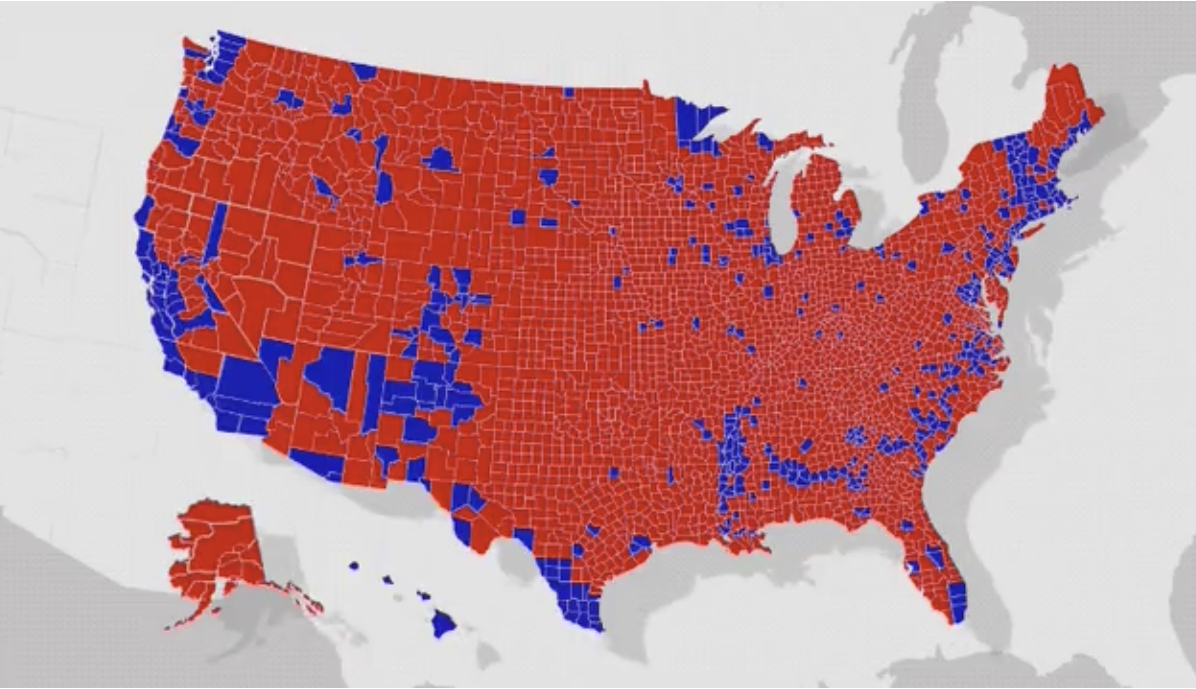
These are but a few of the differences in opinion concerning Climate change. Let’s see where democrats and republicans live. If we look at the 2020 voting results the map looks nearly all Republican: (84% of the counties voted Republican)

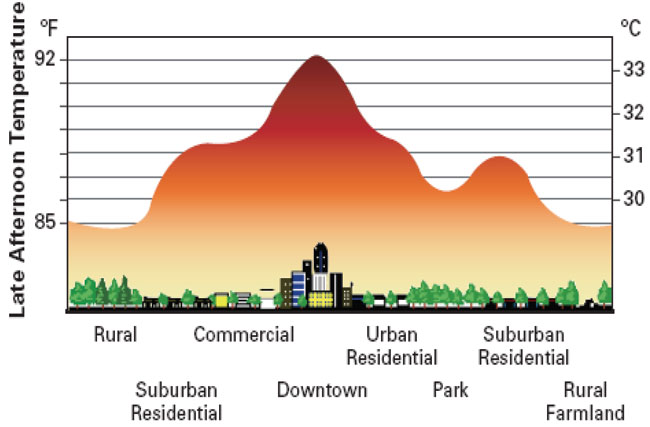
Yet there were more Democrat votes cast than Republican. This is because the largest counties population wise vote Democrat and they experience Climate Change big time thanks to the so called Urban Heat Island effect:

This is late afternoon, somewhere in Urban USA.

People living in the rural America do not experience the Urban Heat Island effect, so they tend to dismiss the constant drumbeat from PBS, everything bad is because of climate change as just idle talk. What do they know; they are stuck in their asphalt jungle complaining about how bad things are. The rural people remember how their grandparents used to say it was much worse in the thirties, heatwave after heatwave and everything dried up. And dust storms and wildfires were much worse. Not to mention the winters, the Mississippi river froze all the way down to New Orleans. We have never has it so good as it is now. Poor Urban Heat Island dwellers.

The Democrats solution to Climate Change is: Eliminate CO2 emissions from fossil fuels and replace with wind and solar but not nuclear power. All cars trucks, trains and busses should be electric. This is impossible.

Republicans want to gradually lessen our dependency of fossil fuel and make electric production come from Nuclear power, preferably small modular Thorium reactors. They have many advantages explained here. There are immense environmental problems, it is not CO2 or even Methane, but water. The American South-west has too little water for its growing population and the east US has sometimes too much. One possible solution is described here.

The Great Global climate change Swindle.

This is a very good summary of the origin and development of the Global Warming hypothesis and its origin in the Global Governance movement. After all, the first Earth day was set to be the 100 year anniversary of Lenin.

It is over one hour long, but well worth the time. Listen carefully.


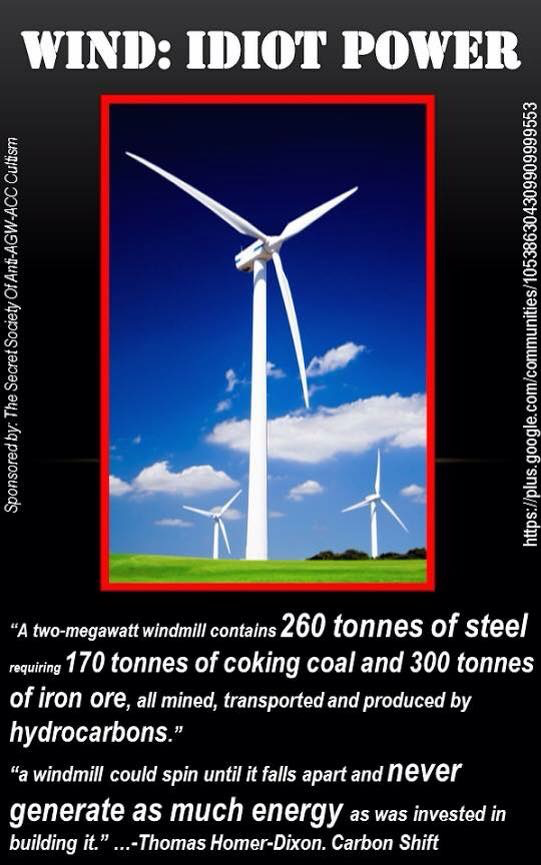
Wind power failed the environmental test. There are better alternatives.

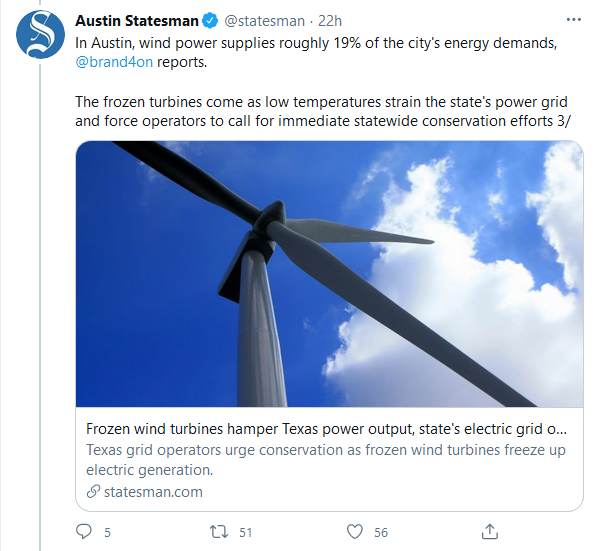
Brr, it is cold in Texas, over 3.5 million people are out of power, freezing rain is knocking out power lines and half of the wind turbines are out of commission until they thaw out. The wind chill is way below zero F, and in Galveston they had a snow thunderstorm on the beach!

Maybe wind power is not the best way to go.There are better ways.

That is not all. Efficient wind turbine generators use a lot of rare earth metals to achieve maximum efficiency on the magnets among other things. China still controls over 80% of all rare earth metals mining and refining. This is a national security risk.

How stupid can you get? Here is an example. To de-ice a 747 aircraft costs about 40,000 dollars. Add to this the cost of flying the helicopter, and the fuel it consumes while transporting the glycol from its base to the wind farm.

The rest of the quote: “And I am not sure about the universe.”

There are better solutions to our energy problem:

The many cases why Thorium Nuclear Power is the only realistic solution to the world’s energy problems.

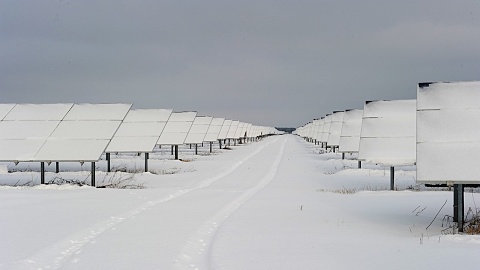
Lest anyone should think: At least solar panels work well.  Not in this storm!


Clouds, water vapor and CO2 – why nearly all climate models fail. – and a Limerick.


Fear spreads up on Capitol Hill

The Climate change will break their will.

AOC: In Ten years

our world disappears!

She acts as a New Green Deal shill.

Quote from Alexandria Occasio-Cortez in January 2019: “Millennials and Gen Z and all these folks that come after us are looking up, and we’re like, ‘The world is going to end in 12 years if we don’t address climate change, and your biggest issue is how are we gonna pay for it?’ ” she said.

I beg to differ.

We live in only one world. As a concerned citizen I realize we have immense environmental challenges before us, with water pollution; from plastics in the ocean, excess fertilizer in the rivers, poison from all kinds of chemicals, including antibiotics, birth control and other medicines flushed down the toilet after going through our bodies, animals fed antibiotics, pest control, weed control and so on. Increasing CO2 is not one of the problems, it will in fact help with erosion control, and allow us to feed more people on less agricultural land with proper management, and require less fertilizer and water to do so. In fact, proper water management is a larger problem, with some rivers no longer even reaching the ocean. All water is already spoken for, especially in the 10 to 40 degrees latitude, where most people live.

Allow me to be somewhat technical and give the background to why I know we will never experience the thermal runaway they are so afraid of.

Many years ago I worked at Hewlett Packard on an Atomic Absorption Detector. It was a huge technical success but a commercial failure, as it was too expensive to use for routine applications. However it found a niche and became the detector of choice when dismantling the huge nerve gas stockpiles remaining from the cold war. I was charged with doing the spectrum analysis and produce the final data from the elements. One day two salesmen came and tried to sell us  a patented device that could identify up to 21 different elements with one analysis. They had a detector that divided the visual band into 21 parts, and bingo, with proper, not yet “fully developed” software you could now analyze up to 21 elements with one gas chromath analysis. What could be better? We could only analyze correctly four or five elements simultaneously. It turns out the elements are absorbing in the same wavelength bands, scientifically speaking they are not orthogonal, so software massaging can only go so far. It turned out that the promised new detector was inferior to what we already had and could only quantify three or 4 elements at the most.

In the atmosphere the two most important greenhouse gases are water vapor and CO2 with methane a distant third. Water vapor is much more of a greenhouse gas everywhere except near the tropopause high above the high clouds and near the poles when the temperature is below 0 F, way below freezing. A chart shows the relationship between CO2 and water vapor:

Image result for h20 and co2 as greenhouse gases

Source: http://notrickszone.com/2017/07/31/new-paper-co2-has-negligible-influence-on-earths-temperature/

Even in Barrow, Alaska water vapor is the dominant greenhouse gas. Only at the South Pole (And North Pole) does CO2 dominate (but only in the winter).

All Climate models take this into account, and that is why they all predict that the major temperature increase will occur in the polar regions with melting icecaps and other dire consequences. But they also predict a uniform temperature rise from the increased forcing from CO2 and the additional water vapor resulting from the increased temperature.

This is wrong on two accounts. First, CO2 and H2O gas are nor orthogonal, that means they both absorb in the same frequency bands. There are three bands where CO2 absorbs more than H2O in the far infrared band, but other than that H2O is the main absorber. If H2O is 80 times as common as CO2 as it is around the equator, water vapor is still the dominant absorber, and the amount of CO2 is irrelevant.

Secondly gases cannot absorb more than 100% of the energy available in any given energy wavelength! So if H2O did absorb 80% of the energy and CO2 absorbed 50%, the sum is not 130%, only 90%. (0.8 + 0.5×0,2 or 0.5 + 0.8×0.5). In this example CO2 only adds one quarter of what the models predict.

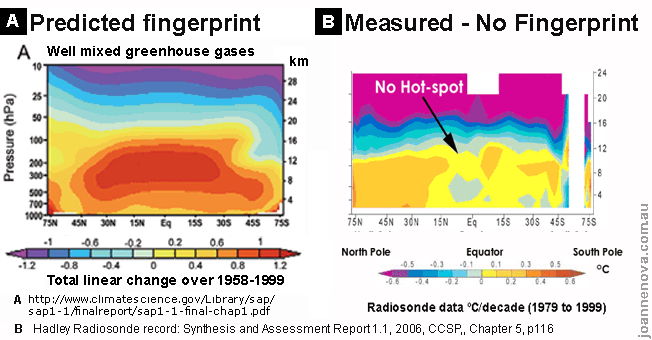
How do I know this is true? Lucky for us we can measure what increasing CO2 in the atmosphere has already accomplished. For a model to have credibility it must be tested with measurements, and pass the test. There is important evidence suggesting the basic story is wrong. All greenhouse gases work by affecting the lapse rate in the tropics. They thus create a “hot spot” in the tropical troposphere. The theorized “hot spot” is shown in the early IPCC publications. (Fig A)

Fig. B shows observations. The hotspot is not there. If the hotspot is not there, the models must be wrong. So what is wrong with the models? This was reported in 2008 and the models still assume the additive nature of greenhouse gases, even to the point when more than 100% of the energy in a given band is absorbed.

How about Methane? Do not worry, it absorbs nearly exclusively in the same bands as water vapor and has no measurable influence on the climate.

But it will get warmer at the poles. That will cause melting of the ice-caps? Not so fast. When temperature rises the atmosphere can hold more water vapor, so it will snow more at higher latitudes. While winter temperatures will be higher with more snowfall, this will lower the summer temperatures until the extra snow has melted. And that is what is happening in the Arctics

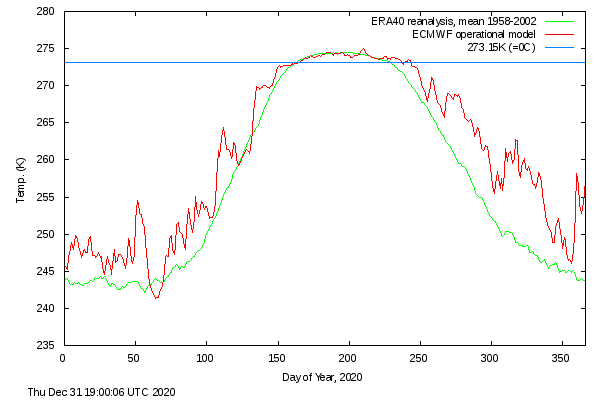
As we can see from this picture, the winters were about 5 degrees warmer, but starting from late May through early August temperatures were lower. It takes time to melt all the extra snow that fell because of the less cold air, able to contain more water vapor.

These are my suggestions

  1. Do not worry about increasing CO2 levels. The major temperature stabilizer is clouds, and they will keep the earth from overheating by reflecting back into space a large amount of incoming solar radiation. Always did, and always will, even when the CO2 concentration was more than 10000 ppm millions of years ago. Ice ages will still come, and this is the next major climate change, maybe 10000 years from now, probably less.
  2. Clean up rivers, lakes and oceans from pollution. This is a priority.
  3. Limit Wind turbine electric energy to areas not populated by large birds to save the birds. Already over 1.3 million birds a year are killed by wind turbines, including the bald and Golden Eagles that like to build their aeries on top of wind turbines.
  4. Do not build large solar concentration farms. They too kill birds.
  5. Solar panels are o.k. not in large farms, but distributed on roofs to provide backup power.
  6. Exploit geothermal energy in geologically stable areas.
  7. Where ever possible add peak power generation and storage capacity to existing hydroelectric power plants by pumping back water into the dams during excess capacity.
  8. Add peak power storage dams, even in wildlife preserves. The birds and animals don’t mind.
  9. Develop Thorium based Nuclear Power. Russia, China, Australia and India are ahead of us in this. Streamline permit processes. Prioritize research. This should be our priority, for when the next ice age starts we will need all the CO2 possible.
  10. Put fusion power as important for the future but do not rush it, let the research and development be scientifically determined. However, hybrid Fusion -Thorium power generation should be developed.
  11. When Thorium power is built up and has replaced coal and gas fired power plants, then is the time to switch to electric cars, not before.
  12. Standard Nuclear Power plants should be replaced by Thorium powered nuclear plants, since they have only 0,01% of the really bad long term nuclear waste.
  13. Start thinking about recovering CO2 directly from the air and produce aviation fuel. This should be done as Thorium power has replaced coal and gas fired power plants.
  14. This is but a start, but the future is not as bleak as all fearmongers state.

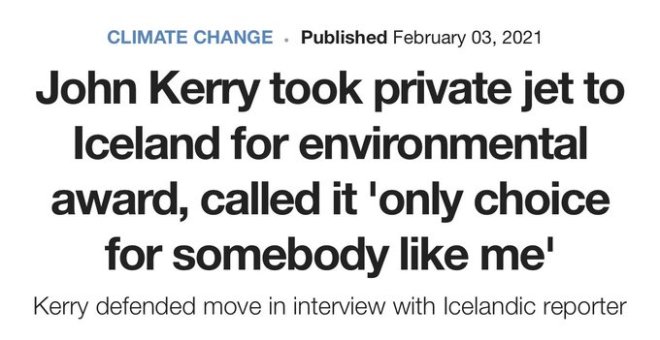
John Kerry, the climate Czar, a Limerick.

John Kerry in private jet flies

all over our God-given skies.

Carbon neutral he ain’t;

not my only complaint.

Spews out all the climate scare lies.

Yes, John Kerry must have been the only choice for environmental Czar. After all, he already has six houses, twelve cars, a yacht and his own private jet.

He will promote off-shore wind power, except outside one of his homes, solar power, but no new power lines anywhere near one of his homes, anddo away with coal.

I too want to limit coal consumption, but for an entirely different reason. I want to save some for future generations, and especially when we enter the next ice-age, which may be nearer than most people think.

Now, much better than spend all our natural resources on building wind and solar power is to rapidly develop Thorium Nuclear power for most electricity production. It is the only realistic power source for a Moon colony, and in the last few days of the Trump administration small portable nuclear power stations were promoted for military use. As far as I know, President Biden has not yet rescinded that executive order. Let’s hope he won’t.


Re-signing the Paris Accord, a very bad idea, even for the environment! A Limerick.

Don’t fall for the Paris accord!

A bondage we ill can afford

CO2 keeps us free

Food for you, food for me.

The temperature sham sows discord.

According to alarmists’ climate change models, staying out of the Paris accord will increase global temperatures by 0.05 to 0.17 degrees Celsius by the year 2100, a catastrophe too big to fathom. See the official chart!

These predictions are according to an average of climate change models, all sponsored by various governments in one way or another.

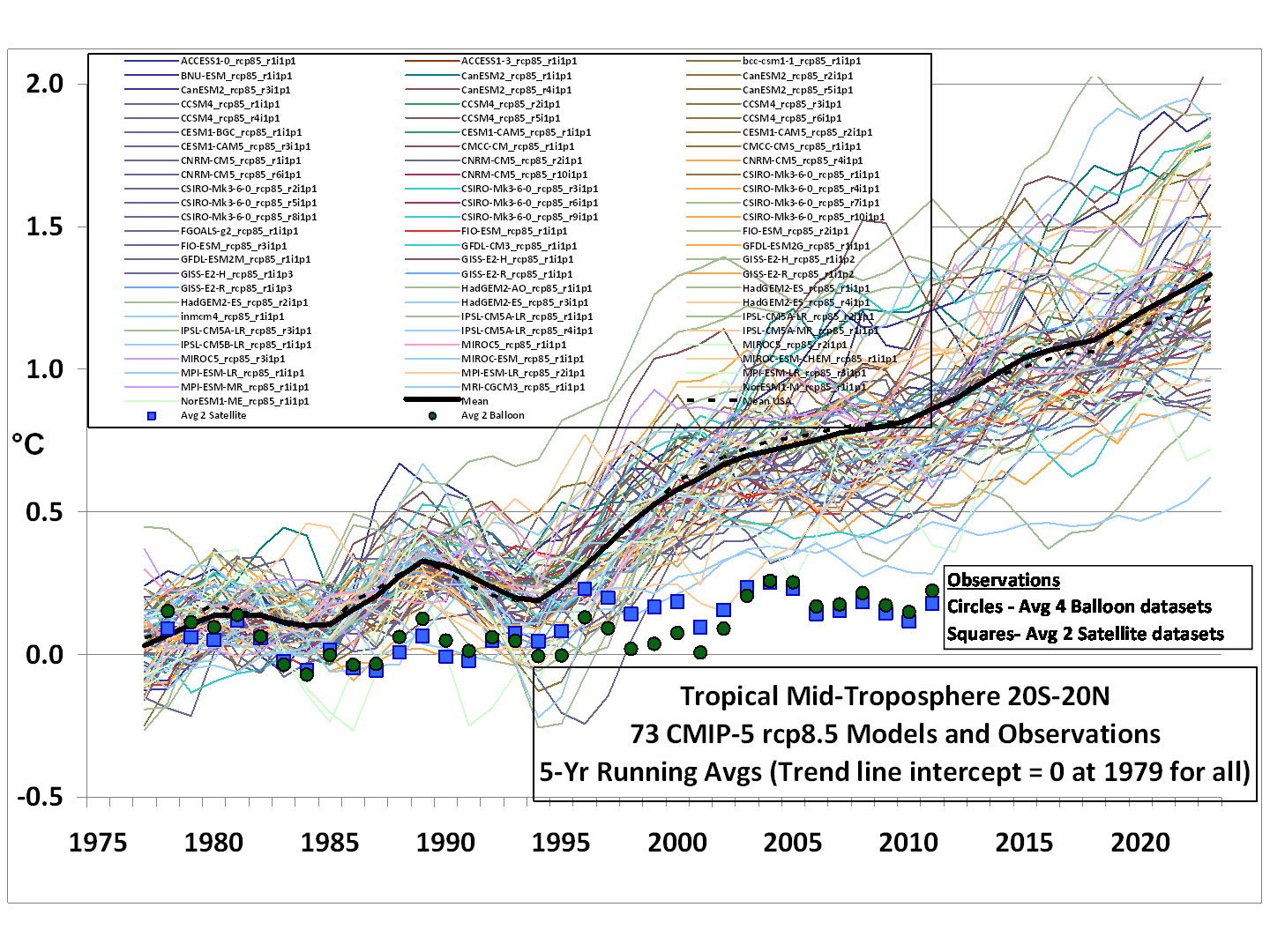
Here is a chart of 73 climate models, and the results of 6 observations.

And how is the current global temperature trend performing right now? There was  A  “pause” for over 19 years even though CO2 was increasing at 3 ppm (nearly one percent) per year! Then came a temperature rise. Here is a chart of the worldwide UAHv6 for the last 24 years.

With the discrepancy of more than half a degree C between the average of the climate models and observations, it pays to be skeptical of even the 0.17 degrees.

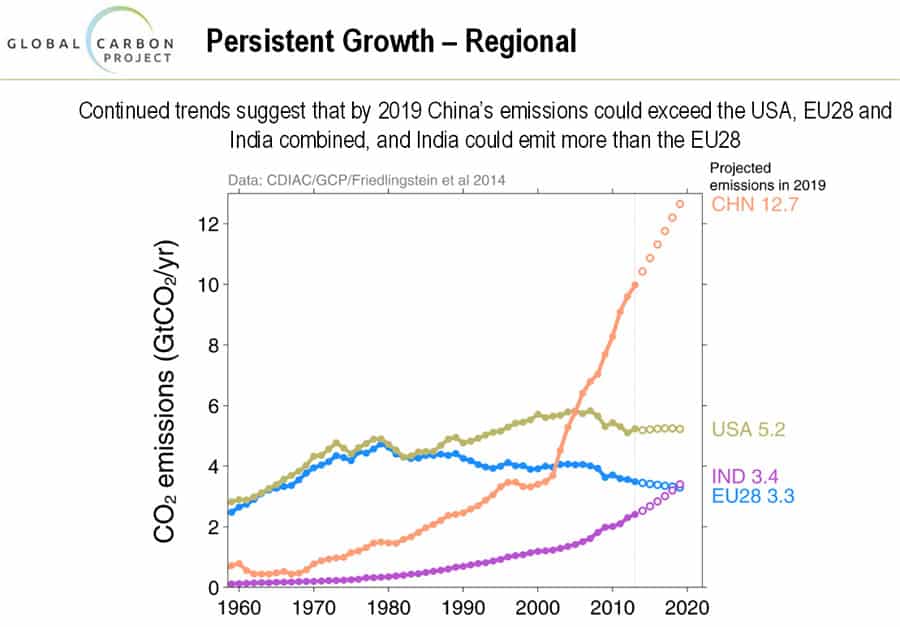
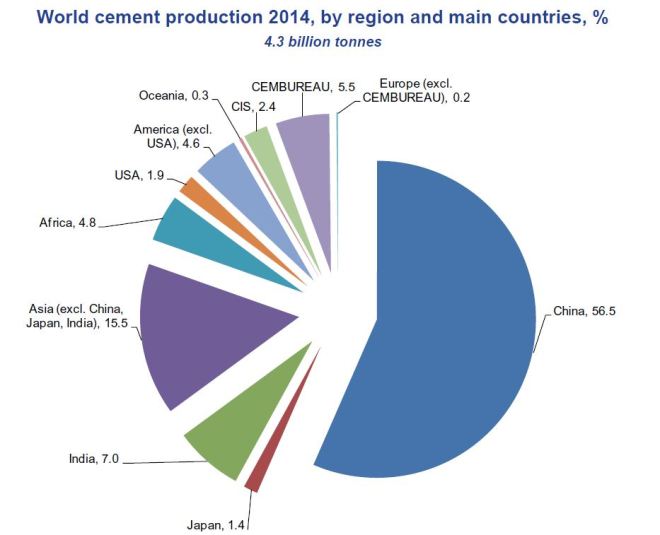
This chart shows the growth of China. Not only are they consuming 47% of the world’s coal production, they are also making 30 times more cement than  U.S. Cement production releases CO2, by replacing carbonate with sulfate.

And with the Paris accord, China was free to grow emissions until 2030, up to 6 times U.S. output, and get paid for it! And we were to pay them!

What is China doing with all its cement? Building artificial islands? Bunkers? Ghost cities?

world-cement-production_2

Well, it takes a lot of cement to build artificial islands in the South China Sea!

china3


Biden stops Keystone XL construction at great environmental cost.

Newly elected Joe Biden has decided to stop building the Keystone XL pipeline, thus satisfying the environmentalists that want to wean us off our dependency on carbon based products, such as fuel, food and fertilizer. The arguments for denying the decision are nearly exclusively political, while the arguments to build the pipeline are concerns for our national security, economy and the environment.

Here is the deal:

Canada has the tar-sands and is extracting the oil. This was not our decision. If we don’t buy the oil, China will.

We export refined products to the Caribbean islands, which by the way have a larger carbon footprint per person than the U.S. This is good business, since the islands are too small to have a refinery of their own.

It takes more energy to run a refinery up north in a cold climate than in hot, humid Baytown, Texas.

The last time a major oil refinery was built in the U.S was 1976. A small refinery was built in 1993, in Valdez, Alaska. The  US. regulatory climate is hostile to refineries. Warren Buffett bought Burlington Northern Santa Fe railroad in February 2010 and paid 44 Billion dollars for it. The railroad paid Berkshire Hathaway 2.25 Billion in dividends during the first 13 months. Warren Buffet bought the railroad after President Obama took office, since he nixed the pipeline the first time.

Right now the crude oil is transported from the Athabasca tar sands to Houston mostly by Warren Buffet’s Burlington Northern Santa Fe LLC railroad. It is among U.S. and Canadian railroads that did stand to benefit from the decision to reject TransCanada Corp. (TRP)’s Keystone XL oil pipeline permit.
With modest expansion, railroads can handle all new oil produced in western Canada through 2030, according to an analysis of the Keystone proposal by the U.S. State Department.
https://lenbilen.com/2012/01/25/warren-buffet-profiting-from-working-on-the-railroad/
The cost of transporting the oil is about #14 dollars per barrel, much of it the cost of burning diesel fuel, generating CO2. The pipe-line can do the job for about seven dollars per barrel, much of it capital costs, some of it already spent.
We can see what happens when transporting crude oil: https://lenbilen.com/2013/07/07/ttain-derailment-in-quebec-and-keystone-xl-pipeline-a-limerick/

Warren Buffet is a major Democratic political player; he will again have frequent access to the White House. Last year the Warren Buffet organizations donated 58 million dollars to the Biden presidential campaign.

Sarah Palin once succinctly coined the phrase: “This is Crony Capitalism.”

By not importing oil from Canada the total carbon footprint will increase. We lose, and Canada loses. (I am not concerned that the CO2 is increasing, but that a valuable natural resource is unnecessary depleted.) Now it turns out that Canada has left the Kyoto Protocol but has joined the Paris accord, so they have to export the crude oil to countries that still can expand their fossil fuel burning, such as China, but they would rather export to the U.S.

So why is Joe Biden against the Keystone XL pipeline? Here are seven possibilities:

1. Like Obama, Joe Biden is a true believer that ”this was the moment when the rise of the oceans began to slow and our planet began to heal”.

2. Joe wants to deliberately wreck our economy to create a more fair society of shared sacrifices, refuses to have an energy policy that will create jobs, but will support protest movements and foment unrest.

3. Joe is acting on orders from Global Governance people that do want U.S. to be totally dependent on international law and U.N. mandates.

4. Joe wants to show leadership in implementing the Paris Climate Conference 2015, and its associated treaty.

5. Joe Biden wants to show leadership on something, like touting the “breakthrough” agreement with China, where China is allowed to emit six times as much CO2 as the U.S. by the year 2030.

6. The real reason? Like Obama, Joe is fully bought and paid for, this time by China. The old reason: https://lenbilen.com/2014/02/14/the-real-reason-obama-wont-approve-the-keystone-xl-pipeline/

7. Joe is half insane and surrounded by bad advisors.

This is the best I can do to explain the reasons for this decision.

29. President Donald J. Trump on Jan. 5 2021 issued an Executive Order on Promoting Small Modular Reactors for National Defense and Space Exploration. Only Liquid fluoride thorium reactors can meet all the needs.

Executive Order EO 13972.

Section 1.  Purpose.  Nuclear energy is critical to United States national security.  That is why I have taken a series of actions to promote its development and facilitate its use.  On June 29, 2017, I announced an initiative to revive and expand the nuclear energy sector and directed a complete review of United States nuclear energy policy to help find new ways to revitalize this crucial energy resource.  On July 12, 2019, I signed a Presidential Memorandum entitled “The Effect of Uranium Imports on the National Security and Establishment of the United States Nuclear Fuel Working Group,” with the goal of examining the current state of domestic nuclear fuel production and reinvigorating the nuclear fuel supply chain, consistent with United States national security and nonproliferation goals.  On August 20, 2019, I signed National Security Presidential Memorandum-20, entitled “Launch of Spacecraft Containing Space Nuclear Systems,” calling for development and use of space nuclear systems to enable or enhance space exploration and operational capabilities.

The purpose of this order is to take an important additional step to revitalize the United States nuclear energy sector, reinvigorate America’s space exploration program, and develop diverse energy options for national defense needs.  Under this action, the United States Government will coordinate its nuclear activities to apply the benefits of nuclear energy most effectively toward American technology supremacy, including the use of small modular reactors for national defense and space exploration.  This work is critical to advancing my Administration’s priorities for the United States to lead in research, technology, invention, innovation, and advanced technology development; its mission to promote and protect the United States national security innovation base; its drive to secure energy dominance; and its commitment to achieving all of these goals in a manner consistent with the highest nuclear nonproliferation standards.

The United States was the first nation to invent and develop the technology to harness nuclear energy.  Since the 1950s, the United States Navy has been operating and advancing transportable nuclear reactors, resulting in powerfully enhanced marine propulsion for its aircraft carriers and allowing nuclear-powered submarines to remain submerged for extended periods of time.

The United States must sustain its ability to meet the energy requirements for its national defense and space exploration initiatives.  The ability to use small modular reactors will help maintain and advance United States dominance and strategic leadership across the space and terrestrial domains.

Sec. 2.  Policy.  It is the policy of the United States to promote advanced reactor technologies, including small modular reactors, to support defense installation energy flexibility and energy security, and for use in space exploration, guided by the following principles:

(a)  A healthy and robust nuclear energy industry is critical to the national security, energy security, and economic prosperity of the United States;

(b)  The United States should maintain technology supremacy for nuclear research and development, manufacturing proficiency, and security and safety;

(c)  The United States Government should bolster national defense and space exploration capabilities and enable private-sector innovation of advanced reactor technologies.

Sec. 3.  Demonstration of Commercial Reactors to Enhance Energy Flexibility at a Defense Installation.  (a)  Micro-reactors have the potential to enhance energy flexibility and energy security at domestic military installations in remote locations.  Accordingly, the Secretary of Defense shall, within 180 days of the date of this order, establish and implement a plan to demonstrate the energy flexibility capability and cost effectiveness of a Nuclear Regulatory Commission-licensed micro‑reactor at a domestic military installation.

(b)  If the demonstration is successful, the Secretary of Defense shall identify opportunities at domestic military installations where this capability could enhance or supplement the fulfillment of installation energy requirements.  In identifying these opportunities, the Secretary of Defense shall take into account considerations that are unique to national defense needs and requirements that may not be relevant in the private sector, such as:

(i)    the ability to provide resilient, independent energy delivery to installations in the event that connections to an electrical grid are compromised;

(ii)   the ability to operate for an extended period of time without refueling;

(iii)  system resistance to disruption from an electro‑magnetic pulse event; and

(iv)   system cybersecurity requirements.

Sec. 4.  Defense Capabilities.  (a)  The Department of Defense is one of the largest consumers of energy in the world, using more than 10 million gallons of fuel per day and 30,000 gigawatt-hours of electricity per year, nearly all of which is provided through civilian electrical grids.  Fuel demands for a modern United States military have dramatically grown since World War II and are anticipated to continue to increase in order to support high-energy-usage military systems.  In this context, nuclear power could significantly enhance national defense power capabilities.

(b)  The Secretary of Defense shall, in consultation with the Secretary of State, the Secretary of Commerce, the Secretary of Energy, and the Administrator of the National Aeronautics and Space Administration (NASA Administrator):

(i)    determine whether advanced nuclear reactors can be made to benefit Department of Defense future space power needs;

(ii)   pilot a transportable micro-reactor prototype;

(iii)  direct an analysis of alternatives for personnel, regulatory, and technical requirements to inform future decisions with respect to nuclear power usage; and

(iv)   direct an analysis of United States military uses for space nuclear power and propulsion technologies and an analysis of foreign adversaries’ space power and propulsion programs.

Sec. 5.  Space Exploration.  (a)  Nuclear power sources that use uranium fuel or plutonium heat sources are essential to deep space exploration and in areas where solar power is not practical.  NASA uses radioisotope power systems, such as radioisotope thermoelectric generators and radioisotope heater units, to provide power and heat for deep space robotic missions.  Nuclear power sources in the kilowatt range may be needed for demonstrating In-situ Resource Utilization (ISRU) and robotic exploration of permanently shadowed craters on the Moon that contain frozen water.  Nuclear reactors up to 100 kilowatts may be needed to support human habitats, ISRU, other facilities, and rovers on both the Moon and Mars.  Power sources in the megawatt range would be necessary for efficient, long‑duration deep space propulsion.  Affordable, lightweight nuclear power sources in space would enable new opportunities for scientific discovery.  The sustainable exploration of the Moon, Mars, and other locations will be enhanced if small modular reactors can be deployed and operated remotely from Earth.

(b)  Within 180 days of the date of this order, the NASA Administrator, in consultation with heads of other executive departments and agencies (agencies), as appropriate, shall define requirements for NASA utilization of nuclear energy systems for human and robotic exploration missions through 2040 and analyze the costs and benefits of such requirements.  In defining these requirements, the NASA Administrator shall take into account considerations unique to the utilization of nuclear energy systems in space, such as:

(i) transportability of a reactor prior to and after deployment;

(ii) thermal management in a reduced- or zero-gravity environment in a vacuum or near-vacuum;

(iii) fluid transfer within reactor systems in a reduced or zero-gravity environment;

(iv) reactor size and mass that can be launched from Earth and assembled in space;

(v) cooling of nuclear reactors in space;

(vi) electric power requirements

(vii) space safety rating to enable operations as part of human space exploration missions;

(viii) period of time for which a reactor can operate without refueling; and

(ix) conditioning of reactor components for use in the space environment.

Sec. 6.  Domestic Fuel Supply.  (a)  A thriving and secure domestic nuclear fuel supply chain is critical to the national interests of the United States.  A viable domestic nuclear fuel supply chain not only supports defense and national security activities, but also enables the success of the commercial nuclear industry.  Many advanced reactor concepts, however, will require high-assay, low-enriched uranium (HALEU), for which no domestic commercial enrichment capability currently exists.  The United States must take steps to ensure a viable United States-origin HALEU supply.

(b)  The Secretary of Energy shall complete the Department of Energy’s ongoing 3-year, $115 million demonstration of a United States-origin enrichment technology capable of producing HALEU for use in defense-related advanced reactor applications.  Within funding available for the demonstration project, the Secretary of Energy should develop a plan to promote successful transition of this technology to the private sector for commercial adoption.

(c)  The Secretary of Energy shall consult with the Secretary of Defense, the Director of the Office of Management and Budget, and the NASA Administrator regarding how advanced fuels and related technologies can best support implementation of sections 3, 4, and 5 of this order.

Sec. 7.  Common Technology Roadmap.  (a)  The Secretary of State, the Secretary of Defense, the Secretary of Commerce, the Secretary of Energy, and the NASA Administrator shall develop a common technology roadmap through 2030 that describes potential development programs and that coordinates, to the extent practicable, terrestrial-based advanced nuclear reactor and space-based nuclear power and propulsion efforts.  Agencies shall remain responsible for funding their respective mission-unique requirements.  The roadmap shall also include, at a minimum:

(i) assessments of foreign nations’ space nuclear power and propulsion technological capabilities;

(ii)   pathways for transitioning technologies developed through Federally supported programs to private-sector activities; and

(iii)  other applications supporting the goals provided in section 1 of this order.

(b)  The roadmap shall be submitted to the President by the Director of the Office of Management and Budget, the Assistant to the President for Domestic Policy, the Director of the Office of Science and Technology Policy, the Assistant to the President for National Security Affairs, the Assistant to the President for Economic Policy, and the Executive Secretary of the National Space Council before submissions of budget proposals by the Secretary of State, the Secretary of Commerce, the Secretary of Energy, and the NASA Administrator.

Sec. 8.  Definitions.  For purposes of this order:

(a)  The term “small modular reactor” refers to an advanced nuclear reactor of electric generation capacity less than 300 megawatt-electric.  Because of the smaller size, small modular reactors can generally be designed for factory fabrication and modular construction to take advantage of economies of serial production and shorter construction times.

(b)  The term “micro-reactor” refers to a nuclear reactor of electric generation capacity less than 10 megawatt-electric that can be deployed remotely.  Micro-reactors are a subset of small modular reactors and are also known as “very small modular reactors.”

(c)  The term “transportable micro-reactor” refers to a micro-reactor that can be moved by truck, ship, or large military transport aircraft and is capable of both rapid deployment and teardown or removal, typically with safe teardown or removal less than 1 week after 1 year of full-power operation.

(d)  The term “space exploration” refers to in-space scientific and resource exploration, in-space economic and industrial development, and development of associated in-space logistical infrastructure.

(e)  The term “national defense” refers to the protection of the United States and its interests from foreign attack or other natural danger, including phenomena occurring on Earth and in space.

Sec. 9.  General Provisions.  (a)  Nothing in this order shall be construed to impair or otherwise affect:

(i)   the authority granted by law to an executive department or agency, or the head thereof; or

(ii)  the functions of the Director of the Office of Management and Budget relating to budgetary, administrative, or legislative proposals.

(b)  This order shall be implemented consistent with applicable law and subject to the availability of appropriations.

(c)  This order is not intended to, and does not, create any right or benefit, substantive or procedural, enforceable at law or in equity by any party against the United States, its departments, agencies, or entities, its officers, employees, or agents, or any other person.

DONALD J. TRUMP
THE WHITE HOUSE,
January 5, 2021. WhiteHouse.gov