A Climate Realist’s (not so) short Answers to Hard Questions About Climate Change. Question 14 (of 16) How does agriculture affect climate change?

NOV. 28, 2015 gave his answers to 16 questions in the N.Y. Times regarding Climate Change. This Climate realist added his answer.

 Answers to Question 1: How much is the planet heating up?

Answers to Question 2. How much trouble are we in?

Answers to Question 3. Is there anything I can do?

Answers to Question 4. What’s the optimistic scenario?

Answers to Question 5. Will reducing meat in my diet help the climate?

Answers to Question 6. What’s the worst-case scenario?

Answers to Question 7. Will a tech breakthrough help us?

Answers to Question 8. How much will the seas rise?

Answers to Question 9. Are the predictions reliable?

Answers to Question 10. Why do people question climate change?

Answers to Question 11. Is crazy weather tied to climate change?

Answers to Question 12. Will anyone benefit from global warming?

Answers to Question 13. Is there any reason for hope?


Justin Gillis answer to Question 14. How does agriculture affect climate change?

It’s a big contributor, but there are signs of progress.

The environmental pressures from global agriculture are indeed enormous.

The demand for food is rising, in large part because of population growth and rising incomes that give millions of once-low income people the means to eat richer diets. Global demand for beef and for animal feed, for instance, has led farmers to cut down huge chunks of the Amazon rain forest.

Efforts are being made to tackle the problems. The biggest success has arguably been in Brazil, which adopted tough oversight and managed to cut deforestation in the Amazon by 80 percent in a decade. But the gains there are fragile, and severe problems continue in other parts of the world, such as aggressive forest clearing in Indonesia.

Scores of companies and organizations, including major manufacturers of consumer products, signed a declaration in New York in 2014 pledging to cut deforestation in half by 2020, and to cut it out completely by 2030. The companies that signed the pact are now struggling to figure out how to deliver on that promise.

Many forest experts at the Paris climate talks in late 2015 considered the pledge as ambitious, but possible. And they said it was crucial that consumers keep up the pressure on companies from whom they buy products, from soap to ice cream.

My answer to Question 14. How does agriculture affect climate change?

Whenever a forest is cut down and the earth gets tilled the local microclimate changes, and not for the better. The earth warms about 0.8 degrees C, the evapotranspiration is drastically reduced, the ground dries up having lost its protective shade. That is why it is an insane idea to cut down the rainforests of Borneo to produce biofuel.

Thanks to increasing CO2 levels agriculture is in much better shape than before.

CO2, the life-giving gas, not “Carbon Pollution”. A Limerick – and explanation.

What then is this “Carbon Pollution”?

A sinister, evil collusion?

CO2, it is clean,

Makes for growth, makes it green,

A transfer of wealth, a solution.

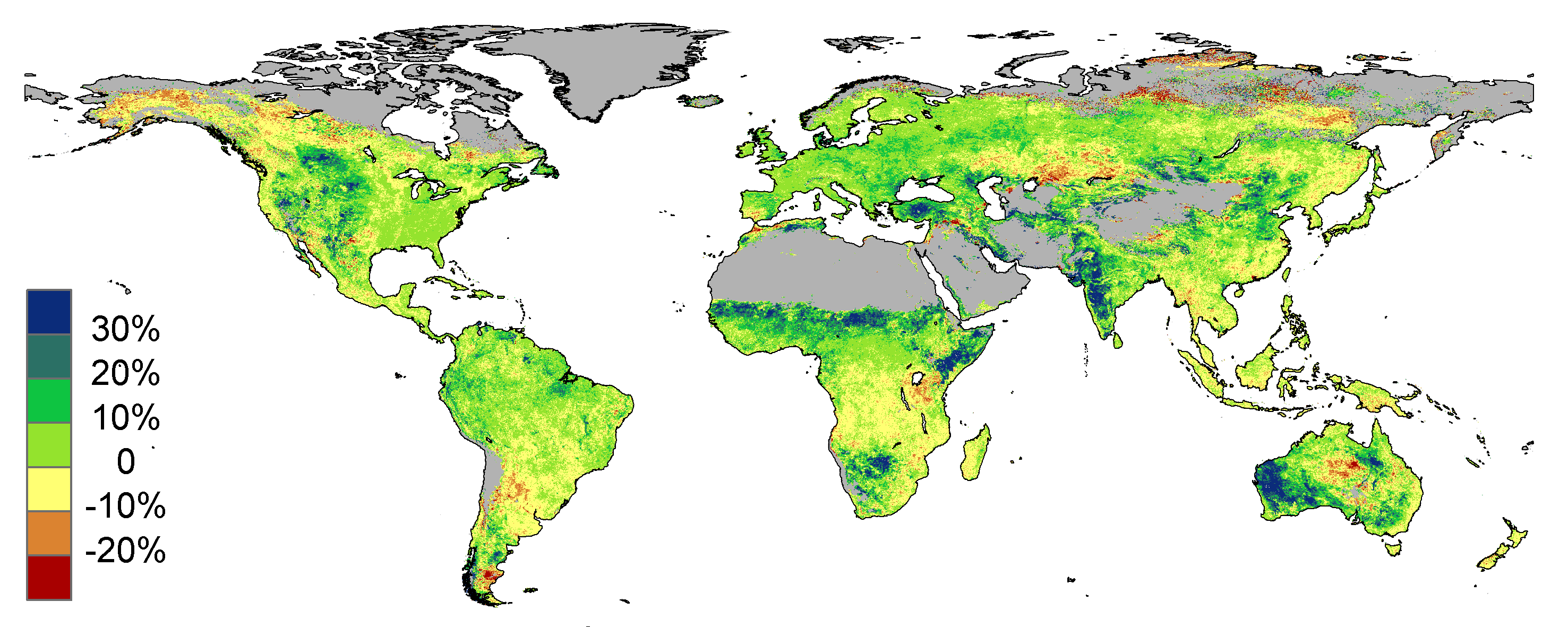
CO2 concentration has increased from about 280 ppm in pre-industrial times to 405 ppm today, and is increasing at a rate of 2 ppm per year. We are way past the point of no return, 350 ppm which would lead to a temperature catastrophe. (1) But instead, something rather interesting is occurring. The earth is getting greener! (2) This 40 % increase in CO2 the last 250 years has led to a more than 30 % increase in agricultural production all by itself without adding fertilizer or using higher yielding seeds. (3) Thanks to this we can now feed an additional two billion people on earth without starvation. The news are so good, that the per capita food production is increasing, even as the population is increasing. (4)

Look at it this way. The value of basic agricultural products is more than 1.5 trillion dollars worldwide. 30% of that is due to increased CO2. That means that the CO2 emitted is worth 450 billion dollars, spread out over all farmers and ranchers worldwide. This wealth transfer is occurring right now, and knows no national boundary. It is a gift from the developed countries to the rest of the world. Who could be against that?

It turns out that this wealth transfer occurs without global governance. The leaders of the world will not have their say in who gets the wealth transfer, the U.N. bureaucrats will not get their cut, and politicians cannot get a campaign issue since it  occurs without their involvement.

So to recapture the initiative they renamed this life-giving gas “Carbon pollution” and managed somehow to get the Supreme Court to agree with the notion that CO2 is a pollutant.

How can that be? They argued that CO2 is a greenhouse gas, which is true. It is second only to water vapor. It is responsible for about 9 degree Celsius rise in global temperature, and if CO2 increases, so does the greenhouse effect and the temperature increases. This in turn leads to more water vapor in the air, and water vapor is the strongest greenhouse gas, so there is a risk of reaching a “tipping point” when we could experience a thermal runaway of the planet. All of this is true, so U.N. and many governments around the world have sponsored studies to model  climate change, over a hundred models have been constructed, and they all come up with rather gloomy forecasts. The research is so intense that over 3 billion dollars of government monies are spent yearly on climate change research.

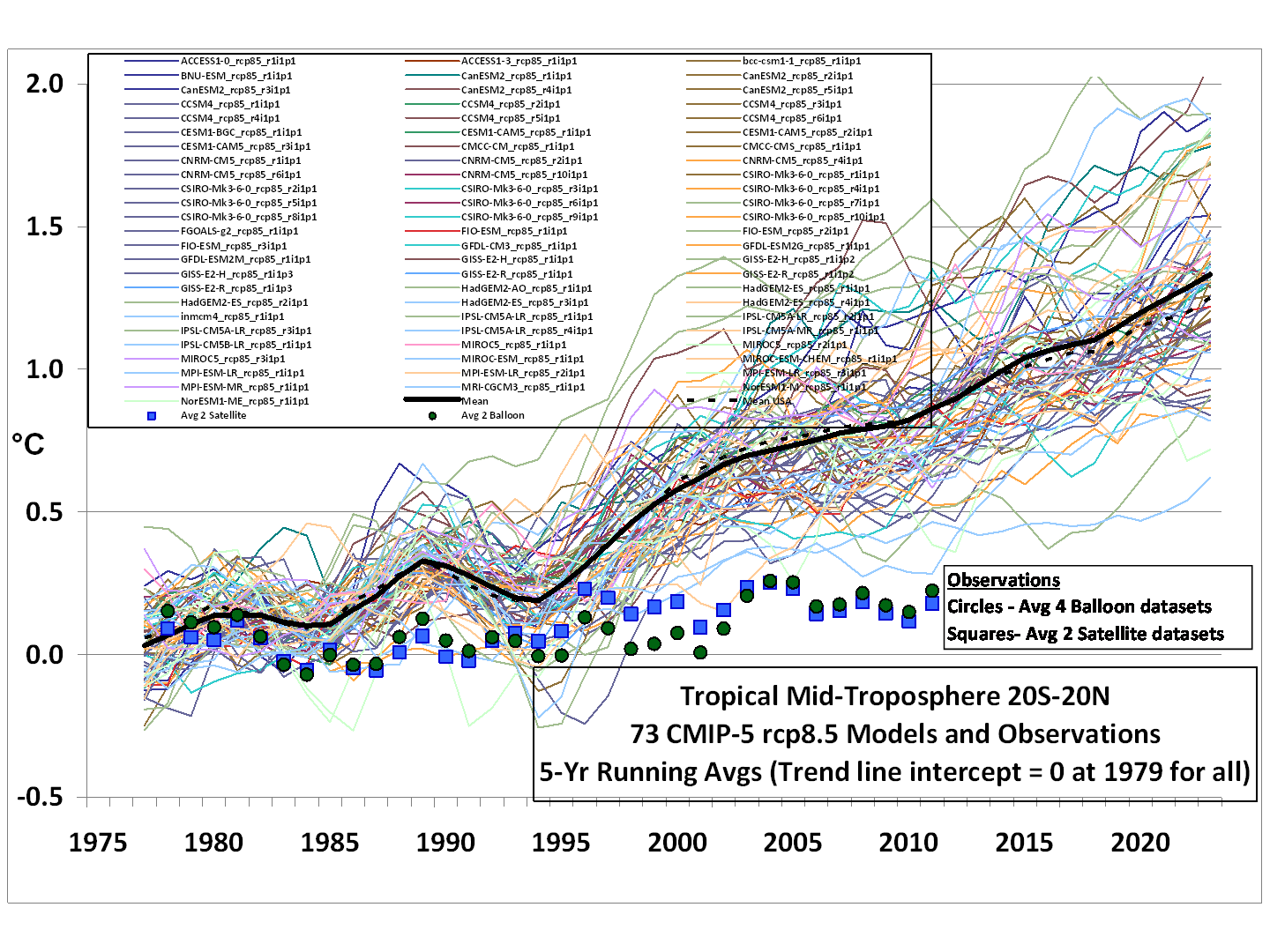
All models show a similar pattern, a fairly steep and more or less linear rise in temperature as CO2 increases. There is only one major thing wrong with them. They do not agree with what is happening to the global temperature. We have now had 224 months (Sep 2015) without any global warming, in fact, the trend is down. (5)

What is wrong with the models? They all assume a passive earth, where there is no negative feedback to the changing environment. It turns out, the earth has a “governor”, and it can be expressed in one word, albedo, which means “whiteness” or how much of the incoming sunlight that gets reflected back into space.

The major albedo changers are the amount of ice around the poles and clouds, but even land use changes such as forests cut down and replaced by agriculture and urbanization.

When there is snow or ice on the ground, more sunlight gets reflected and it gets colder still. Urban heat islands are warmer than the surroundings, airports are warmer than its surroundings. Interestingly, that is where we are placing our new weather stations. (This is great for pilots that have to evaluate take-off and landing conditions, but is less than ideal for climate research. But then again, climate research has moved from the realm of physical science to political science, where different rules do apply.)

The most important albedo changers of the earth are clouds. Without them no land based life would be possible since clouds serve both as rainmakers and temperature stabilizers. If there were no clouds the equilibrium temperature at the equator would be around 140 degrees F.

Over the oceans, in the so called “doldrums” where there are no trade winds, the mornings start with a warm-up, and when the conditions are right a shower or thunderstorm occurs. The ambient temperature is usually between 84 and 88 degrees when this happens. As CO2 concentrations increase thunderstorms occur a few minutes earlier and last a little bit longer, but they are no more severe and as a result the average temperature stays the same. (5)

In desert areas of the world this temperature regulator doesn’t work well, so deserts will receive the full force of temperature increase which is 1.6 degrees Fahrenheit per doubling of CO2 levels.

In the temperate region the temperature increase will be somewhere in between. Dry days will be warmer, cloudy and rainy days will have the same temperature as before, since the regulator starts to function.

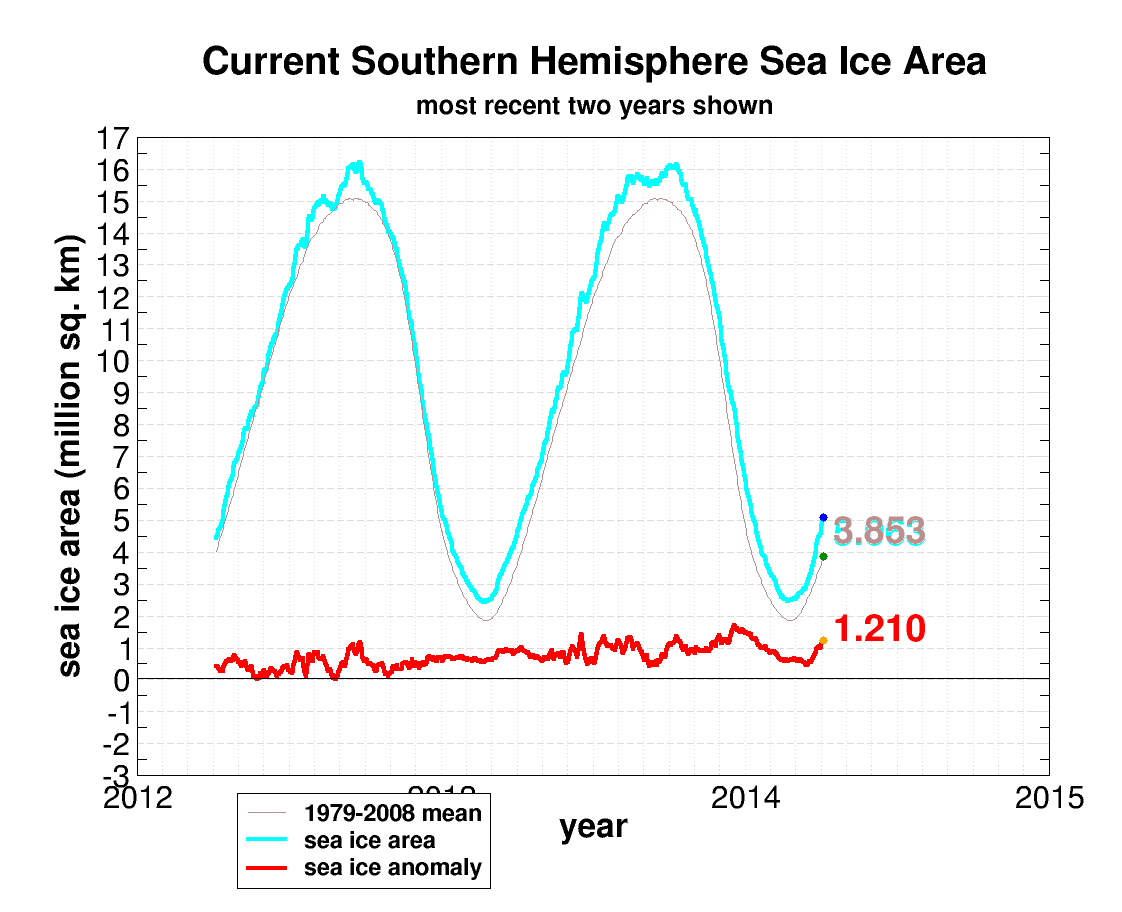
The polar region is a special case. None of the models have done a good job at modeling the clouds at the poles, especially the South Pole. (6) They will warm up more than 2 degrees F, how much is a question. In the South average temperatures will rise from – 70 degrees F in the interior all the way to maybe – 63 degrees F, and come closer to freezing in the summer at the northern edges. There may be added snowfall that will expand the ice sheet. The Antarctic ice sheet has set new records since record keeping began, and is at the moment bottoming out at 30% more ice than the 30 year average. (7)

The North Pole region is even more complicated since it is partially land, partially ocean. The oceanic ice cap has been shrinking  at a fairly constant rate the last 30 years, but last year it broke the trend and grew back to break the trend line. The winter snow cap has remained at about the same level year to year with a slightly positive trend line, this year being no exception.  So, why is the snow cover growing slightly, but ice cover shrinking? The common explanation has been global warming, but the ice cover kept shrinking even as the temperature increase leveled off. There are two possible explanations: Warming oceans and changes in pollution. The North Atlantic Oscillation has been mostly positive (warmer) since 1970 and has only recently turned negative, so that is certainly part of the cause of the shrinking of the icecap, but another candidate is even more likely: Carbon Pollution. With that I do not mean CO2, but good old soot, spewing out from the smokestacks of  power plants in China. 45% of all coal burned is burned in China, often low grade lignite with no scrubbers. The air in Beijing is toxic to humans more days than not. Some of that soot finds its way to the arctic and settles on the ice, changing its albedo, and the sun has a chance to melt the ice more efficiently. This occurs mostly in the months of August and September when the Sun is at a low angle anyway, so the changing of the albedo has very little effect on temperature. The net result of all this is that the temperature in the North Pole region will rise about 3 degrees Fahrenheit for a doubling of the CO2. This will have a very minor effect on the Greenland ice cap since they are nearly always way below freezing anyway (-28 degree C average). The largest effect will happen in August and September in the years when all new snow has melted and the soot from years past is exposed. This happened two years ago with a sudden drop in albedo for the Greenland ice. It will also lead to an increase in the precipitation in the form of snow, so the net result is the glaciers may start growing again if the amount of soot can be reduced.

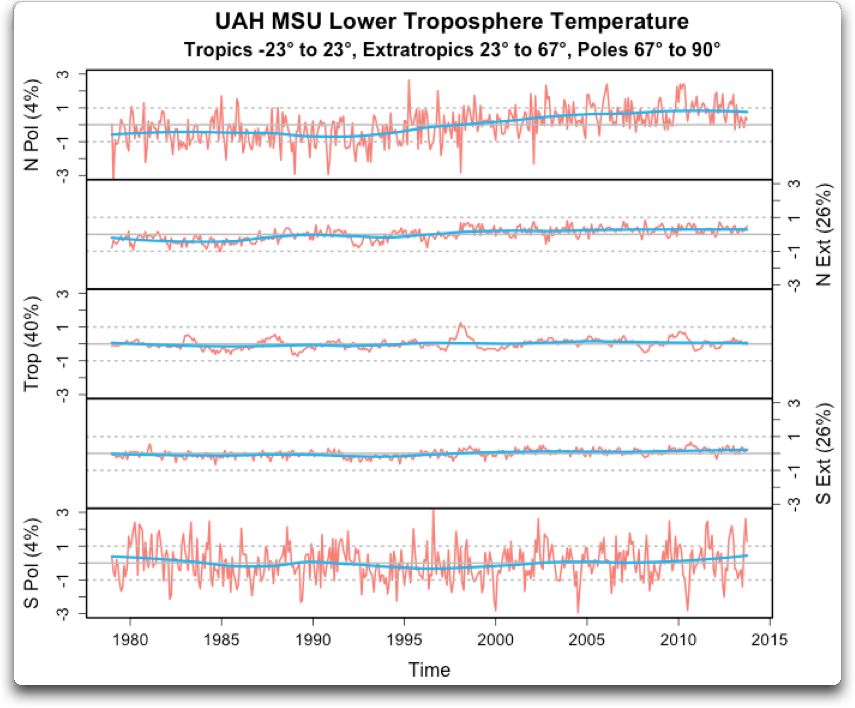
The conclusion is: The temperature regulator of the earth is working quite well, and the increase in temperature at the poles is welcome as it lessens the temperature gradient between the tropics and the polar regions, which in turn reduces the severity of storms, since they are mostly generated by temperature differences and the different density of warm, humid and dry, cold air. (8) The Polar Bears will do quite well, their numbers have more than doubled in the last 50 years.

(1). This is a message from 1010global.org. Their aim was to reduce carbon emissions by 10% in 2010.

https://lenbilen.com/2014/02/22/a-religious-message-from-1010global-org-and-a-limerick/

(2). The earth is getting greener!  https://lenbilen.com/2013/03/19/co2-the-solution-to-climate-change/

(3).
greenearthhigh_resolution1

(4).

chart11-2

(5). Reality versus climate models.CMIP5-73-models-vs-obs-20N-20S-MT-5-yr-means1(6) Projected cloud cover for various climate models versus reality.Cloudmodels

(7)

seaice.recent.antarctic46

(8).

uah-lower-troposphere-temperature

Thabout_face_bookere is a new book out:

About Face! Why the World Needs More Carbon Dioxide is easy reading from two scientists and an economist. About Face! is the product of two scientists and an economist. The scientists are Madhav Khandekar in Canada and Cliff Ollier in Australia, plus economist Arthur Middleton Hughes in the USA.

It will change your understanding of climate science and explain how we can save millions of lives and billions of dollars per year.

Available on Amazon here

A Climate Realist’s (not so) short Answers to Hard Questions About Climate Change. Question 13 (of 16) Is there any reason for hope?

NOV. 28, 2015 gave his answers to 16 questions in the N.Y. Times regarding Climate Change. This Climate realist added his answer.

 Answers to Question 1: How much is the planet heating up?

Answers to Question 2. How much trouble are we in?

Answers to Question 3. Is there anything I can do?

Answers to Question 4. What’s the optimistic scenario?

Answers to Question 5. Will reducing meat in my diet help the climate?

Answers to Question 6. What’s the worst-case scenario?

Answers to Question 7. Will a tech breakthrough help us?

Answers to Question 8. How much will the seas rise?

Answers to Question 9. Are the predictions reliable?

Answers to Question 10. Why do people question climate change?

Answers to Question 11. Is crazy weather tied to climate change?

Answers to Question 12. Will anyone benefit from global warming?

Justin Gillis answers to Question 13. Is there any reason for hope?

If you share this with 50 friends, maybe

Scientists have been warning since the 1980s that strong policies were needed to limit emissions. Those warnings were ignored, and greenhouse gases in the atmosphere have since built up to potentially dangerous levels. So the hour is late.

But after 20 years of largely fruitless diplomacy, the governments of the world are finally starting to take the problem seriously. A deal reached in Paris in December commits nearly every country to some kind of action.

Religious leaders like Pope Francis are speaking out. Low-emission technologies, such as electric cars, are improving. Leading corporations are making bold promises to switch to renewable power and stop forest destruction. Around the world, many states and cities are pledging to go far beyond the goals set by their national governments.

What is still largely missing in all this are the voices of ordinary citizens.

Because politicians have a hard time thinking beyond the next election, they tend to tackle hard problems only when the public rises up and demands it.

My answer to Question 13. Is there any reason for hope?

Yes there is. Thanks to the last election the Paris agreement will not be enforced. It is a horrible agreement anyhow, reducing our CO2 emissions immediately and allowing China to keep increasing until 2030, by which time their emissions will be six times as big as ours. Already China is burning 47% of the coal burned in the world, and poor countries still need to get electrified. India is also exempt, and their needs are even bigger than China’s. With the Paris agreement the poorest countries would still use dried cow dung as cooking fuel.

We now have a great opportunity to turn from going after CO2 and address real pollution and environmental degradation. We have immense environmental problems. The water in the American South-West is spoken for, the prairie aquifers are being depleted, water and soil pollution lurks everywhere. We are over-fertilizing our lawns and agricultural fields, not managing wildfires properly, adding red tape to red tape. All environmental action should be regional, such as the Chesapeake Bay Watershed program. Thanks to persuading even the Amish to use proper fertilizing methods, such as not putting out manure just before a thunderstorm, put up manure barriers next to streams and so on, Chesapeake Bay might yet be saved.

It makes no sense to make electric cars as long as the bulk of electricity comes from fossil fuels. Fossil fuels should be reserved for airplane transportation since they have no good alternative.

We need to have a crash program in Thorium based nuclear electricity production, and when enough production capacity is established, then is the time to produce electrical cars.

We need to leave this world a cleaner and better place than when we entered it, and the best way to have a chance to leave more production resources for our grand-children is to switch most of our electricity production to Thorium as a feedstock. There is a million years supply of Thorium in the world, all other material are more limited. Wind and solar will not do it, it takes more power than that to solve our needs.

Answers to Question 14. How does agriculture affect climate change?

Answers to Question 15. Will the seas rise evenly across the planet?

Answers to Question 16. Is it really all about carbon?

A Climate Realist’s (not so) short Answers to Hard Questions About Climate Change. Question 11 (of 16) Is crazy weather tied to climate change?

NOV. 28, 2015 gave his answers to 16 questions in the N.Y. Times regarding Climate Change. This Climate realist added his answer.

 Answers to Question 1: How much is the planet heating up?

Answers to Question 2. How much trouble are we in?

Answers to Question 3. Is there anything I can do?

Answers to Question 4. What’s the optimistic scenario?

Answers to Question 5. Will reducing meat in my diet help the climate?

Answers to Question 6. What’s the worst-case scenario?

Answers to Question 7. Will a tech breakthrough help us?

Answers to Question 8. How much will the seas rise?

Answers to Question 9. Are the predictions reliable?

Answers to Question 10. Why do people question climate change?

Justin Gillis answer to Question 11. Is crazy weather tied to climate change?

In some cases, yes.

Scientists have published strong evidence that the warming climate is making heat waves more frequent and intense. It is also causing heavier rainstorms, and coastal flooding is getting worse as the oceans rise because of human emissions. Global warming has intensified droughts in regions like the Middle East, and it may have strengthened the drought in California.

In many other cases, though, the linkage to global warming for particular trends is uncertain or disputed. That is partly from a lack of good historical weather data, but it is also scientifically unclear how certain types of events may be influenced by the changing climate.

Another factor: While the climate is changing, people’s perceptions may be changing faster. The Internet has made us all more aware of weather disasters in distant places. On social media, people have a tendency to attribute virtually any disaster to climate change, but in many cases there is no scientific support for doing so.

My answer to Question 11. Is crazy weather tied to climate change?

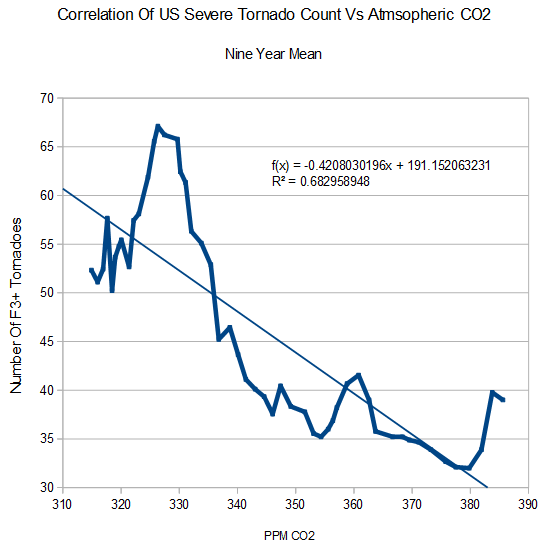
The tornadoes are declining. More CO2 means less temperature gradients causing fewer tornadoes.

tornadoes

tornadosvsco2

The Polar Bears will do quite well, their numbers have more than doubled in the last 50 years.

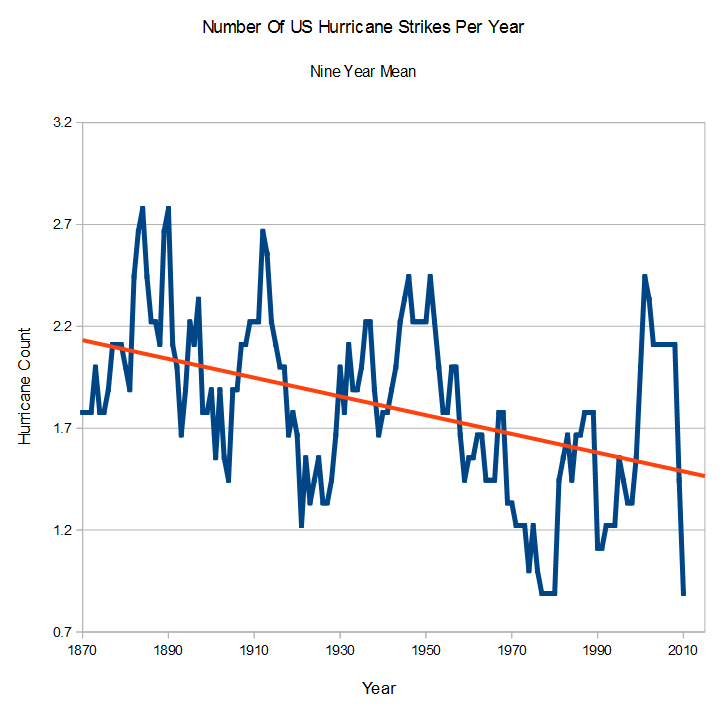
The temperature regulator of the earth is working quite well, and the increase in temperature at the poles is welcome as it lessens the temperature gradient between the tropics and the polar regions, which in turn reduces the severity of storms, and tornadoes, since they are mostly generated by temperature differences and the different density of warm, humid and dry, cold air.

hurricaneshurricanesmajor

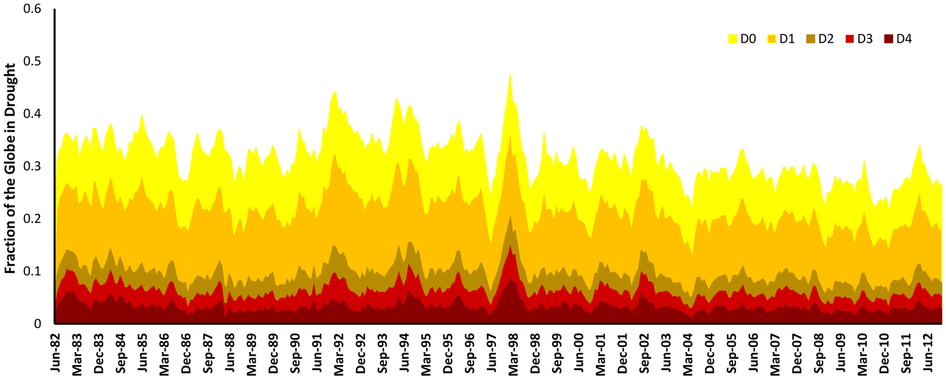
Will droughts increase? The data does not indicate so:

sdata20141-f51

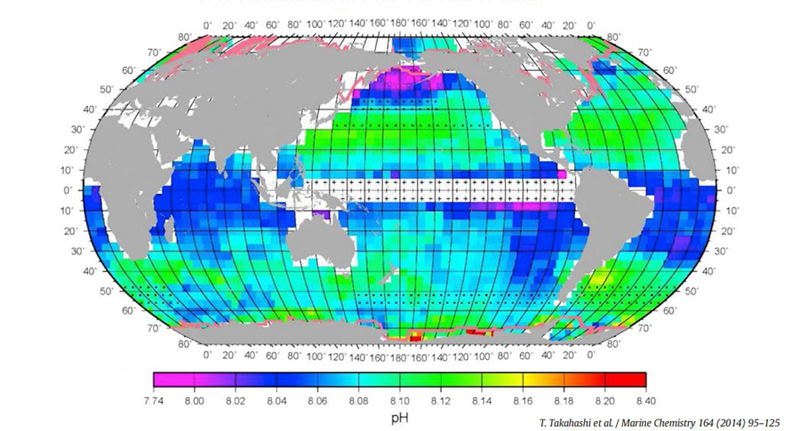
What about ocean acidification? As CO2 increases, a lot of it will be absorbed in the oceans, thereby making the oceans more acid. This is true, but CO2 is a very mild acid and has a minor acidic influence. Of much more importance is acid rain. At one time in the 70’s some lakes in Norway had a Ph. of about 4.5, enough to kill most trout fishes. In Sweden it was said they fertilized their rivers and lakes four times as much as tilled soil, leading to significant acidification of both the Baltic and the North Sea. The Baltic Sea is still in danger of total oxygen depletion. By comparison to these dangers CO2 in the ocean is only a very minor disturbance. Clean the rivers and lakes first!

ph-feb-ocean-800

Oh, and one more thing. The sea level rise is a natural phenomenon of tectonic plate movements, the Atlantic Ridge is rising and the Eastern Seaboard is sinking.  These movements will continue to occur regardless of the climate.

John Kerry said in Indonesia the other day: “The science is unequivocal, and those who refuse to believe it are simply burying their heads in the sand. We don’t have time for a meeting anywhere of the Flat Earth Society.  And in a sense, climate change can now be considered another weapon of mass destruction, perhaps the world’s most fearsome weapon of mass destruction.

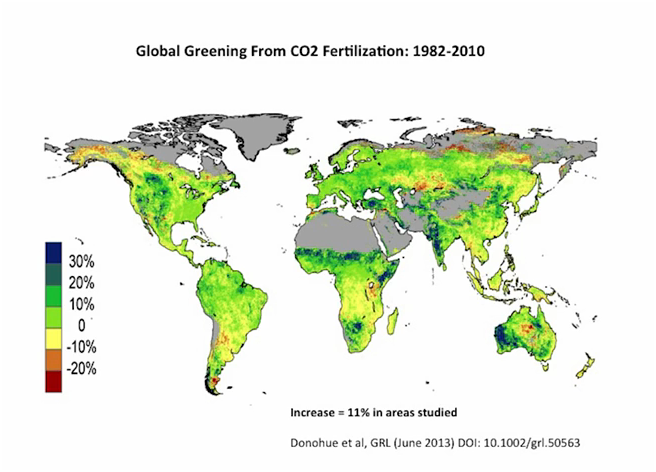
The opposite is true, increased levels of CO2 is a major vehicle of wealth distribution. (Green is increased plant growth, red is decreased,  1982 – 2010)

increaseThe increase in temperature is manageable and even desirable in most regions of the world, desert areas and areas prone to flooding being the exception.

In conclusion:

CO2 is a clean gas, necessary for life, and an increase in the amount of CO2 is highly desirable.

The very minor increase in temperature is on balance beneficial, since it leads to a less violent climate, with fewer storms, hurricanes and tornadoes.

The increase in CO2 makes us able to feed another 2 billion people on earth, not to mention additional wildlife.

Ocean acidification is a problem, not so much from CO2, but from sulfuric acid, nitrates and other pollutants. The major offender: China.

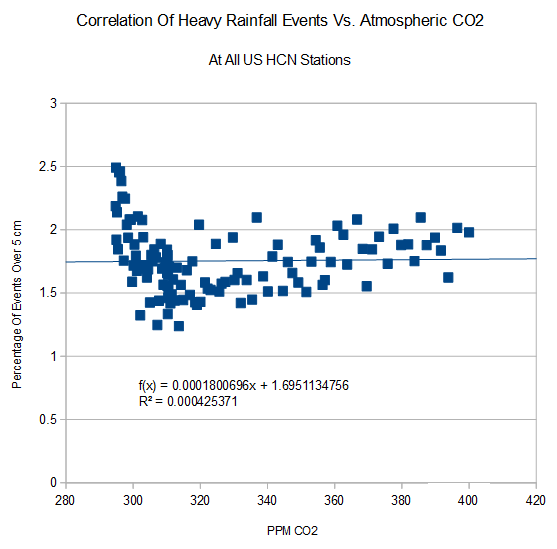
The increase in precipitation is beneficial, except in areas already prone to flooding. It is especially welcome in arid areas. The chart below show no increase in heavy rains as CO2 increases.

heavyrainfallvsco2

On the other hand the great conservationist SARAH PALIN once said: “We’ve got to remind Americans that the effort has got to be even greater today toward conservation because these finite resources that we’re dealing with obviously – once oil is gone it’s gone, once gas is gone, it’s gone. And I think our nation has really become kind of spoiled in that arena.”[Fox News, Hannity’s America, 10/12/08]

Coal, oil, peat, wood  and natural gas are our best raw material to sustain life as we know it, and are far to valuable to waste on electricity production, so let us switch electricity production to thorium based nuclear energy

. https://lenbilen.com/2012/02/15/nuclear-power-and-earthquakes-how-to-make-it-safer-and-better/

https://lenbilen.com/2012/02/15/eleven-reasons-to-switch-to-thorium-based-nuclear-power-generation/

https://lenbilen.com/2012/02/15/eleven-more-reasons-to-switch-to-thorium-as-nuclear-fuel/

https://lenbilen.com/2012/02/15/nuclear-power-why-we-chose-uranium-over-thorium-and-ended-up-in-this-mess-time-to-clean-up/

https://lenbilen.com/2012/01/31/energy-from-thorium-save-500-million-from-the-budget-now/

Coal can be converted to jet fuel and gasoline, air planes have no alternative fuels.

Answers to Question 12. Will anyone benefit from global warming?

Answers to Question 13. Is there any reason for hope?

Answers to Question 14. How does agriculture affect climate change?

Answers to Question 15. Will the seas rise evenly across the planet?

Answers to Question 16. Is it really all about carbon?

A Climate Realist’s (not so) short Answers to Hard Questions About Climate Change. Question 9 (of 16) Are the predictions reliable?

NOV. 28, 2015 gave his answers to 16 questions in the N.Y. Times regarding Climate Change. This Climate realist added his answer.

 Answers to Question 1: How much is the planet heating up?

Answers to Question 2. How much trouble are we in?

Answers to Question 3. Is there anything I can do?

Answers to Question 4. What’s the optimistic scenario?

Answers to Question 5. Will reducing meat in my diet help the climate?

Answers to Question 6. What’s the worst-case scenario?

Answers to Question 7. Will a tech breakthrough help us?

Answers to Question 8. How much will the seas rise?

Justin Gillis answer to Question 9. Are the predictions reliable?

“They’re not perfect, but they’re grounded in solid science.

The idea that Earth is sensitive to greenhouse gases is confirmed by many lines of scientific evidence. For instance, the basic physics suggesting that an increase of carbon dioxide traps more heat was discovered in the 19th century, and has been verified in thousands of laboratory experiments.

Climate science does contain uncertainties, of course. The biggest is the degree to which global warming sets off feedback loops, such as a melting of sea ice that will darken the surface and cause more heat to be absorbed, melting more ice, and so forth. It is not clear exactly how much the feedbacks will intensify the warming; some of them could even partially offset it. This uncertainty means that computer forecasts can give only a range of future climate possibilities, not absolute predictions.

But even if those computer forecasts did not exist, a huge amount of evidence suggests that scientists have the basic story right. The most important evidence comes from the study of past climate conditions, a field known as paleoclimate research. The amount of carbon dioxide in the air has fluctuated naturally in the past, and every time it rises, the Earth warms up, ice melts, and the ocean rises. A hundred miles inland from today’s East Coast, seashells can be dug from ancient beaches that are three million years old, a blink of an eye in geologic time. These past conditions are not a perfect guide to the future, either, because humans are pumping carbon dioxide into the air far faster than nature has ever done.

My answer to Question 9. Are the predictions reliable?

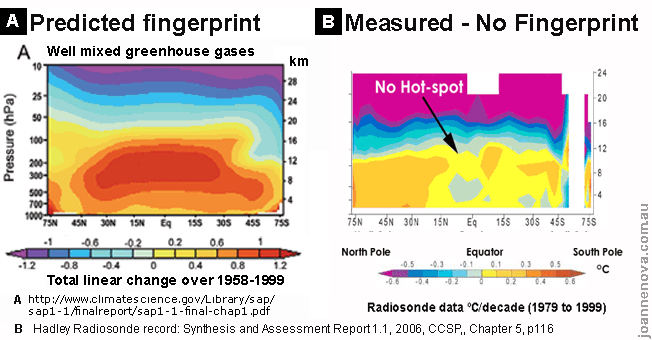
They are not perfect, for sure, but are they even grounded in solid science? For a model to have credibility it must be tested with measurements, and pass the test. There is important evidence suggesting the basic story is wrong. All greenhouse gases work by affecting the lapse rate in the tropics. They thus create a “hot spot” in the tropical troposphere. The theorized “hot spot” is shown in the early IPCC publications. (Fig A)

Fig. B shows observations. The hotspot is not there. If the hotspot is not there, the models must be wrong. So what is wrong with the models?

The models all assume greenhouse gases are additive. This is true for low concentrations and over short distances, such as is done in laboratory environments. Yet there is one truth bout heat absorption.  Once all the energy in one frequency band is absorbed, that is it. If the water vapor has already absorbed the energy, no matter of added CO2 will change that. This is largely true in the tropics, where water vapor is dominant. As CO2 levels increased, no hotspot formed in the tropics. Near the poles the situation is different,  more CO2 will lead to higher temperatures, but always less than what would have been predicted by separately adding the effects of water vapor and CO2.

[The amount of carbon dioxide in the air has fluctuated naturally in the past, and every time it rises, the Earth warms up, ice melts, and the ocean rises.]

This statement should read: Every time temperature rose in the past,  the ice melted, and the oceans warmed up, causing carbon dioxide to be released from  ice and oceans and rise with a 300 to 800 years delay,  the amount of water vapor rose, increasing the earth’s cloud cover,  stopping the temperature rise, and after a time delay CO2 also stopped rising, and ocean levels stabilized.

So CO2 is an effect of, not a cause for the observed temperature rise.

Al Gore’s movie An Inconvenient Truth used this very argument to show CO2 causes temperature rise. A British court found that this was one of the 9 errors of fact that appear in the movie. The court ruled that any theater showing the movie would need to inform the audience of these 9 errors. http://www.telegraph.co.uk/news/earth/earthnews/3310137/Al-Gores-nine-Inconvenient-Untruths.html

Answers to Question 10. Why do people question climate change?

Answers to Question 11. Is crazy weather tied to climate change?

Answers to Question 12. Will anyone benefit from global warming?

Answers to Question 13. Is there any reason for hope?

Answers to Question 14. How does agriculture affect climate change?

Answers to Question 15. Will the seas rise evenly across the planet?

Answers to Question 16. Is it really all about carbon?

A Climate Realist’s (not so) short Answers to Hard Questions About Climate Change. Question 8 (of 16) How much will the seas rise?

NOV. 28, 2015 gave his answers to 16 questions in the N.Y. Times regarding Climate Change. This Climate realist added his answer.

 Answers to Question 1: How much is the planet heating up?

Answers to Question 2. How much trouble are we in?

Answers to Question 3. Is there anything I can do?

Answers to Question 4. What’s the optimistic scenario?

Answers to Question 5. Will reducing meat in my diet help the climate?

Answers to Question 6. What’s the worst-case scenario?

Answers to Question 7. Will a tech breakthrough help us?

Justin Gillis answer to Question 8. How much will the seas rise?

“The real question is not how high, but how fast.

The ocean is rising at a rate of about a foot per century. That causes severe effects on coastlines, forcing governments and property owners to spend tens of billions of dollars fighting erosion. But if that rate continued, it would probably be manageable, experts say.

The risk is that the rate will accelerate markedly. If emissions continue unchecked, then the temperature at the Earth’s surface could soon resemble a past epoch called the Pliocene, when a great deal of ice melted and the ocean rose by something like 80 feet compared to today. A recent study found that burning all the fossil fuels in the ground would fully melt the polar ice sheets, raising the sea level by more than 160 feet over an unknown period.

With all of that said, the crucial issue is probably not how much the oceans are going to rise, but how fast. And on that point, scientists are pretty much flying blind. Their best information comes from studying Earth’s history, and it suggests that the rate can on occasion hit a foot per decade, which can probably be thought of as the worst-case scenario. A rate even half that would force rapid retreat from the coasts and, some experts think, throw human society into crisis. Even if the rise is much slower, many of the world’s great cities will flood eventually. Studies suggest that big cuts in emissions could slow the rise, buying crucial time for society to adapt to an altered coastline.”

My answer to Question 8. How much will the seas rise?

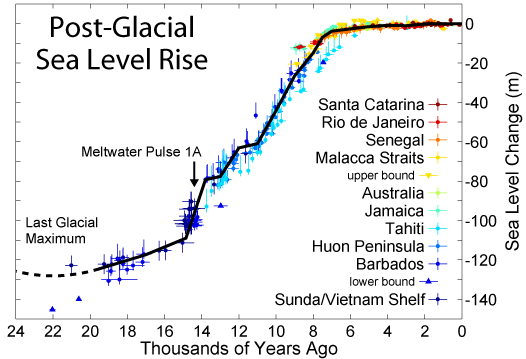
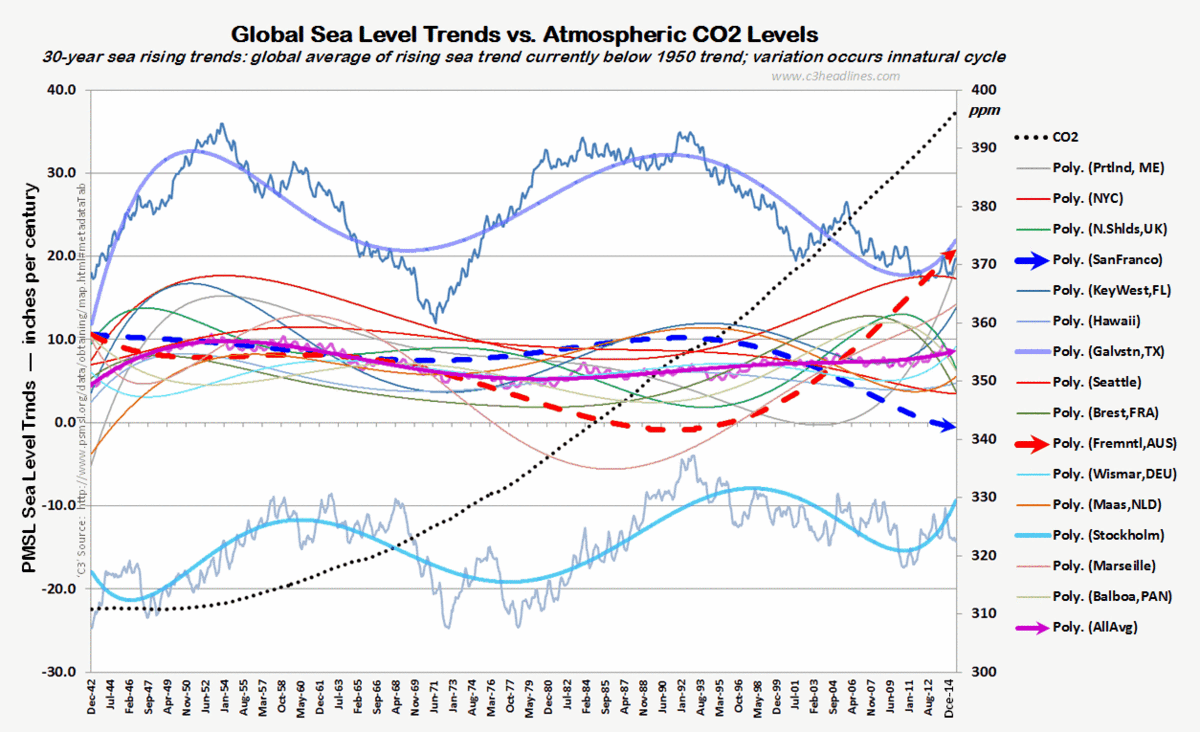
During the Pliocene epoch the water levels were about 80 feet higher than today, temperatures were 1 to 3 degree C warmer, but the CO2 level was less than 280 ppm, so there must have been another cause for the high temperatures than Carbon dioxide. My guess is that the activity of the Sun and the Milankovitch cycles triggered the meltdown of most of the Greenland and part of the Antarctic ice sheet. This is not the case now.  We are well into the bog generating phase of this interglacial period, the Minoan optimum temperature ( at 260 ppm CO2) did not trigger the ice-melt, and ever since we have been in a downward temperature trend. What is remarkable about this period is how stable sea levels have been. The ocean levels have been rising at an average rate of about one inch per century, quite different from emptying out the Baltic Ice Lake, an event that rose  Ocean levels by feet per year until it emptied out, the rest formed what is now the Baltic Sea. Coming out of the ice age rose Ocean levels about 400 feet, and then it stopped. There are places in northern Sweden where the land still rises out of the sea at about 3 feet per century. The Mid-Atlantic ridge is rising, has plenty of undersea volcanoes, about one third of all undersea volcanoes are between Jan Mayen and Svalbard. All this displaced water has to go somewhere, and so most of the rest of the world’s coastlines are experiencing rising sea levels. This is especially true for the U.S. East coast, sinking of its own. The warming of the oceans are vastly over-estimated, being confined to the surface and the upper 1000 feet, the sunlight is absorbed in the first few feet of water and there is limited and very slow mixing of deep water with surface water. But there is a temperature dependence of sea levels, the sea levels were fluctuating with temperature, as the chart to the right indicates.

Right now average ocean levels are increasing by about a foot per century, but the trend is not increasing. See Fig:

The take-home from this chart: Sea level rise has nothing to do with CO2 level rise, it is more about tectonic plates movements and what happens on the sea floor.


A Climate Realist’s (not so) short Answers to Hard Questions About Climate Change. Question 7 (of 16) Will a tech breakthrough help us?

NOV. 28, 2015 gave his answers to 16 questions in the N.Y. Times regarding Climate Change. This Climate realist added his answer.

 Answers to Question 1: How much is the planet heating up?

Answers to Question 2. How much trouble are we in?

Answers to Question 3. Is there anything I can do?

Answers to Question 4. What’s the optimistic scenario?

Answers to Question 5. Will reducing meat in my diet help the climate?

Answers to Question 6. What’s the worst-case scenario?

Justin Gillis answer to Question7. Will a tech breakthrough help us?

Even Bill Gates says don’t count on it, unless we commit the cash.

As more companies, governments and researchers devote themselves to the problem, the chances of big technological advances are improving. But even many experts who are optimistic about technological solutions warn that current efforts are not enough. For instance, spending on basic energy research is only a quarter to a third of the level that several in-depth reports have recommended. And public spending on agricultural research has stagnated even though climate change poses growing risks to the food supply. People like Bill Gates have argued that crossing our fingers and hoping for technological miracles is not a strategy — we have to spend the money that would make these things more likely to happen.

My answer to Question7. Will a tech breakthrough help us?

The CO2 increase is already showing its benefits by increasing harvests, forest growth and especially greening grasslands by more than 11%. The greening of the earth is real. See fig:In addition plants use less water to perform photosynthesis as CO2 levels increase.

But we need technological breakthrough to clean up our environment and  provide enough water for a thirsty planet, especially in the 10/40 window. Nearly all large cities in that area suffer a shortage of water. In Teheran the water table is sinking by 6 feet a year, and in Mexico City things ate just as bad. Southern California and Las Vegas depend to a large extent on water from Lake Mead, and unless checked Lake Mead is being drained at an alarming rate, (this winter being an exception).

Making clean water and cleaning up the environment takes a lot of energy, so it would be good to check from where the world gets its energy.

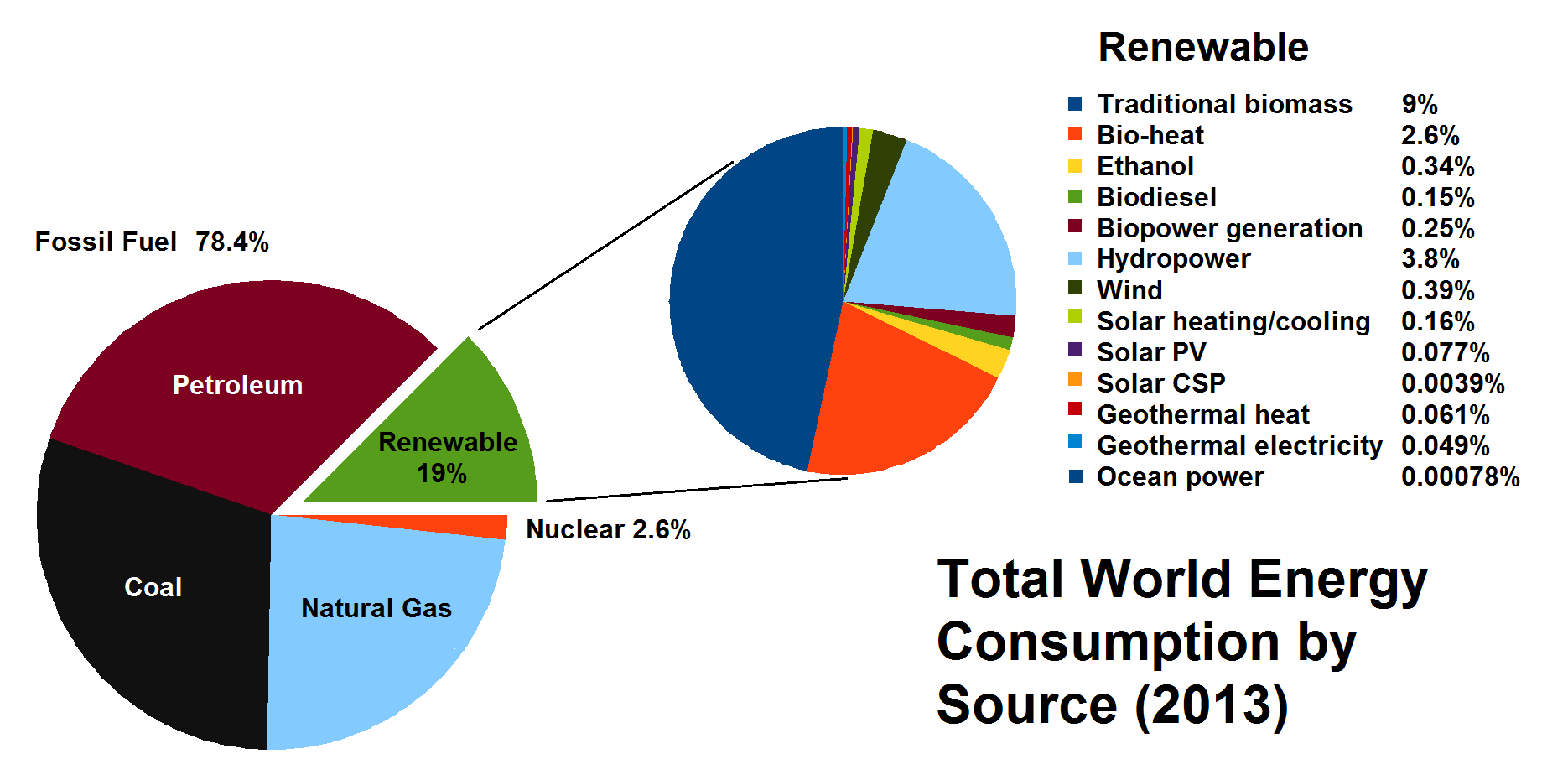
More than three quarter of all energy comes from fossil fuel, less than 0.1% comes from solar panels. To tenfold solar panels will not help much, hydropower is limited, ethanol competes with the food supply, only drastic action will change the situation. May I suggest to switch all electricity production now generated by coal and oil to nuclear power, but not any nuclear power, switch to Thorium based nuclear power generation. Until that is done it makes no sense to use electric automobiles and trucks except in special circumstances. There is a million year supply of Thorium, and Thorium based nuclear energy has only 0.01% of the long term nuclear waste of Uranium based nuclear energy.

Don’t believe me? Check out https://lenbilen.com/2012/02/15/eleven-reasons-to-switch-to-thorium-based-nuclear-power-generation/  and https://lenbilen.com/2012/02/15/eleven-more-reasons-to-switch-to-thorium-as-nuclear-fuel/

Then we can tackle the real problems, such as real (not “carbon”) pollution, water, energy distribution, electrification of the developing world, all worthwhile endeavors.

Answers to Question 8. How much will the seas rise?

Answers to Question 9. Are the predictions reliable?

Answers to Question 10. Why do people question climate change?

Answers to Question 11. Is crazy weather tied to climate change?

Answers to Question 12. Will anyone benefit from global warming?

Answers to Question 13. Is there any reason for hope?

Answers to Question 14. How does agriculture affect climate change?

Answers to Question 15. Will the seas rise evenly across the planet?

Answers to Question 16. Is it really all about carbon?


More trouble for Oroville Dam, a Limerick.

More trouble for Oroville Dam

Debris caused a water log-jam

Got a week-long reprieve

to remove the debris.

A scene of increasing bedlam.

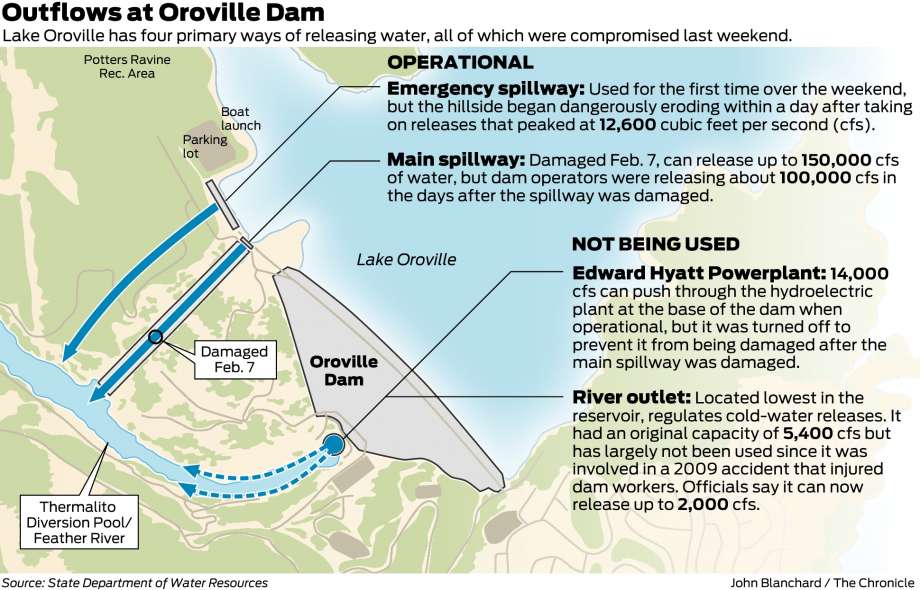
The Oroville Dam is in more trouble than thought. Between one half and one million cubic yards of debris is clogging up the diversion pool causing the power plant to be shut down until it is cleared. The debris is all from erosion from the failing spillways which shows the erosive power of water not properly channelled. In addition they continue work on the emergency spillway and will attempt to shore up the breach in the main spillway.

920x1240It is a race against time. The upstream dams are all full, so all the snow-melt will fill the Oroville Dam back in no time, and there is at least one more major rain event coming down the pineapple express. The snow-pack is already way over normal for the season, so both spillways will have to be used again, and soon.

Will they succeed with the task in time?

https://youtu.be/tRe3Iur7r3U

Keep the bags packed if you live downstream. And please, pray!

The Moffat tunnel, Continental theft of water. A Limerick

What flows through the tunnel of Moffat?

It’s water for Denver’s own profit.

When South-West tries to sue.

Will they win, get their due?

I never was much of a prophet.

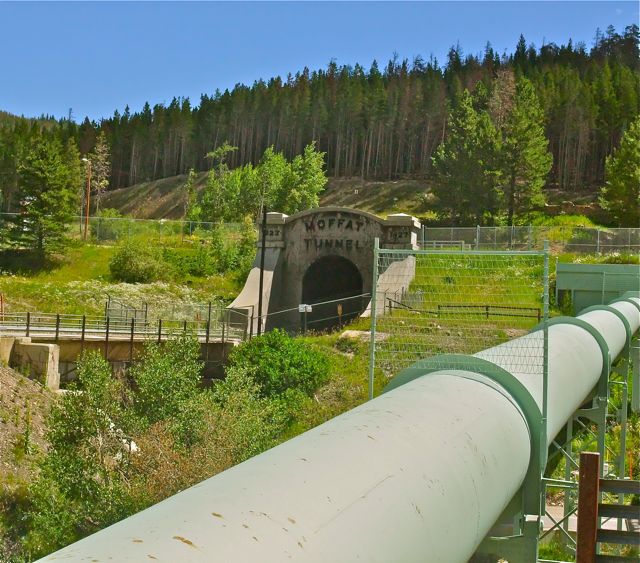
The Moffat tunnel in Colorado, built in 1928 is a six mile railroad and water  tunnel that goes under the continental divide. The water tunnel carries up to 105 acre-feet of water per hour to the City of Denver. The water is taken from the Colorado river watershed, which leaves the South Western states with nearly one million acre-feet less water per year.

When the tunnel was built this was not much of a problem, Nevada had less than 100, 000 inhabitants, Arizona less than 350,000 and California about 3.5 million people. Now Nevada has 25 times as many people, Arizona 15 times as many , and California 10 times as many people, all thirsty for more water.

It is time to stop robbing the South-west of water. Yes Denver has its own water problem, but the South West has much greater problem.

Lake Mead water level is now 140 feet below full capacity, and has been dropping about 10 feet per year, and will run dry unless drastic measures are taken. The Moffat tunnel takes away about 6 feet a year from the filling of Lake Mead.

Yes, thanks to this year’s rain, Lake Mead has recovered somewhat, but the long trend is still ominous.

And by the way, this has nothing to do with Climate Change.

Oroville Dam, a disaster in waiting? A Limerick.

The water from Oroville dam

comes down like a battering ram.

They skipped maintenance, when

it was drought. That was then.

Repairs? Always bill Uncle Sam!

On May 31, 1889 The South Fork dam failed and unleashed 20,000,000 tons of water that devastated Johnstown, PA.  The flood killed 2,209 people, and is remembered as one of the worst dam disasters to have ever befallen innocent and unaware people.

The dam was small by today’s standard, releasing only 16,220 acre-feet of water. Compare this to the water behind Lake Oroville Dam, 3,500,000 acre-feet, and another 370,000 acre feet of rain expected in the next few days.

920x1240

Right now the dam is releasing 80 to 100,000 cubic feet of water a second, or about 2 acre-feet per second, about 6 times the capacity of the power station, which is rated at 835 MW. This means the release is about 5.5 GW of power rushing down and eroding the new spillway channel carved out by up to 7.5 million horse-power of destructive force. Normally this energy is absorbed as heat in a functional spillway, but if unleashed, much of its power is erosion force. The new channel of water, mixed with debris choked the normal water outlet from the power station and its diversion pool, so the power has been turned off since the emergency began.

For now, the main dam seems to be undamaged, but if more rains come, and there are 2 more major storms lined up coming from Japan and Taiwan with torrential rains, so this scare is far from over. Meanwhile, residents downstream are told to have their bags packed, and listen to emergency radio every hour, if the spillway gives way much further, this is going to be big.

The repair bill for damage done so far is probably a quarter billion dollars, not counting the cost of the evacuation. Proper maintenance would probably have cost less than 20 million dollars. This is about par for  California politicians.

The original spillway is now totally diverted by erosion.

la-me-lake-oroville-spillway-pictures-105.jpg

oroville

The spillway while it was still functioning as planned

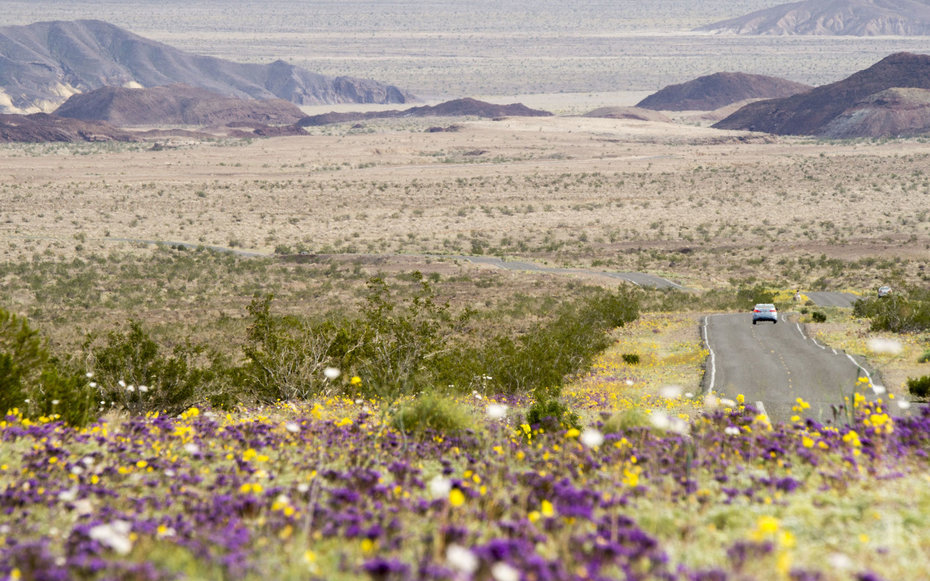
Death Valley rains lead to super bloom! A Limerick.

The desert and the parched land will be glad;
    the wilderness will rejoice and blossom.
Like the crocus, it will burst into bloom;
    it will rejoice greatly and shout for joy.
The glory of Lebanon will be given to it,
    the splendor of Carmel and Sharon;
they will see the glory of the Lord,
    the splendor of our God. (Isaiah 35:1-2)

living_prairieIt rained cats and dogs in Death Valley.

Find passable roads, Rand McNally!

See the desert in bloom;

not the feeling of doom,

a wish that is right up my alley!

In 1953 Walt Disney came out with a ground breaking movie. The name of it was “The living Desert” and showed time lapse photography of wild flowers bursting out from what looked like bare rock. My father took me as a little lad to see it in a movie theater in small town Sweden, and I was blown away. Ever since then I have wanted to see Death Valley in full bloom. Now it has happened. Death Valley is in full bloom. But, as with all blessings it comes with a price. Reading the park bulletin I see the following alerts:

Scotty’s Castle CLOSED until 2018 due to flood damage.  Alert 1 , Severity ,closure ,,Scotty’s Castle CLOSED until 2019 due to flood damage. Flooding in Grapevine Canyon from a severe thunderstorm has destroyed the road to Scotty’s Castle, damaged infrastructure and some out-buildings in the Castle complex. more

Closed Roads: Alert 1 , Severity ,closure ,,Closed Roads Titus Canyon, Emigrant Canyon, West Side, and Scotty’s Castle (also known as North Highway) Roads are closed due to snow and mud. Artists Drive is also closed. Please visit our Alerts & Conditions page by selecting “more.”  more

Weather conditions for 2/18 : Rain so far today in Death Valley, 0.66 inches, and more is expected.

For now I am reduced to admire the pictures some other people have taken:

600_447397036death-valley-super-bloom-california-03-blooms0316