Do airplane contrails cool or heat the earth? A Limerick.

The contrails we see in the sky

are bad they all say. I ask: Why?

For the contrails reflect

the sun’s rays. That effect

cools more, kiss the greenhouse goodbye.

Are airplane contrails contributing to the warming the earth?

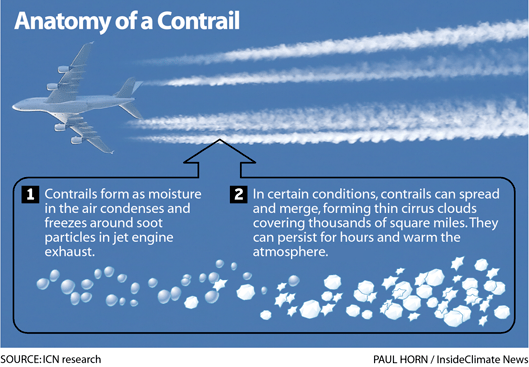
Contrails are the condensation clouds that are formed under certain conditions,

and at certain altitudes, from jet engines.

It is true that the contrails act as another cloud, trapping the greenhouse gases under it. But that is not all there is. It matters at what time of day or night the contrails are formed. Pilots, as a rule prefer to fly by night, but people prefer to be flown by day, so most flights occur during daytime.

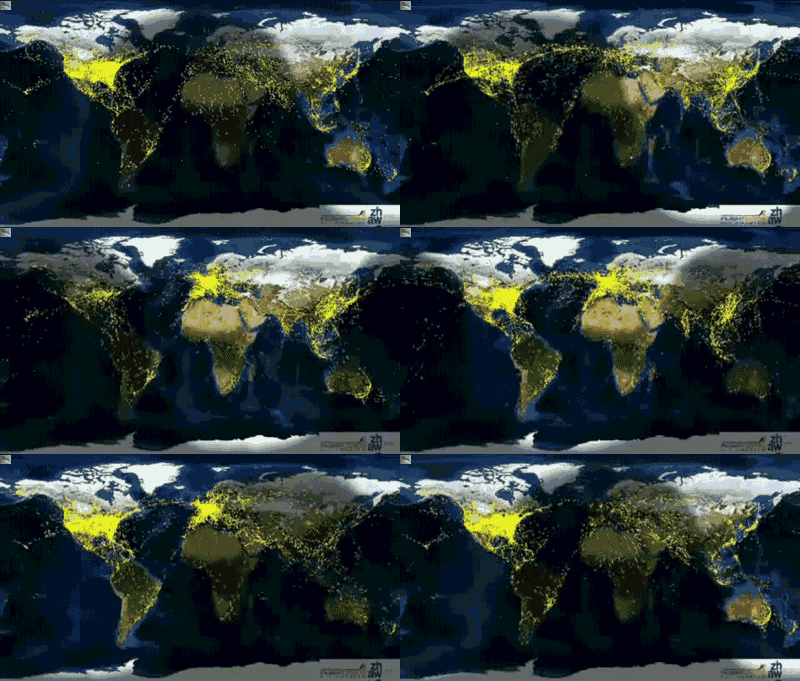
This is a fantastic 24 hour visualization of all flights. Most notable is that the vast majority of airplane flights occur during daytime, and occur over continental United States and Western Europe.

Contrails formed during daytime reflect incoming solar radiation back into space, and this reflection cools the surface of the earth much more than the trapping of greenhouse heat, which occurs both during day and night.

So, contrary to popular belief, contrails cool the earth.

Climate change and our divided nation. Is it a top priority and a threat to mankind as most Democrats believe, or is it not much to worry about, and maybe even beneficial, as most Republicans believe?

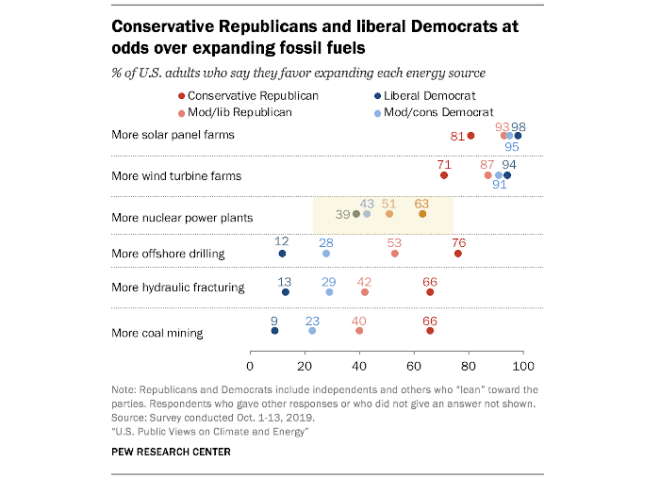
We are a divided nation indeed. In no other area is this more apparent than in our attitudes towards Climate Change. Democrats regard is as a top priority more and more, while Republicans maintain it is not much to worry about, way down in the importance of things that need fixing. The PEW research center shows the growing discrepancy:

Republicans live in over 90% of the area of the United States, Democrats are concentrated to urban areas, and in areas of majority black or Hispanic population.

Most of the Democrats live concentrated in Urban areas, and they have already experienced climate change! The Urban Heat Island effect can be as high as 7 degree Celsius on a dog day in August, with humidity to boot!

Most Republicans on the other hand live in rural areas where there are no heat islands. If anything, they are realizing that the winters are less severe, and the summers are not getting hotter. They see good in the climate change, such as we can now feed another 2 billion people on earth, thanks to the fertilizing effect of increasing CO2.

I have put in the reasons why Rising CO2 levels may actually be on balance beneficial : https://lenbilen.com/2020/02/28/climate-change-is-real-and-is-caused-by-rising-co2-levels-leading-to-less-extreme-weather-this-is-on-balance-good-for-the-environment/

Now for the question: Should we expand the burning of fossil fuels?

Even though increasing levels of CO2 is beneficial for the climate we should not expand, but reduce the mining, drilling and fracking of fossil fuels. There are better ways of supply the energy needs of the future. We should leave some of the fossil fuels for our great grandchildren not yet born.

More solar panel farms. This I see as a niche market. China still control 90% of the rare earth metal mining we should only use them in urban areas to lessen the need for an expanded grid. One area that is ideal for more solar panels is to put them up as roofs in open parking lots, especially those that are covered with black asphalt. Parked cars will be cooler and dryer, and it will lessen the urban heat effect.

More wind turbine farms: I love birds, especially large birds such as eagles and raptors. The eagles like to build their aeries on top of the wind turbines, and – you guessed it – they get whacked by the rotor blades. During the Obama administration they upped the yearly allowable kill of bald eagles from from 1100 to 4200. If you kill a golden eagle there is still a 250000 dollar fine. If we increase the number of wind-farms we could run out of large birds.

Hydro-electric power: This is mostly already utilized to capacity. One exception is the river Congo in Africa, still waiting to produce electric power.

Nuclear plants: This is the only realistic solution, but not the common U235 power plants. No, we need a Manhattan-like project to fast track Molten Salt Thorium Nuclear reactors. Here are 25 r3qsons why this is the only realistic solution until we master fusion power, which is always a couple of decades away from commercialization.

Twenty-five reasons to rapidly develop Thorium based Nuclear Power generation.

We need badly to develop and build Thorium based molten salt fast breeder nuclear reactors to secure our energy needs in the future. Lest anyone should be threatened by the words fast breeder, it simply means it uses fast neutrons instead of thermal neutrons, and breeder means it produces more fissible material than it consumes, in the case of Thorium the ratio is about 1.05.

1. A million years supply at today’s consumption levels.

2. Thorium already mined, ready to be extracted.

3. One ten-thousandth of the TRansUranium waste compared to a U-235 based fast breeder reactor.

4. Thorium based nuclear power produces Pu-238, needed for space exploration.

5. Radioactive waste from an LFTR decays down to background radiation in 300 years compared to a million years for U-235 based reactors.

6. Thorium based nuclear power is not suited for making nuclear bombs.

7. Produces isotopes that helps cure certain cancers.

8. Molten Salt Thorium Reactors are earthquake safe.

9. Molten Salt Thorium Reactors cannot have a meltdown, the fuel is already molten.

10. Molten Salt Nuclear Reactors have a very high negative temperature coefficient leading to a safe and stable control.

11. Atmospheric pressure operating conditions, no risk for explosions.

12. Virtually no spent fuel problem, very little on site storage or transport.

13. Thorium Nuclear Power generators  scale  beautifully from small portable generators to full size power plants.

14. No need for evacuation zones, can be placed near urban areas.

15. Liquid Fluoride Thorium Reactors will work both as Base Load and Load Following power plants.

16. Liquid Fluoride Thorium Reactors will lessen the need for an expanded national grid.

17. Russia has an active Thorium program.

18. China is having a massive Thorium program.

19. India is having an ambitious Thorium program.

20. United States used to be the leader in Thorium usage. What happened?

21. With a Molten Salt Reactor, accidents like the Three Mile Island disaster will not happen.

22. With a Molten Salt Reactor, disasters like Chernobyl are impossible.

23. With Molten Salt Reactors, a catastrophe like Fukushima cannot happen.

24. Produces electrical energy at about 4 cents per KWh.

25. Can deplete some of the existing radioactive waste and nuclear weapons stockpiles.


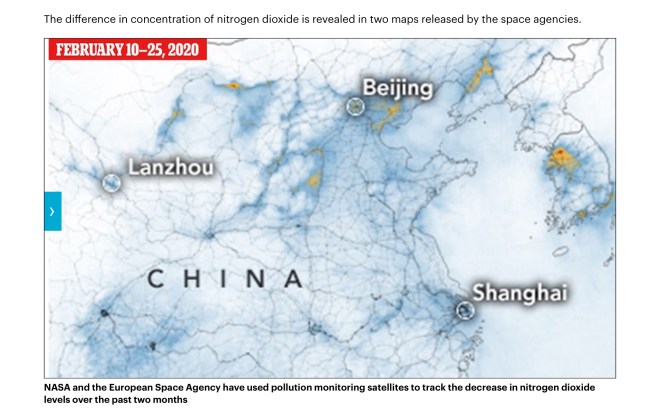
Thanks to the corona virus, air pollution in China is clearing up fast. Are they telling the truth about the severity of the situation?

Thanks to air pollution monitoring satellites put up by NASA and ESA to give us data points for climate change,  we know a lot about who is polluting and when and where. China is by far the biggest air polluter in the world, and no wonder. They consume 47% of the work’s coal for burning, produce half the word’s steel and over half of the world’s concrete, not to mention they still mine and refine over 85% of the world’s rare earth metals, all of which are polluting endeavors.

The NASA and ESA satellites monitor among other things NO2, a toxic gas produced by burning coal, oil and gas, both in manufacturing and transportation.

How is China doing?

Comparing the maps for January and February of this year tells you all you wanted to know, and more:

density

The corona virus started out in December? in the Hubei province, of which the city of Wuhan is the capital, and the province was quickly quarantined and industrial production and transportation did come to a halt. With its 11 million people it is a major transportation center, and a production center of light manufacturing  , so the change in air pollution between January and February was minimal. But is seems that all manufacturing activity in the rest of of China has stopped, as well as the activities in the mega-cities Beijing, Shanghai and Chongqing.

Obviously China is not telling us the truth about the situation.

This is scary.


Climate change is real and is caused by rising CO2 levels, leading to less extreme weather. This is on balance good for the environment!

We have experienced a 50% increase in CO2 levels since the beginning of industrialization. In the last 30 years the level has risen 17%, from about 350 ppm to nearly 410 ppm. Is this good or bad for the climate?

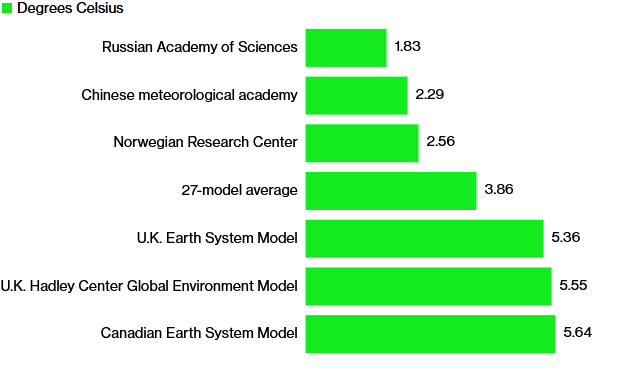
The traditional way to approach the problem of guessing what effect of rising CO2 levels has on the climate is by creating climate models. Thy have recently been adjusted, and they suddenly show a much higher rate of future temperature increase, in this case what is supposed to happen to global temperatures for a doubling of CO2 from pre-industrial times, from 270ppm to 540ppm.

https://lenbilen.com/wp-content/uploads/2020/02/screenshot_2020-02-07-climate-models-are-running-red-hot-and-scientists-done28099t-know-why1.png

The first thing that strikes you is the great discrepancies between the models. The Russian, Chinese and Norwegian models show a much slower temperature rise than  rest of the models. Why is that?

There are two ways to approach this problem. The climate models make certain assumptions about the behavior of the changing atmosphere, and based on these assumptions model future temperature changes. This is the approach from IPCC for the last 32 years. These models are failing miserably when compared to actual temperature changes. This is the traditional way.

The other way i to observe what is actually happening to our temperature over time as the CO2 increases. We have over 50 years of excellent global temperature data, so with these we can see where, when and by how much the earth has warmed.

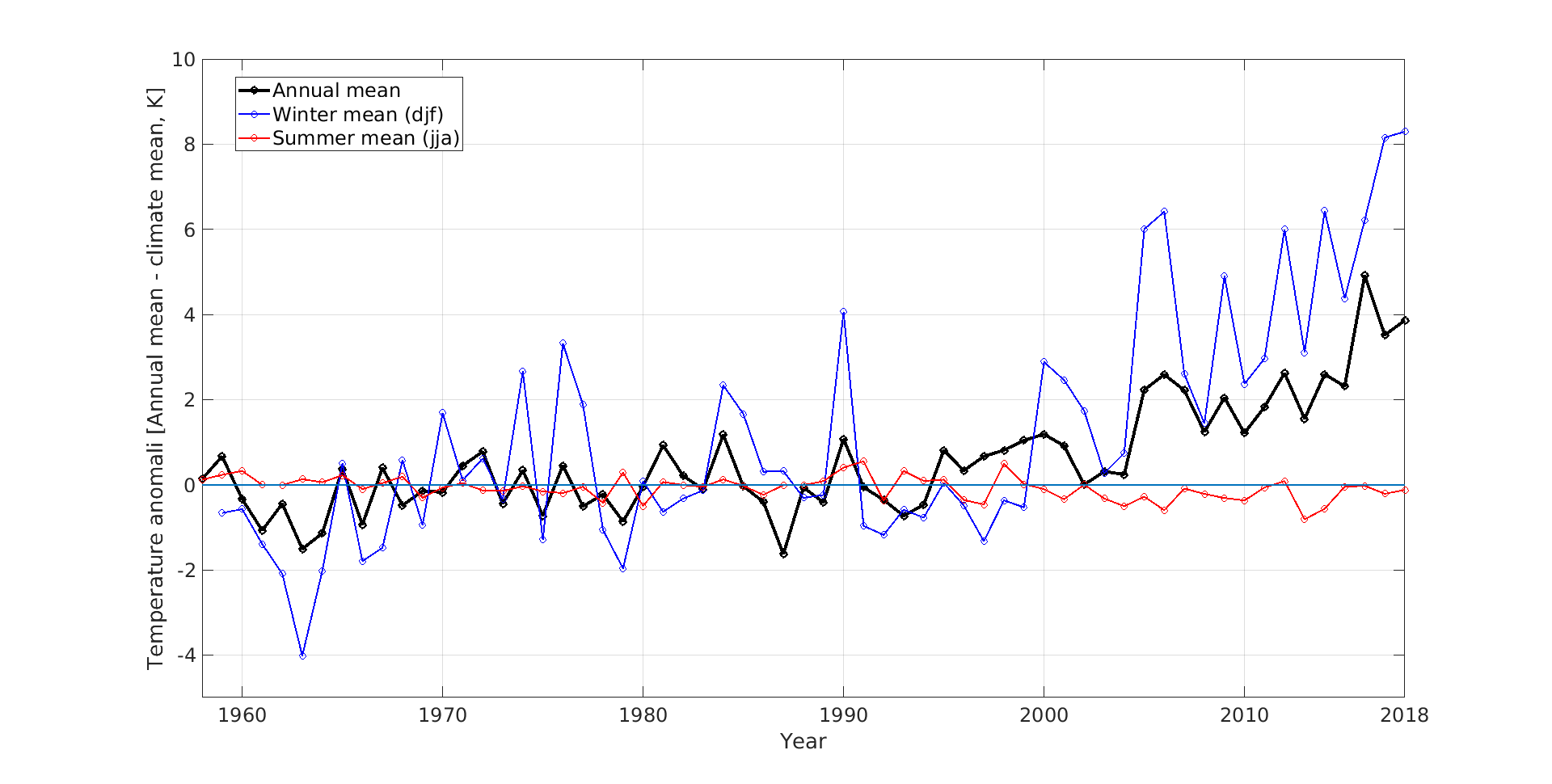
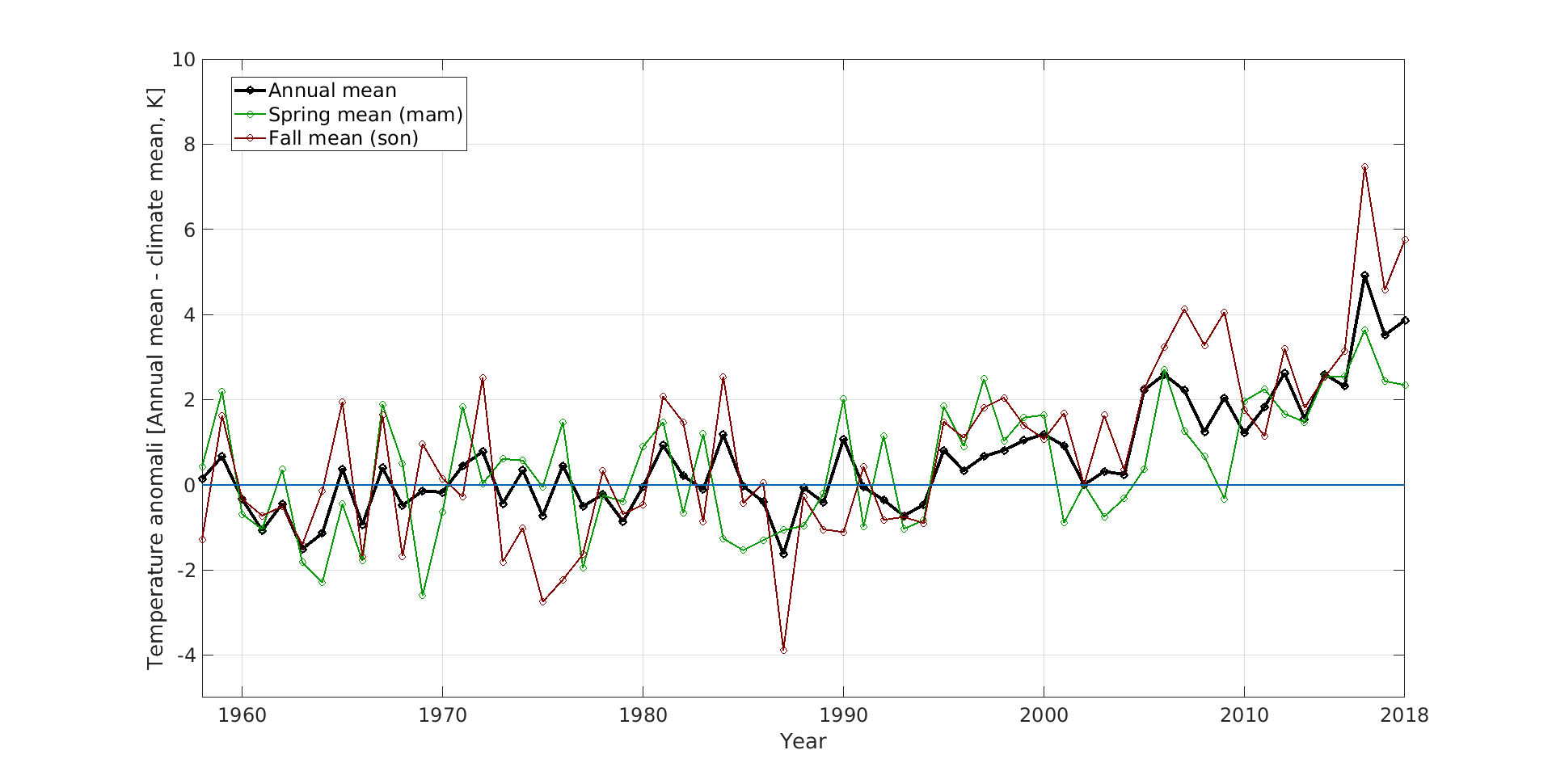
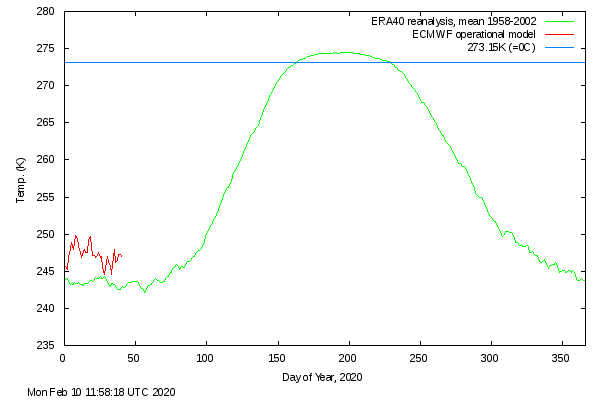
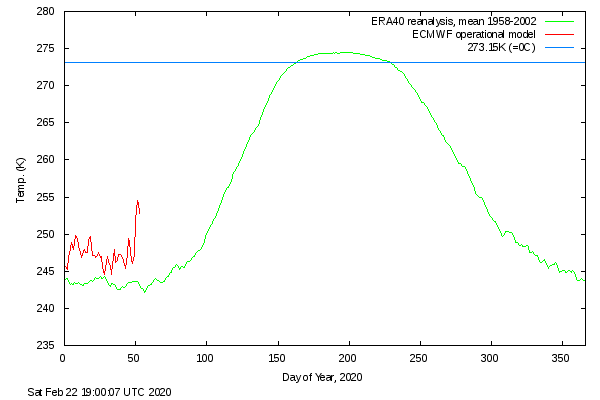
The most drastic temperature rise on earth has been in the Arctic above the 80th latitude. In the winter of 2018 it was 8C above the 50 year average. See charts from the Danish Meteorological Institute:
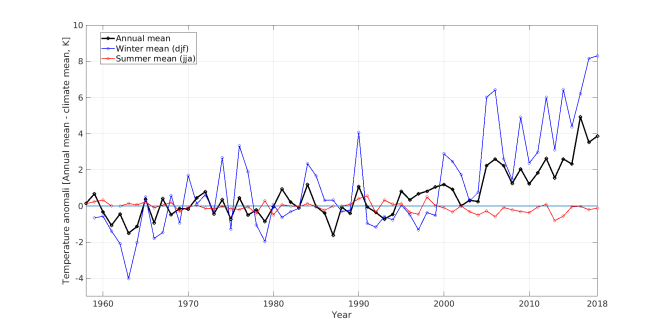
Note, there is no increase at all in the summer temperatures!
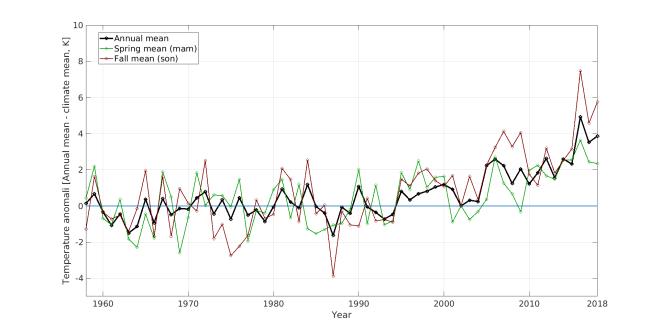
The fall temperature saw an increase of 5C and the spring temperature saw an increase of about 2.5C.

The 2020 winter has so far seen an about 5c increase Source: DMI.

This 8C ( or 5C) rise in winter temperatures is significant, most would even say alarming, but my response is, why is that?

To get the answer we must study molecular absorption spectroscopy and explain a couple of facts for the 97% of all scientists who have not studied molecular spectroscopy. IPCC and most scientists claim that the greenhouse effect is dependent on the gases that are in the atmosphere, and their combined effect is additive according to a logarithmic formula. This is true up to a certain point, but it is not possible to absorb more than 100% of all the energy available in a certain frequency band! For example: If water vapor absorbs 50% of all incoming energy in a certain band, and CO2 absorbs another 90% of the energy in the same band, the result is that 95% is absorbed, (90% + 50% * (100% – 90%)),  not 140%, (90% + 50%).

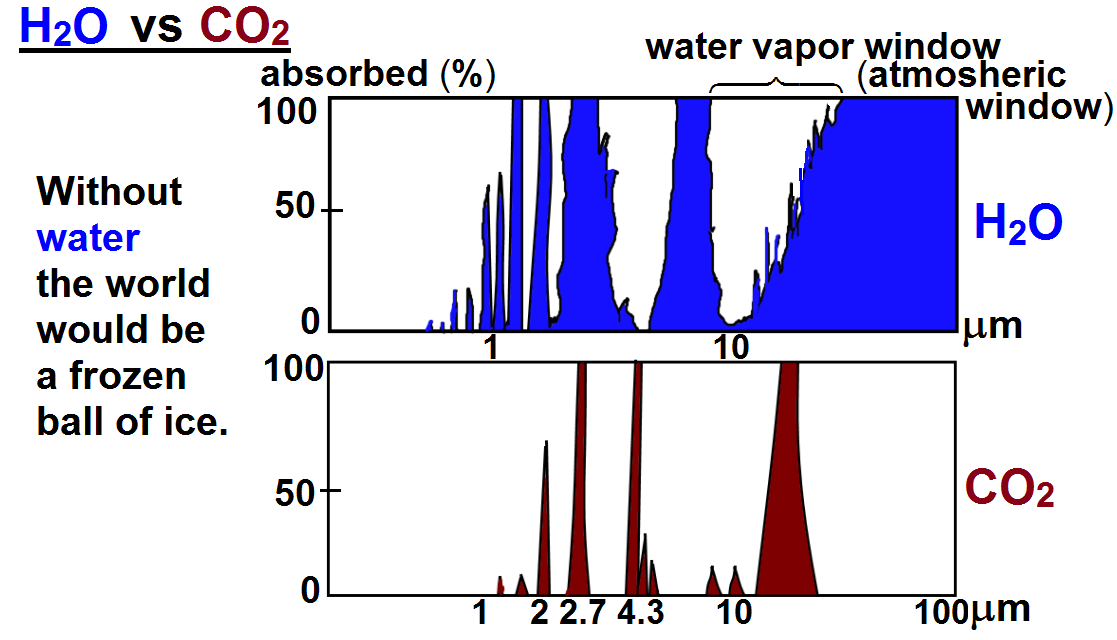
The following chart shows both CO2 and H2O are absorbing greenhouse gases, with H20 being the stronger greenhouse gas, absorbing over a much wider spectrum, and they overlap for the most part. But it also matters in what frequency ranges they absorb.
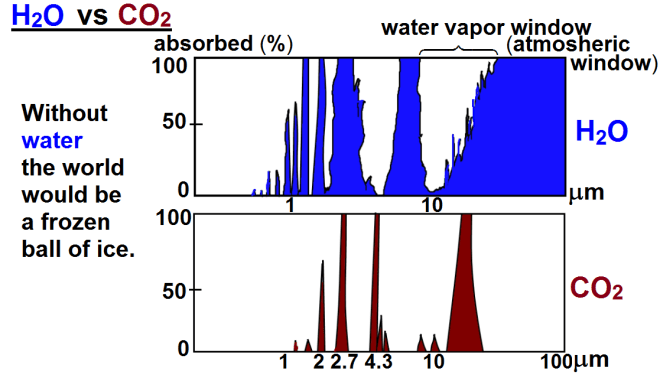
To better understand the importance of frequency spectra this we will look at the frequency ranges of the incoming solar radiation and the outgoing black body radiation of the earth. It is the latter that causes the greenhouse effect. Take a look at this chart:
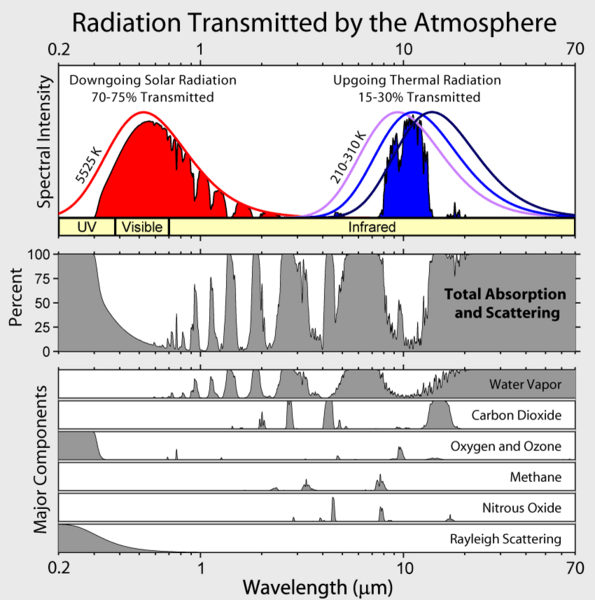
The red area represents the observed amount of solar radiation that reaches the earth’s surface. the white area under the red line represents radiation absorbed in the atmosphere. Likewise, the blue area represents the outgoing black body radiation that is re-emitted. The remaining white area under the magenta, blue or black line represents the retained absorbed energy that causes the greenhouse effect.

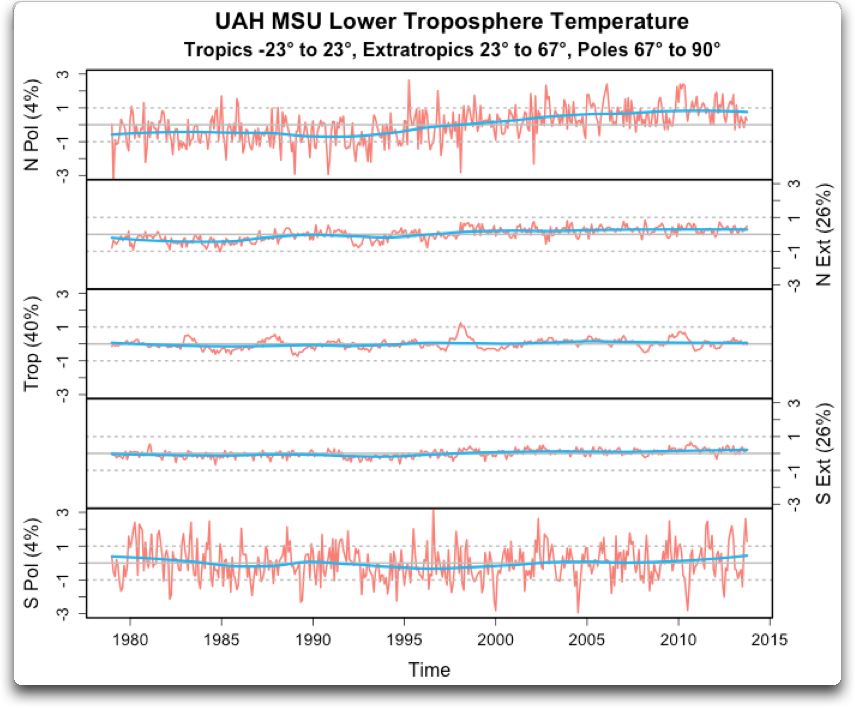
Let us now take a look at the Carbon Dioxide bands of absorption, at 2.7, 4.3 and 15 microns. Of them the 2.7 and 4.3 micron bands absorb where there is little black body radiation, the only band that counts is at 15 microns, and that is in a band where the black body radiation has its maximum. However it is also in a band where water vapor also absorb, not as much as CO2,only about 20% to 70% as much. Water vapor or absolute humidity is highly dependent on the temperature of the air, so at 30C there may be 50 times as much water vapor, at 0C there may be ten times as much water vapor, and at -25C there may be more CO2 than water vapor. At those low temperatures the gases are mostly additive. In the tropics with fifty times more water vapor than CO2, increased CO2 has no influence on the temperature whatsoever. Temperature charts confirm this assertion:

The temperature in the tropics displays no trend whatsoever. It follows the temperature of the oceans, rises in an el niño and falls in a la niña. We are now in the end of an el niño, soon to be followed by a rather strong la niña.The temperature in the southern hemisphere shows no trend. In the northern temperate region there is a slight increase, but the great increase is occurring in the Arctic. There is no increase in the Antarctic yet even though the increase in CO2 is the same in the Antarctic as it is in the Arctic and the winter temperature in the Antarctic is even lower than in the Arctic. So CO2 increase cannot be the sole answer to the winter temperature increase in the Arctic.

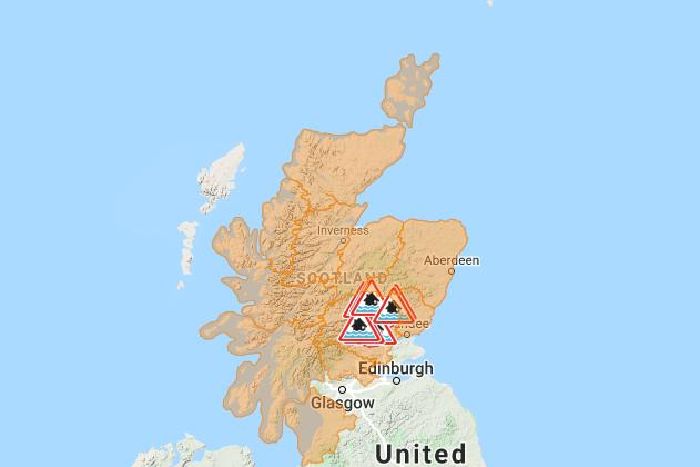
A few days ago there was a storm of historic magnitude, filled with moisture going up from the Mexican Gulf through the Atlantic and really sacked Scotland and Norway. The weather warnings called for severe floods and hurricane-like winds:
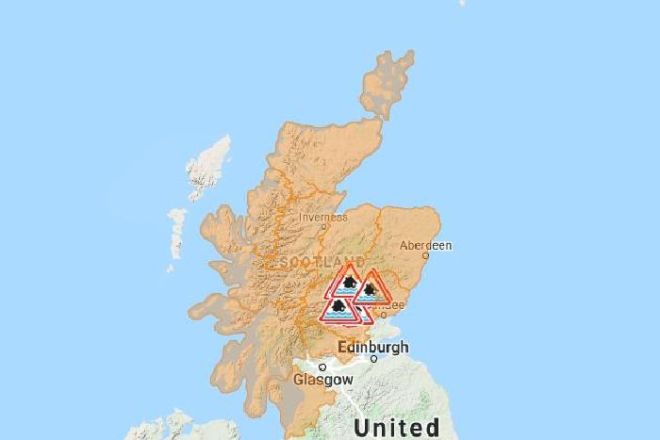
What happened to the temperature when the storm arrived?

The Arctic temperature above the 80th latitude rose about 12C, from about -30C to about -18C, and most of the moisture snowed out. What happened to the ice cover when the storm arrived? Let’s see the most recent Arctic ice cover.

As the storm arrives, some of the ice breaks up, but at the end of the storm it bounces back, helped with all the snow that just fell. After the snowfall ends the ice formed easily breaks up again.

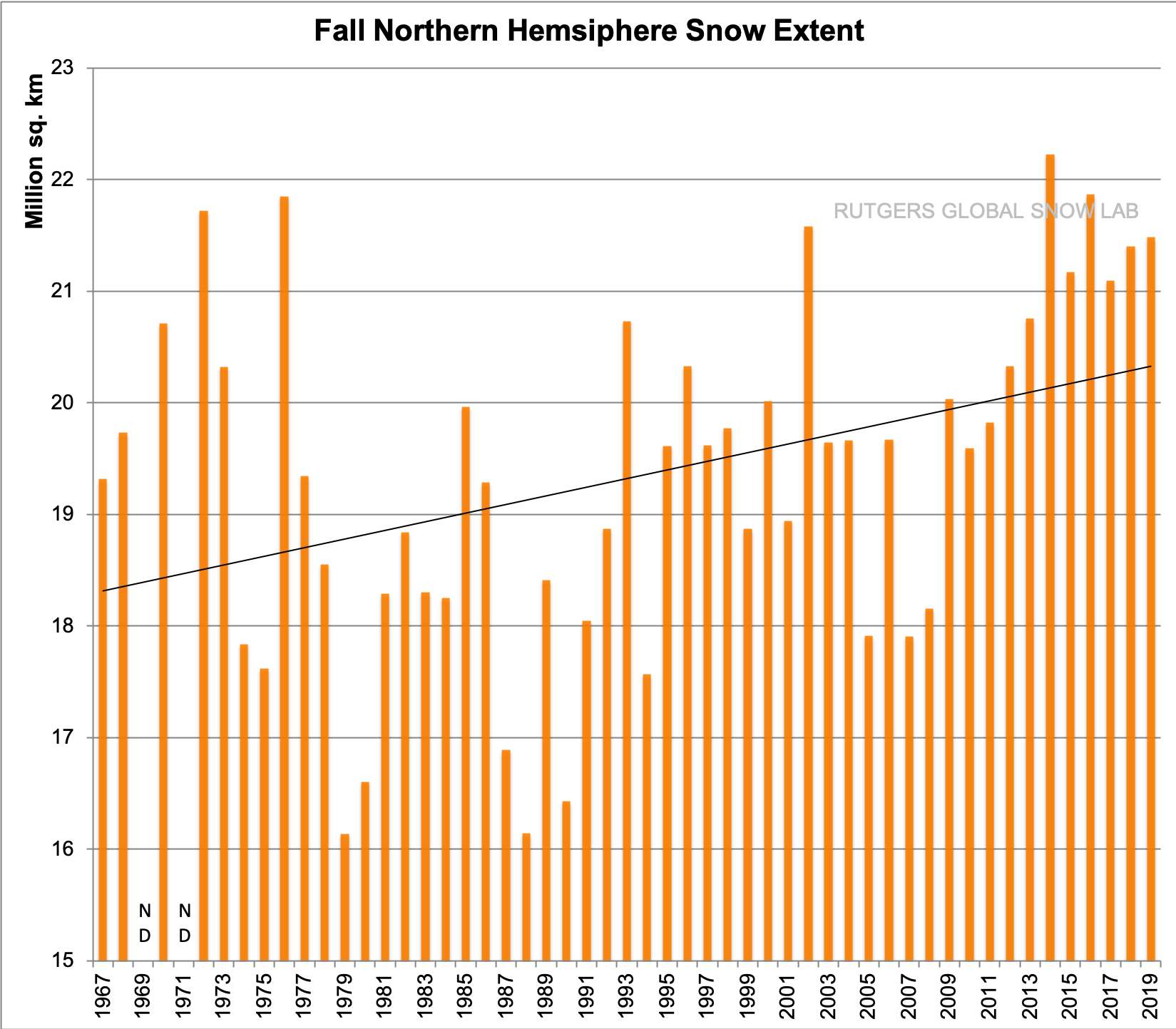
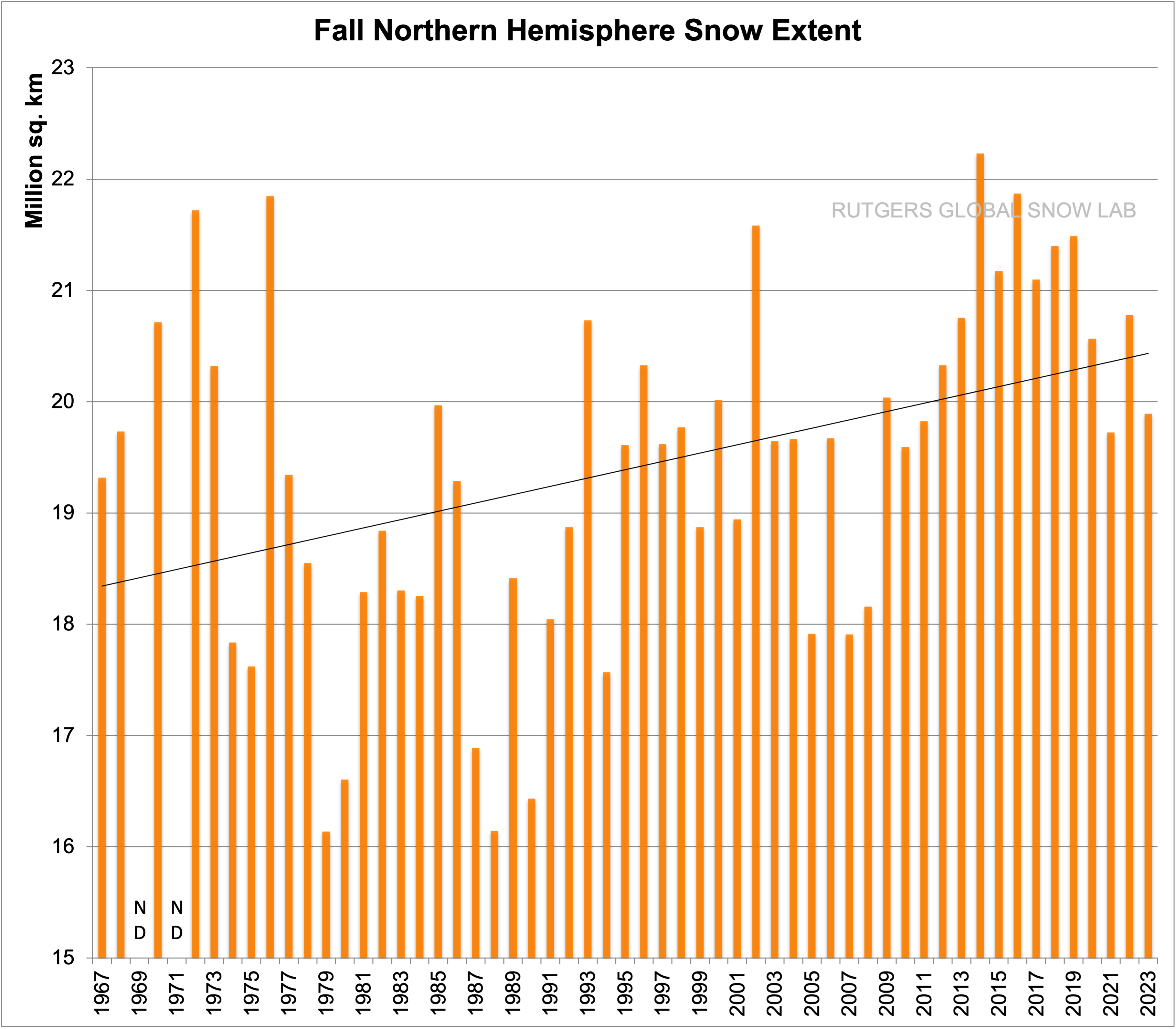
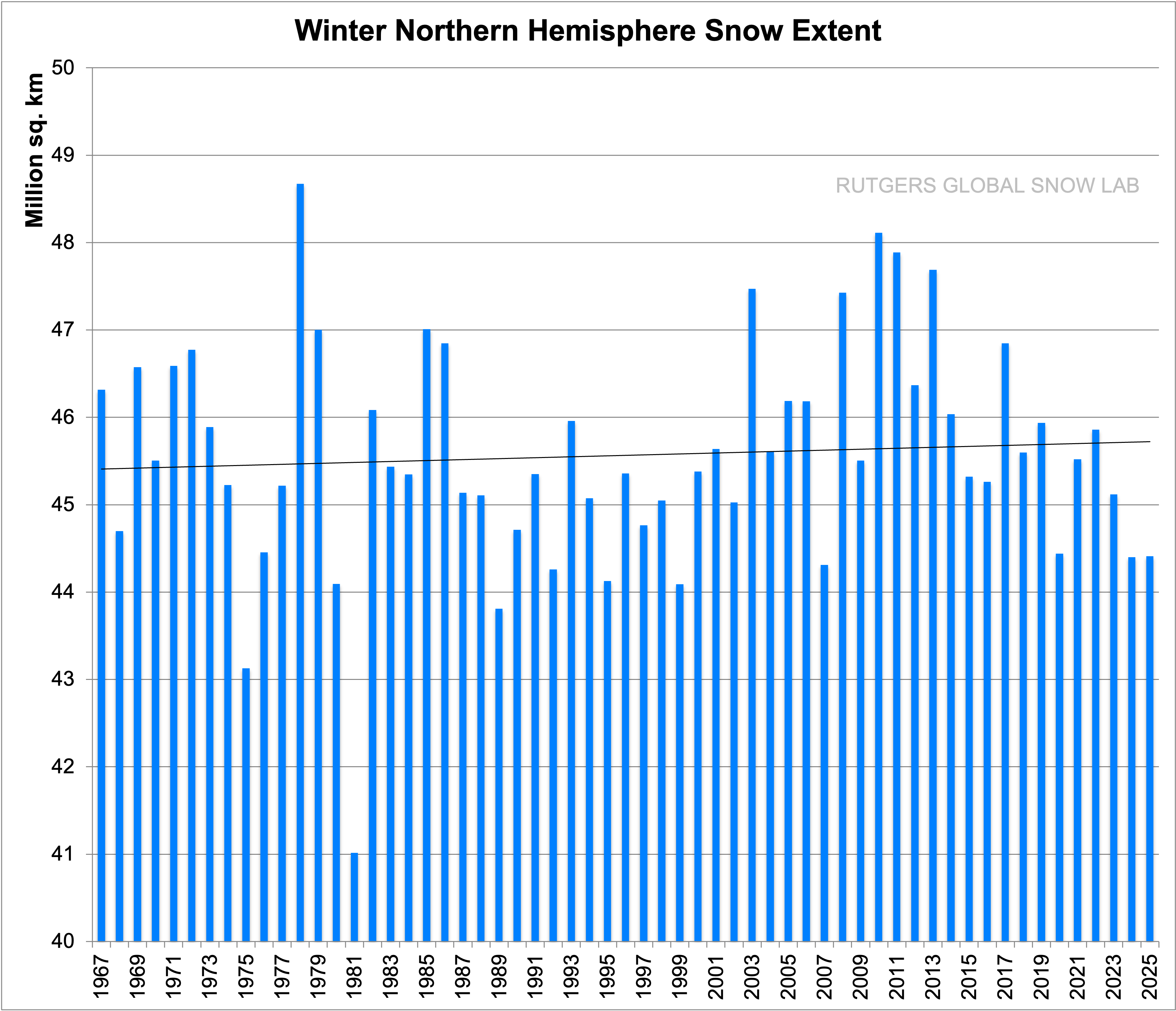
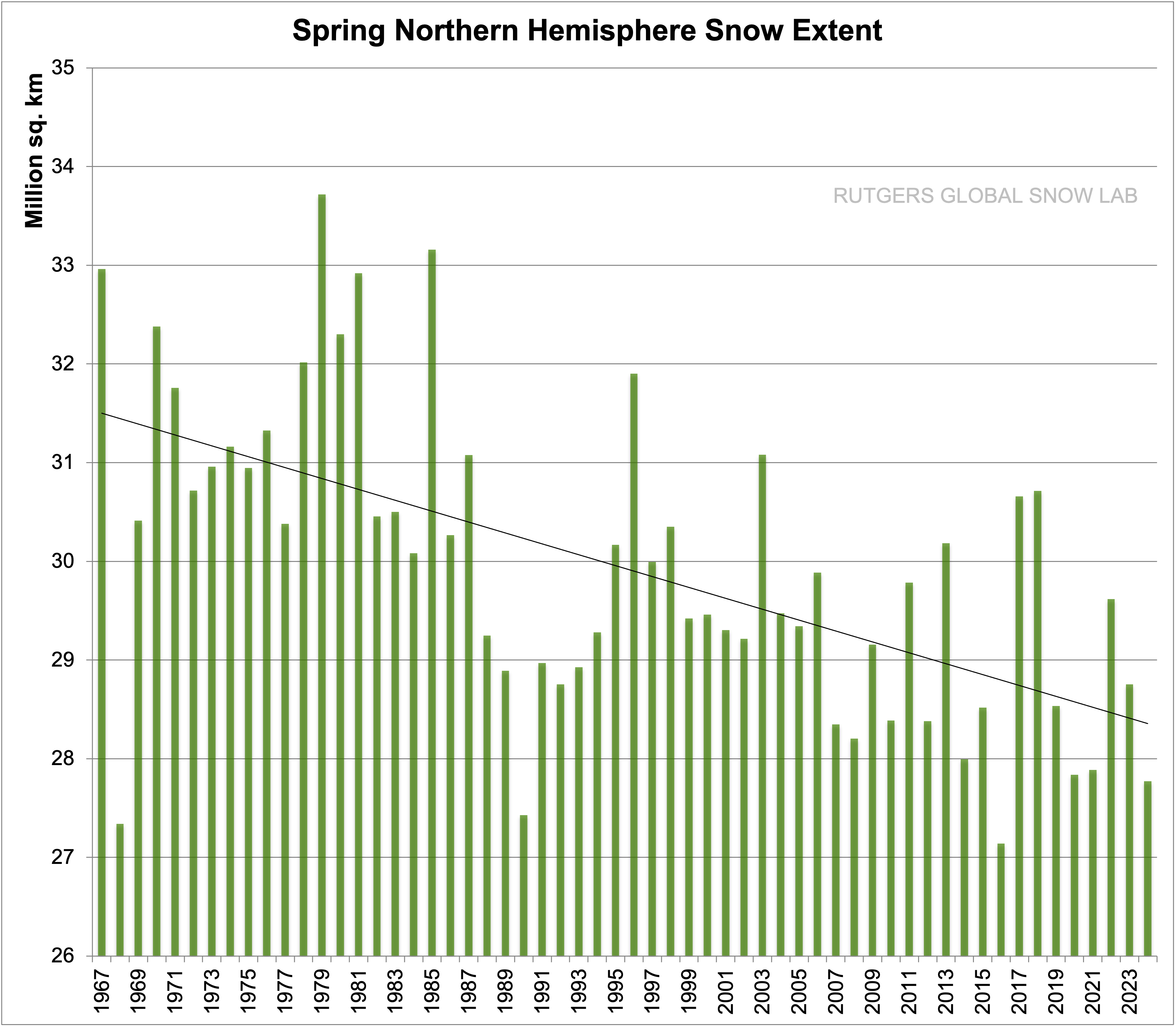
Is the snow cover increasing in the Arctic? Let us see what the snow statistics show. These are from the Rutgers snow lab.
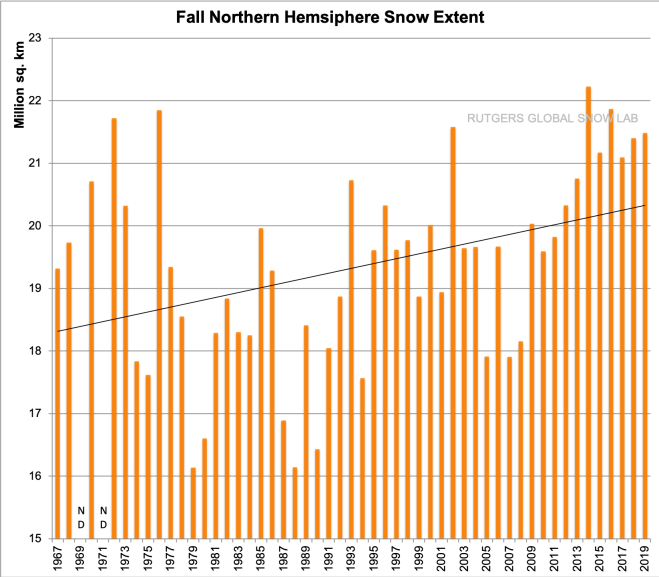
The fall snow extent is increasing by more than 2 percent per year.
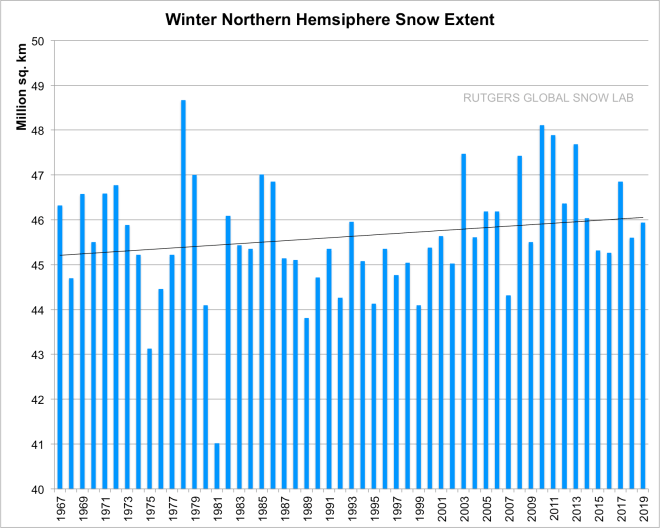
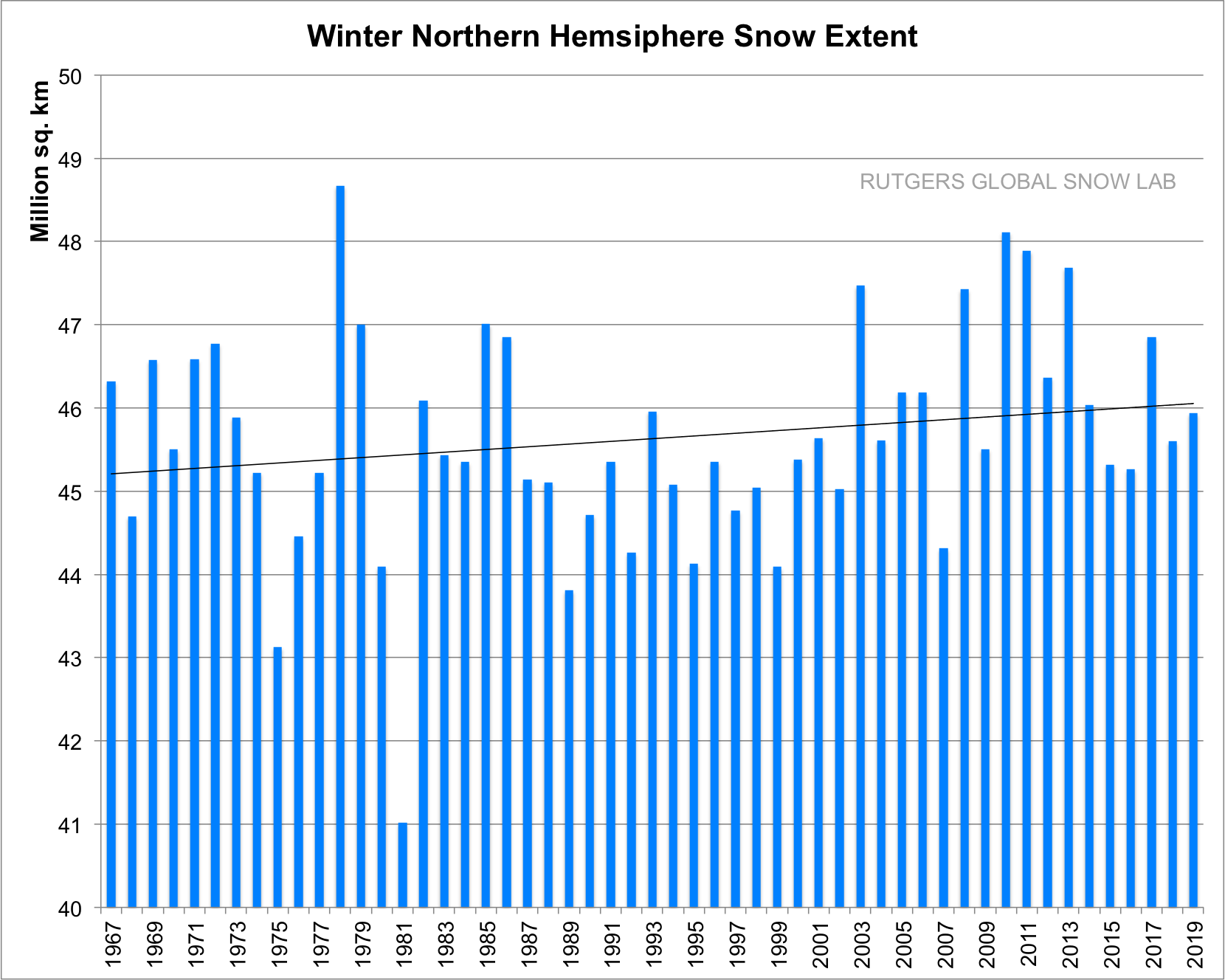
The winter snowfall has also increased but only by 0.04 percent per year.
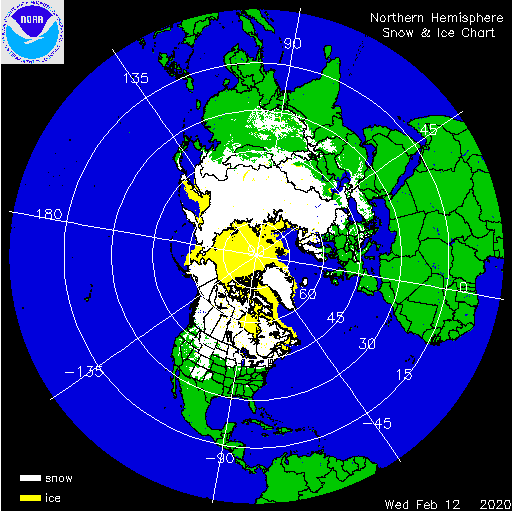
The snow covers all of Russia, Northern China, Mongolia, Tibet, Kashmir and northern Pakistan, Northern Afghanistan, Northern Iran, Turkey, Part of Eastern Europe, Scandinavia, Canada, Alaska, Greenland and parts of Western and Northern United States.
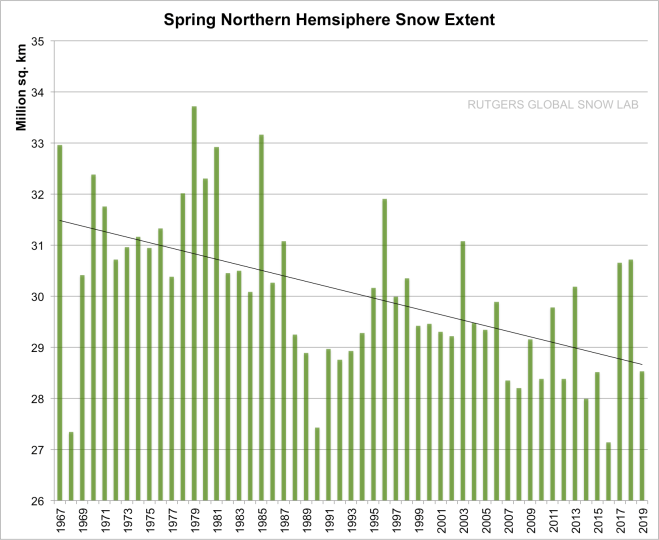
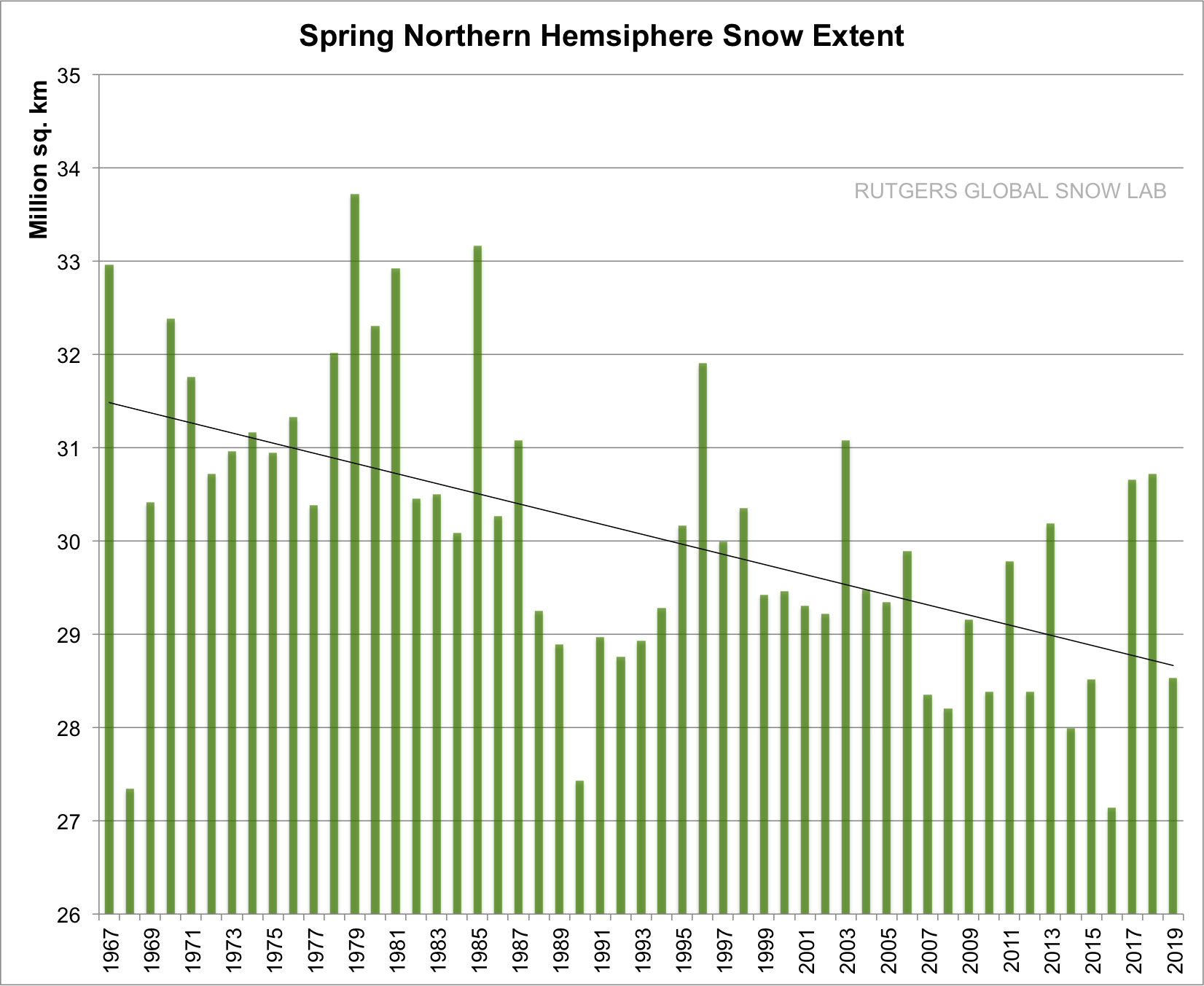
In the spring on the other hand the snow pack is melting faster, about 1.6 percent less snow per year. One of the major reasons for an earlier snow-melt is that the air is getting dirtier, especially over China, and to some extent Russia. The soot from burning coal and mining and manufacturing changes the albedo of the snow. The soot is visible on old snow all the way up to the North Pole. The other reason is that the poles are getting warmer. In the fall and winter it is mostly due to increased snowfall, but in the spring, as soon as the temperature rises over the freezing point, melting occurs.

Moving down to the continental U.S. there are even more good news.

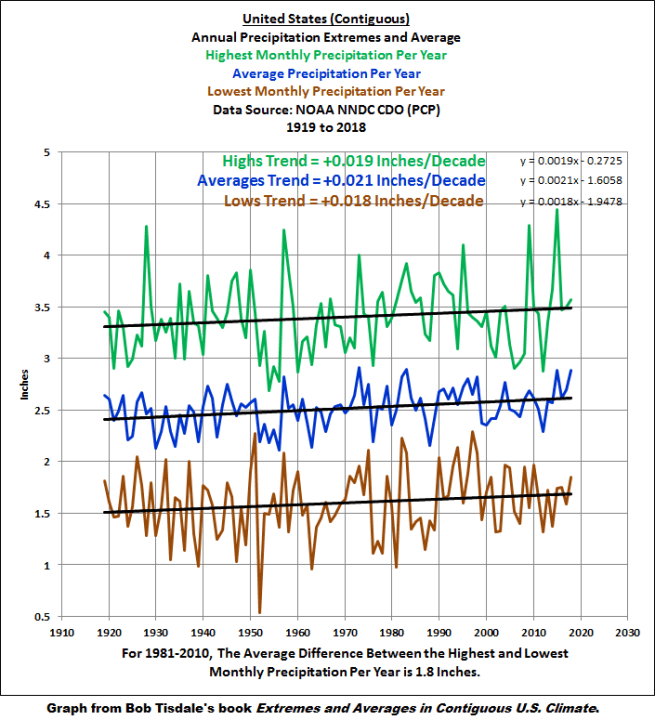
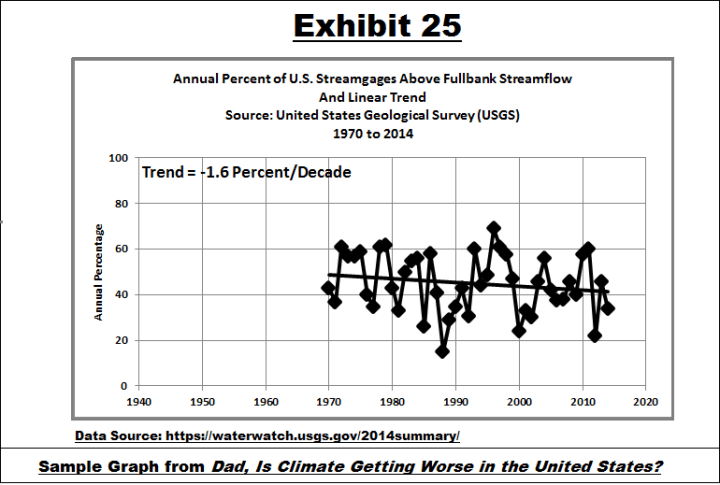
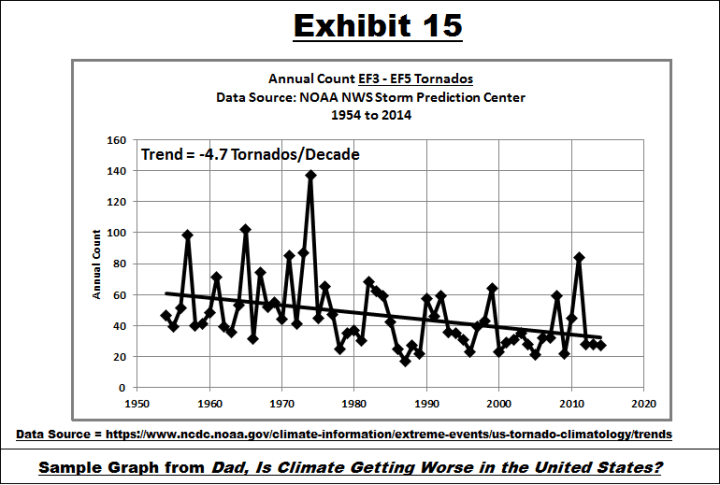
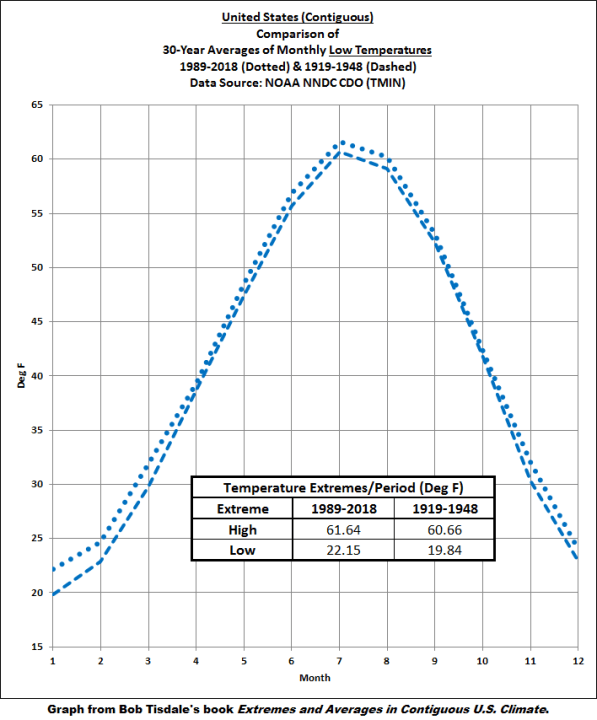
The data presented in the next six graphs were extracted from the data available at the NOAA National Data Center Climate Data Online (NNDC CDO) website.

Yes, rain (and snow) are increasing, but it is also raining slightly more often and regularly, so the net result is a slight decrease in flooding.
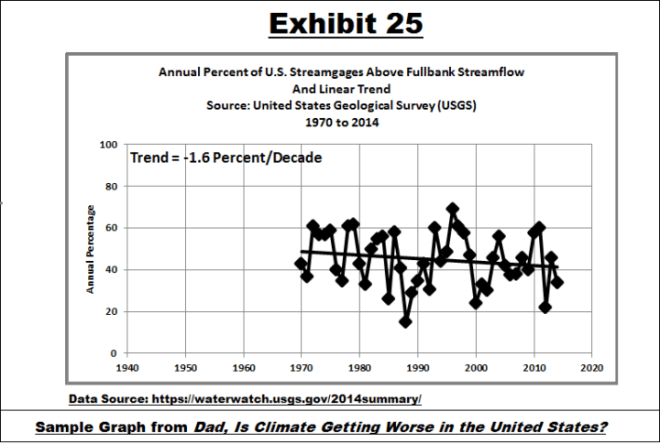
Of course, this could change in the future, and we need to watch the rain patterns, as they are constantly changing. Building more levees is not always the answer, since this will increase the risk for flooding in other places. It may be necessary to let certain areas, mostly farmland and woodland be flooded from time to time.
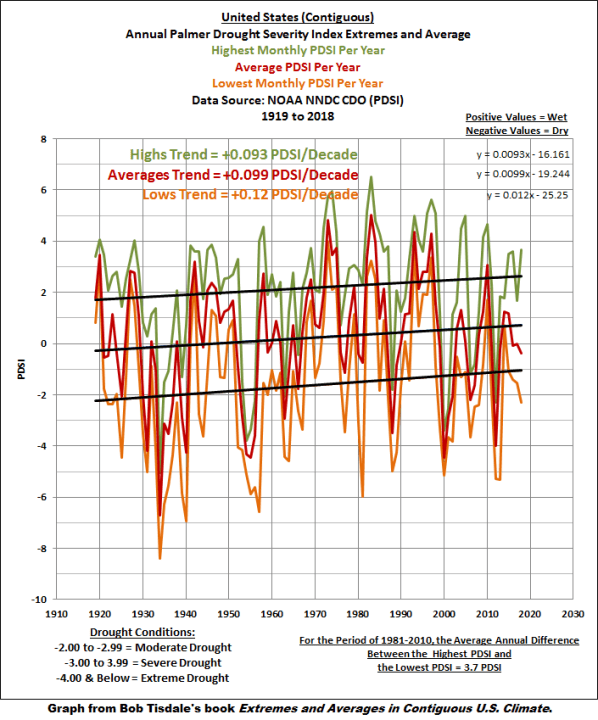
The Palmer Drought Severity Index (PDSI) uses readily available temperature and precipitation data to estimate relative dryness. It is a standardized index that generally spans -10 (dry) to +10 (wet). The chart shows Continental U.S. is getting wetter, about 0.01 PDSI index per year with the lows trend is getting wetter the fastest. This is good news.
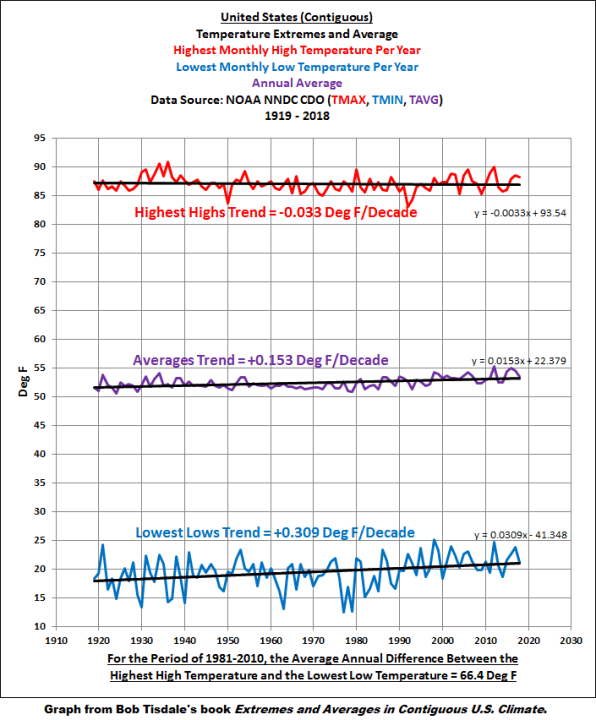
The temperature extremes keep narrowing, the maximum temperatures decrease by 0.033 degree F/decade, but the minimum temperatures increase by 0.309 degree F/decade. This is good, since tornadoes are a result of extreme temperature differences, most often associated with cold fronts.

 The Continental U.S. has not had an EF5 tornado (the most severe) since 2013. Let us hope this trend continues.

Contrary to popular belief, hurricanes making landfall on the U.S. mainland are decreasing slightly, especially major hurricanes.

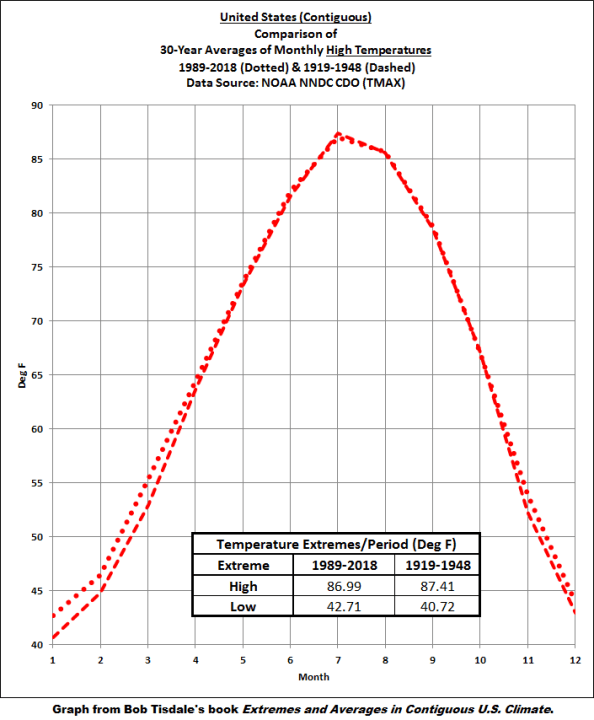
Taking a closer look at the seasonal temperature trends  we can see that the winter aveerage temperatures are rising by about 0.3F per decade but the summer temperatures rise only about one seventh as much, (0.04F/decade)  .
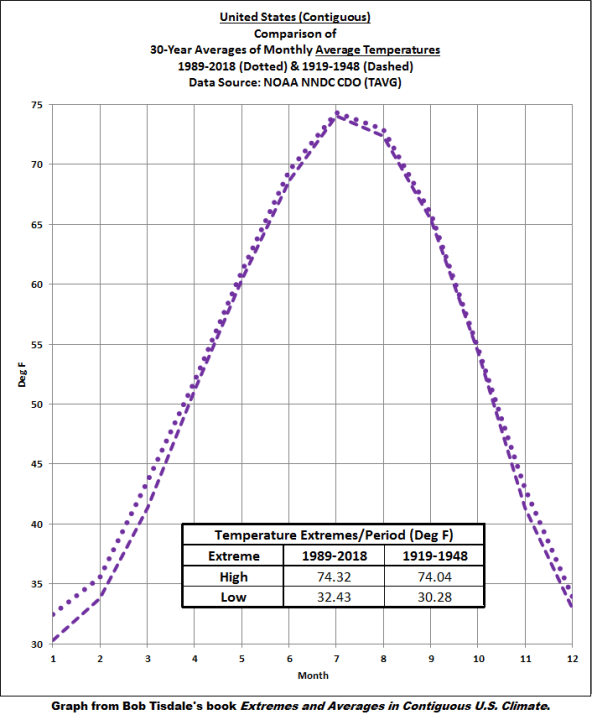
These are the average temperatures. The minimum average temperatures rise in all seasons, but mostly in the winter,

The maximum temperatures barely budge. They rise in the winter and decrease ever so slightly in the summer.

Watching the warming of the poles, and even the continental U.S., far from being an impending end of mankind as we know it, may even be beneficial. Warmer poles in the winter means less temperature gradient between the poles and the tropics, leading to less severe storms. They will still be there, but less severe.

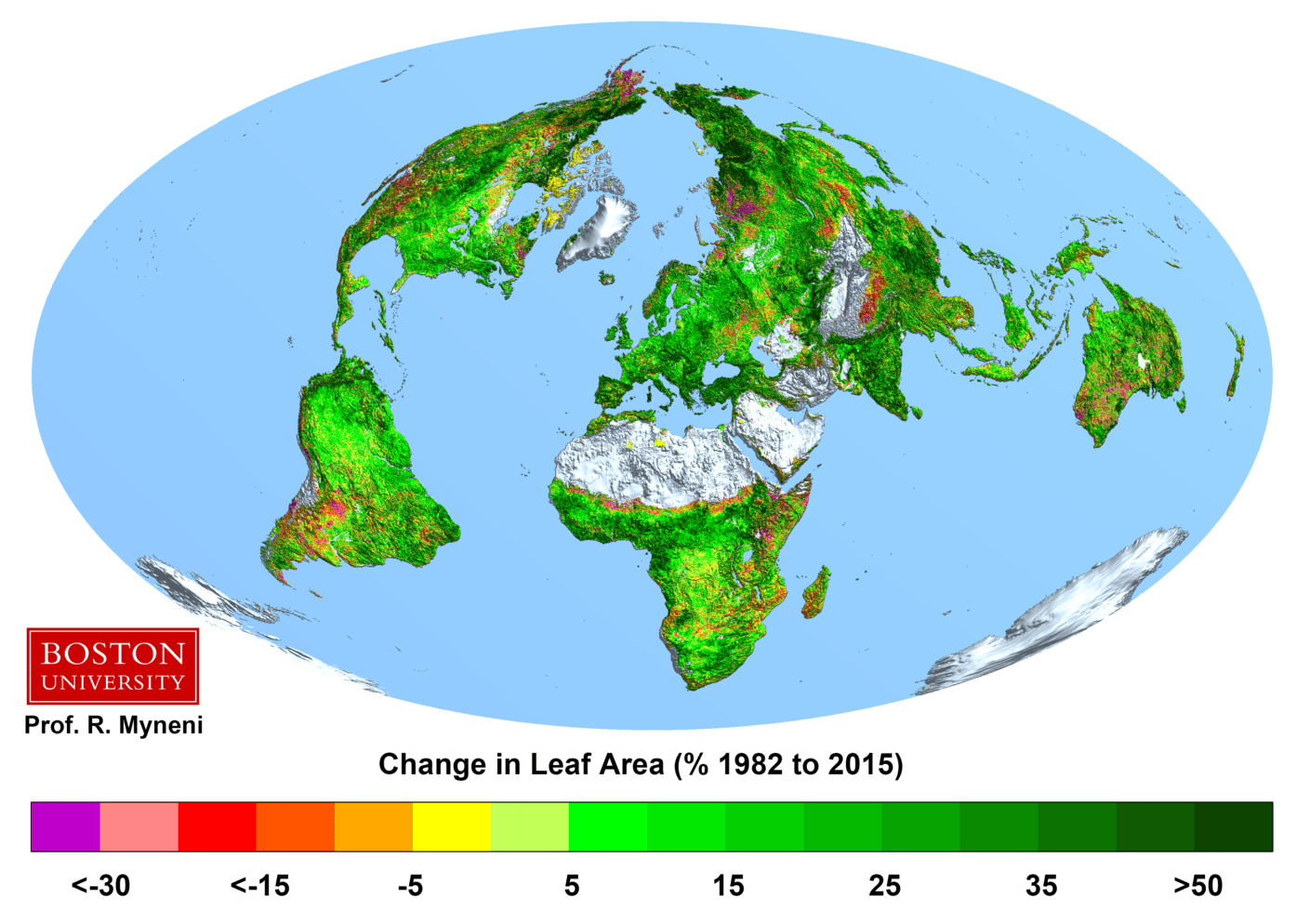
There is one great benefit of increased CO2, the greening of the earth.
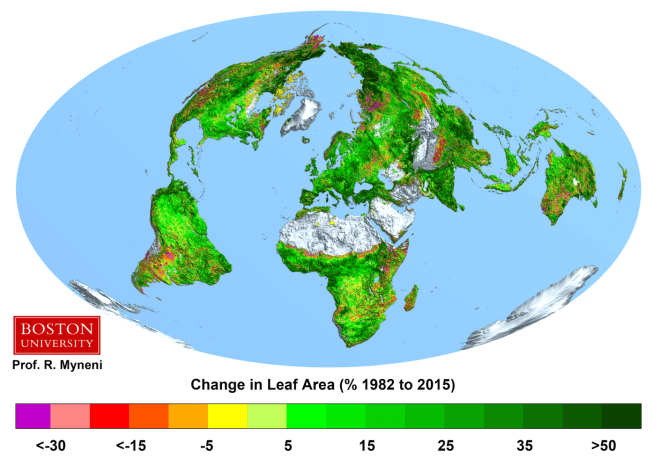
Thanks to this greening, which is accomplished with the fertilizer effect of CO2, the earth can now keep another 2 billion people from starvation, not to mention what it does to plants and wildlife.

Having said that, I am still a conservationist. Coal, oil and gas will run out at some time, and I for one would like to save some for our great grandchildren, not yet born. In addition I would like to minimize the need for mining, which can be quite destructive. We have immense environmental problems, like water pollution, deforestation, intoxication of the soil, over-fertilization with nitrogen, real air pollutants, such as Sulfur compounds and soot, just to name a few. They have one thing in common: It takes lots of energy to do the cleanup.

The best solution is to switch most electricity generation to Thorium molten salt nuclear power. There are multiple reasons why this should be done as a priority by streamlining regulation and facilitate competition in development of the best solutions to the energy problems.
The many cases why Thorium Nuclear Power is the only realistic solution to the world’s energy problems.
The climate change caused by rising CO2 levels leads to less extreme weather, not more, weather statistics prove.

We have experienced a 50% increase in CO2 levels since the beginning of industrialization. In the last 30 years the level has risen 17%, from about 350 ppm to nearly 410 ppm. Is is time to panic and reduce the CO2  emissions to stop the rise?

The traditional way to approach the problem of guessing what effect of rising CO2 levels has on the climate is by creating climate models. Thy have recently been adjusted, and they suddenly show a much higher rate of future temperature increase, in this case what is supposed to happen to global temperatures for a doubling of CO2 from pre-industrial times, from 270ppm to 540ppm.

There are two ways to approach this problem. The models make certain assumptions about the behavior of the changing atmosphere and model future temperature changes. This is the approach from IPCC for the last 32 years. These models are all failing miserably when compared to actual temperature changes.

The other way i to observe what is actually happening to our temperature over time as the CO2 increases. We have 50 years of excellent global temperature data, so with these we can see where, when and by how much the earth has warmed.

The most drastic temperature rise on earth has been in the Arctic above the 80th latitude. In the winter of 2018 it was 8C above the 50 year average. See charts from the Danish Meteorological Institute:

Note, there is no increase at all in the summer temperatures!

The fall temperature saw an increase of 5C and the spring temperature saw an increase of about 2.5C.

The 2020 winter has so far seen an about 4c increase Source: DMI.

This 8C winter rise of temperature is significant, most would even say alarming, but my response is, why is that?

To get the answer we must study molecular absorption spectroscopy and explain a couple of facts for the 97% of all scientists who have not studied molecular spectroscopy. IPCC and most scientists claim that the greenhouse effect is dependent on the gases that are in the atmosphere, and their combined effect is additive according to a logarithmic formula. This is true up to a certain point, but it is not possible to absorb more than 100% of all the energy available in a certain frequency band! For example: If water vapor absorbs 90% of all incoming energy in a certain band, and CO2 absorbs another 50% of the energy in the same band, the result is that 95% is absorbed, (90% + 50% * (100% – 90%)),  not 140%, (90% + 50%).

The following chart shows both CO2 and H2O are absorbing greenhouse gases, with H20 being the stronger greenhouse gas, absorbing over a much wider spectrum, and they overlap for the most part. But it also matters in what frequency range s they absorb.

For this we will have to look at the frequency ranges of the incoming solar radiation and the outgoing black body radiation of the earth. It is the latter that causes the greenhouse effect. Take a look at this chart:

The red area represents the observed amount of solar radiation that reaches the earth’s surface. the white area under the red line represents radiation absorbed in the atmosphere. Likewise, the blue area represents the outgoing black body radiation that is re-emitted. The remaining white area under the magenta, blue or black line represents the retained absorbed energy that causes the greenhouse effect.

Let us  now take a look at the Carbon Dioxide bands of absorption, at 2.7, 4.3 and 15 microns. Of them the 2.7 and 4.3 micron bands absorb where there is little black body radiation, the only band that counts is at 15 microns, and that is in a band where the black body radiation has its maximum. However it is also in a band where water vapor also absorb, not as much as CO2,only about 20% to 70% as much. Water vapor or absolute humidity is highly dependent on the temperature of the air, so at 30C there may be 50 times as much water vapor, at 0C there may be ten times as much water vapor, and at -25C there may be more CO2 than water vapor. At those low temperatures the gases are mostly additive. In the tropics with fifty times more water vapor than CO2, increased CO2 has no influence on the temperature whatsoever. Temperature charts confirm this assertion:

Here the temperature in the tropics displays no trend whatsoever. It follows the temperature of the oceans, rises in an el nino and falls in a la nina. The temperature in the southern hemisphere shows no trend. In the northern temperate region there is a slight increase, but the great increase is occurring in the Arctic. There is no increase in the Antarctic yet even though the increase in CO2 is greater in the Antarctic and the winter temperature in the Antarctic is even lower than in the Arctic. So CO2 increase cannot be the sole answer to the winter temperature increase in the Arctic.

A few days ago there was a storm of historic magnitude, filled with moisture going up from the Mexican Gulf through the Atlantic and really sacked Scotland and Norway. The weather warnings called for severs floods and hurricane-like winds:

What happened to the temperature when the storm arrived?

ice The Arctic temperature above the 80th latitude rose about 12C, from about -30C to about -18C, and most of the moisture snows out. What happens to the ice covercover when the storm arrives? Let’s see the most recent Arctic ice cover.

As the storm arrives, some of the ice breaks up, but at the end of the storm it bounces back, helped with all the snow that just fell.

Is the snow cover increasing in the Arctic?Let us see what the snow statistics show. These are from the Rutgers snow lab.

The fall snow extent is increasing, and has increased by more than 2 percent per year.

The winter snowfall has also increased but only by 0.04 percent per year. The snow covers all of Russia, Northern China, Mongolia, Tibet, Kashmir and northern Pakistan, Northern Afghanistan, Northern Iran, Turkey, Part of Eastern Europe, Scandinavia, Canada, Alaska, Greenland and part of Western and Northern United States.

In the spring on the other hand the snow pack is melting faster, about 1.6 percent less snow per year. One of the major reasons for an earlier snowmelt is that the air is getting dirtier, especially over China, and to some extent Russia. The soot from burning coal and mining and manufacturing changes the albedo of the snow. The soot is visible on old snow all the way up to the North Pole. The other reason is that the poles are getting warmer. In the fall and winter it is mostly due to increased snowfall, but in the spring, as soon as the temperature rises over the freezing point, melting occurs.

Moving down to the continental U.S. there are even more good news.

The data presented in the next six graphs were extracted from the data available at the NOAA National Data Center Climate Data Online (NNDC CDO) website.

Yes, rain (and snow) are increasing, but it is also raining slightly more often and regularly, so the net result is a slight decrease in flooding.

Of course, this could change in the future, and we need to watch the rain patterns, as they are constantly changing. Building more levees is not always the answer, since this will increase the risk for flooding in other places. It may be necessary to let certain areas, mostly farmland and woodland be flooded from time to time.

The Palmer Drought Severity Index (PDSI) uses readily available temperature and precipitation data to estimate relative dryness. It is a standardized index that generally spans -10 (dry) to +10 (wet). The chart shows Continental U.S. is getting wetter, about 0.01 PDSI index per year. This is good news.

The temperature extremes keep narrowing, the maximum temperatures decrease by 0.033 degree F/decade, but the minimum temperatures increase by 0.309 degree F/decade. This is good, since tornadoes are a result of extreme temperature differences, most often associated with cold fronts.

 The Continental U.S. has not had an EF5 tornado (the most severe) since 2013. Let us hope this trend continues.

Contrary to popular belief, hurricanes making landfall on the U.S. mainland are decreasing slightly, especially major hurricanes.

Taking a closer look at the seasonal temperature trends  we can see that the winter temperatures are rising. but the summer temperatures stay the same.

hh

These are the average temperatures. The minimum temperatures rise in all seasons, but mostly in the winter,

The maximum temperatures barely budge. They rise in winter and decrease ever so slightly in the summer.

Watching  the warming of the poles, and even the continental U.S., far from being an impending end of mankind as we know it, may even be beneficial. Warmer poles in the winter means less temperature gradient between the poles and the tropics, leading to less severe storms. They will still be there, but less severe.
There is one great benefit of increased CO2, the greening of the earth.

Thanks to this greening, done with only the fertilizer of CO2 the earth can now keep another 2 billion people from starvation, not to mention what it does to plants and wildlife.

Having said that, I am still a conservationist. Coal, oil and gas will run out at some time, and I for one would like to save some for my great grandchildren, not yet born. In addition I would like to minimize the need for mining, which can be quite destructive. We have immense environmental problems, like water pollution, deforestation, intoxication of the soil, over-fertilization with nitrogen, real air pollutants, such as Sulfur compounds and soot, just to name a few. They have one thing in common: It takes lots of energy to do the cleanup.

The best solution is to switch most electricity generation to Thorium molten salt nuclear power. There are multiple reasons why this should be done as a priority.

Twenty-five reasons to rapidly develop Thorium based Nuclear Power generation.

We need badly to develop and build Thorium based molten salt fast breeder nuclear reactors to secure our energy needs in the future. Lest anyone should be threatened by the words fast breeder, it simply means it uses fast neutrons instead of thermal neutrons, and breeder means it produces more fissible material than it consumes, in the case of Thorium the ratio is about 1.05.

1. A million years supply at today’s consumption levels.
2. Thorium already mined, ready to be extracted.
3. One ten-thousandth of the TRansUranium waste compared to a U-235 based fast breeder reactor.

4. Thorium based nuclear power produces Pu-238, needed for space exploration.

5. Radioactive waste from an LFTR decays down to background radiation in 300 years compared to a million years for U-235 based reactors.

6. Thorium based nuclear power is not suited for making nuclear bombs.

7. Produces isotopes that helps cure certain cancers.

8. Molten Salt Thorium Reactors are earthquake safe.

9. Molten Salt Thorium Reactors cannot have a meltdown, the fuel is already molten.

10. Molten Salt Nuclear Reactors have a very high negative temperature coefficient leading to a safe and stable control.

11. Atmospheric pressure operating conditions, no risk for explosions.

12. Virtually no spent fuel problem, very little on site storage or transport.

13. Thorium Nuclear Power generators  scale  beautifully from small portable generators to full size power plants.

14. No need for evacuation zones, can be placed near urban areas.

15. Liquid Fluoride Thorium Reactors will work both as Base Load and Load Following power plants.

16. Liquid Fluoride Thorium Reactors will lessen the need for an expanded national grid.

17. Russia has an active Thorium program.

18. China is having a massive Thorium program.

19. India is having an ambitious Thorium program.

20. United States used to be the leader in Thorium usage. What happened?

21. With a Molten Salt Reactor, accidents like the Three Mile Island disaster will not happen.

22. With a Molten Salt Reactor, disasters like Chernobyl are impossible.

23. With Molten Salt Reactors, a catastrophe like Fukushima cannot happen.

24. Produces electrical energy at about 4 cents per KWh.

25. Can deplete some of the existing radioactive waste and nuclear weapons stockpiles.

Water shortage? With the population increase west of the Rocky Mountains, is it time to finally close the Moffat tunnel?

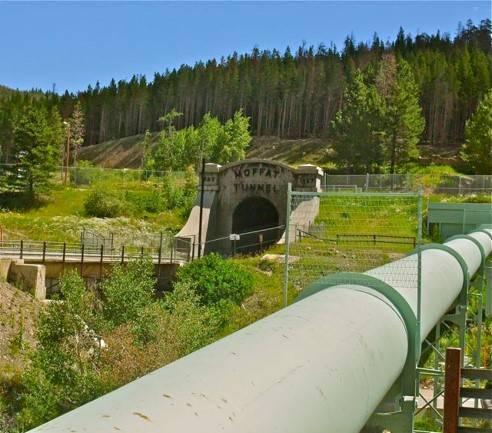
Many years ago the city of Denver had a problem. The land east of the Rocky mountains is dry, rain is sparse and the aquifers were being depleted. The city was growing rapidly, still small by today’s standard, but they were thinking big and looked for a really good water supply. There was one fairly nearby: the Colorado river. There was only one small problem, it was on the other side of the continental divide. They were building a railroad tunnel under the continental divide anyway, so for a few million dollars extra they added a water tunnel, with a capacity of 36 m3/s of water flow, and it has been draining water from the Colorado River basin since 1936.

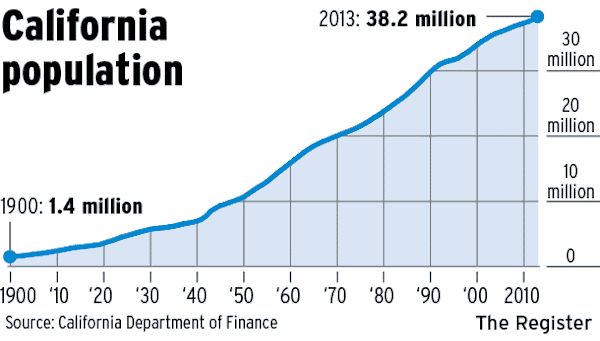
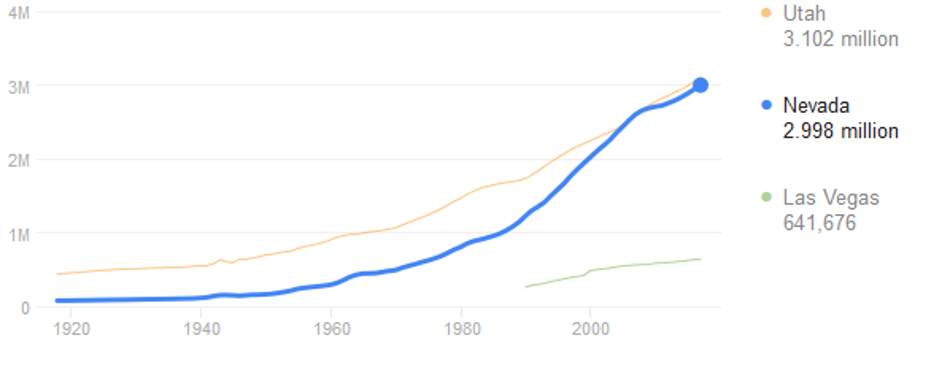
As an engineering feat it was quite impressive, and the population west of the Rocky Mountains was minuscule. This has changed and the demand for water in the Southwest is enormous and increasing. Las Vegas alone is now about the same size as the City of Denver. (The Denver Region is about 5.5 million)


Much of the water in the Colorado River basin is used for agricultural purposes.


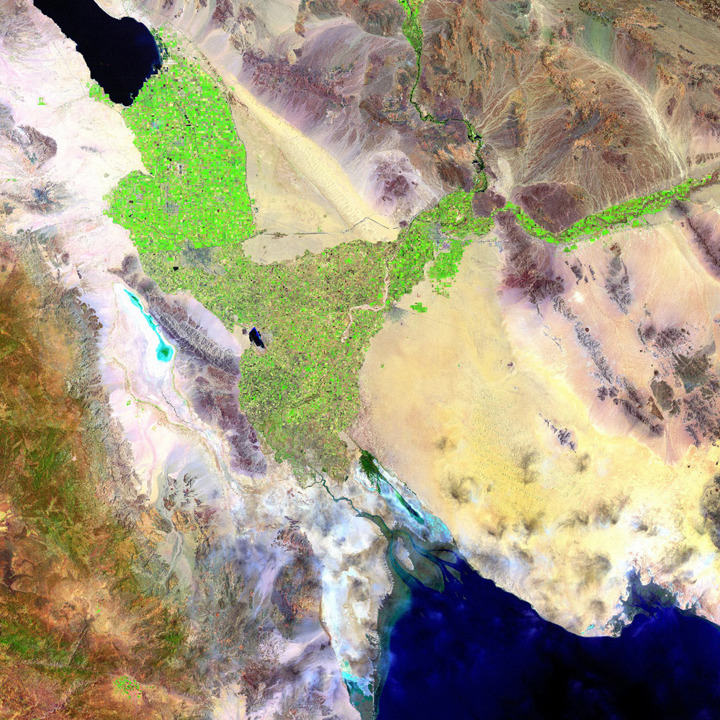
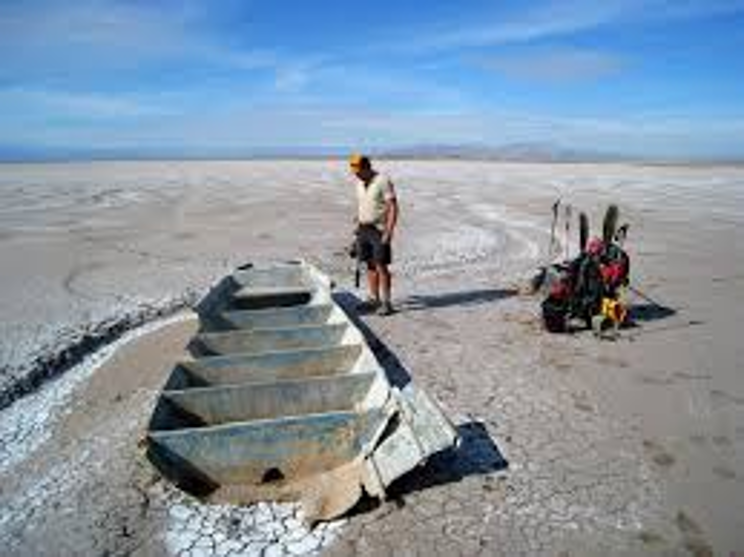
This is important: The Colorado River water is all spoken for. It never reaches the Gulf of California. Once upon a time there was a good shrimp harvest at the mouth of the Colorado River. No more.

In the mean time, water is diverted from the Colorado River Basin to the Mississippi River Basin. There the problem is the opposite: What levees to build next to prevent more and more flooding.

Time to shut down the Moffat Tunnel.


CO2 concentration has increased 50% since pre-industrial times. Is that good or bad?


As CO2 warms up the poles

burned oil, gas and coal play their roles.

CO2 is still good;

makes plants green, grows more food,

and clouds are the climate controls.

Greta Thunberg, 17; Times person of the year 2019 was at it again, this time in Davos at the annual World Economic Forum. She was allowed to give a 30 minute speech to all the dignitaries assembled, who had generated 18090 metric tons of CO2 (source CNN) getting there in their jets. Her message was:

“Let’s be clear. We don’t need a ‘low carbon economy.’ We don’t need to ‘lower emissions,” … “Our emissions have to stop if we are to have a chance to stay below the 1.5-degree target,”  (The New York Times.)

We have experienced a 50% increase in CO2 levels since the beginning of industrialization. In the last 30 years the level has risen 17%, from about 350 ppm to nearly 410 ppm. This is what scares people. Is is time to panic and stop carbon emissions altogether as Greta Thunberg suggested?

As if on cue the climate models have been adjusted, and they suddenly show a much higher rate of temperature increase, in this case what is supposed to happen to global temperatures for a doubling of CO2 from pre-industrial times, from 270ppm to 540ppm.


There are two ways to approach this problem. The models make certain assumptions about the behavior of the changing atmosphere and model future temperature changes. This is the approach from IPCC for the last 32 years. These models are all failing miserably when compared to actual temperature changes.

The other way i to observe what is actually happening to our temperature over time as the CO2 increases. We have 50 years of excellent global temperature data, so with these we can see where, when and by how much the earth has warmed.

The most drastic temperature rise on earth has been in the Arctic above the 80th latitude. In the winter of 2018 it was 8C above the 50 year average. See charts from the Danish Meteorological Institute:


Note, there is no increase at all in the summer temperatures!


The fall temperature saw an increase of 5C and the spring temperature saw an increase of about 2.5C.

The 2020 winter has so far seen an about 4c increase Source: DMI.


This 8C winter rise of temperature is significant, most would even say alarming, but my response is, why is that?

To get the answer we must study molecular absorption spectroscopy and explain a couple of facts for the 97% of all scientists who have not studied molecular spectroscopy. IPCC and most scientists claim that the greenhouse effect is dependent on the gases that are in the atmosphere, and their combined effect is additive according to a logarithmic formula. This is true up to a certain point, but it is not possible to absorb more than 100% of all the energy available in a certain frequency band! For example: If water vapor absorbs 90% of all incoming energy in a certain band, and CO2 absorbs another 50% of the energy in the same band, the result is that 95% is absorbed, (90% + 50% * (100% – 90%)),  not 140%, (90% + 50%).

The following chart shows both CO2 and H2O are absorbing greenhouse gases, with H20 being the stronger greenhouse gas, absorbing over a much wider spectrum, and they overlap for the most part. But it also matters in what frequency range s they absorb.


For this we will have to look at the frequency ranges of the incoming solar radiation and the outgoing black body radiation of the earth. It is the latter that causes the greenhouse effect. Take a look at this chart:


The red area represents the observed amount of solar radiation that reaches the earth’s surface. the white area under the red line represents radiation absorbed in the atmosphere. Likewise, the blue area represents the outgoing black body radiation that is re-emitted. The remaining white area under the magenta, blue or black line represents the retained absorbed energy that causes the greenhouse effect.

Let us  now take a look at the Carbon Dioxide bands of absorption, at 2.7, 4.3 and 15 microns. Of them the 2.7 and 4.3 micron bands absorb where there is little black body radiation, the only band that counts is at 15 microns, and that is in a band where the black body radiation has its maximum. However it is also in a band where water vapor also absorb, not as much as CO2,only about 20% to 70% as much. Water vapor or absolute humidity is highly dependent on the temperature of the air, so at 30C there may be 50 times as much water vapor, at 0C there may be ten times as much water vapor, and at -25C there may be more CO2 than water vapor. At those low temperatures the gases are mostly additive. In the tropics with fifty times more water vapor than CO2, increased CO2 has no influence on the temperature whatsoever. Temperature charts confirm this assertion:


Here the temperature in the tropics displays no trend whatsoever. It follows the temperature of the oceans, goes up in an el nino and down in a la nina. The temperature in the southern hemisphere shows no trend. In the northern temperate region there is a slight increase, but the great increase is occurring in the Arctic. There is no increase in the Antarctic yet even though the increase in CO2 is greater in the Antarctic and the winter temperature in the Antarctic is even lower than in the Arctic. So CO2 increase cannot be the sole answer to the winter temperature increase in the Arctic.

There is the obvious answer. When temperatures increase the air can contain more moisture and transport even more moisture from the tropics,all the way to the arctic, where it ends up as snow. Is the snow increasing in the Arctic?

Let us see what the snow statistics show. These are from the Rutgers snow lab.

The fall snow extent is increasing, and has increased by more than 2 percent per year.


The winter snowfall has also increased but only by 0.04 percent per year. The snow covers all of Russia, Northern China, Mongolia, Tibet, Kashmir and northern Pakistan, Northern Afghanistan, Northern Iran, Turkey, Part of Eastern Europe, Scandinavia, Canada, Alaska, Greenland and part of Western and Northern United States.

In the spring on the other hand the snow pack is melting faster, about 1.6 percent less snow per year. One of the major reasons for an earlier snowmelt is that the air is getting dirtier, especially over China, and to some extent Russia. The soot from burning coal and mining and manufacturing changes the albedo of the snow. The soot is visible on old snow all the way up to the North Pole. The other reason is that the poles are getting warmer. In the fall and winter it is mostly due to increased snowfall, but in the spring, as soon as the temperature rises over the freezing point, melting occurs.

So the warming of the poles, far from being an impending end of mankind as we know it, may even be beneficial. Warmer poles in the winter means less temperature gradient between the poles and the tropics, leading to less severe storms. They will still be there, but less severe.

There is one great benefit of increased CO2, the greening of the earth.

Thanks to this greening, done with only the fertilizer of CO2 the earth can now keep another 2 billion people from starvation, not to mention what it does to plants and wildlife.

Having said that, I am still a conservationist. Coal, oil and gas will run out at some time, and I for one would like to save some for my great grandchildren, not yer born. In addition I would like to minimize the need for mining, which can be quite destructive.

The best solution is to switch most electricity generation to Thorium molten salt nuclear power. There are multiple reasons why this should be done as a priority.

Twenty-five reasons to rapidly develop Thorium based Nuclear Power generation.

We need badly to develop and build Thorium based molten salt fast breeder nuclear reactors to secure our energy needs in the future. Lest anyone should be threatened by the words fast breeder, it simply means it uses fast neutrons instead of thermal neutrons, and breeder means it produces more fissible material than it consumes, in the case of Thorium the ratio is about 1.05.

1. A million years supply at today’s consumption levels.

2. Thorium already mined, ready to be extracted.

3. One ten-thousandth of the TRansUranium waste compared to a U-235 based fast breeder reactor.

4. Thorium based nuclear power produces Pu-238, needed for space exploration.

5. Radioactive waste from an LFTR decays down to background radiation in 300 years compared to a million years for U-235 based reactors.

6. Thorium based nuclear power is not suited for making nuclear bombs.

7. Produces isotopes that helps cure certain cancers.

8. Molten Salt Thorium Reactors are earthquake safe.

9. Molten Salt Thorium Reactors cannot have a meltdown, the fuel is already molten.

10. Molten Salt Nuclear Reactors have a very high negative temperature coefficient leading to a safe and stable control.

11. Atmospheric pressure operating conditions, no risk for explosions.

12. Virtually no spent fuel problem, very little on site storage or transport.

13. Thorium Nuclear Power generators  scale  beautifully from small portable generators to full size power plants.

14. No need for evacuation zones, can be placed near urban areas.

15. Liquid Fluoride Thorium Reactors will work both as Base Load and Load Following power plants.

16. Liquid Fluoride Thorium Reactors will lessen the need for an expanded national grid.

17. Russia has an active Thorium program.

18. China is having a massive Thorium program.

19. India is having an ambitious Thorium program.

20. United States used to be the leader in Thorium usage. What happened?

21. With a Molten Salt Reactor, accidents like the Three Mile Island disaster will not happen.

22. With a Molten Salt Reactor, disasters like Chernobyl are impossible.

23. With Molten Salt Reactors, a catastrophe like Fukushima cannot happen.

24. Produces electrical energy at about 4 cents per KWh.

25. Can deplete some of the existing radioactive waste and nuclear weapons stockpiles.


It is groundhog day, and the verdict is: Early Spring and Four more years of Donald Trump, a Limerick.

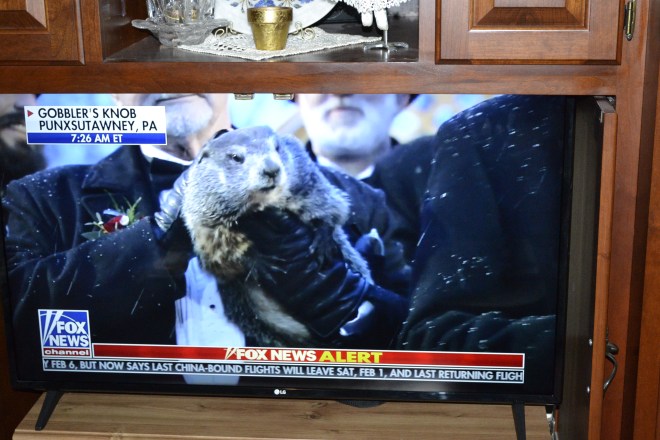
It is 7.26 the morning of February 2, palindrome day, 02022020 in Punxutawney, Pennsylvania and snowing lightly. The groundhog is out and he didn’t see his shadow, but he blinked and saw something else:

Punxutawney has forecaster Phil,

and the groundhog’s prediction said: Still

four more years of Don Trump

as he tweets on the stump,

the acquittal proclaims people’s will.

_DSC1200

_DSC1202

_DSC1204


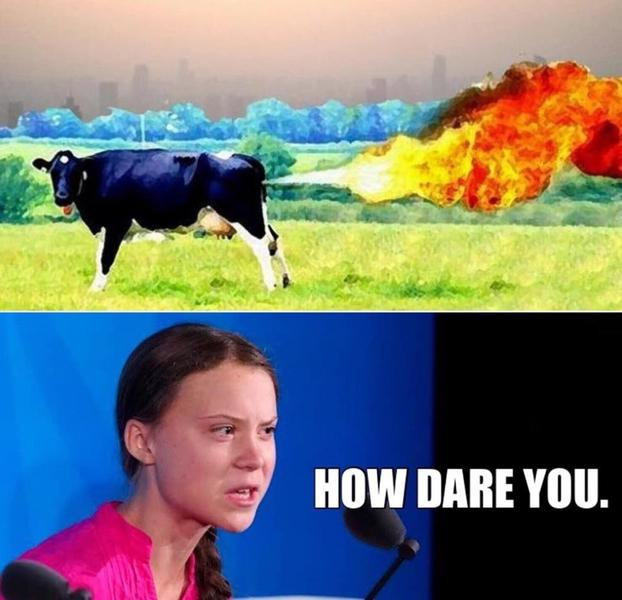
Breaking wind news. Do not worry about methane.

Break wind is the habit of cows,

far more than clean air act allows.

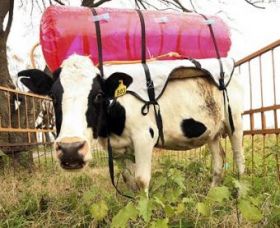
Let’s collect all their gas,

give the cows some pizzazz;

the food a methanotrop chows.


Gretacowbreak


Fear not, dear Greta: This is the solution.

On second thought it isn’t. Methane, even if it is a much stronger greenhouse gas than even CO2 when analyzed by itself , is an irrelevant gas.

Water vapor has already absorbed the very same infrared radiation that Methane might have absorbed. (You cannot absorb more than 100% of the radiation emitted in any given band)

Guest essay by Dr. Tom Sheahen

Q: I read that methane is an even worse greenhouse gas than carbon dioxide, and cattle are a big source of methane emissions. How are they going to regulate that? Not just cattle, but dairy cows as well! That doubles the worry.

Fortunately, there is really nothing to worry about, scientifically. The main thing to worry about is over-reacting politicians and another layer of unnecessary government regulations.  

To understand methane’s role in the atmosphere, first it’s necessary to understand what absorption means. When light passes through a gas (sunlight through air, for example), some molecules in the gas might absorb a photon of light and jump up to an excited state. Every molecule is capable of absorbing some particular wavelengths of light, and no molecule absorbs all the light that comes along. This holds true across the entire electromagnetic spectrum – microwave, infrared, visible, and ultraviolet.

The process of absorption has been studied in great detail. In a laboratory set-up, a long tube is filled with a particular gas, and then a standard light is set up at one end; at the other end of the tube is a spectrometer, which measures how much light of each wavelength makes it through the tube without being absorbed. (Mirrors are placed so as to bounce the light back and forth several times, making the effective travel path much longer; this improves the precision of the data.) From such measurements, the probability of radiation being captured by a molecule is determined as a function of wavelength; the numerical expression of that is termed the absorption cross-section.

If you carried out such an experiment using ordinary air, you’d wind up with a mixture of results, since air is a mixture of various gases. It’s better to measure one pure gas at a time. After two centuries of careful laboratory measurements, we know which molecules can absorb which wavelengths of light, and how likely they are to do so.

All that data is contained in charts and tables of cross-sections. Formerly that meant a trip to the library, but nowadays it’s routinely downloaded from the internet. Once all the cross-sections are known, they can be put into a computer program and the total absorption by any gas mixture (real or imaginary) can be calculated.

The many different molecules absorb in different wavelength regions, known as bands. The principal components of air, nitrogen and oxygen, absorb mainly ultraviolet light. Nothing absorbs in the visible wavelength range, but there are several gases that have absorption bands in the infrared region. These are collectively known as the GreenHouse Gases (GHG), because absorbing infrared energy warms up the air – given the name greenhouse effect.

The adjacent figure shows how six different gases absorb radiation across the infrared range of wavelengths, from 1 to 16 microns (mm). The vertical scale is upside-down: 100% absorption is low, and 0% absorption (i.e., transparency) is high.

methane_absorption_spectra

It’s important to realize that these are shown on a “per molecule” basis. Because water vapor (bottom bar of the figure) is much more plentiful in the atmosphere than any of the others, H­2O absorbs vastly more energy and is by far the most important greenhouse gas. On any given day, H2O is a percent or two of the atmosphere; we call that humidity.

The second most important greenhouse gas is carbon dioxide (CO2), which (on a per-molecule basis) is six times as effective an absorber as H2O. However, CO2 is only about 0.04% of the atmosphere (400 parts per million), so it’s much less important than water vapor.

Now it’s necessary to scrutinize the figure very carefully. Looking across the wavelength scale at the bottom, H2O absorbs strongly in the 3-micron region, and again between 5 and 7 microns; then it absorbs to some degree beyond about 12 microns. CO2 has absorption bands centered around 2.5 microns, 4.3 microns, and has a broad band out beyond 13 microns. Consequently, CO2 adds a small contribution to the greenhouse effect. Notice that sometimes CO2 bands overlap with H2O bands, and with vastly more H2O present, CO2 doesn’t matter in those bands.

Looking at the second graph in the figure, methane (CH4) has narrow absorption bands at 3.3 microns and 7.5 microns (the red lines). CH4 is 20 times more effective an absorber than CO2in those bands. However, CH4 is only 0.00017% (1.7 parts per million) of the atmosphere. Moreover, both of its bands occur at wavelengths where H2O is already absorbing substantially. Hence, any radiation that CH4 might absorb has already been absorbed by H2O. The ratio of the percentages of water to methane is such that the effects of CH4 are completely masked by H2O. The amount of CH4 must increase 100-fold to make it comparable to H2O.

Because of that, methane is irrelevant as a greenhouse gas. The high per-molecule absorption cross section of CH4 makes no difference at all in our real atmosphere.

Unfortunately, this numerical reality is overlooked by most people. There is a lot of misinformation floating around, causing needless worry. The tiny increases in methane associated with cows may elicit a few giggles, but it absolutely cannot be the basis for sane regulations or national policy.

So, dear Greta, go back to school and learn some physics, some chemistry, and learn how nature really functions. Then you would not be as worried any more. There is a great temperature regulator, called water vapor. Yes, water vapor is the most important greenhouse gas, and without it the earth would be so cold that no life would be possible. Not only that, but water vapor is a condensing gas, and it forms clouds, which are the main regulator of temperature here on earth.

Have you ever noticed that it is cooler in the shadow?

And by the way, what are methanotrop bacteria?

Methane-utilizing bacteria (methanotrophs) are a diverse group of gram-negative bacteria that are related to other members of the Proteobacteria. These bacteria are classified into three groups based on the pathways used for assimilation of formaldehyde, the major source of cell carbon, and other physiological and morphological features. The type I and type X methanotrophs are found within the gamma subdivision of the Proteobacteria and employ the ribulose monophosphate pathway for formaldehyde assimilation, whereas type II methanotrophs, which employ the serine pathway for formaldehyde assimilation, form a coherent cluster within the beta subdivision of the Proteobacteria. Methanotrophic bacteria are ubiquitous. The growth of type II bacteria appears to be favored in environments that contain relatively high levels of methane, low levels of dissolved oxygen, and limiting concentrations of combined nitrogen and/or copper. Type I methanotrophs appear to be dominant in environments in which methane is limiting and combined nitrogen and copper levels are relatively high. These bacteria serve as biofilters for the oxidation of methane produced in anaerobic environments, and when oxygen is present in soils, atmospheric methane is oxidized. Their activities in nature are greatly influenced by agricultural practices and other human activities. Recent evidence indicates that naturally occurring, uncultured methanotrophs represent new genera. Methanotrophs that are capable of oxidizing methane at atmospheric levels exhibit methane oxidation kinetics different from those of methanotrophs available in pure cultures. A limited number of methanotrophs have the genetic capacity to synthesize a soluble methane monooxygenase which catalyzes the rapid oxidation of environmental pollutants including trichloroethylene.

Sounds excitig, doesn’t it. Harvesting methane, put it into warm water (about 45C) and let the bacteria do their job, producing fish food. It may even be profitable.


It is soot more than global warming that melts the Arctic ice. The Finnish President Sauli Niinistö and the Arctic Council said so.

President Sauli Niinistö addressed the Finnish Climate Summit in Helsinki on June 13, 1918, calling on the Arctic Council member states to meet to tackle black carbon emissions in the far north.

Niinistö said Finland wants to see “a first-ever Arctic Summit, bringing together the heads of state and government from the eight members of the Council: the United States, Russia, Canada and the five Nordic states,” adding that “a firm high-level commitment to reduce black carbon emissions in the Arctic would be welcome news for the environment”. Black carbon refers to soot deposits that are darkening Arctic ice. As a result, it begins absorbing heat rather than reflecting sunlight, thus speeding up global warming.

He repeated this claim in his joint press conference with President Donald Trump on October 2, 2019, and got an understanding nod from Mr Trump, who went on to say that some countries, not bordering the Arctic should stay out and not try to militarize it. He did not mention the countries. Could he have meant China?

Now take a look at what is really happening in the northern hemisphere. The snow begins to fall earlier and earlier. This is the fall snow coverage

The winter snow coverage is also increasing, hinting at a cooling trend of the earth.

But the spring melt comes earlier and earlier, hinting at a warming trend.

As was mentioned earlier the Arctic Council members would like China to stay out of the Arctic. But China, being the world’s largest polluter by far is belching out soot particles at an alarming rate. They form toxic clouds, and some of them travel all the way up in the Arctic before they snow out, depositing the soot.

Image result for the brown cloud over China

The air is polluted way above what we can imagine.

Image result for the brown cloud over China

This is what makes the arctic ice melt, not global warming!

Image result for soot on arctic ice

Thanks, China!