A Climate Realist’s not so short Answers to Hard Questions About Climate Change. Question 2 (of 16) How much trouble are we in?

NOV. 28, 2015 gave his answers to 16 questions in the N.Y. Times regarding Climate Change. This Climate realist added his answer.

 Answers to Question 1: How much is the planet heating up?

Justin Gillis answer to Question 2. How much trouble are we in?

“For future generations, big trouble.

The risks are much greater over the long run than over the next few decades, but the emissions that create those risks are happening now. Over the coming 25 or 30 years, scientists say, the climate is likely to resemble that of today, although gradually getting warmer. Rainfall will be heavier in many parts of the world, but the periods between rains will most likely grow hotter and therefore drier. The number of hurricanes and typhoons may actually fall, but the ones that do occur will draw energy from a hotter ocean surface, and therefore may be more intense, on average, than those of the past. Coastal flooding will grow more frequent and damaging.

Longer term, if emissions continue to rise unchecked, the risks are profound. Scientists fear climate effects so severe that they might destabilize governments, produce waves of refugees, precipitate the sixth mass extinction of plants and animals in Earth’s history, and melt the polar ice caps, causing the seas to rise high enough to flood most of the world’s coastal cities.

All of this could take hundreds or even thousands of years to play out, conceivably providing a cushion of time for civilization to adjust, but experts cannot rule out abrupt changes, such as a collapse of agriculture, that would throw society into chaos much sooner. Bolder efforts to limit emissions would reduce these risks, or at least slow the effects, but it is already too late to eliminate the risks entirely.”

My answer to  question: 2. How much trouble are we in?
For climate alarmists: big trouble, for climate realists, not anything out of the ordinary as to temperature rise.
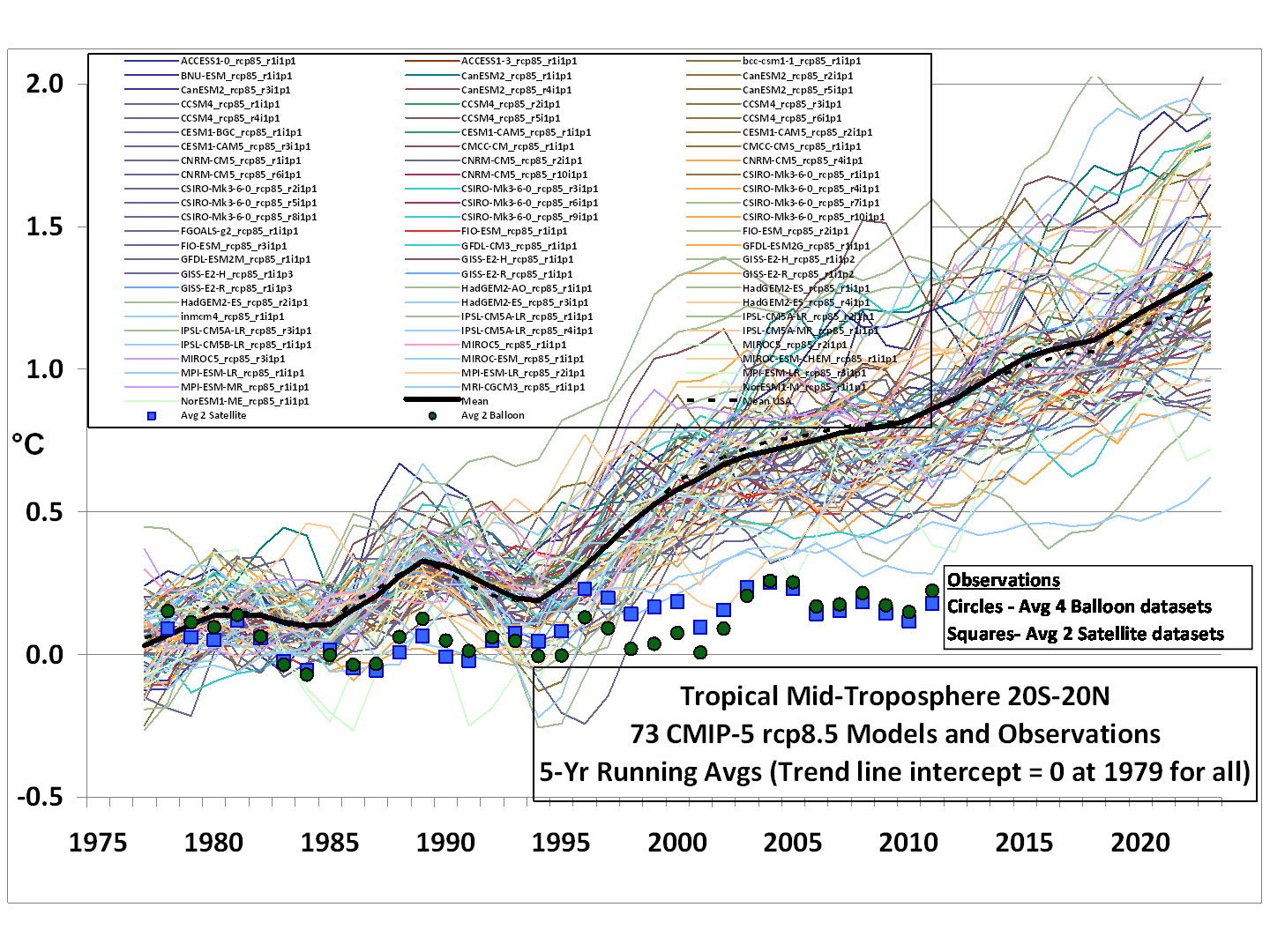
The temperature rise is predicted using models that assume the major effect on the climate is from rising CO2 and ignore other factors such as a changing cloud cover. The imbalance due to rising CO2 levels is less than 2W/m2, and every percent change in cloud cover makes a larger difference. Here is the performance of 73 climate models versus observations.
There is almost no correlation between models and observations. What is the problem? Looking at how the models model clouds gives a hint:The models are way off on the amount of clouds. Antarctica is almost cloud free and the Arctic has plenty of clouds. This means the models totally underestimate the effects of water vapor (the source of clouds) and overestimate the effects of rising CO2.  It turns out that clouds are the major stabilizer of the climate on the high end, thanks to their high negative feedback – more clouds, cooler climate. This means that even with a doubling of the CO2 levels we will not even get back to even the Medieval warm period. We are in a long cooling trend.
No such feedback occurs when it cools, rather more snow means higher albedo which leads to a new ice age. More CO2 will delay the onset of the next ice age, but will not prevent it. Fear not, the next ice age is probably more than 5000 years away.

A Climate Realist’s not so short Answers to Hard Questions About Climate Change. Question 1 (of 16) How much is the planet heating up?

1. How much is the planet heating up?

As of February 2016, the Earth has warmed about 1.8 degrees Fahrenheit since 1880, when records began at a global scale. That figure includes the surface of the ocean. The warming is greater over land, and greater still in the Arctic and parts of Antarctica, but there is very little warming in the tropics.

Since pre-industrial times the CO2 level has increased from 280 ppm to 405 ppm, an increase of about 45%, and we know that for every doubling of CO2 temperatures will rise about 1.6 degrees F unless other factors dominate, such as positive or negative temperature feedbacks.

During ice-ages global temperatures hover around 10 degrees F colder with CO2 levels around 185 ppm. Global temperature was about 6 degree F colder than today and in about 4000 year time temperature rose rapidly and we came out of the ice age. During that time, and with a 300 to 800 year delay CO2 rose from 185 ppm to 265 ppm, a 43% rise.  Coming out of the ice age, if CO2 was the only factor,  the effect of doubling CO2 would increase global temperatures by 11.5 degrees F.

Al Gore saw the charts, and got so alarmed that he wrote “Earth in the balance.” What he didn’t take into account was that the major rise in temperature was not due to the increasing CO2, but the loss of albedo when the ice melted. CO2 played a supporting role, a lagging one. Then, around 9000 years ago temperatures stopped rising, CO2 levels stabilized and we entered a period of relative stability. What happened?

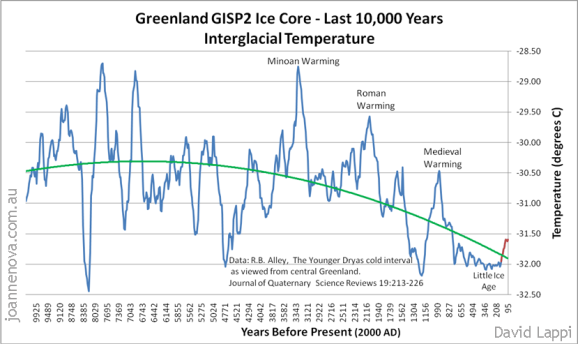
The albedo came back, this time in the form of increasing clouds. Once the oceans got warmer and stabilized, there was enough water vapor in the air to make more clouds, and so stabilize temperature. Since then temperatures have been on a slow decline, and the trend was accelerating until the ” little ice age”. There were 3 notable warming periods, the Minoan, the Roman, and the Medieval warming period.

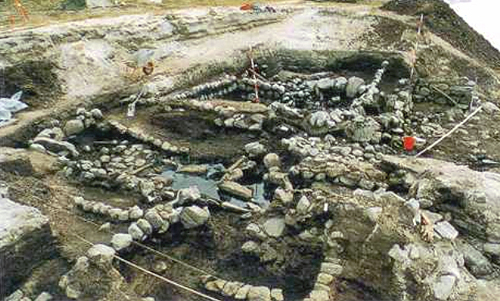
During the Roman warm period wine grapes were grown almost up to the Hadrian Wall. It is well documented, and in Northhamptonshire, England there were at least 9 flourishing wineries..

The Roman Northamptonshire wine
was good, not excessively fine.
So it just goes to show
that Al Gore does not know
of Climate Change past, that’s my line.

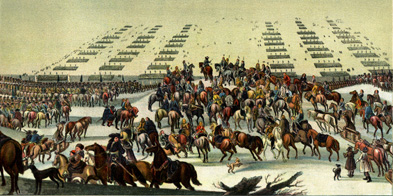
The the dark ages came and grapes no longer ripened in England. During the Medieval Warm Period there was at least one cheese farm on Greenland “Gården under sanden”, abandoned as the glaciers regrew, starting the “Little Ice Age”. During the little ice age it got so cold, that in Jan 1658 the Swedish army crossed the Great Belt of Denmark over ice, canons and all,  and sacked Copenhagen. We are still recovering from the “little ice age.” 2016 may have been a warm year, but most years since the ice age were warmer. See Chart.Greenlandgisp-last-10000-newWe are still in the sweet spot of a remarkable stable Climate, only more CO2 will save us from a new Ice Age. We are not yet back to the Medieval warming period, much less the Roman and even less the Minoan. A doubling of CO2 will not get us back to the Roman warming period since the negative feedback from clouds will dominate and limit the temperature rise.

As to the fear mongering claim that “The heat accumulating in the Earth because of human emissions is roughly equal to the heat that would be released by 400,000 Hiroshima atomic bombs exploding across the planet every day,” I can only say that the energy from the sun is equivalent to over 25oo Hiroshima bombs per second, or about 540 times as much as comes from human energy production, about 0.2%, hardly anything to worry about.

Answers to Question 2. How much trouble are we in?

Answers to Question 3. Is there anything I can do?

Answers to Question 4. What’s the optimistic scenario?

Answers to Question 5. Will reducing meat in my diet help the climate?

Answers to Question 6. What’s the worst-case scenario?

Answers to Question 7. Will a tech breakthrough help us?

Answers to Question 8. How much will the seas rise?

Answers to Question 9. Are the predictions reliable?

Answers to Question 10. Why do people question climate change?

Answers to Question 11. Is crazy weather tied to climate change?

Answers to Question 12. Will anyone benefit from global warming?

Answers to Question 13. Is there any reason for hope?

Answers to Question 14. How does agriculture affect climate change?

Answers to Question 15. Will the seas rise evenly across the planet?

Answers to Question 16. Is it really all about carbon?


Change of tune in next week’s G20 meeting on Climate Change, a Limerick.

G20 to meet in Black Forest

Sweet unity  no longer chorused

The encouraging word

in the Paris accord

Mnuchin to farce metamorphosed.

(Bloomberg) — Finance ministers for the U.S., China, Germany and other members of the Group of 20 economies may scale back a robust pledge for their governments to combat climate change, ceding efforts to the private sector.

Citing “scarce public resources,” the ministers said they would encourage multilateral development banks to raise private funds to accomplish goals set under the 2015 Paris climate accord, according to a preliminary statement drafted for a meeting that will be held in Germany next week.

The statement, obtained by Bloomberg News, is a significant departure from a communique issued in July, when finance ministers urged governments to quickly implement the Paris Agreement, including a call for wealthy nations to make good on commitments to mobilize $100 billion annually to cut greenhouse gases around the globe.

“It basically says governments are irrelevant. It’s complete faith in the magic of the marketplace,” John Kirton, director of the University of Toronto’s G-20 Research Group, said in an interview. “That is very different from the existing commitments they have repeatedly made.”

The shift in tone comes as U.S. President Donald Trump’s Treasury Secretary, Steven Mnuchin, prepares for his first G-20 meeting, scheduled for March 17 to 18 in the spa town of Baden-Baden. While European nations including Germany have been at the forefront of combating global warming, Trump has called climate change a hoax.

The Republican president vowed during his campaign to “cancel” the Paris agreement but has said little about the deal since taking office. His cabinet members, meanwhile, have sent mixed signals. U.S. Secretary of State Rex Tillerson said the U.S. should keep a seat at the table for international climate talks. Scott Pruitt, the head of the Environmental Protection Agency, on Thursday expressed doubt that humans were to blame for global warming and called the Paris agreement a “bad deal” for the U.S.

The most notable element of the draft is what’s missing. The statement issued after the G-20 finance ministers and central bank governors meeting in July dedicated 163 words to the Paris Agreement, pushing nations to bring the deal into force, meet emissions targets and fulfill financial pledges. This current draft dedicates just 47 words to the agreement, focusing exclusively on development banks raising private funds, without mentioning government financial support.

Germany, as the meeting’s host, leads the process of writing the statement, which will eventually be adopted via consensus by all 19 nations plus the European Union. The German finance ministry declined to comment on the draft.

“The most charitable thing to say is they’re waiting to see where Donald Trump actually lands by the time they get in Hamburg and thus, doing nothing to annoy the incoming American Treasury Secretary,” Kirton said.

German Chancellor Angela Merkel, who holds the rotating presidency of the G-20, has signaled that she would use the forum to push Trump on climate issues. The two leaders are scheduled to meet in Washington March 14.

“The takeaway is it clearly puts less emphasis on climate finance as a priority than last year’s did,” Alden Meyer, director of policy at the Union of Concerned Scientists, said in an interview. “It doesn’t talk about government action. That is a significant step back from what countries agreed to in Paris.”

Full statement: https://www.bloombergquint.com/politics/2017/03/09/g-20-document-shows-governments-retreating-from-climate-funding

Greenpeace protest got fertilized. A Limerick.

Aroma from countryside Lancashire;

the farmer gave Greenpeace its hire.

Emma Thompson got sprayed

she got frackin’ afraid.

Her bake-off, frack free, reeked of mire.

Source, The Telegraph: An angry farmer attempted to spray Oscar-winning actress Emma Thompson with manure on Wednesday after she broke a court injunction to stage a protest against fracking on his land. Ms Thompson and her sister Sophie entered a field on the Lancashire farm, where energy company Cuadrilla is planning to frack for shale gas, and baked renewable energy-themed cakes in a Greenpeace-backed protest stunt. An injunction has been in place banning protesters from the land near Preston since 2014 .The farmer, who was said to be “very upset” about being prevented from getting on with work in the field, proceeded to drive a muck-spreader around the protesters, narrowly missing the Thompson sisters and their cakes. Emma Thompson said she was staging the so-called “Frack Free Bake Off” in order to “show the government that we will not allow fracking to scar our countryside and fuel yet more climate change”.  “What better way to do that, here in Britain, than hold a Bake Off?,” she asked.


Bill Nye knows nothing of Climate Change Science. A Limerick.

The Roman Northamptonshire wine

was good, not excessively fine.

So it just goes to show

that Bill Nye does not know

of Climate Change past, that’s my line.

During the Roman warm period wine grapes were grown almost up to the Hadrian Wall, The the dark ages came and grapes no longer ripened in England. During the Medieval Warm Period there was at least one cheese farm on Greenland “Gården under sanden”, abandoned as the glaciers regrew, starting the “Little Ice Age”. We are still recovering from the little ice age. 2016 may have been a warm year, but most years since the ice age were warmer. See Chart.Greenlandgisp-last-10000-newWe are still in the sweet spot of a remarkable stable Climate, only more CO2 will save us from a new Ice Age.

Check this video:

It is true that human activity causes climate change, and as for CO2, it is all to the good. Cutting down rain forests in Borneo to produce bio-fuel is not.

Does this make me a denier?

More trouble for Oroville Dam, a Limerick.

More trouble for Oroville Dam

Debris caused a water log-jam

Got a week-long reprieve

to remove the debris.

A scene of increasing bedlam.

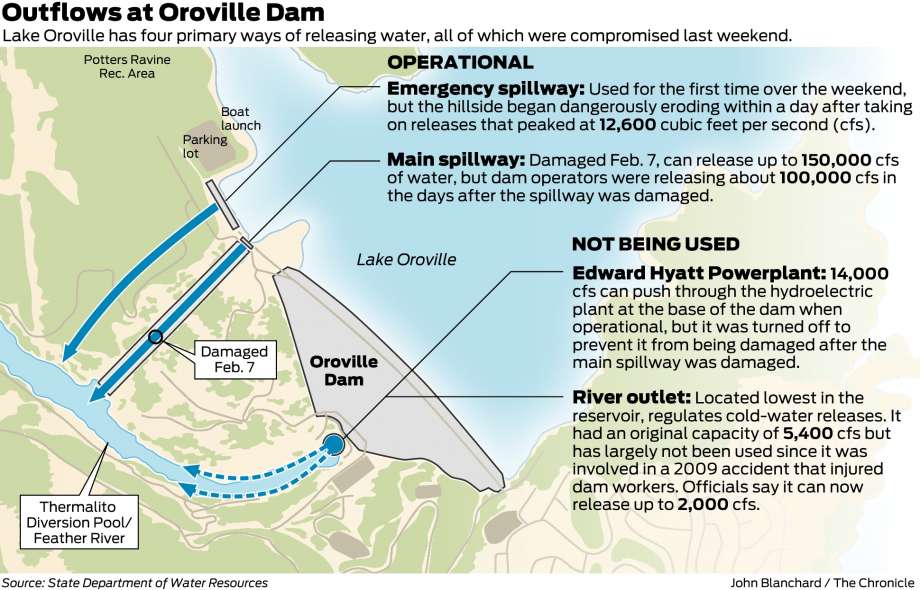
The Oroville Dam is in more trouble than thought. Between one half and one million cubic yards of debris is clogging up the diversion pool causing the power plant to be shut down until it is cleared. The debris is all from erosion from the failing spillways which shows the erosive power of water not properly channelled. In addition they continue work on the emergency spillway and will attempt to shore up the breach in the main spillway.

920x1240It is a race against time. The upstream dams are all full, so all the snow-melt will fill the Oroville Dam back in no time, and there is at least one more major rain event coming down the pineapple express. The snow-pack is already way over normal for the season, so both spillways will have to be used again, and soon.

Will they succeed with the task in time?

Keep the bags packed if you live downstream. And please, pray!

The origin of the 97% consensus, a Limerick.

Canard: Ninety-seven percent,

on Climate Change give their assent

that it is getting warm,

and they want to conform

and blame CO2, they’re hell-bent.

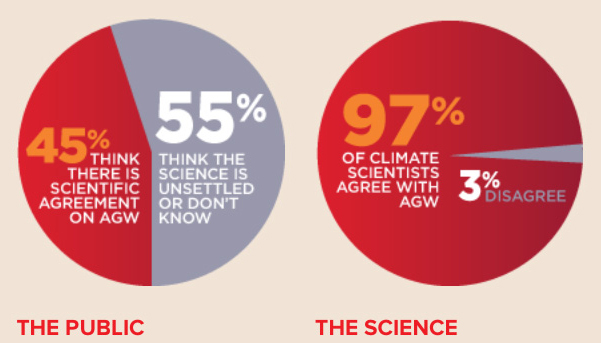
pies-public-scienceHow did the 97% consensus come about, and is this claim valid, or do 55% of the public have a point?  The number 97%  stems from a 2008 master’s thesis by student Maggie Kendall Zimmerman at the University of Illinois, under the guidance of Peter Doran, an associate professor of Earth and environmental sciences. The two researchers obtained their results by conducting a survey of 10,257 Earth scientists, excluding scientists most likely to think that the Sun,  planetary movements or cosmic radiation might have something to do with climate on Earth — such as solar scientists, space scientists, cosmologists, physicists, astronomers and meteorologists.

To encourage a high participation among these remaining disciplines, the two researchers decided on a quickie survey that would take less than two minutes to complete, and would be done online, saving the respondents the hassle of mailing a reply. Nevertheless, most didn’t consider the quickie survey worthy of response — just 3,146, or 30.7%, answered the two key questions on the survey:

1. When compared with pre-1800 levels, do you think that mean global temperatures have generally risen, fallen, or remained relatively constant?
2 Do you think human activity is a significant contributing factor in changing mean global temperatures?

The 10,257 scientists in such disciplines as geology, geography, oceanography, engineering, paleontology and geochemistry were somehow deemed more worthy of being included in the consensus. The two researchers also decided that only scientists employed by an academic or a governmental institution  would qualify. Neither was academic qualification a factor — about 1,000 of those surveyed did not have a PhD, some didn’t even have a master’s diploma.

The questions posed to the Earth scientists were actually non-questions. Nearly all scientists know the planet has warmed since the 1700s, and almost all think humans have contributed in some way to the recent warming — quite apart from carbon dioxide emissions, few would doubt that urbanization,  clearing of forests for agricultural purposes,  or misguided irrigation efforts such as the Aral Sea disaster have affected the climate. When pressed for a figure, global warming skeptics might say humans are responsible for 10% or 15% of the warming; some skeptics place the upper bound of man’s contribution at 35%. The skeptics only deny that humans played a dominant role in Earth’s warming.

Surprisingly, just 90% of the Earth scientists who responded to the first question believed that temperatures had risen — I would have expected a figure closer to 100%, since Earth was in the Little Ice Age in the centuries immediately preceding 1800. But perhaps some of the responders interpreted the question to include the past 2,000 years, when Earth was in the Medieval  or Roman Warm Period, when the climate was warmer than today.

As for the second question, 82% of the Earth scientists replied that human activity had significantly contributed to the warming. For openers, the question is a catch-all, is it CO2, pollution, urban development, cutting down of forests, failed irrigation projects or what? Secondly, how much is significantly?

To get up the percentage of positive responses above the 82% they excluded all the Earth scientists whose recently published peer-reviewed research wasn’t mostly in the field of climate change. This subset reduced the number of remaining scientists from over 3,000 to under 300. But the percentage that now resulted still fell short of the researchers’ ideal, so they chose a subset of 77 scientists that in the last 5 years had published multiple, peer reviewed papers, paid for by their respective academic institutions.

Once all these cuts were made, 75 out of 77 scientists of unknown qualifications were left endorsing the global warming orthodoxy. The two researchers, the master’s student and her prof, were then satisfied.

This claim was picked up by politicians and became truth that could not be disputed or you  were called the scum of the earth, worse than terrorists. Many more surveys, all intended to confirm the original claim

ritchie-2_121416The newer surveys also intended to confirm that it is CO2 that is the cause of Anthropogenic Climate Change. Because the U.N. agency IPCC insists that CO2 is the dominant, if not sole factor affecting Climate Change most scientists, eager to maintain funding tended to comply.

Lately there has been exposed one scandal after another has exposed massive data manipulation, from Climate Gate to changing old temperature tables eliminating the heat waves of the 30’s, just to name a few.

So, is there Anthropogenic Global Warming, and if so, is the cause mainly increasing CO2?

The jury is still out.


The Moffat tunnel, Continental theft of water. A Limerick

What flows through the tunnel of Moffat?

It’s water for Denver’s own profit.

When South-West tries to sue.

Will they win, get their due?

I never was much of a prophet.

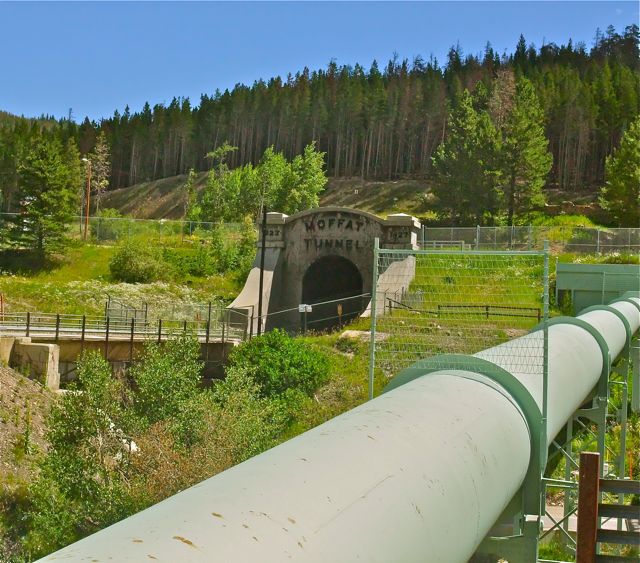
The Moffat tunnel in Colorado, built in 1928 is a six mile railroad and water  tunnel that goes under the continental divide. The water tunnel carries up to 105 acre-feet of water per hour to the City of Denver. The water is taken from the Colorado river watershed, which leaves the South Western states with nearly one million acre-feet less water per year.

When the tunnel was built this was not much of a problem, Nevada had less than 100, 000 inhabitants, Arizona less than 350,000 and California about 3.5 million people. Now Nevada has 25 times as many people, Arizona 15 times as many , and California 10 times as many people, all thirsty for more water.

It is time to stop robbing the South-west of water. Yes Denver has its own water problem, but the South West has much greater problem.

Lake Mead water level is now 140 feet below full capacity, and has been dropping about 10 feet per year, and will run dry unless drastic measures are taken. The Moffat tunnel takes away about 6 feet a year from the filling of Lake Mead.

Yes, thanks to this year’s rain, Lake Mead has recovered somewhat, but the long trend is still ominous.

And by the way, this has nothing to do with Climate Change.

Oroville Dam, a disaster in waiting? A Limerick.

The water from Oroville dam

comes down like a battering ram.

They skipped maintenance, when

it was drought. That was then.

Repairs? Always bill Uncle Sam!

On May 31, 1889 The South Fork dam failed and unleashed 20,000,000 tons of water that devastated Johnstown, PA.  The flood killed 2,209 people, and is remembered as one of the worst dam disasters to have ever befallen innocent and unaware people.

The dam was small by today’s standard, releasing only 16,220 acre-feet of water. Compare this to the water behind Lake Oroville Dam, 3,500,000 acre-feet, and another 370,000 acre feet of rain expected in the next few days.

920x1240

Right now the dam is releasing 80 to 100,000 cubic feet of water a second, or about 2 acre-feet per second, about 6 times the capacity of the power station, which is rated at 835 MW. This means the release is about 5.5 GW of power rushing down and eroding the new spillway channel carved out by up to 7.5 million horse-power of destructive force. Normally this energy is absorbed as heat in a functional spillway, but if unleashed, much of its power is erosion force. The new channel of water, mixed with debris choked the normal water outlet from the power station and its diversion pool, so the power has been turned off since the emergency began.

For now, the main dam seems to be undamaged, but if more rains come, and there are 2 more major storms lined up coming from Japan and Taiwan with torrential rains, so this scare is far from over. Meanwhile, residents downstream are told to have their bags packed, and listen to emergency radio every hour, if the spillway gives way much further, this is going to be big.

The repair bill for damage done so far is probably a quarter billion dollars, not counting the cost of the evacuation. Proper maintenance would probably have cost less than 20 million dollars. This is about par for  California politicians.

The original spillway is now totally diverted by erosion.

la-me-lake-oroville-spillway-pictures-105.jpg

oroville

The spillway while it was still functioning as planned

Lake Oroville dam in more trouble. A Limerick.

Lake Oroville fills up again

Ten trillions more gallons of rain

Will the spillway give way?

It’s too early to say,

while permanent drought fears remain.

In 2005 environmental groups and structural engineers pointed out that the emergency spillway was in dire need of being reinforced, or the whole dam would fail if it was ever used. The claim was ignored, but the stimulus package of 2009 was looking for shovel ready projects, so  more than 32 million dollars was offered for dam repairs, but the Sacramento politicians chose instead to use some of that money on beautification of side-walks and a set of bike-ways for the University of California. Thanks to Climate change the spillway would never be used, and California was entering a state of permanent drought.

So much for spending billions of dollars of climate change research. A quick look at the flood of 1862 would have given them reason to keep the dams in good repairs. Now the cost of repairing Oroville Dam will run into hundreds of millions of dollars.

If a new event like 1862, the total cost to California could be up to 700 Billion dollars, part of that due to failing dams,  unless the dams are reinforced and properly maintained. The rain damage may be bigger than the damage from “the next big earthquake” another sure thing.

Meanwhile, due to debris, the 835 MW power station is out of commission, so all the water has to go down the spillway rather than generating electricity. Lake Oroville Dam has the ideal peak power plant, so they lose more than a million dollars a day in revenue as well.

California is in big trouble, and the politicians are still sticking their heads in the sand hoping it will not happen on their watch.