The Clean Air Act does not include the Green New deal. A Limerick, a historical review, and a look at the future.

Supreme Court decided: No deal;

The Green New Deal they did repeal.

CO2, it is good;

Greens the Earth, makes more food.

The bureaucrats cannot appeal.

While Climate Change is real, I have in a previous blog explained why rising CO2 levels cannot be even a major cause of Climate change, see here Now, if CO2 isn’t it, then what is?

Before we go any further this is my recollection of how we got to where we are today in trying to save the earth with legislation.

When I came to the U.S.A. in 1968 as an immigrant and resident alien I was appalled at the lack of environmental concern. In my native Sweden we had been very concerned for many years about the lacing of seed grain with Mercury as a preservative. The rivers and lakes had been fertilized four times more than agricultural land, the rivers from the Soviet Union and Poland were full of untreated sewage, so much so that the Baltic Sea was in danger of losing its Oxygen. Things were much worse in the U.S. In Lake Ontario the dead fish piled up on what used to be a good beach, and in Lake Erie the situation was even worse, a tributary river caught fire. When pointing out the stench from all the rotting fish one coworker just said: You think this is bad; in WW II the upper Delaware Bay was so polluted from all the refineries that it stripped the paint off the ships that came into Philadelphia harbor. In those days companies just dumped the parts that were left after refining into the river, and to get the air pollution bearable they built higher and higher smokestacks to dilute the pollution over a larger area.

The lawmakers had been concerned about the environment for quite some time, and in 1963 they passed the Clean Air Act. It was slow in being enacted so they decided to promote the importance of clean air (and clean water), so they decided to promote the cause with an Earth Day. The day chosen was to coincide with the 100th anniversary of Lenin’s birth, April 22, 1970. (See here). At that time the greatest concern was the impending ice age unless we cleaned up the air. Worldwide temperature would drop by ten degrees by the year 2000 unless the air was cleaned up. They forced the coal plants to install Sulfur scrubbers, and the trout fishes no longer died, and temperatures started rising again.

Many years ago, around 1977 Dr. James Lovelock bought a number of HP Gas Chromatographs to set up in the most remote corners of the earth to study pollution (especially CFC’s) and its effect on the climate. What he found was an unexpectedly large amount of dimethylsulphide (DMS). He was then a paid consultant for Hewlett Packard Analytical, so he came over from his native England a couple of times a year, always willing to hold a seminar for us engineers working at Hewlett Packard, and then joining us for lunch and continue discussion on a wide range of topics, and at one of them he sprung “Daisy-world” on us before it was published, mostly to see if we could poke holes in his hypothesis. It involved a world that consisted of only two flowers, black daisies and white daisies. The computer simulation started out with a cold world and a weak sun. The sun warmed up until suddenly black daisies appear and cover the earth. This warms the earth some more and white daisies appear. As the sun varies in intensity the mix of white and black daisies changes and this keeps the earth at a stable temperature, as they have different reflective properties. He then went on to say that the whole earth is like a living organism.
Some time later he presented the paper and the next year we asked him how it was received. “You won’t believe it”, he answered. ”Now there are people who actually believe the earth is a living organism. They demand follow-up articles that justifies their belief.” He had partly himself to blame, the name he chose was the GAIA hypothesis, Gaia being the Mother earth Goddess. He succumbed to their demands, and in 1979 he published the book: Gaia: A New Look at Life on Earth. Talking about religion the Mother Earth people now had their goddess, and expressions like. “The earth has a temperature” became commonplace.

In 1983 Margaret Thatcher, the conservative U.K. Prime Minister tried to close down the nationalized coal industry and defeat the Coal unions. She used the argument that CO2 was bad for the environment, and electricity should be generated by anything but coal. After a year she won the fight, and this legitimized the argument that both liberals and conservatives agreed: The major culprit is CO2, and the universal measurement of social responsibility; Carbon Footprint was born.

In the U.S.A. the pressure grew to somehow stop the rise of CO2, and the State of Massachusetts,, joined by the states of California, Connecticut, Illinois, Maine, New Jersey, New Mexico, New York, Oregon, Rhode Island, Vermont and Washington, the cities of New York, Baltimore, and Washington, D.C., the territory of American Samoa, and the organizations Center for Biological Diversity, Center for Food Safety, Conservation Law Foundation, Environmental Advocates, Environmental Defense, Friends of the Earth, Greenpeace, International Center for Technology Assessment, National Environmental Trust, Natural Resources Defense Council, Sierra Club, Union of Concerned Scientists, and the U.S. Public Interest Research Group sued the EPA for not regulating CO2 and some other greenhouse gases. The argument was that since CO2 is a pollutant does fall under the clean air act and can therefore be regulated. The case made its way up the appeals process, and on June 26, 2006, the Supreme Court granted a writ of certiorari. It stated that the CAA gives the EPA the authority to regulate tailpipe emissions of greenhouse gases. However, in the larger issue of regulating greenhouse gases in general it sent it back to lower court for further clarification. The SC denied the EPA this right, which the Appeals Court had approved. The EPA decided to go ahead and regulate Greenhouse Gases anyway, and that is what the latest Supreme court decision was all about. The EPA does not have carte blanche to regulate greenhouse gases unless it is specifically approved under the Clean Air Act. Congress must first do its job and make it part of the CAA.

Dr Lovelock is an interesting fellow, a true scientist. He grew more and more pessimistic about the future of the earth. In a March 2010 interview with The Guardian newspaper, he even said that democracy might have to be “put on hold” to prevent climate change. Then in an April 2012 interview, aired on MSNBC, Lovelock stated that he had been “alarmist”, using the words “All right, I made a mistake,” about the timing of climate change and noted the documentary An Inconvenient Truth and the book The Weather Makers as examples of the same kind of alarmism. Lovelock still believes the climate to be warming although the rate of change is not as he once thought, he admitted that he had been “extrapolating too far.” He believes that climate change is still happening, but it will be felt farther in the future. Of the claims “the science is settled” on global warming he states:

One thing that being a scientist has taught me is that you can never be certain about anything. You never know the truth. You can only approach it and hope to get a bit nearer to it each time. You iterate towards the truth. You don’t know it.

He criticizes environmentalists for treating global warming like a religion.

It just so happens that the green religion is now taking over from the Christian religion.

I don’t think people have noticed that, but it’s got all the sort of terms that religions use … The greens use guilt. That just shows how religious greens are. You can’t win people round by saying they are guilty for putting (carbon dioxide) in the air.

In the MSNBC article Lovelock is quoted as proclaiming:

The problem is we don’t know what the climate is doing. We thought we knew 20 years ago. That led to some alarmist books – mine included – because it looked clear-cut, but it hasn’t happened.

The climate is doing its usual tricks. There’s nothing much really happening yet. We were supposed to be halfway toward a frying world now.

The world has not warmed up very much since the millennium. Twelve years is a reasonable time … it (the temperature) has stayed almost constant, whereas it should have been rising – carbon dioxide is rising, no question about that.

Yes, Dr. Lovelock is still alive at age 102. He was the first to discover the CFC over all the world, but he also found an unexpected amount of dimethylsulphide (DMS) in the atmosphere, and that acted as a condensation point for cloud formation. The concentration was highest in areas rich in nitrates and other “fertilizers” that had been released into the ocean from rivers. The South ocean had the least DMS, while areas with many river outlets had the most. He drew the conclusion that he had been an alarmist. The temperatures are not rising anywhere near as fast as climate models have forecast. We have now 64 years of good temperature data to prove it.

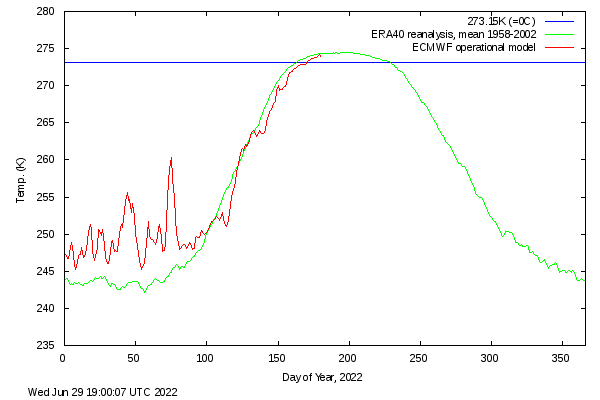
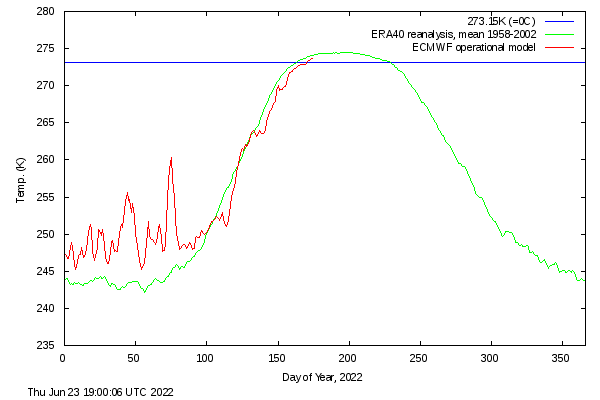
in the South Ocean around Antarctica there is very little DMS, and the South Pole winters, with rising CO2 levels being the dominant climate change factor temperatures are actually decreasing by 2 degree Celsius per century. This would mean we are in a world-wide cooling trend, looking forward to the next ice age. Since base temperatures are getting colder, areas with less rivers fertilizing the oceans will experience less rain, such as the American West coaast from south of San Francisco bay to Santiago de Chile will experience drying conditions, the Mexican Gulf, the Eastern Atlantic, the North Sea, and especially the China east coast and the South china Sea will experience increased precipitation. Because of increased cloudiness the Arctic winters will be warmer, but the Arctic Summers will be marginally cooler above 80 degrees. Source DMI
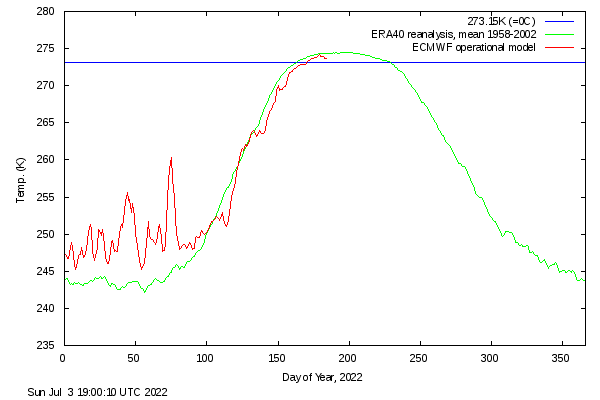
The 2022 winter was above normal (more snow), but sice Apr 10 temps have been below normal.

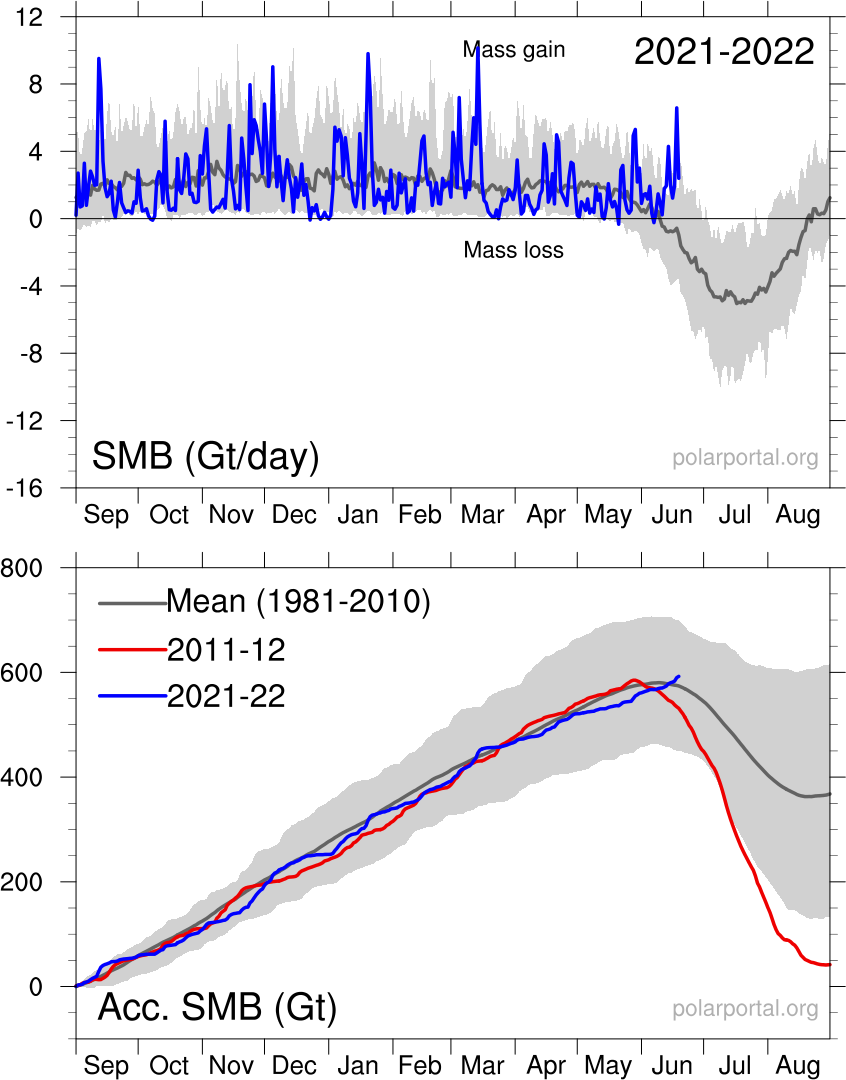
Greenland is starting to accumulate ice again:
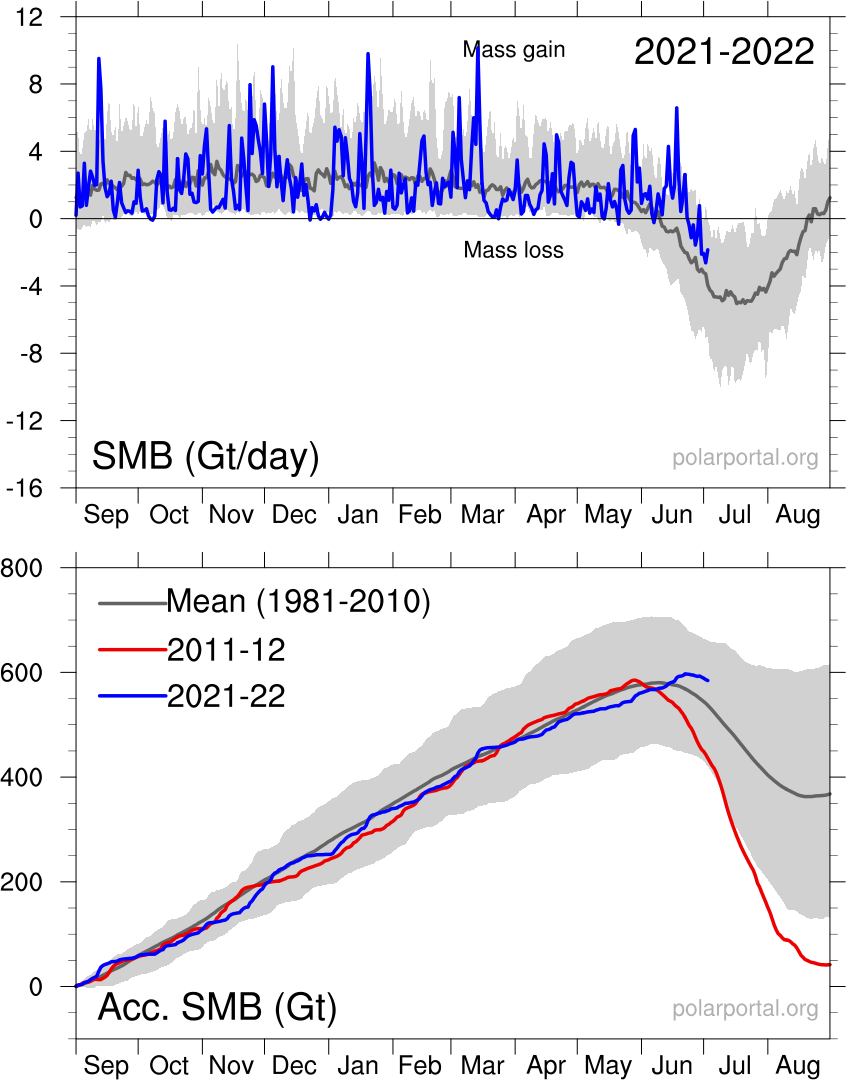
Greenland ice gain.

But for the American South West the situation is bleak. Not only is precipitation expected to decrease, the aquifers are being depleted, lake Mead Lake Powell are at about 30% of capacity, in a few years they will be depleted altogether. Lake San Carlos, which supplies the Phoenix area has been empty since April, no water at all flows down Gila river, wells are starting to run dry. When this happens desertification sets in, erosion increases, springs dry up. When it rains it results in the form of flash floods that further increases erosion. This is a disaster in making.

Yet, there is hope. I am making a proposal:

Build a TransContinental Aqueduct. This will solve the water needs for the upper Western Texas, New Mexico, Arizona, lower California, Mexico and the Lower Colorado River basin.

Build a Trans-Rocky Mountain aqueduct. This will solve some of the water needs for Oklahoma, Kansas, Colorado, upper New Mexico and the Upper Colorado river basin.

Build a South Platte River aqueduct. This will solve the water needs for the greater Denver ares and help preserve the northern Ogallala aquifer.

In further blog entries I will further develop what has to be done.

I will leave you with this teaser:
The Supreme Court ruled 6-3 that the Green New Deal by administrative fiat is unconstitutional. CO2 is not a pollutant, it is on balance good.

The U.S. Supreme Court settled the issue: Whether, in 42 U.S.C. § 7411(d), an ancillary provision of the Clean Air Act, Congress constitutionally authorized the Environmental Protection Agency to issue significant rules — including those capable of reshaping the nation’s electricity grids and unilaterally decarbonizing virtually any sector of the economy — without any limits on what the agency can require so long as it considers cost, nonair impacts and energy requirements.

I have always been very interested in the environment. Nature teaches us so many lessons, the diversity of trees, birds, flowers and wildlife is breathtaking and giving cause to never cease to wonder. It would be a shame to destroy the beauty of it all. Yet we seem to make it worse by concentrating our effort by trying to limit CO2 emissions, rather than tackling the real and more urgent problems.

Let me first explain why I assert that rising CO2 levels, while real is only a minor player in the climate change equation.

The traditional way to approach this scientifically is making climate models. So far, nearly all, except the Russian model have failed to even remotely to predict future temperature changes. IPCC and all their climate models is still failing.

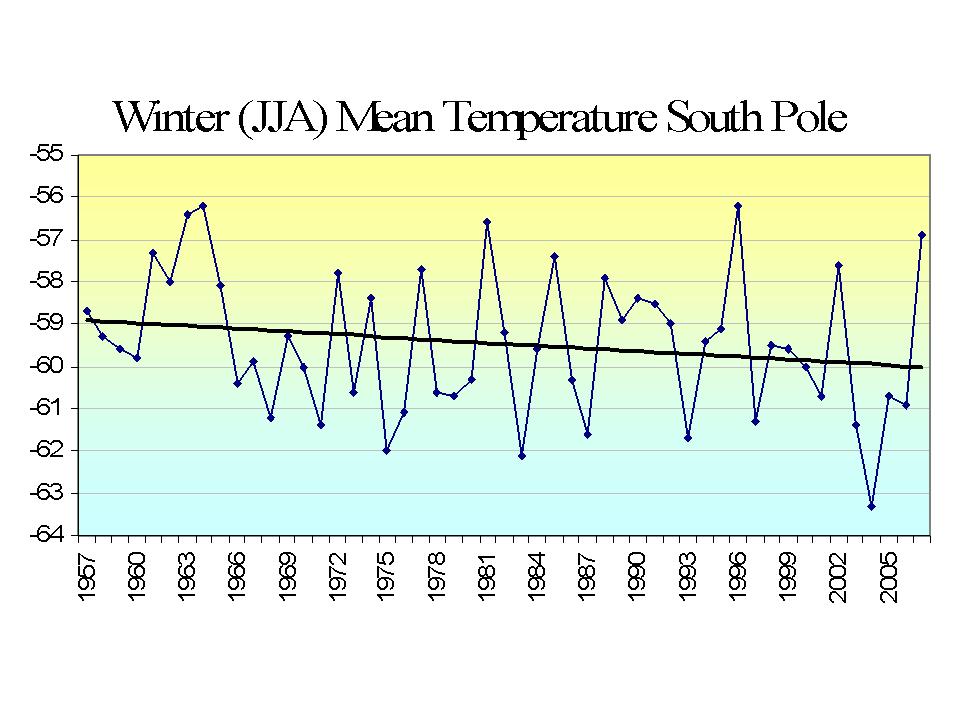
The other approach is to take measurements, and it so happens that we have really good global data for over 60 years. The Amundsen Scott – South Pole weather station, the average temperature of Winter season 2021 (April 2021 – September 2021) reached only -61,0°C / -78°F, and at this temperature CO2 is the dominant greenhouse gas by more than a factor of ten more important than water vapor. We have reliable measurements for the temperature change at the South Pole since 1957. During this time CO2 gas increased 31% to 413ppm, Methane increased 16% to 1.85 ppm and Nitrous oxide decreased, but this is a gas mostly confined to urban areas, and is now below 0.05 ppm worldwide. With CO2 increasing by 31% and water vapor negligible one would expect a temperature rise over 64 years of 0.65 C, or one degree Celsius warmer per century according to extrapolated lab measurements. This is the observed trend:

With 2021 value included the temperature trend is two degrees Celsius cooler per century!

At the South Pole snowfall is negligible in the winter, and for the whole year it is only 1.3 inches. No model would have predicted the cooling trend, so there must be other factors that are are more important, since real measurements beat models every time.

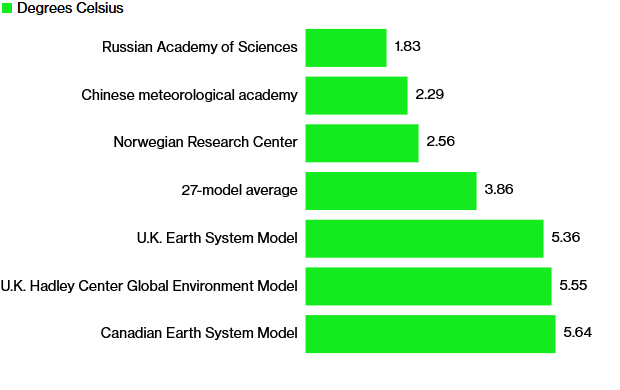
Ignoring the South Pole, the climate models are from time to time adjusted, and as the urgency among the ruling class grew, they suddenly showed a much higher rate of future temperature increases, in this case what is supposed to happen to global temperatures for a doubling of CO2 from pre-industrial times, from 270ppm to 540ppm.

Source: Mark D Zelinka et al. ” Causes of higher Climate sensitivity in CMIP6 models” Geophysical Research Letters.

There are two ways to approach this problem. The models make certain assumptions about the behavior of the changing atmosphere and model future temperature changes. This is the approach IPCC has takenfor the last 34 years. These models all fail miserably when compared to actual future temperature changes.

The other way i to observe what is actually happening to our temperature over time as the CO2 increases. We have over 60 years of excellent global temperature data, so with these we can see where, when and by how much the earth has warmed.

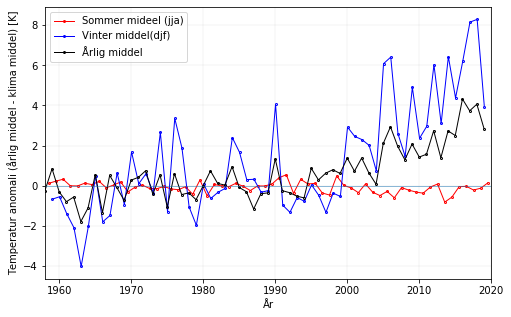
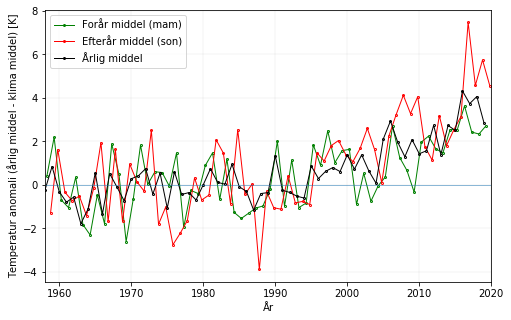
The most drastic temperature rise on earth has been in the Arctic above the 80th latitude. In the winter of 2018 it was 8C above the 50 year average. Since then it has come down to the more normal 4C increase. See charts from the Danish Meteorological Institute:

Summer: red, Jun,Jul, Aug. Winter: green, Dec, Jan, Feb Yearly: black
Note, there are no increase at all in the summer temperatures!

Spring: green, Mar, Apr, May. Fall: red, Sep Oct, Nov. Yearly: black

The fall temperature saw an increase of 4C and the spring temperature saw an increase of about 2.5C.

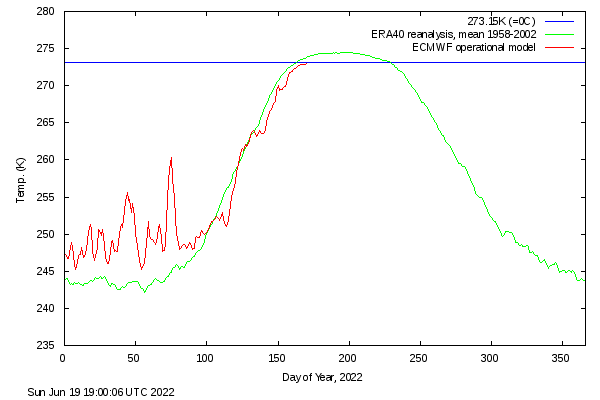
The 2022 winter saw an about 4c increase. The Spring temperatures have from the 10th of March were below or very close to the 1958 – 2002 average. Early Summer temperatures have so far been about 1C below normal. Source: DMI.

There seems to be no cause for immediate panic with the Arctic temperatures. If anything, they seem to moderate. In the Antarctic on the other hand temperatures have been decreasing! As we have seen before, the Amundsen Scott – South Pole weather station, the average temperature of Winter season 2021 (April 2021 – September 2021) reached only -61,0°C / -78°F, which is the coldest value in all-time history! This was 2,5°C /4.5°F degrees lower than the most recent 30-year average at this remote station.

Why are the temperatures not behaving like the models predict?

To get the answer we must study molecular absorption spectroscopy. IPCC and most scientists claim that the greenhouse effect is dependent on the gases that are in the atmosphere, and their combined effect is additive according to a logarithmic formula. This is true up to a certain point, but it is not possible to absorb more than 100% of all the energy available in a certain frequency band! For example: If water vapor absorbs 90% of all incoming energy in a certain band, and CO2 absorbs another 50% of the energy in the same band, the result is that 95% is absorbed, (90% + 50% * (100% – 90%)),  not 140%, (90% + 50%).

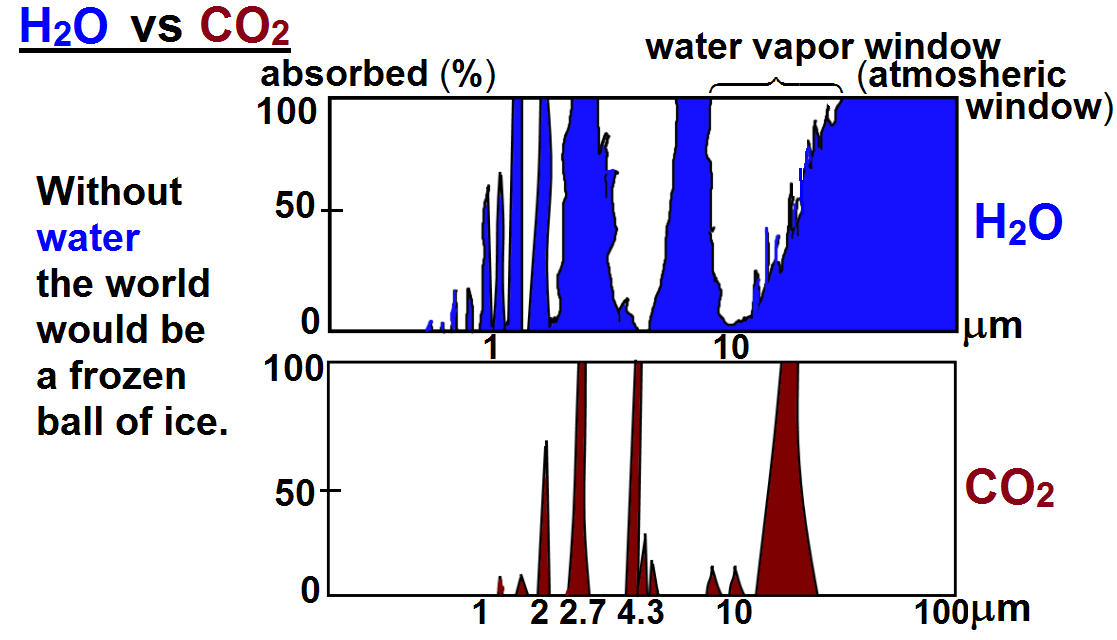
The following chart shows both CO2 and H2O are absorbing greenhouse gases, with H20 being the stronger greenhouse gas, absorbing over a much wider spectrum, and they overlap for the most part. But it also matters in what frequency range s they absorb.

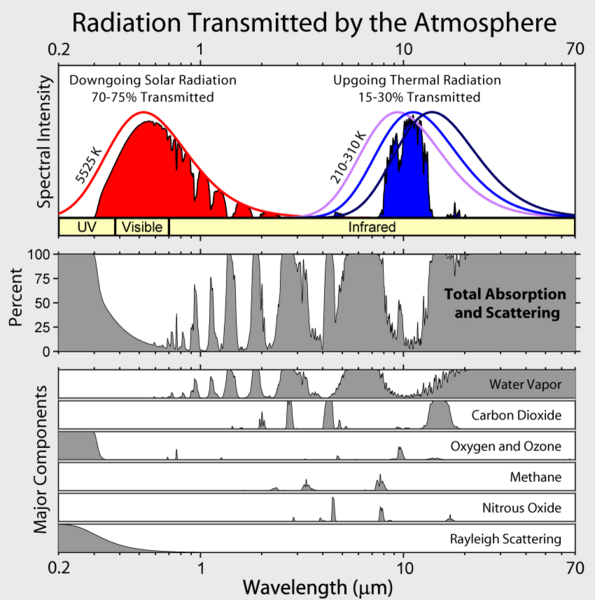
For this we will have to look at the frequency ranges of the incoming solar radiation and the outgoing black body radiation of the earth. It is the latter that causes the greenhouse effect. Take a look at this chart:

The red area represents the observed amount of solar radiation that reaches the earth’s surface. the white area under the red line represents radiation absorbed in the atmosphere. Likewise, the blue area represents the outgoing black body radiation that is re-emitted. The remaining white area under the magenta, blue or black line represents the retained absorbed energy that causes the greenhouse effect.

Let us now take a look at the Carbon Dioxide bands of absorption, at 2.7, 4.3 and 15 microns. The 2.7 and 4.3 micron bands absorb where there is little black body radiation, the only band that counts is at 15 microns, and that is in a band where the black body radiation has its maximum. However it is also in a band where water vapor also absorb, not as much as CO2,only about 20% to 70% as much. The important thing is that in the frequency band of 14.5 to 15.5 micron CO2 absorbs all the energy available in that spectral range, and it also did it before industrialization when CO2 levels were one third less than today!

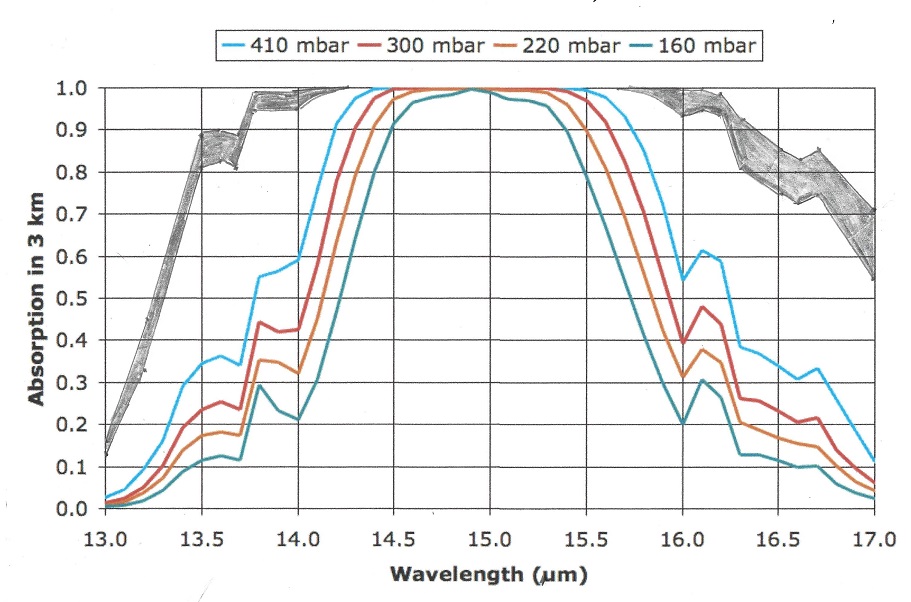
The grey area is the difference between total pre-industrial absorption and today, less than 5 % added absorption in the 13 to 17 micron band. Notice that total absorption from ground level to thermopause cannot exceed 100%

From this we can see that increasing CO2 levels is not the cause of climate change, if anything, it is only a only a very minor player. How about Methane?

Methane has only two major absorption bands, one at 3.3 microns, and the other at 8 microns. The 3,3 micron band is where incoming radiation is negligible, and so is outgoing black-body radiation. The 8 micron band is where water vapor is dominant, so Methane turns out to be the don’t care gas.

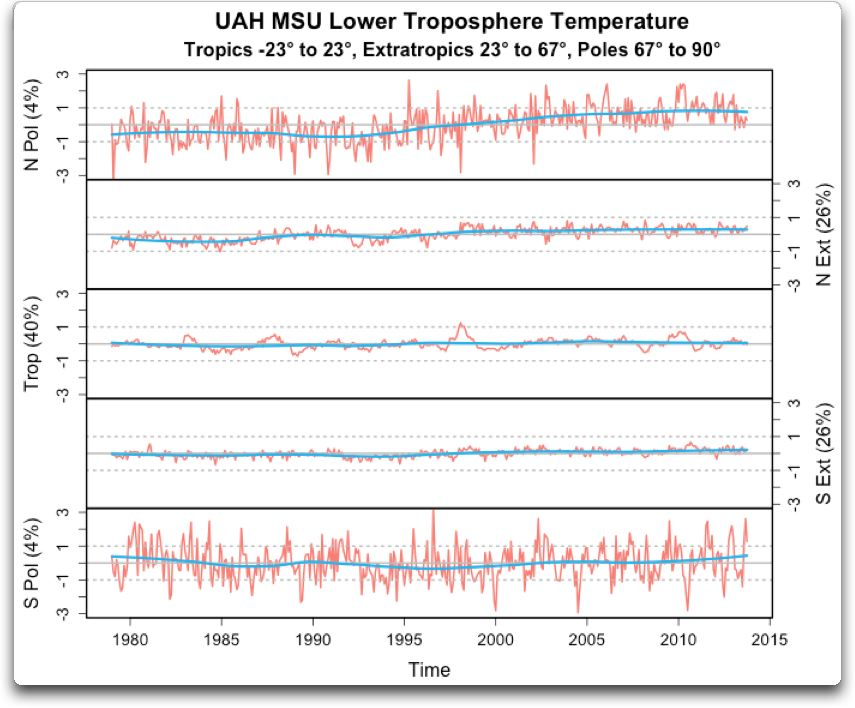
Water vapor or absolute humidity is highly dependent on the temperature of the air, so at 30C there may be 50 times as much water vapor as CO2, at 0C there may be ten times as much water vapor, and at -25C there is more CO2 than water vapor. At those low temperatures the gases are mostly additive. In the tropics with fifty times more water vapor than CO2, increased CO2 has no influence on the temperature whatsoever. Temperature charts confirm this assertion:

The temperature in the tropics displays no trend whatsoever. It follows the temperature of the oceans, goes up in an el niño and down in a la niña. The temperature in the southern hemisphere shows no trend. In the northern temperate region there is a slight increase, but the great increase is occurring in the Arctic. There is no increase in the Antarctic yet even though the increase in CO2 is as great in the Antarctic and the winter temperature in the Antarctic is even lower than in the Arctic. So CO2 increase cannot be the answer to the winter temperature increase in the Arctic.

There is an obvious answer. When temperatures increase the air can and will contain more moisture and transport this moisture from the tropics all the way to the arctic, where it ends up as snow. Is the snow increasing in the Arctic?

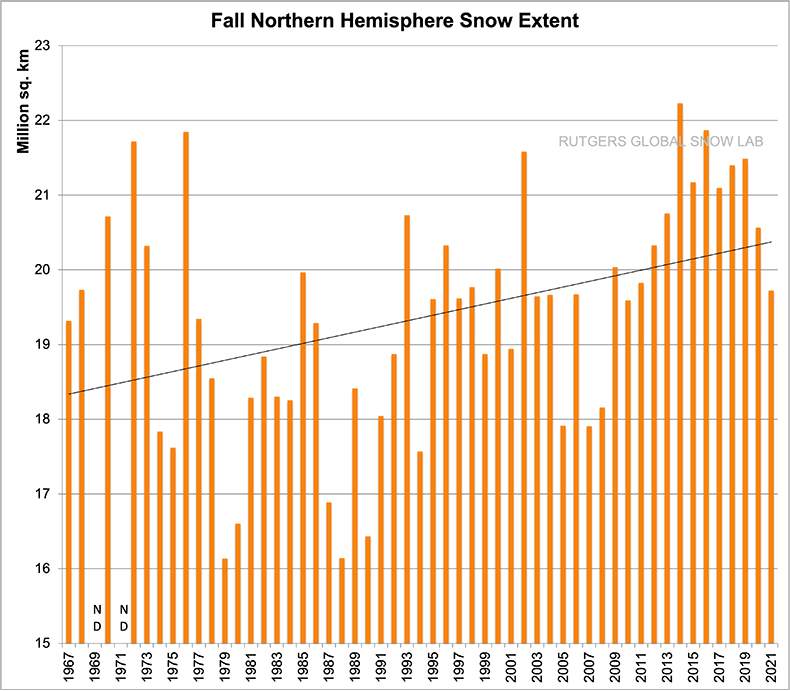
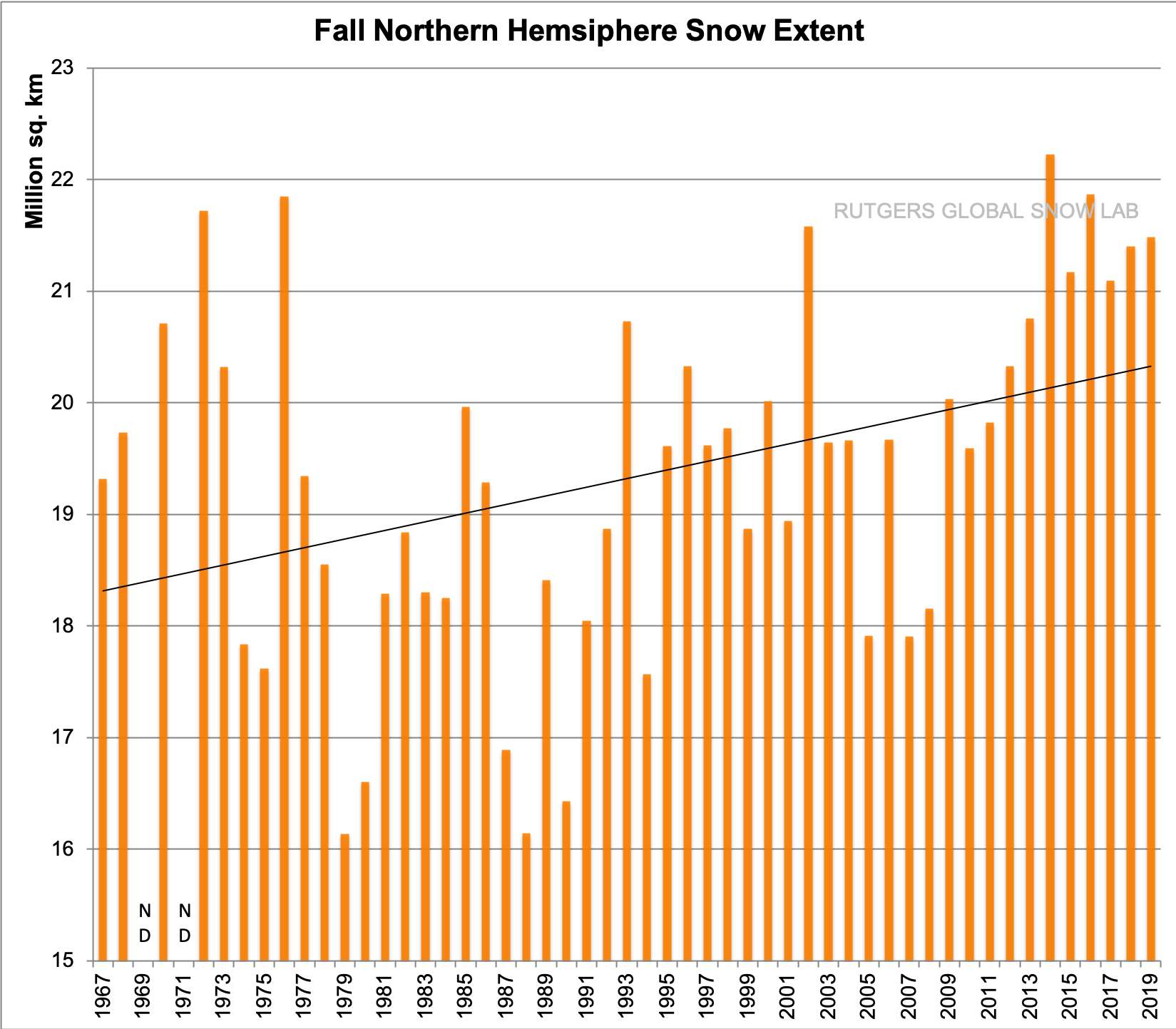
Let us see what the snow statistics show. These are from the Rutgers snow lab.

The fall snow extent is increasing, and has increased by more than 2 percent per year.

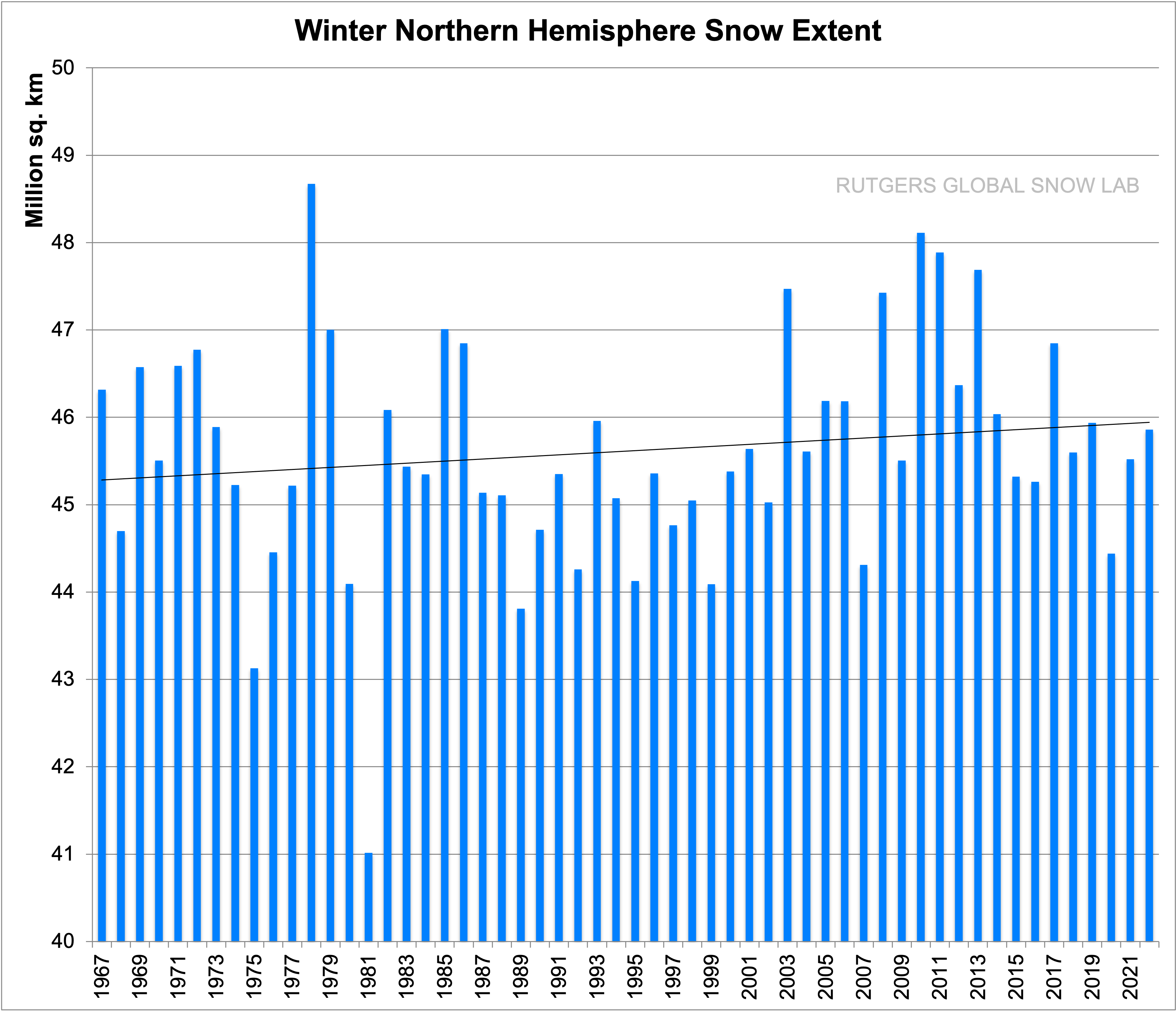
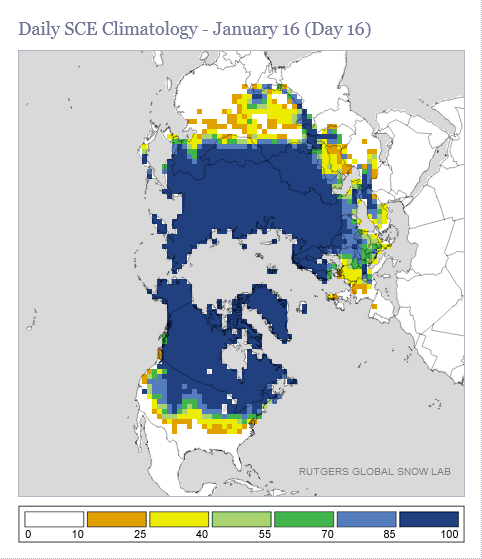
The winter snowfall has also increased but only by 0.04 percent per year. The snow covers all of Russia, Northern China, Mongolia, Tibet, Kashmir and northern Pakistan, Northern Afghanistan, Northern Iran, Turkey, most of Eastern Europe, Scandinavia, Canada, Alaska, Greenland and part of Western, Eastern and Northern United States.

Jan 16,2022

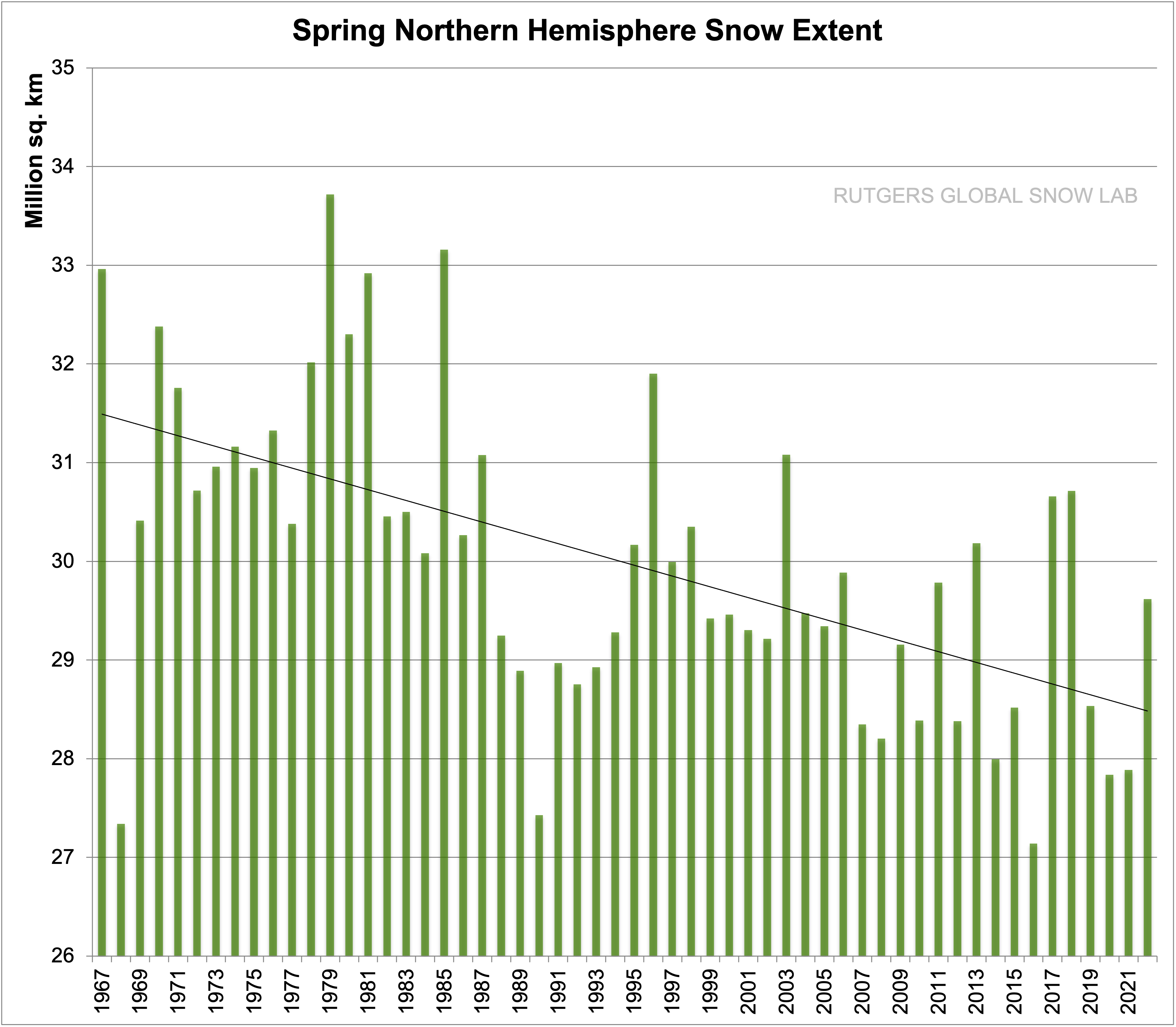
In the spring on the other hand the snow pack is melting faster, about 1.6 percent less spring snow per year. One of the major reasons for an earlier snow melt is that the air is getting dirtier, especially over China, and to some extent Russia. The soot from burning coal, wood and peat, and from mining dust changes the albedo of the snow. The soot is visible on old snow all the way up to the North Pole. The other reason is that the North Pole is getting warmer. In the fall and winter it is mostly due to increased snowfall, but in the spring, as soon as the temperatures rise over the freezing point, melting occurs earlier. But it takes longer time to melt the increasing snow, so the Summer temperatures remain unchanged or lower.

So the warming of the North Pole, far from being an impending end of mankind as we know it, may even be beneficial. A warmer North Pole in the winter means less temperature gradient between the pole and the tropics, leading to less severe storms. They will still be there, but less severe.

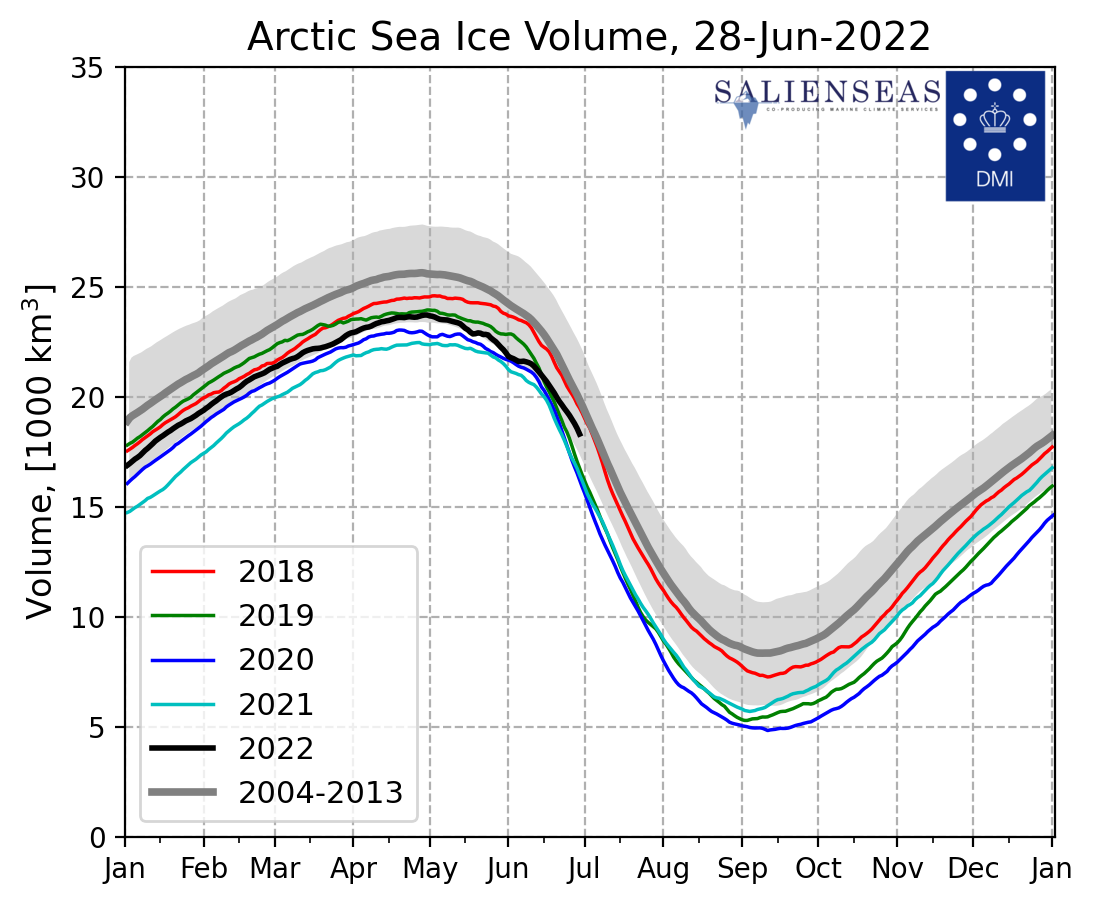
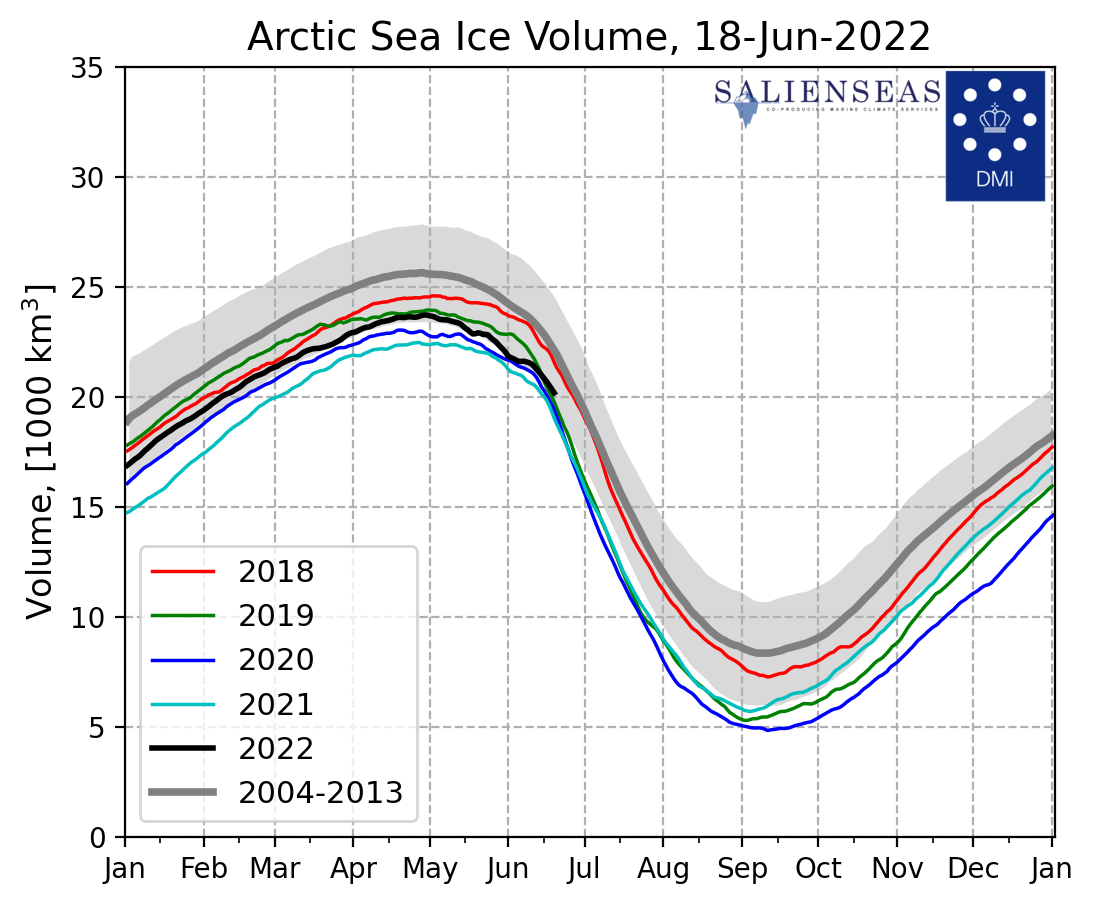
This year’s Arctic ice volume is greater ghan the previous 3 years. and the melting is slower. It is too early to tell if it is a real cooling of the climate, but it is worth noting

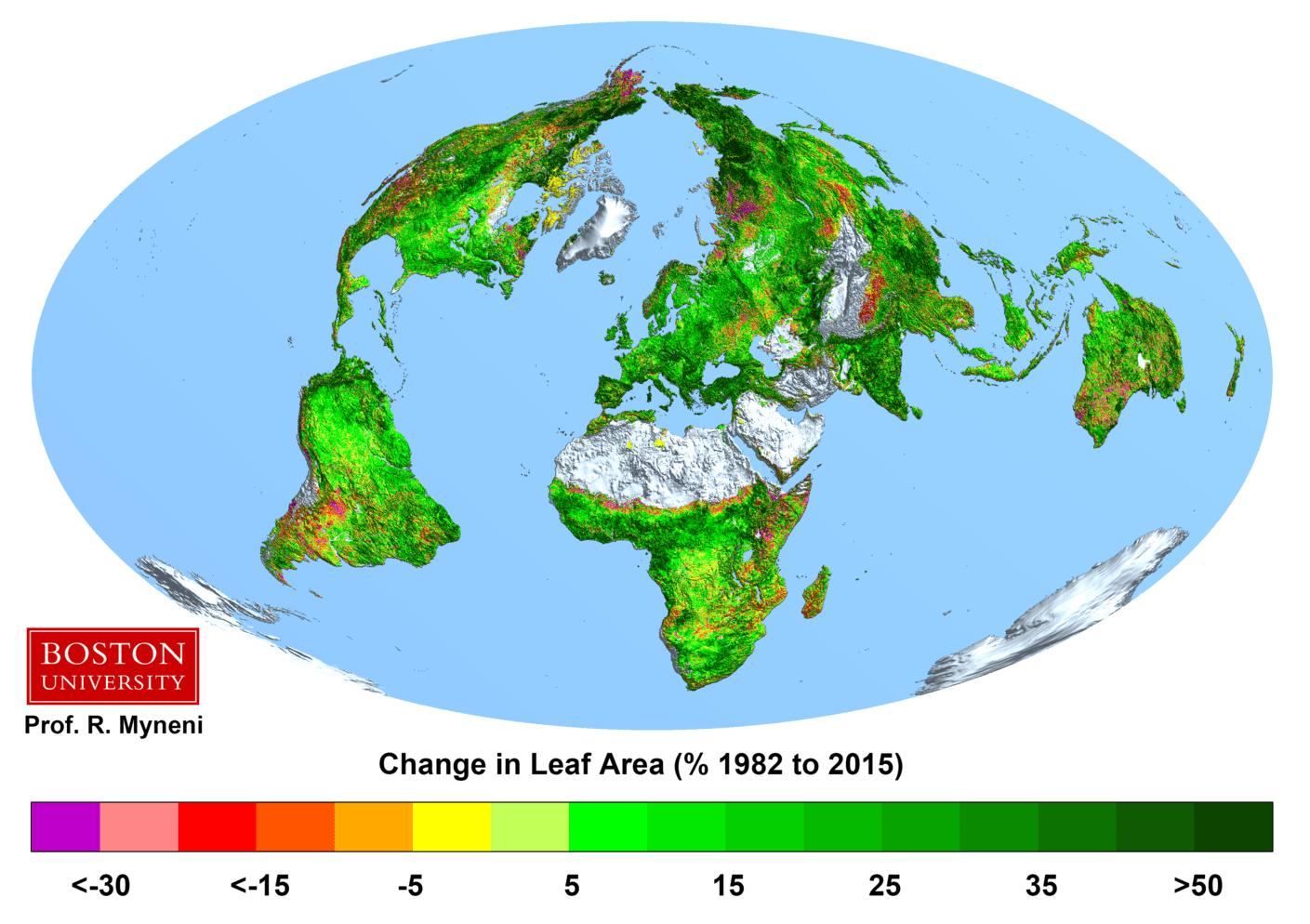
There is one great benefit of increased CO2, the greening of the earth!

Thanks to this greening, done with only the fertilizing effect of increasing CO2, the earth can now keep another 2 billion people from starvation, not to mention what good it does for plants and wildlife.

Increasing CO2 is not the cause of climate change.

Rising CO2 levels is only a very minor cause of climate change. Beside the sun, land use change, pollution, mining and depletion of aquifers are the major causes.

I have always been very interested in the environment. Nature teaches us so many lessons, the diversity of trees, birds, flowers and wildlife is breathtaking and I never cease to wonder. It would be a shame to destroy the beauty of it all. Yet we seem to make it worse by concentrating our effort by trying to limit CO2 emissions, rather than tackling the real and more urgent problems.

Let me first explain why I assert that rising CO2 levels, while real is only a minor player in the climate change equation.

The traditional way to approach this scientifically is making climate models. So far, nearly all, except the Russian model have failed to predict future temperature changes. IPCC is still failing.

The other approach is to take measurements, and it so happens that we have really good global data for over 60 years. The Amundsen Scott – South Pole weather station, the average temperature of Winter season 2021 (April 2021 – September 2021) reached only -61,0°C / -78°F, and at this temperature CO2 is the dominant greenhouse gas by more than a decade over water vapor. We have reliable measurements for the temperature change at the South Pole since 1957. During this time CO2 gas increased 31% to 413ppm, Methane increased 16% to 1.85 ppm and Nitrous oxide decreased, but this is a gas mostly confined to urban areas, and is now below 0.05 ppm. With CO2 increasing by 31% and water vapor negligible one would expect a temperature rise over 64 years of 0.65 C, or one degree Celsius warmer per century according to extrapolated lab measurements. This is the observed trend:

With 2021 value included the temperature trend is two degrees Celsius cooler per century!

At the South Pole snowfall is negligible in the winter, and for the whole year it is only 1.3 inches. No model would have predicted the cooling trend, so there must be other factors that are are more important, since real measurements beat models every time.

Ignoring the South Pole, the climate models are from time to time adjusted, and they suddenly showed a much higher rate of future temperature increases, in this case what is supposed to happen to global temperatures for a doubling of CO2 from pre-industrial times, from 270ppm to 540ppm.

Source: Mark D Zelinka et al. ” Causes of higher Climate sensitivity in CMIP6 models” Geophysical Research Letters.

There are two ways to approach this problem. The models make certain assumptions about the behavior of the changing atmosphere and model future temperature changes. This is the approach from IPCC for the last 34 years. These models all fail miserably when compared to actual temperature changes.

The other way i to observe what is actually happening to our temperature over time as the CO2 increases. We have over 60 years of excellent global temperature data, so with these we can see where, when and by how much the earth has warmed.

The most drastic temperature rise on earth has been in the Arctic above the 80th latitude. In the winter of 2018 it was 8C above the 50 year average. Since then it has come down to the more normal 4C increase. See charts from the Danish Meteorological Institute:

Summer: red, Jun,Jul, Aug. Winter: green, Dec, Jan, Feb Yearly: black

Note, there are no increase at all in the summer temperatures!

Spring: green, Mar, Apr, May. Fall: red, Sep Oct, Nov. Yearly: black

The fall temperature saw an increase of 4C and the spring temperature saw an increase of about 2.5C.

The 2022 winter saw an about 4c increase. The Spring temperatures have from the 10th of March were below or very close to the 1958 – 2002 average. Early Summer temperatures have so far been about 1C below normal. Source: DMI.

There seems to be no cause for immediate panic with the Arctic temperatures. If anything, they seem to moderate. In Antarctic on the other hand the temperatures seem to be decreasing! As we have seen before, the Amundsen Scott – South Pole weather station, the average temperature of Winter season 2021 (April 2021 – September 2021) reached only -61,0°C / -78°F, which is the coldest value in all-time history! This was 2,5°C /4.5°F degrees lower than the most recent 30-year average at this remote station.

Why are the temperatures not behaving like the models predict?

To get the answer we must study molecular absorption spectroscopy. IPCC and most scientists claim that the greenhouse effect is dependent on the gases that are in the atmosphere, and their combined effect is additive according to a logarithmic formula. This is true up to a certain point, but it is not possible to absorb more than 100% of all the energy available in a certain frequency band! For example: If water vapor absorbs 90% of all incoming energy in a certain band, and CO2 absorbs another 50% of the energy in the same band, the result is that 95% is absorbed, (90% + 50% * (100% – 90%)),  not 140%, (90% + 50%).

The following chart shows both CO2 and H2O are absorbing greenhouse gases, with H20 being the stronger greenhouse gas, absorbing over a much wider spectrum, and they overlap for the most part. But it also matters in what frequency range s they absorb.

For this we will have to look at the frequency ranges of the incoming solar radiation and the outgoing black body radiation of the earth. It is the latter that causes the greenhouse effect. Take a look at this chart:

The red area represents the observed amount of solar radiation that reaches the earth’s surface. the white area under the red line represents radiation absorbed in the atmosphere. Likewise, the blue area represents the outgoing black body radiation that is re-emitted. The remaining white area under the magenta, blue or black line represents the retained absorbed energy that causes the greenhouse effect.

Let us now take a look at the Carbon Dioxide bands of absorption, at 2.7, 4.3 and 15 microns. Of them the 2.7 and 4.3 micron bands absorb where there is little black body radiation, the only band that counts is at 15 microns, and that is in a band where the black body radiation has its maximum. However it is also in a band where water vapor also absorb, not as much as CO2,only about 20% to 70% as much. The important thing is that in the frequency band of 14.5 to 15.5 micron CO2 absorbs all the energy available in that spectral range, and it also did it before industrialization when CO2 levels were one third less than today!

The grey area is the difference between total pre-industrial absorption and today, less than 5 % added absorption in the 13 to 17 micron band. Norice that total absorption from ground level to thermopause cannot exceed 100%

From this we can see that increasing CO2 levels is not the cause of climate change, only a very minor player. How about Methane?

Methane has only two major absorption bands, one at 3.3 microns, and the other at 8 microns. The 3,3 micron band is where incoming radiation is negligible, and so is outgoing black-body radiation. The 8 micron band is where water vapor is dominant, so Methane turns out to be the don’t care gas.

Water vapor or absolute humidity is highly dependent on the temperature of the air, so at 30C there may be 50 times as much water vapor, at 0C there may be ten times as much water vapor, and at -25C there is more CO2 than water vapor. At those low temperatures the gases are mostly additive. In the tropics with fifty times more water vapor than CO2, increased CO2 has no influence on the temperature whatsoever. Temperature charts confirm this assertion:

Here the temperature in the tropics displays no trend whatsoever. It follows the temperature of the oceans, goes up in an el niño and down in a la niña. The temperature in the southern hemisphere shows no trend. In the northern temperate region there is a slight increase, but the great increase is occurring in the Arctic. There is no increase in the Antarctic yet even though the increase in CO2 is as great in the Antarctic and the winter temperature in the Antarctic is even lower than in the Arctic. So CO2 increase cannot be the answer to the winter temperature increase in the Arctic.

There is an obvious answer. When temperatures increase the air can and will contain more moisture and transport this moisture from the tropics all the way to the arctic, where it ends up as snow. Is the snow increasing in the Arctic?

Let us see what the snow statistics show. These are from the Rutgers snow lab.

The fall snow extent is increasing, and has increased by more than 2 percent per year.

The winter snowfall has also increased but only by 0.04 percent per year. The snow covers all of Russia, Northern China, Mongolia, Tibet, Kashmir and northern Pakistan, Northern Afghanistan, Northern Iran, Turkey, most of Eastern Europe, Scandinavia, Canada, Alaska, Greenland and part of Western, Eastern and Northern United States.

Jan 16,2022

In the spring on the other hand the snow pack is melting faster, about 1.6 percent less spring snow per year. One of the major reasons for an earlier snow melt is that the air is getting dirtier, especially over China, and to some extent Russia. The soot from burning coal, wood and peat, and from mining dust changes the albedo of the snow. The soot is visible on old snow all the way up to the North Pole. The other reason is that the North Pole is getting warmer. In the fall and winter it is mostly due to increased snowfall, but in the spring, as soon as the temperatures rise over the freezing point, melting occurs earlier. But it takes longer time to melt the increasing snow, so the Summer temperatures remain unchanged or lower.

So the warming of the poles, far from being an impending end of mankind as we know it, may even be beneficial. Warmer poles in the winter means less temperature gradient between the poles and the tropics, leading to less severe storms. They will still be there, but less severe.

There is one great benefit of increased CO2, the greening of the earth.

Thanks to this greening, done with only the fertilizer of CO2, the earth can now keep another 2 billion people from starvation, not to mention what good it does for plants and wildlife.

So CO2 is not the cause for climate change.

Yet

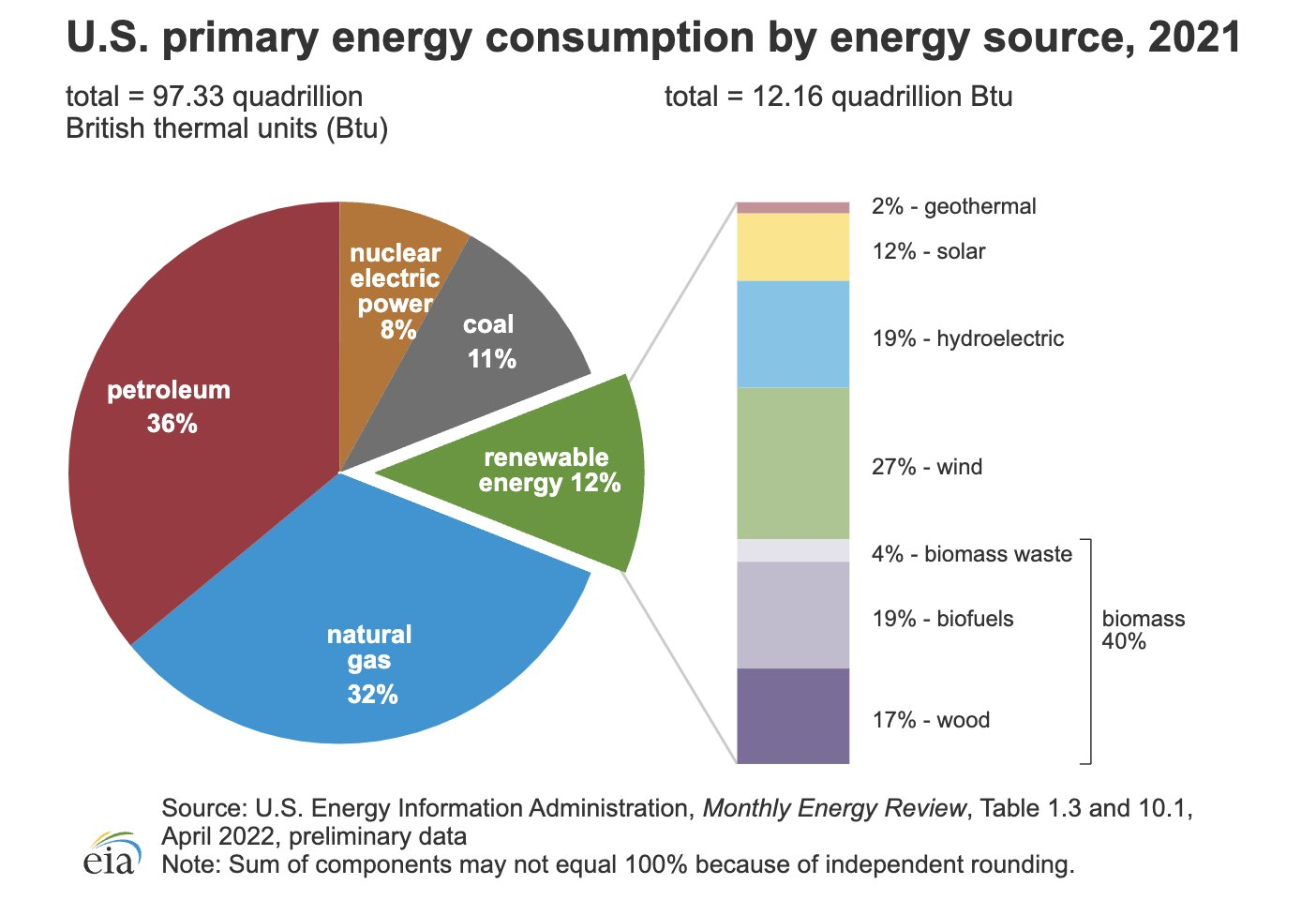
we face enormous environmental challenges. The American Southwest is slowly becoming a desert, the aquifers are being depleted, Lake Mead and Lake Powell will be empty in a few years if nothing is done. Our total energy use is increasing:

In 2021 solar energy amounted to 1,44% and wind power another 3.24% of total energy production. Hydroelectric power is declining because of the drought in the American Southwest. It used to be of great use for peak power generation. Lake Mead and Lake Powell are for all practical purposes unusable for more peak power generation. Biomass is pretty much peaked out. The use of of some of our best agricultural soil to grow corn and make ethanol is folly. When corn sugar is made into ethanol 48% of its weight is fermented as CO2, and one third of the total energy is gone. Maize growing is one of the most demanding crops, depleting the soil of more nutrition than other grains, needing the most fertilizer, which is made from petroleum products and other energy. It has been called “the syphilis of the soil” because of erosion problems.

The electricity production is but a subset of total energy consumption.

Source EIA

There is a great push to make all new cars, pick ups, delivery trucks, city buses and local trains electric by the year 2030. This does not seem to be incorporated into the eia plans. The “new green energy” plan is to have us carbon neutral by 2050. I don’t see how it can be done unless we take a radically different approach. Texas and California already has all the wind and solar power they can handle. To build it up further it must be complemented with energy batteries to store enough energy for when the wind doesn’t blow and the sun doesn’t shine. These energy batteries require an enormous amount of mining to extract the Lithium needed to make them. Lithium is already in high demand as batteries for vehicles. However, battery technology is rapidly developing, so it may still be possible to expand battery power for the grid. For now, most peak power and reserve power is supplied by natural gas.

A proposal to develop the electric grid, our nation’s transportation needs and reversing the desertification of the American Southwest.

Build a TransContinental Aqueduct. This will solve the water needs for the upper Western Texas, New Mexico, Arizona, lower California, Mexico and the Lower Colorado River basin.

Build a Trans-Rocky Mountain aqueduct. This will solve some of the water needs for Oklahoma, Kansas, Colorado, upper New Mexico and the Upper Colorado river basin.

Build a South Platte River aqueduct. This will solve the water needs for the greater Denver ares and help preserve the noorthern Ogallala aquifer.

This cannot be solved unless there will be a deep commitment to Nuclear power, streamline government permit processes and let private industry find the best solutions without government playing favorites and slowing down the process. Regular U235 power is not sufficient for this, Only Thorium power will do, and there are many reasons for it. Here are 30 of them:

 1. A million year supply of Thorium available worldwide.

 2. Thorium already mined, ready to be extracted.

 3. Thorium based nuclear power produces 0.012 percent as much TRansUranium waste products as traditional nuclear power.

 4. Thorium based nuclear power will produce Plutonium-238, needed for space exploration.

 5. Thorium nuclear power is only realistic solution to power space colonies.

 6. Radioactive waste from an Liquid Fluoride Thorium Reactor decays down to background radiation in 300 years compared to a million years for U-235 based reactors. A Limerick.

 7. Thorium based nuclear power is not suited for making nuclear bombs.

 8. Produces isotopes that helps treat and maybe cure certain cancers.

 9. Liquid Fluoride Thorium Reactors are earthquake safe, only gravity needed for safe shutdown.

10. Molten Salt Liquid Fluoride Thorium Reactors cannot have a meltdown, the fuel is already molten, and it is a continuous process. No need for refueling shutdowns.

11. Molten Salt Nuclear Reactors have a very high negative temperature coefficient leading to a safe and stable control.

12. Atmospheric pressure operating conditions, no risk for explosions. Much safer and simpler design.

13. Virtually no spent fuel problem, very little on site storage or transport.

14. Liquid Fluoride Thorium Nuclear reactors scale beautifully from small portable generators to full size power plants.

15. No need for evacuation zones, Liquid Fuel Thorium Reactors can be placed near urban areas.

16. Liquid Fluoride Thorium Reactors will work both as Base Load and Load Following power plants.

17. Liquid Fluoride Thorium Reactors will lessen the need for an expanded national grid.

18. Russia has an active Thorium program.

19. India is having an ambitious Thorium program, planning to meet 30% of its electricity demand via Thorium based reactors by 2050.

 20. China is having a massive Thorium program.

21. United States used to be the leader in Thorium usage. What happened?

22. With a Molten Salt Reactor, accidents like the Three Mile Island disaster will not happen.

23. With a Molten Salt Reactor, accidents like Chernobyl are impossible.

24. With Molten Salt Reactors, a catastrophe like Fukushima cannot happen.

25. Will produce electrical energy at about 4 cents per kWh.

26. Can deplete most of the existing radioactive waste and nuclear weapons stockpiles.

27. With electric cars and trucks replacing combustion engine cars, only Thorium Nuclear power is the rational solution to provide the extra electric power needed.

28. The race for space colonies is on. Only Molten Salt Thorium Nuclear reactors can fit the bill.

29. President Donald J. Trump on Jan. 5 2021 issued an Executive Order on Promoting Small Modular Reactors for National Defense and Space Exploration. Only Liquid fluoride thorium reactors can meet all the needs.

30. We have to switch from Uranium to Thorium as nuclear feed-stock. We are running out of domestic Uranium.

My favorite Thorium power plant would be a 100 MW Liquid Fluoride Thorium Reactor (LFTR). It is also called a Small Modular Reactor (SMR). It is small enough that all core elements will fit in three standard truck containers, made on an assembly line. It can came in many forms, one is a normal fast breeder reactor, another is adapted to burn nuclear waste. The cost for these reactors, when built on an assembly line will be less than $2 per Watt. They can be placed anywhere, since they are inherently safe, no need for an evacuation zone. Since they are operating at 500C temperature with either gas or liquid lead as heat transfer media there is no need for water as a cooling medium. The only thing better would be fusion power, but that is at least 20 years away, but it is coming. These are exciting times!

CO2 concentration has increased more than 50% since pre-industrial times. Is that good or bad?

As CO2 warms the North Pole

burning oil, gas and coal plays a role.

CO2 is still good;

makes plants green, grows more food,

The clouds are God’s climate control.

Greta Thunberg, 17; Times person of the year 2019 was at it again, this time in Davos at the annual World Economic Forum. She was allowed to give a 30 minute speech to all the dignitaries assembled, who had generated 18,090 metric tons of CO2 (source CNN) getting there in their jets. Her message was:

Let’s be clear. We don’t need a ‘low carbon economy.’ We don’t need to ‘lower emissions,” … “Our emissions have to stop if we are to have a chance to stay below the 1.5-degree target,” (The New York Times.)

We have experienced more than a 50% increase in CO2 levels since the beginning of industrialization. In the last 32 years the level has risen 20%, from about 350 ppm to 421 ppm. This is what scares people. Is is time to panic and stop carbon emissions altogether as Greta Thunberg suggested?

As if on cue the climate models have been adjusted, and they suddenly show a much higher rate of temperature increase, in this case what is supposed to happen to global temperatures for a doubling of CO2 from pre-industrial times, from 270ppm to 540ppm.

Source: Mark D Zelinka et al. ” Causes of higher Climate sensitivity in CMIP6 models” Geophysical Research Letters.

There are two ways to approach this problem. The models make certain assumptions about the behavior of the changing atmosphere and model future temperature changes. This is the approach from IPCC for the last 34 years. These models all fail miserably when compared to actual temperature changes.

The other way i to observe what is actually happening to our temperature over time as the CO2 increases. We have over 50 years of excellent global temperature data, so with these we can see where, when and by how much the earth has warmed.

The most drastic temperature rise on earth has been in the Arctic above the 80th latitude. In the winter of 2018 it was 8C above the 50 year average. Since then it has come down to the more normal 4C increase. See charts from the Danish Meteorological Institute:

Summer: red, Jun,Jul, Aug. Winter: green, Dec, Jan, Feb Yearly: black

Note, there are no increase at all in the summer temperatures!

Spring: green, Mar, Apr, May. Fall: red, Sep Oct, Nov. Yearly: black

The fall temperature saw an increase of 4C and the spring temperature saw an increase of about 2.5C.

The 2022 winter saw an about 4c increase. The Spring temperatures have from the 10th of March were below or very close to the 1958 – 2002 average. Early Summer temperatures have so far been about 1C below normal. Source: DMI.

There seems to be no cause for immediate panic with the Arctic temperatures. If anything, they seem to moderate. In Antarctic on the other hand the temperatures may even be decreasing! The Amundsen Scott – South Pole weather station, the average temperature of Winter season 2021 (April 2021 – September 2021) reached only -61,0°C / -78°F, which is the coldest value in all-time history! This was 2,5°C /4.5°F degrees lower than the most recent 30-year average at this remote station.

Why are the temperatures not behaving like the models predict?

To get the answer we must study molecular absorption spectroscopy and explain a couple of facts for the 97% of all scientists who have not studied molecular spectroscopy. IPCC and most scientists claim that the greenhouse effect is dependent on the gases that are in the atmosphere, and their combined effect is additive according to a logarithmic formula. This is true up to a certain point, but it is not possible to absorb more than 100% of all the energy available in a certain frequency band! For example: If water vapor absorbs 90% of all incoming energy in a certain band, and CO2 absorbs another 50% of the energy in the same band, the result is that 95% is absorbed, (90% + 50% * (100% – 90%)),  not 140%, (90% + 50%).

The following chart shows both CO2 and H2O are absorbing greenhouse gases, with H20 being the stronger greenhouse gas, absorbing over a much wider spectrum, and they overlap for the most part. But it also matters in what frequency range s they absorb.

For this we will have to look at the frequency ranges of the incoming solar radiation and the outgoing black body radiation of the earth. It is the latter that causes the greenhouse effect. Take a look at this chart:

The red area represents the observed amount of solar radiation that reaches the earth’s surface. the white area under the red line represents radiation absorbed in the atmosphere. Likewise, the blue area represents the outgoing black body radiation that is re-emitted. The remaining white area under the magenta, blue or black line represents the retained absorbed energy that causes the greenhouse effect.

Let us now take a look at the Carbon Dioxide bands of absorption, at 2.7, 4.3 and 15 microns. Of them the 2.7 and 4.3 micron bands absorb where there is little black body radiation, the only band that counts is at 15 microns, and that is in a band where the black body radiation has its maximum. However it is also in a band where water vapor also absorb, not as much as CO2,only about 20% to 70% as much. The important thing is that in the frequency band of 14.5 to 15.5 micron CO2 absorbs all the energy available in that spectral range, and it also did it before industrialization when CO2 levels were one third less than today!

The grey area is the difference between total pre-industrial absorption and today, less than 5 % added absorption in the 13 to 17 micron band. Norice that total absorption from ground level to thermopause cannot exceed 100%

From this we can see that increasing CO2 levels is not the cause of climate change, only a very minor player. How about Methane?

Methane has only two major absorption bands, one at 3.3 microns, and the other at 8 microns. The 3,3 micron band is where incoming radiation is negligible, and so is outgoing black-body radiation. The 8 micron band is where water vapor is dominant, co Methane turns out to be the don’t care gas.

Water vapor or absolute humidity is highly dependent on the temperature of the air, so at 30C there may be 50 times as much water vapor, at 0C there may be ten times as much water vapor, and at -25C there is more CO2 than water vapor. At those low temperatures the gases are mostly additive. In the tropics with fifty times more water vapor than CO2, increased CO2 has no influence on the temperature whatsoever. Temperature charts confirm this assertion:

Here the temperature in the tropics displays no trend whatsoever. It follows the temperature of the oceans, goes up in an el niño and down in a la niña. The temperature in the southern hemisphere shows no trend. In the northern temperate region there is a slight increase, but the great increase is occurring in the Arctic. There is no increase in the Antarctic yet even though the increase in CO2 is greater in the Antarctic and the winter temperature in the Antarctic is even lower than in the Arctic. So CO2 increase cannot be the sole answer to the winter temperature increase in the Arctic.

There is an obvious answer. When temperatures increase the air can contain more moisture and transport even more moisture from the tropics,all the way to the arctic, where it ends up as snow. Is the snow increasing in the Arctic?

Let us see what the snow statistics show. These are from the Rutgers snow lab.

The fall snow extent is increasing, and has increased by more than 2 percent per year.

The winter snowfall has also increased but only by 0.04 percent per year. The snow covers all of Russia, Northern China, Mongolia, Tibet, Kashmir and northern Pakistan, Northern Afghanistan, Northern Iran, Turkey, Part of Eastern Europe, Scandinavia, Canada, Alaska, Greenland and part of Western and Northern United States.

Jan 16,2022

In the spring on the other hand the snow pack is melting faster, about 1.6 percent less spring snow per year. One of the major reasons for an earlier snow melt is that the air is getting dirtier, especially over China, and to some extent Russia. The soot from burning coal and mining dust changes the albedo of the snow. The soot is visible on old snow all the way up to the North Pole. The other reason is that the North Pole is getting warmer. In the fall and winter it is mostly due to increased snowfall, but in the spring, as soon as the temperatures rise over the freezing point, melting occurs.

So the warming of the poles, far from being an impending end of mankind as we know it, may even be beneficial. Warmer poles in the winter means less temperature gradient between the poles and the tropics, leading to less severe storms. They will still be there, but less severe.

There is one great benefit of increased CO2, the greening of the earth.

Thanks to this greening, done with only the fertilizer of CO2 the earth can now keep another 2 billion people from starvation, not to mention what it does for plants and wildlife.

Refocusing our attention on the South Pole, it set a new Winter half year record average temperature of -61 degree Celsius. At those temperatures CO2 is the dominant greenhouse gas, CO2 vapor is less than one tenth of the CO2. This means that most of the Greenhouse effect will come from CO2,

As CO2 is increasing, winter temperatures at the South Pole is decreasing. This means that CO2 cannot be a major factor in climate change, if anything, it could result in lower temperatures.

Now revisit the temperatures in the Arctic, what is happening to the ice cover:

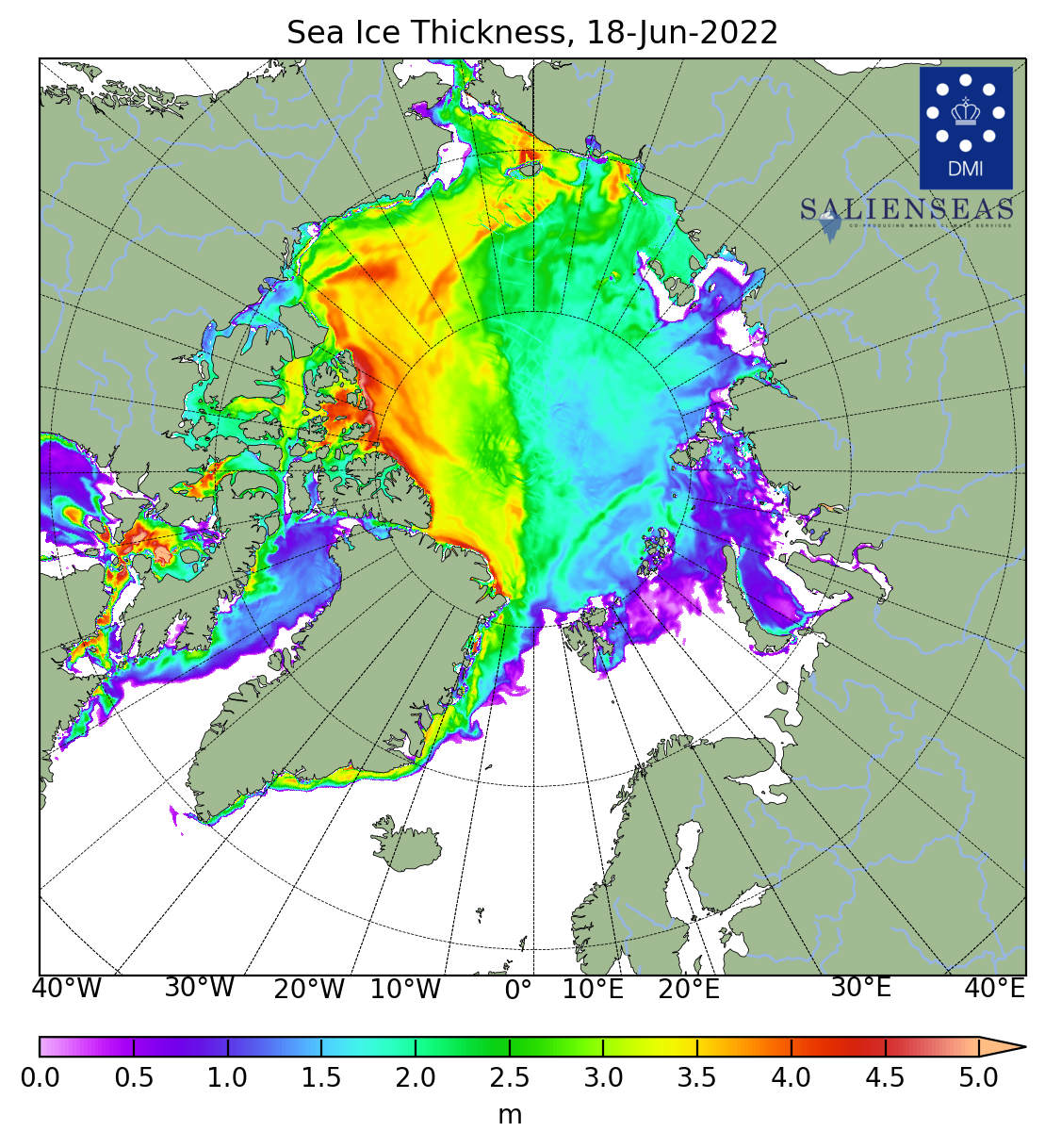
The current ice volume is higher than the previous 3 years but not yet back to normal.
The interesting thing in this picture is that the multi-year ice is increasing.

The Arctic Spring temperatures are the coldest in many years. So far it is only weather, but it is probably an early warning of the coming cooling trend.

One interesting trend is the increasing ice on Greenland. 2012 was the uear of maximum ice-melt and the prediction was that the arctic may be ice-free in September of 2015, or at least before 2020. Since then Greenland ice is recovering and some glacier have started growing again. Today’s snapshot:

19 June 2022

The delay of the melting season is so far only weather, not yet climate change.

The greening of the world thanks to rising CO2 is substantial, but there are areas that are becoming desertified. In North America the concern is for the American Southwest by using up the aquifers and depleting the reservoirs.

The source of the climate change is not rising CO2 levels, not Methane. It is land use changes, the depletion of aquifers, especially between the tenth and the fortieth latitude. This leads to drying up the land and diminishing river flows. Exhibit A: The Colorado River and the depletion of Lake Mead and Lake Powell.

Having said that, I am still a conservationist. Coal, oil and gas will run out at some time, and I for one would like to save some for my great grandchildren, not yet born. In addition I would like to minimize the need for mining, which can be quite destructive.

We need to take a good look at our energy alternatives. Wind and Solar are good bets, but when the sun doesn’t shine and the wid doesn’t flow we need enormous battery parks to make up for the lack of solar and wind. For now this is provided mostly by natural gas, and coal. Until that is solved it makes no sense to convert the vehicle park to electric power.

The obvious solution is to switch from coal and gas to nuclear power. The total life cycle need of mined material is about 10% of a coal fired plan. The best solution is to switch to Liquid Fluoride Thorium Reactors. They are much cheaper to manufacture than conventional nuclear power. a 100 MW LFTR can be made on an assembly line and be shipped to site in 3 conventional large truck containers.

Here are the many cases why Thorium Nuclear Power is the only realistic solution to the world’s energy problems.

 1. A million year supply of Thorium available worldwide.

 2. Thorium already mined, ready to be extracted.

 3. Thorium based nuclear power produces 0.012 percent as much TRansUranium waste products as traditional nuclear power.

 4. Thorium based nuclear power will produce Plutonium-238, needed for space exploration.

 5. Thorium nuclear power is only realistic solution to power space colonies.

 6. Radioactive waste from an Liquid Fluoride Thorium Reactor decays down to background radiation in 300 years compared to a million years for U-235 based reactors. A Limerick.

 7. Thorium based nuclear power is not suited for making nuclear bombs.

 8. Produces isotopes that helps treat and maybe cure certain cancers.

 9. Liquid Fluoride Thorium Reactors are earthquake safe, only gravity needed for safe shutdown.

10. Molten Salt Liquid Fluoride Thorium Reactors cannot have a meltdown, the fuel is already molten, and it is a continuous process. No need for refueling shutdowns.

11. Molten Salt Nuclear Reactors have a very high negative temperature coefficient leading to a safe and stable control.

12. Atmospheric pressure operating conditions, no risk for explosions. Much safer and simpler design.

13. Virtually no spent fuel problem, very little on site storage or transport.

14. Liquid Fluoride Thorium Nuclear reactors scale beautifully from small portable generators to full size power plants.

15. No need for evacuation zones, Liquid Fuel Thorium Reactors can be placed near urban areas.

16. Liquid Fluoride Thorium Reactors will work both as Base Load and Load Following power plants.

17. Liquid Fluoride Thorium Reactors will lessen the need for an expanded national grid.

18. Russia has an active Thorium program.

19. India is having an ambitious Thorium program, planning to meet 30% of its electricity demand via Thorium based reactors by 2050.

 20. China is having a massive Thorium program.

21. United States used to be the leader in Thorium usage. What happened?

22. With a Molten Salt Reactor, accidents like the Three Mile Island disaster will not happen.

23. With a Molten Salt Reactor, accidents like Chernobyl are impossible.

24. With Molten Salt Reactors, a catastrophe like Fukushima cannot happen.

25. Will produce electrical energy at about 4 cents per kWh.

26. Can deplete most of the existing radioactive waste and nuclear weapons stockpiles.

27. With electric cars and trucks replacing combustion engine cars, only Thorium Nuclear power is the rational solution to provide the extra electric power needed.

28. The race for space colonies is on. Only Molten Salt Thorium Nuclear reactors can fit the bill.

29. President Donald J. Trump on Jan. 5 2021 issued an Executive Order on Promoting Small Modular Reactors for National Defense and Space Exploration. Only Liquid fluoride thorium reactors can meet all the needs.

30. We have to switch from Uranium to Thorium as nuclear feed-stock. We are running out of domestic Uranium.

The cause of Climate Change. If it is rising CO2 levels we are all doomed. Controlling CO2 is destined to fail! Yet there is hope.

India is reopening 100 coal mines to ensure that their electrification program stays on course in the face of new realities. International coal prices has more than doubled since the start of 2022, so coal mining is again profitable.

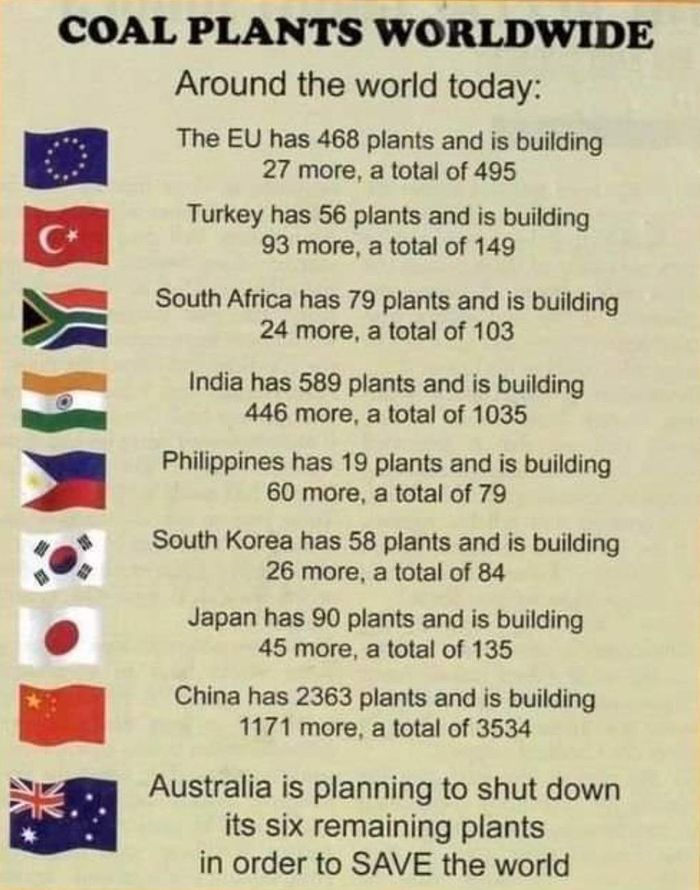
One would think that the world is trying to reduce the number of coal plants. Not so!

This does not include the developing world that is just getting started with, you guessed it, coal plants!

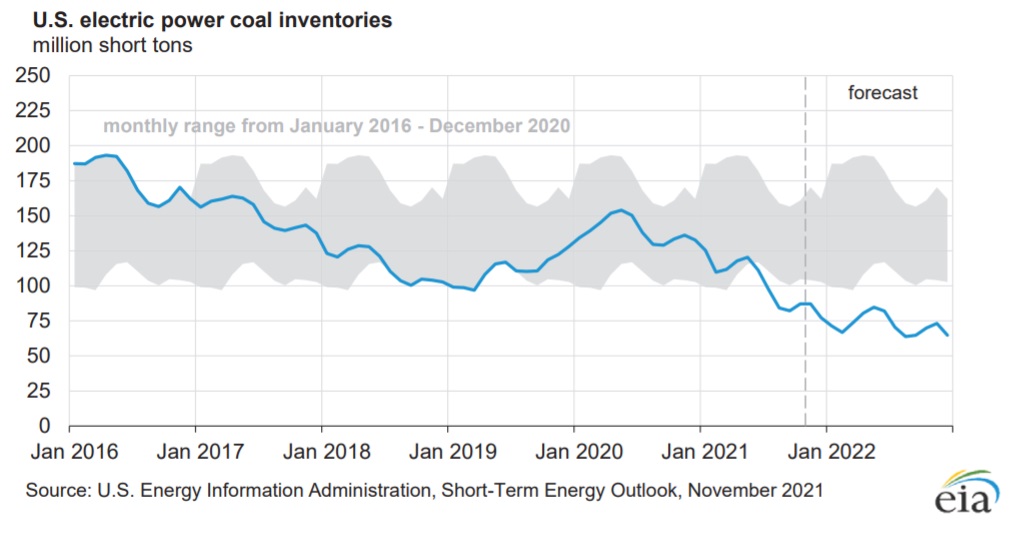
Australia has at least one ally in trying to save the world, the United states of America! California has already eliminated their coal plants, but they are also a great importer of electricity, much of it produced from coal. In the next ten year the U.S. utilities plan to shut down or change the fuel on over 200 coal fired plants, 48 in 2022 alone. Meanwhile , coal is getting scarce. There will be spot shortages this year.

There will be brownouts and rotating blackouts this summer, especially in California and the mid-west.

Natural Gas prices has more than doubled from around $3 per Mega BTU to over $8, while spot price in Europe is over $26 per MBTU. To quote Barack Obama: “Electricity prices will naturally skyrocket”. This means electricity prices have only begun their rise.

The National Electric grids are aging and under increasing stress. The Biden administration has one solution. Commandeering American industry to make more solar panels with components made nearly exclusively from China and lower the import tariffs on solar panel components. California is already producing too much solar power if the wind is also blowing, but not during times of greatest demand, leading to a desperate need for pumped storage or large, very expensive battery banks. California has already given its first warning: Don’t charge your electric vehicles now, or the whole grid will go down. See here.

Yet there is hope. We can switch our electric grid to nuclear energy, but not the dominant Uranium 235 nuclear plants that requires evacuation zones, lots of cooling water and a large regulatory overhead to ensure their safety. No, instead go back to the original source of nuclear power, before making nuclear bombs became the driving source of nuclear development. Thorium based nuclear power, especially the Liquid Fluoride molten salt Thorium Reactor (LFTR). It breeds more fuel than it uses by about 3%, and it generates 0.01% of the nuclear waste of a Uranium 235 plant. It is more efficient and inherently safe. My preference would be to make them in an assembly line and deliver them on standard trucks rather than build them on site. LFTR reactors does not need water for cooling. My preference would be a 100 MW reactor with the molten salt containing the fissile material separated from the cooling system, which could be either gas or molten lead. They could then be spread out over the country with no need for water, be placed near population centers since there is no need for evacuation zones. This would make it possible to have local grids, eliminating the need to expand the national grid.

And with an assembly line production the core units can be delivered in three standard size containers. The total cost including power generation and the permanent enclosure will be less than two dollars per watt, and fuel cost is essentially nil, since Thorium is already mined in excess quantities in rare earth mining.

I do want to save coal for important uses, such as making chemicals and fertilizer, and in the future to produce aviation fuel. By all means, switch to electric vehicles, but not until the electric grid is converted from Coal and Natural Gas to nuclear!

With over 1 Million electric cars California is straining its electric grid. Will there be many more black and brown-outs this summer?

California has been promoting the sales of “carbon free” electric cars wit subsidies that in extreme cases has been as high as $57,000 per vehicle, mostly a subsidy for the rich. There are now over 1 million electric vehicles on the road. there is one problem. They use electricity, and it has to come from somewhere, mostly from the electric grid, but in emergencies a diesel generator will do.

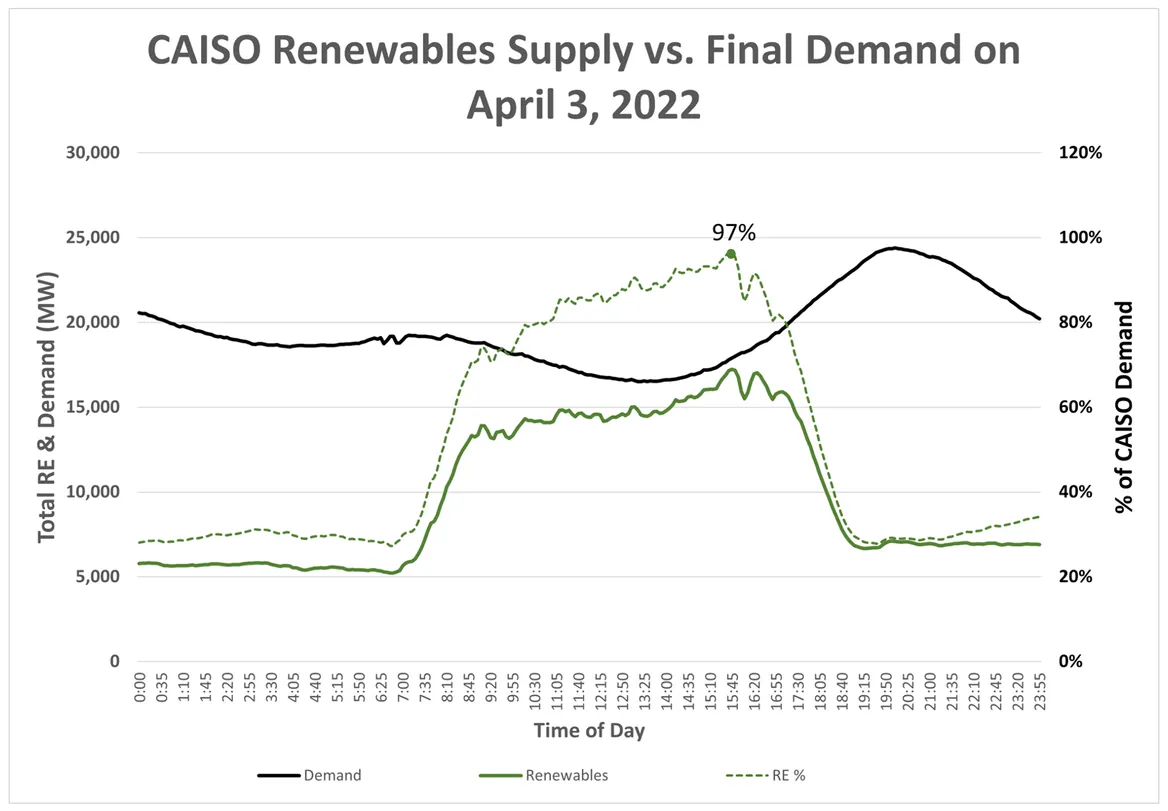
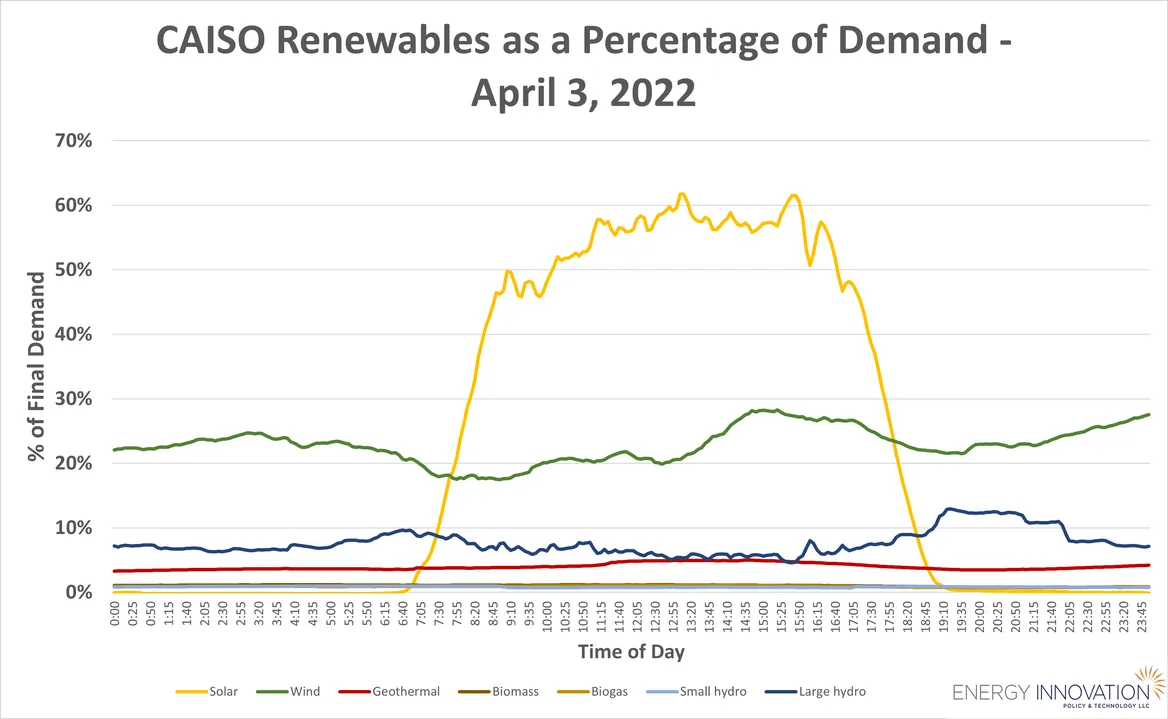
They keep talking of supplying the electricity through renewable power, and on April 3 CAISO reported that the California electric grid was served to 97% by non-hydro renewable non carbon emitting energy sources. This was widely reported, mostly by solar panel providers showing that we are on our way to a wonderful carbon free future. See the chart below.

Another way to look at it is to see the renewable sources individually

With the addition of electric cars as grid users, they have to be recharged. This will occur at dinner time for most people, coming home, connecting the car, take a shower, run the air conditioner, run the washer and dryer, and watch TV, the time when the grid is already most strained and the solar panels have stopped supplying energy.

It has already happened once this March that some electric companies in California has asked their customers to not recharge their cars for fear the grid would collapse, see here.

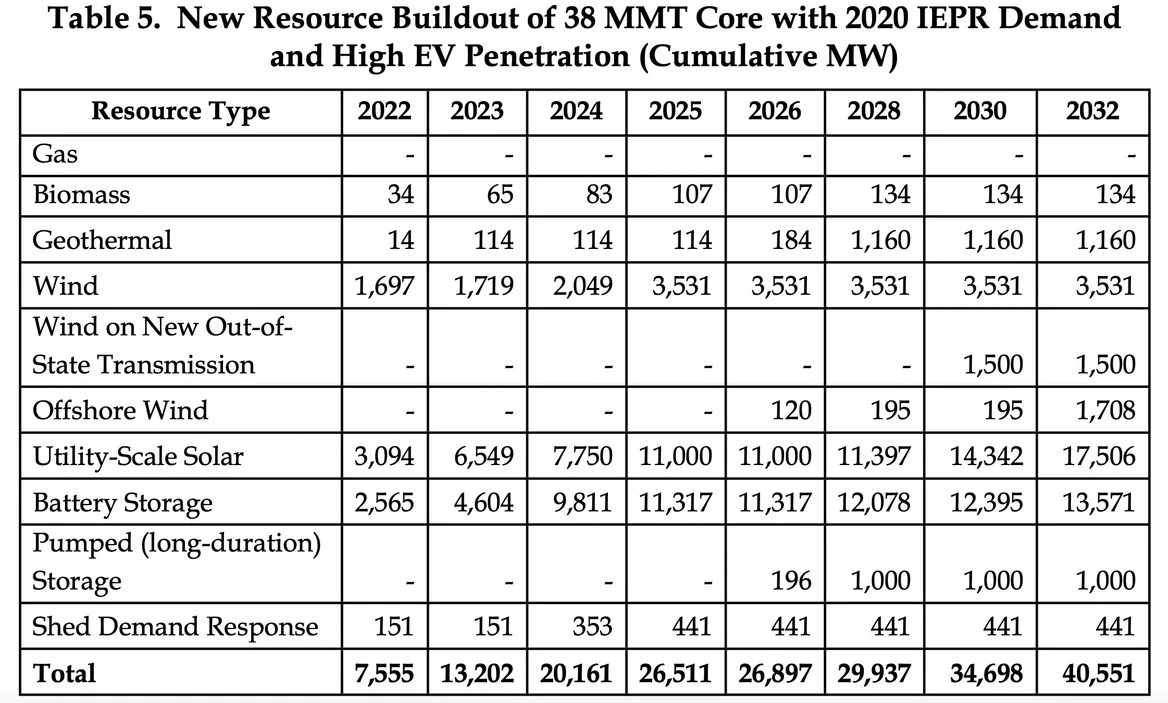
How big is the problem? The Western Journal reports that at least ten states are at risk of major electric outages this summer, among them California with an expected power shortage of up to 1,700 MW during peak hours, see here. California has an ambitious program to build up its capacity in the next ten years, but with the addition of electric cars needing recharging it ia not enough. Here is their proposed build for the next ten years.

A table from the CPUC’s February decision listing planned clean capacity additions. (CPUC) (Canary Media)

The plan is ambitious. Coal is already eliminated as a source of energy. There will be no new Natural gas plants, even for peak power. The remaining two nuclear plants will be decommissioned in 2024 and 2025. From now on they will rely on solar power and battery storage to make the grid “carbon free”.

But there is one big problem. The American South-west is drying up. Lake Mead can only provide power from seven of their 17 turbines, and water is getting lower and lower reducing power output. Lake Powell is precariously close to lose its power generation capacity altogether, the water is that low. But California has a lot of reservoirs:

Unfortunately, most of their water levels are well below seasonal average and are in danger of being unable to provide any power at all in late Summer, like Lake Oroville did last year. Lake Oroville is one lake that has pumping storage, but they let the water levels fall below even the lowest pumping levels.

Historically California has imported a lot of its electric energy, and has one of the highest transmission losses in the nation. but all the surrounding states suffer a similar drought, so hydropower will be hard to obtain. Luckily, the surrounding states have not abandoned all of their coal burning plants, so they are happy to sell peak power to California for up to a dollar a kWh when the demand is high. Even at that price the supply is limited, so California will have to resort to rotating brown and blackouts this summer.

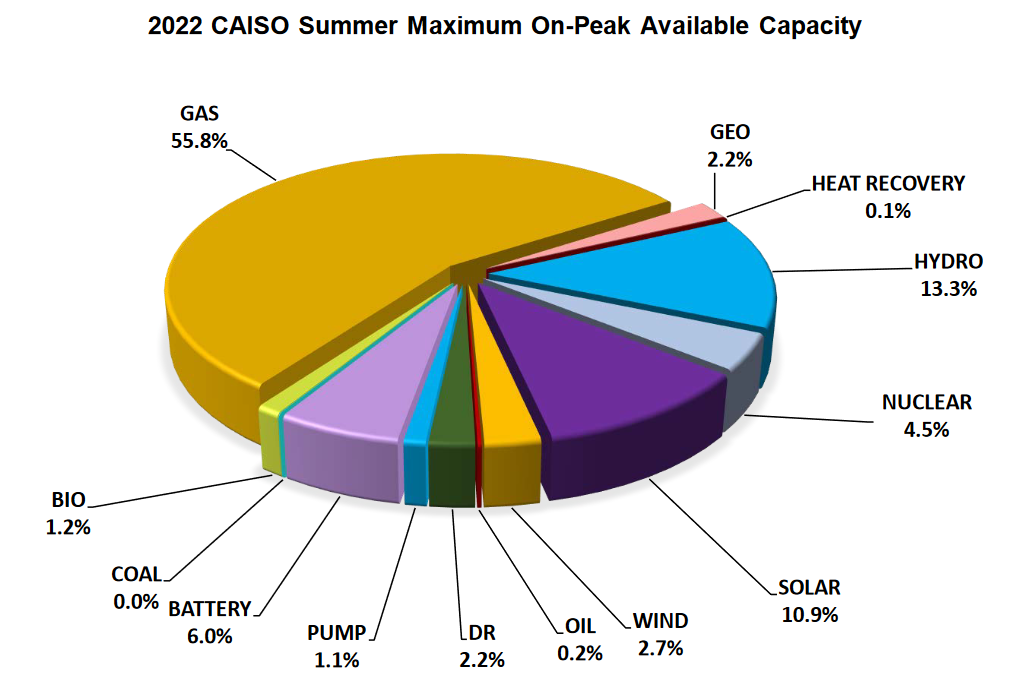
Here is the

Let’s take a look at each of the compounds that contribute to the electric supply and the future trends

Geothermal energy. Limited by available sources.

Heat recovery. Very limited

Hydroelectric power. Lake Mead and Lake Powell are drying up. In then years they are gone unless we do something. There will still be some water in the Colorado River, but the storage is gone. The desertification of the American Southwest will ensure hydropower is diminishing.

Nuclear power. The 2 last remaining Nuclear power plants will be decommissioned in 2024 and 2025.

Solar energy power. This is rapidly growing and will provide an increasing percentage of the total power, but not during peak demand which is in the evening.

Wind power. The best locations are already taken. Wind is good when it blows, but useless on a calm day. During storms sometimes some windmills will have to be shut off because there are no customers for the extra power.

Oil power is negligible and essentially only used as emergency backup power for hospitals and other vital systems.

Demand Response shutoffs. This will have to be increased to maintain a stable grid. California has very few industries that only operate when the cost of electricity is low, so to increase this it will have to be done through variable pricing, like charging two dollars a kWh or so for recharging your car during peak demand.

Pumped storage. The last major pumped storage facilities were made in the 1970’s. Since then it has always been more economical to provide peak power using natural gas. With natural gas prices tripling and still rising it is again worth looking at increasing the pumped storage. California has many dams. they should be upgraded to not only provide water and hydroelectric power, but also provide pumped storage. The best way to do this is to build lower, much smaller dams and pump up water from the lower to the upper reservoir during excess energy production and reverse the flow during peak demand. The energy losses for peak power are 15 to 20%, much less than the price differential between excess power and peak power. There is only one problem. The reservoirs are running out of water when they are needed the most, like in this period of drought.

Battery storage. California is making big investments in batteries, like a contract to supply more than three GW of battery storage. It is not cheap. The cost for batteries is about $1,250 per kWh, so assume the batteries will last 4 hours the investment by my estimate is about 15 billion dollars. The prices for batteries are set to increase rapidly as the supply of raw material is limited, especially Lithium and Cobalt. Since the weight of stationary batteries is unimportant, there will have to be developed lower cost alternatives for stationary batteries. And the research is intense to develop better batteries that do not require as much mining of rare resources.

Coal, California does not use coal anymore for electricity production, but it imports a lot of electric energy, some of which is generated by coal plants. In addition, this power comes from far, far away, so the transmission losses are substantial.

Biofuel. There will be better uses for biofuel than to burn it to produce electricity. Some of it is far too valuable as raw material for recycling. But it takes a lot of power to recycle properly, yet it is necessary to recycle and clean up the environment.

Natural gas. In the past natural gas supplied all the remaining power needed. With the addition of solar and wind, the amount of gas needed was reduced sufficiently still meet the electricity needs. This was fine until solar and wind could supply more than 100% of the electricity needs. The extra energy must then be stored in batteries or peak storage, or that energy would be wasted. This means that from now on every added solar panel or wind turbine must come with an equivalent amount of battery or pumped storage. So to supply the first 10% of California’s electric power needs with solar and wind was cheap, from now on it will be all about battery and pumped storage.

What to do?

The American Southwest has started its desertification. Lake Mead and Lake Powell are soon but a memory. With extreme conservation measures, and limiting water for all, eliminating nearly all irrigation farming and limiting new building the desertification can be lowed down but not halted. Once it has started it will run its course and render the place that was the fastest growing part of America almost uninhabitable for people that want to take showers every now and then, enjoy gardening and having fresh food to eat.

So here is my proposal:

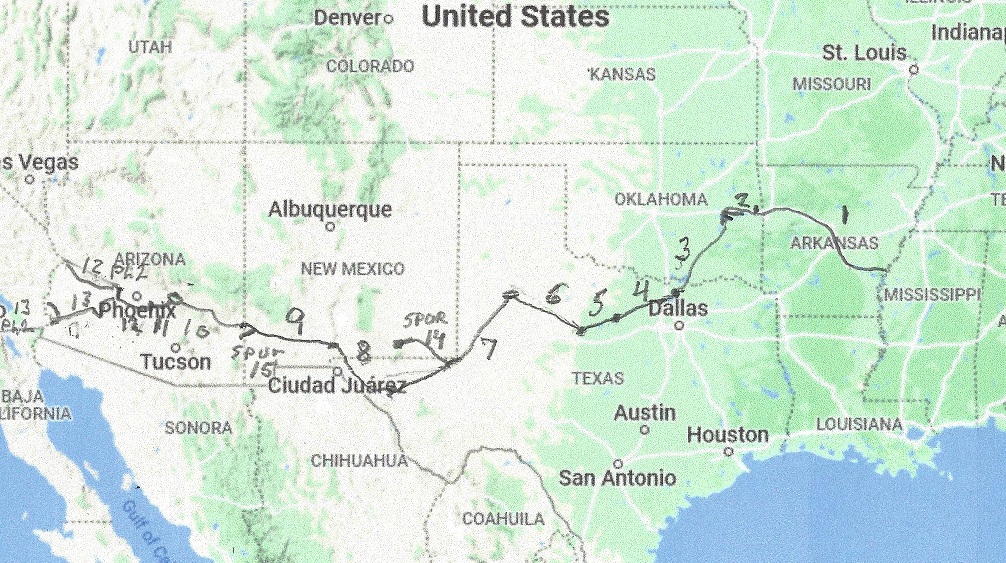
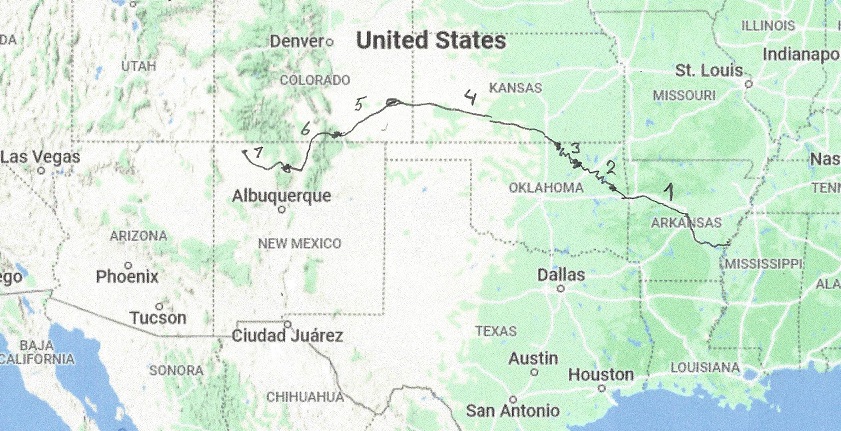
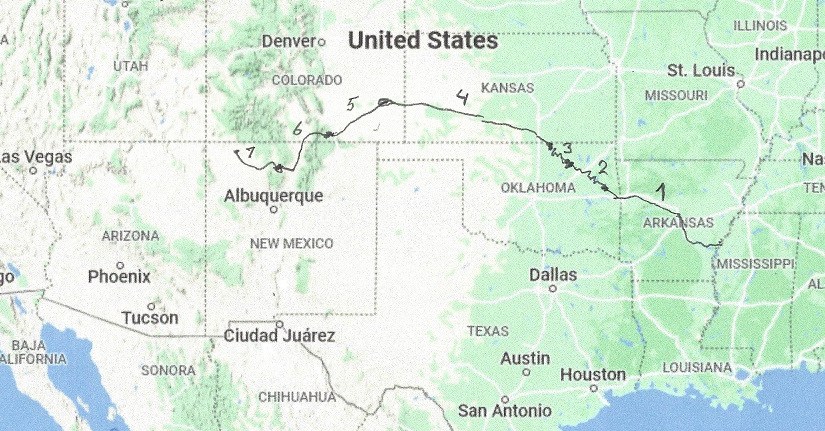
The first is to build a Transcontinental aqueduct, up the Arkansas River to the Colorado River via Arkansas, Oklahoma, New Mexico and Arizona, supplying water and peak power on the way.

For a detailed description, see here.

Secondly, build a Trans-Rocky Mountain Aqueduct, up the Arkansas River via Arkansas, Oklahoma, Kansas, Colorado, and New Mexico, to the San Juan River, a tributary to the Colorado River.

For a detailed description, see here.

The Transcontinental aqueduct will provide over 10 million acre-feet of water to the dry Southwest, triple the nation’s pumped water storage and allow the South-west to grow again. The Trans-Rocky Mountain will do likewise, and together they will allow the south-west to keep growing for at least another 50 years. Together with a smaller project , the South Platte river aqueduct they will save the Ogallala aquifer and allow it to keep producing crops for generations to come.

The ballad of Ira Hayes and the Transcontinental aqueduct.

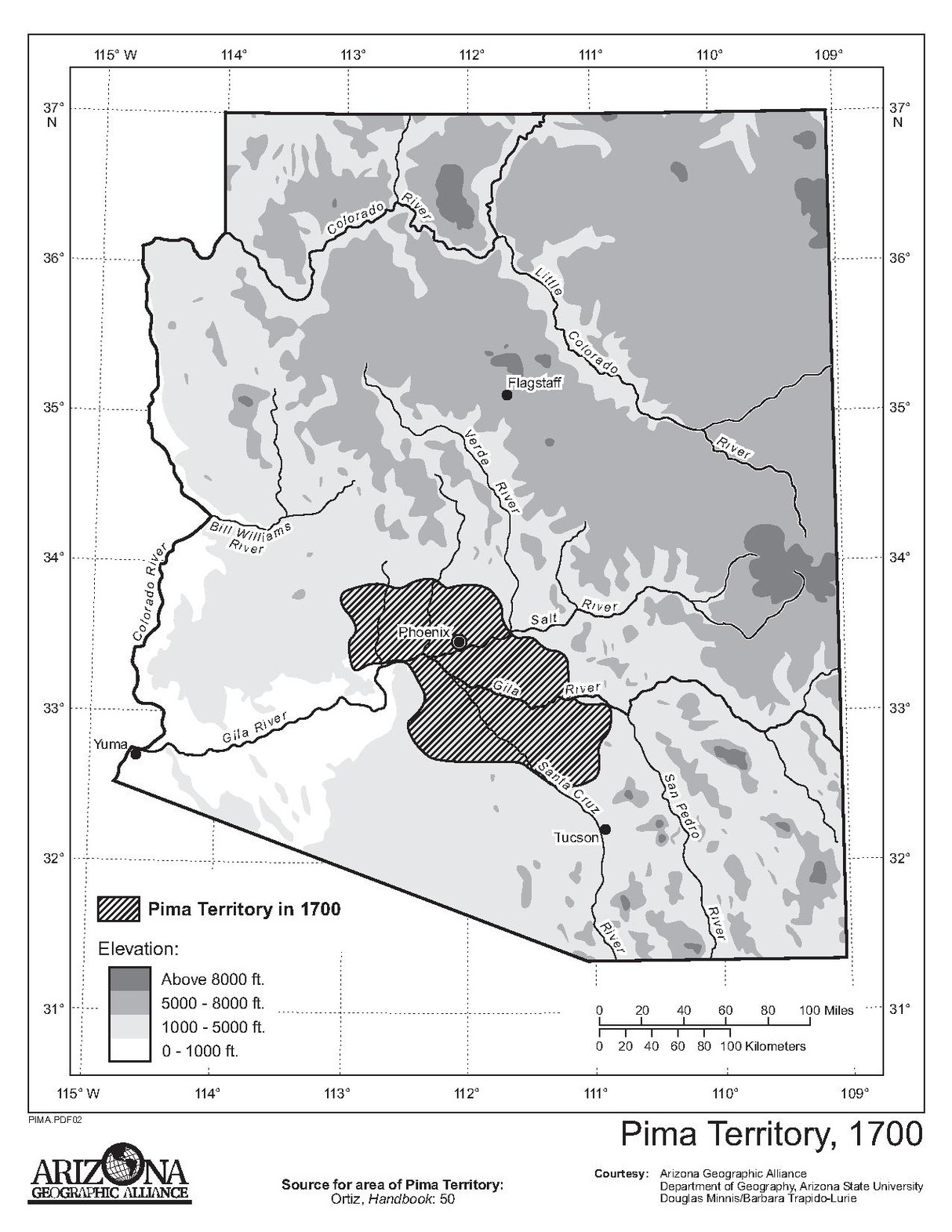
165 years ago Mark Twain coined the phrase: Whiskey is for drinking, water is for fighting over. So it was for the Pima Indians in the Phoenix valley in Arizona.

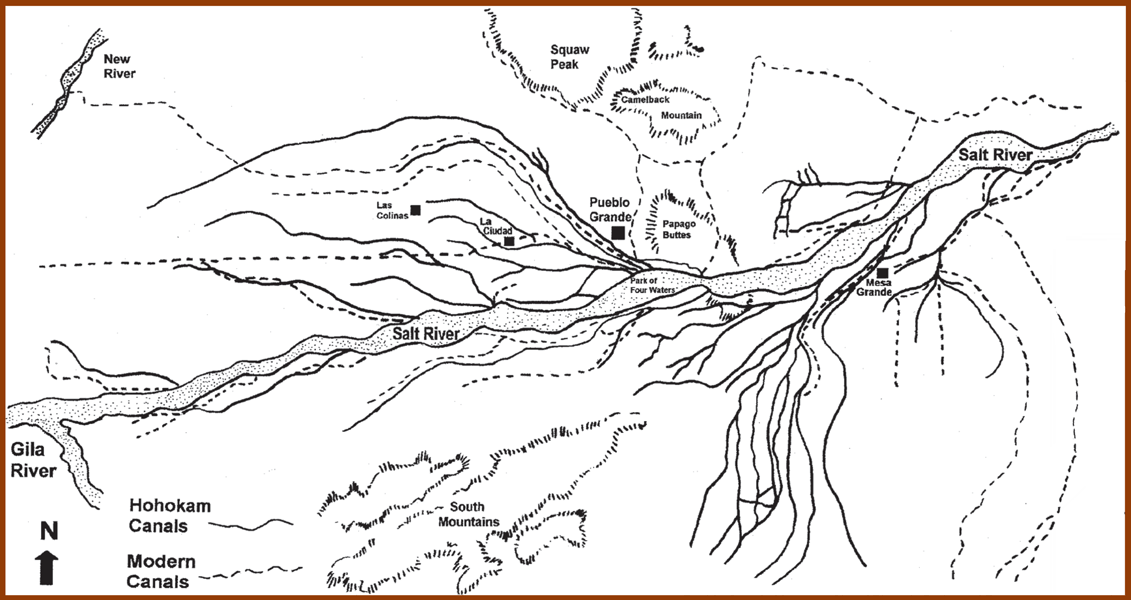
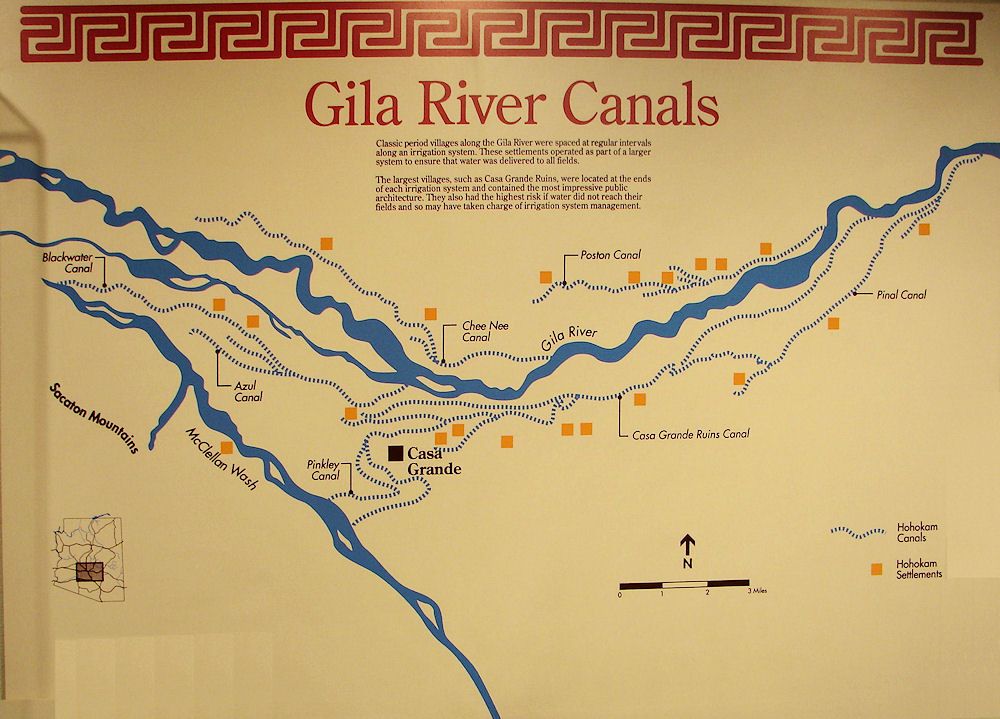
They had built a very intricate but functioning set of canals, unequaled in the Southwest America. Around the Salt River and the Gila river.

Then the white men came and took the water rights. Let Johnny Cash tell about one of the Pima Indians in the form of a ballad:

It was soo good. Listen to it again without the distraction of all the text and let it sink in.

Yes, the land is just as dry, even drier as Maricopa County was the fastest growing county in U.S. in the last decade. Even the aquifers are starting to run dry. And Lake Mead can no longer supply enough water for the Central Arizona Project aqueduct. More than anything the Indians need to have their water rights restored, so they can again be a functional society. These are the reparations they need.

To this end may I propose: The TransContinental Aqueduct. A realistic way to save Lake Mead and reverse the desertification of the American SouthWest.

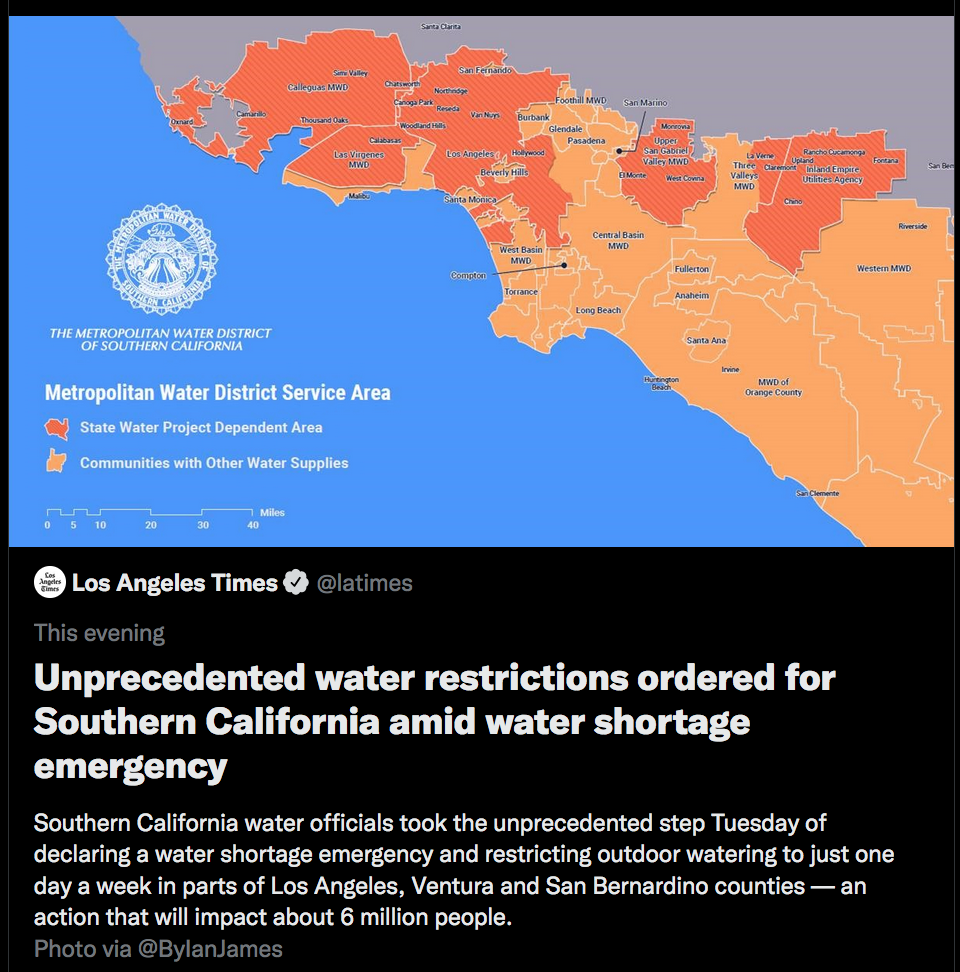
And now it begins. Southern California denies thousands of farmers their water rights or access to water.

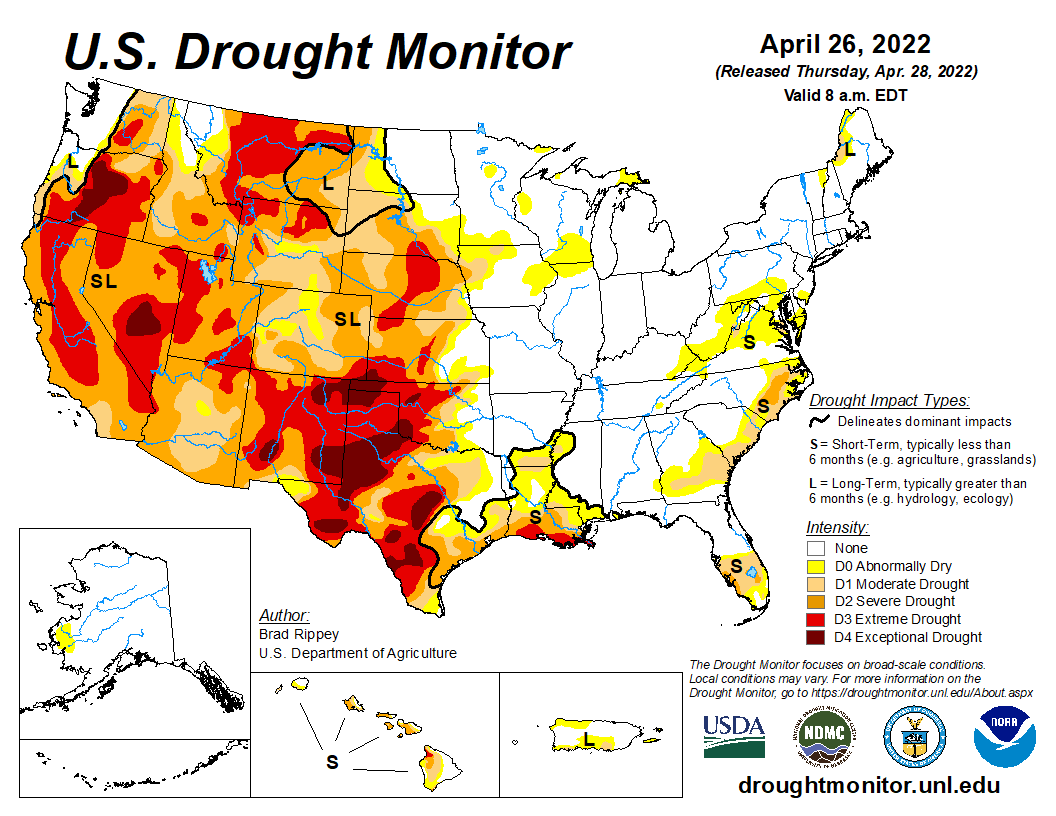
The western half of United States is experiencing a multi-year drought with no end in sight. Has the desertification of the American southwest started? Will farmers have to abandon their farms and orchards for lack of water? Will this and the shortage of fertilizer be the trigger point for a worldwide hunger, since now Ukraine is no longer the food basket of Europe?

These are worrying questions? The situation in the American South is dire:

The only saving grace is that thanks to increasing CO2, the vegetation needs less water to do the photosynthesis, so the harvests will not decrease as much even though fertilizer will be rationed.

Southern California was first to cut off water to thousands pf farmers:

The next step is to forbid watering of lawns and plants and fine people for violating HOA regulations that state that that lawns must be well fertilized and watered and free from weeds. The native weeds (I call them wildflowers) are the only thing that will survive the drought.

But back to the drought situation.

The solution:

Build a transcontinental aqueduct from the Mississippi River to the Colorado River capable of transporting 12 million acre-ft of water yearly through Arkansas, Oklahoma, Texas, New Mexico and Arizona. It will be built similar to the Central Arizona Project aqueduct, supplying water from the Colorado river to the Phoenix and Tucson area, but this aqueduct will be carrying four times more water over four times the distance and raise the water nearly twice as high before returning to near sea level. The original Central Arizona Project cost $4.7 billion in 1980’s money, the Transcontinental Aqueduct will in Phase 1 cost around $200 Billion in 2022 money applying simple scaling up principles.

The Mississippi River has a bad reputation for having polluted water, but since the clean water act the water quality has improved drastically. Fecal coli-form bacteria is down by a factor of more than 100, the water is now used all the way down to New Orleans for drinking water after treatment. The lead levels are down by a factor of 1000 or more since 1979. Plastic pollution and pharmaceutical pollution is still a problem, as is the case with most rivers. The Ph is back to around 8 and salt content is negligible. Mississippi water is good for irrigation, and usable for drinking water after treatment. The Arkansas River is used as a drinking water source.

But the aqueduct will do more than provide sweet Mississippi water to the thirsty South-west, it will make possible to provide peak power to Texas, New Mexico and Arizona. In fact, it is so big it will nearly triple the pumped Hydro-power storage for the nation, from 23 GW for 5 hours a day to up to 66 GW when fully built out.

The extra pumped hydro-power storage will come from a number of dams built as part of the aqueduct or adjacent to it. The water will be pumped from surplus wind and solar power generators when available. This will provide up to 50 GW of power for 5 hours a day. If not enough extra power has been generated during the 19 pumping hours, sometimes power will be purchased from the regular grid. The other source of pumped hydro-power storage is virtual. There will be up to 23 GW of LFTR (Liquid Fluoride salt Thorium Rector) power stations strategically stationed along the waterway providing pumping of water for 19 hours and providing virtual hydro-power output for the remaining 5, when the aqueduct is fully built. Read more about it here.

Lake Mead and Lake Powell are emptying fast. The solution: The Trans-Rocky-Mountain Aqueduct. Expensive, but very doable.

(Quoted partly from Joanna Allhands, Arizona Republic.) The seven Colorado River basin states have a plan to temporarily stabilize Lake Powell. The states are: Wyoming, Colorado, Utah, Nevada, Arizona, New Mexico and California.

It is a temporary delay of a very painful decision, it doesn’t rain enough in the Colorado River basin to provide enough water for the ever increasing population, now exceeding 40 million, five times more as when the Hoover dam was built.

Yet no one balked. And that’s a win.

That should signal how dire the circumstances have become.

The U.S. Department of the Interior noted in an April 8 letter to the basin states that Lake Powell is dangerously close to hitting 3,490 feet of elevation, a level so low that power could no longer be generated at Glen Canyon Dam and water could no longer flow to the nearby city of Page and an adjacent Navajo Nation community.

Because water could no longer flow through the power turbines, millions of acre-feet of water would flow downstream through smaller backup pipes at the base of Glen Canyon Dam – a risky prospect that could spell calamity for Lake Mead, which relies on Powell’s releases, if any one of those four pipes were damaged by the heavy flows and had to shut down.

nterior proposed taking the unprecedented action of withholding 480,000 acre-feet (that’s more than 156 billion gallons) in Lake Powell that otherwise should have flowed to Lake Mead, among other measures.

Two weeks later, the seven states responded with a singular voice: We get how dire this is, and we’re on board.

“We recognize the urgency created by current conditions in the Basin; in fact, hydrologic conditions in the Basin have continued to decline since your April 8, 2022, letter to the Governors’ representatives,” they wrote in an April 22 response. “It is our collective judgment that additional cooperative actions should be taken this spring to reduce the risk of Lake Powell declining below critical elevations.”

That means the upper basin states will agree to release 500,000 acre-feet from the upstream Flaming Gorge Reservoir, as part of a newly cemented 2022 Drought Response Operations Plan. (That’s a lot more than the 161,000 acre-feet that was released from upstream reservoirs last year to prop up Lake Powell.)

Meanwhile, the lower basin states, including Arizona, will agree to keep 480,000 acre-feet in Powell, though the states have asked for that amount not to count against shortage determinations.

What does that mean for shortages at Lake Mead?

The idea, however ill-conceived, is not to use Mead’s actual elevation to determine which shortage tier we’d be in, but rather as if that 480,000 acre-feet were in Mead and not Powell.

It’s not clear how the federal Bureau of Reclamation, which operates the reservoirs, would make that calculation, but the outcome could have real consequences.

The most recent forecast projects elevations as if that 480,000 acre-feet had flowed from Powell to Mead. It puts Mead a few inches above the trigger elevation of 1,045 feet in August, when the following year’s shortage determination is made.

That would put us in a deeper Tier 2 shortage, regardless.

But depending on which side of 1,045 feet we land, we could either fall in a Tier 2a or Tier 2b shortage – which for Arizona is the difference between making previously agreed cuts of 592,000 acre-feet or 640,000 acre-feet.

A Tier 2b shortage also would trigger more stringent water conservation actions in Scottsdale and Tucson. That could mean the imposition of drought surcharges in both cities and, in Scottsdale, the potential for mandatory restrictions.

I know. If we base shortage decisions off where the lake should be, but not really is, we’re making conditions look better than they are. Which doesn’t help us in the long run, even if we could temporarily avoid the pain of Tier 2b.

We extinguished a fire to focus on other work

But, importantly, the states also have agreed that “water year 2023 releases should be carefully monitored and be the subject of consultation with the Basin States to preserve the benefits to Glen Canyon Dam … .”

Translation: Whatever actions we take and shortage levels we set for 2023 will get another look, likely in late winter or early spring, when we have a better idea of the year’s runoff picture, to determine whether we need to do more.

It’s a level of flexibility that we haven’t traditionally had – but will likely need – when lake levels are so low and volatile.

None of this solves anything, of course. Even a combined million acre-feet from the states will likely just prolong the inevitable, hopefully long enough to better assess the strength of Powell’s backup pipes.

And to resume the tough work of storing an extra 500,000 acre-feet each year for the next five years in Lake Mead as part of the 500-plus plan. Without that extra water each year, the lake mostly likely will sink below 1,020 feet of elevation – Mead’s version of the dangerously low level that Powell has already reached.

And – most importantly – to finally sit down and talk about longer-term solutions for the Colorado River, most notably how much water we can reliably expect it to produce. It sure as heck isn’t the 15 million acre-feet that we’ve been apportioned.

Imperfect as this response may be, it’s significant that all seven states agreed to it quickly, so we can get back to the many other pressing tasks at hand.

Reach Allhands at joanna.allhands@arizonarepublic.com. On Twitter: @joannaallhands.

There is a solution:

The Trans-Rocky-Mountain Aqueduct will save Lake Powell and Lake Mead, and rejuvenate the American South-west. This solution is expensive, but when all costs are included, it can deliver 3.6 to 6 Million acre-feet / year at a cost of $2,290 per af, high, check the calculations here. This is the solution that can be done in the shortest time.

The other solution is The TransContinental Aqueduct. A realistic way to save Lake Mead and reverse the desertification of the American SouthWest. It will really do the job at a lower price per Acre-ft but require much more capital investment. Check out the cost estimates here. This estimate is on the high side. but was a earnest stab at the costs.

Is it worth it to save the American Southwest from being desertified? In my opinion, if we are serious about saving the earth, this is one of the most urgent projects that deserves consideration.

The Trans-Rocky-Mountain Aqueduct; Cost estimates. Will it pay for itself?

To begin cost estimates, the model used is the cost for the Arizona central project. The waterway was constructed 1974 to 1993 at a cost of 4.7 billion dollars. In 2022 dollars that would be about 13.5 billion. The cost for the canal would be about 12.6 billion and 900 million for the pumping stations. The average size of the aqueduct in its beginning is 80 feet across the top and 24 feet across the bottom and the water is 16.5 feet deep. The concrete is 3.5 inches thick and, in some areas, it is reinforced with steel rebars. It is 336 miles long from Lake Havasu City to Tucson with a total lift of over 2,900 feet. The capacity starts out at over 2.2 million acre-ft per year, diminishing as the drop-off point occurs, and the total pumping of 1.4 million acre feet of water is lifted by up to 2,900 feet by 14 pumping stations using 2,500 GWh of electricity each year. The pumping stations have a total pumping capacity of 240 MW. It has a 7 mile long, 22 feet diameter tunnel from Lake Havasu to the beginning of the waterway.

The Trans-Rocky-Mountain aqueduct is much bigger: The The average size of the aqueduct in its beginning is 160 feet across the top and 80 feet across the bottom and the water is 35 feet deep. The concrete is 4 inches thick and, in most areas, it is reinforced with steel rebars. The concrete used is 4,500 cu yd per mile. It will cost about 2.5 times as much per mile as the ACP, so the total cost for the Trans-Rocky-Mountain Aqueduct will be ((12.6x 2.5 : 336) x 480) = 45 billion dollars. Like the CAP, it will have an 8 mile tunnel, and its diameter will be 48 feet. This cost estimate is probably high, since eminent domain costs will be minimal; all the dams already exist and are paid for, the Arkansas river is there, complete with dams; and land for all the reservoirs are already litigated and settled. The canal will go through sparsely inhabited land.

The cost of building 17 additional small dams in the Arkansas River will be on the order of $120 million per dam, for a total of $2 Billion.

There will be a total of 7.4 GW of pumped energy needed and 200 MW of base power generated. To get the aqueduct operational at 6 MAF/year it requires 7.4 GW of energy. Pumping cost capital is about $ 1.30 per watt, so the minimum pumping capital cost is 9.6 Billion dollars.

The Liquid Fluoride Thorium Reactors proposed is 100 MW units. so called Small Modular Reactors (SMR) The reactor core assemblies are small enough so they can be produced on an assembly line and delivered via truck. There are 3 assemblies needed, the reactor, the safe shutdown unit and the reprocessing and separation unit. The whole building can be built for $ 230 million. To complete the installation costs, add another # 30 million per unit. The aqueduct needs 74 units. The initial capital cost for grid access and minimum flow is $19 billion.

To sum it up,the capital cost for a flow of 6 MAF is (45 +2 + 9.6 + 19) = 75.6 billion dollars. The amount of water in the aqueduct when filled is 230,000 acre-feet and will take 1.1 TWh of electricity to fill, or about $35,000dollars at 3 c/kWh base rate.

When the electricity demand requires peak power, the pumps are turned off, and electricity will be sold back to the grid, at peak rate.

Solar power and wind power will also power the pumps, and they will lessen the demand for nuclear reactors. But the remaining reactors will still be needed, or peak power will still have to be supplied by natural gas, or coal when the sun doesn’t shine and the wind doesn’t blow.

In short: assuming a 50 year amortization plan for the aqueduct, and money available at 2%, , it will cost 3 billion a year in capital cost to deliver 6 MAF water from the Mississippi River to Lake Powell or any point in between, or $2,000 per acre-ft. Add to that $240 for electricity and another $50 per acre-ft in overhead and maintenance, the cost will be $2,290 per acre-ft.

The Rocky Mountains places are ideal for wind and solar power, but they need to store the energy when the sun is not up or doesn’t shine, or the wind doesn’t blow. Right now that is provided by coal and natural gas. Conventional nuclear power is best for use as base power only, so this Trans-Rocky-Mountain aqueduct will provide up to 7.4 GW of pure virtual pumped power storage, the LFTR nuclear power plants will provide the energy by shutting off the pumping of water in the aqueduct when the need arises, and instead provide another up to 7.4 GW of virtual pumped storage power. The beauty of this is that the pump response is instantaneous, so the grid can be really finetuned to meet the exact power needs.