“There are three things I have learned never to discuss with people…religion, politics, and the Great Pumpkin.” Linus from Peanuts.
Author: lenbilen
Retired engineer, graduated from Chalmers Technical University a long time ago with a degree in Technical Physics. Career in Aerospace, Analytical Chemistry, computer chip manufacturing and finally adjunct faculty at Pennsylvania State University, taught just one course in Computer Engineering, the Capstone Course.
Luke 11:1-28. The disciples asked Jesus on how to pray and he gave them the pattern prayer, also called “The Lord’s prayer.” On prayers, be importune, ask, seek, knock, the key verse is: “If ye then, being evil, know how to give good gifts unto your children: how much more shall your heavenly Father give the Holy Spirit to them that ask him?” Jesus healed a mute man and some said it was by Beelzebub (the lord of flies). Jesus knew their thoughts and rebuked them.
Proverbs 4. Wisdom is supreme and there is security in wisdom.
President Joe Biden explained today in a short speech on inflation that the biggest obstacle to his program is the Ultra MAGA Republicans that has taken over one part of the Republican party rendering governing nearly impossible considering his small majorities in both the House and the Senate.
It is now one week until the Pennsylvania Senate Primary, so it is time to look who to vote for. I saw the same attribute given to Kathy Barnette. Her fatal flaw is that she is Ultra MAGA. So I took a second look at her, and this is what I found. She is Black, and is running as a Republican. She was conceived out of rape when her mother was only 11 years old. She grew up in poverty on a pig farm. She clawed herself up and got both a bachelor’s and a Master’s degree in economics. She has served many years in the Army Reserve. But she has made the most important choice in her life. She is pro- life. As it says in the Holy Bible:
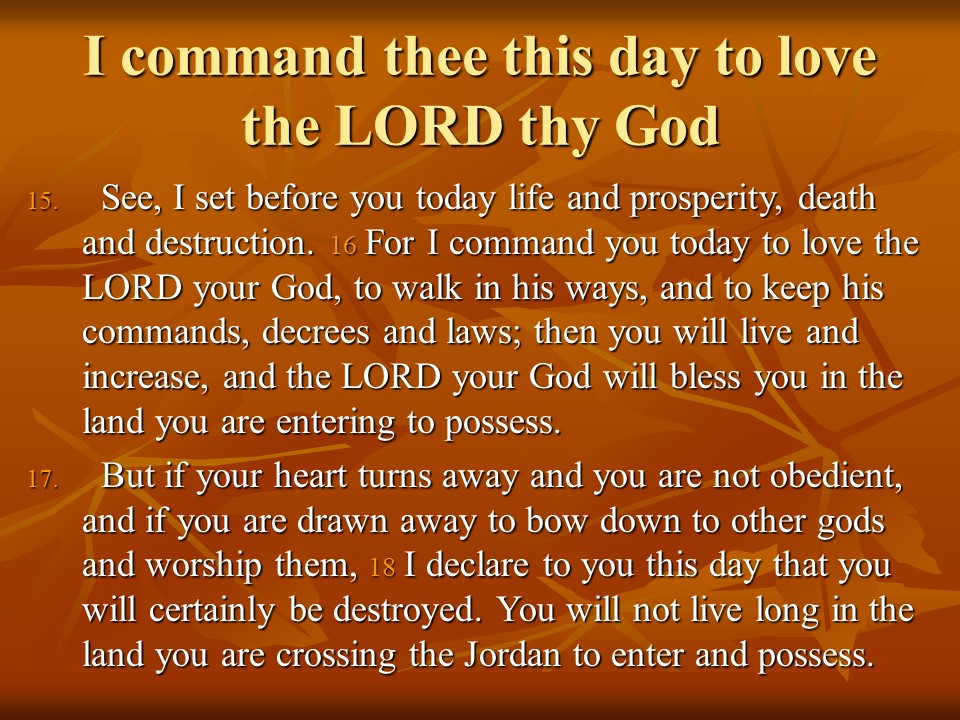
Deuteronomy:30:15 See, I have set before thee this day life and good, and death and evil; Deuteronomy 30:19 I call heaven and earth to record this day against you, that I have set before you life and death, blessing and cursing: therefore choose life, that both thou and thy seed may live:
White House Press Secretary Jen Psaki declined to say if President Biden believes a 15-week-old unborn baby is a human being during one of her press briefings.
“Does the president believe that a 15-week-old unborn baby is a human being?” a reporter asked Psaki.
“Are you asking me if the president supports a woman’s right to choose? He does,” Psaki said.
This is what a 15 week old unborn baby looks like
The two verses above was from the King James Bible.The context is that Moses, having been forbidden to enter the promised land gave his final instruction to the people before they were to finally end their desert journey by crossing the Jordan River. This is from the New International Bible.
This is one of Kathy Barnett’s commercials telling quite well what it means to be an “Ultra MAGA” person.
Luke 10:25-42. Jesus told the Parable of the Good Samaritan. Further on his way Jesus went to the home of Martha and Mary. Martha was busy preparing the meal, but Mary just sat there and listened to Jesus.
2 Samuel 23 tells of David’s last words, and listed all of of David’s mighty men.
2 Samuel 24. David took a census of Israel and Judah,which was a sin that had to be punished. David chose to fall into the hands of the LORD, so the angel of death ravaged the land for three days until he came to the threshing floor of Araunah the Jebusite. David built an altar there and sacrificed.
Luke 10:1-24 In Luke 10 Jesus did send out the seventy-two, they returned with joy but Jesus admonishes them: “rejoice not, that the spirits are subject unto you; but rather rejoice, because your names are written in heaven.” Jesus also saw Satan fall from heaven like lightning.
Luke 9:37-62. A day after the Transfigurationon the mount Jesus healed a boy with an evil spirit. The disciples argued about who would be the greatest, and as an object lesson Jesus picked up a little child and said: “He who is least among all, he is the greatest“. Jesus spoke against sectarianism, and on their way to Jerusalem they met Samaritan opposition. Finally Jesus told the disciples there is a cost of following Him.
2 Samuel 21. David made a deal with the Gibeonites, and during a number of battles, some of the Philistine giants were killed, among them Goliath (not the one you think).
Luke 9:28-36. About eight days after Peter Confessed Jesus to be “The Christ of God” he, James and John witnessed the Transfiguration of Jesus on the mount.
2 Samuel 19. David mourned for Absalom and returned to Jerusalem, where he showed mercy to Shimel, Mephibosheth, and also Barzillai,the rebel who preferred to die in his own country. The tribe of Judah and the ten tribes of Israel quarreled about whose King David was.
This is insanity. In 2011 the Oak Ridge Laboratories had a stockpile of 1400 kg U 233. They have been busy downblending it into depleted uranium to render it useless, and there is now only about 450 kg left.
Check out this video and see if you will get as upset as I did.
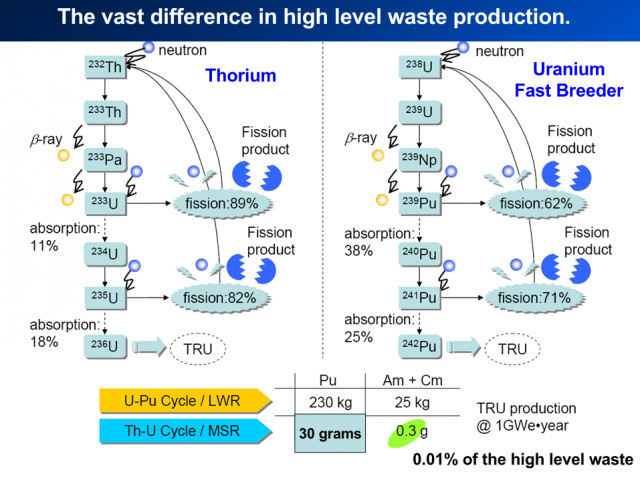
There is one minor error in the video. The Thorium-U233 reactors also produce Plutonium, but it only produces Plutonium238, which is needed for space exploration. We are out of Pu238, only Russia has some left.
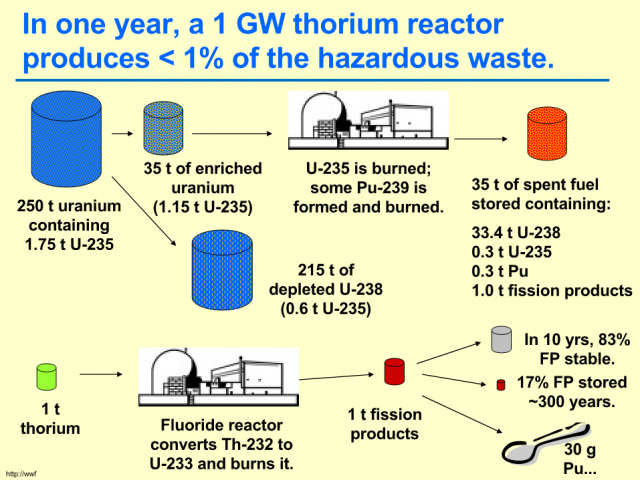
The situation: The Department of Energy had 1400 Kg Uranium-233 stored at Oak Ridge National Lab. They are in process of downgrading it to natural uranium by downblending it with depleted uranium. They need 200 tons of depleted uranium to do the task, rendering it unusable for anything.
The decommissioning was approved in 2003 and in 2012 130 million had been spent, before the actual downblending started.
Stop the decommissioning immediately. Build our own Liquid Fluoride Thorium Nuclear Reactor and over time get 600 million dollars worth of electric power and 45g of Plutonium-238. We are out of Pu-238 and can do no more planetary exploration satellites.
The deep space satellites all had Pu-238 power sources. Only Russia has Pu-238 left, and the U.S. was banking on getting it for a friendship price. In addition there are significant unique medical applications in treatment of cancer that can be obtained by radiation from the byproduct of the Thorium process. Below are pictures of the Thorium process and what a Thorium Power plant might look like. (4)
The Plutonium in the Uranium cycle is PU239 and higher, all nasty stuff.
The LFTR does not use water, can be deployed everywhere, even in space.
Luke 9:1-27. Jesus sent out the twelve apostles. Herod tried to meet with Jesus because his fame was rising, at one time Jesus fed the Five Thousand (besides women and children). Peter Confessed that Jesus is “The Christ of God”.
2 Samuel 16 tells of Mephibosheth’s servant. Shimel sided with Absalom and cursed David. Absalom listened to the advice of Ahithopel, a supposed man of God.
2 Samuel 17 records the advice of Hushai to Absalom. Hushai also warned David to escape, which he did, and some people provided food and supplies for David and his men.
2 Samuel 18. Absalom suffered an inglorious death (read about it). David heard of Absalom’s death and mourned for Absalom.
Luke 8:26-56. After crossing Lake Galilee Jesus healed a demon possessed man and later a woman with a bleeding issue. Finally Jesus raised a dead girl back to life.
2 Samuel 14. Absalom returned to Jerusalem, and David forgave Absalom.
2 Samuel 15. Rather than thanking him Absalom revolted against David, and David escaped from Jerusalem.
Luke 8:1-25. Jesus told the Parable of the Sower, followed by the parable of a lamp on a stand. His Mother and Brothers came to see Jesus, but he declared that his mother and brothers are those who do God’s will. While Sailing across Lake Genesareth a storm arose, Jesus calmed the storm and rebuked his disciples for their lack of faith.
2 Samuel 12. Nathan confronted David about his sin and David Confessed: “I have sinned against the LORD.” It tells of the death of David’s son with Bathsheba, after which a second son, Solomon was born to Bathsheba. Finally, the chapter reverts back to war and David’s men captured Rabbah, a city of the Ammonites.
2 Samuel 13 describes the seedy story of Amnon and Tamar, all within David’s family. David’s son Absalom then killed Amnon, after which Absalom fled to Geshur.