The Transcontinental Aqueduct. Leg 11: The highest pumping station in Arizona to San Carlos Lake, a distance of 93 miles.

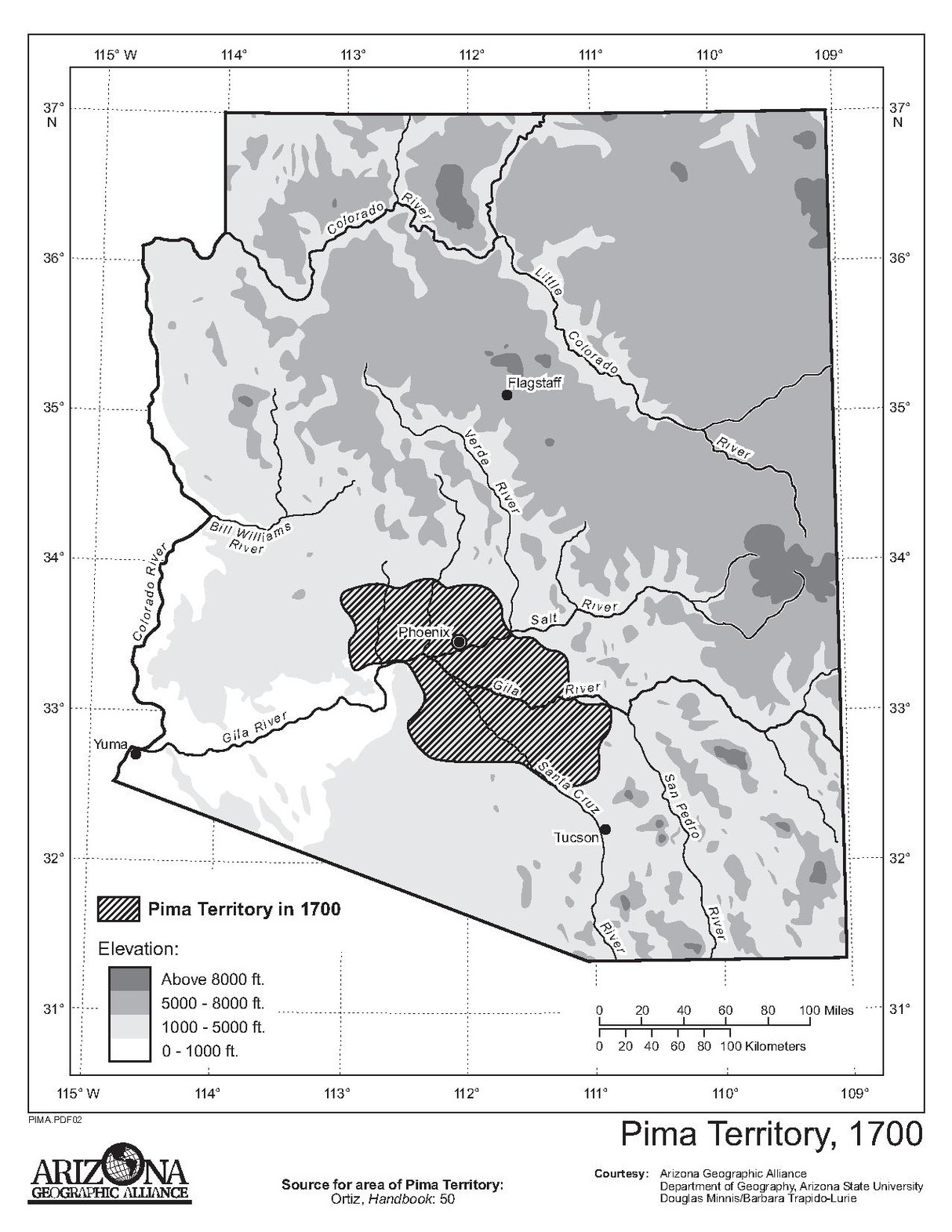
The aqueduct stage of this leg is 32 miles and is generating power.The drop is average (4,200 – 3,000 – 32×2.2) = 1,130 feet. The maximum flow is 16,800 cfs. This stage is capable of generating maximum 1.4 GW of power 24 hours a day. Then it drains into Gila River for 47 miles, following 14 miles of San Carlos lake, for a total of 93 miles.

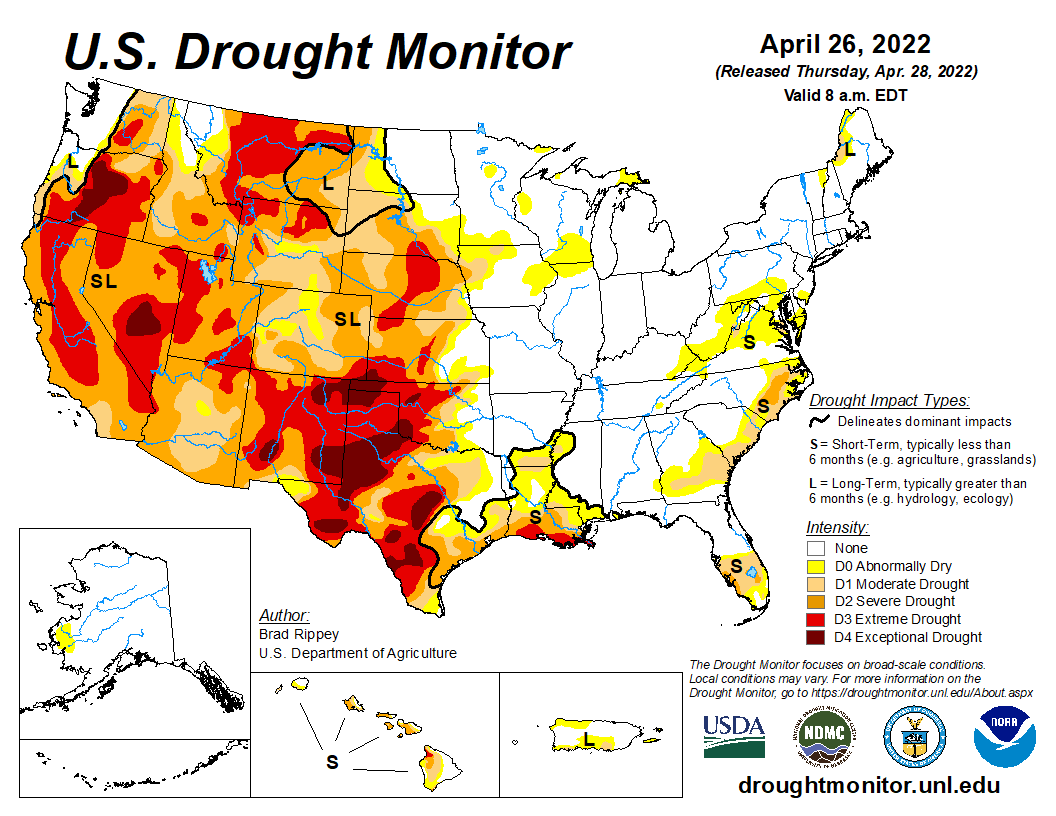
San_Carlos_Lake is located within the 3,000-square-mile (7,800 km2) San Carlos Apache Indian Reservation, and is thus subject to tribal regulations. It has been full only three times, in 1993 it overflowed the spillway and about 35,000 cfs of water caused erosion damage to natural gas pipelines. The lake contained (April 6,2021) less than 100 acre-ft of water. All fish was dead.

When former President Coolidge dedicated the dam in 1930, the dam had not begun to fill. Humorist Will Rogers looked at the grass in the lake bed, and said, “If this were my dam, I’d mow it.”[

When the Transcontinental aqueduct is built the lake will always be nearly filled, level will be at 2510 feet with flood control nearly automatic, it will never overflow, and it will look like this, or better:

The San Carlos lake, when filled will hold 1,000,000 acre-ft of water.

The Coolidge dam will have to be retrofitted for a 25,000 cfs water flow

The Coolidge dam will have to be retrofitted for a 17,000 cfs water flow. When water starts flowing at half capacity, 8,400 cfs in phase 1 of the building project it will take 2 months to fill the lake.

What’s in it for Arizona? The San Carlos Lake has been a great disappointment. It is more often empty than even half full, and when it is empty, all fish die. With The Gila river will be rejuvenated and will be able to carry fish again, making it the great recreation spot it was meant to be. In addition it will generate up to 1,4 GW of Power and carry up to 12 Million Acre-ft per year of water to the thirsty American South-west. In the first phase, while the aqueduct is built to full capacity, the flow will be 6 MAf per year.

The Transcontinental Aqueduct. Leg 10: Martin Tank Lake to the highest pumping station in Arizona, a distance of 200 miles.

The Martin Tank Lake dam is 2,260 feet wide and 230 feet high. The Lake will contain about 30,000 Acre-ft when full, about twenty-one hours worth of storage.

The elevation at the Martin Tank lake will top out at 5,220 feet with maximum water level at 5,210 feet. Because there is no water storage en route water will be pumped at all times at The aqueduct will first descend to 3980 feet, as it crosses the Rio Grande in La Mesa, a distance of 50 miles. The elevation difference is (5,120 – 3980 – 50 X 2.2) feet = 1.030 feet. Releasing 16,900 cfs of water 1,030 feet will generate 1.285GW of energy continuously. From La Mesa it will climb to the highest pumping station in Arizona, located 10 miles west of the border, at 4,200 feet. The total lift of the water in stage 10 is (4,200 – 3980 + 160×2.2) feet = 572 ft. To lift 16,900 cubic feet per second 592 feet requires 892 MW of power, for a net electricity generation of 393 MW.

What’s in it for New Mexico and Arizona? Up to 16,900 cfs of soft water is being delivered to the thirsty south western states. This corresponds to 12 Million Acre-feet per year. The Colorado river contributes 15 MAF/year.

March 29: Reading the Holy Bible in a year.

Mark 2:13-28. Jesus called Levi, the tax collector, also called Matthew. To associate with a tax collector was controversial and the Pharisees objected, since tax collectors were held in disregard, but Jesus assured them he came to save sinners. Then Jesus was questioned about why he and the disciples did not fast, as they should, and worse yet, they picked food from the head of the grain on a Sabbath! To that Jesus claimed that he is also Lord of the Sabbath!

In Joshua 3  the Israelites were finally crossing the Jordan.

Joshua 4. After crossing the Jordan Joshua commanded the Israelites to take twelve stones as Memorial Stones to remind them they crossed Jordan on dry ground. (When the Levites fially had passed over the Jordan River with the Ark the waters returned to flood stage.)

Psalm 25, of David. “Unto Thee, o LORD do I lift up my soul.”

Psalm 26, of David. A Psalm where David asked God to judge him on his merits based on faith.

March 28: Reading the Holy Bible in a year.

In Mark 2:1-12 Jesus healed a paralytic man, and he also forgave the man his sins. This caused quite a stir, since nobody can forgive sins but God alone.

Joshua 1 tells of  God’s Commission to Joshua. The LORD gave the order to Cross the Jordan, “Only be strong and of a good courage”.

Joshua 2 tells the story of the innkeeper Rahab and the spies. From this story we get the idiom “a scarlet thread”.

Psalm 24, of David. Here the Psalm is illustrated with beautiful pictures. Enjoy!

The Transcontinental Aqueduct. Leg 10: Martin Tank Lake to Poppy Canyon pumped storage reservoirs, a distance of 200 miles.

The Martin Tank Lake dam is 2,260 feet wide and 230 feet high. The Lake will contain about 30,000 Acre-ft when full, about eighteen hours worth of storage.

The elevation at the Martin Tank lake will top out at 5,220 feet with maximum water level at 5,210 feet. Because there is no water storage en route water will be pumped at all times at The aqueduct will first descend to 3980 feet, as it crosses the Rio Grande in La Mesa, a distance of 50 miles. The elevation difference is (5,120 – 3980 – 50 X 2.2) feet = 1.030 feet. Releasing 16,900 cfs of water 1,030 feet will generate 1.285GW of energy continously. From La Mesa it will climb to the Poppy Canyon Upper Reservoir. The dam is 480 feet high and will top out at 5,400 feet with a maximum water level at 5,490 feet. The total lift of the water in stage 10 is (5,000 – 3980 + 160×2.2) feet = 1196 ft. To lift 16,900 cubic feet per second 1196 feet requires 1,508 MW of power, for a net need of 225 MW. This can be supplied by two 100 MW LFTR nuclear reactors, operating 24 hrs /day The Poppy Canyon Reservoir will look like this:

The Poppy Canyon is a pumped power storage, consisting of an upper dam:

Dam width 4,500′ height 540′ water storage 230,000 acre-ft

and a lower dam:

Dam width 4,500′ height 500′, water storage 200,000 acre-ft

The total lift of the water in the pumping stage is maximum (5,390 – 4,400) feet = 990 ft. and the minimum lift is 200ft, for an average lift of 350 ft. The pumping stage pumps up 10,000 acre-ft per hour for i9 hours needing maximum 10.7 GW of power. During the release stage 38,000 acre-ft of water is released per hour for a total power generation of 78 GWh / day of pumped storage electricity. In addition, the 107 100 MW LFTR SMRs will generate 53.5 GWh of virtual power storage when no water is pumped up.

What’s in it for New Mexico and Arizona? 16,900 cfs of soft water is being delivered to be divided among the south western states. In addition this stage will provide up to 133.5 GWh of pumped storage peak energy daily to help stabilize the grid when more solar power panels are installed and electric cats and trucks are recharged.

March 27: Reading the Holy Bible in a year.

Mark 1:12-45 . Immediately after his baptism by John the Baptist Jesus was tested in the wilderness for forty days. After the temporary victory over Satan, Jesus began calling his first disciples, and went to Capernaum, starting his ministry. Jesus drove out an evil spirit while teaching in the synagogue. As had become his habit, Jesus healed many and many people started following him, and as always Jesus prayed in a solitary place, but continued to teach and heal many, including a man with leprosy. This is a chapter full of action.

Ecclesiastes 9. Death comes to all, and wisdom is better than folly.

Ecclesiastes 10. Yes indeed, wisdom is better than folly.

Psalm 23, of David. Probably the most memorized Psalm of them all. Do it, if you can.

The Transcontinental Aqueduct. Leg 9: From the North Hammock Canyon to the Martin Tank Lake.

Leg 8 ended in the North Hammock Canyon Reservoir. It will be filled mostly during the 5 hours of peak power generation. During the other 19 hours the fill rate will be very low leading to lowering water levels.

Leg 9 starts with a 1/2 mile wide, 200 ft high reservoir capable of holding 12,000 acre-ft of water. It will be filled during the 5 hours of peak power. The average drop is (4,600 – 4210) = 390 ft and the flow is (12,000 / 5) = 2,400 acre-ft/hr, generating a net power of (390 x 2,400x 0.92) = 861 MW during the 5 peak hours.

From the North Hammock peak power reservoir to the Martin Tank Lake the distance is 59 miles the way the aqueduct takes. It will first descend to 3720 feet before rising to 5190 feet. The descending drop is (4200 – 3720 – 2.2 x 9), an average of 460 feet. The Martin Canyon Lake will top out at 5200 feet with maximum water level at 5190 feet. The total lift of the water in this stage is (5190 – 3720 + 50×2.2) feet = 1580 ft. To lift 21,400 cubic feet per second (1580 x 1.08 – 460 x 0.92) = 1283 feet requires eighteen 100 MW LFTR nuclear reactors. The Martin Tank Lake dam is 22260 feet wide and 230 feet high. It will contain about 30,000 Acre-ft when full, about eighteen hours worth of storage.

What’s in it for New Mexico? The major contribution in this stage is the 861 MW of pumped storage and 2,300 MW of virtual power storage for a total of ( (861 + 2300) x5) = 15.8 GWh per day.

March 26: Reading the Holy Bible in a year.

Mark 1:1-11 starts, not with the birth of Jesus, but with the beginning of Jesus’ ministry. John the Baptist prepared the way for Jesus, baptized many for repentance and the forgiveness of sins, and he also baptized Jesus.

Deuteronomy 33. Moses’ gave his final blessing on each of the tribes of Israel.

Deuteronomy 34. Moses died on Mount Nebo. Epilogue: “And there arose not a prophet since in Israel like unto Moses, whom the Lord knew face to face”. This ends the firsr five books of the Bible, also called the Torah.

Leg 8 of the Transcontinental aqueduct. A 20 mile tunnel from the White Oaks Canyon dam and pumped storage plant to the North Hammock Canyon dam and pumped storage plant.

Dam 1 is the White Oaks Canyon Lake. It has a 2000 feet wide and up to 500 feet high dam, topping out at 5,140 feet, and the lake holds a volume of up to 80,000 acre-ft of water.

White Oaks Canyon dam, 500′ high, elevation 5140′

Dam 2 dams the Pine Canyon dam. It has a 2200 feet wide and up to 240 feet high dam, topping out at 5,620 feet, and the lake holds a water volume of up to 60,000 acre-ft. Water is pumped from and released to the White Oaks Canyon lake to the Pine Canyon pumped storage via a 2 mile tunnel.

Leg 8 consists of a tunnel, starting at 4,640 feet and ending at 4140 feet. The 20 mile long tunnel will drop 40 feet as it passes under the mountain. At the 16 mile mark there will be a 460′ vertical drop.

Dam 3 dams the Kingston Canyon lake. It has a 1600 feet wide and up to 250 feet high dam, topping out at 5,210 feet, and the storage holds a volume of up to 25,000 acre-ft of water.

Dam 4 dams the Upper Hammock Canyon Reservoir. It has a 3000 feet wide and up to 500 feet high dam, topping out at 4630 feet, and the lake holds a volume of up to 25,000 acre-ft of water.

Up to now all stages have pumped water uphill. This stage both generates peak power and pumps water. Let us first take the case for pumping water, Stage 1 thru 4.

Stage 1 pumps up to 60,000 acre-ft of water during the 19 off peak hours from an average height of 5,000′ in Dam 1 to an average height of 5,500 in dam 2,a lift of 500′ This requires 1,700 MW of power.

Stage 2, the first 16 miles of the tunnel. The water flow is down to 21,500 cfs , 19 hours a day. During these 19 hours 21,500 cfs flows down the tunnel, the power generated is coming from Dam 1 with a water level of between 4980 feet and 4700 feet with an average of 4940 feet. The tunnel will slope with a 2.2 ft per mile drop.

Stage 3. 16,000 cfs of the water will be pumped up to dam 3, with an average rise from 5,000 feet to between 5200 feet and 4930 feet, (average 5120) for 19 hours, an average lift of 160 feet. This requires a total of 230 MW of power .

Stage 4.The remaining 3,500 cfs of water will be released to dam 4 with an average drop of of 200 feet will generate about 60 MW of power.

Stages 1-4 requires a net power need of 1,570 MW during the 19 off-peak hours.

Stage 5 will release up to 60,000 acre-ft of water from Dam 2 to dam 1 during the 5 peak hours, dropping 500 feet, generating 5,500 WW of power, assuming a 92% generating efficiency.

Stage 6 will release up to 25,000 acre-ft of water from dam 3 to dam 4 during the 5 peak hours, dropping an average 600feet, generating 2.700 MW of power.

What’s in it for New Mexico? This leg is very important, since it will provide up to 41 GWh daily of pumped storage electricity to the national grid, and so make it possible to stabilize the net when more solar panels are installed. The 1,570 MW of power needed for this leg will hopefully come mostly from solar and wind power

March 25: Reading the Holy Bible in a year.

Matthew 28 begins with Jesus being in the grave for the two adjoining sabbaths, the first day of unleavened bread followed by the normal sabbath. There was an earthquake and the stone was rolled away. Jesus was no longer in the grave. The guards were bribed to tell the story that the disciples took the body, but two  women, the two Marys met the resurrected Jesus. He told them to tell the remaining disciples that he was risen from the dead. The Gospel of Matthew ends with Jesus giving us the great commission: “All power is given unto me in heaven and in earth.  Go ye therefore, and teach all nations, baptizing them in the name of the Father, and of the Son, and of the Holy Ghost:  Teaching them to observe all things whatsoever I have commanded you: and, lo, I am with you always, even unto the end of the world. Amen.”

Deuteronomy 32 gives us the Song of Moses. At the end of the chapter the LORD told Moses he would only see the promised land from a distance and die on Mount Nebo.