March 4, read the Bible in a year in PowerPoint; commented

Matthew 17:1-13
describes the transfiguration on the mount. It shows Jesus joining
Moses and Elijah. Jesus tells his disciples: Elijah has already come.

Numbers 23 tells of Balaam’s first oracle, his second oracle, and the beginning of his third oracle.

Numbers 24 continues with Balaam’s third oracle, his fourth, and his final oracles.

Numbers 25 tells how Israel went astray in Moab.

March 2, read the Bible in a year in PowerPoint; commented

Matthew 16:1-12. the Jews demanded a sign. Jesus told them the there will be no sign other than the sign of Jonah: Three days and three nights in the belly of a great fish. The disciples had forgotten to bring bread and Jesus coincidentally told them : Beware of the yeast of the Pharisees and the Sadducees. Huh? Jesus had to explain to them he meant their doctrine, not literal yeast.

Numbers 18 describes the duties of Priests and Levites, offerings for Supporting the Priests, tithes Supporting the Levites and the tithe of the Levites. As representatives of the LORD they were entitled to get the best part.

Numbers 19 details the laws and procedures of Purification, and introduces the red heifer.

In Numbers 20. Moses committed a major error in Kadesh. Thy were short on water, so God told Moses to speak to the rock. Instead, Moses smote the rock. Water sprung forth but God punished Moses and his people so severely that that generation was not allowed to enter the promised land. Why did God give them this harsh punishment? The rock was to be smitten only once,  the second time Moses was to speak to the rock, a foreshadowing of Jesus, who was smitten once for our sins. At the end of the chapter Aaron died.

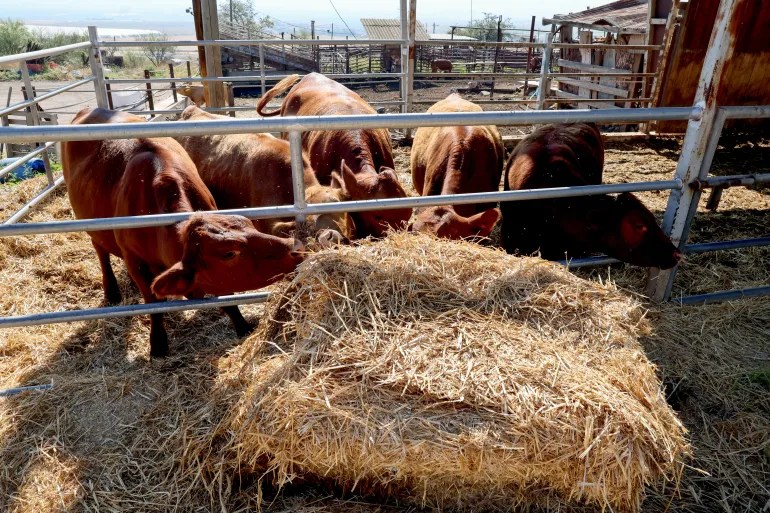
In chapter 15 of Matthew Jesus explained it is not what you eat that makes you unclean, and that you do not need ceremonial cleansing before eating. In chapter 16 Jesus warns his disciples to beware of the extra regulations required by the Sadducees and the Pharisees to live a clean living. Numbers 19 is introduces the red heifer, the ashes of which had to be mixed in with the water of cleansing. In September 2022, five, perfectly red, blemish-free heifers were flown from Texas to Israel to be used in purification rituals, as required by biblical tradition for rebuilding the Third Temple. These animals are currently being kept in Shiloh and monitored by the Temple Institute. Two of the heifers have been disqualified for developing blemishes, but the remaining three are now of required age to be sacrificed. As of early 2026, the Temple Institute continues to maintain the remaining candidates for a potential future ritual, which proponents believe is a prerequisite for restoring ritual purity and eventually rebuilding the Third Temple. 

February 27, read the Bible in a year in PowerPoint; commented

Matthew 14:15-36. After learning of the beheading of John the Baptist Jesus tried to withdraw from the people by boat to a solitary place, but there he found a large crowd, so he decided to feed the gathering of 5000 (not counting women and children) with five loaves of bread and two small fishes. After all were satisfied, the disciples picked up twelve baskets of leftovers. Jesus dismissed the crowd, made the disciples go in a boat to travel to the other side of Lake of Galilee, and then after Jesus had prayed alone he joined them by walking on the water. A very interesting read.

In Numbers 11 the people complained about eating manna every day, so God put His spirit on seventy elders to prophecy, but He also sent them quail , a delicious game bird, but after eating quail for a whole month until it came out their nostrils; they got sick, and so God punished the gluttons.

In  Numbers 12 Miriam and Aaron opposed Moses and Miriam suffered the consequences.

In Numbers 13 God prepared His people to take the land He had promised them, so they were sending out scouts to survey the land and how best to conquer it. They came back with a discouraging report; it is a good land flowing with milk and honey, but the people are too strong for them, they felt like grasshoppers in their sight. Only Caleb dissented. (Joshua joined Caleb in the next chapter).

The theme for today is food. Jesus fed 5000 and there was more left than when they started. The Hebrews got manna, just enough for one day, except for Friday when they got manna for two days. It was repetitive and boring so they complained and God sent them Quail til they got sick. The point of it all is that it is a hint of the bread. of Heaven, and we should be thankful and satisfied

February 22, read the Bible in a year in PowerPoint; commented

In Matthew 12:1-21 Jesus proclaimed he  is the Lord of the Sabbath and healed a man with a withered hand. Since this was on a Sabbath it was considered blasphemy. Jesus continued to heal all to fulfill the prophecy of the Prophet Isaiah.

After completing the book of Leviticus we take a one day break before we continue with Numbers, and read

Ecclesiastes 5. Fear God, keep your vows. There is vanity in amassing riches, even vanity in seeking honor.

Ecclesiastes 6. Vanity is the theme, this time the vanity of desire.

Psalm 14 is short and to the point. It begins: “The fool has said in his heart, there is NO GOD.”

Psalm 15 is only 5 verses long but full of truth which carries on into the New Testament. Fittingly there are five 5 references in the New Testament given from this psalm.

Psalm 16, of David. A wonderful psalm of confidence in the LORD even in times of trouble. This is a prophetic psalm pointing to Jesus resurrection, it is also quoted in the New Testament.

February 17, read the Bible in a year in PowerPoint; commented

Matthew 9:1-17.  Jesus continued his healing ministry, he healed a paralytic, but the real story is; Jesus forgave him his sins, a blasphemy unless Jesus is who he said he is. Then he called Matthew the tax collector and explained to John the Baptist followers why his disciples did not fast while Jesus was with them.

Leviticus 14 continues to deal with leprosy and mildew and what to do with both. Things like that are complicated.

Leviticus 15 deals with bodily discharges. (Hang in there, next chapter deals with the Atonement!)

Verse 16 and 17 of Matthew 9 explains fasting in an unexpected way. There is a right time to fast and a wrong time, and he uses wine and wineskins to illustrate that.

Wine is made from grapes, and the sugar content of grapes is about 16%. The wine making process is to convert the sugar into ethanol via fermentation, and grapes come replenished with their own yeast, so the fermentation starts whether you like it or not. If you leave the grapes out in the air they will ferment and the ethanol will oxidize into vinegar, so they must ferment in a vessel that locks out oxygen. The fermentation has two phases, the first phase is fairly fast, a little more than 10 days, where the sugar converts to ethanol. This process releases CO2; nearly half of the weight of the sugar goes up in the air in the form of CO2, the rest is ethanol. No wineskin can handle that, so fermentation was usually done in a clay vessel with a lid on to prevent air to enter. At the end of 10 to 15 days they had “new wine”.

Bur the fermentation was not over, the aging process began, and that lasted from a few weeks to a few months. During that time there is a slow release of CO2, but the vessel had to be air tight so no oxygen would spoil the wine and turn it into vinegar.

This is where new wineskins come in, they can handle this process by being ever so slightly permeable, if they are made from young goatskin, properly prepared.

Old wineskins on the other hand are hardened and can even be brittle, like an old leather glove that has been lost in the snow for the winter, and when it is found in the spring, it is ruined.

Jesus did not teach wine-making when he used that parable, in the parable the wine is the Holy Spirit and we are the wineskins.

Many people, me and my wife included have been praying for a great new, worldwide revival, and following that, a great worldwide awakening. Revivals usually start small and local, but with great intensity. The intensity will be greatest among young people, and they will celebrate with a new song in their heart. They are the new wineskins, they will be filled with new wine, and their new music will be less refined, raw and unpolished, or so it will seem to us old wineskins. We better prepare for the outpouring of the Holy spirit in our old wineskins by rejuvenate them with the oil of joy to make us ready to receive the old wine, aged to perfection with the full bouquet, like when Jesus turned water into wine. Then we who have been saved for many years can join with the young and appreciate each other, we appreciate their youthful enthusiasm and music, and they will appreciate the good wine that comes from lifelong experience.

There is a great passage in Isaiah 25, a song of praise coming right after the dreadful chapter 24. It speaks of aged wine being the finest of wines.

Slide11

Revelation 7:17: For the Lamb at the center of the throne will be their shepherd; ‘he will lead them to springs of living water.’ ‘And God will wipe away every tear from their eyes.’”

Yes, there will be a great worldwide revival, and an even greater awakening.

February 1, read the Bible in a year in PowerPoint; commented.

John 21 tells of the eighth miracle of Jesus. This miracle, a great catch of fish happened after Jesus resurrection and was a sign of new beginnings. Jesus reinstated Peter and told him: “Feed my sheep.”

Exodus 12 tells of how God instituted the Passover. The name comes from the action of the night the angel of death came to kill every firstborn in Egypt; if he saw the blood of the pascal lamb om the doorposts and the lentil of the house, he would pass over that house. The chapter is fantastic, read it and marvel!

In Exodus 13 the feast of unleavened bread is defined and the consecrating of the firstborn to the LORD. The Hebrews have escaped from Egypt, and a proposed route is suggested.

We are in the middle of the battle of the centuries, and it is spiritual. Bear with me as I try to explain. Jesus asked Peter 3 times : Do you love me?; the first 2 times using agape (Gods love) and the third time using brotherly love, and every time Peter answered positively with brotherly love. Jesus then says “Feed my sheep”, but Peter answered “What about John”? and Jesus answered “What is that to thee, follow thou me”. Peter then understood that all authority was still Christs, and they were to follow the leading of the Holy Spirit. Under heavy persecution Christianity grew rapidly, and in 313 A.D. Emperor Constantine declared Christianity protected. This meant that a lot of people became Christians in name only, and to solidify Christian beliefs the Apostles’ creed was formalized in 325 A.D. establishing our belief i God the Father, God the Son and God, the Holy spirit, and Christ’s return and final judgement. Many kept their old beliefs and added Christianity to advance in society. With people in power and authority with little or no knowledge of Christ there was a period of anarchy and strife in the papacy. The Umayyad caliphate had just arisen ande declared the triune God blasphemy, only Allah, and waged war to conquer. Out of this arose Pope Leo III a byzantine from the Eastern brench of the Catholic church. He was declared Pope in 795 A.D. and in 800 A.D. Crowned emperor Charlemagne on Christmas Day in 800, thereby initiating what would become the Holy Roman Empire, which certainly wasn’t holy, nor was it Roman or even very much of an empire. Which brings us to today when Pope Leo XIV seems to undo many of the traditions that sought to cement the Papacy as a worldly power, such as the infallability of the Pope when he speaks “Ex Cathedra”. There are many old traditions going by the wayside. Time will tell if it is a restoration to original Christianity or just another upheaval in the Roman Catholic Church.

Meanwhile, every Passover Seder ends with “Next year in Jerusalem”

January 31, read the Bible in a year in PowerPoint; commented.

John 20 deals with the resurrection, and Jesus was not there, only his grave clothes, strips of cloth, not the “Turin Shroud.” It was the first day of the week and Jesus showed himself to all the disciples except Thomas. He doubted their testimony, and it is from this we have the expression “Doubting Thomas.” Later, when even he saw Jesus, he bowed down and worshiped him saying “My Lord, and my God”. Jesus also gave the promise they would receive the Holy Spirit.

Exodus 10: Two more plagues, the plague of locusts and the plague of darkness. For these two plagues the LORD hardened Pharaoh’s heart.

In Exodus 11 Moses and Aaron proclaimed the tenth and final plague: The death of the firstborn. Interestingly enough the plagues of Egypt are also in the Quran, four are the same, five are different, and one is missing altogether. Guess which one!

Psalm 11 has the phrase “flee as a bird to the mountain”, which bring back memories of songs we used to sing in choir.

Yes, it was a long time ago, and our pastor wanted us to sing it, but our choir director thought otherwise. However, in obedience we sang it, and it was well received. The disagreement centered around: We are supposed to be in the world, but not of it. To flee to avoid all sin is not in the Gospel commandment.

When Jesus breathed on the disciples, they received the Holy Spirit, but they still had to wait until they received power from above. The Holy Spirit dwells in us, but the power of the Holy Spirit is still given only by God and only to do His will in His opportune time. This is why daily communication with God is so important, in thanksgiving , prayer, and yes ; in spiritual songs.

January 30, read the Bible in a year in PowerPoint; commented.

John 19:16b-42. I took the liberty to incorporate all the “seven words of Christ on the cross.” This requires to take passages from the Gospel of Luke, as well as from the Gospel pf Matthew or Mark. It helped me a lot to get the time-order of events as well as the completeness of Christ substitutionary sacrifice on the Cross. It is finished!

In Exodus 9 there are three more plagues, the plague of livestock, the plague of boils and the plague of hail. In the fifth and seventh plague Pharaoh’s heart remained hard, but for the sixth plague the LORD hardened Pharaoh’s heart.

In most predominately Christian nations Good Friday is a holiday, second only to Easter Sunday, but in U.S.A. only Christmas Day and Easter Sunday are religious holidays. In Sweden Good Friday is called Long Friday because in Church they read the whole Litany, and because of the length of the reading the Congregation is asked to sit down during the reading. All other readings from Scripture is supposed to be listened to standing up in reverence. Then as children we were not allowed to play or have any kind of fun. This was the most solemn day of the year.

The commemoration of the death of Christ on Friday was instituted by the Catholic Church o fit the readings for the Holy week. In the Gospel of John it says it was the day of preparation for the “special Sabbath” when Jesus was buried. In the Gospel of Matthew the resurrection occurred “Opse de Sabbaton” or after the Sabbaths. This means it was a double Sabbath, which happens every seventh year on average. This was the case in A.D.30 so we know when it happened exactly, but we stick to the tradition of having it close to the Jewish Passover.

January 28, read the Bible in a year in PowerPoint; commented.

John 18:28-40 deals with the last 24 hours of Jesus’ life, from the trial before Annas and the Sanhedron Jesus was paraded before Pilate, seeing a way out, Pilate sent him to Herod, who sent him back to Pilate, Pilate offered to release Jesus or Barabbas and the people demanded that Barabbas be released.

In Exodus 4 God gave Moses his call. At first Moses came up with one objection after another, but God persuaded him with signs that he must go back to Egypt, face Pharaoh and lead his people.

In Exodus 5 Moses and Aaron went to Pharaoh and asked for a 3 day reprieve for their people so they could go and worship God. Like all dictators Pharaoh reacted to this petition by making life even more miserable for the Hebrews; he wanted them to gather their own straw and still make as many bricks as before. The Hebrews blamed Moses for stirring up trouble for them.

And in Exodus 6 the LORD (Jehovah) promised deliverance from Pharaoh and He would give them the land He had promised Abraham. The narrative continues with an interlude where the names of the heads of the clans of Israel are listed. Moses protested and did not want to talk to Pharaoh any more, so Aaron would have to do the speaking.

Yesterday I didn’t comment on the momentous events when Jesus was taken into custody, ans Moses finally understood who God is and why it mattered, but the events of the trial reminded me of recent events in Minnesota. This is the Barabbas effect, one part of the government incites a mob to demand something that would be ridiculous for any thinking person to even contemplate. In this case the mob sides with the criminal, like the mob sided with Barabbas.

With Moses, his request was met with punishment of a whole group for a demand given by one person, a typical response for a ruler keeping control.

January 23, read the Bible in a year in PowerPoint; commented.

John 15. Jesus continued his instructions to the disciples. There are many memorable quotes from this chapter: “I am the true vine, I am the vine, you are the branches, apart from me you can do nothing, as the Father has loved me, so have I loved you, love each other as I have loved you, greater love has no one than this, that he lay down his life for his friends, this is my command: Love each other” and “If the world hates you, keep in mind that it hated me first.”

In Genesis 45 Joseph revealed himself to his brothers, and all rejoiced. It contains the phrase “But God” and shows clearly that God was in control all the time.

In Genesis 46 Jacob joined Joseph’s brothers in going to resettle in Egypt, and is a retelling of the names of all that went, sixty-six in total – not counting women and children.

Genesis 47 tells of how Jacob and his descendants settled in Goshen, about the continuing famine, and how Joseph, controlling the food supply enslaved the people. All power corrupts, and so even Joseph failed in comparison to Jesus, who came to set people free.

This is the big difference between what is taught by Jesus and what was implemented in the Old Testament. Jesus came to set people free, re-establish the perfect connection with God by accepting the gift of the Holy spirit, and so live a life of love for each other as individuals. Joseph on the other hand started out well. but even he succumbed to the pressures of this world, and as CEO of Egypt he enslaved the people, and they were reduced to be part of the collective.