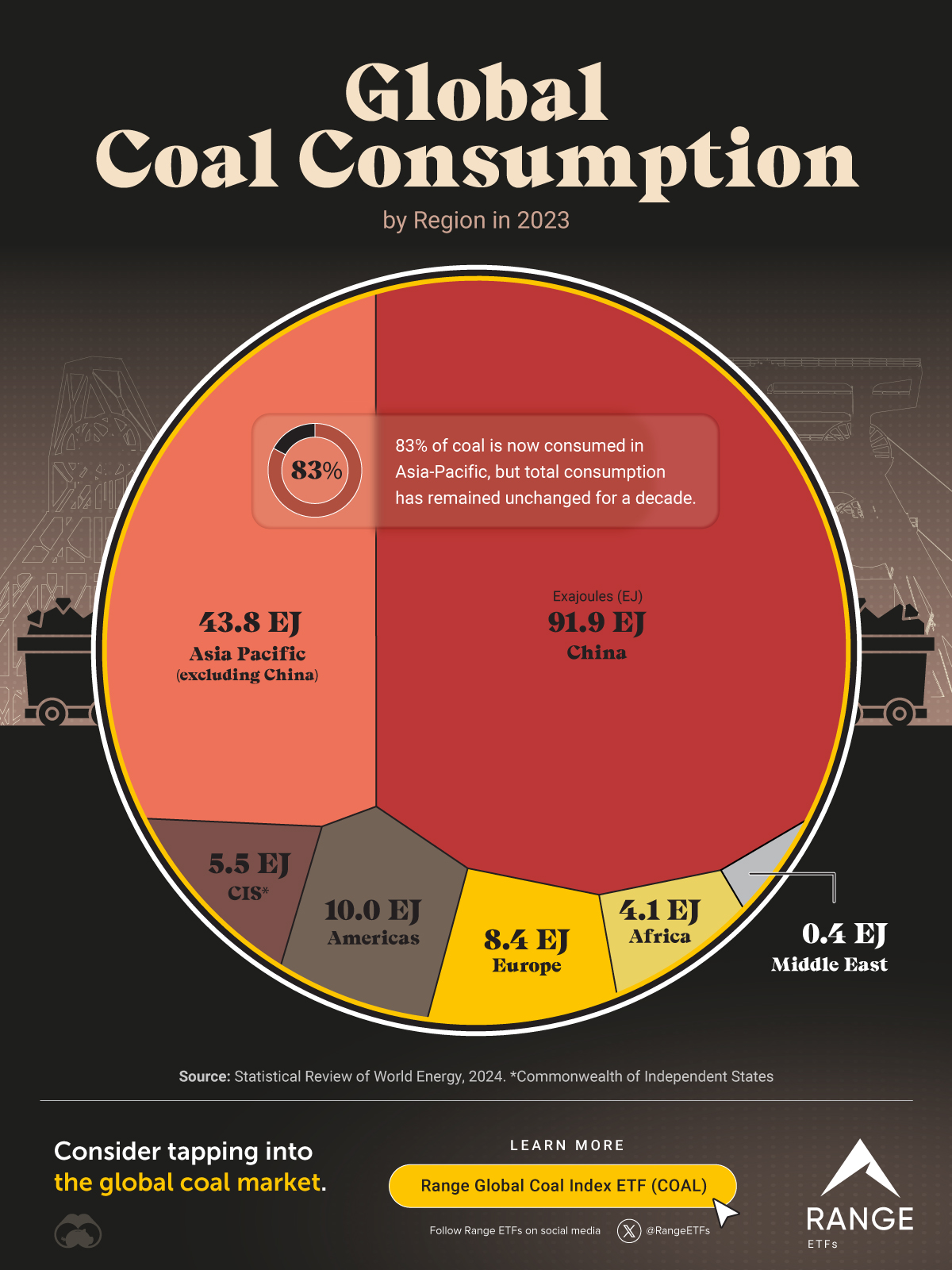
Despite many nations transitioning away from fossil fuels, in 2023, world coal consumption reached a staggering 164 exajoules (EJ) of energy, a record high for any year.
For this graphic, Visual Capitalist has partnered with Range ETFs to explore the role coal plays in the global energy mix and determine which regions still consume large quantities of coal.
The Role of Coal in Global Energy
Coal is a significant player in the global energy mix, contributing 26% of the world’s energy in 2023, more than all non-fossil fuel sources combined. The only energy source that contributed more to the global energy mix was oil.
Here’s how that consumption breaks down by region:
Region
Consumption (1018 joules)
Share %
China
91.9
56.1%
Asia Pacific (excluding China)
43.8
26.7%
Americas
10.0
6.1%
Europe
8.4
5.1%
CIS*
5.5
3.4%
Africa
4.1
2.5%
Middle East
0.4
0.2%
Total
164.0
100%
Coal consumption has decreased in many regions. For example, both North America and Europe reduced their energy consumption from coal by 16% in 2023. However, a heavy reliance on coal in the Asia Pacific region has led to global coal consumption remaining essentially the same over the past 10 years.
When I saw this statistics I immediately looked up: What is the U.S role in global coal consumption and found out it was 8.2 EJ om 2023 or 5.0% of world consumption.
China’s coal consumption is more than eleven times larger than the U.S Coal consumption. In fact, their appetite for mining coal is that they even mine coal with a noticeable Uranium content, and burn it without separating out the Uranium first, leading to severe health problems for the people downwind from the coal burning power plants. In addition, since scrubbing is expensive the operators have the scrubbers down for maintenance as often as they can get away with it.
China is also the world leader in cement production. In 2022 China produced 2,1 billion metric tons of cement, or 64% of the world total. By comparison, U.S. produced 95 million metric tons, or about 22 times less than China.
But where China has U.S and the rest of the world over a barrel is in the mining and production of rare earth metals. China mined 240,000 metric tons in 2023, or about 64% 0f the worlds total, but China is also the world’s largest importer of rare earth metal ore for refining. By comparison, US mined 43,000 metric tons, but most of it is still refined in China. The US regulatory environment makes it a slow process to get permits. China has strict export controls over who can be allowed to buy refined rare earth metals, and they always want a favor in return for doing so.
We have our work cut out for us. Right now we are too dependent on China to fully be able to sever our dependence on China.
The reactor, known as “Thorium Molten Salt Reactor – Liquid Fuel 1 (TMSR-LF1)“, began construction in 2018 in Wuwei City, Gansu Province, by the Hongshagan Industrial Cluster.
The TMSR-LF1 reactor is an experimental liquid fluorinated thorium reactor using a LiF-BeF2 -ZrF4 -UF4 [+ThF4] fuel salt mixture and a LiF-BeF2 coolant salt. It runs on a combination of thorium (about 50 kg) and uranium-235, enriched to 19.75%, and can operate at a maximum temperature of 650°C for up to 10 years. The liquid fuel design is based on the molten salt reactor experiment conducted in the 1960s by the Oak Ridge National Laboratory in Tennessee, USA.
With this authorization, China has become the first country to take a significant step towards harnessing the power of thorium for clean, large-scale energy generation in over 50 years.
“From Reuters in Dec 2013: “China has enlisted a storied partner for its thorium push: Oak Ridge National Laboratory. The U.S. government institute produced the plutonium used for the Manhattan Project and laid important groundwork for the commercial and military use of nuclear power.
The Tennessee lab, as it happens, helped pioneer thorium reactors. The Pentagon and the energy industry later sidelined this technology in favor of uranium, (it didn’t produce Plutonium 239.) The Chinese are now enthusiastically tapping that know-how, in an example of how the rising Asian superpower is scouring the world for all sorts of technology needed to catch up to America in a broad array of scientific fields.
Thorium’s chief allure is that it is a potentially far safer fuel for civilian power plants than is uranium. But the element also has possible military applications as an energy source in naval vessels. A U.S. congressman unsuccessfully sought to push the Pentagon to embrace the technology in 2009, and British naval officers are recommending a design for a thorium-fueled ship.
In a further twist, despite the mounting strategic rivalry with China, there has been little or no protest in the United States over Oak Ridge’s nuclear-energy cooperation with China.
“The U.S. government seems to welcome Chinese scientists into Department of Energy labs with open arms,” says physicist and thorium advocate Robert Hargraves. He and other experts note that most of the U.S. intellectual property related to thorium is already in the public domain. At a time when the U.S. government is spending very little on advanced reactor research, they believe China’s experiments may yield a breakthrough that provides an alternative to the massive consumption of fossil fuels.
The technology’s immediate appeal for China, both Chinese and American scientists say, is that thorium reactors have the potential to be much more efficient, safer and cleaner than most in service today.
The Chinese plan to cool their experimental reactors with molten salts. This is sharply different from the pressurized water-cooling systems used in most uranium-fueled nuclear plants. The risks of explosions and meltdowns are lower, proponents say.
“If a thorium, molten-salt reactor can be successfully developed, it will remove all fears about nuclear energy,” says Fang Jinqing, a retired nuclear researcher at the China Institute of Atomic Energy. “The technology works in theory, and it may have the potential to reshape the nuclear power landscape, but there are a lot of technical challenges.”
Other advocates agree on thorium’s peaceful promise. Republican Senator Orrin Hatch and Senate Majority Leader Harry Reid, a Democrat, introduced legislation in 2010 calling on the U.S. government to share its thorium expertise.” The bill failed, leaving Oak ridge labs to look for other sponsors. That was in 2013.
What China has done is to turn the nuclear clock back to the mid-1960s, when Oak Ridge successfully operated a reactor with fuel derived from thorium and cooled with molten salts. The lab also produced detailed plans for a commercial-scale power plant, which was then shared with the Chinese.
If successful, TMSR-LF1 would open the door to developing and constructing a demonstration facility with an output of 373 MWt by 2030 and could lead to the construction of a TMSR fuel salt batch pyroprocessing demonstration facility, which would enable the utilization of the thorium-uranium cycle in the early 2040s.
Top view of a thorium molten salt reactor
What did I mean by “The Cat is out of the bag”? Only that molten salt Thorium reactors are breeder reactors that can produce more U233 than is used, and if U 233 is stolen, it can be used to make nuclear bombs, like Plutonium 239 is used for nuclear bombs. Nobody has done it yet, and it is more difficult to do than with Plutonium, but it is possible. However Uranium 233 contains 0.02% Uranium 232, which is used as a tracer in chemical processes, so U 233 is easy to trace.
China is having a massive Thorium program. The People’s Republic of China has initiated a research and development project in thorium molten-salt reactor technology. The thorium MSR efforts aims not only to develop the technology but to secure intellectual property rights to its implementation. This may be one of the reasons that the Chinese have not joined the international Gen-IV effort for MSR development, since part of that involves technology exchange. Neither the US nor Russia have joined the MSR Gen-IV effort either. China is currently the largest emitter of CO2 and air pollutants by far, and according to the Paris accord was allowed to emit six times as much pollutants as the U.S. by 2030, being a “developing nation”. Their air quality is already among the worst in the world so something had to be done if they were to achieve world dominance by 2025 and total rule by 2030. Only Thorium can solve the pollution problem and provide the clean energy needed for the future. Regular Uranium Nuclear reactors require large amounts of water and Molten Salt Thorium reactors require little water to operate.
Geneva, Switzerland, 21 August 2018 – As the world struggles with a record-breaking heatwave, China correctly places its trust in the fuel Thorium and the Thorium Molten Salt Reactor (TMSR) as the backbone of its nation’s plan to become a clean and cheap energy powerhouse. The question is if China will manage to build a homegrown mega export industry, or will others have capacity and will to catch up?
For China, clean energy development and implementation is a test for the state’s ability. Therefore, China is developing the capability to use the “forgotten fuel” thorium, which could begin a new era of nuclear power. The first energy system they are building is a solid fuel molten salt reactor that achieves high temperatures to maximize efficiency of combined heat and power generation applications. However, to fully realize thorium’s energy potential and in this way solve an important mission for China – the security of fuel supply – requires also the thorium itself to be fluid. This is optimized in the Thorium Molten Salt Reactor (TMSR). The TMSR takes safety to an entirely new level and can be made cheap and small since it operates at atmospheric pressure, one of its many advantages. Thanks to its flexible cooling options it can basically be used anywhere, be it a desert, a town or at sea. In China this is of special interest inland, where freshwater is scarce in large areas, providing a unique way to secure energy independence.
“Everyone in the field is extremely impressed with how China saw the potential, grabbed the opportunity and is now running faster than everyone else developing this futuristic energy source China and the entire world is in a great need of.” – Andreas Norlin, Thorium Energy World
China is not telling all they are doing on Nuclear Energy, but this news item is true:
The Shanghai Institute of Applied Physics (SINAP) – part of the Chinese Academy of Sciences (CAS) – has been given approval by the Ministry of Ecology and Environment to commission an experimental thorium-powered molten-salt reactor, construction of which started in Wuwei city, Gansu province, in September 2018.
A cutaway of the TMSR-LF1 reactor (Image: SINAP)
In January 2011, CAS launched a CNY3 billion (USD444 million) R&D programme on liquid fluoride thorium reactors (LFTRs), known there as the thorium-breeding molten-salt reactor (Th-MSR or TMSR), and claimed to have the world’s largest national effort on it, hoping to obtain full intellectual property rights on the technology. This is also known as the fluoride salt-cooled high-temperature reactor (FHR). The TMSR Centre at SINAP at Jiading, Shanghai, is responsible.
Construction of the 2 MWt TMSR-LF1 reactor began in September 2018 and was reportedly completed in August 2021. The prototype was scheduled to be completed in 2024, but work was accelerated.
“According to the relevant provisions of the Nuclear Safety Law of the People’s Republic of China and the Regulations of the People’s Republic of China on the Safety Supervision and Administration of Civilian Nuclear Facilities, our bureau has conducted a technical review of the application documents you submitted, and believes that your 2 MWt liquid fuel thorium-based molten salt experimental reactor commissioning plan (Version V1.3) is acceptable and is hereby approved,” the Ministry of Ecology and Environment told SINAP on 2 August.
It added: “During the commissioning process of your 2 MWt liquid fuel thorium-based molten salt experimental reactor, you should strictly implement this plan to ensure the effectiveness of the implementation of the plan and ensure the safety and quality of debugging. If any major abnormality occurs during the commissioning process, it should be reported to our bureau and the Northwest Nuclear and Radiation Safety Supervision Station in time.”
The TMSR-LF1 will use fuel enriched to under 20% U-235, have a thorium inventory of about 50 kg and conversion ratio of about 0.1. A fertile blanket of lithium-beryllium fluoride (FLiBe) with 99.95% Li-7 will be used, and fuel as UF4.
The project is expected to start on a batch basis with some online refueling and removal of gaseous fission products, but discharging all fuel salt after 5-8 years for reprocessing and separation of fission products and minor actinides for storage. It will proceed to a continuous process of recycling salt, uranium and thorium, with online separation of fission products and minor actinides. The reactor will work up from about 20% thorium fission to about 80%.
If the TMSR-LF1 proves successful, China plans to build a reactor with a capacity of 373 MWt by 2030.
As this type of reactor does not require water for cooling, it will be able to operate in desert regions. The Chinese government has plans to build more across the sparsely populated deserts and plains of western China, complementing wind and solar plants and reducing China’s reliance on coal-fired power stations. The reactor may also be built outside China in Belt and Road Initiative nations.
The liquid fuel design is descended from the 1960s Molten-Salt Reactor Experiment at Oak Ridge National Laboratory in the USA. (Researched and written by World Nuclear News)
Yes, it is true. Their design was given to them free, and now PRC is developing the future energy source including claiming intellectual property rights from a source abandoned in 1969 by U.S.A. because of political infighting, not for economical or national security reasons.
Uranium or thorium, or any combination thereof, in any physical or chemical form, or ores that contain, by weight, one-twentieth of one percent (0.05 percent) or more of (1) uranium, (2) thorium, or (3) any combination thereof. Source material does not include special nuclear material. For additional detail, see Source Material.
Thorium 232 has a half life of 14 billion years, about the same as the generally accepted age of the universe until the dell telescope discovered much more than was known
Uranium 238 has a half life of 4.5 billion years and Uranium 235 has a half life of 700 million years.
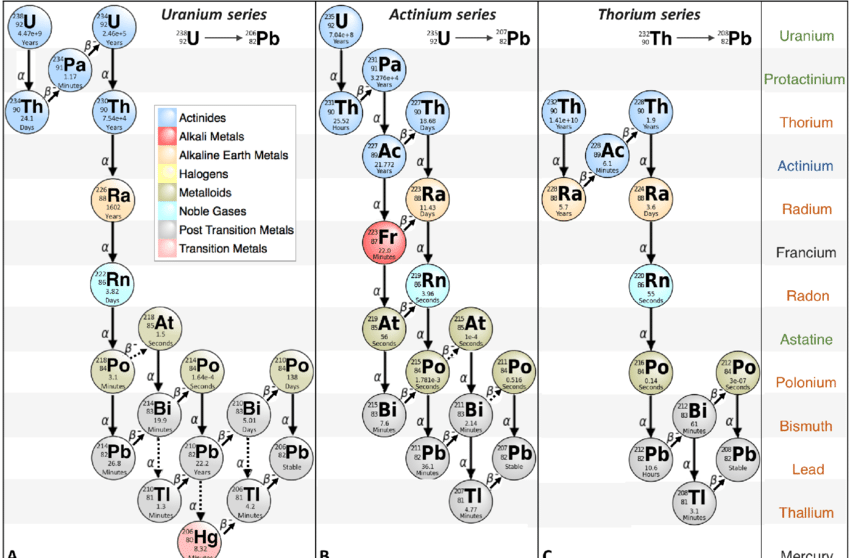
In addition Uranium has as its first transition Thorium generation on its path down to the final stable state, Lead. This means that Uranium is at least four times as radioactive as Thorium.
It is interesting to observe that in the decay path of both Uranium and Thorium they pass through Radon and emit two alpha particles on the way.
The definition for Source material should therefore be changed to:
Uranium or thorium, or any combination thereof, in any physical or chemical form, or ores that contain, by weight, one-twentieth of one percent (0.05 percent) or more of (1) uranium, 0.2 percent of (2) thorium, or (3) any proportional combination thereof.
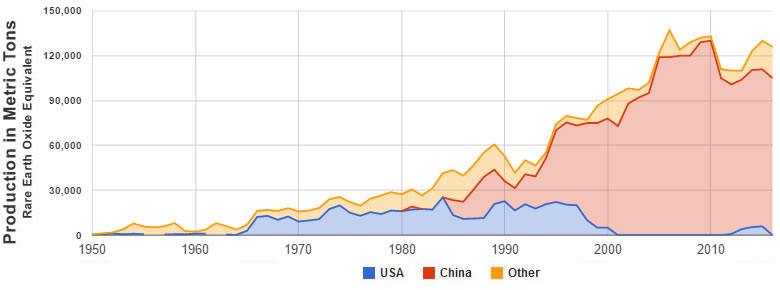
Why is this important? The U.S. used to be world leader in rare earth metals production. Then when the regulation on Source Material was instituted, mining rare earth metals with a small amount of Thorium became unprofitable and China took over, and developed a near monopoly on the market, in effect making rare earth metals single sourced. Rare earth metals, as well as Thorium is of great strategic value.
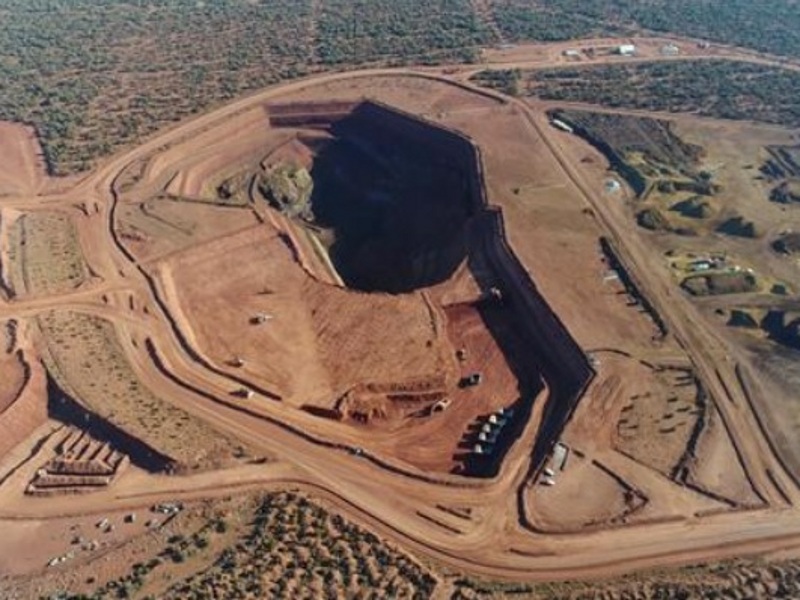
Here is an example:
This is the Mount Weld Rare Earth Mine in Western Australia. It is owned by Lynas Corporation. The mined ore, after concentration is shipped to Malaysia for final refining. The concentrated ore contains 30% rare earth metals ready for separation, but the ore also contains 0.16% Thorium. For the moment, only the most sought after rare earth metals are refined, the rest are left on the slag heap, which includes Thorium. This makes it nuclear waste according to a multitude of protestors, after all it is source material. To complicate matters further, China is looking to grab the mine, so they stir up as much trouble as possible
Thorium is a by-product of mining heavy metals and rare earth metals. The price is the cost of extracting and refining, which can be as low as $40/Kg. No extra mining is required for extracting the Thorium, and we all know that mining is a major source of pollution.
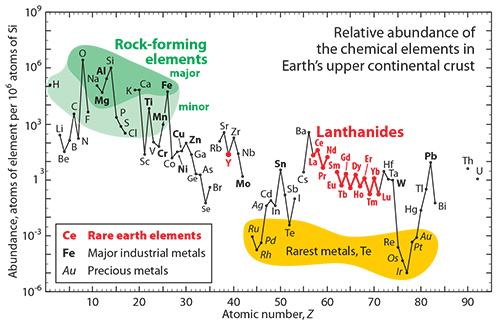
The first thing we must realize is that rare earth metals are not all that rare. They are a thousand times or more abundant than gold or platinum in the earth crust and easy to mine, but more difficult to refine. Thorium and Uranium will be mined together with rare earth metals.
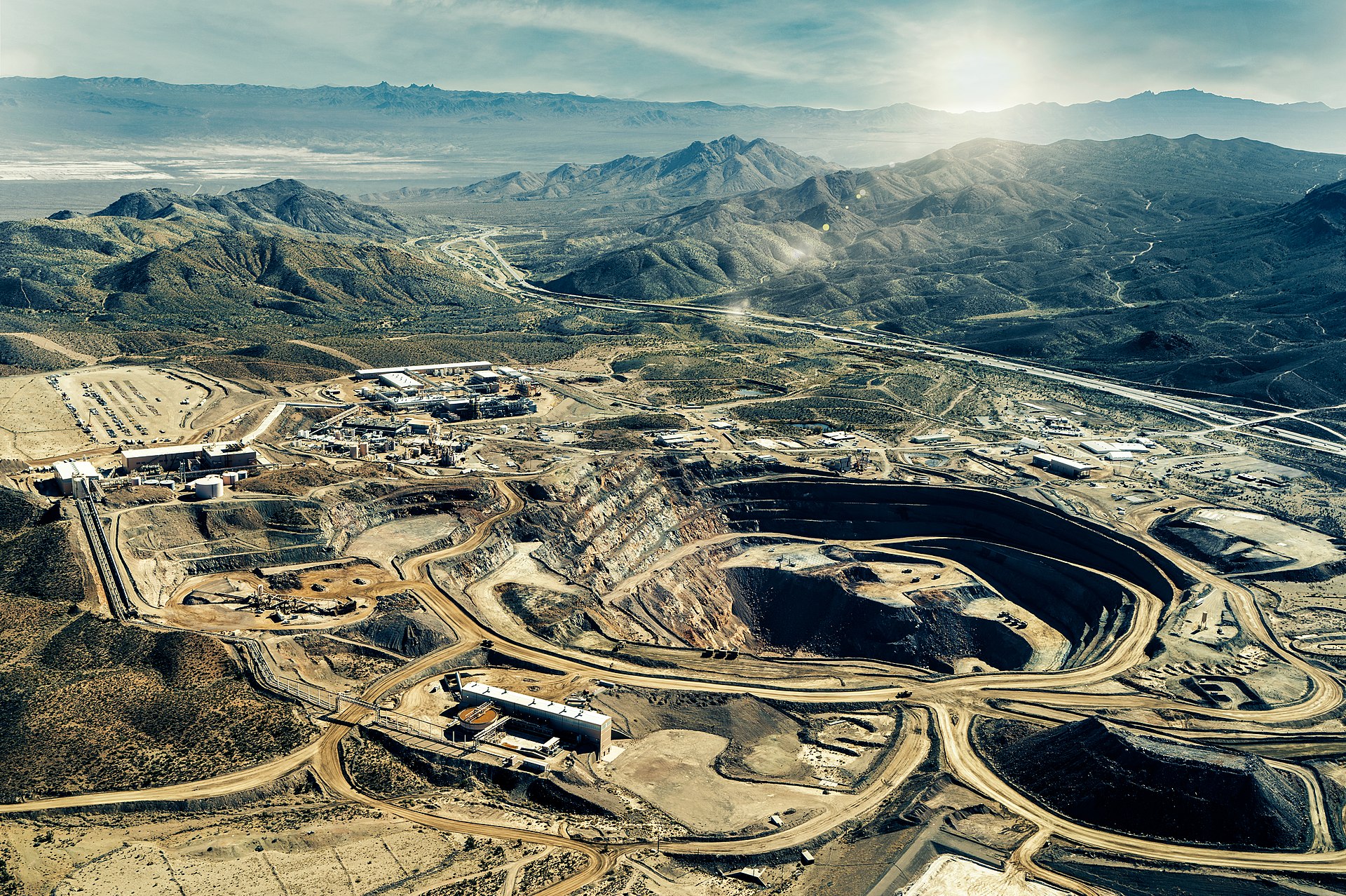
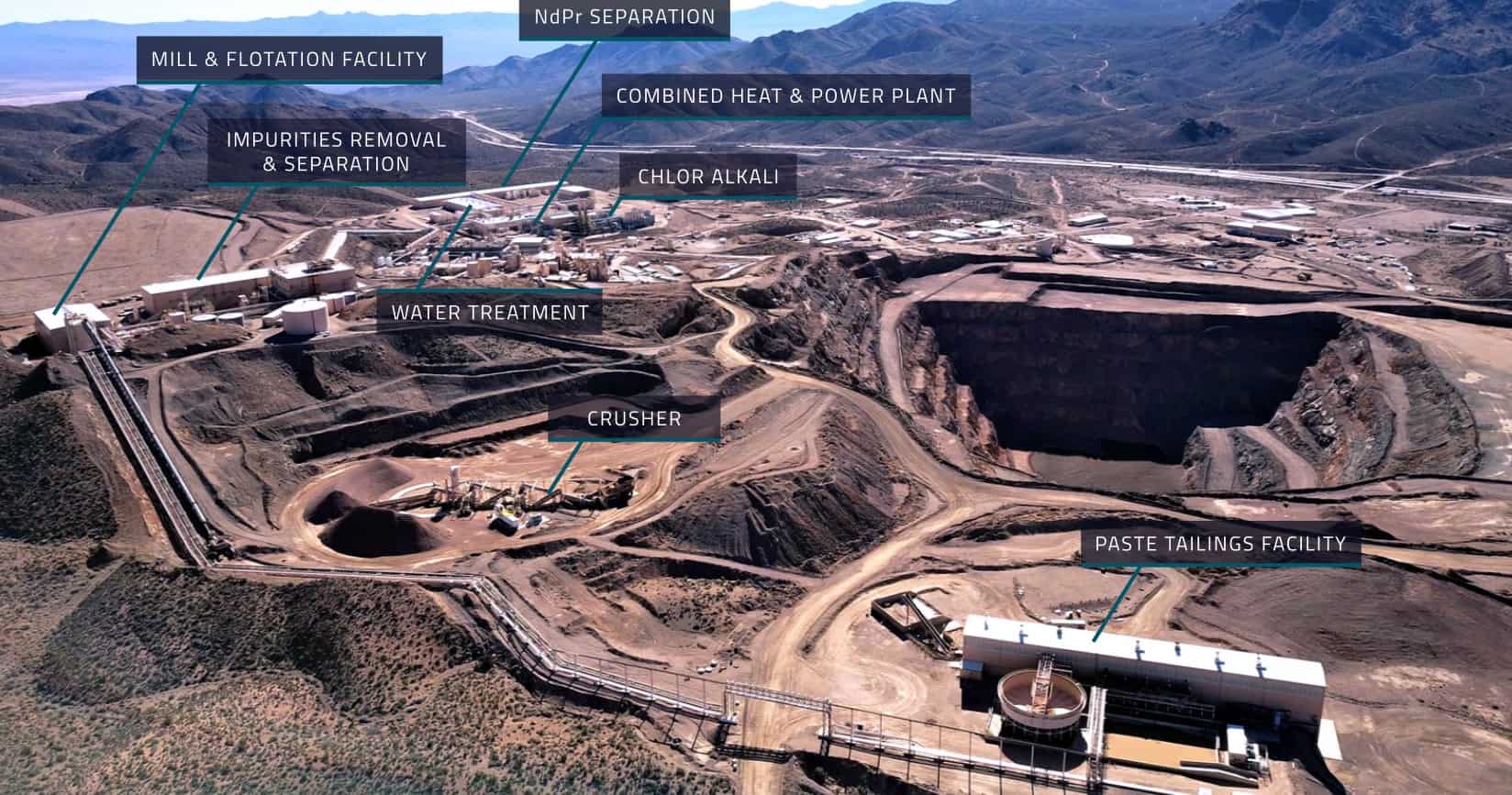
U.S. used to be the major supplier for rare earth metals, which was fine up to around 1984. Then the U.S. regulators determined that Uranium and Thorium contained in the ore made the ore radioactive, so they decided to make rare metal ore a “source material” with all what that meant for record keeping and control. This made mining in the U.S. unprofitable so in 2001 the last mine closed down. China had no scruples, such as human and environmental concerns, so they took over the rare earth metals mining and in 2010 controlled over 95% of the world supply, which was in line with their long term plan of controlling the world by 2025. Luckily this has now been rectified with U.S. and Australian mines reopened, but the U.S. mined ore is still shipped to China for refining. However, in July 2019, President Trump activatedSection 303 of the Defense Production Act to declare domestic production capability for rare earth elements and other critical minerals “essential to the national defense.” Domestic refining was scheduled to begin late 2020. It has since then been delayed until 2022. I do not know if refining has started as of May 2023, and if Thorium is included in the reining process. In the mean time the ore, including Thorium was shipped to China for refining. The Mountain Pass mine is quite impressive:
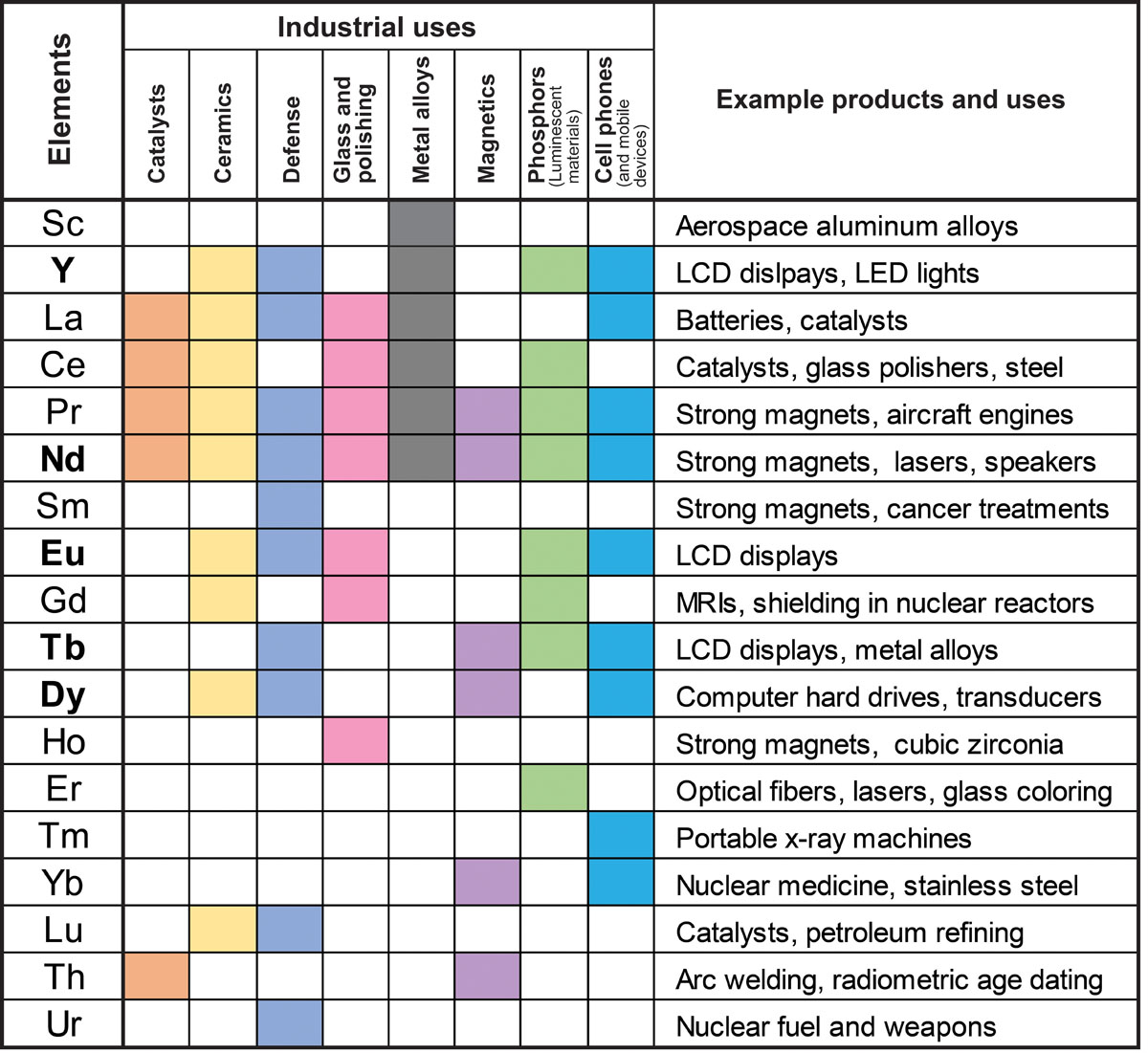
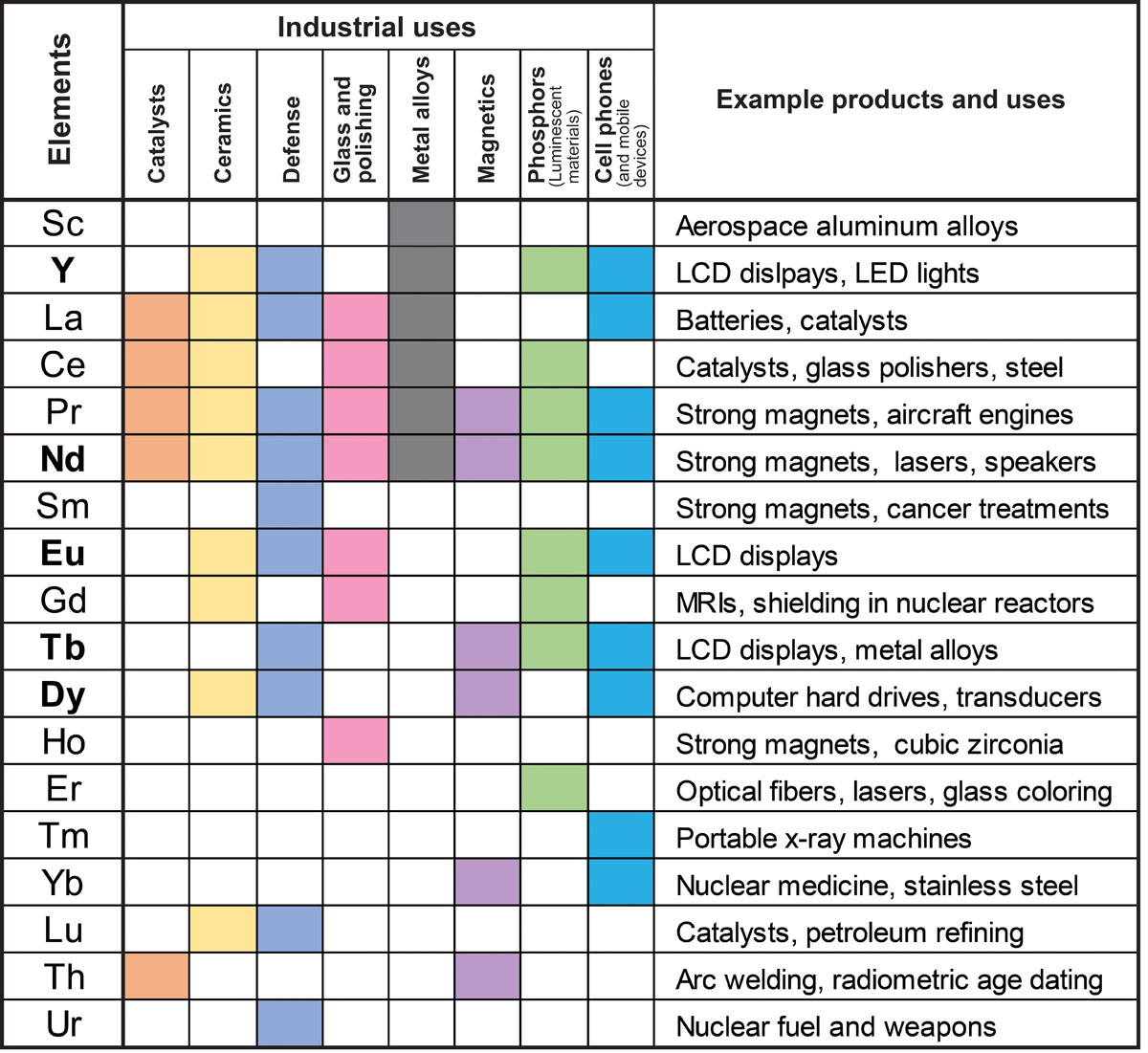
So, why is this important? Just take a look at all the uses for rare earth metals. The most sought after pays all the cost of mining and refining, and the rest are readily available at nominal cost.
The Chinese almost got away with it, and that was but one reason the trade negotiations were so complicated and hard fought, but necessary. Donald Trump fought for reciprocity and fair competition. Since the onset of the COVID -19 pandemic, originating in Wuhan, China, it has become more and more obvious that China can no longer be allowed to be single source supplier of anything.
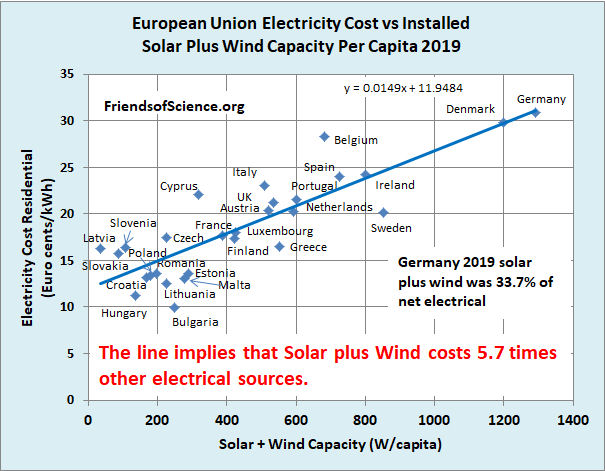
Below is the experience from the European union of retail cost of electricity in all member nations from the year 2019, the last year to make any meaningful analysis, Covid and the Ukraine war has made worthless any newer analysis.
This slide tells it best. The real cost for Solar and Wind electricity is 5.7 times that of the average of coal, gas, nuclear and hydro-electric power. The real reason is that you still need all the generating power for when the wind doesn’t blow enough or too much, and the sun doesn’t shine, which is most of the time. In addition, solar panels and windmills require mining of rare earth metals, and are as such highly mining intensive. Then there is the cost of disposal, which has already begun for first generation wind mills and solar panels.
The solution is simple: Do not buy any more solar panels from China! Let them use them themselves, they may then only have to build a thousand new dirty lignite coal fired power plants instead of 1171 between now and 2030
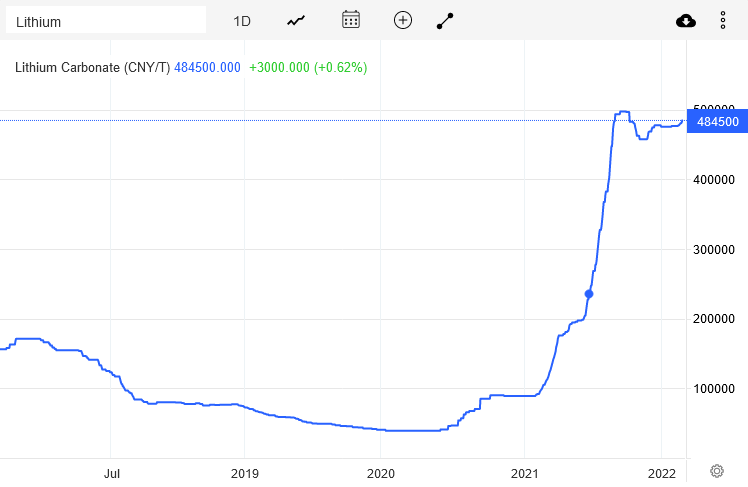
The other inflationary thing is the rising cost of Lithium and rare earth metals. In 2020 the price of LiCO2 was around 40,000 yuan/ton (yes, Lithium and rare earth metals are traded in Chinese currency). The price since then has more than twelve-folded and is now close to half a million yuan/ton.
China produces three-quarters of all lithium-ion batteries and is home to 70% of production capacity for cathodes and 85% for anodes (both are key components of batteries).
Over half of lithium, cobalt and graphite processing and refining capacity is also located in China. The U.S has a high quality rare earth metal mine in Mountain Pass, CA.,
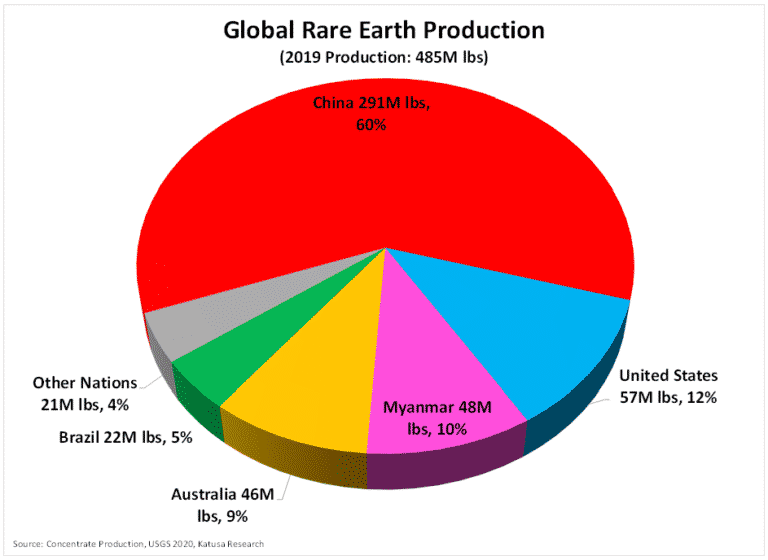
but the refining is done in China. In June 2022 Amarillo, Texas had a groundbreaking ceremony for a rare earth metals refinery, so refining capacity will finally return to the U.S. See more here. Below is a chart of the worldwide mining of rare earth metals. Notice the prominent role Myanmar plays in rare earth metals. China is positioning itself to dominate Myanmar for their metals and to build an oil import pipeline to avoid the Malacca strait choke point.
In 2016, Hunter Biden’s Bohai Harvest RST invested in China’s Contemporary Amperex Technology Co. (CATL), the world’s largest lithium ion battery producer.
Remember this every time you hear Joe Biden talk about Green new deal and electric vehicles.
So, my suggestion is simple: Do not buy any solar panels from China, let them install them in China at 4.7 times the price of coal power. this is a much cleaner global investment. China was planning to build 1171 new coal plants polluting more than our clean coal could ever do. Likewise do not buy any more wind mill generators from China, let them install them in China. Wait to promote electric vehicles until the grid is built up to handle the additional demand for electricity.
This would save about 430 billion dollars from the inflation reduction act. What can we do instead and achieve an even better outcome? Check this video.
What shall be done? Congress must immediately pass SB4242. Ten years ago I made the same observation, see here. At that time there was 1400 kg U-233 remaining at Oak Ridge. A ton has been downblended since then. It is late, but not too late to save the rest. Here is a very illuminating video:
I agree totally with this video. Molten salt Thorium reactors can produce electricity for less than 5 cents per kilowatt-hour, comparable to coal and five times less than wind and solar when mass produced as SMR’s (small Modular Reactors. ) A 100 MW reactor can be built on an assembly line, and the vital parts can be shipped in 3 standard containers over road. They require much less mining to produce than the corresponding windmills and solar panels, and Thorium is already mined as a byproduct of mining rare earth metals. The only cost is therefore the cost of extracting the Thorium.
How is China dealing with Thorium nuclear power? They recently approved starting up their own molten Salt reactor, (source here.
In January 2011, CAS launched a CNY3 billion (USD444 million) R&D programme on liquid fluoride thorium reactors (LFTRs), known there as the thorium-breeding molten-salt reactor (Th-MSR or TMSR), and claimed to have the world’s largest national effort on it, hoping to obtain full intellectual property rights on the technology. This is also known as the fluoride salt-cooled high-temperature reactor (FHR). The TMSR Centre at SINAP at Jiading, Shanghai, is responsible.
Construction of the 2 MWt TMSR-LF1 reactor began in September 2018 and was reportedly completed in August 2021. The prototype was scheduled to be completed in 2024, but work was accelerated.
“According to the relevant provisions of the Nuclear Safety Law of the People’s Republic of China and the Regulations of the People’s Republic of China on the Safety Supervision and Administration of Civilian Nuclear Facilities, our bureau has conducted a technical review of the application documents you submitted, and believes that your 2 MWt liquid fuel thorium-based molten salt experimental reactor commissioning plan (Version V1.3) is acceptable and is hereby approved,” the Ministry of Ecology and Environment told SINAP on 2 August.
It added: “During the commissioning process of your 2 MWt liquid fuel thorium-based molten salt experimental reactor, you should strictly implement this plan to ensure the effectiveness of the implementation of the plan and ensure the safety and quality of debugging. If any major abnormality occurs during the commissioning process, it should be reported to our bureau and the Northwest Nuclear and Radiation Safety Supervision Station in time.”
The TMSR-LF1 will use fuel enriched to under 20% U-235, have a thorium inventory of about 50 kg and conversion ratio of about 0.1. A fertile blanket of lithium-beryllium fluoride (FLiBe) with 99.95% Li-7 will be used, and fuel as UF4.
The project is expected to start on a batch basis with some online refueling and removal of gaseous fission products, but discharging all fuel salt after 5-8 years for reprocessing and separation of fission products and minor actinides for storage. It will proceed to a continuous process of recycling salt, uranium and thorium, with online separation of fission products and minor actinides. The reactor will work up from about 20% thorium fission to about 80%.
If the TMSR-LF1 proves successful, China plans to build a reactor with a capacity of 373 MWt by 2030.
As this type of reactor does not require water for cooling, it will be able to operate in desert regions. The Chinese government has plans to build more across the sparsely populated deserts and plains of western China, complementing wind and solar plants and reducing China’s reliance on coal-fired power stations. The reactor may also be built outside China in Belt and Road Initiative nations.
The liquid fuel design is descended from the 1960s Molten-Salt Reactor Experiment at Oak Ridge National Laboratory in the USA.
Researched and written by World Nuclear News.
As of yet China does not have any U233, so they have to use U235 as a start fuel. This will produce PU239 as well as U233, so the separation step is far more complicated. The U.S. still have 450 kg of U233, so the separation step can be made clean, and we can make a clean, breeding reactor with 0,01 % of the nuclear waste if conventional reactors.
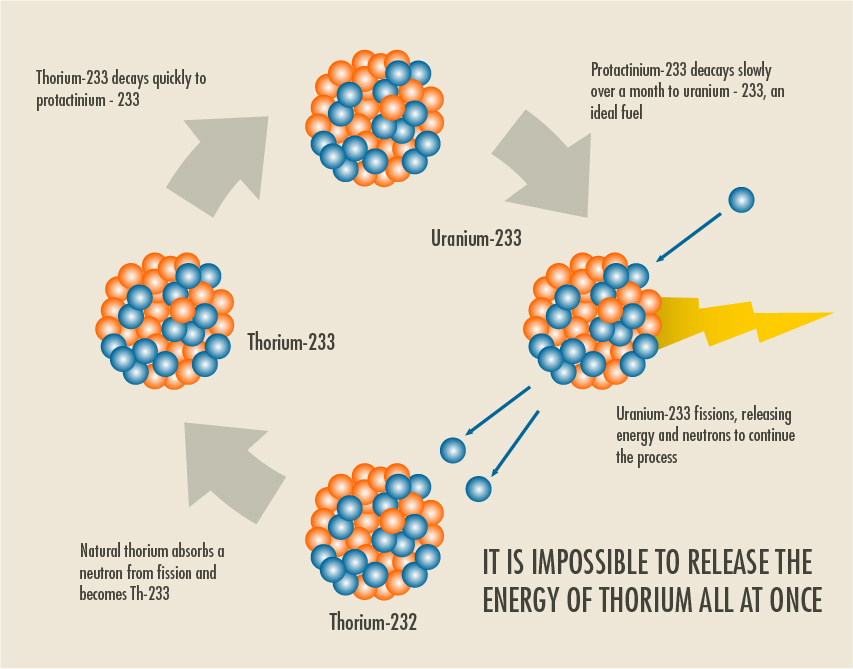
The conversion of Thorium 232 to Uranium 233, leading to fission looks like this:
To remain pure, the protactinium mist be separated from the neutron bombarding environment as soon after it is generated as possible to avoid it to be transfered to U 234, which is non fissible, but radioactive. The breeding coefficient is 1.03, which means that 3% more U233 is generated than consumed. The half-life of the Protactinium is 27 days, so it will take up to 900 days for the U233 to double, which is two and a half years.
There is no time to spare. Pass SB4242 immediately, build a clean Molten salt Thorium reactor as soon as possible, remove Thorium as a source material and streamline the permit process so permits can be issued in weeks instead of years.
The thorium energy is the future clean energy until fusion is perfected, not solar panels or windmills, which do far more damage to the environment than Thorium nuclear plants!
Two dams collapsed in the Hulunbuir proince on Sunday, July 18.
6,660 people were affected; 53,800 acres of farmland was flooded; 22 bridges, 124 culverts, and 15.6 kilometres of highway were destroyed….Casualties are unknown.
On July 20 was reported heavy rains in the Henan province caused flooding of the Yellow river and its tributaries. The yellow river normally does not even reach the ocean for 3 months of the year!
In Europe flooding occurred in at least 7 countries. It started with heavy rains in the beginning of July, some areas received 4 inches of rain, over three times the normal rainfall for all of July, then on July 14 fell another 4 inches. The dams were already full to the brim, so many areas were flooded.
Here is a very good summary of the events in Europe, and as you expected, climate change is blamed.
What did he mean by “We are now officially in the era of climate change.”
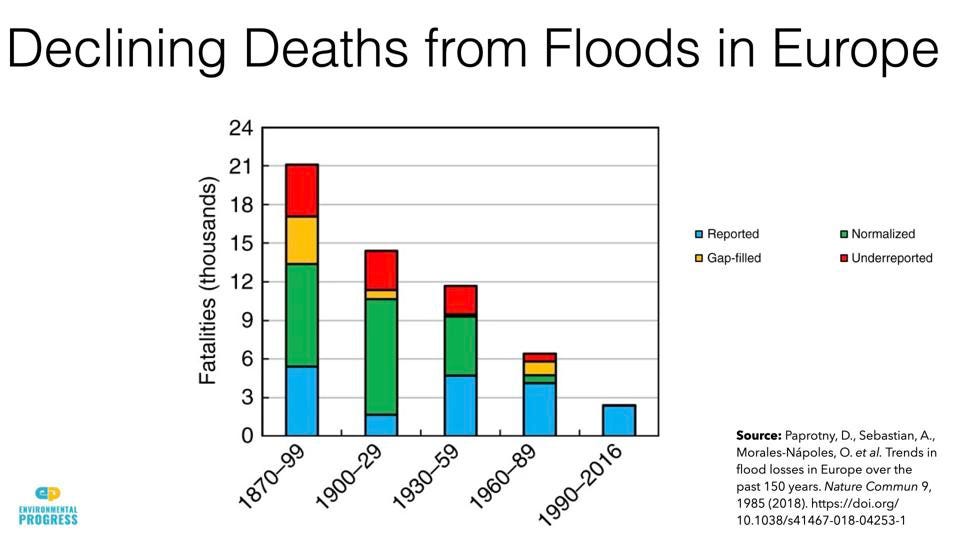
Europe and China have always had floods. In fact, casualties have gone down substantially in the last hundred and fifty years. Here is a chart from Europe:
Dams has always been important since the beginning of industrialization, first as water wheels to provide power, then with electricity the rivers were really exploited to provide hydroelectric power. Flood control was also important, and there is a trade-off, which is more important, electric power or flood prevention? To maximize electric output you want to have the dams filled to the brim at all times, for flood control you want to have the dams at half full, to always be ready to absorb the next rain. The problem is that in so doing the dams only produce 70% of maximum energy. To complicate matters, the last ten years there has been a large investment in wind and solar energy, and when the wind doesn’t blow and the sun doesn’t shine, the hydro-electric power storage will have to fill in the gaps, if we are to have any clean energy at all times.
This was the case in Europe in July. The early rains had filled up the dams to within a foot of maximum, and there had not been any controlled releases to prepare for the additional rains expected. Bureaucrats hate to do controlled releases, they see billions of Kilowatt hours go to waste. The bureaucracy failed, these decisions must be made with no delay, but if politicians rather than technically competent people are to make the decisions, the time delays inherent in any bureaucracy will make disasters like these happen again and again.
This was in 2005. Dr. Fauci knew then HydroxyChloroQuine was effective against Covid type viruses. “In the 1985-86 edition of Harrison’s Principles of Internal Medicine [a highly recommended book for students studying medicine in medical colleges], Dr. Fauci wrote that HCQ worked an anti-viral agent despite being an anti-malarial drug. There was no Covid-19 back then, but HCQ’s anti-viral properties were already well known.
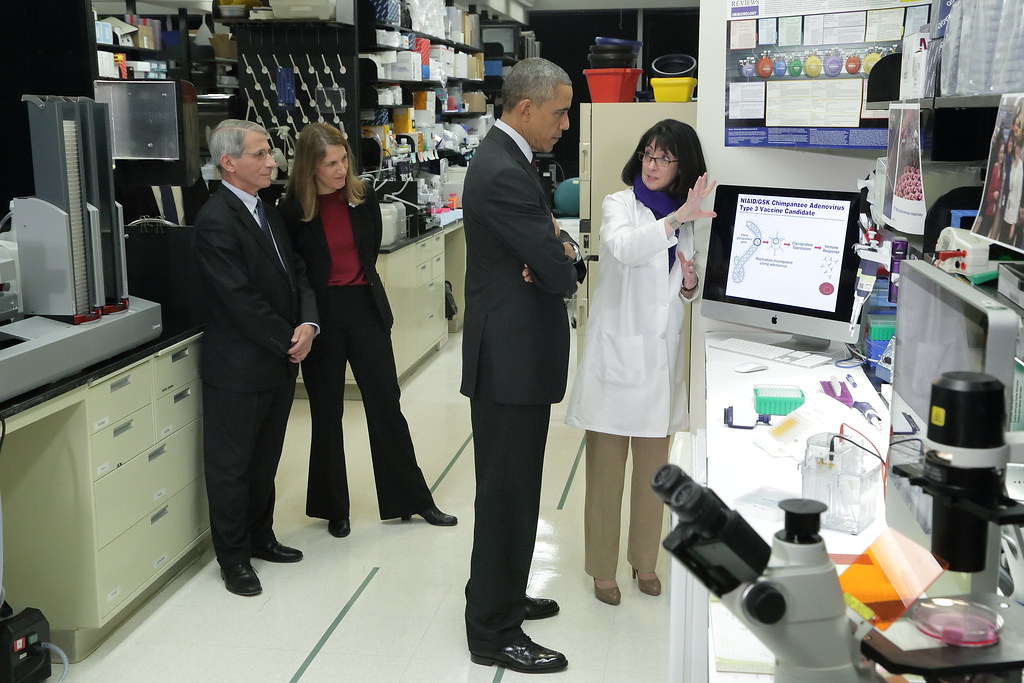
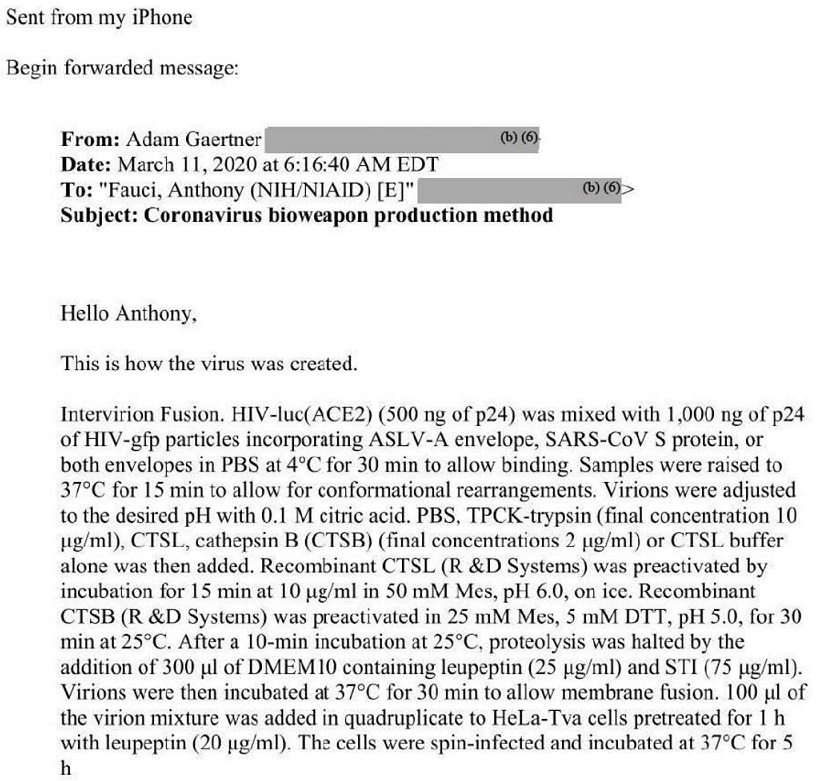
In 2015 the only level-4 virus lab in the U.S. conducting defensive research against “Gain of function” viruses was closed because of the inherent danger to the population should the virus escape. Not to worry, President Obama, Melinda Gates and Dr Fauci started to look for a new place to conduct the research. They found it in Wuhan, China; the Chinese have no such scruples as danger to the people. This lab was taken over in 2017 by the Chinese army, conducting bio-weapon research (defensive only, of course), so the research continued, this time controlled by the Chinese.
In January 2017 Anthony S. Fauci, MD, director of the National Institute of Allergy and Infectious Diseases, said there is “no doubt” Donald J. Trump will be confronted with a surprise infectious disease outbreak during his presidency.
It is getting interesting. The virus escaped the lab, sometimes in the fall of 2019, and the Chinese knew it but kept silent. They closed off Wuhan to all other Chinese, rail, car and air. But they kept international travel open, as if they wanted the virus to spread all around the world. And Dr. Fauci knew it!
The United States, the world’s second-leading emitter after China, seeks to reclaim global leadership in the fight against global warming after former President Donald Trump withdrew the country from international efforts to cut emissions. President Joe Biden unveiled the goal to cut emissions by 50%-52% from 2005 levels at the start of a two-day virtual climate summit attended virtually by leaders of 40 countries including China, Russia and India.
How can that be?
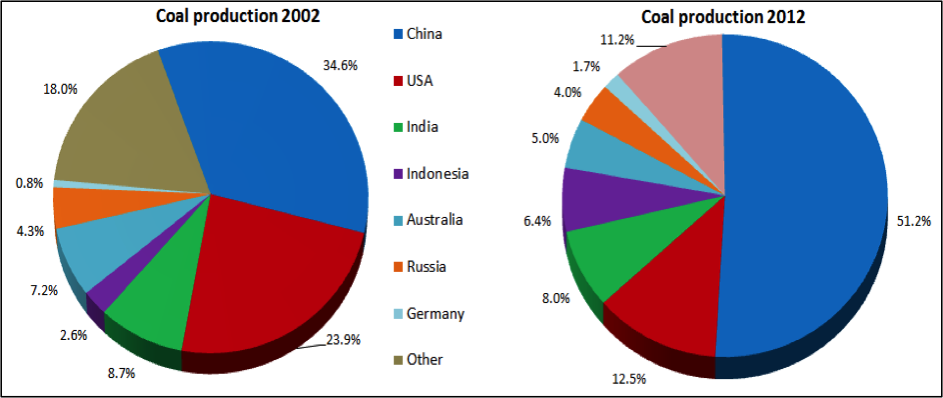
China burned 51.2% of the world’s coal in 2012, USA produced 12.5%. China’s production was more than four times larger. This has now stabilized and was in 2018 47%, because India and the real developing world are increasing their dependence on coal for electricity production, and also for cooking meals.
This of course is with the Paris accord in mind. U.S. and the European countries are to limit their emissions and slowly diminish them, down to a per capita emission comparable to the mid 1800’s, while China, being a “developing” country is allowed to increase their emissions until 2030, and then stabilize them, not decrease them.
How can they be burning nearly half the world’s coal mined?
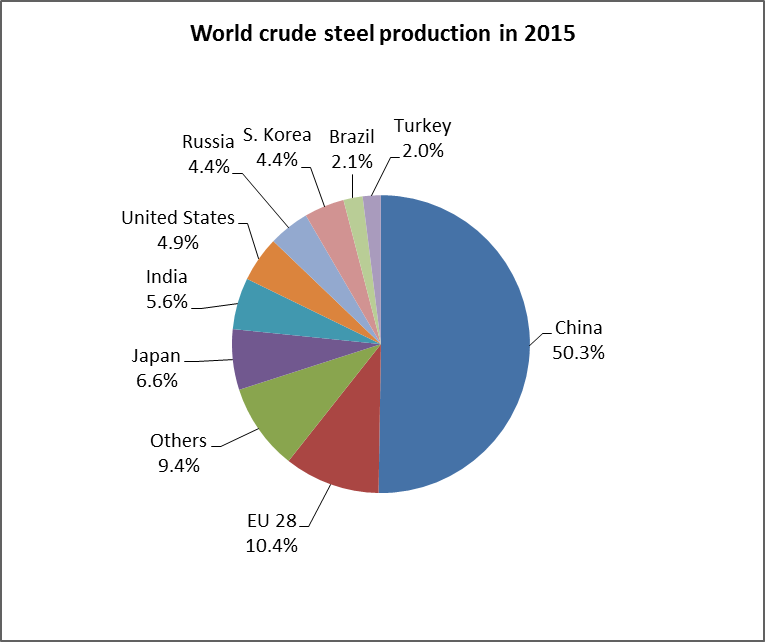
One reason is they are the world’s state controlled manufacturing company. They are also responsible for half the world’s Steel production. China produced 50.3% of the world’s crude Steel in 2015, USA produced 4.9%. China’s production was over 20 times larger than the U.S.Some of this steel was dumped below production cost to crush our domestic low end steel industry. An example: Rolled steel to make steel cans were exported at about $200 a ton, the production cost in the U.S. is more like $400 a ton. They can do this, since their environmental regulations only pay lip service to pollution. Remember how Pittsburgh was 60 years ago? China is much worse.
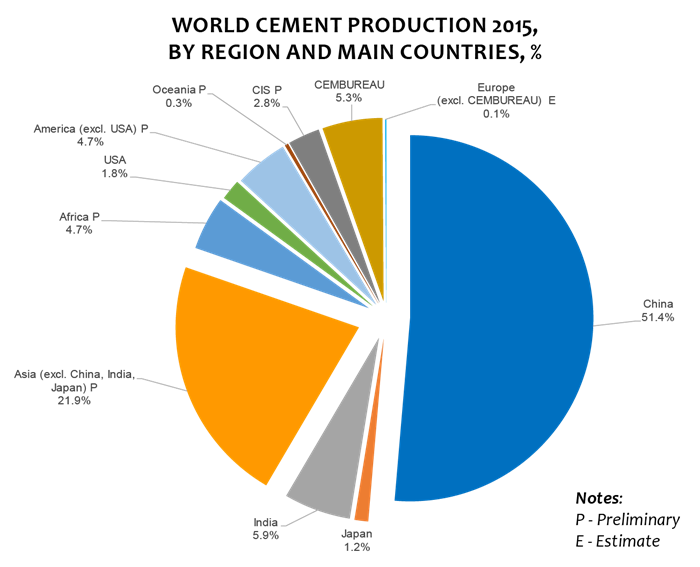
Cement production. China produced 51.4% of the world’s cement in 2015, USA produced 1.8%. China’s production was almost 30 times larger.
It takes a lot of concrete to build artificial islands so they can take control of the South China Sea. But they are building many other things, Ghost Cities, but also an impressive infrastructure with high speed trains on elevated concrete tracks.
Worrisome as that may be, it is nothing compared to China’s dominance in Rare Earth Metals. Let me explain why rare earth metals are so important to our modern economy.
First, rare earth metals re not rare at all, they exist in small quantities together with Thorium and sometimes Uranium wherever other metals are mined.
The Lanthanides occur in quantity in Monazite, a byproduct of mining Phosphates, but also as a byproduct of mining Titanium, and even from some Iron ores. The rare earth metals are free to begin extraction if it was not for one thing, they also contain Thorium, and Thorium is very weakly radio-active, so in the mid 1980’s the NRC and IAEA reclassified Monazite and anything containing Thorium as a “Source Material” and after that it became too costly to comply with all the regulations for nuclear material, so all production of rare earth minerals ceased in the U.S.
China saw an opportunity to grab the world market for Rare Earth Metals and is now controlling about 85% of the supply of all rare earth metals.
So what are rare earth metals used for?
China now has a de facto monopoly on all usages of rare earth metals, and in the case of war or an embargo, not only are our precious cell phones and computers in jeopardy, so is our defense, night vision goggles, aircraft engines, navigation systems, laser guidance, just to name a few uses.
And not only that, we import the completed parts from China, even for our most sophisticated military equipment, such as the F35 aircraft, after telling the Chinese how to make the components. The very same components are now in China’s version of the F35, still under development, but in a year or so China will have their faithful copies made! A F35 aircraft contains about 935 pounds of rare earth metals.
This is clearly unsustainable, so in 2014 Congress tried to pass HR 4883 and S 2006 to remedy the situation, but the bills got killed in review by none other than the defense department, citing National Security! Our only major rare earth metals mine reopened, only to go bankrupt in 2015. It has since reopened, but the ore is shipped to China for refining! One good point is that the Mountain Pass mine was scheduled to reopen the processing facilities late 2020, but full processing operations without the help from the Chinese rare earth refining giant corporation Shenghe Resources have been delayed to 2022
The idea was that we should change our electricity production into renewable sources, such as wind and solar.
Wind power uses a lot of rare earth metals to get the most efficient generators, all made by China. Wind power is about maxed out, that is, if you care about birds, especially eagles and raptors. The allowable bald eagle kill was upped from 1200 to 4200 a year for all U.S. wind turbines during the Obama administration. Killed golden eagles and storks has a S250,000 fine, paid by the electricity users, and if we build it out more, we may exterminate some species.
Solar power looked promising until pollution was taken into consideration. China added 53 GW solar capacity in 2017. The forecast for this year i 45 GW, and for next year 35 GW.
The efficiency of solar panels are drastically reduced by the layer of soot accumulating daily from air pollution. They have to be cleaned daily with water, and water is in short supply in northern China. The yellow river no longer reaches the ocean during large periods of the year, all water is spoken for. In southern India a solar farm used up so much water that the wells went dry and there was no more water for agriculture and people, except during the monsoon season. Germany has given up on their solar program except for special needs. The best places for large solar farms in the U.S. are in Arizona and Nevada, both are having severe and growing water problems. In addition, that is not where the energy is needed, so transmission losses must be taken into account, as well as the need to expand an increasingly vulnerable and in many parts undesirable national grid.
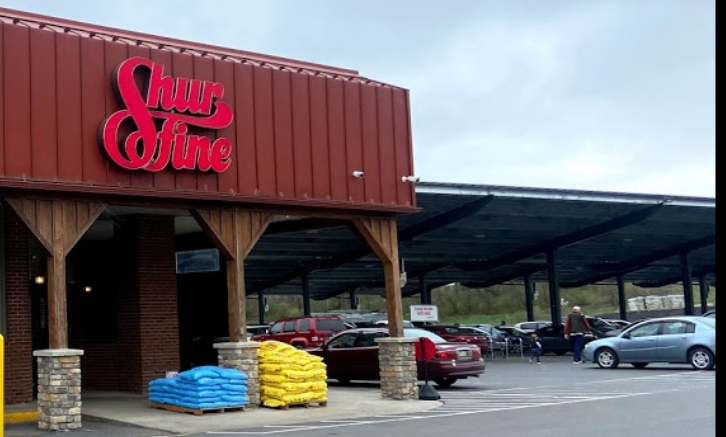
I am not against solar panels, and as soon as we are freed from total Chinese dominance on the material used in solar panels we should install them in open spaces, such as parking lots around factories and shopping malls, wherever there is adequate sunlight. Park the cars under them and the summer heat will be so much more bearable, and in the winter you will not have to scrape the windshield. When it snows, solar panels do not work anyway.
Burkholders grocery store on Rt 45 in central Pennsylvania, complete with solar panels over the parking lot.
Where it rains, China pollutes. The Yang -Tse river carries nearly half the plastic waste that is dumped in the ocean. It can be stopped, but it will consume a lot of energy, both man-power and electricity to do all the cleanup.
The most practical solution is found in creating a massive effort in developing and installing Thorium nuclear power. Here is a list of reasons why we should jump on the opportunity to solve the energy crisis:
The table below shows that USA came in as number 28 of the 40 countries with the largest outbreak of the Wuhan virus. This table reflects the first 40 days of the new U.S. administration. Most countries have a declining death rate, with the notable exceptions of Mexico, South Africa, Germany, United Kingdom, Colombia, Poland, Romania, France, Spain, Pakistan, Russia, Portugal, Ukraine, Iraq, and the United States of America.


.jpg?ext=.jpg)





 Len Bilén's blog, a blog about faith, politics and the environment.