The White House claims are alarmism at its worst, mostly complete nonsense.
On Obama’s visit to Cuba, he said in the joint press conference with Raúl Castro:
Our governments will (…) work together to protect the beautiful waters of this region that we share. And as two countries threatened by climate change, I believe we can work together to protect communities and our low-lying coasts.”
This brings us to verse 83 of the Obama Impeachment song (as if sung by President Barack Hussein Obama to the tune of “Please release me, let me go”)
We now have concrete evidence China has cemented its position as world leader!
This simple pie chart shows China’s cement production is eight times larger than India’s and 30 times larger than United States’.
Stating it another way China has produced more cement in the last 3 years than United States has produced in the last 100 years!
I also realize India is building its infrastructure as fast as they can, and we are not.
Which country is fourth in cement production?
If you guessed Iran, you are right. Iran’s cement production is about 5% less than U.S. They are building bunkers.
What is China doing with all its cement?
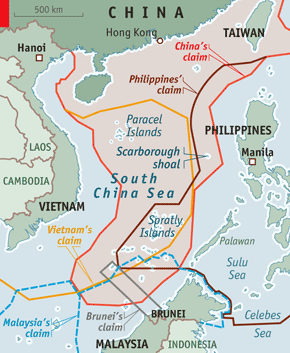
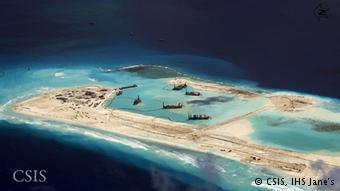
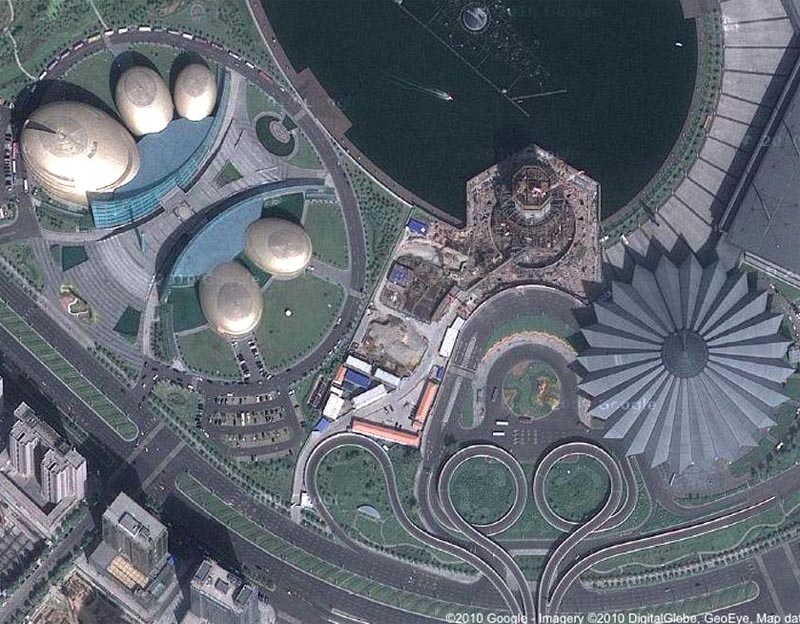
For one thing they are building artificial islands in the South China Sea. Their goal is to annex the whole South China Sea.
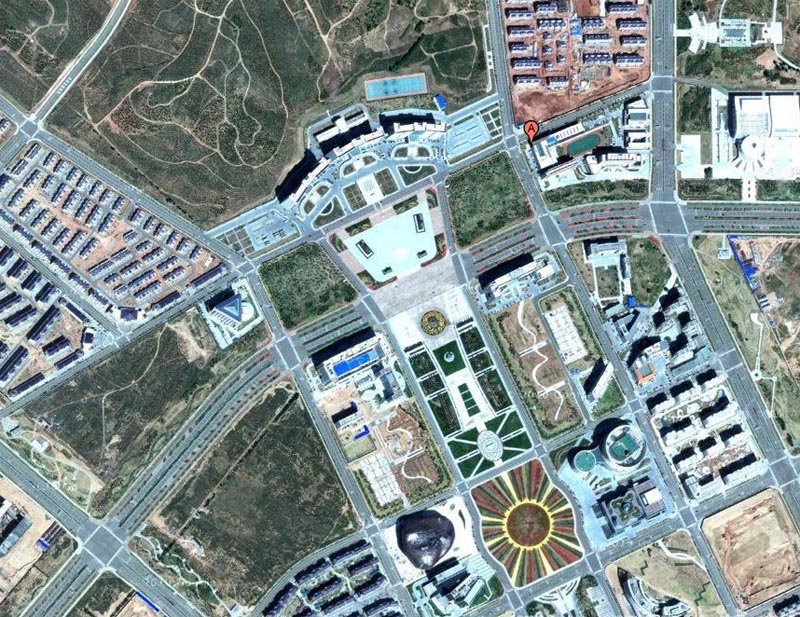
But that is not all. They are also building ghost towns in areas where nobody lives.
This is the Chinese model. Growing 7 to 10% per year, financing major construction projects. This is a pre-war mentality.
Cement production is also a very energy intensive process. For those worried about CO2, cement production is responsible for about 5% of all CO2 emissions in the world, more than half of it from China.
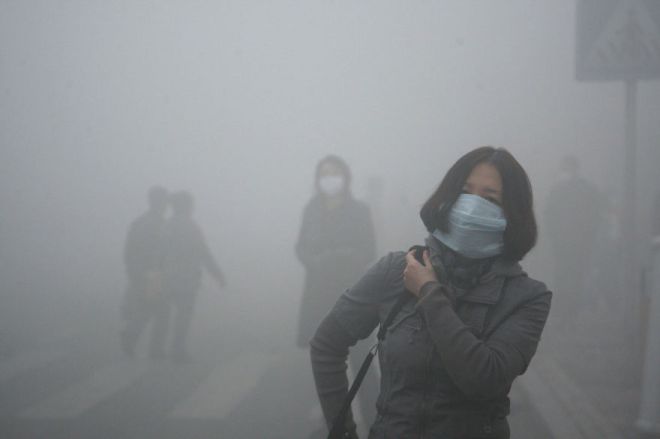
China also burns half of the world’s coal, and do it with marginal scrubbing releasing soot in the atmosphere causing the air in Beijing to be hazardous about 150 days per year.
A woman wearing a mask walk through a street covered by dense smog in Harbin, northern China, Monday, Oct. 21, 2013. Visibility shrank to less than half a football field and small-particle pollution soared to a record 40 times higher than an international safety standard in one northern Chinese city as the region entered its high-smog season. (AP Photo/Kyodo News) JAPAN OUT, MANDATORY CREDIT
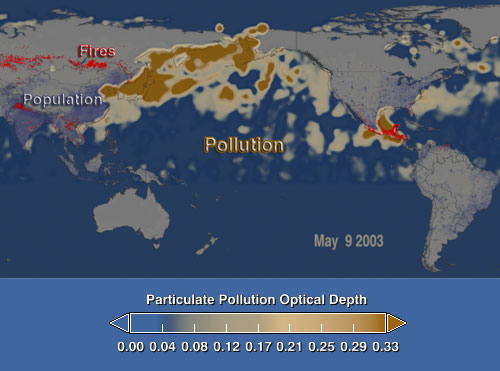
This brown cloud goes out in the Pacific Ocean, then up in the Arctic, settling on the snow and ice, causing the show and ice to have a faster spring ans summer melt.
This is at least partly why the Arctic ice is shrinking while the Antarctic ice is growing.
This chart was made in 2003. Since then Chinese cement production has tripled. Notice the southern hemisphere is by comparison pollution free. The CO2 levels are the same for the northern and southern hemisphere, but the temperature trends over the poles go in opposite direction.
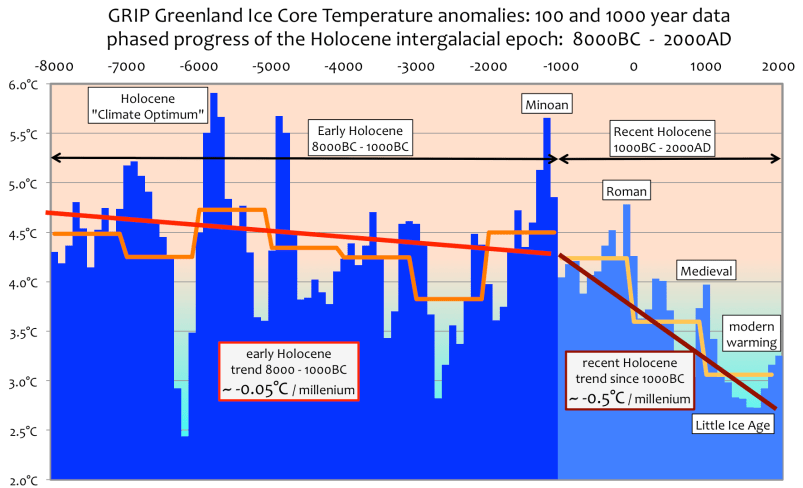
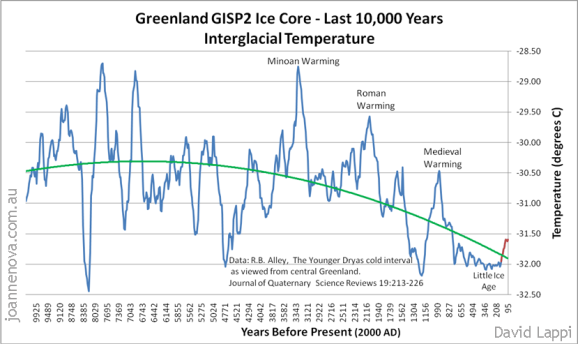
During the last Ice-age snowfall over Greenland was less than half what it is now. As the Earth came out of the ice-age temperatures rose sharply, CO2 rose with a lag of about 800 years, snowfall increased until the Minoan temperature optimum was reached. Since then there has been a slow decrease in global temperatures until the little ice age, after which there has been a temperature recovery. At the same time CO2 levels have increased, and there seemed to be a correlation from 1950 until “the pause”. What controls temperature is not CO2 but clouds. Check the chart below:
We are still in the coldest 1000 years since the end of the ice-ageThere is a strong correlation between temperature and CO2, not in the temperatures themselves, but in the temperature adjustments, also called homogenization. The adjustments are made to make old temperatures conform better to the climate models. The chart:
Clouds have always been my fascination. They come and go, form and disappear, cool by day and warm by night. But most impressive of all are thunderstorms, forming when the temperature and humidity are high, transport a lot of water vapor to higher elevations, there condensing as rain or ice, coming down, cooling and watering the earth. Clouds and thunderstorms are the thermostat of the earth. Without it the earth would respond like climate models, predicting a sharp temperature rise as carbon dioxide levels increase. The models are all flawed, since they predict a hot spot in the troposphere over the equator, but there is none. The thunderstorms in the tropical doldrums take care of that. “Settled science” instead has settled on ignoring the lack of the hot spot, for to acknowledge it would make the global warming claim invalid.
I thank God for providing us with a thermostat that protects the earth from overheating, and especially for thunderstorms!
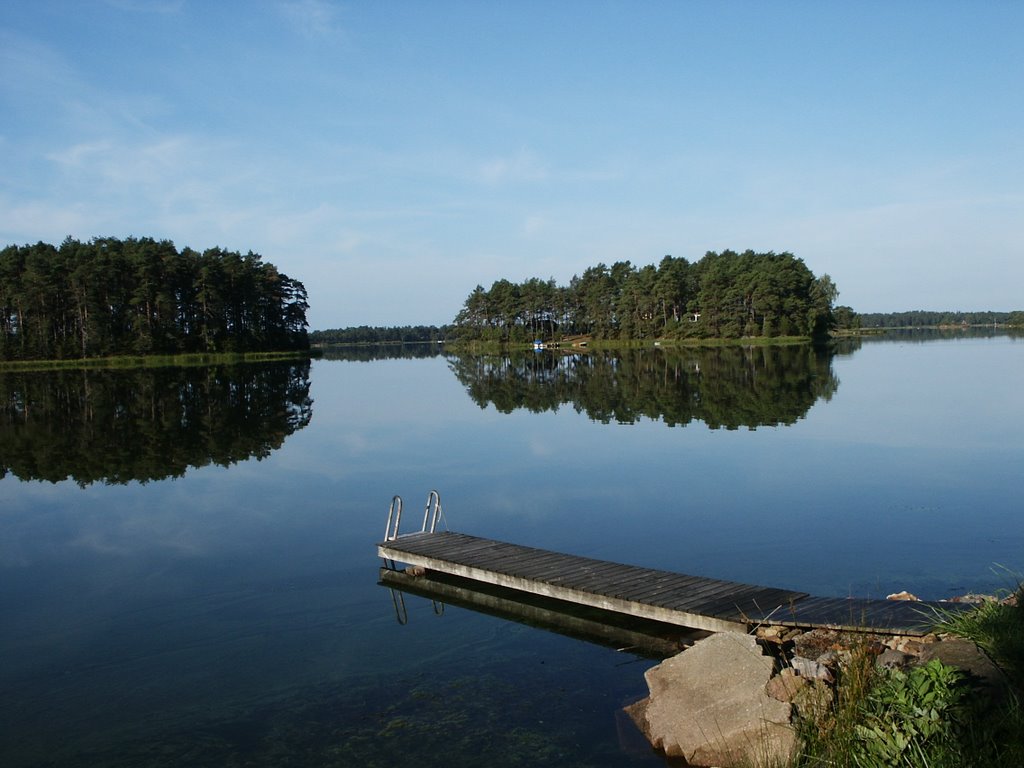
Such was the case in July 1885, when Carl Boberg, a 26 year young pastor of a small congregation of the Swedish Missionary society was the honored guest of the ladies’ auxiliary annual picnic, held in a meadow near Mönsteråsviken, (a bay of the Baltic Sea in southeastern Sweden). The day was perfect, the sky was clear, pleasant temperatures, the cows were grazing on the meadow, the birds were singing, in short, a pastoral idyll. Then it happened. In a few short minutes thunderclouds appeared out of nothing. There was no time to go home, so they all sought shelter in a barn close by. The rain came down hard, and lightning struck a nearby tree. Then as suddenly as it started the rain stopped and all was calm. In Sweden it turns much cooler after a thunderstorm, and the birds sing like they got a new lease on life.
They all went home, and the young pastor pondered the events of the day. He
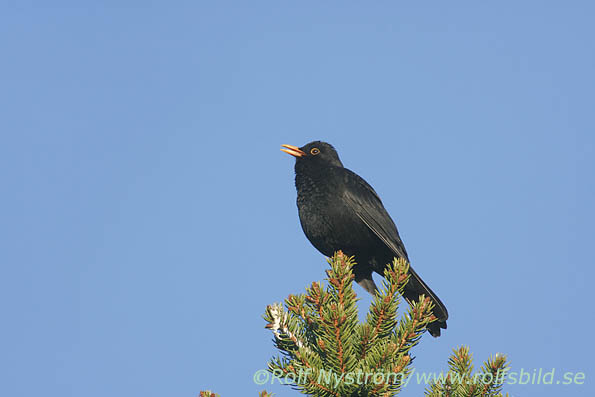
080419-11, digital 28,8 mb RAW, 12-00 Koltrast, Turdus merula Uppland
heard the Coalthrush singing its melodic, beautiful drill and in a distance he heard the church bells ringing from Kronobäck’s church. The bay was calm like a mirror, and inspired he started penning the song “O store Gud”. Here is the first verse:
O Lord my God, When I in awesome wonder, Consider all the works Thy Hands have made; I see the stars, I hear the mighty thunder, Thy power throughout the universe displayed.
Refrain: Then sings my soul, My Savior God, to Thee, How great Thou art, How great Thou art. Then sings my soul, My Savior God, to Thee, How great Thou art, How great Thou art!
He continued to write and write of all the mighty works that God has made and what He has given us through His word, and continued long into the night. Before going to bed he had penned over twenty verses. The next Sunday he wove the poem into his sermon. They all loved it, but that was about it. Slowly the word got around the poem was pretty good, after much editing down 9 verses were published in the local newspaper Mönsteråstidningen in 1886. Carl Boberg didn’t make any efforts to publish it further, and was surprised when he heard it sung a few years later to a Swedish folk melody (in 3/4 tempo). This was then published in the periodical “Sanningsvittnet” (witness of the truth) in 1891.
It was translated into German by an Estonian, Manfred von Glehn. Five years later it was translated into Russian by Ivan S. Prokanoff, the Martin Luther of modern Russia. It was published in a book with the title “Cymbals”.
Later, while in the Carpathian Mountains of what is now Western Ukraine the English Missionary couple Hine heard the song sung in Russian, this time as a wandering song in march tempo. He got impressed by God’s great works in the Polish mountains, and as Stuart Hine heard the people singing it on their way to church he penned a translation. This become the second verse:
When through the woods, and forest glades I wander, And hear the birds sing sweetly in the trees. When I look down, from lofty mountain grandeur And see the brook, and feel the gentle breeze.
Refrain
From now on the English version is different than the Swedish original. This is the origin of the third verse: It was typical of the Hines to ask if there were any Christians in the villages they visited. In one case, they found out that the only Christians that their host knew about were a man named Dmitri and his wife Lyudmila. Dmitri’s wife knew how to read — evidently a fairly rare thing at that time and in that place. She taught herself how to read because a Russian soldier had left a Bible behind several years earlier, and she started slowly learning by reading that Bible. When the Hines arrived in the village and approached Dmitri’s house, they heard a strange and wonderful sound: Dmitri’s wife was reading from the gospel of John about the crucifixion of Christ to a houseful of guests, and those visitors were in the very act of repenting. In Ukraine (as I know first hand!), this act of repenting is done very much out loud. So the Hines heard people calling out to God, saying how unbelievable it was that Christ would die for their own sins, and praising Him for His love and mercy. They just couldn’t barge in and disrupt this obvious work of the Holy Spirit, so they stayed outside and listened. Stuart wrote down the phrases he heard the Repenters use, and (even though this was all in Russian), it became the third verse that we know today: And when I think, that God, His Son not sparing; Sent Him to die, I scarce can take it in; That on the Cross, my burden gladly bearing, He bled and died to take away my sin.
Refrain
The second world war broke out, and the Hines were forced to return back to England, but they continued their ministry. The fourth verse was was added by Stuart Hine after the Second World War. His concern for the exiled Polish community in Britain, who were anxious to return home, provided part of the inspiration for Hine’s final verse. Hine and David Griffiths visited a camp in Sussex, England, in 1948 where displaced Russians were being held, but where only two were professing Christians. The testimony of one of these refugees and his anticipation of the second coming of Christ inspired Hine to write the fourth stanza of his English version of the hymn. According to Ireland: One man to whom they were ministering told them an amazing story: he had been separated from his wife at the very end of the war, and had not seen her since. At the time they were separated, his wife was a Christian, but he was not, but he had since been converted. His deep desire was to find his wife so they could at last share their faith together. But he told the Hines that he did not think he would ever see his wife on earth again. Instead he was longing for the day when they would meet in heaven, and could share in the Life Eternal there. These words again inspired Hine, and they became the basis for his fourth and final verse to ‘How Great Thou Art’:
When Christ shall come, with shout of acclamation, And take me home, what joy shall fill my heart. Then I shall bow, in humble adoration, And then proclaim: “My God, how great Thou art!”
Refrain
The complete song was soon published, not in England but in the Soviet Union (in English). The famous Gospel singer George Beverly Shea got hold of it, liked it a lot, but he wanted to change two words in the first verse: Instead of works, he wanted to use worlds, and instead of mighty he wanted to use rolling. Very reluctantly Stuart Hine agreed, but only for use in the Billy Graham Crusades. It was first sung in Canada in 1955. It became so popular that in Billy Graham’s 1956 New York Crusade it was sung at all 99 events, and from there the song spread out through all the world, even back in Sweden where the new version became the popular one.
There have been over seventeen hundred documented recordings of “How Great Thou Art”. It has been used on major television programs, in major motion pictures, and has been mentioned as the favorite Gospel song of at least three United States’ presidents.
Neonicotinoid pesticides were first registered for use in the mid-1990s. Since then, these chemicals have become widely adopted for use on farm crops, ornamental landscape plants, and trees. Neonicotinoids (AKA neonics) are systemic chemicals; they are absorbed by the plant and are transferred through the vascular system, making the plant itself toxic to insects.
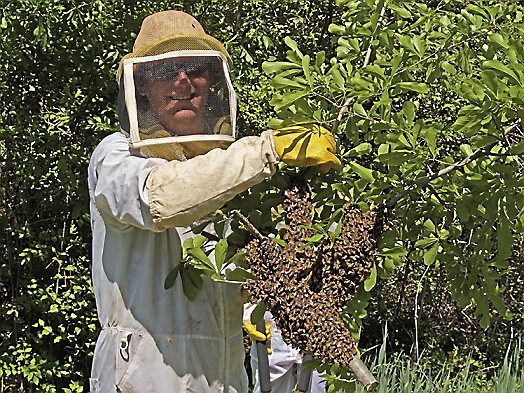
The impact of this class of insecticides on pollinating insects such as honey bees and native bees is a cause for concern. Because they are absorbed into the plant, neonics can be present in pollen and nectar, making these floral resources
toxic to pollinators that feed on them. The long lasting presence of neonics in plants makes it possible for these chemicals to harm pollinators even when the initial application is made outside of the bloom period. In addition, neonics
persist in the soil and in plants for very long periods of time.
About 95 percent of all commercial U.S. corn and canola crops and most all commercial cotton, sorghum, sugar beets, fruits. vegetables, berries, leafy greens, and cereal grains are treated with neonics.
Neonics affect the nervous system of the bees making them disoriented and simply disappear rather than finding their way back to the hive. Are neonics poisonous to humans? Probably not since no birds or animals seem to be affected, but the loss of our major pollinators, it is still an ecological catastrophe. The previous way of protecting the seeds with mercury was far more serious, nearly exterminating owls and eagles. EPA needs to immediately ban the use of neonics in orchards and other places where bee borne pollination is taking place. By majoring in climate change, calling CO2 a pollutant and spending an inordinate amount of limited resources going after the wrong targets. They should concentrate on real pollution.
Genesis 1: 6-8And God said, Let there be a firmament in the midst of the waters, and let it divide the waters from the waters. And God made the firmament, and divided the waters which were under the firmament from the waters which were above the firmament: and it was so. And God called the firmament Heaven. And the evening and the morning were the second day.
I marvel at God’s creation, especially when it shows its full power. The bird feeder got repaired just in time for the snowstorm, the birds are now flocking to it. We put out the Christmas tree next to it, so the birds can have close shelter when the stealer boys, the Blue Jays come and take over the feeder. I marvel at the persistence of all the small birds, surviving in these conditions.
In Creation, God, the Word and the Spirit created all matter. The water was created before light. And God saw that it was good. That was the first day.
The second day God made the feedback loop of water vapor evaporating, rising to make clouds and giving rain and snow to form a functioning eco-system. So God took a whole day out of Creation just to make the clouds? And He didn’t even say it was good? He said it was good after all the other days of Creation. In the sixth day of Creation, after creating man, God even said it was very good, and then rested on the seventh day! The reason is the total ecosystem does not function well and be stable until all components, clouds, rain, snow, grass, plants, trees, animals and yes, even man are in place.
The story of Creation explains Creation spiritually, but leaves out a lot of details. To understand the functioning ecosystem one has to go about it scientifically, that is: Look at nature and what happens to Earth when something changes, such as burning fossil fuels and produce more and more CO2. Is that good or bad?
The last ice age ended with a massive melting of ice. The northern ice cap extended as far south as the Finger Lakes in North America and the middle of Poland in Europe. Something caused a disturbance to start the melting of the ice. Once going, more ice melted and exposed bare earth and more ocean for even more warming, and a chain reaction started. What had been a stable ice cap for thousands of years melted in a very short time. The level of CO2 was low during the ice age, but as soon as the ice melted some CO2 got released from the ice, and even more from the warming oceans, so with a lag of about 800 years the CO2 levels rose as well. The temperature rose and rose until suddenly they leveled off in what is called the Minoan optimum, with pleasant temperatures. Since then it has gotten gradually colder with small warm periods such as the Roman and Medieval Warm period, and colder periods, the last of which was the Little Ice Age.
During the ice age evaporation was much less than now. Snowfall over Greenland was about half what it is today, and there were significantly fewer clouds in the ice covered areas, much like Antarctica is today, an ice desert. This is what happens: As temperatures rise, more water evaporates and clouds form more often and earlier in the day causing a strong negative feedback so it doesn’t get as warm as it otherwise would have been. This limits the surface temperature to about 88F when thunderstorms occur. If no clouds form it can get substantially warmer. Take New Delhi, India for example. During May the sky is without clouds and temperatures can reach 115F during the day. When the monsoons come in June-July the temperature stays below 100F with high humidity.
We are now well into the bog building phase of the inter-glacial period and the next ice age can start at any time. In fact, it was narrowly averted after the little ice age. With burning more fuel, creating more CO2 we delay the onset of the next ice age by a few thousand years. In addition, added CO2 grows more plants, making it possible to feed an additional two billion people on earth without starving. By lessening the temperature differences between the poles and the equator, storms, hurricanes and tornadoes will be less severe. Droughts will be less severe. Water will be more abundant. The only drawback is that floods will increase, but if we know they can come we can prepare for it.
The conclusion after this long harang is: When you see a cloud forming, thank God for providing a functioning ecosystem, and when you see a rainbow in the sky thank him again for his promise.
Watching with horror the multiple simultaneous Islamic terrorist attacks on innocent civilians in Paris, France, while Paris was under the highest possible alert for terrorist activities, the French President Hollande among the spectators at a soccer match between France and Germany, and the climate control conference COP21 only two weeks away, the words of President Obama still rings in my ears:
“My definition of leadership would be leading on climate change, an international accord that potentially we’ll get in Paris. My definition of leadership is mobilizing the entire world community to make sure that Iran doesn’t get a nuclear weapon.”
Obama is also quite proud of his milestones on climate change, particularly after reaching a “historic” deal with China in 2014.
“The historic climate change announcements that we made last year in Beijing have encouraged other countries to step up, as well, increasing the prospects for a stronger global agreement this year,” Obama said in September during a meeting with Chinese President Xi at the White House. This historic agreement means that China is allowed to emit six times more CO2 than U.S.A. by the year 2030.
According to a well-researched article by Bjorn Lomborg, peer-reviewed, entitled “Impact of Current Climate Proposals” the predictions of how a total success in implementing all climate mediation recommendations, the result will be:
This article investigates the temperature reduction impact of major climate policy proposals implemented by 2030, using the standard MAGICC climate model. Even optimistically assuming that promised emission cuts are maintained throughout the century, the impacts are generally small.
The impact of the US Clean Power Plan (USCPP) is a reduction in temperature rise by 0.013°C by 2100.
The full US promise for the COP21 climate conference in Paris, its so-called Intended Nationally Determined Contribution (INDC) will reduce temperature rise by 0.031°C.
The EU 20-20 policy has an impact of 0.026°C, the EU INDC 0.053°C, and China INDC 0.048°C.
All climate policies by the US, China, the EU and the rest of the world, implemented from the early 2000s to 2030 and sustained through the century will likely reduce global temperature rise about 0.17°C in 2100.
These impact estimates are robust to different calibrations of climate sensitivity, carbon cycling and different climate scenarios. Current climate policy promises will do little to stabilize the climate and their impact will be undetectable for many decades.
Of particular interest is the impact of the US Clean Power Plan (USCPP) with its reduction in temperature rise by 0.013°C by 2100.
How much is 0.013 degrees? It is about as much as the adiabatic cooling of the atmosphere occurring between the feet and the head of an average sized person.
For this Obama is killing our Coal mining, while still calling the China climate agreement a success, allowing them to burn over half of the coal in the world.
And this is the most urgent danger facing us today?
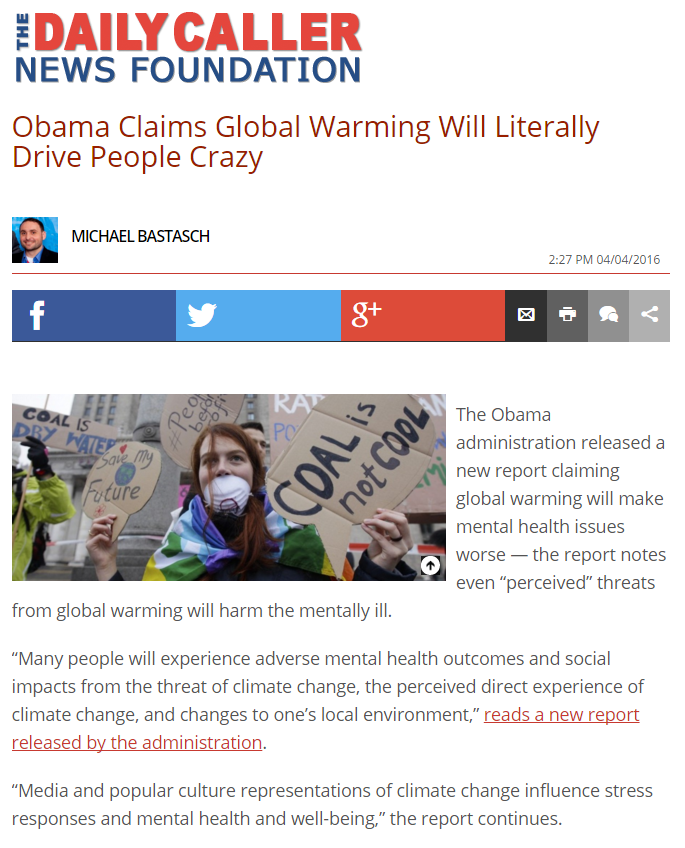 Here is the link: https://www.whitehouse.gov/the-press-office/2016/04/04/fact-sheet-what-climate-change-means-your-health-and-family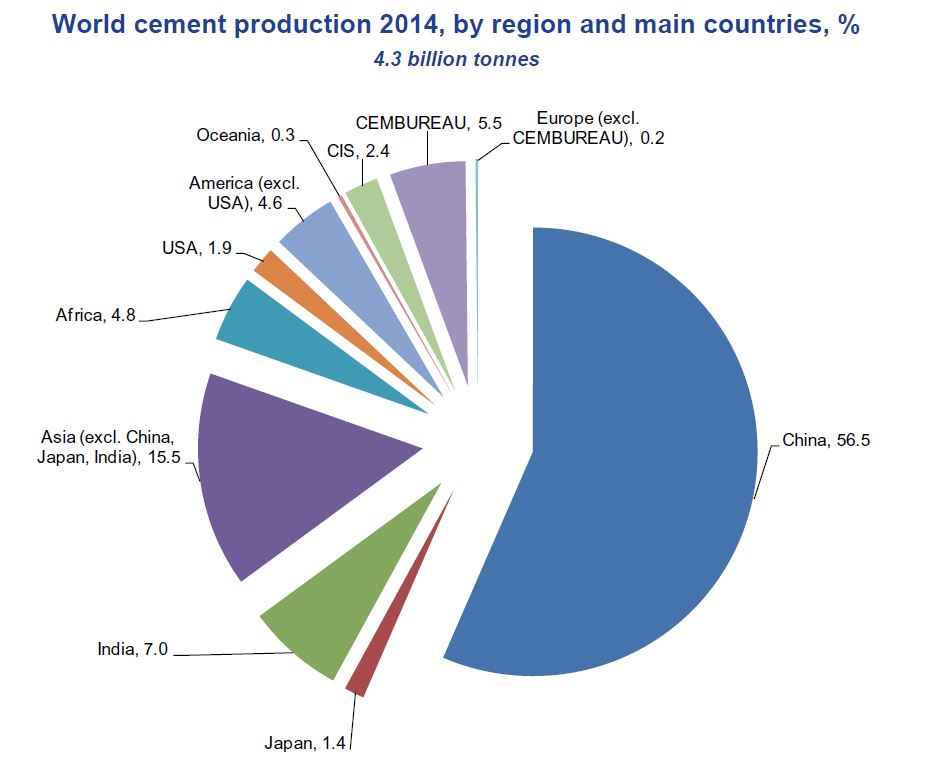







 Len Bilén's blog, a blog about faith, politics and the environment.