Nuclear power and earthquakes. How to make it safer and better.

The earthquake that hit Japan on March 11 caused enough damage to at least 11 of Japan’s 55 nuclear reactors that they will have to be repaired before power production can resume. Three reactors are so badly damaged that they are releasing short term radioactive gases. Three reactors have suffered a significant hydrogen explosion from released gases from exposed and overheated fuel rods and much secondary damage has occurred.  Three reactors are now in a stage of a partial meltdown, they will never be restarted again and the radiation poisoning the environment will last for millennia. In addition there was a fire in the spent fuel compartment of a fourth reactor releasing much radiation.

This is the problem with Uranium based nuclear power generation. These particular reactors are of the GE Mark-1 type, the design is from the 60’s, and there has been complaints the safety updates and inspections have been falsified. They were designed to withstand a 7.0 earthquake, further reinforced by the Japanese to an 8.2 earthquake. The tsunami wall around the complex was built 30 feet high, but the tsunami was 39 feet. Be that as it may, the tsunami took out the backup generators and the earthquake was severe and sudden enough that some of the SCRAM-rods could have been jammed. Time will tell what the failure mode really was. We seem to have a significant safety problem with nuclear power.

Is there a better way? Let us look at the history of nuclear power. Fission from Uranium 235 was confirmed in  1938 and fission from U-233 was discovered in 1942. During that time WWII was raging, and the Germans had a head start with many superior nuclear scientists. Some had fled to the U.S. but many remained. Germany had captured Norway and there was excess hydroelectric power available in Rjukan so they started to manufacture heavy water. When they had made a whole railroad container car of heavy water , the “Heroes of Telemark” managed to sink the ferry it was transported on and the German program was set back, probably by a year.

Meanwhile in the U.S. the Manhattan Project was going on. They used brute force to separate out enough U-235 out of natural Uranium. Copper was in short supply so they could not get enough to make all the electromagnets necessary for the separation. Not to worry they availed themselves of the silver in Fort Knox, making the best magnets the world has ever seen.

Germany capitulated May 5 1945, but not Japan and on August 6 the first nuclear bomb was dropped, changing life as we see it forever. The nuclear nightmare had started. In the 50’s the Oak Ridge ‘boys’, (the laboratory, not the quartet) proved that nuclear power from Thorium was a realistic power source, but then the nation was more interested in making plutonium for nuclear bombs, and thorium based reactors did not produce enough bomb-making material. So Thorium was mothballed and the Uranium based reactors won the day. Thus the military industrial complex gained virtual monopoly on nuclear power, and that is why we are now in a terrible fix trying to promote nuclear power.

Sweden started a heavy water project but the light water reactors proved more economical and the development cycle much faster thanks to the military applications un US. India refused to join the nuclear proliferation treaty so they were shut out of access to enriched uranium and light water reactor technology. What to do? They built a heavy water reactor that uses natural uranium instead. The beauty of that process is that it produces even more plutonium than what is possible with light water reactors. So they built their nuclear bomb, pretending to promote peaceful nuclear energy. What if we instead had said: “Forget the bombs, go with Thorium instead?” Would there be any difference?

Thorium is four times more abundant than Uranium, and is found as a byproduct when mining rare earth and heavy metals. It is radioactive, but not more than the background radiation found everywhere. It is at the “banana level”, about as radioactive as bananas. Thorium is completely safe from terrorists, it cannot be used for anything sinister.  You only need very small quantities to fuel a reactor, and since it is a by-product it can be bought for the price of refining it, about $40 per Kg.  There is enough Thorium around to produce power at today’s level for over a million years.

Thorium can generate electricity at a cost of about 4 cents/kWh, even when all regulatory  requirements are satisfied. It generates 0.01% of the long term waste products of a Uranium reactor, and can even consume some of the waste-products from uranium based production. There is no risk of boil-overs since the fuel is already molten and at atmospheric pressure.

Sounds too good to be true? Let us take a look at the thorium reactors and see what they seem to promise.

1. Cheap and unlimited raw material.

2. Produces electricity at a cost of about 4 cents per kWh.

3. 0.01% waste products compared to a Uranium fast breeder.

4. Radioactive waste lasts max 300 years instead of a million years.

5. Can deplete some of the existing radioactive waste and nuclear weapons stockpiles.

6. Produces Plutonium-238 needed for space exploration.

7. Does not produce Plutonium239 and higher used in Nuclear bombs.

8. Produces isotopes that helps cure certain cancers.

9. Earthquake safe.

10. No risk for a meltdown, the fuel is already molten.

11. Very high negative temperature coefficient leading to a safe control.

12. Atmospheric pressure operating conditions, no risk for explosions.

13. Scales beautifully from small portable generators to full size power plants.

14. No need for evacuation zones, can be placed in urban areas.

15. Rapid response to increased or decreased power demands.

16. Lessens the need for an expanded national grid.

17. Russia and China is starting up a Thorium program

18. India has an active Thorium program.

19. Lawrence Livermore Laboratories is developing a small portable self-contained Thorium reactor capable of being carried on a low-bed trailer.

20. The need for a Yucca Mountain nuclear storage facility will eventually go away.

Obstacles in the path of Thorium reactors.

1. They are fast breeder reactors and fast breeders have a bad reputation for potential risks. The political resistance is enormous.

2. The military industrial complex (GE, Westinghouse, etc. ) has an enormous investment in Uranium based light water reactor technology. They would like to keep it that way.

3. The NRC is nearly impossible to move forward.

4. The political power landscape will change. Thorium based nuclear power is best left to regional control, and the world body trying to control all aspects of power generation would have a much harder time establishing total control.

5. Electricity will to a lesser degree be produced from coal, leaving the coal states with less clout.

Where do we go from here? India has for a long time been the only serious developer of Thorium based nuclear energy, a program that has been languishing too long since it has zero military applications, Thorium power produces 0.01% of the nuclear waste of conventional nuclear power, Thorium is abundant in Australia, India and the U.S. She should encourage cooperation on this type of nuclear energy. Thorium based generators can be made safe from earthquakes in a way no other nuclear energy can. Even though Thorium reactors are fast breeder reactors they are inherently stable and can be placed on barges in rivers. They are also superior in adapting to variations in power need, in short: we are way behind in developing the nuclear power for the future.

All of us should read up and try to understand the Thorium process and be ready to give a reason why we should not abandon nuclear power but change direction in this critical time. We need a new “Manhattan project” for energy. This time all the silver in Fort Knox will not save us, for we have lost the ability to do it by using brute force. Instead we will have to take a decentralized approach, developing small to medium size Thorium reactors near centers of power consumption. This will lessen our dependence on the National Grid, a grid that is vulnerable to terror attacks. Thorium reactors are not vulnerable to attacks, they can be neutralized and shut down with gravity alone, the one force that is always there.

Eleven reasons to switch to Thorium based Nuclear Power generation.

(The reasons keep piling up. A more updated 25 reasons are found here ).

Eleven reasons to switch to Thorium based Nuclear Power generation.

1. Cheap and unlimited raw material. There is enough Thorium around for many millennia, and not only that, it is a byproduct of mining heavy metals and rare earth metals The price is the cost of refining it, about $40/Kg.

2. 0.01% waste products compared to a Uranium fast breeder. The Thorium process has a much higher efficiency in fission than  the Uranium process. See the figure below.

Note the Plutonium in the Thorium cycle is Pu-238, which is in high demand.

3. Radioactive waste lasts max 300 years instead of a million years. Initially a Thorium reactor produces as much radioactivity as other nuclear reactors, since that is what generates the heat by converting mass to heat, but the decay products have a much shorter half-life. See the figure below.

4. Can deplete some of the existing radioactive waste and nuclear weapons stockpiles. Thorenco LLC is developing a special reactor to purify spent nuclear fuel. This thorium converter reactor is designed to transmute and to “fission away” the heavy transuranic metals, the “nuclear waste” that the world’s fleet of 441+ light water reactors produce in spent fuel. This waste is about 4-5% of the volume of the fuel rods. It is composed of neptunium, plutonium, americium and curium. These transuranic elements are radiotoxic for very long periods of time. Thorenco’s technology fissions the plutonium and irradiates the transuranics causing the heavy metal elements to fission or to become lighter elements with much shorter decay periods. The thorium fuel cycle provides the neutrons as does the reactor grade plutonium. Nuclear power becomes more sustainable because the volume of the spent fuel from the uranium plutonium cycle is reduced by up to 95%. More importantly, the storage time for the residue from the recycled thorium fuel is materially reduced. This will have to be stored for less than 1% of the time needed for the storage of the untreated transuranics.

5. Produces Plutonium-238 needed for space exploration. WASHINGTON — The U.S. Senate gave final passage to an energy and water spending bill Oct. 15  2009 that denies President Barack Obama’s request for $30 million for the Department of Energy to restart production of plutonium-238 (pu-238) for NASA deep space missions. The House of Representatives originally approved $10 million of Obama’s pu-238 request for next year, but ultimately adopted the Senate’s position before voting Oct. 1 to approve the conference report on the 2010 Energy-Water Appropriations bill (H.R. 3183). The bill now heads to Obama, who is expected to sign it. NASA relies on pu-238 to power long-lasting spacecraft batteries that transform heat into electricity. With foreign and domestic supplies dwindling, NASA officials are worried the shortage will prevent the agency from sending spacecraft to the outer planets and other destinations where sunlight is scarce. Thorium reactors produce PU-238 as a “free” byproduct.

6. Does not produce Plutonium239 and higher used in nuclear bombs. The higher Plutonium isotopes are about as nasty as they get, and need expensive protection against terror attacks, and need to be stored for a very long time.

7. Produces isotopes that helps cure certain cancers. For decades, medical researchers have sought treatments for cancer. Now, Alpha Particle Immunotherapy offers a promising treatment for many forms of cancer, and perhaps a cure. Unfortunately, the most promising alpha-emitting medical isotopes, actinium-225 and its daughter, bismuth-213, are not available in sufficient quantity to support current research, much less therapeutic use. In fact, there are only three sources in the world that largely “milk” these isotopes from less than 2 grams of thorium source material. Additional supplies were not forthcoming. Fortunately, scientists and engineers at Idaho National Laboratory identified 40-year-old reactor fuel stored at the lab as a substantial untapped resource and developed Medical Actinium for Therapeutic Treatment, or MATT, which consists of two innovative processes (MATT-CAR and MATT-BAR) to recover this valuable medical isotope.

8. Earthquake safe. Thorium reactors have a very simple and compact design where gravity is the only thing needed to stop the nuclear reaction. Conventional Nuclear reactors depend on external power to shut down after a SCRAM, where poison rods fall down to halt the reaction.  The next figure shows the concept of a Thorium reactor.

The idea is to empty the fissile U-233 core through gravity alone. Since the fuel is already molten, it can run out like pig-iron into cooling heat exchangers with  water supplied thru gravity alone.

As we can see the reactor hardened structure is compact, and can be completely earthquake and tsunami proof. What can be sheared off are the steam pipes and external power, but the shutdown can complete without additional power.

9. No risk for a meltdown, the fuel is already molten. The fuel in a Thorium reactor is U-233 in the form of UraniumFluoride (UF4) salt that also contains Lithium and Beryllium, in its molten form it has a very low vapor pressure. The salt flows easily through the heat exchangers and the separators. The salt is very toxic, but it is completely sealed.

10. Very high negative temperature coefficient leading to a safe control. This is another beauty of the molten salt design. The temperature coefficient is highly negative, leading to a safe design with simple and consistent feedback. What does that mean?  It means that if temperature in the core rises, the efficiency of the reaction goes down, leading to less heat generated. There is no risk for a thermal runaway. In contrast, Chernobyl used graphite moderated Uranium , and it suffered a thermal runaway as the operators bypassed three safety circuits trying to capture the last remaining power during a normal shut-down. The reactor splat, the graphite caught fire and the rest is history. Five days later two nuclear installations in Sweden shut down their reactors due to excessive radiation, but it took a while before they could figure out what had happened. First then did the Soviets confess there had been an accident.

11. Atmospheric pressure operating conditions, no risk for explosions. Materials subjected to high radiation tend to get brittle or soften up. Thorium reactors operate under atmospheric conditions so the choice of materials that can withstand both high temperatures and high radiation is much greater, leading to a superior and less expensive design.  There is no high pressure gas buildup and the separation stage can be greatly simplified.

Many of the pictures are from a slide presentation given by David Archibald in Melbourne Feb 5 2011. He posted it “for the benefit of all” which I have interpreted as waving the copyright of the pictures

David Archibald on Climate and Energy Security

Next installment:  Eleven more reasons for Thorium https://lenbilen.com/2012/02/15/eleven-more-reasons-to-switch-to-thorium-as-nuclear-fuel/

Eleven more reasons to switch to Thorium as Nuclear fuel.

(The reasons keep piling up. A more updated 25 reasons are found here ).

Eleven more reasons to switch to Thorium as Nuclear fuel. The first eleven are found in https://lenbilen.com/2012/02/15/eleven-reasons-to-switch-to-thorium-based-nuclear-power-generation/  I am following the events at Fukushima Nuclear Power plants with great interest. How ironic that the greatest risk is with the spent fuel, not with the inability to shut down the working units. The spent fuel issue is the real Achilles’ heel of the Nuclear Power Industry. Thorium power works differently as nearly all fuel gets consumed as it is generated. When the process shuts down, that is it. Only the radioactivity that is en route so to say will have to be accounted for, not everything generated thus far in the process. The difference is about 10000 to one in the size of the problem. Time to switch over to Thorium.

12.  Scales beautifully from small portable generators to full size power plants. One of the first applications was as an airborne nuclear reactor.

 Granted this was not a Thorium breeder reactor, but it proves nuclear reactors can be made lightweight. Thorium reactor may be made even lighter as long as they are not of the breeder type.

13. No need for evacuation zones, can be placed near urban areas. Thorium reactors operate at atmospheric pressure and have a very high negative temperature coefficient, so there is no risk for a boil-over. They are easily made earthquake-safe since no pressure vessel is needed.

14. Rapid response to increased or decreased power demands. The increase in power output to increased power demand is faster than in coal-fired power plant. All you have to do is increase the speed of flow in the core and it will respond with raised temperature.

15. Lessens the need for an expanded national grid. The National Electric grid is at the breaking point. It needs to be expanded, but neighborhood resistance is building in many areas where they need an expansion the most. The grid is also sensitive to terrorism activities.

 As we can see the national grid is extensive, and under constant strain. A way to lessen the dependency on the national grid is to sprinkle it with many small to medium sized Thorium Nuclear Power generators.  They can be placed on barges in rivers and along the coast, giving the grid maximum flexibility to respond in  case of an emergency.

16. Russia has a Thorium program This is a self-contained Thorium Nuclear Reactor on a barge. Coolant readily available. Hoist it a couple of cables and the town will have all the power it needs.

17. China is starting up a Thorium program. The People’s Republic of China has initiated a research and development project in thorium molten-salt reactor technology, it was announced in the Chinese Academy of Sciences (CAS) annual conference on Tuesday, January 25. An article in the Wenhui News followed on Wednesday. Chinese researchers also announced this development on the Energy from Thorium Discussion Forum. Led by Dr. Jiang Mianheng, a graduate of Drexel University in electrical engineering, the thorium MSR efforts aims not only to develop the technology but to secure intellectual property rights to its implementation. This may be one of the reasons that the Chinese have not joined the international Gen-IV effort for MSR development, since part of that involves technology exchange. Neither the US nor Russia have joined the MSR Gen-IV effort either. A Chinese delegation led by Dr. Jiang travelled to Oak Ridge National Lab last fall to learn more about MSR technology and told lab leadership of their plans to develop a thorium-fueled MSR.The Chinese also recognize that a thorium-fueled MSR is best run with uranium-233 fuel, which inevitably contains impurities (uranium-232 and its decay products) that preclude its use in nuclear weapons. Operating an MSR on the “pure” fuel cycle of thorium and uranium-233 means that a breakeven conversion ratio can be achieved, and after being started on uranium-233, only thorium is required for indefinite operation and power generation.

18. India has an active Thorium program. • India has a flourishing and largely indigenous nuclear power program and expects to have 20,000 MWe nuclear capacity on line by 2020 and 63,000 MWe by 2032.  It aims to supply 25% of electricity from nuclear power by 2050. • Because India is outside the Nuclear Non-Proliferation Treaty due to its weapons program, it was for 34 years largely excluded from trade in nuclear plant or materials, which has hampered its development of civil nuclear energy until 2009. • Due to these trade bans and lack of indigenous uranium, India has uniquely been developing a nuclear fuel cycle to exploit its reserves of thorium. • Now, foreign technology and fuel are expected to boost India’s nuclear power plans considerably.  All plants will have high indigenous engineering content. • India has a vision of becoming a world leader in nuclear technology due to its expertise in fast reactors and thorium fuel cycle. • India’s Kakrapar-1 reactor is the world’s first reactor which uses thorium rather than depleted uranium to achieve power flattening across the reactor core. India, which has about 25% of the world’s thorium reserves, is developing a 300 MW prototype of a thorium-based Advanced Heavy Water Reactor (AHWR). The prototype is expected to be fully operational by 2011, following which five more reactors will be constructed. Considered to be a global leader in thorium-based fuel, India’s new thorium reactor is a fast-breeder reactor and uses a plutonium core rather than an accelerator to produce neutrons. As accelerator-based systems can operate at sub-criticality they could be developed too, but that would require more research. India currently envisages meeting 30% of its electricity demand through thorium-based reactors by 2050.

19.Lawrence Livermore Laboratories is developing a small portable self-contained Thorium reactor capable of being carried on a low-bed trailer. A Democratic member of the United States House of Congress (Joseph Sestak) in 2010 added funding for research and development for a reactor that could use thorium as fuel and fit on a destroyer-sized ship.  Lawrence Livermore national laboratories are currently in the process of designing such a self-contained (3 meters by 15 meters) thorium reactor. Called SSTAR (Small, Sealed, Transportable, Autonomous Reactor), this next-generation reactor will produce 10 to 100 megawatts electric and can be safely transported via ship or truck.  The first units are expected to arrive in 2015, be tamper resistant, passively failsafe and have a operative life of 30+ years.

20. The need for a Yucca Mountain nuclear storage facility will eventually go away. Since Thorium consumes the fissile material as it is getting created, the need for a long term storage facility of the Yucca Mountain type will eventually go away. In remote locations there can be built Thorium Nuclear Power generators that consume spent material from other nuclear processes. The need to do it in remote locations is the hazard of the already existing nuclear wastes. It should be possible to reduce the existing stockpile of nuclear wastes and nuclear bombs by about 90% and make electricity in the process. The cost to do this is higher than the normal process due to the additional cost of security.

21. Produces electricity at a cost of about 4 c/kWh.  The cost to produce electricity with Thorium generators should be about 40% less than Advanced Nuclear and about 30 % less than from Coal (with scrubbers). Solar generation is about 4 times more expensive (without subsidies) Wind power is cheaper when the wind blows, but the generation capacity has to be there even when the wind doesn’t blow, so the only gain from wind power is to lessen the mining or extraction of carbon.  Even if we double the renewable power we will only go from 3.6% to 7.2% of total energy needed.  Hydroelectric  power is for all practical purpose maxed out, so all future increase must come from Coal, Natural Gas, Petroleum or Nuclear. Thorium powered Nuclear Generators is the way to go.

22. Save $500 Million and use the 1600 Kg U-233 we have to start Thorium Reactors! Here is an idea on how to save money that comes from the Thorium community on how to save more than 500 million dollars in the federal budget and energy, scientific and medical benefits as a bonus. The situation: The Department of Energy has 1400 Kg Uranium-233 stored at Oak Ridge National Lab. They are in process of downgrading it to natural uranium by downblending it with depleted uranium. They need 200 tons of depleted uranium to do the task, rendering it unusable for anything. The decommissioning was approved in 2003 and to date 130 million has been spent, but the actual downblending hasn’t even started yet.

Proposal 1. Sell it to India which has an active Thorium nuclear reactor program. There it can be used as a fuel producing an estimated 600 million dollars worth of electricity. Sarah Palin is going to India to be the keynote speaker at the India Today Conclave, a good forum to publicize this and other potential cooperation in future of nuclear power generation.

Proposal 2. Stop the decommissioning immediately. Build our own Thorium Nuclear Reactor and over time get 600 million dollars worth of electric power and 45g of Plutonium-238.

Nuclear Power. Why we chose Uranium over Thorium and ended up in this mess. Time to clean up.

I was born in Sweden, on the beautiful west coast where fishing was a way of life, the sunsets magnificent in the summer and the sailing around the skerries and in the fjords could never be forgotten. On the West Coast is also the second largest Swedish city, Gothenburg, home of the famous Chalmers’ Technical University. The year was 1948 and the Norwegian anthropologist Thor Heyerdahl had made his famous “Kon-Tiki  expedition” sailing on a balsa raft from South America to Polynesia.

Apr 30 is the official day to celebrate the arrival of spring in Sweden and Chalmers celebrates it in its own way with a parade somewhat like the Mardi Gras parade in Latin countries. I was there as a 6 year old lad when the float with a rather imaginative copy of the Kon-Tiki raft rattled by. I say rattled, for a galvanized wash tub was hooked up in the back with a rope and it made a loud metallic noise going down the cobblestones. This was the greatest thing I had seen or heard, so I decided right then and there to become a Chalmerist.

Sweden is a beautiful country with clean and abundant water, beautiful forests, a coast line full of small islands and fertile valleys, where the long summer days provide enough growing season to ensure good harvests. The nature is fragile, sensitive to acid rain and pollution. As I grew up I noticed a sharp deterioration in the water quality, there was too much nitrogen in the lakes, “we are fertilizing or lakes on average four times as much as our land” was a quote that stuck in my mind. The acid rain that came in from England and Germany killed the trouts in the cold mountain lakes, and algae bloom took out the oxygen in the larger lakes. In addition we had been treating our seed with Mercury, so carnivorous birds and animals were threatened with extinction.

The time came to apply to University, and to my delight I was accepted to Chalmers’ as a Technical Physics major. I felt, maybe I can do my part by becoming a Nuclear Engineer and help solve the energy needs of the future. The Swedes at that time championed the heavy water – natural Uranium program together with the Canadians. Sweden was at that time non-aligned, so it was not privy to any atomic secrets, it had to go it alone. They settled on the heavy water moderated natural Uranium process because Sweden had an ambition to produce its own nuclear bomb. Officially this was never talked about, and I was not aware of it at that time. They could have gone with Thorium instead, but Thorium produces very little Plutonium, and what it produces is PU-238, not suitable for bomb making.

I was excited to learn about all the possibilities and signed up for a couple of nuclear classes. One lab was to design a safety circuit, then run the heavy water research reactor critical and hopefully watch the reactor shut down from your circuit, not the safety shutdown. Then the word came that U.S. will sell partially enriched uranium at bargain basement prices if Sweden agreed to abandon the heavy water project and sign the nuclear non-proliferation treaty, a treaty being formulated by U.N.

Sweden was in awe about U.N, all the problems of the world were to be solved through it, and it had such capable General Secretary in Dag Hammarskjöld, a Swede. I looked at the light water, partially enriched  Uranium nuclear power plants being developed and decided to have no part with it, not due to safety concerns but it was the design that produced the most nuclear waste of any of the available designs. At that time there was still optimism that fusion would be ready by about the year 2010 or so. The cost of maintaining spent fuel in perpetuity was never considered, so light water reactors became the low cost solution.

India on the other hand refused to join the nuclear non-proliferation treaty, kept their heavy water program going and had by 1974 produced enough plutonium for one nuclear bomb, which they promptly exploded.  They still use heavy water moderated reactors, but since India is low on Uranium but rich in Thorium they have now converted one heavy water reactor to thorium with a Plutonium glow plug. It is set to go on-line in 2011. (1)

They are also developing  molten salt Thorium reactors, but full production is still a few years off.

There we have it. We could have gone with Thorium from the beginning, but the cold war was on, and the civilian peaceful use of nuclear energy was still all about nuclear weapons. Once all the bombs we could ever need were developed the greatest asset of nuclear power became its greatest liability.

We need to start over with Thorium, producing 0.01% of the long term wastes of other processes. There is enough Thorium around to last a million years at today’s cost. They can be built and produce energy for about 60% of the cost of a light water plant, and the total cost of ownership is even less since it produces and consumes its own fuel as you go. We will run out of just about every other ore long before then.

As time goes by, garbage dumps will look more and more attractive, having batteries, Mercury lamps, poisons galore, but also useful stuff capable of producing energy and fuel for transportation.  There are ongoing plans to convert garbage to jet fuel is taking place(2)

The future will need more energy to clean up the mess we’ve gotten  ourselves into.  Thorium is one part of the answer. Wind and solar are only blips on the energy chart, ethanol made from corn or other edible sources should be done away with, other biofuels can only do so much. Nuclear will have to play an increased role. Go Thorium!

• (1) India has a vision of becoming a world leader in nuclear technology due to its expertise in fast reactors and thorium fuel cycle. India’s Kakrapar-1 reactor is the world’s first reactor which uses thorium rather than depleted uranium to achieve power flattening across the reactor core. India, which has about 25% of the world’s thorium reserves, is developing a 300 MW prototype of a thorium-based Advanced Heavy Water Reactor (AHWR). The prototype is expected to be fully operational by 2011, following which five more reactors will be constructed. Considered to be a global leader in thorium-based fuel, India’s new thorium reactor is a fast-breeder reactor and uses a plutonium core rather than an accelerator to produce neutrons. As accelerator-based systems can operate at sub-criticality they could be developed too, but that would require more research. India currently envisages meeting 30% of its electricity demand through thorium-based reactors by 2050.

(2)(Feb 18, 2010) British Airways has announced plans to source a part of its fuel supplies from waste municipal waste to fuel plant. The company plans to procure 16 million gallons of green jet fuel annually from the Solena plant that would come up in London. The plant which is expected to come online in 2014 would convert 50,000 tonnes of municipal waste into jet-grade fuel. The volume of fuel supplied initially would be 2 percent of the total fuel consumption of British Airways. This would cut down on the carbon emissions generated due to the conventional jet fuel, kerosene.

The Malthusian option: Food or Ethanol? A Limerick with explanation.

When EPA regulates, they are but slobs;

No thought what effect it will have on our jobs. (1)

You want food? You want fuel?(2)

The one choice is too cruel. (3)

A Malthusian choice, that’s why Mother Earth sobs. (4)

(1)

(2)TUCSON, Ariz., March 28, 2011 /PRNewswire-USNewswire/ — U.S. and European policy to increase production of ethanol and other biofuels to displace fossil fuels is supposed to help human health by reducing “global warming.” Instead it has added to the global burden of death and disease. Increased production of biofuels increases the price of food worldwide by diverting crops and cropland from feeding people to feeding motor vehicles. Higher food prices, in turn, condemn more people to chronic hunger and “absolute poverty” (defined as income less than $1.25 per day). But hunger and poverty are leading causes of premature death and excess disease worldwide. Therefore, higher biofuel production would increase death and disease. Research by the World Bank indicates that the increase in biofuels production over 2004 levels would push more than 35 million additional people into absolute poverty in 2010 in developing countries. Using statistics from the World Health Organization (WHO), Dr. Indur Goklany estimates that this would lead to at least 192,000 excess deaths per year, plus disease resulting in the loss of 6.7 million disability-adjusted life-years (DALYs) per year. These exceed the estimated annual toll of 141,000 deaths and 5.4 million lost DALYs that the World Health Organization attributes to global warming. Thus, developed world policies intended to mitigate global warming probably have increased death and disease in developing countries rather than reducing them. Goklany also notes that death and disease from poverty are a fact, whereas death and disease from global warming are hypothetical. (3)
(4) Malthusian: of or relating to Malthus or to his theory that population tends to increase at a faster rate than its means of subsistence and that unless it is checked by moral restraint or disaster (as disease, famine, or war) widespread poverty and degradation inevitably result

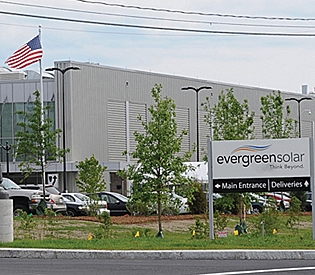
Evergreen Solar is bankrupt, assets sold to China. A Limerick.

One of President Obama’s pet green companies has filed for bankruptcy.
After millions in subsidies the 135 remaining  people were laid off. Watching a bankruptcy process unfold is like watching the slow death of a company. Evergreen Solar, which announced the bankruptcy filing back in August, has sold is core assets for $6 million and some shares of the buyer, China Private Equity Investment Holdings.
Evergreen Solar is really bankrupt
Got millions in subsidies – all is corrupt.
Many green jobs were lost –
went to China – at cost.
Get rid of Obama! The ante is upped.

The truth about rats and lemmings.

The truth about rats and lemmings.

Everybody have heard about lemming years, when a large number of lemmings follow each other over a cliff, falls down into the sea below and drown. Political analogies abound, and so this has become common knowledge: That’s what lemmings do. But why? By the way, 2011 was a lemming year in Northern Sweden, it repeats itself every 20 years or so. To explain why, there is an even better example with rats.  When food is plentiful they multiply fast and after about 4 years there are far too many rats for the food supply. No, they do not die of starvation, virtually all the rats get stressed out and die, all in short order, and the cycle starts anew. It used to be a fairly limited supply of food for the rats, people ate what the land produced, and the number of rats were kept below the stress level.  Enter modern day landfills. There is an overabundance of food in a very limited area, so rats congregate there and multiply. Eventually they will hit the stress level die out and the cycle is renewed. Enter the division of rodent control. In their wisdom they put out rat poison to keep the population down. In so doing they manage to keep the rat population just below the stress level, thereby ensuring that every year is a year of plenty of rats rather than every fourth year.

I refrain from tempting political analogies.

Here is a video of lemmings from BBC Nature

https://m.youtube.com/watch?v=AOOs8MaR1YM


Ban inhalers to save the environment? FDA and EPA gone mad.

Sep 22 2011 FDA: Over-the-counter asthma inhalers containing chlorofluorocarbons (CFCs) will no longer be made or sold after Dec. 31, 2011

Users of Primatene Mist will need a prescription product to treat their asthma. Asthma accounts for one-quarter of all emergency room visits in the U.S. each year, with 2 million emergency room visits. Each day 11 Americans die from asthma. There are more than 4,000 deaths due to asthma each year, many of which are avoidable with proper treatment like over-the-counter asthma inhalers.

The reason for their phase out is U.S. in complying to a U.N. mandate to phase out all CFC’s since they burn up the ozone layer over Antarctica, and to a lesser degree over the North Pole.

During the heydays of CFC production we produced about one megaton annually of all types of CFC combined. This led to an increase in CFC of about 25 parts per trillion in the atmosphere per year. After 1994  the CFC’s were phased out and replaced with HCFC’s. The total amount of CFC’s in the air is now decreasing by about 1 percent per year.

A quick calculation shows that over the counter inhalers release maybe 100 tons of CFC’s per year. This would increase the level in the atmosphere by 0.002 parts per trillion per year. Since CFC’s now are decreasing by 20 parte per trillion /year it would speed up the decrease by 1/10000.

So this banning of CFC inhalers will decrease the time to return to previous levels from 100 years to 99 years and 361 days. And for this we are banning $10 inhalers and forcing asthma sufferers to use prescription devices at more than 40 dollars, and increase the number of emergency room visits, and  even asthma related deaths. For four days in a hundred years?

In the meantime the Ozone hole is closing again by itself, maybe due to actions already taken.

A Climate skeptic’s epiphany response.

A Climate skeptic’s epiphany response.

Eugene Robinson of the Washington Post started his op-ed with the sentence: “For the clueless or cynical diehards who deny global warming it is getting awfully cold out there”.

Yes, indeed. It is getting cold alright.

Robinson quoted Richard Muller, a true scientist, as having said “Global warming is real”.  Muller did that by noting what skeptics already know that we were having a warming trend between 1970 and 2000. He then presented the data with a 10 year moving average, making the end time 2006. This data resembles the famous “Hockey stick”, with a rapid and accelerating temperature rise. Muller also pointed out that of all temperature stations one third show a cooling trend. All stations monitor CO2 filled air, so what makes the difference? A separate analysis shows that weather stations in continuous use since the year 1900, located in an unchanging environment show no warming trend between 1900 and 2010, while weather stations in airports and near paved parking lots, buildings and air conditioners do. A thinking person would conclude that something else than rising levels of CO2 would be the cause of rising temperatures. It seems to me that land use changes would play a major role, since only those weather stations that are subject to land use changes show an increase. Since 2000 we have had a cooling trend of about 1 degree Fahrenheit/century, and the cooling seems to be accelerating. We have not had a major volcanic eruption since Mt. Pinatubo in 1991, so something else must be the source of our present cooling trend. Cosmic radiation resulting from low solar activity leading to more clouds has a near perfect correlation with temperature data for the last 30 years. Yeah, that’s it. Maybe we get our heat from the Sun! True global warming skeptics to not deny climate change, nor do they deny CO2 being a greenhouse gas. The latest data indicate that if the amount of CO2 is doubled the global temperature would rise about 0.3 degrees Celsius, rather than the 1.5 to 5 degrees that IPCC(A U.N. panel) has guessed. This temperature rise is largely concentrated in the temperate regions of the world and would be mostly beneficial. In addition, with a doubling of the CO2 level, crop yields would increase 30 to 45% allowing the earth to feed that many more people.

What is so horrible about that?

Towards the end of the paper the scientists conclude: “The human component of global warming may be somewhat overestimated.”

I love understatements.

The electric car. Is it good or bad Karma?

The electric car. Is it good or bad Karma?

Boy are we advancing in leaps and bounds:

Here is the Roberts electric car, built 1896.

It gets 40 miles to the charge.

116 years later, how far have we come in battery development?

Most electricity is produced by burning coal.  Much peak electricity is produced by burning natural gas. We have recently discovered large quantities of shale deposits. One of the chief developer  of the North Dakota deposits is Mr. Hamm, CEO of Continental Resources, who at one time had a brief talk with President Obama. Mr. Hamm told Obama of the revolution in the oil and gas industry and how we have the capacity to produce enough oil to enable America to replace OPEC. He wanted to make sure that the President knew about this.

The President’s reaction? He turned to Mr. Hamm and said: ‘Oil and gas will be important for the next few years. But we need to go on to green and alternative energy. [Energy] Secretary [Steven] Chu has assured me that within five years, we can have a battery developed that will make a car with the equivalent of 130 miles per gallon.’

116 years after the Roberts electric car we have the 2012 Chevrolet Volt. It gets 36 miles to the charge.

But it is not over yet.

The latest entry in the electric car business is the Fisker Karma. It sports 32 miles to the charge.  When running on electricity, the claim is it gets the equivalent of 54 miles per gallon. After that it has a regular sports car engine that gives 20 MPG. What does that last statement mean? Batteries store energy and can never be more than 100% efficient. There is a loss of energy when you charge them and a loss of energy when you discharge them. The energy is typically produced by burning coal. By charging batteries you need to keep old coal burning plants in production longer. The average energy efficiency of an aging coal plant is 31%, the transmission losses are about 8% and battery efficiency is about 75%. When electric car companies calculate MPG equivalency they only take into account the battery efficiency. For the Karma the total energy efficiency equivalence would not be 56 MPG, but 16 MPG.

For now the Karma will be built in Finland, with a half billion dollar loan guarantee from the Federal Government. After one year this energy guzzler is supposed to be built in Delaware. Maybe it will be as popular as the Chevy Volt, which is on track to sell 6000 vehicles this year.

There already exists a car that claim 135 miles per gallon equivalent fuel consumption.

(The picture to the right shows the Tesla in a car crash in of all places Aalbaek, Denmark. The Tesla is at the bottom.)

The car is Tesla, a new car company set up privately in 2003. It got a 465 million dollar Federal loan guarantee in 2009, but has yet to turn a profit. The car is all electric, and gets up to 300 miles to a charge.  It can be yours for a mere $109500 plus taxes, but you will get a 7500 dollar federal tax rebate unless you live in Colorado where you will get an additional 40000 dollars in state and local tax rebate. The car is sold to rich playboys, who use it as the ultimate chick attractor, and the making of the car is financed on borrowed money. If one is to include the losses in producing the 4000 cars sold thus far, the cost per car approaches 200000. But fear not. One of the sources of income for Tesla is the sale of zero emission credits to other car companies so they can meet their emission standards. It is the new round of charlatans selling indulgences so the global governance can be realized.

Why am I down on electric cars? First, the energy to drive the car must have been produced somehow. As long as we use coal to produce electricity there will be more CO2 in the air with electric cars than with diesel powered cars. Second, electric cars are heavier than corresponding gasoline powered cars and have less room. Third, it takes an awful lot of mining to produce all the rare materials that goes into a modern battery. This too takes a lot of energy and leaves scars on the landscape. Fourth, batteries last only so long and are expensive leading to a much more expensive car to purchase and maintain.

The same arguments can be raised against solar and wind power. It takes more energy to mine and refine the materials than the equipment generate since they generate the electricity when they want, not when the need is there.

Are we doomed? Not at all. As oil and gas is becoming more and more expensive, especially if the Middle East cuts off its supply, we should build up the nuclear power plants, not with old Uranium based nuclear plants with all their nuclear waste, but with small, distributed thorium based plants. They have 0.01% as much nuclear waste as uranium based plants and are earthquake safe and much less vulnerable to sabotage. They also respond much better to demand fluctuations. As the plants would be more distributed it would lessen the need for an expanded electric grid, which is unbelievably vulnerable to sabotage. The long and short of it: Go Thorium and then Electric cars!