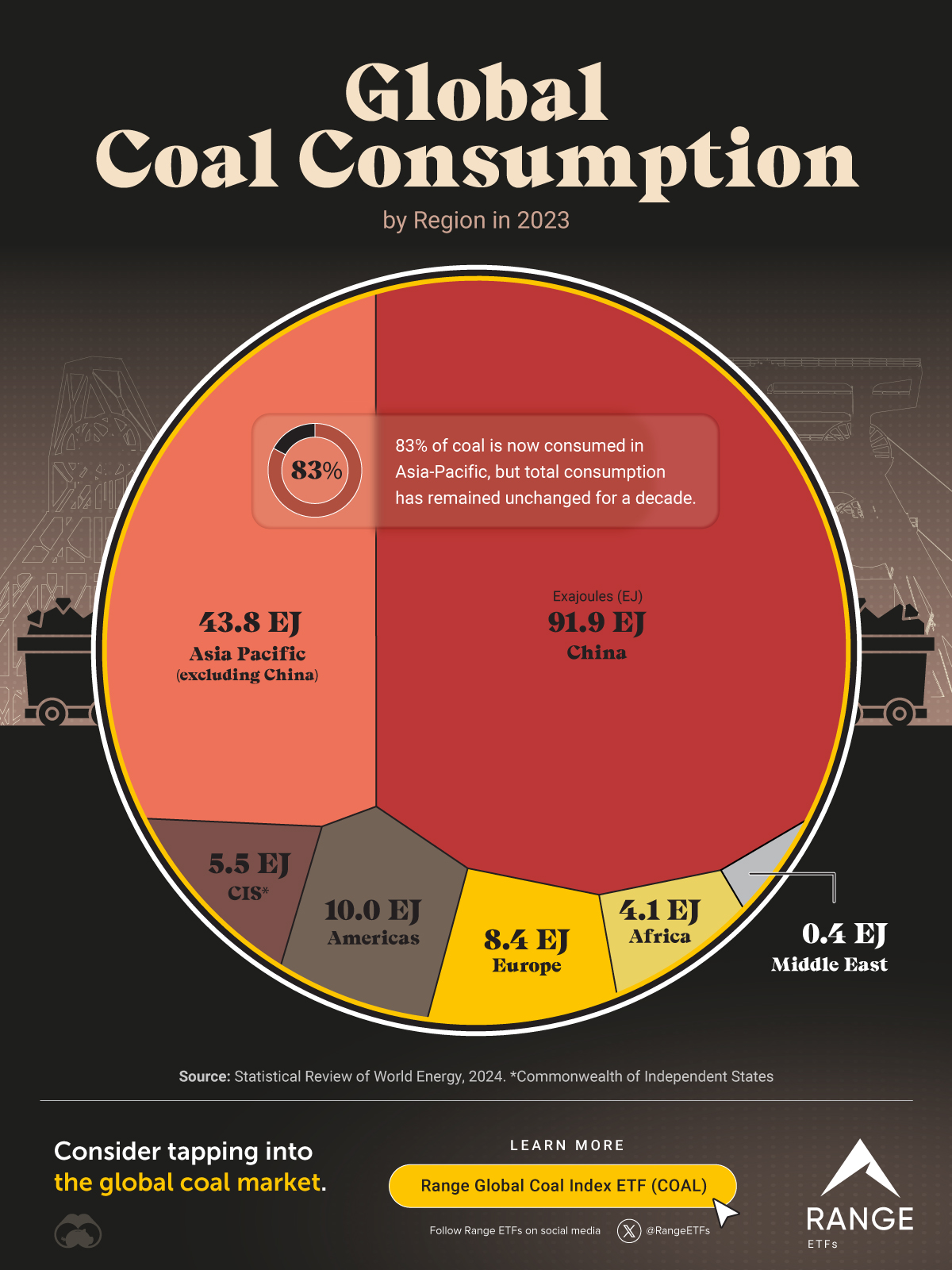
Despite many nations transitioning away from fossil fuels, in 2023, world coal consumption reached a staggering 164 exajoules (EJ) of energy, a record high for any year.
For this graphic, Visual Capitalist has partnered with Range ETFs to explore the role coal plays in the global energy mix and determine which regions still consume large quantities of coal.
The Role of Coal in Global Energy
Coal is a significant player in the global energy mix, contributing 26% of the world’s energy in 2023, more than all non-fossil fuel sources combined. The only energy source that contributed more to the global energy mix was oil.
Here’s how that consumption breaks down by region:
Region
Consumption (1018 joules)
Share %
China
91.9
56.1%
Asia Pacific (excluding China)
43.8
26.7%
Americas
10.0
6.1%
Europe
8.4
5.1%
CIS*
5.5
3.4%
Africa
4.1
2.5%
Middle East
0.4
0.2%
Total
164.0
100%
Coal consumption has decreased in many regions. For example, both North America and Europe reduced their energy consumption from coal by 16% in 2023. However, a heavy reliance on coal in the Asia Pacific region has led to global coal consumption remaining essentially the same over the past 10 years.
When I saw this statistics I immediately looked up: What is the U.S role in global coal consumption and found out it was 8.2 EJ om 2023 or 5.0% of world consumption.
China’s coal consumption is more than eleven times larger than the U.S Coal consumption. In fact, their appetite for mining coal is that they even mine coal with a noticeable Uranium content, and burn it without separating out the Uranium first, leading to severe health problems for the people downwind from the coal burning power plants. In addition, since scrubbing is expensive the operators have the scrubbers down for maintenance as often as they can get away with it.
China is also the world leader in cement production. In 2022 China produced 2,1 billion metric tons of cement, or 64% of the world total. By comparison, U.S. produced 95 million metric tons, or about 22 times less than China.
But where China has U.S and the rest of the world over a barrel is in the mining and production of rare earth metals. China mined 240,000 metric tons in 2023, or about 64% 0f the worlds total, but China is also the world’s largest importer of rare earth metal ore for refining. By comparison, US mined 43,000 metric tons, but most of it is still refined in China. The US regulatory environment makes it a slow process to get permits. China has strict export controls over who can be allowed to buy refined rare earth metals, and they always want a favor in return for doing so.
We have our work cut out for us. Right now we are too dependent on China to fully be able to sever our dependence on China.
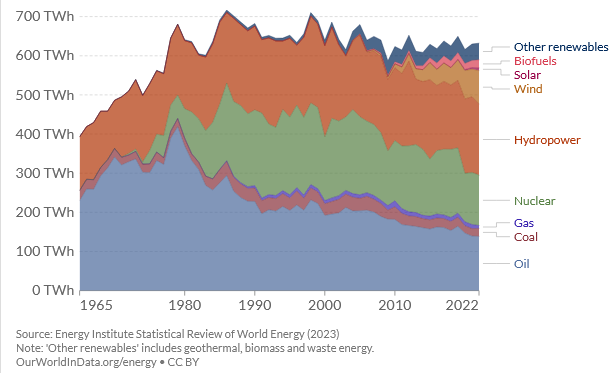
Sweden is perhaps the “greenest” country on earth. Their electric supply is a healthy mix of hydropower, wind, solar and biomass to make things go when the sun doesn’t shine and the wind doesn’t blow. Many cities are well planned where nearly all residential heat comes from spillheat from power plants. In Linköping the year 1967 the whole town was heated with surplus electricity during the spring flood. No house was allowed to have a fireplace in the regulated zone (except the city Architect’s and 3 other townhouses that somehow escaped the ordinance.) The energy use looks like this for Sweden:
Sweden once supplied nearly 40% of its energy needs via nuclear (electricity and heat) About half of the nuclear installations are retired and the last 6 are to be decommissioned before the end of the decade. To end nuclear energy was decided by a previous government in 1980 and the phase-out was to be completed in the mid 2020s. The goal was to generate 100% electric energy from renewable sources by 2040. (later changed to 2045).
Then Sweden had an election in 2022 and the Social Democrat, Green and Socialist coalition got replaced with a moderate, Christian Democrat and Liberal coalition with support of the nationalistic Sweden Democrat party. On June 20 they changed the slogan to 100% fossil-free electric energy by 2045.
This goal is impossible to meet without expanding nuclear power, especially since Sweden has specified that all new cars must be electric by 2035.
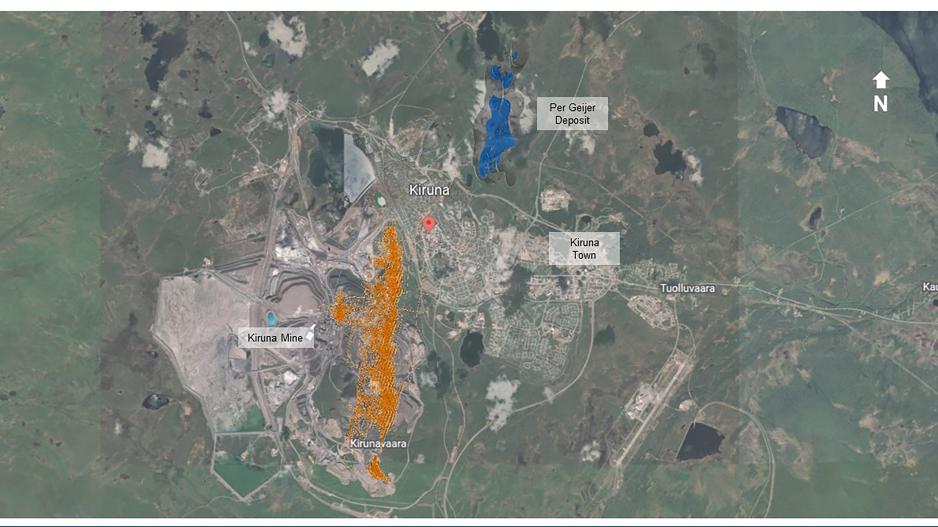
Then in January 2023 Sweden announced the largest Rare earth metals find in Europe. Europe is right now importing 98% of its rare earth metals from China. The find is called the Per Geijer deposit right next to the World’s largest underground Iron ore mine, the LKAB Kiruna mine located 120 miles north of the polar circle.
The new find is still basically a magnetite and hematite ore of excellent quality that also contains a significant amount of P2O5, which is premium fertilizer feed-stock. In addition It contains the largest find of rare earth metals in Europe. So far it is proven to contain the following Rare earth Metals:
HREO constitutes 17% within the tested apatite concentrate samples and 19% in the overall exploration samples.
LREO constitutes 83% within the tested apatite concentrate samples and 81% in the overall exploration samples.
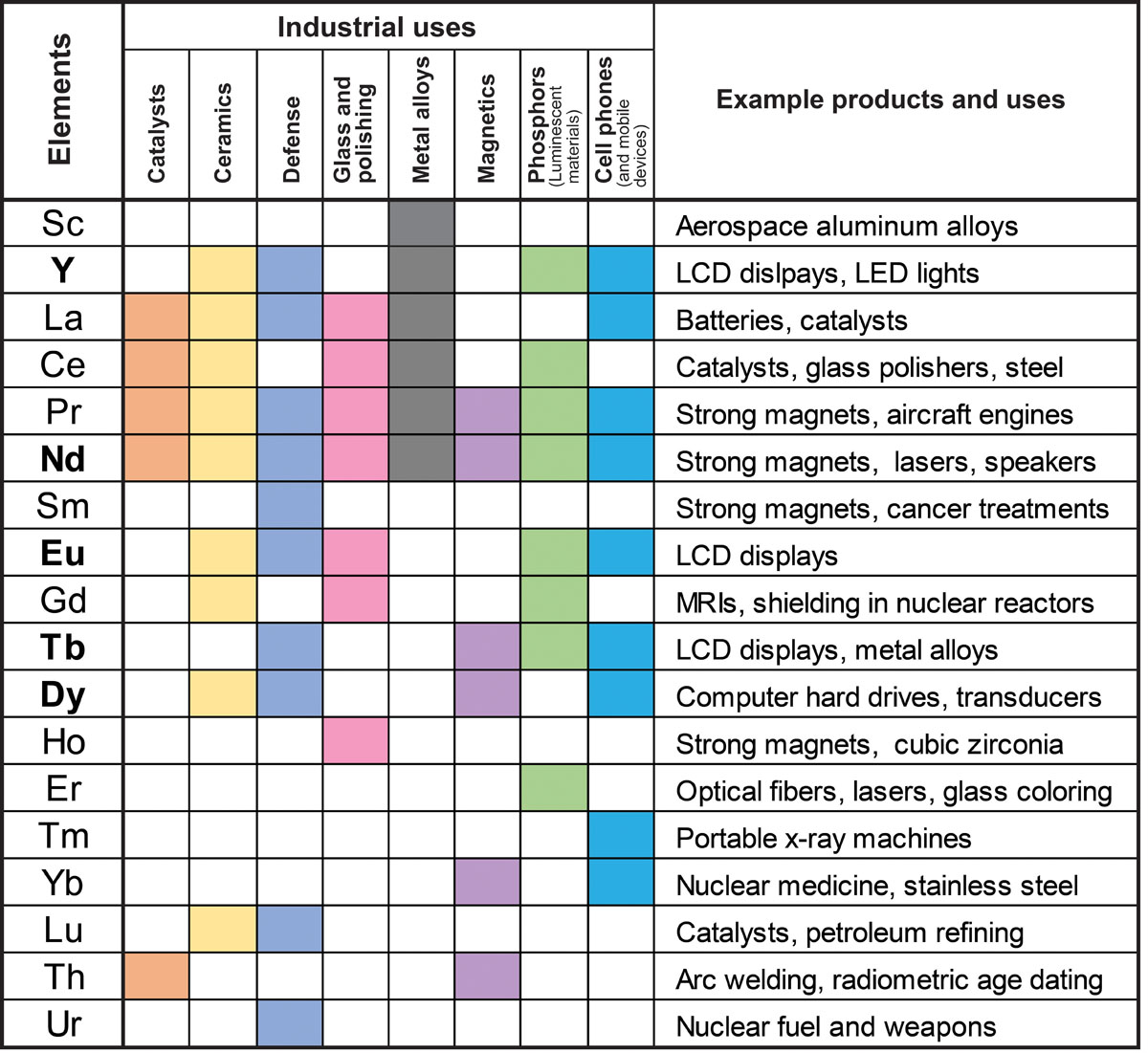
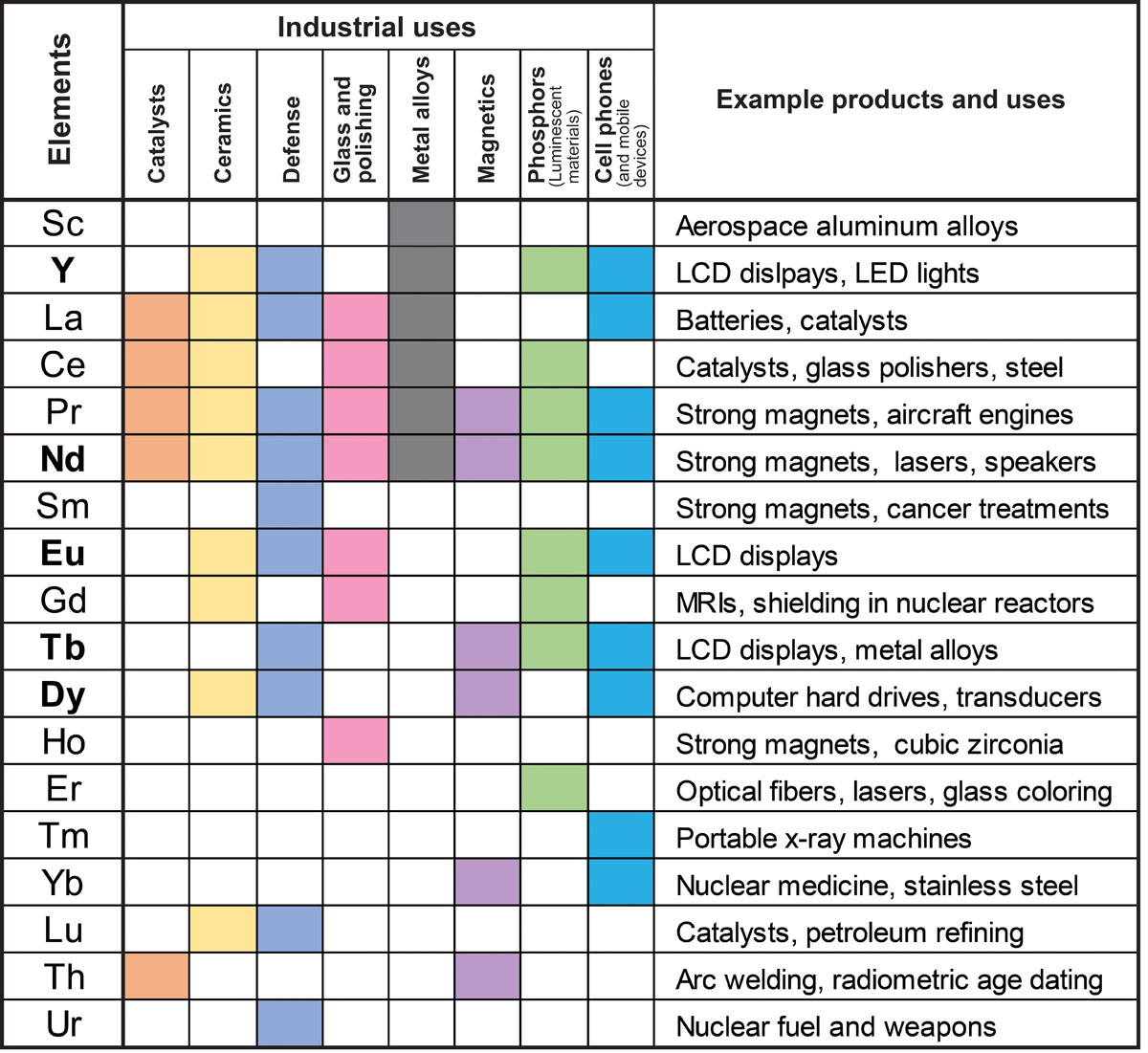
Just take a look at all the uses for rare earth metals. The most sought after pays all the cost of mining and refining, and the rest are readily available at nominal cost.
What is not mentioned is the content of Thorium and Uranium, but Thorium is always found in small amounts where ever Rare earths are found and very often some Uranium is also found in the ore.
In order to meet the need for both extraction of raw materials and at the same time increase Europe’s processing capacity LKAB has recently become the main owner of and entered into a cooperation with Norwegian REEtec. They have developed an innovative and sustainable technology for the separation of rare earth elements that can compete with the dominant Chinese production. The planned extraction site is proposed to be in the Luleå area.
Rare earth ore nearly always contains measurable amounts of Thorium and/or Uranium.The Thorium is nearly always returned to the slag heap, and sometimes the Uranium too if the concentration is low. No information has been given yet how much of anything the ore contains, but it is safe to assume that it is the largest ore find in Europe.
Sweden has a long history of mining. Before 1288 A.D. the local farmers of Falun found copper in what was called Kopparberget and the first documentary evidence of the mine appears in a letter from 1288 giving the Bishop of Västerås a one-eighth share in the mine in exchange for landholdings. The document shows that a cooperative organization by this time was managing the mine, with shares being bought and sold. The mine grew, and was once the largest copper mine in the world. This is also the reason the traditional color of Swedish farms is red, thanks to subsidies from the government if they painted their gray wooden farms and barns with Falu red paint.
Later Sweden became the producer of the best ball bearings in the world, and produced specialty steel for a variety of uses, such as the Sandviken Stradivarius musical saw.
For a while the mines in Sweden were many, but through environmental regulation and cost consideration Sweden now has only 12 mines left in operation. Many of the discontinued mines were started before there was any real environmental regulations, so the cleanup of abandoned mines is still ongoing. Sweden has no coal mines and no natural gas fields.
Sweden is the world leader in recycling everything that is economically defensible to recycle, and the rest of the waste products are, if possible incinerated, producing heat and some electricity. Very little, about one percent is returned to landfills. However, incineration is not recycling, Sweden is burning their only source of coal.
What I am proposing is somewhat akin to the old charcoal kiln; but instead of using wood, the source is trash sonverting trash to coal and gasses.
This is an opportunity for Sweden to be the world leader in recycling nearly everything, including CO2. It just takes energy.
This is my proposal:
Build small modular molten salt thorium reactors, U233 or U 233 and and Plutonium two fuel reactors, an inner shell of U233 or Plutonium as fissile source, and an outer blanket of Thorium, which is the fertile source to generate more U 233 than is consumed. It can be gas cooled, using Helium or molten lead, both work well. Power output will be 100 to 200 MW, and the output temperature will be around 600C.
Municipal, industrial and construction waste will in the first stage be dried, removing nearly all water from the trash. The trash will then be fed into an outgasser, which is fed by 600 C Nitrogen generated from the nuclear heat source, preventing combustion. This will act as a charcoal kiln leaving high quality charcoal to be separately treated and refined, separating out metals and other contaminants. The gasses will run through a turbine generating electricity and scrubbed, separating the hydrogen, carbon, oxygen, chlorine and whatever was in the gasses.
By reducing waste to coal, graphite, graphene and separate hydrogen, oxygen, other gasses and metals it will be true recycling rather than a common waste to power and heat incinerator that produces CO2 and water from H2 and O2, truly wasting energy.
What will Sweden do instead?
SMRs. In Sweden, Kärnfull Next, a subsidiary of Kärnfull Future AB, became the first company in Scandinavia in March 2022 to develop SMR (Small Modular Reactors) projects. Kärnfull Next will work together with GE Hitachi (GEH) towards the deployment of the GEH’s BWRX-300 SMR. A memorandum of understanding was signed between the two companies for this purpose. A letter of intent was also signed with the Finnish utility Fortum at the end of 2022 to explore opportunities for SMR development in Sweden.
In February 2021, the Swedish subsidiary of the energy company Uniper signed an agreement with the developer of the LeadCold SMR and the Royal Institute of Technology (KTH) with the aim of building a demonstration plant at the Oskarshamn site by 2030. It is envisaged that the LeadCold SEALER SMR will generate between 3 to 10 MW over a period of 10 to 30 years without the need for refueling.
In June 2020, Vattenfall announced that it was conducting a pilot study to examine the construction of at least two SMRs adjacent to the Ringhals nuclear power plant. If the outcome is positive, the first SMR in Sweden could be commissioned in the early 2030s to replace the Ringhals 1 and 2 units, which have been shut down. In December 2022, the French utility EdF and the Finnish company Fortum signed a framework cooperation agreement to jointly explore opportunities for collaboration on the use of SMRs and large nuclear reactors.
This video catalogs the problems with Thorium, beginning with the regulatory nightmare of seemingly endless regulations that makes no sense from a research perspective, to political bias, and to protect the status quo. It is very informative.
Thorium is a by-product of mining heavy metals and rare earth metals. The price is the cost of extracting and refining, which can be as low as $40/Kg. No extra mining is required for extracting the Thorium, and we all know that mining is a major source of pollution.
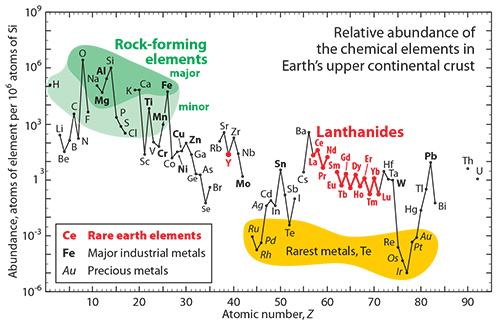
The first thing we must realize is that rare earth metals are not all that rare. They are a thousand times or more abundant than gold or platinum in the earth crust and easy to mine, but more difficult to refine. Thorium and Uranium will be mined together with rare earth metals.
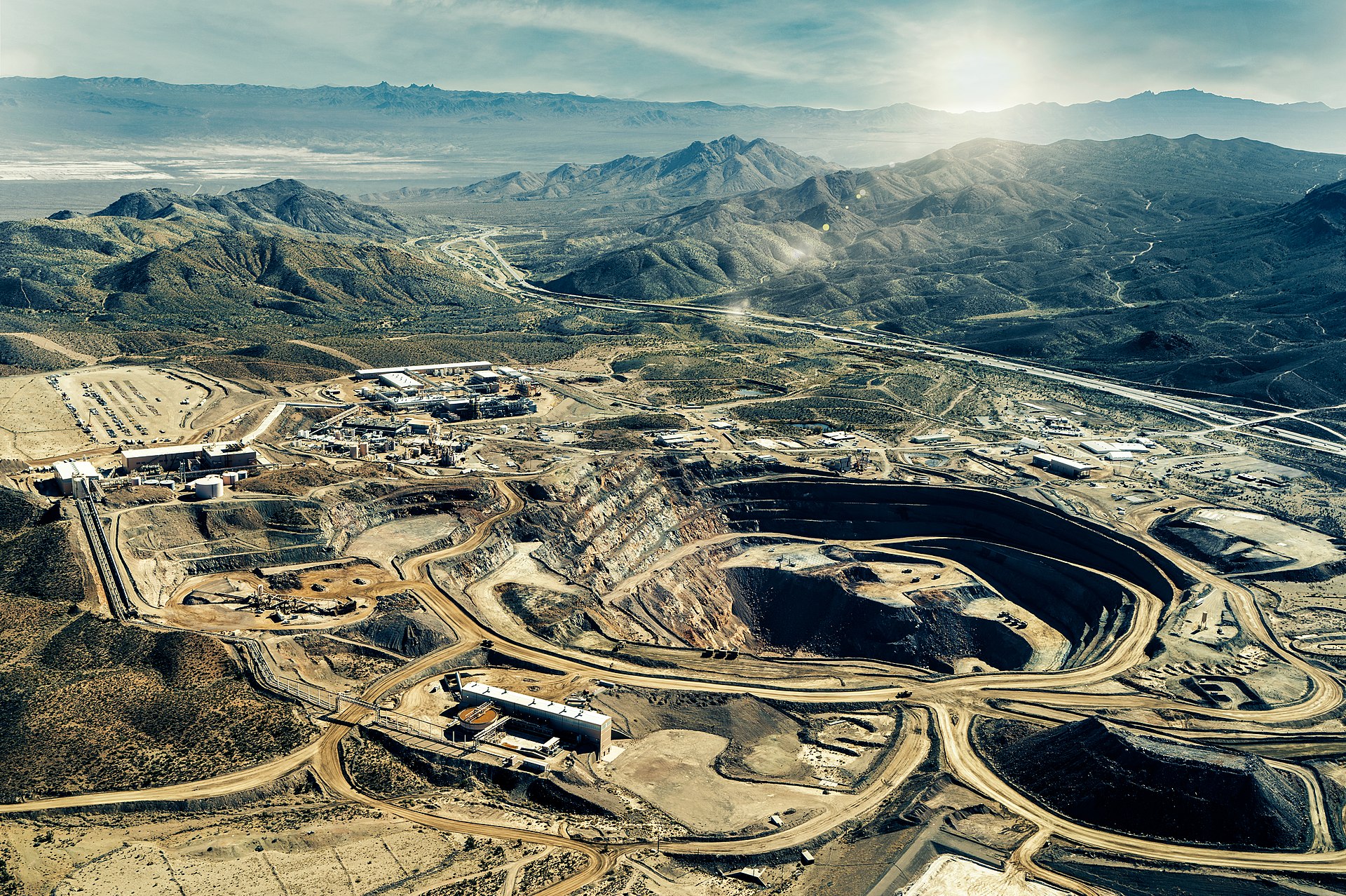
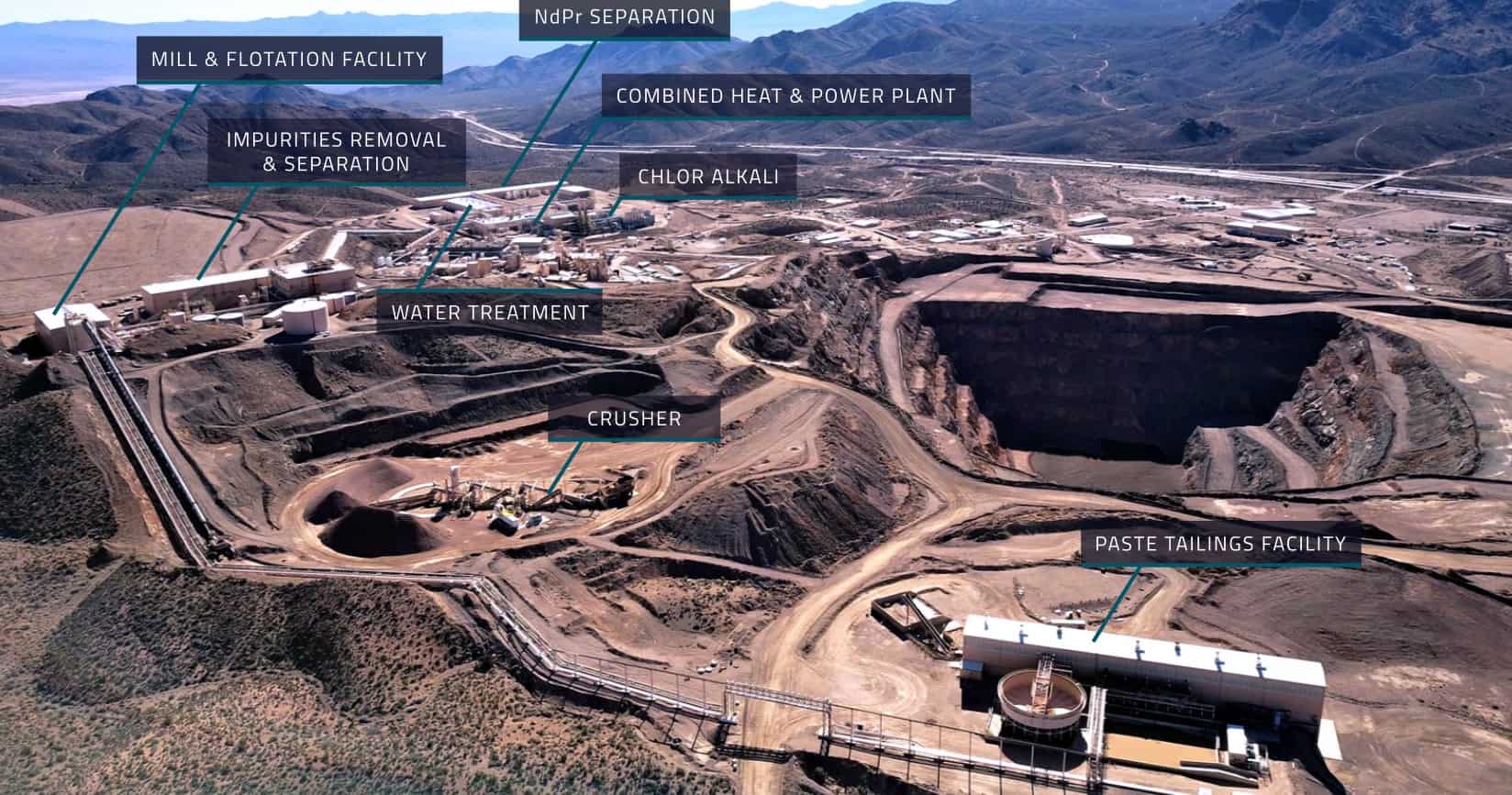
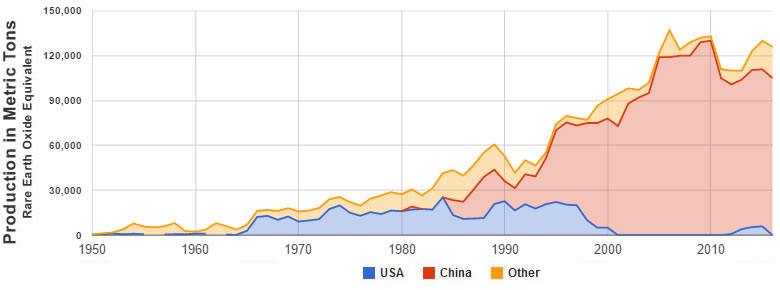
U.S. used to be the major supplier for rare earth metals, which was fine up to around 1984. Then the U.S. regulators determined that Uranium and Thorium contained in the ore made the ore radioactive, so they decided to make rare metal ore a “source material” with all what that meant for record keeping and control. This made mining in the U.S. unprofitable so in 2001 the last mine closed down. China had no scruples, such as human and environmental concerns, so they took over the rare earth metals mining and in 2010 controlled over 95% of the world supply, which was in line with their long term plan of controlling the world by 2025. Luckily this has now been rectified with U.S. and Australian mines reopened, but the U.S. mined ore is still shipped to China for refining. However, in July 2019, President Trump activatedSection 303 of the Defense Production Act to declare domestic production capability for rare earth elements and other critical minerals “essential to the national defense.” Domestic refining was scheduled to begin late 2020. It has since then been delayed until 2022. I do not know if refining has started as of May 2023, and if Thorium is included in the reining process. In the mean time the ore, including Thorium was shipped to China for refining. The Mountain Pass mine is quite impressive:
So, why is this important? Just take a look at all the uses for rare earth metals. The most sought after pays all the cost of mining and refining, and the rest are readily available at nominal cost.
The Chinese almost got away with it, and that was but one reason the trade negotiations were so complicated and hard fought, but necessary. Donald Trump fought for reciprocity and fair competition. Since the onset of the COVID -19 pandemic, originating in Wuhan, China, it has become more and more obvious that China can no longer be allowed to be single source supplier of anything.
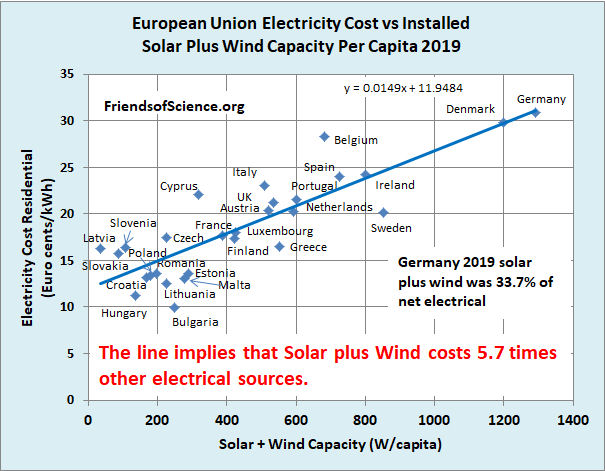
Below is the experience from the European union of retail cost of electricity in all member nations from the year 2019, the last year to make any meaningful analysis, Covid and the Ukraine war has made worthless any newer analysis.
This slide tells it best. The real cost for Solar and Wind electricity is 5.7 times that of the average of coal, gas, nuclear and hydro-electric power. The real reason is that you still need all the generating power for when the wind doesn’t blow enough or too much, and the sun doesn’t shine, which is most of the time. In addition, solar panels and windmills require mining of rare earth metals, and are as such highly mining intensive. Then there is the cost of disposal, which has already begun for first generation wind mills and solar panels.
The solution is simple: Do not buy any more solar panels from China! Let them use them themselves, they may then only have to build a thousand new dirty lignite coal fired power plants instead of 1171 between now and 2030
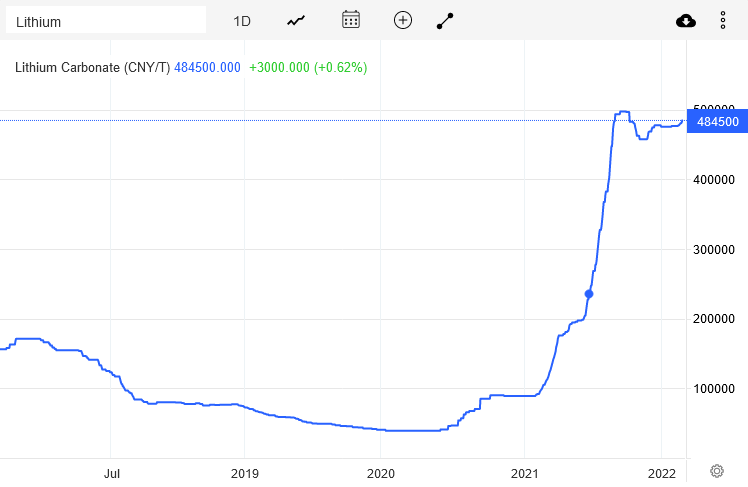
The other inflationary thing is the rising cost of Lithium and rare earth metals. In 2020 the price of LiCO2 was around 40,000 yuan/ton (yes, Lithium and rare earth metals are traded in Chinese currency). The price since then has more than twelve-folded and is now close to half a million yuan/ton.
China produces three-quarters of all lithium-ion batteries and is home to 70% of production capacity for cathodes and 85% for anodes (both are key components of batteries).
Over half of lithium, cobalt and graphite processing and refining capacity is also located in China. The U.S has a high quality rare earth metal mine in Mountain Pass, CA.,
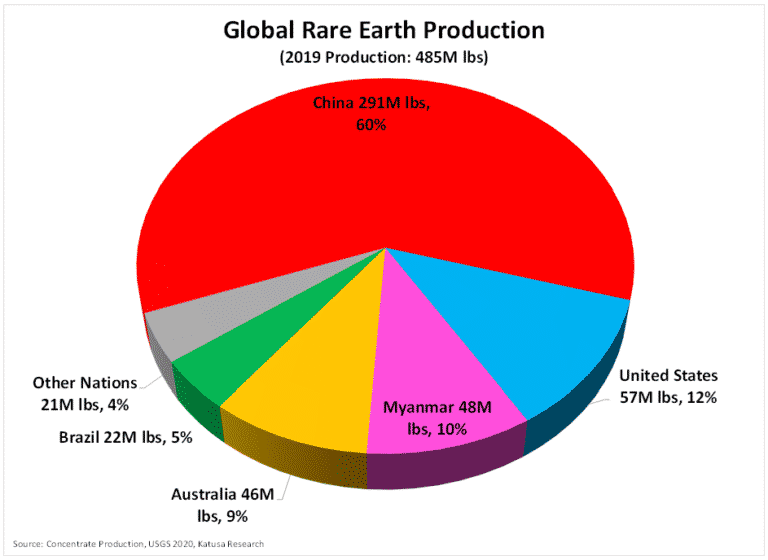
but the refining is done in China. In June 2022 Amarillo, Texas had a groundbreaking ceremony for a rare earth metals refinery, so refining capacity will finally return to the U.S. See more here. Below is a chart of the worldwide mining of rare earth metals. Notice the prominent role Myanmar plays in rare earth metals. China is positioning itself to dominate Myanmar for their metals and to build an oil import pipeline to avoid the Malacca strait choke point.
In 2016, Hunter Biden’s Bohai Harvest RST invested in China’s Contemporary Amperex Technology Co. (CATL), the world’s largest lithium ion battery producer.
Remember this every time you hear Joe Biden talk about Green new deal and electric vehicles.
So, my suggestion is simple: Do not buy any solar panels from China, let them install them in China at 4.7 times the price of coal power. this is a much cleaner global investment. China was planning to build 1171 new coal plants polluting more than our clean coal could ever do. Likewise do not buy any more wind mill generators from China, let them install them in China. Wait to promote electric vehicles until the grid is built up to handle the additional demand for electricity.
This would save about 430 billion dollars from the inflation reduction act. What can we do instead and achieve an even better outcome? Check this video.
What shall be done? Congress must immediately pass SB4242. Ten years ago I made the same observation, see here. At that time there was 1400 kg U-233 remaining at Oak Ridge. A ton has been downblended since then. It is late, but not too late to save the rest. Here is a very illuminating video:
I agree totally with this video. Molten salt Thorium reactors can produce electricity for less than 5 cents per kilowatt-hour, comparable to coal and five times less than wind and solar when mass produced as SMR’s (small Modular Reactors. ) A 100 MW reactor can be built on an assembly line, and the vital parts can be shipped in 3 standard containers over road. They require much less mining to produce than the corresponding windmills and solar panels, and Thorium is already mined as a byproduct of mining rare earth metals. The only cost is therefore the cost of extracting the Thorium.
How is China dealing with Thorium nuclear power? They recently approved starting up their own molten Salt reactor, (source here.
In January 2011, CAS launched a CNY3 billion (USD444 million) R&D programme on liquid fluoride thorium reactors (LFTRs), known there as the thorium-breeding molten-salt reactor (Th-MSR or TMSR), and claimed to have the world’s largest national effort on it, hoping to obtain full intellectual property rights on the technology. This is also known as the fluoride salt-cooled high-temperature reactor (FHR). The TMSR Centre at SINAP at Jiading, Shanghai, is responsible.
Construction of the 2 MWt TMSR-LF1 reactor began in September 2018 and was reportedly completed in August 2021. The prototype was scheduled to be completed in 2024, but work was accelerated.
“According to the relevant provisions of the Nuclear Safety Law of the People’s Republic of China and the Regulations of the People’s Republic of China on the Safety Supervision and Administration of Civilian Nuclear Facilities, our bureau has conducted a technical review of the application documents you submitted, and believes that your 2 MWt liquid fuel thorium-based molten salt experimental reactor commissioning plan (Version V1.3) is acceptable and is hereby approved,” the Ministry of Ecology and Environment told SINAP on 2 August.
It added: “During the commissioning process of your 2 MWt liquid fuel thorium-based molten salt experimental reactor, you should strictly implement this plan to ensure the effectiveness of the implementation of the plan and ensure the safety and quality of debugging. If any major abnormality occurs during the commissioning process, it should be reported to our bureau and the Northwest Nuclear and Radiation Safety Supervision Station in time.”
The TMSR-LF1 will use fuel enriched to under 20% U-235, have a thorium inventory of about 50 kg and conversion ratio of about 0.1. A fertile blanket of lithium-beryllium fluoride (FLiBe) with 99.95% Li-7 will be used, and fuel as UF4.
The project is expected to start on a batch basis with some online refueling and removal of gaseous fission products, but discharging all fuel salt after 5-8 years for reprocessing and separation of fission products and minor actinides for storage. It will proceed to a continuous process of recycling salt, uranium and thorium, with online separation of fission products and minor actinides. The reactor will work up from about 20% thorium fission to about 80%.
If the TMSR-LF1 proves successful, China plans to build a reactor with a capacity of 373 MWt by 2030.
As this type of reactor does not require water for cooling, it will be able to operate in desert regions. The Chinese government has plans to build more across the sparsely populated deserts and plains of western China, complementing wind and solar plants and reducing China’s reliance on coal-fired power stations. The reactor may also be built outside China in Belt and Road Initiative nations.
The liquid fuel design is descended from the 1960s Molten-Salt Reactor Experiment at Oak Ridge National Laboratory in the USA.
Researched and written by World Nuclear News.
As of yet China does not have any U233, so they have to use U235 as a start fuel. This will produce PU239 as well as U233, so the separation step is far more complicated. The U.S. still have 450 kg of U233, so the separation step can be made clean, and we can make a clean, breeding reactor with 0,01 % of the nuclear waste if conventional reactors.
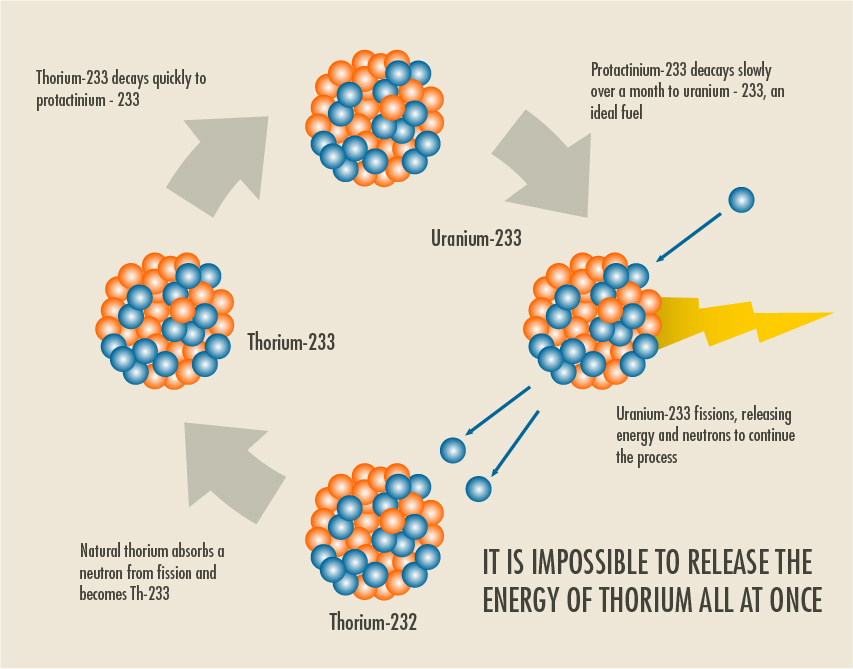
The conversion of Thorium 232 to Uranium 233, leading to fission looks like this:
To remain pure, the protactinium mist be separated from the neutron bombarding environment as soon after it is generated as possible to avoid it to be transfered to U 234, which is non fissible, but radioactive. The breeding coefficient is 1.03, which means that 3% more U233 is generated than consumed. The half-life of the Protactinium is 27 days, so it will take up to 900 days for the U233 to double, which is two and a half years.
There is no time to spare. Pass SB4242 immediately, build a clean Molten salt Thorium reactor as soon as possible, remove Thorium as a source material and streamline the permit process so permits can be issued in weeks instead of years.
The thorium energy is the future clean energy until fusion is perfected, not solar panels or windmills, which do far more damage to the environment than Thorium nuclear plants!
The United States, the world’s second-leading emitter after China, seeks to reclaim global leadership in the fight against global warming after former President Donald Trump withdrew the country from international efforts to cut emissions. President Joe Biden unveiled the goal to cut emissions by 50%-52% from 2005 levels at the start of a two-day virtual climate summit attended virtually by leaders of 40 countries including China, Russia and India.
How can that be?
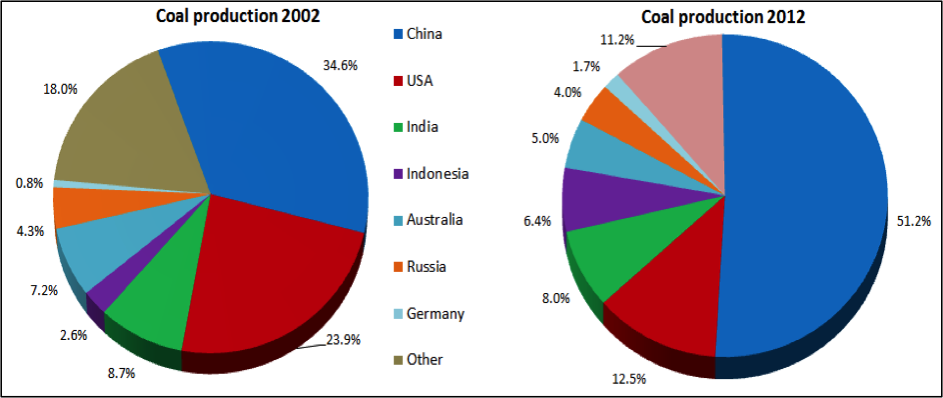
China burned 51.2% of the world’s coal in 2012, USA produced 12.5%. China’s production was more than four times larger. This has now stabilized and was in 2018 47%, because India and the real developing world are increasing their dependence on coal for electricity production, and also for cooking meals.
This of course is with the Paris accord in mind. U.S. and the European countries are to limit their emissions and slowly diminish them, down to a per capita emission comparable to the mid 1800’s, while China, being a “developing” country is allowed to increase their emissions until 2030, and then stabilize them, not decrease them.
How can they be burning nearly half the world’s coal mined?
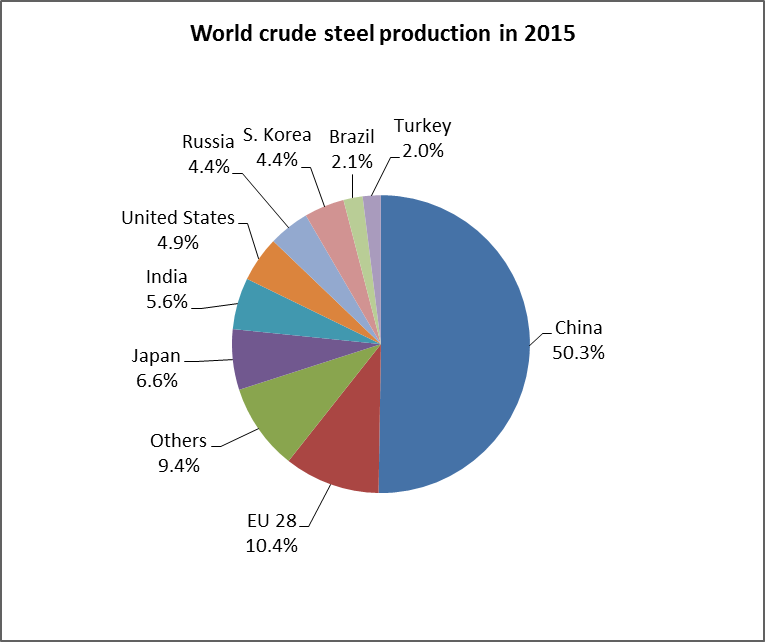
One reason is they are the world’s state controlled manufacturing company. They are also responsible for half the world’s Steel production. China produced 50.3% of the world’s crude Steel in 2015, USA produced 4.9%. China’s production was over 20 times larger than the U.S.Some of this steel was dumped below production cost to crush our domestic low end steel industry. An example: Rolled steel to make steel cans were exported at about $200 a ton, the production cost in the U.S. is more like $400 a ton. They can do this, since their environmental regulations only pay lip service to pollution. Remember how Pittsburgh was 60 years ago? China is much worse.
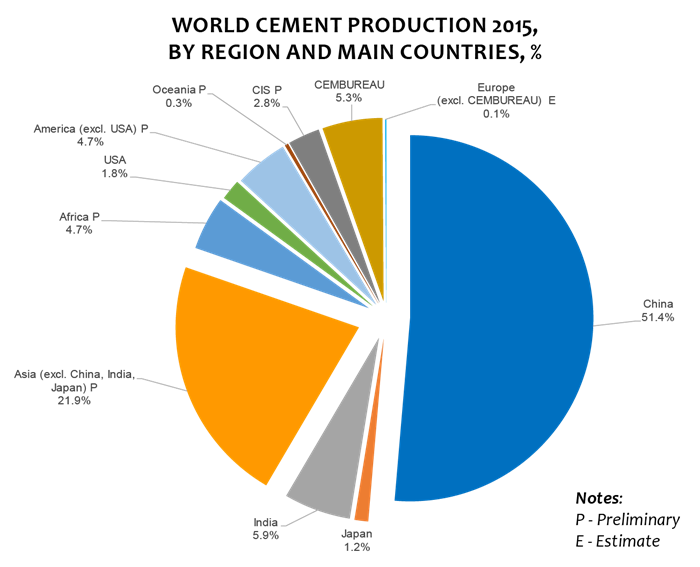
Cement production. China produced 51.4% of the world’s cement in 2015, USA produced 1.8%. China’s production was almost 30 times larger.
It takes a lot of concrete to build artificial islands so they can take control of the South China Sea. But they are building many other things, Ghost Cities, but also an impressive infrastructure with high speed trains on elevated concrete tracks.
Worrisome as that may be, it is nothing compared to China’s dominance in Rare Earth Metals. Let me explain why rare earth metals are so important to our modern economy.
First, rare earth metals re not rare at all, they exist in small quantities together with Thorium and sometimes Uranium wherever other metals are mined.
The Lanthanides occur in quantity in Monazite, a byproduct of mining Phosphates, but also as a byproduct of mining Titanium, and even from some Iron ores. The rare earth metals are free to begin extraction if it was not for one thing, they also contain Thorium, and Thorium is very weakly radio-active, so in the mid 1980’s the NRC and IAEA reclassified Monazite and anything containing Thorium as a “Source Material” and after that it became too costly to comply with all the regulations for nuclear material, so all production of rare earth minerals ceased in the U.S.
China saw an opportunity to grab the world market for Rare Earth Metals and is now controlling about 85% of the supply of all rare earth metals.
So what are rare earth metals used for?
China now has a de facto monopoly on all usages of rare earth metals, and in the case of war or an embargo, not only are our precious cell phones and computers in jeopardy, so is our defense, night vision goggles, aircraft engines, navigation systems, laser guidance, just to name a few uses.
And not only that, we import the completed parts from China, even for our most sophisticated military equipment, such as the F35 aircraft, after telling the Chinese how to make the components. The very same components are now in China’s version of the F35, still under development, but in a year or so China will have their faithful copies made! A F35 aircraft contains about 935 pounds of rare earth metals.
This is clearly unsustainable, so in 2014 Congress tried to pass HR 4883 and S 2006 to remedy the situation, but the bills got killed in review by none other than the defense department, citing National Security! Our only major rare earth metals mine reopened, only to go bankrupt in 2015. It has since reopened, but the ore is shipped to China for refining! One good point is that the Mountain Pass mine was scheduled to reopen the processing facilities late 2020, but full processing operations without the help from the Chinese rare earth refining giant corporation Shenghe Resources have been delayed to 2022
The idea was that we should change our electricity production into renewable sources, such as wind and solar.
Wind power uses a lot of rare earth metals to get the most efficient generators, all made by China. Wind power is about maxed out, that is, if you care about birds, especially eagles and raptors. The allowable bald eagle kill was upped from 1200 to 4200 a year for all U.S. wind turbines during the Obama administration. Killed golden eagles and storks has a S250,000 fine, paid by the electricity users, and if we build it out more, we may exterminate some species.
Solar power looked promising until pollution was taken into consideration. China added 53 GW solar capacity in 2017. The forecast for this year i 45 GW, and for next year 35 GW.
The efficiency of solar panels are drastically reduced by the layer of soot accumulating daily from air pollution. They have to be cleaned daily with water, and water is in short supply in northern China. The yellow river no longer reaches the ocean during large periods of the year, all water is spoken for. In southern India a solar farm used up so much water that the wells went dry and there was no more water for agriculture and people, except during the monsoon season. Germany has given up on their solar program except for special needs. The best places for large solar farms in the U.S. are in Arizona and Nevada, both are having severe and growing water problems. In addition, that is not where the energy is needed, so transmission losses must be taken into account, as well as the need to expand an increasingly vulnerable and in many parts undesirable national grid.
I am not against solar panels, and as soon as we are freed from total Chinese dominance on the material used in solar panels we should install them in open spaces, such as parking lots around factories and shopping malls, wherever there is adequate sunlight. Park the cars under them and the summer heat will be so much more bearable, and in the winter you will not have to scrape the windshield. When it snows, solar panels do not work anyway.
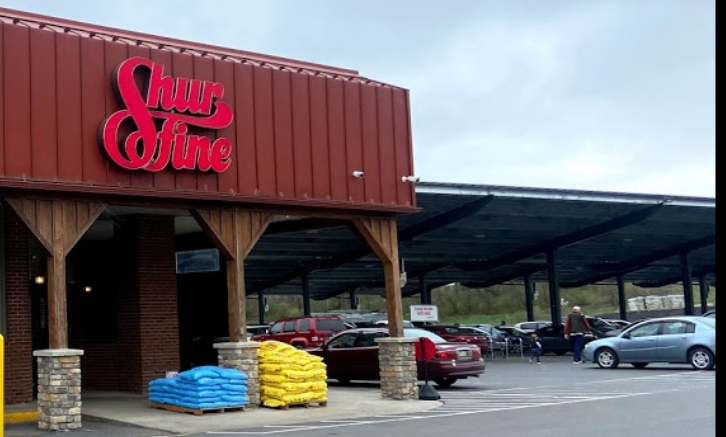
Burkholders grocery store on Rt 45 in central Pennsylvania, complete with solar panels over the parking lot.
Where it rains, China pollutes. The Yang -Tse river carries nearly half the plastic waste that is dumped in the ocean. It can be stopped, but it will consume a lot of energy, both man-power and electricity to do all the cleanup.
The most practical solution is found in creating a massive effort in developing and installing Thorium nuclear power. Here is a list of reasons why we should jump on the opportunity to solve the energy crisis:
Thorium is a by-product of mining heavy metals and rare earth metals. The price is the cost of extracting and refining, which can be as low as $40/Kg. No extra mining is required for extracting the Thorium, and we all know that mining is a major source of pollution.
The first thing we must realize is that rare earth metals are not all that rare. They are a thousand times or more abundant than gold or platinum in the earth crust and easy to mine, but more difficult to refine. Thorium and Uranium will be mined together with rare earth metals.
U.S. used to be the major supplier for rare earth metals, which was fine up to around 1984. Then the U.S. regulators determined that Uranium and Thorium contained in the ore made the ore radioactive, so they decided to make rare metal ore a “source material” with all what that meant for record keeping and control. This made mining in the U.S. unprofitable so in 2001 the last mine closed down. China had no scruples, such as human and environmental concerns, so they took over the rare earth metals mining and in 2010 controlled over 95% of the world supply, which was in line with their long term plan of controlling the world by 2025. Luckily this has now been rectified with U.S. and Australian mines reopened, but the U.S. mined ore is still shipped to China for refining. However, in July 2019, President Trump activatedSection 303 of the Defense Production Act to declare domestic production capability for rare earth elements and other critical minerals “essential to the national defense.” Domestic refining is scheduled to begin late 2020.
So, why is this important? Just take a look at all the uses for rare earth metals. The most sought after pays all the cost of mining and refining, and the rest are readily available at nominal cost.
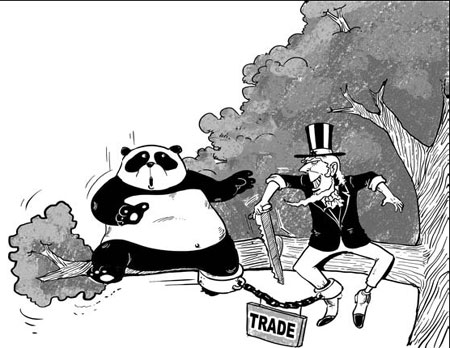
The Chinese almost got away with it, and that was but one reason the trade negotiations were so complicated and hard fought, but necessary. Donald Trump fought for reciprocity and fair competition. Since the onset of the COVID -19 pandemic, originating in Wuhan, China, it has become more and more obvious that China can no longer be allowed to be single source supplier of anything.
In early May, 2019, President Xi and Vice Premier Liu He, China’s top trade negotiator, visited a rare earth metals mine in Jiangxi province. This has led to the rumor that China is seriously considering restricting rare earth exports to the US. China may also take other countermeasures in the future. The trade negotiations between U.S. and China got a lot more serious. It extended far beyond tariffs and intellectual property, it began to involve strategic materials.
The first thing we must realize is that rare earth metals are not all that rare. They are a thousand times or more abundant than gold or platinum in the earth crust and easy to mine, but a little more difficult to refine. Thorium and Uranium will also be mined at the same time as the rare earth metals since they appear together in the ore.
U.S. used to be the major supplier of rare earth metals, which was fine up to around 1984. Then the U.S. regulators determined that Uranium and Thorium contained in the ore made the ore radioactive, so the regulatory agencies decided to make rare earth metal ore subject to nuclear regulations with all what that meant for record keeping and control.This made mining of rare earth metals in the U.S. unprofitable so in 2001 the last domestic mine closed down. China had no such scruples, such as human and environmental concerns, so they took over the rare earth metals mining and in 2010 controlled over 95% of the world supply, which was according to their long term plan of controlling the world by 2025.
The U.S. used to have a strategic reserve of rare earth metals, but that was sold off in 1998 as being no longer cost effective or necessary. Two years later the one U.S. rare earth metals mine that used to supply nearly the whole world, the Mountain Pass Mine in California closed down, together with its refining capacity. From that day all rare earth metals were imported. In 2010 it started up again together with the refining capacity but went bankrupt in 2015, closed down the refining but continued selling ore to China. They just announced they will start up refining again late 2020. Meanwhile China is slapping on a 25% import tariff on imported ore starting July 1. Rare earth metals may be in short supply for a while.
So, why is this important? Just take a look at all the uses for rare earth metals. The most sought after pays all the cost of mining and refining, and the rest are readily available at nominal cost.
The Chinese almost got away with it, and that is but one reason the trade negotiations are so complicated and hard fought, but necessary. Donald Trump fights for reciprocity and fair competition.
For example, according to a 2013 report from the Congressional Research Service, each F–35 Lightning II aircraft requires 920 pounds of rare–earth materials. Who is making the most critical parts to this airplane? You guessed it – China, from our drawings and according to our specifications.
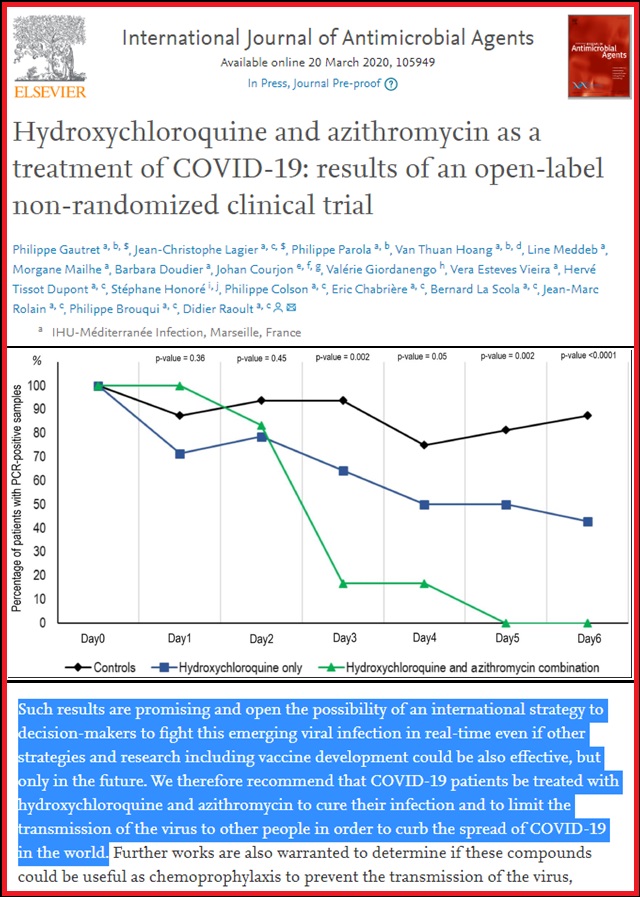
But it is getting worse. the COVId-19 virus hit China bad, probably in November or so, nobody knows and China won’t tell. Then they told us there was a small outbreak, but it is not contagious from person to person. Then on January 10 the first case of the Wuhan virus hit the U.S.A. Late January President Trump halted entry into the U.S. from foreigners having been in China recently. At one of the daily COVID-19 briefings President Trump got excited about a potential treatment. He had been shown the result of a french study. Here it is:
To make matters a little more complicated, China has stopped export of one of the ingredients in making this medicine, and they are the only source, until we have started up production of our own. We have to do it in days, not weeks.
It turns out that China had been, and is treating their COVID-19 patients with this medicine, both as a preventive, and as a cure for months, but they never told the world until now.
Why did China stop this medical export? There are at least two possibilities, either they are lying through their teeth about the COVID-19 cases and they need it for their own consumption but didn’t tell us, or, which is even worse, they do want to maximize the damage in the rest of the world.
This is the real China. The people are wonderful, but their government is evil.
One week ago, President Xi and Vice Premier Liu He, China’s top trade negotiator, visited a rare earth metals mine in Jiangxi province. This has led to the rumor that China is seriously considering restricting rare earth exports to the US. China may also take other countermeasures in the future. The trade negotiations between U.S. and China got a lot more serious. It extends far beyond tariffs and intellectual property, it now involves strategic materials.
The first thing we must realize is that rare earth metals are not all that rare. They are a thousand times or more abundant than gold or platinum in the earth crust and easy to mine, but a little more difficult to refine. Thorium and Uranium will also be mined at the same time as the rare earth metals since they appear together in the ore.
U.S. used to be the major supplier of rare earth metals, which was fine up to around 1984. Then the U.S. regulators determined that Uranium and Thorium contained in the ore made the ore radioactive, so they decided to make rare earth metal ore subject to nuclear regulations with all what that meant for record keeping and control. This made mining in the U.S. unprofitable so in 2001 the last domestic mine closed down. China had no such scruples, such as human and environmental concerns, so they took over the rare earth metals mining and in 2010 controlled over 95% of the world supply, which was according to their long term plan of controlling the world by 2025.
The U.S. used to have a strategic reserve of rare earth metals, but that was sold off in 1998 as being no longer cost effective or necessary. Two years later the one U.S. rare earth metals mine that used to supply nearly the whole world, the Mountain Pass Mine in California closed down, together with its refining capacity. From that day all rare earth metals were imported. In 2010 it started up again together with the refining capacity but went bankrupt in 2015, closed down the refining but continued selling ore to China. They just announced they will start up refining again late 2020. Meanwhile China is slapping on a 25% import tariff on imported ore starting July 1. Rare earth metals may be in short supply for a while.
So, why is this important? Just take a look at all the uses for rare earth metals. The most sought after pays all the cost of mining and refining, and the rest are readily available at nominal cost.
The Chinese almost got away with it, and that is but one reason the trade negotiations are so complicated and hard fought, but necessary. Donald Trump fights for reciprocity and fair competition.
We are in a pickle. At least we were until President Trump stirred the pot and decided to address the trade war with China that has been going on for more than a decade, encouraged and abetted by former President Obama and his religious belief that the biggest threat to civilization is not nuclear holocaust, chemical poisoning of people and the earth or super-volcanoes, earthquakes, tsunamis and other natural phenomena, but climate change, all man-made of course.
Let us compare the economies of China and the U.S. in raw numbers.
1. Concrete. China produced 51.4% of the world’s cement in 2015, USA produced 1.8%. China’s production was almost 30 times larger.
It takes a lot of concrete to build artificial islands so they can take control of the South China Sea.
2 Steel production. China produced 50.3% of the world’s crude Steel in 2015, USA produced 4.9%. China’s production was over 20 times larger. Some of this steel was dumped below production cost to crush our domestic low end steel industry. An example: Rolled steel to make steel cans were exported at about $200 a ton, the production cost in the U.S. is more like $400 a ton.
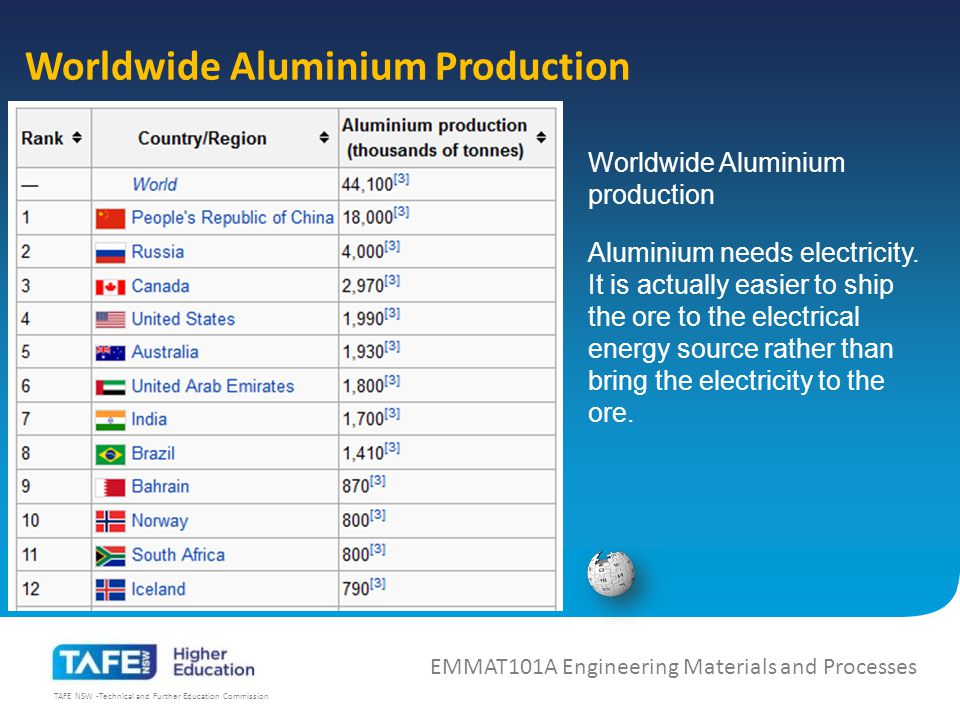
3. Aluminum (or Aluminium as the British and IUPAC call it) China produced 41% of the world’s raw aluminum in 2010, USA produced 4.5%. China’s production was nearly 10 times larger.
This is easily rectified. Aluminum is produced where electricity is abundant and cheap, like in Norway and Iceland. Aluminum is produced whenever there is excess electric capacity, never on peak hours. Even here China dumps their excess Aluminum.
4. Coal. China burned 51.2% of the world’s coal in 2012, USA produced 12.5%. China’s production was more than four times larger.
This of course with the Paris accord in mind. U.S. and the European countries are to limit their emissions and slowly diminish them, down to a per capita emission comparable to the mid 1800’s, while China, being a developing country is allowed to increase their emissions until 2030, and then stabilize them, not decrease them.
If this seems like we have already sold out to China, it is nothing compared to
5. Rare Earth Metals. First, rare earth metals re not rare at all, they exist in small quantities together with Thorium and sometimes Uranium wherever other metals are mined.
The Lanthanides occur in quantity in Monazite, a byproduct of mining Phosphates, but also as a byproduct of mining Titanium, and even from some Iron ores. The rare earth metals are free to begin extraction if it was not for one thing, they also contain Thorium, and Thorium is radio-active, so in the mid 1980’s the NRC and IAEA reclassified Monazite and anything containing Thorium as a “Source Material” and after that it became too costly to comply with all the regulations for nuclear material, so all production of rare earth minerals ceased in the U.S.
China saw an opportunity to grab the world market for Rare Earth Metals and is now controlling about 94% of the supply of all rare earth metals.
So what are rare earth metals used for?
China now has a de facto monopoly on all usages of rare earth metals, and in the case of war or an embargo, not only are our precious cell phones and computers in jeopardy, so is our defense, night vision goggles, aircraft engines, navigation systems, laser guidance, just to name a few uses.
And not only that, we import the completed parts from China, even for our most sophisticated military equipment, such as the F35 aircraft, after telling the Chinese how to make the components. The very same components are now in China’s version of the F35, still under development, but in a year or so China will have their faithful copies made!
This is clearly unsustainable, so in 2014 Congress tried to pass HR 4883 and S 2006 to remedy the situation, but the bills got killed in review by none other than the defense department, citing National Security!
We are no longer under the Obama “Strategic Patience” doctrine, so an updated version of these bills need to be introduced ASAP, or we will be on the hook from China forever!
After all this, the current spat with North Korea seems like a nuisance.




 Len Bilén's blog, a blog about faith, politics and the environment.