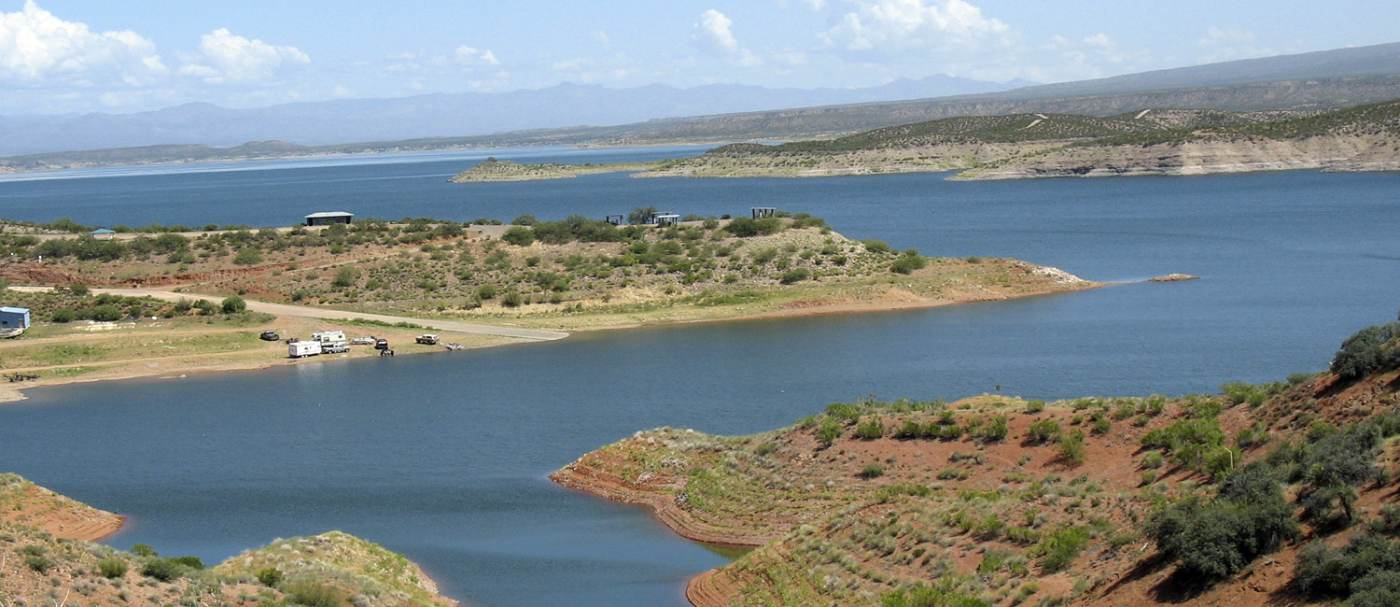
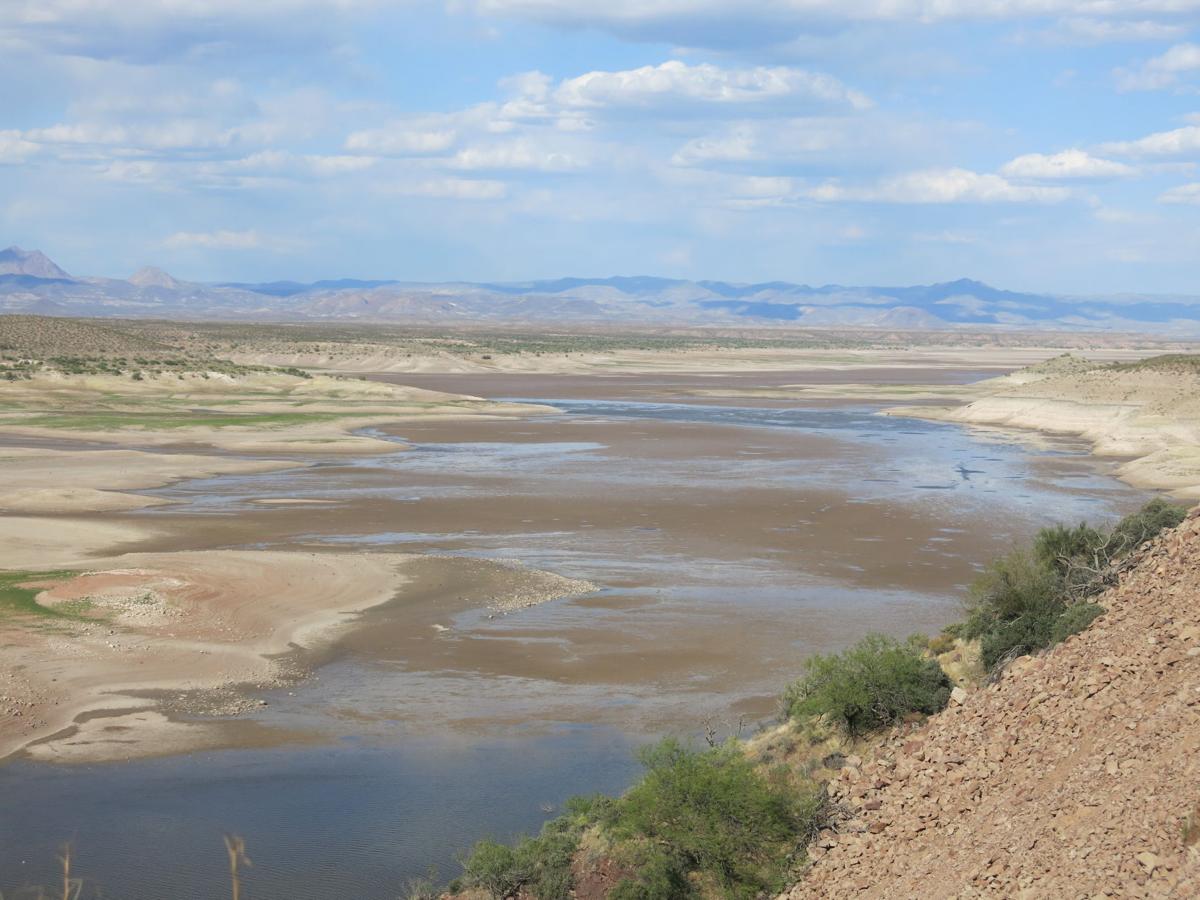
Stage 12 is a true delivery of water on demand aqueduct. The San Carlos lake has a storage capacity of a million acre-ft, the ideal buffer from the peak power demand driven uphill stages to the major delivery stage. San Carlos lake is now mostly empty, but will be normally filled to 85% of capacity, slightly less in advance of the winter snow melt. The Lake would look like this:
San Carlos lake, about half full
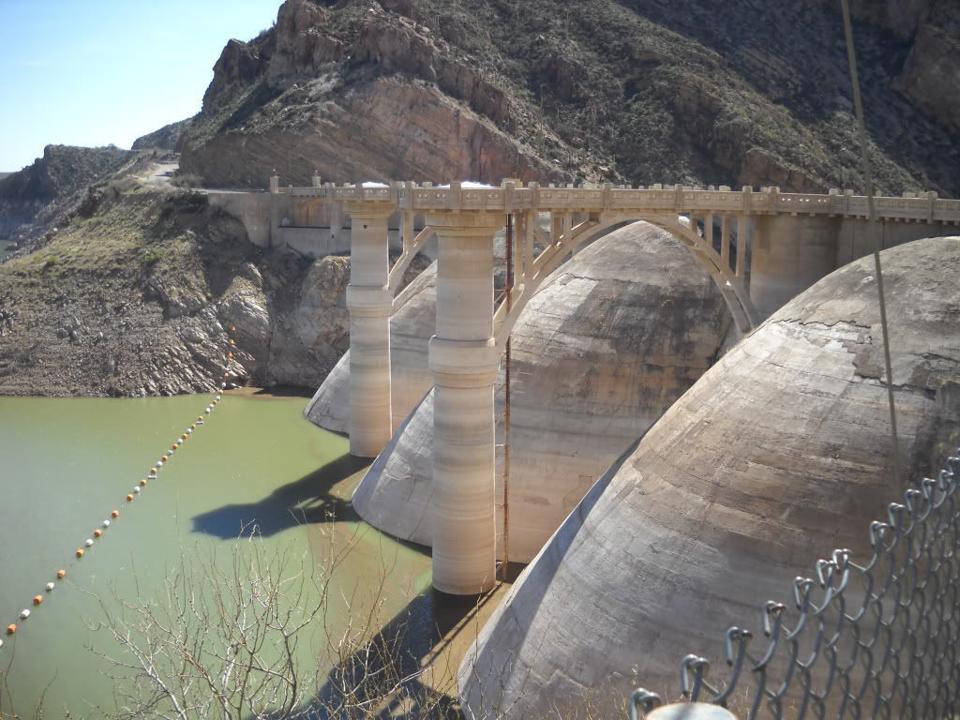
The Coolidge dam is now decommissioned, the lake is too often empty and the dam suffered damage in the power plant and it was no longer economical to produce power. The retrofitted dam will have a power generation capacity of up to 19,000 cfs the top of the dam is at 2535 ft, the typical water level is at 2500 ft and the drop is 215 feet, giving a maximum power output of 315 MW.
Coolidge dam before rebuilding
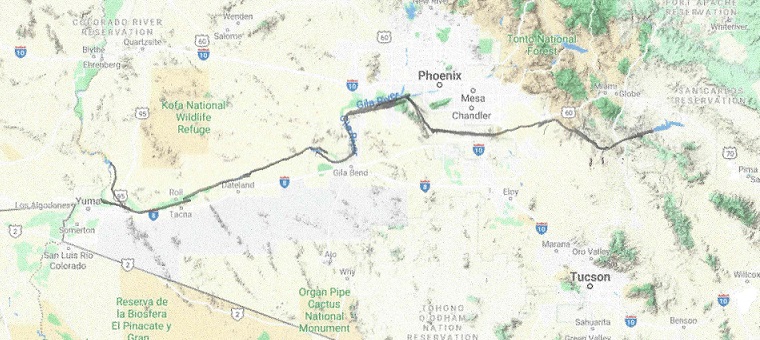
From there the stream follows the Gila River all the way to the Colorado River with the following drop-offs:
Where the Arizona central project waterway crosses the Gila river it will deliver up to 500 cfs to Tucson
Where the Gila river meets the Salt river it can deliver up to 1,500 cfs to the Phoenix-Scottsdale metropolitan area.
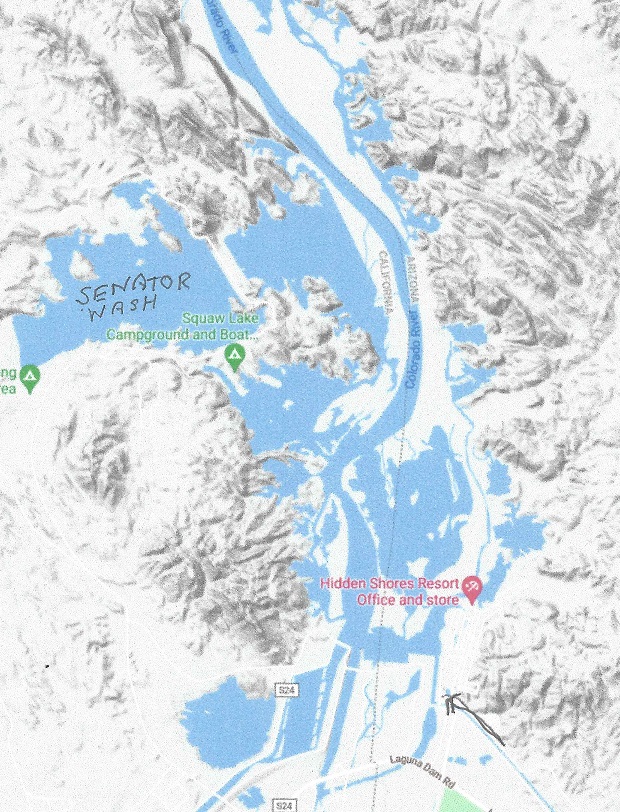
To the Martinez lake it can deliver up to 15,155 cfs, the design capacity of the All American canal. This will of course be nearly always far less, dependent on the need for water for irrigation, but we dimension the aqueduct to accommodate maximum flow. The Martinez lake is puny, and would easily be overwhelmed by surges in the water flow. To accommodate this, the Senator Wash Reservoir will have to be upgraded to be able to pump up or down at least twice as much water as is it’s present capacity. Lake Martinez is at about 180 feet elevation, and Senator Wash Reservoir is at a maximum elevation of 240 feet.
The Martinez lake and the Senator Wash Reservoir.
The rest of the Transcontinental Aqueduct empties out where the Gila river joins the remainder of the Colorado river a few miles downstream. It will be able to carry up to 6, 000 cfs of water to accommodate the needs of Mexico and also provide a modest amount of water to assure the Colorado river again reaches the ocean, maybe restoring some shrimp fishing in the ocean.
The 1944 water treaty with Mexico provides Mexico with 1.5 million acre-ft per year, more or less dependent of drought or surplus. It will be increased only on condition that when the Transcontinental aqueduct is finished, the New River in Mexicali will be cut off at the border, and Mexico will have to do their own complete waste water treatment.
There will be water allocated to the Salton Sea. Proposed will be the world’s largest Lithium mine, mining the deep brine, rich in Lithium. (about a third of the world supply according to one estimate). This requires water, and as a minimum to allow mining in the Salton Sea the water needs to be cleaned. This requires further investigation, but the area around the Salton Sea is maybe the most unhealthy in the United States.
The maximum power generating drop during this last leg will be (2500 – 190 – 2.2X 280) = 1694 feet. With an average flow of 14,000 cfs this will generate 1.8 GW of power, but the realized power output will be determined by the actual water demands.
Back in 2012 the Greenland ice sheet had an unprecedented melt, and the prediction was that all the Arctic ice would be melted in September of 2015, having reached the Climate tipping point from which there is no return to a normal climate unless we reorganized society into a more totalitarian global governance.
Well, the tipping point didn’t happen, so hopefully global governance will not happen either, even though many are trying.
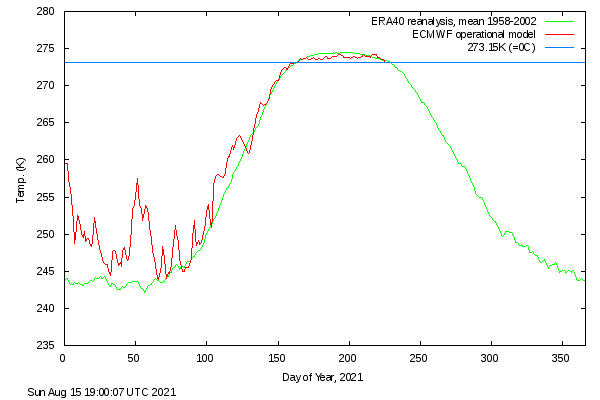
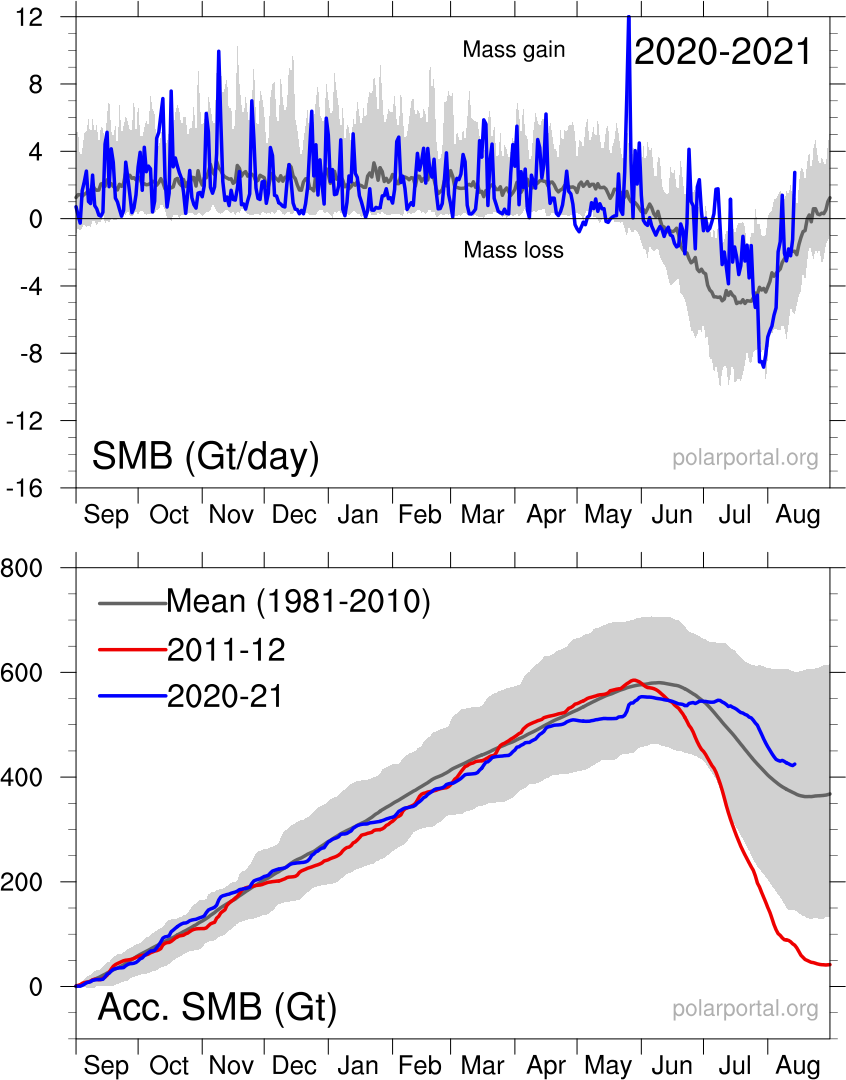
These are the latest charts for arctic temperatures, ice and snow for August 15:
The ice-pack on Greenland has been melting much less than normal during the melting season
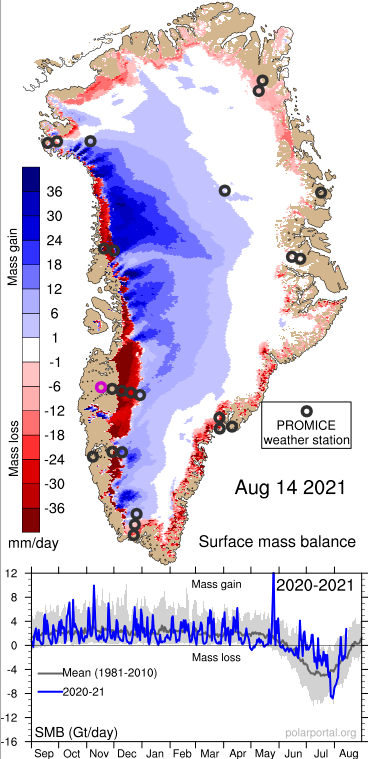
And yesterday’s snowfall over Greenland
Remember, H2O is a condensing gas, when cooled off it condenses into clouds.
Clouds cool by day and warm by night, a one percent difference in cloud cover means more than the increase in CO2.
The only place this doesn’t work is in deserts, if no clouds form Forget CO2, but let us not make any more deserts. The American South-west is in danger of being “desertified” unless we restore the fragile water balance in the region.
Stage 10 was a true pumped hydro-storage peak power stage, producing up to 11.0 GW electric power for up to 5 hours a day. In stage 11 the flow will be a maximum flow of up to 25,000 cfs, but with periods of less flow during low electricity demand, all to accommodate both water needs and power demands.
The power generating drop is on average (4320 – 2510 – 80×2.2) = 1,634 feet. This stage is capable of generating maximum 2.4 GW of power during all times.
San_Carlos_Lake is located within the 3,000-square-mile (7,800 km2) San Carlos Apache Indian Reservation, and is thus subject to tribal regulations. It has been full only three times, in 1993 it overflowed the spillway and about 35,000 cfs of water caused erosion damage to natural gas pipelines. The lake contains now (April 6,2021) less than 100 acre-ft of water. All fish is dead.
When former President Coolidge dedicated the dam in 1930, the dam had not begun to fill. Humorist Will Rogers looked at the grass in the lake bed, and said, “If this were my dam, I’d mow it.”[
When the Transcontinental aqueduct is built the lake will always be nearly filled, level will be at 2510 feet with flood control nearly automatic, it will never overflow, and it will look like this:
The San Carlos lake, when filled will hold 1,000,000 acre-ft of water.
The Coolidge dam will have to be retrofitted for a 25,000 cfs water flow
Uttar Pradesh is India’s largest state with over 205 million people. It’s most famous shrine is the Taj Mahal.
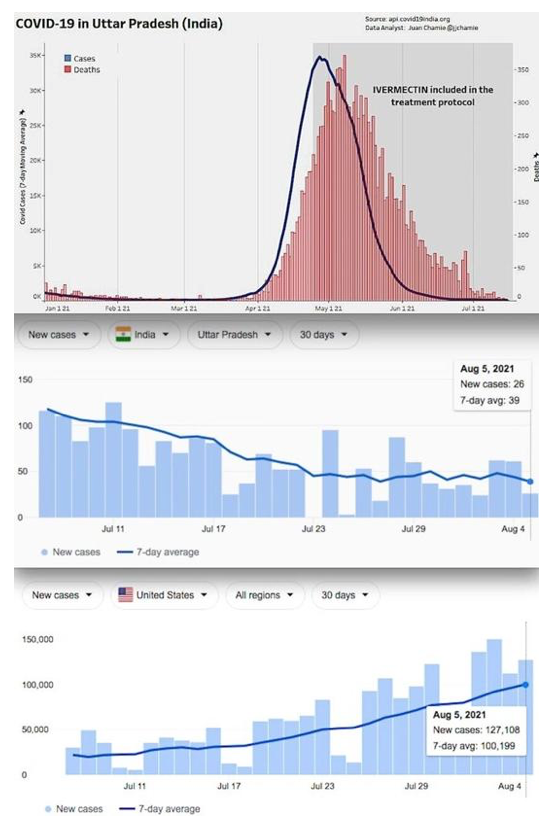
News of India’s defeat of the Delta variant should be common knowledge. It is just about as obvious as the nose on one’s face. It is so clear when one looks at the graphs that no one can deny it.
Yet, for some reason, we are not allowed to talk about it. Thus, for example, Wikipedia cannot mention the peer-reviewed meta-analyses by Dr. Tess Lawrie or Dr. Pierre Kory published in the American Journal of Therapeutics.
Wikipedia is not allowed to publish the recent meta-analysis on Ivermectin authored by Dr. Andrew Hill. Furthermore, it is not allowed to say anything concerning http://www.ivmmeta.com showing the 61 studies comprising 23,000 patients which reveal up to a 96% reduction in death [prophylaxis] with Ivermectin.
One can see the bias in Wikipedia by going on the “talk” pages for each subject and reading about the fierce attempts of editors to add these facts and the stone wall refusals by the “senior” editors who have an agenda. And that agenda is not loyalty to your health.
The easy way to read the “talk” page on any Wikipedia subject is to click the top left “talk” button. Anyone can then review the editors’ discussions.
There is a blackout on any conversation about how Ivermectin beat COVID-19 in India. When I discussed the dire straits that India found itself in early this year with 414,000 cases per day, and over 4,000 deaths per day, and how that evaporated within five weeks of the addition of Ivermectin, I am often asked, “But why is there no mention of that in the news?”
Yes, exactly. Ask yourself why India’s success against the Delta variant with Ivermectin is such a closely guarded secret by the NIH and CDC. Second, ask yourself why no major media outlets reported this fact, but instead, tried to confuse you with false information by saying the deaths in India are 10 times greater than official reports.
Perhaps NPR is trying so hard because NPR is essentially a government mouthpiece. The US government is “all-in” with vaccines with the enthusiasm of a 17th century Catholic Church “all-in” with a Geocentric Model of the Universe disputing Galileo. Claiming that India’s numbers are inaccurate might distract from the overwhelming success of Ivermectin.
But in the end, the truth matters. It mattered in 1616, and it matters in 2021….
So, why are all media, CDC, NIH and the government all in on vaccines? This is my theory. When the Covid pandemic broke out, it was first downplayed by CDC, masks were not effective, just keep your distance and sanitize and it will go away. But it didn’t. In February, it was obvious that it was severe, and then President Trump suggested we develop a vaccine at warp speed, meaning in time for the election. Dr Fauci was conducting gain of function defense research at the Wuhan laboratory, so in less than a week, Pfizer and Moderna had a prototype vaccine ready for initial trials. Warp speed means, you test the vaccine as fast as possible, and at the same time promise to buy the vaccine by the hundreds of million doses, working or not. In March President Trump became a promoter of Hydroxychloroquine, and HCQ became a verboten subject. All clinical trials were stopped because of its danger, even though it had been approved for over 50 years against malaria, and used to control Lupus and some kinds of Rheumatisms. It is so safe that it is even used for pregnant women and nursing mothers. The countries that routinely used HCQ in the early stages had a much better disease outcome than countries that didn’t, but it was more important to get rid of Trump than to treat and cure the people. The vaccines are now here, approved for emergency use, and the death rate for people taking the vaccines is greater than could be expected for that age group, for children it is as high as a 60-fold increase. While data for COVID is abundant, the vaccine data is slow in coming. Then came Ivermectin, which is even more effective than HCQ, but it is not approved by CDC yet, even though it is approved for treatment of other diseases.
Then it hit me: The vaccines are for emergency use only, and can not be used if a cure is available. Since Vaccines are highly profitable and Ivermectin is cheap, the obvious decision for CDC is to not approve Ivermectin and ruin the vaccine revenue stream. The well being of the people is of no importance to CDC.
All other explanations are more sinister, so I refrain from further speculation.
“Several studies reported antiviral effects of ivermectin on RNA viruses such as Zika, dengue, yellow fever, West Nile, Hendra, Newcastle, Venezuelan equine encephalitis, chikungunya, Semliki Forest, Sindbis, Avian influenza A, Porcine Reproductive and Respiratory Syndrome, Human immunodeficiency virus type 1, and severe acute respiratory syndrome coronavirus 2.”
Professor Borody says his research has led him to a triple therapy of Ivermectin, zinc and an antibiotic – which are all TGA and FDA approved – which could be the fastest and safest way to stop the Victorian outbreak within 6-8 weeks. [See Professor Borody’s published research papers ORIC here http://orcid.org/0000-0002-0519-4698]
Professor Borody said, “These 3 medications are already approved. They do not need pre-clinical or clinical trials nor additional TGA approvals unless the aim is to combine in a single capsule, for example. Patient treatment programs have been done in the US and elsewhere which indicate it can work within 4-6 days.”
Professor Borody has reviewed the key antiviral scientific research literature and identified the combination of 3 drugs that are in chemists right now and can be prescribed by doctors immediately. The tablets can be taken at home as a preventive treatment by high risk individuals, or by those who test positive to minimise need for hospitalisation at the higher curative dose.
The therapy comprises:
Ivermectin – TGA and FDA approved as an anti-parasitic therapy with an established safety profile since the 1970s. Known as the “Wonder Drug” from Japan.
Zinc
Doxycycline – TGA and FDA approved tetracycline antibiotic that fights infections, such as acne, urinary tract infections, intestinal infections, respiratory infections, eye infections, gonorrhea, chlamydia, syphilis, periodontitis (gum disease), and others.
Professor Borody says distribution teams could be deployed in Victoria’s hotspots to treat proven infected patients immediately, and people exposed or at risk could be taking the preventative dose.
Stage 9 ended up near the Poppy Canyon Reservoir. It continues directly to stage 11 without a reservoir, but has a diversion point to deliver water to stage 10 to cpmpensate for evaporation and seepage. The Poppy Canyon Reservoir is 400 feet high and will top out at 5360 feet with a maximum water level at 5350 feet. This is the western high point in the Transcontinental aqueduct. This stage can deliver peak energy only 5 hours a day, or deliver the day’s worth of peak energy whenever called for. To make this possible there will be a tunnel and pumping station capable of delivering up to 95,000 cfs when called for. The drop is maximum (5410 – 3690 – 13×2.2) = 1702 feet and minimum (5300 – 4000 -13×2.2) = 1272 feet with an average of 1500 feet, delivering 11.0 GW of pumped hydro-storage peak power for 5 hours a day for a total of 55 GWh/day For the remaining 19 hours water will be pumped up using thirty-one 100 MW MFTR reactors requiring 59 GWh/day. These 31 MW are available for 5 hours a day as extra peak power.
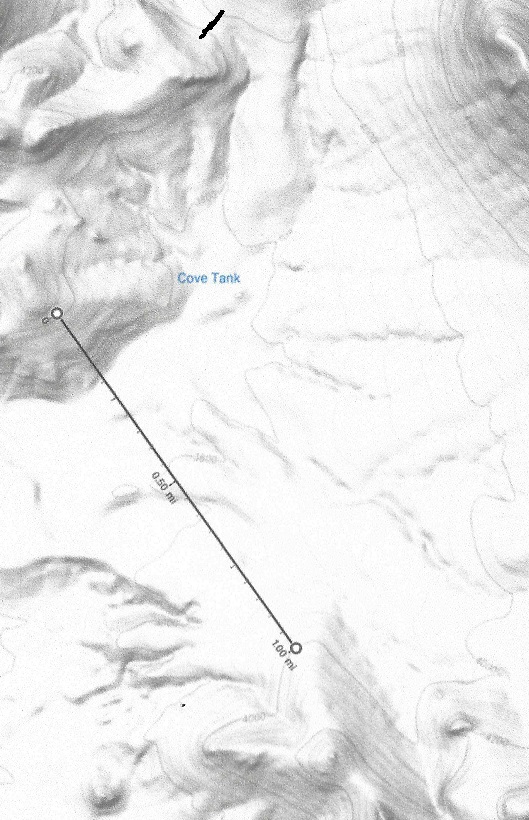
The tunnel to the Cove Tank reservoir is 13 miles long and the power station is somewhere in the tunnel’s path. 80% of the pumps are not reversible, the remaining 20% are, and pump up water for up to 19 hours. The Cove Tank Reservoir dam is 1 mile wide and 250 feet high, containing 60,000 acre-ft of water, enough for 7.5 hrs of filling it at 95,000 cfs, or maximum flow capacity of this stage.
Stage 9 ended up near the Poppy Canyon Lower dam. The aqueduct will release water to the dams when necessary to compensate for evaporation and seepage losses, but it will otherwise be independent of the aqueduct. The upper dam is 400 feet high and will top out at 5360 feet with a maximum water level at 5350 feet. The lower dam is 480 feet high, and the water tops out at 4670 feet. This stage can deliver peak energy only 5 hours a day, or deliver the day’s worth of peak energy whenever called for. To make this possible there will be a tunnel and pumping station capable of delivering up to 95,000 cfs when called for. The drop is maximum (5360 – 4200) = 1160 feet and minimum (4950– 4670) = 280 feet with an average of 720 feet, delivering 5.3 GW of pumped hydro-storage peak power for 5 hours a day for a total of 26.5 GWh. For the other 19 hours a day water will be pumped up from the lower dam to the upper dam, requiring sixteen 100 MW LFTR power stations, or 30 GWh. the difference is because of the 93 percent efficiency in the turbines and generators. But for 5 hours a day the 16 LFTR’s will produce 1.6 GW of virtual peak power.
Here as always, the preferable power to lift the water will be produced by excess solar and wind power. But when the sun doesn’t shine and the wind doesn’t blow. the power has to be available. When excess power is available these LFTR plants are free to produce hydrogen, to be stored and used for more peak power
Stage 8 went from Arch Lewis Canyon Lake to Martin Tank Lake. The Martin Tank Lake dam is 22260 feet wide and 230 feet high. The Lake will contain about 30,000 Acre-ft when full, about eighteen hours worth of storage.
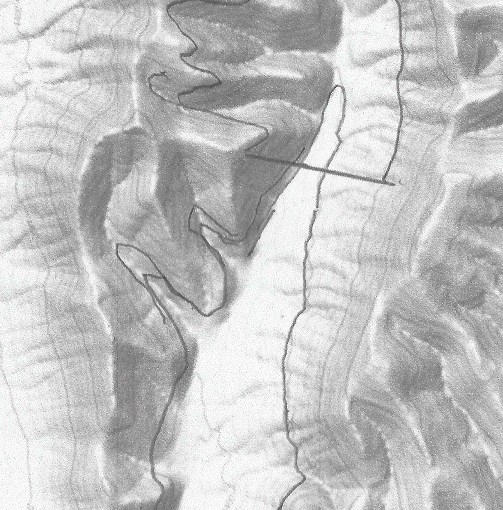
plus The elevation at the Martin Tank lake will top out at 4620 feet with maximum water level at 4610 feet. The aqueduct will first descend to 3980 feet, as it crosses the Rio Grande in La Mesa, a distance of 50 miles. The elevation difference is (4620 – 3980 – 50 X 2.2) feet = 530 feet. Releasing 24,000 cfs of water 530 feet will generate 1 GW of energy for 19 hrs/day. From La Mesa it will climb to the Poppy Canyon lower Reservoir. The dam is 480 feet high and will top out at 4680 feet with a maximum water level at 4650 feet. The Poppy Canyon is special and will be described more in Leg 10. The total lift of the water in stage 9 is (4320 – 3980 + 160×2.2) feet = 692 ft. To lift 24,000 cubic feet per second 692 feet requires five 100 MW LFTR nuclear reactors, plus the energy generated from the early decrease in altitude. The Poppy Canyon Reservoir will look like this:
Stage 7 ended in Arch Lewis Canyon Reservoir. It will be filled mostly during the 5 hours of peak power generation. During the other 19 hours the fill rate will be very low leading to lowering water levels.
It has a 3000 feet wide and up to 480 feet high dam, topping out at 4620 feet, and the lake holds a volume of up to 60,000 acre-ft of water.
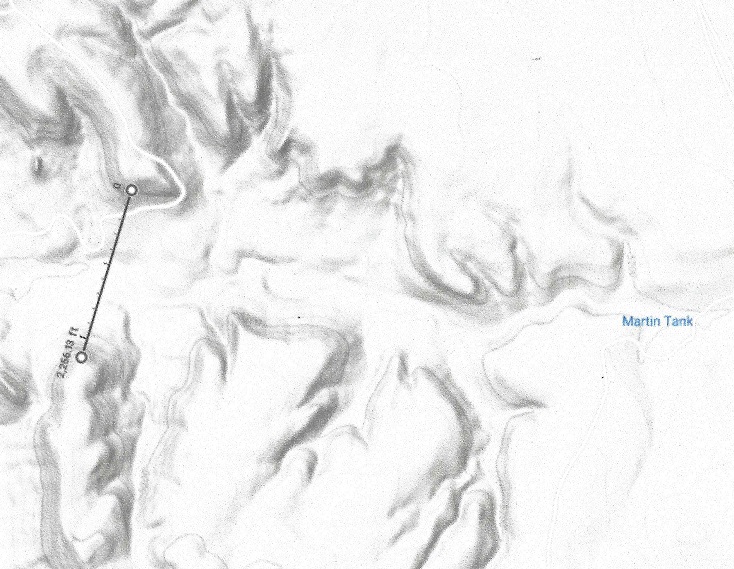
From the Arch Lewis Lake dam to the Martin Tank Lake the distance is 60 miles the way the aqueduct takes. It will first descend to 3720 feet before rising to 5190 feet. The descending drop is (4620 – 3720 – 2.2 x 9), or up to 890 feet. The Martin Canyon Lake will top out at 5200 feet with maximum water level at 5190 feet. The total lift of the water in this stage is (5190 – 3720 + 51×2.2) feet = 1582 ft. To lift 25,000 cubic feet per second (1582 x 1.07 – 890 x 0.93) = 865 feet requires eighteen 100 MW LFTR nuclear reactors. The Martin Tank Lake dam is 22260 feet wide and 230 feet high. It will contain about 30,000 Acre-ft when full, about eighteen hours worth of storage. For 5 hours per day the eighteen reactors can provide 1.8 GW of peak power to the grid.
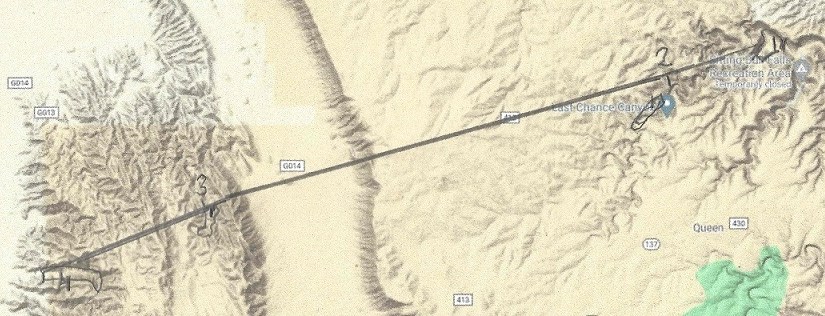
Dam 1 is the White Oaks Canyon Lake. It has a 2000 feet wide and up to 400 feet high dam, topping out at 5000 feet, and the lake holds a volume of up to 80,000 acre-ft of water.
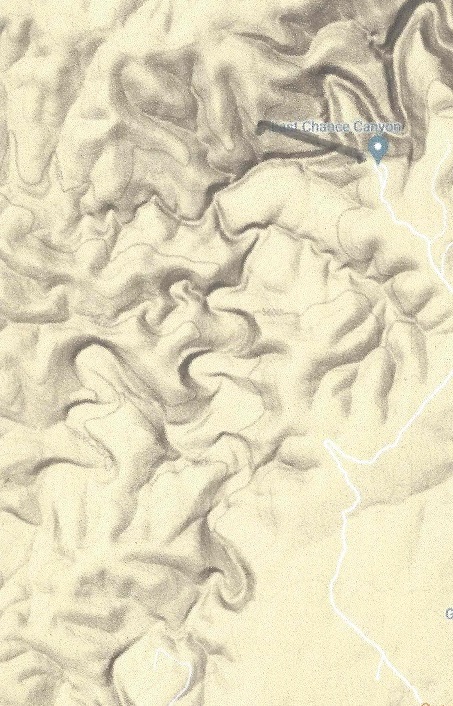
Dam 2 dams the Last Chance Canyon Lake. It has a 2200 feet wide and up to 380 feet high dam, topping out at 5680 feet, and the lake holds a water volume of up to 35,000 acre-ft.
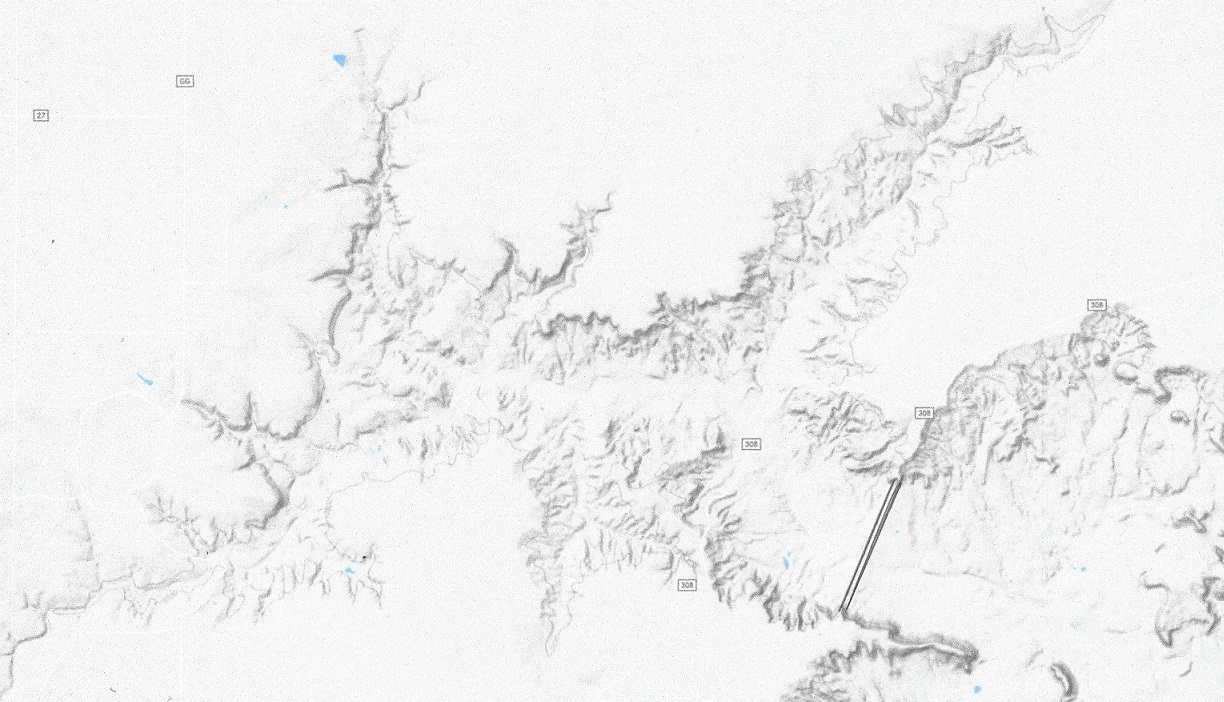
The Stage 7 is a tunnel, starting at 4600 feet and ending at 4492 feet maximum levels. The 20 mile long tunnel will drop 44 feet as it passes under the mountain.
Dam 3 dams the Upper Canyon reservoir. It has a 1600 feet wide and up to 240 feet high dam, topping out at 5200 feet, and the lake holds a volume of up to 15,000 acre-ft of water.
Dam 4 dams the Arch Lewis Canyon Reservoir. It has a 3000 feet wide and up to 480 feet high dam, topping out at 4600 feet, and the lake holds a volume of up to 60,000 acre-ft of water.
Up to now all stages have pumped water up the mountains. This stage releases the hydroelectric water storage, and it does so even during peak power, so the water flows all 24 hours with peak electricity creation during peak usage. By now, the average flow is down to 19000 cfs , 24 hours a day. During off peak hours, 19000 cfs flows down the tunnel, the power generated is coming from Dam 1 with a water level of between 4980 feet and 4700 feet with an average of 4940 feet. The maximum output level of the water is 4640 feet, so a drop of 300 feet will generate a minimum of 440 MW of power, or 10.5 GWh/day. Part of this energy will be used to pump up the water to Dam 2 and 3. Dam 2 will pump 13,000 cfs of water from 4630 feet to between 5820 feet ans 5520 feet, (average 5760) for 19 hours, an average lift of 1,060 feet. This required a total of 23 GWh of energy per day , or 1.2 GW pf power. Dam 3 will pump 6,000 cfs of water from 4630 feet to between 5200 feet and 4930 feet, (average 5120) for 19 hours, an average lift of 520 feet. This required a total of 5.2 GWh of energy per day , or 270 MW pf power.
The net electricity needed during 19 off peak hours is 3.0 GW on average. This requires thirty 100 MW LFTR power stations. Normally the pumping power will come from excess wind and solar power, but the power plants will still have to be there when the sun doesn’t shine and the wind doesn’t burn. When there is excess power available the LFTR’s can make hydrogen for use for extra peak power. The electricity generated during the 5 peak hours is 49,000 cfs at a drop of 1060 feet, or 4.0 GW, from dam 2. From dam 3 it will be 22,800 cfs at a drop of 520 feet, or 900 MW. From the 2 dams , total electricity is 4.9 GW. Total electricity generated during these 5 hours is 24.5 GWh. This assumes a 93% efficiency of the reversible pumps from Dam 2 and 3 (you lose 7% both in the pumping and the generation phase.) The generators from Dam 1 are not reversible.
The tunnel capacity between Dam 1 and Dam 2 outlets is 19,000 cfs, between Dam 2 and 3 it is 49,000 cfs, and from Dam 3 to its exit in Dam 4 it is 71,800 cfs.
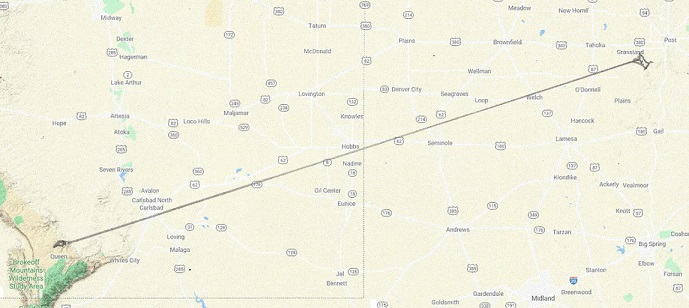
The fifth stage was from East of Sweetwater dam (to be constructed) to Grassland Canyon Lake (to be made). The sixth stage is big! The aqueduct travels from South of Lubbock, Texas to the Guadaloupe Mountains in New Mexico, a distance of 110 miles.
The elevation at the Grasslands Canyon lake will top out at 2800 feet with maximum water level at 2790 feet. The White Oaks Canyon dam is 400 feet high and will top out at 5000 feet with a maximum water level at 4950 feet. The total lift of the water in stage 6 is (4950 – 2790 + 110×2.2) feet = 2402 ft. To lift 25,000 cubic feet per second 2402 feet requires fifty-three 100 MW LFTR nuclear reactors, thirteen on the Texas Grid and forty on the Western national grid. The White oaks Canyon Lake will contain about 130,000 Acre-ft of water when full, about three days of storage. For 5 hours per day these fifty-three reactors used in this stage can provide 5.3 GW of peak power to the grid instead of pumping water, thus acting as a virtual hydroelectric peak power storage. 1.3 GW of this will be used by the Texas Power Grid, and 4.0 GW by the Western U.S. Power grid, and they have to be coordinated. One alternative is that this grid can be connected to either the Texas grid or the Western Grid dependent on who needs the peak power. The White Oaks dam will look like this:






 Len Bilén's blog, a blog about faith, politics and the environment.