John 4, speaks about the first real evangelist spreading the good news of Christ the Messiah. It is the woman at the well, a Samaritan, scorned and rejected by her many ex husbands, yet used by God to tell the good news.
Genesis 6 . Sin and wickedness got worse and worse on earth. God saw it and decided to start over. But Noah, his wife, his three sons and their wives, eight in all found favor with God, so God told him to build an ark. This Noah did, and it was the biggest ship built until the time of Ptolemy (around 215 BC.)
Ponder that the first evangelist was a scorned woman who happened to meet Jesus, and that Noah, being obedient to God built the ark on dry land, too big to be of any use unless there was going to be a giant flood. This takes faith!
Today we read John 3, the new birth chapter; you must be born again (literally: from above), the new birth is necessary to enter into the Kingdom of God; John 3:16 is the most quoted verse in all the Bible.
Genesis 4 tells of the results of original sin with the story of Cain and Abel and the beginning of animal sacrifice.
The take home for today is there are two births, the physical birth and the spiritual birth (the birth from above), the first murder, the first man (Enoch) to be carried directly to God rather than die. (because ha walked with God).
Today we read in John 2, that Jesus turned water into wine, cleansed the Temple, and when the Jews demanded a sign he gave them just one sign (which they of course did not understand).
Genesis 2 left us with the idyllic Eden, no diseases existed yet. But God created us with free will, and the fall is then described in Genesis 3 . The problem is, after eating from the tree of the knowledge of good and evil, (not an apple tree) and in so doing we think we can build a better world without God.
The question to ponder is: Why did God create us with a free will? He knew the result from the beginning, and knew He would have to send His Son to redeem us back to Himself. In fact He knew it from before the beginning: “All inhabitants of the earth will worship the beast—all whose names have not been written in theLamb’s book of life, theLamb who was slain from the creation of the world.” (Revelation 13:8, NIV)
Answer: We are created in God’s image, male and female, not so much physical, but spiritual, and free will is part of the package. Without free will there is no fellowship with God, only puppetry.
Psalm 1 is a beautiful poem about righteous living, and only one person could fulfill all the conditions mentioned, the exception to ” There is none righteous, no, not one” (Romans 3: 10)
Today’s reading of the Bible begins with John 1: 19-51. John the Baptist testified about the Messiah: “Make straight the way for the Lord”. When he met Jesus he referred him as “The Lamb of God” that “takes away the sin of the world”, and “this is the Son of God”. Jesus called his first disciples, Andrew and Peter, Philip and Nathaniel.
Genesis 2 tells of how God created woman out of man, showing that creation was not complete without man and woman as a unit. This must be taken spiritually, since in Genesis 1 he already created man in His own image, male and female. God’s design is one man, one woman, one lifetime. This would still be the case if we let God chose our mate. If we had followed God’s intent, many sicknesses would not exist, especially sexually transmitted diseases. “He who finds a wife finds what is good and receives favor from the Lord.” Proverbs 18:22
The Holy Bible is the most influential book ever written. According to Wikipedia it has been translated in its entirety into 724 languages, and the New Testament has been translated into 1617 languages. At least one part of the Bible has bee translated into 3,589 languages, and more translations are coming every year, especially from the Wycliffe translators.
Both the New Testament and the Old Testament begin with the words “In the beginning”.
Genesis 1 deals with the physical creation with spiritual emphasis, laying the groundwork for spiritual understanding of how and why we exist.
We are existing in time and space. The question is: What was there before time and space existed, before the beginning?
Answer: God, existing in three persons, God the Father, God the Son (the Word) and God’s Spirit, (the Holy Ghost).
The Three-in-one God alone are eternal, everything else, including time and space, is created.
Another Question: Why did God say “it was good” for day 1,3,4 and 5 but not for day 2 and it was very good after day 6?
Answer: The ecosystem is a work in progress and will function differently for each phase and finally come to completion when all parts are set in place, which includes people. We are responsible to God to be good stewards of the earth and leave it a better place than we found it. The main regulator of temperature on earth is the clouds. They cool by day and warm by night. The time of day they appear is also very important, and there is no risk for the earth to overheat.
The house just passed the antisemitism bill HR 6090 320 to 61. It codifies the International Holocaust Remembrance Alliance definition of antisemitism. This means that certain historical facts, such as Jesus was condemned by the Jewish leadership for being a blasphemer, proclaiming that He and God the Father are one, and as such he could forgive sins. This was of course blasphemy, punishable by death, but since only the Romans could execute the death penalty Jesus was handed over to the Romans to be crucified.
To blame this generation of Jews for a historical fact that happened 2000 years ago is of course wrong and antisemitic, but history is history cannot be changed. It happened. The Jewish leaders even helped to prove the resurrection by setting a guard to prevent it from happening. To call historical facts antisemitism is as ridiculous as blaming a Swedish immigrant (of which I am one) for being guilty of lynching a black youth in Mississippi in the early 1900’s just for being white too.
From one to another I hear the college uprisings “From the river to the sea. Palestine shall be free” . A reporter asked demonstrators what river they referred to. A few, but not all knew it reo the Jordan river. Then an old song came back to me from the time 50 ears ago when I was just saved, and it has been ringing in my head every time I see video clips from the ivy league colleges. It goes like this:
We have heard the gospel sound; Jesus saves! Jesus saves;
Spread the Good News all around! Jesus saves, Jesus saves.
From the River to the sea; Jews and Gentiles,Muslims be,
Born again and so set free: Jesus saves, Jesus saves
The land between the Jordan river and the Mediterranean Sea is called the holy land by Jews, Christians and Muslims. These are the three religions that claim the land is Holy. The Jews claim the land was given them by God himself, being descendants of of Abraham from ISAAC, the Son of Promise, The Christians claim it is holy by adoption, and the Muslims by Ishmael, the firstborn son of Abraham. It all points to Jerusalem, being the Holy City
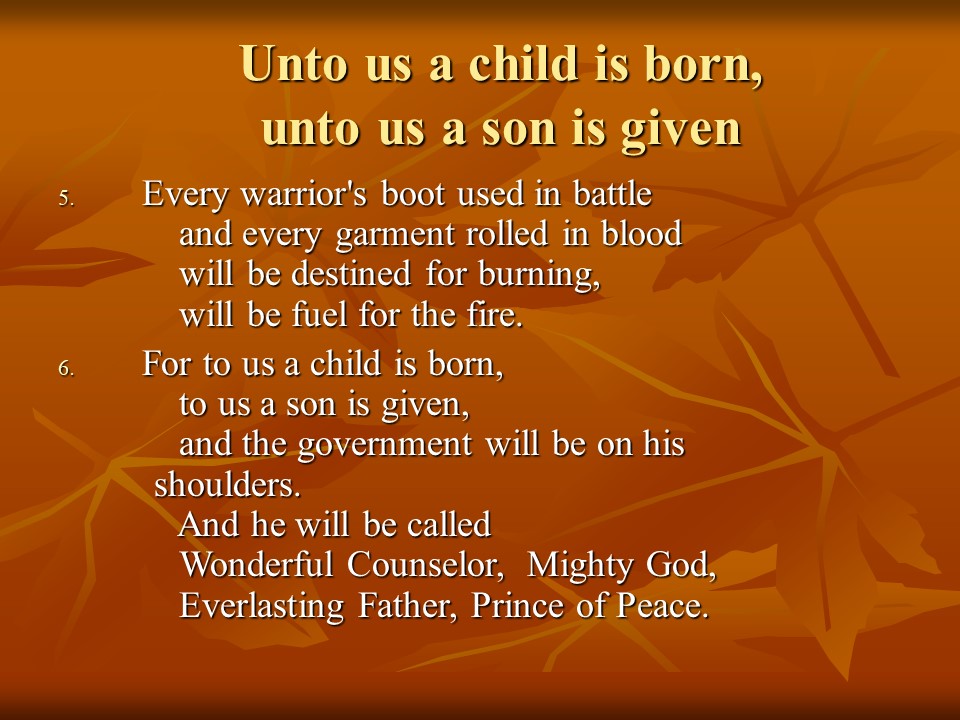
First, the Jews: They are looking for their Messiah. The Messiah is fully described in Isaiah 9:6
Child: Shows the humanity of Christ
Son, shows the deity of Christ, being given bu God, of the same kind.
It also shows the unity of God, Father, Prince of Peace, Wonderful Counselor, three aspects of God, three in one, the triune God, the Trinity.
There is one more instance of El Gibbor in the Old Testament. In Jeremiah 32:18 it says: “Thou shewest lovingkindness unto thousands, and recompensest the iniquity of the fathers into the bosom of their children after them: the Great, the Mighty God, (El Gibbor) YHWH of hosts, is his name,”
This time there is no question that El Gibbor is Jehovah himself.
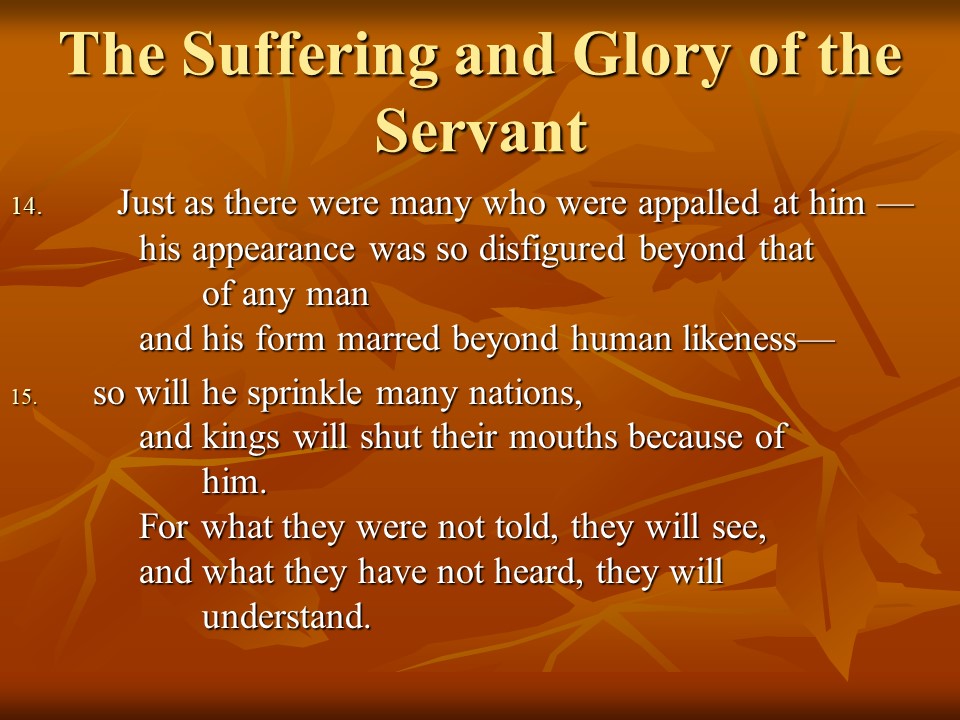
The other big prophesy is found in Chapter 53, the Suffering servant. It begins in chapter 12, verse 13. The passage on the suffering Servant is never read in Jewish Synagogues, not in the triennial reading, nor at Holy days. Up to now the LORD, through the prophet Isaiah has referred to his servant Israel, and in one case, in Isaiah 45:1 Cyrus: Thus saith the Lord to his anointed, to Cyrus, and 45:4 For Jacob my servant’s sake, and Israel mine elect, I have even called thee by thy name: I have surnamed thee, though thou hast not known me.
Here God refers to the other anointed, the Messiah. No other chapter in the Bible is quoted more in the New Testament. because of this it was more or less mathematically proven that Isaiah was edited and Isaiah 53 was added about 400 A.D. as well as a number of other prophecies. Then in 1947 they found the Dead Sea Scrolls and more than a hundred years of source critical Bible analysis had to be abandoned. The Dead Sea Scrolls had been copied from even older copies more than 140 years B.C. Let God’s word speak for itself.
Chapter 53, the Suffering servant really begins in chapter 12, verse 13. The passage on suffering Servant is never read in Jewish Synagogues, not in the triennial reading, nor at Holy days. Up to now the LORD, through the prophet Isaiah has referred to his servant Israel, and in one case, in Isaiah 45:1 Cyrus: Thus saith the Lord to his anointed, to Cyrus, and 45:4 For Jacob my servant’s sake, and Israel mine elect, I have even called thee by thy name: I have surnamed thee, though thou hast not known me.
Here God refers to the other anointed, the Messiah. No other chapter in the Bible is quoted more in the New Testament. because of this it was more or less mathematically proven that Isaiah was edited and Isaiah 53 was added about 400 A.D. as well as a number of other prophecies. Then in 1947 they found the Dead Sea Scrolls and more than a hundred years of source critical Bible analysis had to be abandoned. The Dead Sea Scrolls had been copied from even older copies more than 140 years B.C. Let God’s word speak for itself.
Yet, when Jesus came, he was rejected, not by the people for they loved him, but condemned by the leadership of the Jews, he performed miracles, even on the Sabbath, but worse than that, he forgave sins, which only God can do, so he committed blasphemy and was sent over to the Romans to crucify him, since the Jews did not have authority to execute people. It was all in accordance with scripture, and the Jews of today cannot be condemned for that. They still have the opportunity to embrace Jesus as their Messiah, and thus be redeemed.
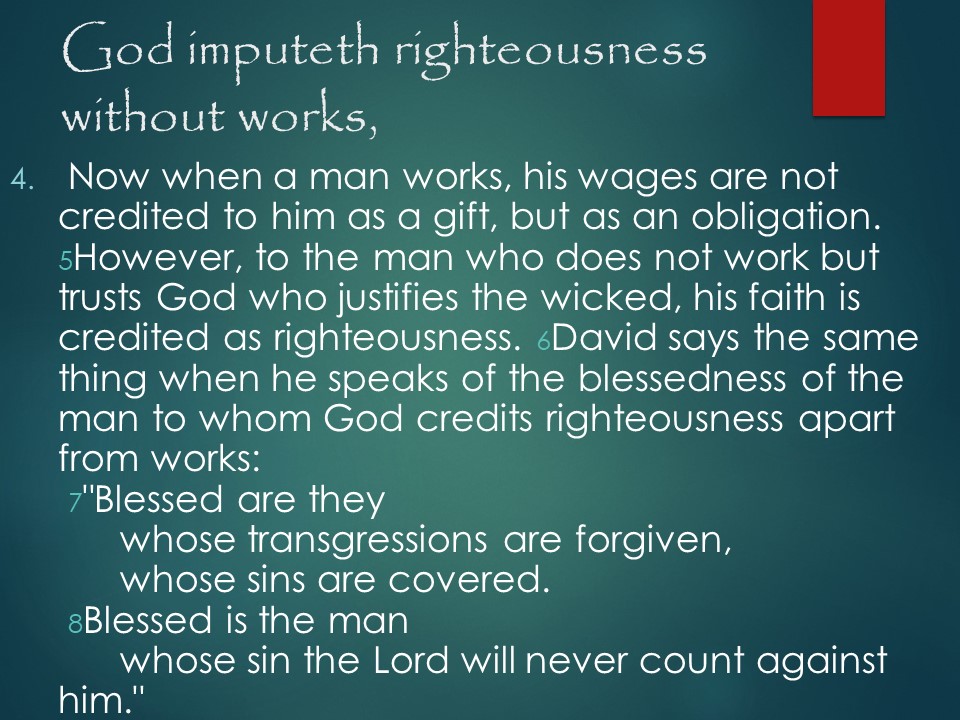
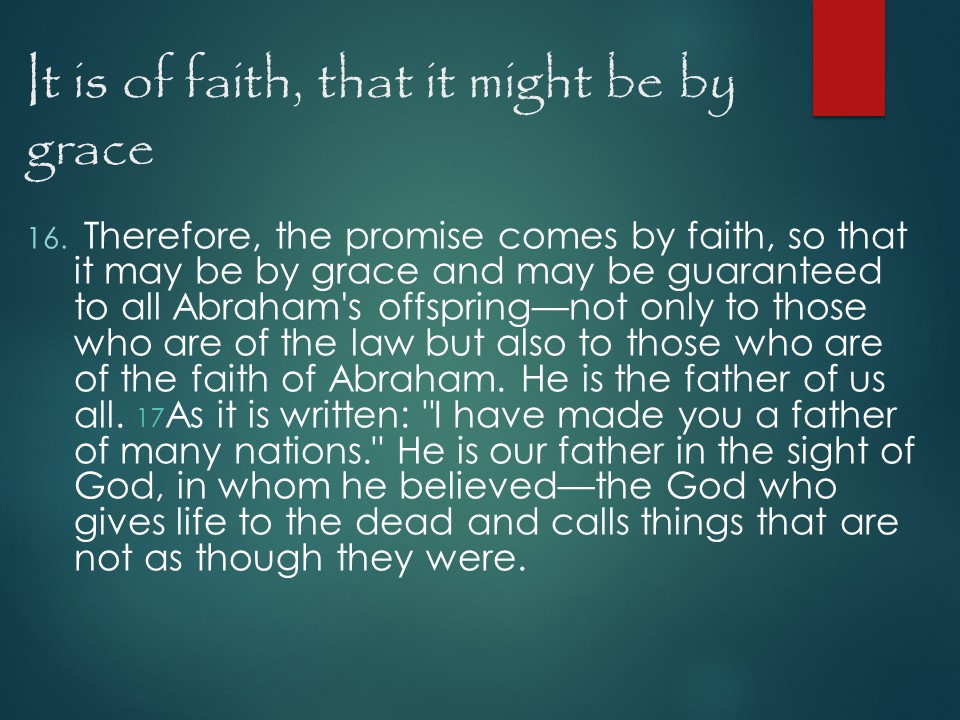
For Gentiles shat embrace Jesus it is simple; They become children of Abraham by adoption. This can be best explained in Paul’s epistle to the Romans; Chapter 4.
The important takeaway from this passage is that Jesus was delivered over to death for our sins, the death on a cross. He was buried and the tomb was sealed by the Jewish leaders to prevent him from being taken away from the tomb. But Jesus was risen from the dead. Thar is why the empty cross is the symbol for us, who worship the risen savior! The empty cross symbolizes redemption, we live in the time of grace, our sins are forgiven.
With the Muslim,also claiming Al-Qudz (Jerusalem) as their Holy City. Now it is getting more complicated. The Oslo accords tried to establish a two state solution, Both Istael and Palestine should be recognized as states. Now Yasser Arafat entered and tried to establish a diplomatic solution. In an interview he grudingly accepted Israel as a state, but when the interviewer tried to make him repeat his acceptance in Arabic he hemmed and hoed and could never get himself to do so. Why was that? It is because their Holy Quran states that Israel will never again rise to be a nation. If Israel becomes a nation again that would make Muhammad a non Prophet. There are other diffences between the Bible and Quran The Bible lists ten plagues of Egypt, The Quran has only nine, the death of the firstborn is missing. This plague lead to the passover, one of the most important commemorations in the Jewish Calendar. It is also the day when Jesus was crucified, very important for Christians. The Quran teaches that Jesus was never crucified, it only seemed so to the Jews; instead Jesus was directly translated to heaven. A holy God would never punish his son that way!
The final thing that separates Muslims from Christians is the claim that the Bible is falsified, and when Jesus speaks of another comforter, he really meant Muhammad. This can be found in John 14:
Another Comforter: αλλον παρακλητον ( allon parakleton) meaning one of the same kind as Jesus.
Some Muslims say the Bible has been altered and should have read perikleton rather than parakleton, claming the Bible has been falsified to fit Jewish and Christian beliefs and only the Quran is true.
This requires many steps of faith on account of the Muslims. 1. Jesus, Mary and Moses were really Muslims and spoke of Muhammad. 2. The New Testament is falsified. 3. Ignore the Dead Sea Scrolls, and 4. When Jesus speaks of the Spirit of Truth he really means Muhammad, not the Holy Spirit as He says in verse 26.
As a Christian I am free to take God’s Word for what it says.
What separates Christianity from both Judaism and Islam is the redemption, the forgiveness of sins by the cross, and by accepting this we can participate in his resurrection and have everlasting life. The life will change as we transition from earthly life into the presence of Jesus, and that is why our symbol is the empty cross: We serve a risen savior!
Today is leap day, February 29, and we could take the day off, but the Holy Bible is the most important book ever written and too important to ignore, even for a day. It is the word of God.
May I suggest we go back to the beginning.
The three chapters chosen for today are Genesis 1 ,John 1 and 1 John 1 (click on the chapter to begin reading)
Both Genesis 1 and John 1 start with the words “In the beginning”. , Genesis 1 deals with the physical creation, but with a spiritual emphasis, laying the groundwork for spiritual understanding of how and why we exist. The gospel of John then deals with creation spiritually.
We are existing in time and space. The question is: What was there before time and space existed, before the beginning?
Answer: God, existing in three persons, God the Father, God the Son (the Word) and God’s Spirit, (the Holy Ghost).
They alone are eternal, everything else, including time and space, is created.
1 John 1 then starts from the beginning and deals with how we should live today, in time and space, with an eternal perspective.
John 21 tells of the eighth miracle of Jesus. This miracle, a great catch of fish happened after Jesus resurrection and was a sign of new beginnings. Jesus reinstated Peter and told him: “Feed my sheep.”
Exodus 12 tells of how God instituted the Passover. The name comes from the action that night, when the angel of death came to kill every firstborn in Egypt, if he saw the blood of the pascal lamb om the doorposts and the lentil of the house, he would pass over that house. The chapter is fantastic, read it and marvel!
In Exodus 13 the feast of unleavened bread is defined and the consecrating of the firstborn to the LORD. The Hebrews have escaped from Egypt, and a proposed route is suggested.
John 20 deals with the resurrection, and Jesus was not there, only his grave clothes, strips of cloth, not the “Turin Shroud.” It was the first day of the week and Jesus showed himself to all the disciples except Thomas. He doubted their testimony, and it is from this we have the expression “Doubting Thomas.” Later, when even he saw Jesus, he bowed down and worshiped him saying “My Lord, and my God”. Jesus also gave the promise they would receive the Holy Spirit.
Exodus 10: Two more plagues, the plague of locusts and the plague of darkness. For these two plagues the LORD hardened Pharaoh’s heart.
In Exodus 11 Moses and Aaron proclaimed the tenth and final plague: The death of the firstborn. Interestingly enough the plagues of Egypt are also in the Quran, four are the same, five are different, and one is missing altogether. Guess which one!
Psalm 11 has the phrase “flee as a bird to the mountain”, which bring back memories of songs we used to sing in choir.
John 19:16b-42. I took the liberty to incorporate all the “seven words of Christ on the cross.” This requires to take passages from the Gospel of Luke, as well as from the Gospel pf Matthew or Mark. It helped me a lot to get the time-order of events as well as the completeness of Christ substitutionary sacrifice on the Cross. It is finished!
In Exodus 9 there are three more plagues, the plague of livestock, the plague of boils and the plague of hail. In the fifth and seventh plague Pharaoh’s heart remained hard, but for the sixth plague the LORD hardened Pharaoh’s heart.








 Len Bilén's blog, a blog about faith, politics and the environment.