2 Corinthians 7 is an exhortation to holiness, and the entire church is included. The Apostle Paul rejoiced in their sorrowing to repentance, and was comforted that Titus had been together with the believers.
Isaiah 17 tells of the oracle against Damascus (with a side note featuring Nancy Pelosi in Damascus)
Psalm 73 begins Book Three of Psalms, (Psalms 43-89) . It is of Asaph, a great singer and musician from the time of David and Solomon. He complained about the good fortune of the wicked and the misfortune of the righteous until he “went into the sanctuary of God;Then I understood their end.“
2 Corinthians 6. “Behold, now is the accepted time; behold, now is the day of salvation.” The Apostle Paul gave the believers the marks of the ministry, “Do not be yoked with unbelievers“, come out from among them and be holy.
Isaiah 14 speaks of the return of Israel to their own land, the fall of Babylon and the haughtiness of Lucifer. It ends with prophecies about Assyria and the Philistines.
2 Corinthians 5 gives the assurance of the resurrection, and we must all appear before the judgment seat of Christ. In the meantime we have been given the ministry of reconciliation, and “Therefore if any man be in Christ, he is a new creature: old things are passed away; behold, all things are become new.” This verse was inscribed in the New Testament given to me at my confirmation in Sweden more than half a century ago. I didn’t understand it then, but since I became a believer in the Lord Jesus Christ it all started to make sense.
Isaiah 11 speaks of the Branch from Jesse, containing this gem “and a little child shall lead them”. Even the animals will make peace.
Isaiah 12 is a hymn of praise to finish up the first part of Isaiah, the future of Israel.
Psalm 72, of Solomon. Most likely Solomon compiled Book Two of Psalms (Psalms 42-72) and composed or edited this psalm as a fitting end to the collection of mostly David’s psalms. It is a fitting conclusion, because it does not focus on David himself, but on the coming Messiah – the King of Kings and Son of David.
2 Corinthians 4. Believers are treasures in jars of clay to proclaim the light of Christ’s gospel. They may be cast down but still unconquered “We believe and therefore speak” “we look not at the things which are seen, but at the things which are not seen: for the things which are seen are temporal; but the things which are not seen are eternal.” Read this chapter carefully with thought.
Isaiah 10 speaks of the punishment of Syria (and Assyria), after which the remnant of Israel shall return.
Psalm 71. This Psalm has the same theme as Psalm 70, but is much more detailed. It is of an older man, strong in faith, most probably David.
2 Corinthians 3. Believers are Christ’s Epistle with the the spirit of the living God living within them.“The letter killeth, but the spirit giveth life” , that is the glory of the New Covenant, and “where the spirit of the Lord is, there is liberty”
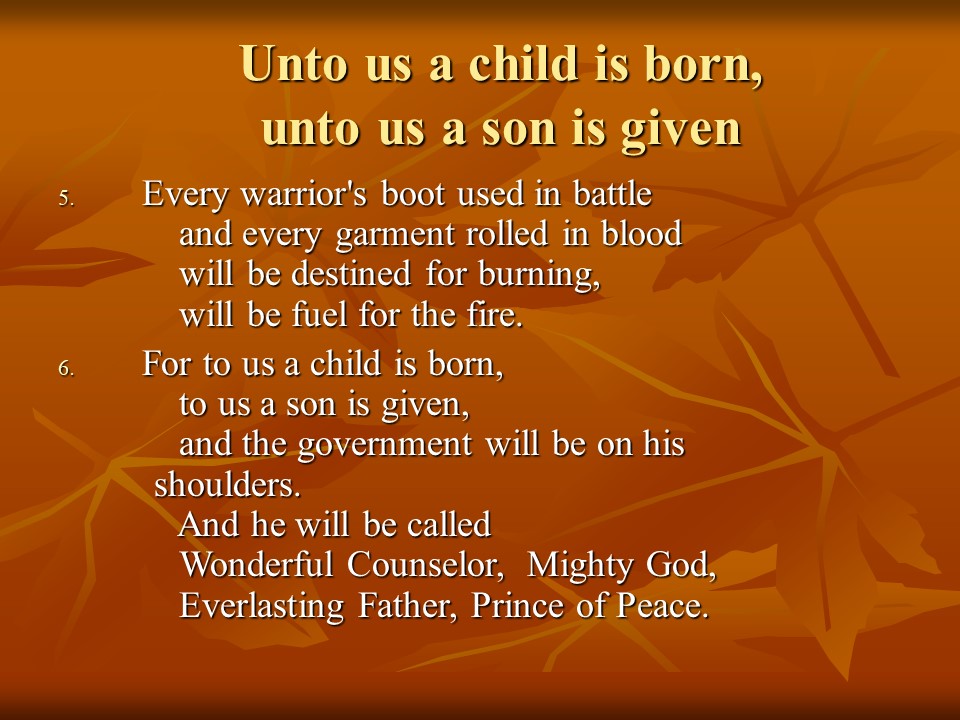
Isaiah 9. A must read chapter of Isaiah. It speaks of “The people that walked in darkness have seen a great light: they that dwell in the land of the shadow of death, upon them hath the light shined.” Then it states: “For unto us a child is born, unto us a son is given: and the government shall be upon his shoulder: and his name shall be called Wonderful, Counsellor, The mighty God, The everlasting Father, The Prince of Peace.” It speaks of Christ, the coming Messiah, both his humanity (a child) and his deity (son of God).
2 Corinthians 2. The Apostle Paul sent a very loving and encouraging letter to the Corinthians. In it he emphasized they should be no more sorrowful, forgive the offender and triumph in Christ.
In Isaiah 6 is told the famous call of Isaiah: “Here am I, send me“. God answered by telling Isaiah of all the hardships that will come with answering such a call. The people will harden their hearts as Pharaoh hardened his.
Isaiah 7. “Behold, a virgin shall conceive, and bear a son, and shall call his name Immanuel.” After that promise God spoke of a coming disaster.
Isaiah 8. Prophetically Assyria will invade Israel, an instrument of God to execute judgement on the unfaithful. The remedy is to fear God and Him alone.
2 Corinthians 1. After the Apostle Paul’s customary greeting he gave praise to the God of all comfort, which includes comfort in suffering and consolation from suffering. Paul told the Corinthians of his sincerity and his change of plans and of God sparing the Church.
Isaiah 4. “In that day”. This refers to the Messianic reign after the Day of the LORD. “The Branch” is introduced.
Isaiah 5. The Song of the Vineyard. The chapter starts out beautifully, but then tells of judgement. In chapter three was proclaimed two woes. In chapter five God proclaimed six more woes.
1 Corinthians 16. The Apostle Paul urged the believers to take up collections for the saints in Jerusalem. He mentioned personal plans, gave final exhortations, final greetings and finally bid farewell.
Isaiah 2. The famous chapter containing “beating swords into plowshares” “study war no more” and the Day of the LORD is introduced.
In Isaiah 3 the prophet proclaimed judgment on Jerusalem and Judah.
Psalm 70, of David, a short, urgent petition for deliverance, full of praise.
The house just passed the antisemitism bill HR 6090 320 to 61. It codifies the International Holocaust Remembrance Alliance definition of antisemitism. This means that certain historical facts, such as Jesus was condemned by the Jewish leadership for being a blasphemer, proclaiming that He and God the Father are one, and as such he could forgive sins. This was of course blasphemy, punishable by death, but since only the Romans could execute the death penalty Jesus was handed over to the Romans to be crucified.
To blame this generation of Jews for a historical fact that happened 2000 years ago is of course wrong and antisemitic, but history is history cannot be changed. It happened. The Jewish leaders even helped to prove the resurrection by setting a guard to prevent it from happening. To call historical facts antisemitism is as ridiculous as blaming a Swedish immigrant (of which I am one) for being guilty of lynching a black youth in Mississippi in the early 1900’s just for being white too.
From one to another I hear the college uprisings “From the river to the sea. Palestine shall be free” . A reporter asked demonstrators what river they referred to. A few, but not all knew it reo the Jordan river. Then an old song came back to me from the time 50 ears ago when I was just saved, and it has been ringing in my head every time I see video clips from the ivy league colleges. It goes like this:
We have heard the gospel sound; Jesus saves! Jesus saves;
Spread the Good News all around! Jesus saves, Jesus saves.
From the River to the sea; Jews and Gentiles,Muslims be,
Born again and so set free: Jesus saves, Jesus saves
The land between the Jordan river and the Mediterranean Sea is called the holy land by Jews, Christians and Muslims. These are the three religions that claim the land is Holy. The Jews claim the land was given them by God himself, being descendants of of Abraham from ISAAC, the Son of Promise, The Christians claim it is holy by adoption, and the Muslims by Ishmael, the firstborn son of Abraham. It all points to Jerusalem, being the Holy City
First, the Jews: They are looking for their Messiah. The Messiah is fully described in Isaiah 9:6
Child: Shows the humanity of Christ
Son, shows the deity of Christ, being given bu God, of the same kind.
It also shows the unity of God, Father, Prince of Peace, Wonderful Counselor, three aspects of God, three in one, the triune God, the Trinity.
There is one more instance of El Gibbor in the Old Testament. In Jeremiah 32:18 it says: “Thou shewest lovingkindness unto thousands, and recompensest the iniquity of the fathers into the bosom of their children after them: the Great, the Mighty God, (El Gibbor) YHWH of hosts, is his name,”
This time there is no question that El Gibbor is Jehovah himself.
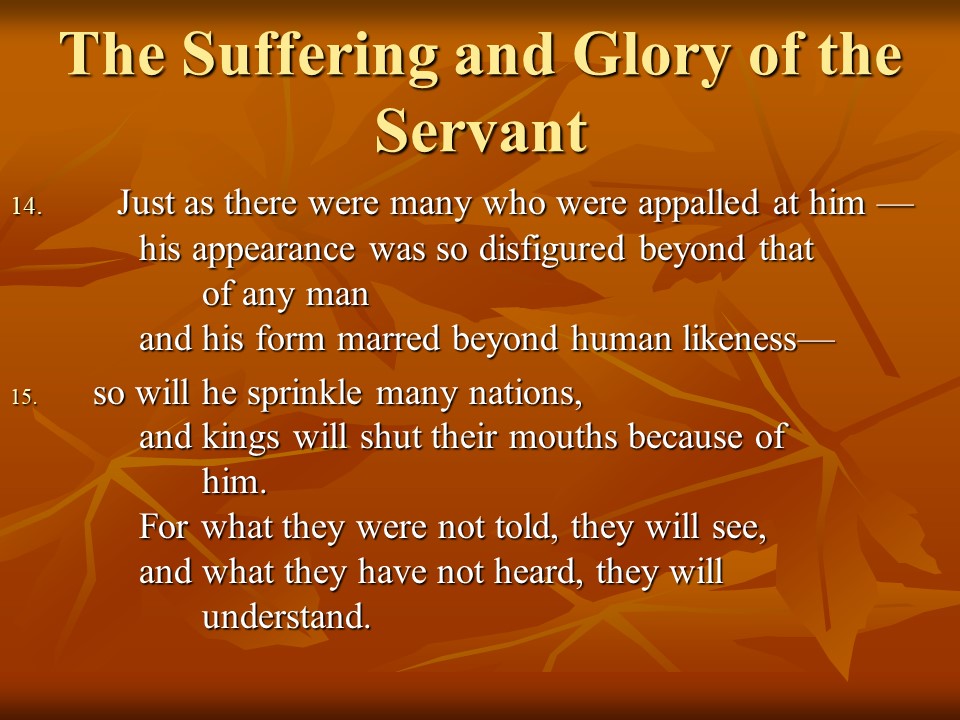
The other big prophesy is found in Chapter 53, the Suffering servant. It begins in chapter 12, verse 13. The passage on the suffering Servant is never read in Jewish Synagogues, not in the triennial reading, nor at Holy days. Up to now the LORD, through the prophet Isaiah has referred to his servant Israel, and in one case, in Isaiah 45:1 Cyrus: Thus saith the Lord to his anointed, to Cyrus, and 45:4 For Jacob my servant’s sake, and Israel mine elect, I have even called thee by thy name: I have surnamed thee, though thou hast not known me.
Here God refers to the other anointed, the Messiah. No other chapter in the Bible is quoted more in the New Testament. because of this it was more or less mathematically proven that Isaiah was edited and Isaiah 53 was added about 400 A.D. as well as a number of other prophecies. Then in 1947 they found the Dead Sea Scrolls and more than a hundred years of source critical Bible analysis had to be abandoned. The Dead Sea Scrolls had been copied from even older copies more than 140 years B.C. Let God’s word speak for itself.
Chapter 53, the Suffering servant really begins in chapter 12, verse 13. The passage on suffering Servant is never read in Jewish Synagogues, not in the triennial reading, nor at Holy days. Up to now the LORD, through the prophet Isaiah has referred to his servant Israel, and in one case, in Isaiah 45:1 Cyrus: Thus saith the Lord to his anointed, to Cyrus, and 45:4 For Jacob my servant’s sake, and Israel mine elect, I have even called thee by thy name: I have surnamed thee, though thou hast not known me.
Here God refers to the other anointed, the Messiah. No other chapter in the Bible is quoted more in the New Testament. because of this it was more or less mathematically proven that Isaiah was edited and Isaiah 53 was added about 400 A.D. as well as a number of other prophecies. Then in 1947 they found the Dead Sea Scrolls and more than a hundred years of source critical Bible analysis had to be abandoned. The Dead Sea Scrolls had been copied from even older copies more than 140 years B.C. Let God’s word speak for itself.
Yet, when Jesus came, he was rejected, not by the people for they loved him, but condemned by the leadership of the Jews, he performed miracles, even on the Sabbath, but worse than that, he forgave sins, which only God can do, so he committed blasphemy and was sent over to the Romans to crucify him, since the Jews did not have authority to execute people. It was all in accordance with scripture, and the Jews of today cannot be condemned for that. They still have the opportunity to embrace Jesus as their Messiah, and thus be redeemed.
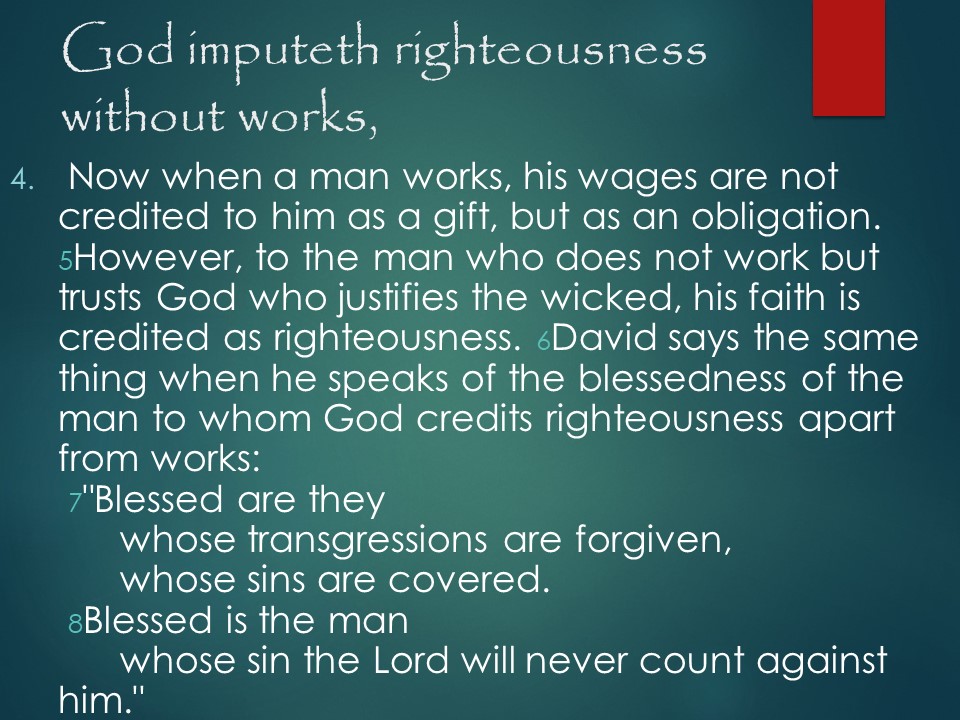
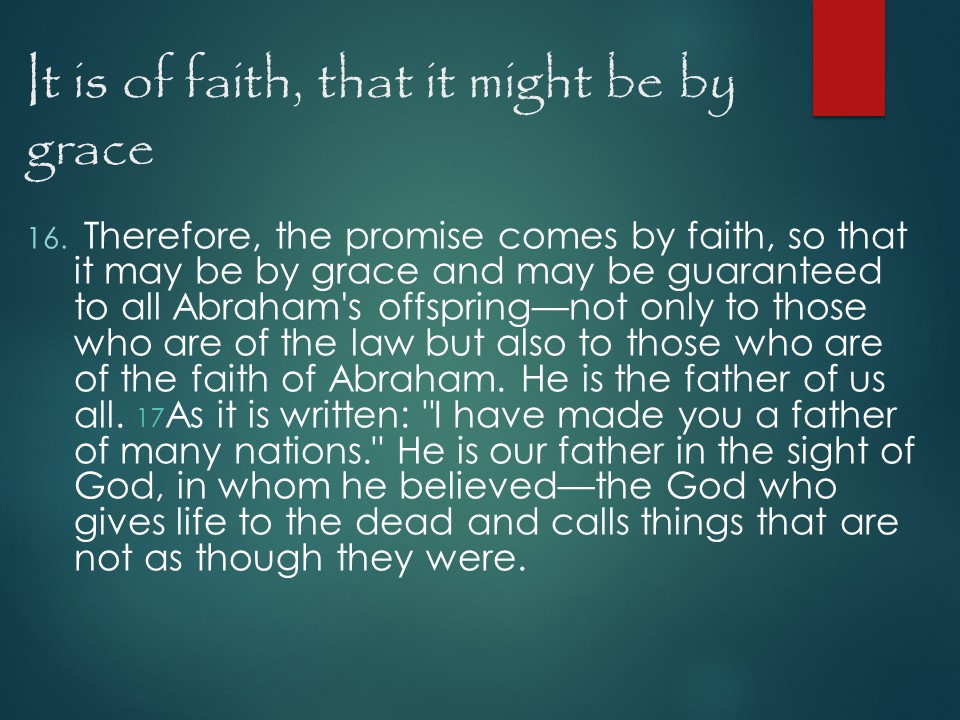
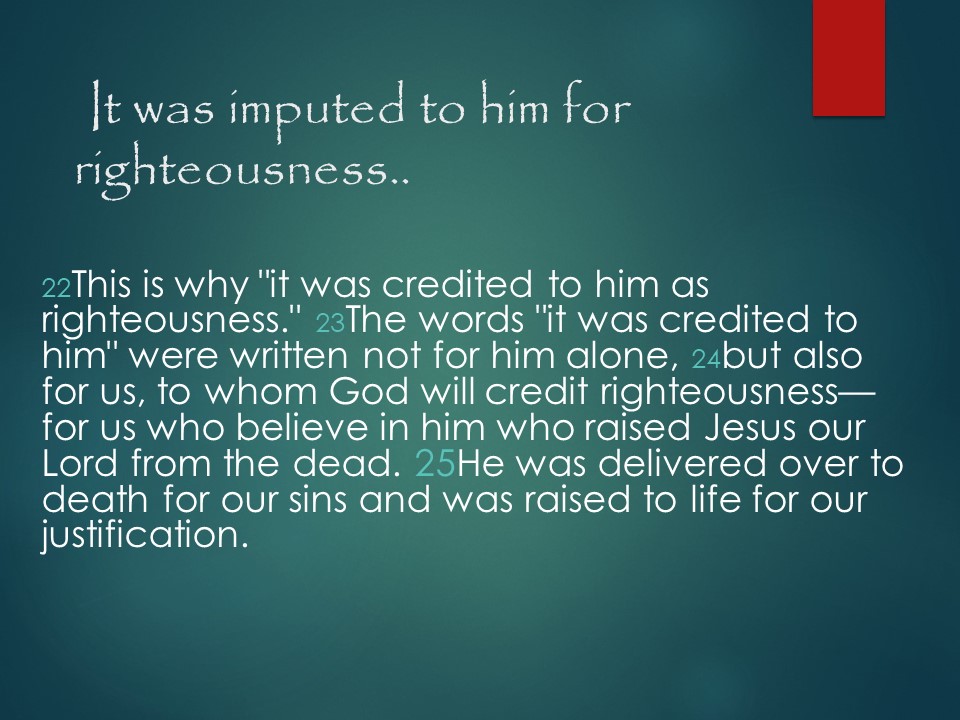
For Gentiles shat embrace Jesus it is simple; They become children of Abraham by adoption. This can be best explained in Paul’s epistle to the Romans; Chapter 4.
The important takeaway from this passage is that Jesus was delivered over to death for our sins, the death on a cross. He was buried and the tomb was sealed by the Jewish leaders to prevent him from being taken away from the tomb. But Jesus was risen from the dead. Thar is why the empty cross is the symbol for us, who worship the risen savior! The empty cross symbolizes redemption, we live in the time of grace, our sins are forgiven.
With the Muslim,also claiming Al-Qudz (Jerusalem) as their Holy City. Now it is getting more complicated. The Oslo accords tried to establish a two state solution, Both Istael and Palestine should be recognized as states. Now Yasser Arafat entered and tried to establish a diplomatic solution. In an interview he grudingly accepted Israel as a state, but when the interviewer tried to make him repeat his acceptance in Arabic he hemmed and hoed and could never get himself to do so. Why was that? It is because their Holy Quran states that Israel will never again rise to be a nation. If Israel becomes a nation again that would make Muhammad a non Prophet. There are other diffences between the Bible and Quran The Bible lists ten plagues of Egypt, The Quran has only nine, the death of the firstborn is missing. This plague lead to the passover, one of the most important commemorations in the Jewish Calendar. It is also the day when Jesus was crucified, very important for Christians. The Quran teaches that Jesus was never crucified, it only seemed so to the Jews; instead Jesus was directly translated to heaven. A holy God would never punish his son that way!
The final thing that separates Muslims from Christians is the claim that the Bible is falsified, and when Jesus speaks of another comforter, he really meant Muhammad. This can be found in John 14:
Another Comforter: αλλον παρακλητον ( allon parakleton) meaning one of the same kind as Jesus.
Some Muslims say the Bible has been altered and should have read perikleton rather than parakleton, claming the Bible has been falsified to fit Jewish and Christian beliefs and only the Quran is true.
This requires many steps of faith on account of the Muslims. 1. Jesus, Mary and Moses were really Muslims and spoke of Muhammad. 2. The New Testament is falsified. 3. Ignore the Dead Sea Scrolls, and 4. When Jesus speaks of the Spirit of Truth he really means Muhammad, not the Holy Spirit as He says in verse 26.
As a Christian I am free to take God’s Word for what it says.
What separates Christianity from both Judaism and Islam is the redemption, the forgiveness of sins by the cross, and by accepting this we can participate in his resurrection and have everlasting life. The life will change as we transition from earthly life into the presence of Jesus, and that is why our symbol is the empty cross: We serve a risen savior!








 Len Bilén's blog, a blog about faith, politics and the environment.