It seems that electric powered vehicles are finally taking off, and sales are ready to take off. The new edition of the IEA’s annual Global Electric Vehicle Outlook shows that more than 10 million electric cars were sold worldwide in 2022 and that sales are expected to grow by another 35% this year to reach 14 million. This explosive growth means electric cars’ share of the overall car market has risen from around 4% in 2020 to 14% in 2022 and is set to increase further to 18% this year, based on the latest IEA projections.
If CO2 is the great driver of environmental destruction, never mind that the increased CO2 is feeding 2 billion more people than before thanks to the greening effect of increased CO2, then we should work at warp speed to develop the additional electricity needs that will arise with all electric vehicles coming to market needing to be recharged.
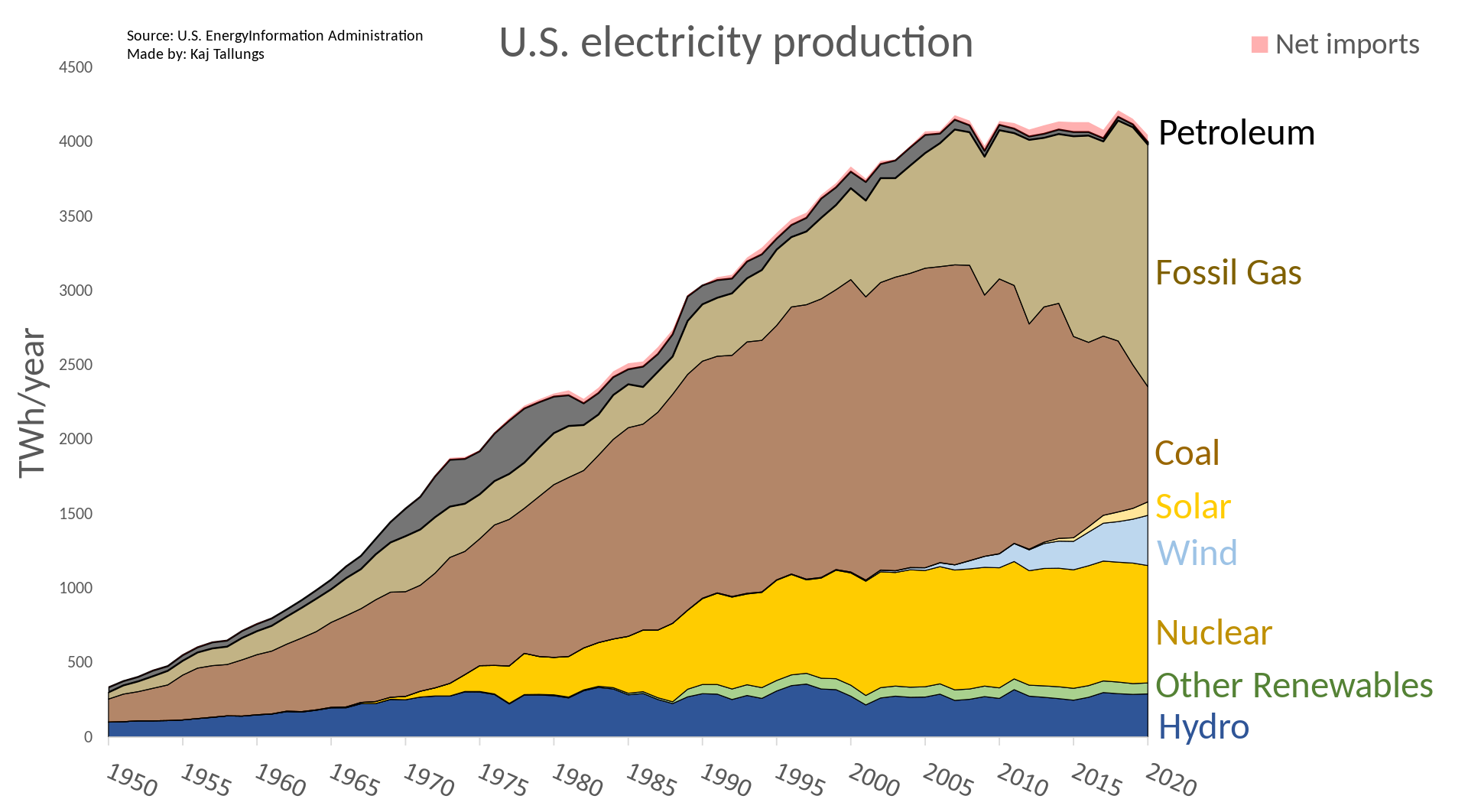
It makes no sense to build more coal and gas fired electric plants, replacing one CO2 generator with another, the best wind power sites are already taken, waste, geothermal and solar power is still a pipe dream, (see the orange sliver in the chart below), so what to do?
Conventional nuclear power is limited and requires a very long and extensive approval process, partly due to the not in my backyard regulation attitude. We are already the world’s largest importer of Uranium, and the world’s supply is to a large extent controlled by non allies. .
How do you eliminate all Coal and natural gas electric plants? Look at the U.S usage: (Last year 2016)
We can see that renewable energy will not suffice. The only real answer is to expand nuclear electricity, but we are already the world’s biggest importer of Uranium. (The Uranium One deal, when we sold 20% of our Uranium mining rights to Russia did not help, but we were in trouble even before ). No, the only real answer is to rapidly develop molten salt Thorium nuclear electricity production. They do not require water for cooling, so they can be placed anywhere where additional capacity is needed, eliminating some of the need for rapid expansion of the electric grid.
Produces electrical energy at about 5 cents per kWh.
The United States sources of Electricity generation is one third from Natural Gas, one third from Coal and one third from non fossil fuel sources.
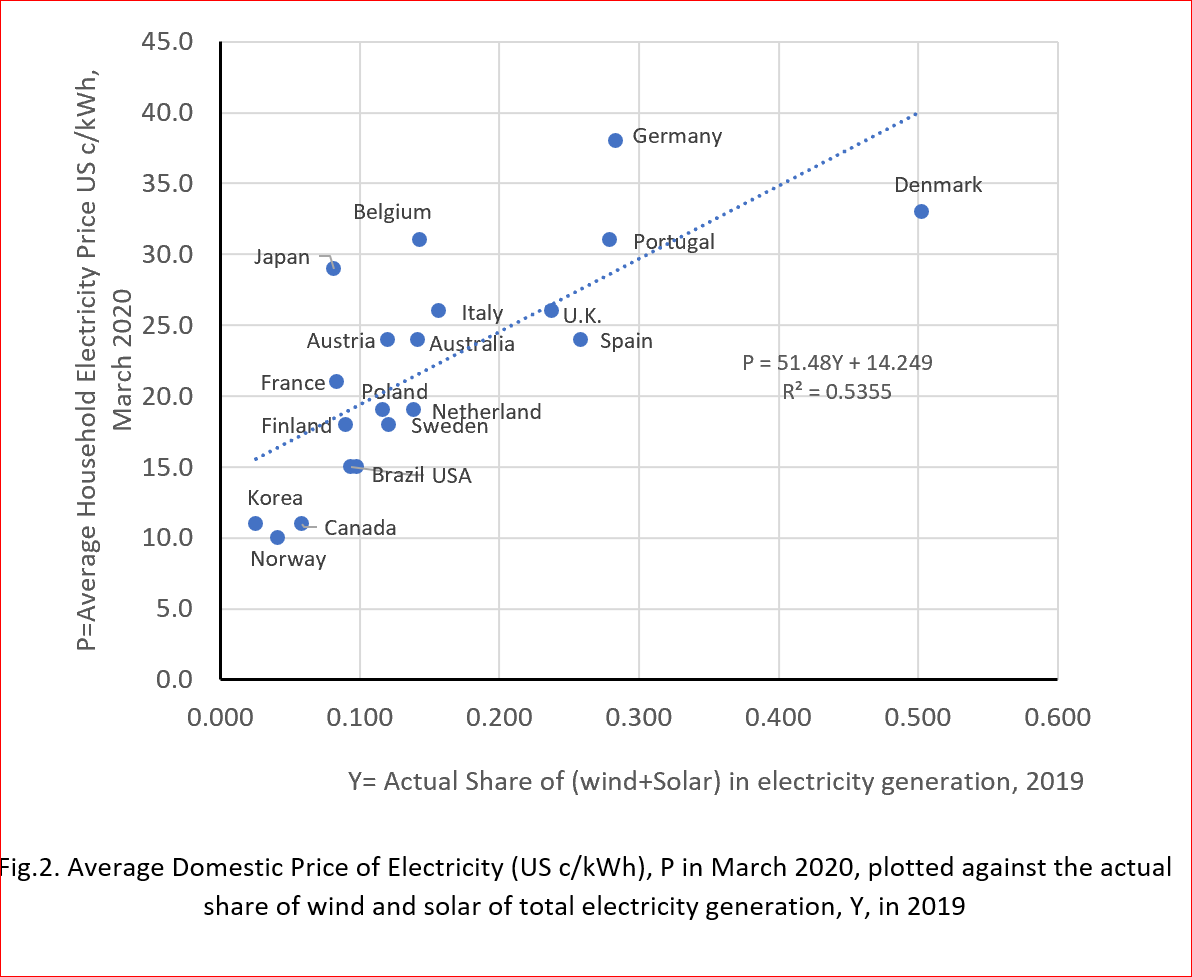
The cost to produce electricity with Thorium nuclear power should be about 40% less than Advanced Nuclear and about 30 % less than from Coal (with scrubbers) Solar generation is about 4 times more expensive (without subsidies) in the North-east, where people live. New Mexico, Arizona and California are suitable for cheap Solar power, but they lack Hydropower storage. Wind power is cheaper when the wind blows, but base generation capacity has to be there even when the wind doesn’t blow, so the only gain from wind power is to lessen the mining or extraction of carbon. In addition, wind power kills birds, the free yearly quota of allowable Bald Eagle kills was upped from 1200 to 4200 during the Obama administration. (https://lenbilen.com/2019/04/12/what-is-more-precious-babies-eagles-or-fighting-climate-change/). Golden Eagles and a few other rare birds has a quarter of a million dollar fine associated with their kills. If wind power is increased without finding a solution to the bird kills, whole species may go extinct. Solar power is, and will be used in special applications such as on roofs for backup and peak power assist. Today’s solar panels are easily destroyed by a single hailstorm. Hydroelectric power is for all practical purpose maxed out, so nearly all future increase must come from Coal, Natural Gas, Petroleum or Nuclear. The world experience on installing wind and solar energy is that it is expensive. See fig:
The residential cost of electricity increases as the proportion of total electricity demand is supplied by wind and solar. Part of the cost is in power distribution. Molten Salt Thorium Nuclear Generators is the way to go. It doesn’t depend on sun, wind and water to produce electricity where the need is.
With a Molten Salt Reactor, accidents like Chernobyl are impossible. The Three Mile Island accident was bad. The Chernobyl disaster was ten million times worse. Ah yes, I remember it well.
One morning at work, a fellow co-worker, a Ph.D. Chemist working on an Electron Capture Detector, containing a small amount of Nickel 63, came with a surprising question: You know nuclear science, how come the reactors in Chernobyl don’t have a containment vessel? Well- I answered, it is because they are carbon moderated and their failure mode is that they go prompt critical, and no containment vessel in the world can hold it in, so they skip it. He turned away in disgust. A few weeks later my wife’s father died, and we went to Denmark to attend the funeral. The day of the return back to the U.S. we heard that there had been a nuclear incident in Sweden, too much radiation had caused two nuclear power stations to close down. The Chernobyl disaster had happened 26 April 1986, and this was the first time anyone outside of Chernobyl has heard about it, two days later. This was still the Soviet Union, and nothing ever did go wrong in it worthy of reporting.
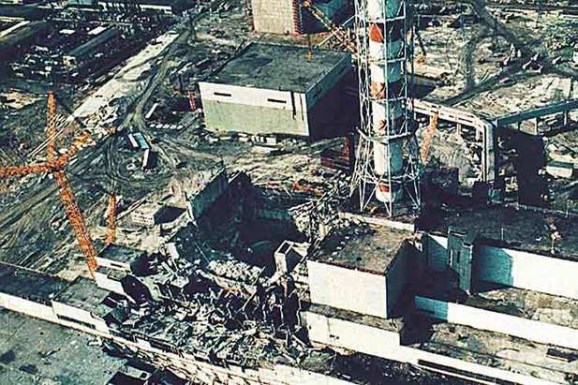
(Photo Courtesy of EBRD)
Notice the gaping hole where the reactor was. The adjacent reactor was not shut down immediately, but continued to operate and deliver power for days. During the invasion of Ukraine in 2022, the still-very-real health risks inherent to lingering around certain parts of the Chernobyl Exclusion Zone just didn’t sink in with Russian soldiers and their commanding officers based in Belarus. Radiation sunk in, though—particularly after Russian troops dug into the zone’s heavily irradiated Red Forest. And today, some soldiers are still falling sick, according to diplomatic sources cited by the UK journal The Independent.
The radiation cloud immediately following the accident continued to spread, and was first noticed in Sweden, and the SLV immediately declared reindeer meat, wild game and inland fish with a 300-bequerel/kilogram (Bq/kg) count or higher to be unsafe for human consumption and therefore unmarketable. 75% of all reindeer meat was deemed unfit for human consumption, and this played havoc with the Sami population.
(But the carbon moderated Uranium reactors are the most efficient in producing Pu-239 the preferred nuclear bomb material.)
As I mentioned before, the failure mode of carbon moderated nuclear power plants is that they can go prompt critical during power downs, so very stringent power down protocols must be followed. There is a loss of power production during the lengthy power down process. Carbon moderated nuclear power plants has a positive temperature coefficient; the warmer it gets the more power it produces, so they must be provided with multiple safety circuits and infallible scram shutdowns. However, power shutdowns are costly, so they try to stretch the shutdown intervals as much as possible. In the case of Chernobyl, the protocols were violated for political reasons, one or more safety circuits were disabled to allow power production for as long as possible and suddenly there was a power surge, the temperature surged and the chain reaction started. The scram rods failed and the rest is history.
This has nothing to do with anything, but Chernobyl means wormwood in Russian. It is mentioned in the Bible, Revelation 8: 10-11 “ And the third angel sounded, and there fell a great star from heaven, burning as it were a lamp, and it fell upon the third part of the rivers, and upon the fountains of waters; And the name of the star is called Wormwood: and the third part of the waters became wormwood; and many men died of the waters, because they were made bitter. ”
Molten Salt Thorium reactors cannot be used to supply Plutonium 239, only Uranium 233, and so far there is no research on how to make bombs from U 233, and they are far safer than even Light water Uranium reactors. Only gravity is needed to shut them down in case of earthquakes, total power failures, EMP pulses and bombs.
Russia has an active Thorium program.This used to be true, but it was decided that for the Arctisc buildup this barge (below) would be outfitted with regular nuclear power the same type that are in Russia’s nuclear powered ice breakers.
This is a self-contained 7m MW electric or 200 MW heat cogeneration Nuclear Reactor on a barge. Coolant readily available. Hoist it a couple of cables and the town to be serviced will have all the power and heat it needs. This is especially useful in the Arctic. Russia is trying to establish Arctic domination, both commercially and militarily. They have over 30 ice breakers, about half of them nuclear. U.S. has two conventional ice breakers, of which only one is operational.
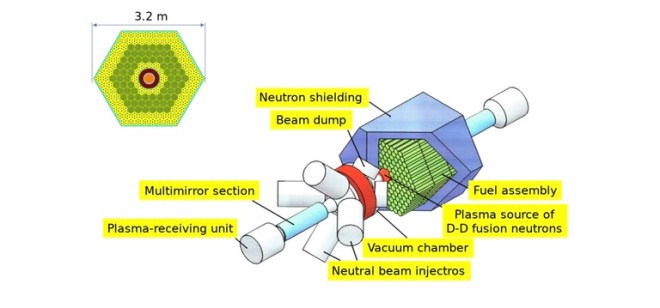
Now for the good news: Russia is also trying to commercialize hybrid fusion-fission reactors:
Nuclear Engineering International: 29 May 2018
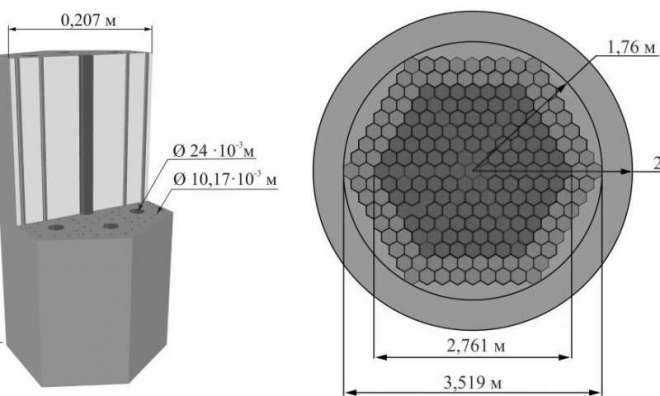
Russia develops a fission-fusion hybrid reactor. A new fission-fusion hybrid reactor will be assembled at Russia’s Kurchatov Institute by the end of 2018, Peter Khvostenko, scientific adviser of the Kurchatov complex on thermonuclear energy and plasma technologies, announced on 14 May. The physical start-up of the facility is scheduled for 2020.The hybrid reactor combines the principles of thermonuclear and nuclear power – essentially a tokamak fusion reactor and a molten salt fission reactor. Neutrons produced in a small tokamak will be captured in a molten salt blanket located around tokamak. The facility will use Thorium as a fuel, which is cheaper and more abundant than uranium. Moreover, unlike a fusion reactor, a hybrid will not require super high temperatures to generate energy.
Thorium has benefits compared with uranium reaction and has been endorsed by Democratic presidential candidate Andrew Yang.
In the reactor, plasma fusion generates neutrons that fuel subsequent fission.
Hybrid reactors reduce the impact of the nuclear fuel cycle on the environment. The concept combines conventional fission processes and fusion reactor principles, comprising a fusion reactor core in combination with a subcritical fission reactor. The results of the fusion reaction, which would normally be absorbed by the cooling system of the reactor, would feed into the fission section, and sustain the fission process. Thorium in a molten salt blanket will enable breeding of uranium-233.
Some of the expected advantages include:
Utilization of actinides and transmutation from long-lived radioactive waste;
An increase in energy recovered from uranium by a large factor;
The inherent safety of the system, which can be shut down rapidly; and
High burnup of fissile materials leaving few by-products.
The hybrid fission-fusion reactor is seen as a near-term commercial application of fusion pending further research on pure fusion power systems.
This is very interesting, and I will follow up when I get more information.
It seems that with the Ukraine war, Russia is preoccupied with other things than to reduce nuclear waste. Ah well.
Thorium based Nuclear Power does not produce much Plutonium-239, which is the preferred material used in nuclear bombs. The higher Plutonium isotopes and other TRansUraniums are about as nasty as they get, need expensive protection against terror attacks, and need to be stored for a very long time.
One anecdote from my youth. The time had come to apply to University, and to my delight I was accepted to Chalmers’ University in Sweden as a Technical Physics major. I felt, maybe I can do my part by becoming a Nuclear Engineer and help solve the energy needs of the future. The Swedes at that time championed the heavy water – natural Uranium program together with the Canadians and to some extent with the Indians. Sweden was and to some extent still is a non-aligned country, so it was not privy to any nuclear secrets, it had to go it alone. They settled on the heavy water moderated natural Uranium process because Sweden had an ambition to produce its own nuclear bomb. Officially this was never talked about, and I was not aware of it at that time. They could have gone with Thorium instead, but a Thorium based nuclear reactor produces very little Plutonium, and what it produces is nearly all Pplutonium-238, not fissile and as such not suitable for bomb making.
I was excited to learn about all the possibilities and signed up for a couple of nuclear classes. One lab was to design a safety circuit, then run the heavy water research reactor critical and hopefully watch the reactor shut down from the safety circuit before the system safety circuit shutdown. About that time the word came that U.S. will sell partially enriched uranium at bargain basement prices if Sweden agreed to abandon the heavy water project and sign the nuclear non-proliferation treaty, a treaty being formulated by U.N.
Sweden was in awe about U.N, all the problems of the world were to be solved through it, and it had such a capable General Secretary in Dag Hammarskjöld, a Swede. I looked at the light water, partially enriched Uranium nuclear power plants being developed and decided to have no part with it, not due to safety concerns but it was the design that produced the most nuclear waste of any of the available designs. At that time there was still optimism that fusion would be ready by about the year 2010 or so. The cost of maintaining spent fuel in perpetuity was never considered, so light water reactors became the low cost solution.
India on the other hand refused to join the nuclear non-proliferation treaty, kept their heavy water program going and had by 1974 produced enough plutonium for one nuclear bomb, which they promptly detonated. They still use heavy water moderated reactors, but since India is low on Uranium but rich in Thorium they have now converted one heavy water reactor to Thorium with a Plutonium glow plug. It went on-line in 2011.
They are also developing molten salt Thorium reactors, but full production is still a few years off.
There we have it. We could have gone with Thorium from the beginning, but the cold war was on, and the civilian peaceful use of nuclear energy was still all paid for by nuclear weapons research and development. Once all the bombs we could ever wish for were developed the greatest asset of nuclear power became its greatest liability.
Radioactive waste from an LFTR (Liquid Fluoride Thorium Reactor) decays down to background radiation in 300 years instead of a million years for U-235 based reactors. Initially LFTRs produce as much radioactivity as an U-235 based nuclear reactor, since fission converts mass to heat, but the decay products have a much shorter half-life. See the figure below.
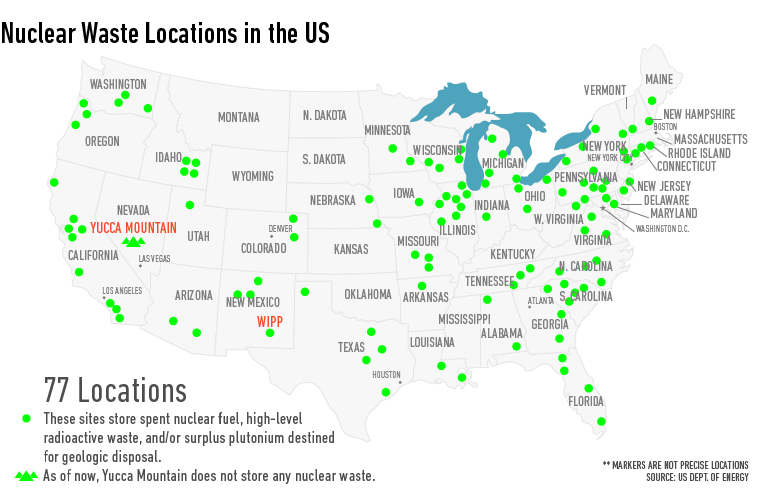
Where is the storage for spent nuclear fuel and other nuclear waste now? Look at the map, it is scary.
And these are just the U.S. installations!
Many years ago I studied Engineering at Chalmers’ University in Sweden and I thought I would become a nuclear engineer. Sweden had at that time a peaceful heavy water based nuclear power program together with Canada and India. The advantage with heavy water as moderator is that it can use natural, un-enriched Uranium. One of the end products is of course Plutonium 239, the preferred material to make nuclear bombs, but it could also use Thorium, and the end product is then mostly Plutonium 238, used in space exploration, and we were dreaming big. One of the advantages of Thorium as fuel is that it produces about 0,01% of trans-Uranium waste compared to Uranium as fuel. About that time the U.S. proposed we should abandon the heavy water program and switch to light water enriched Uranium based nuclear power. They would sell the enriched Uranium, and reprocess the spent fuel at cost. They also had the ideal final resting place for the radioactive waste products in Nevada. This was an offer the Swedish government could not refuse, at the height of the cold war. This was in the 1960’s! India on the other hand did refuse, and they eventually got the nuclear bomb. Since that meant Sweden was never going to use Thorium as nuclear fuel, and I could not figure out how to get rid of all the radioactive waste products, I switched my attention back to control engineering.
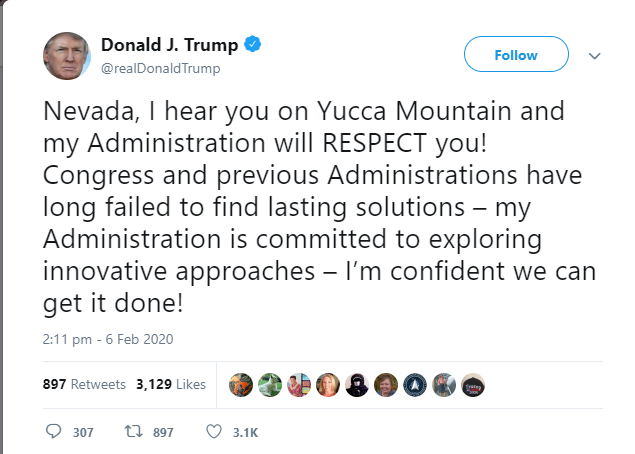
.What did President Trump mean with innovative approaches?
Is this where Thorium comes in!? Thorium solves many problems with nuclear energy. Meanwhile the Biden administration and Congress keep hoarding nuclear waste in local storages.
Thorium nuclear power is the only realistic solution to power space colonies. To form space colonies, power has to be provided to sustain the colony. This means that Liquid Fluoride Thorium Reactors (LFTR) have to be fully developed and operational here on earth before serious space colony development can even begin. It need to get started in earnest NOW!
Kirk Sorensen has provided an intriguing teaser on the case for Thorium nuclear energy.
This is insanity. In 2011 the Oak Ridge Laboratories had a stockpile of 1400 kg U 233. They have been busy downblending it into depleted uranium to render it useless, and there is now only about 450 kg left. Unless this insanity is stopped asap Thorium nuclear power will be set back immensely, since U233 is used as the startplug for the cleanest Thorium nuclear power production
The bill is introduced. It should be immediately passed in the Senate, and be passed in the house without amendments. Any delay is critical. It is that important. We gave the technology to the Chinese so they can build up their naval fleet with molten salt Thorium nuclear power. Meanwhile we still have some u-233 left, worth billions as a National Security asset. At the very least, we must stop downblending immediately, even before the bill is passed.
A bill to provide for the preservation and storage of uranium-233 to foster development of thorium molten-salt reactors, and for other purposes. Tracking Information
Register now for our free OneVote public service or GAITS Pro trial account and you can begin tracking this and other legislation, all driven by the real-time data of the LegiScan API. Providing tools allowing you to research pending legislation, stay informed with email alerts, content feeds, and share dynamic reports. Use our new PolitiCorps to join with friends and collegaues to monitor & discuss bills through the process.
To provide for the preservation and storage of uranium-233 to foster development of thorium molten-salt reactors, and for other purposes.
IN THE SENATE OF THE UNITED STATES
May 18 (legislative day, May 17), 2022
Mr. Tuberville (for himself and Mr. Marshall) introduced the following bill; which was read twice and referred to the Committee on Energy and Natural Resources
A BILL
To provide for the preservation and storage of uranium-233 to foster development of thorium molten-salt reactors, and for other purposes.
Be it enacted by the Senate and House of Representatives of the United States of America in Congress assembled,
SECTION 1. Short title.
This Act may be cited as the “Thorium Energy Security Act of 2022”.
SEC. 2. Findings.
Congress makes the following findings:
(1) Thorium molten-salt reactor technology was originally developed in the United States, primarily at the Oak Ridge National Laboratory in the State of Tennessee under the Molten-Salt Reactor Program.
(2) Before the cancellation of that program in 1976, the technology developed at the Oak Ridge National Laboratory was moving steadily toward efficient utilization of the natural thorium energy resource, which exists in substantial amounts in many parts of the United States, and requires no isotopic enrichment.
(3) The People’s Republic of China is known to be pursuing the development of molten-salt reactor technology based on a thorium fuel cycle.
(4) Thorium itself is not fissile, but fertile, and requires fissile material to begin a nuclear chain reaction. This largely accounts for its exclusion for nuclear weapons developments.
(5) Uranium-233, derived from neutron absorption by natural thorium, is the ideal candidate for the fissile material to start a thorium reactor, and is the only fissile material candidate that can minimize the production of long-lived transuranic elements like plutonium, which have proven a great challenge to the management of existing spent nuclear fuel.
(6) Geologic disposal of spent nuclear fuel from conventional nuclear reactors continues to pose severe political and technical challenges, and costs United States taxpayers more than $500,000,000 annually in court-mandated payments to electrical utilities operating nuclear reactors.
(7) The United States possesses the largest known inventory of separated uranium-233 in the world, aggregated at the Oak Ridge National Laboratory.
(8) Oak Ridge National Laboratory building 3019 was designated in 1962 as the national repository for uranium-233 storage, and its inventory eventually grew to about 450 kilograms of separated uranium-233, along with approximately 1,000 kilograms of mixed fissile uranium from the Consolidated Edison Uranium Solidification Program (commonly referred to as “CEUSP”), divided into approximately 1,100 containers.
(9) The Defense Nuclear Facilities Safety Board issued Recommendation 97–1 (relating to safe storage of uranium-233) in 1997 because of the possibility of corrosion or other degradation around the storage of uranium-233 in a building that was built in 1943.
(10) In response, the Department of Energy published Decision Memorandum No. 2 in 2001 concluding that no Department of Energy programs needed uranium-233 and directed that a contract be placed for disposition of the uranium-233 inventory and decommissioning of its storage facility.
(11) The Department of Energy awarded a contract for the irreversible downblending of uranium-233 with uranium-238 and its geologic disposal in Nevada, which downblending would create a waste form that would pose radiological hazards for hundreds of thousands of years, rather than to consider uranium-233 as a useful national asset.
(12) All 1,000 kilograms of CEUSP uranium-233-based material have been dispositioned (but not downblended) but those containers had little useful uranium-233 in them. The majority of separated and valuable uranium-233 remains uncontaminated by uranium-238 and suitable for thorium fuel cycle research and development. That remaining inventory constitutes the largest supply of uranium-233 known to exist in the world today.
(13) The United States has significant domestic reserves of thorium in accessible high-grade deposits, which can provide thousands of years of clean energy if used efficiently in a liquid-fluoride reactor initially started with uranium-233.
(14) Recently (as of the date of the enactment of this Act), the Department of Energy has chosen to fund a series of advanced reactors that are all dependent on initial inventories and regular resupplies of high-assay, low-enriched uranium.
(15) There is no domestic source of high-assay, low-enriched uranium fuel, and there are no available estimates as to how long the development of a domestic supply of that fuel would take or how expensive such development would be.
(16) The only viable source of high-assay, low-enriched uranium fuel is through continuous import from sources in the Russian Federation.
(17) The political situation with the Russian Federation as of the date of the enactment of this Act is sufficiently uncertain that it would be unwise for United States-funded advanced reactor development to rely on high-assay, low-enriched uranium since the Russian Federation would be the primary source and can be expected to undercut any future United States production, resulting in a dependency on high-assay, low-enriched uranium from the Russian Federation.
(18) The United States has abandoned the development of a geologic repository at Yucca Mountain and is seeking a consenting community to allow interim storage of spent nuclear fuel, but valid concerns persist that an interim storage facility will become a permanent storage facility.
(19) Without a closed fuel cycle, high-assay, low-enriched uranium-fueled reactors inevitably will produce long-lived wastes that presently have no disposition pathway.
(20) The United States possesses enough uranium-233 to support further research and development as well as fuel the startup of several thorium reactors. Thorium reactors do not require additional fuel or high-assay, low-enriched uranium from the Russian Federation.
(21) Continuing the irreversible destruction of uranium-233 precludes privately funded development of the thorium fuel cycle, which would have long term national and economic security implications.
SEC. 3. Sense of Congress.
It is the sense of Congress that—
(1) it is in the best economic and national security interests of the United States to resume development of thorium molten-salt reactors that can minimize long-lived waste production, in consideration of—
(A) the pursuit by the People’s Republic of China of thorium molten-salt reactors and associated cooperative research agreements with United States national laboratories; and
(B) the present impasse around the geological disposal of nuclear waste;
(2) that the development of thorium molten-salt reactors is consistent with section 1261 of the John S. McCain National Defense Authorization Act for Fiscal Year 2019 (Public Law 115–232; 132 Stat. 2060), which declared long-term strategic competition with the People’s Republic of China as “a principal priority for the United States”; and
(3) to resume such development, it is necessary to relocate as much of the uranium-233 remaining at Oak Ridge National Laboratory as possible to new secure storage.
SEC. 4. Definitions.
In this Act:
(1) CONGRESSIONAL DEFENSE COMMITTEES.—The term “congressional defense committees” has the meaning given that term in section 101(a) of title 10, United States Code.
(2) DOWNBLEND.—The term “downblend” means the process of adding a chemically identical isotope to an inventory of fissile material in order to degrade its nuclear value.
(3) FISSILE MATERIAL.—The term “fissile material” refers to uranium-233, uranium-235, plutonium-239, or plutonium-241.
(4) HIGH-ASSAY, LOW-ENRICHED URANIUM.—The term “high-assay, low-enriched uranium” (commonly referred to as “HALEU”) means a mixture of uranium isotopes very nearly but not equaling or exceeding 20 percent of the isotope uranium-235.
(5) TRANSURANIC ELEMENT.—The term “transuranic element” means an element with an atomic number greater than the atomic number of uranium (92), such as neptunium, plutonium, americium, or curium.
SEC. 5. Preservation of uranium-233 to foster development of thorium molten-salt reactors.
The Secretary of Energy shall preserve uranium-233 inventories that have not been contaminated with uranium-238, with the goal of fostering development of thorium molten-salt reactors by United States industry.
SEC. 6. Storage of uranium-233.
(a) Report on long-Term storage of uranium-233.—Not later than 120 days after the date of the enactment of this Act, the Secretary of Energy, in consultation with the heads of other relevant agencies, shall submit to Congress a report identifying a suitable location for, or a location that can be modified for, secure long-term storage of uranium-233.
(b) Report on interim storage of uranium-233.—Not later than 120 days after the date of the enactment of this Act, the Chief of Engineers shall submit to Congress a report identifying a suitable location for secure interim storage of uranium-233.
(c) Report on construction of uranium-233 storage facility at Redstone Arsenal.—Not later than 240 days after the date of the enactment of this Act, the Chief of Engineers shall submit to Congress a report on the costs of constructing a permanent, secure storage facility for uranium-233 at Redstone Arsenal, Alabama, that is also suitable for chemical processing of uranium-233 pursuant to a public-private partnership with thorium reactor developers.
(d) Funding.—Notwithstanding any other provision of law, amounts authorized to be appropriated or otherwise made available for the U233 Disposition Program for fiscal year 2022 or 2023 shall be made available for the transfer of the inventory of uranium-233 to the interim or permanent storage facilities identified under this section.
SEC. 7. Interagency cooperation on preservation and transfer of uranium-233.
The Secretary of Energy, the Secretary of the Army (including the head of the Army Reactor Office), the Secretary of Transportation, the Tennessee Valley Authority, and other relevant agencies shall—
(1) work together to preserve uranium-233 inventories and expedite transfers of uranium-233 to interim and permanent storage facilities; and
(2) in expediting such transfers, seek the assistance of appropriate industrial entities.
SEC. 8. Report on use of thorium reactors by People’s Republic of China.
Not later than 180 days after the date of the enactment of this Act, the Comptroller General of the United States, in consultation with the Secretary of State, the Secretary of Defense, and the Administrator for Nuclear Security, shall submit to Congress a report that—
(1) evaluates the progress the People’s Republic of China has made in the development of thorium-based reactors;
(2) describes the extent to which that progress was based on United States technology;
(3) details the actions the Department of Energy took in transferring uranium-233 technology to the People’s Republic of China; and
(4) assesses the likelihood that the People’s Republic of China may employ thorium reactors in its future navy plans.
SEC. 9. Report on medical market for isotopes of uranium-233.
Not later than 180 days after the date of the enactment of this Act, the Director of the Congressional Budget Office, after consultation with institutions of higher education and private industry conducting medical research and the public, shall submit to Congress a report that estimates the medical market value, during the 10-year period after the date of the enactment of this Act, of actinium, bismuth, and other grandchildren isotopes of uranium-233 that can be harvested without downblending and destroying the uranium-233 source material.
SEC. 10. Report on costs to United States nuclear enterprise.
Not later than 180 days after the date of the enactment of this Act, the Director of the Congressional Budget Office, after consultation with relevant industry groups and nuclear regulatory agencies, shall submit to Congress a report that estimates, for the 10-year period after the date of the enactment of this Act, the costs to the United States nuclear enterprise with respect to—
(1) disposition of uranium-233;
(2) payments to nuclear facilities to store nuclear waste; and
(3) restarting the manufacturing the United States of high-assay, low-enriched uranium.



 Len Bilén's blog, a blog about faith, politics and the environment.