“There are three things I have learned never to discuss with people…religion, politics, and the Great Pumpkin.” Linus from Peanuts.
Author: lenbilen
Retired engineer, graduated from Chalmers Technical University a long time ago with a degree in Technical Physics. Career in Aerospace, Analytical Chemistry, computer chip manufacturing and finally adjunct faculty at Pennsylvania State University, taught just one course in Computer Engineering, the Capstone Course.
Galatians 4. The Apostle Paul told the Galatians they are children of God and heirs of the promise, but still, he feared for the Church since they preferred the law over the promise. He explained it through two covenants, one in bondage through the law, the other in freedom through the Spirit.
Isaiah 37. Jerusalem’s deliverance is foretold, Hezekiah’s prayer and the word of the LORD concerning Sennacherib is recorded, followed by Hezekiah’s final fall.
Isaiah 38 describes Hezekiah’s illness and how the LORD added 15 years to his life.
Galatians 3. We are justified by faith, even as Abraham was justified by faith. The law brings a curse, it is impossible to keep the law. God gave the everlasting promise to Abraham before the law. “The Law was our schoolmaster to bring us unto Christ.” “For ye are all the children of God by faith in Christ Jesus. For as many of you as have been baptized into Christ have put on Christ. There is neither Jew nor Greek, there is neither bond nor free, there is neither male nor female: for ye are all one in Christ Jesus. And if ye be Christ’s, then are ye Abraham’s seed, and heirs according to the promise.“
Isaiah 36. Isaiah broke from prophecy and gave a historical rendition, duplicated in second Kings. This is not plagiarism, Isaiah was the scribe during Hezekiah’s reign.
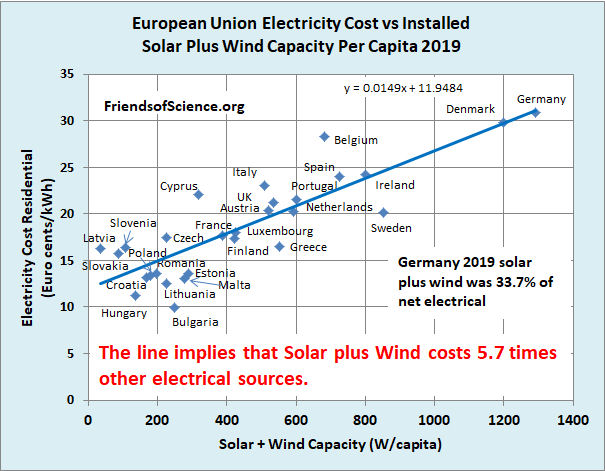
It used to be easy. In Europe, especially Denmark and Germany decided to go green with wind and solar power. Last year, Germany finally realized that Northern Europe was too cloudy for efficient solar power, but wind was still valid. They decided to decommission all nuclear power. The real cost of wind and solar power was 5.7 times the average cost of coal, gas hydroelectric and nuclear power. See chart that clearly shows the retail price of electricity versus percentage of renewable energy:
Those were the good old days. This year, with the war in Ukraine raging and with Russian sanctions, and the U.S. again being an energy importing country electricity rates are rising rapidly. These are recent European wholesale rates for electric production (distribution costs, profits and value added tax are then added on top of that)
The price is in Euros, which is now on par with the US dollar. The Swedish and Norwegian electricity pricing is interesting. See chart’
Sweden used to take care of its own energy, and price it low over the whole country. This year they have large regional differences, with retail electricity at about 22 cents/kWh in the two northern regions, and in the Southern two regions it can be as high as 75C/kWh. There are not enough transmission lines from North to South to equal out the pricing, and the transmission lines to Europe are also very limited. Norway on the other hand has a very good transmission line from Southern Norway to the European Continent, so Southern Norway went from having some of the lowest electricity prices in the world to over 50 c per kWh. In Northern Norway there are local grids powered by hydropower, so their cost is still essentially the cost of distribution.
The consumer price for electricity in U.K., Germany and France this winter is expected to exceed $1/kWh and even then there may be blackouts if they get a cold-snap. It is going to be a long cold winter in Europe.
Galatians 2. The Apostle Paul was vigorously defending the gospel and warned the Galatians there is no return to the Law! “ for if righteousness come by the law, then Christ is dead in vain.”
Isaiah 33. It begins with a prayer in distress, for there is a coming judgment of Zion, the LORD will be lifted up, and He will deliver his people.
Isaiah 34. A vivid description of the judgment against the nations. There are nine mentions of unicorns in the King James Bible. This is the final mention.
Isaiah 35. A beautiful rendition of the joy of the redeemed.
Galatians 1. The Apostle Paul started the letter with a greeting and blessing. Then he tore into the Galatians: There is only one gospel, Paul gave his defense for it, and explained his call to apostleship.
Isaiah 30 emphasizes “Don’t trust in Egypt!” But they were a rebellious people; in spite of that God will be gracious to Israel but execute judgement on Assyria.
Isaiah 31 proclaims woe to the Egyptophiles. The LORD will pass over Israel, but not Assyria.
Isaiah 32 ushers in the reign of righteousness, warns against complacency, and says (in King James Bible) “The vile person shall be no more called liberal” (NIV translates liberal as noble) so a few verses down it says (in NIV) “But the noble make noble plans,and by noble deeds they stand.” The promise is that the Holy spirit is righteousness and “The fruit of that righteousness will be peace.”
2 Corinthians 13. The Apostle Paul said it was his third coming coming to the Corinthians, and he was coming with authority for building them up, not for tearing them down. Finally, the final greetings and the benediction.
Isaiah 28. Woe to Ephraim and Jerusalem! “Thus saith the Lord God, Behold, I lay in Zion for a foundation a stone, a tried stone, a precious corner stone, a sure foundation: he that believeth shall not make haste.“
Isaiah 29 begins with a woe to David’s City, the people have “the spirit of slumber,” but the deaf will hear, the blind see and the meek shall increase the joy in the LORD.
2 Corinthians 12. The Apostle Paul described his vision of paradise and his thorn in the flesh (“for when I am weak, then I am strong”.) The marks of an Apostle are signs, wonders and miracles, and Paul displayed his love for the Church.
Isaiah 26 is a song of praise full of Messianic prophecy. The song has many words with double meanings, one obvious and one prophetic.
2 Corinthians 11. The Apostle Paul showed concern for the Corinthians’ faithfulness, warned them against false Apostles, “for Satan himself is transformed into an angel of light.” He then put forward a reluctant boasting about his sufferings for Christ.
Isaiah 24 describes the LORD’s devastation of the earth. (Climate change anyone?)
Isaiah 25. After the dire prophecies of Chapter 24 the prophet Isaiah recorded this song of praise. Read verse 8 carefully and let it sink in!
2 Corinthians 10. The Apostle Paul reminded the Corinthians that this is a spiritual war “For the weapons of our warfare are not carnal, but mighty through God to the pulling down of strong holds.” He defined his authority and the limits of his authority; it is all in Christ: “But he that glorieth, let him glory in the Lord.”
Corinthians 9. The Apostle Paul gave advice in how to administer the gift, one way being the cheerful (hilarious) giver. Thanks be to God for His unspeakable gift!
Isaiah 21. The prophecies continue, this time against Babylon, Edom and Arabia.
Psalm 75, of Asaph. A song of praise to the LORD. The theme is: He executes proper judgement. It ends with: “All the horns of the wicked I will also cut off, But the horns of the righteous shall be exalted.”