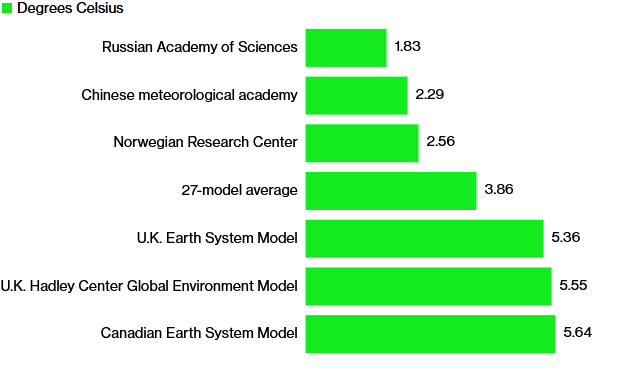
 There are two ways to approach this problem. The models make certain assumptions about the behavior of the changing atmosphere and model future temperature changes. This is the approach from IPCC for the last 32 years. These models are all failing miserably when compared to actual temperature changes.
The other way i to observe what is actually happening to our temperature over time as the CO2 increases. We have 50 years of excellent global temperature data, so with these we can see where, when and by how much the earth has warmed.
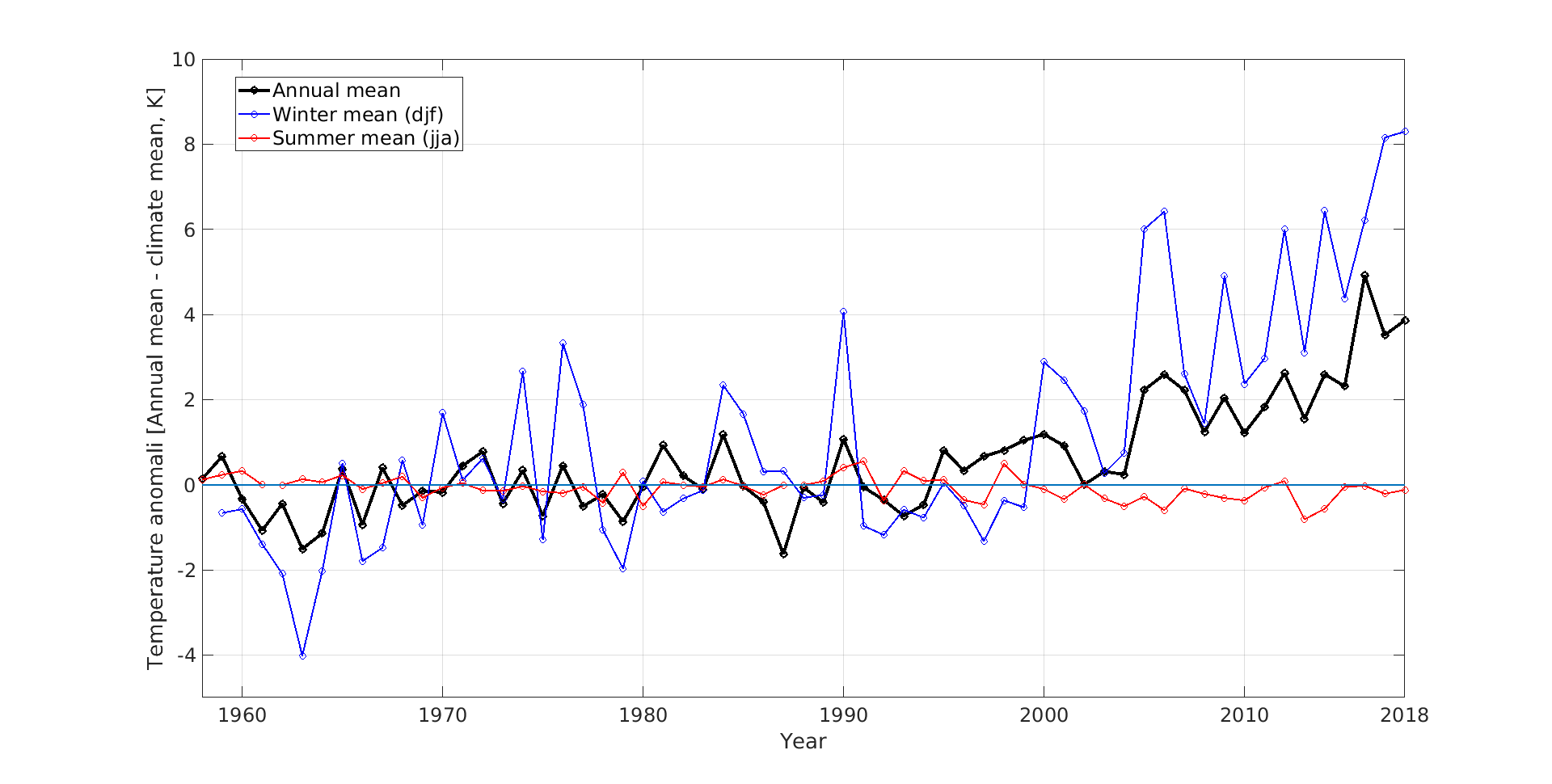
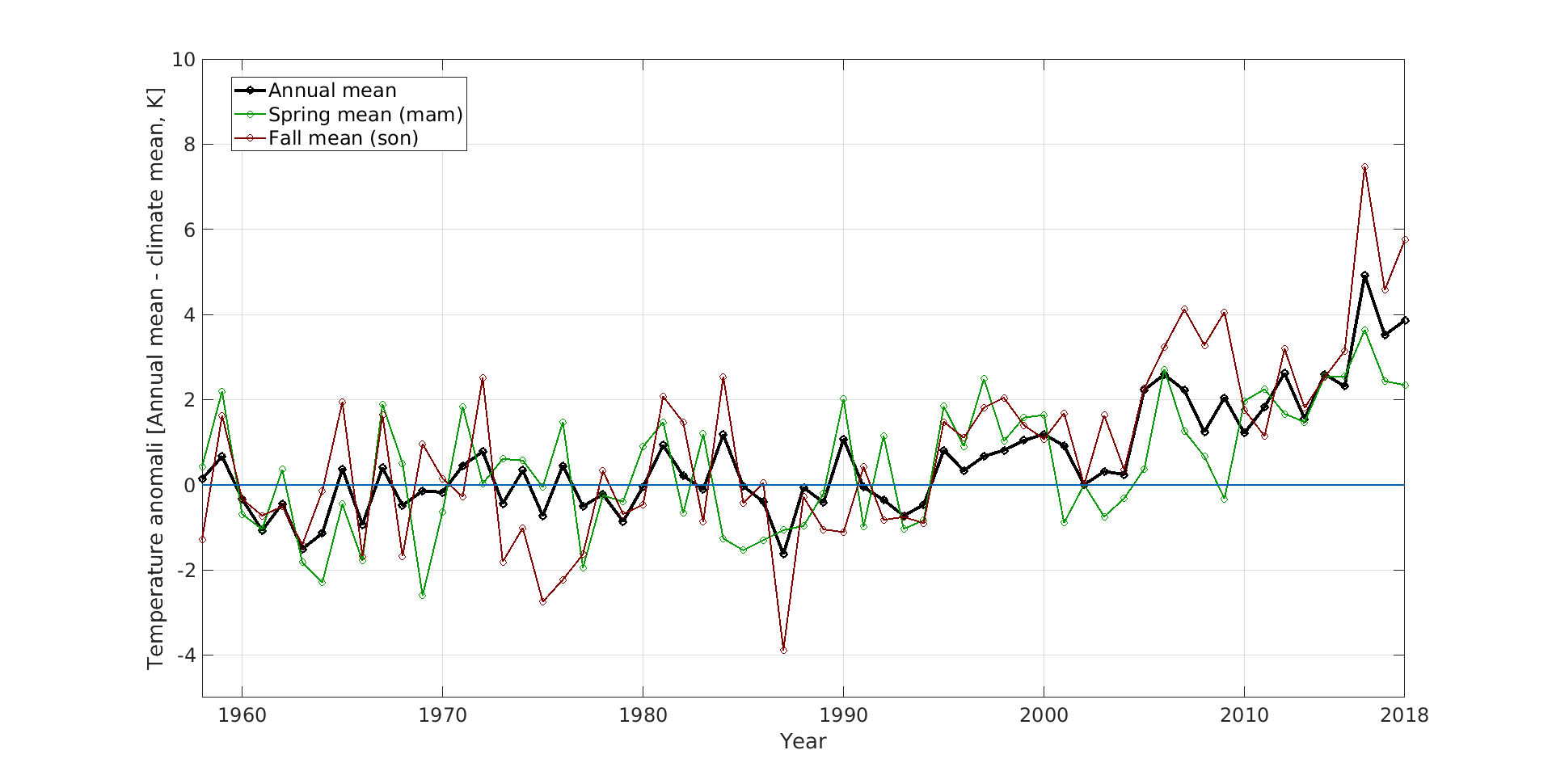
The most drastic temperature rise on earth has been in the Arctic above the 80th latitude. In the winter of 2018 it was 8C above the 50 year average. See charts from the Danish Meteorological Institute: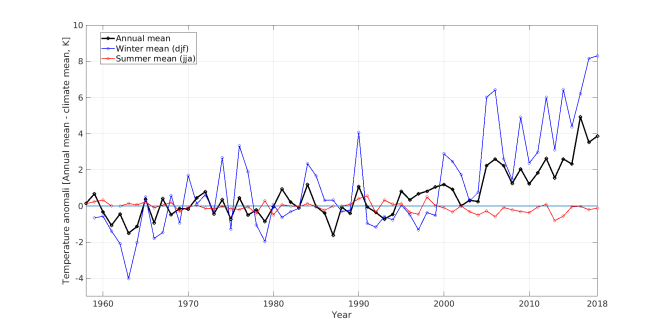
Note, there is no increase at all in the summer temperatures!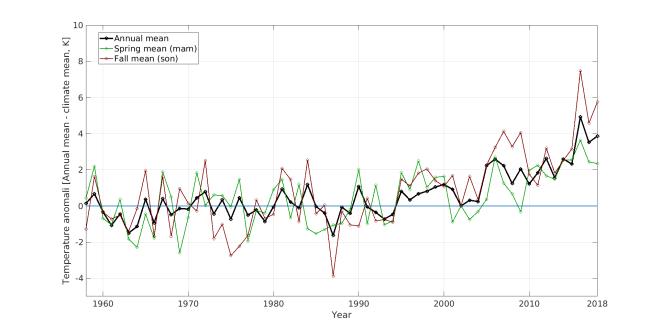
The fall temperature saw an increase of 5C and the spring temperature saw an increase of about 2.5C.
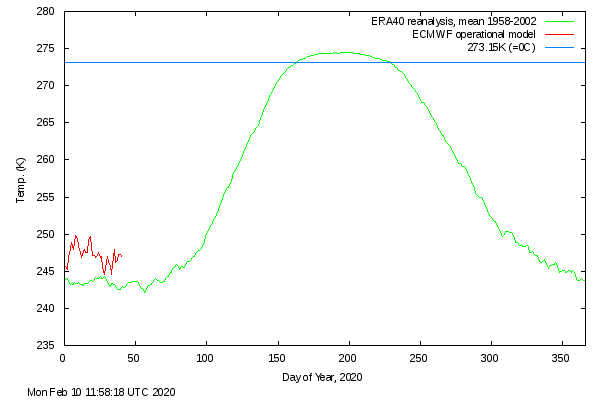
The 2020 winter has so far seen an about 4c increase Source: DMI.

This 8C winter rise of temperature is significant, most would even say alarming, but my response is, why is that?
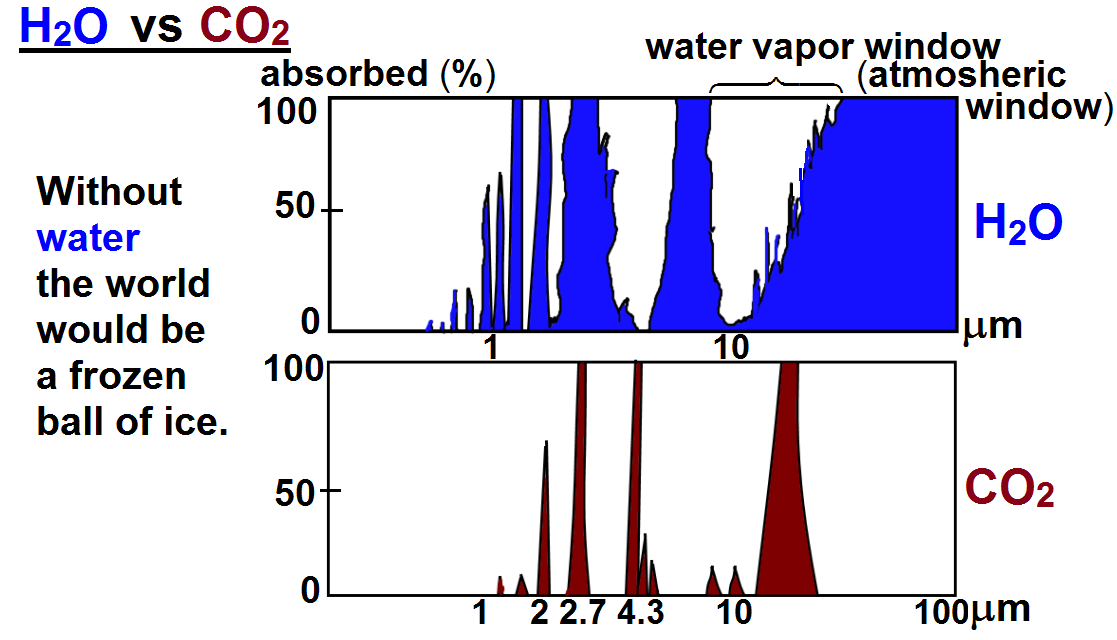
To get the answer we must study molecular absorption spectroscopy and explain a couple of facts for the 97% of all scientists who have not studied molecular spectroscopy. IPCC and most scientists claim that the greenhouse effect is dependent on the gases that are in the atmosphere, and their combined effect is additive according to a logarithmic formula. This is true up to a certain point, but it is not possible to absorb more than 100% of all the energy available in a certain frequency band! For example: If water vapor absorbs 90% of all incoming energy in a certain band, and CO2 absorbs another 50% of the energy in the same band, the result is that 95% is absorbed, (90% + 50% * (100% – 90%)), not 140%, (90% + 50%).
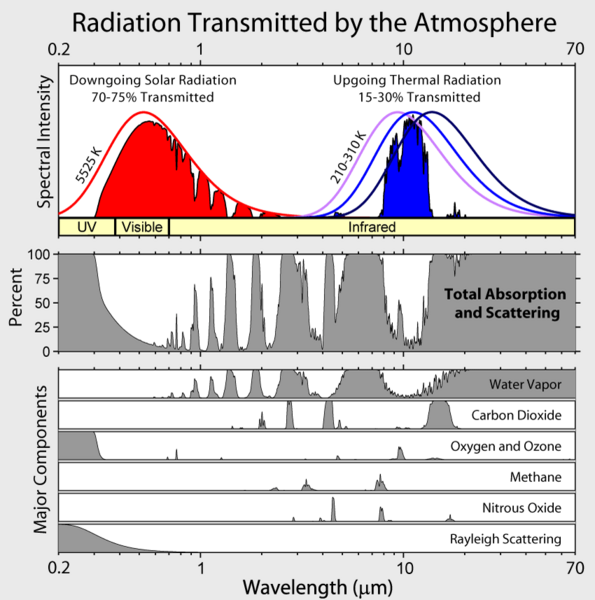
The following chart shows both CO2 and H2O are absorbing greenhouse gases, with H20 being the stronger greenhouse gas, absorbing over a much wider spectrum, and they overlap for the most part. But it also matters in what frequency range s they absorb.
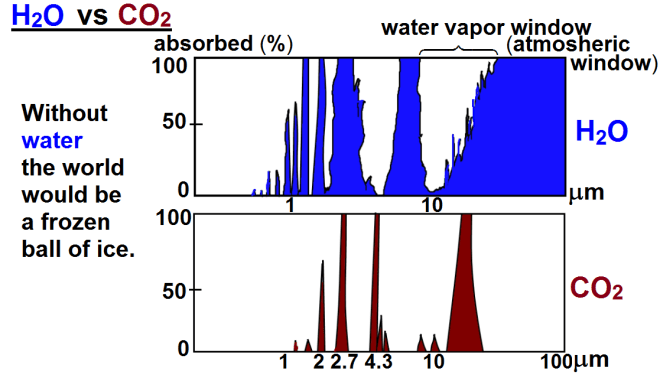
For this we will have to look at the frequency ranges of the incoming solar radiation and the outgoing black body radiation of the earth. It is the latter that causes the greenhouse effect. Take a look at this chart:

The red area represents the observed amount of solar radiation that reaches the earth’s surface. the white area under the red line represents radiation absorbed in the atmosphere. Likewise, the blue area represents the outgoing black body radiation that is re-emitted. The remaining white area under the magenta, blue or black line represents the retained absorbed energy that causes the greenhouse effect.
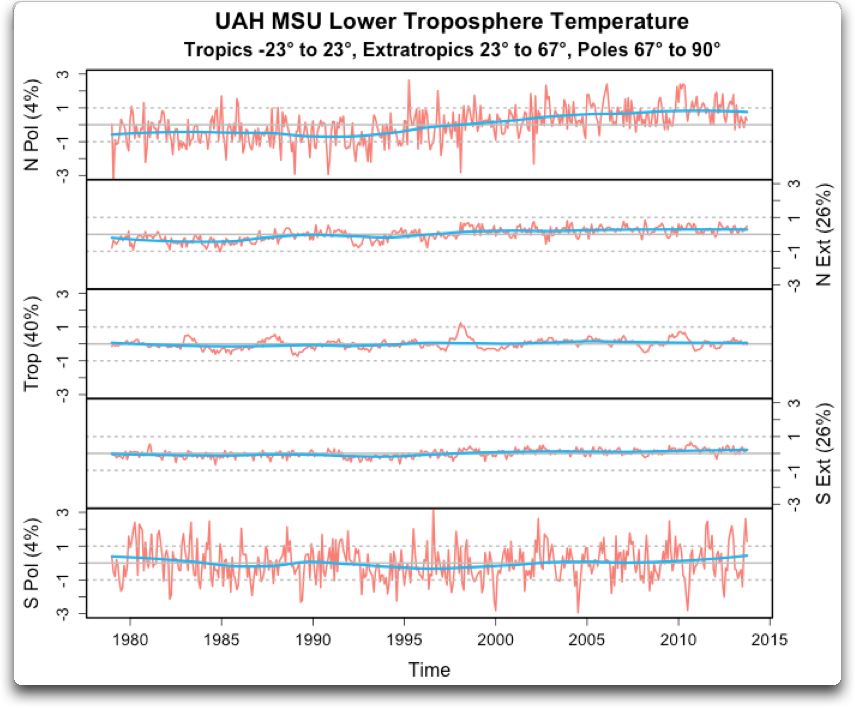
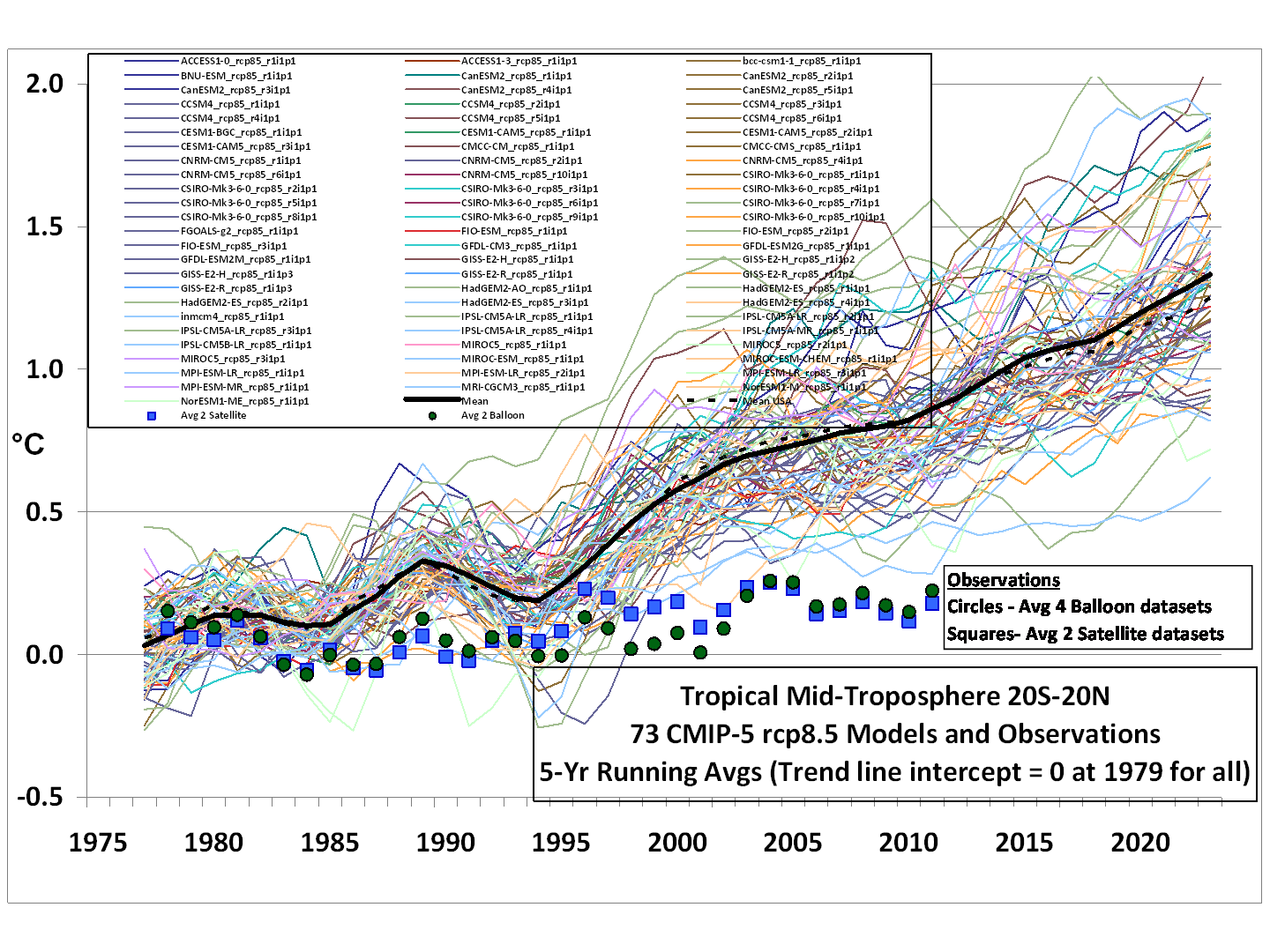
Let us now take a look at the Carbon Dioxide bands of absorption, at 2.7, 4.3 and 15 microns. Of them the 2.7 and 4.3 micron bands absorb where there is little black body radiation, the only band that counts is at 15 microns, and that is in a band where the black body radiation has its maximum. However it is also in a band where water vapor also absorb, not as much as CO2,only about 20% to 70% as much. Water vapor or absolute humidity is highly dependent on the temperature of the air, so at 30C there may be 50 times as much water vapor, at 0C there may be ten times as much water vapor, and at -25C there may be more CO2 than water vapor. At those low temperatures the gases are mostly additive. In the tropics with fifty times more water vapor than CO2, increased CO2 has no influence on the temperature whatsoever. Temperature charts confirm this assertion:

Here the temperature in the tropics displays no trend whatsoever. It follows the temperature of the oceans, rises in an el nino and falls in a la nina. The temperature in the southern hemisphere shows no trend. In the northern temperate region there is a slight increase, but the great increase is occurring in the Arctic. There is no increase in the Antarctic yet even though the increase in CO2 is greater in the Antarctic and the winter temperature in the Antarctic is even lower than in the Arctic. So CO2 increase cannot be the sole answer to the winter temperature increase in the Arctic.
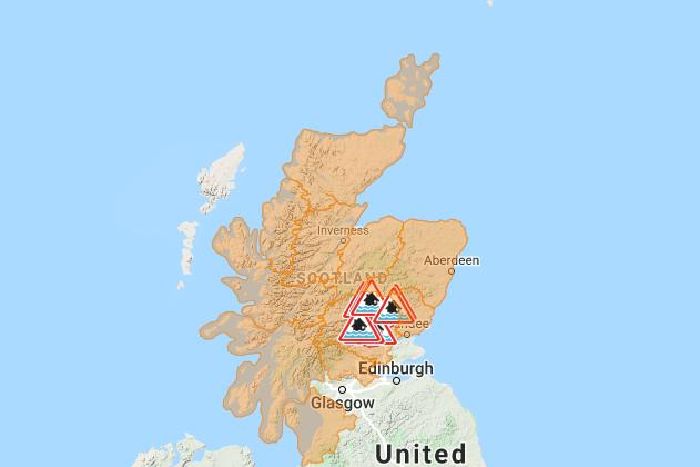
A few days ago there was a storm of historic magnitude, filled with moisture going up from the Mexican Gulf through the Atlantic and really sacked Scotland and Norway. The weather warnings called for severs floods and hurricane-like winds: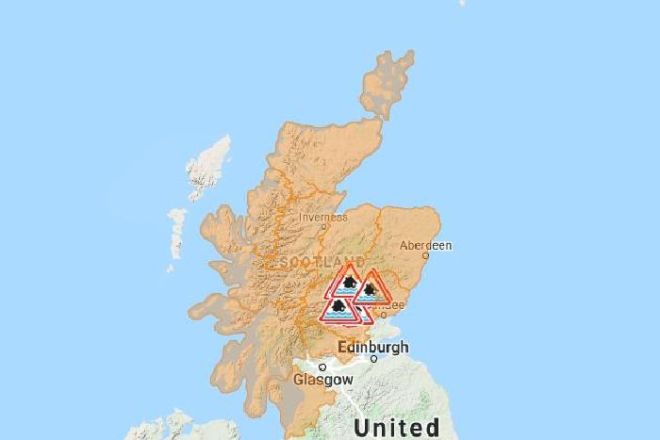
What happened to the temperature when the storm arrived?
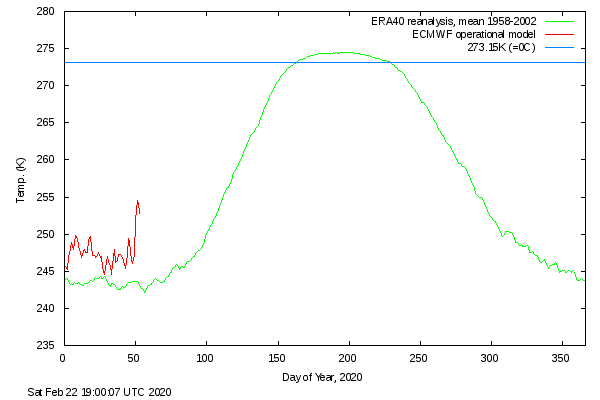
ice The Arctic temperature above the 80th latitude rose about 12C, from about -30C to about -18C, and most of the moisture snows out. What happens to the ice covercover when the storm arrives? Let’s see the most recent Arctic ice cover.

As the storm arrives, some of the ice breaks up, but at the end of the storm it bounces back, helped with all the snow that just fell.
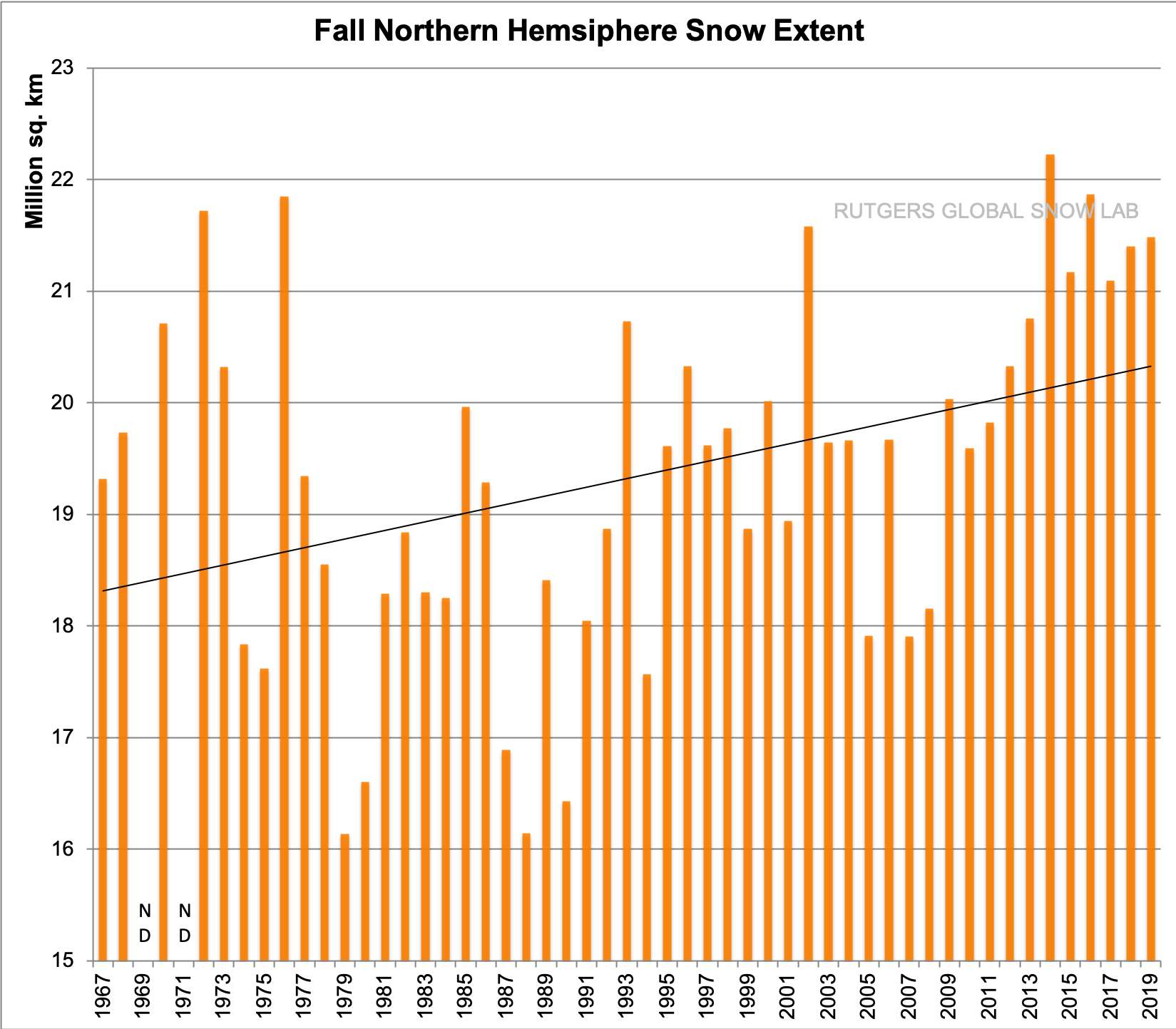
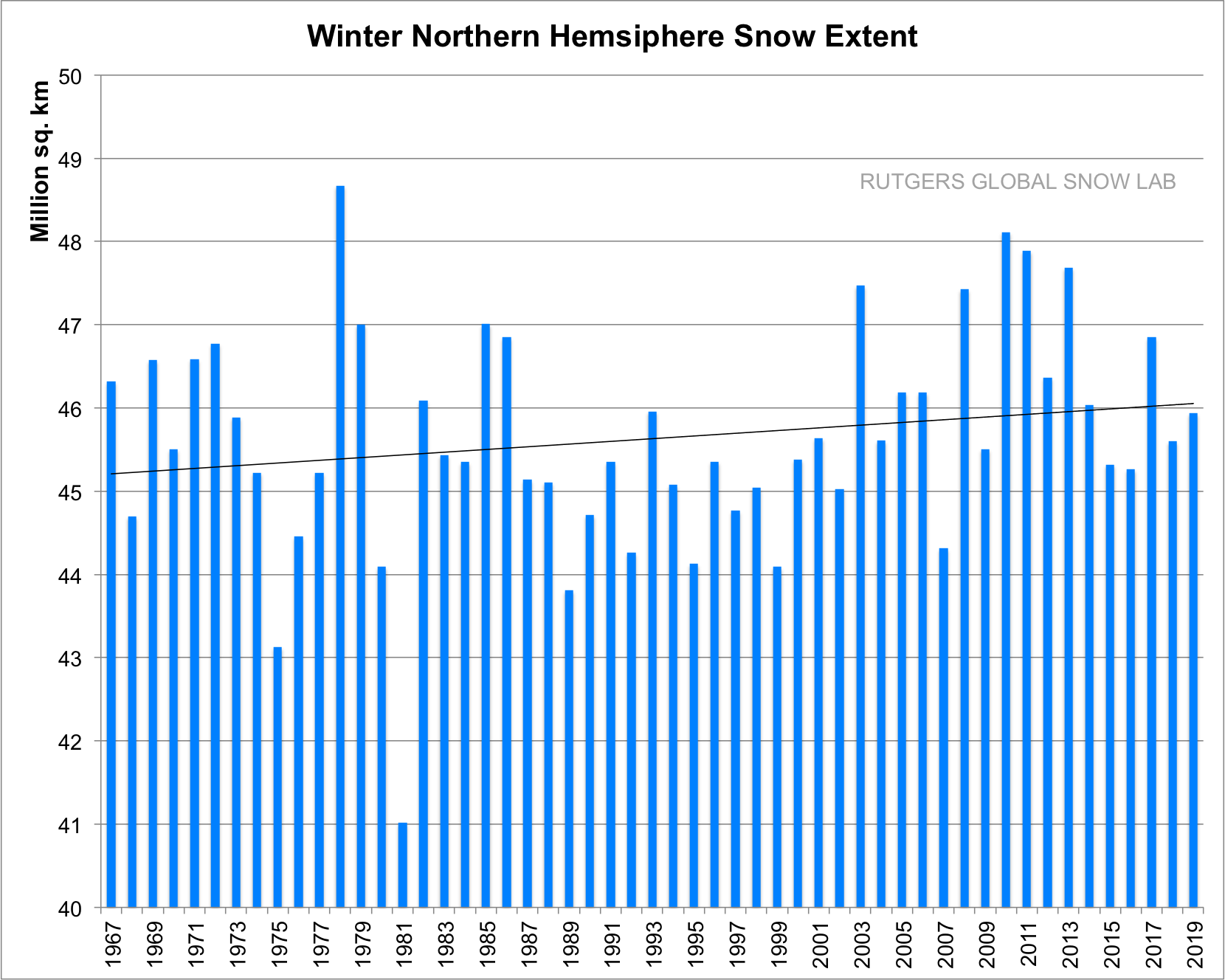
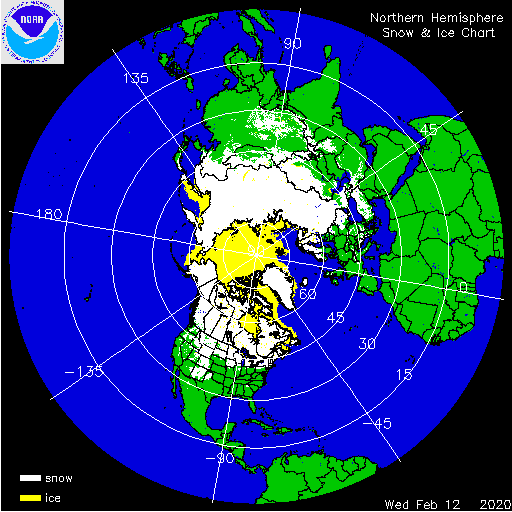
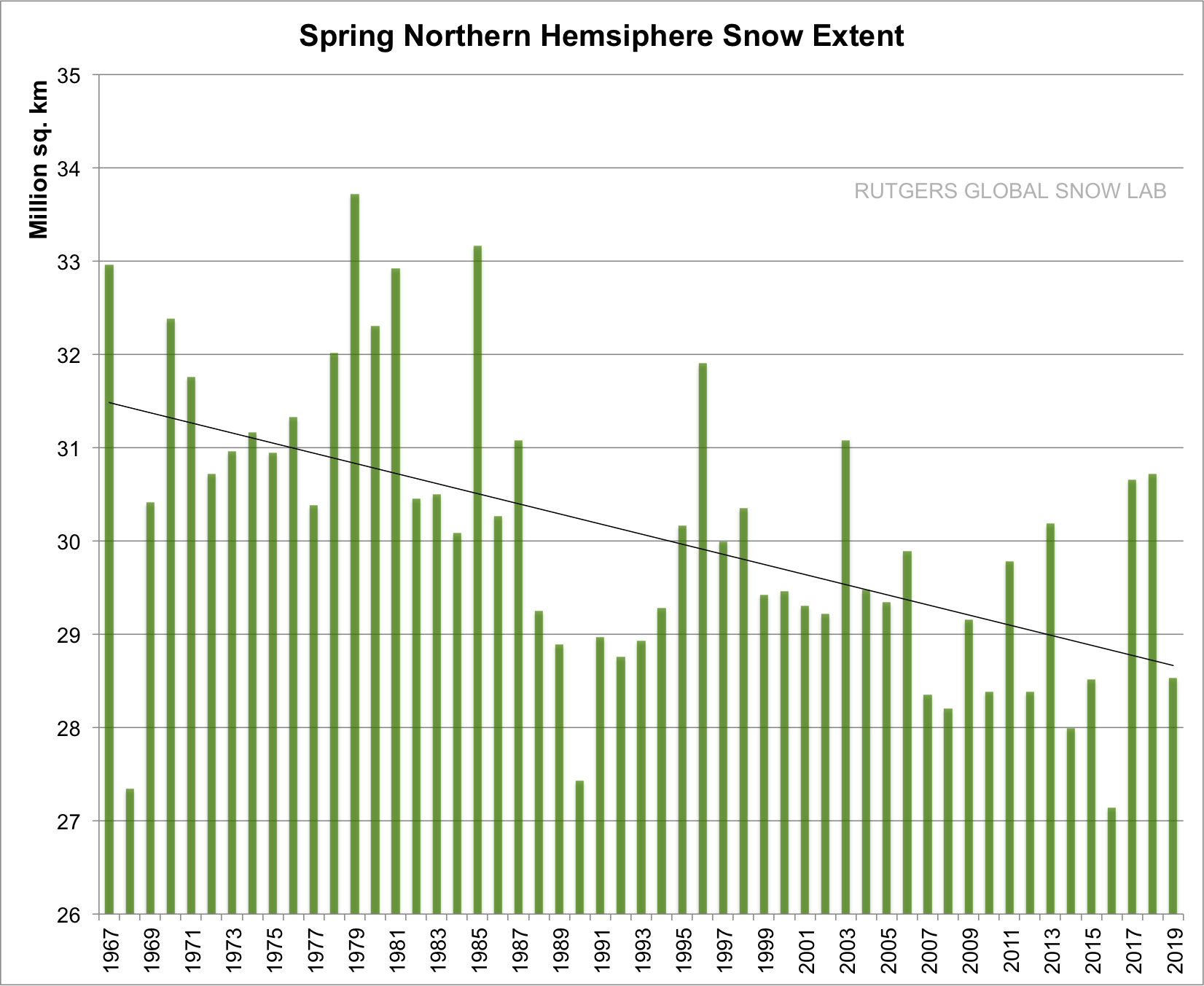
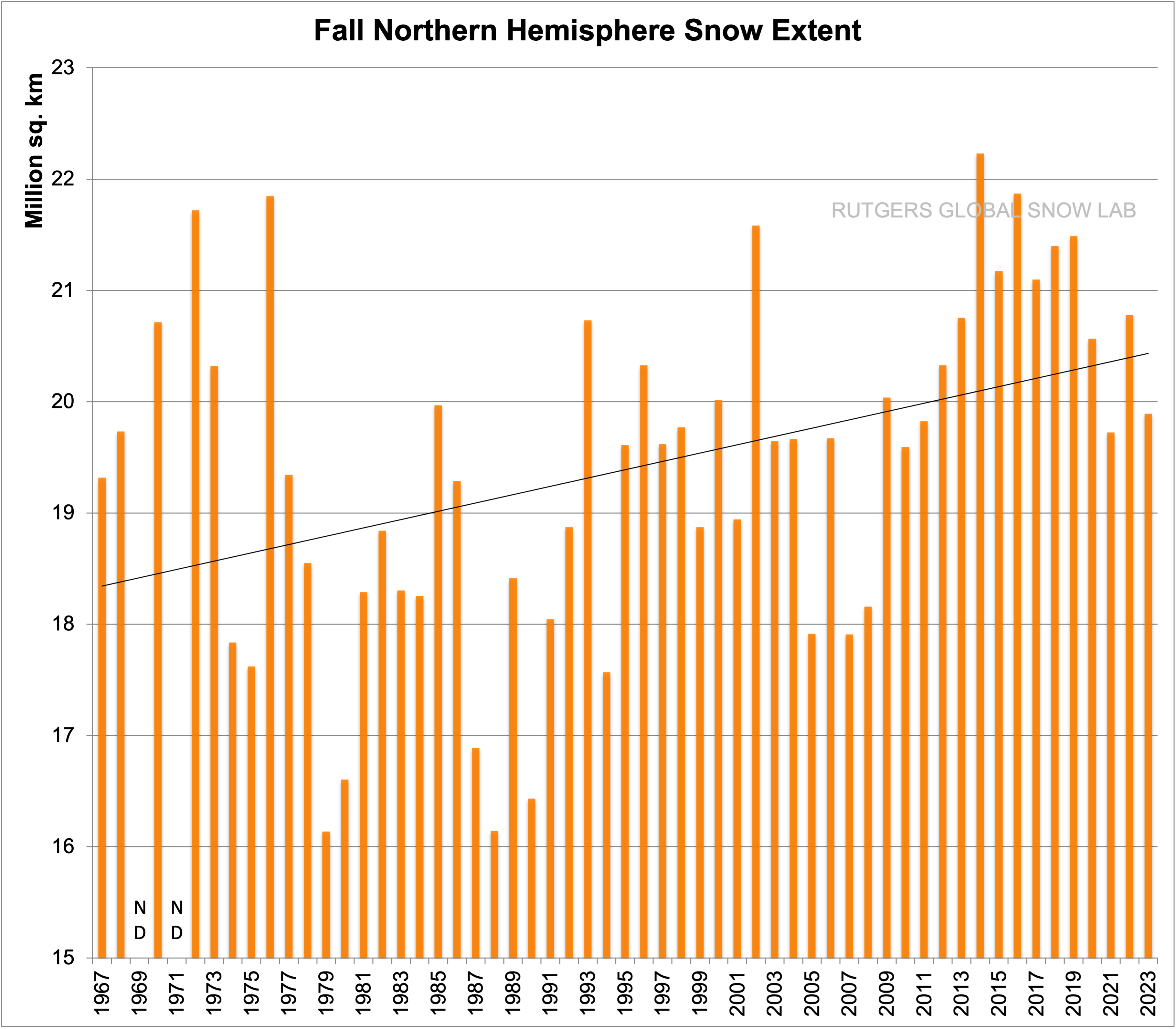
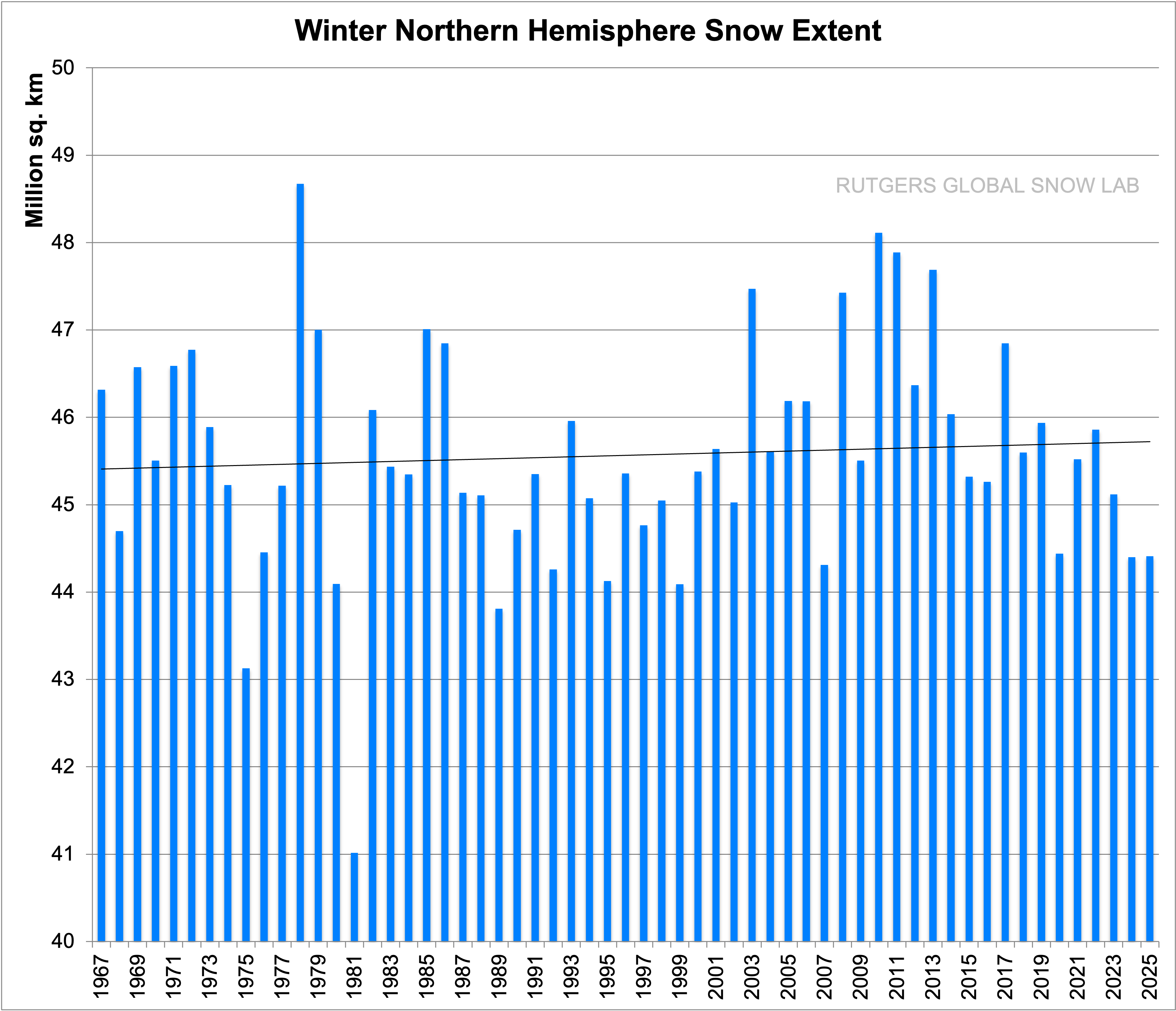
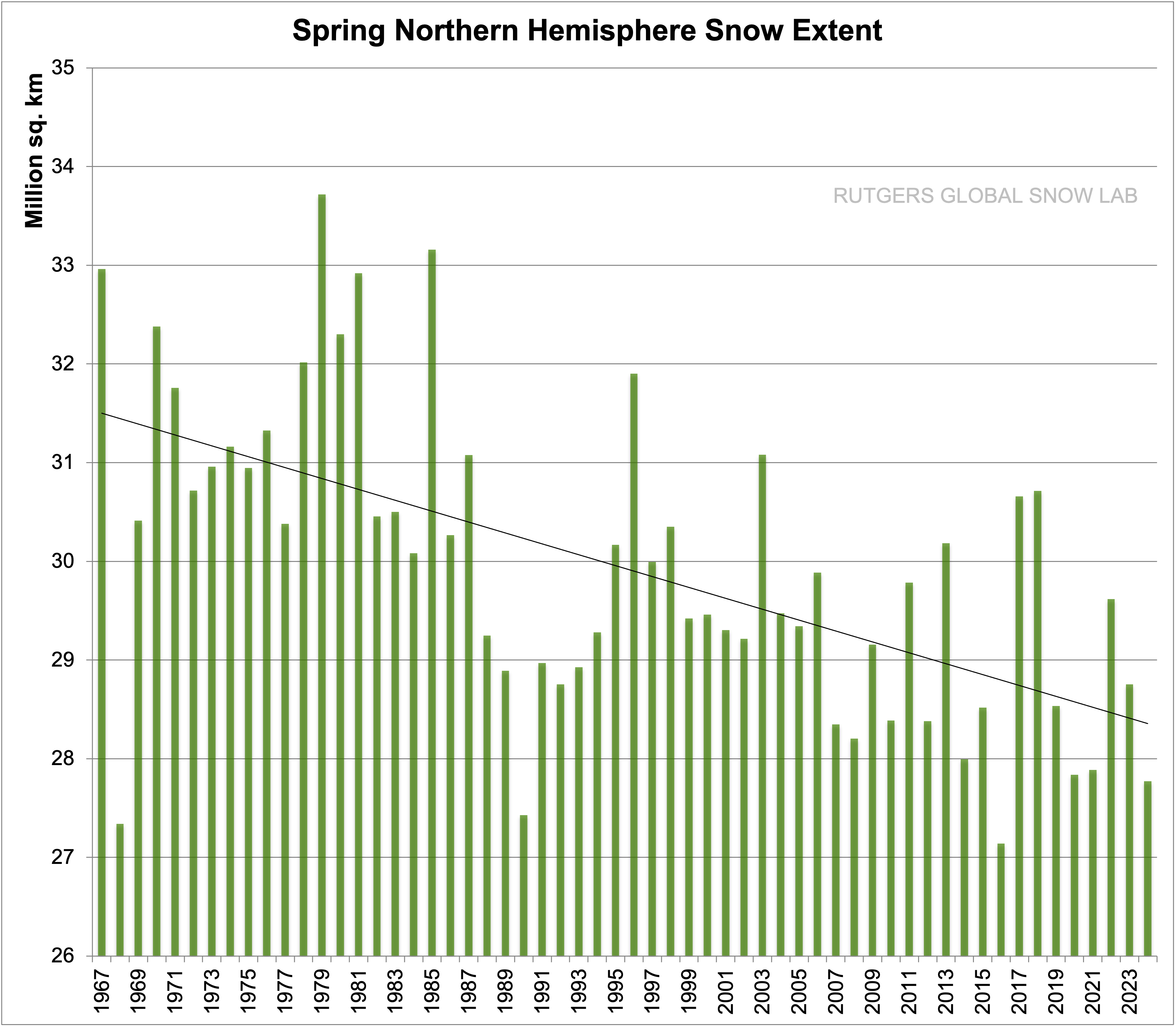
Is the snow cover increasing in the Arctic?Let us see what the snow statistics show. These are from the Rutgers snow lab.
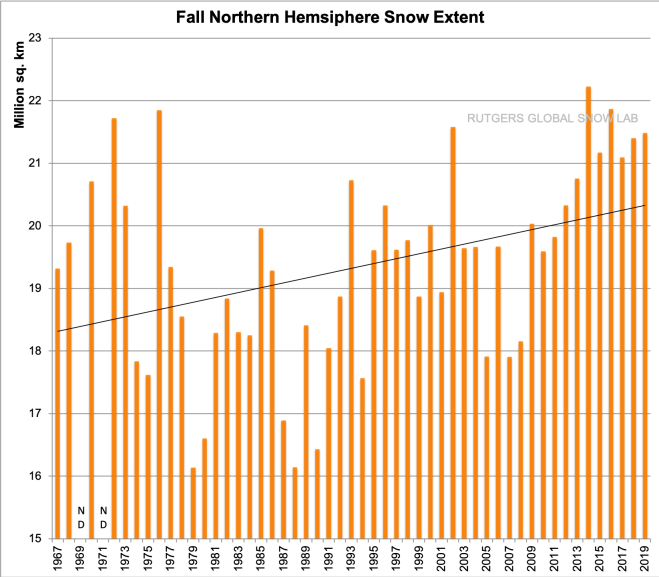
The fall snow extent is increasing, and has increased by more than 2 percent per year.
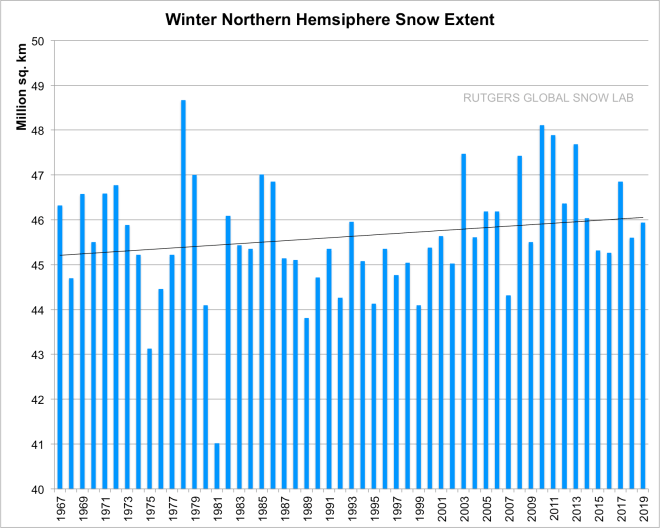
The winter snowfall has also increased but only by 0.04 percent per year. The snow covers all of Russia, Northern China, Mongolia, Tibet, Kashmir and northern Pakistan, Northern Afghanistan, Northern Iran, Turkey, Part of Eastern Europe, Scandinavia, Canada, Alaska, Greenland and part of Western and Northern United States.
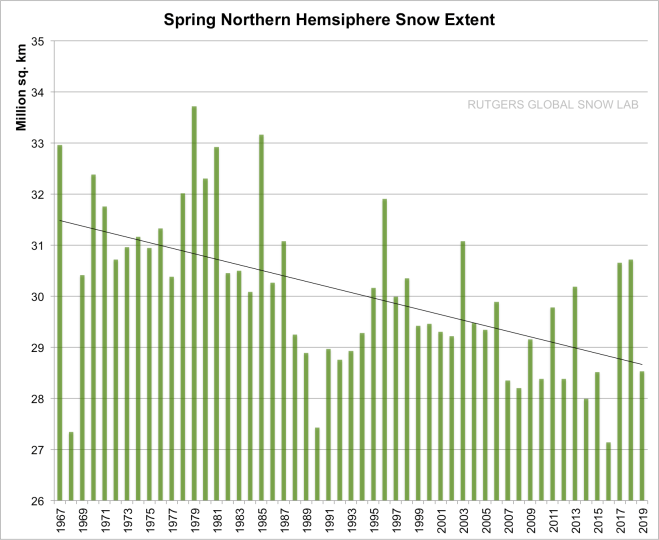
In the spring on the other hand the snow pack is melting faster, about 1.6 percent less snow per year. One of the major reasons for an earlier snowmelt is that the air is getting dirtier, especially over China, and to some extent Russia. The soot from burning coal and mining and manufacturing changes the albedo of the snow. The soot is visible on old snow all the way up to the North Pole. The other reason is that the poles are getting warmer. In the fall and winter it is mostly due to increased snowfall, but in the spring, as soon as the temperature rises over the freezing point, melting occurs.
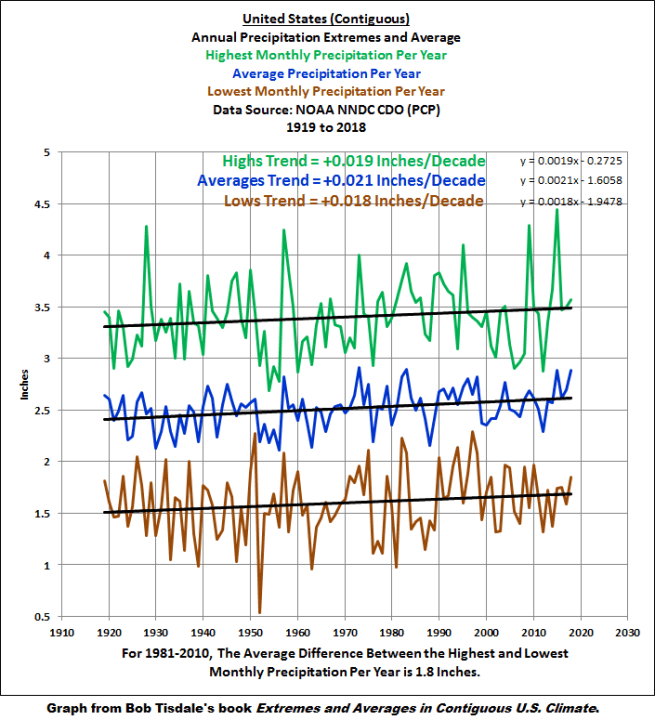
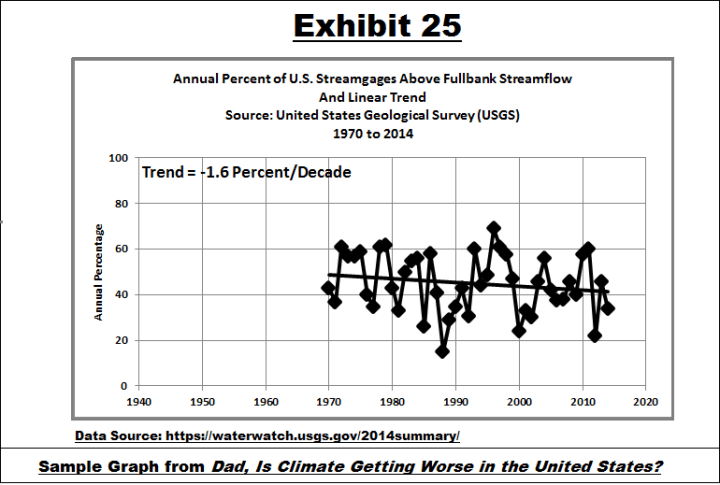
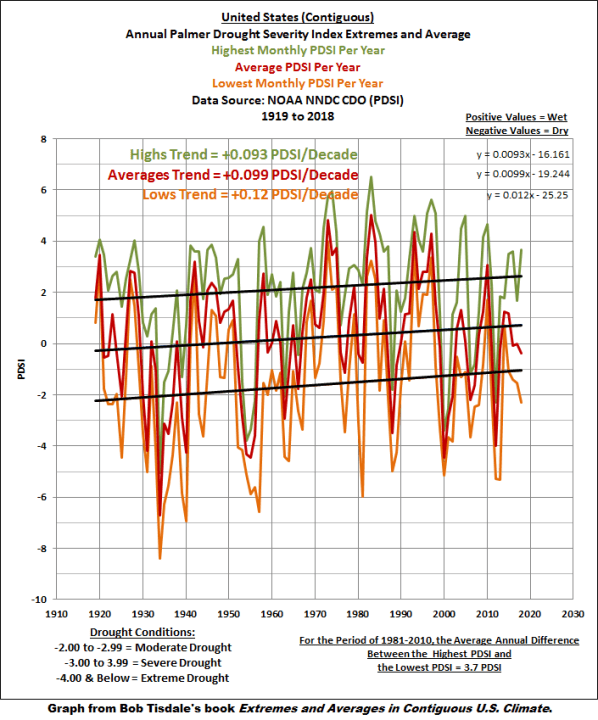
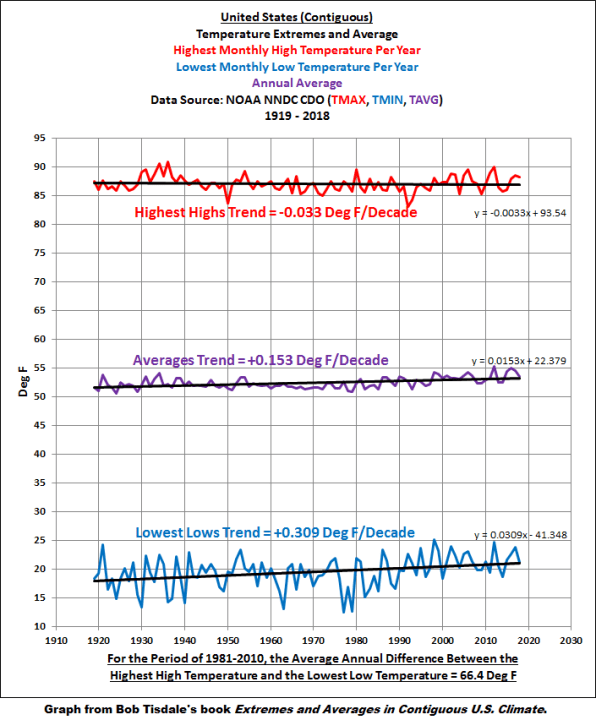
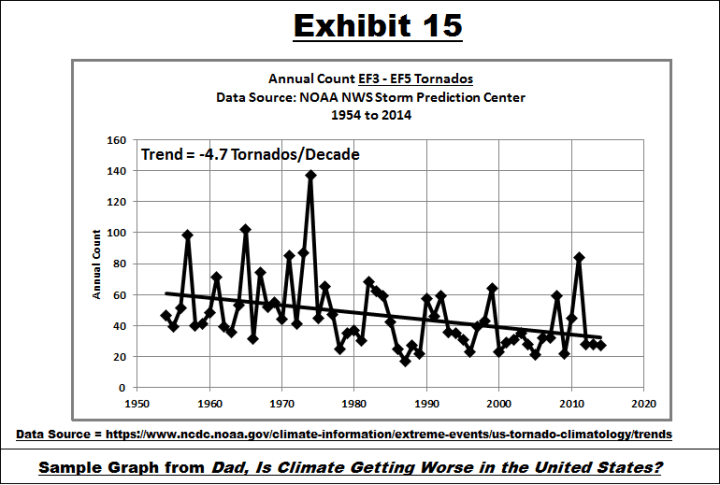
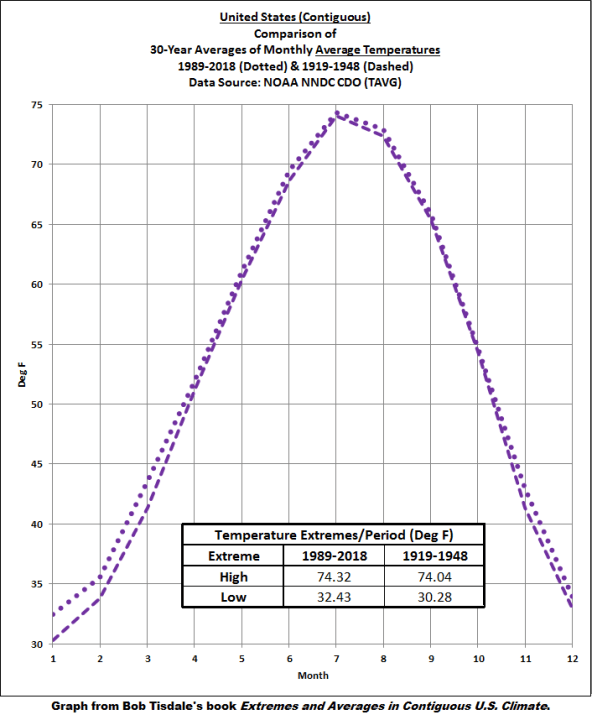
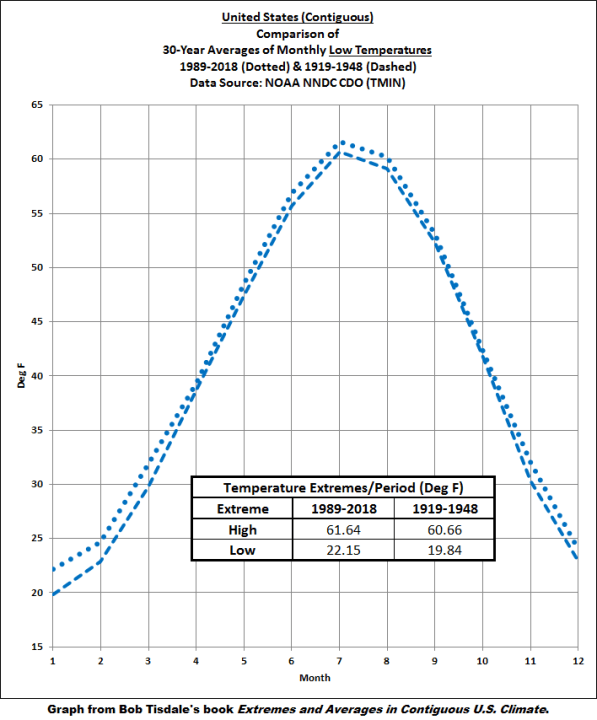
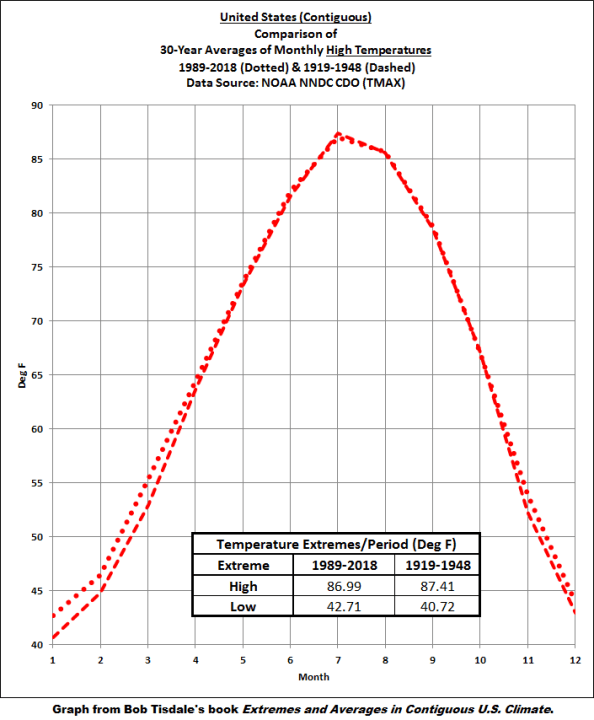
Moving down to the continental U.S. there are even more good news.
The data presented in the next six graphs were extracted from the data available at the NOAA National Data Center Climate Data Online (NNDC CDO) website.
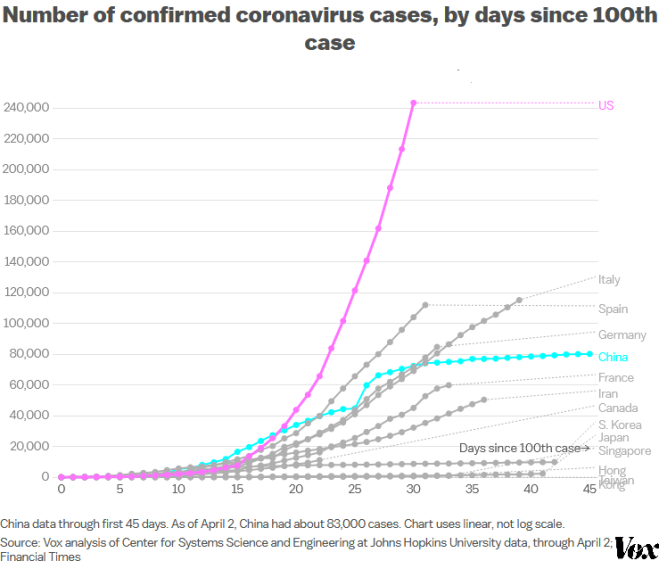
 Like they say in the military, even the best laid plans never survive contact with the enemy. That is why the Presidential task force wss forced to act with unprecedented speed and approve drugs that have not been subjected to double-blind clinical trials, which sometimes take years to validate. No, here speed is of essence, and President Trump is a man of immediate action, reacting on instinct rather than established scientific studies. Somebody showed him this study: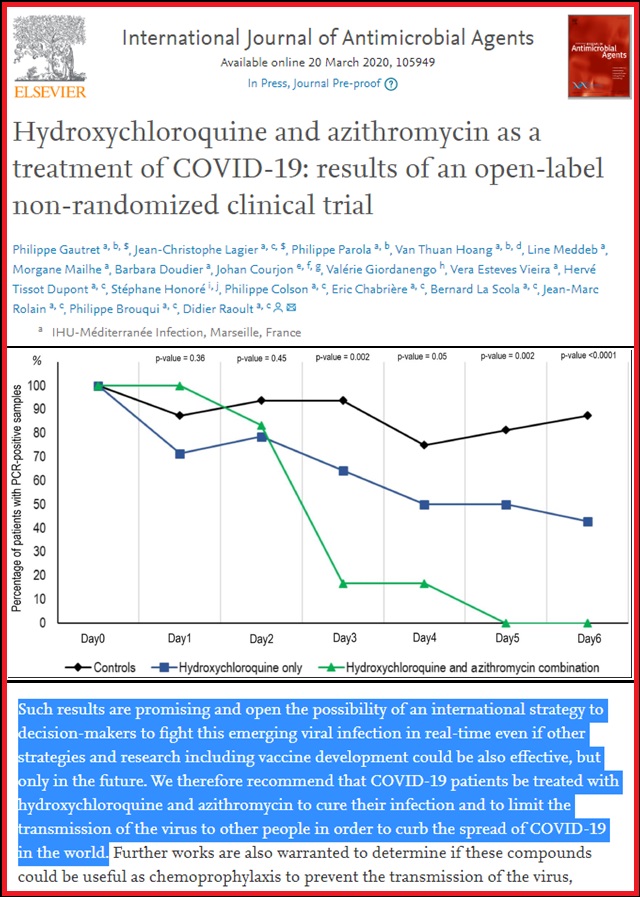
 Donald J. Trump
 The Washington Times





/cdn.vox-cdn.com/uploads/chorus_image/image/65710701/GettyImages_846554092.0.jpg)






 years, when a large number of lemmings follow each other over a cliff, falls down into the sea below and drown. Political analogies abound, and so this has become common knowledge: That’s what lemmings do. But why? By the way, 2011 was a lemming year in Northern Sweden, it repeats itself every 20 years or so. Here is a video from BBC Nature.
 Len Bilén's blog, a blog about faith, politics and the environment.