The Transcontinental aqueduct, Leg 13: From the New Arlington dam to the Colorado River.

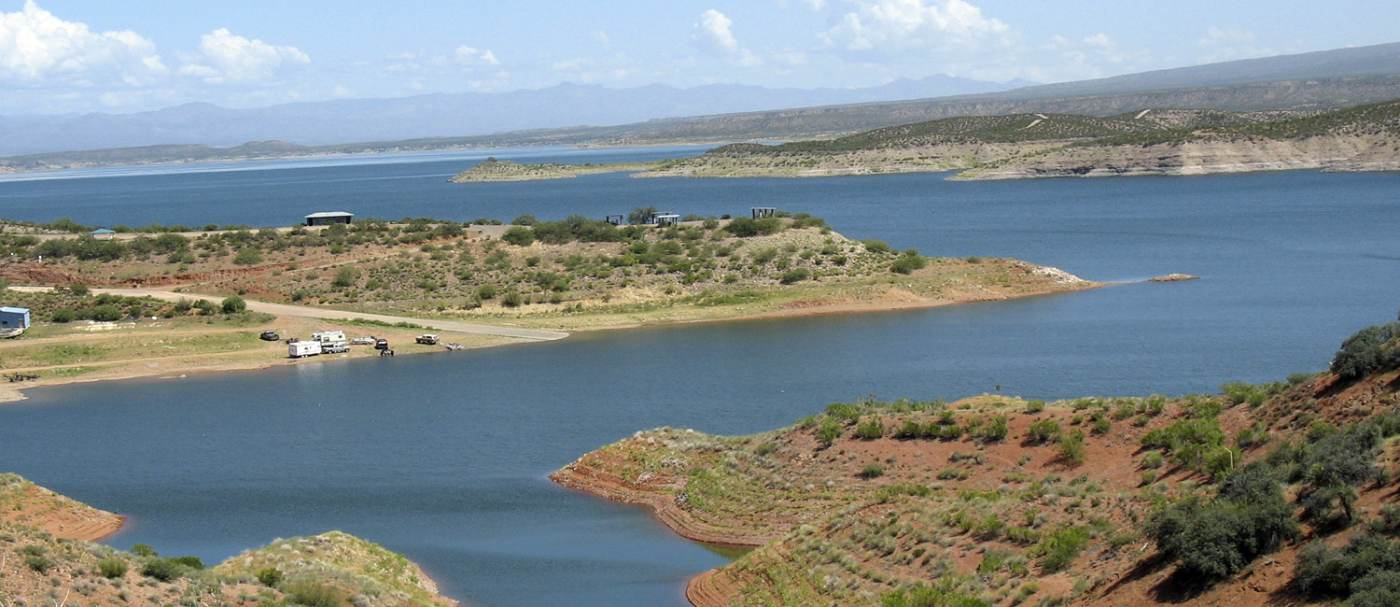
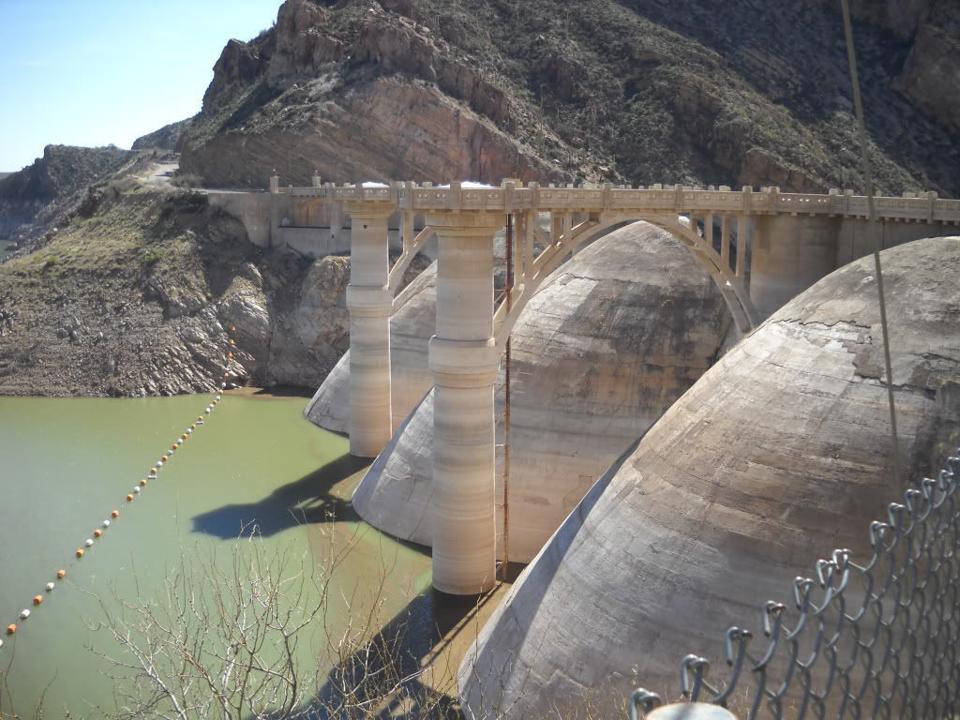
This leg will start with a free-flowing Gila River for 30 miles, followed by the painted Rock Reservoir for 20 miles, the Painted Rock Dam.

This picure was taken during high runoff. It is normally dry.

The dam is at elevation 661 feet and runoff starts at 550 feet. Drainage capacity is adequate and maximum storage is 2 million acre-feet. The population of Indians and early settlers are already resettled and compensated. To fill the dam with the 2,500 cfs flow available in phase 1 would take over a year. The reservoir will be used to even out seasonal demand.

After the dam Gila river will be free glowing for 90 miles until it joins the Colorado River in the first pass. In the second pass there will be an aqueduct built with a capacity of 7,100 cfs flow for 100 miles to the
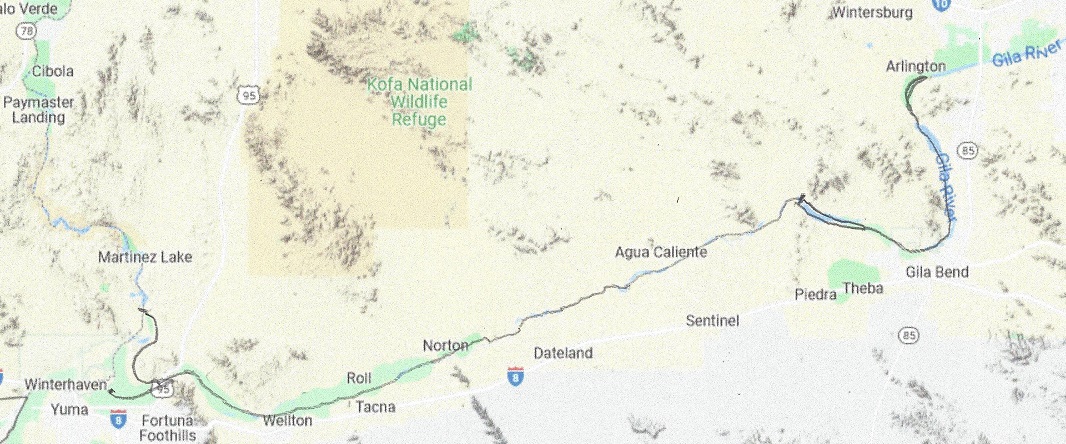
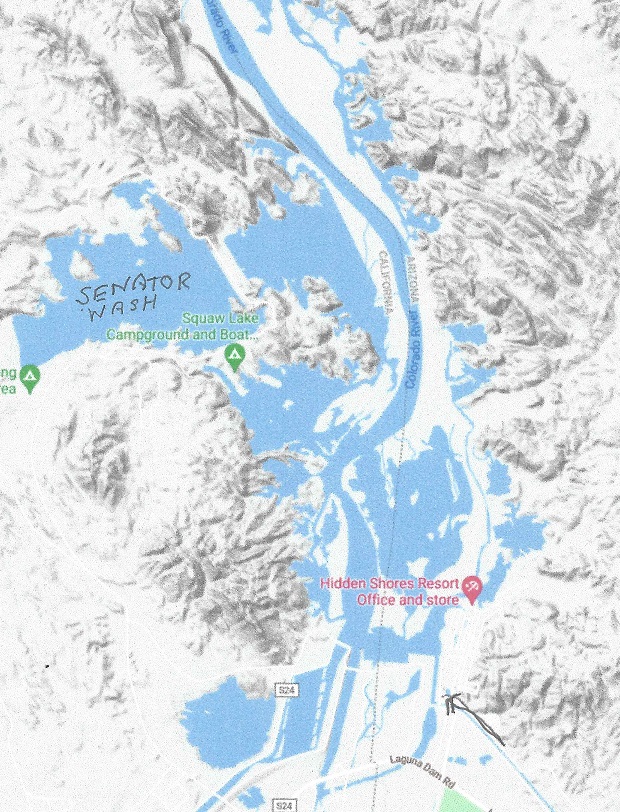
To the Martinez lake it can deliver up to 7,100 cfs. ( The design capacity of the All American canal is 15,155 cfs.) The Martinez lake is puny, and would easily be overwhelmed by surges in the water flow. To accommodate this, the Senator Wash Reservoir will have to be upgraded to be able to pump up or release at least twice as much water as is its present capacity. Lake Martinez is at about 180 feet elevation, and Senator Wash Reservoir is at a maximum elevation of 240 feet.

The Martinez lake and the Senator Wash Reservoir.

The rest of the Transcontinental Aqueduct empties out where the Gila river joins the remainder of the Colorado river a few miles downstream. It will carry on average 2,100 cfs of water to accommodate the needs of Mexico and also provide a modest amount of water to assure the Colorado river again reaches the ocean, maybe restoring some shrimp fishing in the ocean.

The 1944 water treaty with Mexico provides Mexico with 1.5 million acre-ft per year, more or less dependent of drought or surplus. It will be increased only on condition that when the Transcontinental aqueduct is finished, the New River in Mexicali will be cut off at the border, and Mexico will have to do their own complete waste water treatment.

There will be water allocated to the Salton Sea. Proposed will be the world’s largest Lithium mine, mining the deep brine, rich in Lithium. (about a third of the world supply according to one estimate). This requires water, and as a minimum to allow mining in the Salton Sea the water needs to be cleaned. This requires further investigation, but the area around the Salton Sea is maybe the most unhealthy in the United States.

What’s in it for Mexico? Mexico will get sweet , reliable water, much better suited for agriculture..

What’s in it for Arizona? The farming downstream will be better served by reliable sweet water.

What’s in it for California? The All American Canal will get a reliable supply of sweet water.

What’s in it for Lake Mead? The lower Colorado river will get an infusion of about 15,000 cfs, or about 10 MAf, which will allow lake Mead to recover by 8 to 10 MAf per year. This should solve the Colorado River’s water problem until the population served by the Colorado River reaches 60 million people.

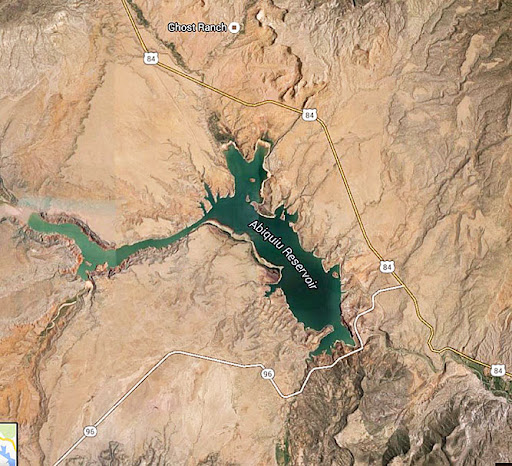
Leg 7 of the Trans-Rocky-Mountain aqueduct. From the Abiquiu Reservoir to the San Juan River.

Leg 7 of the Trans-Rocky-Mountain aqueduct. From the Abiquiu Reservoir to the San Juan River, a distance of 55 miles.

Elevation 6270′ Water storage 200,000 acre-ft, max. capacity 1,369,000 acre-ft.

After delivering some water to Rio Grande and other drop off points, the sixth leg has a capacity of 8500 cfs. It starts out at 6270′ and climbs to 7400′ over a distance of 25 miles. This requires a maximum power of (7400-6270 + 2x 25) = 1180′ times 8500 cfs. Assuming a pump efficiency of 92% this comes to a power of 900 MW. From the top it then descends to 5590′ over 30 miles. This will generate a power of (7400-5590 – 2x 30) = 1750′ times 8500 cfs. With generator efficiency of 92% this comes to 1,100 MW. This last leg will generate up to 200 MW power, thus reducing the total power need for the aqueduct.

Once joining the San Juan River there may be some levies put in to protect the people having built their homes in the flood plain. The river once was unregulated and subject to seasonal floods, and periods of very low flood, but once the San Juan Reservoir was built, the ecology of the river changed drastically. The addition of the aqueduct’s water would further stabilize the flow, but not add to the risk of seasonal floods.

The San Juan River would then add a maximum of 8,500 cfs. of water to the Colorado River, but especially during the summer months much water will be delivered en route to thirsty communities, such as Albuquerque and even Santa Fé, and some water will help the greening of the surroundings of the aqueduct and even save aquifers, especially the Ogallala aquifer, so the real average flow will be more like 5,000 cfs. This will translate to an additional yearly inflow of 3.6 million acre-feet into the Colorado River.

The Transcontinental Aqueduct. Leg 12: San Carlos Lake to the Colorado river following the Gila river, a distance of 280 miles. (Updated)

Stage 12 is a true delivery of water on demand aqueduct. The San Carlos lake has a storage capacity of a million acre-ft, the ideal buffer from the peak power demand driven uphill stages to the major delivery stage. San Carlos lake is now mostly empty, but will be normally filled to 85% of capacity, slightly less in advance of the winter snow melt. The Lake would look like this:

San Carlos lake, about half full

The Coolidge dam is now decommissioned, the lake is too often empty and the dam suffered damage in the power plant and it was no longer economical to produce power. The retrofitted dam will have a power generation capacity of up to 19,000 cfs the top of the dam is at 2535 ft, the typical water level is at 2500 ft and the drop is 215 feet, giving a maximum power output of 325 MW.

Coolidge dam before rebuilding

From there the stream follows the Gila River all the way to the Colorado River with the following dropoffs:

Where the Arizona central project waterway crosses the Gila river it will deliver up to 500 cfs to Tucson

Where the Gila river meets the Salt river it can deliver up to 1,500 cfs to the Phoenix-Scottsdale metropolitan area.

To the Martinez lake it can deliver up to 15,155 cfs, the design capacity of the All American canal. This will of course be nearly always far less, dependent on the need for water for irrigation, but we dimension the aqueduct to accomodate maximum flow. The Martinez lake is puny, and would easily be overwhelmed by surges in the water flow. To accommodate this, the Senator Wash Reservoir will have to be upgraded to be able to pump up or down at least twice as much water as is it present capacity. Lake Martinez is at about 180 feet elevation, and Senator Wash Reservoir is at a maximum elevation of 240 feet.

The Martinez lake and the Senator Wash Reservoir.

The rest of the Transcontinental Aqueduct empties out where the Gila river joins the remainder of the Colorado river a few miles downstream. It will be able to carry up to 6, 000 cfs of water to accommodate the needs of Mexico and also provide a modest amount of water to assure the Colorado river again reaches the ocean, maybe restoring some shrimp fishing in the ocean.

The 1944 water treaty with Mexico provides Mexico with 1.5 million acre-ft per year, more or less dependent of drought or surplus. It will be increased only on condition that when the Transcontinental aqueduct is finished, the New River in Mexicali will be cut off at the border, and Mexico will have to do their own complete waste water treatment.

There will be water allocated to the Salton Sea. Proposed will be the world’s largest Lithium mine, mining the deep brine, rich in Lithium. (about 40% of the world supply according to one estimate). This requires water, and as a minimum to allow mining in the Salton Sea the water needs to be cleaned. This requires further investigation, but the area around the Salton Sea is maybe the most unhealthy in the United States.

The maximum power generating drop during this last leg will be (2500 – 190 – 2.2X 280) = 1694 feet. With an average flow of 14,000 cfs this will generate 1.9 GW of power, but the realized power output will be determined by the actual water demands.