Today we read John 3, the new birth chapter; you must be born again (literally: from above), the new birth is necessary to enter into the Kingdom of God; John 3:16 is the most quoted verse in all the Bible.
Genesis 4 tells of the results of original sin with the story of Cain and Abel and the beginning of animal sacrifice. After the fall people had the spiritual void not being able to fellowship with God, nor even communicate. To satisfy the need to do what they felt God wanted, and God showed that only sacrifice involving the shedding of blood would suffice
The take home for today is there are two births, the physical birth and the spiritual birth (the birth from above), the first sacrifice, the first murder, the first man (Enoch) to be carried directly to God rather than die, (because he walked with God).
Today we read in John 2, that Jesus turned water into wine, cleansed the Temple, and when the Jews demanded a sign he gave them just one sign (which they of course did not understand).
Genesis 2 left us with the idyllic Eden, no diseases existed yet. But God created us with free will, the ability to do independent critical thinking, and the inevitable fall is then described in Genesis 3 . The problem is, after eating from the tree of the knowledge of good and evil, (not an apple tree) and in so doing we think we can build a better world without God.
The question to ponder is: Why did God create us with a free will? He knew the result from the beginning, and knew He would have to send His Son to redeem us back to Himself. In fact He knew it from before the beginning: “All inhabitants of the earth will worship the beast—all whose names have not been written in theLamb’s book of life, theLamb who was slain from the creation of the world.” (Revelation 13:8, NIV)
Answer: We are created in God’s image, male and female, not so much physical, but spiritual, and free will is part of the package. Without free will there is no fellowship with God, only puppetry.
Psalm 1 is a beautiful poem about righteous living, and only one person could fulfill all the conditions mentioned, the exception to ” There is none righteous, no, not one” (Romans 3: 10)
Today’s reading of the Bible begins with John 1: 19-51. John the Baptist testified about the Messiah: “Make straight the way for the Lord”. When he met Jesus he referred him as “The Lamb of God” that “takes away the sin of the world”, and “this is the Son of God”. Jesus called his first disciples, Andrew and Peter, Philip and Nathaniel.
Genesis 2 tells of how God created woman out of man, showing that creation was not complete without man and woman as a unit. This must be taken spiritually, since in Genesis 1 he already created man in His own image, male and female. God’s design is one man, one woman, one lifetime. This would still be the case if we let God chose our mate. If we had followed God’s intent, many sicknesses would not exist, especially sexually transmitted diseases. “He who finds a wife finds what is good and receives favor from the Lord.” Proverbs 18:22
To find out how God created woman we move to verse 21 So the Lord God caused the man to fall into a deep sleep; and while he was sleeping, he took one of the man’s ribs and then closed up the place with flesh. 22 Then the LORD God made a woman from the rib he had taken out of the man, and he brought her to the man.“The rib” is from the Greek Septuagint translation of the Old Testament. The original Hebrew meaning is “took part of the man’s side“, but since the Greek Septuagint was the most used version of the Scriptures for the early Christians, the rib won.
Don’t get stuck on the detail if it was from the side or from a rib. That is not the point of the story. Some take it to only mean “the two shall be one flesh” is only for procreation, but it is more than that. I can attest it works, having been married now to my wife for over 57 years. It works through communication and fellowship with God. This fellowship is broken in Genesis 3 and forward in the Old Testament.
The Holy Bible is the most influential book ever written. According to Wikipedia it has been translated in its entirety into 724 languages, and the New Testament has been translated into 1617 languages. At least one part of the Bible has bee translated into 3,589 languages, and more translations are coming every year, especially from the Wycliffe translators.
Both the New Testament and the Old Testament begin with the words “In the beginning”.
Genesis 1 deals with the physical creation with spiritual emphasis, laying the groundwork for spiritual understanding of how and why we exist.
We are existing in time and space. The question is: What was there before time and space existed, before the beginning?
Answer: God, existing in three persons, God the Father, God the Son (the Word) and God’s Spirit, (the Holy Ghost).
The Three-in-one God alone are eternal, everything else, including time and space, is created.
Another Question: Why did God say “it was good” for day 1,3,4 and 5 but not for day 2 and it was very good after day 6?
Answer: The ecosystem is a work in progress and will function differently for each phase and finally come to completion when all parts are set in place, which includes people. We are responsible to God to be good stewards of the earth and leave it a better place than we found it. The main regulator of temperature on earth is the clouds. They cool by day and warm by night. The time of day they appear is also very important, and there is no risk for the earth to overheat.
But God was not finished. He continued in Genesis 1:26-27 Then God said, “Let us make man in our image, in our likeness, so that he may rule over the fish in the sea and the birds in the sky, over the livestock and all the earth and over all the creatures that move along the ground.”
27 So God created man in his own image, in the image of God he created him; male and female he created them.
The keywords here are God’s Image. Man contains the same building blocks as all mammals, similar DNA, RNA and all instructions are of the same kind as the mammals. It says God made them male and female (and only male and female), so He cannot mean a physical image. It must mean we are spiritually made in the image of God.
Continuing in Genesis1:28-31 God blessed them and said to them, “Be fruitful and increase in number; fill the earth and subdue it. Rule over the fish in the sea and the birds in the sky and over every living creature that moves on the ground.”
29 Then God said, “I give you every seed-bearing plant on the face of the whole earth and every tree that has fruit with seed in it. They will be yours for food. 30 And to all the beasts of the earth and all the birds in the sky and all the creatures that move along the ground—everything that has the breath of life in it—I give every green plant for food.” And it was so.
31 God saw all that he had made, and it was VERY good. And there was evening, and there was morning—the sixth day.
Yes, once God had created man, it was very good.
Continuing in Genesis 2:1-3Thus the heavens and the earth were completed in all their vast array.2 By the seventh day God had finished the work he had been doing; so on the seventh day he rested from all his work. 3 Then God blessed the seventh day and made it holy, because on it he rested from all the work of creating that he had done.
Up to this point the name of God is Elohim, which in Hebrew means ‘the strongest strong ones’, signifying the power of God in creation and life. Both animals and man have in them ‘the breath of life, and this signifies physical life.
The second account of creation of man is spiritual, not physical, and so the name of God changes from Elohim to JEHOVAH Elohim. Genesis 2:4 This is the account of the heavens and the earth when they were created, when the LORD God made the earth and the heavens.
Skipping to Genesis 2:7 Then the LORD God formed man from the dust of the ground and breathed into his nostrils the breath of life, and man became a living soul.
This was the second birth, first comes the physical birth, formed from the dust of the ground, followed by the spiritual birth. Skipping the garden of Eden story we move to verse 21 So the Lord God caused the man to fall into a deep sleep; and while he was sleeping, he took one of the man’s ribs and then closed up the place with flesh. 22 Then the LORD God made a woman from the rib he had taken out of the man, and he brought her to the man.
“The rib” is from the Greek Septuagint translation of the Old Testament. The original Hebrew meaning is “took part of the man’s side“, but since the Septuagint was the most used version of the Scriptures for the early Christians, the rib won.
So in verse 23 The man said,
“This is now bone of my bones and flesh of my flesh; she shall be called ‘woman,’ for she was taken out of man.”
And in verse24 That is why a man leaves his father and mother and cleave unto his wife, and they become one flesh. They are united in their bodies through procreation, but also in spirit, united in the Holy Spirit.
25 Adam and his wife were both naked, and they felt no shame. These were ideal conditions, God and man had unhindered fellowship. All was perfect. But God had also created man with free will, so He had to put some boundaries on man. Genesis 2:15 The Lord God took the man and put him in the Garden of Eden to work it and take care of it. 16 And the Lord God commanded the man, “You are free to eat from any tree in the garden; 17 but you must not eat from the tree of the knowledge of good and evil, for when you eat from it you will certainly die.”
Most of us know the story: Eve (Adam’s wife) was deceived by the tempter and ate, and Adam ate too, but willfully; so the guilt of the so called original sin fell on Adam, and they died that day. But Adam lived another 930 years, so he did die spiritual death, not physical.. The spiritual death is that the fellowship with God is severed, and God can no longer spiritually help us in all situations of life.
People took this in stride. “We can do all things well without God interfering.” In fact, when disaster struck they sad: “We will build back better.” (Paraphrased from Isaiah 9:10) And from a human point the brainpower we have to be able to think for ourselves is impressive!
We were created by God in his image with an expanded brain, capable of lifelong learning. This included a spiritual connection directly with God through His Spirit. This is the connection that died when Adam sinned and people decided they could function quite well without constant communication with God. Yet there remained a god-shaped void in their brains, a longing that wanted to be satisfied.
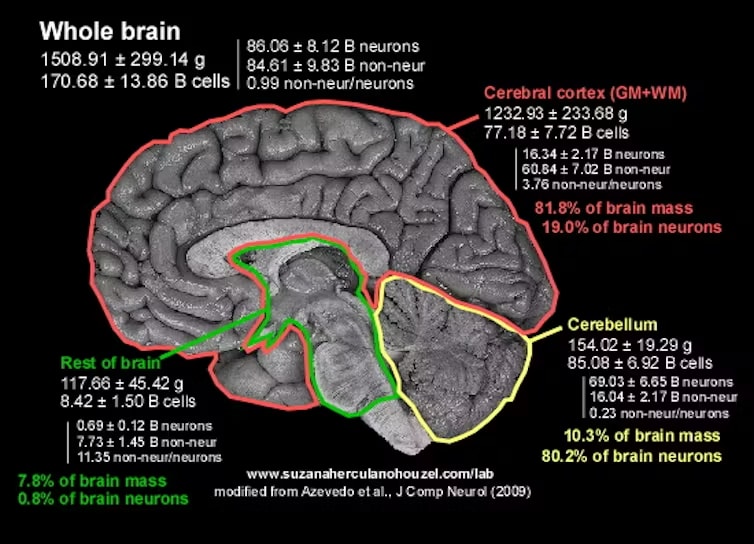
No more rough estimates. The average male human brain contains 86 billion neurons and 85 billion non-neuronal cells. Suzana Herculano-Houzel, CC BY-ND
With this brain you can store up to 2.5 million gigabytes of memory, which when stored fully compressed is equivalent to 3 million hours of watching standard resolution TV, but recalling memory is quite another thing. This starts to decline even before the brain is fully matured.
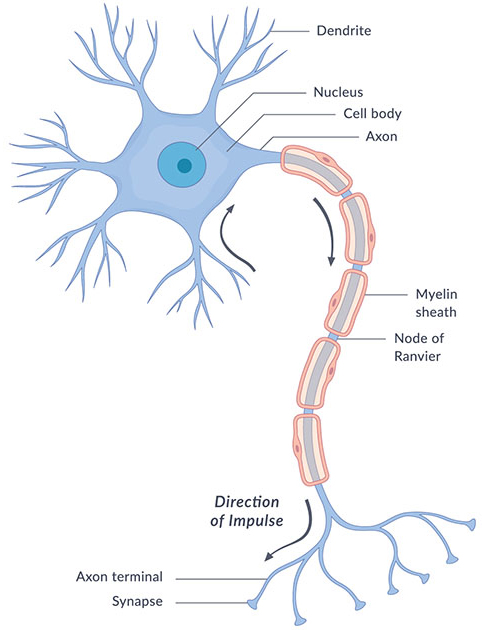
In addition we have about seven trillion nerve cells, close to twenty percent of all cells in our body. Their function is to send messages to and from all parts of the body, muscles, bones, ligaments, inner organs, the five senses and the brain.
We think of the nerves only as serving the sensory organs, but they are the chief messengers for just about everything concerning the body, so when we say: ‘Its only the nerves’ this is about as wrong as it gets. For a human body to function nearly everything has to function, it is good for us many organs are multiplied such as the lymph nodes, but many of the central organs such as heart, brain , stomach and so on are not duplicated. The nerves are the major communicators that makes it possible to develop from embryo to full maturity and help in the final decline in life.
But all mammals have the same or similar parts, so what is the difference between us and the animals?
We were created by God in his image with an expanded brain, capable of lifelong learning. This included a spiritual connection directly with God through His Spirit. This is the connection that died when Adam sinned and people decided they could function quite well without constant communication with God. Yet there remained a god-shaped void in their brains, a longing that wanted to be satisfied.
The next installment: Are we the way we are through nature or through nurture?
First now it was time to create the mammals. This is Genesis 1:24-25 And God said, “Let the land produce living creatures according to their kinds: the livestock, the creatures that move along the ground, and the wild animals, each according to its kind.” And it was so. i25 God made the wild animals according to their kinds, the livestock according to their kinds, and all the creatures that move along the ground according to their kinds. And God saw that it was good.
What the creation story has described so far is the creation of a functional ecosystem. It starts simple with water, ice and clouds, populating the atmosphere with water molecules. The earliest life forms are not preserved so we have no physical record of the order and how it occurred, but it started in the ocean (God’s spirit hovered over the waters). `then plant life with chlorophyll using sunlight was created, then fish and birds and finally mammals. Every step took place in order. Each step occurred after the conditions had been met to sustain the new life forms with food. The fossil records indicate there were long phases of stability, and suddenly the next level of ecosystem was generated. Our ecosystem is fragile and must operate within strict limits, not too warm, not too cold for life to flourish. In addition the Ph of the ocean must be within limits and land and sea must be reasonably free from poisons. Every now and then there are great extinctions of life, such as the dinosaurs and the woolly Mammoth. The cause for extinction was always that the Earth got too cold or too poisoned, never too warm. some extinctions occurred because a more efficient life form took over. All this speaks of evolution as I got taught in biology 70 years ago. Since then much have been learnt of what goes on in life, so let’s look at what goes on in the body of a mammal, let’s say, the Virginia Opossum.
Opossums come in 126 species, in 16 genres and has one of the most complicated DNA of any mammal. They are marsupials. I was taught that the evolutionary inferior marsupials were extinct except in Australia, but the opossum doesn’t know that, so it still thrives among all the other evolutionary superior mammals.
Let’s look at what is inside every cell in the Opossum (except the eggs or sperm cells)
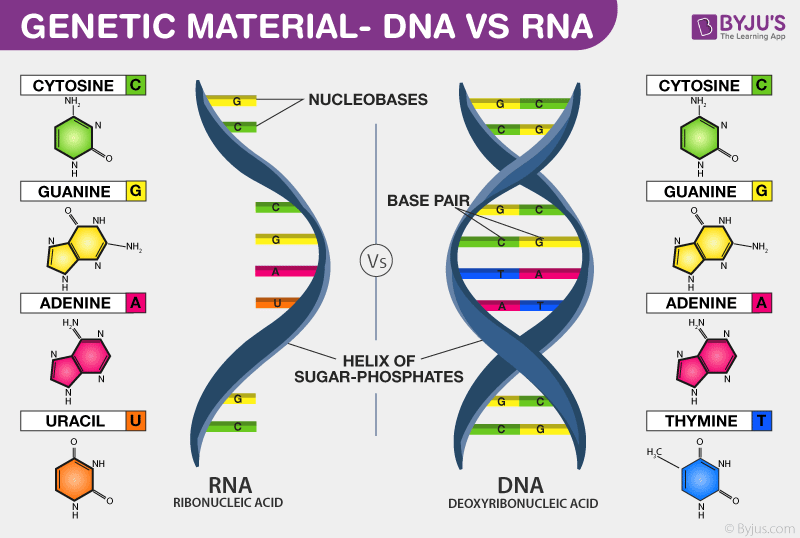
The cell consists of many interesting parts, all of which have to be there for the cell to function. The control center is the nucleus, and it consists of among other things the DNA.
The DNA is formed as a double helix and could be seen as containing information code. There are 4 different states, C,G,A and T (see figure above); this is the basic encryption in the double helix. There are about 3 billion so called base pairs in the nucleus of every cell in the opossum. To grasp the size of the code, let’s say you are a court recorder, typing away the letters at a speed of 18.75 letters a second (the qualification speed for court recorders). You do it 8 hours a day, 5 days a week, 48 weeks a year (2 weeks vacation and 11 holidayWe were created by God in his image with an expanded brain, capable of lifelong learning. This included a spiritual connection directly with God through His Spirit. This is the connection that died when Adam sinned and people decided they could function quite well without constant communication with God. Yet there remained a god-shaped void in their brains, a longing that wanted to be satisfied.s), it would take over 23 years to transcribe the code. A court recorder has to have better than 95% accuracy, but we are dealing with genetic encryption, so it has to have been done with much better accuracy for it to be valid for reproduction. This code defines the species, in this case the opossum. It has all information necessary to reproduce the species. Sometimes cosmic radiation or strong ultra violet light can cause breaks in the DNA, but the resulting mutations tend to reinforce the species boundaries rather than cause evolution.
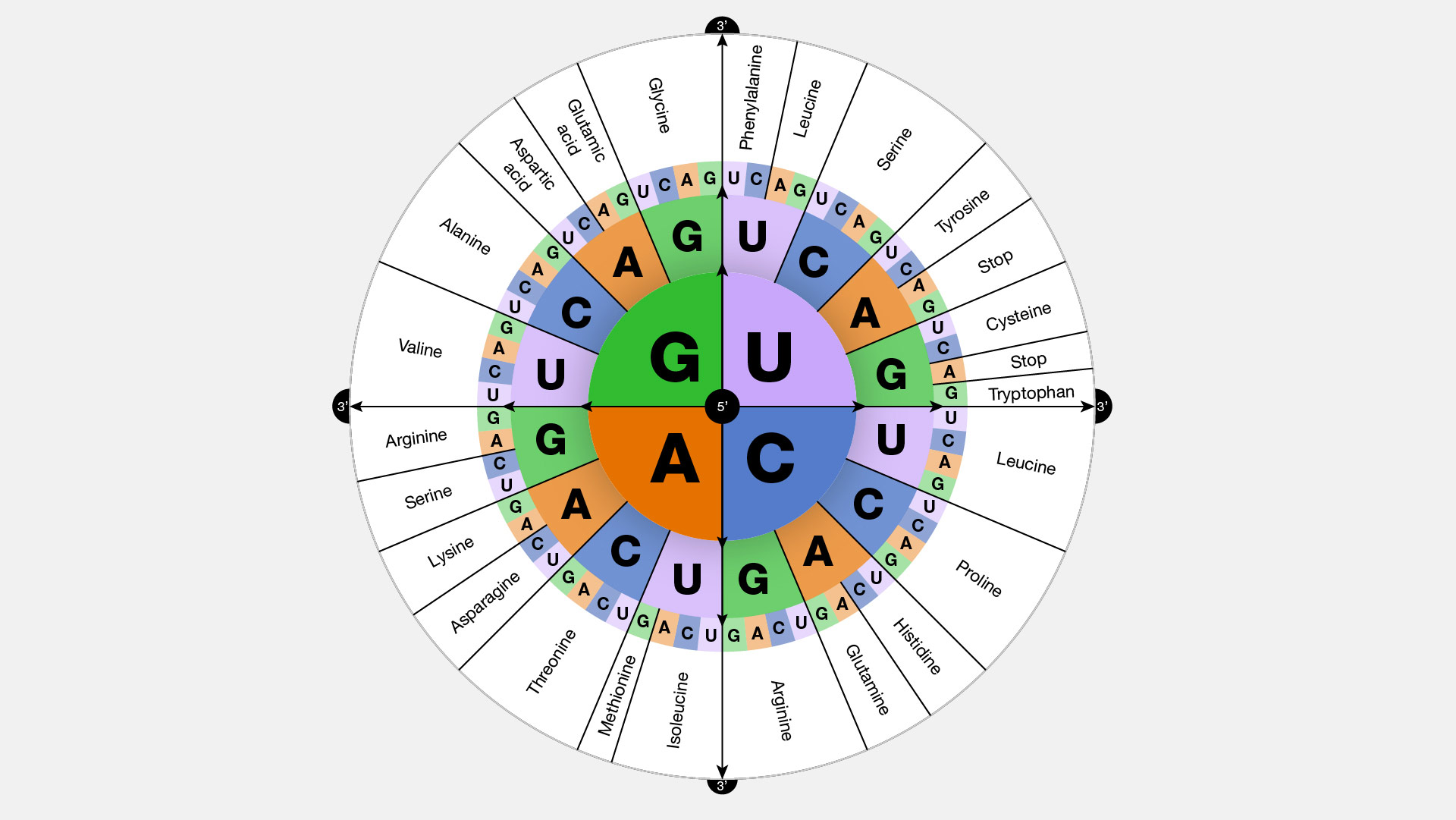
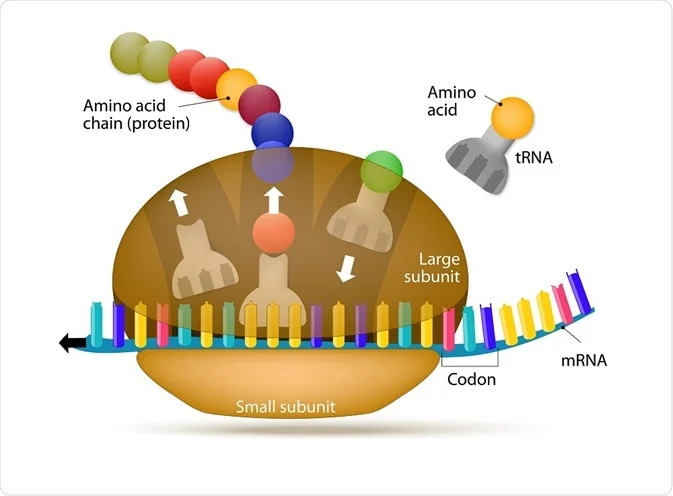
Of course, an encrypted message is totally worthless without a decrypter. The one that is successfully mapped is the RNA decrypter, called messenger RNA. It interprets 3 base pairs as a codon. This is a code that is optimally designed, but since there are only 20 amino acids, most are expressed more than once. In addition 3 of the codons tell when the decoding stops.
Messenger RNA (mRNA): Created during transcription, mRNA carries the genetic code from the cell’s DNA to the ribosome, where it is used as a template to build a protein. Below is a picture of the ribosome RNA (rRNA) as well as the transfer RNA (tRNA).
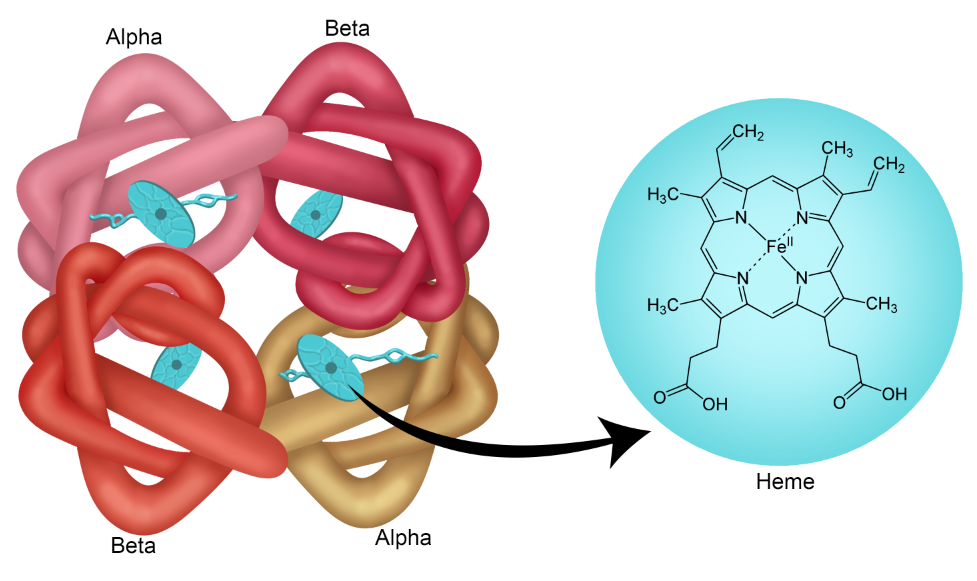
The properly decrypted mRNA with its proper length is transported to the ribosome units. With the help of the tRNA that transports and checks in the proper amino acid, the ribosome binds the one amino acid to form an amino acid chain. Here is a picture of hemoglobin:
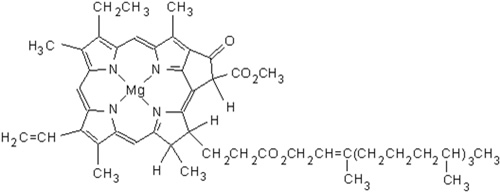
What makes hemoglobin usable is the heme structure containing iron. It is very similar to the structure in Chlorophyll:
But back to the DNA, the super encrypted code that makes advanced mammalian life possible, from how to make an egg or a sperm, how to perform fertilization in the right environment, how to do cell multiplication and perform specialization in the cells, how to form part of an eye iris or an eyebrow, it is all there, how to make joints and nerves, how to make bone structure and place marrow inside it, cells that produce hemoglobin, which is somehow transported into blood that is pumped around in the body via the heart, and so on, It is all information encrypted in the DNA. But not only that, the DNA contains repair code that kicks in when damage occur, wounds, viruses, harmful bacteria, bad fungus, poisons and even cancer.
This was the first half of the sixth day, and God saw it, and it was good.
God was not finished with the sixth day, so next installment is the creation of man.
It has always puzzled me that God said “let there be light” on “day one” of creation, but did not associate it with the sun. This, in a strange way convinced me that the story of creation came from God and not from man. If it were from man they would of course have started with the sun to explain night and day as a 24 hour period.
In 1927, Georges Lemaître, a Belgian cosmologist and Catholic priest published a paper that provided a compelling solution to the equations of General Relativity for the case of an expanding universe. This was confirmed in 1931 by Edwin Hubble, and the expanding universe became widely accepted, and the Big Bang hypothesis, where the whole universe could be explained by having started by a singularity. Without being able to explain how a singularity could possibly happen, it was a convenient way to explain away God, And after the Hubble telescope was launched nearly all astronomers agreed it was so, and the universe was 13.88 Billion years old. This lasted until the Webb telescope was launched, and much of what had been accepted as true was not so, for instance they found galaxies that were over 14 billion years old. In addition they found that intergalactic water was found in mass earlier than the Big Bang theory had predicted that water could form. The earth and the Solar System were in a state of chaos until about 4.6 Billion years ago. This was in the middle of “day 3”. Our solar system is formed as a result of earlier supernovas having generated all the natural elements in the right proportions for life to be possible. The mixture of hydrogen and all elements finally formed a disc, and hydrogens got concentrated into a cloud, and the 10 planets, including earth making clouds at their proper distances from the center. The Earth got fully formed, but the Sun concentrated all its gasses as a protostar for another 10 to 50 million years until the core temperature reached 15 million degrees Celsius so fusion could really begin and stabilize. Therefore it states in Genesis 1:14-19:And God said, “Let there be lights in the expanse of the sky to separate the day from the night, and let them serve as signs to mark sacred times, and days and years, 15 and let them be lights in the expanse of the sky to give light on the earth.” And it was so. 16 God made two great lights—the greater light to govern the day and the lesser light to govern the night. He also made the stars. 17 God set them in the expanse of the sky to give light on the earth, 18 to govern the day and the night, and to separate light from darkness. And God saw that it was good. 19 And there was evening, and there was morning—the fourth day.
The Moon was formed later. One theory is that about 4.5 billion years ago, a Mars-sized protoplanet named Theia collided with the young Earth and separated from it.
With the Sun warming up fully, the algae and other plants really started growing, so God was then in a position to create something to consume the carbohydrates and all that plant life produced. It also helped that in the young earth the CO2 concentration was more than 10,000 ppm, or more than 50 times what it is today. It also happened that the Sun produced just the right amount of heat, and the Earth is just at the right distance from the sun to produce an ecosystem that produced the ideal temperature range to sustain organic life.
We find this in Genesis 1:6-8 (NIV) And God said, “Let there be an expanse between the waters to separate water from water.” 7 So God made the expanse and separated the water under the expanse from the water above it. And it was so. 8 God called the expanse “sky.” And there was evening, and there was morning—the second day. But God did NOT say: “It was good” The creation story is interesting reading. God takes a whole day out His busy schedule of creation just to form an environment with water in all its forms in what we call the atmosphere or “sky”. He has yet to create life. Could it be, that water in all its forms are necessary to form and sustain life, so a sustainable ecosystem had to be prepared first?
God created the earth too be just heavy enough to hold on to water vapor, and water is unique because its melting point and boiling point is within the range of bring able to participate in sustaining life. It also has the second (after ammonia) highest specific heat capacity of all known substances. To melt 1 gram of ice takes 80 calories, to heat it takes 1 calorie per gram and to boil it at ground levels takes 539 calories. (The calories you eat are actually kilo-calories). This makes water the ideal substance to moderate and regulate climate. Water vapor evaporates from the ocean, cooling it down and water vapor, being lighter than air rises and condenses as clouds form. The clouds are the most important temperature regulator, much more important than all other greenhouse gases combined. Clouds transport heat from the equator to the temperate areas and to the poles. Without this the equator temperature would be in excess of 145 F. In addition clouds have a high reflection of incoming sunlight, reflecting incoming heat back into space. The earth has never been to warm to sustain complicated life, nor is there any danger of overheating unless clouds disappear. In fact, the next major climate change is the next ice age.
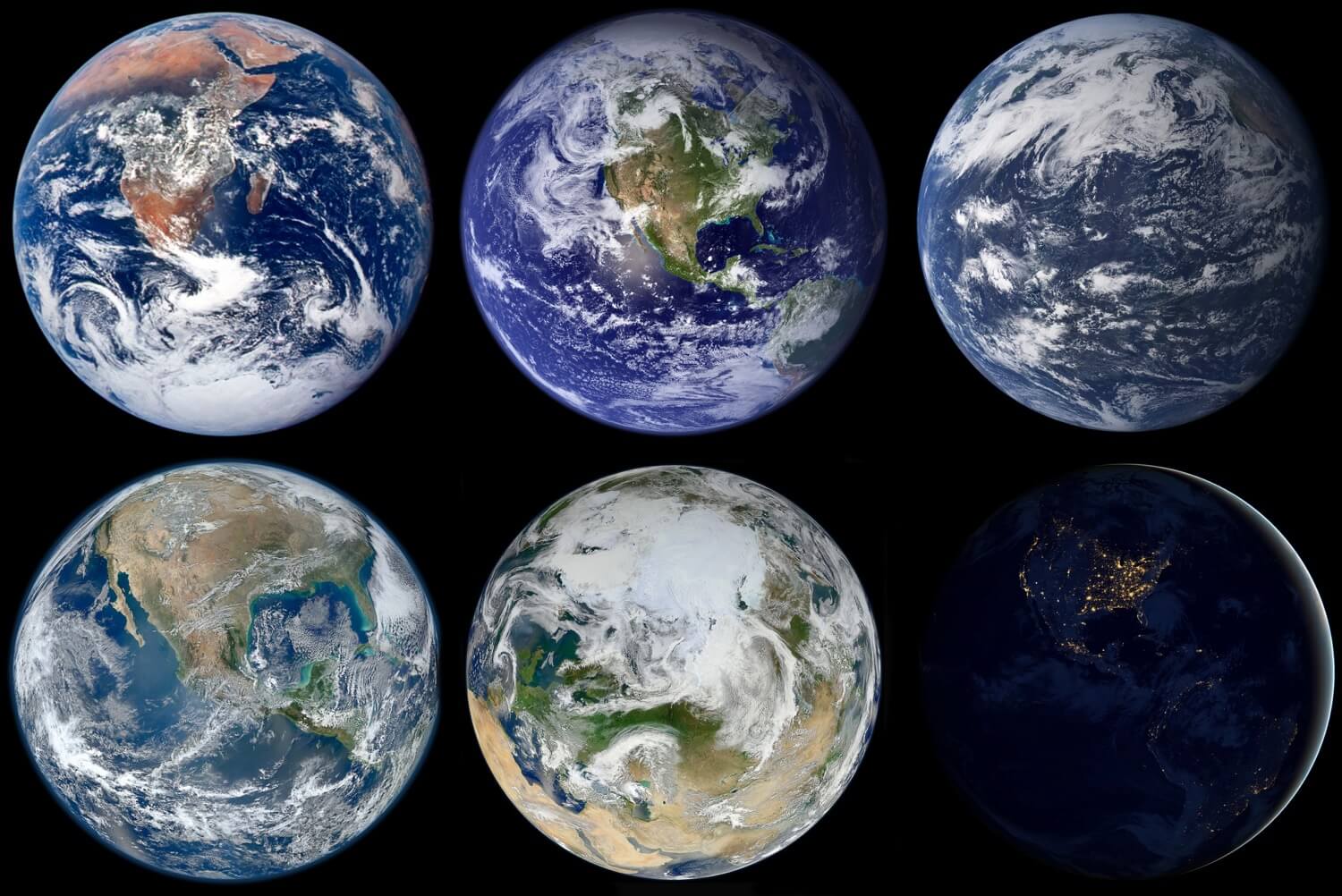
The picture above shows the friendly earth we are living in today. On the second “day” of creation situation was quite different. The sun was not fully created yet, and the earth was still in its chaotic state. All God did was to prepare the ecosystem. The earth was still cooling down from creation, and water evaporated and formed a cloud that covered the whole earth. This is why God did NOT say “it was good” on the second day, it was just the preparation.
Genesis 1:1 In the beginning God created the heavens and the earth.
What did God create? Continuing in Genesis 1:2; Now the earth was formless and empty, darkness was over the surface of the deep, and the Spirit of God was hovering over the waters. The earth was formless, meaning chaotic and unorganized; and empty meant without any form of life. But there was water; yes, that is right; water existed in abundance way before the sun was formed. Water is necessary for life to exist, and its unique property of freezing at 0 C and boiling at 100C makes it ideal for organic life. The fact that ice is lighter than water makes ir possible for marine life to survive the winters even in shallow lakes since the ice sits on top of the lake and isolates for further freezing.. Here is introduced God’s Spirit moving over the waters, doing what?
Then in Genesis 1:3; And God said, “Let there be light,” and there was light. Light is very interesting. It is just a massless piece of energy traveling at the speed of light. Since it travels at the speed of light it has no time. It is created and extinguished at the same time but in different places. From our perspective we see it as traveling at the speed of light, but that is because we are stuck in place in time and space. Dead matter cannot do anything, but with the energy in form of light it might be possible. Therefore
in Genesis 1:4; God saw that the light was good, and he separated the light from the darkness.
So in Genesis 1:5: God called the light “day,” and the darkness he called “night.” And there was evening, and there was morning—the first day. At this time God just defined the term day and night. But notice that darkness comes before light.
But do not forget this one thing, dear friends: With the Lord a day is like a thousand years, and a thousand years are like a day. (2 Peter 3:8)
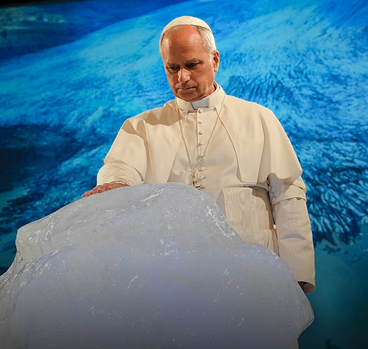
Pope Leo XIV, the newly elected pope, has recently championed the Vatican’s plan to become the world’s first carbon-neutral state by developing a large solar farm on land near Rome. This initiative is inspired by the environmental legacy of Pope Francis and aims to generate enough electricity to meet the Vatican’s needs and potentially provide excess energy to the local community. The Vatican’s efforts are part of a broader push for climate action, with Leo XIV actively promoting the transition away from fossil fuels and emphasizing the moral imperative of environmental stewardship. He also took part in the “Raising Hope for Climate Justice” International Conference in Castelgandolfo, Italy on Oct 1, where he blessed a chunk of a Greenland iceberg. See the picture:
Pope Leo asked eloquently: “What must be done now to ensure that caring for our common home and listening to the cry of the earth and the poor do not appear as mere passing trends or, worse still, are seen and felt as divisive issues?”
“Everyone in society, through nongovernmental organizations and advocacy groups, must put pressure on governments to develop and implement more rigorous regulations, procedures and controls,” the pope said.
“Citizens need to take an active role in political decision-making at national, regional and local levels,” he said. “Only then will it be possible to mitigate the damage done to the environment.”
What they still do not know is that rising CO2 levels is responsible for less than 10% of the climate change, and water in all its forms; ice, water, water vapor and clouds is responsible for over half of climate change. Land use changes are also more important. Let me explain it further:
Many years ago, around 1976 Dr. James Lovelock bought a number of Hewlett Packard 5840 Gas Chromatographs to be set up in some of the most remote places of the earth to study pollution and its effect on the climate. What he found was an unexpectedly large amount of dimethylsulphide (DMS) in the atmosphere, and that acted as a
condensation point for cloud formation. He was then a longtime paid consultant for Hewlett Packard, so he came over from his native England a couple of times a year, always willing to hold a seminar for us engineers working at Hewlett Packard Analytical, and at one of them he sprung “Daisy-world” on us before it was published; mostly to see if we could poke holes in his hypothesis. It involved a world that consisted of only two flowers, black daisies and white daisies. The computer simulation starts out with a cold world and a weak sun. The sun slowly warms up (about 1 percent every ten million years), and at some time suddenly black daisies appear and cover the earth. This warms the earth some more and white daisies appear. As the sun varies in intensity the mix of white and black daisies changes and this keeps the earth at a stable temperature, as they have different reflective properties. He then went on to say that the whole earth is like a living organism. Some time later he presented the paper and afterwards we asked him how it was received. “You won’t believe it”, he answered. ”Now there are people who actually believe the earth is a living organism. They demand follow-up articles that justifies their belief.” He had partly himself to blame, the name he had chosen was “the GAIA hypothesis,” Gaia being the Mother Earth Goddess. Talking about religion the Mother Earth people now had their goddess, and expressions like. “The earth has a temperature” became commonplace. For me, being a Christian I read with wonderment what God has to say about Creation and the Ecosystem.
Starting in Genesis 1:1; In the beginning God created the heavens and the earth. This can be described in scientific terms: From nothing God created space and matter. What happened to “In the beginning”? It turns out that matter has to be accompanied with space or it will not work. And time is a derived property from the existence of matter and space. Without space and matter time does not exist. So the creation of matter and space also defined the beginning of time. What about God? The laws of physics tells us you cannot create something out of nothing. This proves that we and everything else cannot possibly exist. But we do, and therefore there must have been something existing before anything existed. This is God, and He can be defied in one word: Presence. When Moses saw the burning bush he asked who it was. And God answered “I am that I am”, in a way describing the eternal presence, without beginning and end. This is the God I believe in: Out of time and space since He created it, and also in time and space since it is part of His creation.
The expression “in the beginning” is in Hebrew bereshit which means in the beginning. The same phrase begins the gospel of John 1:1 “Inthebeginning was theWord, and theWord was with God, and theWord was God.” Here the word translated beginning is “Arch” like in archangel and means “the chief” or “the most important one’ referring to the Word. It is in past tense which means that the Word existed before the beginning. Another reference is found in Titus 1:1 “inthe hope of eternal life, which God, who does not lie, promised before thebeginning of time,” In this verse the word eternal and the word time is in Greek aionion , which means a very long time, like the time span of a dynasty. Nowadays eon has a meaning of a thousand million years in Geology and Astronomy, but the original meaning is a very long time which may or may not be defined. It is sometimes translated of the ages. Here is a song that spiritually speaks to me:

 Len Bilén's blog, a blog about faith, politics and the environment.