The Thorium Energy security act SB 4242a

This is insanity. In 2011 the Oak Ridge Laboratories had a stockpile of 1400 kg U 233. They have been busy downblending it into depleted uranium to render it useless, and there is now only about 450 kg left.

The bill is introduced. It should be immediately passed in the Senate, and be passed in the house without amendments. Any delay is critical. It is that important. We gave the technology to the Chinese so they can build up their naval fleet with molten salt Thorium nuclear power. Meanwhile we still have some u-233 left, worth billions as a National Security asset. At the very least, we must stop downblending immediately, even before the bill is passed.

Here is the bill itself. The summary is not yet written, but the bill is introduced.

117th CONGRESS
2d Session

S. 4242

To provide for the preservation and storage of uranium-233 to foster development of thorium molten-salt reactors, and for other purposes.


IN THE SENATE OF THE UNITED STATES

May 18 (legislative day, May 17), 2022

Mr. Tuberville (for himself and Mr. Marshall) introduced the following bill; which was read twice and referred to the Committee on Energy and Natural Resources


A BILL

To provide for the preservation and storage of uranium-233 to foster development of thorium molten-salt reactors, and for other purposes.

Be it enacted by the Senate and House of Representatives of the United States of America in Congress assembled,

SECTION 1. Short title.

This Act may be cited as the “Thorium Energy Security Act of 2022”.

SEC. 2. Findings.

Congress makes the following findings:

(1) Thorium molten-salt reactor technology was originally developed in the United States, primarily at the Oak Ridge National Laboratory in the State of Tennessee under the Molten-Salt Reactor Program.

(2) Before the cancellation of that program in 1976, the technology developed at the Oak Ridge National Laboratory was moving steadily toward efficient utilization of the natural thorium energy resource, which exists in substantial amounts in many parts of the United States, and requires no isotopic enrichment.

(3) The People’s Republic of China is known to be pursuing the development of molten-salt reactor technology based on a thorium fuel cycle.

(4) Thorium itself is not fissile, but fertile, and requires fissile material to begin a nuclear chain reaction. This largely accounts for its exclusion for nuclear weapons developments.

(5) Uranium-233, derived from neutron absorption by natural thorium, is the ideal candidate for the fissile material to start a thorium reactor, and is the only fissile material candidate that can minimize the production of long-lived transuranic elements like plutonium, which have proven a great challenge to the management of existing spent nuclear fuel.

(6) Geologic disposal of spent nuclear fuel from conventional nuclear reactors continues to pose severe political and technical challenges, and costs United States taxpayers more than $500,000,000 annually in court-mandated payments to electrical utilities operating nuclear reactors.

(7) The United States possesses the largest known inventory of separated uranium-233 in the world, aggregated at the Oak Ridge National Laboratory.

(8) Oak Ridge National Laboratory building 3019 was designated in 1962 as the national repository for uranium-233 storage, and its inventory eventually grew to about 450 kilograms of separated uranium-233, along with approximately 1,000 kilograms of mixed fissile uranium from the Consolidated Edison Uranium Solidification Program (commonly referred to as “CEUSP”), divided into approximately 1,100 containers.

(9) The Defense Nuclear Facilities Safety Board issued Recommendation 97–1 (relating to safe storage of uranium-233) in 1997 because of the possibility of corrosion or other degradation around the storage of uranium-233 in a building that was built in 1943.

(10) In response, the Department of Energy published Decision Memorandum No. 2 in 2001 concluding that no Department of Energy programs needed uranium-233 and directed that a contract be placed for disposition of the uranium-233 inventory and decommissioning of its storage facility.

(11) The Department of Energy awarded a contract for the irreversible downblending of uranium-233 with uranium-238 and its geologic disposal in Nevada, which downblending would create a waste form that would pose radiological hazards for hundreds of thousands of years, rather than to consider uranium-233 as a useful national asset.

(12) All 1,000 kilograms of CEUSP uranium-233-based material have been dispositioned (but not downblended) but those containers had little useful uranium-233 in them. The majority of separated and valuable uranium-233 remains uncontaminated by uranium-238 and suitable for thorium fuel cycle research and development. That remaining inventory constitutes the largest supply of uranium-233 known to exist in the world today.

(13) The United States has significant domestic reserves of thorium in accessible high-grade deposits, which can provide thousands of years of clean energy if used efficiently in a liquid-fluoride reactor initially started with uranium-233.

(14) Recently (as of the date of the enactment of this Act), the Department of Energy has chosen to fund a series of advanced reactors that are all dependent on initial inventories and regular resupplies of high-assay, low-enriched uranium.

(15) There is no domestic source of high-assay, low-enriched uranium fuel, and there are no available estimates as to how long the development of a domestic supply of that fuel would take or how expensive such development would be.

(16) The only viable source of high-assay, low-enriched uranium fuel is through continuous import from sources in the Russian Federation.

(17) The political situation with the Russian Federation as of the date of the enactment of this Act is sufficiently uncertain that it would be unwise for United States-funded advanced reactor development to rely on high-assay, low-enriched uranium since the Russian Federation would be the primary source and can be expected to undercut any future United States production, resulting in a dependency on high-assay, low-enriched uranium from the Russian Federation.

(18) The United States has abandoned the development of a geologic repository at Yucca Mountain and is seeking a consenting community to allow interim storage of spent nuclear fuel, but valid concerns persist that an interim storage facility will become a permanent storage facility.

(19) Without a closed fuel cycle, high-assay, low-enriched uranium-fueled reactors inevitably will produce long-lived wastes that presently have no disposition pathway.

(20) The United States possesses enough uranium-233 to support further research and development as well as fuel the startup of several thorium reactors. Thorium reactors do not require additional fuel or high-assay, low-enriched uranium from the Russian Federation.

(21) Continuing the irreversible destruction of uranium-233 precludes privately funded development of the thorium fuel cycle, which would have long term national and economic security implications.

SEC. 3. Sense of Congress.

It is the sense of Congress that—

(1) it is in the best economic and national security interests of the United States to resume development of thorium molten-salt reactors that can minimize long-lived waste production, in consideration of—

(A) the pursuit by the People’s Republic of China of thorium molten-salt reactors and associated cooperative research agreements with United States national laboratories; and

(B) the present impasse around the geological disposal of nuclear waste;

(2) that the development of thorium molten-salt reactors is consistent with section 1261 of the John S. McCain National Defense Authorization Act for Fiscal Year 2019 (Public Law 115–232; 132 Stat. 2060), which declared long-term strategic competition with the People’s Republic of China as “a principal priority for the United States”; and

(3) to resume such development, it is necessary to relocate as much of the uranium-233 remaining at Oak Ridge National Laboratory as possible to new secure storage.

SEC. 4. Definitions.

In this Act:

(1) CONGRESSIONAL DEFENSE COMMITTEES.—The term “congressional defense committees” has the meaning given that term in section 101(a) of title 10, United States Code.

(2) DOWNBLEND.—The term “downblend” means the process of adding a chemically identical isotope to an inventory of fissile material in order to degrade its nuclear value.

(3) FISSILE MATERIAL.—The term “fissile material” refers to uranium-233, uranium-235, plutonium-239, or plutonium-241.

(4) HIGH-ASSAY, LOW-ENRICHED URANIUM.—The term “high-assay, low-enriched uranium” (commonly referred to as “HALEU”) means a mixture of uranium isotopes very nearly but not equaling or exceeding 20 percent of the isotope uranium-235.

(5) TRANSURANIC ELEMENT.—The term “transuranic element” means an element with an atomic number greater than the atomic number of uranium (92), such as neptunium, plutonium, americium, or curium.

SEC. 5. Preservation of uranium-233 to foster development of thorium molten-salt reactors.

The Secretary of Energy shall preserve uranium-233 inventories that have not been contaminated with uranium-238, with the goal of fostering development of thorium molten-salt reactors by United States industry.

SEC. 6. Storage of uranium-233.

(a) Report on long-Term storage of uranium-233.—Not later than 120 days after the date of the enactment of this Act, the Secretary of Energy, in consultation with the heads of other relevant agencies, shall submit to Congress a report identifying a suitable location for, or a location that can be modified for, secure long-term storage of uranium-233.

(b) Report on interim storage of uranium-233.—Not later than 120 days after the date of the enactment of this Act, the Chief of Engineers shall submit to Congress a report identifying a suitable location for secure interim storage of uranium-233.

(c) Report on construction of uranium-233 storage facility at Redstone Arsenal.—Not later than 240 days after the date of the enactment of this Act, the Chief of Engineers shall submit to Congress a report on the costs of constructing a permanent, secure storage facility for uranium-233 at Redstone Arsenal, Alabama, that is also suitable for chemical processing of uranium-233 pursuant to a public-private partnership with thorium reactor developers.

(d) Funding.—Notwithstanding any other provision of law, amounts authorized to be appropriated or otherwise made available for the U233 Disposition Program for fiscal year 2022 or 2023 shall be made available for the transfer of the inventory of uranium-233 to the interim or permanent storage facilities identified under this section.

SEC. 7. Interagency cooperation on preservation and transfer of uranium-233.

The Secretary of Energy, the Secretary of the Army (including the head of the Army Reactor Office), the Secretary of Transportation, the Tennessee Valley Authority, and other relevant agencies shall—

(1) work together to preserve uranium-233 inventories and expedite transfers of uranium-233 to interim and permanent storage facilities; and

(2) in expediting such transfers, seek the assistance of appropriate industrial entities.

SEC. 8. Report on use of thorium reactors by People’s Republic of China.

Not later than 180 days after the date of the enactment of this Act, the Comptroller General of the United States, in consultation with the Secretary of State, the Secretary of Defense, and the Administrator for Nuclear Security, shall submit to Congress a report that—

(1) evaluates the progress the People’s Republic of China has made in the development of thorium-based reactors;

(2) describes the extent to which that progress was based on United States technology;

(3) details the actions the Department of Energy took in transferring uranium-233 technology to the People’s Republic of China; and

(4) assesses the likelihood that the People’s Republic of China may employ thorium reactors in its future navy plans.

SEC. 9. Report on medical market for isotopes of uranium-233.

Not later than 180 days after the date of the enactment of this Act, the Director of the Congressional Budget Office, after consultation with institutions of higher education and private industry conducting medical research and the public, shall submit to Congress a report that estimates the medical market value, during the 10-year period after the date of the enactment of this Act, of actinium, bismuth, and other grandchildren isotopes of uranium-233 that can be harvested without downblending and destroying the uranium-233 source material.

SEC. 10. Report on costs to United States nuclear enterprise.

Not later than 180 days after the date of the enactment of this Act, the Director of the Congressional Budget Office, after consultation with relevant industry groups and nuclear regulatory agencies, shall submit to Congress a report that estimates, for the 10-year period after the date of the enactment of this Act, the costs to the United States nuclear enterprise with respect to—

(1) disposition of uranium-233;

(2) payments to nuclear facilities to store nuclear waste; and

(3) restarting the manufacturing the United States of high-assay, low-enriched uranium.
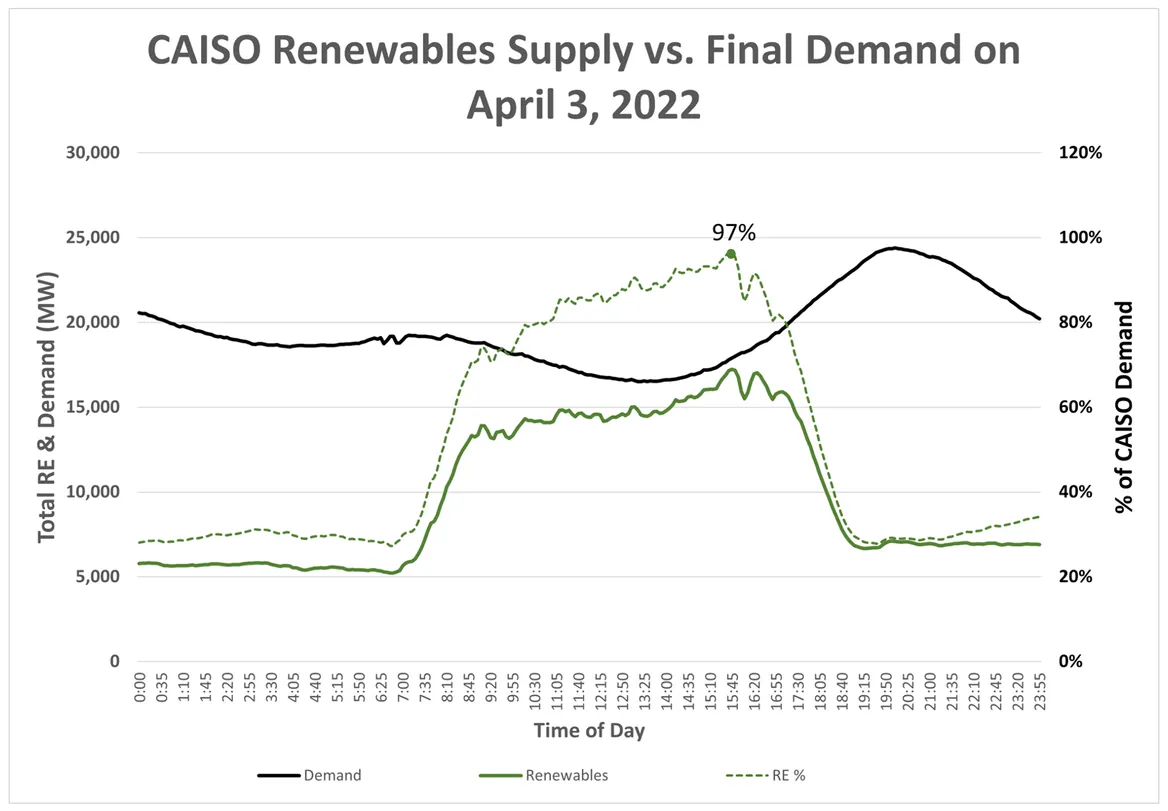

With over 1 Million electric cars California is straining its electric grid. Will there be many more black and brown-outs this summer?

California has been promoting the sales of “carbon free” electric cars wit subsidies that in extreme cases has been as high as $57,000 per vehicle, mostly a subsidy for the rich. There are now over 1 million electric vehicles on the road. there is one problem. They use electricity, and it has to come from somewhere, mostly from the electric grid, but in emergencies a diesel generator will do.

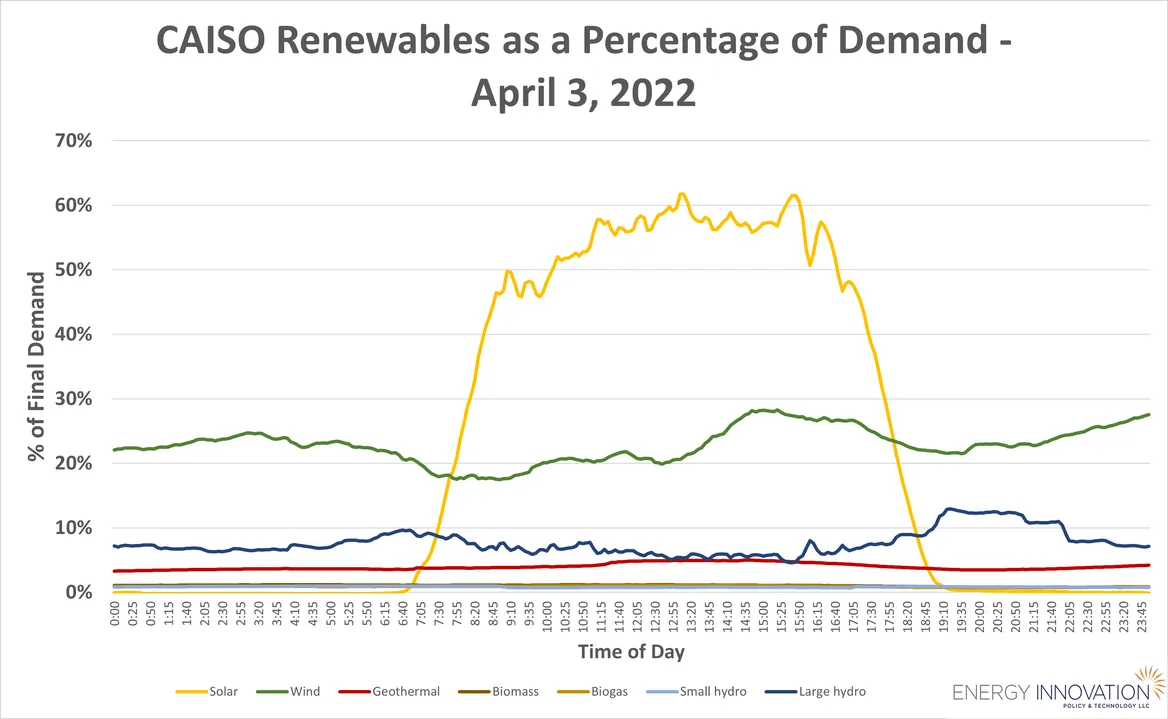
They keep talking of supplying the electricity through renewable power, and on April 3 CAISO reported that the California electric grid was served to 97% by non-hydro renewable non carbon emitting energy sources. This was widely reported, mostly by solar panel providers showing that we are on our way to a wonderful carbon free future. See the chart below.

Another way to look at it is to see the renewable sources individually

With the addition of electric cars as grid users, they have to be recharged. This will occur at dinner time for most people, coming home, connecting the car, take a shower, run the air conditioner, run the washer and dryer, and watch TV, the time when the grid is already most strained and the solar panels have stopped supplying energy.

It has already happened once this March that some electric companies in California has asked their customers to not recharge their cars for fear the grid would collapse, see here.

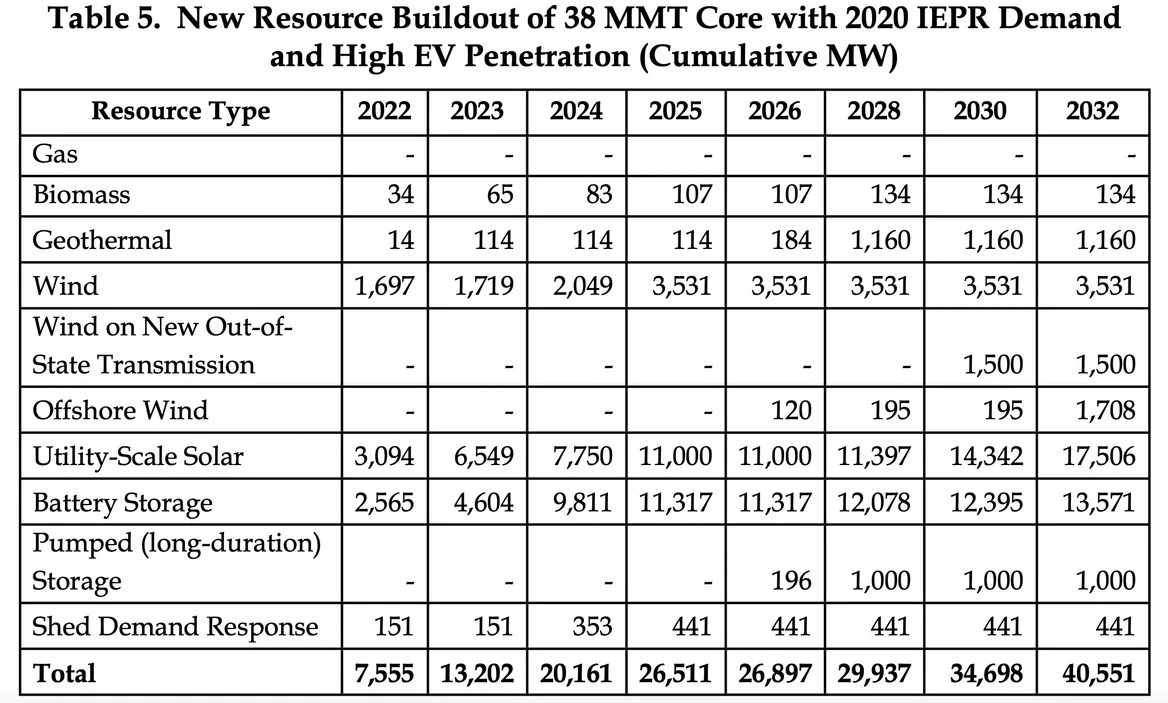
How big is the problem? The Western Journal reports that at least ten states are at risk of major electric outages this summer, among them California with an expected power shortage of up to 1,700 MW during peak hours, see here. California has an ambitious program to build up its capacity in the next ten years, but with the addition of electric cars needing recharging it ia not enough. Here is their proposed build for the next ten years.

A table from the CPUC’s February decision listing planned clean capacity additions. (CPUC) (Canary Media)

The plan is ambitious. Coal is already eliminated as a source of energy. There will be no new Natural gas plants, even for peak power. The remaining two nuclear plants will be decommissioned in 2024 and 2025. From now on they will rely on solar power and battery storage to make the grid “carbon free”.

But there is one big problem. The American South-west is drying up. Lake Mead can only provide power from seven of their 17 turbines, and water is getting lower and lower reducing power output. Lake Powell is precariously close to lose its power generation capacity altogether, the water is that low. But California has a lot of reservoirs:

Unfortunately, most of their water levels are well below seasonal average and are in danger of being unable to provide any power at all in late Summer, like Lake Oroville did last year. Lake Oroville is one lake that has pumping storage, but they let the water levels fall below even the lowest pumping levels.

Historically California has imported a lot of its electric energy, and has one of the highest transmission losses in the nation. but all the surrounding states suffer a similar drought, so hydropower will be hard to obtain. Luckily, the surrounding states have not abandoned all of their coal burning plants, so they are happy to sell peak power to California for up to a dollar a kWh when the demand is high. Even at that price the supply is limited, so California will have to resort to rotating brown and blackouts this summer.

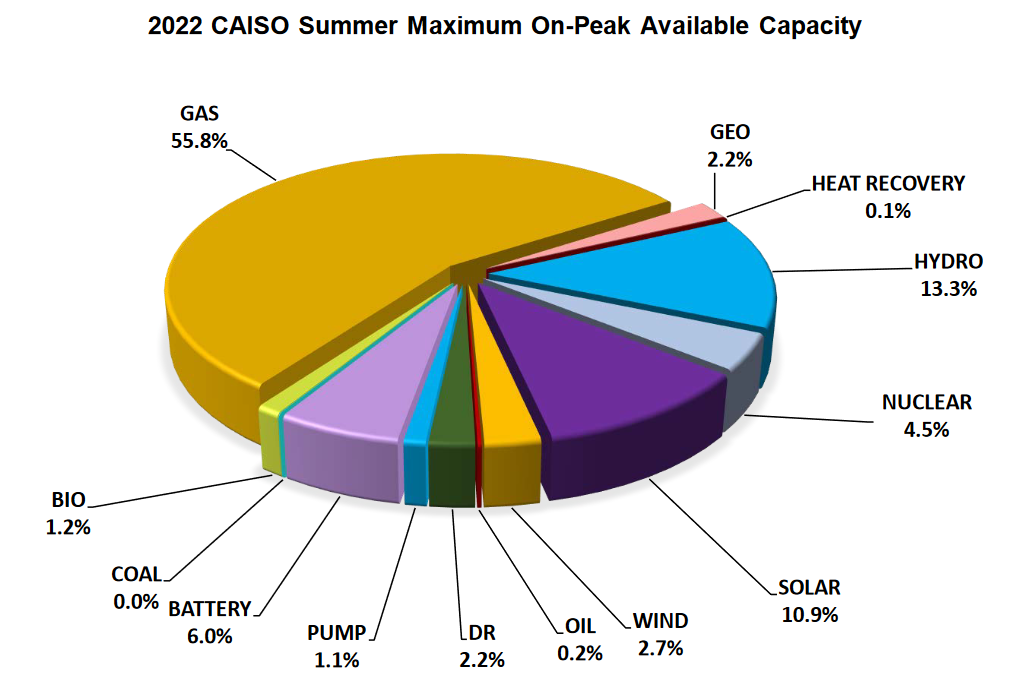
Here is the

Let’s take a look at each of the compounds that contribute to the electric supply and the future trends

Geothermal energy. Limited by available sources.

Heat recovery. Very limited

Hydroelectric power. Lake Mead and Lake Powell are drying up. In then years they are gone unless we do something. There will still be some water in the Colorado River, but the storage is gone. The desertification of the American Southwest will ensure hydropower is diminishing.

Nuclear power. The 2 last remaining Nuclear power plants will be decommissioned in 2024 and 2025.

Solar energy power. This is rapidly growing and will provide an increasing percentage of the total power, but not during peak demand which is in the evening.

Wind power. The best locations are already taken. Wind is good when it blows, but useless on a calm day. During storms sometimes some windmills will have to be shut off because there are no customers for the extra power.

Oil power is negligible and essentially only used as emergency backup power for hospitals and other vital systems.

Demand Response shutoffs. This will have to be increased to maintain a stable grid. California has very few industries that only operate when the cost of electricity is low, so to increase this it will have to be done through variable pricing, like charging two dollars a kWh or so for recharging your car during peak demand.

Pumped storage. The last major pumped storage facilities were made in the 1970’s. Since then it has always been more economical to provide peak power using natural gas. With natural gas prices tripling and still rising it is again worth looking at increasing the pumped storage. California has many dams. they should be upgraded to not only provide water and hydroelectric power, but also provide pumped storage. The best way to do this is to build lower, much smaller dams and pump up water from the lower to the upper reservoir during excess energy production and reverse the flow during peak demand. The energy losses for peak power are 15 to 20%, much less than the price differential between excess power and peak power. There is only one problem. The reservoirs are running out of water when they are needed the most, like in this period of drought.

Battery storage. California is making big investments in batteries, like a contract to supply more than three GW of battery storage. It is not cheap. The cost for batteries is about $1,250 per kWh, so assume the batteries will last 4 hours the investment by my estimate is about 15 billion dollars. The prices for batteries are set to increase rapidly as the supply of raw material is limited, especially Lithium and Cobalt. Since the weight of stationary batteries is unimportant, there will have to be developed lower cost alternatives for stationary batteries. And the research is intense to develop better batteries that do not require as much mining of rare resources.

Coal, California does not use coal anymore for electricity production, but it imports a lot of electric energy, some of which is generated by coal plants. In addition, this power comes from far, far away, so the transmission losses are substantial.

Biofuel. There will be better uses for biofuel than to burn it to produce electricity. Some of it is far too valuable as raw material for recycling. But it takes a lot of power to recycle properly, yet it is necessary to recycle and clean up the environment.

Natural gas. In the past natural gas supplied all the remaining power needed. With the addition of solar and wind, the amount of gas needed was reduced sufficiently still meet the electricity needs. This was fine until solar and wind could supply more than 100% of the electricity needs. The extra energy must then be stored in batteries or peak storage, or that energy would be wasted. This means that from now on every added solar panel or wind turbine must come with an equivalent amount of battery or pumped storage. So to supply the first 10% of California’s electric power needs with solar and wind was cheap, from now on it will be all about battery and pumped storage.

What to do?

The American Southwest has started its desertification. Lake Mead and Lake Powell are soon but a memory. With extreme conservation measures, and limiting water for all, eliminating nearly all irrigation farming and limiting new building the desertification can be lowed down but not halted. Once it has started it will run its course and render the place that was the fastest growing part of America almost uninhabitable for people that want to take showers every now and then, enjoy gardening and having fresh food to eat.

So here is my proposal:

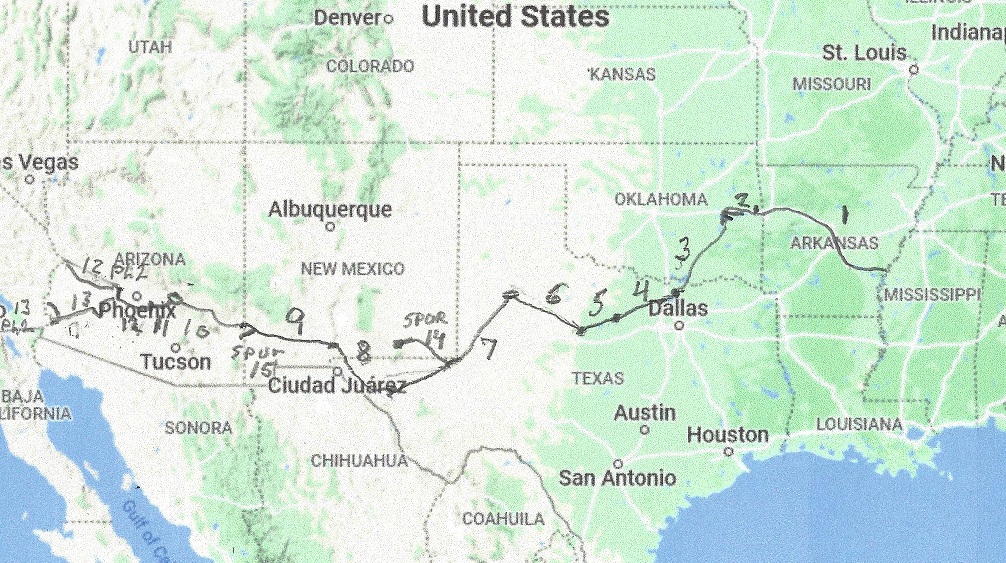
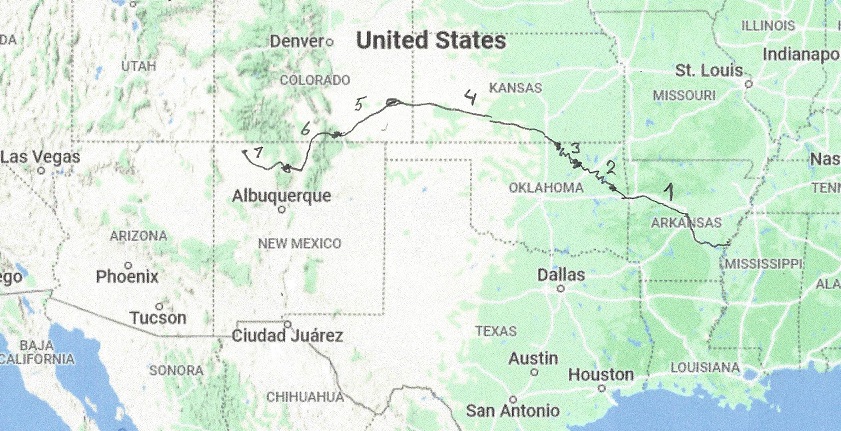
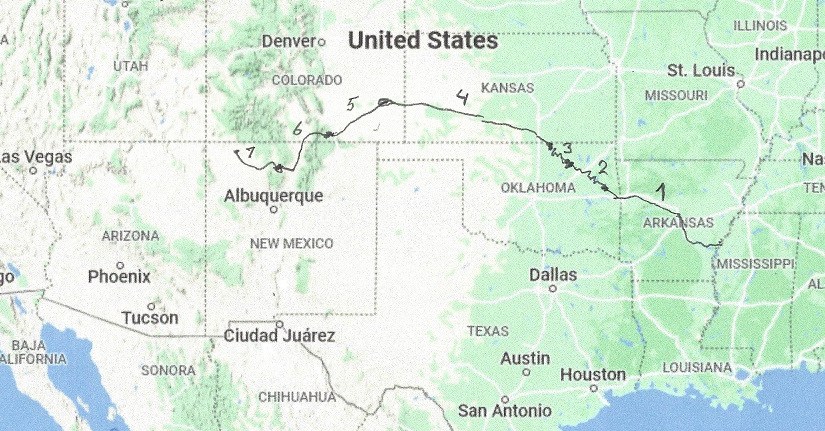
The first is to build a Transcontinental aqueduct, up the Arkansas River to the Colorado River via Arkansas, Oklahoma, New Mexico and Arizona, supplying water and peak power on the way.

For a detailed description, see here.

Secondly, build a Trans-Rocky Mountain Aqueduct, up the Arkansas River via Arkansas, Oklahoma, Kansas, Colorado, and New Mexico, to the San Juan River, a tributary to the Colorado River.

For a detailed description, see here.

The Transcontinental aqueduct will provide over 10 million acre-feet of water to the dry Southwest, triple the nation’s pumped water storage and allow the South-west to grow again. The Trans-Rocky Mountain will do likewise, and together they will allow the south-west to keep growing for at least another 50 years. Together with a smaller project , the South Platte river aqueduct they will save the Ogallala aquifer and allow it to keep producing crops for generations to come.

This is insanity. Stop downblending our remaining U233 NOW!

This is insanity. In 2011 the Oak Ridge Laboratories had a stockpile of 1400 kg U 233. They have been busy downblending it into depleted uranium to render it useless, and there is now only about 450 kg left.

Check out this video and see if you will get as upset as I did.

There is one minor error in the video. The Thorium-U233 reactors also produce Plutonium, but it only produces Plutonium238, which is needed for space exploration. We are out of Pu238, only Russia has some left.

The situation:  The Department of Energy had 1400 Kg Uranium-233 stored at Oak Ridge National Lab. They are in process of downgrading it to natural uranium by downblending it with depleted uranium. They need 200 tons of depleted uranium to do the task, rendering it unusable for anything.

The decommissioning was approved in 2003 and in 2012 130 million had been spent, before the actual downblending started.

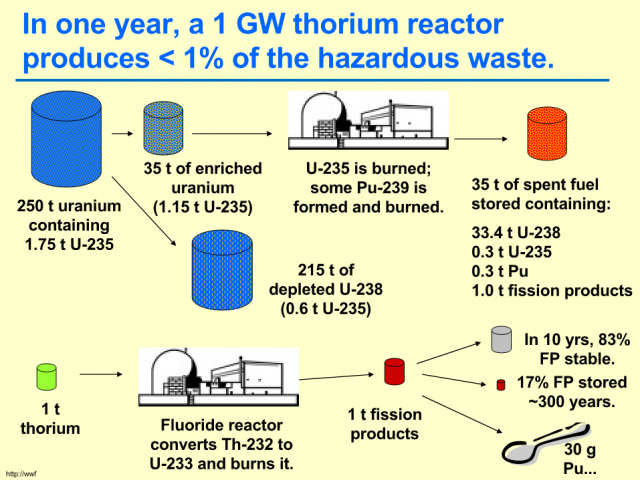
Stop the decommissioning immediately. Build our own Liquid Fluoride Thorium Nuclear Reactor and over time get 600 million dollars worth of electric power and 45g of Plutonium-238. We are out of Pu-238 and can do no more planetary exploration satellites.

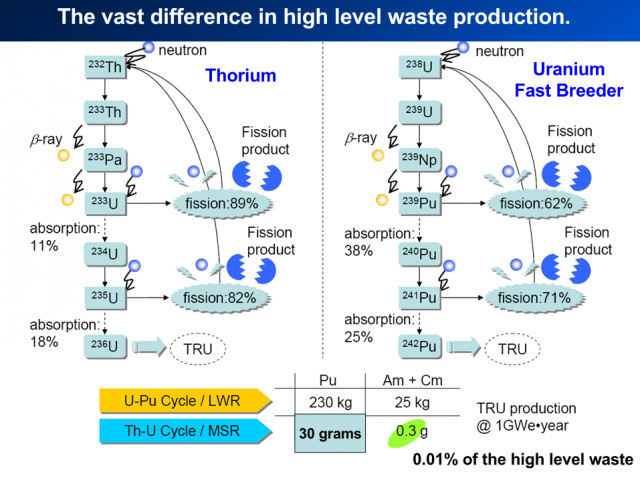
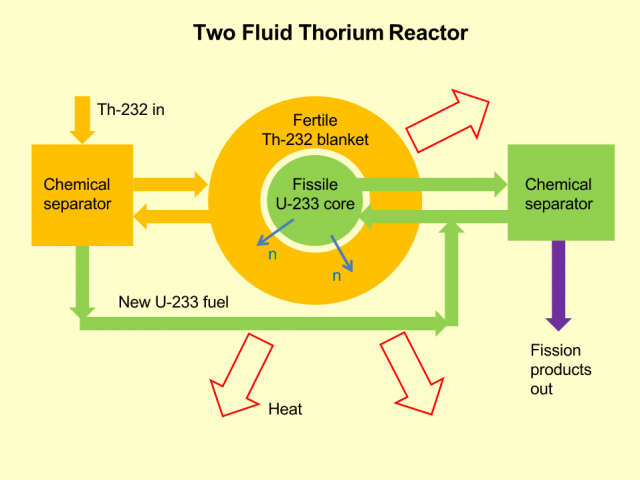
The deep space satellites all had Pu-238 power sources. Only Russia has Pu-238 left, and the U.S. was banking on getting it for a friendship price. In addition there are significant unique medical applications in treatment of cancer that can be obtained by radiation from the byproduct of the Thorium process. Below are pictures of the Thorium process and what a Thorium Power plant might look like. (4)

The Plutonium in the Uranium cycle is PU239 and higher, all nasty stuff.
The LFTR does not use water, can be deployed everywhere, even in space.

The ballad of Ira Hayes and the Transcontinental aqueduct.

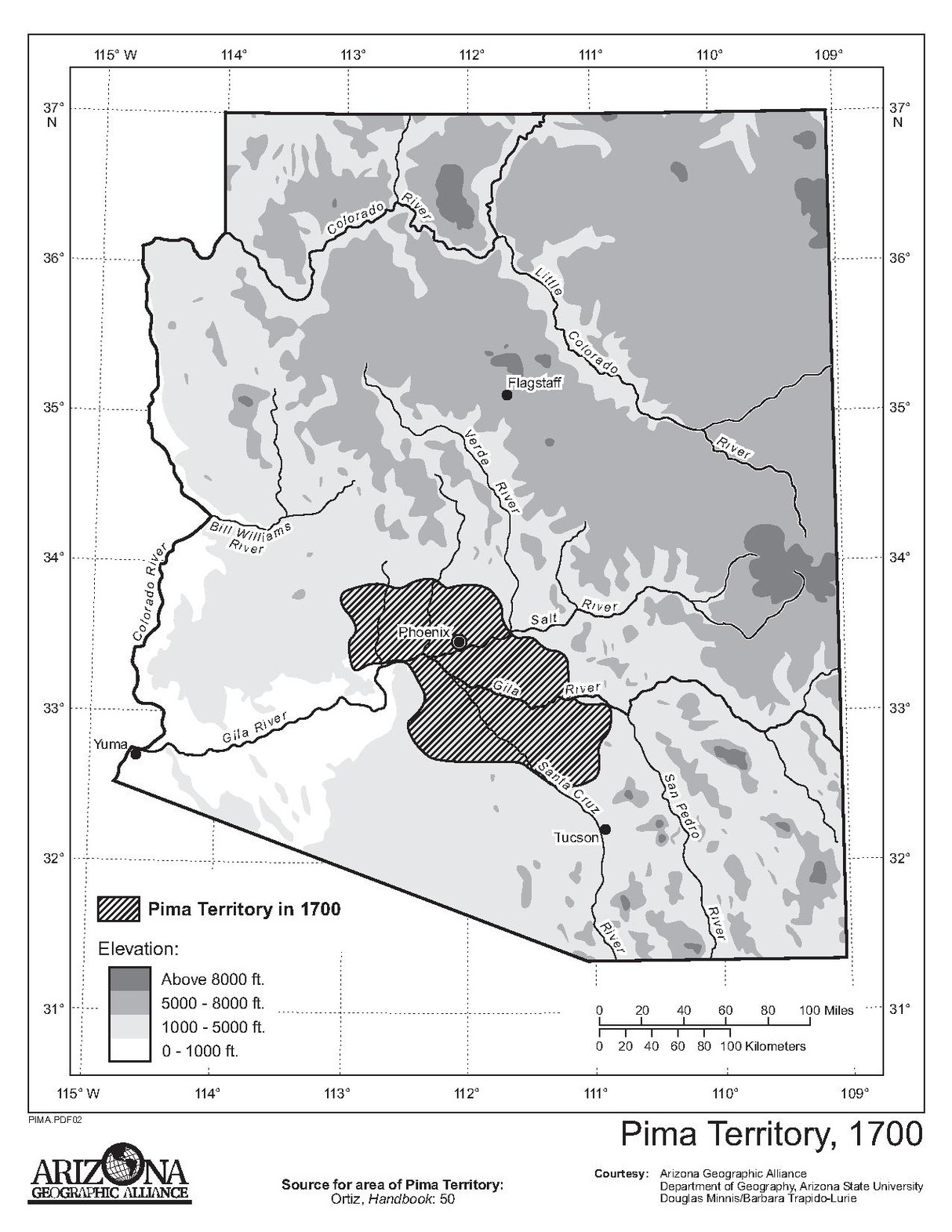
165 years ago Mark Twain coined the phrase: Whiskey is for drinking, water is for fighting over. So it was for the Pima Indians in the Phoenix valley in Arizona.

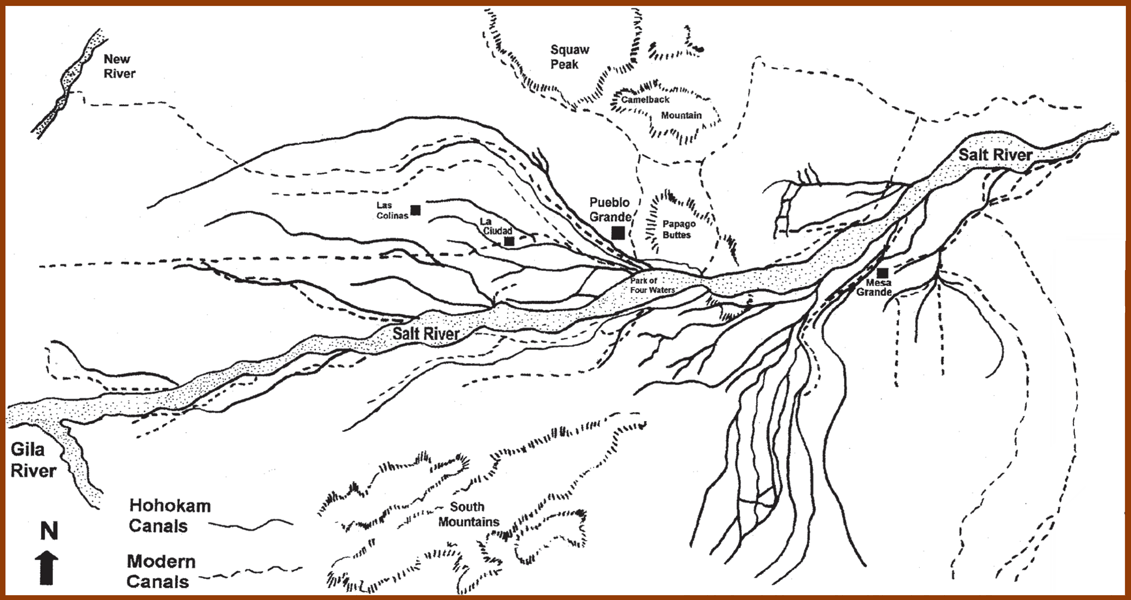
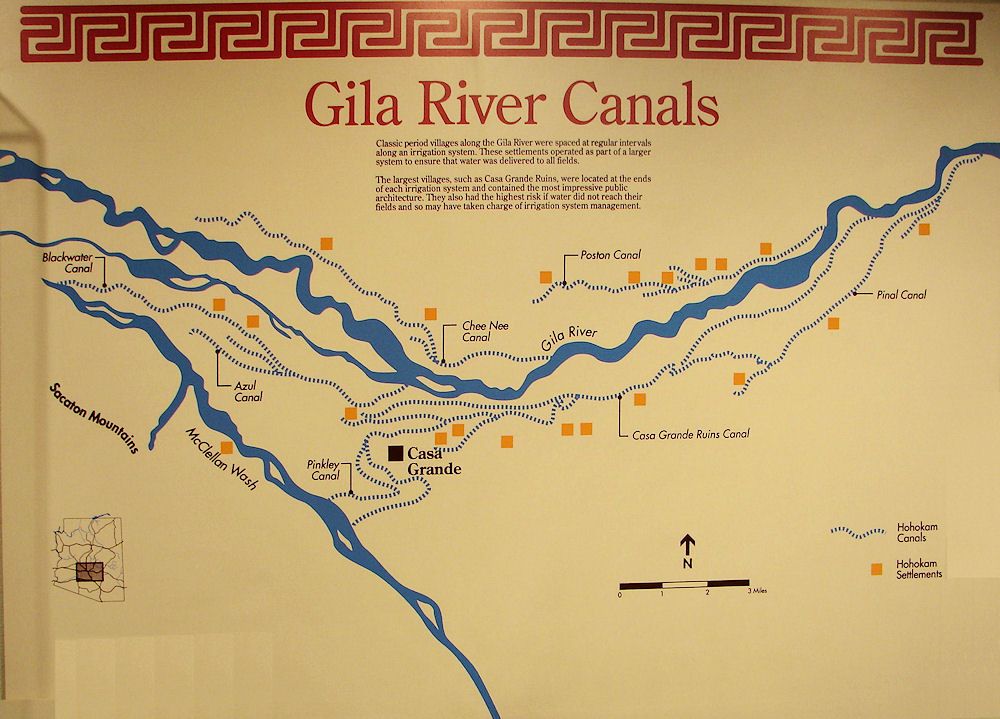
They had built a very intricate but functioning set of canals, unequaled in the Southwest America. Around the Salt River and the Gila river.

Then the white men came and took the water rights. Let Johnny Cash tell about one of the Pima Indians in the form of a ballad:

It was soo good. Listen to it again without the distraction of all the text and let it sink in.

Yes, the land is just as dry, even drier as Maricopa County was the fastest growing county in U.S. in the last decade. Even the aquifers are starting to run dry. And Lake Mead can no longer supply enough water for the Central Arizona Project aqueduct. More than anything the Indians need to have their water rights restored, so they can again be a functional society. These are the reparations they need.

To this end may I propose: The TransContinental Aqueduct. A realistic way to save Lake Mead and reverse the desertification of the American SouthWest.

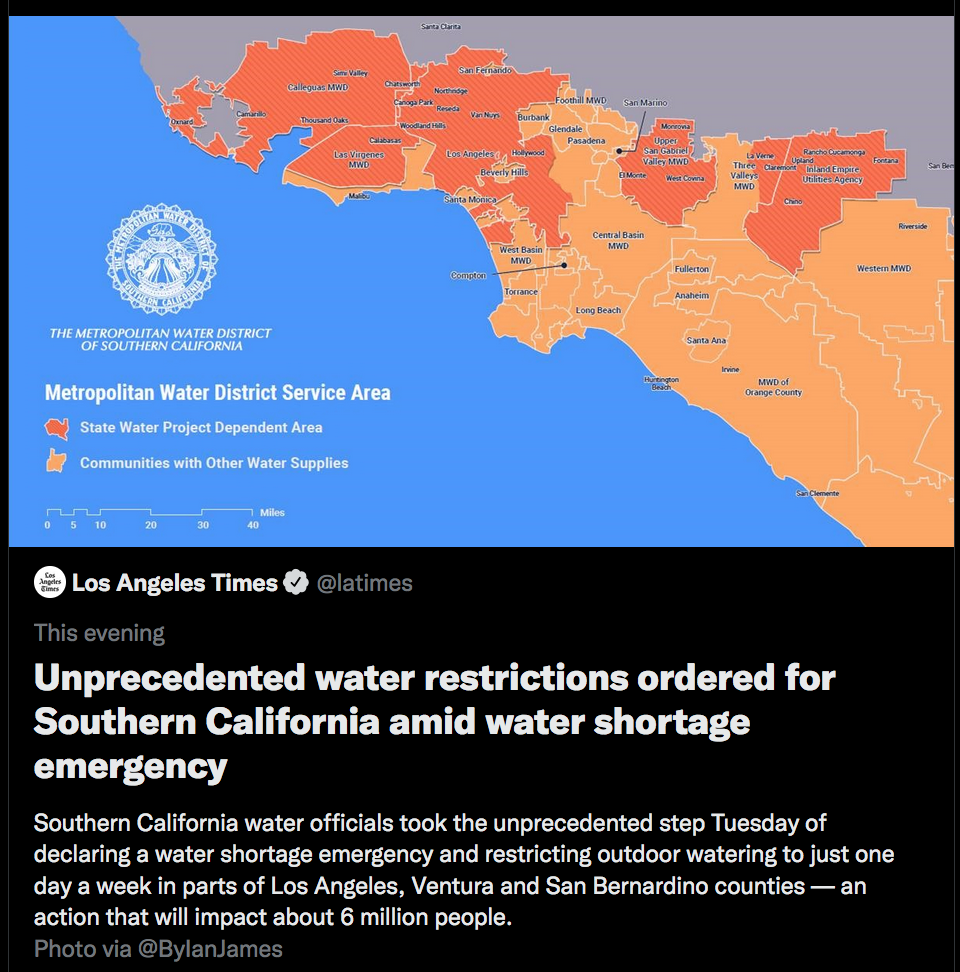
And now it begins. Southern California denies thousands of farmers their water rights or access to water.

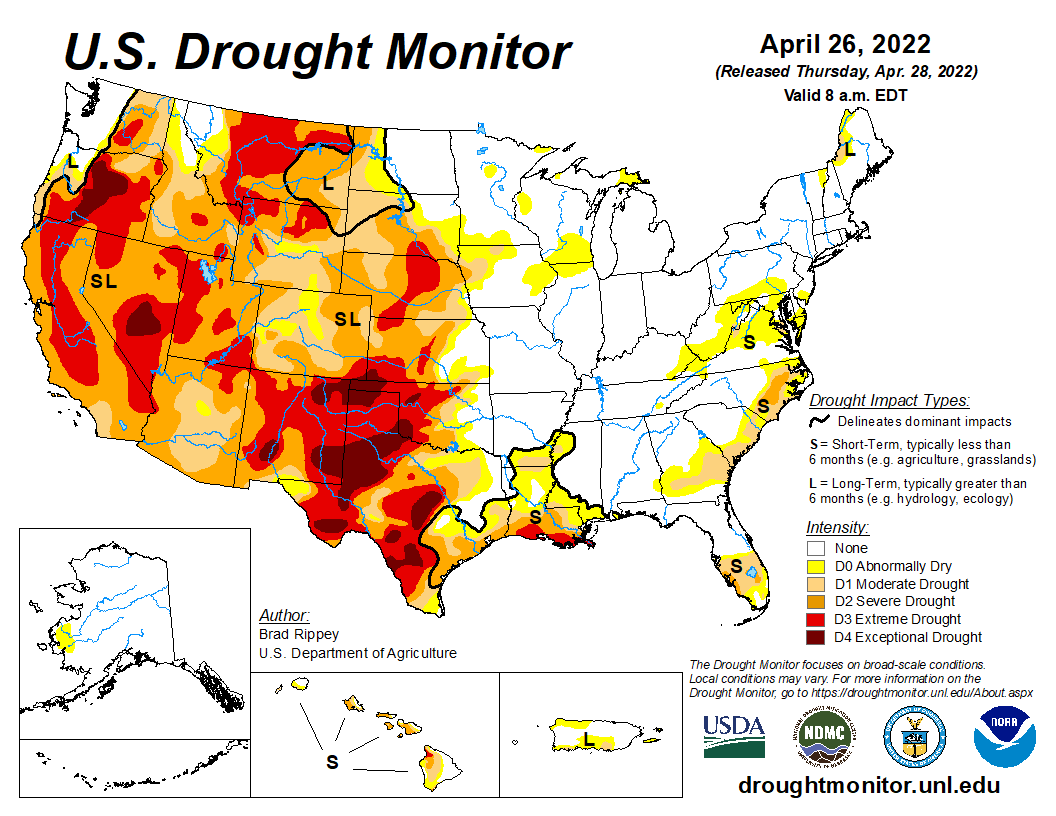
The western half of United States is experiencing a multi-year drought with no end in sight. Has the desertification of the American southwest started? Will farmers have to abandon their farms and orchards for lack of water? Will this and the shortage of fertilizer be the trigger point for a worldwide hunger, since now Ukraine is no longer the food basket of Europe?

These are worrying questions? The situation in the American South is dire:

The only saving grace is that thanks to increasing CO2, the vegetation needs less water to do the photosynthesis, so the harvests will not decrease as much even though fertilizer will be rationed.

Southern California was first to cut off water to thousands pf farmers:

The next step is to forbid watering of lawns and plants and fine people for violating HOA regulations that state that that lawns must be well fertilized and watered and free from weeds. The native weeds (I call them wildflowers) are the only thing that will survive the drought.

But back to the drought situation.

The solution:

Build a transcontinental aqueduct from the Mississippi River to the Colorado River capable of transporting 12 million acre-ft of water yearly through Arkansas, Oklahoma, Texas, New Mexico and Arizona. It will be built similar to the Central Arizona Project aqueduct, supplying water from the Colorado river to the Phoenix and Tucson area, but this aqueduct will be carrying four times more water over four times the distance and raise the water nearly twice as high before returning to near sea level. The original Central Arizona Project cost $4.7 billion in 1980’s money, the Transcontinental Aqueduct will in Phase 1 cost around $200 Billion in 2022 money applying simple scaling up principles.

The Mississippi River has a bad reputation for having polluted water, but since the clean water act the water quality has improved drastically. Fecal coli-form bacteria is down by a factor of more than 100, the water is now used all the way down to New Orleans for drinking water after treatment. The lead levels are down by a factor of 1000 or more since 1979. Plastic pollution and pharmaceutical pollution is still a problem, as is the case with most rivers. The Ph is back to around 8 and salt content is negligible. Mississippi water is good for irrigation, and usable for drinking water after treatment. The Arkansas River is used as a drinking water source.

But the aqueduct will do more than provide sweet Mississippi water to the thirsty South-west, it will make possible to provide peak power to Texas, New Mexico and Arizona. In fact, it is so big it will nearly triple the pumped Hydro-power storage for the nation, from 23 GW for 5 hours a day to up to 66 GW when fully built out.

The extra pumped hydro-power storage will come from a number of dams built as part of the aqueduct or adjacent to it. The water will be pumped from surplus wind and solar power generators when available. This will provide up to 50 GW of power for 5 hours a day. If not enough extra power has been generated during the 19 pumping hours, sometimes power will be purchased from the regular grid. The other source of pumped hydro-power storage is virtual. There will be up to 23 GW of LFTR (Liquid Fluoride salt Thorium Rector) power stations strategically stationed along the waterway providing pumping of water for 19 hours and providing virtual hydro-power output for the remaining 5, when the aqueduct is fully built. Read more about it here.

Lake Mead and Lake Powell are emptying fast. The solution: The Trans-Rocky-Mountain Aqueduct. Expensive, but very doable.

(Quoted partly from Joanna Allhands, Arizona Republic.) The seven Colorado River basin states have a plan to temporarily stabilize Lake Powell. The states are: Wyoming, Colorado, Utah, Nevada, Arizona, New Mexico and California.

It is a temporary delay of a very painful decision, it doesn’t rain enough in the Colorado River basin to provide enough water for the ever increasing population, now exceeding 40 million, five times more as when the Hoover dam was built.

Yet no one balked. And that’s a win.

That should signal how dire the circumstances have become.

The U.S. Department of the Interior noted in an April 8 letter to the basin states that Lake Powell is dangerously close to hitting 3,490 feet of elevation, a level so low that power could no longer be generated at Glen Canyon Dam and water could no longer flow to the nearby city of Page and an adjacent Navajo Nation community.

Because water could no longer flow through the power turbines, millions of acre-feet of water would flow downstream through smaller backup pipes at the base of Glen Canyon Dam – a risky prospect that could spell calamity for Lake Mead, which relies on Powell’s releases, if any one of those four pipes were damaged by the heavy flows and had to shut down.

nterior proposed taking the unprecedented action of withholding 480,000 acre-feet (that’s more than 156 billion gallons) in Lake Powell that otherwise should have flowed to Lake Mead, among other measures.

Two weeks later, the seven states responded with a singular voice: We get how dire this is, and we’re on board.

“We recognize the urgency created by current conditions in the Basin; in fact, hydrologic conditions in the Basin have continued to decline since your April 8, 2022, letter to the Governors’ representatives,” they wrote in an April 22 response. “It is our collective judgment that additional cooperative actions should be taken this spring to reduce the risk of Lake Powell declining below critical elevations.”

That means the upper basin states will agree to release 500,000 acre-feet from the upstream Flaming Gorge Reservoir, as part of a newly cemented 2022 Drought Response Operations Plan. (That’s a lot more than the 161,000 acre-feet that was released from upstream reservoirs last year to prop up Lake Powell.)

Meanwhile, the lower basin states, including Arizona, will agree to keep 480,000 acre-feet in Powell, though the states have asked for that amount not to count against shortage determinations.

What does that mean for shortages at Lake Mead?

The idea, however ill-conceived, is not to use Mead’s actual elevation to determine which shortage tier we’d be in, but rather as if that 480,000 acre-feet were in Mead and not Powell.

It’s not clear how the federal Bureau of Reclamation, which operates the reservoirs, would make that calculation, but the outcome could have real consequences.

The most recent forecast projects elevations as if that 480,000 acre-feet had flowed from Powell to Mead. It puts Mead a few inches above the trigger elevation of 1,045 feet in August, when the following year’s shortage determination is made.

That would put us in a deeper Tier 2 shortage, regardless.

But depending on which side of 1,045 feet we land, we could either fall in a Tier 2a or Tier 2b shortage – which for Arizona is the difference between making previously agreed cuts of 592,000 acre-feet or 640,000 acre-feet.

A Tier 2b shortage also would trigger more stringent water conservation actions in Scottsdale and Tucson. That could mean the imposition of drought surcharges in both cities and, in Scottsdale, the potential for mandatory restrictions.

I know. If we base shortage decisions off where the lake should be, but not really is, we’re making conditions look better than they are. Which doesn’t help us in the long run, even if we could temporarily avoid the pain of Tier 2b.

We extinguished a fire to focus on other work

But, importantly, the states also have agreed that “water year 2023 releases should be carefully monitored and be the subject of consultation with the Basin States to preserve the benefits to Glen Canyon Dam … .”

Translation: Whatever actions we take and shortage levels we set for 2023 will get another look, likely in late winter or early spring, when we have a better idea of the year’s runoff picture, to determine whether we need to do more.

It’s a level of flexibility that we haven’t traditionally had – but will likely need – when lake levels are so low and volatile.

None of this solves anything, of course. Even a combined million acre-feet from the states will likely just prolong the inevitable, hopefully long enough to better assess the strength of Powell’s backup pipes.

And to resume the tough work of storing an extra 500,000 acre-feet each year for the next five years in Lake Mead as part of the 500-plus plan. Without that extra water each year, the lake mostly likely will sink below 1,020 feet of elevation – Mead’s version of the dangerously low level that Powell has already reached.

And – most importantly – to finally sit down and talk about longer-term solutions for the Colorado River, most notably how much water we can reliably expect it to produce. It sure as heck isn’t the 15 million acre-feet that we’ve been apportioned.

Imperfect as this response may be, it’s significant that all seven states agreed to it quickly, so we can get back to the many other pressing tasks at hand.

Reach Allhands at joanna.allhands@arizonarepublic.com. On Twitter: @joannaallhands.

There is a solution:

The Trans-Rocky-Mountain Aqueduct will save Lake Powell and Lake Mead, and rejuvenate the American South-west. This solution is expensive, but when all costs are included, it can deliver 3.6 to 6 Million acre-feet / year at a cost of $2,290 per af, high, check the calculations here. This is the solution that can be done in the shortest time.

The other solution is The TransContinental Aqueduct. A realistic way to save Lake Mead and reverse the desertification of the American SouthWest. It will really do the job at a lower price per Acre-ft but require much more capital investment. Check out the cost estimates here. This estimate is on the high side. but was a earnest stab at the costs.

Is it worth it to save the American Southwest from being desertified? In my opinion, if we are serious about saving the earth, this is one of the most urgent projects that deserves consideration.

The Trans-Rocky-Mountain Aqueduct; Cost estimates. Will it pay for itself?

To begin cost estimates, the model used is the cost for the Arizona central project. The waterway was constructed 1974 to 1993 at a cost of 4.7 billion dollars. In 2022 dollars that would be about 13.5 billion. The cost for the canal would be about 12.6 billion and 900 million for the pumping stations. The average size of the aqueduct in its beginning is 80 feet across the top and 24 feet across the bottom and the water is 16.5 feet deep. The concrete is 3.5 inches thick and, in some areas, it is reinforced with steel rebars. It is 336 miles long from Lake Havasu City to Tucson with a total lift of over 2,900 feet. The capacity starts out at over 2.2 million acre-ft per year, diminishing as the drop-off point occurs, and the total pumping of 1.4 million acre feet of water is lifted by up to 2,900 feet by 14 pumping stations using 2,500 GWh of electricity each year. The pumping stations have a total pumping capacity of 240 MW. It has a 7 mile long, 22 feet diameter tunnel from Lake Havasu to the beginning of the waterway.

The Trans-Rocky-Mountain aqueduct is much bigger: The The average size of the aqueduct in its beginning is 160 feet across the top and 80 feet across the bottom and the water is 35 feet deep. The concrete is 4 inches thick and, in most areas, it is reinforced with steel rebars. The concrete used is 4,500 cu yd per mile. It will cost about 2.5 times as much per mile as the ACP, so the total cost for the Trans-Rocky-Mountain Aqueduct will be ((12.6x 2.5 : 336) x 480) = 45 billion dollars. Like the CAP, it will have an 8 mile tunnel, and its diameter will be 48 feet. This cost estimate is probably high, since eminent domain costs will be minimal; all the dams already exist and are paid for, the Arkansas river is there, complete with dams; and land for all the reservoirs are already litigated and settled. The canal will go through sparsely inhabited land.

The cost of building 17 additional small dams in the Arkansas River will be on the order of $120 million per dam, for a total of $2 Billion.

There will be a total of 7.4 GW of pumped energy needed and 200 MW of base power generated. To get the aqueduct operational at 6 MAF/year it requires 7.4 GW of energy. Pumping cost capital is about $ 1.30 per watt, so the minimum pumping capital cost is 9.6 Billion dollars.

The Liquid Fluoride Thorium Reactors proposed is 100 MW units. so called Small Modular Reactors (SMR) The reactor core assemblies are small enough so they can be produced on an assembly line and delivered via truck. There are 3 assemblies needed, the reactor, the safe shutdown unit and the reprocessing and separation unit. The whole building can be built for $ 230 million. To complete the installation costs, add another # 30 million per unit. The aqueduct needs 74 units. The initial capital cost for grid access and minimum flow is $19 billion.

To sum it up,the capital cost for a flow of 6 MAF is (45 +2 + 9.6 + 19) = 75.6 billion dollars. The amount of water in the aqueduct when filled is 230,000 acre-feet and will take 1.1 TWh of electricity to fill, or about $35,000dollars at 3 c/kWh base rate.

When the electricity demand requires peak power, the pumps are turned off, and electricity will be sold back to the grid, at peak rate.

Solar power and wind power will also power the pumps, and they will lessen the demand for nuclear reactors. But the remaining reactors will still be needed, or peak power will still have to be supplied by natural gas, or coal when the sun doesn’t shine and the wind doesn’t blow.

In short: assuming a 50 year amortization plan for the aqueduct, and money available at 2%, , it will cost 3 billion a year in capital cost to deliver 6 MAF water from the Mississippi River to Lake Powell or any point in between, or $2,000 per acre-ft. Add to that $240 for electricity and another $50 per acre-ft in overhead and maintenance, the cost will be $2,290 per acre-ft.

The Rocky Mountains places are ideal for wind and solar power, but they need to store the energy when the sun is not up or doesn’t shine, or the wind doesn’t blow. Right now that is provided by coal and natural gas. Conventional nuclear power is best for use as base power only, so this Trans-Rocky-Mountain aqueduct will provide up to 7.4 GW of pure virtual pumped power storage, the LFTR nuclear power plants will provide the energy by shutting off the pumping of water in the aqueduct when the need arises, and instead provide another up to 7.4 GW of virtual pumped storage power. The beauty of this is that the pump response is instantaneous, so the grid can be really finetuned to meet the exact power needs.

Memories from the first Earth Day in 1970.

The cause of Climate Change is still up in the air. Sherlock Holmes: “It is a capital mistake to theorize before one has data. Insensibly one begins to twist facts to suit theories instead of theories to suit facts”. From: “Scandal in Bohemia” by Arthur Conan Doyle.

Lenin

The very first Earth Day was celebrated April 22 1970, on the 100 year anniversary of the birth of Vladimir Lenin (Владимир Ильич Ленин). True green environmentalists keep telling me it is just a coincidence. I think not.

.

.

.

.

earth-day-Einhorn-02

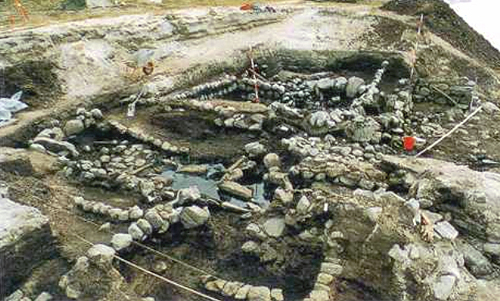
The first Earth Day in Philadelphia 1970 featured Ira Einhorn (The Unicorn Killer) as master of Ceremonies. For those too young to remember, he murdered his girlfriend , stuffed her in a piece of luggage in his apartment and kept her there for seven years, and no one smelled a dead rat). He was finally convicted many years later. The big environmental scare of that day was the threat of a new Ice Age. The clarion call was: “In the year 2000 temperatures will have fallen 10 degrees”, the culprit was pollution, especially acid rain. The acid rain was so bad in the Adirondacks, Canada, Norway and Sweden that the Rainbow Trout died in droves, and even the oceans were in danger of getting too acid. Regulations were enacted to add scrubbers to coal fired power stations, waste water was purified, and – wouldn’t you know it, the cooling trend reversed itself and was followed by warming. Since the cooling trend was “obviously man-made” they had to find a reason for the sudden warming. Never mind that around the year 1200 there was at least one farm on South West Greenland that exported, among other things, cheese. How do we know that? They have excavated the ruins of a farm, “Gården under Sanden”, buried under a glacier for five centuries. During these five centuries the Northern Hemisphere experienced what is called “the little ice age” a time when the winters could be so cold that in 1658 the Swedish army, cavalry and artillery crossed the Belts in the southern Baltic over ice and sacked Copenhagen. The Belts have not been that frozen since.

Picture left: Gården under sanden excavation.

Picture right: The crossing of the Great Belt 1658.

To predict future climate changes many computer models have been developed dealing with how the earth responds to changes in atmospheric conditions, especially how it responds to changes in CO2 levels.  Most were developed in the 1970 to 2000 time frame, a time of rapid temperature rise and as such they were all given a large factor for the influence of rising CO2. Since 2005 we have had a cooling trend, so the models cooperate less and less and are given more and more unreliable predictions. It is no wonder then that they all have failed to model the past. None of them have reproduced the medieval warm period or the little ice age. If they cannot agree with the past there is no reason to believe they have any ability to predict the future. The models are particularly bad when it comes to predict cloud cover and what time of day clouds appear and disappear. Below is a chart of a number of climate models and their prediction of cloud cover versus observed data. Note especially to the right where they completely fail to notice the clear skies over Antarctica.

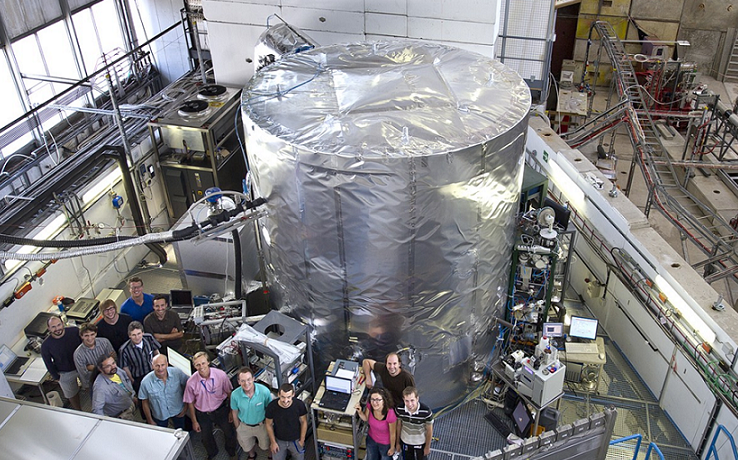
Is there a better way to predict future temperature trends? When you go to the doctor for a physical, at some point and without warning he hits you under the knee with a hammer and watches your reaction. He is observing your impulse response. Can we observe impulse responses for the earth? One obvious case is volcanic explosions. Sometimes the earth burps a lot of carbon dioxide or methane. But the most interesting response would be how the earth responds to a solar flare  with a sudden change in the amount of cosmic radiation hitting the earth. That would give the best indication how the sun and cosmic radiation affects cloud formation. A couple of solar flares lately have been giving us a hint how the cloud cover responds to changes in cosmic radiation, and they are consistent with the latest results from the CLOUD project conducted using the CERN particle accelerator, a confirmation of a theory forwarded by the Danish Physicist Henrik Svensmark. He first presented the theory in 1997 and finally got the results verified and published in 2007, but the prevailing consensus has been slow to accept the theory that the sun as the primary driver of climate change. We have many reasons to be concerned about the well-being of the earth, but rising levels of CO2 is not one of them. In fact, CO2 is our friend. Rising CO2 levels increases crop yields, makes the impact of land use changes less pronounced and the photosynthesis process more efficient, using less water and allowing us to grow crops on land once deemed unprofitable.

Picture right: The CERN Cloud apparatus in 2009.

James Hansen, a world famous climate science activist/NASA physicist writes in one of his publications, called “Earth’s Energy Imbalance and Implications“. It contains a quote that ties nicely in with Sherlock Holmes observation:  The precision achieved by the most advanced generation of radiation budget satellites is indicated by the planetary energy imbalance measured by the ongoing CERES (Clouds and the Earth’s Radiant Energy System) instrument (Loeb et al., 2009), which finds a measured 5-year-mean imbalance of 6.5 W/m2 (Loeb et al., 2009). Because this result is implausible, instrumentation calibration factors were introduced to reduce the imbalance to the imbalance suggested by climate models, 0.85 W/m2 (Loeb et al., 2009).

There we have it. The observed data does not fit the climate models. Change the observed data! Then use that data to validate the climate models! How convEEnient, as the SNL Churchlady used to say. Shenanigans like this have been exposed in what has been named “Climategate1.0”, followed by “Climategate2.0” and soon to be released “Climategate3.0” This is what happens when politicians take over science and make further funding contingent on obtaining desired results.

This is a re-blog from times past.

Earth day 2022. It’s all about water in the thirsty American Southwest.

It’s time for the annual earth day

to celebrate Lenin’s old birthday.

Let us plant some more trees

bring the water, yes please.

A Trans-Rocky-Mountain waterway.

The American Southwest is beginning to become desertified. More water is used up than falls in the Colorado River. All water and more is spoken for. The Gila River used to provide about 1.3 Million acre-feet yearly to Arizona. It is now all used up, and the aquifers are being depleted. Since 40 million people are dependent on the Colorado River and the Gila river and the population is rapidly growing the only real solution is to bring in more water to the American South-west. It will be expensive and require a lot of power, but the alternative is a depopulation of the American South-west. Something like it did already happen when the rivers Amu Darya and Sur Darya became used for irrigation and the Aral Lake dried up, the rains ended and the land east of the lake became more or less a desert.

Here are two proposals to save the American Southwest, Lake Mead, Lake Powell Arizona, New Mexico, Colorado, West Texas, Mexico, South California, Nevada and help Arkansas, Oklahoma and Texas with their water shortage and pumped water storage.

The Trans-Rocky-Mountain Aqueduct will save Lake Powell and Lake Mead, and rejuvenate the American South-west.

The TransContinental Aqueduct. A realistic way to save Lake Mead and reverse the desertification of the American SouthWest.

Together they will double the amount of water provided to the American Southwest and more than triple the amount of pumped storage capacity for the whole nation. When we shift from gas and diesel to electric vehicles the pumped storage capacity must be increased, or the extra electricity must still be provided by fossil fuels. Solar and wind power requires pumped storage to reduce the strain on the electric grid, when the cars need to be re-charged at lunch and dinner time.

Just what we need to combat food and fuel inflation. Make more ethanol and make more CO2!

Russia’s invasion of Ukraine and sanctions and boycotts that followed launched retail gasoline prices to record highs, a vulnerability for Biden’s fellow Democrats in November’s congressional elections. Ukraine has been called the breadbasket of Europe since before WWI, and this war will greatly reduce the worldwide corn supply by 15%, Wheat supply by 8%. and the sanctions on Russia will reduce the supply of fertilizer by 12%. The world was already in a precarious food situation, and this may result in hunger worldwide will increase sharply.

Faced with this looming catastrophe in the November elections the Biden administration decided to act decisively to improve its chances in November, so on Tuesday Biden went to Iowa and promised to remove the prohibition to use the ethanol blend E15 even in the summer. The summertime ban on E15 was imposed over concerns it contributes to smog in hot weather, though research has shown that the 15% blend may not increase smog much more than the almost mandatory 10% blends sold year-round.

Is blending ethanol in the gasoline a good idea in the first place? It might be if the price of corn is low relative to gasoline. On April 14, 2022 the wholesale contract price of corn is $ 7.84 a bushel. A year ago, the price was below five dollars per bushel.
One bushel of corn makes 2.8 gallon of ethanol in the most efficient stills.
That makes the feed-stock price to produce ethanol $2.80 a gallon. Add to that 50 cents to make the stuff and distribute it and the price per gallon is $ 3.30
Since the heat content of ethanol is 67% of regular gasoline (no ethanol), the gasoline equivalent price of ethanol is $ 4.93 per gallon.
Nearly five bucks a gallon for ethanol! And that is before profit, blending, selling and taxes!
That’s the good news.
For the people that are worried about CO2 the bad news is:
To make corn you have to use 150 pounds of nitrogen fertilizer per acre. It takes the equivalent of 0.15 gallons of gasoline to produce one pound of nitrogen fertilizer. That comes to the equivalent of 22.5 gallons of gasoline to fertilize one acre. One acre of corn yields about 150 bushels of corn.
The fuel spent to produce one bushel of corn is therefore more than 0.15 gallons of gasoline. Since it also involves sowing, preparing the soil, cultivating, pesticides, phosphate fertilizer and harvesting it takes 0.25 gallons of fuel to produce one bushel of corn.
Here comes the kicker: When you ferment sugar into alcohol half the weight disappears as CO2! Let us examine the formula: C6H12O6 + Zymase → 2C2H5OH + 2CO2
The molecule weight of C2H5OH is 46 and the molecule weight of CO2 is 44.
Well almost half anyway.
Let us assume you have a car that gets 25 miles to the gallon and you drive 100 mile on pure gasoline. You have used 4 gallons of gasoline.
Now take the same car and drive 100 miles with a 10% ethanol mix, mandated by the EPA. Remember, they are concerned about CO2.
The ethanol has only 67% of the heat content of gasoline so the gas mileage will be lower. It will be consuming 0.04 x 0.9 +0.1 x 1.5 x 0.04 = 0.042 gallons per mile, 5% more or a total of 4.2 gallons for the 100 mile trip. With E15 it will be 4.3 gallons per trip.
So you consumed 3.78 gallons of gasoline and 0.42 gallons of ethanol, for a total of 4.2 gallons. We have all experienced this increase in gas consumption. And this is best case. With E15 you will consume 3.67 gallons of gasoline and 0.63 gallons of ethanol.
What about CO2 up in the air? In the pure gasoline case we produced 4 gallons worth of CO2.
In the ethanol mix case we produced 4.2 gallons worth of CO2.
Add to that another .4 gallons equivalence of CO2 from the fermentation, and another .04 gallons worth of CO2 to produce the corn in the first place.
The sum total is 4.64 gallons worth of CO2, or about 16% more than in the gasoline only case for the 10% mix. With E15 you produced 4.96 gallons worth of CO2.
But corn does absorb CO2 when it grows! Doesn’t that count?
Corn is one of the worst crops for soil erosion and uses up other nourishment that will not be used if you make ethanol from it. Granted the cattle are happy for the cakes that are left when the sugar and oil is removed.
In this age of looming food shortages nearly any other use of available tillable soil is to be preferred over ethanol production.
Oh, and one more thing. Assume that pure gasoline is 4 dollars a gallon at the pump, which includes 50 cents in taxes.
Unsubsidized ethanol should be $4.93 a gallon, before taxes
But we subsidize the ethanol production so the price of E15 is $3.90 a gallon at the pump.
If we used pure gasoline the hundred mile trip would cost sixteen dollars.
If we paid full price for the 10% ethanol blend we would pay $ 17.19 for the trip and produce 16% more CO2. And in the case of E15 we would pay $17.78 for the trip and produce 24% more CO2
We are really paying $ 16.59 for the trip, produce 16% more CO2 and leave a bill of $ 0.60 for our grandchildren to pay, the subsidy of 0.42 gallons of ethanol. In the case of E15 we would pay $16.77 for the trip, produce 24% more CO2 and leave a bill of $1.01 for our grandchildren.
This is EPA legislation at work, trying to combat the coming “climate catastrophe.”

There is a better way. Remove ethanol subsidy guarantees and let the corn be used to produce more chicken and pork, and use some of the acreage to produce grain for a hungry world. This will help to reduce food prices inflation.