Thr problem with Thorium is that it is classified as source material the same as Uranium. Natural Uranium is fissile in a heavy water moderated reactor, Thorium is only slightly radioactive, and should be regulated like all other radioactive products, like household smoke detectors and medical isotopes.
Congress should immediately declassify Thorium as a source material. This would again enable U.S. to mine rare earth materials like China and the rest of the world.
The video speaks for itself and is well worth watching. Especially listen at 15:30 min why molten salt reactors were abandoned.
This video catalogs the problems with Thorium, beginning with the regulatory nightmare of seemingly endless regulations that makes no sense from a research perspective, to political bias, and to protect the status quo. It is very informative.
With Molten Salt Reactors, a catastrophe like Fukushima cannot happen. It began with a magnitude 9.0 earthquake not far from the Fukushima 6 Nuclear reactors complex. The impact was a magnitude 6.8 earthquake and the operators immediately scrammed the safety rods to stop all the reactors. This succeeded! The reactors were designed with earthquakes in mind, and they passed the test. The backup power started up successfully so the cooling pumps could operate. There was one major problem though. The earthquake was so bad that the water in the spent fuel holding tanks splashed out and exposed the spent fuel rods to air, releasing enough radioactivity to make entering the buildings impossible.
The water pumps worked for a while, but then came the tsunami. All the reactors were inside a tsunami wall, so far, so good. But the fuel storage tanks for the fuel for the backup power generators were outside the tsunami wall and were washed away. The batteries were only supposed to last until backup power was established, and with complete power loss and water circulation ended the meltdown started. This disaster was even bigger than Chernobyl and contamination is still spreading.
Japan has spent roughly 1 trillion yen ($7.3 billion) annually on the damage caused by the meltdowns at the Fukushima Daiichi nuclear power plant that occurred 12 years ago, and the final price tag is still uncertain.
In addition, the Japanese government has arranged 13.5 trillion yen to pay for reparations and cleanup efforts, with those outlays covered by Japanese government bonds. The state is extending roughly 10 trillion yen to TEPCO to cover compensation costs.
In a molten salt Thorium reactor, when power is cut off in an emergency, only gravity is needed for a safe shutdown, and gravity hasn’t failed us yet.
With a Molten Salt Reactor, accidents like Chernobyl are impossible. The Three Mile Island accident was bad. The Chernobyl disaster was ten million times worse. Ah yes, I remember it well.
One morning at work, a fellow co-worker, a Ph.D. Chemist working on an Electron Capture Detector, containing a small amount of Nickel 63, came with a surprising question: You know nuclear science, how come the reactors in Chernobyl don’t have a containment vessel? Well- I answered, it is because they are carbon moderated and their failure mode is that they go prompt critical, and no containment vessel in the world can hold it in, so they skip it. He turned away in disgust. A few weeks later my wife’s father died, and we went to Denmark to attend the funeral. The day of the return back to the U.S. we heard that there had been a nuclear incident in Sweden, too much radiation had caused two nuclear power stations to close down. The Chernobyl disaster had happened 26 April 1986, and this was the first time anyone outside of Chernobyl has heard about it, two days later. This was still the Soviet Union, and nothing ever did go wrong in it worthy of reporting.
(Photo Courtesy of EBRD)
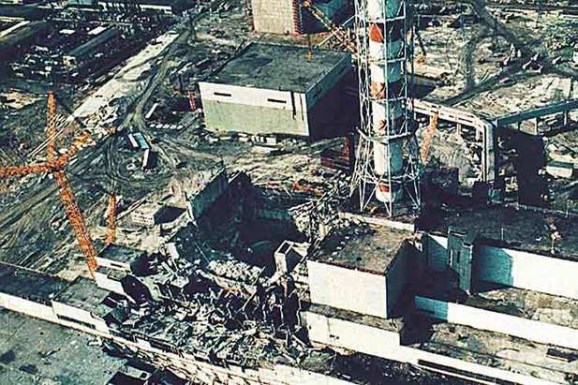
Notice the gaping hole where the reactor was. The adjacent reactor was not shut down immediately, but continued to operate and deliver power for days. During the invasion of Ukraine in 2022, the still-very-real health risks inherent to lingering around certain parts of the Chernobyl Exclusion Zone just didn’t sink in with Russian soldiers and their commanding officers based in Belarus. Radiation sunk in, though—particularly after Russian troops dug into the zone’s heavily irradiated Red Forest. And today, some soldiers are still falling sick, according to diplomatic sources cited by the UK journal The Independent.
The radiation cloud immediately following the accident continued to spread, and was first noticed in Sweden, and the SLV immediately declared reindeer meat, wild game and inland fish with a 300-bequerel/kilogram (Bq/kg) count or higher to be unsafe for human consumption and therefore unmarketable. 75% of all reindeer meat was deemed unfit for human consumption, and this played havoc with the Sami population.
(But the carbon moderated Uranium reactors are the most efficient in producing Pu-239 the preferred nuclear bomb material.)
As I mentioned before, the failure mode of carbon moderated nuclear power plants is that they can go prompt critical during power downs, so very stringent power down protocols must be followed. There is a loss of power production during the lengthy power down process. Carbon moderated nuclear power plants has a positive temperature coefficient; the warmer it gets the more power it produces, so they must be provided with multiple safety circuits and infallible scram shutdowns. However, power shutdowns are costly, so they try to stretch the shutdown intervals as much as possible. In the case of Chernobyl, the protocols were violated for political reasons, one or more safety circuits were disabled to allow power production for as long as possible and suddenly there was a power surge, the temperature surged and the chain reaction started. The scram rods failed and the rest is history.
This has nothing to do with anything, but Chernobyl means wormwood in Russian. It is mentioned in the Bible, Revelation 8: 10-11 “ And the third angel sounded, and there fell a great star from heaven, burning as it were a lamp, and it fell upon the third part of the rivers, and upon the fountains of waters; And the name of the star is called Wormwood: and the third part of the waters became wormwood; and many men died of the waters, because they were made bitter. ”
Molten Salt Thorium reactors cannot be used to supply Plutonium 239, only Uranium 233, and so far there is no research on how to make bombs from U 233, and they are far safer than even Light water Uranium reactors. Only gravity is needed to shut them down in case of earthquakes, total power failures, EMP pulses and bombs.
United States used to be the leader in Thorium usage. What happened?
The 40 MWe Peach Bottom HTR in the USA was a demonstration Thorium-fueled reactor that ran from 1967-74. and produced a total of 33 billion kWh.
The 330 MWe Fort St Vrain HTR in Colorado, USA, ran from 1976-89. Almost 25 tons of Thorium was used in fuel for the reactor.
A unique Thorium-fueled light water breeder reactor operated from 1977 to 1982 at Shippingport in the USA– it used uranium-233 and had a power output of 60 MWe.
However, after 10 years passed and billions invested, the U.S. Atomic Energy Commission abandoned Thorium research, with uranium-fueled nuclear power becoming the standard. In the 1980s, commercial Thorium ventures failed, such as the Indian Point Unit 1 water reactor near New York City, because of the vast financial costs of going it alone in a hostile regulatory environment, and fuel and equipment failures. By the 1990s, the US nuclear power industry had abandoned Thorium, partly because Thorium’s breeding ratio was thought insufficient to produce enough fuel for commercial industrialization.
After the Three Mile Island accident, Middletown, PA in 1979 there was a 30 plus year hiatus in building another nuclear plant, and Thorium was not on any politicians list of areas in which to invest scarce research funds.
Some research and development was still conducted, but it was more concentrated in protecting the U.S. leading position in monitoring and controlling existing nuclear technology. As a contrast even the Netherlands is developing a molten salt Thorium reactor.
The Generation IV International Forum’s current membership consists of:
Argentina*
Japan
Australia
Republic of Korea
Brazil*
Russian Federation
Canada
Republic of South Africa
People’s Republic of China
Switzerland
Euratom
United Kingdom
France
United States
* Non-active member.
The list of possible implementations is long and growing, Here are most of them: Most of them can operate on Uranium or Plutonium or mixed fuel including a fertile blanket of Thorium that converts to U-233 as fissile material. The remaining problem is the clean extraction of fission products and protactinium during full operation. In the mean time they will help generate enough U-233 for clean operation with minimum waste production.
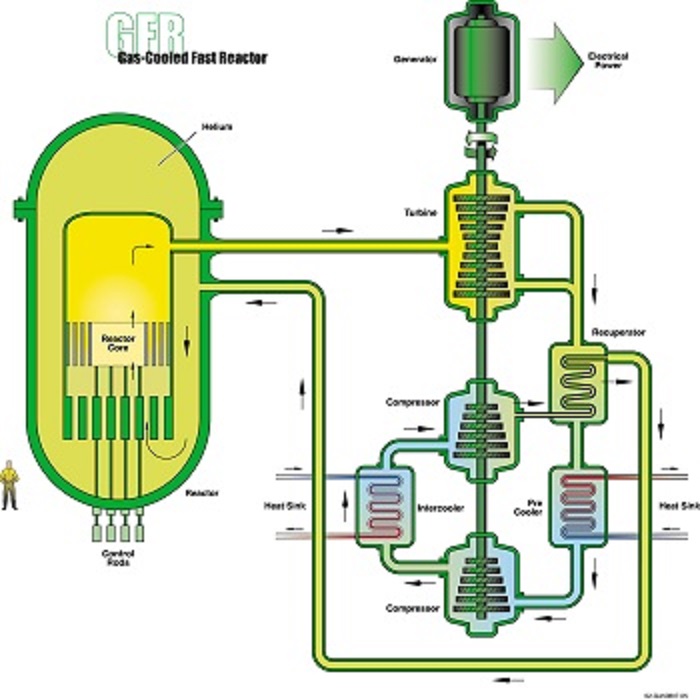
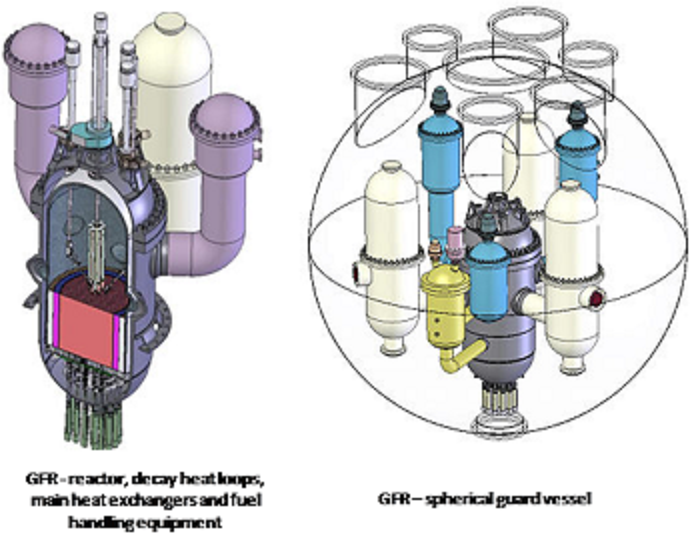
Gas-Cooled Fast Reactor (GFR)
The GFR system is a high-temperature (850C) helium-cooled fast-spectrum reactor with a closed fuel cycle. It combines the advantages of fast-spectrum systems for long-term sustainability of uranium resources and waste minimization (through fuel multiple reprocessing and fission of long-lived actinides), with those of high-temperature systems (high thermal cycle efficiency and industrial use of the generated heat, for hydrogen production for example).
This system is ideal for co-generation of electricity and hydrogen production.
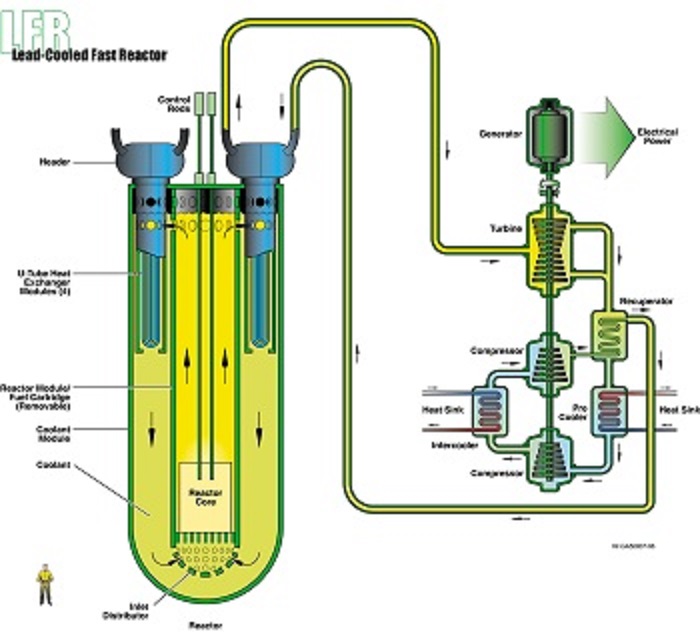
Lead-Cooled Fast Reactor (LFR)
a
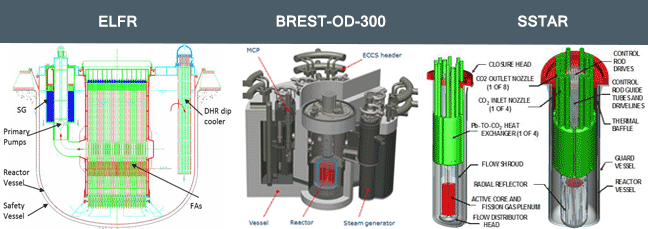
This reactor type would have multiple applications including production of electricity, hydrogen and process heat. System concepts represented in plans of the Generation IV International Forum (GIF) System Research Plan (SRP) are based on Europe’s ELFR lead-cooled system, Russia’s BREST-OD-300 and the SSTAR system concept designed in the US. Numerous additional LFR concepts are also under various stages of development in different countries including China, Russia, the USA, Sweden, Korea and Japan.
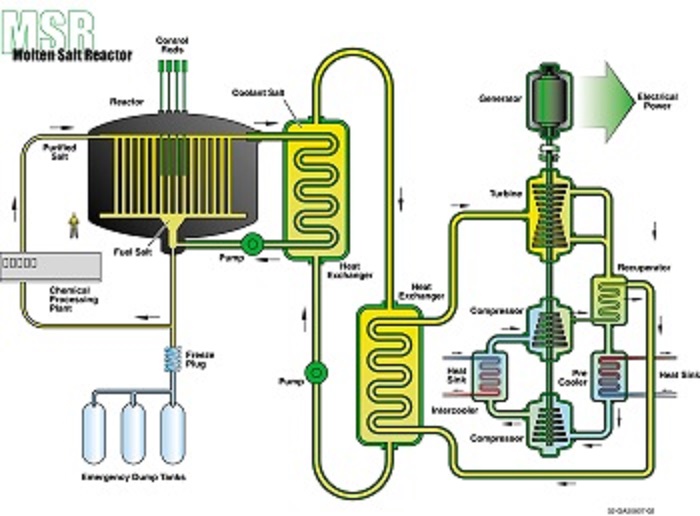
Molten Salt Reactor (MSR)
. The onsite fuel reprocessing unit using pyrochemistry allows breeding plutonium or uranium-233 from Thorium.
Compared with solid-fuel reactors, MSFR systems have lower fissile inventories, no radiation damage constraint on attainable fuel burn-up, no requirement to fabricate and handle solid fuel, and a homogeneous isotopic composition of fuel in the reactor. These and other characteristics give MSFRs potentially unique capabilities for actinide burning and extending fuel resources.
MSR developments in Russia on the Molten Salt Actinide Recycler and Transmuter (MOSART) aim to be used as efficient burners of transuranic (TRU) waste from spent UOX and MOX light water reactor (LWR) fuel without any uranium and thorium support and also with it. Other advanced reactor concepts are being studied, which use the liquid salt technology, as a primary coolant for Fluoride salt-cooled High-temperature Reactors (FHRs), and coated particle fuels similar to high temperature gas-cooled reactors.
More generally, there has been a significant renewal of interest in the use of liquid salt as a coolant for nuclear and non-nuclear applications. These salts could facilitate heat transfer for nuclear hydrogen production concepts, concentrated solar electricity generation, oil refineries, and shale oil processing facilities amongst other applications.
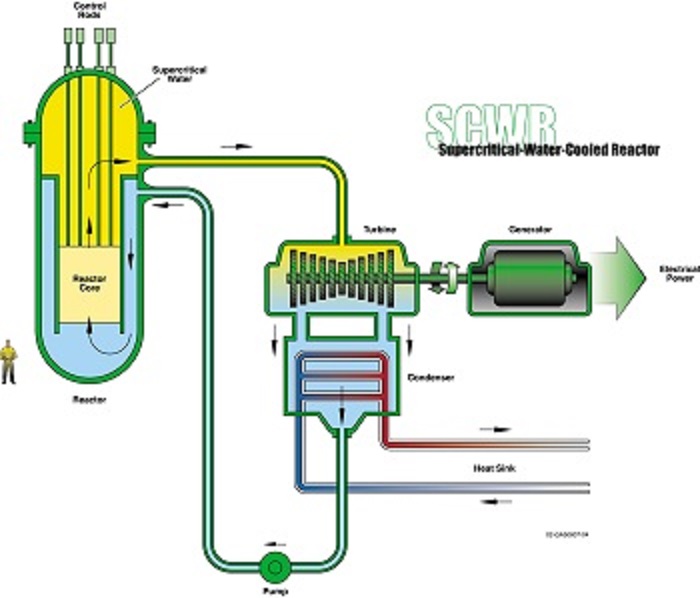
Supercritical-Water-Cooled Reactor (SCWR)
SCWRs are high temperature, high-pressure, light-water-cooled reactors that operate above the thermodynamic critical point of water (374°C, 22.1 MPa).
SCWR designs have unique features that offer many advantages compared to state-of the-art water-cooled reactors:
SCWRs offer increases in thermal efficiency relative to current-generation water-cooled reactors. The efficiency of a SCWR can approach 44% or more, compared to 34-36% for current reactors.
Reactor coolant pumps are not required. The only pumps driving the coolant under normal operating conditions are the feed water pumps and the condensate extraction pumps.
The steam generators used in pressurized water reactors and the steam separators and dryers used in boiling water reactors can be omitted since the coolant is superheated in the core.
Containment, designed with pressure suppression pools and with emergency cooling and residual heat removal systems, can be significantly smaller than those of current water-cooled reactors.
The higher steam enthalpy allows to decrease the size of the turbine system and thus to lower the capital costs of the conventional island.
There remains a number of challenges before this approach can be fully implemented, and one limiting factor is composite materials that can withstand high pressure, high temperature and high radiation at the same time.
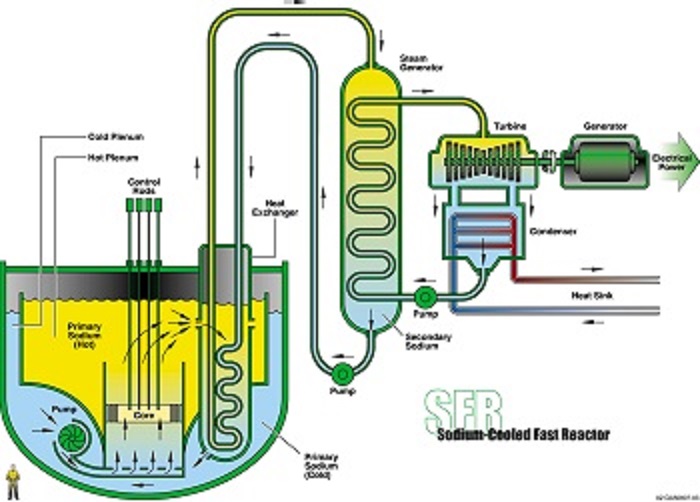
Sodium-Cooled Fast Reactor (SFR)
The SFR uses liquid sodium as the reactor coolant, allowing high power density with low coolant volume fraction and operation at low pressure. While the oxygen-free environment prevents corrosion, sodium reacts chemically with air and water and requires a sealed coolant system.
Plant size options under consideration range from small, 50 to 300 MWe, modular reactors to larger plants up to 1 500 MWe. The outlet temperature is 500-550°C for the options, which allows the use of the materials developed and proven in prior fast reactor programs.
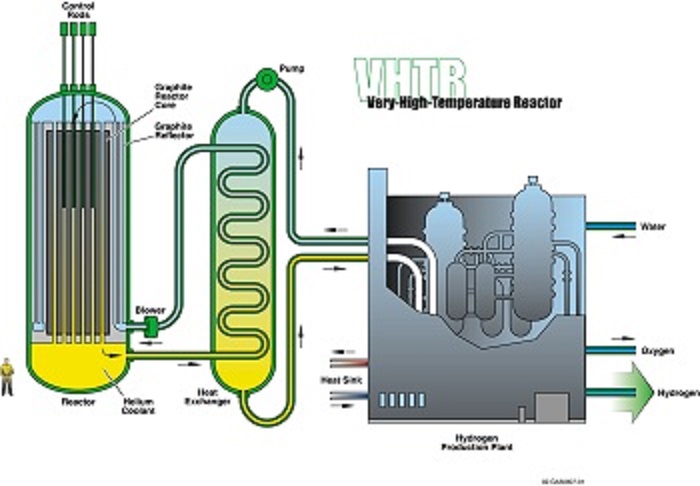
Very-High-Temperature Reactor (VHTR)
The VHTR is a next step in the evolutionary development of high-temperature gas-cooled reactors. It is a graphite-moderated, helium-cooled reactor with thermal neutron spectrum. It can supply nuclear heat and electricity over a range of core outlet temperatures between 700 and 950°C, or more than 1 000°C in future. The reactor core type of the VHTR can be a prismatic block core such as the Japanese HTTR, or a pebble-bed core such as the Chinese HTR-10.
The VHTR can support alternative fuel cycles such as U-Pu, Pu, MOX (Mixed Oxide fuel), U-Thorium.
From Denmark comes this interesting sales pitch for a nuclear waste, thorium based nuclear technology. Like most sales pitches it glosses over the remaining problems to implement it, and emphasizes advantages, which are many. Let us take a look at it:
Copenhagen Atomics’ headquarters are co-located with Alfa Laval in Copenhagen.[2]
History
Copenhagen Atomics was founded in 2014 by a group of scientists and engineers meeting at Technical University of Denmark and around the greater Copenhagen area for discussions on thorium and molten salt reactors, who later incorporated in 2015.[3] In 2016, Copenhagen Atomics was part of MIMOSA, a European nuclear molten salt research consortium.[4]
Copenhagen Atomics became the first private company in 2017, to offer a commercial molten salt loop.[5][6]
By the end of 2022, Copenhagen Atomics finished a full-size prototype reactor. The prototype is a full-scale test platform, to test the system in its entirety, with water as its medium. In 2023 a full-scale prototype molten salt reactor will be built to test the entire system with non-radioactive molten salts.[7]
Copenhagen Atomics is pursuing a hardware-driven iterative component-by-component approach to reactor development, instead of a full design license and approval approach. Copenhagen Atomics is actively developing and testing valves, pumps, heat exchangers, measurement systems, salt chemistry and purification systems, and control systems and software for molten salt applications.[9] The company has also developed the world’s only canned molten salt pump and are developing an active electromagnetic bearing canned molten salt pump.[9]
Copenhagen Atomics offers many of their technologies commercially available to the market. This includes pumped molten salt loops for use in molten salt reactor research, as well as highly purified salts for high temperature concentrated solar power, molten salt energy storage, and molten salt chemistry research.[10]
Environmental Impact
According to the website Thorium Energy World: “The CAWB [ed. Copenhagen Atomics Waste Burner] will use thorium to burn out actinides from spent nuclear fuel in order to convert long-lived radioactive waste into short-lived radioactive waste, while producing large amounts of energy and jobs in present time. End of Wikipedia quote.
The limiting factor in this molten salt reactors buildup is the availability of Uranium 233, the result of neutron bombardment of Thorium resulting in Protactinium, which converts to U-233, the real clean nuclear fuel in 29 days. The breeding gain is only 1.05, so it takes quite some time to build up the capacity. The separation stage is the critical stage, and they will not provide it, but the technology is there, but is not yet ready to be commercialized, and they were silent about who was going to do it. It is, which he also acknowledged, expensive with current methods.
China is having a massive Thorium program. The People’s Republic of China has initiated a research and development project in thorium molten-salt reactor technology. The thorium MSR efforts aims not only to develop the technology but to secure intellectual property rights to its implementation. This may be one of the reasons that the Chinese have not joined the international Gen-IV effort for MSR development, since part of that involves technology exchange. Neither the US nor Russia have joined the MSR Gen-IV effort either. China is currently the largest emitter of CO2 and air pollutants by far, and according to the Paris accord was allowed to emit six times as much pollutants as the U.S. by 2030, being a “developing nation”. Their air quality is already among the worst in the world so something had to be done if they were to achieve world dominance by 2025 and total rule by 2030. Only Thorium can solve the pollution problem and provide the clean energy needed for the future. Regular Uranium Nuclear reactors require large amounts of water and Molten Salt Thorium reactors require little water to operate.
Geneva, Switzerland, 21 August 2018 – As the world struggles with a record-breaking heatwave, China correctly places its trust in the fuel Thorium and the Thorium Molten Salt Reactor (TMSR) as the backbone of its nation’s plan to become a clean and cheap energy powerhouse. The question is if China will manage to build a homegrown mega export industry, or will others have capacity and will to catch up?
For China, clean energy development and implementation is a test for the state’s ability. Therefore, China is developing the capability to use the “forgotten fuel” thorium, which could begin a new era of nuclear power. The first energy system they are building is a solid fuel molten salt reactor that achieves high temperatures to maximize efficiency of combined heat and power generation applications. However, to fully realize thorium’s energy potential and in this way solve an important mission for China – the security of fuel supply – requires also the thorium itself to be fluid. This is optimized in the Thorium Molten Salt Reactor (TMSR). The TMSR takes safety to an entirely new level and can be made cheap and small since it operates at atmospheric pressure, one of its many advantages. Thanks to its flexible cooling options it can basically be used anywhere, be it a desert, a town or at sea. In China this is of special interest inland, where freshwater is scarce in large areas, providing a unique way to secure energy independence.
“Everyone in the field is extremely impressed with how China saw the potential, grabbed the opportunity and is now running faster than everyone else developing this futuristic energy source China and the entire world is in a great need of.” – Andreas Norlin, Thorium Energy World
China is not telling all they are doing on Nuclear Energy, but this news item is true:
The Shanghai Institute of Applied Physics (SINAP) – part of the Chinese Academy of Sciences (CAS) – has been given approval by the Ministry of Ecology and Environment to commission an experimental thorium-powered molten-salt reactor, construction of which started in Wuwei city, Gansu province, in September 2018.
A cutaway of the TMSR-LF1 reactor (Image: SINAP)
In January 2011, CAS launched a CNY3 billion (USD444 million) R&D programme on liquid fluoride thorium reactors (LFTRs), known there as the thorium-breeding molten-salt reactor (Th-MSR or TMSR), and claimed to have the world’s largest national effort on it, hoping to obtain full intellectual property rights on the technology. This is also known as the fluoride salt-cooled high-temperature reactor (FHR). The TMSR Centre at SINAP at Jiading, Shanghai, is responsible.
Construction of the 2 MWt TMSR-LF1 reactor began in September 2018 and was reportedly completed in August 2021. The prototype was scheduled to be completed in 2024, but work was accelerated.
“According to the relevant provisions of the Nuclear Safety Law of the People’s Republic of China and the Regulations of the People’s Republic of China on the Safety Supervision and Administration of Civilian Nuclear Facilities, our bureau has conducted a technical review of the application documents you submitted, and believes that your 2 MWt liquid fuel thorium-based molten salt experimental reactor commissioning plan (Version V1.3) is acceptable and is hereby approved,” the Ministry of Ecology and Environment told SINAP on 2 August.
It added: “During the commissioning process of your 2 MWt liquid fuel thorium-based molten salt experimental reactor, you should strictly implement this plan to ensure the effectiveness of the implementation of the plan and ensure the safety and quality of debugging. If any major abnormality occurs during the commissioning process, it should be reported to our bureau and the Northwest Nuclear and Radiation Safety Supervision Station in time.”
The TMSR-LF1 will use fuel enriched to under 20% U-235, have a thorium inventory of about 50 kg and conversion ratio of about 0.1. A fertile blanket of lithium-beryllium fluoride (FLiBe) with 99.95% Li-7 will be used, and fuel as UF4.
The project is expected to start on a batch basis with some online refueling and removal of gaseous fission products, but discharging all fuel salt after 5-8 years for reprocessing and separation of fission products and minor actinides for storage. It will proceed to a continuous process of recycling salt, uranium and thorium, with online separation of fission products and minor actinides. The reactor will work up from about 20% thorium fission to about 80%.
If the TMSR-LF1 proves successful, China plans to build a reactor with a capacity of 373 MWt by 2030.
As this type of reactor does not require water for cooling, it will be able to operate in desert regions. The Chinese government has plans to build more across the sparsely populated deserts and plains of western China, complementing wind and solar plants and reducing China’s reliance on coal-fired power stations. The reactor may also be built outside China in Belt and Road Initiative nations.
The liquid fuel design is descended from the 1960s Molten-Salt Reactor Experiment at Oak Ridge National Laboratory in the USA. (Researched and written by World Nuclear News)
Yes, it is true. Their design was given to them free, and now PRC is developing the future energy source including claiming intellectual property rights from a source abandoned in 1969 by U.S.A. because of political infighting, not for economical or national security reasons.
India has an active Thorium program. • India has a flourishing and largely indigenous nuclear power program and did at one time expect to have 20,000 MWe nuclear capacity on line by 2020 and 63,000 MWe by 2032, but being India and subject to Indian bureaucracy and economic limitation the goals tend to get delayed. It aims to supply over 30% of electricity from nuclear power by 2050. • Because India is outside the Nuclear Non-Proliferation Treaty due to its weapons program, it was for 34 years largely excluded from trade in nuclear plant or materials, which has hampered its development of civil nuclear energy until 2009. • Due to these trade bans and lack of indigenous uranium, India has uniquely been developing a nuclear fuel cycle to exploit its reserves of thorium. • Now, foreign technology and fuel are expected to boost India’s nuclear power plans considerably. All plants will have high indigenous engineering content. • India has a vision of becoming a world leader in nuclear technology due to its expertise in fast reactors and thorium fuel cycle. • India’s Kakrapar-1 reactor is the world’s first reactor which uses thorium rather than depleted uranium to achieve power flattening across the reactor core. India, which has about 25% of the world’s thorium reserves, is developing a 300 MW prototype of a thorium-based Advanced Heavy Water Reactor (AHWR). The prototype was fully operational by 2012, following which five more reactors will be constructed. Considered to be a global leader in thorium-based fuel, India’s new thorium reactor is a fast-breeder reactor and uses a plutonium core rather than an accelerator to produce neutrons. As accelerator-based systems can operate at sub-criticality they could be developed too, but that would require more research. India currently envisages meeting 30% of its electricity demand through thorium-based reactors by 2050.
“[F]ast reactors can help extract up to 70 percent more energy than traditional reactors and are safer than traditional reactors while reducing long lived radioactive waste by several fold,” Yukiya Amano, Director General of International Atomic Energy Agency (IAEA) in Vienna, explained to the Times of India.
Uranium isn’t common in India, but the country has the second largest store of Thorium, so the Prototype Fast Breeder Reactor (PFBR) in Kalpakkam uses rods of that element.
With the PFBR, India is pioneering a kind of nuclear technology that could potentially be the country’s greatest renewable energy source. That’s a big step, especially since nuclear fission remains the only kind of nuclear reaction we’ve managed to sustain, though efforts to make nuclear fusion viable are still in the works.
India used the heavy water, natural Uranium method to produce its Plutonium Nuclear bombs. This is not the cheapest way to produce Nuclear Bombs, but it worked for India as they refused to join the Nuclear proliferation treaty. This technology works slightly better with Thorium rods, as long as a Plutonium sparkplug is provided, but U-233 is not well suited to make nuclear bombs, so the reactors became available. It is very old technology, but it has given India good experience with the Thotium-U-233 breeding, and modern fast breeders is the next step. U.S. should immediately join their development efforts and start very close cooperation developing modern Thorium based reactors.
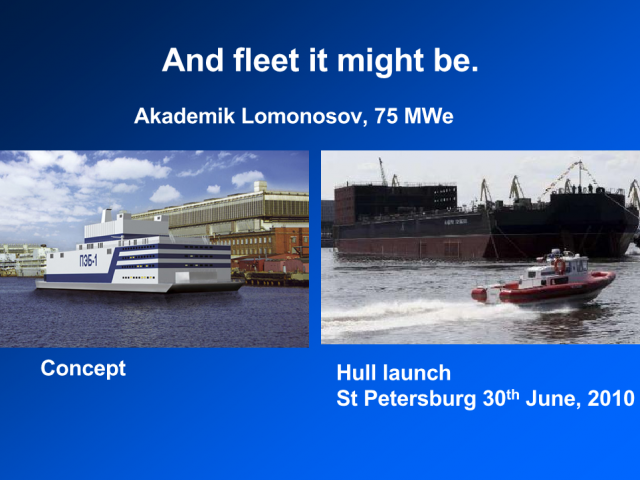
Russia has an active Thorium program.This used to be true, but it was decided that for the Arctisc buildup this barge (below) would be outfitted with regular nuclear power the same type that are in Russia’s nuclear powered ice breakers.
This is a self-contained 7m MW electric or 200 MW heat cogeneration Nuclear Reactor on a barge. Coolant readily available. Hoist it a couple of cables and the town to be serviced will have all the power and heat it needs. This is especially useful in the Arctic. Russia is trying to establish Arctic domination, both commercially and militarily. They have over 30 ice breakers, about half of them nuclear. U.S. has two conventional ice breakers, of which only one is operational.
Now for the good news: Russia is also trying to commercialize hybrid fusion-fission reactors:
Nuclear Engineering International: 29 May 2018
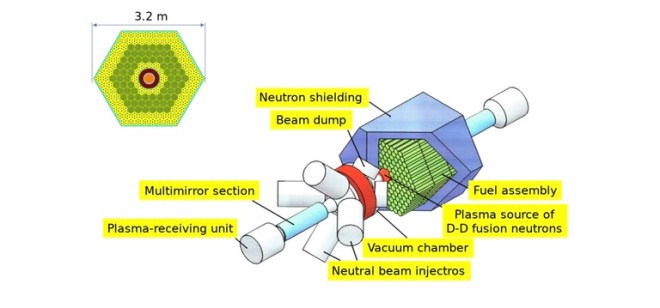
Russia develops a fission-fusion hybrid reactor. A new fission-fusion hybrid reactor will be assembled at Russia’s Kurchatov Institute by the end of 2018, Peter Khvostenko, scientific adviser of the Kurchatov complex on thermonuclear energy and plasma technologies, announced on 14 May. The physical start-up of the facility is scheduled for 2020.The hybrid reactor combines the principles of thermonuclear and nuclear power – essentially a tokamak fusion reactor and a molten salt fission reactor. Neutrons produced in a small tokamak will be captured in a molten salt blanket located around tokamak. The facility will use Thorium as a fuel, which is cheaper and more abundant than uranium. Moreover, unlike a fusion reactor, a hybrid will not require super high temperatures to generate energy.
Thorium has benefits compared with uranium reaction and has been endorsed by Democratic presidential candidate Andrew Yang.
In the reactor, plasma fusion generates neutrons that fuel subsequent fission.
Hybrid reactors reduce the impact of the nuclear fuel cycle on the environment. The concept combines conventional fission processes and fusion reactor principles, comprising a fusion reactor core in combination with a subcritical fission reactor. The results of the fusion reaction, which would normally be absorbed by the cooling system of the reactor, would feed into the fission section, and sustain the fission process. Thorium in a molten salt blanket will enable breeding of uranium-233.
Some of the expected advantages include:
Utilization of actinides and transmutation from long-lived radioactive waste;
An increase in energy recovered from uranium by a large factor;
The inherent safety of the system, which can be shut down rapidly; and
High burnup of fissile materials leaving few by-products.
The hybrid fission-fusion reactor is seen as a near-term commercial application of fusion pending further research on pure fusion power systems.
This is very interesting, and I will follow up when I get more information.
It seems that with the Ukraine war, Russia is preoccupied with other things than to reduce nuclear waste. Ah well.




.jpg?ext=.jpg)
 Len Bilén's blog, a blog about faith, politics and the environment.
