“There are three things I have learned never to discuss with people…religion, politics, and the Great Pumpkin.” Linus from Peanuts.
Author: lenbilen
Retired engineer, graduated from Chalmers Technical University a long time ago with a degree in Technical Physics. Career in Aerospace, Analytical Chemistry, computer chip manufacturing and finally adjunct faculty at Pennsylvania State University, taught just one course in Computer Engineering, the Capstone Course.
Acts 10. Cornelius, a Roman centurion called for Peter to come. That same day Peter had a vision about eating all food, including unclean food. Peter protested, but the voice in the vision told him “What God hath cleansed, that call not thou common.“ Peter followed Cornelius’ servants from Joppa to Caesarea, where he met Cornelius and presented the Gospel to Cornelius’ household. They all believed, the Holy Spirit fell on them and they were baptized, and so they became the first gentiles to be converted.
1 Chronicles 16. The Ark was placed in the Tabernacle, and David’s song of thanksgiving is recorded. After that the regular worship resumed.
1 Chronicles 17. David wanted to build a temple for the Lord rather than the tabernacle, and God’s covenant with David was that his son would be allowed to build it.
Acts 9:23-43. After Saul was Converted, the Jews in Damascus decided to kill Saul, but he escaped at night by being lowered out through a window, hidden in a basket. Saul then went to Jerusalem. The believers were at first suspicious of him, but Barnabas told what had happened to Saul, and accepting Saul’s conversion the Church Prospered. Later Saul healed the paralytic Aeneas, and in Joppa a woman named Tabitha (or Dorcas) died. The believers immediately called for Peter, and he uttered the words “Tabitha cumi” and she rose up again.
1 Chronicles 13. The Ark was brought from Kirjath Jearim to the family of Obed-Edom the Gittite. “And the ark of God remained with the family of Obededom in his house three months. And the Lord blessed the house of Obededom, and all that he had.“
1 Chronicles 14. David was firmly established at Jerusalem. After asking God if he should wage war with the Philistines he went to battle with his growing army and defeated them.
1 Chronicles 15. The Ark was brought to Jerusalem in a great procession with music and dancing. When David’s wife Michal, daughter of Saul saw David dancing in the street at the joyous occasion, she despised him.
Acts 9:1-22. On the road to Damascus Saul was Converted. Ananias met up with Saul and from that time on Saul preached Christ.
1 Chronicles 11. David was made King over Israel, after which he conquered Jerusalem and it was from then on called the City of David (as opposed to the town of David, which is Bethlehem). The chapter also lists David’s mighty men, describing some of their deeds.
June 3, ATLANTA — The nation’s leading cybersecurity agency released a final version Friday of an advisory it previously sent state officials on voting machine vulnerabilities in Georgia and other states that voting integrity activists say weakens a security recommendation on using barcodes to tally votes.
The advisory put out by the U.S. Cybersecurity and Infrastructure Security Agency, or CISA, has to do with vulnerabilities identified in Dominion Voting Systems’ ImageCast X touchscreen voting machines, which produce a paper ballot or record votes electronically. The agency said that although the vulnerabilities should be quickly mitigated, the agency “has no evidence that these vulnerabilities have been exploited in any elections.”
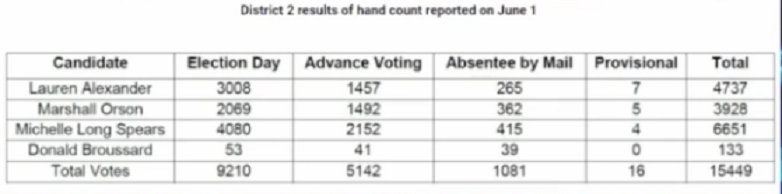
Well, on May 24. DeKalb County held a County commissioner election and the results were as following:
Marshall Orson came in first, Lauren Alexander came in second and Michelle Long Spears came in third. Since no candidate had a majority of the votes, there would be a runoff between the first and second. Michelle Long Spears thought she was more popular than that, so she decided to look how many votes she received in her own precinct. The result were startling. Zero votes. Not only had her husband not voted for her, she hat not even voted for herself! So she demanded and was granted a manual recount. The result of the recount was even more startling.
This time the order was reversed, Michelle Long Spears came in first, Lauren Alexander came in second, and Marshall Owens, the original winner was eliminated from the runoff. And the hand vote count showed 2,810 more votes!
In Dominion speak this is called a minor computer glitch. See the results from Antrim County, Michigan, here.
This calls for a manual recount wherever voting machines were used in the 2020 election, and all primary elections!
The CISA Halderman report is due next week. Stay tuned.
Acts 8:26-40. Philip met the Ethiopian eunuch. Thanks to God’s word in the scroll of Isaiah, he too came to believe and was baptized.
1 Chronicles 7 lists the family tree of Issachar, the family tree of Benjamin, the family tree of Naphtali, the family tree of Manasseh West of Jordan, the family tree of Ephraim and the family tree of Asher.
1 Chronicles 9 lists the people, the priests, the Levites and the Levite gatekeepers in Jerusalem that had returned after the captivity in Babylon. It continues with other Levite responsibilities and finally gives another part of the genealogy of king Saul.
1 Chronicles 10 tells the inglorious death of king Saul. He fell on his own sword and his sons were killed.
India is reopening 100 coal mines to ensure that their electrification program stays on course in the face of new realities. International coal prices has more than doubled since the start of 2022, so coal mining is again profitable.
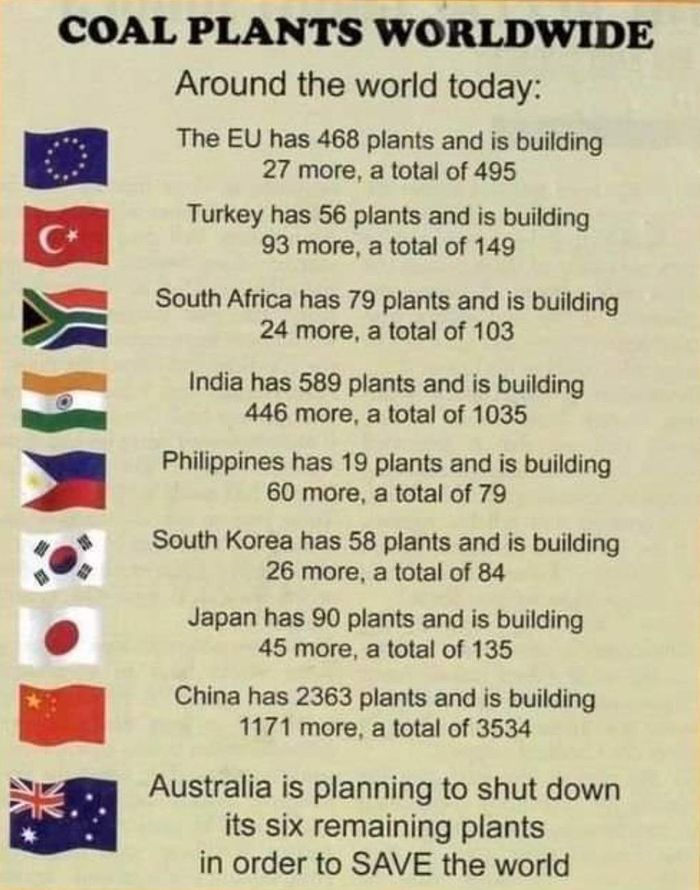
One would think that the world is trying to reduce the number of coal plants. Not so!
This does not include the developing world that is just getting started with, you guessed it, coal plants!
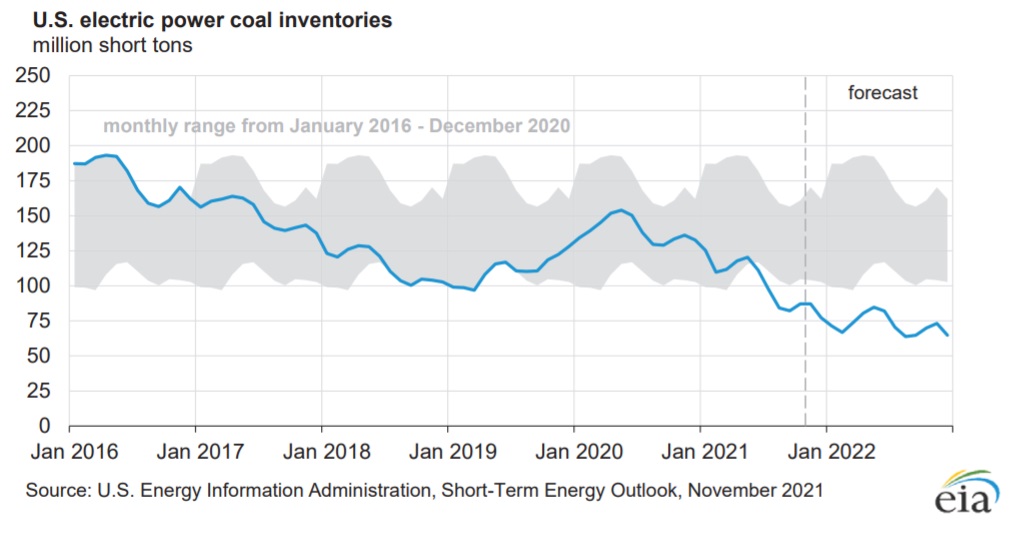
Australia has at least one ally in trying to save the world, the United states of America! California has already eliminated their coal plants, but they are also a great importer of electricity, much of it produced from coal. In the next ten year the U.S. utilities plan to shut down or change the fuel on over 200 coal fired plants, 48 in 2022 alone. Meanwhile , coal is getting scarce. There will be spot shortages this year.
There will be brownouts and rotating blackouts this summer, especially in California and the mid-west.
Natural Gas prices has more than doubled from around $3 per Mega BTU to over $8, while spot price in Europe is over $26 per MBTU. To quote Barack Obama: “Electricity prices will naturally skyrocket”. This means electricity prices have only begun their rise.
The National Electric grids are aging and under increasing stress. The Biden administration has one solution. Commandeering American industry to make more solar panels with components made nearly exclusively from China and lower the import tariffs on solar panel components. California is already producing too much solar power if the wind is also blowing, but not during times of greatest demand, leading to a desperate need for pumped storage or large, very expensive battery banks. California has already given its first warning: Don’t charge your electric vehicles now, or the whole grid will go down. See here.
Yet there is hope. We can switch our electric grid to nuclear energy, but not the dominant Uranium 235 nuclear plants that requires evacuation zones, lots of cooling water and a large regulatory overhead to ensure their safety. No, instead go back to the original source of nuclear power, before making nuclear bombs became the driving source of nuclear development. Thorium based nuclear power, especially the Liquid Fluoride molten salt Thorium Reactor (LFTR). It breeds more fuel than it uses by about 3%, and it generates 0.01% of the nuclear waste of a Uranium 235 plant. It is more efficient and inherently safe. My preference would be to make them in an assembly line and deliver them on standard trucks rather than build them on site. LFTR reactors does not need water for cooling. My preference would be a 100 MW reactor with the molten salt containing the fissile material separated from the cooling system, which could be either gas or molten lead. They could then be spread out over the country with no need for water, be placed near population centers since there is no need for evacuation zones. This would make it possible to have local grids, eliminating the need to expand the national grid.
And with an assembly line production the core units can be delivered in three standard size containers. The total cost including power generation and the permanent enclosure will be less than two dollars per watt, and fuel cost is essentially nil, since Thorium is already mined in excess quantities in rare earth mining.
I do want to save coal for important uses, such as making chemicals and fertilizer, and in the future to produce aviation fuel. By all means, switch to electric vehicles, but not until the electric grid is converted from Coal and Natural Gas to nuclear!
Acts 8:1-25. Saul persecuted the Church, it was so severe that the believers scattered all over the nations. Thanks to the persecution the Gospel reached Samaria where Philip met Simon the Sorcerer who came to believe, but he still thought the Holy Spirit could be purchased with money!
1 Chronicles 6 lists the family tree of Levi, musicians in the house of the Lord, the family tree of Aaron and, since the Levites had no land allocation, it lists their dwelling places.
Acts 7 begins with Stephen’s speech to the Sanhedrin and ends with the stoning of Stephen, the first martyr killed for his Christian faith.
1 Chronicles 5 contains the family tree of Reuben, the family tree of Gad and the family tree of Manasseh East of Jordan. These three tribes were unfaithful to God and the king of Assyria defeated them and took them into exile.
Acts 6. To better serve the needs of widows seven people were chosen, among them Stephen. They would later be called deacons. Stephen spoke boldly about Jesus, he was in the Spirit, was seized, and so a trial began.
1 Chronicles 2 lists the family tree of Israel, then concentrates on the family tree from Judah to David, continuing with the family tree of Hezron, the family tree of Jerahmeel and finally the family tree of Caleb.
1 Chronicles 3 contains the family tee of David, the royal line of Solomon and the royal line of Jeconiah after the exile.
1 Chronicles 4 contains the rest of the family tree of Judah and the family tree of Simeon.
Acts 5:12-42. When Ananias and Sapphira had lied to the Holy Spirit and died on the spot, great fear and great power came over the Church. An Angel of the LORD came during the night and freed the Apostles that had been jailed the previous day. They went back to the Temple courts and got called in to the Sanhedrin again for the crime of preaching about Jesus, but Gamaliel gave them good advice, they listened, and after flogging the Apostles were let go.
1 Chronicles 1 lists the partial family tree of Adam to Noah’s sons, the family tree of Abraham, beginning with the family tree of Keturah, Abraham’s concubine whom he married after the death of Sarah, the family tree of Isaac, the family tree of the people of Seir in Edom and finally a list of the kings of Edom.
Psalm 42, a Maskil. Of the sons of Korah. A very old Psalm, it mentions Elohim many times, but Jehovah only once. It begins “As the deer pants for the water brooks, So pants my soul for You, O God.” Enjoy! (I love the song)