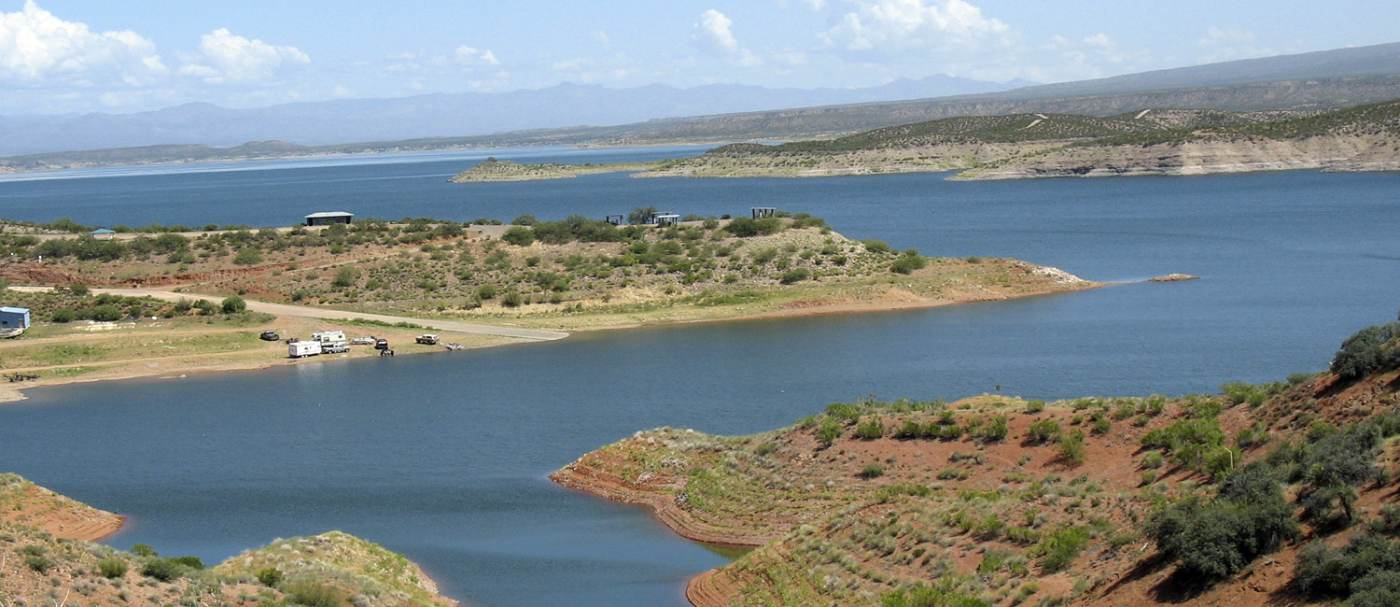
Stage 11 is a true delivery of water on demand aqueduct. The San Carlos lake has a storage capacity of a million acre-ft, the ideal buffer from the peak power demand driven uphill stages to the major delivery stage. San Carlos lake is now mostly empty, but will be normally filled to 85% of capacity, slightly less in advance of the winter snow melt. The Lake would look like this:
San Carlos lake, about half full
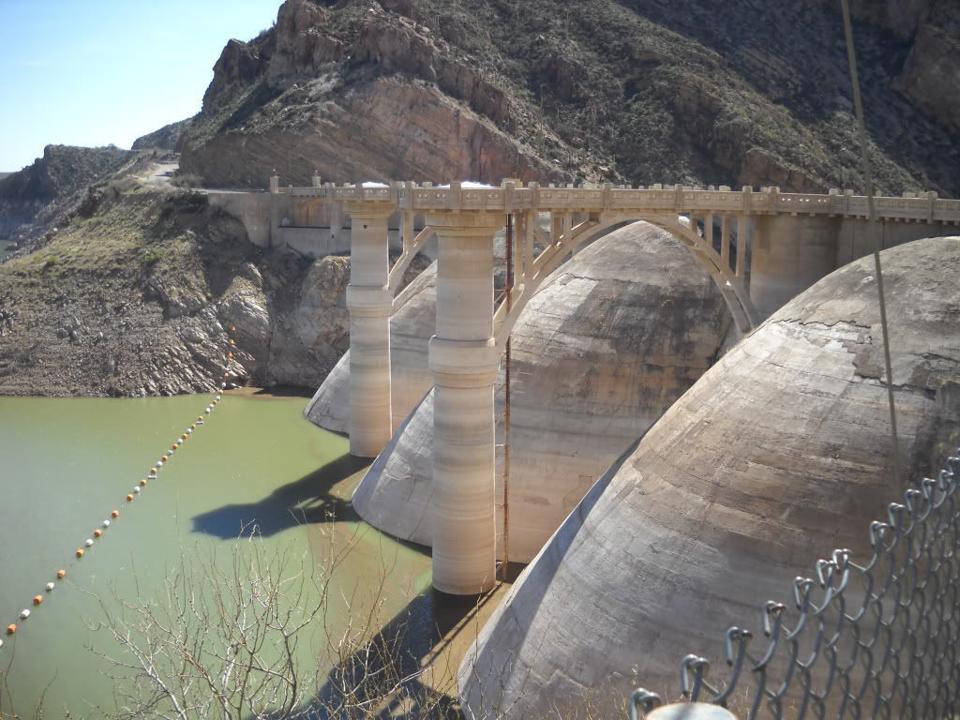
The Coolidge dam is now decommissioned, the lake is too often empty and the dam suffered damage in the power plant and it was no longer economical to produce power. The retrofitted dam will have a power generation capacity of up to 17,000 cfs the top of the dam is at 2535 ft, the typical water level is at 2500 ft and the drop is 215 feet, giving a maximum power output of 275 MW. In the first pass, the maximum output is 8,500 cfs , and the maximum power output is 135 MW.
The Coolidge dam before rebuilding.
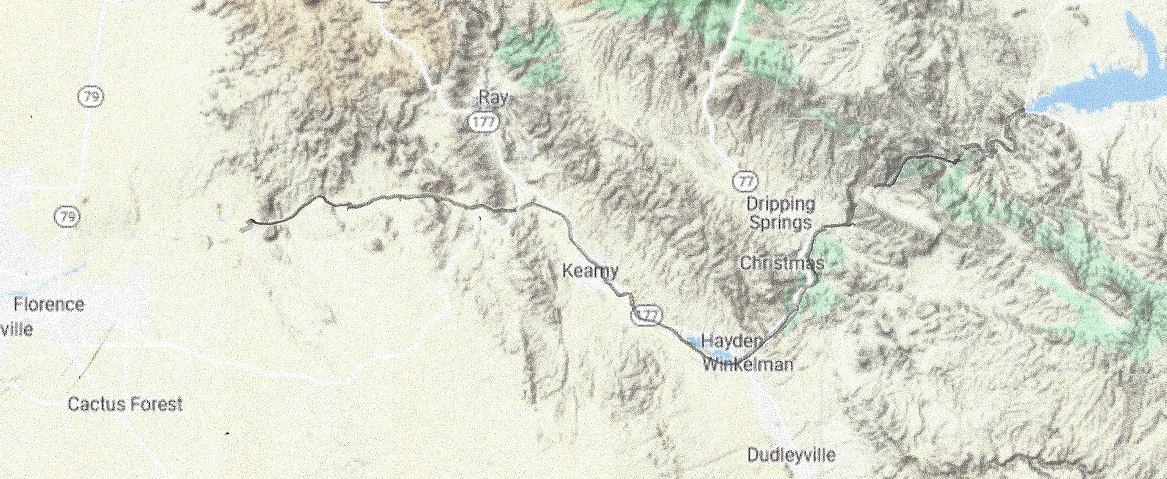
From there the stream follows the Gila River to the East diversion dam and connects to the Tucson leg of the CAP canal, and delivers 600 cfs of water. It it then disconnected to the bottom of the canal.
The East Diversion dam will be reinforced, and the anal capacity will be increased to 600 cfs.The free flowing Gila River with reinforcements around Hayden and the copper mine.
Whats in it for Arizona? Besides having a reliable flow, Gila river will again be good for fishing if stocked and it will deliver 600 cfs of reliable sweet Mississippi and Arkansas river water to the Tucson area. When fully built out it will deliver up to 275 MW of power.
The aqueduct stage of this leg is 32 miles and is generating power.The drop is average (4,200 – 3,000 – 32×2.2) = 1,130 feet. The maximum flow is 16,800 cfs. This stage is capable of generating maximum 1.4 GW of power 24 hours a day. Then it drains into Gila River for 47 miles, following 14 miles of San Carlos lake, for a total of 93 miles.
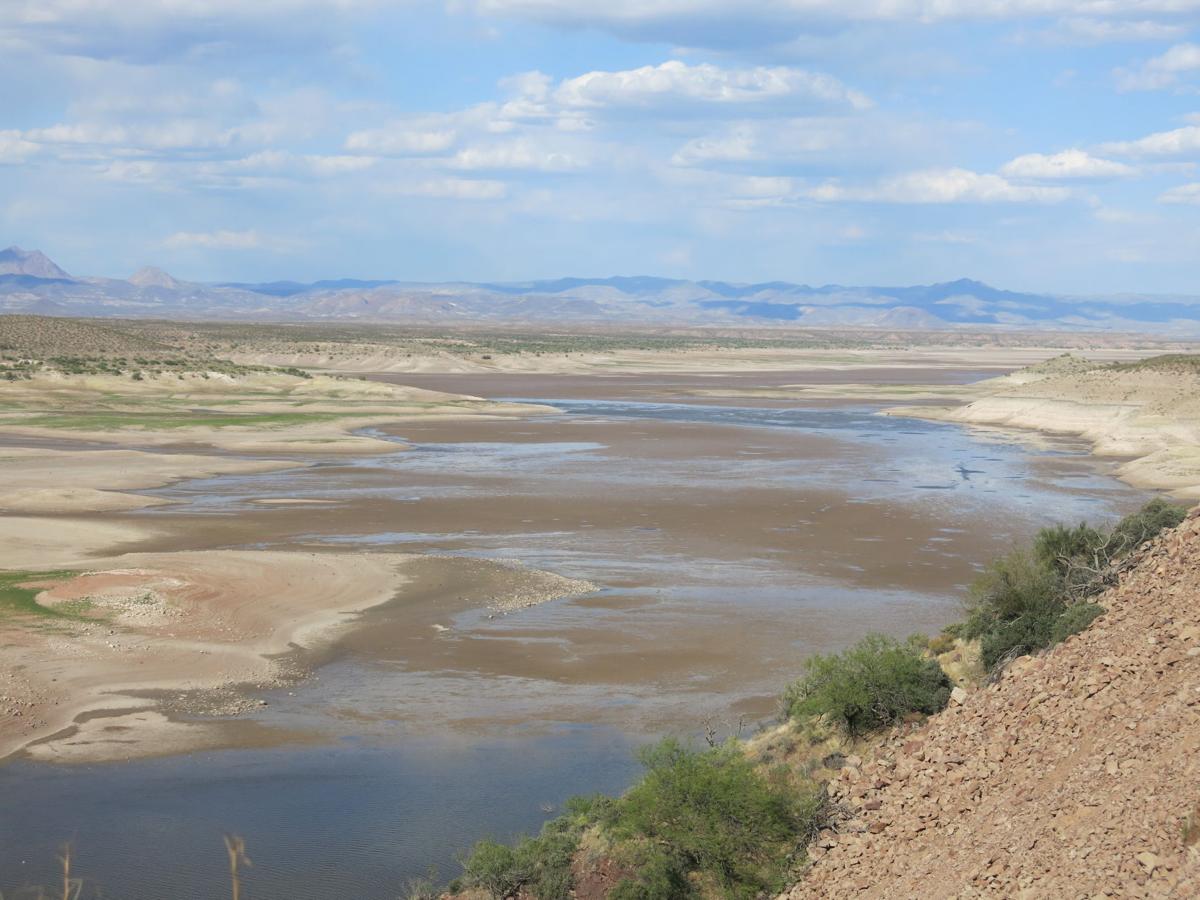
San_Carlos_Lake is located within the 3,000-square-mile (7,800 km2) San Carlos Apache Indian Reservation, and is thus subject to tribal regulations. It has been full only three times, in 1993 it overflowed the spillway and about 35,000 cfs of water caused erosion damage to natural gas pipelines. The lake contained (April 6,2021) less than 100 acre-ft of water. All fish was dead.
When former President Coolidge dedicated the dam in 1930, the dam had not begun to fill. Humorist Will Rogers looked at the grass in the lake bed, and said, “If this were my dam, I’d mow it.”[
When the Transcontinental aqueduct is built the lake will always be nearly filled, level will be at 2510 feet with flood control nearly automatic, it will never overflow, and it will look like this, or better:
The San Carlos lake, when filled will hold 1,000,000 acre-ft of water. Here it is half filled.
The Coolidge dam will have to be retrofitted to accommodate a 17,000 cfs water flow. When water starts flowing at half capacity, 8,400 cfs in phase 1 of the building project it will take 2 months to fill the lake.
What’s in it for Arizona? The San Carlos Lake has been a great disappointment. It is more often empty than even half full, and when it is empty, all fish die. With The Gila river will be rejuvenated and will be able to carry fish again, making it the great recreation spot it was meant to be. In addition it will generate up to 1,4 GW of Power and carry up to 12 Million Acre-ft per year of water to the thirsty American South-west. In the first phase, while the aqueduct is built to full capacity, when the power stations have installed only half capacity, the flow will be 6 MAf per year, and power generated will be up to 700 MW.
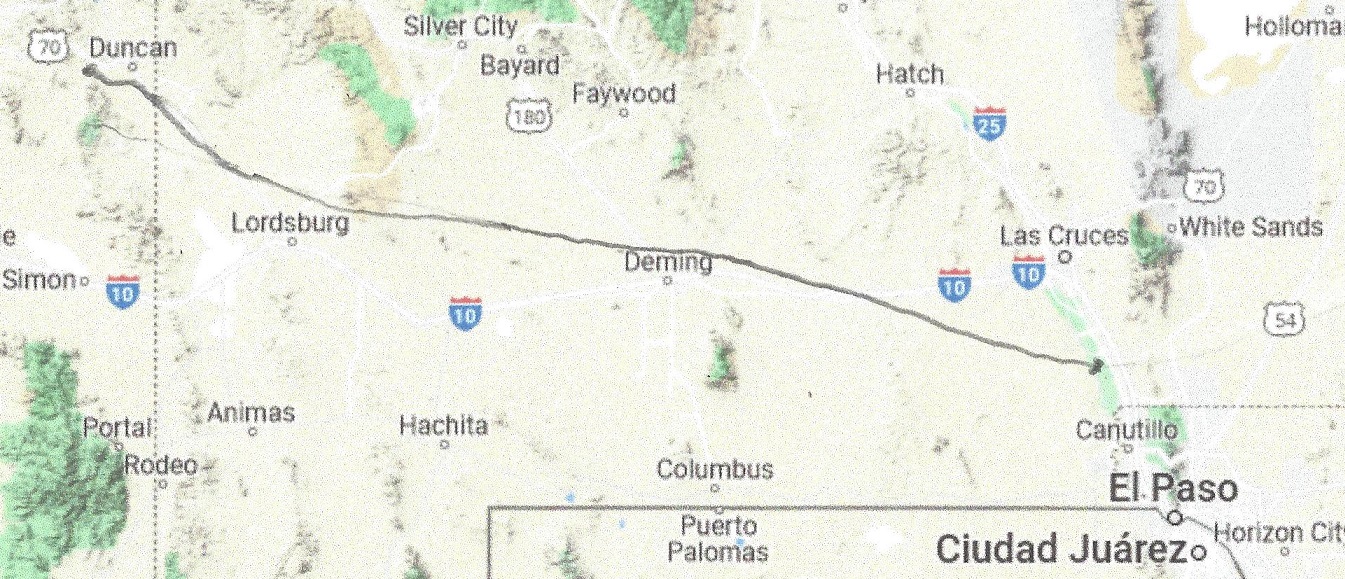
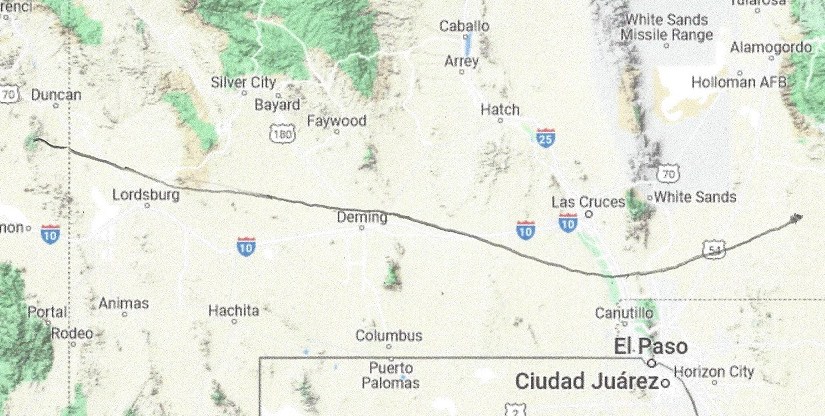
Leg 7 is 255 miles. I starts out at 2700′ elevation and ends at 4500′
Leg 7. from Buffalo soldier Draw upper dam to the highest point in Texas
To lift 17,000 cfs of water (4500 – 2700 + 255×2.2) = 2421 feet with a 92% efficiency requires 3.7 GW of power.
Leg 8 is 125 miles. I starts out at 4500′ elevation and ends at 3800′
Leg 7. from the highest point in Texas to crossing the Rio Grande at La Mesa
To release 17,000 cfs of water (4500 – 3800 – 125×2.2) = 425 feet with a 92% efficiency generates 550 MW of power.
Leg 8 is 125 miles. I starts out at 4,500′ elevation and ends at 3,800′
From La Mesa it will climb to the highest pumping station in Arizona, located 10 miles west of the border, at 4,200 feet. The total lift of the water in stage 10 is (4,200 – 3980 + 160×2.2) feet = 572 ft. To lift 17,000 cubic feet per second 592 feet requires 900 MW of power.
The total power needed for these 3 legs of the Transcontinental aqueduct when fully built up is 4.05 GW of power, the bulk of which will be supplied of 40 100 MW LFTR (Liquid Fluoride Thorium Reactors). They are efficient and carbon neutral.
What’s in it for Texas, New Mexico and Arizona? Up to 17,000 cfs of soft water is being delivered to the thirsty south western states. This corresponds to 12 Million Acre-feet per year. The Colorado river contributes 15 MAF/year. The water delivery in the first pass of implementing the Transcontinental Aqueduct is 6,000 MAF per year.
The aqueduct stage of this leg is 32 miles and is generating power.The drop is average (4,200 – 3,000 – 32×2.2) = 1,130 feet. The maximum flow is 16,800 cfs. This stage is capable of generating maximum 1.4 GW of power 24 hours a day. Then it drains into Gila River for 47 miles, following 14 miles of San Carlos lake, for a total of 93 miles.
San_Carlos_Lake is located within the 3,000-square-mile (7,800 km2) San Carlos Apache Indian Reservation, and is thus subject to tribal regulations. It has been full only three times, in 1993 it overflowed the spillway and about 35,000 cfs of water caused erosion damage to natural gas pipelines. The lake contained (April 6,2021) less than 100 acre-ft of water. All fish was dead.
When former President Coolidge dedicated the dam in 1930, the dam had not begun to fill. Humorist Will Rogers looked at the grass in the lake bed, and said, “If this were my dam, I’d mow it.”[
When the Transcontinental aqueduct is built the lake will always be nearly filled, level will be at 2510 feet with flood control nearly automatic, it will never overflow, and it will look like this, or better:
The San Carlos lake, when filled will hold 1,000,000 acre-ft of water.
The Coolidge dam will have to be retrofitted for a 25,000 cfs water flow
The Coolidge dam will have to be retrofitted for a 17,000 cfs water flow. When water starts flowing at half capacity, 8,400 cfs in phase 1 of the building project it will take 2 months to fill the lake.
What’s in it for Arizona? The San Carlos Lake has been a great disappointment. It is more often empty than even half full, and when it is empty, all fish die. With The Gila river will be rejuvenated and will be able to carry fish again, making it the great recreation spot it was meant to be. In addition it will generate up to 1,4 GW of Power and carry up to 12 Million Acre-ft per year of water to the thirsty American South-west. In the first phase, while the aqueduct is built to full capacity, the flow will be 6 MAf per year.
The Martin Tank Lake dam is 2,260 feet wide and 230 feet high. The Lake will contain about 30,000 Acre-ft when full, about twenty-one hours worth of storage.
The elevation at the Martin Tank lake will top out at 5,220 feet with maximum water level at 5,210 feet. Because there is no water storage en route water will be pumped at all times at The aqueduct will first descend to 3980 feet, as it crosses the Rio Grande in La Mesa, a distance of 50 miles. The elevation difference is (5,120 – 3980 – 50 X 2.2) feet = 1.030 feet. Releasing 16,900 cfs of water 1,030 feet will generate 1.285GW of energy continuously. From La Mesa it will climb to the highest pumping station in Arizona, located 10 miles west of the border, at 4,200 feet. The total lift of the water in stage 10 is (4,200 – 3980 + 160×2.2) feet = 572 ft. To lift 16,900 cubic feet per second 592 feet requires 892 MW of power, for a net electricity generation of 393 MW.
What’s in it for New Mexico and Arizona? Up to 16,900 cfs of soft water is being delivered to the thirsty south western states. This corresponds to 12 Million Acre-feet per year. The Colorado river contributes 15 MAF/year.
The Martin Tank Lake dam is 2,260 feet wide and 230 feet high. The Lake will contain about 30,000 Acre-ft when full, about eighteen hours worth of storage.
The elevation at the Martin Tank lake will top out at 5,220 feet with maximum water level at 5,210 feet. Because there is no water storage en route water will be pumped at all times at The aqueduct will first descend to 3980 feet, as it crosses the Rio Grande in La Mesa, a distance of 50 miles. The elevation difference is (5,120 – 3980 – 50 X 2.2) feet = 1.030 feet. Releasing 16,900 cfs of water 1,030 feet will generate 1.285GW of energy continously. From La Mesa it will climb to the Poppy Canyon Upper Reservoir. The dam is 480 feet high and will top out at 5,400 feet with a maximum water level at 5,490 feet. The total lift of the water in stage 10 is (5,000 – 3980 + 160×2.2) feet = 1196 ft. To lift 16,900 cubic feet per second 1196 feet requires 1,508 MW of power, for a net need of 225 MW. This can be supplied by two 100 MW LFTR nuclear reactors, operating 24 hrs /day The Poppy Canyon Reservoir will look like this:
The Poppy Canyon is a pumped power storage, consisting of an upper dam:
Dam width 4,500′ height 540′ water storage 230,000 acre-ft
and a lower dam:
Dam width 4,500′ height 500′, water storage 200,000 acre-ft
The total lift of the water in the pumping stage is maximum (5,390 – 4,400) feet = 990 ft. and the minimum lift is 200ft, for an average lift of 350 ft. The pumping stage pumps up 10,000 acre-ft per hour for i9 hours needing maximum 10.7 GW of power. During the release stage 38,000 acre-ft of water is released per hour for a total power generation of 78 GWh / day of pumped storage electricity. In addition, the 107 100 MW LFTR SMRs will generate 53.5 GWh of virtual power storage when no water is pumped up.
What’s in it for New Mexico and Arizona? 16,900 cfs of soft water is being delivered to be divided among the south western states. In addition this stage will provide up to 133.5 GWh of pumped storage peak energy daily to help stabilize the grid when more solar power panels are installed and electric cats and trucks are recharged.
Leg 8 ended in the North Hammock Canyon Reservoir. It will be filled mostly during the 5 hours of peak power generation. During the other 19 hours the fill rate will be very low leading to lowering water levels.
Leg 9 starts with a 1/2 mile wide, 200 ft high reservoir capable of holding 12,000 acre-ft of water. It will be filled during the 5 hours of peak power. The average drop is (4,600 – 4210) = 390 ft and the flow is (12,000 / 5) = 2,400 acre-ft/hr, generating a net power of (390 x 2,400x 0.92) = 861 MW during the 5 peak hours.
From the North Hammock peak power reservoir to the Martin Tank Lake the distance is 59 miles the way the aqueduct takes. It will first descend to 3720 feet before rising to 5190 feet. The descending drop is (4200 – 3720 – 2.2 x 9), an average of 460 feet. The Martin Canyon Lake will top out at 5200 feet with maximum water level at 5190 feet. The total lift of the water in this stage is (5190 – 3720 + 50×2.2) feet = 1580 ft. To lift 21,400 cubic feet per second (1580 x 1.08 – 460 x 0.92) = 1283 feet requires eighteen 100 MW LFTR nuclear reactors. The Martin Tank Lake dam is 22260 feet wide and 230 feet high. It will contain about 30,000 Acre-ft when full, about eighteen hours worth of storage.
What’s in it for New Mexico? The major contribution in this stage is the 861 MW of pumped storage and 2,300 MW of virtual power storage for a total of ( (861 + 2300) x5) = 15.8 GWh per day.
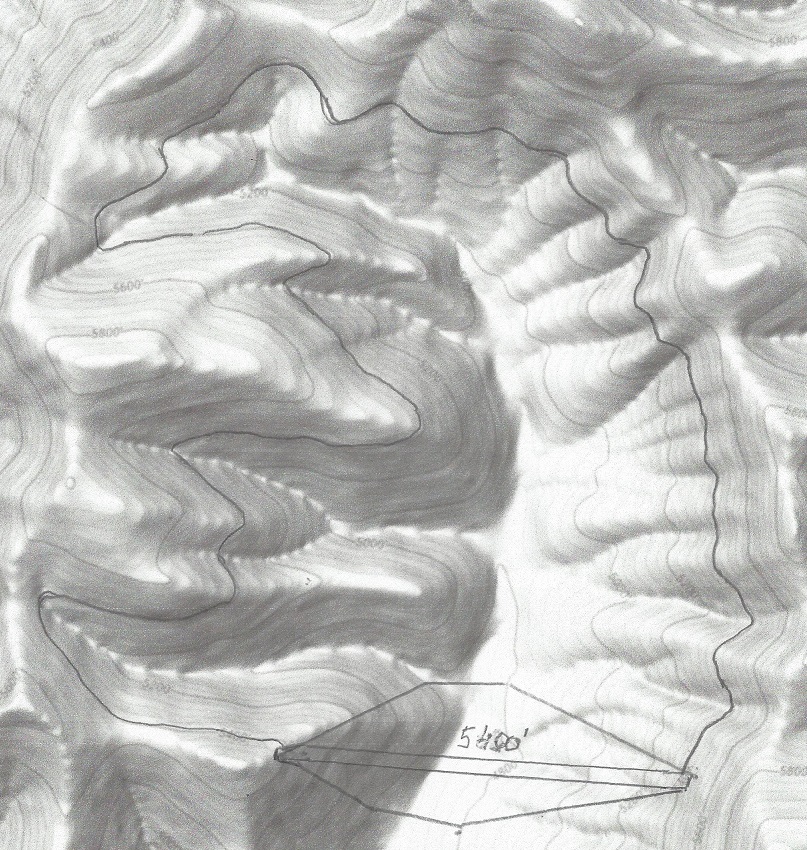
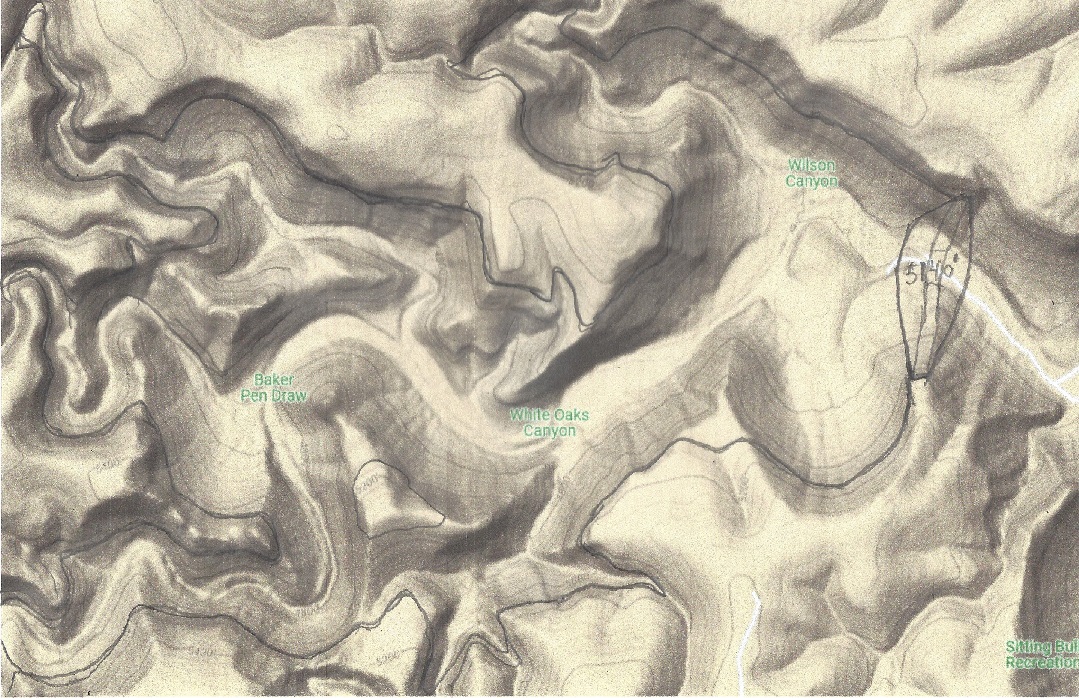
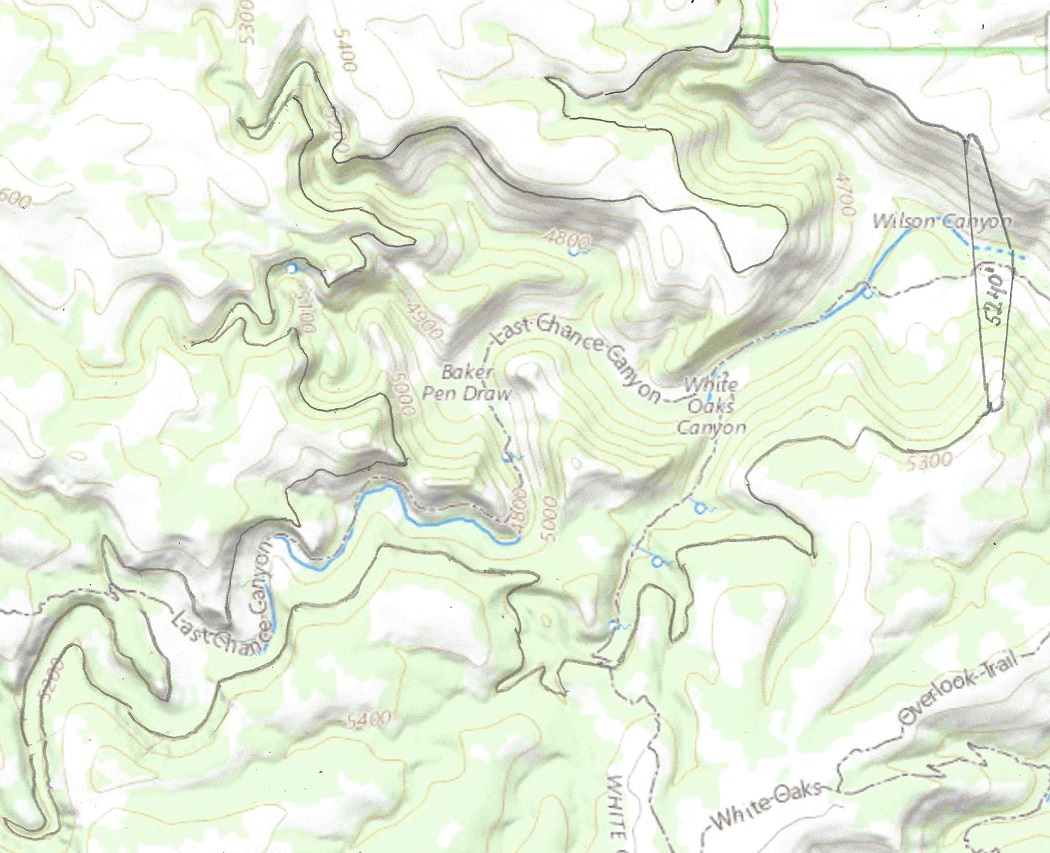
Dam 1 is the White Oaks Canyon Lake. It has a 2000 feet wide and up to 500 feet high dam, topping out at 5,140 feet, and the lake holds a volume of up to 80,000 acre-ft of water.
White Oaks Canyon dam, 500′ high, elevation 5140′
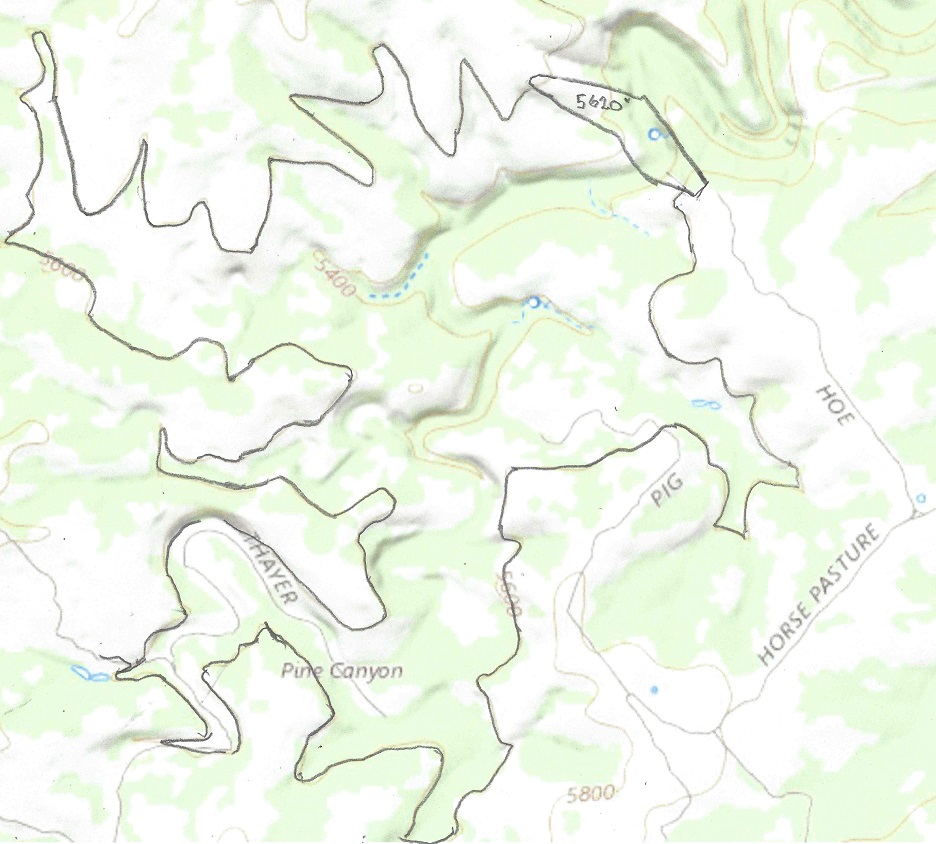
Dam 2 dams the Pine Canyon dam. It has a 2200 feet wide and up to 240 feet high dam, topping out at 5,620 feet, and the lake holds a water volume of up to 60,000 acre-ft. Water is pumped from and released to the White Oaks Canyon lake to the Pine Canyon pumped storage via a 2 mile tunnel.
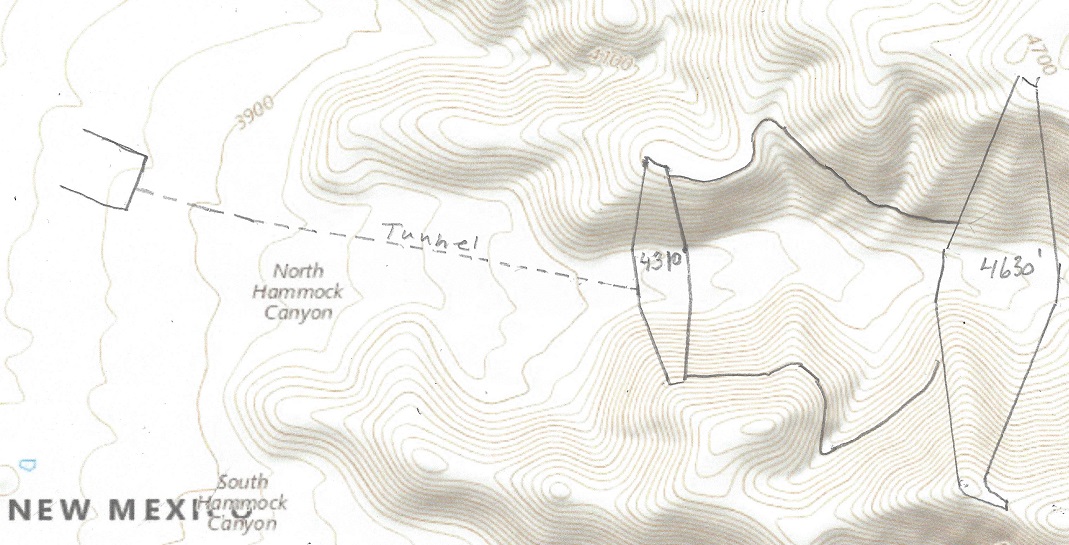
Leg 8 consists of a tunnel, starting at 4,640 feet and ending at 4140 feet. The 20 mile long tunnel will drop 40 feet as it passes under the mountain. At the 16 mile mark there will be a 460′ vertical drop.
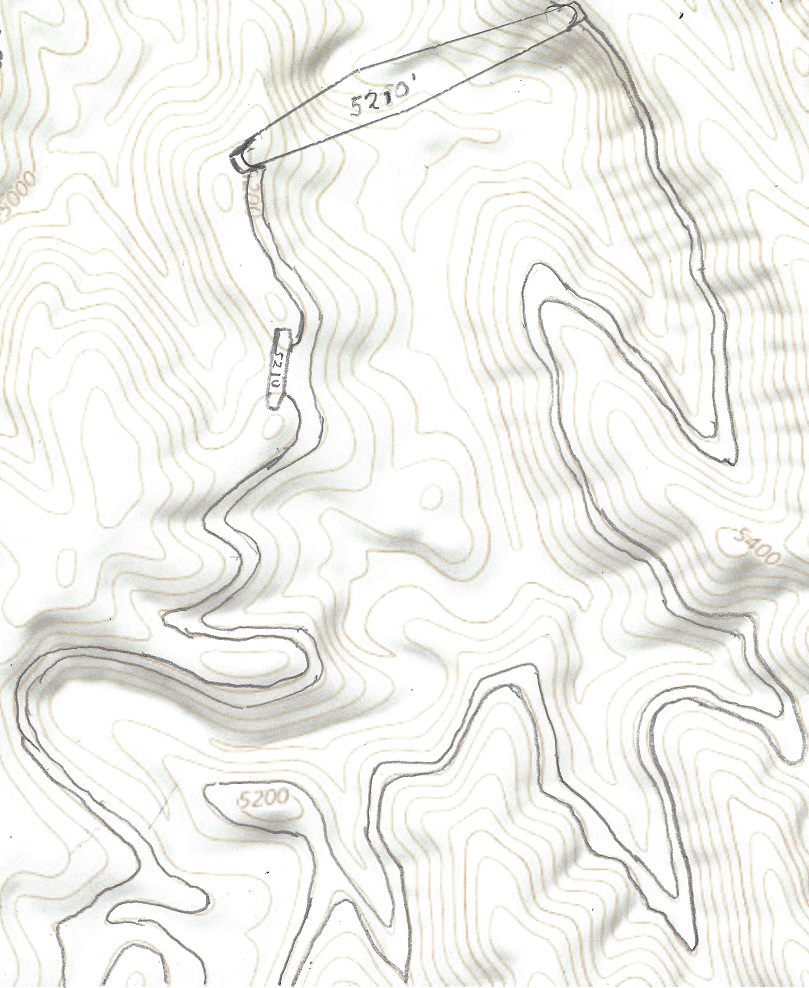
Dam 3 dams the Kingston Canyon lake. It has a 1600 feet wide and up to 250 feet high dam, topping out at 5,210 feet, and the storage holds a volume of up to 25,000 acre-ft of water.
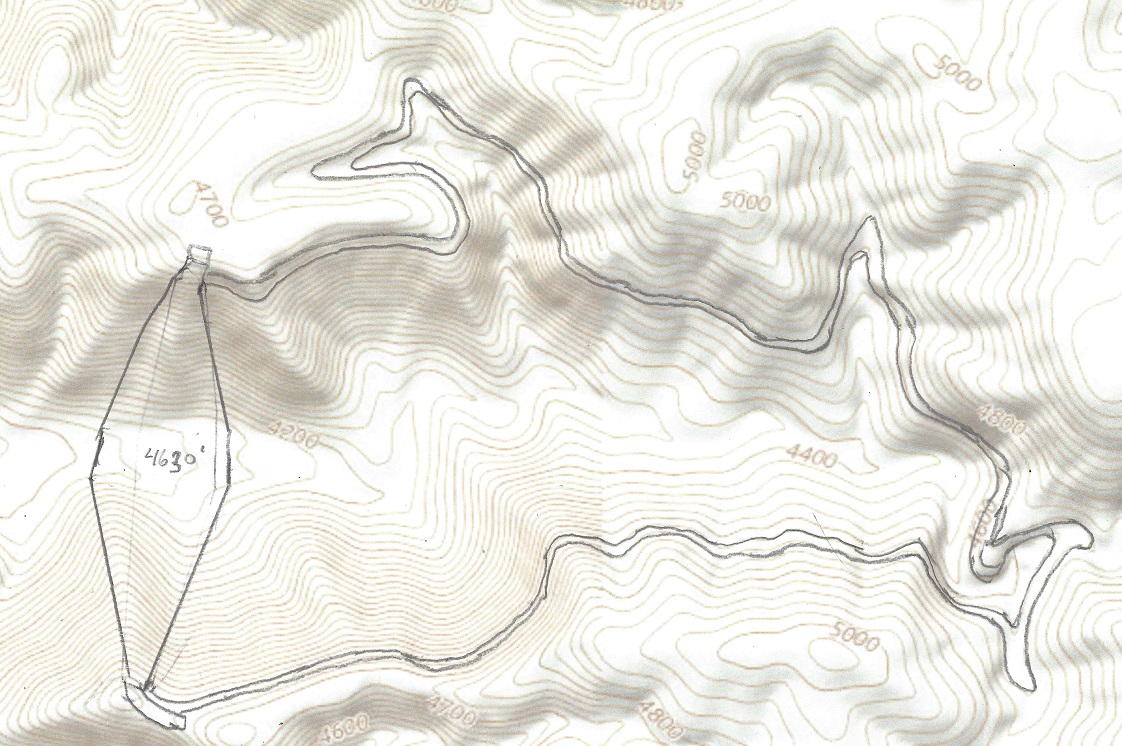
Dam 4 dams the Upper Hammock Canyon Reservoir. It has a 3000 feet wide and up to 500 feet high dam, topping out at 4630 feet, and the lake holds a volume of up to 25,000 acre-ft of water.
Up to now all stages have pumped water uphill. This stage both generates peak power and pumps water. Let us first take the case for pumping water, Stage 1 thru 4.
Stage 1 pumps up to 60,000 acre-ft of water during the 19 off peak hours from an average height of 5,000′ in Dam 1 to an average height of 5,500 in dam 2,a lift of 500′ This requires 1,700 MW of power.
Stage 2, the first 16 miles of the tunnel. The water flow is down to 21,500 cfs , 19 hours a day. During these 19 hours 21,500 cfs flows down the tunnel, the power generated is coming from Dam 1 with a water level of between 4980 feet and 4700 feet with an average of 4940 feet. The tunnel will slope with a 2.2 ft per mile drop.
Stage 3. 16,000 cfs of the water will be pumped up to dam 3, with an average rise from 5,000 feet to between 5200 feet and 4930 feet, (average 5120) for 19 hours, an average lift of 160 feet. This requires a total of 230 MW of power .
Stage 4.The remaining 3,500 cfs of water will be released to dam 4 with an average drop of of 200 feet will generate about 60 MW of power.
Stages 1-4 requires a net power need of 1,570 MW during the 19 off-peak hours.
Stage 5 will release up to 60,000 acre-ft of water from Dam 2 to dam 1 during the 5 peak hours, dropping 500 feet, generating 5,500 WW of power, assuming a 92% generating efficiency.
Stage 6 will release up to 25,000 acre-ft of water from dam 3 to dam 4 during the 5 peak hours, dropping an average 600feet, generating 2.700 MW of power.
What’s in it for New Mexico? This leg is very important, since it will provide up to 41 GWh daily of pumped storage electricity to the national grid, and so make it possible to stabilize the net when more solar panels are installed. The 1,570 MW of power needed for this leg will hopefully come mostly from solar and wind power
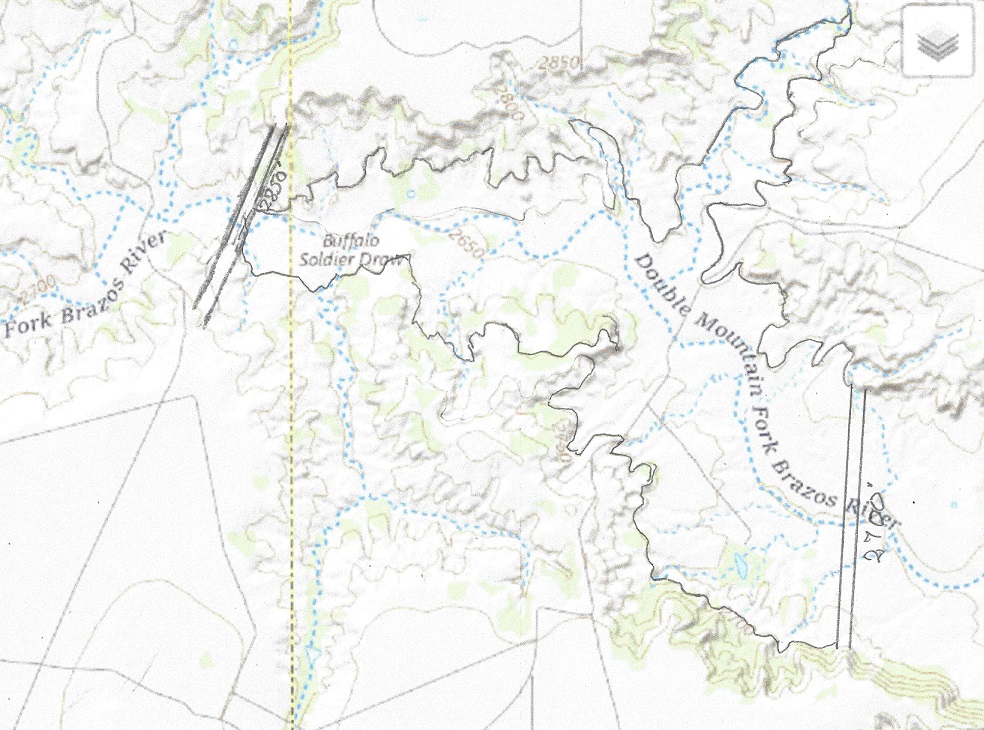
Leg 7 of the Transcontinental aqueduct is 90 mils in Texas, rising from 2800′ to 3640′. From there it flows 115 miles in New Mexico rising to 5200′.
The upper dam of Soldier Mountain Draw, capacity 40,000 acre-ft.
The elevation at the buffalo Soldier Draw dam will top out at 2,850 feet with maximum water level at 2,830 feet. The White Oaks Canyon dam is 560 feet high and will top out at 5,240 feet with an average water level at 5,000 feet. The total lift of the water in stage 5 is (5,000 – 2,800 + 205×2) feet = 2610 ft. To lift 21,600 cubic feet per second 2610 feet requires fifty 100 MW LFTR nuclear reactors, twenty on the Texas Grid and thirty on the Western national grid. The White Oaks Canyon Lake will contain about 130,000 Acre-ft of water when full, about three days of storage. For 5 hours per day these fifty reactors used in this stage can provide 5.0 GW of peak power to the grid instead of pumping water, thus acting as a virtual hydroelectric peak power storage. 2 GW of this will be used by the Texas Power Grid, and 3 GW by the Western U.S. Power grid, and they have to be coordinated.The White Oaks dam will look like this:
What’s in it for Texas? Wind power is already 22% of the source for the Texas power grid, but Texas has up to now no pumped water storage, and until this is fixed coal and natural gas backup must be provided when the wind doesn’t blow. This leg will provide 2 GW of virtual hydro-power generation to the Texas power grid by not pumping water for up to 5 hours and thus provide 10 GWh of peak power daily. This will greatly help stabilize the Texas power grid, and facilitate the phasing out of coal power and help the transition to electric vehicles, which will add stress to the stability of the grid by their uneven recharging patterns.
What’s in it for New Mexico? This leg will provide 3 GW of virtual hydro-power generation by not pumping water for up to 5 hours and thus provide 15 GWh of peak power daily.
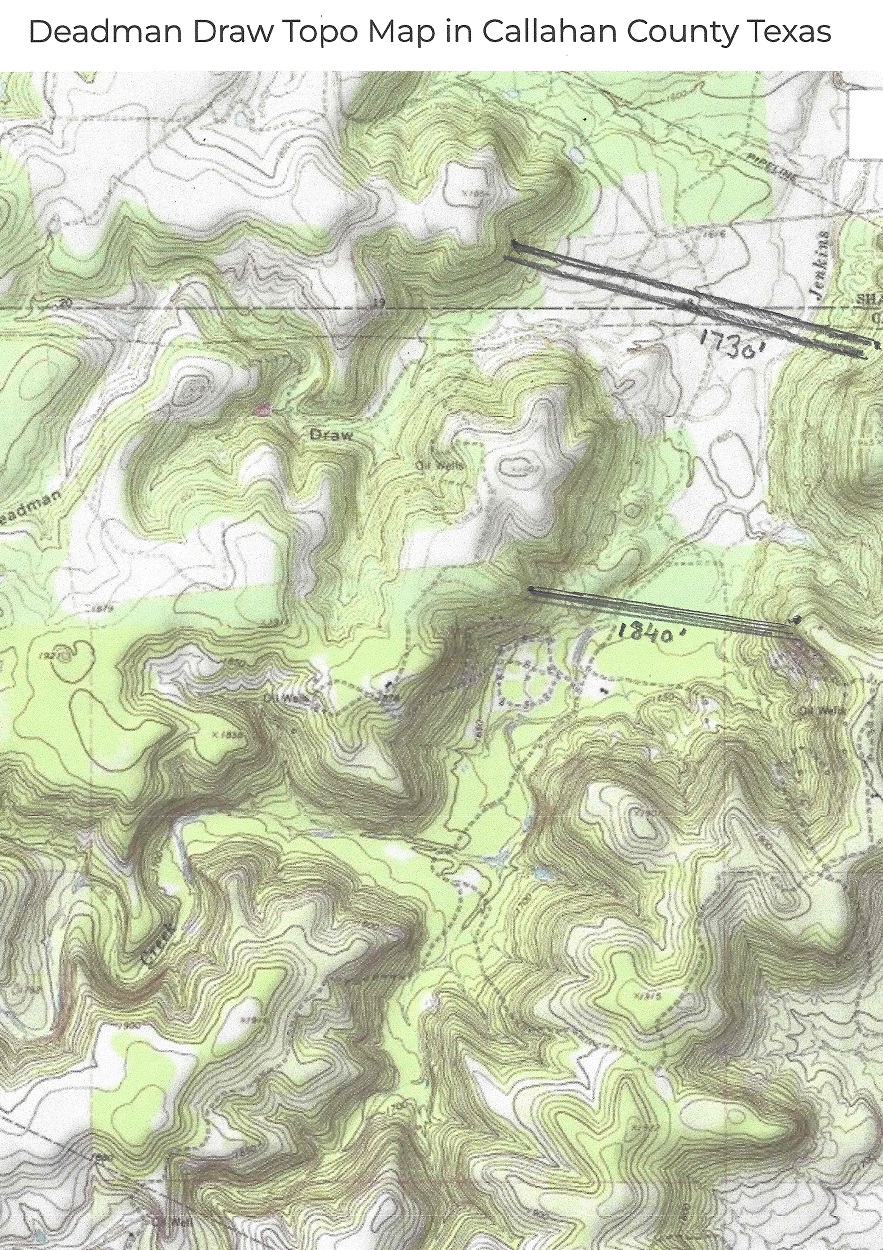
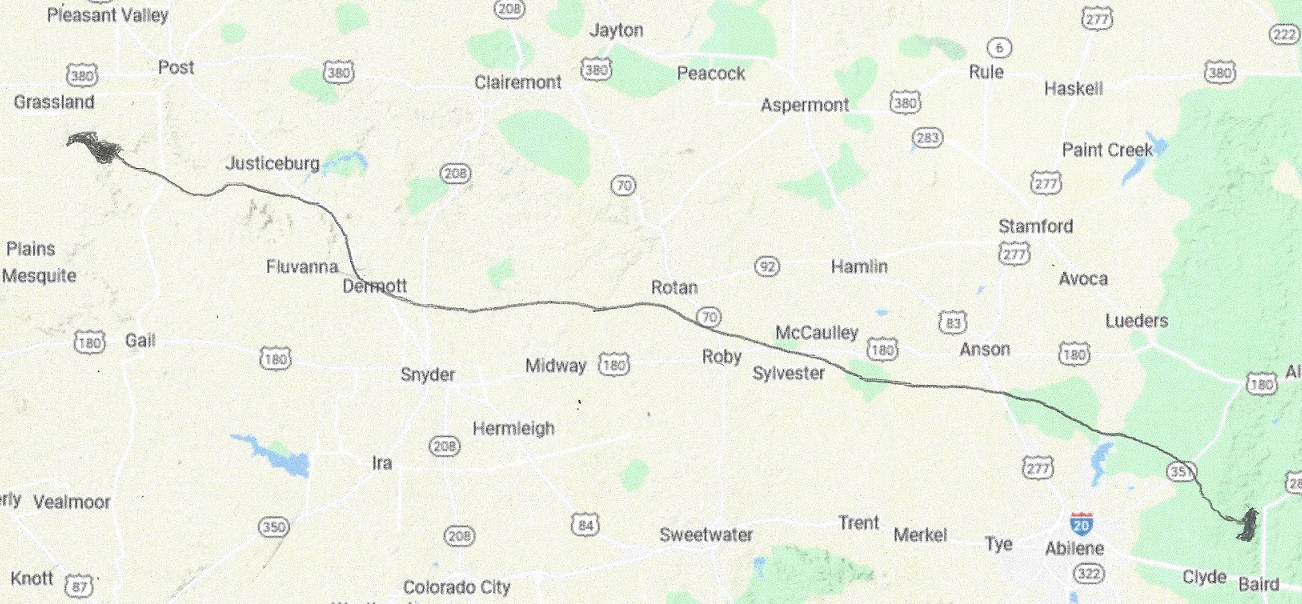
This leg has the freedom to pump water at 21,800 cfs or less, including stopping for up to 5 hrs/day to provide virtual peak hydro-power for the Texas grid. This must be coordinated with leg 5 and leg 7. Total distance of the aqueduct is 135 miles, from elevation 1830′ to elevation to 2840′.
From Deadman Draw dam to Buffalo Soldier Draw dam, a distance of 135 miles.
The water elevation at Deadman Draw dam is nominally 1,830 feet. The Buffalo Soldier Draw dam yet to be built will top out at 2,850 feet with maximum water level at 2,840 feet. The total lift of the water in stage 3 is (2,840 – 1,830 + 135×2) feet = 1,280 ft. To lift 21,800 cubic feet per second 1,280 feet requires twenty-five 100 MW LFTR nuclear reactors The upper reservoir will contain about 40,000 Acre-ft when full, about one day worth of storage. For 5 hours per day these twenty-five 100 MW reactors can provide 2.5 GW of peak power to the grid.
There will be a lower dam to provide hydroelectric power storage of 4.5 GWh, or 900 MW for 5 hours. After each use the lower dam will be re-emptied by pumping back the water to the upper dam, using 5.4 GWh of power, hopefully using surplus wind or solar power.
The aqueduct will go thru and dug sown at 1590’elevation
What’s in it for Texas? Wind power is already 22% of the source for the Texas power grid, but Texas has up to now no pumped water storage, and until this is fixed coal and natural gas backup must be provided when the wind doesn’t blow. This leg will provide 4.5 GWh of peak power per day from the pumped water storage. In addition the 2.3 GW of Nuclear power can provide virtual hydro-power generation by not pumping water for up to 5 hours and thus provide 6 GWh of peak power daily. This will greatly help stabilize the Texas power grid, and facilitate the phasing out of coal power and help the transition to electric vehicles, which will add stress to the stability of the grid by their uneven recharging patterns. I addition, the City of Lubbock can purchase water from the aqueduct, to be negotiated.












 Len Bilén's blog, a blog about faith, politics and the environment.