August 21, read through the Holy Bible in a year in Power-point, with comments.

Today we read the first chapter of The Apostle Paul’s letter to the Colossians and three chapters of Isaiah.

August 21: Colossians 1, Isaiah 30, Isaiah 31, Isaiah 32, (click on the chapter to begin reading).

Colossians 1. Paul began with his customary greeting, continued with a prayer  emphasizing faith in Christ and the preeminence of Christ. He told the Colossians to be reconciled in Christ, “Christ in you, the hope of glory”  and to perform sacrificial service in Christ.

Isaiah 30 emphasizes “Don’t trust in Egypt!” But they were a rebellious people; in spite of that God will be gracious to Israel but execute judgement on Assyria.

Isaiah 31 proclaims woe to the Egyptophiles. The LORD will pass over Israel, but not Assyria.

Isaiah 32 ushers in the reign of reign of righteousness, warns against complacency, and says (in King James Bible) “ The vile person shall be no more called liberal” (NIV translates liberal as noble) so a few verses down it says (in NIV) “But the noble make noble plans, and by noble deeds they stand.” The promise is  that the Holy spirit is righteousness and “The fruit of that righteousness will be peace.”

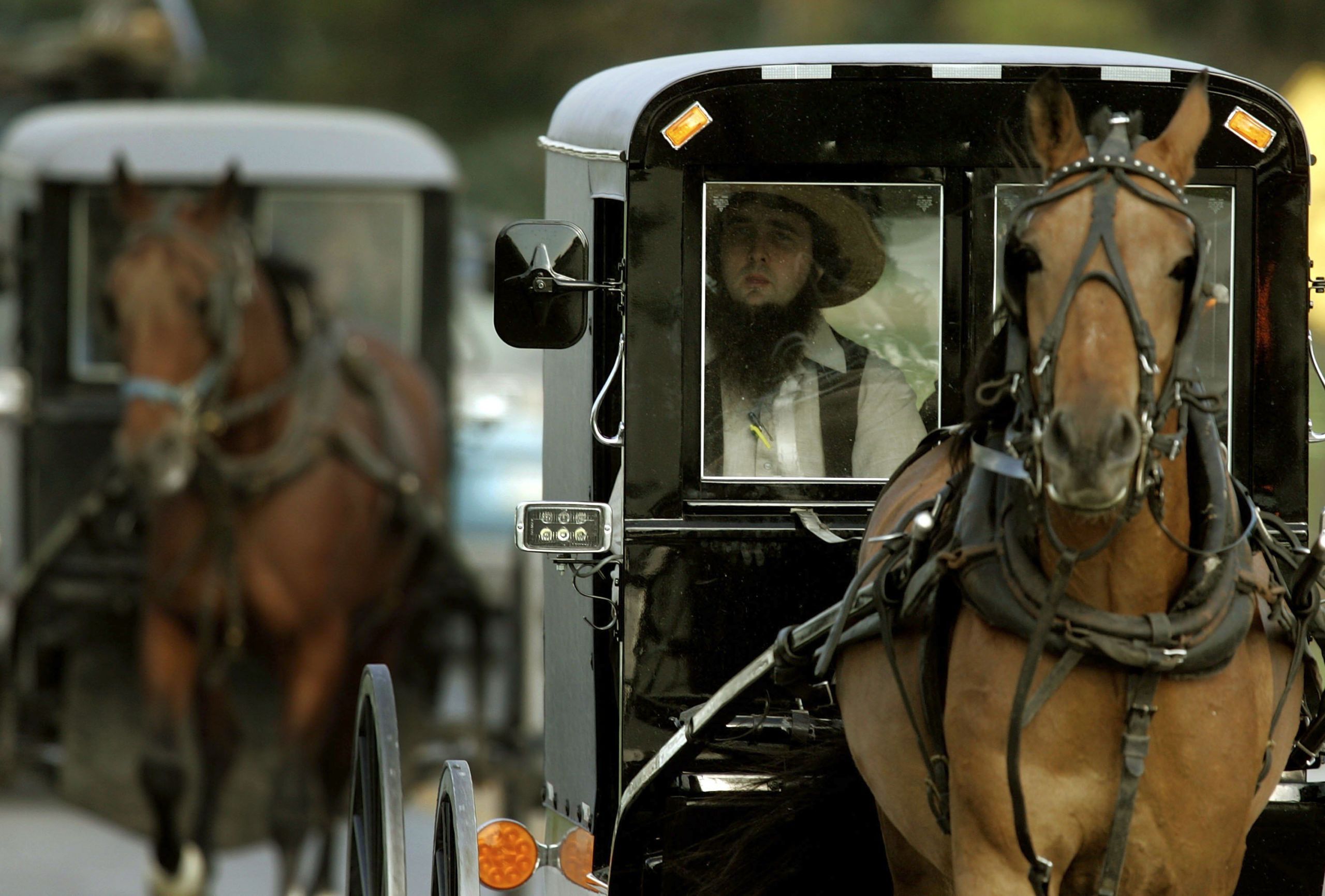
Who gets the vote this year in PA? Does the horse and buggy team make a difference? A Limerick.

Campaigning in Western PA
Is not what you think, this I say
For the Amish take part,
Vote for life, with their heart,
vote Trump, to the left’s great dismay.
I may be wrong on this buggy. The campaigner may not be Amish after all. He may be an Old Order Mennonite. That Order is even more conservative than the Amish. But they used to have one thing in common. They did not mingle with the English, and they did not participate in politics, and they did not vote. You may have seen cute pictures like this, thinking they still live like in the 18th century.

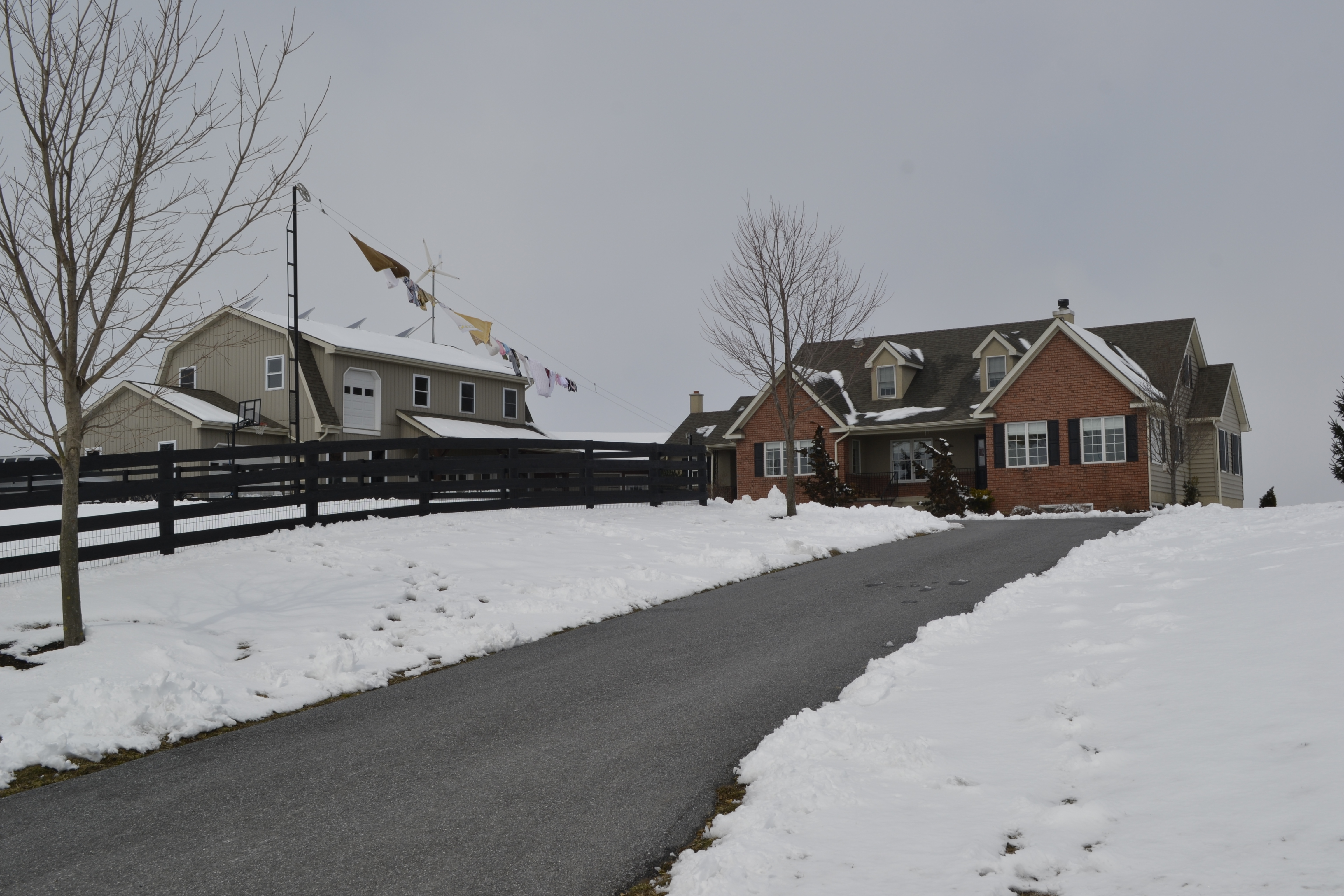
Nothing could be further from the truth. It is true, they didn’t use to vote. But in the 2000 election they started voting, and they voted pro life. They were always law abiding, and were allowed to keep their one room school houses with 8 year education, were allowed to have their own pooled medical services, and maintained their religious exemption from military service and social security. Do they really shun electricity? The picture below shows a recently built Amish homestead with the telltale clothesline, but also a small wind turbine and four solar panels to provide

electricity. Contrary to popular opinion the Amish do not shun electricity, they just want to be left unconnected to the “English”, in other words, live off the grid. Their desire to be independent force them to be resourceful and innovative, since they also follow the law of the land whenever possible. So it was, when the farms were mandated to refrigerate the milk before pickup they installed electric coolers. The electricity was generated by diesel generators, so bingo, they could get electricity for their workshops as well, and turn from primitive hand work to fully modern wood workshops, I know, they provided a first class kitchen for our home in Intercourse. They had a problem, federal law mandated headlights on their buggies to be street legal. The propane lights with gas stockings burned well, but were too fragile to last the bumpy buggy rides so they installed car headlights running on car batteries. They had to be charged often, and it became quite expensive, so the Amish in 2003 made the first commercially available LED headlights for their buggies, thereby extending battery life more than ten–fold for a marine deep-charge lead-acid battery, from six hours to 100 hours.
Even at 120 dollars a piece it made economic sense. How do you charge batteries? This is where the solar panels come in, they are used to charge the batteries. When the sun doesn’t shine the wind may blow, a reasonable backup. Now they have 12 volt electric power. The next step was to wire the house and install 12 V LED lights and provide 12 volt DC or 24 volt AC outlets for small appliances. The lights are great, but many appliances are still run the hard way, diesel engines providing compressed air, which run their wells with jet-pumps and in their hand mixers they take out the motor and replace with a compressed air motor. The LED lights beat kerosene lamps any day for efficiency, and even a compressed air driven refrigerator is much more efficient than a kerosene  refrigerator.

So if the grid goes down for an extended period of time, who is better off? The Amish are far ahead of us in preparation for catastrophes.
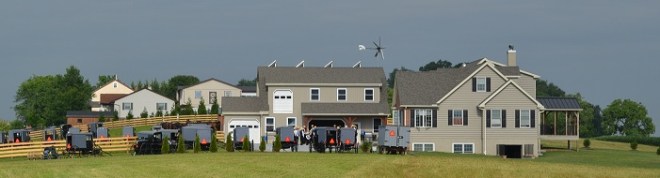
https://lenbilen.com/wp-content/uploads/2013/09/amishpanels.jpg

And the Amish do get together and fellowship for any reason, but mostly for their Sunday services, which are held in the upper room of their workshops, or in the kitchen for the women and the basement for the men. The horse-drawn pew-mobile is in the picture above, to the right. This is a tell-tale sign who hosts the service next time.

August 20, read through the Holy Bible in a year in Power-point, with comments.

In between the Apostle Paul’s letter to the Philippians and his uplifting letter to the Colossians we read three Psalms and two chapters of Isaiah.

August 20: Psalm 81, Psalm 82, Psalm 83, Isaiah 28, Isaiah 29 (click on the chapter to begin reading).

Psalm 81, of Asaph. A Psalm for the Feast of Tabernacles.

Psalm 82, of Asaph. Jesus quotes this Psalm and confounds the people accusing him of blasphemy.

Psalm 83, of Asaph. An urgent prayer for God to help when war is threatening.

Isaiah 28. Woe to Ephraim and Jerusalem! “Thus saith the Lord God, Behold, I lay in Zion for a foundation a stone, a tried stone, a precious corner stone, a sure foundation: he that believeth shall not make haste.

Isaiah 29 begins with a woe to David’s City, the people have “the spirit of slumber,” but the deaf will hear, the blind see and the meek shall increase the joy in the LORD.

August 19, read through the Holy Bible in a year in Power-point, with comments.

In between the Apostle Paul’s letter to the Philippians and his uplifting letter to the Colossians we read two Psalms and two chapters of Isaiah.

August 19: Psalm 79, Psalm 80, Isaiah 26, Isaiah 27 (click on the chapter to begin reading).

Psalm 79, of Asaph. A cry for help, for the heathens were devastating Jerusalem, the Temple and the people. The Psalmist confessed their collective sins and pleaded for restoration, always with praise and thankfulness.

Psalm 80, of Asaph. A prayer for restoration of Israel, mentioning the Shepherd of Israel, a heartfelt and urgent plea.

Isaiah 26 is a song of praise full of Messianic prophecy. The song is full of words with double meanings, one obvious and one prophetic.

Isaiah 27 promises the deliverance of Israel.

August 18, read through the Holy Bible in a year in Power-point, with comments.

In between the Apostle Paul’s letter to the Philippians and his encouraging letter to the Colossians we read one chapter of Proverbs and three chapters of Isaiah.

August 18: Proverbs 12, Isaiah 23, Isaiah 24, Isaiah 25 (click on the chapter to begin reading).

Proverbs 12 is one chapter in the collection of Proverbs of Solomon.

Isaiah 23 records a prophecy about Tyre.

Isaiah 24 describes the LORD’s devastation of the earth. (Climate change anyone?)

Isaiah 25. After the dire prophecies of Chapter 24 the prophet Isaiah recorded this song of praise. Read verse 7 carefully and let it sink in!

August 17, read through the Holy Bible in a year in Power-point, with comments.

In between the Apostle Paul’s letter to the Philippians and his equally encouraging letter to the Colossians we take a break and read two Psalms.

August 17:  Psalm 77: Psalm 78 (click on the chapter to begin reading).

Psalm 77, of Asaph. No matter how dire the circumstances the believer can still sing God’s praises and recall  God’s wonders.

Psalm 78, a maskil of Asaph. “This is the longest of the historical psalms. Its lesson is that history must not repeat itself. The people must never again be unbelieving.” (James Montgomery Boice)

August 16, read through the Holy Bible in a year in Power-point, with comments.

Today we read the last chapter of The Apostle Paul’s letter to the Philippians and four chapters of Isaiah.

August 16: Philippians 4, Isaiah 19, Isaiah 20, Isaiah 21, Isaiah 22 (click on the chapter to begin reading).

Philippians 4. The Apostle Paul’s theme is joy “dearly beloved and longed for, my joy and crown, so stand fast in the Lord, my dearly beloved.” andRejoice in the Lord always: and again I say, Rejoice.” and this gemNot that I speak in respect of want: for I have learned, in whatsoever state I am, therewith to be content.” and this oneI can do all things through Christ which strengtheneth me.” This letter of joy and encouragement ends with a greeting: “The grace of our Lord Jesus Christ be with you all. Amen.”

Isaiah 19 gives an oracle about Egypt and tells of the future blessing of Assyria, Egypt and Israel.

Isaiah 20 is very short and contains a prophecy against Egypt and Cush.

Isaiah 21. The prophecies continue, this time against Babylon, Edom and Arabia.

Isaiah 22 contains a prophecy about Jerusalem.

August 15, read through the Holy Bible in a year in Power-point, with comments.

Today we read the third chapter of The Apostle Paul’s letter to the Philippians and three chapters of Isaiah.

August 15: Philippians 3, Isaiah 16, Isaiah 17, Isaiah 18 (click on the chapter to begin reading).

Philippians 3. Paul had reason to brag about his perfect Jewish credentials, but he did not, he would glory only in Christ, and his resurrection. Let us press on towards the goal, after all, our citizenship is in heaven.

Isaiah 16 speaks of the destruction of Moab.

Isaiah 17 tells of the oracle against Damascus (with a side note featuring Nancy Pelosi in Damascus)

Isaiah 18 features a prophecy against Cush (with a vignette from modern Sudan).

August 14, read through the Holy Bible in a year in Power-point, with comments.

Today we read the second chapter of The Apostle Paul’s letter to the Philippians and two chapters of Isaiah.

August 14: Philippians 2, Isaiah 14, Isaiah 15 (click on the chapter to begin reading).

Philippians 2. The Apostle Paul urged the believers to imitate the humility of Christ. Verses 7-11 are in the form of a hymn and shows how Jesus, even though he always is God, emptied himself and became obedient to the cross, even unto death. Look at that! They should work out their salvation with fear and trembling. Yes, salvation is past tense (for by grace have you been saved), present tense (work out your own salvation) and future tense (you will be saved). God is independent of time (He existed before time and space and created both). Paul ended the chapter talking about Timothy and Epaphroditus.

Isaiah 14 speaks of the return of Israel to their own land, the fall of Babylon and the haughtiness of Lucifer. It ends with prophecies about Assyria and the Philistines.

Isaiah 15 is a prophecy against Moab.

August 13, read through the Holy Bible in a year in Power-point, with comments.

Today we read the first chapter of The Apostle Paul’s letter to the Philippians and three chapters of Isaiah.

August 13: Philippians 1, Isaiah 11, Isaiah 12, Isaiah 13 (click on the chapter to begin reading).

Philippians 1. After the customary greeting Paul gave a heartfelt prayer for the believers. “Being confident of this very thing, that he which hath begun a good work in you will perform it until the day of Jesus Christ:” (This was the verse given to my wife and me when we joined the church after our salvation). Paul was in prison and this worked in favor of the Gospel. He also encouraged them to behave worthy of the Gospel and follow Christ and be partakers with him in suffering.

Isaiah 11 speaks of the Branch from Jesse, containing this gem “and a little child shall lead them”.  Even the animals will make peace.

Isaiah 12 is a hymn of praise to finish up the first part of Isaiah, the future of Israel.

Isaiah 13 is a prophecy against Babylon.