President Trump signed 4 nuclear power Executive orders today. Small Nuclear Reactors (preferably Molten Salt Reactors) will finally be realized!

In addition he signed one Executive Order restoring Science to the Golden Standard: Free from politics!

In the presentation of the Executive Orders the CEO of Oklo, James DeWitte mentioned that we are restarting a technology that has been inactive for over 40 years. This can only mean he meant without saying so the Oak ridge Molten Salt Thorium reactor. It was going great, but President Nixon wanted to go with the fast breeder reactor and move nuclear development to California, so they started to badmouth the MSR. One false accusation was that it was unreliable and needed to be shutdown frequently. The real reason was it was routinely shut down on weekends to save money and personnel. The Molten Salt Reactor does not have a poison time after shutdown as does conventional power station but can be scaled up and down including small power stoppages. I see this as an advantage. Anyhow, this is what Mr. DeWitte said:

One of many new options

There are only a few fissionable options, Uranium 233, Uranium 235 and Plutonium 239. Uranium 233 is produced by bombarding Thorium 232 with neutrons. Plutonium 239 is produced by bombarding Uranium 238 with neutrons.

Right now only 0.5% of the mined uranium is used. The rest goes to nuclear waste. Molten Salt reactors can use the nuclear waste as raw material and use the other 99.5% of the available energy. Another exciting use of Plutonium is when we finally dismantle the nuclear arsenal and burn it for peaceful use. And there is four times as much Thorium as there is mine-able Uranium, enough for thousands of years!

This is the beginning!

Here are 30 reasons why Thorium is a superior source for nuclear power:

 1. A million year supply of Thorium available worldwide.

 2. Thorium already mined, ready to be extracted.

 3. Thorium based nuclear power produces 0.012 percent as much TRansUranium waste products as traditional nuclear power.

 4. Thorium based nuclear power will produce Plutonium-238, needed for space exploration.

 5. Thorium nuclear power is only realistic solution to power space colonies.

 6. Radioactive waste from an Liquid Fluoride Thorium Reactor decays down to background radiation in 300 years compared to a million years for U-235 based reactors. A Limerick.

 7. Thorium based nuclear power is not suited for making nuclear bombs.

 8. Produces isotopes that helps treat and maybe cure certain cancers.

 9. Liquid Fluoride Thorium Reactors are earthquake safe, only gravity needed for safe shutdown.

10. Molten Salt Liquid Fluoride Thorium Reactors cannot have a meltdown, the fuel is already molten, and it is a continuous process. No need for refueling shutdowns.

11. Molten Salt Nuclear Reactors have a very high negative temperature coefficient leading to a safe and stable control.

12. Atmospheric pressure operating conditions, no risk for explosions. Much safer and simpler design.

13. Virtually no spent fuel problem, very little on site storage or transport.

14. Liquid Fluoride Thorium Nuclear reactors scale beautifully from small portable generators to full size power plants.

15. No need for evacuation zones, Liquid Fuel Thorium Reactors can be placed near urban areas.

16. Liquid Fluoride Thorium Reactors will work both as Base Load and Load Following power plants.

17. Liquid Fluoride Thorium Reactors will lessen the need for an expanded national grid.

18. Russia has an active Thorium program.

19. India is having an ambitious Thorium program, planning to meet 30% of its electricity demand via Thorium based reactors by 2050.

 20. China is having a massive Thorium program.

21. United States used to be the leader in Thorium usage. What happened?

22. With a Molten Salt Reactor, accidents like the Three Mile Island disaster will not happen.

23. With a Molten Salt Reactor, accidents like Chernobyl are impossible.

24. With Molten Salt Reactors, a catastrophe like Fukushima cannot happen.

25. Will produce electrical energy at about 4 cents per kWh.

26. Can deplete most of the existing radioactive waste and nuclear weapons stockpiles.

27. With electric cars and trucks replacing combustion engine cars, only Thorium Nuclear power is the rational solution to provide the extra electric power needed.

28. The race for space colonies is on. Only Molten Salt Thorium Nuclear reactors can fit the bill.
29. President Donald J. Trump on Jan. 5 2021 issued an Executive Order on Promoting Small Modular Reactors for National Defense and Space Exploration. Only Liquid fluoride thorium reactors can meet all the needs.

30. We have to switch from Uranium to Thorium as nuclear feed-stock. We are running out of domestic Uranium.

Why Thorium? 31. Molten salt Thorium Reactors will produce electrical energy at about 5 cents per kWh.

Produces electrical energy at about 5 cents per kWh.

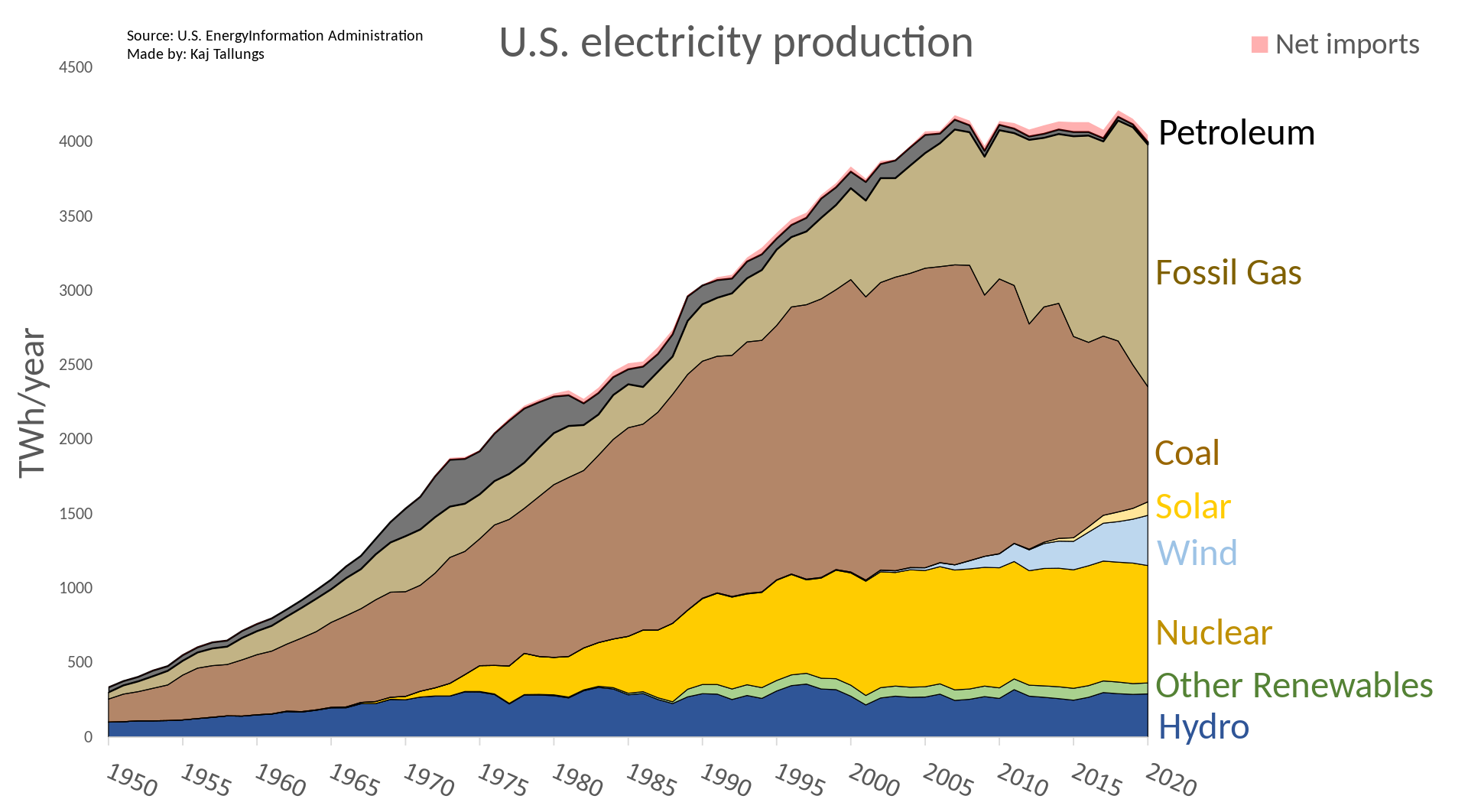
The United States sources of Electricity generation is one third from Natural Gas, one third from Coal and one third from non fossil fuel sources.

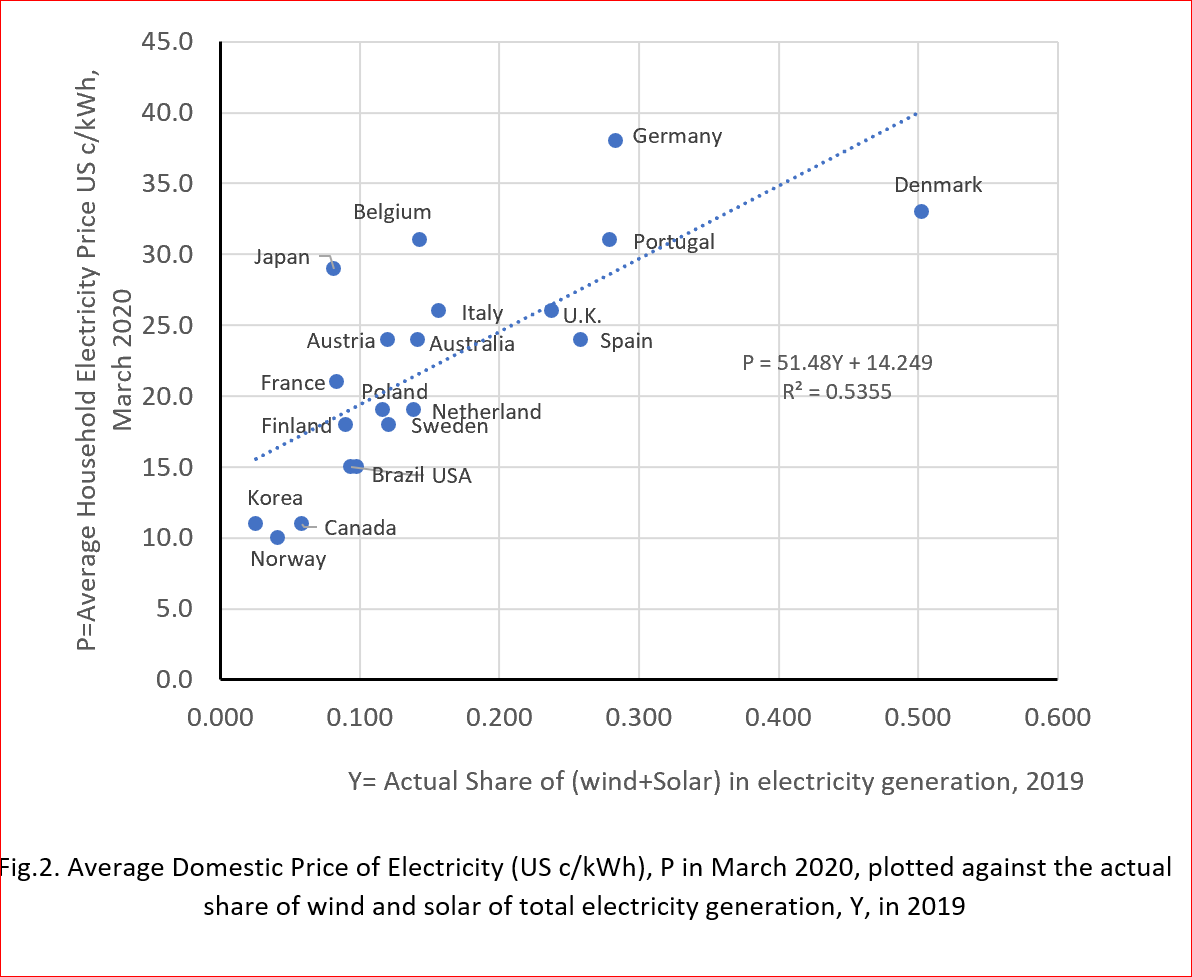
The cost to produce electricity with Thorium nuclear power should be about 40% less than Advanced Nuclear and about 30 % less than from Coal (with scrubbers)  Solar generation is about 4 times more expensive (without subsidies) in the North-east, where people live. New Mexico, Arizona and California are suitable for cheap Solar power, but they lack Hydropower storage. Wind power is cheaper when the wind blows, but base generation capacity has to be there even when the wind doesn’t blow, so the only gain from wind power is to lessen the mining or extraction of carbon. In addition, wind power kills birds, the free yearly quota of allowable Bald Eagle kills was upped from 1200 to 4200 during the Obama administration. (https://lenbilen.com/2019/04/12/what-is-more-precious-babies-eagles-or-fighting-climate-change/). Golden Eagles and a few other rare birds has a quarter of a million dollar fine associated with their kills. If wind power is increased without finding a solution to the bird kills, whole species may go extinct. Solar power is, and will be used in special applications such as on roofs for backup and peak power assist. Today’s solar panels are easily destroyed by a single hailstorm. Hydroelectric power is for all practical purpose maxed out, so nearly all future increase must come from Coal, Natural Gas, Petroleum or Nuclear. The world experience on installing wind and solar energy is that it is expensive. See fig:

The residential cost of electricity increases as the proportion of total electricity demand is supplied by wind and solar. Part of the cost is in power distribution. Molten Salt Thorium Nuclear Generators is the way to go. It doesn’t depend on sun, wind and water to produce electricity where the need is.

Why Thorium? 24. The countries that have joined the GEN IV International Forum and some of the technical proposals for future nuclear reactors.

The Generation IV International Forum’s current membership consists of:

 ArgentinaArgentina* JapanJapan
 australian-flag-sml72Australia Republic of Korea Republic of Korea
 BrazilBrazil* Russian FederationRussian Federation
 CanadaCanada Republic of South AfricaRepublic of South Africa
 People’s Republic of ChinaPeople’s Republic of China SwitzerlandSwitzerland
 EuratomEuratom United KingdomUnited Kingdom
 FranceFrance United StatesUnited States
* Non-active member.

The list of possible implementations is long and growing, Here are most of them: Most of them can operate on Uranium or Plutonium or mixed fuel including a fertile blanket of Thorium that converts to U-233 as fissile material. The remaining problem is the clean extraction of fission products and protactinium during full operation. In the mean time they will help generate enough U-233 for clean operation with minimum waste production.

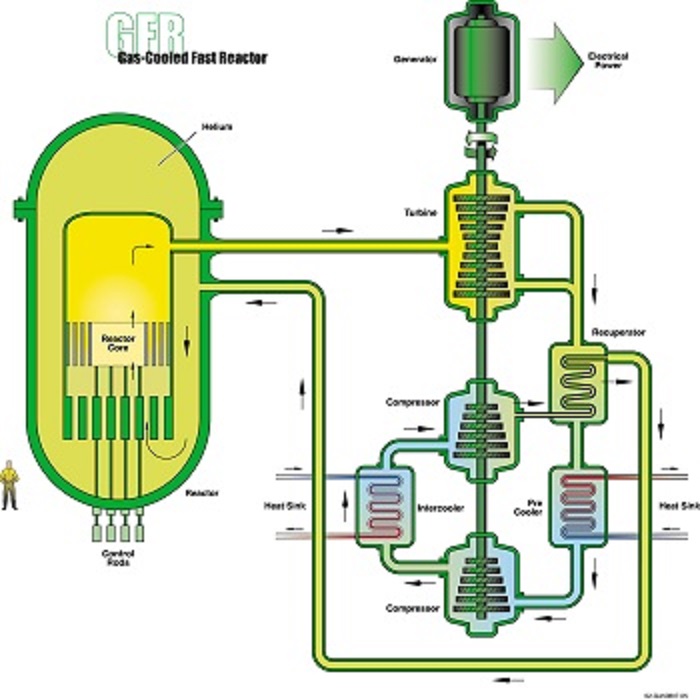
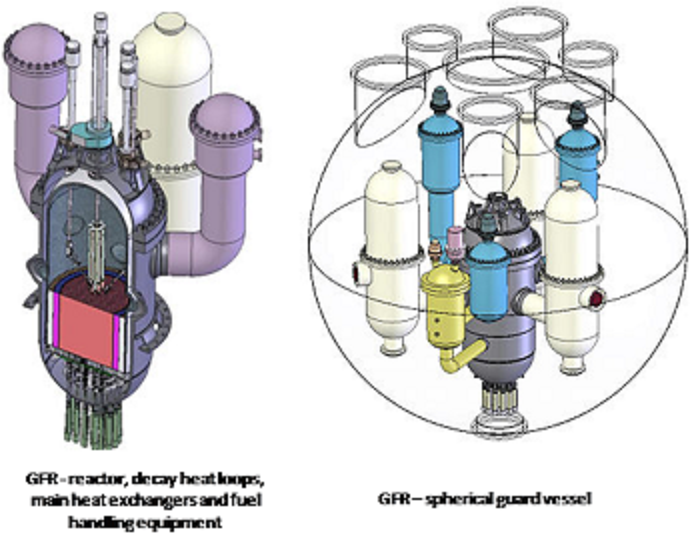
Gas-Cooled Fast Reactor (GFR)

The GFR system is a high-temperature (850C) helium-cooled fast-spectrum reactor with a closed fuel cycle. It combines the advantages of fast-spectrum systems for long-term sustainability of uranium resources and waste minimization (through fuel multiple reprocessing and fission of long-lived actinides), with those of high-temperature systems (high thermal cycle efficiency and industrial use of the generated heat, for hydrogen production for example).

This system is ideal for co-generation of electricity and hydrogen production.

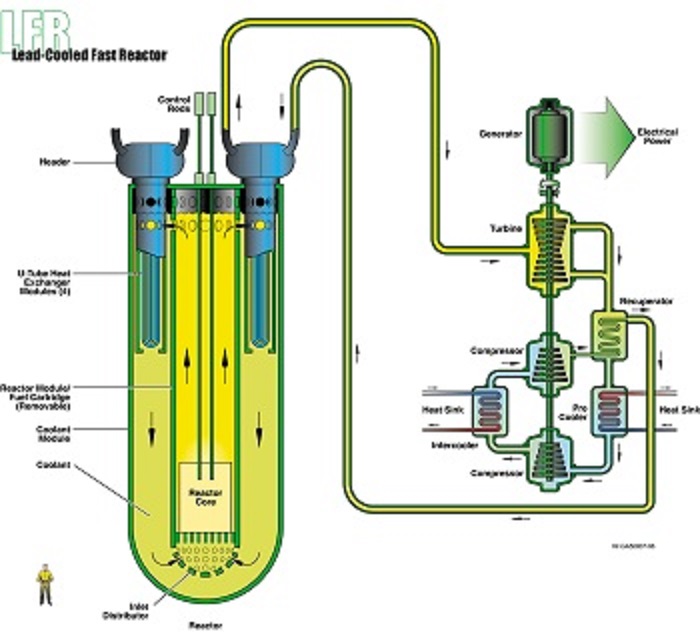
Lead-Cooled Fast Reactor (LFR)

a

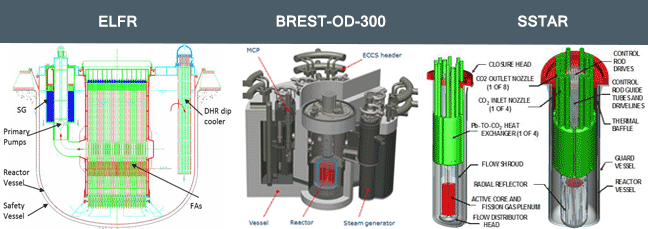
This reactor type would have multiple applications including production of electricity, hydrogen and process heat. System concepts represented in plans of the Generation IV International Forum (GIF) System Research Plan (SRP) are based on Europe’s ELFR lead-cooled system, Russia’s BREST-OD-300 and the SSTAR system concept designed in the US. Numerous additional LFR concepts are also under various stages of development in different countries including China, Russia, the USA, Sweden, Korea and Japan.

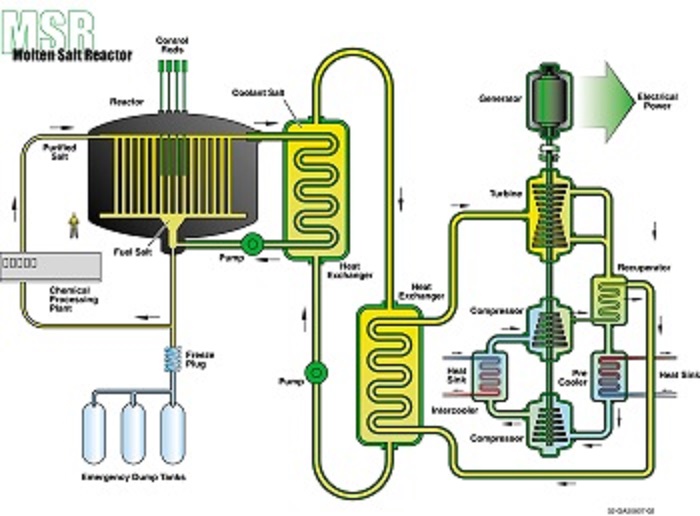
Molten Salt Reactor (MSR)

. The onsite fuel reprocessing unit using pyrochemistry allows breeding plutonium or uranium-233 from Thorium.

Compared with solid-fuel reactors, MSFR systems have lower fissile inventories, no radiation damage constraint on attainable fuel burn-up, no requirement to fabricate and handle solid fuel, and a homogeneous isotopic composition of fuel in the reactor. These and other characteristics give MSFRs potentially unique capabilities for actinide burning and extending fuel resources.

MSR developments in Russia on the Molten Salt Actinide Recycler and Transmuter (MOSART) aim to be used as efficient burners of transuranic (TRU) waste from spent UOX and MOX light water reactor (LWR) fuel without any uranium and thorium support and also with it. Other advanced reactor concepts are being studied, which use the liquid salt technology, as a primary coolant for Fluoride salt-cooled High-temperature Reactors (FHRs), and coated particle fuels similar to high temperature gas-cooled reactors.

More generally, there has been a significant renewal of interest in the use of liquid salt as a coolant for nuclear and non-nuclear applications. These salts could facilitate heat transfer for nuclear hydrogen production concepts, concentrated solar electricity generation, oil refineries, and shale oil processing facilities amongst other applications.

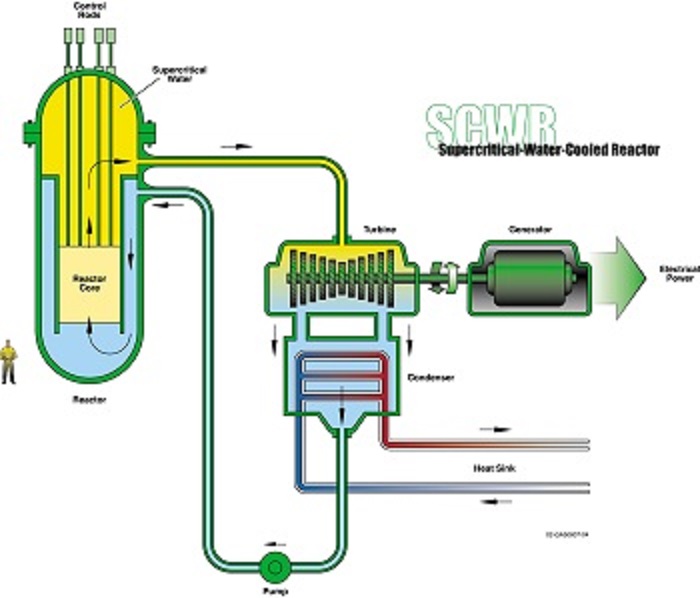
Supercritical-Water-Cooled Reactor (SCWR)

SCWRs are high temperature, high-pressure, light-water-cooled reactors that operate above the thermodynamic critical point of water (374°C, 22.1 MPa).

SCWR designs have unique features that offer many advantages compared to state-of the-art water-cooled reactors:

  • SCWRs offer increases in thermal efficiency relative to current-generation water-cooled reactors. The efficiency of a SCWR can approach 44% or more, compared to 34-–36% for current reactors.
  • Reactor coolant pumps are not required. The only pumps driving the coolant under normal operating conditions are the feed water pumps and the condensate extraction pumps.
  • The steam generators used in pressurized water reactors and the steam separators and dryers used in boiling water reactors can be omitted since the coolant is superheated in the core.
  • Containment, designed with pressure suppression pools and with emergency cooling and residual heat removal systems, can be significantly smaller than those of current water-cooled reactors.
  • The higher steam enthalpy allows to decrease the size of the turbine system and thus to lower the capital costs of the conventional island.

There remains a number of challenges before this approach can be fully implemented, and one limiting factor is composite materials that can withstand high pressure, high temperature and high radiation at the same time.

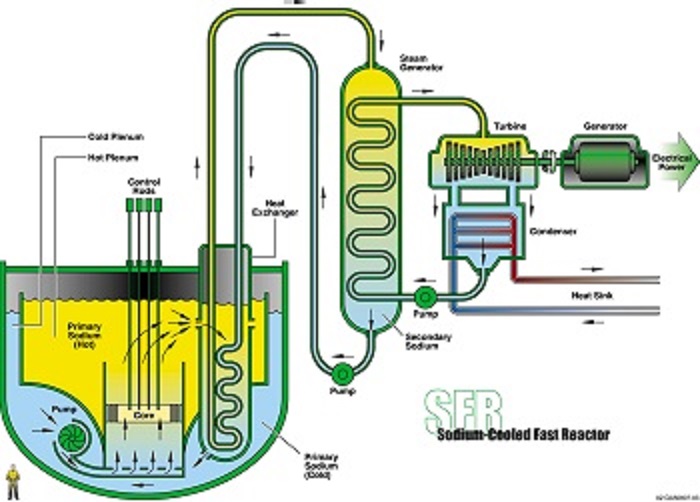
Sodium-Cooled Fast Reactor (SFR)

The SFR uses liquid sodium as the reactor coolant, allowing high power density with low coolant volume fraction and operation at low pressure. While the oxygen-free environment prevents corrosion, sodium reacts chemically with air and water and requires a sealed coolant system.

Plant size options under consideration range from small, 50 to 300 MWe, modular reactors to larger plants up to 1 500 MWe. The outlet temperature is 500-550°C for the options, which allows the use of the materials developed and proven in prior fast reactor programs.

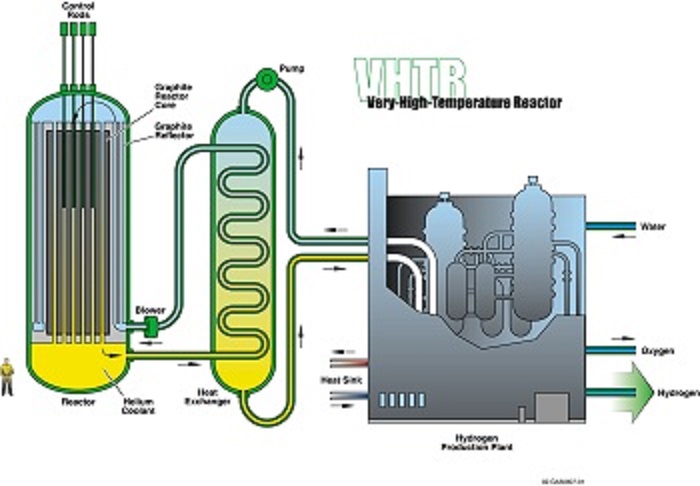
Very-High-Temperature Reactor (VHTR)

The VHTR is a next step in the evolutionary development of high-temperature gas-cooled reactors. It is a graphite-moderated, helium-cooled reactor with thermal neutron spectrum. It can supply nuclear heat and electricity over a range of core outlet temperatures between 700 and 950°C, or more than 1 000°C in future. The reactor core type of the VHTR can be a prismatic block core such as the Japanese HTTR, or a pebble-bed core such as the Chinese HTR-10.

The VHTR can support alternative fuel cycles such as U-Pu, Pu, MOX (Mixed Oxide fuel), U-Thorium.

For an expanded information, see source:https://www.gen-4.org/gif/jcms/c_9492/members