China is having a massive Thorium program. The People’s Republic of China has initiated a research and development project in thorium molten-salt reactor technology. The thorium MSR efforts aims not only to develop the technology but to secure intellectual property rights to its implementation. This may be one of the reasons that the Chinese have not joined the international Gen-IV effort for MSR development, since part of that involves technology exchange. Neither the US nor Russia have joined the MSR Gen-IV effort either. China is currently the largest emitter of CO2 and air pollutants by far, and according to the Paris accord was allowed to emit six times as much pollutants as the U.S. by 2030, being a “developing nation”. Their air quality is already among the worst in the world so something had to be done if they were to achieve world dominance by 2025 and total rule by 2030. Only Thorium can solve the pollution problem and provide the clean energy needed for the future. Regular Uranium Nuclear reactors require large amounts of water and Molten Salt Thorium reactors require little water to operate.
Geneva, Switzerland, 21 August 2018 – As the world struggles with a record-breaking heatwave, China correctly places its trust in the fuel Thorium and the Thorium Molten Salt Reactor (TMSR) as the backbone of its nation’s plan to become a clean and cheap energy powerhouse. The question is if China will manage to build a homegrown mega export industry, or will others have capacity and will to catch up?
For China, clean energy development and implementation is a test for the state’s ability. Therefore, China is developing the capability to use the “forgotten fuel” thorium, which could begin a new era of nuclear power. The first energy system they are building is a solid fuel molten salt reactor that achieves high temperatures to maximize efficiency of combined heat and power generation applications. However, to fully realize thorium’s energy potential and in this way solve an important mission for China – the security of fuel supply – requires also the thorium itself to be fluid. This is optimized in the Thorium Molten Salt Reactor (TMSR). The TMSR takes safety to an entirely new level and can be made cheap and small since it operates at atmospheric pressure, one of its many advantages. Thanks to its flexible cooling options it can basically be used anywhere, be it a desert, a town or at sea. In China this is of special interest inland, where freshwater is scarce in large areas, providing a unique way to secure energy independence.
“Everyone in the field is extremely impressed with how China saw the potential, grabbed the opportunity and is now running faster than everyone else developing this futuristic energy source China and the entire world is in a great need of.” – Andreas Norlin, Thorium Energy World
China is not telling all they are doing on Nuclear Energy, but this news item is true:
The Shanghai Institute of Applied Physics (SINAP) – part of the Chinese Academy of Sciences (CAS) – has been given approval by the Ministry of Ecology and Environment to commission an experimental thorium-powered molten-salt reactor, construction of which started in Wuwei city, Gansu province, in September 2018.
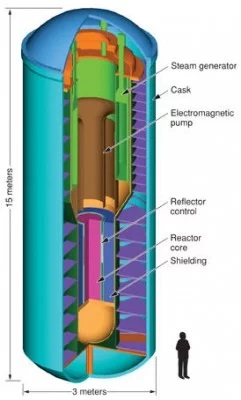
A cutaway of the TMSR-LF1 reactor (Image: SINAP)
In January 2011, CAS launched a CNY3 billion (USD444 million) R&D programme on liquid fluoride thorium reactors (LFTRs), known there as the thorium-breeding molten-salt reactor (Th-MSR or TMSR), and claimed to have the world’s largest national effort on it, hoping to obtain full intellectual property rights on the technology. This is also known as the fluoride salt-cooled high-temperature reactor (FHR). The TMSR Centre at SINAP at Jiading, Shanghai, is responsible.
Construction of the 2 MWt TMSR-LF1 reactor began in September 2018 and was reportedly completed in August 2021. The prototype was scheduled to be completed in 2024, but work was accelerated.
“According to the relevant provisions of the Nuclear Safety Law of the People’s Republic of China and the Regulations of the People’s Republic of China on the Safety Supervision and Administration of Civilian Nuclear Facilities, our bureau has conducted a technical review of the application documents you submitted, and believes that your 2 MWt liquid fuel thorium-based molten salt experimental reactor commissioning plan (Version V1.3) is acceptable and is hereby approved,” the Ministry of Ecology and Environment told SINAP on 2 August.
It added: “During the commissioning process of your 2 MWt liquid fuel thorium-based molten salt experimental reactor, you should strictly implement this plan to ensure the effectiveness of the implementation of the plan and ensure the safety and quality of debugging. If any major abnormality occurs during the commissioning process, it should be reported to our bureau and the Northwest Nuclear and Radiation Safety Supervision Station in time.”
The TMSR-LF1 will use fuel enriched to under 20% U-235, have a thorium inventory of about 50 kg and conversion ratio of about 0.1. A fertile blanket of lithium-beryllium fluoride (FLiBe) with 99.95% Li-7 will be used, and fuel as UF4.
The project is expected to start on a batch basis with some online refueling and removal of gaseous fission products, but discharging all fuel salt after 5-8 years for reprocessing and separation of fission products and minor actinides for storage. It will proceed to a continuous process of recycling salt, uranium and thorium, with online separation of fission products and minor actinides. The reactor will work up from about 20% thorium fission to about 80%.
If the TMSR-LF1 proves successful, China plans to build a reactor with a capacity of 373 MWt by 2030.
As this type of reactor does not require water for cooling, it will be able to operate in desert regions. The Chinese government has plans to build more across the sparsely populated deserts and plains of western China, complementing wind and solar plants and reducing China’s reliance on coal-fired power stations. The reactor may also be built outside China in Belt and Road Initiative nations.
The liquid fuel design is descended from the 1960s Molten-Salt Reactor Experiment at Oak Ridge National Laboratory in the USA. (Researched and written by World Nuclear News)
Yes, it is true. Their design was given to them free, and now PRC is developing the future energy source including claiming intellectual property rights from a source abandoned in 1969 by U.S.A. because of political infighting, not for economical or national security reasons.
I have always been very interested in the environment. Nature teaches us so many lessons, the diversity of trees, birds, flowers and wildlife is breathtaking and I never cease to wonder. It would be a shame to destroy the beauty of it all. Yet we seem to make it worse by concentrating our effort by trying to limit CO2 emissions, rather than tackling the real and more urgent problems.
Let me first explain why I assert that rising CO2 levels, while real is only a minor player in the climate change equation.
The traditional way to approach this scientifically is making climate models. So far, nearly all, except the Russian model have failed to predict future temperature changes. IPCC is still failing.
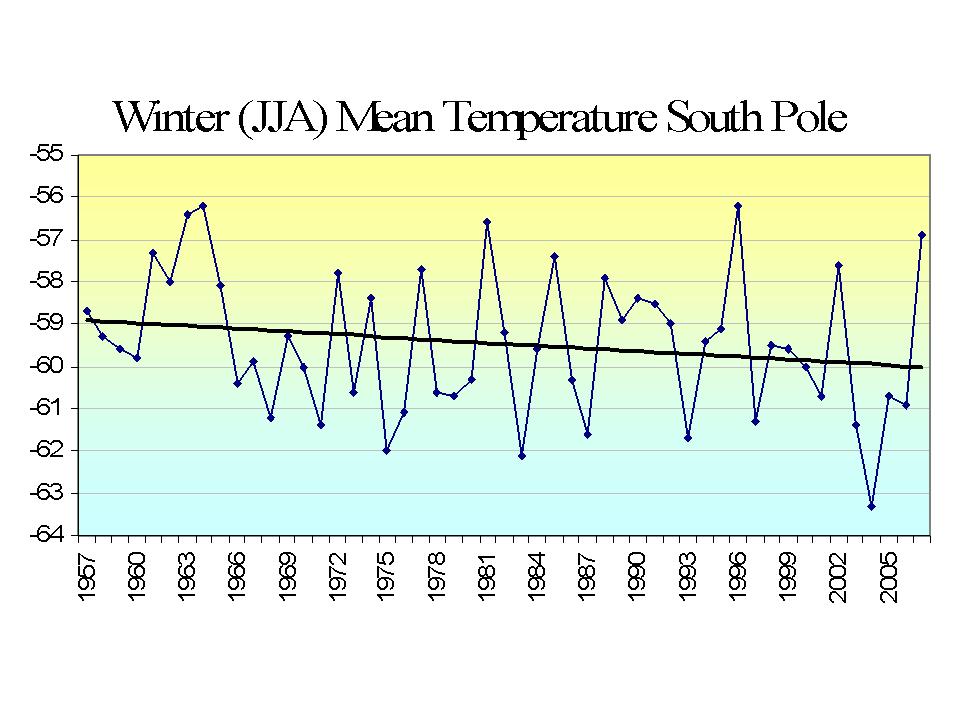
The other approach is to take measurements, and it so happens that we have really good global data for over 60 years. The Amundsen Scott – South Pole weather station, the average temperature of Winter season 2021 (April 2021 – September 2021) reached only -61,0°C / -78°F, and at this temperature CO2 is the dominant greenhouse gas by more than a decade over water vapor. We have reliable measurements for the temperature change at the South Pole since 1957. During this time CO2 gas increased 31% to 413ppm, Methane increased 16% to 1.85 ppm and Nitrous oxide decreased, but this is a gas mostly confined to urban areas, and is now below 0.05 ppm. With CO2 increasing by 31% and water vapor negligible one would expect a temperature rise over 64 years of 0.65 C, or one degree Celsius warmer per century according to extrapolated lab measurements. This is the observed trend:
With 2021 value included the temperature trend is two degrees Celsius cooler per century!
At the South Pole snowfall is negligible in the winter, and for the whole year it is only 1.3 inches. No model would have predicted the cooling trend, so there must be other factors that are are more important, since real measurements beat models every time.
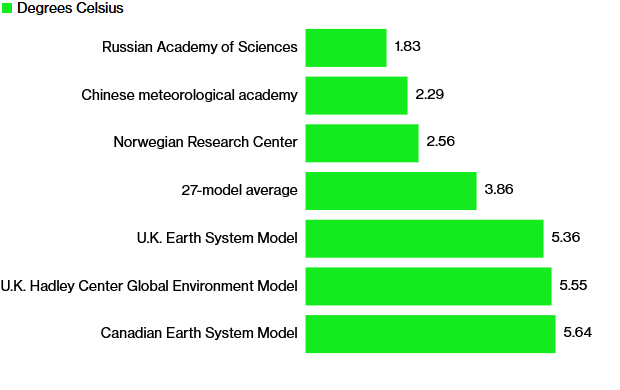
Ignoring the South Pole, the climate models are from time to time adjusted, and they suddenly showed a much higher rate of future temperature increases, in this case what is supposed to happen to global temperatures for a doubling of CO2 from pre-industrial times, from 270ppm to 540ppm.
Source: Mark D Zelinka et al. ” Causes of higher Climate sensitivity in CMIP6 models” Geophysical Research Letters.
There are two ways to approach this problem. The models make certain assumptions about the behavior of the changing atmosphere and model future temperature changes. This is the approach from IPCC for the last 34 years. These models all fail miserably when compared to actual temperature changes.
The other way i to observe what is actually happening to our temperature over time as the CO2 increases. We have over 60 years of excellent global temperature data, so with these we can see where, when and by how much the earth has warmed.
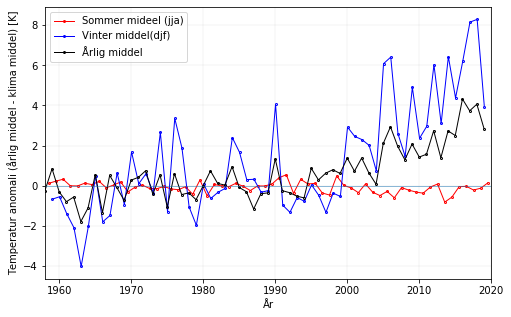
The most drastic temperature rise on earth has been in the Arctic above the 80th latitude. In the winter of 2018 it was 8C above the 50 year average. Since then it has come down to the more normal 4C increase. See charts from the Danish Meteorological Institute:
Summer: red, Jun,Jul, Aug. Winter: green, Dec, Jan, Feb Yearly: black
Note, there are no increase at all in the summer temperatures!
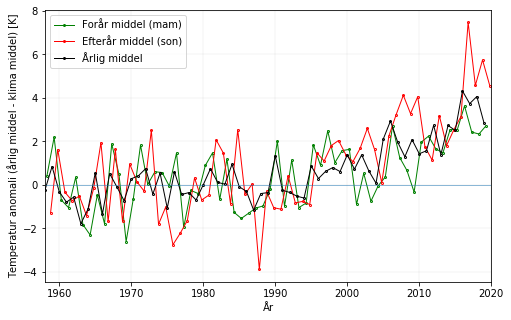
Spring: green, Mar, Apr, May. Fall: red, Sep Oct, Nov. Yearly: black
The fall temperature saw an increase of 4C and the spring temperature saw an increase of about 2.5C.
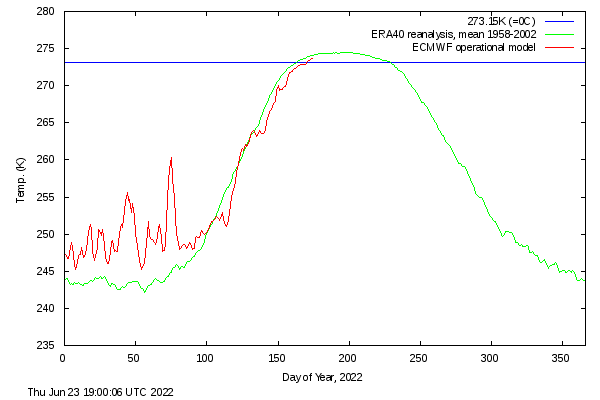
The 2022 winter saw an about 4c increase. The Spring temperatures have from the 10th of March were below or very close to the 1958 – 2002 average. Early Summer temperatures have so far been about 1C below normal. Source: DMI.
There seems to be no cause for immediate panic with the Arctic temperatures. If anything, they seem to moderate. In Antarctic on the other hand the temperatures seem to be decreasing! As we have seen before, the Amundsen Scott – South Pole weather station, the average temperature of Winter season 2021 (April 2021 – September 2021) reached only -61,0°C / -78°F, which is the coldest value in all-time history! This was 2,5°C /4.5°F degrees lower than the most recent 30-year average at this remote station.
Why are the temperatures not behaving like the models predict?
To get the answer we must study molecular absorption spectroscopy. IPCC and most scientists claim that the greenhouse effect is dependent on the gases that are in the atmosphere, and their combined effect is additive according to a logarithmic formula. This is true up to a certain point, but it is not possible to absorb more than 100% of all the energy available in a certain frequency band! For example: If water vapor absorbs 90% of all incoming energy in a certain band, and CO2 absorbs another 50% of the energy in the same band, the result is that 95% is absorbed, (90% + 50% * (100% – 90%)), not 140%, (90% + 50%).
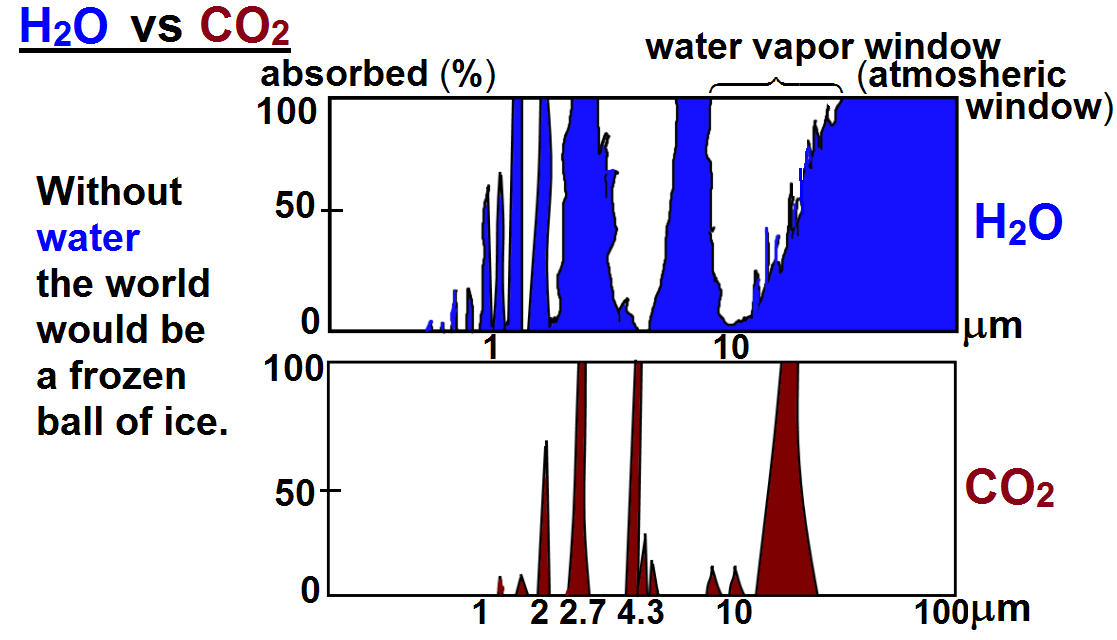
The following chart shows both CO2 and H2O are absorbing greenhouse gases, with H20 being the stronger greenhouse gas, absorbing over a much wider spectrum, and they overlap for the most part. But it also matters in what frequency range s they absorb.
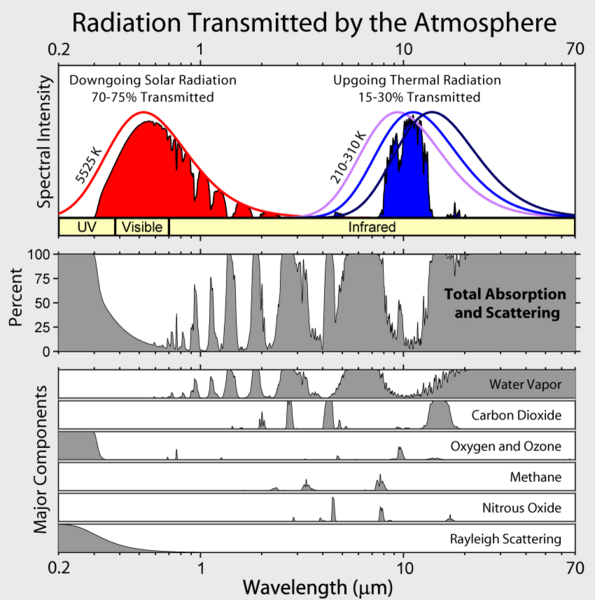
For this we will have to look at the frequency ranges of the incoming solar radiation and the outgoing black body radiation of the earth. It is the latter that causes the greenhouse effect. Take a look at this chart:
The red area represents the observed amount of solar radiation that reaches the earth’s surface. the white area under the red line represents radiation absorbed in the atmosphere. Likewise, the blue area represents the outgoing black body radiation that is re-emitted. The remaining white area under the magenta, blue or black line represents the retained absorbed energy that causes the greenhouse effect.
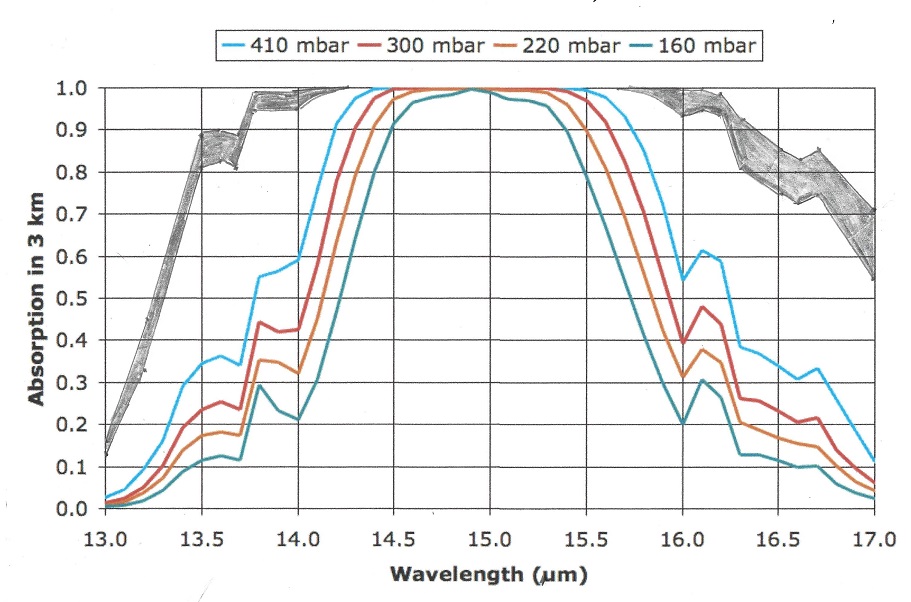
Let us now take a look at the Carbon Dioxide bands of absorption, at 2.7, 4.3 and 15 microns. Of them the 2.7 and 4.3 micron bands absorb where there is little black body radiation, the only band that counts is at 15 microns, and that is in a band where the black body radiation has its maximum. However it is also in a band where water vapor also absorb, not as much as CO2,only about 20% to 70% as much. The important thing is that in the frequency band of 14.5 to 15.5 micron CO2 absorbs all the energy available in that spectral range, and it also did it before industrialization when CO2 levels were one third less than today!
The grey area is the difference between total pre-industrial absorption and today, less than 5 % added absorption in the 13 to 17 micron band. Norice that total absorption from ground level to thermopause cannot exceed 100%
From this we can see that increasing CO2 levels is not the cause of climate change, only a very minor player. How about Methane?
Methane has only two major absorption bands, one at 3.3 microns, and the other at 8 microns. The 3,3 micron band is where incoming radiation is negligible, and so is outgoing black-body radiation. The 8 micron band is where water vapor is dominant, so Methane turns out to be the don’t care gas.
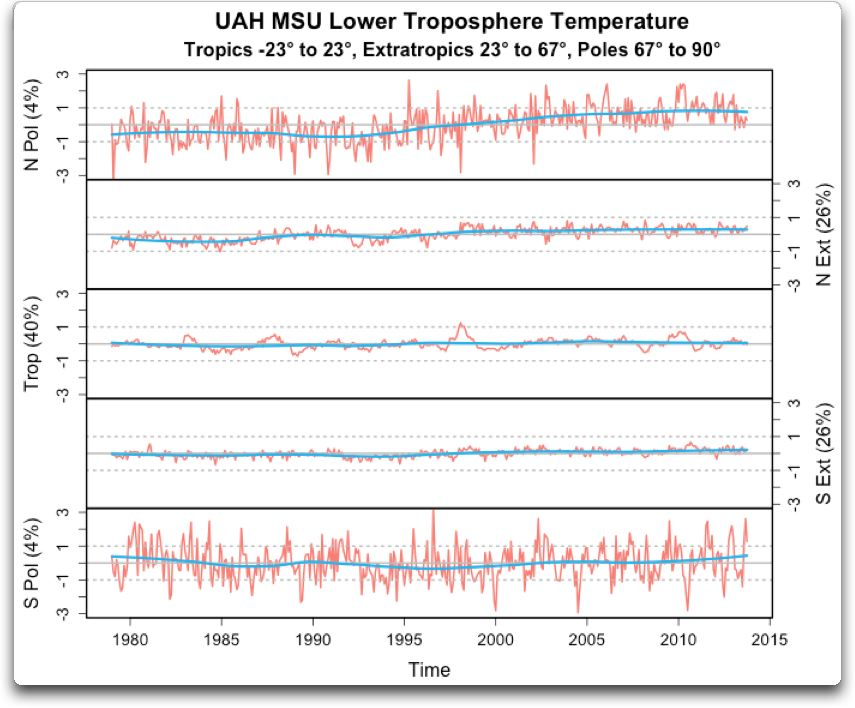
Water vapor or absolute humidity is highly dependent on the temperature of the air, so at 30C there may be 50 times as much water vapor, at 0C there may be ten times as much water vapor, and at -25C there is more CO2 than water vapor. At those low temperatures the gases are mostly additive. In the tropics with fifty times more water vapor than CO2, increased CO2 has no influence on the temperature whatsoever. Temperature charts confirm this assertion:
Here the temperature in the tropics displays no trend whatsoever. It follows the temperature of the oceans, goes up in an el niño and down in a la niña. The temperature in the southern hemisphere shows no trend. In the northern temperate region there is a slight increase, but the great increase is occurring in the Arctic. There is no increase in the Antarctic yet even though the increase in CO2 is as great in the Antarctic and the winter temperature in the Antarctic is even lower than in the Arctic. So CO2 increase cannot be the answer to the winter temperature increase in the Arctic.
There is an obvious answer. When temperatures increase the air can and will contain more moisture and transport this moisture from the tropics all the way to the arctic, where it ends up as snow. Is the snow increasing in the Arctic?
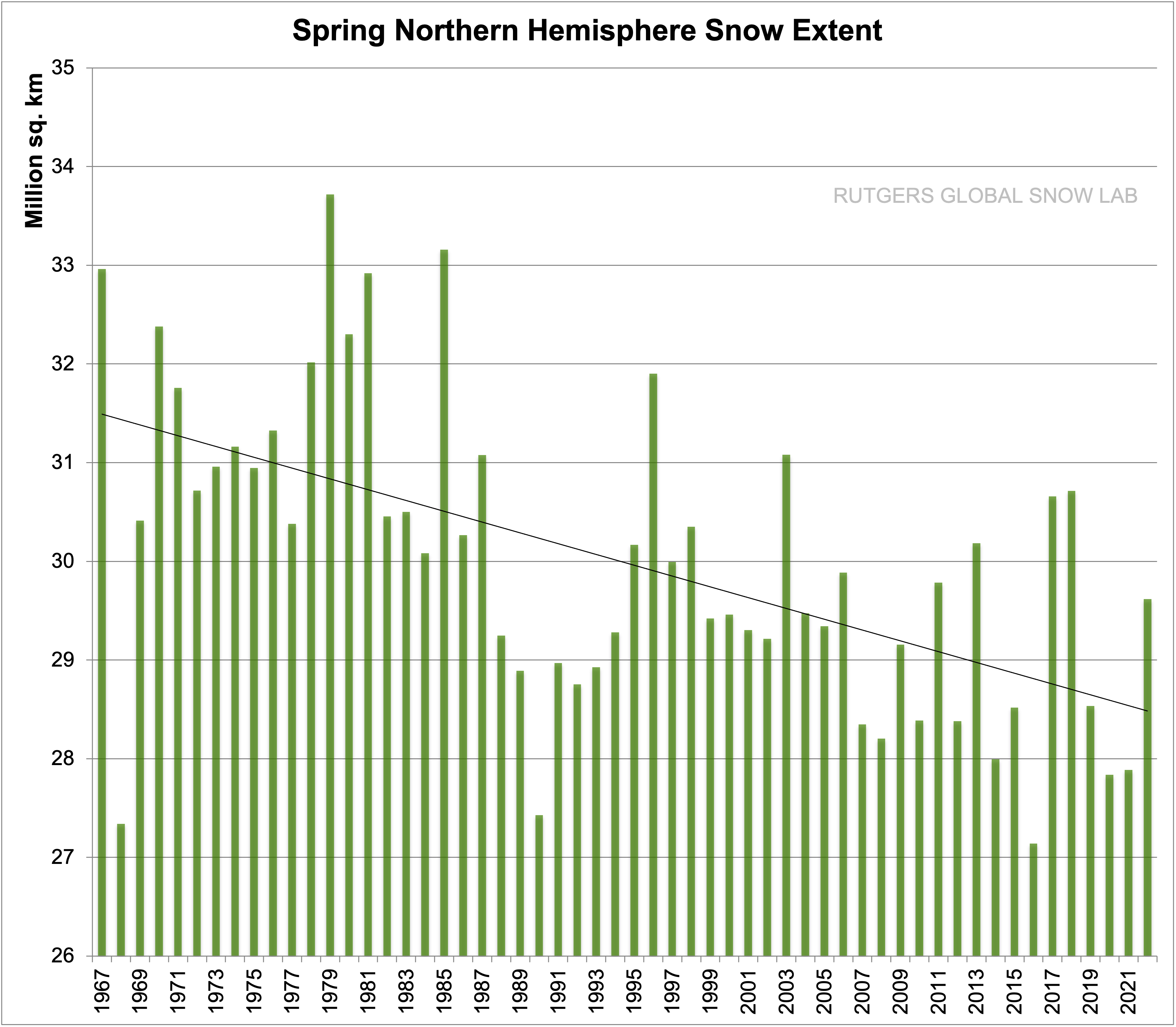
Let us see what the snow statistics show. These are from the Rutgers snow lab.
The fall snow extent is increasing, and has increased by more than 2 percent per year.
The winter snowfall has also increased but only by 0.04 percent per year. The snow covers all of Russia, Northern China, Mongolia, Tibet, Kashmir and northern Pakistan, Northern Afghanistan, Northern Iran, Turkey, most of Eastern Europe, Scandinavia, Canada, Alaska, Greenland and part of Western, Eastern and Northern United States.
Jan 16,2022
In the spring on the other hand the snow pack is melting faster, about 1.6 percent less spring snow per year. One of the major reasons for an earlier snow melt is that the air is getting dirtier, especially over China, and to some extent Russia. The soot from burning coal, wood and peat, and from mining dust changes the albedo of the snow. The soot is visible on old snow all the way up to the North Pole. The other reason is that the North Pole is getting warmer. In the fall and winter it is mostly due to increased snowfall, but in the spring, as soon as the temperatures rise over the freezing point, melting occurs earlier. But it takes longer time to melt the increasing snow, so the Summer temperatures remain unchanged or lower.
So the warming of the poles, far from being an impending end of mankind as we know it, may even be beneficial. Warmer poles in the winter means less temperature gradient between the poles and the tropics, leading to less severe storms. They will still be there, but less severe.
There is one great benefit of increased CO2, the greening of the earth.
Thanks to this greening, done with only the fertilizer of CO2, the earth can now keep another 2 billion people from starvation, not to mention what good it does for plants and wildlife.
So CO2 is not the cause for climate change.
Yet
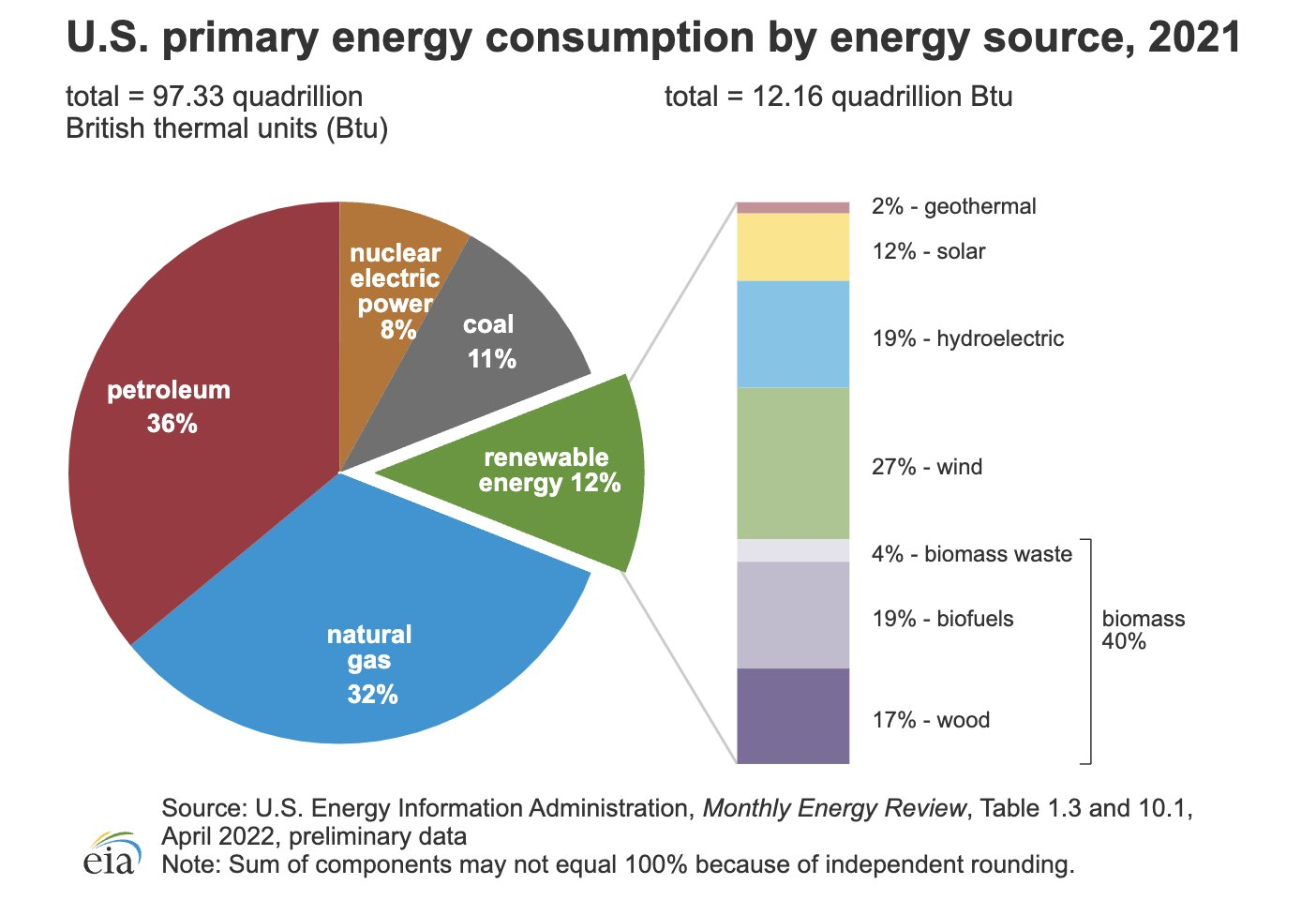
we face enormous environmental challenges. The American Southwest is slowly becoming a desert, the aquifers are being depleted, Lake Mead and Lake Powell will be empty in a few years if nothing is done. Our total energy use is increasing:
In 2021 solar energy amounted to 1,44% and wind power another 3.24% of total energy production. Hydroelectric power is declining because of the drought in the American Southwest. It used to be of great use for peak power generation. Lake Mead and Lake Powell are for all practical purposes unusable for more peak power generation. Biomass is pretty much peaked out. The use of of some of our best agricultural soil to grow corn and make ethanol is folly. When corn sugar is made into ethanol 48% of its weight is fermented as CO2, and one third of the total energy is gone. Maize growing is one of the most demanding crops, depleting the soil of more nutrition than other grains, needing the most fertilizer, which is made from petroleum products and other energy. It has been called “the syphilis of the soil” because of erosion problems.
The electricity production is but a subset of total energy consumption.
Source EIA
There is a great push to make all new cars, pick ups, delivery trucks, city buses and local trains electric by the year 2030. This does not seem to be incorporated into the eia plans. The “new green energy” plan is to have us carbon neutral by 2050. I don’t see how it can be done unless we take a radically different approach. Texas and California already has all the wind and solar power they can handle. To build it up further it must be complemented with energy batteries to store enough energy for when the wind doesn’t blow and the sun doesn’t shine. These energy batteries require an enormous amount of mining to extract the Lithium needed to make them. Lithium is already in high demand as batteries for vehicles. However, battery technology is rapidly developing, so it may still be possible to expand battery power for the grid. For now, most peak power and reserve power is supplied by natural gas.
A proposal to develop the electric grid, our nation’s transportation needs and reversing the desertification of the American Southwest.
Build a TransContinental Aqueduct. This will solve the water needs for the upper Western Texas, New Mexico, Arizona, lower California, Mexico and the Lower Colorado River basin.
Build a Trans-Rocky Mountain aqueduct. This will solve some of the water needs for Oklahoma, Kansas, Colorado, upper New Mexico and the Upper Colorado river basin.
Build a South Platte River aqueduct. This will solve the water needs for the greater Denver ares and help preserve the noorthern Ogallala aquifer.
This cannot be solved unless there will be a deep commitment to Nuclear power, streamline government permit processes and let private industry find the best solutions without government playing favorites and slowing down the process. Regular U235 power is not sufficient for this, Only Thorium power will do, and there are many reasons for it. Here are 30 of them:
My favorite Thorium power plant would be a 100 MW Liquid Fluoride Thorium Reactor (LFTR). It is also called a Small Modular Reactor (SMR). It is small enough that all core elements will fit in three standard truck containers, made on an assembly line. It can came in many forms, one is a normal fast breeder reactor, another is adapted to burn nuclear waste. The cost for these reactors, when built on an assembly line will be less than $2 per Watt. They can be placed anywhere, since they are inherently safe, no need for an evacuation zone. Since they are operating at 500C temperature with either gas or liquid lead as heat transfer media there is no need for water as a cooling medium. The only thing better would be fusion power, but that is at least 20 years away, but it is coming. These are exciting times!
Uranium is the feed-stock for nuclear power. It is also the material necessary to make nuclear bombs and making isotopes for medicinal and industrial uses.
The United States has 245,000 tons of Uranium reserves recoverable at less than $100 per kilogram, 1.9% of the world total. The price of uranium oxide is today about $80 per kilogram. This is about 12.5 years worth of domestic production, and as the great conservationist Sarah Palin used to quip, “when it is gone, it’s gone.”
The United States has, as of 2019, mined 444,500 tons of Uranium, or about 13% of the world total.
The United States consumed in 2019 19,570 tons of Uranium, about 23% of the world total, about 99.6% of which was imported. This is a great strategic vulnerability.
Which brings up the following question: Why did the Obama administration sell 20% of our proven reserves of this strategically important material to Russia?
It is of utmost importance to immediately restart the development of nuclear reactors that use Thorium as its feed-stock. Uranium based nuclear power can never fill our long term energy needs
Section 1. Purpose. Nuclear energy is critical to United States national security. That is why I have taken a series of actions to promote its development and facilitate its use. On June 29, 2017, I announced an initiative to revive and expand the nuclear energy sector and directed a complete review of United States nuclear energy policy to help find new ways to revitalize this crucial energy resource. On July 12, 2019, I signed a Presidential Memorandum entitled “The Effect of Uranium Imports on the National Security and Establishment of the United States Nuclear Fuel Working Group,” with the goal of examining the current state of domestic nuclear fuel production and reinvigorating the nuclear fuel supply chain, consistent with United States national security and nonproliferation goals. On August 20, 2019, I signed National Security Presidential Memorandum-20, entitled “Launch of Spacecraft Containing Space Nuclear Systems,” calling for development and use of space nuclear systems to enable or enhance space exploration and operational capabilities.
The purpose of this order is to take an important additional step to revitalize the United States nuclear energy sector, reinvigorate America’s space exploration program, and develop diverse energy options for national defense needs. Under this action, the United States Government will coordinate its nuclear activities to apply the benefits of nuclear energy most effectively toward American technology supremacy, including the use of small modular reactors for national defense and space exploration. This work is critical to advancing my Administration’s priorities for the United States to lead in research, technology, invention, innovation, and advanced technology development; its mission to promote and protect the United States national security innovation base; its drive to secure energy dominance; and its commitment to achieving all of these goals in a manner consistent with the highest nuclear nonproliferation standards.
The United States was the first nation to invent and develop the technology to harness nuclear energy. Since the 1950s, the United States Navy has been operating and advancing transportable nuclear reactors, resulting in powerfully enhanced marine propulsion for its aircraft carriers and allowing nuclear-powered submarines to remain submerged for extended periods of time.
The United States must sustain its ability to meet the energy requirements for its national defense and space exploration initiatives. The ability to use small modular reactors will help maintain and advance United States dominance and strategic leadership across the space and terrestrial domains.
Sec. 2. Policy. It is the policy of the United States to promote advanced reactor technologies, including small modular reactors, to support defense installation energy flexibility and energy security, and for use in space exploration, guided by the following principles:
(a) A healthy and robust nuclear energy industry is critical to the national security, energy security, and economic prosperity of the United States;
(b) The United States should maintain technology supremacy for nuclear research and development, manufacturing proficiency, and security and safety;
(c) The United States Government should bolster national defense and space exploration capabilities and enable private-sector innovation of advanced reactor technologies.
Sec. 3. Demonstration of Commercial Reactors to Enhance Energy Flexibility at a Defense Installation. (a) Micro-reactors have the potential to enhance energy flexibility and energy security at domestic military installations in remote locations. Accordingly, the Secretary of Defense shall, within 180 days of the date of this order, establish and implement a plan to demonstrate the energy flexibility capability and cost effectiveness of a Nuclear Regulatory Commission-licensed micro‑reactor at a domestic military installation.
(b) If the demonstration is successful, the Secretary of Defense shall identify opportunities at domestic military installations where this capability could enhance or supplement the fulfillment of installation energy requirements. In identifying these opportunities, the Secretary of Defense shall take into account considerations that are unique to national defense needs and requirements that may not be relevant in the private sector, such as:
(i) the ability to provide resilient, independent energy delivery to installations in the event that connections to an electrical grid are compromised;
(ii) the ability to operate for an extended period of time without refueling;
(iii) system resistance to disruption from an electro‑magnetic pulse event; and
(iv) system cybersecurity requirements.
Sec. 4. Defense Capabilities. (a) The Department of Defense is one of the largest consumers of energy in the world, using more than 10 million gallons of fuel per day and 30,000 gigawatt-hours of electricity per year, nearly all of which is provided through civilian electrical grids. Fuel demands for a modern United States military have dramatically grown since World War II and are anticipated to continue to increase in order to support high-energy-usage military systems. In this context, nuclear power could significantly enhance national defense power capabilities.
(b) The Secretary of Defense shall, in consultation with the Secretary of State, the Secretary of Commerce, the Secretary of Energy, and the Administrator of the National Aeronautics and Space Administration (NASA Administrator):
(i) determine whether advanced nuclear reactors can be made to benefit Department of Defense future space power needs;
(ii) pilot a transportable micro-reactor prototype;
(iii) direct an analysis of alternatives for personnel, regulatory, and technical requirements to inform future decisions with respect to nuclear power usage; and
(iv) direct an analysis of United States military uses for space nuclear power and propulsion technologies and an analysis of foreign adversaries’ space power and propulsion programs.
Sec. 5. Space Exploration. (a) Nuclear power sources that use uranium fuel or plutonium heat sources are essential to deep space exploration and in areas where solar power is not practical. NASA uses radioisotope power systems, such as radioisotope thermoelectric generators and radioisotope heater units, to provide power and heat for deep space robotic missions. Nuclear power sources in the kilowatt range may be needed for demonstrating In-situ Resource Utilization (ISRU) and robotic exploration of permanently shadowed craters on the Moon that contain frozen water. Nuclear reactors up to 100 kilowatts may be needed to support human habitats, ISRU, other facilities, and rovers on both the Moon and Mars. Power sources in the megawatt range would be necessary for efficient, long‑duration deep space propulsion. Affordable, lightweight nuclear power sources in space would enable new opportunities for scientific discovery. The sustainable exploration of the Moon, Mars, and other locations will be enhanced if small modular reactors can be deployed and operated remotely from Earth.
(b) Within 180 days of the date of this order, the NASA Administrator, in consultation with heads of other executive departments and agencies (agencies), as appropriate, shall define requirements for NASA utilization of nuclear energy systems for human and robotic exploration missions through 2040 and analyze the costs and benefits of such requirements. In defining these requirements, the NASA Administrator shall take into account considerations unique to the utilization of nuclear energy systems in space, such as:
(i) transportability of a reactor prior to and after deployment;
(ii) thermal management in a reduced- or zero-gravity environment in a vacuum or near-vacuum;
(iii) fluid transfer within reactor systems in a reduced or zero-gravity environment;
(iv) reactor size and mass that can be launched from Earth and assembled in space;
(v) cooling of nuclear reactors in space;
(vi) electric power requirements
(vii) space safety rating to enable operations as part of human space exploration missions;
(viii) period of time for which a reactor can operate without refueling; and
(ix) conditioning of reactor components for use in the space environment.
Sec. 6. Domestic Fuel Supply. (a) A thriving and secure domestic nuclear fuel supply chain is critical to the national interests of the United States. A viable domestic nuclear fuel supply chain not only supports defense and national security activities, but also enables the success of the commercial nuclear industry. Many advanced reactor concepts, however, will require high-assay, low-enriched uranium (HALEU), for which no domestic commercial enrichment capability currently exists. The United States must take steps to ensure a viable United States-origin HALEU supply.
(b) The Secretary of Energy shall complete the Department of Energy’s ongoing 3-year, $115 million demonstration of a United States-origin enrichment technology capable of producing HALEU for use in defense-related advanced reactor applications. Within funding available for the demonstration project, the Secretary of Energy should develop a plan to promote successful transition of this technology to the private sector for commercial adoption.
(c) The Secretary of Energy shall consult with the Secretary of Defense, the Director of the Office of Management and Budget, and the NASA Administrator regarding how advanced fuels and related technologies can best support implementation of sections 3, 4, and 5 of this order.
Sec. 7. Common Technology Roadmap. (a) The Secretary of State, the Secretary of Defense, the Secretary of Commerce, the Secretary of Energy, and the NASA Administrator shall develop a common technology roadmap through 2030 that describes potential development programs and that coordinates, to the extent practicable, terrestrial-based advanced nuclear reactor and space-based nuclear power and propulsion efforts. Agencies shall remain responsible for funding their respective mission-unique requirements. The roadmap shall also include, at a minimum:
(i) assessments of foreign nations’ space nuclear power and propulsion technological capabilities;
(ii) pathways for transitioning technologies developed through Federally supported programs to private-sector activities; and
(iii) other applications supporting the goals provided in section 1 of this order.
(b) The roadmap shall be submitted to the President by the Director of the Office of Management and Budget, the Assistant to the President for Domestic Policy, the Director of the Office of Science and Technology Policy, the Assistant to the President for National Security Affairs, the Assistant to the President for Economic Policy, and the Executive Secretary of the National Space Council before submissions of budget proposals by the Secretary of State, the Secretary of Commerce, the Secretary of Energy, and the NASA Administrator.
Sec. 8. Definitions. For purposes of this order:
(a) The term “small modular reactor” refers to an advanced nuclear reactor of electric generation capacity less than 300 megawatt-electric. Because of the smaller size, small modular reactors can generally be designed for factory fabrication and modular construction to take advantage of economies of serial production and shorter construction times.
(b) The term “micro-reactor” refers to a nuclear reactor of electric generation capacity less than 10 megawatt-electric that can be deployed remotely. Micro-reactors are a subset of small modular reactors and are also known as “very small modular reactors.”
(c) The term “transportable micro-reactor” refers to a micro-reactor that can be moved by truck, ship, or large military transport aircraft and is capable of both rapid deployment and teardown or removal, typically with safe teardown or removal less than 1 week after 1 year of full-power operation.
(d) The term “space exploration” refers to in-space scientific and resource exploration, in-space economic and industrial development, and development of associated in-space logistical infrastructure.
(e) The term “national defense” refers to the protection of the United States and its interests from foreign attack or other natural danger, including phenomena occurring on Earth and in space.
Sec. 9. General Provisions. (a) Nothing in this order shall be construed to impair or otherwise affect:
(i) the authority granted by law to an executive department or agency, or the head thereof; or
(ii) the functions of the Director of the Office of Management and Budget relating to budgetary, administrative, or legislative proposals.
(b) This order shall be implemented consistent with applicable law and subject to the availability of appropriations.
(c) This order is not intended to, and does not, create any right or benefit, substantive or procedural, enforceable at law or in equity by any party against the United States, its departments, agencies, or entities, its officers, employees, or agents, or any other person.
DONALD J. TRUMP THE WHITE HOUSE, January 5, 2021. WhiteHouse.gov
It seems that electric powered vehicles are finally taking off, and sales are ready to explode. The Tesla electric car company capitalization value has increased eight-fold in the last half year, and is now worth more on paper than GM, Ford, Chrysler and Honda combined .
If CO2 is the great driver of environmental destruction, never mind that the increased CO2 is feeding 2 billion more people than before thanks to the greening effect of increased CO2, then we should work at warp speed to develop the additional electricity needs that will arise with all electric vehicles coming to market needing charging stations.
It makes no sense to build more coal and gas fired electric plants, replacing one CO2 generator with another, the best wind power sites are already taken, waste, geothermal and solar power is still a pipe dream, so, what to do?
Conventional nuclear power is limited and requires a very long and extensive approval process, partly due to the not in my backyard regulation attitude. We are already the world’s largest importer of Uranium, and the world’s supply is to a large extent controlled by non allies. .
How do you eliminate all Coal and natural gas electric plants? Look at the U.S usage: (Last year 2016)
We can see that renewable energy will not suffice. The only real answer is to expand nuclear electricity, but we are already the world’s biggest importer of Uranium. (The Uranium One deal, when we sold 20% of our Uranium mining rights to Russia did not help, but we were in trouble even before ). No, the only real answer is to rapidly develop molten salt Thorium nuclear electricity production. They do not require water for cooling, so they can be placed anywhere where additional capacity is needed, eliminating rapid expansion of the electric grid.
Thorium Nuclear Power generators scale beautifully from small portable generators to full size power plants. One of the first applications was as an airborne nuclear reactor.
Granted this was not a Thorium breeder reactor, but it proves nuclear reactors can be made lightweight. Thorium reactors can be made even lighter as long as they are not of the breeder type.
Lawrence Livermore, Los Alamos, and Argonne national laboratories are designing a self-contained nuclear reactor with tamper-resistant features. Called SSTAR (small, sealed, transportable, autonomous reactor), this next-generation reactor will produce 10 to 100 megawatts electric and can be safely transported on ship or by a heavy-haul transport truck.
This type of reactor can be transported to disaster areas, and provide emergency power, during rescue and rebuilding efforts. This particular reactor still uses solid fuel and steam heat exchanger. A LFTR reactor with a supercritical CO2 gas heat exchanger would be even more compact and efficient.
From these compact designs, Thorium power can be scaled up to any size.

.jpg?ext=.jpg)






 Len Bilén's blog, a blog about faith, politics and the environment.