Matthew 9:1-17. Jesus continued his healing ministry, he healed a paralytic, but the real story is; Jesus forgave him his sins, a blasphemy unless Jesus is who he said he is. Then he called Matthew the tax collector and explained to John the Baptist followers why his disciples did not fast while Jesus was with them.
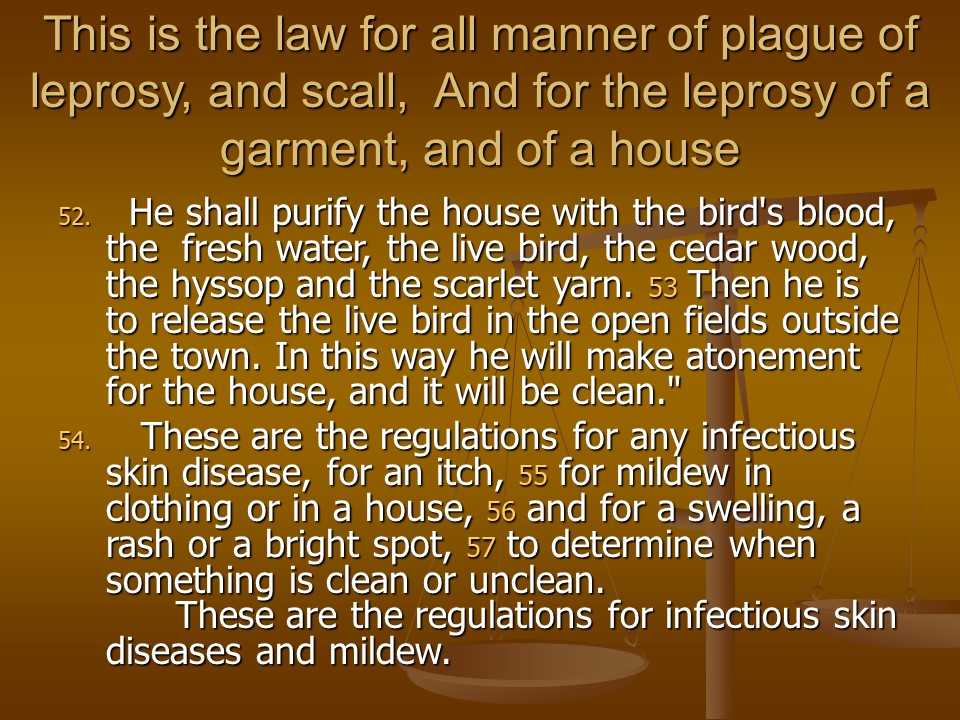
Leviticus 14 continues to deal with leprosy and mildew and what to do with both. Things like that are complicated.
Leviticus 15 deals with bodily discharges. (Hang in there, next chapter deals with the Atonement!)
Verse 16 and 17 of Matthew 9 explains fasting in an unexpected way. There is a right time to fast and a wrong time, and he uses wine and wineskins to illustrate that.
Wine is made from grapes, and the sugar content of grapes is about 16%. The wine making process is to convert the sugar into ethanol via fermentation, and grapes come replenished with their own yeast, so the fermentation starts whether you like it or not. If you leave the grapes out in the air they will ferment and the ethanol will oxidize into vinegar, so they must ferment in a vessel that locks out oxygen. The fermentation has two phases, the first phase is fairly fast, a little more than 10 days, where the sugar converts to ethanol. This process releases CO2; nearly half of the weight of the sugar goes up in the air in the form of CO2, the rest is ethanol. No wineskin can handle that, so fermentation was usually done in a clay vessel with a lid on to prevent air to enter. At the end of 10 to 15 days they had “new wine”.
Bur the fermentation was not over, the aging process began, and that lasted from a few weeks to a few months. During that time there is a slow release of CO2, but the vessel had to be air tight so no oxygen would spoil the wine and turn it into vinegar.
This is where new wineskins come in, they can handle this process by being ever so slightly permeable, if they are made from young goatskin, properly prepared.
Old wineskins on the other hand are hardened and can even be brittle, like an old leather glove that has been lost in the snow for the winter, and when it is found in the spring, it is ruined.
Jesus did not teach wine-making when he used that parable, in the parable the wine is the Holy Spirit and we are the wineskins.
Many people, me and my wife included have been praying for a great new, worldwide revival, and following that, a great worldwide awakening. Revivals usually start small and local, but with great intensity. The intensity will be greatest among young people, and they will celebrate with a new song in their heart. They are the new wineskins, they will be filled with new wine, and their new music will be less refined, raw and unpolished, or so it will seem to us old wineskins. We better prepare for the outpouring of the Holy spirit in our old wineskins by rejuvenate them with the oil of joy to make us ready to receive the old wine, aged to perfection with the full bouquet, like when Jesus turned water into wine. Then we who have been saved for many years can join with the young and appreciate each other, we appreciate their youthful enthusiasm and music, and they will appreciate the good wine that comes from lifelong experience.
There is a great passage in Isaiah 25, a song of praise coming right after the dreadful chapter 24. It speaks of aged wine being the finest of wines.


Revelation 7:17: For the Lamb at the center of the throne will be their shepherd; ‘he will lead them to springs of living water.’ ‘And God will wipe away every tear from their eyes.’”
Yes, there will be a great worldwide revival, and an even greater awakening.








 Len Bilén's blog, a blog about faith, politics and the environment.