The Hebrides’ revival in 1949, What has that to do with this year’s presidential election?

I have been praying for a revival for a few years, This time it is critical, and when it comes it will be worldwide thanks to the power of internet and what it means for both good and evil. It has enabled the spiritual warfare to increase to unprecedented levels. There was a time not long ago when people communicated with each other, went to church on Sunday and endured yet another sermon they had heard three years ago and it was time to preach it again according to the three year cycle, and not much happened, but there was a few people who preyed for a revival, such a one that had happened before in their youth. Such it was on the island of Lewis in the inner Hebrides, and this short video will tell the story vividly:

This is the day of the one and only presidential debate, and 28% of the people want to know more about Kamala Harris, but only 9% want to know more about Donald Trump. I didn’t know this about him until a few days ago, when I looked up Duncan Hines and the Hebrides revival, a fact he vehemently denied. He claimed the revival had already started when he arrived, thanks to the two old women and the young Donald Smith.

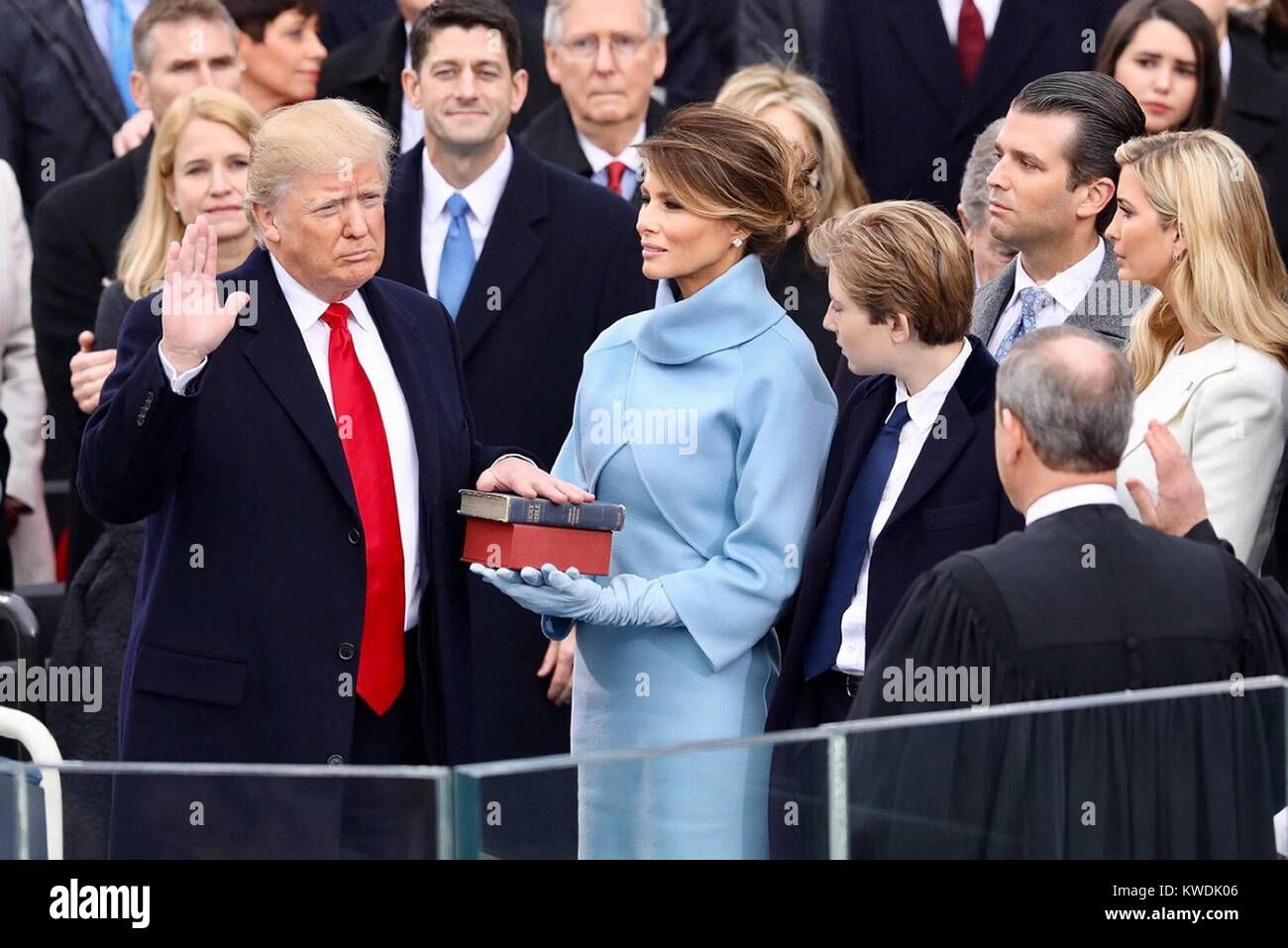
Anyhow the Bible given to Donald Trump by his mother was used at the 2017 presidential. inauguration together with the 1861 Bible used by Abraham Lincoln at his taking the oath of office.
This is an example of the synergy of the ages .Two elderly shut-in ladies prayed for years for a revival, and nothing happened, but suddenly it did, and the effects goes down for generations

Pray for the revival. God uses the most unlikely characters to accomplish His purposes.

Check out https://www.baptist.org.uk/Articles/608089/The_Hebrides_Revival.aspx

May 20, read the Bible in a year; in PowerPoint, with comments.

Luke 17. Jesus told about the consequences of sin, the importance of faith and the call of duty. Then is recorded the story of ten lepers healed but only one came back and thanked Jesus, and he was a Samaritan! Finally Jesus spoke of the Coming of the Kingdom of God and the end times.

Not much good in 1 Kings 14, it tells of judgment on the house of Jeroboam and his death, and Rehoboam taking over power and his death.

1 Kings 15, the evil king Abijam reigned in Judah. After his death Asa became king over Judah and he was a good king. Meanwhile in Israel Nadab reigned, and after him Baasha both doing evil things in the eyes of the LORD.

1 Kings 16 displays a depressing list of kings over Israel, Baasha, Elah, Zimri, one worse than the other, finally culminating with Ahab, the worst of them all, setting up Baal worship in Israel.

February 7, read the Bible in a year; in PowerPoint, with comments.

Matthew 4:1-11 tells of Jesus as He was led into the wilderness to be tempted of Satan after he fasted for 40 days and 40 nights. Jesus combated Satan with scripture, but Satan could quote scripture too. In the end Satan left him “for a season”.

Exodus 27 tells how the altar of burnt offering was to be constructed and how to construct the courtyard around the tabernacle. It also specifies there must always be oil for the lampstand.

In Exodus 28 the priestly garments are specified, in detail, with the breastplate, down to the urim and thummim, and the plate “HOLINESS TO THE LORD”. Even the undergarments are specified.

Exodus 29 specifies how the consecration of priests was to be performed.

February 5, read the Bible in a year; in PowerPoint, with comments.

Matthew 3:1-12 presents John the Baptist preaching repentance. He came to prepare the way of the Lord. John the Baptist baptized in water for repentance. He prophesied that Jesus would baptize in the Holy Spirit and fire. John the Baptist is still under the law but prepares the way for Jesus

In stark contrast to the New Testament gospel Exodus 21 and Exodus 22 contain regulations on servanthood and slavery, penalties for manslaughter and personal injuries, all Mosaic law.

February 3, read the Bible in a year; in PowerPoint, with comments.

Matthew 2:1-12 . We get to read about the Magi (probably about 15 of them including servants) who came to Jerusalem to ask about the King of the Jews. This worried King Herod and all Jerusalem, and Herod asked the Scribes and the other learned men where he was to be born. They answered “In Bethlehem of Judea”, but were otherwise remarkably uninterested. The wise men went to Jesus (he is by now at least a few months old), but did not report back to Herod, instead they returned another way.

In Exodus 16  God gave them Manna (what is it?) and quail, and Moses gave the instructions on how to gather it. And they ate Manna for 40 years.

In Exodus 17, lack of water is a recurring theme in the desert. In Rephidim there was no water at all, so God told Moses to strike the rock at the foot of Mount Horeb. Water gushed out and they were all filled with good water. Good it was, for the Amalekites attacked them right afterwards. Joshua and his men fought a good fight, and Moses helped by raising his hands, and as long as he held them high Joshua prevailed. But Moses got tired, so Aaron and Hur held up his hands until sunset, and so the Amalekites were defeated.

Exodus 18 tells of Jethro, Moses’ father-in-law when he visited Moses, who now was in a difficult situation trying to lead his people all by himself, and Jethro gave Moses good advice about real leadership, delegation of management, a practice essential for all governing.

February 1, read the Bible in a year; in PowerPoint, with comments.

John 21 tells of the eighth miracle of Jesus. This miracle, a great catch of fish happened after Jesus resurrection and was a sign of new beginnings. Jesus reinstated Peter and told him: “Feed my sheep.”

Exodus 12 tells of how God instituted the Passover. The name comes from the action that night, when the angel of death came to kill every firstborn in Egypt, if he saw the blood of the pascal lamb om the doorposts and the lentil of the house, he would pass over that house. The chapter is fantastic, read it and marvel!

In Exodus 13 the feast of unleavened bread is defined and the consecrating of the firstborn to the LORD. The Hebrews have escaped from Egypt, and a proposed route is suggested.

January 12, read the Bible in a year; in PowerPoint, with comments.

 John 8 begins with a sinful woman who was about to be stoned for adultery. Jesus last words to her was “Go and sin no more”. Jesus did not condemn her for the past but forgave and pointed to the future. Then he got into an argument with the religious powers about his and their ancestry. They claimed to be descendants of Abraham, and they questioned the legitimacy of Jesus. Jesus answered “Before Abraham, I am”. Jesus claimed to be God. This was of course blasphemy, unless it is true.

Genesis 21 tells about the birth of Isaac and when Ishmael made fun of it, Sarah got angry and Hagar and Ismael were sent away to die in the desert, but God protected them. The chapter also features the treaty between Abraham and Abimelech at Beersheba. This was the first treaty between men in the Bible and it was about water rights.

In  Genesis 22 Abraham was told by God to offer up his son Isaac to be sacrificed on Mount Moriah, the same mountain where Jesus was to be crucified. Obeying God he did what he was told, but at the last moment God provided a substitute sacrifice in the form of a ram.

These three chapters are significant. Read them through twice and ponder their importance: Jesus claiming deity, The birth of the Ishmaelite nation, later becoming the Islamic nations, the importance of water (The Bible begins and ends with water and a healing river in the middle) and Abraham’s faith being severely tested.

January 9, read the Bible in a year; in PowerPoint, with comments.

The four chapters chosen for today are thought provoking and begins with

John 6:25-71. Jesus had fed the five thousand and been seen walking on water. In spite of these miracles the Jews demanded a sign. Jesus responded in kind by saying he is the bread of life, and if people want to have eternal life they must come to him and eat of his flesh and drink of his blood. When hearing this, many abandoned Jesus, but Peter said: To whom shall we go? You have the words of eternal life.

Then in Genesis 12 Abram was called to leave his home in Ur. He obeyed and traveled to a land he did not know, promised by God, but when a famine came he went to Egypt and acted deceitfully rather than trust God completely.

In Genesis 13 Abram and his sidekick Lot went back from Egypt and separated their paths. Lot chose the fertile plain of Jordan, and Abram went to the hills of Mamre.

Finally in Genesis 14 Lot got in trouble and was taken captive by a local Mafia. Abram rescued Lot, and on the way back gave a tithe to Melchizedek, king of Salem – (later to become Jerusalem), after God had given him success in battle.

Question: Who was Melchizedek, and why is that important? He is mentioned again in Psalm 110 and in Hebrews 5-7.

January 5, read the Bible in a year; in PowerPoint, with comments.

John 4, speaks about the first real evangelist spreading the good news of Christ the Messiah. It is the woman at the well, a Samaritan, scorned and rejected by her many ex husbands, yet used by God to tell the good news.

Genesis 6 . Sin and wickedness got worse and worse on earth. God saw it and decided to start over. But Noah, his wife, his three sons and their wives, eight in all found favor with God, so God told him to build an ark. This Noah did, and it was the biggest ship built until the time of Ptolemy (around 215 BC.)

Ponder that the first evangelist was a scorned woman who happened to meet Jesus, and that Noah, being obedient to God built the ark on dry land, too big to be of any use unless there was going to be a giant flood. This takes faith!

January 1, read the Bible in a year; in PowerPoint, with comments.

The Holy Bible is the most influential book ever written. According to Wikipedia it has been translated in its entirety into 724 languages, and the New Testament has been translated into 1617 languages. At least one part of the Bible has bee translated into 3,589 languages, and more translations are coming every year, especially from the Wycliffe translators.

Both the New Testament and the Old Testament begin with the words “In the beginning”.

John1:1-18 deals with creation spiritually.

Genesis 1 deals with the physical creation with spiritual emphasis, laying the groundwork for spiritual understanding of how and why we exist.

We are existing in time and space. The question is: What was there before time and space existed, before the beginning?

Answer: God, existing in three persons, God the Father, God the Son (the Word) and God’s Spirit, (the Holy Ghost).

The Three-in-one God alone are eternal, everything else, including time and space, is created.

Another Question: Why did God say “it was good” for day 1,3,4 and 5 but not for day 2 and it was very good after day 6?

Answer: The ecosystem is a work in progress and will function differently for each phase and finally come to completion when all parts are set in place, which includes people. We are responsible to God to be good stewards of the earth and leave it a better place than we found it.