January 26, read the Bible in a year in PowerPoint; with comments.

John 17 is commonly known as Jesus’ high priestly prayer. In some conservative circles it is also called “The Lord’s prayer.” In it Jesus prayed for himself, then he prayed for his disciples followed by prayer for all future believers. In the end of the chapter he prayed that the believers will see his glory, the glory God gave him before the creation of the world.

A few hundred years has passed since the end of Genesis. Exodus 1 tells how the Hebrews multiplied and became a perceived threat to the Egyptians. The Egyptians told the Hebrew midwives that every boy they delivered must be thrown into the Nile, but every girl were to be let to live.

Which seamlessly leads into Exodus 2, how Moses when he was born was placed in a papyrus basket, which then was thrown into the Nile and the child was left crying in the reeds. Pharaoh’s daughter heard it, picked him up and asked her servant to find somebody to nurse him. Of course she found Moses’ own mother to nurse him. After he was weaned Moses grew up in Pharaoh’s household and got educated. He did remember he was a Hebrew, so when he saw an Egyptian mistreat a Hebrew he killed the Egyptian. This became known and Moses fled to Midian, where he spent 40 years tending flocks. This is great reading.

January 21, read the Bible in a year in PowerPoint; with comments.

John 14:1-14 records the events of the hour after the Passover meal before they all depart to Gethsemane. Jesus told his disciples he is going away to prepare a mansion, more precisely a dwelling place for them. Thomas, always questioning him, asked him “How can we know the way?” And Philip added “Show us the Father“. Jesus answer? “Believe in me“.

Genesis 40 deals with dreams. Joseph’s two fellow cellmates in prison each had a dream, Joseph interpreted the dreams that the cup-bearer would be released and restored to his former position, while the baker would be hanged on a tree.

In Genesis 41  Pharaoh himself had a dream, and Joseph was released from prison to interpret the dream. It dealt with seven years of plenty and seven years of famine. Joseph interpreted the dream so well that Pharaoh put Joseph in charge of all affairs of Egypt. The seven years of plenty came and good harvests filled the storehouses. Then came the seven years of famine.

Psalm 8 has been set to music many times. Even I have sung it many times, both as a choir number, and the first verse as an introit. Looking for the music I found a far better, very free rendition of the Psalm, this one by Marty Goetz.

January 16, read the Bible in a year in PowerPoint; with comments.

John 11:1-44 describes how Jesus raised Lazarus from the dead (on the fourth day no less).

In Genesis 29, Jacob arrived in Paddan Aram, fell in love with Rachel, worked seven years to be allowed to marry her, but her father Laban tricked Jacob, so he got Leah instead. Then he worked another “seven years for Rachel”. But it was Leah that gave him his first four children, Reuben, Simeon, Levi and Judah.

Genesis 30 records the remaining children born to Jacob (except Benjamin, who would be born later). It also tells a story about Rachel, desperate to get a child of her own was bargaining with Leah for Reuben’s mandrakes. After Joseph was born, Jacob wanted to leave and go back to the promised land, but Laban bargained with him to stay and make them even more prosperous. Through selective breeding Jacob acquired the majority of the flocks and became wealthy.

Psalm 6 is a prayer, this time from a humble David asking for mercy, but also asking God to humiliate his enemies.

January 13, read the Bible in a year in PowerPoint; with comments.

The three chapters chosen for today are also very interesting.

In John 9 Jesus opened the eyes of a man blind from birth, Since this was done on a Sabbath more trouble arose from the Pharisees. In the arguments that followed the Pharisees tried their best to cancel him and his parents, but the people believed the truth revealed, and Jesus again affirmed his divinity.

In Genesis 23 Abraham’s wife Sarah died and Abraham purchased a grave in Mamre, where he buried her.

Life goes on, and Genesis 24 records the beautiful story of Isaac and Rebekah.

The connection with the Old and New testament is again water. The blind man was told to wash in the pool of Siloam. The man obeyed and the sign was completed. In Genesis the sign to look for was if the damsel would draw water for the camels too. (they are thirty when they haven,t had any water for days).

January 12, read the Bible in a year in PowerPoint; with comments.

 John 8 begins with a sinful woman who was about to be stoned for adultery. Jesus last words to her was “Go and sin no more”. Jesus did not condemn her for the past but forgave and pointed to the future. Then he got into an argument with the religious powers about his and their ancestry. They claimed to be descendants of Abraham, and they questioned the legitimacy of Jesus. Jesus answered “Before Abraham, I am”. Jesus claimed to be God. This was of course blasphemy, unless it is true.

Genesis 21 tells about the birth of Isaac and when Ishmael made fun of it, Sarah got angry and Hagar and Ismael were sent away to die in the desert, but God protected them. The chapter also features the treaty between Abraham and Abimelech at Beersheba. This was the first treaty between men in the Bible and it was about water rights.

In  Genesis 22 Abraham was told by God to offer up his son Isaac to be sacrificed on Mount Moriah, the same mountain where Jesus was to be crucified. Obeying God he did what he was told, but at the last moment God provided a substitute sacrifice in the form of a ram.

These three chapters are significant. Read them through twice and ponder their importance: Jesus claiming deity, The birth of the Ishmaelite nation, later becoming the Islamic nations, the importance of water (The Bible begins and ends with water and a healing river in the middle) and Abraham’s faith being severely tested.

January 10, read the Bible in a year in PowerPoint; with comments.

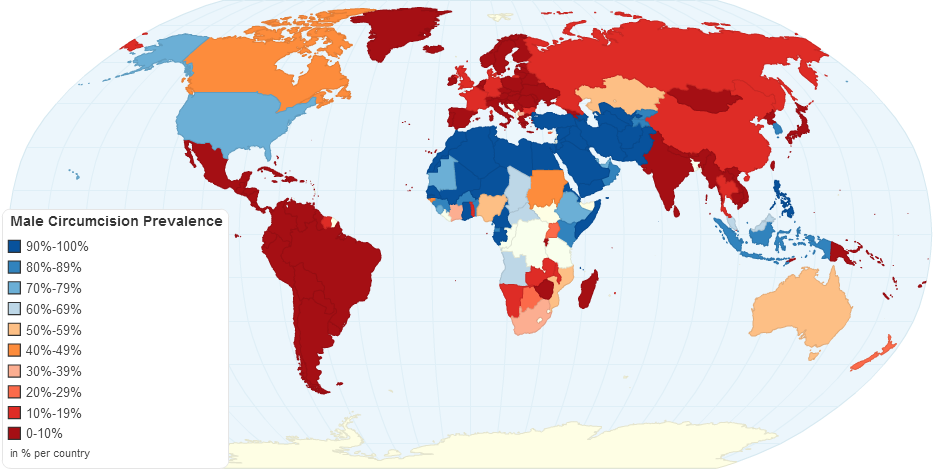
Today we read about circumcision and its importance; in John 7 and one of the four chapters in Genesis selected for today. But that is just one part of the story.

John 7:1-24. Jesus pointed out that according to Jewish law, circumcision is more important than keeping Sabbath, so, if the eighth day is on a Sabbath, it must be performed on that day, but healing on a Sabbath is not permitted.

In Genesis15 God promised Abram a son. Abram believed God and it was counted to him as righteousness.

But in Genesis 16 Abram badly wanted an heir, so Sarai, being too old, gave her handmaiden Hagar to be the mother of Abram’s son, Ishmael. Sarai regretted what she had done, and Hagar was sent away with Ishmael into the wilderness.

Thirteen years later, in Genesis 17, Ishmael was back with Abram,  God  promised Abram his seed of promise, changed Abram’s name to Abraham and Sarai’s name became Sarah, established with an eternal covenant, the covenant of Circumcision, and it was performed on Abraham, Ishmael and all Abraham’s male servants.

Which brings us to Genesis 18 with Abraham still waiting for his promised offspring. He was visited by three angels that promised him he will have a son within a year. Sarah heard it and found it laughable, but God confirmed this promise, and was also proclaiming the destruction of Sodom and Gomorrah. Abraham tried to bargain with God at no avail.

The question to ponder: Why is circumcision important for Jews and Muslims, but not for Christians? Hint: read the Acts of the Apostles, chapter 15.

January 9, read the Bible in a year in PowerPoint; with comments.

The four chapters chosen for today are thought provoking and begins with

John 6:25-71. Jesus had fed the five thousand and been seen walking on water. In spite of these miracles the Jews demanded a sign. Jesus responded in kind by saying he is the bread of life, and if people want to have eternal life they must come to him and eat of his flesh and drink of his blood. When hearing this, many abandoned Jesus, but Peter said: To whom shall we go? You have the words of eternal life.

Then in Genesis 12 Abram was called to leave his home in Ur. He obeyed and traveled to a land he did not know, promised by God, but when a famine came he went to Egypt and acted deceitfully rather than trusting God completely.

In Genesis 13 Abram and his sidekick Lot went back from Egypt and their paths separated . Lot chose the fertile plain of Jordan, and Abram went to the hills of Mamre.

Finally in Genesis 14 Lot got in trouble and was taken captive by a local Mafia. Abram rescued Lot, and on the way back gave a tithe to Melchizedek, king of Salem – (later to become Jerusalem), after God had given him success in battle.

Question: Who was Melchizedek, and why is that important? He is mentioned again in Psalm 110 and in Hebrews 5-7.

January 6, read the Bible in a year in PowerPoint; with comments.

The common thread for today is Jesus redefining the meaning of the Sabbath and Noah being part of the new beginning. Psalm 2 defines Jesus as the Son and God the ruler of all, and mankind still trying to do it all by themselves at no avail.

John 5:1-30, describes how Jesus healed a man at the pool of Bethesda on the Sabbath, which offended the Jews. In addition Jesus claimed to be equal with the Father, for which the Jews sought to kill him, but Jesus defended His testimony.

Genesis 7 tells of Noah, having completed the ark, took with him seven (pairs) of clean animals and one male and one female of each specie of unclean animals, and also birds. The aquatic life did just fine. After the animals had entered, God shut the door and it rained forty days and forty nights.

Genesis 8. The water receded and Noah sent out a raven and later a dove that returned empty. The second time the dove was sent out, it returned with an olive branch in its beak. The dove has since become the universal peace symbol. After exiting the ark Noah built an altar and sacrificed from the clean animals. God made a promise to Noah: “While the earth remaineth, seedtime and harvest, and cold and heat, and summer and winter, and day and night shall not cease.”

Psalm 2 tells of what happens when “the heathen rage” and this psalm speaks of the fight that is going on even today.

December 3, read the Bible in a year; in PowerPoint, with comments.

1 John 5. Being born of God and believing in the son of God means exercising obedience by Faith. The certainty of God’s witness is : “These things have I written unto you that believe on the name of the Son of God; that ye may know that ye have eternal life, and that ye may believe on the name of the Son of God.” There is  confidence and compassion in prayer, We must follow the true one and reject the false. And so the letter ends: “Little children, keep yourselves from idols. Amen.”

Micah 1. The prophet told of the coming judgment on Israel with mourning for Israel and Judah.

Micah 2. The prophet proclaimed woe to evildoers and lying prophets. After that Israel will be restored.

Micah 3. There was wicked rulers and wicked prophets. Micah still had full confidence in God.

Micah 4 speaks of the LORD’s future reign in Zion and Zion’s triumph.

December 2, read the Bible in a year; in PowerPoint, with comments.

1 John 4. Test the spirits. There is the spirit of God, and then there are many spirits of the Antichrist. Remember: “greater is he that is in you, than he that is in the world.” We know God through love and we see God through love, “We love him, because he first loved us.”

Proverbs 24 completes the sayings of the wise, and begins some more sayings of the wise. The two last verses are notable: “Yet a little sleep, a little slumber, a little folding of the hands to sleep:  So shall thy poverty come as one that travelleth; and thy want as an armed man.

Psalm 137. When the Jews were exiled into captivity they were forced to sing songs on their way. So somebody wrote a psalm about it. Compare that to when Paul and Silas were put in jail, they voluntarily sang songs of praise to God.

Psalm 138. David, as psalmist reminds us that God will honor His word and perform it to completion.

Psalm 139, of David. God knows everything, and He knows me much better than I know myself. Fittingly, the Psalm ends up with a song: “Search me, O God, and know my heart: try me, and know my thoughts: And see if there be any wicked way in me, and lead me in the way everlasting.

Psalm 140, of David. A heartfelt prayer for deliverance from evildoers.