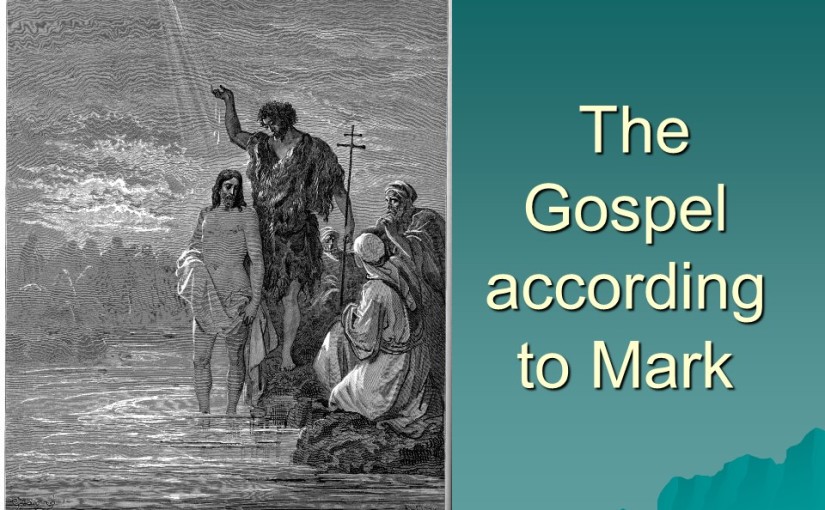
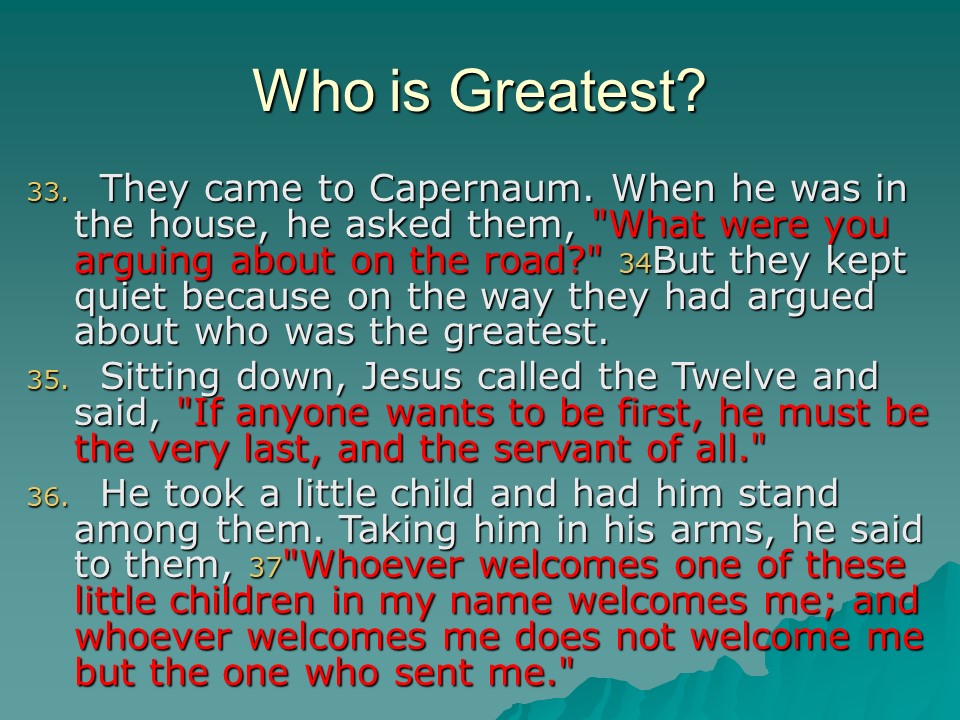
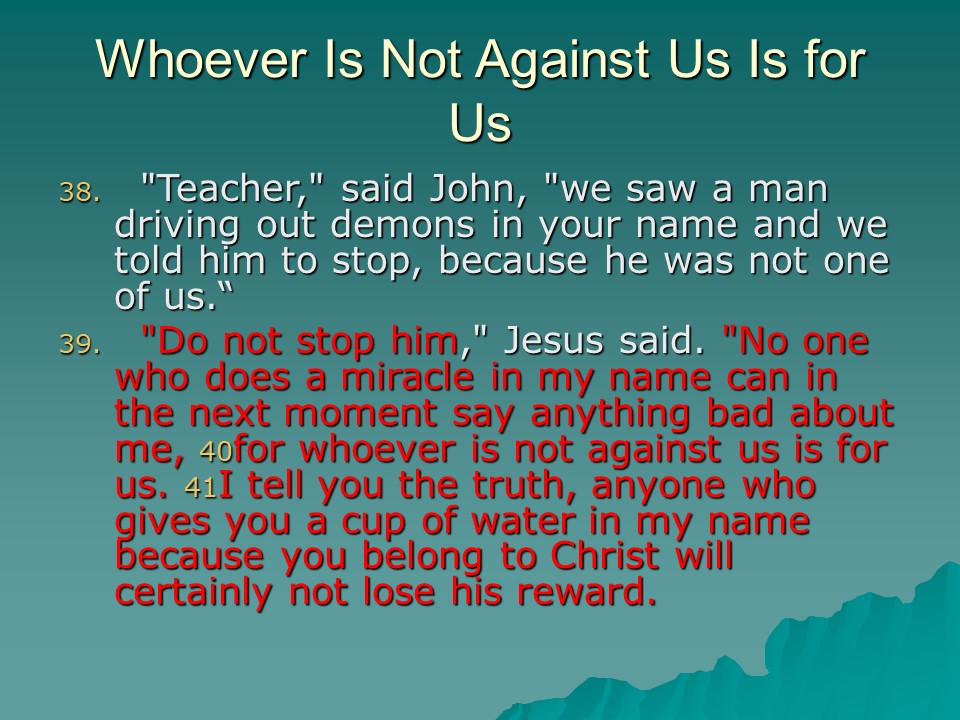
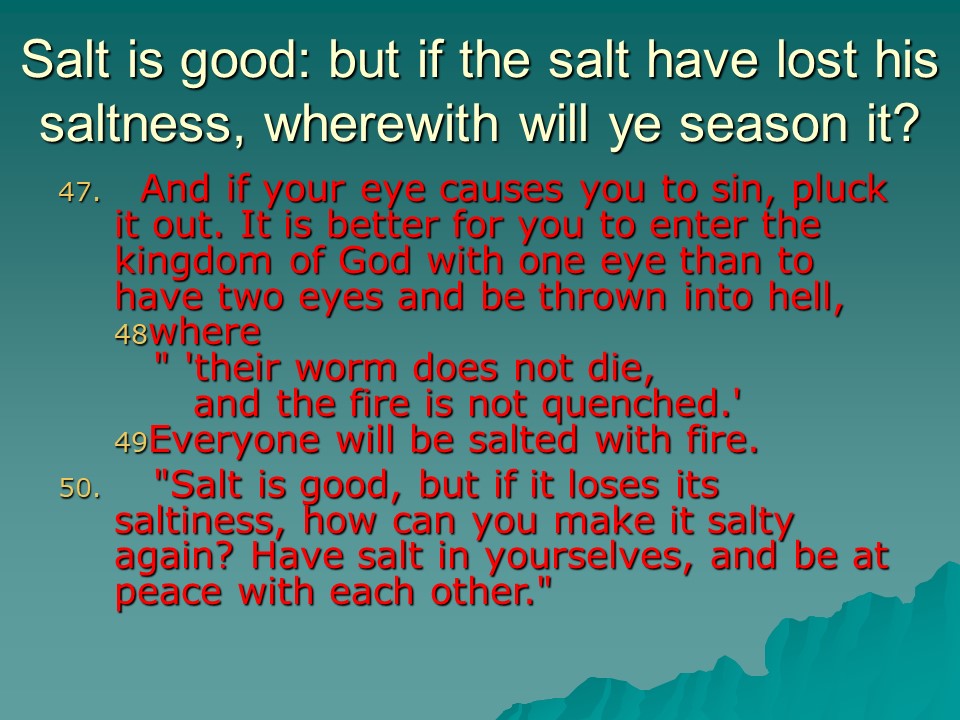
Mark 9:33-50, who is the Greatest?, Unity, not division, Jesus warns of offenses, Salt with savor.




Matthew 15:1-20. Jesus defined what defiles a person; it is not what he eats, but what comes out of his mouth. Ceremonial cleansing is just for show. J
In Numbers 14 the people rebelled and refused to go into the promised land. As a punishment the people had to continue wandering for forty years in the desert until that generation, with the exception of Caleb and Joshua had passed away. Meanwhile the people tried to take on the Amalekites in their own strength, but failed miserably.
Psalm 21, of David. The New Testament references from Revelation 14 seems to fit. When I read this Psalm, the battle hymn of the republic kept ringing in my ears.Battle Hymn of the Republic



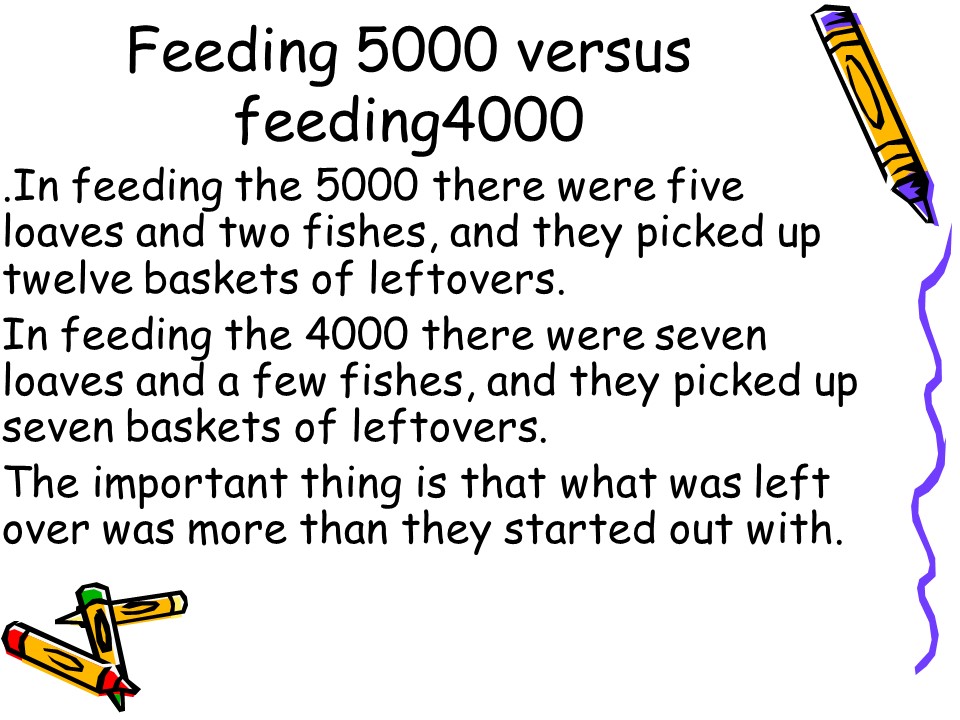
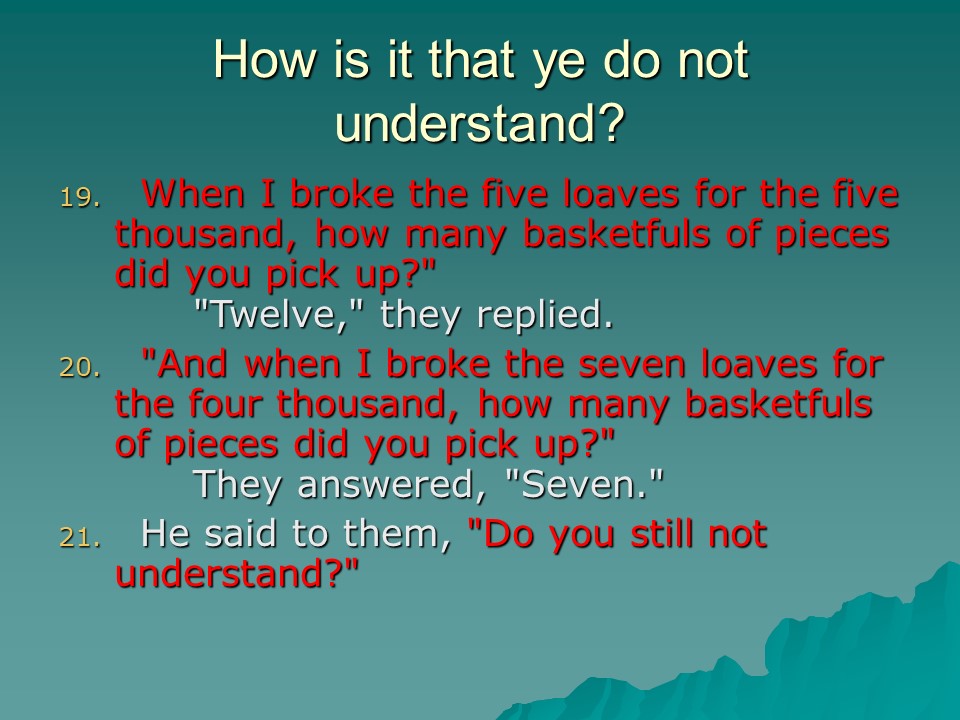
Matthew 14:15-36. After learning of the beheading of John the Baptist Jesus tried to withdraw from the people by boat to a solitary place, but there he found a large crowd, so he decided to feed the gathering of 5000 plus women and children with five loaves of bread and two small fishes. After all were satisfied the disciples picked up twelve baskets of leftovers. Jesus dismissed the crowd, made the disciples go in a boat to travel to the other side of Lake Genesareth, and then after Jesus had prayed alone he joined them by walking on the laker. A very interesting read.
In Numbers 11 the people complained about eating manna every day, so God put His spirit on seventy elders to prophecy, but He also sent them quail , a delicious game bird, but after eating quail for a whole month until it came out their nostrils they got sick, and God punished the gluttons.
In Numbers 12 Miriam and Aaron opposed Moses and Miriam suffered the consequences.
In Numbers 13 God prepared His people to take the land He had promised them, so they were sending out scouts to survey the land and how best to take it. They came back with a discouraging report; it is a good land flowing with milk and honey, but the people are too strong for them, they felt like grasshoppers in their sight. Only Caleb dissented. (Joshua joined Caleb in the next chapter)


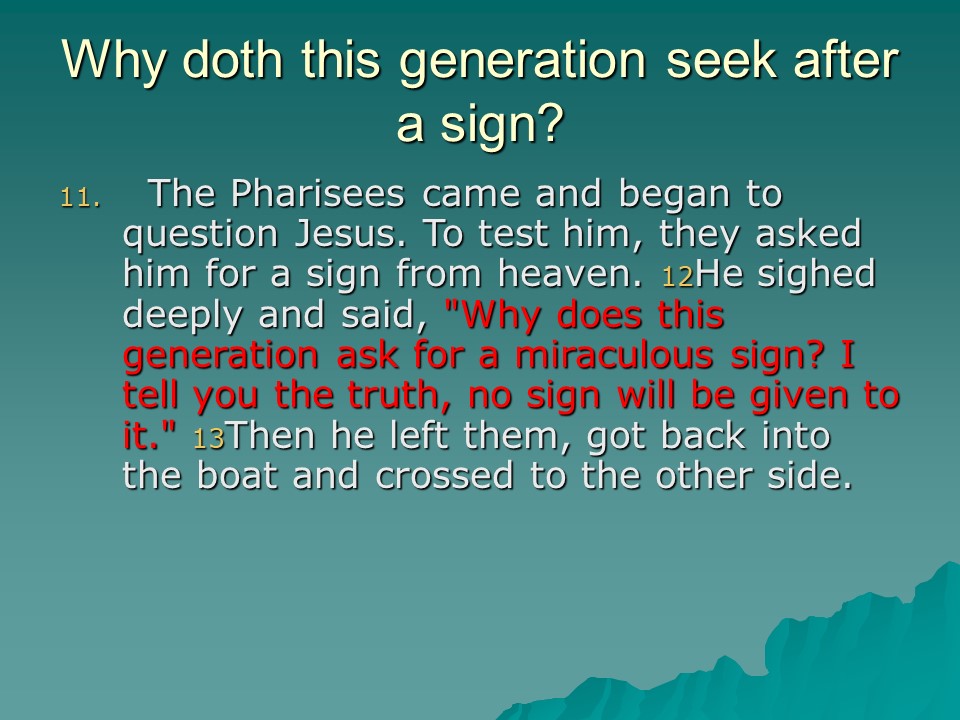
Matthew 14:1-14 tells about John the Baptist being beheaded. It is interesting that most people know the name of the daughter of Herodias, but it is not in the Bible. There is another Salome in the Bible, but she was a follower of Jesus. After learning of the beheading of John the Baptist Jesus tried to withdraw from the people by boat to a solitary place, but there he found a large crowd, so he had compassion on them and healed their sick.
Numbers 8 deals with setting the Levites apart for their duties.
Numbers 9 defines how the Passover shall be celebrated from that time on. It also describes the cloud over the tabernacle, if it lifted they moved on, if it stayed, they stayed.
Numbers 10 tells of making two silver trumpets and with the blasts from them they finally leave Sinai, still in formation , tribe by tribe.
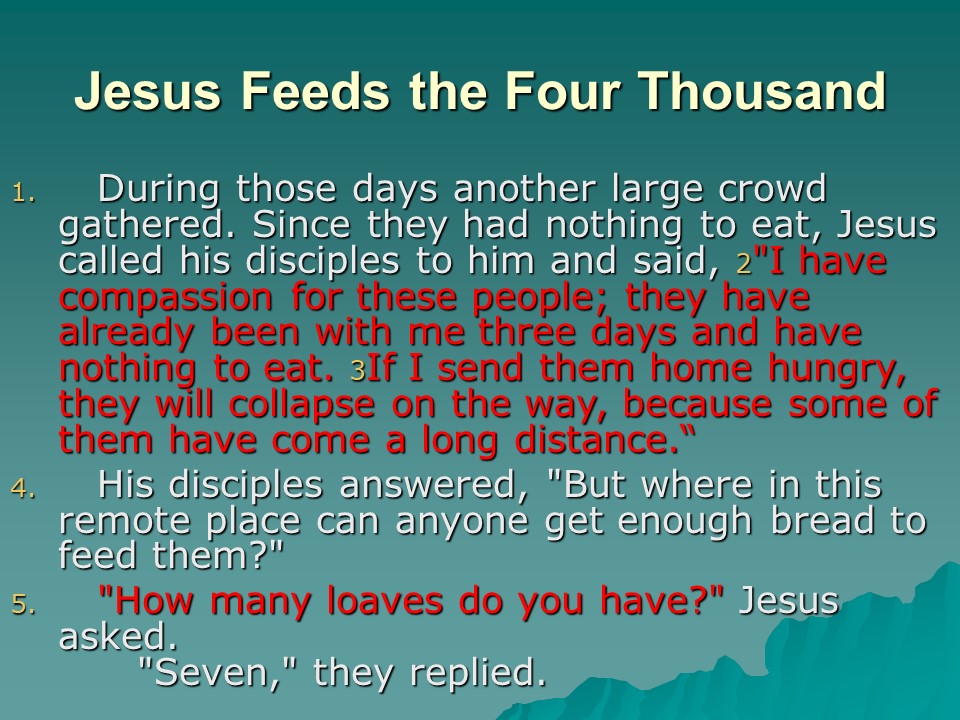
Three days without food! The people needed it!



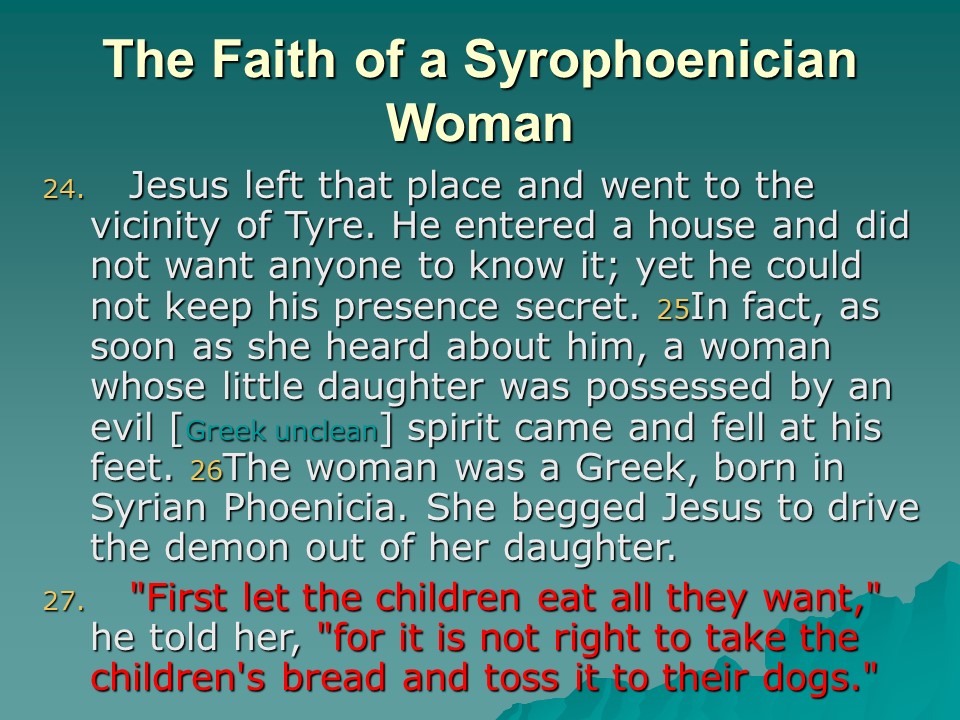
Matthew 13:31-58. Jesus told many parables on the Kingdom of heaven: The mustard seed and the yeast, the hidden treasure, the pearl of great price and the fishermen and the net. Then Jesus explained what the parables meant to his disciples. The parables were well received, except in his own hometown, about which Jesus said: ” Only in his hometown and in his own house is a prophet without honor”.
Numbers 6 tells of the vow of the Nazirite, how he (or she!) must separate themselves totally to the LORD, not shave the hair, not eat anything from the grape, not even the dry skin, not touch any dead bodies and so on. When the separation is over an offering must be given. Thankfully the chapter ends with the priestly blessing: “The Lord bless thee, and keep thee: The Lord make his face shine upon thee, and be gracious unto thee: The Lord lift up his countenance upon thee, and give thee peace.“
Numbers 7 has 89 verses, but the chapter only seems long since the same offerings for the dedication of the tabernacle are repeated for each of the twelve tribes.




Matthew 13:1-30 Jesus told the parable of the sower and the parable of the wheat and the tares.
Numbers 3 lists the sons of Aaron and the Levites by clan.
Numbers 4 tells of the duties of the Kohathites, the Gershonites and the Merarites. Then these Levite clans are numbered.
Numbers 5 deals with purity, how to deal with leprosy or dead bodies, restitution for wrongdoings and how to deal with marital unfaithfulness, especially for women.
 Len Bilén's blog, a blog about faith, politics and the environment.