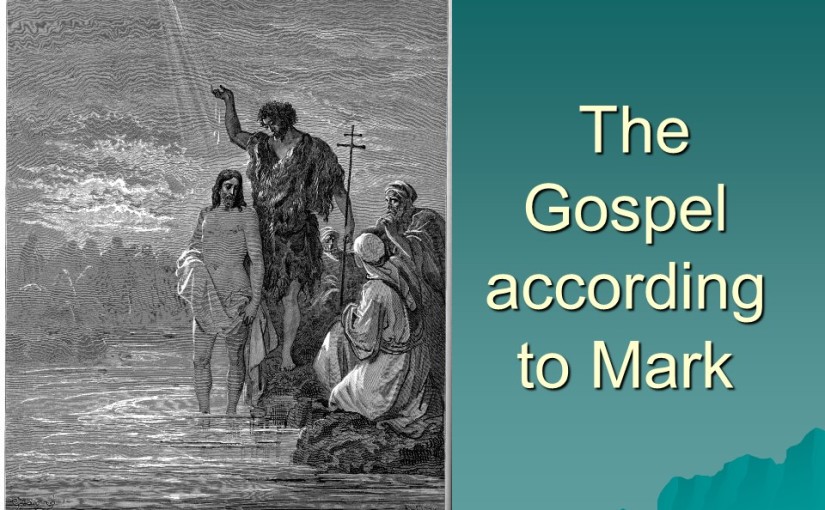
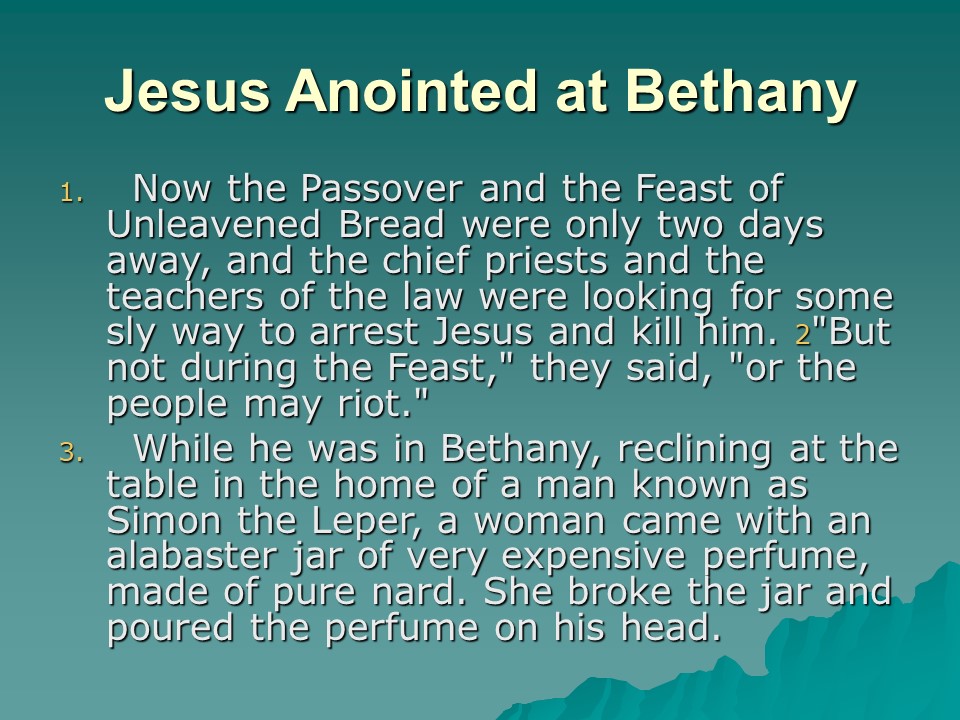
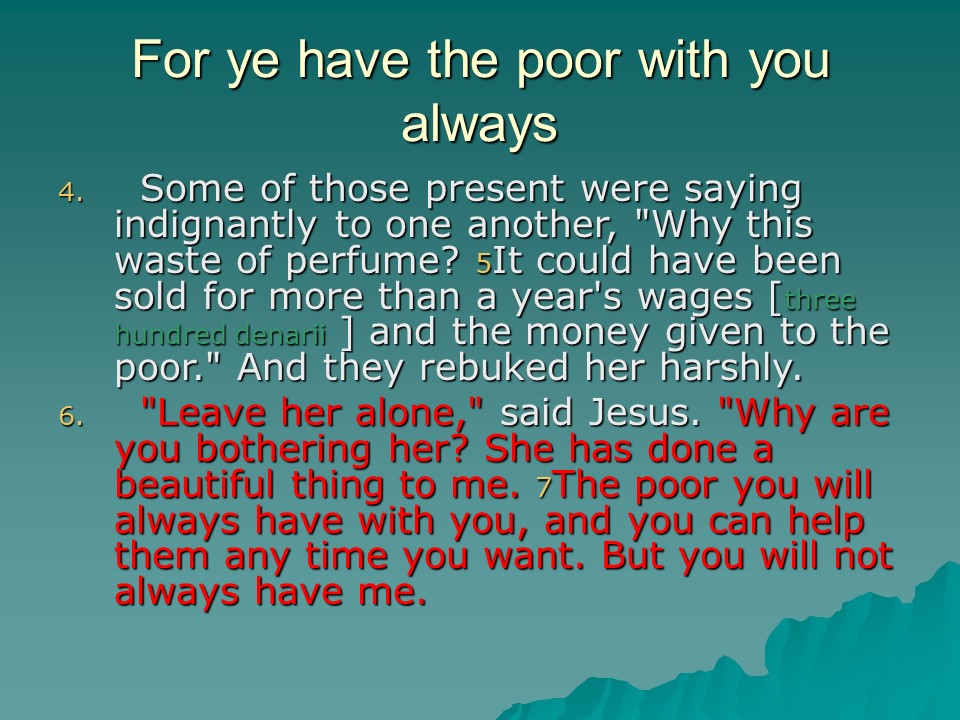
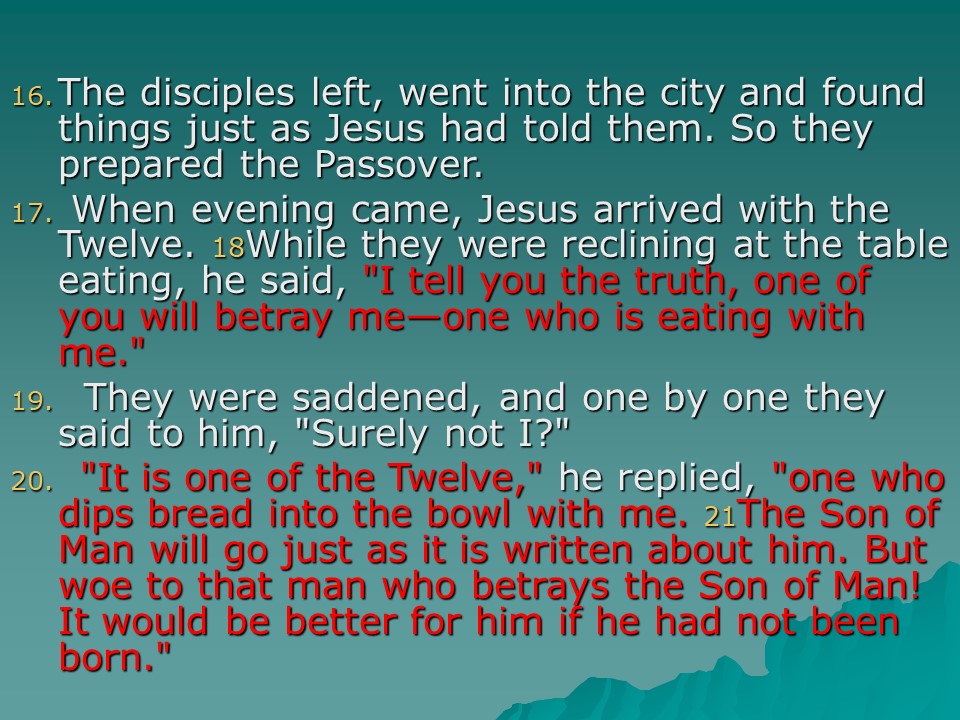
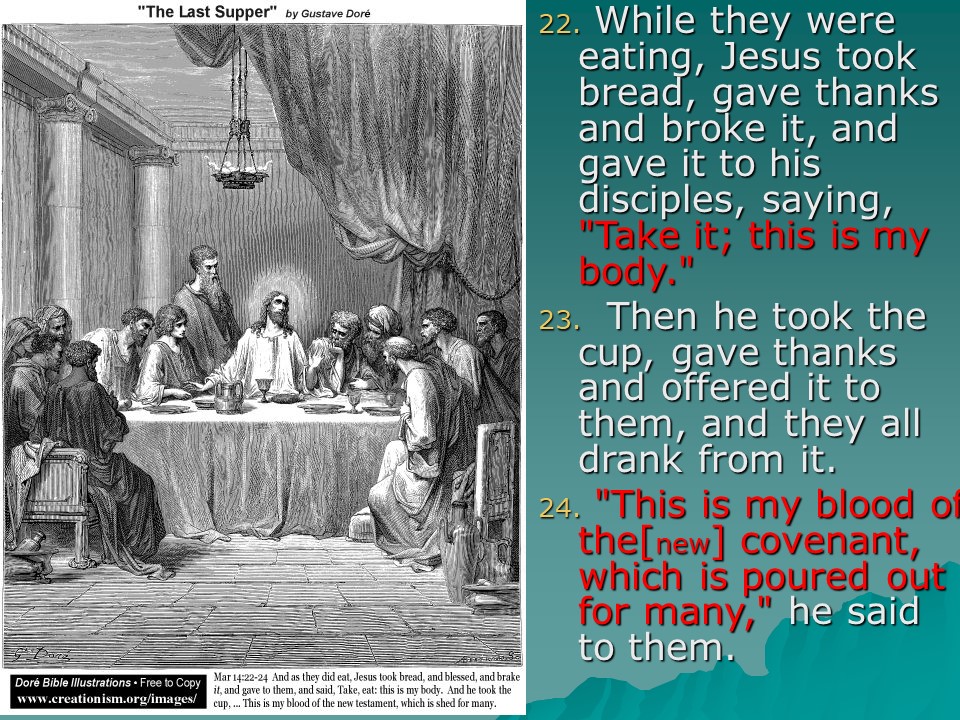
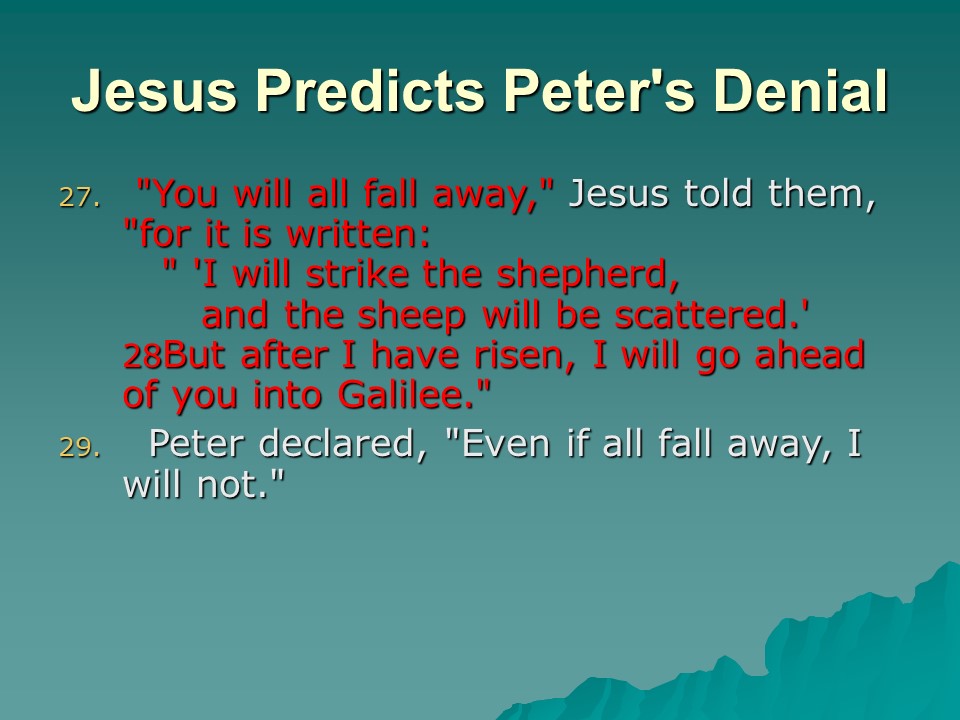
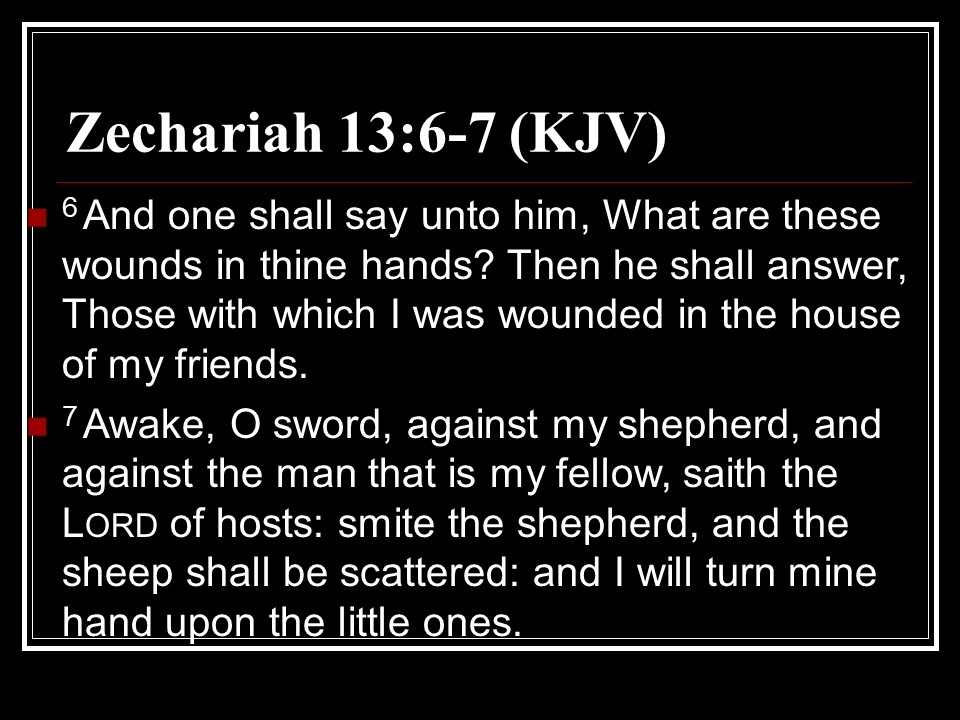
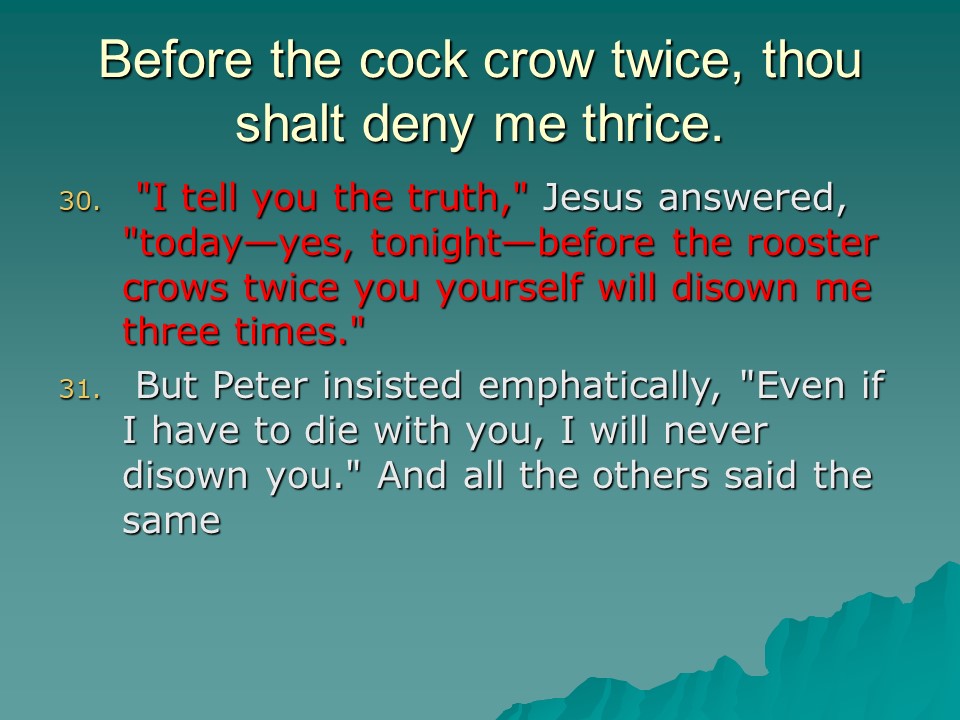
Mark 14:1-31, Jesus anointed at Bethany, the Lord’s Supper, Peter’s Denial Predicted.

The month of Abib is the same as the month of Nisan, the first month of the sacred year and the seventh month of the secular year.

The month of Abib is the same as the month of Nisan, the first month of the sacred year and the seventh month of the secular year.
Matthew 17:14-27. The disciples tried to heal a boy with epilepsy but failed. Jesus healed him immediately. The disciples could not do it because they had so little faith. Jesus also predicted his death, and the tax collectors came to Peter to collect the poll tax. Jesus solved this by telling Peter to go fishing and from the first fish he caught he would take the four drachma coin swallowed by the fish. That did take care of the tax for both Peter and Jesus.
Numbers 26 lists in detail, by tribe, the Second Census of Israel.
Numbers 27 defines inheritance laws, and it was decided that Joshua should succeed Moses.
Numbers 28 is all about offerings, the Daily Offerings, Sabbath Offerings, Monthly Offerings, Offerings at Passover and Offerings at the Feast of Weeks.
Psalm 17 demonstrates David’s total trust in God and not in self in spite of David’s best efforts. It can be summarized: “Keep me as the apple of Your eye;
Hide me under the shadow of Your wings” with regard to the threats from David’s enemies.



Matthew 17:1-13 describes the transfiguration of Jesus, with Moses and Elijah.
Numbers 23 tells of Balaam’s first oracle, his second oracle, and the beginning of his third oracle.
Numbers 24 continues with Balaam’s third oracle, his fourth, and his final oracle.
Numbers 25 finally tells how Israel went astray in Moab.
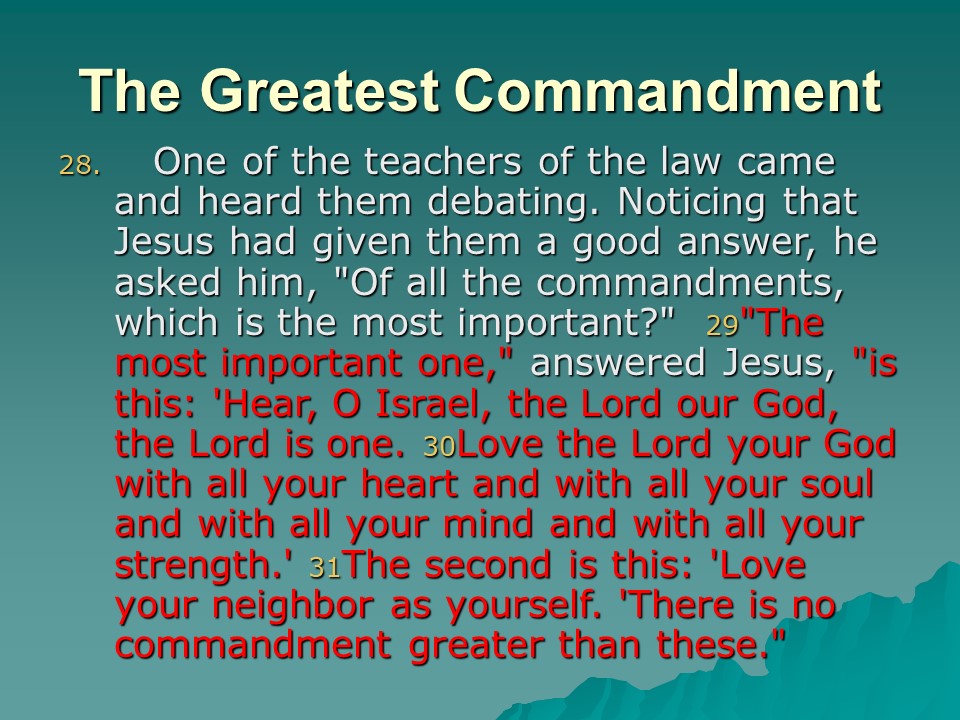
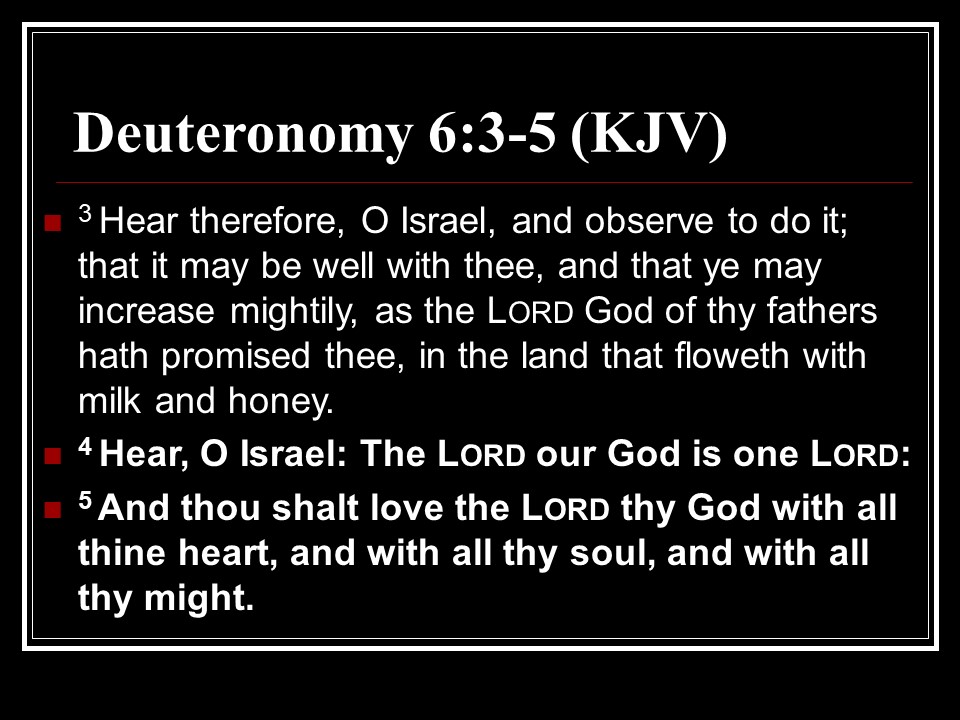
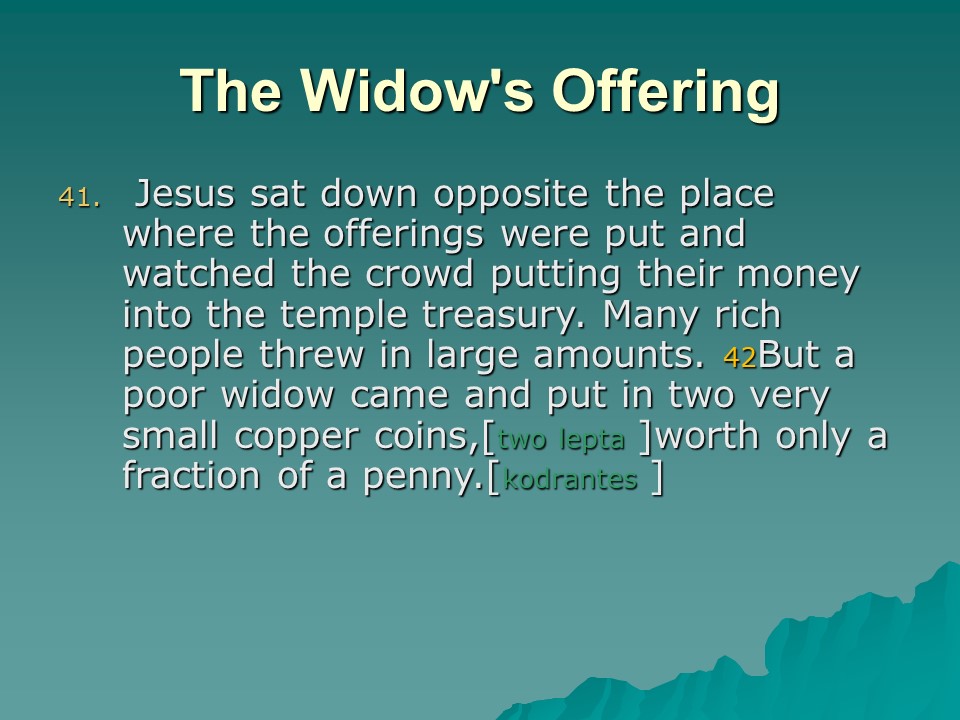
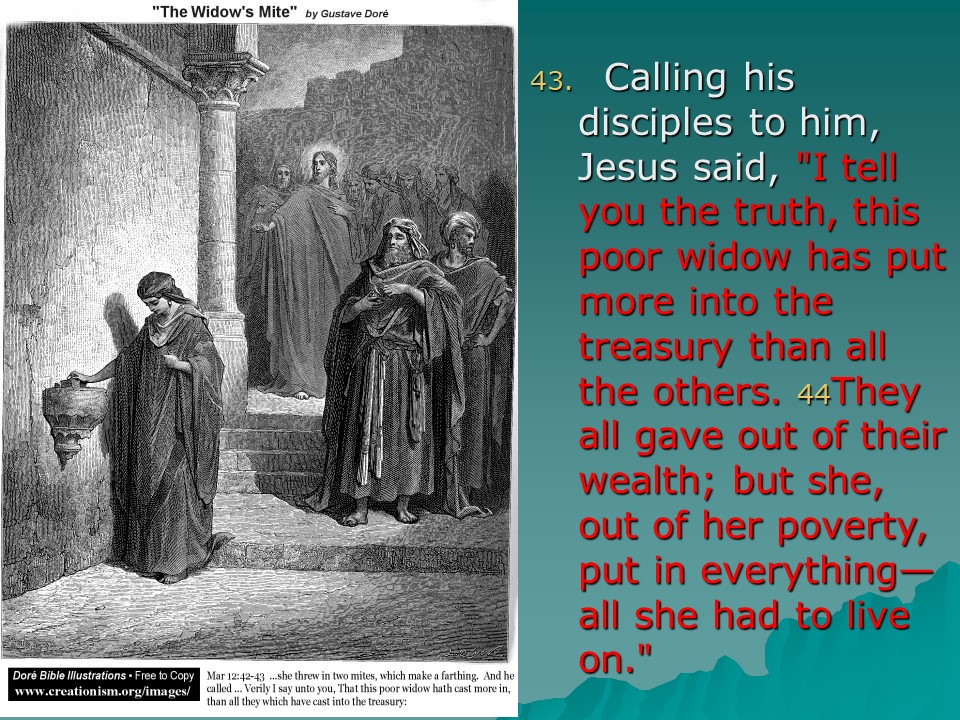
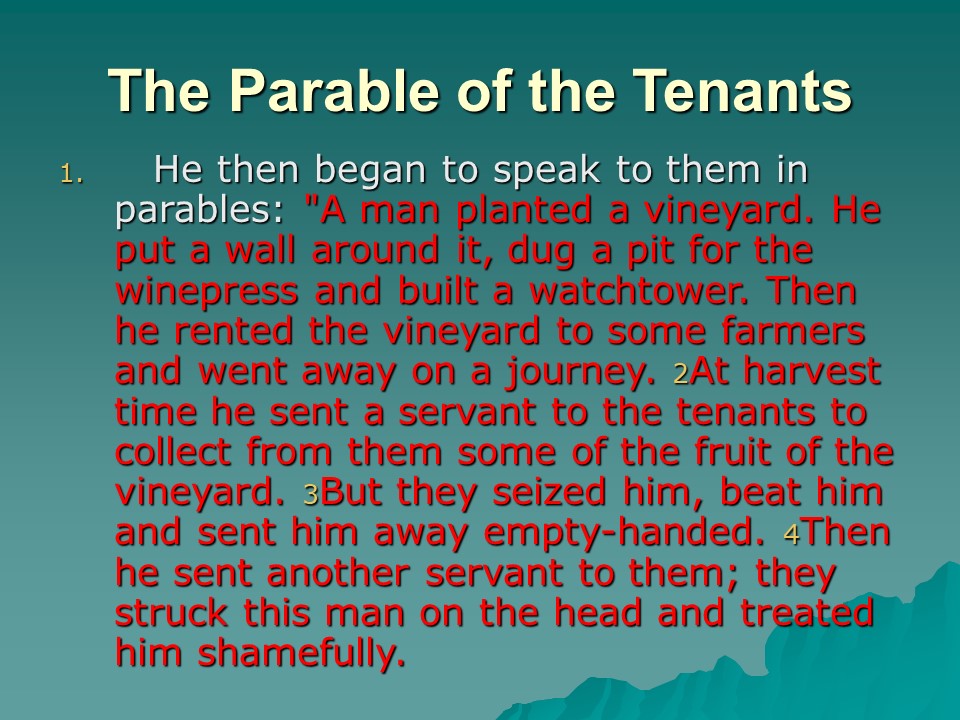
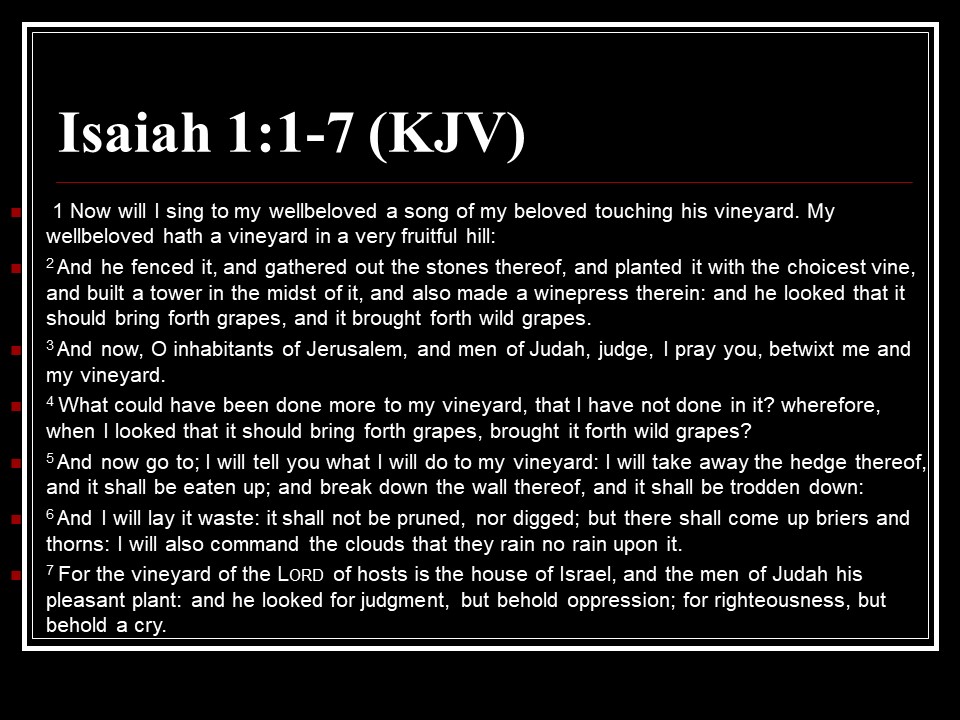
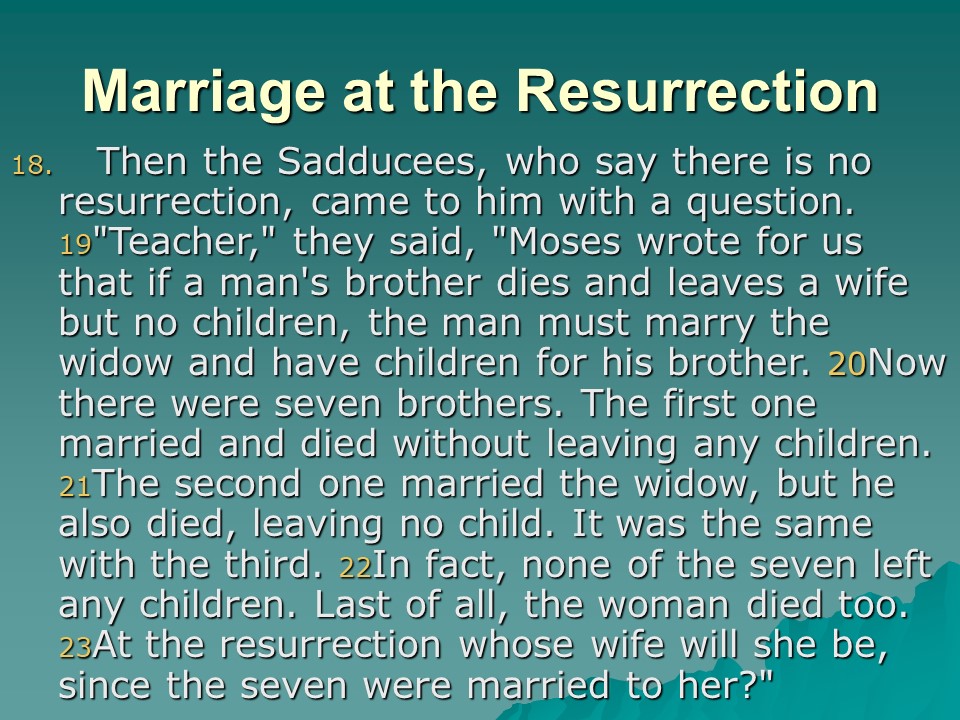
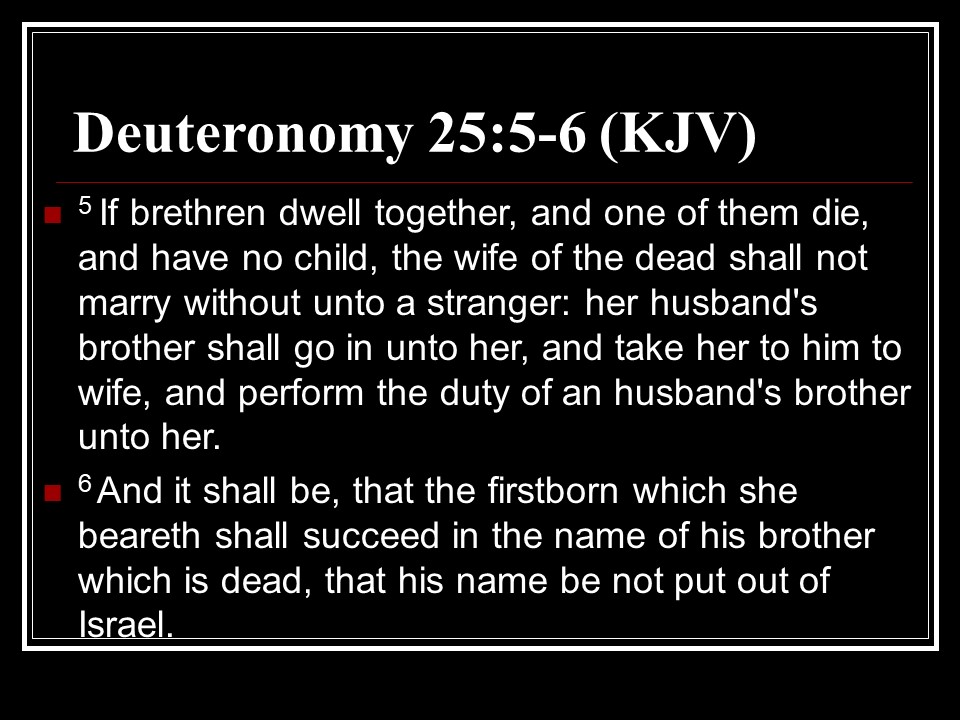
Mark 12, the Unfaithful Tenants, taxes to Caesar, marriage at the Resurrection, the Greatest Commandment, whose son is the Christ?, the widow’s Mite.


Matthew 16:13-28. Peter made his famous confession: “Thou art the Christ, the Son of the living God.” Right after that Jesus predicted his death, unto which Peter said “Never” and Jesus answered “Get behind me, Satan.” Those were strong words. Jesus furthermore said “Whosoever will lose his life for my sake shall find it.” Finally Jesus predicted his transfiguration.
In Numbers 21 the Canaanites were defeated in Hormath. The people kept speaking against God, so God sent venomous snakes their way and many died. Moses made a bronze snake, put it on a pole and when people looked at it, they got healed. (Does that remind you of a symbol used even today?) The travels continued.
Numbers 22 tells the story of how Balak sent for Balaam, and how Balaam’s Donkey behaved when he saw the Angel.

Matthew 16:1-12. the Jews demanded a sign. Jesus told them the there will be no sign other than the sign of Jonah: Three days and three nights in the belly of a great fish. The disciples had forgotten to bring bread and Jesus coincidentally told them : Beware of the yeast of the Pharisees and the Sadducees. Huh? Jesus had to explain to them he meant the doctrine, not the literal yeast.
Numbers 18 describes the duties of Priests and Levites, offerings for Supporting the Priests, tithes Supporting the Levites and the tithe of the Levites. As representatives of the LORD they were entitled to get the best part.
Numbers 19 details the laws and procedures of Purification, and introduces the red heifer.
In Numbers 20. Moses committed a major error in Kadesh. Thy were short on water, so God told Moses to speak to the rock. Instead, Moses smote the rock. Water sprung forth but God punished Moses and his people so severely that that generation was not allowed to enter the promised land. Why did God give them this harsh punishment? The rock was to be smitten only once, the second time Moses was to speak to the rock, a foreshadowing of Jesus, who was smitten once for our sins. At the end of the chapter Aaron died.
Matthew 15:21-39. Jesus went to Canaanite territory, the region of Tyre and Sidon where he met a Canaanite woman with a sick daughter. She had such great a faith that Jesus healed her daughter from afar. Jesus went back to the sea of Galilee and did many other miracles. Large crowds followed him, and after having been without food for three days he fed the crowd of 4000 (plus women and children). This time they had seven loaves of bread and a few fishes. After eating to everybody’s satisfaction the disciples picked up seven baskets of leftovers. (No waste here).
Numbers 15 deals with Laws of Grain and Drink Offerings, Laws Concerning Unintentional Sin, Laws concerning Presumptuous Sin, Penalty for Violating the Sabbath, and specifies how to make Tassels on Garments, all good stuff if you are an orthodox Jew.
In Numbers 16 Korah, Dathan and Abiram as well as 250 other men rose up in opposition to Moses. Things did not turn out well for them.
Numbers 17 tells of the budding of Aaron’s rod, a really short chapter.
 Len Bilén's blog, a blog about faith, politics and the environment.