The electric car. Is it good or bad Karma?

The electric car. Is it good or bad Karma?

Boy are we advancing in leaps and bounds:

Here is the Roberts electric car, built 1896.

It gets 40 miles to the charge.

116 years later, how far have we come in battery development?

Most electricity is produced by burning coal.  Much peak electricity is produced by burning natural gas. We have recently discovered large quantities of shale deposits. One of the chief developer  of the North Dakota deposits is Mr. Hamm, CEO of Continental Resources, who at one time had a brief talk with President Obama. Mr. Hamm told Obama of the revolution in the oil and gas industry and how we have the capacity to produce enough oil to enable America to replace OPEC. He wanted to make sure that the President knew about this.

The President’s reaction? He turned to Mr. Hamm and said: ‘Oil and gas will be important for the next few years. But we need to go on to green and alternative energy. [Energy] Secretary [Steven] Chu has assured me that within five years, we can have a battery developed that will make a car with the equivalent of 130 miles per gallon.’
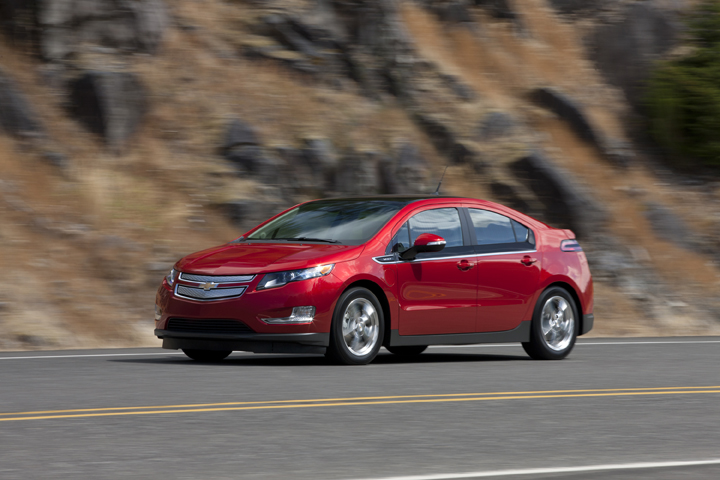
116 years after the Roberts electric car we have the 2012 Chevrolet Volt. It gets 36 miles to the charge.

But it is not over yet.

The latest entry in the electric car business is the Fisker Karma. It sports 32 miles to the charge.  When running on electricity, the claim is it gets the equivalent of 54 miles per gallon. After that it has a regular sports car engine that gives 20 MPG. What does that last statement mean? Batteries store energy and can never be more than 100% efficient. There is a loss of energy when you charge them and a loss of energy when you discharge them. The energy is typically produced by burning coal. By charging batteries you need to keep old coal burning plants in production longer. The average energy efficiency of an aging coal plant is 31%, the transmission losses are about 8% and battery efficiency is about 75%. When electric car companies calculate MPG equivalency they only take into account the battery efficiency. For the Karma the total energy efficiency equivalence would not be 56 MPG, but 16 MPG.

For now the Karma will be built in Finland, with a half billion dollar loan guarantee from the Federal Government. After one year this energy guzzler is supposed to be built in Delaware. Maybe it will be as popular as the Chevy Volt, which is on track to sell 6000 vehicles this year.
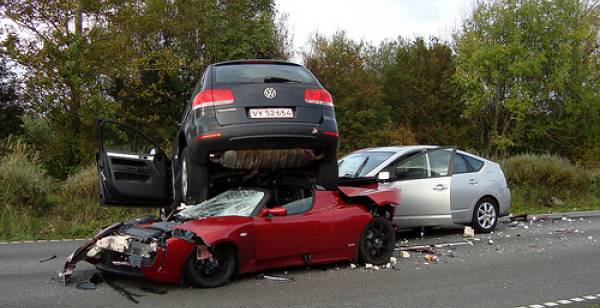
There already exists a car that claim 135 miles per gallon equivalent fuel consumption.

(The picture to the right shows the Tesla in a car crash in of all places Aalbaek, Denmark. The Tesla is at the bottom.)

The car is Tesla, a new car company set up privately in 2003. It got a 465 million dollar Federal loan guarantee in 2009, but has yet to turn a profit. The car is all electric, and gets up to 300 miles to a charge.  It can be yours for a mere $109500 plus taxes, but you will get a 7500 dollar federal tax rebate unless you live in Colorado where you will get an additional 40000 dollars in state and local tax rebate. The car is sold to rich playboys, who use it as the ultimate chick attractor, and the making of the car is financed on borrowed money. If one is to include the losses in producing the 4000 cars sold thus far, the cost per car approaches 200000. But fear not. One of the sources of income for Tesla is the sale of zero emission credits to other car companies so they can meet their emission standards. It is the new round of charlatans selling indulgences so the global governance can be realized.

Why am I down on electric cars? First, the energy to drive the car must have been produced somehow. As long as we use coal to produce electricity there will be more CO2 in the air with electric cars than with diesel powered cars. Second, electric cars are heavier than corresponding gasoline powered cars and have less room. Third, it takes an awful lot of mining to produce all the rare materials that goes into a modern battery. This too takes a lot of energy and leaves scars on the landscape. Fourth, batteries last only so long and are expensive leading to a much more expensive car to purchase and maintain.

The same arguments can be raised against solar and wind power. It takes more energy to mine and refine the materials than the equipment generate since they generate the electricity when they want, not when the need is there.

Are we doomed? Not at all. As oil and gas is becoming more and more expensive, especially if the Middle East cuts off its supply, we should build up the nuclear power plants, not with old Uranium based nuclear plants with all their nuclear waste, but with small, distributed thorium based plants. They have 0.01% as much nuclear waste as uranium based plants and are earthquake safe and much less vulnerable to sabotage. They also respond much better to demand fluctuations. As the plants would be more distributed it would lessen the need for an expanded electric grid, which is unbelievably vulnerable to sabotage. The long and short of it: Go Thorium and then Electric cars!

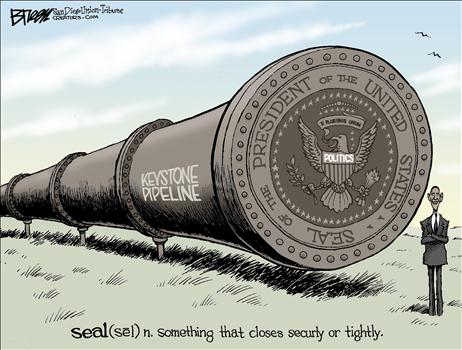
The Keystone XL pipeline decision. Crony Capitalism at work.


The President has decided to delay the permission to build the Keystone XL pipeline until after the 2012 election, thus satisfying the environmentalists that want to wean us off our dependency on carbon based products, such as fuel and fertilizer. The arguments for delaying the decision are nearly exclusively political, while the arguments to build the pipeline are concerns for our national security and economy.

Here is the deal:

Canada has the tar-sands and is extracting the oil. This was not our decision. If we don’t buy the oil, China will.

We are importing crude oil from the Middle East, Nigeria, Venezuela and other volatile places, leaving us exposed to supply and price disruptions.

We export refined products to the Caribbean islands, which by the way have a larger carbon footprint per person than the U.S. This is good business, since the islands are too small for a refinery.

It takes more energy to run a refinery up north in a cold climate than in hot, humid Baytown, Texas.

The last time a major oil refinery was built in the U.S was 1976. A small refinery was built in 1993, in Valdez, Alaska. The  US. regulatory climate is hostile to refineries. Colombia, O.K, US. No.

It costs about $5 per barrel to ship oil through a pipeline from Canada to Texas, nearly all of it capital costs. It costs about $15 per barrel to ship it via railway; much of it is energy cost.

Warren Buffet’s bought Burlington Northern Santa Fe railroad in February 2010 and paid 44 Billion dollars for it. The railroad paid Berkshire Hathaway 2.25 Billion in dividends during the first 13 months. Warren Buffet bought the railroad after Obama took office.

This railroad can handle all the oil shipped from Canada to Huston during the next decade, even longer with expansion. It is therefore in Buffet’s interest not to build the pipeline.

Warren Buffet is a major player in the Obama Administration; he has frequent access to the White House and is a major contributor to Obama’s campaign.

Sarah Palin succinctly coined the phrase: “This is Crony Capitalism.”

No free speech in Australia, Carbon tax rules! A Limerick.

Gal Julia Gillard, P.M. from Canberra

Does not like free speech, not on her Firma Terra.*

Don’t mention the prices

The Carbon tax rises.

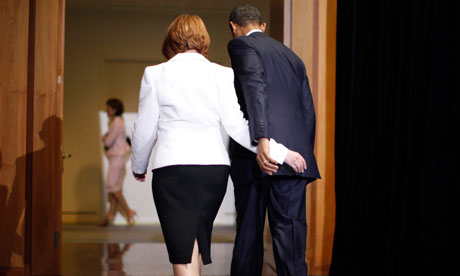
Obama and Julia. Transparency – Ha!

* The Australian Competition and Consumer Commission has issued warnings to businesses that they will face whopping fines of up to $1.1m if they blame the carbon tax for price rises. It says it has been “directed by the Australian government to undertake a compliance and enforcement role in relation to claims made about the impact of a carbon price.” Businesses are not even allowed to throw special carbon tax sales promotions before the tax arrives on July 1.

Obama and the Terrible, Horrible, No Good, Very Bad Keystone XL pipeline decision.

The Obama administration announced Nov. 10 it would delay a politically explosive decision on the proposed Keystone XL oil sands pipeline until after the 2012 elections.

Congress corrected this dithering by forcing Obama to make a decision one way or another. He chose not to build it.

This decision was bad on so many levels it is hard to count them all.

Let’s try to look at the ways: Canada has oil sands and is exploiting the resources.

U.S. is dependent on importing a large portion of its crude oil.

The cheapest and most efficient way to transport crude oil is through a pipe line. It is also the safest and most reliable way of getting crude oil from point A to point B. To not O.K. the pipeline increases the cost and makes us more dependent of crude oil from the Middle East and Nigeria, as well as Venezuela. The cost of shipping this oil via pipeline is $5/barrel. To ship it via rail is about $15/barrel. This is the way it is done right now.

Canada really, really wanted this deal. It would help improve our relations. Now they are strained.

The unions really wanted the jobs. It would supply them with more than 20000 direct, well-paid jobs. In addition there is secondary business generated whenever a project of this magnitude is undertaken. Why not generate jobs?

The newly discovered oil fields in North Dakota and Montana could use the pipeline as well. Now they will have to go it alone or transport their oil on railroad or barge traffic instead, a more expensive and less safe option.

So why did Obama delay the decision? It was because of the environmentalists.

Let us examine why this decision was equally horrible from an environmentalist’s perspective.

Canada is a sovereign nation. They have the oil and will sell or use it one way or another.

The most energy conserving way is to transport it through a pipeline. Transport via train, truck or barge uses more energy (read more CO2), Canada will sell it’s oil to China if we don’t want it. China has a well deserved reputation for producing a lot of pollution.

The best environmental solution is for us to import this oil.

Nebraska protested there was a danger to damage their aquifer. The Keystone XL management offered to reroute the pipeline away from this sensitive aquifer, thereby solving that objection.

By not importing oil from Canada the total carbon footprint will increase. We lose, and Canada loses. (I am not concerned that the CO2 is increasing, but that a valuable natural resource is excessively depleted.) Now it turns out that Canada has left the Kyoto Protocol, thereby being free to burn as much of its carbon as they want. Was that really what the environmentalists wanted?

So why did Obama first delay the decision until after the 2012 election, and then, when forced, deny the permit? Here are five possibilities:

1. Obama is a true believer that ”this was the moment when the rise of the oceans began to slow and our planet began to heal”. As a true environmentalist his role can not be overestimated .

2. Obama is deliberately wrecking our economy, refuses to have an energy policy that will create jobs, but will support protest movements and foment unrest.

3. Obama is acting on orders from Global Governance people that do want U.S. to be totally dependent on international law and U.N. mandates.

4. Obama promised to be Brazil’s best customer from their deep sea oil drilling success, paid for by U.S. loan guarantees. He must be true to his promises.

5. Obama is half insane and surrounded by bad advisors.

This is the best I can do to explain the reasons for this decision.

Climate Change: A Homeland security matter. A Limerick.

Napolitano Says DHS to Begin Battling Climate Change as Homeland Security Issue.

Friday, December 17, 2010 By J. Brady Howell Homeland Security Secretary Janet Napolitano (CNSNews.com/Penny Starr) (CNSNews.com)

– At an all-day White House conference on “environmental justice,” Homeland Security Secretary Janet Napolitano announced that her department is creating a new task force to battle the effects of climate change on domestic security operations.

Speaking at the first White House Forum on Environmental Justice on Thursday, Napolitano discussed the initial findings of the department’s recently created “Climate Change and Adaptation Task Force.”

Napolitano explained that the task force was charged with “identifying and assessing the impact that climate change could have on the missions and operations of the Department of Homeland Security.” According to the former Arizona governor, the task force would address specific questions, including: “How will FEMA work with state and local partners to plan for increased flooding or wildfire or hurricane activity that is more serious than we’ve seen before? What assistance can the Coast Guard bring to bear to assist remote villages in, for example, Alaska which already have been negatively affected by changes up in the Arctic?”

The findings from the Homeland Security Department (DHS) also asked: “(H)ow can we focus on how climate change is going to affect our rural citizenry including those who live along our borders both northern and southern?” …

The conference did not define “environmental justice,” and the only reference to the task force that can be found is on the DHS Web site. The June 2010 Department of Homeland Security Strategic Sustainability Performance Plan states “climate change has the potential to accelerate and intensify extreme weather events which threaten the nation’s sustainability and security.”

The Limerick:

Homeland Security guards our peace,

But lumberjacks terrorize forests with ease.

 Why in such a hurry?

I tell you, don’t worry.

With Carbon Dioxide we’ll grow some more trees.

Obama and the Terrible, Horrible, No Good, Very Bad Keystone XL pipeline decision.

The Obama administration announced Nov. 10 it would delay a politically explosive decision on the proposed Keystone XL oil sands pipeline until after the 2012 elections. Congress corrected this dithering by forcing Obama to make a decision one way or another. He chose not to build it.

This decision was bad on so many levels it is hard to count them all.Let’s try to look at the ways:

Canada has oil sands and is exploiting the resources. U.S. is dependent on importing a large share of its crude oil.

The cheapest and most efficient way to transport crude oil is through a pipe line. It is also the safest and most reliable way of getting crude oil from point A to point B. To not O.K. the pipeline increases the cost and makes us more dependent of crude oil from the Middle East and Nigeria, as well as Venezuela.

Canada really, really wanted this deal. It would help improve our relations. Now they are strained.

The unions really wanted the jobs. It would supply them with more than 20000 direct, well-paid jobs. In addition there is secondary business generated whenever a project of this magnitude is undertaken. Why not generate jobs?

The newly discovered oil fields in North Dakota and Montana could use the pipeline as well. Now they will have to go it alone or transport their oil on railroad or barge traffic instead, a more expensive and less safe option. So why did Obama delay the decision?

It was because of the environmentalists. Let us examine why this decision was equally horrible from an environmentalist’s perspective. Canada is a sovereign nation. They have the oil and will sell or use it one way or another. The most energy conserving way is to transport it through a pipeline. Transport via train, truck or barge uses more energy (read more CO2) and costs about $15 per barrel vs. $5 for a pipeline.

Canada will sell it’s oil to China if we don’t want it. China has a well deserved reputation for producing a lot of pollution. The best environmental solution is for us to import this oil.

Nebraska protested there was a danger to damage their aquifer. The Keystone XL management offered to reroute the pipeline away from this sensitive aquifer, thereby solving that objection. By not importing oil from Canada the total carbon footprint will increase. We lose, and Canada loses. (I am not concerned that the CO2 is increasing, but that a valuable natural resource is excessively depleted.) Now it turns out that Canada has left the Kyoto Protocol, thereby being free to burn as much of its carbon as they want. Was that really what the environmentalists wanted?

So why did Obama first delay the decision until after the 2012 election, and then when forced deny the permit? Here are five possibilities:

1. Obama is a true believer that ”this was the moment when the rise of the oceans began to slow and our planet began to heal”. As a true environmentalist his role can not be overestimated .

2. Obama is deliberately wrecking our economy, refuses to have an energy policy that will create jobs, but will support protest movements and foment unrest.

3. Obama is acting on orders from Global Governance people that do want U.S. to be totally dependent on international law and U.N. mandates.

4. Obama promised to be Brazil’s best customer from their deep sea oil drilling success, paid for by U.S. loan guarantees. He must be true to his promises.

5. Obama is half insane and surrounded by bad advisors.

This is the best I can do to explain the reasons for this decision.

Should the EPA regulate CO2? At what level?

Of course the EPA must regulate CO2. Just look at the dangers of Hypercapnia.

At 1% concentration of carbon dioxide CO2 (10,000 parts per million or ppm) and under continuous exposure at that level, such as in an auditorium filled with occupants and poor fresh air ventilation, some occupants are likely to feel drowsy.  Carbon dioxide concentration  must be over t 2% (20,000 ppm) before most people are aware of its presence unless the odor of an associated material (auto exhaust or fermenting yeast, for instance) is present at lower concentrations. Above 2%, carbon dioxide may cause a feeling of heaviness in the chest and/or more frequent and deeper respirations. If exposure continues at that level for several hours, minimal “acidosis” (an acid condition of the blood) may occur but more often is absent. Breathing rate doubles at 3% CO2 and is four times the normal rate at 5% CO2. Toxic levels of carbon dioxide: at levels above 5%, concentration CO2 is directly toxic. [At lower levels we may see the effects of a reduction in the relative amount of oxygen and not direct toxicity of CO2.]

So I guess the EPA should monitor the CO2 levels, and when they reach 10000 ppm they will have to regulate it. (I am only half-way kidding, indoor concentrations can reach these levels).