Genesis 8, Noah sent forth a raven and a dove.

Notice it doesn’t say the top of Mt. Ararat. The mountains of Ararat covers the whole region.

Noah sent out a raven, and the raven did what ravens do. Was this the reference that inspired Edgar Allan Poe in his poem “The Raven”? Here is one verse from it:

“Prophet!” said I, “thing of evil!—prophet still, if bird or devil!—
Whether Tempter sent, or whether tempest tossed thee here ashore,
    Desolate yet all undaunted, on this desert land enchanted—
    On this home by Horror haunted—tell me truly, I implore—
Is there—is there balm in Gilead?—tell me—tell me, I implore!”
            Quoth the Raven “Nevermore.”
Then Noah sent out a dove, and this is why the dove is the symbol of peace, especially when it returns with an olive branch.


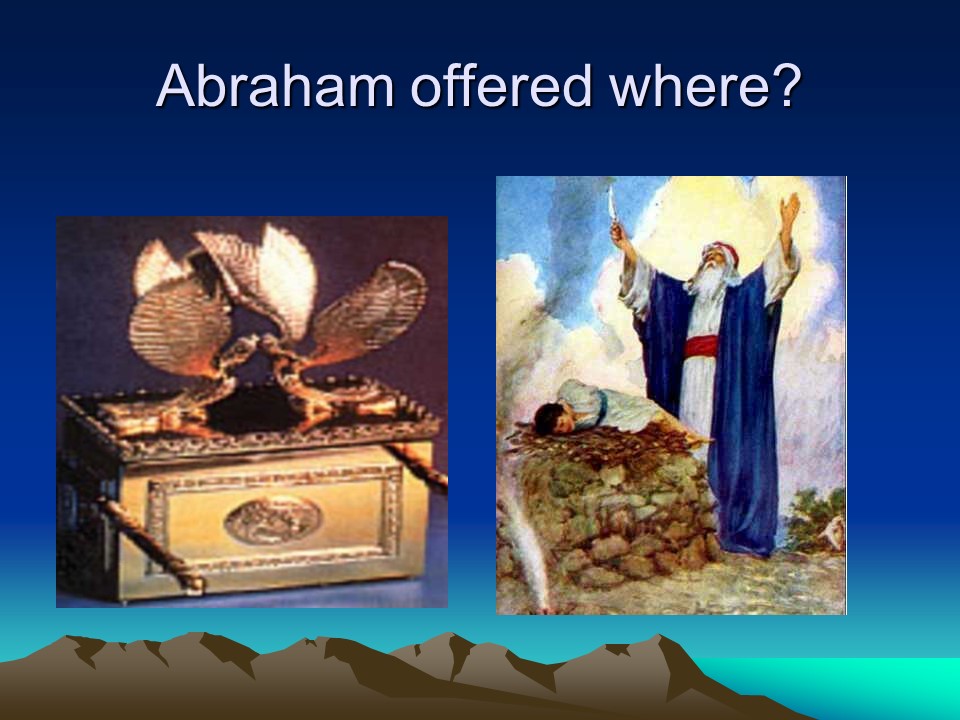
Now Noah showed his thankfulness and sacrificed on the altar he built. That’s why he took with him seven pairs of all clean and sacrifice-able animals.

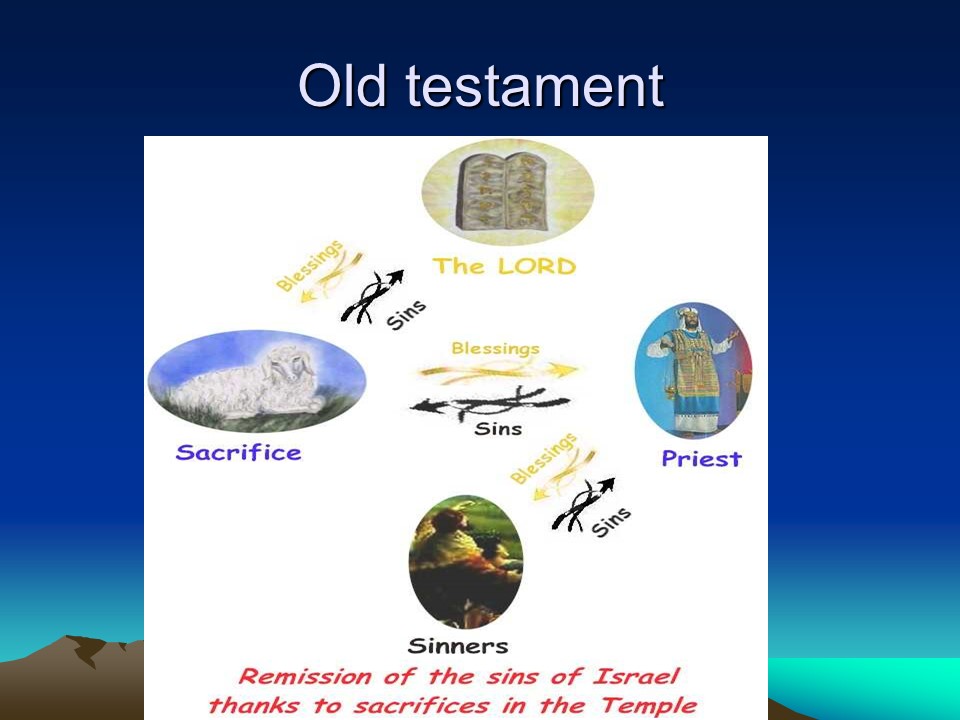
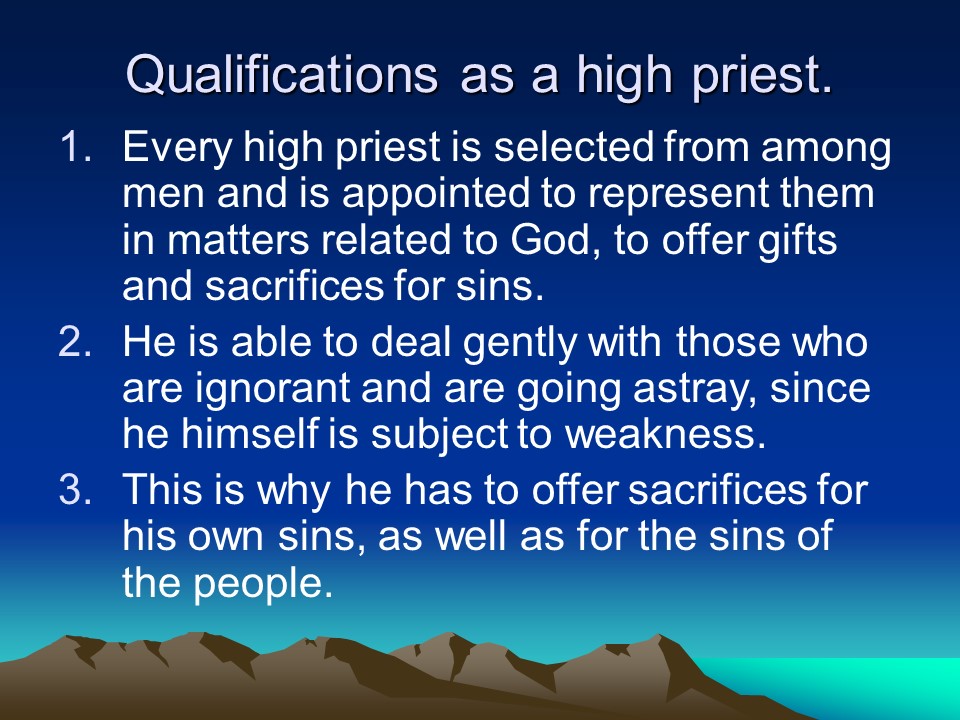
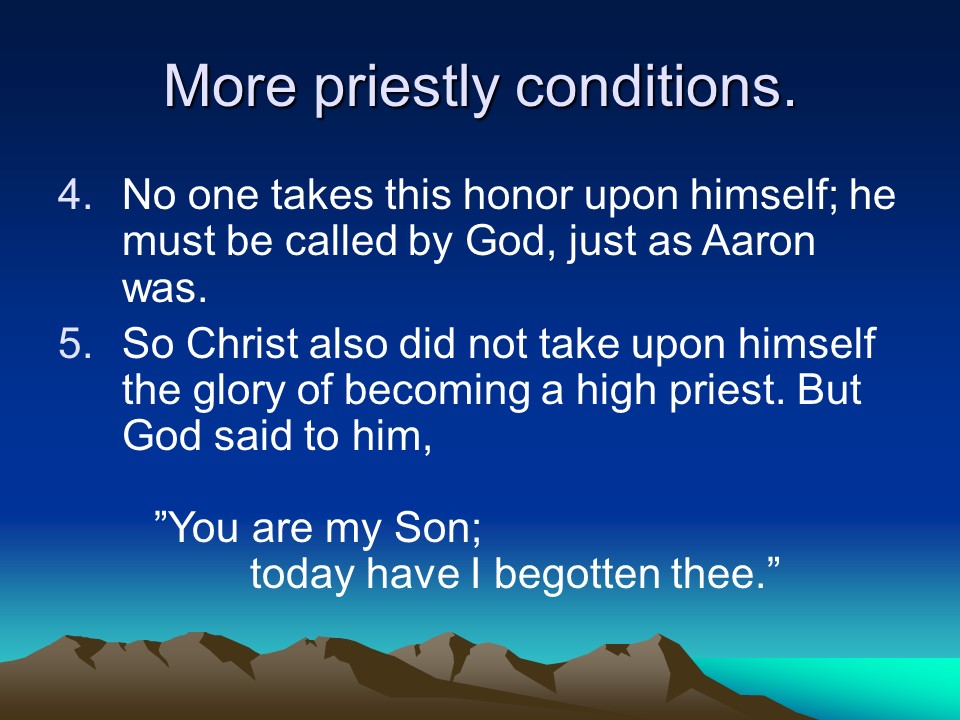
After Jesus Christ final sacrifice of himself on the cross, there are no more physical sacrifices. Here are some of the acceptable sacrifices for today:

Genesis 7, the flood.

In chapter 6 Noah was to take two of every kind, but now in Chapter 7 he is to take seven pairs of every clean animal. This becomes important later when Noah  sacrificed to the LORD.

Every living creature? It is clear God meant only mammals and birds, not every living being. The fishes hardly noticed.

A map of the last ice age.

It was cold. Ice covered Northern Europe, Northern Asia and Northern North America. The ocean levels was about 400 feet lower than today.  The CO2 level was about 180 ppm, less than half of today and could barely sustain plant growth. On the ice it snowed less than half of what snows on Greenland nowadays.

Then something happened. The ice started melting and the ocean levels started to rise. As we used to say in North Sweden, “Spring is not a season, it is a natural catastrophe.” One possible candidate for the flood was in the Persian Gulf, which got inundated about  10000 years ago. While probable, it is a gradual rise, not the catastrophic rise mentioned. A better candidate for the flood is  the melting ice cover in the North. The ice melted rapidly and formed  ice lakes south of the receding ice, both in Europe-Asia and North America. The water rises year after year, and suddenly it begins to form new rivers going south. When they break through the soil erodes and the lake empties suddenly. So it was with the Caspian sea, that made it rise until it finally emptied into the Black Sea.


And with this rapid ice melt came the deluge of rain. With the rapid ice melt the land under the ice rose rapidly, making the earth more spherical again. In fact, this is continuing to this day with the Bothnian bay rising out of the water by 3 feet per century and the Hudson Bay rising by four feet per century.

(Later the water emptied out in what is now Sweden, having risen out from under the ice.) The springs of the great deep burst forth, this was probably associated with a large number of earthquakes bursting forth geysers and springs in many places.

Yes, it is The LORD that opens and shuts.

Yes, the fishes and whales kept on swimming.

Here is another possible place for the Ark to have landed on Mt Ararat. The dimensions are right.

Genesis 6. Noah gets the call to build the Ark.

“Sons of God” is the literal translation of the Hebrew “ben Elohim,” but in Job 1:6 it is translated “angels”. Other translations call it “divine beings”.

Jude hints the “Sons of God” are angels.

After Jesus died on the cross, but was made alive in the spirit He did this:

In fact the Ark was so big that it was the largest wooden ship ever built. Larger ships, made of steel were not made until the 1880’s.

Has anyone found the Ark? Many have searched for it. Here is a drawing from someone claming to have seen it from a retreating glacier near Mount Ararat.

Notice, in chapter 6 it claims that you only take 2 of every animal. Stay tuned in following chapters.

Genesis 4. Cain and Abel.


Sounds pretty good to me. Cain worked the soil, and with the sweat of his brow he gave thanks to the Lord for it. Notice it does not say first fruits, only some of the fruits of the soil.

Abel offered the firstborn of his flock.

It takes faith to do the right thing. think of it! To sacrifice the firstborn!


And God ordained it so, that the acceptable perfect offer is the firstborn of the flock of sheep or goats. This got later codified in Leviticus.

This is a little jewel from the story of Gideon.

Slide33

The expression “my brothers keeper” is used often, but how many really know where the expression is coming from in this increasingly Bible illiterate world.

Yet, in the New Testament, after Jesus there is even better things promised.

Where is Nod? Here is a map from 1702. Nod is what is now Iran.

And with Abel dead and Cain gone, Adam and Eve started over.


Genesis 3. The Fall of Man.

Why the serpent? It has since the fall of man become the symbol of sin and Moses used this symbol during the Hebrews wandering in the desert when a disease broke out.

And Jesus himself used this symbol to explain its messianic and redemptive value.

And the serpent figures most prominently in Revelation, the last book of the New Testament.

Back to Genesis 3:

Satan quotes God, but changes one vital detail. Eve corrects the snake, but adds one touch.


Satan’s approach is always the same, repeated in the temptation of Jesus 40 days after His baptism:

The approach is: First flatter and appeal to vanity. If that doesn’t work, quote scripture to test God’s promises. Finally, if that doesn’t work, promise power and authority.

Fig leaves are lousy. They break very easily and does not cover well.

No, Adam and Eve did not die physically, but they both died spiritually, their perfect communication  and trust in God was broken.

Yes, the human mitochondria and RNA tend to suggest we all come from one mother.

And people have been dreaming of finding the tree of life ever since.


Genesis 2. Adam and Eve.


And this is the reason we are having a seven day week, starting with what we call Sunday, or more precisely Saturday evening after sunset, and ending the seventh day with a day of no creative work. This is called sabbath.

This is the second name of God, the covenantal name Jehovah, or Jahwe.

Jews and Christians have Jahwe or Jehovah as the main name for God, since Elohim just means “the strongest strong one” and is valid for any God. This is where Islam parts from Judeo – Christian belief, not accepting Jehovah, only Allah, (and 98 more names for God, the hundredth being known only to Allah himself.)


We are still in the early days of a functioning eco-system, and rains have not started yet. Yet there is plenty of water on the earth, the earth was formed before the sun was turned on. Yes, water was created before the luminaries.

So, the question is, where was the garden of Eden?

The river Euphrates and Tigris are mentioned, so the simplest guess is it must be between the two rivers.

And indeed, some early map puts the garden downstream of Babylon, a vast marshy land with meandering rivers between Euphrates and Tigris. On the map below the lower river is Euphrates.

But, the Muslims have another explanation, placing Eden nearer the Red Sea, this time in Ethiopia and Sudan.

And they place importance on Pishon and Gihon, being the Blue Nile and Atbarah river

The problem with this interpretation is manifold, Eden is East of the promised land, not south, and Euphrates is the most prominent of all rivers in the middle east.

So this will place Eden south of Babylon. An alternate location, is near the beginning of the rivers Euphrates and Tigris,

Tanotherhis interpretation is favored by the Kurds, a proud people living in Eastern Turkey and Syria, Northern Iraq and North West Iran. They are very proud of being the cradle of civilization.

The garden of Eden is still a picture of ideal conditions, peace and prosperity.

Only one restriction. I see trouble ahead. More to follow.

It means Adam named all the birds and beasts as he encountered them. His offspring continued the process, and it is still going on.

I have chosen to take this description spiritually. Feel free to take it literally, remembering, this is easy for God to do, compared to the rest of Creation.

Yes, Jesus himself took the spiritual lesson and applied it to mankind. God’s idea is, one man, one woman, one lifetime. This indeed would abolish a whole host of diseases, not to mention the hurt that comes from breakups, betrayals and falsehood.


Genesis 1. The Creation.

Now it must be said, it is attributed to Moses. He did not write it all down himself, but had help from the local scribes. After Moses death it was completed, including even his burial.


Yes there was a beginning. The question is, before energy and matter does time and space even make sense? Since we are bound in space and time, and all observations we can make are from our experiences in space and time. Yet the Bible is clear: Before Creation there was God!

Which leads us to


This is the first hint of the triune aspect of God, three, yet one. God the Father creator, God the Son – Jesus Christ is also called the Word, and the Holy Spirit – God’s spirit.

Footnote: Elohim is Hebrew, the corresponding Arab word is Allah, which is also plural.


Notice God omitted saying it was good – for the second day only! Why?

It takes time, and a full cycle to build a stable eco-system.

Clouds are God’s way of stabilizing temperatures. If there were no clouds, temperatures in the tropics would be as high as 140 degrees F.  There are many different cloud types:

Of these cloud types the cumulus clouds and the cumulonimbus (Thunder storms) are the most important in stabilizing the temperatures. They appear during day and afternoon if temperatures are rising enough, there is enough humidity and some form of aerosol or cosmic radiation to form a condensation point.  These clouds cool significantly, mostly by reflecting incoming sunlight back into space.


Footnote. We are all created into God’s image, male and female.

A man has an X and a Y chromosome, a woman has two X chromosomes. There are a few other combinations with an extra chromosome, rare, but they do exist. Total combinations, XX, XY, XXY, XYY.


Yes, it was very good. Time for a day of rest.
The Polar ice melting? Not so fast! A Limerick.

The Icecaps we see at the poles

are growing again, who controls?

With less cold it snows more

makes more ice than before.

Just one of the clouds many roles.

In the winter it is now warmer at the poles.  The temperature records indicate  a noticeable recent warming in the Arctic, with large spikes up and down, up to 3 degree Celsius difference from year to year, especially the Arctic. So, how much has the Arctic melted? Here is a chart of Arctic ice cover for the date of May 31 for the last 39 years.

If this trend continues, all ice may melt in 300 to 400 years, faster if there is further warming and nothing else is changing. Let’s take a look at the Arctic above the 80th latitude, an area of about 3,85 million square kilometers, less than 1% of the earth’s surface, but it is there where global warming is most pronounced. Here are two charts from the last 2 years, ending with Jul. 22,  2017.

Starting at summer 2016, the Arctic was melting quite normally, but something else happened, shown in the chart below:

Every 5 years or so, the Arctic suffer a large storm with full hurricane strength during the summer. In 2016 there was not one, but two such storms, and as they happened late in the season when the ice is rotten they resulted in a large ice loss, making the ice minimum the lowest on record, and the ice volume nearly 4,000 Gigatons (Gt) less than the 10 year average. Then the temperature from October thru April did run 7 degree Celsius warmer than normal with a spike as high as 20 degrees warmer. Yet today the deficit is down to less than 100 Gt. What happened? It snowed more than normal. In the Arctic, it did get warmer under clouds, warmer still when it snowed. Take a look at Greenland and what has happened this freezing season. It has snowed and snowed and Greenland has accumulated 150 Gt more ice than normal. The Arctic ice sheet is at this point in the season about 50 Gt below the ten year average (July 21), and this is with Arctic temperatures being seven degrees warmer than normal during the cold season. The counterintuitive conclusion is that it may very well be that warmer temperatures produces accumulation of snow and ice, colder temperatures with less snow accumulates less. (By the way, it snowed less than half as much on the ice caps during the last Ice Age as it does now.) What happens during the short Arctic summer? With more snow accumulated it takes longer to melt last years snow, so the temperature stays colder longer. This year, Arctic temperature has been running colder than normal every day since May 1 with no end in sight. If this melting period ends without melting all snow, more multi year ice will accumulate, and if it continues unabated, the next Ice Age will start.
Rising CO2, more clouds, a blessing or a curse? A Limerick.

The clouds that we see in the sky
is really the reason for why
we will not overheat;
Shields us from solar heat.
A feedback on which we rely.
I am a climate realist, that means I look at the totality of what is happening to the climate with increasing CO2 levels, and what it means for our future.

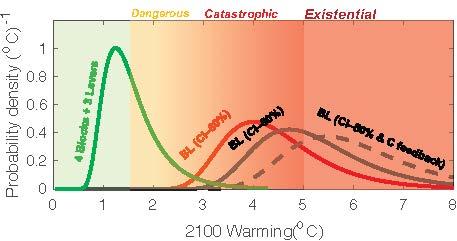
Climate alarmists and IPCC believe that the thermal response to increasing CO2 is a positive feedback from increasing water vapor that results from higher ocean temperatures, melting permafrost releasing Methane and melting of the polar ice caps. All this leads to much higher temperatures. Current climate model averages indicate a temperature rise of 4.7 C by 2100 if nothing is done, 4.65 C if U.S keeps all its Paris commitments and 4.53 C if all countries keep their part of the agreement. In all cases, with or without Paris agreement we are headed for a disaster of biblical proportions.

As the chart indicates, implementing all of the Paris agreement will delay the end of mankind as we know it by at most 4 years.

Myself and quite a few scientists, meteorologists, but mostly engineers believe the feedback loop in nature is far more complicated than that, in fact, there is a large negative feedback in the system, preventing a temperature runaway, and we have the observations to prove it.  The negative feedback manifests itself in 2 ways:

Inorganic feedback, represented by clouds. If there were no clouds, the tropics would average a temperature of  140 F  thanks to the greenhouse effect. The clouds reflect back up to 300 W/m2 into space rather than the same energy being absorbed into water or soil. Clouds are highly temperature dependent, especially cumulus and cumulonimbus clouds. The figure below shows temperature at the equator in the Pacific Ocean.

Cumulus clouds are formed in the morning, earlier the warmer it is, and not at all if it is cold, thunderstorms appear when it is warm enough. The figure shows how temperature in the equatorial Pacific rises until about 8:30 a.m, then actually declines between 9 and 12 a.m. even as the sun continues to rise. The feedback, which was positive at low temperatures becomes negative at warmer temperatures, and in the equatorial doldrums, surface temperature has found its equilibrium. No amount of CO2 will change that. Equatorial temperature follows the temperature of the ocean, warmer when there is an el niño, cooler when there is a la niña. Here is a chart of temperature increases since satellite measurements began as a function of latitude.

The tropics follow the ocean temperature closely, no long term rising trend, the extratropics are also stable.

Not so at the poles. the temperature record indicate a noticeable warming with large spikes up and down, up to 3 degree Celsius difference from year to year, especially the Arctic. So, how much has the Arctic melted? Here is a chart of Arctic ice cover for 31 May for the last 39 years.

If this trend continues, all ice may melt in 300 to 400 years, faster if there is further warming and nothing else is changing. Let’s take a look at the Arctic above the 80th latitude, an area of about 3,85 million square kilometers, less than 1% of the earth’s surface, but it is there where global warming is most pronounced. Here are two charts from the last 2 years, ending with Jul. 19,  2017.

Starting at summer 2016, the Arctic was melting quite normally, but something else happened that is not shown in the chart. Every 5 years or so, the Arctic suffer a large storm with full hurricane strength during the summer. In 2016 there was not one, but two such storms, and as they happened late in the season when the ice is rotten they result in a large ice loss, making the ice minimum the lowest on record, and the ice volume nearly 4,000 Gigatons (Gt) less than the 10 year average. Then the temperature from October thru April did run 7 degree Celsius warmer than normal with a spike as high as 20 degrees warmer. Yet today the deficit is down to less than 100 Gt. What happened? It snowed more than normal. In the Arctic, it gets warmer under clouds, warmer still when it snows. Take a look at Greenland and what has happened this freezing season. It has snowed and snowed and Greenland has accumulated 150 Gt more ice than normal. So, at this point in the season we are a total of 1650 Gt ahead of last year at this date (July 21), and this is with Arctic temperatures being seven degrees warmer than normal during the cold season. The counterintuitive conclusion is that it may very well be that warmer temperatures produces accumulation of snow and ice, colder temperatures with less snow accumulates less. What happens during the short Arctic summer? With more snow accumulated it takes longer to melt last years snow, so the temperature stays colder longer. This year the Arctic temperature has been running colder than normal every day since May 1 with no end in sight. If this melting period ends without melting all snow, multi year ice will accumulate, and if it continues unabated, a new ice age will start.

The second feedback loop is organic. More CO2 means more plant growth.  According to NASA there has been a significant greening of the earth, more than 10% since satellite measurements begun. This results in a cooling effect everywhere, except in areas that used to be treeless where they have a warming effect. The net effect is that we can now feed 2 billion more people than before without using more fertilizer. Check this picture from NASA, (now they can publish real science again) showing the increased leaf area extends nearly everywhere.

In addition, more leafs changes the water cycle, increases evapotranspiration, and more trees and vegetation reduces erosion and unwanted runoff. Good news all around.

In short, taking into account the negative feedback occurring the earth will warm up less than 0.5 degrees from now, not at all in the tropics, and less than 3 degrees at the poles. Without the Paris agreement there will be no increase in the death rates in the cities, except from the slight increase of city temperatures due to the urban heat effect. With the Paris agreement we will have to make draconian cuts in our use of electricity, meaning using much less air conditioning and even less heating, and life expectancy will decline.

We need energy. It takes a lot of energy to clean up the planet. Developing nations should be encouraged to use electricity rather than cooking by dried cow-dung. Coal is limited, and we should leave some for our great great grandchildren. Oil and gas should be preserved for aviation, since there is no realistic alternative with a high enough energy density. Therefore I am an advocate for Thorium based nuclear energy, being safer than Uranium based nuclear energy, and, properly implemented will produce about 0.01% of the long term radioactive waste compared to conventional nuclear power plants. And there is a million year supply  of Thorium available. Once the electricity power plants have fully switched away from coal and gas, then and only then is it time to switch to electric cars.  https://lenbilen.com/2017/07/14/twenty-two-reasons-to-rapidly-develop-thorium-based-nuclear-power-generation/