Matthew 26:1-30 is very important. It begins with the plot against Jesus, continuing with his anointing at Bethany, then Judas agreeing to betray Jesus for thirty pieces of silver, continuing with the Lord’s supper being initiated, and Jesus predicting who is going to betray him.
Deuteronomy 25 tells of the marriage duty of a surviving brother, how to weigh with honest measures, and, totally unrelated; do not forget to destroy the Amalekites.
Deuteronomy 26 shows the regulations for offerings of firstfruits and tithes. Follow the LORD’s commands, you are a special people of God.
Deuteronomy 27 specifies that the Law should be inscribed on large stones on Mount Ebal. There six tribes shall declare curses, and on Mount Gerizim six tribes shall pronounce blessings.
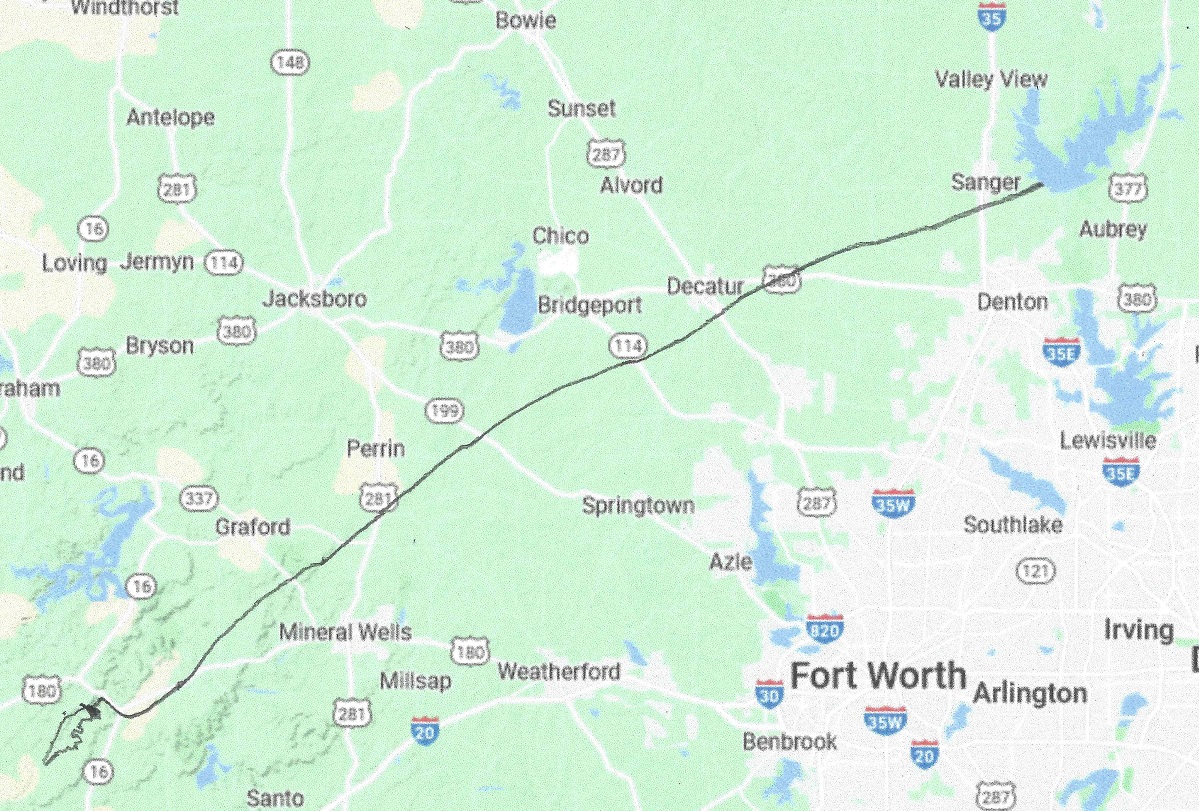
Leg 4 of the Transcontinental aqueduct is 15 miles of lake and 100 miles of aqueduct.
Lake Ray Roberts, elevation 625′, must be kept nearly constant.
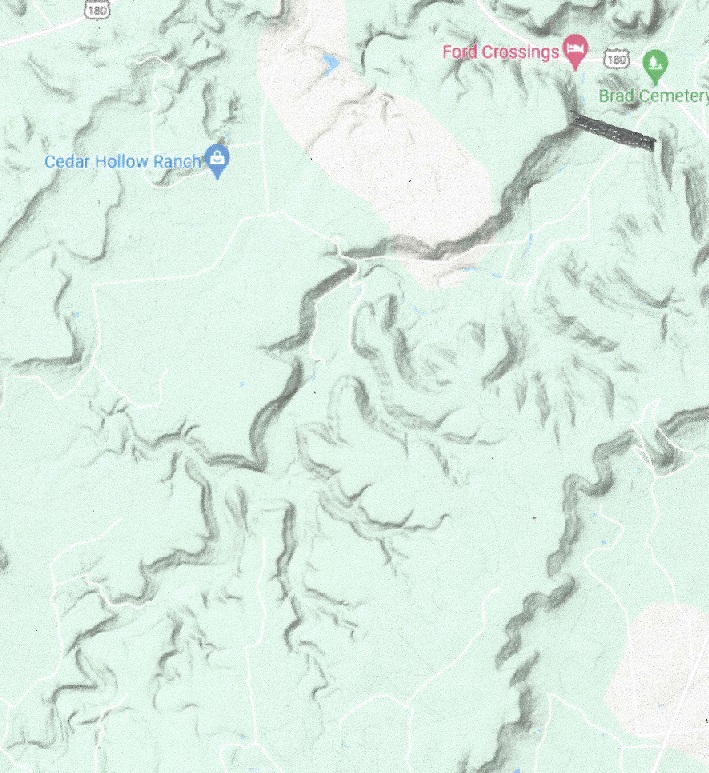
The elevation at Lake Ray Roberts is 625 feet. From here the aqueduct goes WSW to the Brad dam. It crosses the Brazos river, but does not interfere with it. (This can change if desired). The Brad dam is located just south of the Brad Cemetery on U.S. route 180, 25 miles East of Breckenridge. The dam, yet to be built will top out at 1280 feet with maximum water level at 1270 feet. The total lift of the water in stage 2 is (1,260 – 625 + 100×2) feet = 835 ft. To lift 22,000 cubic feet per second 835 feet requires seventeen 100 MW LFTR nuclear reactors. Lake Brad will contain about 60,000 Acre-ft when full, about one and a half day’s worth of storage. For 5 hours per day these 17 reactors can provide 1.7 GW of peak power to the grid. (The power can also partly be provided by wind power, during which time the LFTR’s can make hydrogen for extra peak power storage).
What’s in it for Texas? The 1.7 GW of Nuclear power can provide virtual hydro-power generation by not pumping water for up to 5 hours and thus provide 8.5 GWh of peak power daily. This has to be done in conjunction with Leg 3.
Matthew 25: 31-46. Jesus will return to judge the nations, to illustrate how he told the parable of the sheep and the goats, and the sheep were defined as those who do God’s will “You did it for me.”
Deuteronomy 22 contains more instructions, protect your brother’s property, the LORD detests unisex clothing, protect nesting birds, do not yoke an ox and a donkey together. The chapter ends with various laws on sexual morality.
Deuteronomy 23 deals with shunning and exclusion from the assembly, how to deal or not to deal with certain foreigners. Make your relief stations outside the camp and do what you have to do and keep proper camping cleanliness. No harlots allowed and do not accept offerings from them. You may not charge interest to a fellow Israelite, but you can be a Shylock to a foreigner. If you make a vow to the Lord, you better fulfill it!
Deuteronomy 24 tells of divorce laws and limitations for remarriage, leprosy, lending laws, how to properly pay workmen, and after harvest please leave the gleanings.
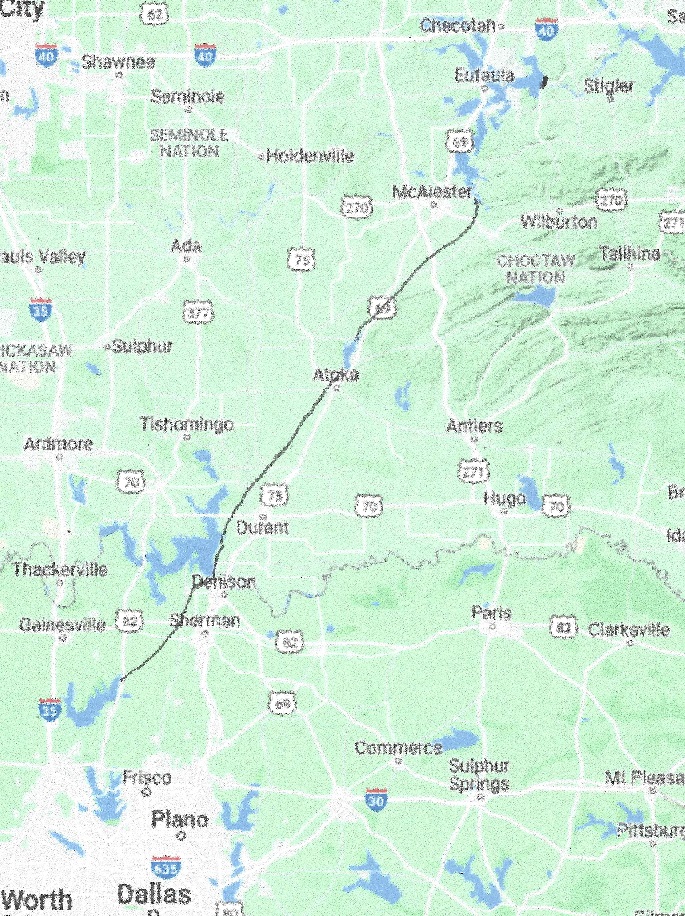
Stage 3 consists of 40 miles on Lake Eufaula, 10 miles on Aquila lake and 125 miles of a 22,000 cfs aqueduct, 95 miles in Oklahoma and 30 miles in Texas. This segment should ideally have used lake Texoma, but the water in it is brackish with between one half to one percent salinity, so it is unusable for drinking water, and even for agricultural purposes.
It starts out at lake Eufaula:
Conservation pool elevation 585′
From there the real aqueduct will start, unencumbered by barge traffic regulation. It will go from the southern tip of Lake Eufaula to lake Atoka, a distance of 40 miles. Lake Atoka is 10 miles long.
Lake Atoka elevation is 590′
Then from Lake Atoka it will pass by lake Texoma on ther downslope of thee Denison dam at an elevation of 640′. From there it will go to Lake Ray Roberts
Leg 3 total length 50miles lake, 125 miles aqueduct, end point Lake Ray Roberts, elevation 625′
The elevation at lake Atoka is about 590′. The aqueduct will have a capacity of 22,000 cfs, and it will climb from Eufaula to about 740′ before going down again to lake Atoka. From lake Atoka it will only pump up water for 85 miles. The aqueduct water level drops by 2′ per mile. Total pumping up will be 365′ and going down water release will be 110′ The total power need for this stage will be up to 665 MW assuming 92% pumping and generation efficiency. three 200 MW LFTR SMR will take care of the power needs this stage, and can be used for peak power generation when pumping is temporarily shut off. It is important to keep the water level steady at Lake Ray Roberts.
What’s in it for Oklahoma? Eufaula lake flood control will be greatly enhanced. Lake Atoka flood control will be enhanced and in case of drought extra water will be supplied to keep lake levels steady. There will be about 200 MW virtual hydro-power energy provided for up to 5 hours/day to stabilize the grid with peak power.
What’s in it for Texas? In case of drought Lake Ray Roberts can supply extra water to the Dallas area. The water levels will be stabilized at Lake Ray Roberts. There will be about 400 MW virtual hydro-power energy provided for up to 5 hours/day to stabilize the Texas grid with peak power.
Matthew 25:1-30 begins with the parable of the ten virgins, five with oil, five without oil. (Give me oil in my lamp, keep it burning). After that Jesus told the parable of the five, two and one talent given to three different people, the one with five made ten, the one with two doubled his talents, but the one with only one talent buried his. Jesus had his one talent taken away and be given to the one with ten talents. The moral of this parable is: Equal opportunity, not equal outcome.
Deuteronomy19. God commanded to set aside three Cities of Refuge, maybe three more as the land expands. Do not change property boundaries. There must be two or three witnesses for a conviction in court. From this chapter also comes the saying “an eye for an eye”.
Deuteronomy 20. Rules for warfare: The Lord fights the battle for you. If you are too chicken or are building a house or are pledged to marry, you may be excused. For the rest of you, show no mercy unless they surrender, but above all, save the fruit trees.
Deuteronomy 21 deals with what to do with unsolved murders. Can you marry a female taken captive? What are the rights of the firstborn? What to do with a rebellious Son? A man punished to death and hung on a tree, he must be buried the same day. From this we get “Cursedisevery one that hangeth on a tree”.
Matthew 24:36-51. Nobody knows the time or the day of Christ’s coming, not even Jesus at that time. Many have tried to predict it, and so far all have failed. This makes sense since we are supposed to watch and wait, and with this admonition the chapter ends.
Deuteronomy 16 describes in detail how to celebrate the Passover, the Feast of Weeks and the Feast of Tabernacles. Bring an offering, no one can go empty handed. Appoint Judges so justice can be properly administered. Do not worship any Asherah poles ever.
Deuteronomy 17, Anyone worshiping other Gods must have justice administered, including stoning. The Israelites will elect a King after they have entered the promised land. He must be an Israelite, not gathering riches or take many wives. He must read the scroll of the Law all the days of his life. As long as he does all these things he will reign a long time.
Deuteronomy 18. The LORD is the Inheritance for Priests and Levites. No Wicked Customs are allowed, such as child sacrifice, “ or that useth divination, or an observer of times, or an enchanter, or a witch. Or a charmer, or a consulter with familiar spirits, or a wizard, or a necromancer ” In other words: “Thou shalt be perfect with the Lord thy God.” Then the LORD gave a promise. He will raise up a Prophet like Moses. There will also rise up many false prophets, and they are not to be listened to.
The length of Leg 2 is 20 miles on the Robert S Kerr reservoir and 22 miles on the Canadian river.
Elevation 458′
The Robert S Kerr reservoir has an area of 43,000 acres and its elevation is regulated by the McClellan-Kerr Arkansas River Navigation System. This means that the water can be pumped up or released as long as it is coordinated for the whole canal system. This also means that the water flow can be stopped and the power normally used to pump up water can be used as peak power, which can come in handy on a hot humid day with no sun and no wind and every air conditioner in the area is going full blast to take out the oppressive humidity.
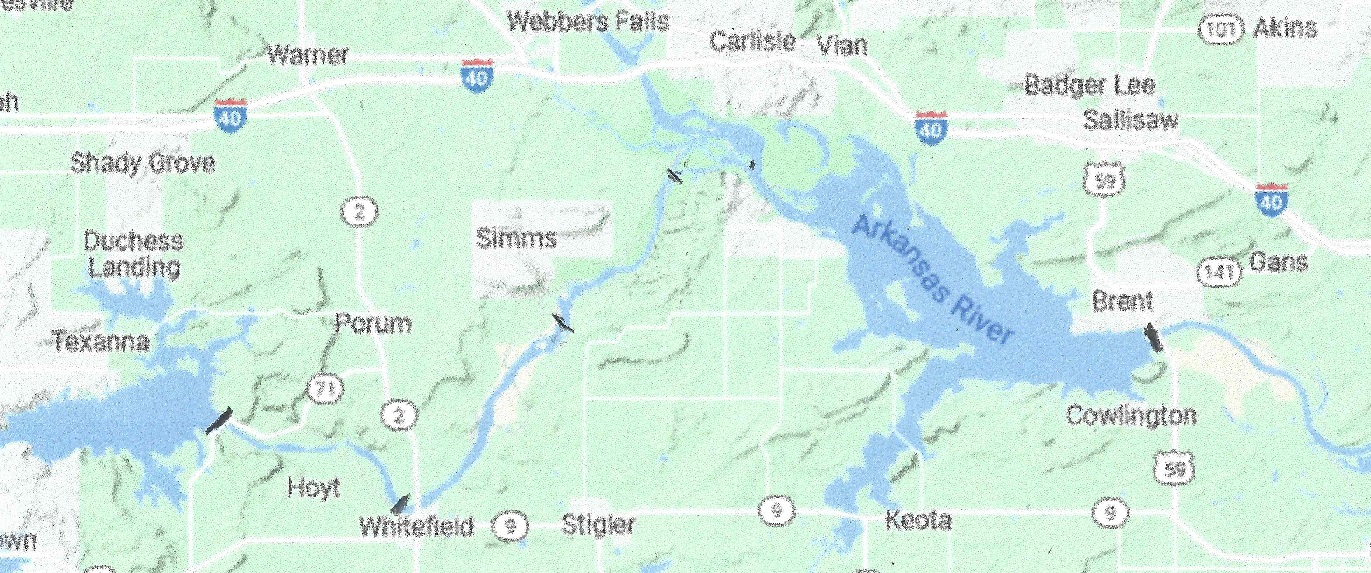
The part of the aqueduct going up the Canadian river will have 3 20 ft dams with concrete spillways, each with a 20,000 cfs reversible flow pumping station. The map:
The dam will have a 20,000 cfs pumping station added lifting water 87 ft.
The Eufaula Dam. The Eufaula dam Riverbed at 498′ conservation pool at 585′
The total power consumption in this stage will be up to 265 MW. The preferred power plant will be 3 100 MW LFTR SMRs.
Matthew 24:1-35. Matthew twenty-four is knocking at the door is a song popularized by Johnny Cash and gives a description of what is coming. Jesus predicted the destruction of the Temple and the events that will occur just before his return. He even quoted Daniel the prophet: “When ye therefore shall see the abomination of desolation.” Then he described his coming return to gather his people.
Deuteronomy14. Do not do as the heathen do with improper mourning, eat only clean meat and do not boil a young goat in its mother’s milk. Observe tithing, and every three years give an extra tithing for the Levites, the aliens, the fatherless and the widows.
Deuteronomy 15. Debts are to be canceled after seven years, show generosity to the poor, lend freely but do not borrow, free your slaves after seven years and give them opportunity to continue on their own. Set apart every firstborn animal.
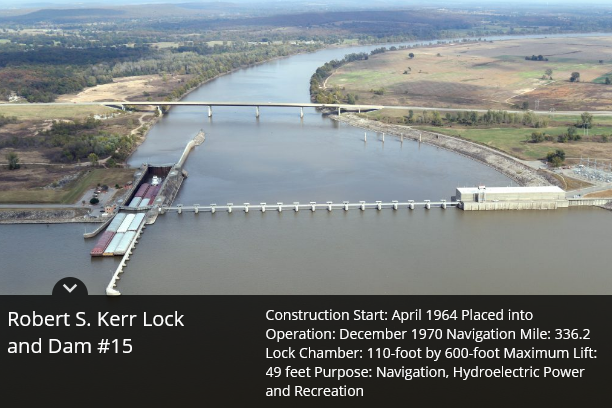
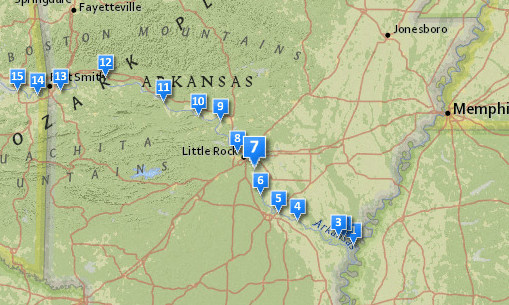
The Trans-Continental aqueduct starts out at the Mississippi river, and for the first leg follows the Arkansas River from Mississippi River to Lock15 of the Arkansas River, a distance of 319 miles.
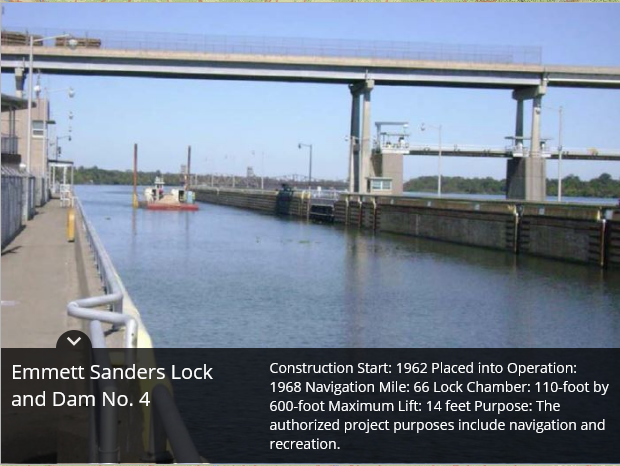
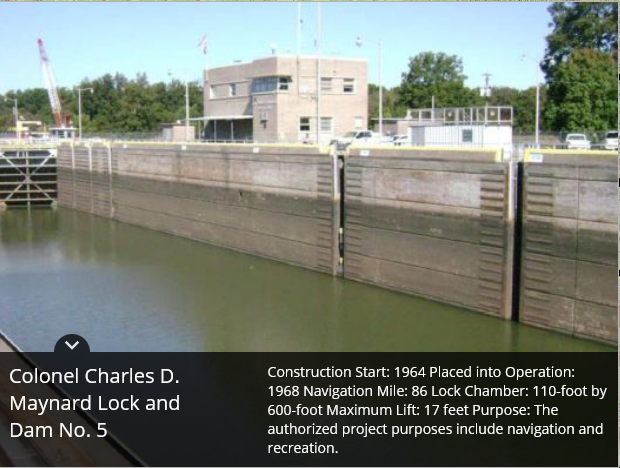
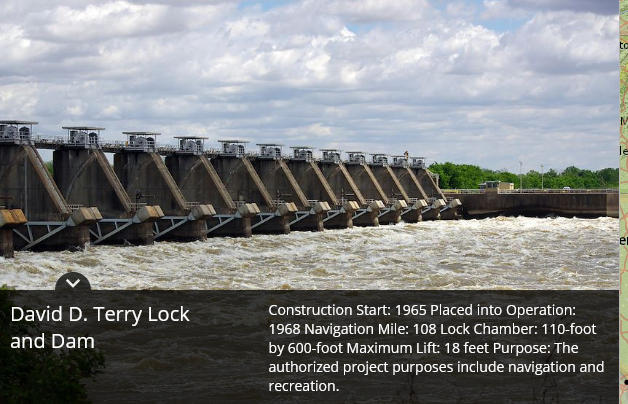
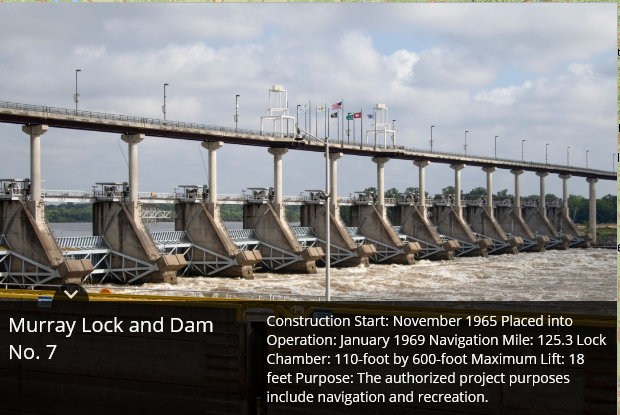
Location of the locks and pumping stations on the Arkansas river.
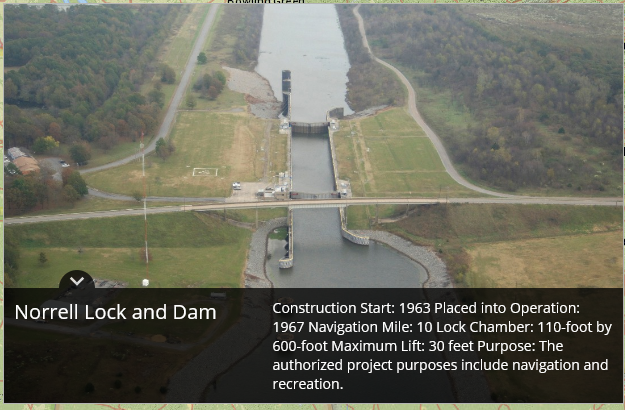
Lock 1, entrance from the Mississippi River to the White river. The water surface at Montgomery Point has fluctuated from elevation 104′ to 172′.
This lock was added later to better accommodate barge traffic when the Mississippi River was running abnormally low. If the Mississippi is normal to high level, this lock is bypassed. Since we are going to move 23,200 cfs of water over the rocky mountain the flow amount in Arkansas river will be reduced by the same amount. In times of drought, the Arkansas River flow is most often less than 23,200 cfs. To alleviate that, a series of 20,000 cfs pumps will be installed, one in every lock of the canal, beginning with Lock 3.
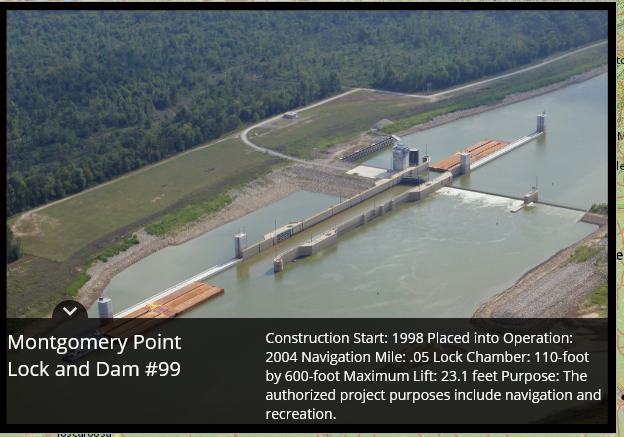
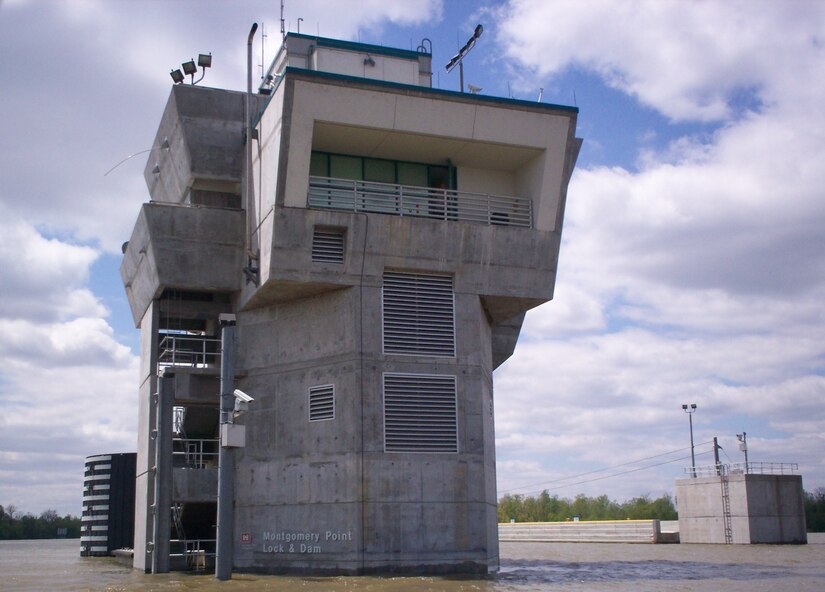
Montgomery Point Lock and Dam features “first of its kind” hydraulically operated gates. When the tail water is at elevation 115′ and rising, the dam gates are flat on the bottom of the river and barge traffic passes over the gates in the navigation pass spillway to minimize lockages saving time and money.This lock is frequently submerged. Only the top of the control tower remains above water
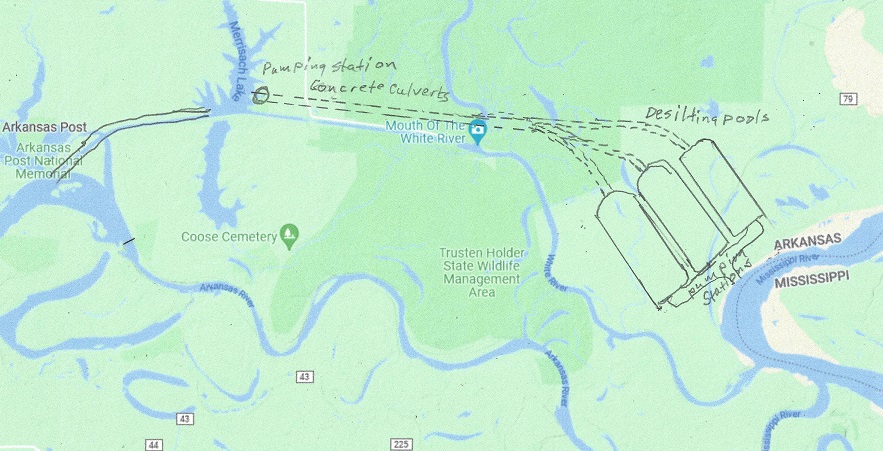
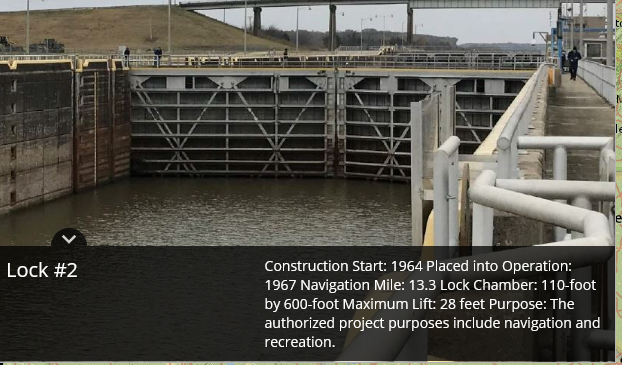
The Mississippi river is muddy. When water is pumped up there needs to be a number of de-silting pools, where the silt is returned to the Mississippi river. Here is suggested 3 pools, each capable of de-silting 10,000 cfs of water, one for the Trans-Rocky Mountain aqueduct, and two for the Trans-Continental aqueduct, being built as the whole aqueduct is nearing completion. The top of the pools is set at 150 ft elevation. Should the Missisippi River flood higher than 142 feet the operation will be shut down until elevation is below 142 feet again, and Lock 2, the Norrell Lock and dam is operational again. For the Trans-Continental aqueduct up to 20,000 cfs needs to be pumped up between 20 and 62 feet, for an energy consumption of between 1MW and 112 MW. The map below show one possible location for the pools:
The de-silting pools.Elevation 142′ No changeElevation 162′ No changeElevation 182′Elevation 1196′Elevation 213′Elevation 231′Elevation 249Elevation 265′Elevation 284′Elevation 336′Elevation 370′Elevation 391′Elevation 412′Elevation 458′
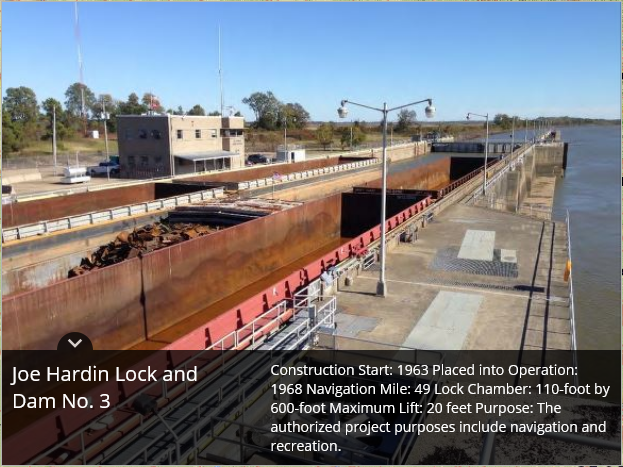
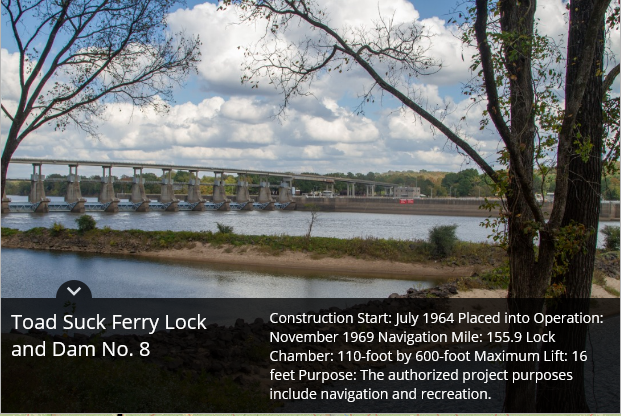
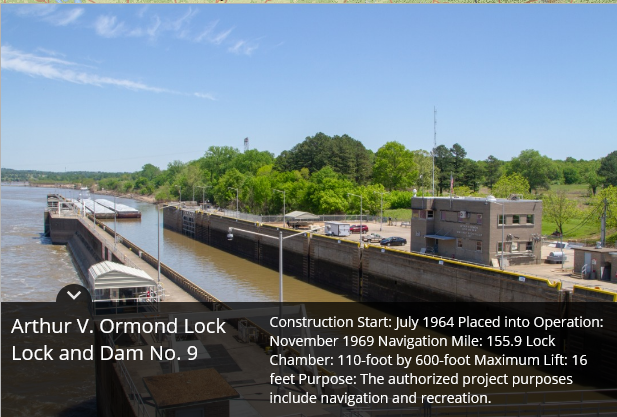
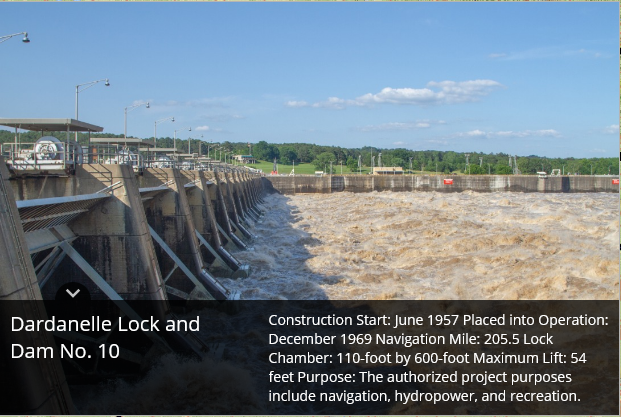
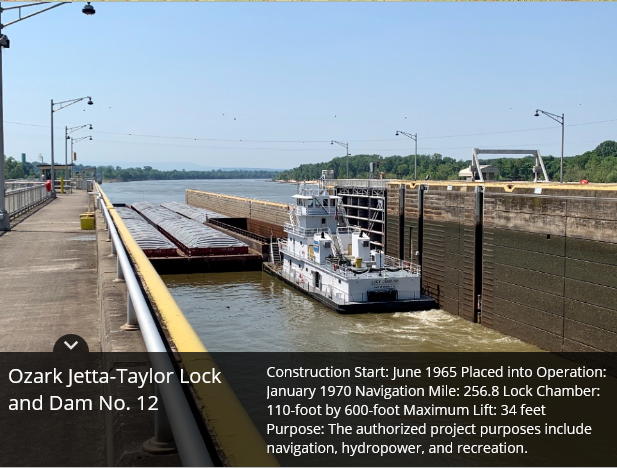
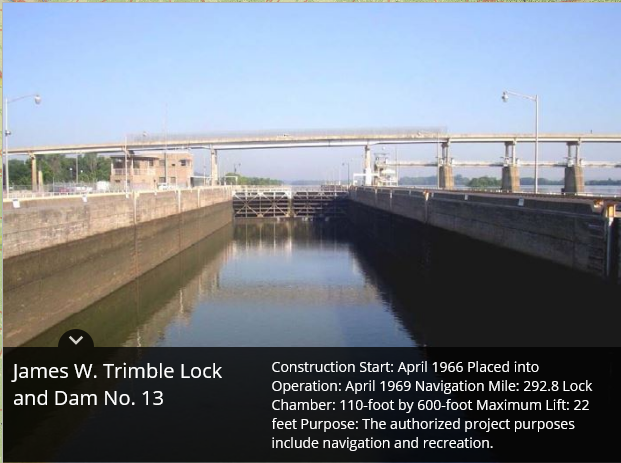
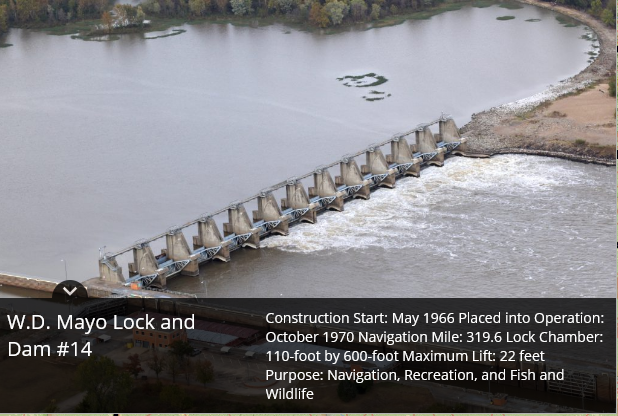
From Lock # 3 to lock # 15 (12 locks # 11 is missing) the Power houses have to either replace two of the operating turbines to a corresponding dual function pump/generator, or add a 20,000 cfs pump.
By removing 20,00 cfs from the flow of water in the Arkansas river, it will be necessary to add these pumps to ensure functioning locks even in times of extreme droughts. The total power generated by the power stations will be reduced by 20,000 cfs times (458 – 127) feet * 0.9 or about 630 megawatts total. This is most of the time all the power that was generated, so the standard hydropower generation in the Arkansas river will be for all practical purposes eliminated.
As a side note, every lock opening uses up water equivalent of between 22 and 66 kWh depending on the size of the lift or lowering of the barges. This is constant and not dependent on the size of the barges or boats. When the spillways are in use, the water is “free”, but otherwise every lock opening costs a few dollars in energy, not much, but in case of a drought the fact that water is pumped back up the river will help increase the capacity.
What is in it for Arkansas? The added pumps will give an additional tool to control the canal system. In addition, in the case of floods it will somewhat alleviate the flood control, and serve the canal system better in times of drought. To add 630 megawatts to the system, may I suggest 3 200 MW LFTR nuclear reactors, they are carbon neutral. In addition they have the ability to shut off the pumping of water and let the power plants provide 600 MW virtual hydro-storage power for up to five hours/day. The barges will benefit from sometimes go with the flow, and sometimes travel over still water, shortening the time of transport substantially.
Matthew 23, Jesus warned the people about the teachers of the Law and the Pharisees. At that time they had formulated the Talmud, which regulated every aspect of Jewish life. He did it in the form of telling of seven woes. Read the chapter carefully and draw your own conclusions.
Deuteronomy 11. Love and Obey the LORD, remember all He has done, meditate day and night on it and always teach the same to your children. God set before them a blessing and a curse, it dealt with obedience.
Deuteronomy 12. God proclaimed the One Place of Worship. All other places of worship where false Gods have been worshiped must be destroyed. You may eat from all clean animals, but do not drink their blood.