COVID-19 response, shut down all nonessential functions for 15days. What is the “black body” reaction of America?

When engineers and scientists want to study an object, the first step is often to study it as a “black body”, apply an impulse to it and study how the body reacts. One such “opportunity” is just now happening, the Coronavirus COVID-19 and how we, as a people react to it.

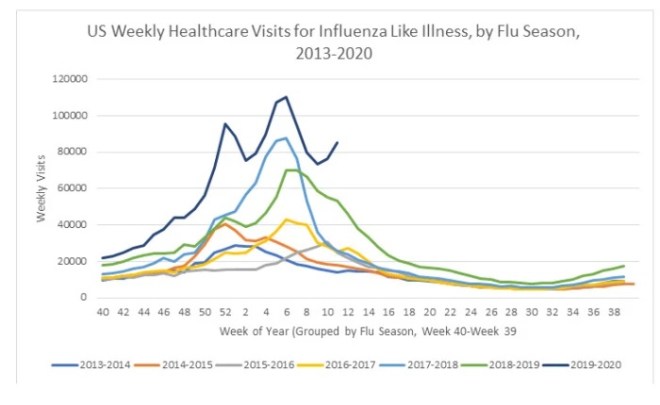
The flu season started innocently enough, but there was an increase in the number of healthcare visits for flue like symptoms, already when the flu season started in week 39 (October). At this time nobody had even heard of COVID-19 

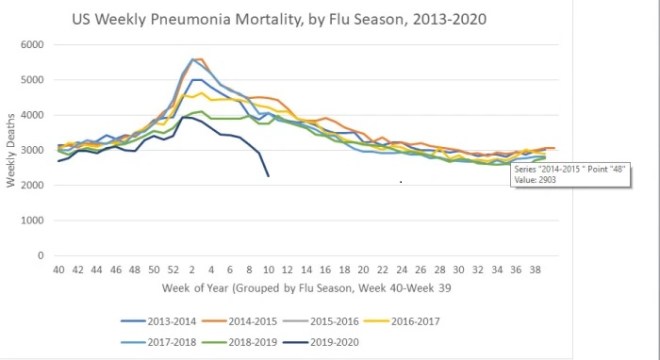
The healthcare workers expected a higher flu season than average, but nobody expected this. On Dec 31 the Chinese government officially acknowledged that this virus could spread from human to human, but was still insisting it was largely contained to the live animal market in Wuhan. But Wuhan is a large regional hub, with lots of people, even international visitors were coming and going. No tests had been developed yet for the Coronavirus, so who is to say when the outbreak started. Certainly not the Chinese, they had successfully silenced a whistleblower, and he later died of the disease. We may never know the onset, and how many had spread the virus internationally before December 31. The silence of the Chinese government was a medical malpractice of worldwide importance. After Christmas the flu symptoms seem to have abated, but after President Trump issued the travel ban for foreigners who have recently been in China, people got nervous and the healthcare visits took off again. The question is, how much did the increased healthcare visits help or hurt? This chart shows the pneumonia cases, since this is usually how people die, not from the flu but from the following pneumonia.

Yes, there seems to be a negative correlation between health care visits and pneumonia deaths. More early attention to flu like symptoms and early intervention leads to fewer pneumonia deaths. Not really surprising, but earlier intervention seems even more important than I thought.

But what was really stunning is the effect the intervention to “flatten the curve”,  that is to slow the spread of the virus by 6 feet of separation “better six feet apart than six feet under“, telling everybody in the country to stay home if they do not have an absolutely essential job, don’t cough into open air, wash your hands with soap and don’t touch your face, had. Enough people seem to have obeyed. Did it make a difference? Check out the total deaths per week:

The number of deaths in the whole country shrank by twenty thousand per Week! This is remarkable. Will it continue, will changing hygiene and social separation continue, or will we return back to where we were before?

Time will tell, but there is much hope.

The reverse is just as good:


The Corona virus COVID-19 spread was augmented by political correctness. Look at Italy, NYC and New Orleans.

Earlier this year thousands of Chinese immigrants from the city of Wuhan traveled to North Italy for work.

After the new residents got settled some of the local lawmakers noticed the Chinese immigrants weren’t being totally accepted by native Italians.

That’s when the mayor of Florence decided we should have “Hug a Chinese” Day.

And they did. Lots of politically correct Italians complied.

The results was devastating. Many got infected by COVID-19, spread it to others, and a month later the hospitals in Northern Italy got overrun, and the death rate from the virus is now over 10%, the highest of any nation with the possible exception of China, which doesn’t produce any recent statistics from the Hubei province from where the outbreak started.

Not to be outdone, after President Trump issued the ban of foreigners who have recently been in China from entering this country on January 31 many New Yorkers took issue with this ban and wanted to support the Chinese New Year’s parade. On February 2 N,Y State Senator John Liu more or less ordered all who cared for N.Y. to attend the Chinese New Year’s parade om February 9. If you didn’t, but could you proved you were a bigot. Other chimed in with the same sense of urgency to show support for the Chinese community. And a great parade it was:

The New York City mayor tweeted this message on March 2

As late as March 11  he still urged all New Yorkers to go on with their lives as usual.

Now New York City is the nation’s hot spot with nearly one quarter of all Coronavirus cases. New York State has nearly half of all cases, the City hospitals are getting overrun just like in Italy. Political correctness kills.

Oh, and one more hot spot is developing. New Orleans did not cancel the Mardi Gras parade this year.

People came in from all over the country, did their thing, after all it was Mardi Gras, and went back to where they came from, infected or not.


Nevada governor Sisolak, in a snit of Trump-hate forbids the use of two promising treatments for covid-19, later recanted. A Limerick.

An intrigue in old Carson City

Gov. Sisolak showing no pity

For his Trump-hate is great

but the virus won’t wait

no time to delay and be snitty.

Nevada’s governor has signed an emergency regulation limiting the use of two anti-malaria drugs to treat coronavirus patients, the same medication that President Donald Trump has touted as possible treatments.

Trump has said that using chloroquine and hydroxychloroquine as treatments for coronavirus could be “one of the biggest game changers in the history of medicine,” and said the drugs had been approved for a long time in the treatment of malaria.
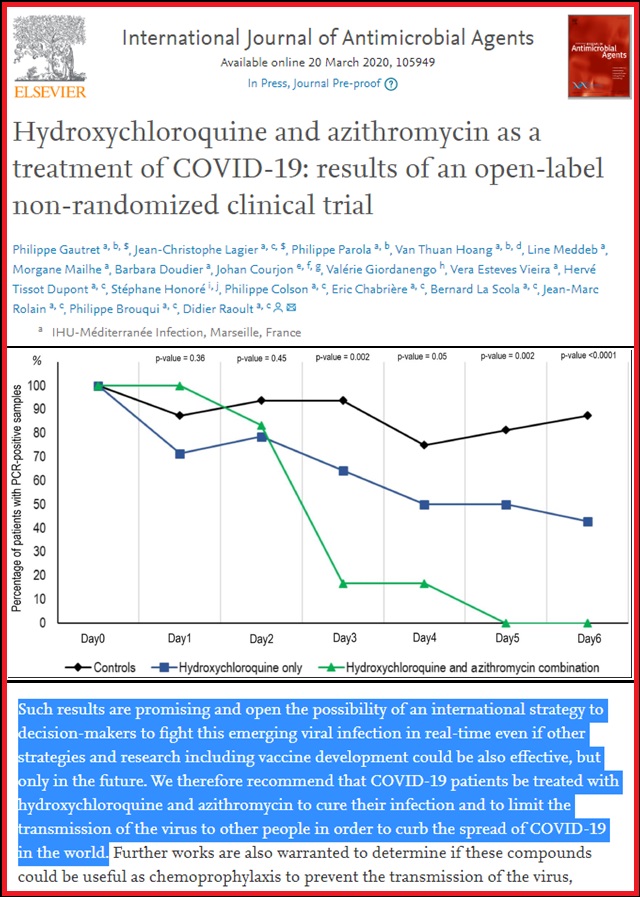
Here is a result from a French non-randomized test. This is no time for randomized tests. They may be scientifically perfect, but they take a long time to complete and are very inefficient. Better save lives now!
U.K. and now India is blocking export of these substances, so we must make our own, and fast. FEMA has appropriated all available stockpiles of  Hydroxychloroquin and is distributing to medical doctors as needed to prevent hoarding.
To be fair, Governor Sisolak in a later tweet indicated  that he will not forbid a licensed medical doctor to administer whatever he/she deems necessary for treatment of a patient, in other words, render his executive order moot. But it  captured the headlines.


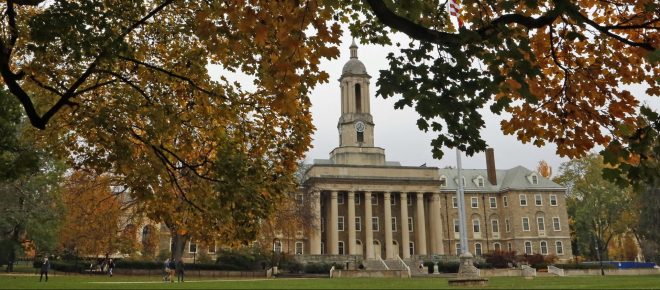
Teaching online at Penn State University. All real breakthroughs occur at the crossroads of science. This is an opportunity!

I have always loved to teach. I especially enjoyed the person to person contact when you tell of something and get a smile back – they got it. One of the objects of teaching the so called Capstone Course for engineers to be is to teach cross-science, for it is in the intersection between different branches of science, crafts and engineering disciplines that real breakthroughs are made. The object is to revolutionize the students thinking. Up to now they have learnt – and learnt it well – do as your teacher have taught you, and you will get an A. Any deviation is a negative – and bothersome for the teacher. This is an attempt for me to change that – even in an online session, but since there is no direct feedback, it is really an offline instruction. see what you think – did it change your thinking?


This tree, the green one was planted upside down. The branches became roots, the roots became branches. It is planted just east of  Penn State Main building. Think root cause analysis.

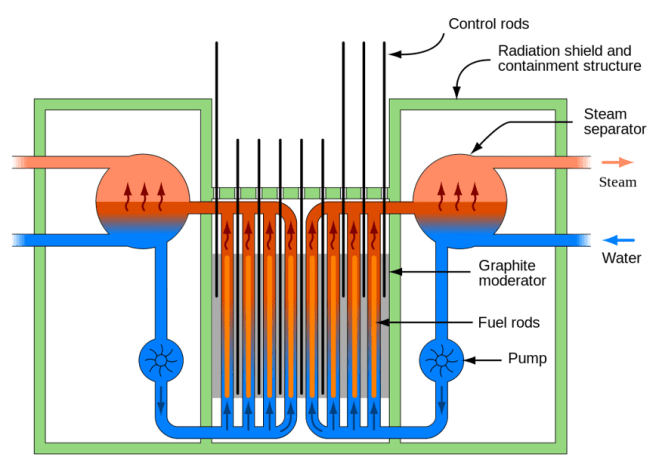
Chernobyl was a carbon moderated Nuclear reactor. Its failure mode was to go prompt critical and splat in an uncontrolled nuclear reaction. No containment vessel could contain the explosion, so why go to the extra expense of building one? Rely instead on multiple safety circuits. The night crew disabled some safety circuits to capture power on an orderly shutdown. They had never been properly trained.

The cloud. Sweden was the first to report on the accident. Two reactors shut down due to excessive radiation in the air outside the plants.

With a Molten Salt Reactor, accidents like Chernobyl are impossible. The Three Mile Island accident was bad. The Chernobyl disaster was ten million times worse. Ah yes, I remember it well.

One morning at work, after the Three Mile Island incident, but before Chernobyl a fellow co-worker, a Ph.D. Chemist working on an Electron Capture Detector containing a small amount of Nickel 63, came with a surprising question: You know nuclear science, how come the reactors in Chernobyl don’t have a containment vessel? Well – I answered, it is because they are carbon moderated and their failure mode is that they go prompt critical, and no containment vessel in the world can hold it in, so they skip it. He turned away in disgust. A few weeks later my wife’s father died, and we went to Denmark to attend the funeral. The day of the return back to the U.S. we heard that there had been a nuclear incident in Sweden, too much radiation had caused two nuclear power stations to close down. The Chernobyl disaster had happened 26 April 1986, and this was the first time anyone outside of Chernobyl has heard about it, two days later. This was still the Soviet Union, and nothing ever did go wrong in it worthy of reporting.

(But the carbon moderated Uranium reactors are the most efficient in producing Pu-239 the preferred nuclear bomb material.)

This has nothing to do with anything, but Chernobyl can be translated wormwood. It is mentioned in the Bible, Revelation 8: 10-11 “ And the third angel sounded, and there fell a great star from heaven, burning as it were a lamp, and it fell upon the third part of the rivers, and upon the fountains of waters; And the name of the star is called Wormwood: and the third part of the waters became wormwood; and many men died of the waters, because they were made bitter.

Molten Salt Thorium reactors cannot be used to supply bomb material, and they are far safer than even Light water Uranium reactors.

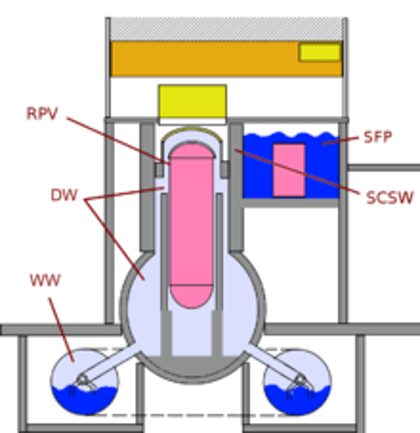
With Molten Salt Reactors, a catastrophe like Fukushima cannot happen.  It began with a magnitude 9.0 earthquake not far from the Fukushima 6 Nuclear reactor complex. The impact was a magnitude 6.8 earthquake and the operators immediately scrammed the safety rods to stop all the reactors. This succeeded! The reactors were designed with earthquakes in mind, and they passed the test. The backup power started up successfully so the cooling pumps could operate. There was one major problem though. The earthquake was so bad that the water in the spent fuel holding tanks splashed out and exposed the spent fuel rods to air making them emit radioactivity into the air.

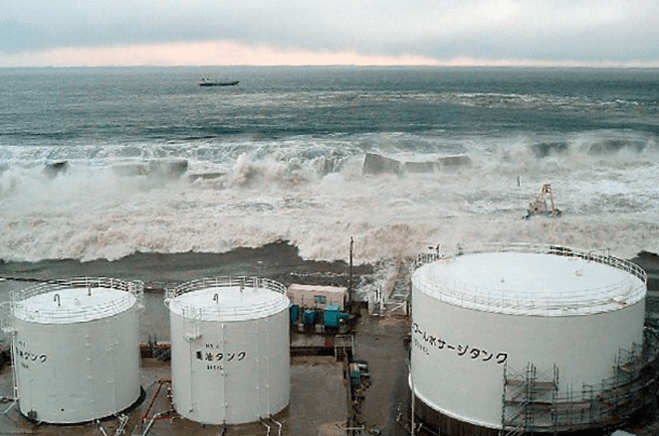
The water pumps worked for a while, but then came the tsunami. All the reactors were inside a tsunami wall, so far, so good

But the fuel storage tanks for the backup power generators were outside the tsunami wall and were washed away. The batteries were only supposed to last until backup power was established, and with water circulation ended the meltdown started.

This disaster was even bigger than Chernobyl and contamination is still spreading.

In the periodic table, iron has the densest core. Fusion can occur with elements with a lower atomic number than iron, fission can begin with  with elements after lead. What happens in a supernova?

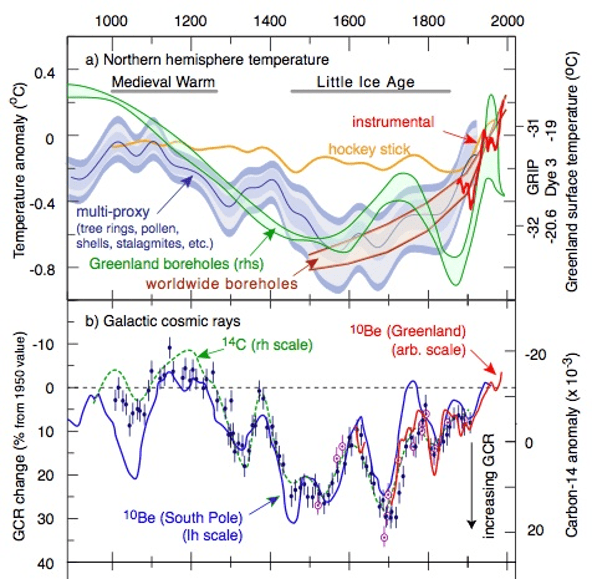
On climate change: Temp records come from boreholes, seashells, and looking at isotope variations among other sources . Of particular interest is the medieval warm period and the little ice age. How did the little ice age happen? There was no decrease in CO2 during that time.

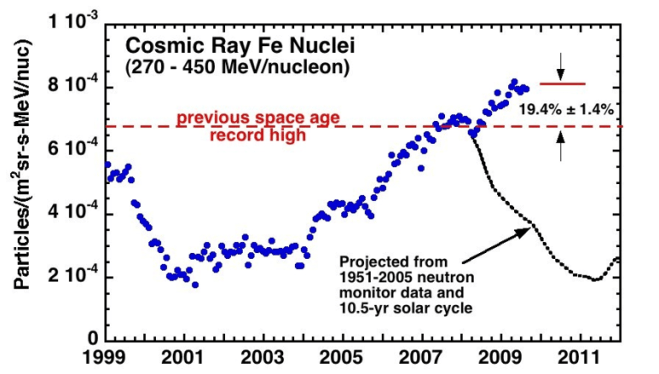
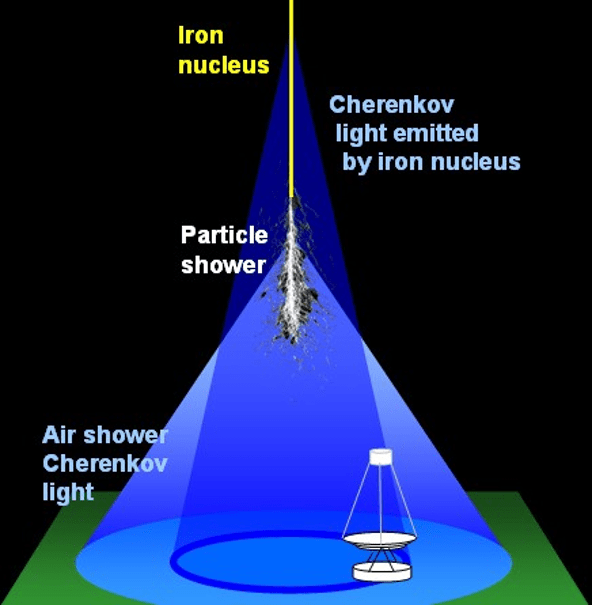
Especially interesting is cosmic radiation that does not come from the sun. It varies a lot, and consists mostly of iron nuclei and comes from distant supernovas. There was two of them, in 1572 and 1604 A.D., both shone brighter in the sky than Venus. Since then we have not seen any supernovas anywhere nearly as bright . Did they trigger the little ice age?

A single iron nucleus can ionize thousands of air molecules, causing condensation and forming the beginning of a cloud.

The iron nuclei enter the earth’s atmosphere with a speed that exceeds the speed of light in atmosphere, causing this eerie blue light. It spreads like a sonic boom.

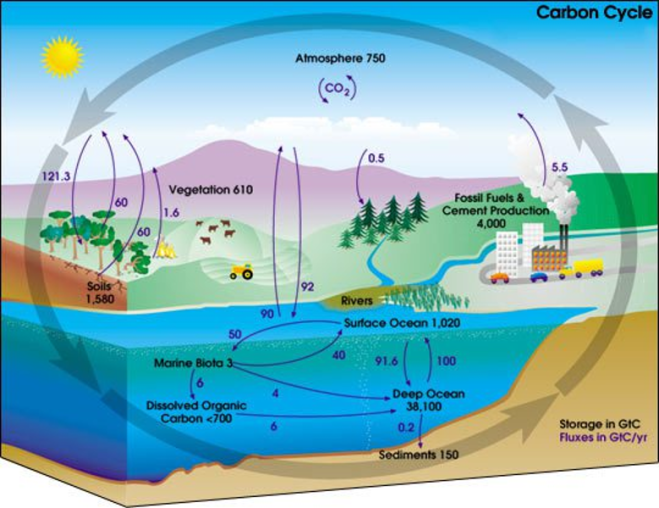
Cosmic radiation in the form of iron nuclei is the major source of the generation of Carbon 14. When fossil fuel is burned there is very little C14 in the CO2 generated, but if it is burned by digestion of food, by fermentation, by burning wood or by wildfire, it contains the same concentration of C14 as was in the air at the time of the generation of the biomass. Since C14 has a half life of  5700 +- 40 years, we could find out the age of that biomass – or could we?

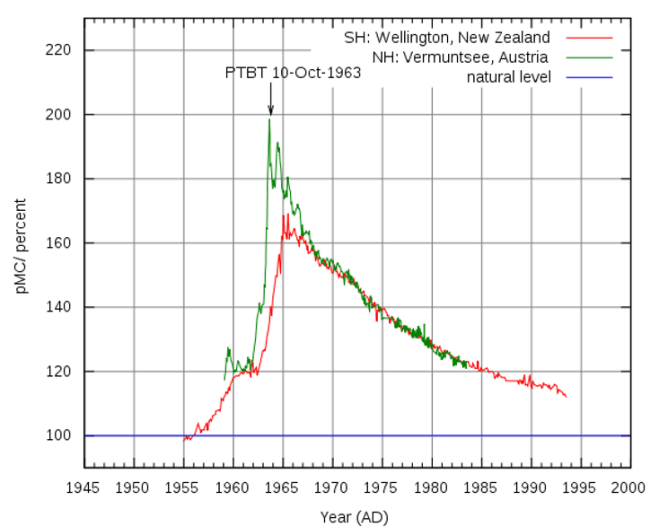
This is one of my very favorite slides. The best way of finding out how a black body responds is by introducing an impulse and see what happens. In this case the impulse was open air Nuclear bomb tests, performed mostly by United States and the Soviet Union, but all in the Northern Hemisphere. Test stations to see the amount of C14 in the air were set up in Austria and New Zealand. What did we learn? We learn that the air mixes between the Northern and the Southern Hemisphere in about 2 years, and because the half-life of C14 shown here is 12.5 years, not 5700 years, it shows the absorption rate in the oceans. Both of these values would have been difficult if not impossible to find out without open air Nuclear tests, Were they bad? You bet, but since they happened, glean what you can from it. What else did we learn? You can no longer use carbon dating if there is any chance of chance of contamination with newer biomass, or if it is newer than 1955 A.D. Is the specimen appearing to be older or younger?

Since we have shown that the amount of C14 in the air has not been constant over time the age curve has to be calibrated. How do we do that? By using artifacts of known age.

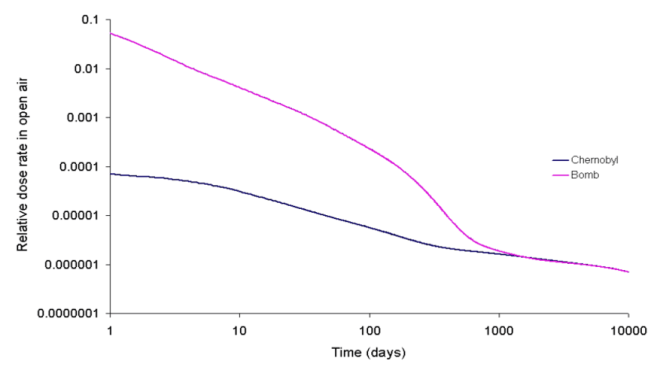
The radioactive fallout decay from a Nuclear test occurs faster than from the Chernobyl disaster. Every nuclear fallout fingerprint is different.

A Liquid Fluoride Thorium based fast breeder nuclear reactor produces much less TRansUranium waste, 0.01% waste products compared to a Uranium-235 fast breeder. The Thorium process has a much higher efficiency of fission than  the Uranium process.

Pu = Plutonium, Am = Americum, Cm = Curium, all TRansUraniums, nasty stuff.

With Thorium based Nuclear power, there are no real problems, with traditional U235 power long tern storage is an immense and urgent problem, and has been since the 1960’s. At that time Sweden had a heavy water  U-238 nuclear power program going, but abandoned it in favor of traditional U-235 power. U.S. promised to provide the material and take care of the reprocessing and final storage of all nuclear waste at cost if Sweden joined the nuclear proliferation treaty. Reprocessing was to be done in Washington State, and one of the final storage sites mentioned was Yucca Mountain in Nevada, having the ideal Geological properties.

Time goes by and in 1982 – Congress passed the Nuclear Waste Policy Act, requiring the establishment of a deep geologic repository for nuclear waste storage and isolation. Yucca Mountain was high on the list out of 9 possible sites.

Time goes by, and Congress is still not able to decide on a solution. Meanwhile, TRU’s from spent and reprocessed fuel is piling up in less than ideal locations. Thorium based nuclear power would go a long way to alleviate this problem.

Radioactive waste from an LFTR (Liquid Fluoride Thorium Reactor)  decays down to background radiation in 300 years instead of a million years for U-235 based reactors. Initially LFTRs produce as much radioactivity as an U-235 based nuclear reactor, since fission converts mass to heat, but the decay products have a much shorter half-life.

And Fukushima is still aglow.

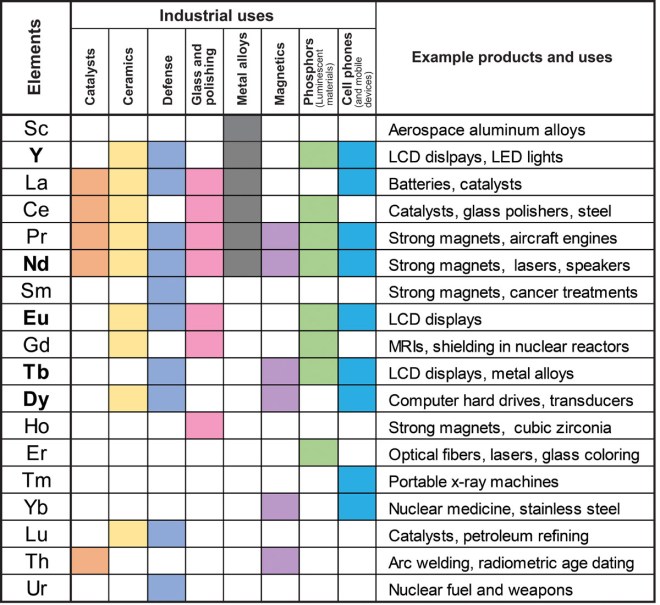
The first thing we must realize is that rare earth metals are not all that rare. They are a thousand times or more abundant than gold or platinum in the earth crust and easy to mine, but a little more difficult to refine. Thorium and Uranium will also be mined at the same time as the rare earth metals since they appear together in the ore.

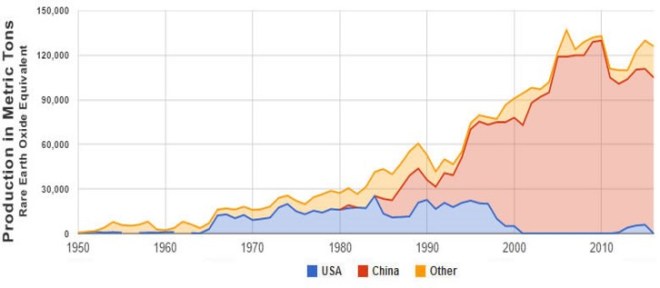
The U.S. used to have a strategic reserve of rare earth metals, but that was sold off in 1998 as being no longer cost effective or necessary. Two years later the one U.S. rare earth metals mine that used to supply nearly the whole world, the Mountain Pass Mine in California closed down, together with its refining capacity. From that day all rare earth metals were imported. In 2010 it started up again together with the refining capacity but went bankrupt in 2015, closed down the refining but continued selling ore to China. They will start up refining again late 2020. Meanwhile China is slapping on a 25% import tariff on imported ore starting July 1 2020. Rare earth metals may be in short supply for a while.

U.S. used to be the major supplier of rare earth metals, which was fine up to around 1984. Then the U.S. regulators determined that Uranium and Thorium contained in the ore made the ore radioactive, so they decided to make rare earth metal ore subject to nuclear regulations with all what that meant for record keeping and control. This made mining in the U.S. unprofitable so in 2001 the last domestic mine closed down. China had no such scruples, such as human and environmental concerns, so they took over the rare earth metals mining and in 2010 controlled over 95% of the world supply, which was according to their long term plan of controlling the world by 2025.


How to beat the Coronavirus fast. Chloroquine, a common antimalaria drug is the answer. It worked in China and South Korea.

This Coronavirus  can be beaten fast. I have wondered how China and South Korea could recover so fast with few new cases. Then United Kingdom decided to take another approach to combat the virus – do not isolate anyone except the most vulnerable people, and today I found out why. United Kingdom banned export of Chloroquine, a common malaria drug.

It turns out that if Chloroquine is taken after exposure is suspected, but before symptoms occur, the virus will not reproduce. If taken after symptoms occur it lessens the severity of the flu.

It is inexpensive, available and easy to manufacture. Side effects are the normal litany but does not include suicide or death. Let’s go for it!

Here is the background (Thanks, Anthony Watts)

   Translation by: Celia Martínez-Aceves (Yale B.S. Candidate 2021),  Martín Martínez (MIT B.S. 2017)

Summary

Recent guidelines from South Korea and China report that chloroquine is an effective antiviral therapeutic treatment against Coronavirus Disease 2019.  Use of chloroquine (tablets) is showing favorable outcomes in humans infected with Coronavirus including faster time to recovery and shorter hospital stay.  US CDC research shows that chloroquine also has strong potential as a prophylactic (preventative) measure against coronavirus in the lab, while we wait for a vaccine to be developed.  Chloroquine is an inexpensive, globally available drug that has been in widespread human use since 1945 against malaria, autoimmune and various other conditions.

Chloroquine: C18H26ClN3

Background

The U.S. CDC and World Health Organization have not published treatment measures against Coronavirus disease 2019 (“COVID-19”).  Medical centers are starting to have issues with traditional protocols.  Treatments, and ideally a preventative measure, are needed.   South Korea and China have had significantly more exposure and time to analyze diagnostic, treatment and preventative options.  The U.S., Europe and the rest of the world can learn from their experience.  According to former FDA commissioner, board member of Pfizer and Illumina, Scott Gotlieb MD, the world can learn the most about COVID-19 by paying closest attention to the response of countries that have had significant exposure to COVID-19 before the U.S. and Europe.[1]

As per the U.S. CDC, “Chloroquine (also known as chloroquine phosphate) is an antimalarial medicine… Chloroquine is available in the United States by prescription only… Chloroquine can be prescribed for either prevention or treatment of malaria. Chloroquine can be prescribed to adults and children of all ages. It can also be safely taken by pregnant women and nursing mothers.”[2]

CDC research also shows that “chloroquine can affect virus infection in many ways, and the antiviral effect depends in part on the extent to which the virus utilizes endosomes for entry. Chloroquine has been widely used to treat human diseases, such as malaria, amoebiosis, HIV, and autoimmune diseases, without significant detrimental side effects.”[3]

The treatment guidelines of both South Korea and China against COVID-19 are generally consistent, outlining chloroquine as an effective treatment.

Specifically, according to the Korea Biomedical Review, in February 2020 in South Korea, the COVID-19 Central Clinical Task Force, composed of physicians and experts treating patients agreed upon treatment principles for patients with COVID-19.[4]  In China, the General Office of the National Health Commission, General Office of the State Administration of Traditional Chinese Medicine as well as a Multi-Center Collaborative Group of Guangdong Provincial Department of Science and Technology and Guangdong Provincial Health Comp and the China National Center for Biotechnology Development have established effective treatment measures based on human studies.[5]

According to their research (reported in Clinical Trials Arena),

“Data from the drug’s [chloroquine] studies showed ‘certain curative effect’ with ‘fairly good efficacy’ … patients treated with chloroquine demonstrated a better drop in fever, improvement of lung CT images, and required a shorter time to recover compared to parallel groups.  The percentage of patients with negative viral nucleic acid tests was also higher with the anti-malarial drug…  Chloroquine has so far shown no obvious serious adverse reactions in more than 100 participants in the trials…  Chloroquine was selected after several screening rounds of thousands of existing drugs.  Chloroquine is undergoing further trials in more than ten hospitals in Beijing, Guangdong province and Hunnan province.”[6]

Chloroquine as a prophylactic (preventative) measure against COVID-19[11]

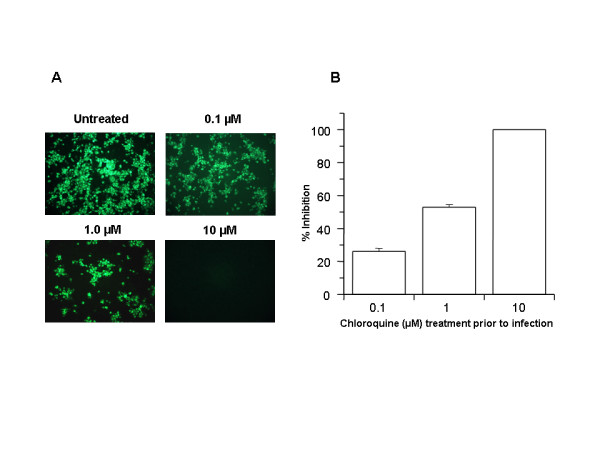
According to research by the US CDC, chloroquine has strong antiviral effects on SARS coronavirus, both prophylactically and therapeutically.  SARS coronavirus has significant similarities to COVID-19.  Specifically, the CDC research was completed in primate cells using chloroquine’s well known function of elevating endosomal pH.  The results show that “We have identified chloroquine as an effective antiviral agent for SARS-CoV in cell culture conditions, as evidenced by its inhibitory effect when the drug was added prior to infection or after the initiation and establishment of infection. The fact that chloroquine exerts an antiviral effect during pre- and post-infection conditions suggest that it is likely to have both prophylactic and therapeutic advantages.”

The study shows that chloroquine is effective in preventing SARS-CoV infection in cell culture if the drug is added to the cells 24 h prior to infection.

FIGURE 1

Prophylactic effect of chloroquine. Vero E6 cells pre-treated with chloroquine for 20 hrs. Chloroquine-containing media were removed and the cells were washed with phosphate buffered saline before they were infected with SARS-CoV (0.5 multiplicity of infection) for 1 h in the absence of chloroquine. Virus was then removed and the cells were maintained in Opti-MEM (Invitrogen) for 16–18 h in the absence of chloroquine. SARS-CoV antigens were stained with virus-specific HMAF, followed by FITC-conjugated secondary antibodies. (A) The concentration of chloroquine used is indicated on the top of each panel. (B) SARS-CoV antigen-positive cells at three random locations were captured by using a digital camera, the number of antigen-positive cells was determined, and the average inhibition was calculated. Percent inhibition was obtained by considering the untreated control as 0% inhibition. The vertical bars represent the range of SEM.

In addition, the study also shows that chloroquine was very effective even when the drug was added 3–5 h after infection, suggesting an antiviral effect even after the establishment of infection.

The UK has banned the export of Chloroquine[13]

As of February 26, 2020, the UK government has added chloroquine to the list of medicines that cannot be parallel exported from the UK.  Chloroquine was never on this list before.  This likely happened because of the growing body of evidence of chloroquine’s effectiveness against coronavirus.

China prioritizes internal use of Active Pharmaceutical Ingredients (APIs) including Chloroquine[14]

In early February, Chongqing Kangle Pharmaceutical was requested by the Ministry of Industry and Information Technology, Consumption Division to promptly increase the manufacturing and production of the active pharmaceutical ingredients chloroquine phosphate despite slowed production during the Chinese New Year.

Conclusion

Chloroquine can both both prevent and treat malaria.  Chloroquine can prevent and treat coronavirus in primate cells (Figure 1 and Figure 2).  According to South Korean and China human treatment guidelines, chloroquine is effective in treating COVID-19.  Given chloroquine’s human safety profile and existence, it can be implemented today in the U.S., Europe and the rest of the world.  Medical doctors may be reluctant to prescribe chloroquine to treat COVID-19 since it is not FDA approved for this use.  The United States of America and other countries should immediately authorize and indemnify medical doctors for prescribing chloroquine to treat COVID-19.  We must explore whether chloroquine can safely serve as a preventative measure prior to infection of COVID-19 to stop further spread of this highly contagious virus.

Full study available here


Then there’s this second study:

Breakthrough: Chloroquine phosphate has shown apparent efficacy in treatment of COVID-19 associated pneumonia in clinical studiesJianjun GaoZhenxue TianXu Yang

Abstract

The coronavirus disease 2019 (COVID-19) virus is spreading rapidly, and scientists are endeavoring to discover drugs for its efficacious treatment in China. Chloroquine phosphate, an old drug for treatment of malaria, is shown to have apparent efficacy and acceptable safety against COVID-19 associated pneumonia in multicenter clinical trials conducted in China. The drug is recommended to be included in the next version of the Guidelines for the Prevention, Diagnosis, and Treatment of Pneumonia Caused by COVID-19 issued by the National Health Commission of the People’s Republic of China for treatment of COVID-19 infection in larger populations in the future.

https://www.jstage.jst.go.jp/article/bst/14/1/14_2020.01047/_article

Finally, there’s a new study in the prestigious journal Nature:

Remdesivir and chloroquine effectively inhibit the recently emerged novel coronavirus (2019-nCoV) in vitro

Excerpt:

Chloroquine, a widely-used anti-malarial and autoimmune disease drug, has recently been reported as a potential broad-spectrum antiviral drug.8,9 Chloroquine is known to block virus infection by increasing endosomal pH required for virus/cell fusion, as well as interfering with the glycosylation of cellular receptors of SARS-CoV.10 Our time-of-addition assay demonstrated that chloroquine functioned at both entry, and at post-entry stages of the 2019-nCoV infection in Vero E6 cells (Fig. 1c, d). Besides its antiviral activity, chloroquine has an immune-modulating activity, which may synergistically enhance its antiviral effect in vivo. Chloroquine is widely distributed in the whole body, including lung, after oral administration. The EC90 value of chloroquine against the 2019-nCoV in Vero E6 cells was 6.90 μM, which can be clinically achievable as demonstrated in the plasma of rheumatoid arthritis patients who received 500 mg administration.11 Chloroquine is a cheap and a safe drug that has been used for more than 70 years and, therefore, it is potentially clinically applicable against the 2019-nCoV.

Our findings reveal that remdesivir and chloroquine are highly effective in the control of 2019-nCoV infection in vitro. Since these compounds have been used in human patients with a safety track record and shown to be effective against various ailments, we suggest that they should be assessed in human patients suffering from the novel coronavirus disease.

Study: https://www.nature.com/articles/s41422-020-0282-0?fbclid=IwAR2JbbZU_Hl7uLjuOTDhrNnmczzyEFvnIhY8QHv9ghY5fYBvX0IsmnhD07w


Climate change is real and positive for the environment. The real challenge is clean and available water in the 10-40 region.

The safe, clean water essential to all life is rapidly running out in much of the world. Yet the politicians are concentrating on air pollution in the form of CO2 and methane as if a catastrophe is about to hit us. Western US, most of the 10-40 window (the area between the 10th and the 40th latitude), Australia and western South America are using up its safe and drinkable water supply much faster than it is replenished. In addition, what is left is getting polluted.Let me give you an anecdotal example.

More than twenty years ago I was part of a team that made wet processing equipment for making computer chip wafers. It involved cleaning and etching using isopropyl alcohol, hydrocloric, sulphuric, and hydrofluoric acid as well as Ozone, all potent stuff. To collect the used chemicals we had designed a 5-way output port, so the chemicals could be collected separately after use. The equipment was made and shipped off to South Korea. It was assembled in a brand new, state of the art positive air pressure clean room facility. The processing machine was installed by the Koreans, but under the 5-way port was a large funnel, going to the drain and directly out in the sewer.

A couple of years before, in the US we had a valve in a similar machine that sprung a leak, so a small amount of hydrofluoric acid got discharged into the sewage. This poisoned the sewage processing plant, and a large fine was levied. No such worry in Asia. The sewage went directly out in the ocean to be diluted. How could they be persuaded not to dump the alcohol and acid directly into the sewage? There were no environmental regulations prohibiting them from doing so. The only argument that persuaded them was economic. It was cheaper to collect the used alcohol and hydrofluoric acid, clean and reuse it rather than dump it. Unfortunately sulphuric acid and hydrocloric acid was too cheap to buy new, so that was still dumped. This is the mindset of many developing countries.

In China many of these facilities are inland, so large water aquifers get poisoned for centuries to come. These are the people we up to now have entrusted with our future production of just about everything, since they do not have the environmental protection laws they can produce the stuff much cheaper. But it comes at a price. The yellow river now does not anymore reach the ocean for part of the year.

As I have explained in a previous post: https://lenbilen.com/2020/02/28/climate-change-is-real-and-is-caused-by-rising-co2-levels-leading-to-less-extreme-weather-this-is-on-balance-good-for-the-environment/  global warming is real, but it only occurs in temperate regions, and predominantly in the winter. Summertime maxima are actually decreasing slightly, so the net effect of climate change is that it is positive for the environment.

Not so with water pollution. It is a much bigger and dangerous problem, and only by shifting our attention to it and from CO2 can we begin to solve it. To clean up the environment will take a lot of energy, and the only solution I see is switching our electric energy supply away from fossil fuel and to Thorium based nuclear energy. Here are

Twenty-five reasons to rapidly develop Thorium based Nuclear Power generation.

We need badly to develop and build Thorium based molten salt fast breeder nuclear reactors to secure our energy needs in the future. Lest anyone should be threatened by the words fast breeder, it simply means it uses fast neutrons instead of thermal neutrons, and breeder means it produces more fissible material than it consumes, in the case of Thorium the ratio is about 1.05.

1. A million years supply at today’s consumption levels.

2. Thorium already mined, ready to be extracted.

3. One ten-thousandth of the TRansUranium waste compared to a U-235 based fast breeder reactor.

4. Thorium based nuclear power produces Pu-238, needed for space exploration.

5. Radioactive waste from an LFTR decays down to background radiation in 300 years compared to a million years for U-235 based reactors.

6. Thorium based nuclear power is not suited for making nuclear bombs.

7. Produces isotopes that helps cure certain cancers.

8. Molten Salt Thorium Reactors are earthquake safe.

9. Molten Salt Thorium Reactors cannot have a meltdown, the fuel is already molten.

10. Molten Salt Nuclear Reactors have a very high negative temperature coefficient leading to a safe and stable control.

11. Atmospheric pressure operating conditions, no risk for explosions.

12. Virtually no spent fuel problem, very little on site storage or transport.

13. Thorium Nuclear Power generators  scale  beautifully from small portable generators to full size power plants.

14. No need for evacuation zones, can be placed near urban areas.

15. Liquid Fluoride Thorium Reactors will work both as Base Load and Load Following power plants.

16. Liquid Fluoride Thorium Reactors will lessen the need for an expanded national grid.

17. Russia has an active Thorium program.

18. China is having a massive Thorium program.

19. India is having an ambitious Thorium program.

20. United States used to be the leader in Thorium usage. What happened?

21. With a Molten Salt Reactor, accidents like the Three Mile Island disaster will not happen.

22. With a Molten Salt Reactor, disasters like Chernobyl are impossible.

23. With Molten Salt Reactors, a catastrophe like Fukushima cannot happen.

24. Produces electrical energy at about 4 cents per KWh.

25. Can deplete some of the existing radioactive waste and nuclear weapons stockpiles.

Do airplane contrails cool or heat the earth? A Limerick.

The contrails we see in the sky

are bad they all say. I ask: Why?

For the contrails reflect

the sun’s rays. That effect

cools more, kiss the greenhouse goodbye.

Are airplane contrails contributing to the warming the earth?

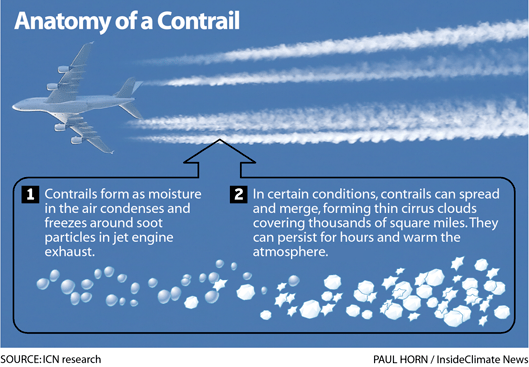
Contrails are the condensation clouds that are formed under certain conditions,

and at certain altitudes, from jet engines.

It is true that the contrails act as another cloud, trapping the greenhouse gases under it. But that is not all there is. It matters at what time of day or night the contrails are formed. Pilots, as a rule prefer to fly by night, but people prefer to be flown by day, so most flights occur during daytime.

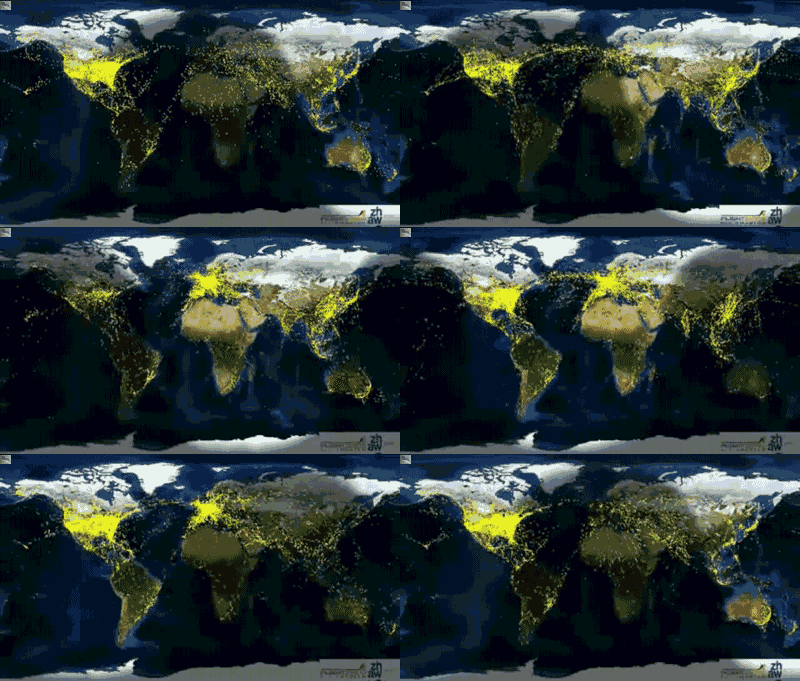
This is a fantastic 24 hour visualization of all flights. Most notable is that the vast majority of airplane flights occur during daytime, and occur over continental United States and Western Europe.

Contrails formed during daytime reflect incoming solar radiation back into space, and this reflection cools the surface of the earth much more than the trapping of greenhouse heat, which occurs both during day and night.

So, contrary to popular belief, contrails cool the earth.

Thanks to the corona virus, air pollution in China is clearing up fast. Are they telling the truth about the severity of the situation?

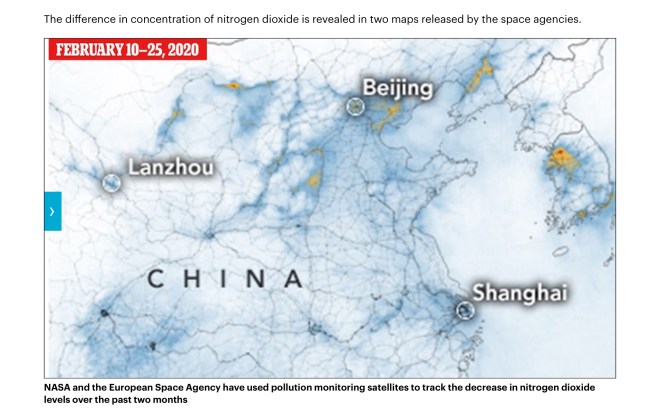
Thanks to air pollution monitoring satellites put up by NASA and ESA to give us data points for climate change,  we know a lot about who is polluting and when and where. China is by far the biggest air polluter in the world, and no wonder. They consume 47% of the work’s coal for burning, produce half the word’s steel and over half of the world’s concrete, not to mention they still mine and refine over 85% of the world’s rare earth metals, all of which are polluting endeavors.

The NASA and ESA satellites monitor among other things NO2, a toxic gas produced by burning coal, oil and gas, both in manufacturing and transportation.

How is China doing?

Comparing the maps for January and February of this year tells you all you wanted to know, and more:

density

The corona virus started out in December? in the Hubei province, of which the city of Wuhan is the capital, and the province was quickly quarantined and industrial production and transportation did come to a halt. With its 11 million people it is a major transportation center, and a production center of light manufacturing  , so the change in air pollution between January and February was minimal. But is seems that all manufacturing activity in the rest of of China has stopped, as well as the activities in the mega-cities Beijing, Shanghai and Chongqing.

Obviously China is not telling us the truth about the situation.

This is scary.


Climate change is real and is caused by rising CO2 levels, leading to less extreme weather. This is on balance good for the environment!

We have experienced a 50% increase in CO2 levels since the beginning of industrialization. In the last 30 years the level has risen 17%, from about 350 ppm to nearly 410 ppm. Is this good or bad for the climate?

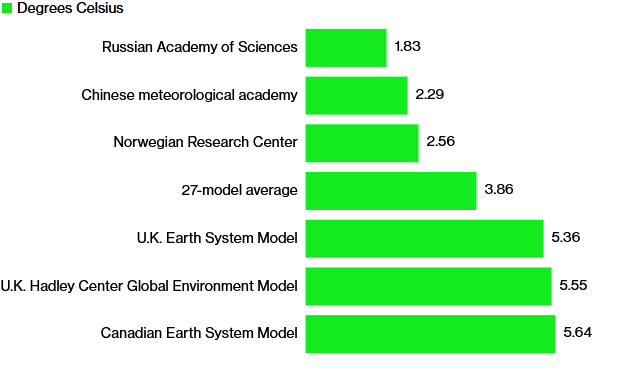
The traditional way to approach the problem of guessing what effect of rising CO2 levels has on the climate is by creating climate models. Thy have recently been adjusted, and they suddenly show a much higher rate of future temperature increase, in this case what is supposed to happen to global temperatures for a doubling of CO2 from pre-industrial times, from 270ppm to 540ppm.

https://lenbilen.com/wp-content/uploads/2020/02/screenshot_2020-02-07-climate-models-are-running-red-hot-and-scientists-done28099t-know-why1.png

The first thing that strikes you is the great discrepancies between the models. The Russian, Chinese and Norwegian models show a much slower temperature rise than  rest of the models. Why is that?

There are two ways to approach this problem. The climate models make certain assumptions about the behavior of the changing atmosphere, and based on these assumptions model future temperature changes. This is the approach from IPCC for the last 32 years. These models are failing miserably when compared to actual temperature changes. This is the traditional way.

The other way i to observe what is actually happening to our temperature over time as the CO2 increases. We have over 50 years of excellent global temperature data, so with these we can see where, when and by how much the earth has warmed.

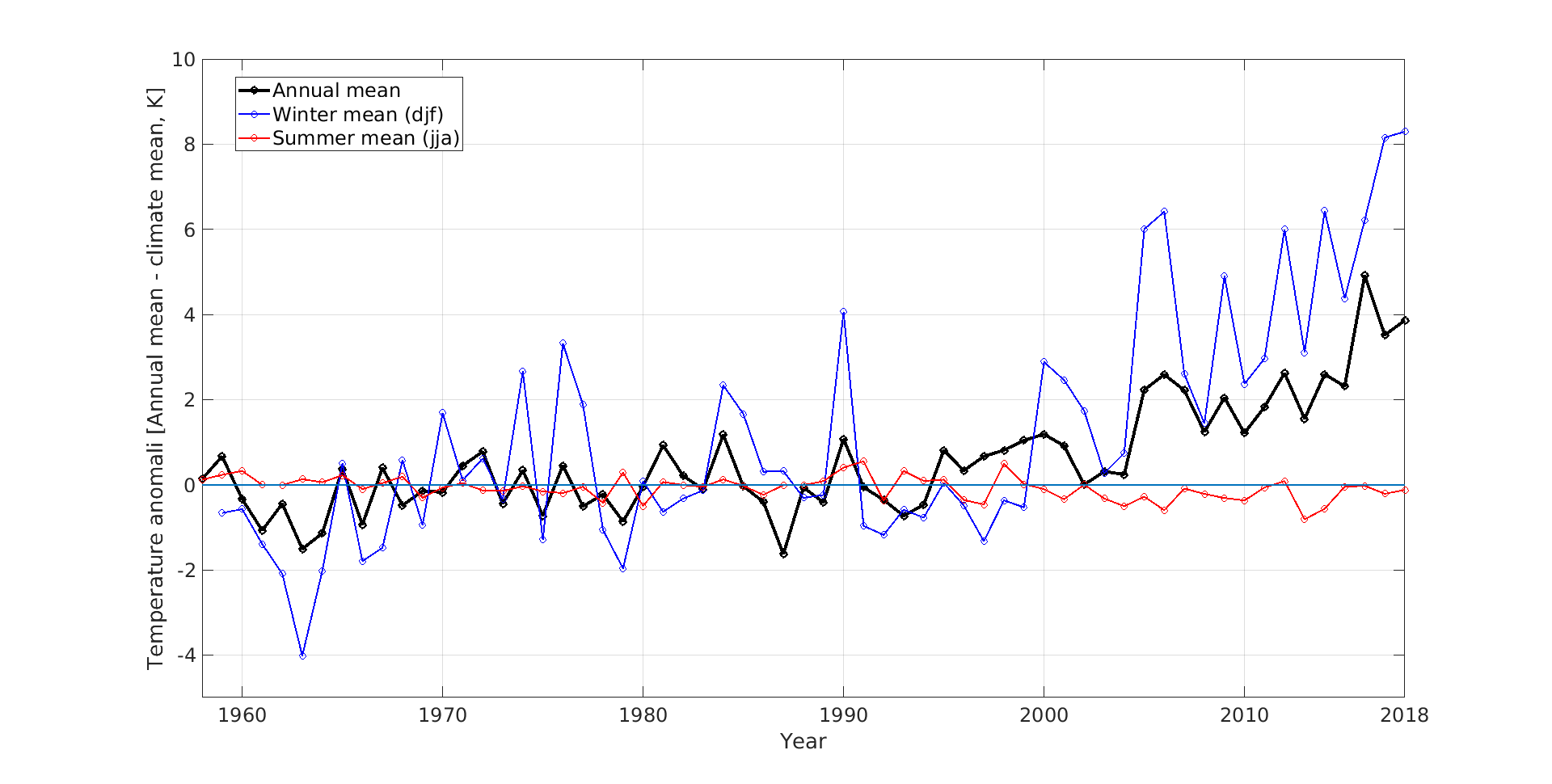
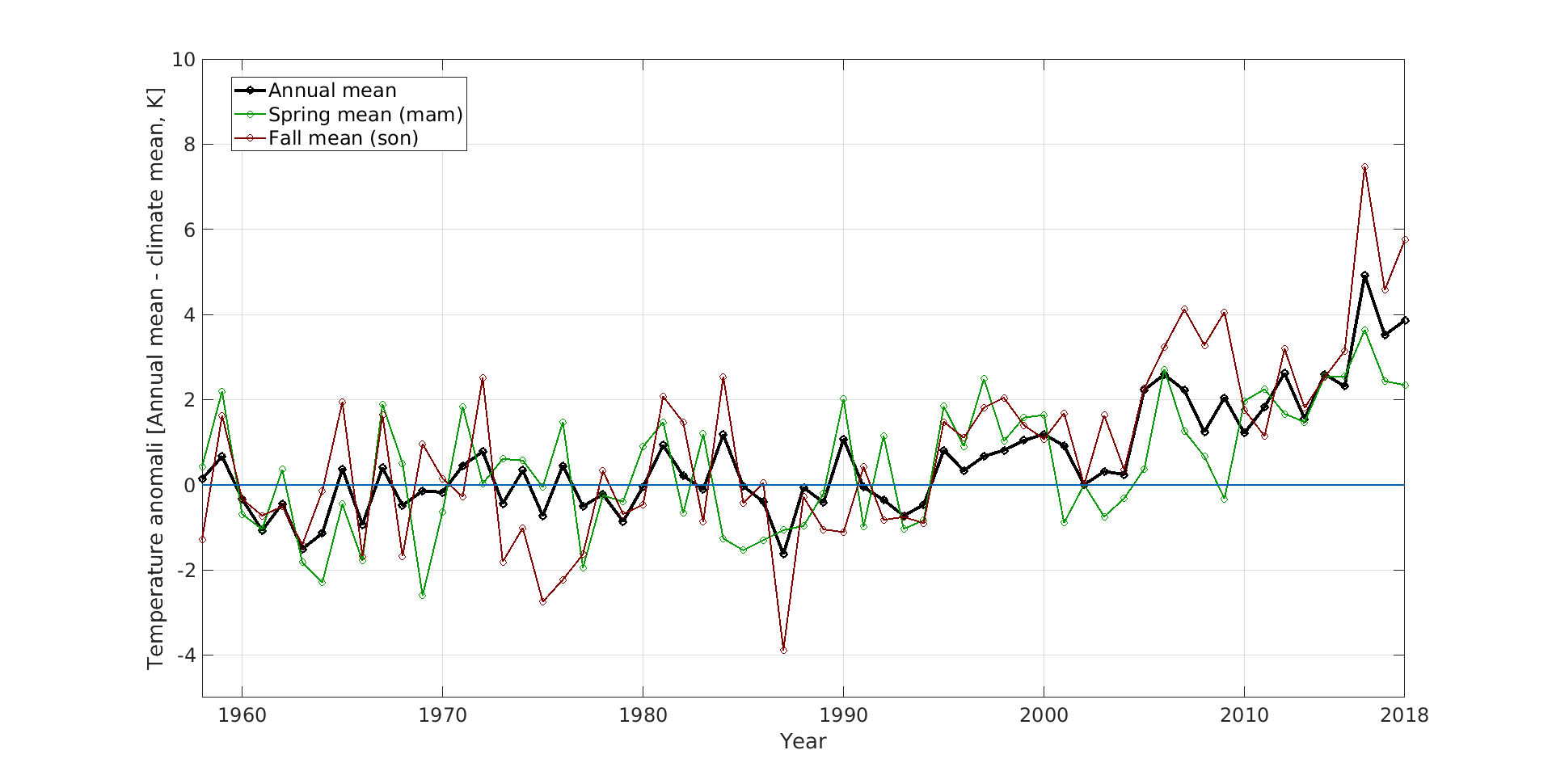
The most drastic temperature rise on earth has been in the Arctic above the 80th latitude. In the winter of 2018 it was 8C above the 50 year average. See charts from the Danish Meteorological Institute:
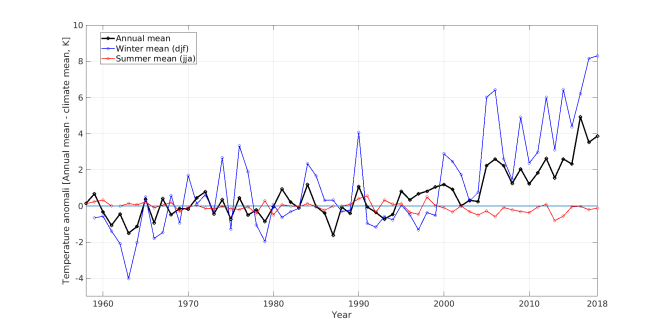
Note, there is no increase at all in the summer temperatures!
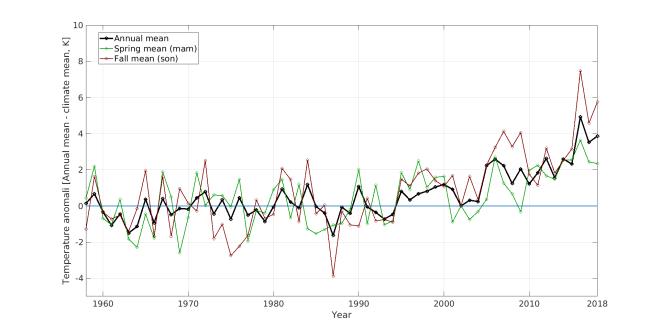
The fall temperature saw an increase of 5C and the spring temperature saw an increase of about 2.5C.

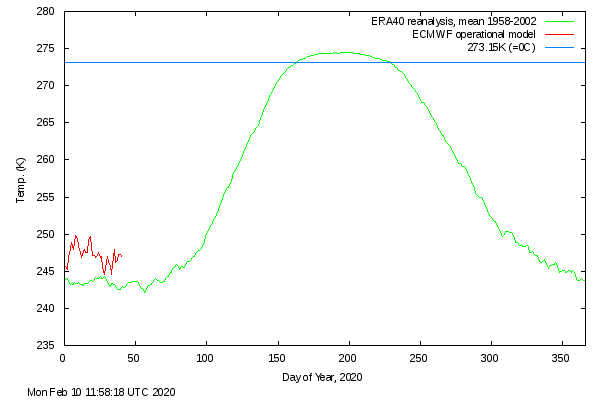
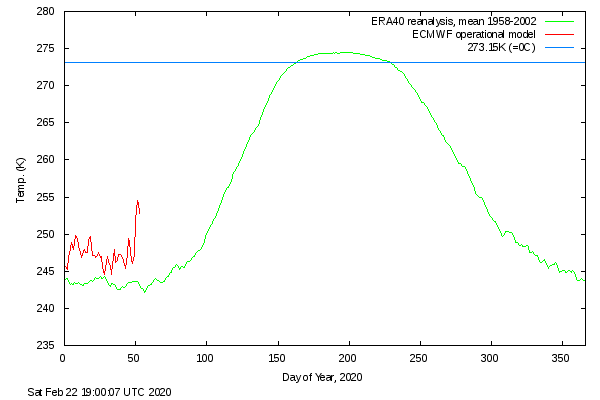
The 2020 winter has so far seen an about 5c increase Source: DMI.

This 8C ( or 5C) rise in winter temperatures is significant, most would even say alarming, but my response is, why is that?

To get the answer we must study molecular absorption spectroscopy and explain a couple of facts for the 97% of all scientists who have not studied molecular spectroscopy. IPCC and most scientists claim that the greenhouse effect is dependent on the gases that are in the atmosphere, and their combined effect is additive according to a logarithmic formula. This is true up to a certain point, but it is not possible to absorb more than 100% of all the energy available in a certain frequency band! For example: If water vapor absorbs 50% of all incoming energy in a certain band, and CO2 absorbs another 90% of the energy in the same band, the result is that 95% is absorbed, (90% + 50% * (100% – 90%)),  not 140%, (90% + 50%).

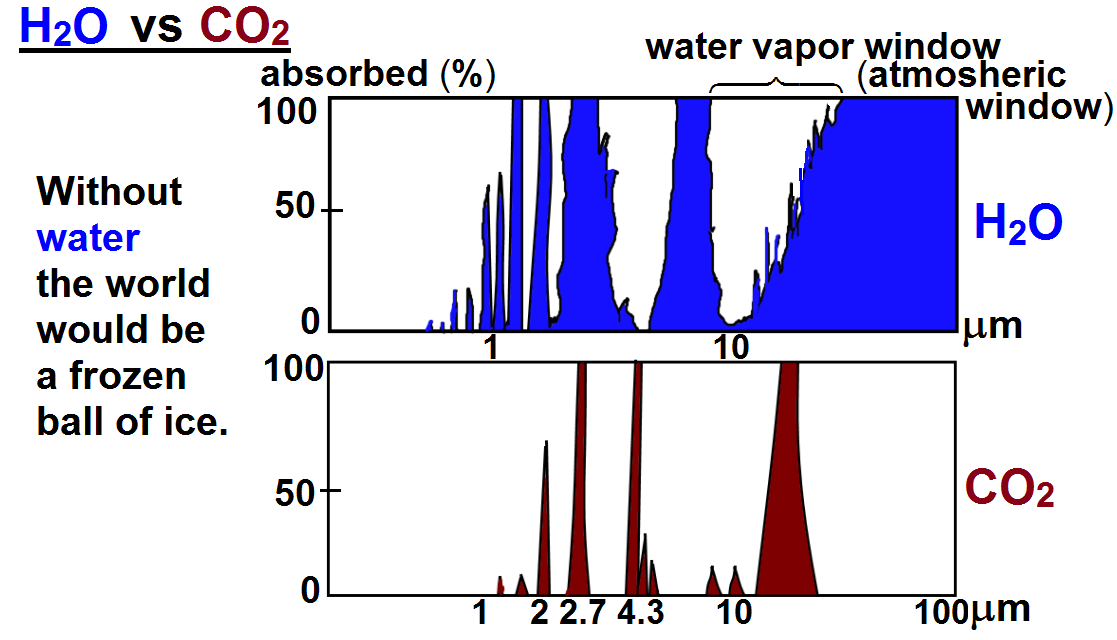
The following chart shows both CO2 and H2O are absorbing greenhouse gases, with H20 being the stronger greenhouse gas, absorbing over a much wider spectrum, and they overlap for the most part. But it also matters in what frequency ranges they absorb.
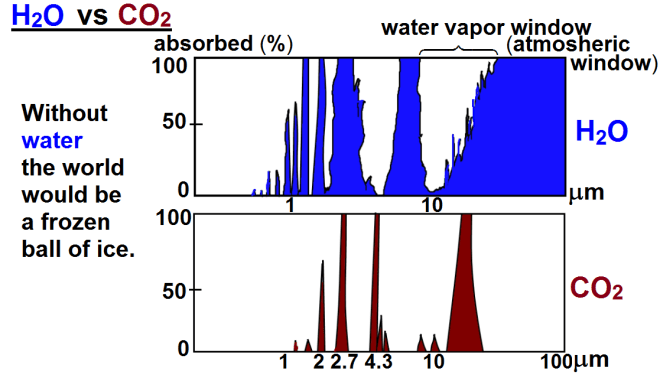
To better understand the importance of frequency spectra this we will look at the frequency ranges of the incoming solar radiation and the outgoing black body radiation of the earth. It is the latter that causes the greenhouse effect. Take a look at this chart:
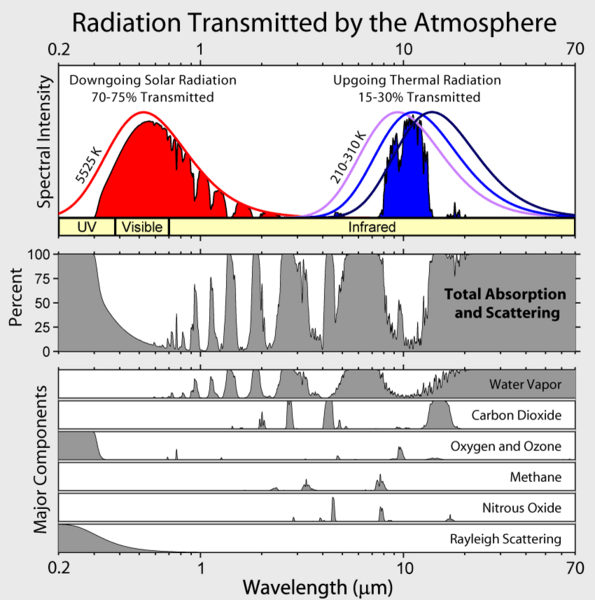
The red area represents the observed amount of solar radiation that reaches the earth’s surface. the white area under the red line represents radiation absorbed in the atmosphere. Likewise, the blue area represents the outgoing black body radiation that is re-emitted. The remaining white area under the magenta, blue or black line represents the retained absorbed energy that causes the greenhouse effect.

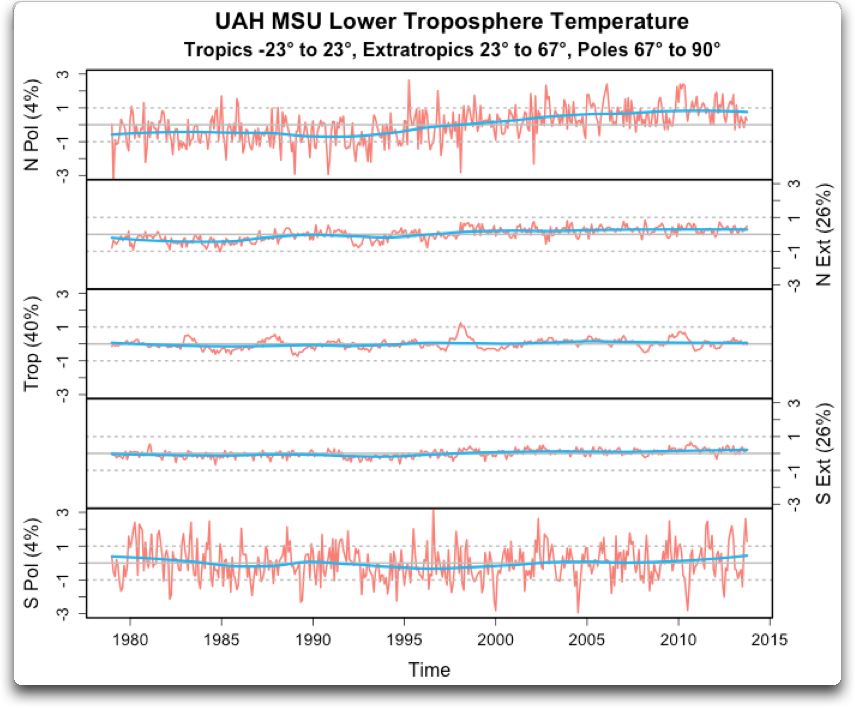
Let us now take a look at the Carbon Dioxide bands of absorption, at 2.7, 4.3 and 15 microns. Of them the 2.7 and 4.3 micron bands absorb where there is little black body radiation, the only band that counts is at 15 microns, and that is in a band where the black body radiation has its maximum. However it is also in a band where water vapor also absorb, not as much as CO2,only about 20% to 70% as much. Water vapor or absolute humidity is highly dependent on the temperature of the air, so at 30C there may be 50 times as much water vapor, at 0C there may be ten times as much water vapor, and at -25C there may be more CO2 than water vapor. At those low temperatures the gases are mostly additive. In the tropics with fifty times more water vapor than CO2, increased CO2 has no influence on the temperature whatsoever. Temperature charts confirm this assertion:

The temperature in the tropics displays no trend whatsoever. It follows the temperature of the oceans, rises in an el niño and falls in a la niña. We are now in the end of an el niño, soon to be followed by a rather strong la niña.The temperature in the southern hemisphere shows no trend. In the northern temperate region there is a slight increase, but the great increase is occurring in the Arctic. There is no increase in the Antarctic yet even though the increase in CO2 is the same in the Antarctic as it is in the Arctic and the winter temperature in the Antarctic is even lower than in the Arctic. So CO2 increase cannot be the sole answer to the winter temperature increase in the Arctic.

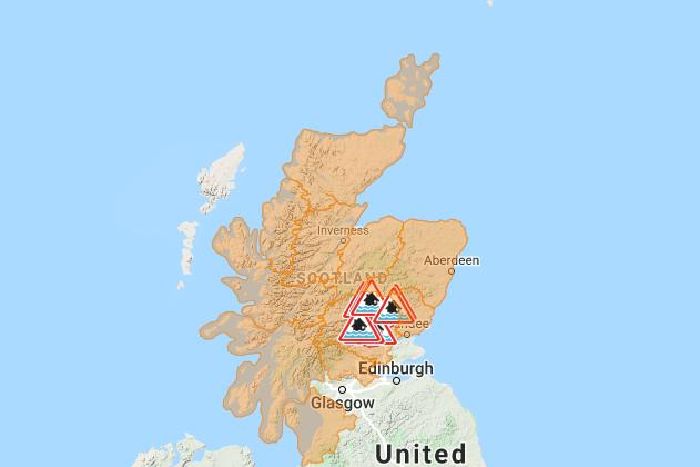
A few days ago there was a storm of historic magnitude, filled with moisture going up from the Mexican Gulf through the Atlantic and really sacked Scotland and Norway. The weather warnings called for severe floods and hurricane-like winds:
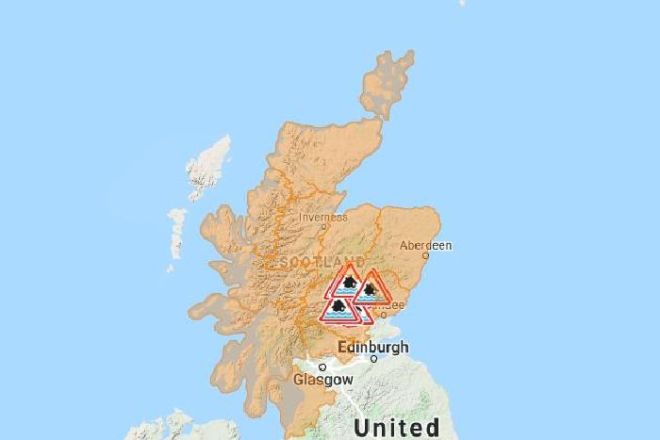
What happened to the temperature when the storm arrived?

The Arctic temperature above the 80th latitude rose about 12C, from about -30C to about -18C, and most of the moisture snowed out. What happened to the ice cover when the storm arrived? Let’s see the most recent Arctic ice cover.

As the storm arrives, some of the ice breaks up, but at the end of the storm it bounces back, helped with all the snow that just fell. After the snowfall ends the ice formed easily breaks up again.

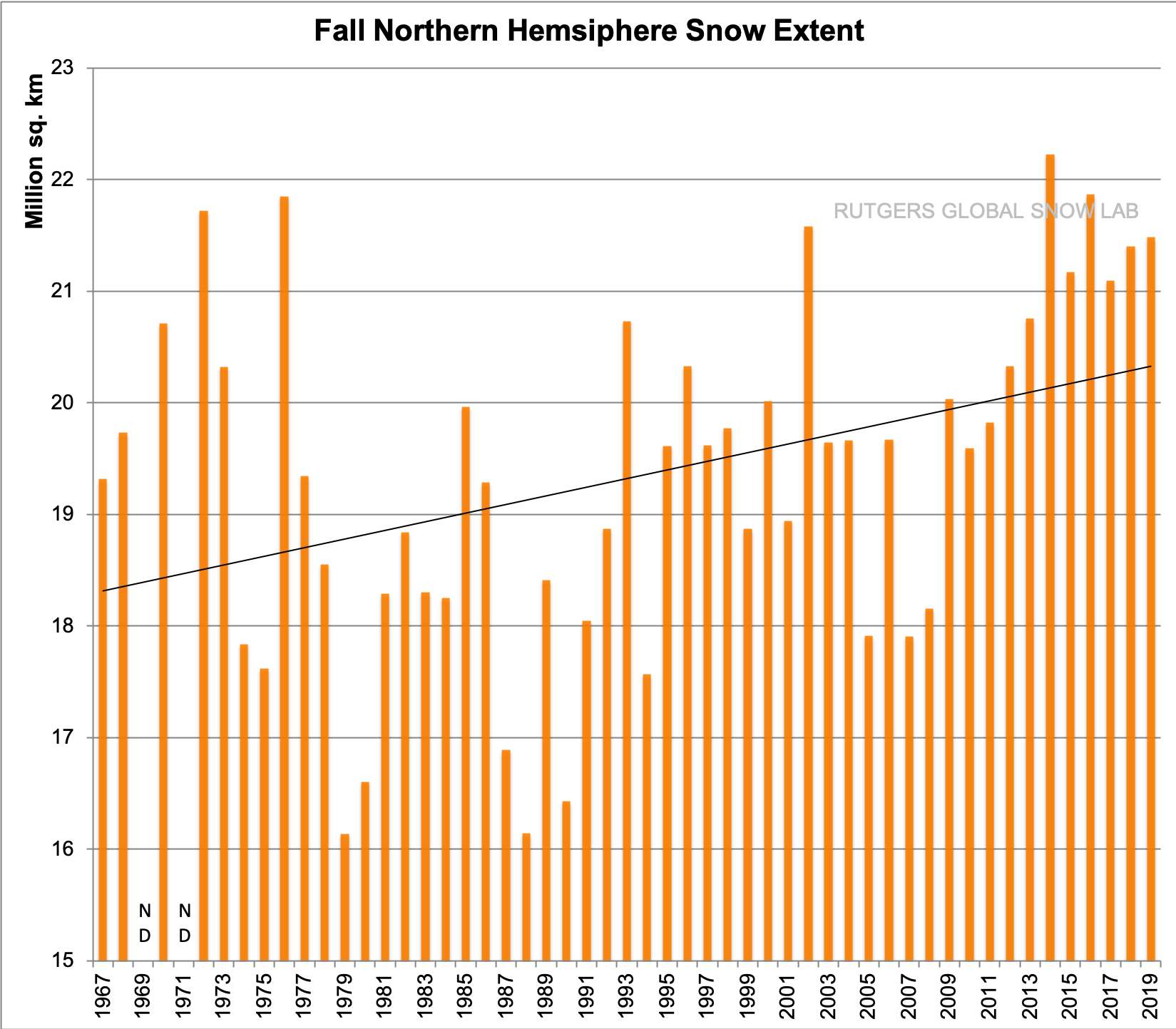
Is the snow cover increasing in the Arctic? Let us see what the snow statistics show. These are from the Rutgers snow lab.
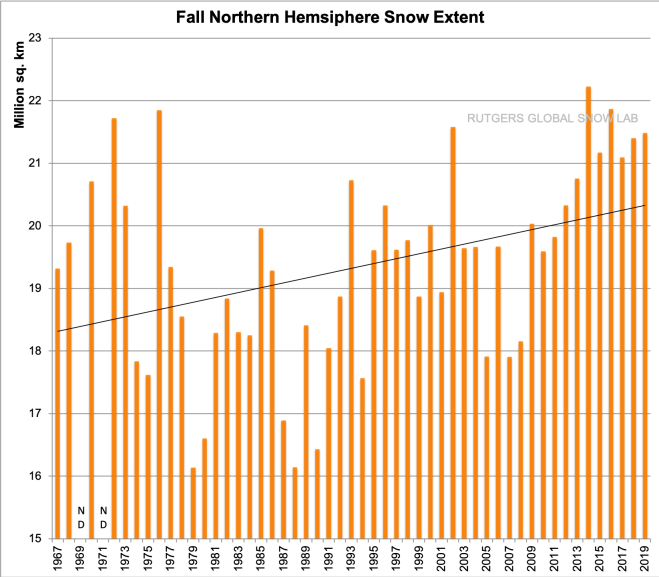
The fall snow extent is increasing by more than 2 percent per year.
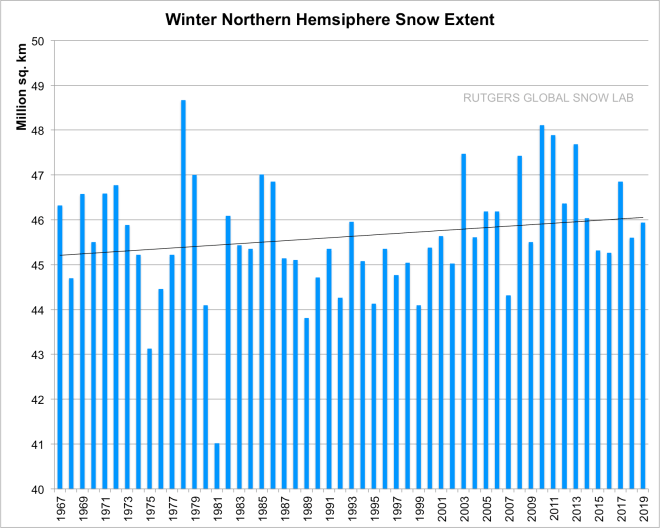
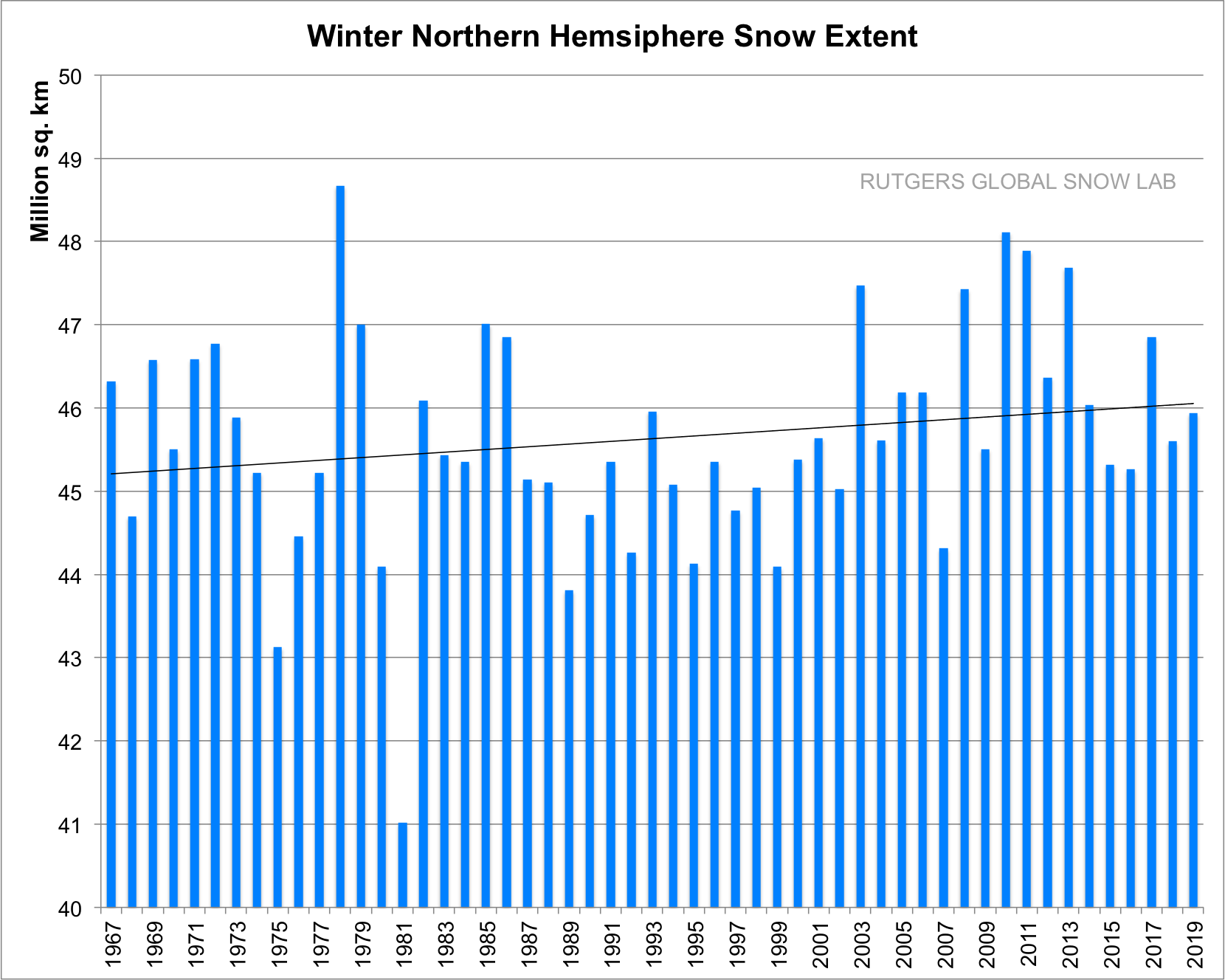
The winter snowfall has also increased but only by 0.04 percent per year.
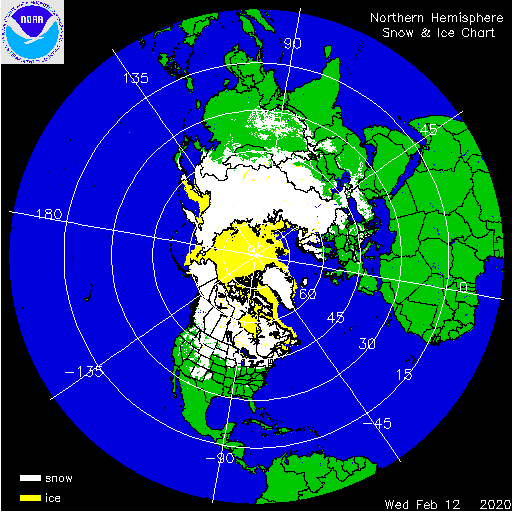
The snow covers all of Russia, Northern China, Mongolia, Tibet, Kashmir and northern Pakistan, Northern Afghanistan, Northern Iran, Turkey, Part of Eastern Europe, Scandinavia, Canada, Alaska, Greenland and parts of Western and Northern United States.
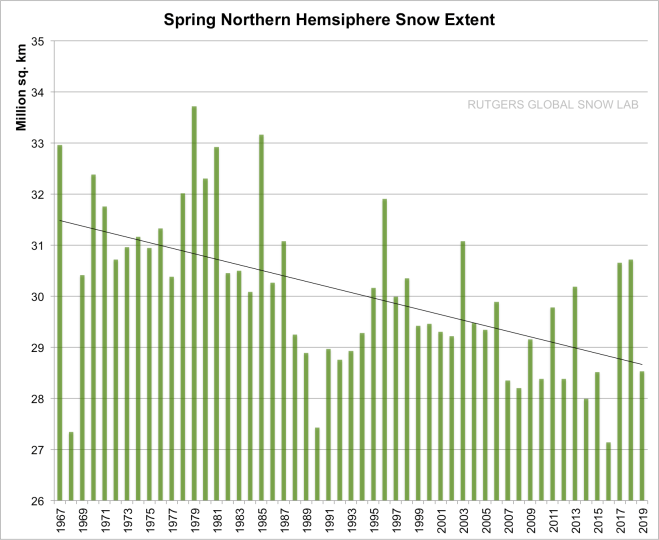
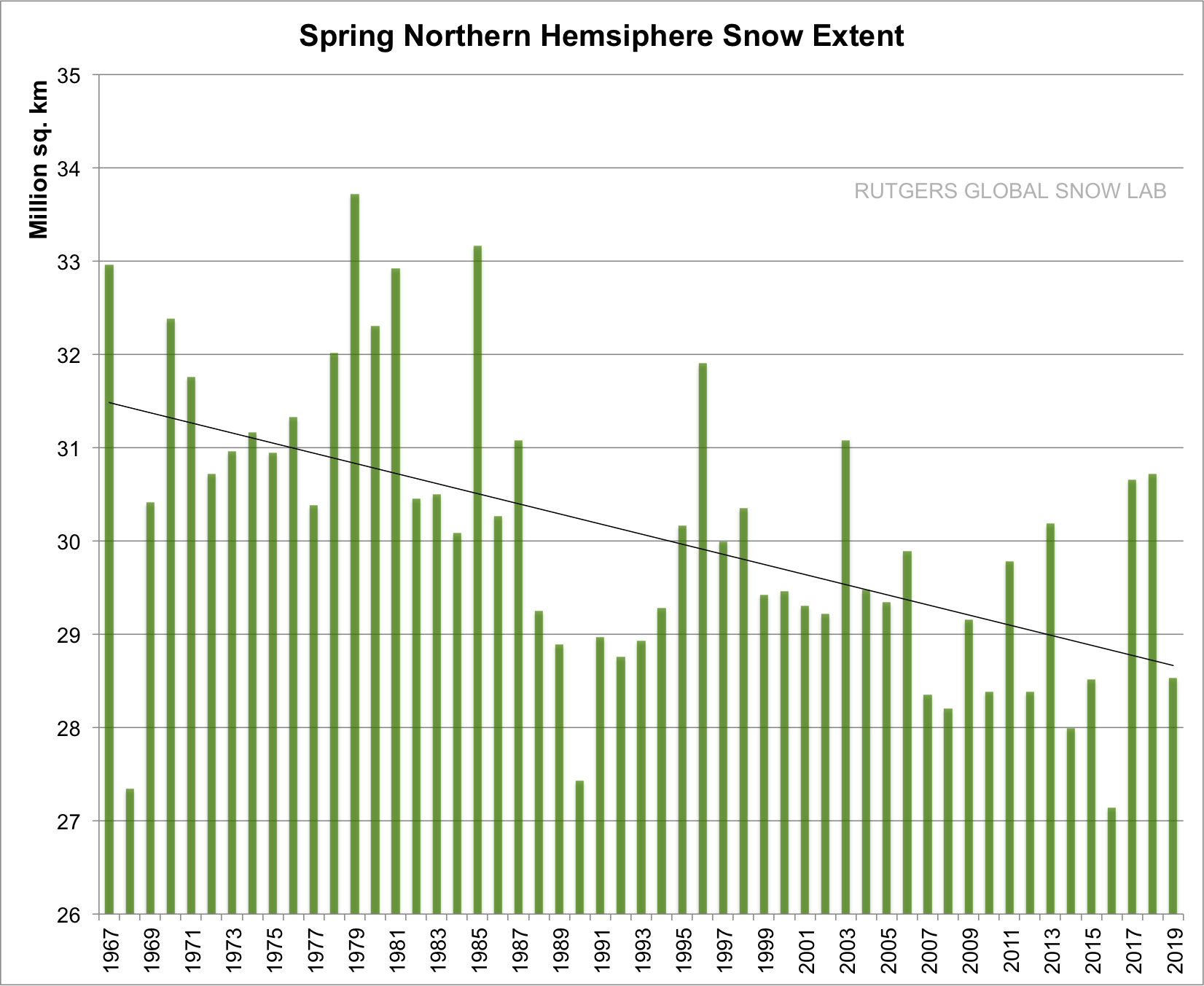
In the spring on the other hand the snow pack is melting faster, about 1.6 percent less snow per year. One of the major reasons for an earlier snow-melt is that the air is getting dirtier, especially over China, and to some extent Russia. The soot from burning coal and mining and manufacturing changes the albedo of the snow. The soot is visible on old snow all the way up to the North Pole. The other reason is that the poles are getting warmer. In the fall and winter it is mostly due to increased snowfall, but in the spring, as soon as the temperature rises over the freezing point, melting occurs.

Moving down to the continental U.S. there are even more good news.

The data presented in the next six graphs were extracted from the data available at the NOAA National Data Center Climate Data Online (NNDC CDO) website.

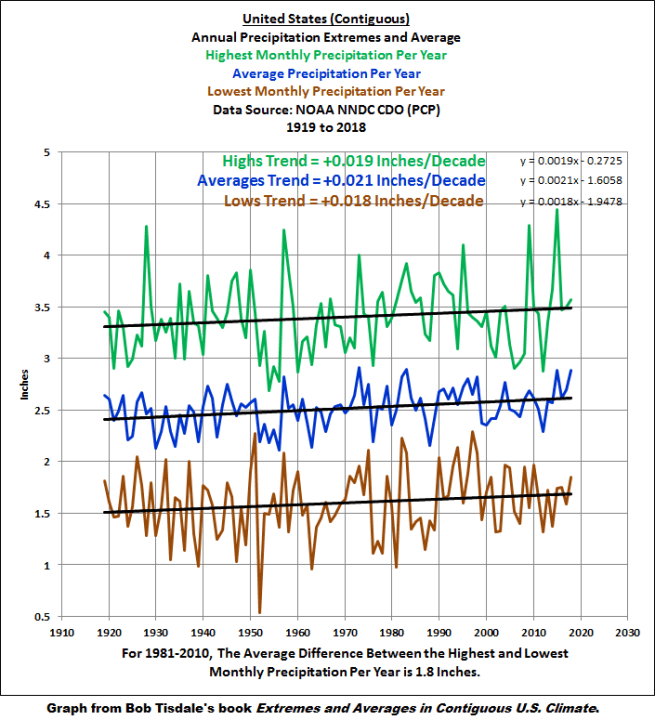
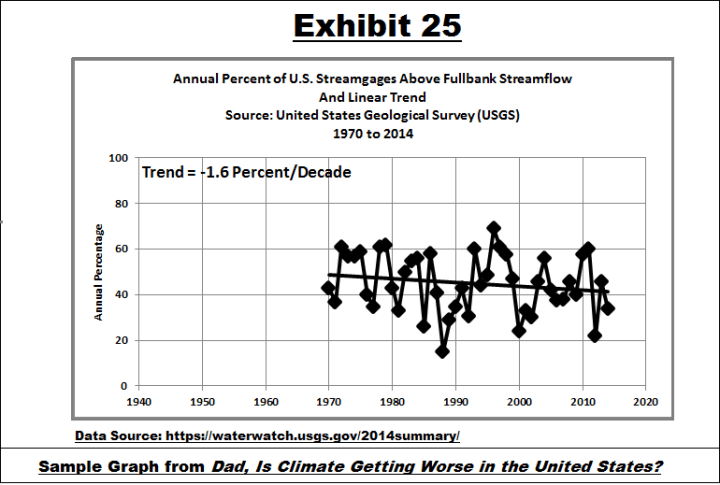
Yes, rain (and snow) are increasing, but it is also raining slightly more often and regularly, so the net result is a slight decrease in flooding.
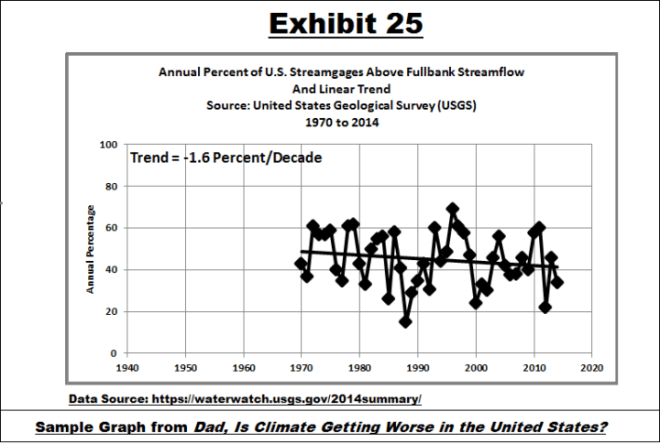
Of course, this could change in the future, and we need to watch the rain patterns, as they are constantly changing. Building more levees is not always the answer, since this will increase the risk for flooding in other places. It may be necessary to let certain areas, mostly farmland and woodland be flooded from time to time.
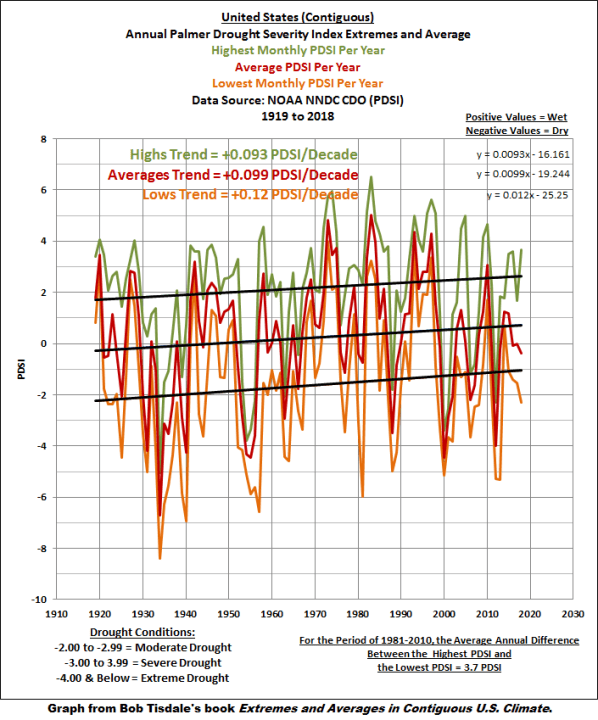
The Palmer Drought Severity Index (PDSI) uses readily available temperature and precipitation data to estimate relative dryness. It is a standardized index that generally spans -10 (dry) to +10 (wet). The chart shows Continental U.S. is getting wetter, about 0.01 PDSI index per year with the lows trend is getting wetter the fastest. This is good news.
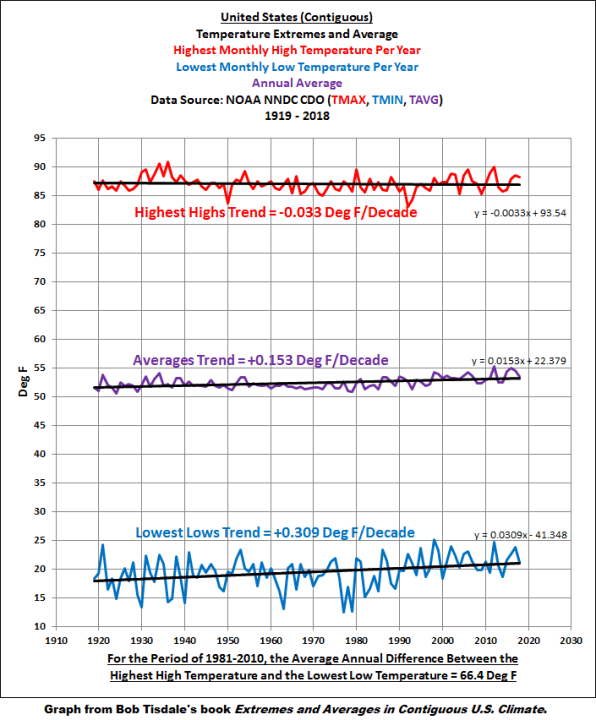
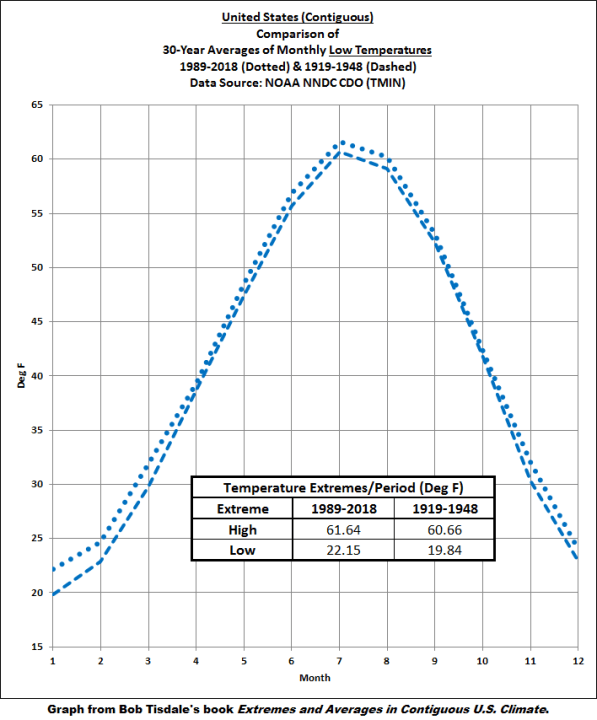
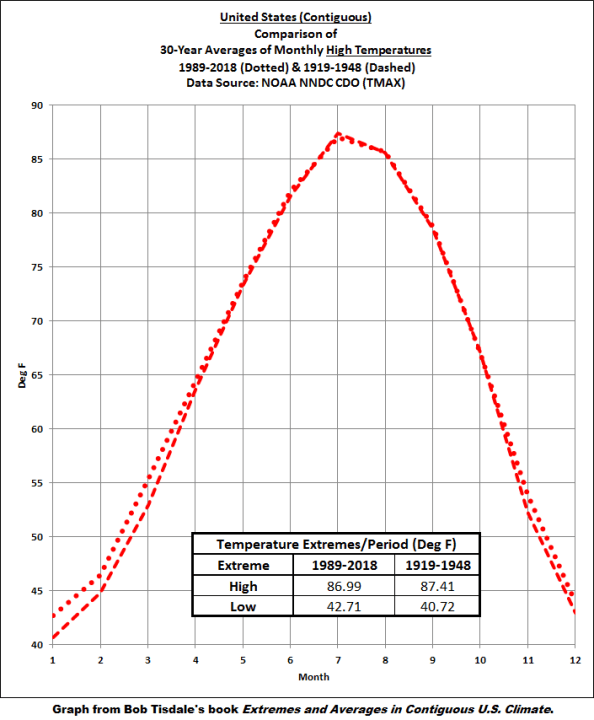
The temperature extremes keep narrowing, the maximum temperatures decrease by 0.033 degree F/decade, but the minimum temperatures increase by 0.309 degree F/decade. This is good, since tornadoes are a result of extreme temperature differences, most often associated with cold fronts.

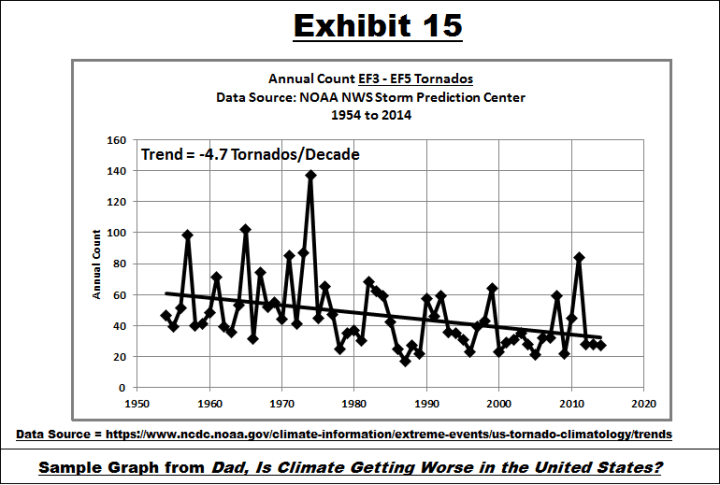
 The Continental U.S. has not had an EF5 tornado (the most severe) since 2013. Let us hope this trend continues.

Contrary to popular belief, hurricanes making landfall on the U.S. mainland are decreasing slightly, especially major hurricanes.

Taking a closer look at the seasonal temperature trends  we can see that the winter aveerage temperatures are rising by about 0.3F per decade but the summer temperatures rise only about one seventh as much, (0.04F/decade)  .
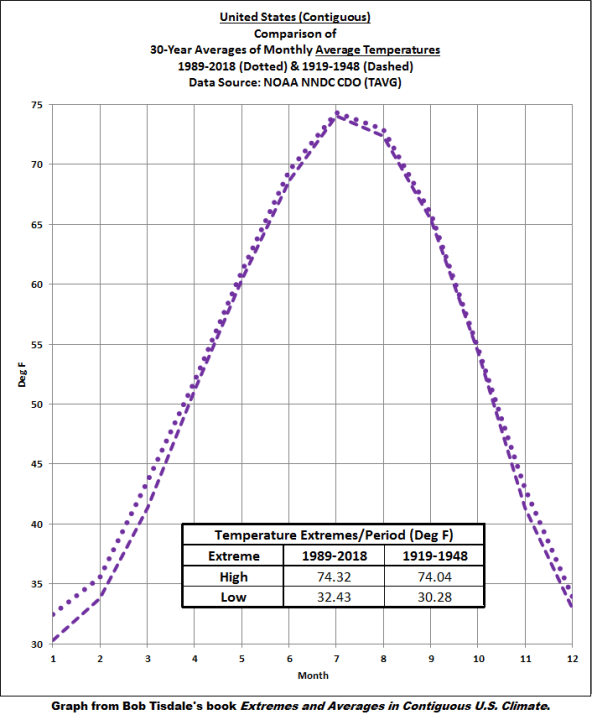
These are the average temperatures. The minimum average temperatures rise in all seasons, but mostly in the winter,

The maximum temperatures barely budge. They rise in the winter and decrease ever so slightly in the summer.

Watching the warming of the poles, and even the continental U.S., far from being an impending end of mankind as we know it, may even be beneficial. Warmer poles in the winter means less temperature gradient between the poles and the tropics, leading to less severe storms. They will still be there, but less severe.

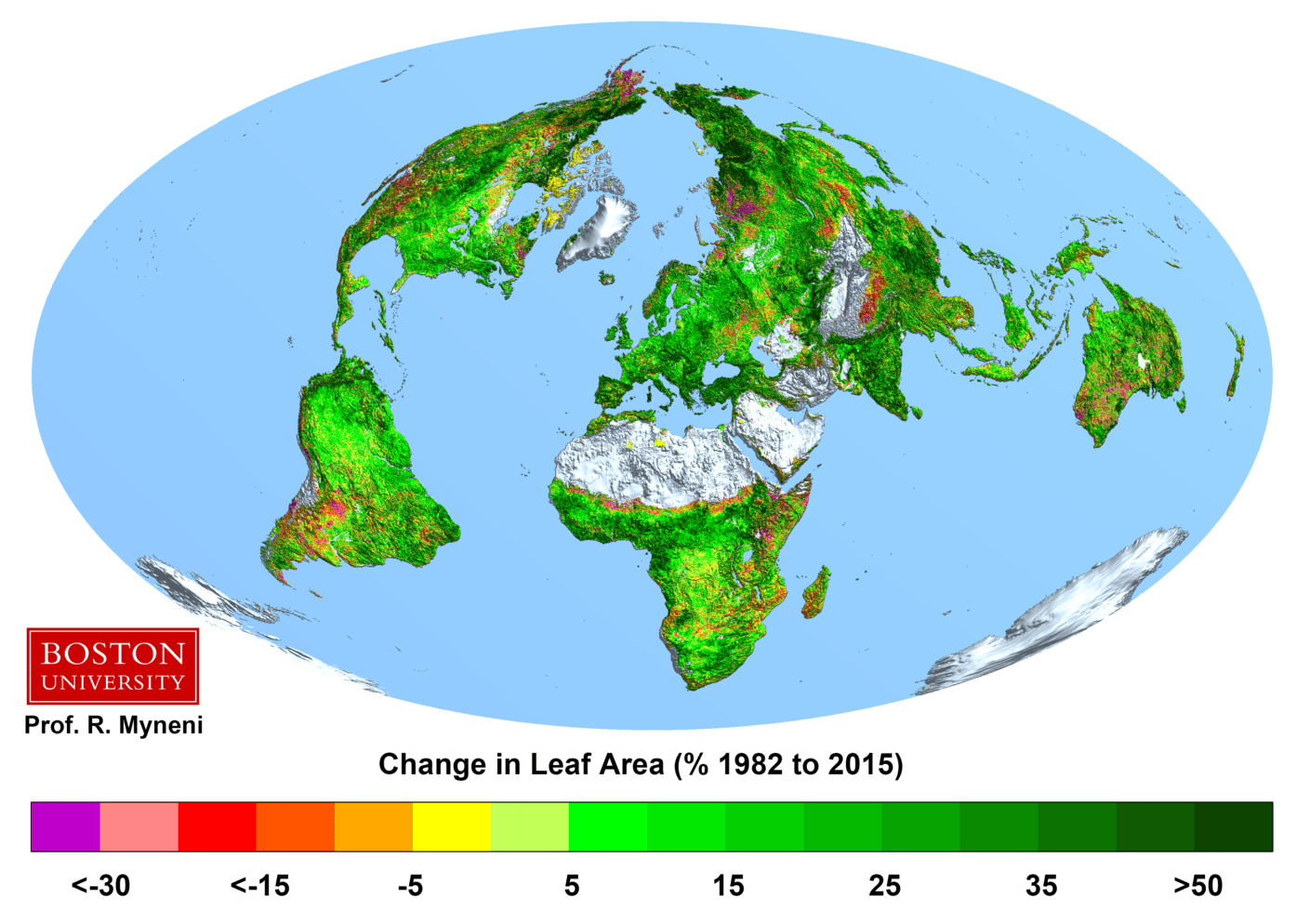
There is one great benefit of increased CO2, the greening of the earth.
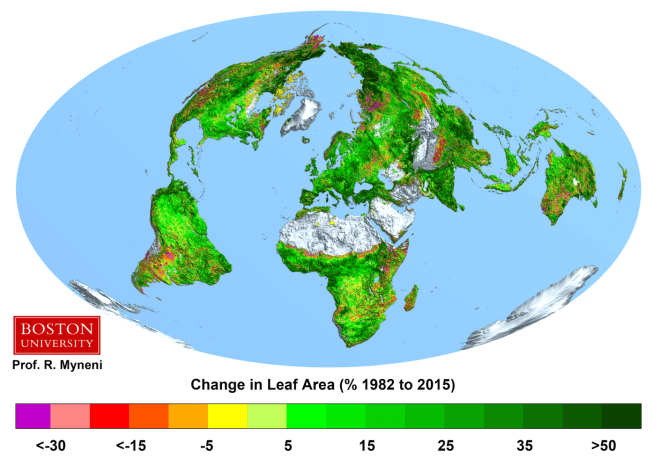
Thanks to this greening, which is accomplished with the fertilizer effect of CO2, the earth can now keep another 2 billion people from starvation, not to mention what it does to plants and wildlife.

Having said that, I am still a conservationist. Coal, oil and gas will run out at some time, and I for one would like to save some for our great grandchildren, not yet born. In addition I would like to minimize the need for mining, which can be quite destructive. We have immense environmental problems, like water pollution, deforestation, intoxication of the soil, over-fertilization with nitrogen, real air pollutants, such as Sulfur compounds and soot, just to name a few. They have one thing in common: It takes lots of energy to do the cleanup.

The best solution is to switch most electricity generation to Thorium molten salt nuclear power. There are multiple reasons why this should be done as a priority by streamlining regulation and facilitate competition in development of the best solutions to the energy problems.
The many cases why Thorium Nuclear Power is the only realistic solution to the world’s energy problems.
The climate change caused by rising CO2 levels leads to less extreme weather, not more, weather statistics prove.

We have experienced a 50% increase in CO2 levels since the beginning of industrialization. In the last 30 years the level has risen 17%, from about 350 ppm to nearly 410 ppm. Is is time to panic and reduce the CO2  emissions to stop the rise?

The traditional way to approach the problem of guessing what effect of rising CO2 levels has on the climate is by creating climate models. Thy have recently been adjusted, and they suddenly show a much higher rate of future temperature increase, in this case what is supposed to happen to global temperatures for a doubling of CO2 from pre-industrial times, from 270ppm to 540ppm.

There are two ways to approach this problem. The models make certain assumptions about the behavior of the changing atmosphere and model future temperature changes. This is the approach from IPCC for the last 32 years. These models are all failing miserably when compared to actual temperature changes.

The other way i to observe what is actually happening to our temperature over time as the CO2 increases. We have 50 years of excellent global temperature data, so with these we can see where, when and by how much the earth has warmed.

The most drastic temperature rise on earth has been in the Arctic above the 80th latitude. In the winter of 2018 it was 8C above the 50 year average. See charts from the Danish Meteorological Institute:

Note, there is no increase at all in the summer temperatures!

The fall temperature saw an increase of 5C and the spring temperature saw an increase of about 2.5C.

The 2020 winter has so far seen an about 4c increase Source: DMI.

This 8C winter rise of temperature is significant, most would even say alarming, but my response is, why is that?

To get the answer we must study molecular absorption spectroscopy and explain a couple of facts for the 97% of all scientists who have not studied molecular spectroscopy. IPCC and most scientists claim that the greenhouse effect is dependent on the gases that are in the atmosphere, and their combined effect is additive according to a logarithmic formula. This is true up to a certain point, but it is not possible to absorb more than 100% of all the energy available in a certain frequency band! For example: If water vapor absorbs 90% of all incoming energy in a certain band, and CO2 absorbs another 50% of the energy in the same band, the result is that 95% is absorbed, (90% + 50% * (100% – 90%)),  not 140%, (90% + 50%).

The following chart shows both CO2 and H2O are absorbing greenhouse gases, with H20 being the stronger greenhouse gas, absorbing over a much wider spectrum, and they overlap for the most part. But it also matters in what frequency range s they absorb.

For this we will have to look at the frequency ranges of the incoming solar radiation and the outgoing black body radiation of the earth. It is the latter that causes the greenhouse effect. Take a look at this chart:

The red area represents the observed amount of solar radiation that reaches the earth’s surface. the white area under the red line represents radiation absorbed in the atmosphere. Likewise, the blue area represents the outgoing black body radiation that is re-emitted. The remaining white area under the magenta, blue or black line represents the retained absorbed energy that causes the greenhouse effect.

Let us  now take a look at the Carbon Dioxide bands of absorption, at 2.7, 4.3 and 15 microns. Of them the 2.7 and 4.3 micron bands absorb where there is little black body radiation, the only band that counts is at 15 microns, and that is in a band where the black body radiation has its maximum. However it is also in a band where water vapor also absorb, not as much as CO2,only about 20% to 70% as much. Water vapor or absolute humidity is highly dependent on the temperature of the air, so at 30C there may be 50 times as much water vapor, at 0C there may be ten times as much water vapor, and at -25C there may be more CO2 than water vapor. At those low temperatures the gases are mostly additive. In the tropics with fifty times more water vapor than CO2, increased CO2 has no influence on the temperature whatsoever. Temperature charts confirm this assertion:

Here the temperature in the tropics displays no trend whatsoever. It follows the temperature of the oceans, rises in an el nino and falls in a la nina. The temperature in the southern hemisphere shows no trend. In the northern temperate region there is a slight increase, but the great increase is occurring in the Arctic. There is no increase in the Antarctic yet even though the increase in CO2 is greater in the Antarctic and the winter temperature in the Antarctic is even lower than in the Arctic. So CO2 increase cannot be the sole answer to the winter temperature increase in the Arctic.

A few days ago there was a storm of historic magnitude, filled with moisture going up from the Mexican Gulf through the Atlantic and really sacked Scotland and Norway. The weather warnings called for severs floods and hurricane-like winds:

What happened to the temperature when the storm arrived?

ice The Arctic temperature above the 80th latitude rose about 12C, from about -30C to about -18C, and most of the moisture snows out. What happens to the ice covercover when the storm arrives? Let’s see the most recent Arctic ice cover.

As the storm arrives, some of the ice breaks up, but at the end of the storm it bounces back, helped with all the snow that just fell.

Is the snow cover increasing in the Arctic?Let us see what the snow statistics show. These are from the Rutgers snow lab.

The fall snow extent is increasing, and has increased by more than 2 percent per year.

The winter snowfall has also increased but only by 0.04 percent per year. The snow covers all of Russia, Northern China, Mongolia, Tibet, Kashmir and northern Pakistan, Northern Afghanistan, Northern Iran, Turkey, Part of Eastern Europe, Scandinavia, Canada, Alaska, Greenland and part of Western and Northern United States.

In the spring on the other hand the snow pack is melting faster, about 1.6 percent less snow per year. One of the major reasons for an earlier snowmelt is that the air is getting dirtier, especially over China, and to some extent Russia. The soot from burning coal and mining and manufacturing changes the albedo of the snow. The soot is visible on old snow all the way up to the North Pole. The other reason is that the poles are getting warmer. In the fall and winter it is mostly due to increased snowfall, but in the spring, as soon as the temperature rises over the freezing point, melting occurs.

Moving down to the continental U.S. there are even more good news.

The data presented in the next six graphs were extracted from the data available at the NOAA National Data Center Climate Data Online (NNDC CDO) website.

Yes, rain (and snow) are increasing, but it is also raining slightly more often and regularly, so the net result is a slight decrease in flooding.

Of course, this could change in the future, and we need to watch the rain patterns, as they are constantly changing. Building more levees is not always the answer, since this will increase the risk for flooding in other places. It may be necessary to let certain areas, mostly farmland and woodland be flooded from time to time.

The Palmer Drought Severity Index (PDSI) uses readily available temperature and precipitation data to estimate relative dryness. It is a standardized index that generally spans -10 (dry) to +10 (wet). The chart shows Continental U.S. is getting wetter, about 0.01 PDSI index per year. This is good news.

The temperature extremes keep narrowing, the maximum temperatures decrease by 0.033 degree F/decade, but the minimum temperatures increase by 0.309 degree F/decade. This is good, since tornadoes are a result of extreme temperature differences, most often associated with cold fronts.

 The Continental U.S. has not had an EF5 tornado (the most severe) since 2013. Let us hope this trend continues.

Contrary to popular belief, hurricanes making landfall on the U.S. mainland are decreasing slightly, especially major hurricanes.

Taking a closer look at the seasonal temperature trends  we can see that the winter temperatures are rising. but the summer temperatures stay the same.

hh

These are the average temperatures. The minimum temperatures rise in all seasons, but mostly in the winter,

The maximum temperatures barely budge. They rise in winter and decrease ever so slightly in the summer.

Watching  the warming of the poles, and even the continental U.S., far from being an impending end of mankind as we know it, may even be beneficial. Warmer poles in the winter means less temperature gradient between the poles and the tropics, leading to less severe storms. They will still be there, but less severe.
There is one great benefit of increased CO2, the greening of the earth.

Thanks to this greening, done with only the fertilizer of CO2 the earth can now keep another 2 billion people from starvation, not to mention what it does to plants and wildlife.

Having said that, I am still a conservationist. Coal, oil and gas will run out at some time, and I for one would like to save some for my great grandchildren, not yet born. In addition I would like to minimize the need for mining, which can be quite destructive. We have immense environmental problems, like water pollution, deforestation, intoxication of the soil, over-fertilization with nitrogen, real air pollutants, such as Sulfur compounds and soot, just to name a few. They have one thing in common: It takes lots of energy to do the cleanup.

The best solution is to switch most electricity generation to Thorium molten salt nuclear power. There are multiple reasons why this should be done as a priority.

Twenty-five reasons to rapidly develop Thorium based Nuclear Power generation.

We need badly to develop and build Thorium based molten salt fast breeder nuclear reactors to secure our energy needs in the future. Lest anyone should be threatened by the words fast breeder, it simply means it uses fast neutrons instead of thermal neutrons, and breeder means it produces more fissible material than it consumes, in the case of Thorium the ratio is about 1.05.

1. A million years supply at today’s consumption levels.

2. Thorium already mined, ready to be extracted.
3. One ten-thousandth of the TRansUranium waste compared to a U-235 based fast breeder reactor.

4. Thorium based nuclear power produces Pu-238, needed for space exploration.

5. Radioactive waste from an LFTR decays down to background radiation in 300 years compared to a million years for U-235 based reactors.

6. Thorium based nuclear power is not suited for making nuclear bombs.

7. Produces isotopes that helps cure certain cancers.

8. Molten Salt Thorium Reactors are earthquake safe.

9. Molten Salt Thorium Reactors cannot have a meltdown, the fuel is already molten.

10. Molten Salt Nuclear Reactors have a very high negative temperature coefficient leading to a safe and stable control.

11. Atmospheric pressure operating conditions, no risk for explosions.

12. Virtually no spent fuel problem, very little on site storage or transport.

13. Thorium Nuclear Power generators  scale  beautifully from small portable generators to full size power plants.

14. No need for evacuation zones, can be placed near urban areas.

15. Liquid Fluoride Thorium Reactors will work both as Base Load and Load Following power plants.

16. Liquid Fluoride Thorium Reactors will lessen the need for an expanded national grid.

17. Russia has an active Thorium program.

18. China is having a massive Thorium program.

19. India is having an ambitious Thorium program.

20. United States used to be the leader in Thorium usage. What happened?

21. With a Molten Salt Reactor, accidents like the Three Mile Island disaster will not happen.

22. With a Molten Salt Reactor, disasters like Chernobyl are impossible.

23. With Molten Salt Reactors, a catastrophe like Fukushima cannot happen.

24. Produces electrical energy at about 4 cents per KWh.

25. Can deplete some of the existing radioactive waste and nuclear weapons stockpiles.