Is it weather? Is it climate change?

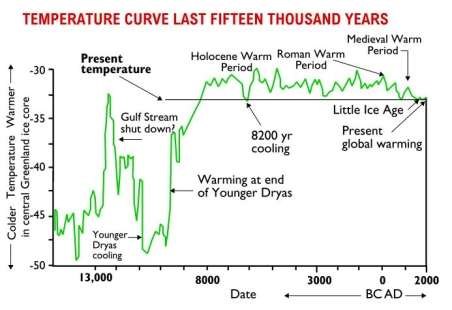
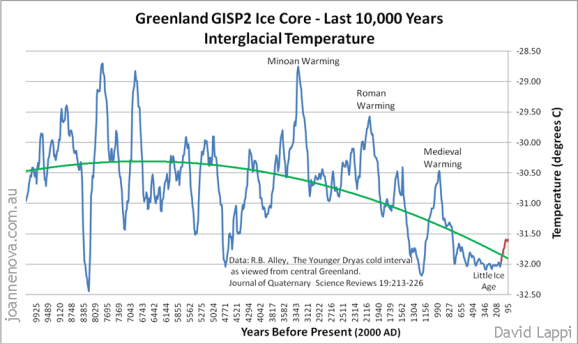
The weather has been warm lately. the earth has set a string of new maximum temperatures in July and will set a new absolute record for the month of July since the beginning of satellite record in 1079. The once reputable Forbes Magazine expressed it this way: July 4 was the warmest day in over 100,000 years! Now wait a minute! Aren’t we still recovering from the little ice age? See chart:

It was warmer for 9,000 of the last 10,000 years than it is now!

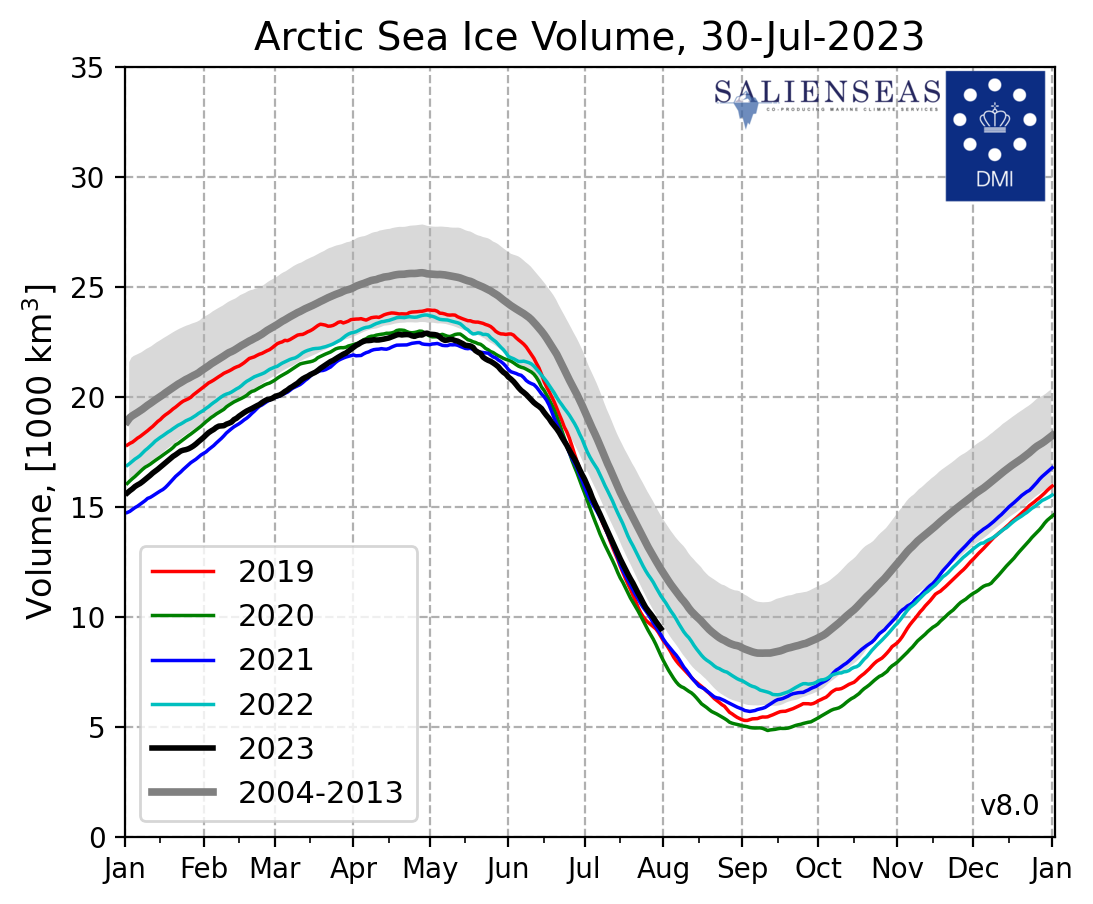
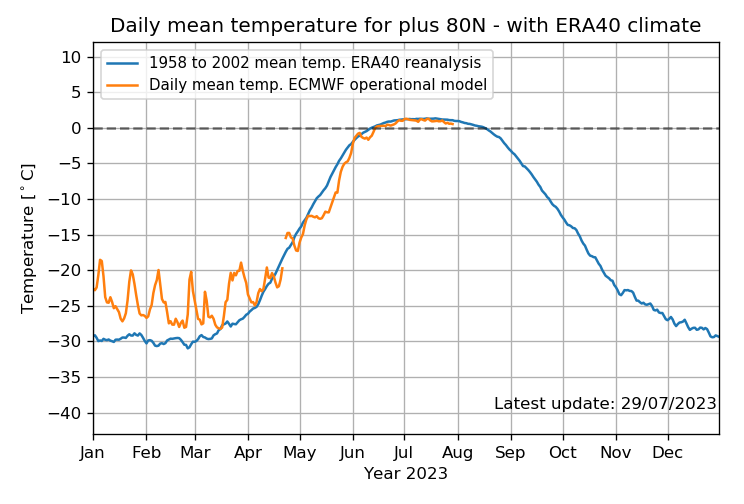
Let us take a look at what is happening to the Arctic ice sheet. Its demise has been predicted to be total well before 2020. How is that going? The Danish Meteorological institute takes daily measurements of the Arctic and Greenland’s ice sheet, volume and temperature.

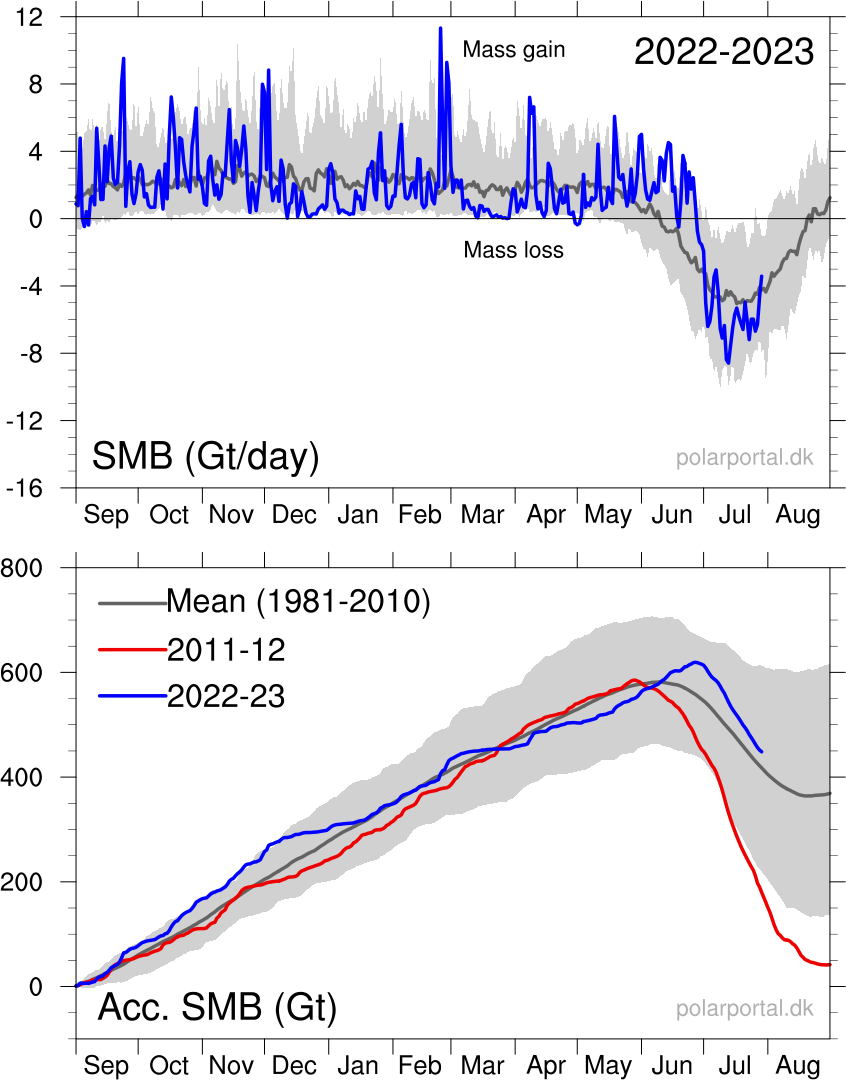
It seems pretty normal to me, no runaway ice melt the last few years. I fact this year the Arctic temperature above the 80th latitude has been at or below normal since late April. How about the ice on Greenland?

The ice gain, and the summer ice loss over Greenland seem pretty normal to me.Yes the snow melt was delayed by a month,followed bya stronger than normal snow melt. This is all within the boundaries of normal weather.

The heat wave in the south and Southwest of U.S.A. was caused by a blocking high pressure, causing less clouds, less winds and in part less rain than normal. This happens some years, but can still be explained as weather.

The CO2 level during 8,000 B.C. to 1,000 A.D. was always below 300 ppm (it is now 415 ppm), so we can not blame CO2 alone for the increased heat. There are other factors involved that are much more important to explain climate change. If you are interested, check: Of the recorded temperature increase between 1980 and 2022, how much is attributable to CO2, and how much to other greenhouse gases?

Hot enough? Hillary Clinton is full of hot air. A Limerick.

This tweet from the twice defeated presidential candidate and 2016 election denier Hillary Clinton caught my attention for its many factual errors. This is the forwarded tweet:

It begins with factual recording from the Washington Post. It is a record string of very hot days in Phoenix. In fact, today is the 25th day of over 110F, and continuing.

The next headline is from CNN tells of the heat wave all over the south, where nearly every community in the area shows one heat record after another. The count is more than twice as high now. The heat wave continues. About the only record not broken is the maximum temperature in Death Valley, still standing at 134°F (57°C) on July 10, 1913.

Not to be outdone, MSNBC chimes in with “We are in uncharted territory”, which is true since worldwide satellite measurements didn’t start until 1979. So it isn’t very surprising that new records will be set. The time frame is only 44 years.

But Forbes magazine takes the cake: The once serious business publication states that July 4 was the hottest day in over 100,000 years! The real temperature after the little ice age isn’t even back to the medieval warm period, much less the Roman warm period, even less than the Minoan warming

Even more interesting is the temperature in the Holocene Climate optimum:

From this chart we can see, even as there were no global measurements taken it was warmer during 8000 of the last 10,000 years, at least according to the Greenland Ice Cores.

But back to the Hillary tweet: CBS claimed that Earth just had the hottest June on record. What they forgot to mention was “since worldwide satellite records began in 1979”

This calls for a Limerick

The Climate change pace in this plot

shows voting next fall means a lot.

No original sin

if Republicans win

since temperatures will be less hot.

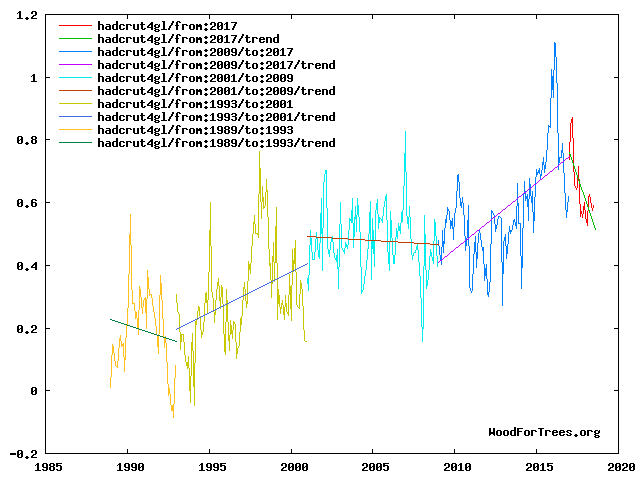
From Wattsupwiththat.com comes this interesting plot: (Thanks, David Middleton)

From this we can see that the global temperature changes according to hadcrut4gl are:

During the presidency of George H W Bush temperatures fell by 0.20 C/decade

During the presidency of Bill Clinton temperatures rose by 0.26 C/decade

During the presidency of George W Bush temperatures fell by 0.04 C/decade

During the presidency of Barack H Obama temperatures rose by 0.42 C/decade

So far , during the Presidency of Donald J Trump global temperatures have receded 0.24 C.

President Donald J Trump ended his presidency with a temperature decline of 0.37C/decade.

So far, during Joe Biden ‘s presidency temperatures are up 0.18C, and that was before the latest heatwave.

It seems the hot air is coming from Democrats, and with Republicans cooler minds prevail

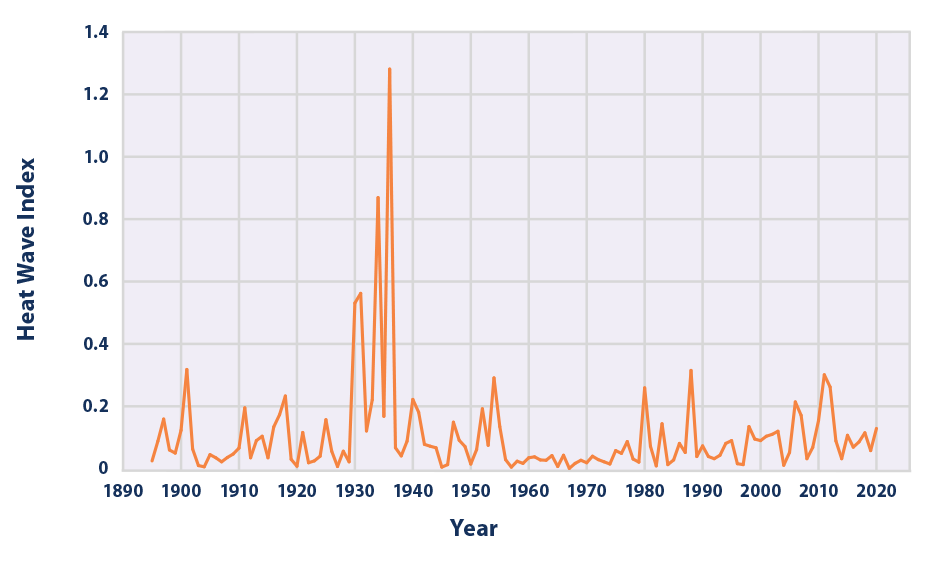
And a bonus question. During the 1930s the number, length and severity of U.S heatwaves was much worse. Who was president for most of that time?

Oh and by the way, in the 1930s the CO2 level was around 300 ppm. It is now 418.4 ppm or 40% higher.

The Finnish people are known to not say more than they absolutely have to.

There was this Finnish guy that loved his wife so much that he almost told her.

Many years ago I was part of a very international team that did an engineering project in a number of countries. One of our fellow engineers was from Finland. We thought it was funny so we sent him the joke. Within five minutes he sent back the message “He was drunk!

Why Thorium? 35. President Donald J. Trump on Jan. 5 2021 issued an Executive Order on Promoting Small Modular Reactors for National Defense and Space Exploration. Only Liquid fluoride thorium reactors can meet all the needs.

Executive Order EO 13972.

Section 1.  Purpose.  Nuclear energy is critical to United States national security.  That is why I have taken a series of actions to promote its development and facilitate its use.  On June 29, 2017, I announced an initiative to revive and expand the nuclear energy sector and directed a complete review of United States nuclear energy policy to help find new ways to revitalize this crucial energy resource.  On July 12, 2019, I signed a Presidential Memorandum entitled “The Effect of Uranium Imports on the National Security and Establishment of the United States Nuclear Fuel Working Group,” with the goal of examining the current state of domestic nuclear fuel production and reinvigorating the nuclear fuel supply chain, consistent with United States national security and nonproliferation goals.  On August 20, 2019, I signed National Security Presidential Memorandum-20, entitled “Launch of Spacecraft Containing Space Nuclear Systems,” calling for development and use of space nuclear systems to enable or enhance space exploration and operational capabilities.

The purpose of this order is to take an important additional step to revitalize the United States nuclear energy sector, reinvigorate America’s space exploration program, and develop diverse energy options for national defense needs.  Under this action, the United States Government will coordinate its nuclear activities to apply the benefits of nuclear energy most effectively toward American technology supremacy, including the use of small modular reactors for national defense and space exploration.  This work is critical to advancing my Administration’s priorities for the United States to lead in research, technology, invention, innovation, and advanced technology development; its mission to promote and protect the United States national security innovation base; its drive to secure energy dominance; and its commitment to achieving all of these goals in a manner consistent with the highest nuclear nonproliferation standards.

The United States was the first nation to invent and develop the technology to harness nuclear energy.  Since the 1950s, the United States Navy has been operating and advancing transportable nuclear reactors, resulting in powerfully enhanced marine propulsion for its aircraft carriers and allowing nuclear-powered submarines to remain submerged for extended periods of time.

The United States must sustain its ability to meet the energy requirements for its national defense and space exploration initiatives.  The ability to use small modular reactors will help maintain and advance United States dominance and strategic leadership across the space and terrestrial domains.

Sec. 2.  Policy.  It is the policy of the United States to promote advanced reactor technologies, including small modular reactors, to support defense installation energy flexibility and energy security, and for use in space exploration, guided by the following principles:

(a)  A healthy and robust nuclear energy industry is critical to the national security, energy security, and economic prosperity of the United States;

(b)  The United States should maintain technology supremacy for nuclear research and development, manufacturing proficiency, and security and safety;

(c)  The United States Government should bolster national defense and space exploration capabilities and enable private-sector innovation of advanced reactor technologies.

Sec. 3.  Demonstration of Commercial Reactors to Enhance Energy Flexibility at a Defense Installation.  (a)  Micro-reactors have the potential to enhance energy flexibility and energy security at domestic military installations in remote locations.  Accordingly, the Secretary of Defense shall, within 180 days of the date of this order, establish and implement a plan to demonstrate the energy flexibility capability and cost effectiveness of a Nuclear Regulatory Commission-licensed micro‑reactor at a domestic military installation.

(b)  If the demonstration is successful, the Secretary of Defense shall identify opportunities at domestic military installations where this capability could enhance or supplement the fulfillment of installation energy requirements.  In identifying these opportunities, the Secretary of Defense shall take into account considerations that are unique to national defense needs and requirements that may not be relevant in the private sector, such as:

(i)    the ability to provide resilient, independent energy delivery to installations in the event that connections to an electrical grid are compromised;

(ii)   the ability to operate for an extended period of time without refueling;

(iii)  system resistance to disruption from an electro‑magnetic pulse event; and

(iv)   system cybersecurity requirements.

Sec. 4.  Defense Capabilities.  (a)  The Department of Defense is one of the largest consumers of energy in the world, using more than 10 million gallons of fuel per day and 30,000 gigawatt-hours of electricity per year, nearly all of which is provided through civilian electrical grids.  Fuel demands for a modern United States military have dramatically grown since World War II and are anticipated to continue to increase in order to support high-energy-usage military systems.  In this context, nuclear power could significantly enhance national defense power capabilities.

(b)  The Secretary of Defense shall, in consultation with the Secretary of State, the Secretary of Commerce, the Secretary of Energy, and the Administrator of the National Aeronautics and Space Administration (NASA Administrator):

(i)    determine whether advanced nuclear reactors can be made to benefit Department of Defense future space power needs;

(ii)   pilot a transportable micro-reactor prototype;

(iii)  direct an analysis of alternatives for personnel, regulatory, and technical requirements to inform future decisions with respect to nuclear power usage; and

(iv)   direct an analysis of United States military uses for space nuclear power and propulsion technologies and an analysis of foreign adversaries’ space power and propulsion programs.

Sec. 5.  Space Exploration.  (a)  Nuclear power sources that use uranium fuel or plutonium heat sources are essential to deep space exploration and in areas where solar power is not practical.  NASA uses radioisotope power systems, such as radioisotope thermoelectric generators and radioisotope heater units, to provide power and heat for deep space robotic missions.  Nuclear power sources in the kilowatt range may be needed for demonstrating In-situ Resource Utilization (ISRU) and robotic exploration of permanently shadowed craters on the Moon that contain frozen water.  Nuclear reactors up to 100 kilowatts may be needed to support human habitats, ISRU, other facilities, and rovers on both the Moon and Mars.  Power sources in the megawatt range would be necessary for efficient, long‑duration deep space propulsion.  Affordable, lightweight nuclear power sources in space would enable new opportunities for scientific discovery.  The sustainable exploration of the Moon, Mars, and other locations will be enhanced if small modular reactors can be deployed and operated remotely from Earth.

(b)  Within 180 days of the date of this order, the NASA Administrator, in consultation with heads of other executive departments and agencies (agencies), as appropriate, shall define requirements for NASA utilization of nuclear energy systems for human and robotic exploration missions through 2040 and analyze the costs and benefits of such requirements.  In defining these requirements, the NASA Administrator shall take into account considerations unique to the utilization of nuclear energy systems in space, such as:

(i) transportability of a reactor prior to and after deployment;

(ii) thermal management in a reduced- or zero-gravity environment in a vacuum or near-vacuum;

(iii) fluid transfer within reactor systems in a reduced or zero-gravity environment;

(iv) reactor size and mass that can be launched from Earth and assembled in space;

(v) cooling of nuclear reactors in space;

(vi) electric power requirements

(vii) space safety rating to enable operations as part of human space exploration missions;

(viii) period of time for which a reactor can operate without refueling; and

(ix) conditioning of reactor components for use in the space environment.

Sec. 6.  Domestic Fuel Supply.  (a)  A thriving and secure domestic nuclear fuel supply chain is critical to the national interests of the United States.  A viable domestic nuclear fuel supply chain not only supports defense and national security activities, but also enables the success of the commercial nuclear industry.  Many advanced reactor concepts, however, will require high-assay, low-enriched uranium (HALEU), for which no domestic commercial enrichment capability currently exists.  The United States must take steps to ensure a viable United States-origin HALEU supply.

(b)  The Secretary of Energy shall complete the Department of Energy’s ongoing 3-year, $115 million demonstration of a United States-origin enrichment technology capable of producing HALEU for use in defense-related advanced reactor applications.  Within funding available for the demonstration project, the Secretary of Energy should develop a plan to promote successful transition of this technology to the private sector for commercial adoption.

(c)  The Secretary of Energy shall consult with the Secretary of Defense, the Director of the Office of Management and Budget, and the NASA Administrator regarding how advanced fuels and related technologies can best support implementation of sections 3, 4, and 5 of this order.

Sec. 7.  Common Technology Roadmap.  (a)  The Secretary of State, the Secretary of Defense, the Secretary of Commerce, the Secretary of Energy, and the NASA Administrator shall develop a common technology roadmap through 2030 that describes potential development programs and that coordinates, to the extent practicable, terrestrial-based advanced nuclear reactor and space-based nuclear power and propulsion efforts.  Agencies shall remain responsible for funding their respective mission-unique requirements.  The roadmap shall also include, at a minimum:

(i) assessments of foreign nations’ space nuclear power and propulsion technological capabilities;

(ii)   pathways for transitioning technologies developed through Federally supported programs to private-sector activities; and

(iii)  other applications supporting the goals provided in section 1 of this order.

(b)  The roadmap shall be submitted to the President by the Director of the Office of Management and Budget, the Assistant to the President for Domestic Policy, the Director of the Office of Science and Technology Policy, the Assistant to the President for National Security Affairs, the Assistant to the President for Economic Policy, and the Executive Secretary of the National Space Council before submissions of budget proposals by the Secretary of State, the Secretary of Commerce, the Secretary of Energy, and the NASA Administrator.

Sec. 8.  Definitions.  For purposes of this order:

(a)  The term “small modular reactor” refers to an advanced nuclear reactor of electric generation capacity less than 300 megawatt-electric.  Because of the smaller size, small modular reactors can generally be designed for factory fabrication and modular construction to take advantage of economies of serial production and shorter construction times.

(b)  The term “micro-reactor” refers to a nuclear reactor of electric generation capacity less than 10 megawatt-electric that can be deployed remotely.  Micro-reactors are a subset of small modular reactors and are also known as “very small modular reactors.”

(c)  The term “transportable micro-reactor” refers to a micro-reactor that can be moved by truck, ship, or large military transport aircraft and is capable of both rapid deployment and teardown or removal, typically with safe teardown or removal less than 1 week after 1 year of full-power operation.

(d)  The term “space exploration” refers to in-space scientific and resource exploration, in-space economic and industrial development, and development of associated in-space logistical infrastructure.

(e)  The term “national defense” refers to the protection of the United States and its interests from foreign attack or other natural danger, including phenomena occurring on Earth and in space.

Sec. 9.  General Provisions.  (a)  Nothing in this order shall be construed to impair or otherwise affect:

(i)   the authority granted by law to an executive department or agency, or the head thereof; or

(ii)  the functions of the Director of the Office of Management and Budget relating to budgetary, administrative, or legislative proposals.

(b)  This order shall be implemented consistent with applicable law and subject to the availability of appropriations.

(c)  This order is not intended to, and does not, create any right or benefit, substantive or procedural, enforceable at law or in equity by any party against the United States, its departments, agencies, or entities, its officers, employees, or agents, or any other person.

DONALD J. TRUMP
THE WHITE HOUSE,
January 5, 2021. WhiteHouse.gov

Why Thorium? 34. The race for space colonies is on. Only Molten Salt Thorium Nuclear reactors can fit the bill.

US reveals plan for nuclear power plant on the MOON that could power lunar Space Force base

  • Harry Pettit, Senior Digital Technology and Science Reporter
  • Jul 27 2020, 10:56 ET
  • Updated: Jul 27 2020, 11:02 ET
  • Edited excerpts here

NASA astronauts could one day live on the Moon inside a base powered by a lunar nuclear plant.

That’s according to plans shared by the US Department of Energy, which hopes to have the sci-fi power station up and running by 2027.NASA may one day build a nuclear power plant on the Moon.

The DoE on Friday put out a request online for ideas from the private sector on how to build such a contraption.

Dubbed a fission surface power system, the station could help man survive harsh environments on the Moon, Mars and beyond.

“Small nuclear reactors can provide the power capability necessary for space exploration missions of interest to the Federal government,” the DoE wrote in the notice published Friday.

NASA has plans to put astronauts on the Moon in 2024 – the first manned mission to the lunar surface in almost five decades.

Nasa plans to establish a permanent base on the Moon in 2028
Nasa plans to establish a permanent base on the Moon in 2028.

The space agency has said it wants to set up a permanent base on Earth’s rocky neighbor in 2028. The base will help launch future missions to Mars.

Questions remain over what will power the base. NASA would like to use solar panels, but the most power is needed during the 14 day lunar night every month, so nuclear power is the only practical solution.

It seems the space agency, working with the The Idaho National Laboratory and Department of Energy, is at least exploring the nuclear option.

According to the notice published to the DoE’s website, officials are looking for ideas on how to build a mostly autonomous lunar power station.

Only Molten Salt Thorium reactors would fit the bill.

It should work for 10+ years at full power and boast a modular design that allows power units to connect together like Lego bricks.

Would-be designers are asked to whip something up that can survive the surface of Mars without modification.

They can be made very compact and modular

Why Thorium? 33. With electric cars and trucks replacing combustion engine cars, only Thorium Nuclear power is the rational solution to provide the extra electric power needed.

It seems that electric powered vehicles are finally taking off, and sales are ready to take off. The new edition of the IEA’s annual Global Electric Vehicle Outlook shows that more than 10 million electric cars were sold worldwide in 2022 and that sales are expected to grow by another 35% this year to reach 14 million. This explosive growth means electric cars’ share of the overall car market has risen from around 4% in 2020 to 14% in 2022 and is set to increase further to 18% this year, based on the latest IEA projections.

If CO2 is the great driver of environmental destruction, never mind that the increased CO2 is feeding 2 billion more people than before thanks to the greening effect of increased CO2, then we should work at warp speed to develop the additional electricity needs that will arise with all electric vehicles coming to market needing to be recharged.

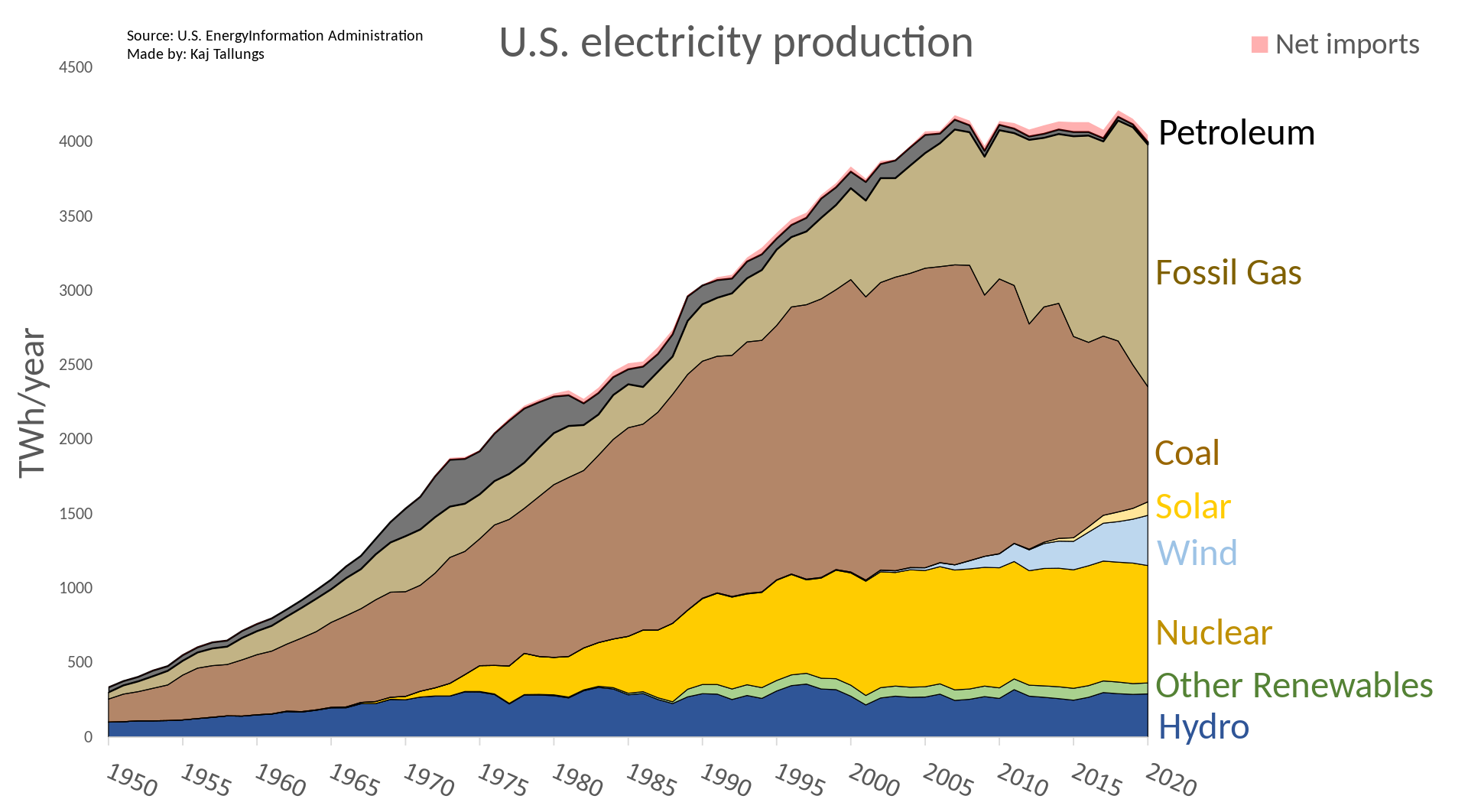
It makes no sense to build more coal and gas fired electric plants, replacing one CO2 generator with another, the best wind power sites are already taken, waste, geothermal and solar power is still a pipe dream, (see the orange sliver in the chart below), so what to do?

Conventional nuclear power is limited and requires a very long and extensive approval process, partly due to the not in my backyard regulation attitude.  We are already the world’s largest importer of Uranium, and the world’s supply is to a large extent controlled by non allies. .

How do you eliminate all Coal and natural gas electric plants? Look at the U.S usage: (Last  year 2016)

We can see that renewable energy will not suffice. The only real answer is to expand nuclear electricity, but we are already the world’s biggest importer of Uranium. (The Uranium One deal, when we sold 20% of our Uranium mining rights to Russia did not help, but we were in trouble even before ). No, the only real answer is to rapidly develop molten salt Thorium nuclear electricity production. They do not require water for cooling, so they can be placed anywhere where additional capacity is needed, eliminating some of the need for rapid expansion of the electric grid.

Let us go to it now! No time to waste!

Why thorium? 32. Can deplete most of the existing radioactive waste and nuclear weapons stockpiles, and in so doing produce power and U-233 needed for fuel in true LFTR power plants.

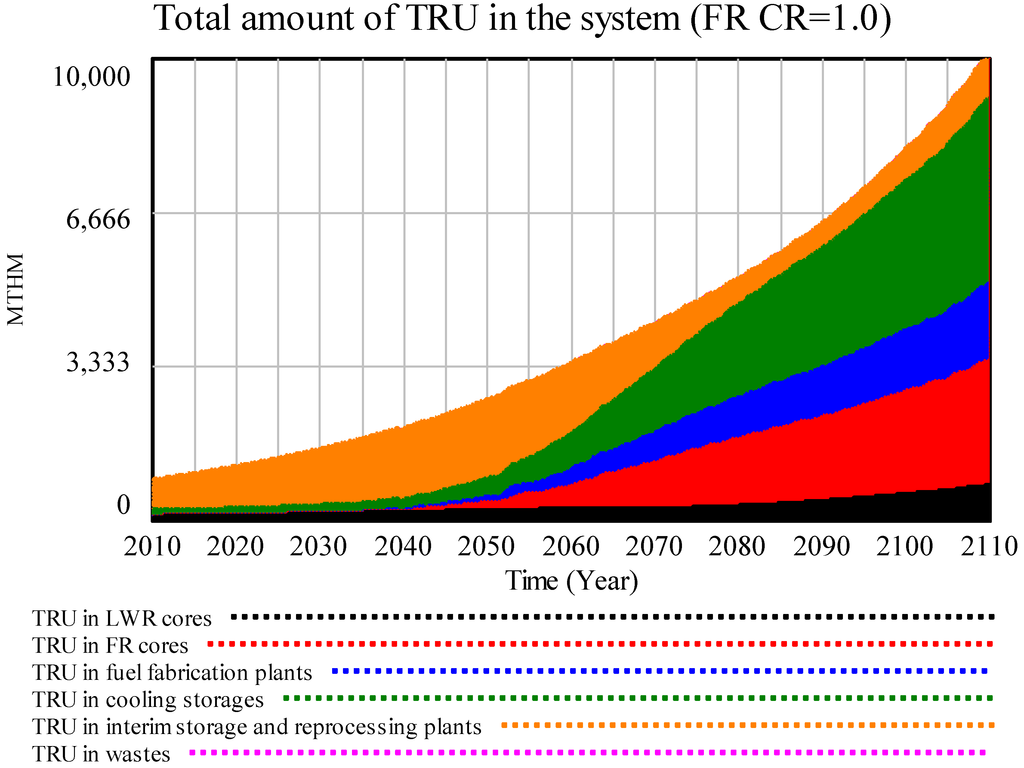
The stockpiles from light water reactor keep growing. The temporary storages are all full and spent nuclear fuel is still coming in with no good place to put it. This is an estimate of future stockpiles:

MTHM: Metric Tons Heavy Metals TRU: TRansUranium metals, a large amount of witch is Plutonium 239

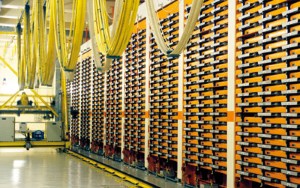
The dry storage is usually very neat and catalogued. After all Plutonium 239 is what you make atomic bombs from, so proliferation security is of utmost importance.

TRU can be reprocessed in a molten salt generator and generate far more energy than was obtained the first time around in the LWR

LFTR is a type of Molten Salt Reactor with equipment to convert plentiful thorium into uranium (U233) to use as fuel. It can also use plutonium from LWR (Light Water Reactor) waste. LFTR is not very efficient at using depleted uranium (need a Fast-Spectrum reactor to fission U-238 effectively; in a thermal-spectrum reactor like LFTR or LWR, would convert some U-238 to plutonium which is fissile). The best solution is a two-fuel molten salt reactor

Because a LFTR fissions 99%+ of the fuel (whether thorium, or plutonium from nuclear waste), it consumes all the uranium and transuraniums leaving little long-term radioactive waste. 83% of the waste products are safely stabilized within 10 years. The remaining 17% need to be stored less than 350 years to become completely benign.

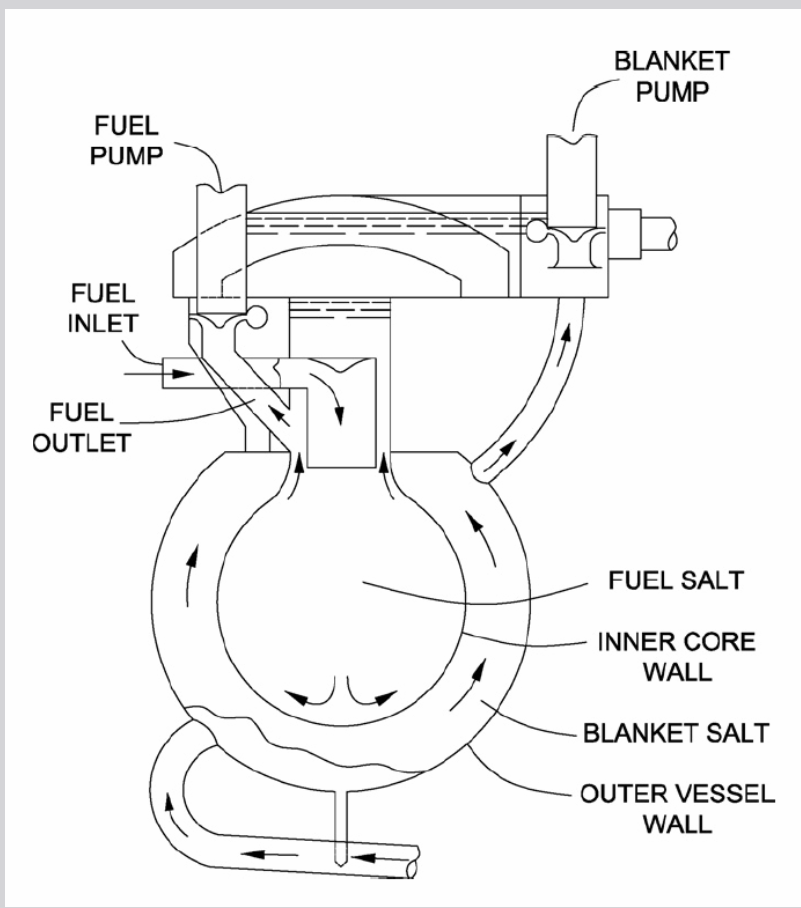
The fuel source would be Trans-Uraniums, mostly Plutonium 239 and some Uranium 233. The blanket would contain Thorium, which when converted to Protactinium would be extracted out and in 28 days half of it would be converted to Uranium 233. The temperature in the fissile core will be around 650C and in the blanker somewhat less, its only purpose is to produce U 233 to be used in other nuclear plants.

“LFTR technology can then be used to reprocess and consume the remaining fissile material in spent nuclear fuel stockpiles around the world and to extract and resell many of the other valuable fission byproducts that are currently deemed hazardous waste in their current spent fuel rod form. The U.S. nuclear industry has already allocated $25 billion for storage or reprocessing of spent nuclear fuel and the world currently has over 340,000 tons of spent LWR fuel with enough usable fissile material to start one 100 MWe LFTR per day for 93 years. (A 100 MW LFTR requires 100 kg of fissile material (U-233, U-235, or Pu-239) to start the chain reaction). LFTR can also be used to consume existing U-233 stockpiles at ORNL ($500 million allocated for stockpile destruction) and plutonium from weapons stockpiles.”

FS-MSRs essentially avoid the entire fuel qualification issue in that they are tolerant of any fissile material composition, with their inherent strong negative thermal reactivity feedback providing the control necessary to accommodate a shifting fuel feed stream. Fast Spectrum Molten Salt Reactor Options,

See also: Why Thorium? 20: Russia develops a fission-fusion hybrid reactor.

Some of the pictures are from a slide presentation given by David Archibald in Melbourne Feb 5 2011. He posted it “for the benefit of all” which I have interpreted as waving the copyright of the pictures

http://wattsupwiththat.com/2011/02/12/david-archibald-on-climate-and-energy-security/

Why Thorium? 31. Molten salt Thorium Reactors will produce electrical energy at about 5 cents per kWh.

Produces electrical energy at about 5 cents per kWh.

The United States sources of Electricity generation is one third from Natural Gas, one third from Coal and one third from non fossil fuel sources.

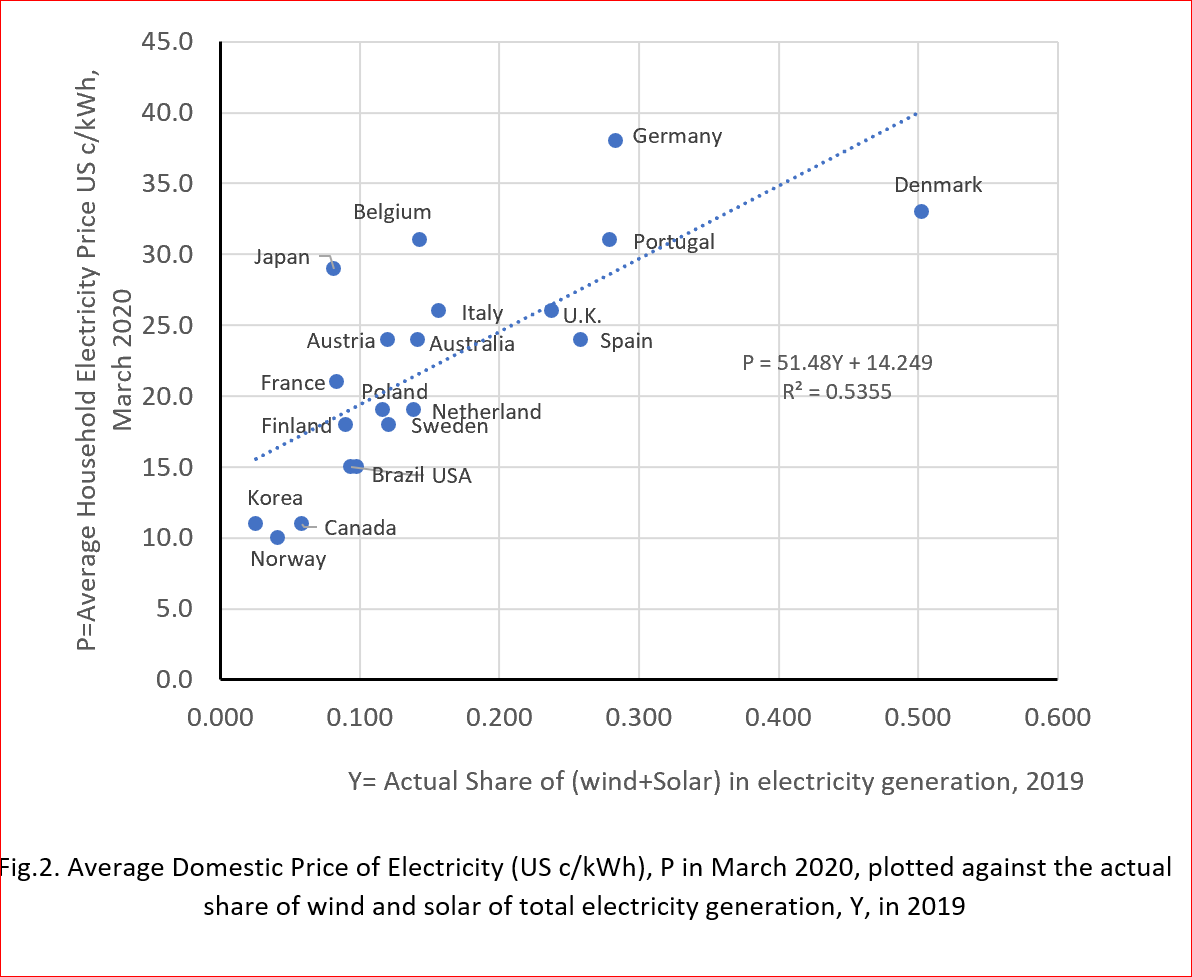
The cost to produce electricity with Thorium nuclear power should be about 40% less than Advanced Nuclear and about 30 % less than from Coal (with scrubbers)  Solar generation is about 4 times more expensive (without subsidies) in the North-east, where people live. New Mexico, Arizona and California are suitable for cheap Solar power, but they lack Hydropower storage. Wind power is cheaper when the wind blows, but base generation capacity has to be there even when the wind doesn’t blow, so the only gain from wind power is to lessen the mining or extraction of carbon. In addition, wind power kills birds, the free yearly quota of allowable Bald Eagle kills was upped from 1200 to 4200 during the Obama administration. (https://lenbilen.com/2019/04/12/what-is-more-precious-babies-eagles-or-fighting-climate-change/). Golden Eagles and a few other rare birds has a quarter of a million dollar fine associated with their kills. If wind power is increased without finding a solution to the bird kills, whole species may go extinct. Solar power is, and will be used in special applications such as on roofs for backup and peak power assist. Today’s solar panels are easily destroyed by a single hailstorm. Hydroelectric power is for all practical purpose maxed out, so nearly all future increase must come from Coal, Natural Gas, Petroleum or Nuclear. The world experience on installing wind and solar energy is that it is expensive. See fig:

The residential cost of electricity increases as the proportion of total electricity demand is supplied by wind and solar. Part of the cost is in power distribution. Molten Salt Thorium Nuclear Generators is the way to go. It doesn’t depend on sun, wind and water to produce electricity where the need is.

Why Thorium? 30. The source material problem with Thorium.

Thr problem with Thorium is that it is classified as source material the same as Uranium. Natural Uranium is fissile in a heavy water moderated reactor, Thorium is only slightly radioactive, and should be regulated like all other radioactive products, like household smoke detectors and medical isotopes.

Congress should immediately declassify Thorium as a source material. This would again enable U.S. to mine rare earth materials like China and the rest of the world.

The video speaks for itself and is well worth watching. Especially listen at 15:30 min why molten salt reactors were abandoned.

Why Thorium? 29. Why Thorium has been rejected by so many for so long, but is now finally seen as the future energy supply, (except in the U.S.A.)

This video catalogs the problems with Thorium, beginning with the regulatory nightmare of seemingly endless regulations that makes no sense from a research perspective, to political bias, and to protect the status quo. It is very informative.