The case for Thorium. 22. With a Molten Salt Reactor, accidents like the Three Mile Island disaster will not happen.

With a Molten Salt Reactor, accidents like the Three Mile Island disaster will not happen. Ah yes, I remember it well, March 28, 1979. We lived in South East Pennsylvania at the time, well outside the evacuation zone, but a fellow engineer at work took off, took vacation and stayed at a hotel in western Virginia over the weekend fearing a nuclear explosion. My wife went to a retreat just outside the evacuation zone, and none of them so much as heard of any problem, there never was any evacuation. There was concern though, and a disaster it was indeed with a partial meltdown of the core, rendering the installation a total loss, leaving a big, forever cleanup bill. The cost so far has totaled over 2 billion dollars.

A combination of personnel error, design deficiencies and component failures caused the TMI accident, which permanently changed both the nuclear industry and the NRC. Public fear and distrust increased, NRC’s regulations and oversight became broader and more robust, and management of the plants was scrutinized more carefully. Careful analysis of the accident’s events identified problems and led to permanent and sweeping changes in how NRC regulates its licensees – which, in turn, has reduced the risk to public health and safety.

The side effect of increased regulation is increased cost and delay in construction of new nuclear plants. Eventually, more than 120 reactor orders were cancelled, and the construction of new reactors ground to a halt. Of the 253 nuclear power reactors originally ordered in the United States from 1953 to 2008, 48 percent were canceled.

Another side effect of the TMI accident is fear of trying a different and safer approaches, since they conflict with existing regulations. The next Nuclear power reactor came online in 2016, but it is the same type of boiling water reactor as before, not a Molten Salt Thorium reactor with its inherent radically increased safety.

The case for Thorium. 21. United States used to be the leader in Thorium usage. What happened?

United States used to be the leader in Thorium usage. What happened?

The 40 MWe Peach Bottom HTR in the USA was a demonstration Thorium-fueled reactor that ran from 1967-74.  and produced a total of 33 billion kWh.

The 330 MWe Fort St Vrain HTR in Colorado, USA, ran from 1976-89.  Almost 25 tons of Thorium was used in fuel for the reactor.

A unique Thorium-fueled light water breeder reactor operated from 1977 to 1982 at Shippingport in the USA– it used uranium-233 and had a power output of 60 MWe.

However, after 10 years passed and billions invested, the U.S. Atomic Energy Commission abandoned thorium research, with uranium-fueled nuclear power becoming the standard. In the 1980s, commercial Thorium ventures failed, such as the Indian Point Unit 1 water reactor near New York City, because of the vast financial costs of going alone in a hostile regulatory environment, and fuel and equipment failures. By the 1990s, the US nuclear power industry had abandoned Thorium, partly because Thorium’s breeding ratio was thought insufficient to produce enough fuel for commercial industrialization.

After the Three Mile Island accident, Middletown, PA in 1979 there was a 30 plus  year hiatus in building another nuclear plant, and Thorium was not on any politicians list of areas in which to invest scarce research funds.

Some research and development was still conducted, but it was more concentrated in protecting the U.S. leading position in monitoring  and controlling existing nuclear technology. As a contrast even the Netherlands is developing a molten salt Thorium reactor.

Will the U.S. again show leadership?

The Three Gorges Dam is is danger of collapsing. A Limerick.

Precarious, the Three Gorges dam;

the rain is the battering ram

and the earthquake as well

as the Yang Tse does swell

Constructing the dam was a sham.

When the Three Gorges River was built it was hailed as an engineering masterpiece and proof of the superiority of the central planning and execution of the Communist regime of the People’s Republic of China. But there were real problems from the start. It was built without an independent quality control function, so they asked a western organization to verify the structural integrity of the construction. It turned out that the rebars in the large concrete blocks were not affixed properly from unit to unit, and had not been affixed to the bedrock below, but could be subject to a slow creep under the pressure of water. The findings were not only ignored, but the inspectors were accused of racial prejudice, and besides, the construction was already done, and could not be changed. So it was given the final go-ahead.

There are troubling pictures emerging of that “slow creep:”

The creep in not inches, some parts of the dam has moved many feet from their original position. This is a disaster in making.

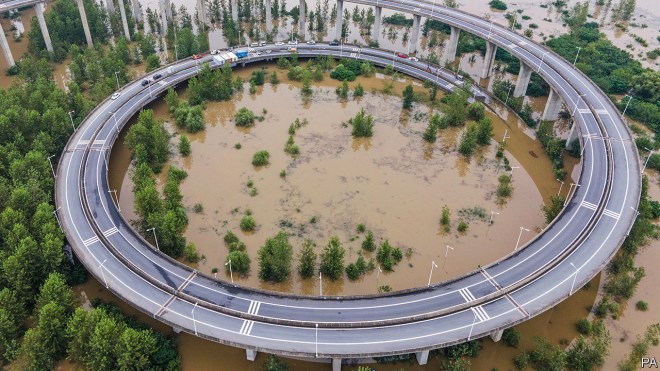
The torrential rains have been falling and now all the floodgates are open. The water behind the dam has risen to more than 50 feet above flood level and is close to top the whole dam.

Downstream there is a 700 year old Buddhist temple. It is still standing, but mostly under water

And this is what it looks like under normal circumstances.

Further downstream the flooding is getting worse than they were before the Three Gorges dam was constructed. After all it was made to alleviate floods.

Downstream are big cities like Wuhan, Nanjing and Shanghai.

Death toll in the north and central China floods have risen to 150 people, with scores still missing and hundreds of thousands forced from homes.. The dam is in a region that experiences frequent earthquakes, and so far there has been a small, shallow earthquake in the region, but everybody is bracing for the “big one.”

This is just the beginning.


The case fatality rate of COVID-19 is reduced by a factor of 2.65 if HCQ + Zinc is administered as soon as possible. 1.25 Million cases are proof enough!


This picture was displayed at a Monday July 6 White House press conference. White House press secretary Kayleigh McEnany told reporters that the American death toll has fallen for weeks and the virus fatality rate is below France, the United Kingdom and Germany.

She said the death toll has significantly dropped from the height of the outbreak when the U.S. logged 2,500 deaths per day to 254 deaths on Saturday July 3, according to the article.

To confirm it the case fatality rate for Germany is as of July 15: 4.54 %

The case rate for the world is 4.24%

The corresponding number for U.S.A.: 3.83%

Is that the lowest percentage in the world?

There are more than ten countries with a lower case fatality rate. At least ten of them have one thing in common. These ten countries prescribe the use of  HydroxyChloroQuine to all people that show symptoms of COVID-19, even before a positive test is confirmed.

Turkey: 2.51%

South Korea: 2.14%

Senegal: 1.87%

Morocco: 1.58%

Russia: 1.60%

Malaysia: 1.39%

United Arab Emirates: 0.60%

Costa Rica: 0.44%

Bahrain: 0.34%

Qatar: 0.14%, but since 88% of the population are migrant workers between 20 and 60, the adjusted death rate for the permanent residents would be maybe 8 times higher, or about 1.1%

The total number of positive cases for these ten countries are over 1.2 million, far more than any double blind test could ever produce.

Taking the average, adjusted for the number of positive cases, the average adjusted death rate for ten countries, where people are taking HCQ + Zinc as soon as they are showing symptoms or diagnosed positive, is 1.60%.

This means that the risk of death is reduced by a factor of 2.65 if HZQ + Zinc is taken as early as possible after showing symptoms or after a positive diagnosis for corona-virus!

This means the daily could be reduced by 3700 a day in the world if the HCQ regimen was implemented worldwide.

For the U.S.A. the number of deaths would be reduced by an average of over 400 a day at today’s case and death rates, if HZQ + Zinc is taken as early as possible after showing symptoms or after a positive diagnosis for corona-virus!

The case for Thorium 20. China is having a massive Thorium program.

China is having a massive Thorium program. The People’s Republic of China has initiated a research and development project in thorium molten-salt reactor technology. The thorium MSR efforts aims not only to develop the technology but to secure intellectual property rights to its implementation. This may be one of the reasons that the Chinese have not joined the international Gen-IV effort for MSR development, since part of that involves technology exchange. Neither the US nor Russia have joined the MSR Gen-IV effort either.
China is currently the largest emitter of CO2 and air pollutants by far, and according to the Paris accord was allowed to emit six times as much pollutants as the U.S. by 2030, being a “developing nation”. Their air quality is already among the worst in the world so something had to be done if they were to achieve world dominance by 2025 and total rule by 2030. Only Thorium can solve the pollution problem and provide the clean energy needed for the future. Regular Uranium Nuclear reactors require large amounts of water and Molten Salt Thorium reactors require little water to operate.

Geneva, Switzerland, 21 August 2018 – As the world struggles with a record-breaking heatwave, China correctly places its trust in the fuel Thorium and the Thorium Molten Salt Reactor (TMSR) as the backbone of its nation’s plan to become a clean and cheap energy powerhouse.
​​The question is if China will manage to build a homegrown mega export industry, or will others have capacity and will to catch up?
For China, clean energy development and implementation is a test for the state’s ability. Therefore, China is developing the capability to use the “forgotten fuel” thorium, which could begin a new era of nuclear power.​
The first energy system they are building is a solid fuel molten salt reactor that achieves high temperatures to maximize efficiency of combined heat and power generation applications.
However, to fully realize thorium’s energy potential and in this way solve an important mission for China – the security of fuel supply – requires also the thorium itself to be fluid. This is optimized in the Thorium Molten Salt Reactor (TMSR).
The TMSR takes safety to an entirely new level and can be made cheap and small since it operates at atmospheric pressure, one of its many advantages. Thanks to its flexible cooling options it can basically be used anywhere, be it a desert, a town or at sea. In China this is of special interest inland, where freshwater is scarce in large areas, providing a unique way to secure energy independence.
“Everyone in the field is extremely impressed with how China saw the potential, grabbed the opportunity and is now running faster than everyone else developing this futuristic energy source China and the entire world is in a great need of.”
– Andreas Norlin, Thorium Energy World
Picture
China is not telling all they are doing on Nuclear Energy.

The case for Thorium. 19. India is having an ambitious Thorium program, planning to meet 30% of its electricity demand via Thorium based reactors by 2050.

India has an active Thorium program. • India has a flourishing and largely indigenous nuclear power program and did at one time expect to have 20,000 MWe nuclear capacity on line by 2020 and 63,000 MWe by 2032, but being India and subject to Indian bureaucracy and economic limitation the goals tend to get delayed. It aims to supply over 30% of electricity from nuclear power by 2050. • Because India is outside the Nuclear Non-Proliferation Treaty due to its weapons program, it was for 34 years largely excluded from trade in nuclear plant or materials, which has hampered its development of civil nuclear energy until 2009. • Due to these trade bans and lack of indigenous uranium, India has uniquely been developing a nuclear fuel cycle to exploit its reserves of thorium. • Now, foreign technology and fuel are expected to boost India’s nuclear power plans considerably.  All plants will have high indigenous engineering content. • India has a vision of becoming a world leader in nuclear technology due to its expertise in fast reactors and thorium fuel cycle. • India’s Kakrapar-1 reactor is the world’s first reactor which uses thorium rather than depleted uranium to achieve power flattening across the reactor core. India, which has about 25% of the world’s thorium reserves, is developing a 300 MW prototype of a thorium-based Advanced Heavy Water Reactor (AHWR). The prototype was fully operational by 2012, following which five more reactors will be constructed. Considered to be a global leader in thorium-based fuel, India’s new thorium reactor is a fast-breeder reactor and uses a plutonium core rather than an accelerator to produce neutrons. As accelerator-based systems can operate at sub-criticality they could be developed too, but that would require more research. India currently envisages meeting 30% of its electricity demand through thorium-based reactors by 2050.

“[F]ast reactors can help extract up to 70 percent more energy than traditional reactors and are safer than traditional reactors while reducing long lived radioactive waste by several fold,” Yukiya Amano, Director General of International Atomic Energy Agency (IAEA) in Vienna, explained to the Times of India.

Uranium isn’t common in India, but the country has the second largest store of Thorium, so the Prototype Fast Breeder Reactor (PFBR) in Kalpakkam uses rods of that element.

Arun Kumar Bhaduri, Director of the Indira Gandhi Centre for Atomic Research (IGCAR), Kalpakkam, told the Times of India that the technology is safe: “[F]ast breeder reactors are far safer than the current generation of nuclear plants.”

With the PFBR, India is pioneering a kind of nuclear technology that could potentially be the country’s greatest renewable energy source. That’s a big step, especially since nuclear fission remains the only kind of nuclear reaction we’ve managed to sustain, though efforts to make nuclear fusion viable are still in the works.


COVID response for Sweden and Michigan. Which response is better?

Of all the states in America Michigan is the state that is most like Sweden.

Michigan has a population of 10 million, Sweden 10.2 million

Median age in Michigan is 39.8 years, Sweden’s is 41.1 years.

Michigan has the Upper Peninsula, Sweden has Norrland.

Michigan has slightly colder winters and slightly warmer summers than Sweden, but the average temperature is about the same.

Both Michigan and Sweden got hit hard by the corona virus, but their response was quite different.

Sweden never closed the schools for children under 15, Michigan is still debating when to open the schools again after they were shutdown.

Sweden never closed the stores or restaurants completely, Michigan did.

Both Michigan and Sweden closed large events and other gatherings. No sports, and no concerts.

In Sweden wearing masks is not mandatory, only recommended, as long as social distancing and personal hygiene is practiced.

Sweden did what they could to shield the most vulnerable from the injection, in Michigan they moved COVID infected patients from overcrowded nursing homes in the Detroit area to nursing homes upstate with excess capacity.

Michigan recently delayed the partial opening of the state for another two weeks, one more delay of many. In addition the Governor, Gretchen Wittmer issued draconian regulation on what could or could not be done, leading to protests. One protest sign read:

Other regulations were just as ridiculous, you could go out in a row-boat or a sailboat as long as you were no more than two in the boat, but motorboats were verboten. And don’t even dream about visiting your cottage in the woods; horror of horrors!

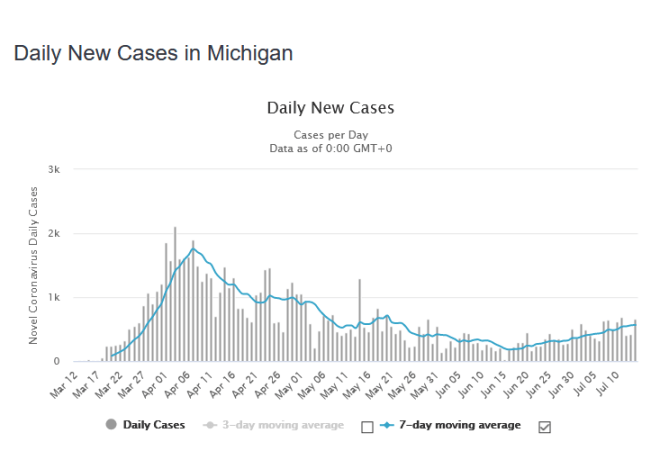
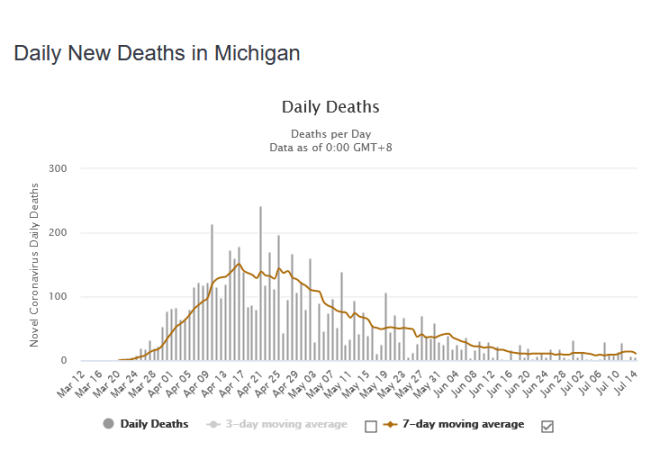
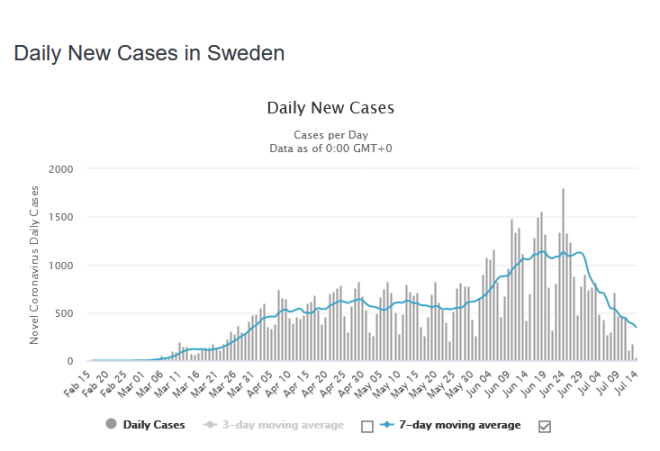
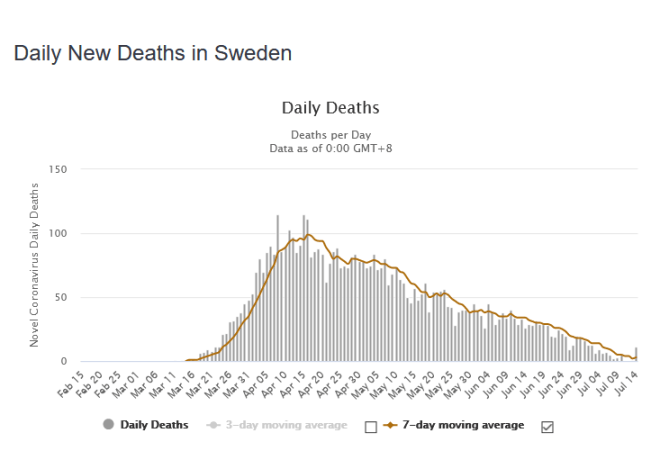
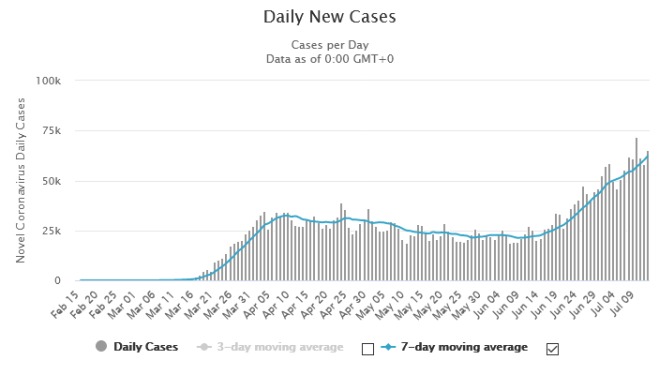
How did Sweden and Michigan fare? Check these charts and judge for yourselves:

Michigan total cases as of July 14: 78,914 total deaths 6,330 Sweden total cases 76,001, total deaths 5,455

Cases started rising around Jun 15, two weeks after the protests started

The number of deaths daily has stabilized and remained constant for the last month

The new cases are in a rapid decline. Sweden may be close to have achieved herd immunity.

The number of new death are racing to nearly zero.


The case for Thorium. 18. Russia has an active Thorium program.

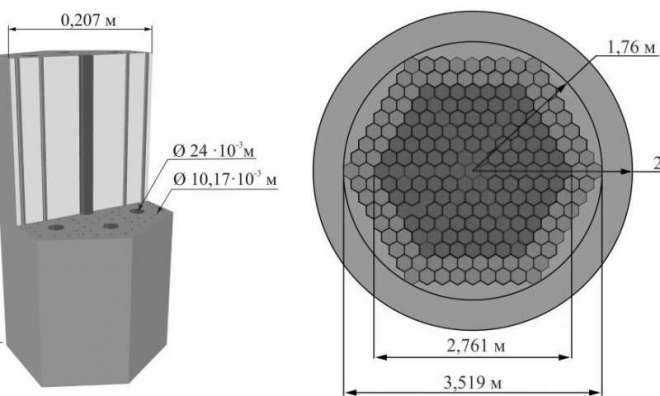
Russia has an active Thorium program This is a self-contained Thorium Nuclear Reactor on a barge. Coolant readily available. Hoist it a couple of cables and the town to be serviced will have all the power it needs. This is especially useful in the Arctic. Russia is trying to establish Arctic domination, both commercially and militarily. They have over 30 ice breakers, some of them nuclear. U.S. has two, only one of which are operational.
Russia is also trying to commercialize hybrid fusion-fission reactors:
Nuclear Engineering International: 29 May 2018

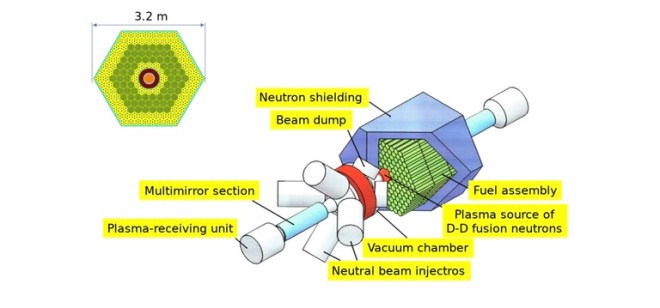
Russia develops a fission-fusion hybrid reactor.
A new fission-fusion hybrid reactor will be assembled at Russia’s Kurchatov Institute by the end of 2018, Peter Khvostenko, scientific adviser of the Kurchatov complex on thermonuclear energy and plasma technologies, announced on 14 May. The physical start-up of the facility is scheduled for 2020.The hybrid reactor combines the principles of thermonuclear and nuclear power – essentially a tokamak fusion reactor and a molten salt fission reactor. Neutrons produced in a small tokamak will be captured in a molten salt blanket located around tokamak. The facility will use Thorium as a fuel, which is cheaper and more abundant than uranium. Moreover, unlike a fusion reactor, a hybrid will not require super high temperatures to generate energy.

  • A new paper describes computer simulations of a hybrid fusion-fission reactor that runs on thorium.
  • Thorium has benefits compared with uranium reaction and has been endorsed by Democratic presidential candidate Andrew Yang.
  • In the reactor, plasma fusion generates neutrons that fuel subsequent fission.


Hybrid reactors reduce the impact of the nuclear fuel cycle on the environment. The concept combines conventional fission processes and fusion reactor principles, comprising a fusion reactor core in combination with a subcritical fission reactor. The results of the fusion reaction, which would normally be absorbed by the cooling system of the reactor, would feed into the fission section, and sustain the fission process. Thorium in a molten salt blanket will enable breeding of uranium-233.

Some of the expected advantages include:

  • Utilization of actinides and transmutation from long-lived radioactive waste;
  • An increase in energy recovered from uranium by a large factor;
  • The inherent  safety of the system, which can be shut down rapidly; and
  • High burnup of fissile materials leaving few by-products.

The hybrid fission-fusion reactor is seen as a near-term commercial application of fusion pending further research on pure fusion power systems.

This is very interesting, and I will follow up when I get more information.

The evidence is clear. The rise in COVID cases is due to protests, not reopening the economy

On May 25 George Floyd was murdered by a policeman in broad daylight. What followed was protests, night after night in many cities. Over 500 cities have had protest rallies. The rallies, while mostly peaceful all violate COVID protocol, many protestors do not wear masks, social distancing is not practiced, and loud shouting, breathing hard through your mouth emitting COVID mist is going on for hours.

The incubation time for COVID infection is from 5 to 15 days, the COVID cases should start increase about June 8 or so, it took a few days for the protesters to get organized. The typical age for protesters is 20 to 25 years, so death rates would not necessarily increase, since the risk for death from the coronavirus doubles for every 9 years you age.

On the other hand, if the spike in COVID cases is due to reopening the economy, the death rate should follow the increase in cases by about 10 days.

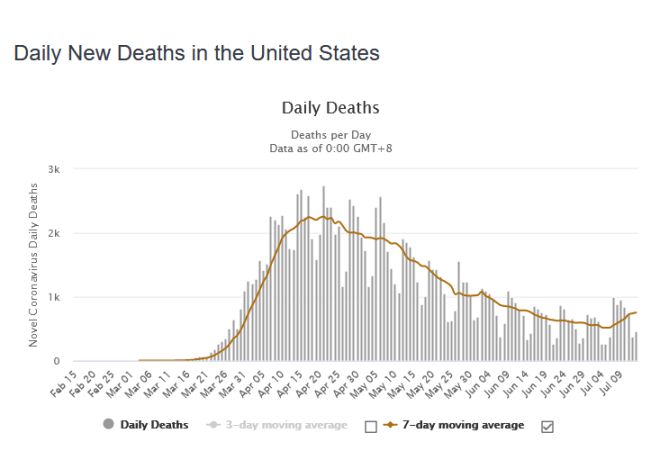
Let us look at the COVID cases for U.S.A. as of July 13:

As we can see, the U.S.A. was on a slow decline in cases until about June 14, and a much larger decline in death cases until about Jul 8. The rise in cases since June 14 is much larger than the rise in deaths. This means the increase in cases is from protestors, not from opening the economy.

A most interesting case is Florida

From new cases being about 1000 per day, they started increasing on about June 8 and are now over 10,000 a day. Death rates on the other hand have less than doubled.

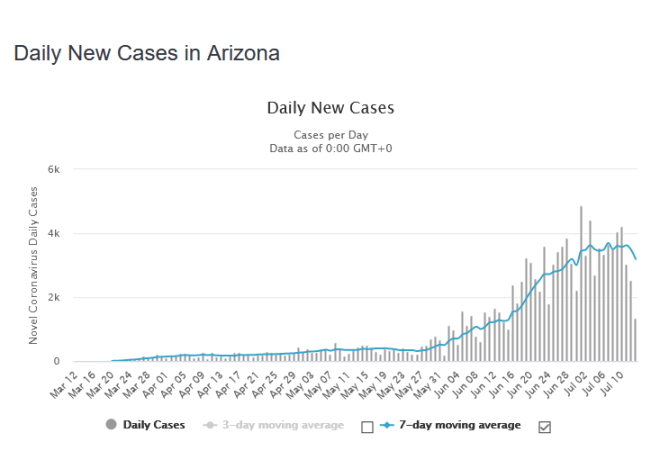
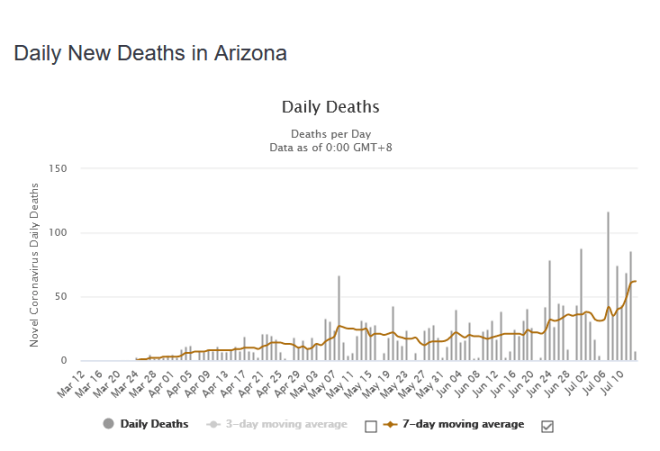
Another interesting state id Arizona:

From about 300 new cases a day up to June 5, it has  since increased tenfold. The death rate meanwhile has less than tripled, which again means it is the young people that are getting the virus.

There has been about 20 million protestors since the process started. It is impossible to contact trace 20 million people, many of which want to do away with all authority anyway, so we will have to settle for herd immunity. Following the example of Sweden herd immunity should start to manifest itself in a month or so, In New York City it has already started.

In any case, we will probably achieve herd immunity before a vaccine is available.


The case for Thorium. 17. Liquid Fluoride Thorium Reactors will lessen the need for an expanded national grid.

Liquid Fluoride Thorium Reactors will lessen the need for an expanded national grid. The National Electric grid is at the breaking point. It needs to be expanded, but neighborhood resistance is great in many areas where they need an expanded grid the most. The grid is also sensitive to terrorism activities.

As we can see the national grid is extensive. It is also under severe strain at peak demand. Wind power will only increase the strain since most wind power is generated where few people live and work. A way to lessen the dependency on the national grid is to sprinkle it with many small to medium sized Thorium Nuclear Power generators. They can be placed on barges in rivers and along the coast where the need is greatest, giving the grid maximum flexibility to respond in  case of an emergency. LFTR’s do not depend on water for their cooling, so they can be placed anywhere, even in extreme arid areas. Since LFTR can be placed very close to urban centers, transmission losses are kept low. (The Texas grid is separately controlled from the rest of the grid.)