
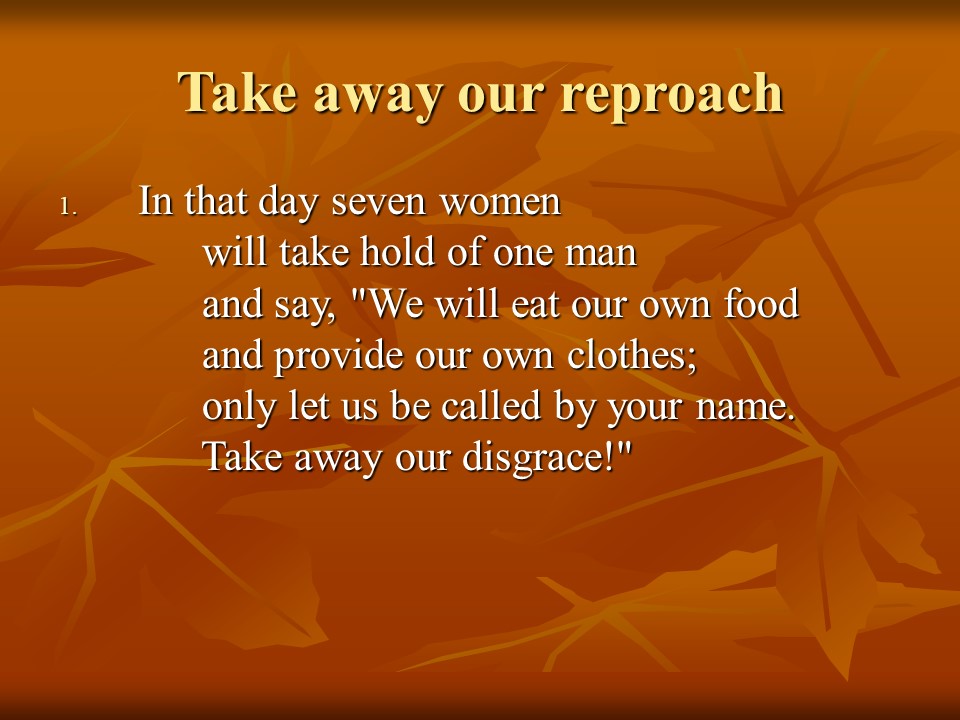
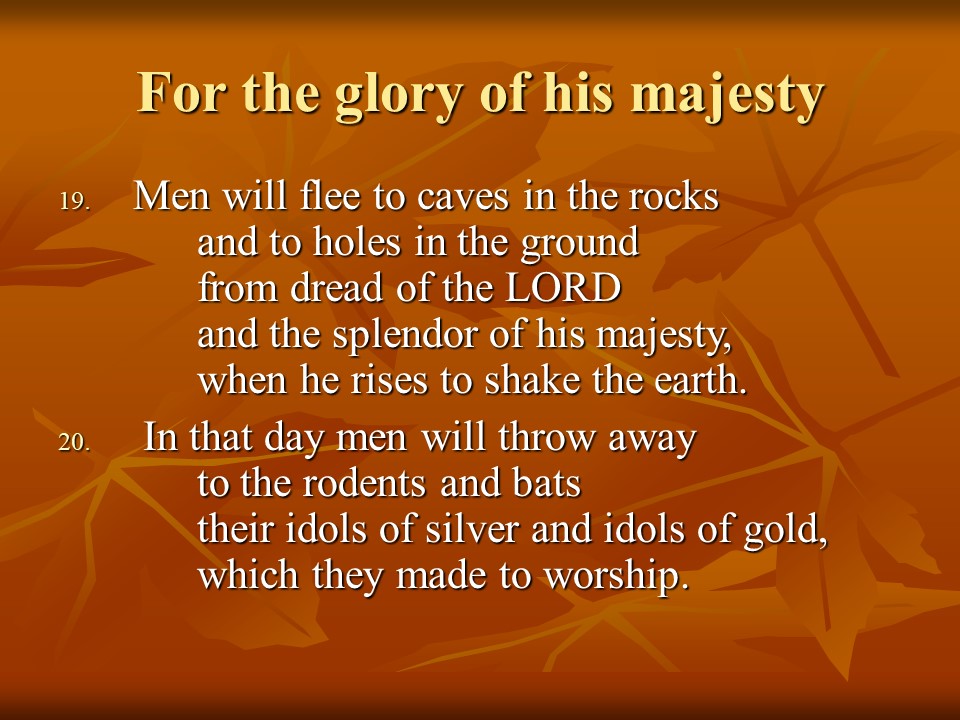
 The first verse is what happens after the Day of the LORD. In that Day is what happens in the Day of the LORD and the time that follows immediately.
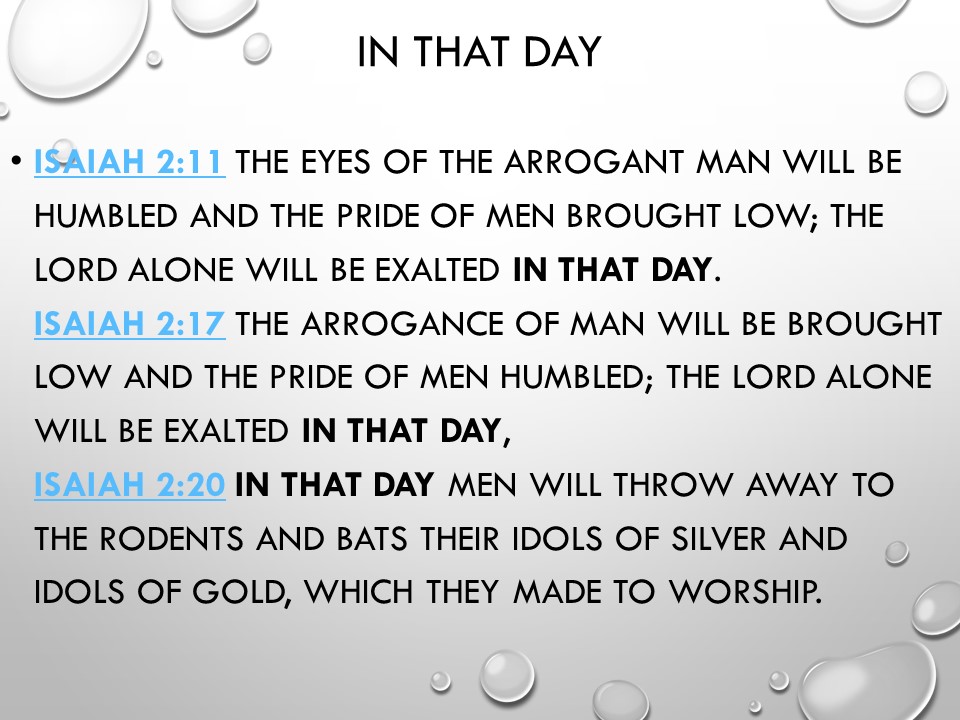
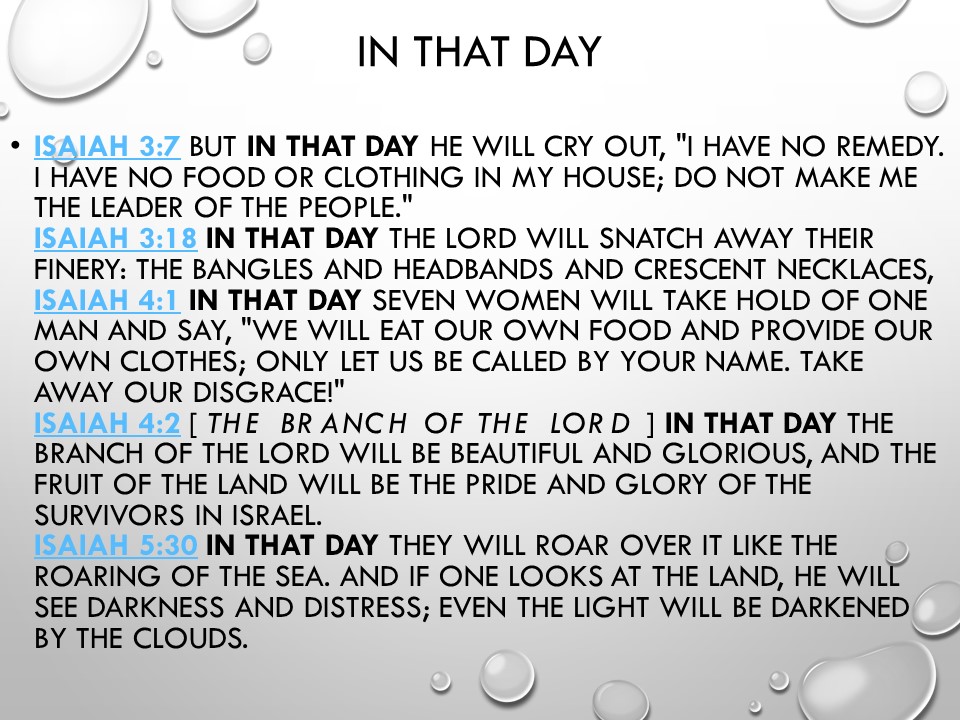

The first verse is what happens after the Day of the LORD. In that Day is what happens in the Day of the LORD and the time that follows immediately.
 NIV, the LORD Almighty, better translation the LORD of Hosts.



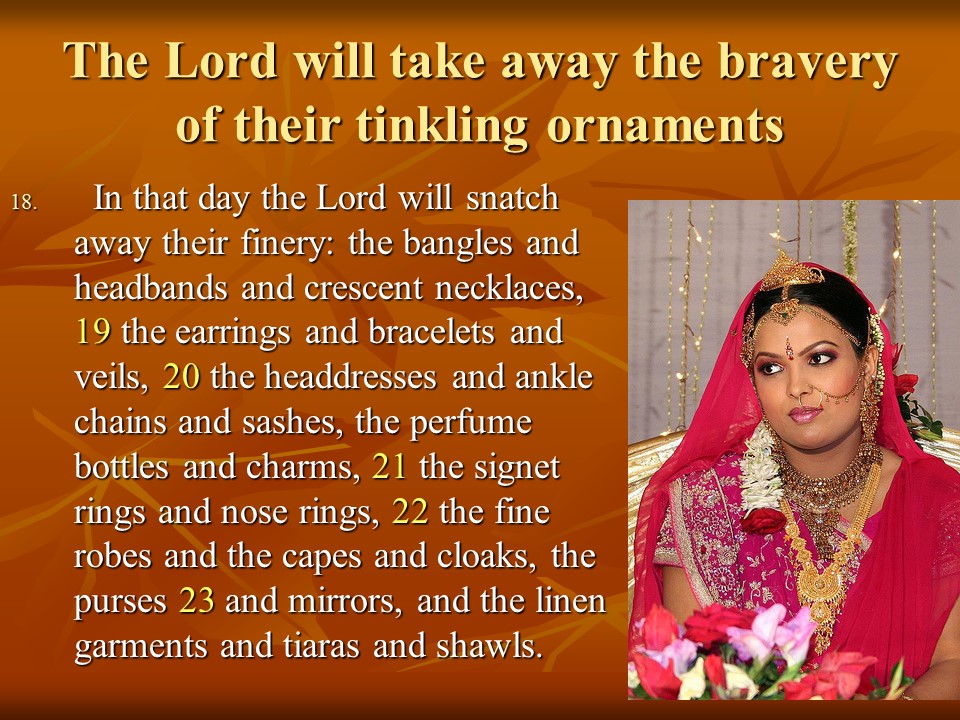


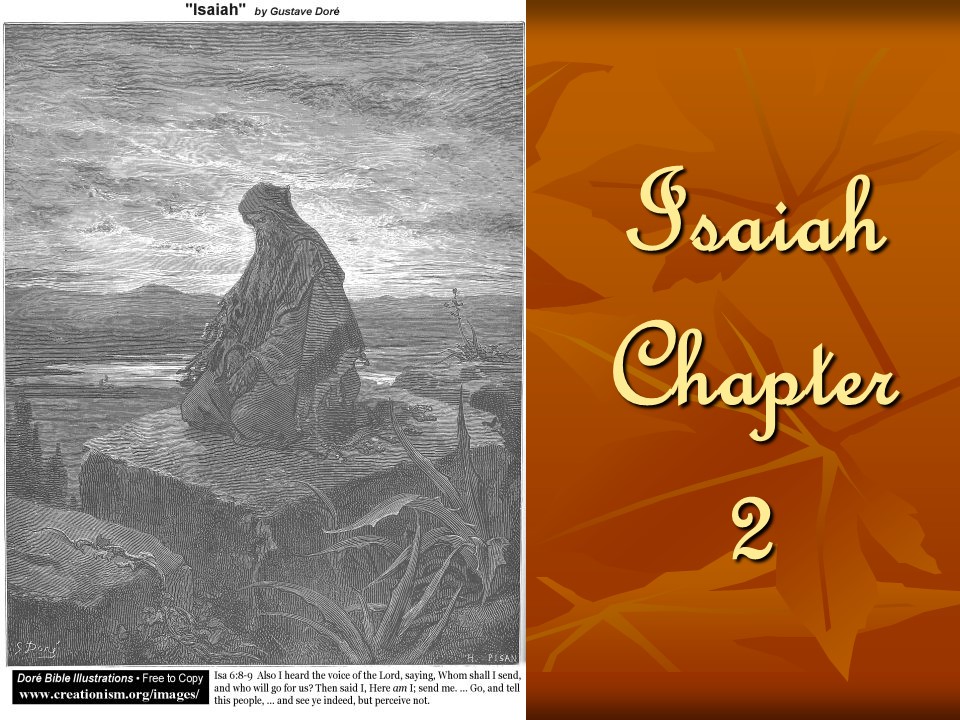


 This famous messianic prophecy is duplicated in Micah 4. Micah was a contemporary of Isaiah. Isaiah was also the chief scribe and wrote down the chronicles for that time, such as part of Isaiah 36, which is duplicated in part of 2 Chronicles 32.
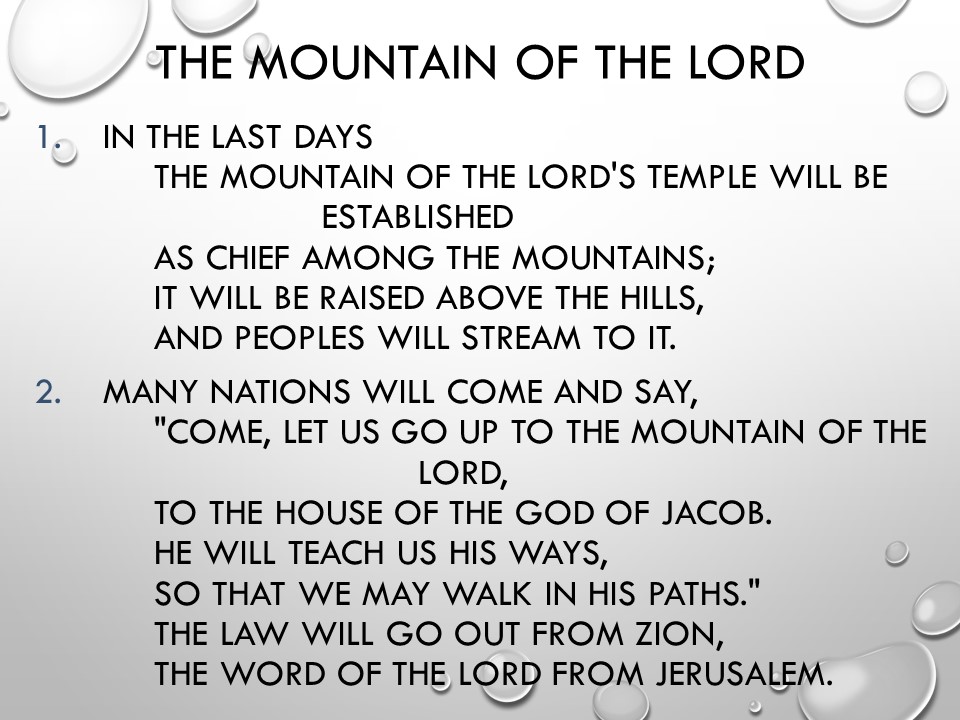
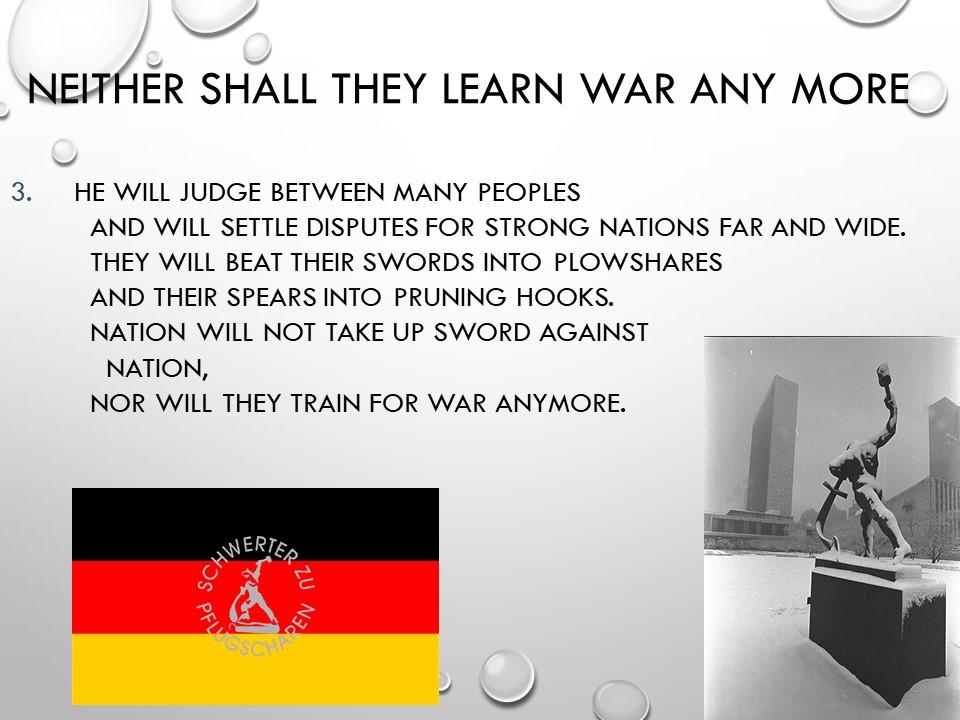
The symbol Schwerter zu Pflugscharen was the most important emblem of the German Democratic Republic’s opposition movement in the 1980s which finally lead to the “revolution” of 1989 and the German unification.
| The bronze sculpture “Let Us Beat Our Swords into Ploughshares,” was created by Soviet artist Evgeny Vuchetich, and presented to the United Nations on 4 December 1959, by the Government of the USSR. |
Or the lyrics as sung by Peter, Paul and Mary
I’m gonna lay down my sword and shield,
Down by the riverside
Down by the riverside
Down by the riverside
I’m gonna lay down my sword and shield,
Down by the riverside
Study war no more
I ain’t gonna study war no more
Ain’t gonna study war no more
Ain’t gonna study war no more
I ain’t gonna study war no more
Ain’t gonna study war no more
Ain’t gonna study war no more




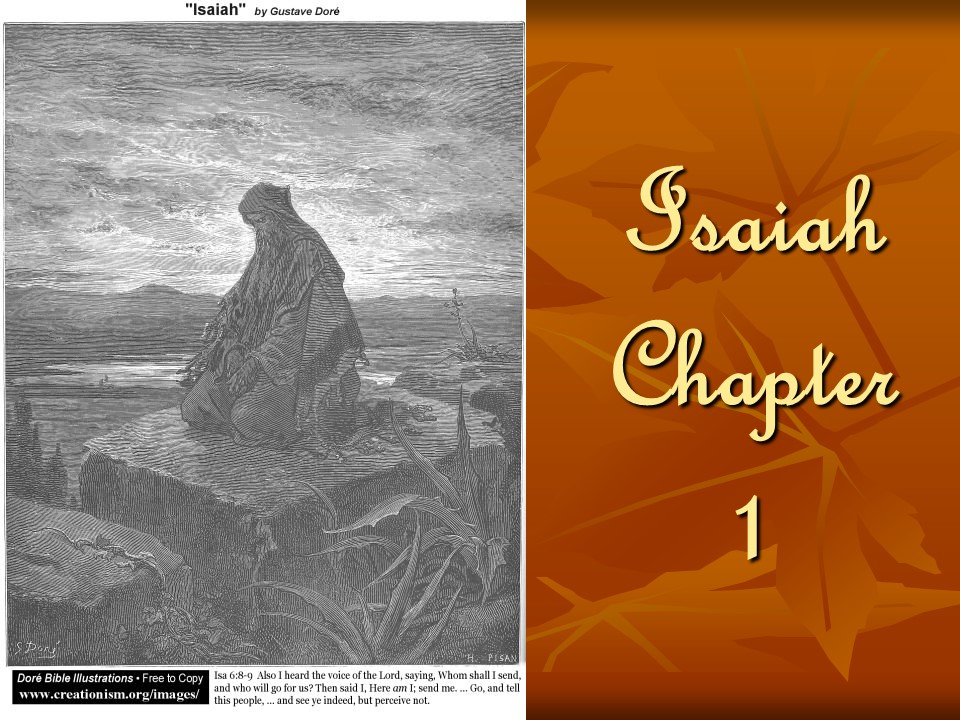 No other book of the Old Testament contain as many prophecies as the Scroll of Isaiah. In fact there are so many that it was proven beyond a shadow of a doubt that Isaiah most probably was written in its final form around 400 A.D.
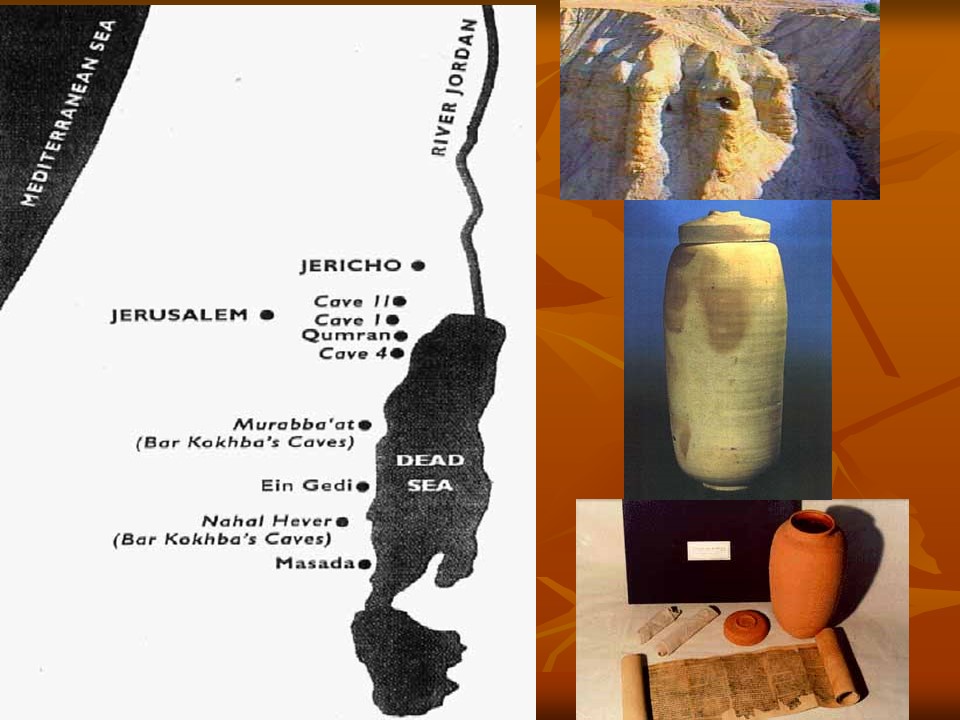
 Then in 1947 A.D. a complete scroll of Isaiah was found in the cave of Qumran, and it gives the timeline of its writing as around 700 B.C.
 The scroll they found was a copy, copied no later than 140 B.C. and possibly much earlier, and with that discovery a hundred years of critical biblical analysis was rendered obsolete. They found fragments of most of the Old Testament books, but also much material about day-to-day life around Jesus time, which helped in understanding many terms in the Hebrew language, the meaning of which had been lost.
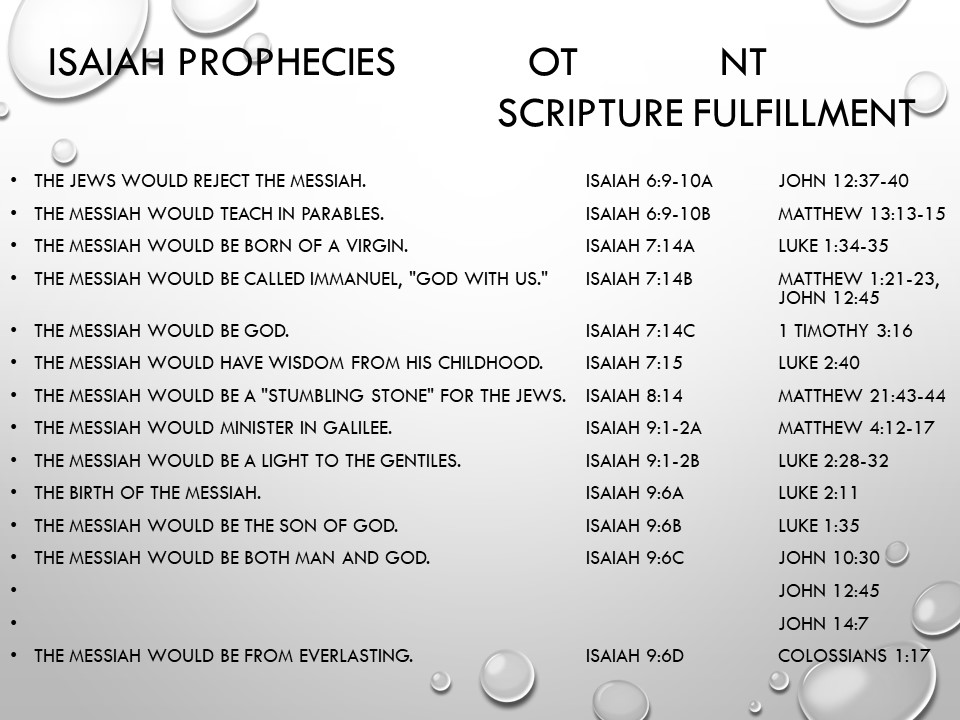
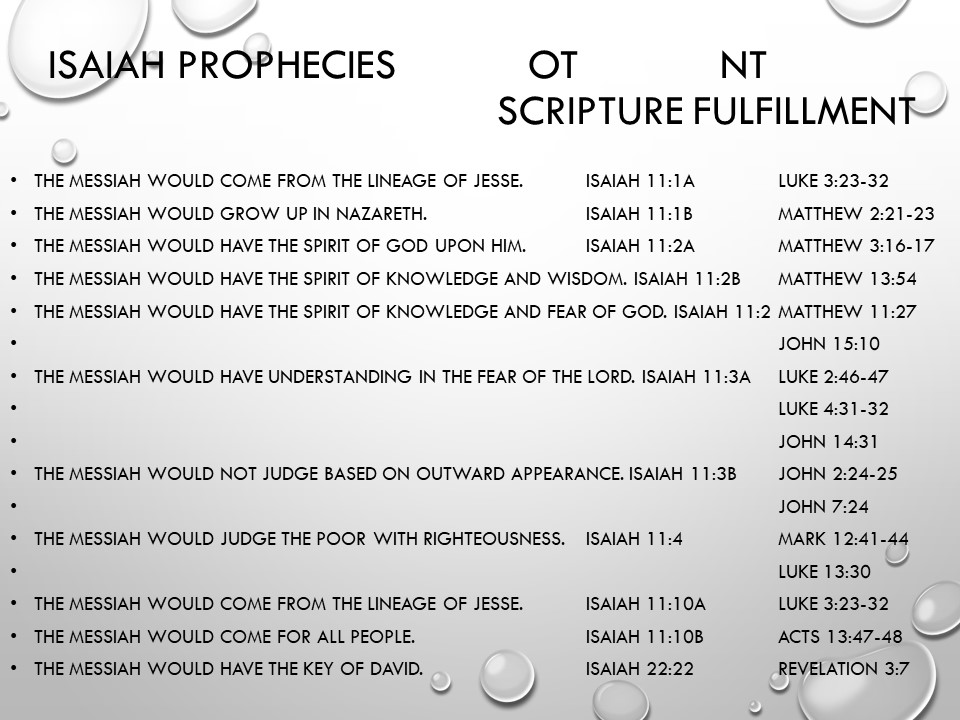
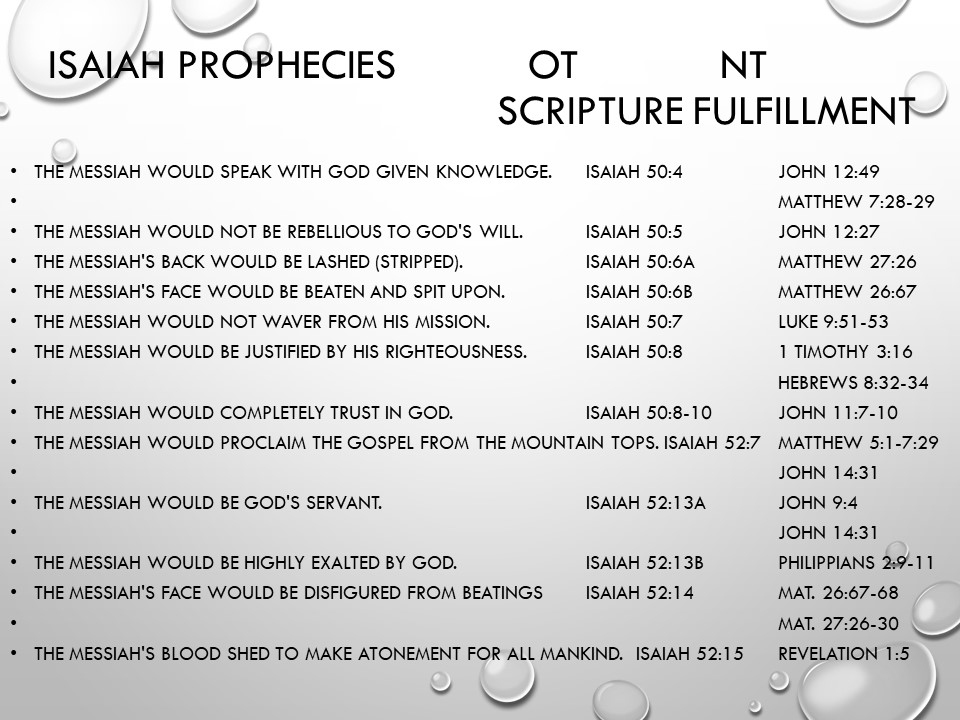
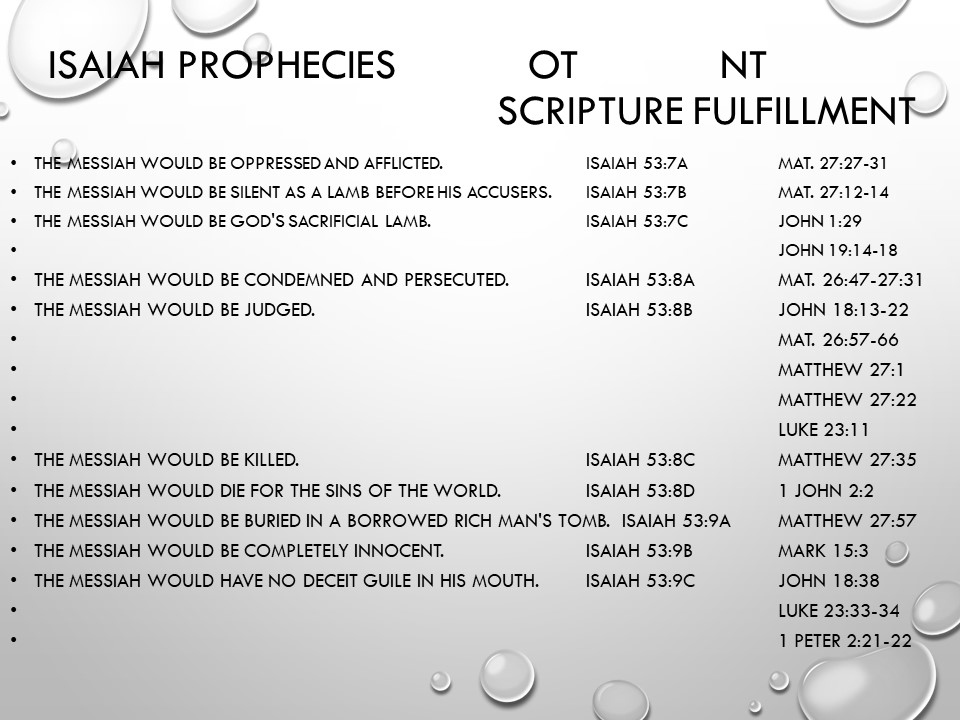
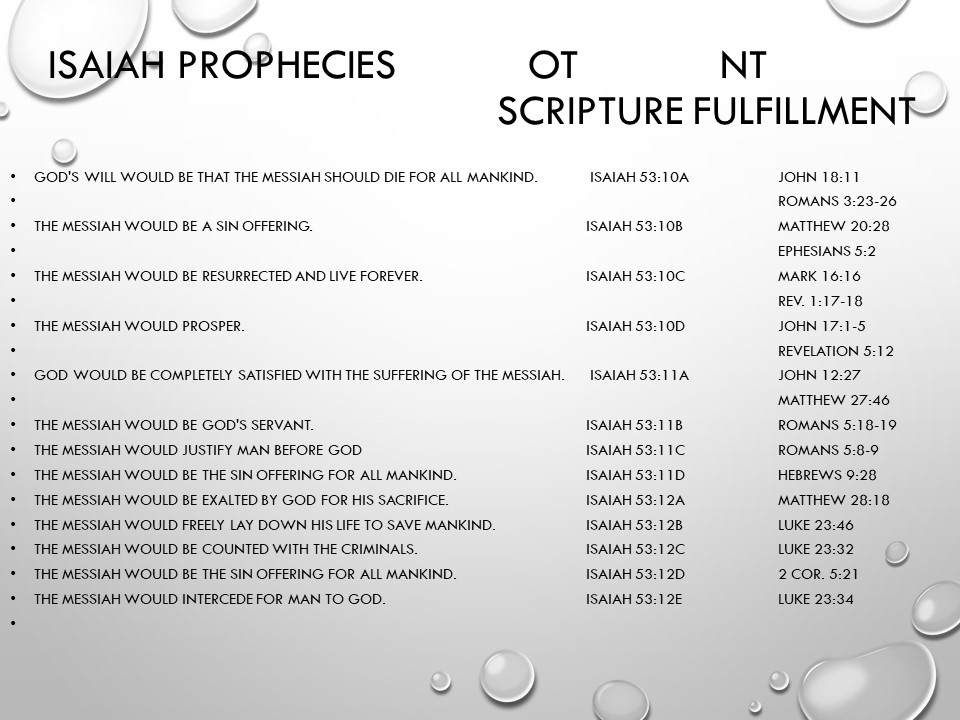
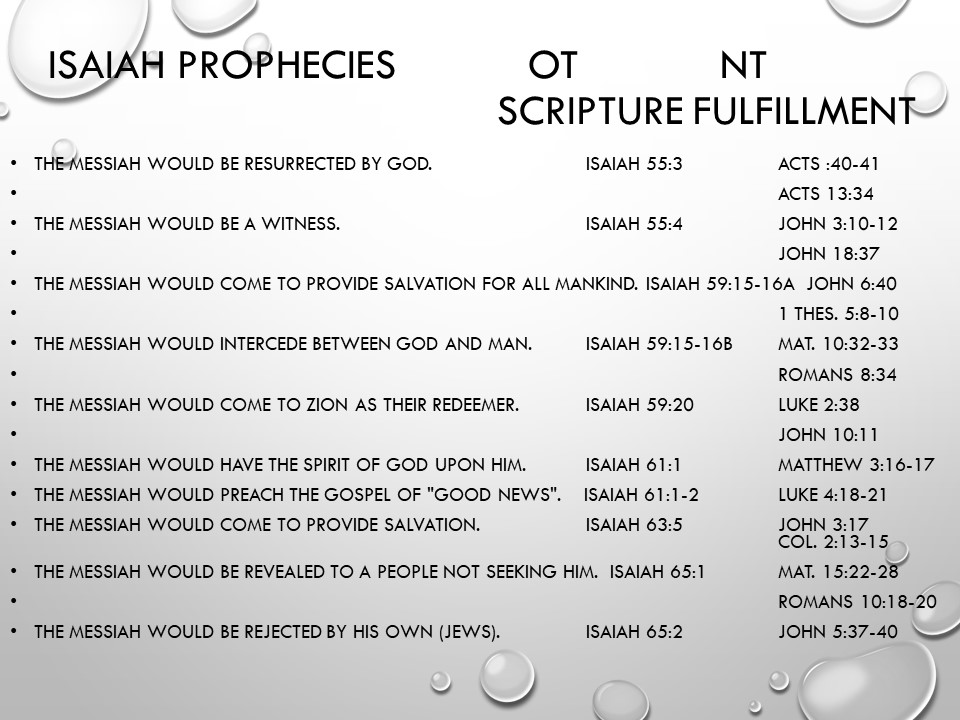
 Here is a list of the prophecies in Isaiah
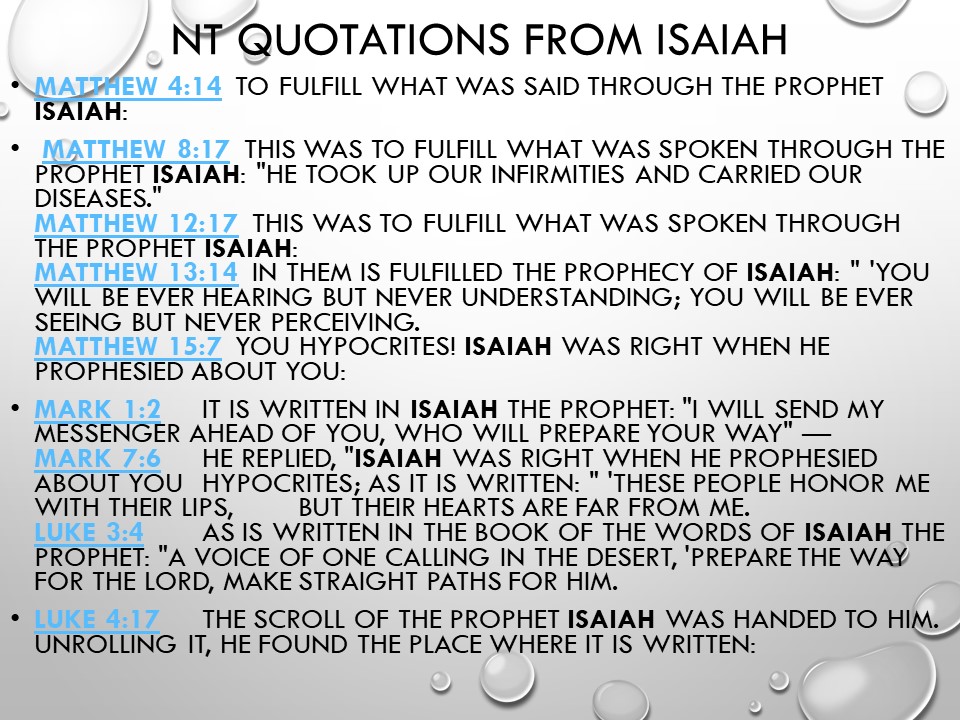
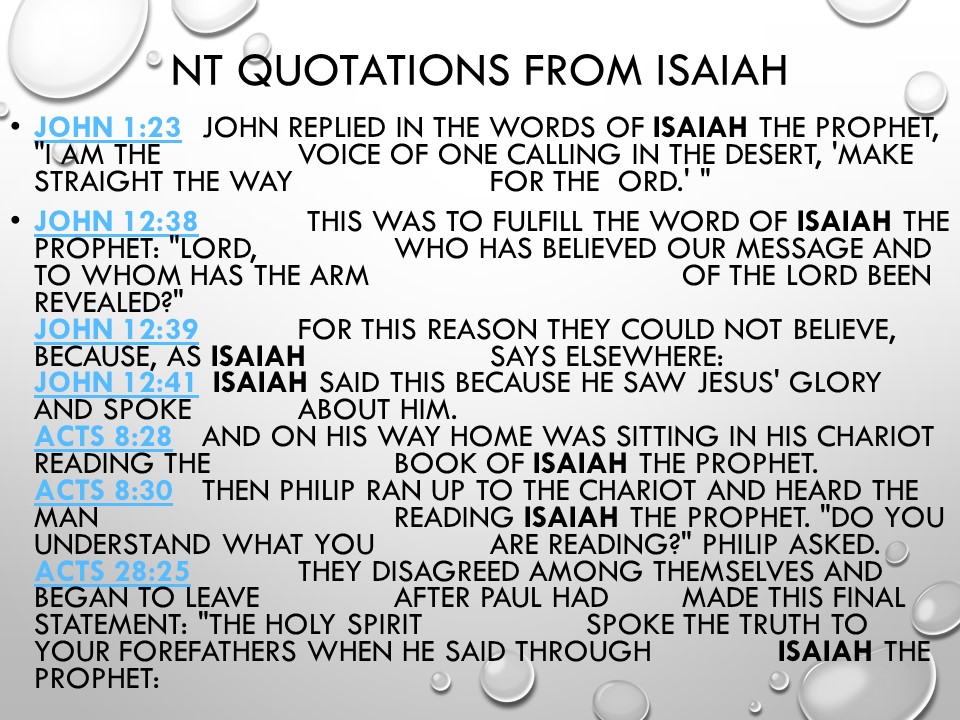
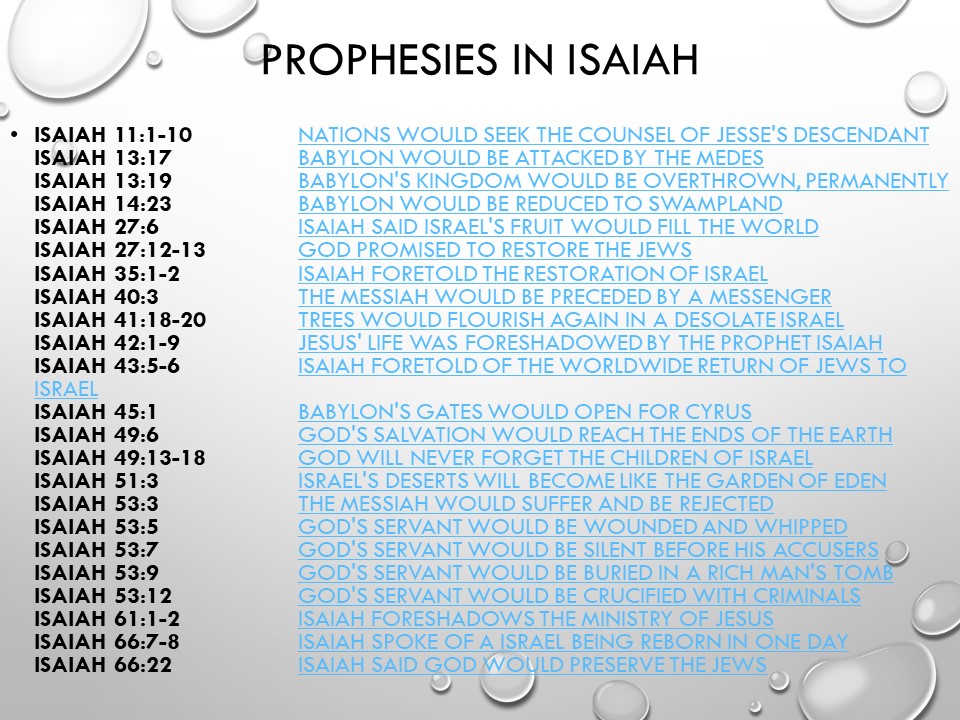 and their fulfillment in the New Testament.






 The NIV translation of the Bible uses “the LORD Almighty” instead of “the LORD of Hosts”. The LORD of Hosts is more true to the Hebrew text.




 Len Bilén's blog, a blog about faith, politics and the environment.