The Transcontinental Aqueduct; Will it pay for itself?

The goal of the Transcontinental Aqueduct is to save Lake Mead, save the American Southwest from becoming a desert, provide Hydroelectric peak storage for Texas, New Mexico and Arizona, provide sweet Mississippi water for irrigation, provide water to the Colorado river so it again can reach the ocean, revitalize San Carlos lake, provide more and better drinking water to 30 million people, to name just a few benefits.

The cost is substantial. The biggest problem is that the aqueduct must be substantially completed at full capacity before any benefits from the water will materialize. The cost to bring the aqueduct to half capacity is 300.5 billion dollars in construction cost only. This includes the cost of half the pumps or generators needed for full capacity, but not the cost of the power plants. Add to this the cost of filling the aqueduct and the 11 dams. The aqueduct itself will contain 1 million acre-ft of water when filled, the 11 dams will contain about 800,000 acre-ft when half full. To pump 1.8 MAF an average of 5000 feet requires about 10 TWh, when losses are included. Th filling stage water will be pumped, using excess wind and solar power at bargain rates, about 4 c/kwh , the same as the LFTR will produce when fully installed. This is about 320 million dollars in “liquid investment” The electric cost of moving one acre-ft from the Mississippi to the Colorado River is 6 MWh. This power is initially bought from off-peak wind and solar power, but as the aqueduct is completed with true hydropower storage up more and more the power will be generated with 100 MW LFTR power plants, the hydropower storage will be filled with excess wind and solar power.

In short: assuming a 50 year amortization plan for the aqueduct, and money available at 2%, , it will cost 12.5 billion a year in capital cost to deliver 7.5 MAF water from the Mississippi River to the Colorado river or any point in between, or $1,670 per acre-ft. Add to that $240 for electricity and another $50 per acre-ft in overhead and maintenance, the cost will be $1960 per acre-ft

When the aqueduct is fully built up, it will cost $13.4 billion yearly in capital cost to deliver 14.5 MAF of water from the Mississippi River to the Colorado river or any point in between, or $ 925 per acre-ft. The other costs stay the same, so the total cost of water will be $ 1,215 per acre-ft.

I have not yet mentioned the other major benefit of the Transcontinental Aqueduct. If I wanted the lowest cost of water possible, I would have used the lower route, going through the Texas lowlands to El Paso before routing it through New Mexico and Arizona. I routed it through the high and dry parts of Texas and New Mexico, at extra altitude penalty. The intent is to provide Hydropower storage at select places. These places are ideal for wind and solar power, but they need to store the energy when the sun is not up or doesn’t shine, or the wind doesn’t blow. Right now that is provided by coal and natural gas. Conventional nuclear power is best for use as base power only, so this transcontinental aqueduct will provide up to 23 GW of pure hydropower storage for 5 hours a day, but the LFTR nuclear stations providing the energy pumping the water in the aqueduct will shut off the pumps for five hours a day, or when the need arises, and instead provide another 20 GW of virtual hydropower power.

These 43 GW of hydropower capacity will be as follows: Louisiana, 0.4 GW; Texas, 18,5 GW (right now, Texas has no hydropower storage, but plenty of wind power); New Mexico, 10.5 GW; Arizona 13.6 GW. In Addition, when the Transcontinental Aqueduct is fully built up, the Hoover dam can provide a true 2.2 GW hydrostorage poser by pumping water back from Lake Mojave, a 3 billion dollar existing proposal waiting to be realized once Lake Mead is saved.

The amount of installed hydroelectric power storage is:
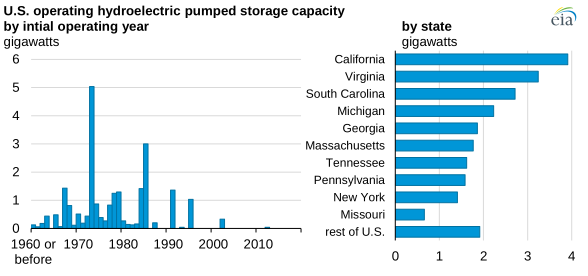
U.S. operating hydroelectric pumped storage capacity

Most hydroelectric pumped storage was installed in the 70’s. Now natural gas plants provide most of the peak power. This aqueduct will double, triple the U.S. pumped peak storage if virtual peak storage is included. By being pumped from surplus wind and solar energy as well as nuclear energy it is true “Green power”. Some people like that.
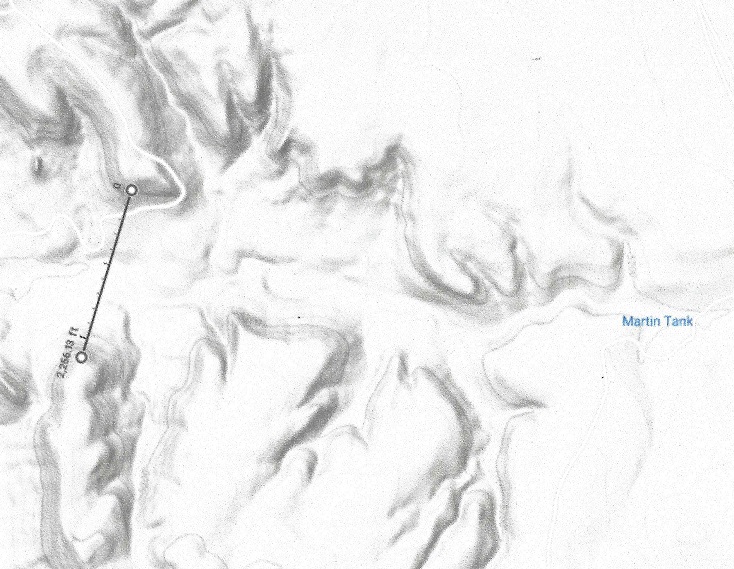
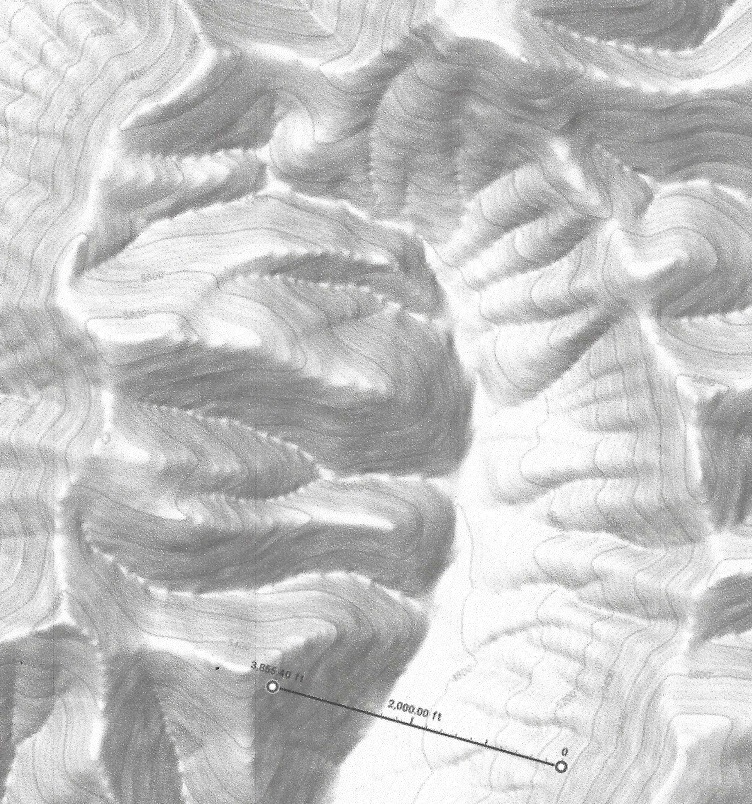
The Transcontinental Aqueduct. Leg 9: Martin Tank Lake to Round Mountain Rockhound Reservoir, a distance of 210 miles.

Stage 8 went from Arch Lewis Canyon Lake to Martin Tank Lake. The Martin Tank Lake dam is 22260 feet wide and 230 feet high. The Lake will contain about 30,000 Acre-ft when full, about eighteen hours worth of storage.

The elevation at the Martin Tank lake will top out at 4620 feet with maximum water level at 4610 feet. The aqueduct will first descend to 3980 feet, as it crosses the Rio Grande in La Mesa, a distance of 50 miles. The elevation difference is (4620 – 3980 – 50 X 2.2) feet = 530 feet. Releasing 24,000 cfs of water 530 feet will generate 1 GW of energy for 19 hrs/day. From La Mesa it will climb to the Round Mountain Rockhound Reservoir. The dam is 400 feet high and will top out at 5360 feet with a maximum water level at 5350 feet. The total lift of the water in stage 9 is (5350 – 3980 + 160×2.2) feet = 1722 ft. To lift 24,000 cubic feet per second 1722 feet requires seven 500 MW LFTR nuclear reactors, . T he Round Mountain Rockhound Reservoir will contain about 40,000 Acre-ft of water when full, about one day of storage. For 5 hours per day these seven reactors used in this stage can provide 3.5 GW of peak power to the grid instead of pumping water, thus acting as a virtual hydroelectric peak power storage. The Round Mountain Rockhound Reservoir will look like this:

The Transcontinental Aqueduct. Leg 8: Arch Lewis Canyon Lake to Martin Tank Lake, a distance of 50 miles.

Stage 8 ended in Arch Lewis Lake. It will be filled mostly during the 5 hours of peak power generation. During the other 19 hours the fill rate will be very low leading to lowering water levels.

It has a 3000 feet wide and up to 480 feet high dam, topping out at 4620 feet, and the lake holds a volume of up to 60,000 acre-ft of water.

From the Arch Lewis Lake dam to the Martin Tank Lake the distance is 60 miles the way the aqueduct takes. It will first descend to 3720 feet before rising to 5190 feet. The descending drop is (4620 – 3720 – 2.2 x 9), or up to 890 feet. The Martin Canyon Lake will top out at 5200 feet with maximum water level at 5190 feet. The total lift of the water in this stage is (5190 – 3720 + 51×2.2) feet = 1582 ft. To lift 25,000 cubic feet per second (1582 x 1.03 – 890 x 0.97) = 766 feet requires three 500 MW LFTR nuclear reactors plus the use of 80 MW from the grid. The Martin Tank Lake dam is 22260 feet wide and 230 feet high. It will contain about 30,000 Acre-ft when full, about eighteen hours worth of storage. For 5 hours per day the three reactors can provide 1.5 GW of peak power to the grid.

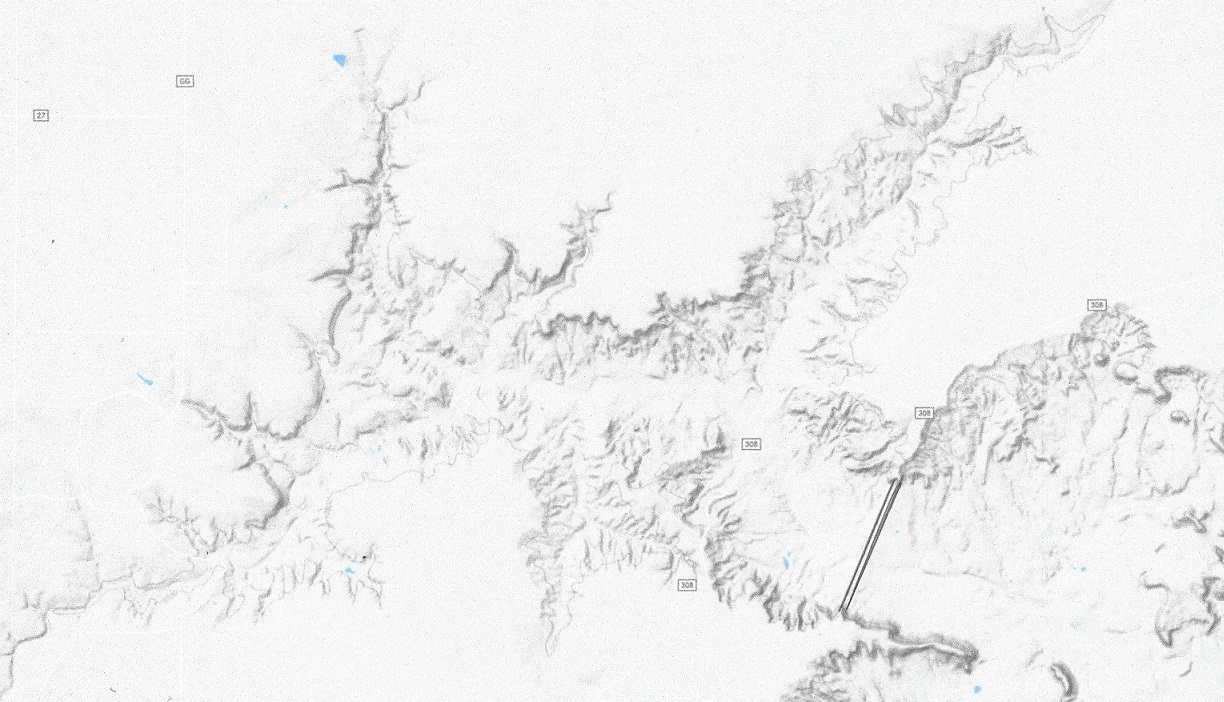
The Transcontinental Aqueduct. Leg 7: White Oaks Canyon Lake (to be made) to the Arch Lewis Canyon Lake via a 20 mile tunnel under the Guadaloupe Mountains in New Mexico.

Dam 1 dams the White Oaks Canyon Lake. It has a 2000 feet wide and up to 400 feet high dam, topping out at 5000 feet, and the lake holds a volume of up to 80,000 acre-ft of water.

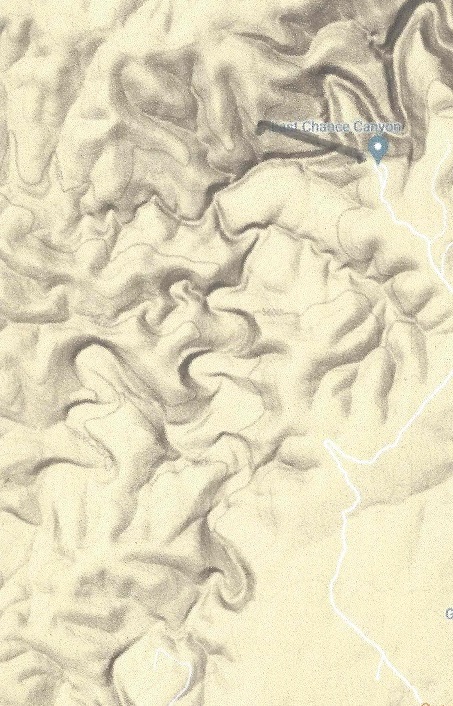
Dam 2 dams the Last Chance Canyon Lake. It has a 2200 feet wide and up to 380 feet high dam, topping out at 5680 feet, and the lake holds a water volume of up to 35,000 acre-ft.

The Stage 7 is a tunnel, starting at 4600 feet and ending at 4492 feet maximum levels. The 20 mile long tunnel will drop 88 feet as it passes under the mountain.

Dam 3 dams the Upper Canyon Lake for lack of a better word. It has a 1600 feet wide and up to 240 feet high dam, topping out at 5200 feet, and the lake holds a volume of up to 15,000 acre-ft of water.

Dam 4 dams the Arch Lewis Canyon Lake for lack of a better word. It has a 3000 feet wide and up to 480 feet high dam, topping out at 4600 feet, and the lake holds a volume of up to 60,000 acre-ft of water.

Up to now all stages have pumped water up the mountains. This stage releases the hydroelectric water storage, and it does so even during peak power, so the water flows all 24 hours with peak electricity creation during peak usage. By now, the average flow is down to 19000 cfs , 24 hours a day. During off peak hours, 19000 cfs flows down the tunnel, the power generated is coming from Dam 1 with a water level of between 4980 feet and 4700 feet with an average of 4940 feet. The maximum output level of the water is 4640 feet, so a drop of 300 feet will generate a minimum of 450 MW of power, or 8.6 GWh/day. Part of this energy will be used to pump up the water to Dam 2 and 3. Dam 2 will pump 13,000 cfs of water from 4630 feet to between 5820 feet ans 5520 feet, (average 5760) for 19 hours, an average lift of 1,060 feet. This required a total of 6.2 GWh of energy per day , or 326 MW pf power. Dam 3 will pump 6,000 cfs of water from 4630 feet to between 5200 feet and 4930 feet, (average 5120) for 19 hours, an average lift of 520 feet. This required a total of 1.4 GWh of energy per day , or 74 MW pf power.

The net electricity generated during 19 off peak hours is 1.0 MW on average. The electricity generated during the 5 peak hours is 49,000 cfs at a drop of 1060 feet, or 1.16 GW, from dam 2. From dam 3 it will be 22,800 cfs at a drop of 520 feet, or 264 MW. From the 2 dams , total electricity is 1.42 GW. Total electricity generated during these 5 hours is 7.12 GWh. This assumes a 97% efficiency of the reversible pumps from Dam 2 and 3. The pumps from Dam 1 are not reversible.

The tunnel capacity between Dam 1 and Dam 2 outlets is 19,000 cfs, between Dam 2 and 3 it is 49,000 cfs, and from Dam 3 to its exit in Dam 4 it is 71,800 cfs.

The Transcontinental Aqueduct. Leg 6: Grassland Canyon Lake (to be made) to White Oaks Canyon Lake (to be made).

The fifth stage was from East of Sweetwater dam (to be constructed) to Grassland Canyon Lake (to be made). The sixth stage is big! The aqueduct travels from South of Lubbock, Texas to the Guadaloupe Mountains in New Mexico, a distance of 200 miles.

The elevation at the Grasslands Canyon lake will top out at 2800 feet with maximum water level at 2790 feet. The White Oaks Canyon dam is 400 feet high and will top out at 5000 feet with a maximum water level at 4950 feet. The total lift of the water in stage 5 is (4950 – 2790 + 200×2.2) feet = 2600 ft. To lift 25,000 cubic feet per second 2600 feet requires twelve 500 MW LFTR nuclear reactors, three on the Texas Grid and nine on the Western national grid. The White oaks Canyon Lake will contain about 130,000 Acre-ft of water when full, about three days of storage. For 5 hours per day these twelve reactors used in this stage can provide 6.0 GW of peak power to the grid instead of pumping water, thus acting as a virtual hydroelectric peak power storage. 1.5 GW of this will be used by the Texas Power Grid, and 4.5 GW by the Western U.S. Power grid, and they have to be coordinated.The White Oaks dam will look like this:

The Transcontinental Aqueduct. Leg 5: East of Sweetwater dam (to be constructed) to Grassland Canyon Lake (to be made).

The fourth stage was from North of Baird dams (to be constructed) to East of Sweetwater dam (to be constructed

The elevation at the East of Sweetwater dam is 2450 feet. From the East of Sweetwater dam to the Grasslands Canyon Lake the distance is 90 miles . The Grasslands Canyon lake will top out at 2800 feet with maximum water level at 2790 feet. The total lift of the water in stage 5 is (2790 – 2450 + 90×2.2) feet = 538 ft. To lift 26,000 cubic feet per second 538 feet requires two 500 MW LFTR nuclear reactors plus use another 240 MW from the Texas grid. The EGrasslands Canyon Lake will contain about 110,000 Acre-ft when full, more than two days worth of storage. For 5 hours per day these two reactors can provide 1.0 GW of peak power to the grid.

The Transcontinental Aqueduct. Leg 4: North of Baird dams (to be constructed) to East of Sweetwater dam (to be constructed).

The third stage was from Brad lake to North of Baird dams (to be constructed).

The elevation at the upper North of Baird dam is 1830 feet. From 19.5 miles ENE of Abilene to the East of Sweetwater dam the distance is 60 miles . The East of Sweetwater dam will top out at 2460 feet with maximum water level at 2450 feet. The total lift of the water in stage 4 is (2450 – 1860 + 50×2.2) feet = 700 ft. To lift 26,000 cubic feet per second 700 feet requires three 500 MW LFTR nuclear reactors plus use another 100 MW from the Texas grid. The East of Sweetwater dam will contain about 100,000 Acre-ft when full, about two days worth of storage. For 5 hours per day these three reactors can provide 1.5 GW of peak power to the grid.

The Transcontinental Aqueduct. Leg 3: Brad lake (to be dammed) to North of Baird dams. (to be constructed).

The second stage of the aqueduct went from Aquilla Lake to Brad Lake.

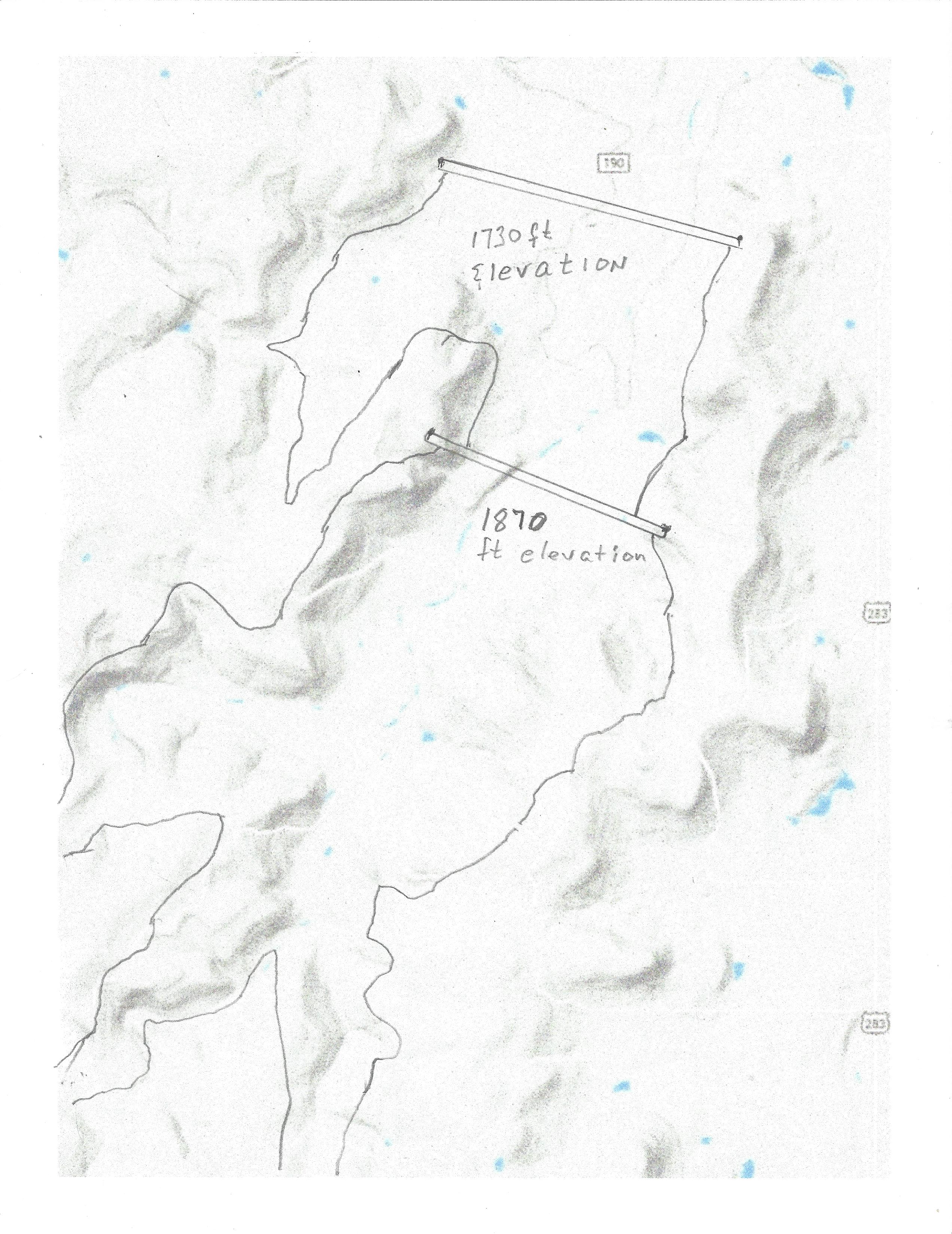
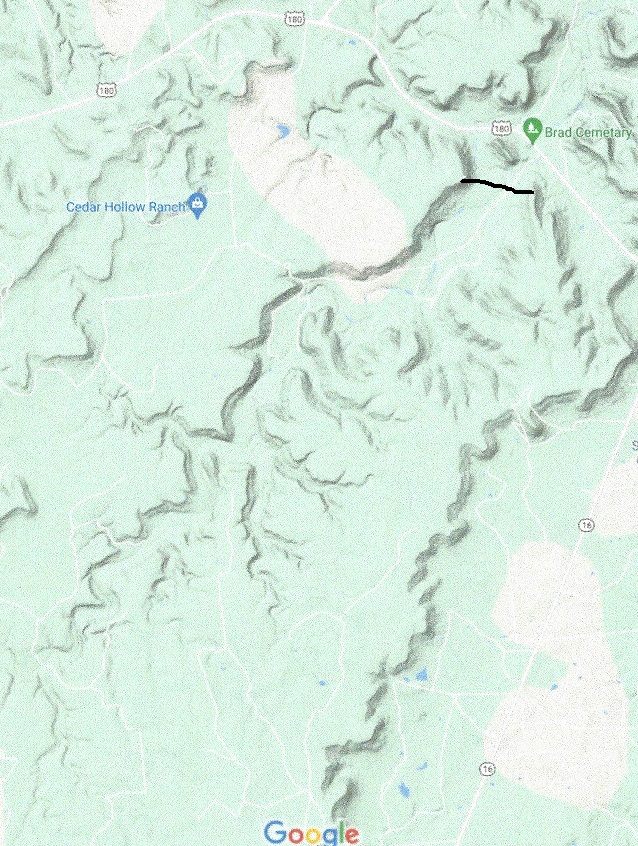
The elevation at Brad lake is 1370 feet. From 25 miles East of Breckenridge the aqueduct goes W to 19.5 miles ENE of Abilene, a distance of 60 miles . The dam yet to be built will top out at 1840 feet with maximum water level at 1830 feet. The total lift of the water in stage 3 is (1830 – 1370 + 60×2.2) feet = 592 ft. To lift 26,000 cubic feet per second 592 feet requires two 500 MW LFTR nuclear reactors plus use another 100 MW from the Texas grid. The upper Brad Cemetary dam will contain about 90,000 Acre-ft when full, about two days worth of storage. For 5 hours per day these two reactors can provide 1 GW of peak power to the grid. There will be a lower dam to provide hydroelectric power storage of 4 GWh, of 800 MW for 5 hours, after which the lower dam will be re-emptied by pumping back the water to the upper dam.

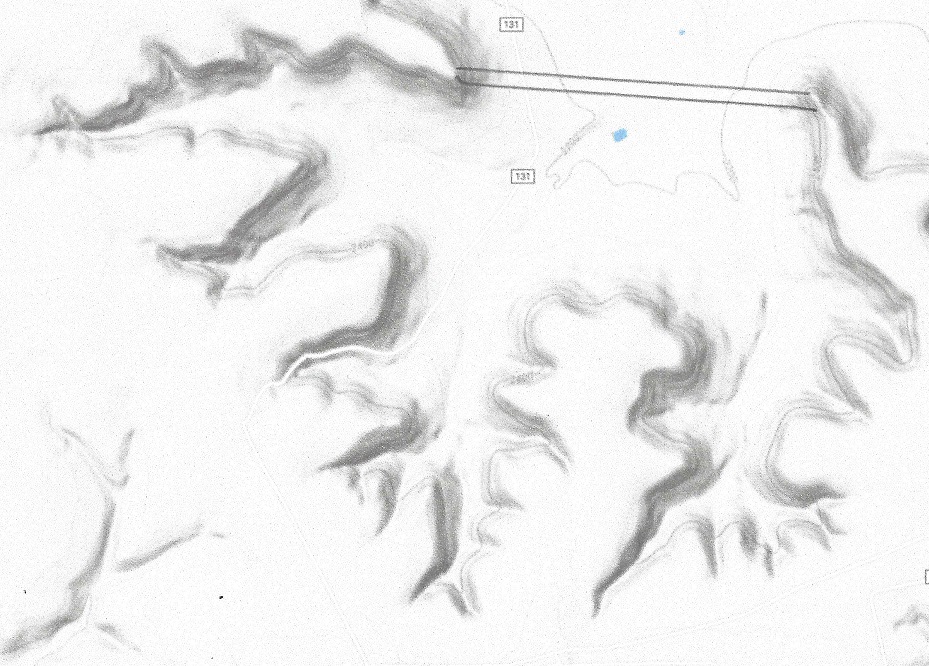
The Deadman Draw upper and lower lake

And this is what a hydroelectric power storage unit looks like:

Schematic of pumped storage hydropower system. | Download Scientific Diagram

The Transcontinental Aqueduct. Leg 2: Aquilla lake to Brad lake (to be constructed).

The first stage of the aqueduct was from the Mississippi river to Lake Aquilla:

The elevation at this lake is 537 feet. From here the aqueduct goes NW to 25 miles East of Breckenridge. The dam is located just south of the Brad Cemetery on U.S. route 180, 25 miles East of Breckenridge. The dam yet to be built will top out at 1380 feet with maximum water level at 1370 feet. The total lift of the water in stage 2 is (1370 – 537 + 100×2.2) feet = 1053 ft. To lift 26,500 cubic feet per second 1053 feet requires four 500 MW LFTR nuclear reactors. Lake Brad will contain about 90,000 Acre-ft when full, about one day’s worth of storage. For 5 hours per day these four reactors can provide 2 GW of peak power to the grid.

The Transcontinental Aqueduct. Leg 1: Mississippi river to Aquilla lake.

The Transcontinental aqueduct at the starting point will have a carrying .capacity of 15 million acre-ft per year, or 21,000 cubic feet per second on average. Maximum flow will be 26,500 cfs, allowing the power generators to supply peak power to the grid for up to 5 hours per day instead of pumping water.

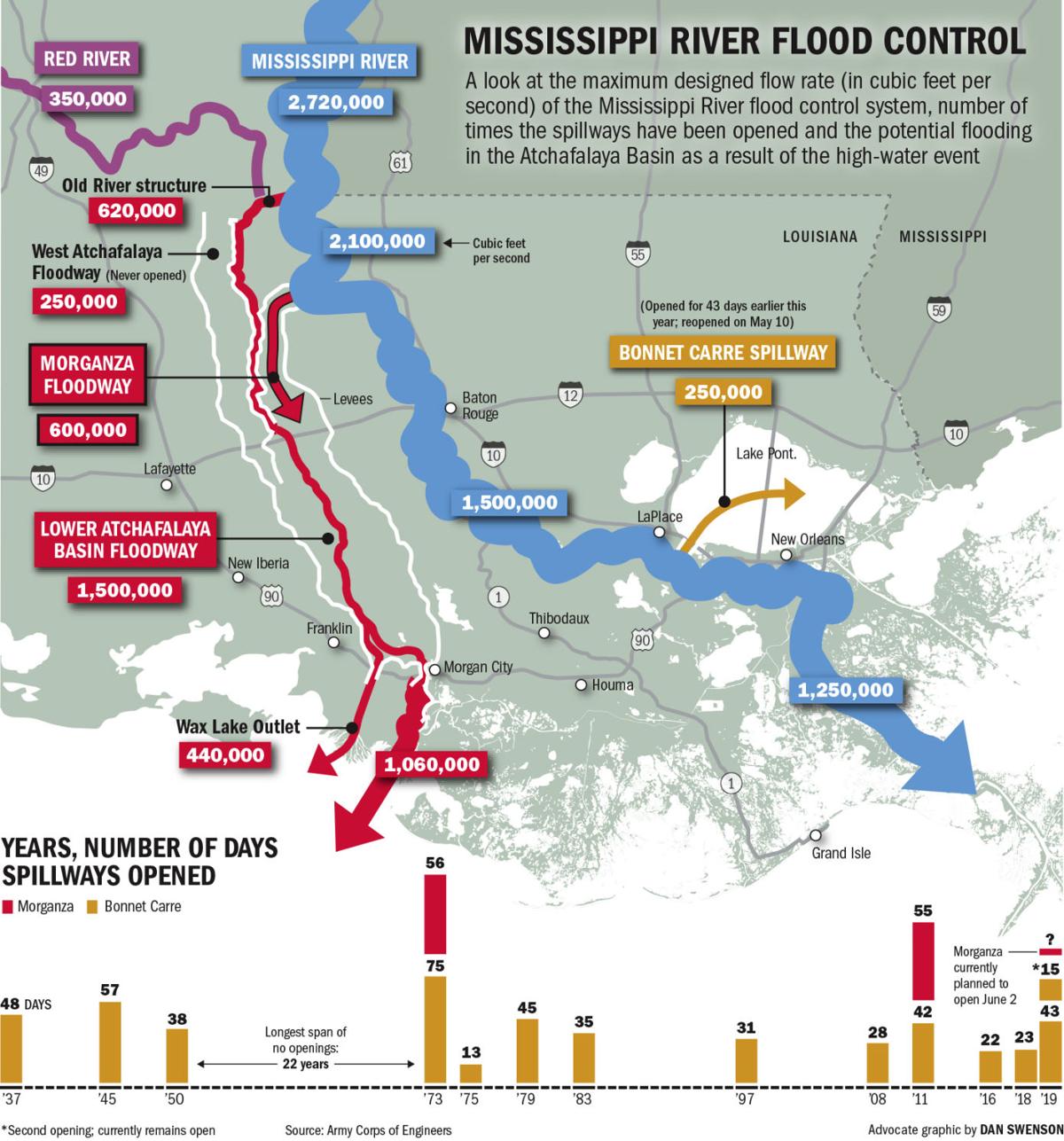
The starting point of the aqueduct is where the Red river empties out in the Atchafalaya river, and has a Mississippi River diversion dam. The elevation at the starting point is 7 feet, and the dam and pumping station will be located in the upper part of the never used Atchafalaya Floodway.

The Mississippi River flood control Morganza spillway is south of the Atchafalaya river diversion, and will not interfere. The place chosen is ideal to relieve some of the Mississippi river flow. Even in the lowest Mississippi flow in a drought year this diversion has sufficient flow to divert 26,500 cfs from it.

The first leg of the aqueduct is 360 miles long and is an open water river with pumping stations whenever the river has to rise about 30 feet. The river runs by gravity until it has sunk about 15 feet which is about 6.18 miles downstream. Since endpoint is at 537 feet elevation this requires about 58 pumping stations. During the course of the path the aqueduct crosses the Sabine River south of the Toledo Bend Reservoir, following the best climb it crosses the Neches River and the Trinity River following the geologically best way until it reaches the Aquilla Lake. The aqueduct is quite substantial, it will carry about 80% more water than the All American canal, seen here under construction. This canal has a drop of about 2.2 feet per mile to accommodate maximum flow.

Pumping 26,500 cfs water through 58 pumping station, each one raising the water about 30 feet requires 4 Gigawatts of power when rounding up for turbine losses. This can be accomplished by eight 500 MW LFTR reactors, also being able to provide up to 4 GW of peak power for 5 hours/day on demand. Two will serve the eastern power grid and six will serve the Texas electrical grid.

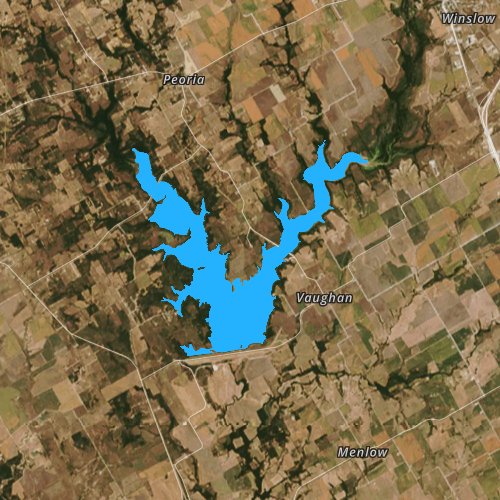
The end point for stage 1 of the channel is Aquilla lake, elevation 537 feet. It has a storage capacity of 50,000 acre-ft, which is only half a day’s worth of storage, so Stage 1 and Stage 2 will have to be managed as a unit. It is located 20 miles North of Waco, TX.