In Genesis 1:20-23:And God said, “Let the water teem with living creatures, and let birds fly above the earth across the expanse of the sky.” 21 So God created the great creatures of the sea and every living thing with which the water teems and that moves about in it, according to their kinds, and every winged bird according to its kind. And God saw that it was good. 22 God blessed them and said, “Be fruitful and increase in number and fill the water in the seas, and let the birds increase on the earth.” 23 And there was evening, and there was morning—the fifth day. It was now time for animal life to be created. There was plenty of carbohydrates in the form of algae and phytoplankton and enough oxygen generated by the plant life. One of the most important was the creation of krill.
It does not use hemoglobin for oxygen transport to metabolize but uses an open circulatory system. They do eat algae and most phytoplanktons. In fact a blue whale can eat up to 8000 pounds of krill a day in peak season. It is the major source of food for a variety of fish. Fish have hemoglobin that is similar to human hemoglobin but comes in different forms dependent on water conditions such as varying Ph and temperature. Some fishes are very sensitive to Ph changes, and during the period of acid rain and nearly unrestrained water pollution Lake Erie was unofficially declared dead. Mites, spiders and insects use venting air pockets inside their shells to provide the oxygen necessary for energy production. Birds have hemoglobin similar to human hemoglobin, but some is adapted for high altitudes. The Rüppell’s griffon vulture (Gyps rueppellii) holds the record for the highest-flying bird, having been documented at altitudes of up to 37.000 feet. The air pressure at that altitude is less than one sixth of sea level air pressure, which makes it hard to fly and breathe.
It has always puzzled me that God said “let there be light” on “day one” of creation, but did not associate it with the sun. This, in a strange way convinced me that the story of creation came from God and not from man. If it were from man they would of course have started with the sun to explain night and day as a 24 hour period.
In 1927, Georges Lemaître, a Belgian cosmologist and Catholic priest published a paper that provided a compelling solution to the equations of General Relativity for the case of an expanding universe. This was confirmed in 1931 by Edwin Hubble, and the expanding universe became widely accepted, and the Big Bang hypothesis, where the whole universe could be explained by having started by a singularity. Without being able to explain how a singularity could possibly happen, it was a convenient way to explain away God, And after the Hubble telescope was launched nearly all astronomers agreed it was so, and the universe was 13.88 Billion years old. This lasted until the Webb telescope was launched, and much of what had been accepted as true was not so, for instance they found galaxies that were over 14 billion years old. In addition they found that intergalactic water was found in mass earlier than the Big Bang theory had predicted that water could form. The earth and the Solar System were in a state of chaos until about 4.6 Billion years ago. This was in the middle of “day 3”. Our solar system is formed as a result of earlier supernovas having generated all the natural elements in the right proportions for life to be possible. The mixture of hydrogen and all elements finally formed a disc, and hydrogens got concentrated into a cloud, and the 10 planets, including earth making clouds at their proper distances from the center. The Earth got fully formed, but the Sun concentrated all its gasses as a protostar for another 10 to 50 million years until the core temperature reached 15 million degrees Celsius so fusion could really begin and stabilize. Therefore it states in Genesis 1:14-19:And God said, “Let there be lights in the expanse of the sky to separate the day from the night, and let them serve as signs to mark sacred times, and days and years, 15 and let them be lights in the expanse of the sky to give light on the earth.” And it was so. 16 God made two great lights—the greater light to govern the day and the lesser light to govern the night. He also made the stars. 17 God set them in the expanse of the sky to give light on the earth, 18 to govern the day and the night, and to separate light from darkness. And God saw that it was good. 19 And there was evening, and there was morning—the fourth day.
The Moon was formed later. One theory is that about 4.5 billion years ago, a Mars-sized protoplanet named Theia collided with the young Earth and separated from it.
With the Sun warming up fully, the algae and other plants really started growing, so God was then in a position to create something to consume the carbohydrates and all that plant life produced. It also helped that in the young earth the CO2 concentration was more than 10,000 ppm, or more than 50 times what it is today. It also happened that the Sun produced just the right amount of heat, and the Earth is just at the right distance from the sun to produce an ecosystem that produced the ideal temperature range to sustain organic life.
Let’s look what happens in Genesis 1: 9-13; And God said, “Let the water under the sky be gathered to one place, and let dry ground appear.” And it was so. 10 God called the dry ground “land,” and the gathered waters he called “seas.” And God saw that it was good. So now water is organized and land has appeared, and the earth is fully formed. This completes the physical creation, and in the 1983 book The Intelligent Universe, the famous astronomer Fred Hoyle wrote, “The list of anthropic properties, apparent accidents of a non-biological nature without which carbon-based and hence human life could not exist, is large and impressive.” The “fine tuning” of the universe is specifically designed to make life possible.
God is producing an ecosystem for the earth, but there is yet no physical life. Here God is silent on what lifeforms He created first. Scientists are trying to reproduce the conditions which make spontaneous creation of life possible, using all their intelligence and having the right combination of amino acids and other chemical conditions come together to form life. One thing is for sure; they did not imagine random processes in “the primordial soup” but tried to fabricate the best estimate of the environment using every ounce of scientific knowledge available. Whenever an amino acid is formed via lightning or whatever, half are created of the left type and half of the right type. (When one drinks fresh squeezed orange juice the vitamin C is all left oriented, but if the vitamin C is taken in a manufactured tablet it is half left, half right oriented. Only the left oriented vitamin is useful, the right oriented is just acid and is not generated by life and cannot be used by life.) So they are not able to reproduce life or even be able to explain how it could have happened since so many left oriented processes have to come together at the same time without being interfered by the unusable right oriented molecules hindering the process. And this is the generation of the simplest life form! Rather than trying to explain the inexplicable apart from creation, I will jump right in with Phytoplankton. These are very primitive plants, living mostly in oceans, wetlands, rivers and lakes but can also be found on land providing there is enough water, Most phytoplankton contains chlorophyll and absorbs carbon and generates oxygen.
God omits all the discussion of how life on earth started and jumps right into explaining that plant life started first, and what follows is a list of all kinds of flora. It is found in Genesis 1:11-13
Then God said, “Let the land produce vegetation: seed-bearing plants and trees on the land that bear fruit with seed in it, according to their various kinds.” And it was so. 12 The land produced vegetation: plants bearing seed according to their kinds and trees bearing fruit with seed in it according to their kinds. And God saw that it was good. 13 And there was evening, and there was morning—the third day.
In fact this is a step that evolutionists skip, because there is no plausible explanation how life could emerge out of dead matter. Some have suggested that life could have entered from outer space, and indeed the Webb telescope, when looking at the “empty” part of universe, have found that it is not totally empty but seems to have some rudimentary amino-acids and even metals, which are necessary but by no means sufficient building blocks for life.
Let us take a look at one of the simplest phytoplanktons, the cyanobacteria.
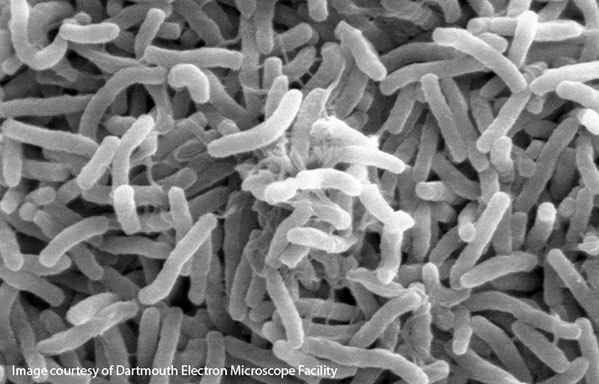
The cyanobacteria is the simplest form of reproducing organism that contains chlorophyll and produces its own food; carbohydrates:
To produce its own food, it needs additional nutrition, among them Aluminum and Nitrogen compounds. They have to be included for photosynthesis to function via RNA interpreters, proteins and sunlight. The main food is CO2 and the process exhausts O2. The one celled organism looks like this:
This is the simplest of the phytoplanktons. It has all the necessary functions to be able to duplicate itself. To do it it must have a nucleus contained inside a cell wall, and how to create the cell wall is programmed in the nucleus. This is a very simple nucleus and the smallest of the cyanobacteria has a nucleus of about 1.4 million base pairs. 3 base pairs form one codon and tells which amino aid to use to add one link in the protein to build. The rest of the DNA was thought to be evolutionary redundant “junk DNA,” but recent analyses have shown that they are start codes and stop codes to show where, when and how to build it, with processes not yet understood. All this is interpreted by RNAs and other compounds, and together they enable how to build and duplicate themselves. The information stored in the DNA is about the same as is contained in a large fiction novel. All this was prepared in creation “day 3” and led to all plant life. Nowadays phytoplanktons generate about half of all carbohydrates and release half of all Oxygen in the world.
The first origin of life can only have come to pass thru a creative act of God, since it involves a catch 22 conflict many times over. But the first live substance may not have been based on sunlight and photosynthesis, but could have been microbes known as methanotrophs that convert methane gas into carbon dioxide and biomass. Scientists are unsure how these microbes get all the nutrients they need to accomplish this task. But this we know: God did not give us the story of creation to be scientifically complete. The only thing He says about mildew is that it is bad and how to get rid of it. The grass and the trees were created by God when the environmental conditions were right for them to appear, nearly all of them after the sun was lit.
Next installment: The sun, moon and the stars were formed on “day 4.”
We find this in Genesis 1:6-8 (NIV) And God said, “Let there be an expanse between the waters to separate water from water.” 7 So God made the expanse and separated the water under the expanse from the water above it. And it was so. 8 God called the expanse “sky.” And there was evening, and there was morning—the second day. But God did NOT say: “It was good” The creation story is interesting reading. God takes a whole day out His busy schedule of creation just to form an environment with water in all its forms in what we call the atmosphere or “sky”. He has yet to create life. Could it be, that water in all its forms are necessary to form and sustain life, so a sustainable ecosystem had to be prepared first?
God created the earth too be just heavy enough to hold on to water vapor, and water is unique because its melting point and boiling point is within the range of bring able to participate in sustaining life. It also has the second (after ammonia) highest specific heat capacity of all known substances. To melt 1 gram of ice takes 80 calories, to heat it takes 1 calorie per gram and to boil it at ground levels takes 539 calories. (The calories you eat are actually kilo-calories). This makes water the ideal substance to moderate and regulate climate. Water vapor evaporates from the ocean, cooling it down and water vapor, being lighter than air rises and condenses as clouds form. The clouds are the most important temperature regulator, much more important than all other greenhouse gases combined. Clouds transport heat from the equator to the temperate areas and to the poles. Without this the equator temperature would be in excess of 145 F. In addition clouds have a high reflection of incoming sunlight, reflecting incoming heat back into space. The earth has never been to warm to sustain complicated life, nor is there any danger of overheating unless clouds disappear. In fact, the next major climate change is the next ice age.
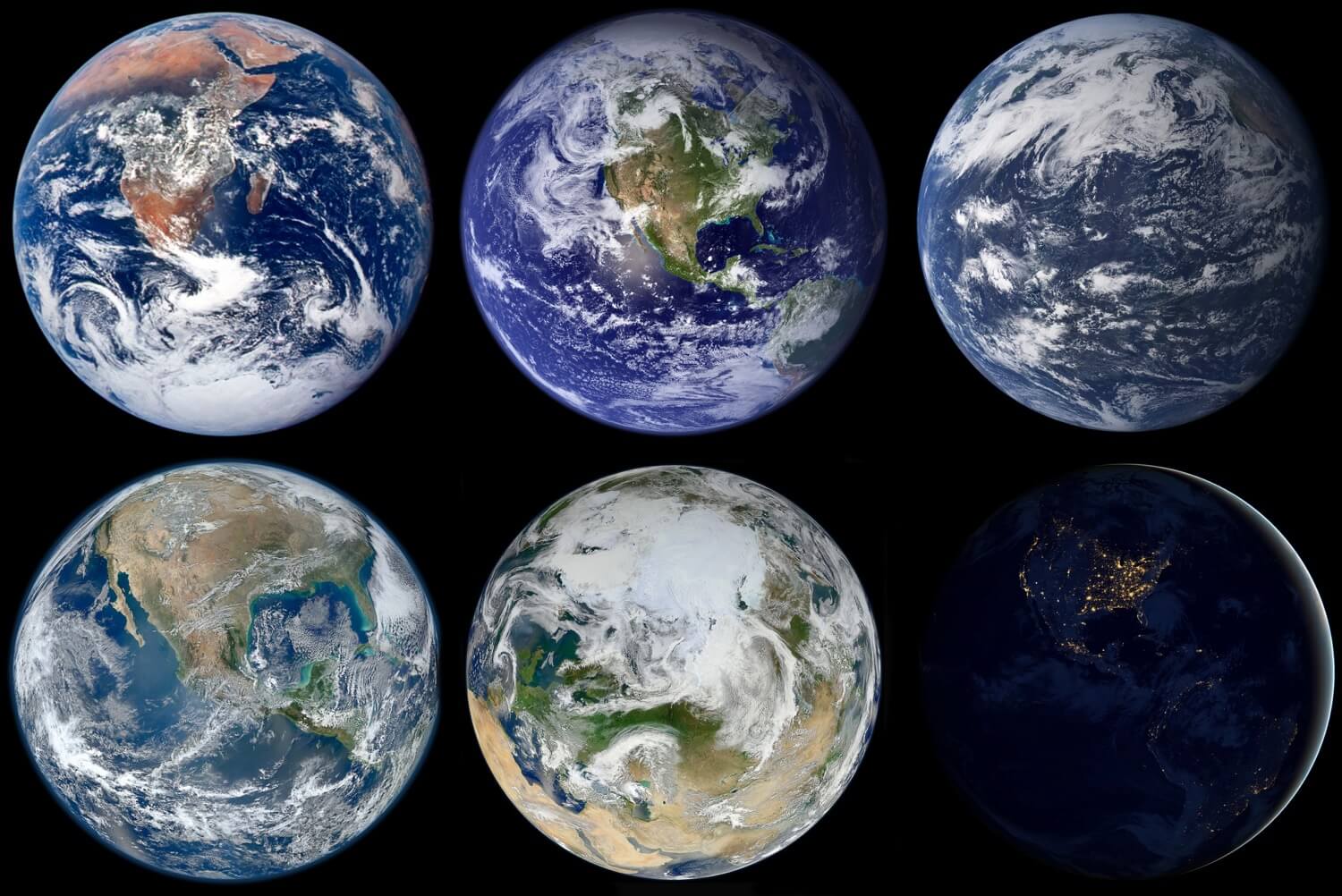
The picture above shows the friendly earth we are living in today. On the second “day” of creation situation was quite different. The sun was not fully created yet, and the earth was still in its chaotic state. All God did was to prepare the ecosystem. The earth was still cooling down from creation, and water evaporated and formed a cloud that covered the whole earth. This is why God did NOT say “it was good” on the second day, it was just the preparation.
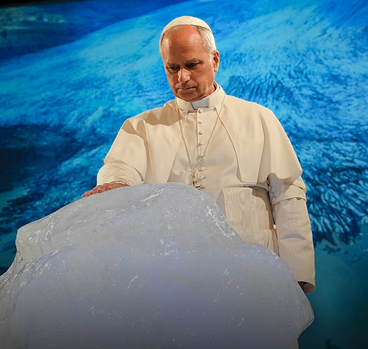
Pope Leo XIV, the newly elected pope, has recently championed the Vatican’s plan to become the world’s first carbon-neutral state by developing a large solar farm on land near Rome. This initiative is inspired by the environmental legacy of Pope Francis and aims to generate enough electricity to meet the Vatican’s needs and potentially provide excess energy to the local community. The Vatican’s efforts are part of a broader push for climate action, with Leo XIV actively promoting the transition away from fossil fuels and emphasizing the moral imperative of environmental stewardship. He also took part in the “Raising Hope for Climate Justice” International Conference in Castelgandolfo, Italy on Oct 1, where he blessed a chunk of a Greenland iceberg. See the picture:
Pope Leo asked eloquently: “What must be done now to ensure that caring for our common home and listening to the cry of the earth and the poor do not appear as mere passing trends or, worse still, are seen and felt as divisive issues?”
“Everyone in society, through nongovernmental organizations and advocacy groups, must put pressure on governments to develop and implement more rigorous regulations, procedures and controls,” the pope said.
“Citizens need to take an active role in political decision-making at national, regional and local levels,” he said. “Only then will it be possible to mitigate the damage done to the environment.”
What they still do not know is that rising CO2 levels is responsible for less than 10% of the climate change, and water in all its forms; ice, water, water vapor and clouds is responsible for over half of climate change. Land use changes are also more important. Let me explain it further:
Many years ago, around 1976 Dr. James Lovelock bought a number of Hewlett Packard 5840 Gas Chromatographs to be set up in some of the most remote places of the earth to study pollution and its effect on the climate. What he found was an unexpectedly large amount of dimethylsulphide (DMS) in the atmosphere, and that acted as a
condensation point for cloud formation. He was then a longtime paid consultant for Hewlett Packard, so he came over from his native England a couple of times a year, always willing to hold a seminar for us engineers working at Hewlett Packard Analytical, and at one of them he sprung “Daisy-world” on us before it was published; mostly to see if we could poke holes in his hypothesis. It involved a world that consisted of only two flowers, black daisies and white daisies. The computer simulation starts out with a cold world and a weak sun. The sun slowly warms up (about 1 percent every ten million years), and at some time suddenly black daisies appear and cover the earth. This warms the earth some more and white daisies appear. As the sun varies in intensity the mix of white and black daisies changes and this keeps the earth at a stable temperature, as they have different reflective properties. He then went on to say that the whole earth is like a living organism. Some time later he presented the paper and afterwards we asked him how it was received. “You won’t believe it”, he answered. ”Now there are people who actually believe the earth is a living organism. They demand follow-up articles that justifies their belief.” He had partly himself to blame, the name he had chosen was “the GAIA hypothesis,” Gaia being the Mother Earth Goddess. Talking about religion the Mother Earth people now had their goddess, and expressions like. “The earth has a temperature” became commonplace. For me, being a Christian I read with wonderment what God has to say about Creation and the Ecosystem.
Starting in Genesis 1:1; In the beginning God created the heavens and the earth. This can be described in scientific terms: From nothing God created space and matter. What happened to “In the beginning”? It turns out that matter has to be accompanied with space or it will not work. And time is a derived property from the existence of matter and space. Without space and matter time does not exist. So the creation of matter and space also defined the beginning of time. What about God? The laws of physics tells us you cannot create something out of nothing. This proves that we and everything else cannot possibly exist. But we do, and therefore there must have been something existing before anything existed. This is God, and He can be defied in one word: Presence. When Moses saw the burning bush he asked who it was. And God answered “I am that I am”, in a way describing the eternal presence, without beginning and end. This is the God I believe in: Out of time and space since He created it, and also in time and space since it is part of His creation.
The expression “in the beginning” is in Hebrew bereshit which means in the beginning. The same phrase begins the gospel of John 1:1 “Inthebeginning was theWord, and theWord was with God, and theWord was God.” Here the word translated beginning is “Arch” like in archangel and means “the chief” or “the most important one’ referring to the Word. It is in past tense which means that the Word existed before the beginning. Another reference is found in Titus 1:1 “inthe hope of eternal life, which God, who does not lie, promised before thebeginning of time,” In this verse the word eternal and the word time is in Greek aionion , which means a very long time, like the time span of a dynasty. Nowadays eon has a meaning of a thousand million years in Geology and Astronomy, but the original meaning is a very long time which may or may not be defined. It is sometimes translated of the ages. Here is a song that spiritually speaks to me:
The normal state of the Earth is being in an ice age. If there were no greenhouse gasses at all, the temperature average for the earth would be about -20 C. But there are greenhouse gasses that increases the present world average temperature to about 15 C.
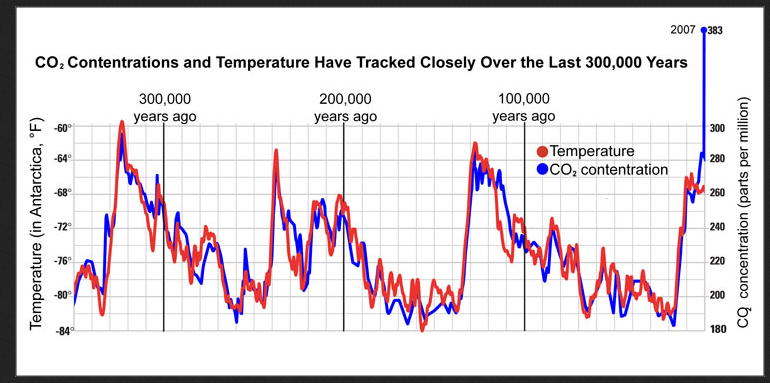
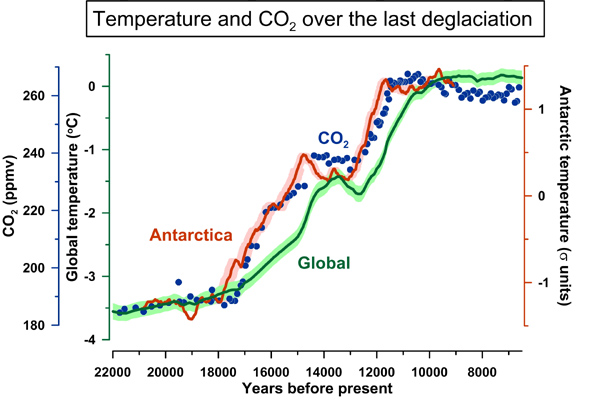
The earth every now and then warms up and enters an interglaciary period, and then slowly cools down again. People have noticed that for the last few ice ages the CO2 levels have closely tracked temperature, at least for Antarctica.
From this chart we can see that for an 18F (10 C) rise in temperature the CO2 level rose 85 PPM. Today;s CO2 level is 425 ppm, a rise of about 165 ppm from pre-industrial levels of about 260 ppm. If the relationship between CO2 levels and temperature still holds we should experience a temperature rise of about 9C for an average temperature on earth to rise to about 23 C (73F) in the near future.
This must be some of the information fed to United Nations Secretary-General Antonio Guterres when he pleaded for immediate radical action on climate change, saying that record-shattering July temperatures show Earth has passed from a warming phase into an “era of global boiling”.
In the book “An inconvenient truth” Al Gore used a very similar chart from the Vostok research site in Antartica, and he used the temperature scale in deviation from normal, hiding the fact that it showed temperatures in Antartica which are not very representative for average temperatures on earth. While the CO2 concentration is about the same everywhere on earth, 20,000 years ago it was about 180ppm. In Vostok, Antarctica the corresponding water vapor concentration was about 50 ppm in the Antarctic winter.
Al Gore chose the Antarctic to show the correlation between temperature and CO2 levels, but does that hold for the rest of the earth?
It was in Antarctica the last Ice age began to end; 19,000 years ago. Why did it end?
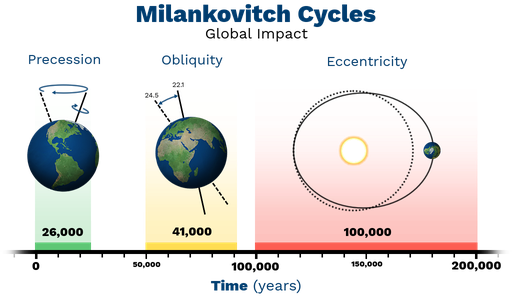
To answer that we must look at the
Right now the Earth is near its most circular path, nearing optimum,which is a very good place to be, minimizing yearly temperature cycles globally
Likewise the obliquity angle is about half way between minimum and maximum and is slowly decreasing.This is also good.
The most important of the cycles is the precession cycle. 19,000 years ago it gave most annular heat to the southern hemisphere. This does not normally trigger an end to the ice age, only every 16th cycle or so, when all cycles work together plus the influence of Jupiter and Saturn.One way to describe it is like the rotation in a tilt-a-whirl, popular in many county fairs. You sit peacefully in your car and go around and up and down and nothing happens, and suddenly the centrifugal forces pins you to the back of the car, the more the merrier. But for it to happen, all forces must come together. There could have been a large ice berg break-off, a volcanic eruption spewing ash over the southern hemisphere, an earthquake or a meteoric impact causing a tsunami that caused the start of the beginning of the end of the ice age. One thing is sure, there was no anthropogenic origin (rising CO2 didn’t start it), The question is:
Which came first, rising temperature or rising CO2 level?
The only way to answer that question is to measure what actually happened.
(from LiveScience By Wynne Parry published April 04, 2012.
This chart is very interesting. It shows the Antarctic temperature, starting to rise 19,000 years ago, global temperature and global CO2. The chart clearly shows that Antarctic temperature rose first, followed by rising CO2 levels for the first 4000 years. The CO2 level in the Northern Hemisphere follows the level in the Southern Hemisphere with only a 2 year time lag.
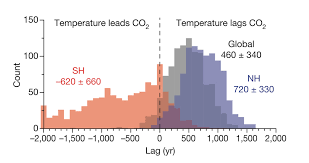
At about 14,000 years ago the Precession changed so solar radiation began to favor the Northern Hemisphere. At this time the CO2 levels had already increased to about 240 PPM but the ocean temperature was still lagging. In the Northern Hemisphere the CO2 rise came before the temperature rise. As we can see from the above picture temperature did lead CO2 levels by about 620 years +- 600 years in the Southern Hemisphere, whereas in the Northern Hemisphere CO2 leads Temperature by about 720+- 300 years for a global lead of CO2 rise over Temperature rise of 400 +- 340 years. But it is important to note that it was temperature that rose first, and as the oceans began to slowly warm up CO2 was released from the warming water hundreds of years later.
Then about 11,500 years ago CO2 levels leveled off at 265 PPM and began a slow decline to 260 PPM while global temperatures rose one degree C during the next 3,500 years. 8,000 years ago began a slow decrease in temperature. Then with no major change in CO2 levels temperatures declined by about 2,5 C until the end of the ‘little ice age’.
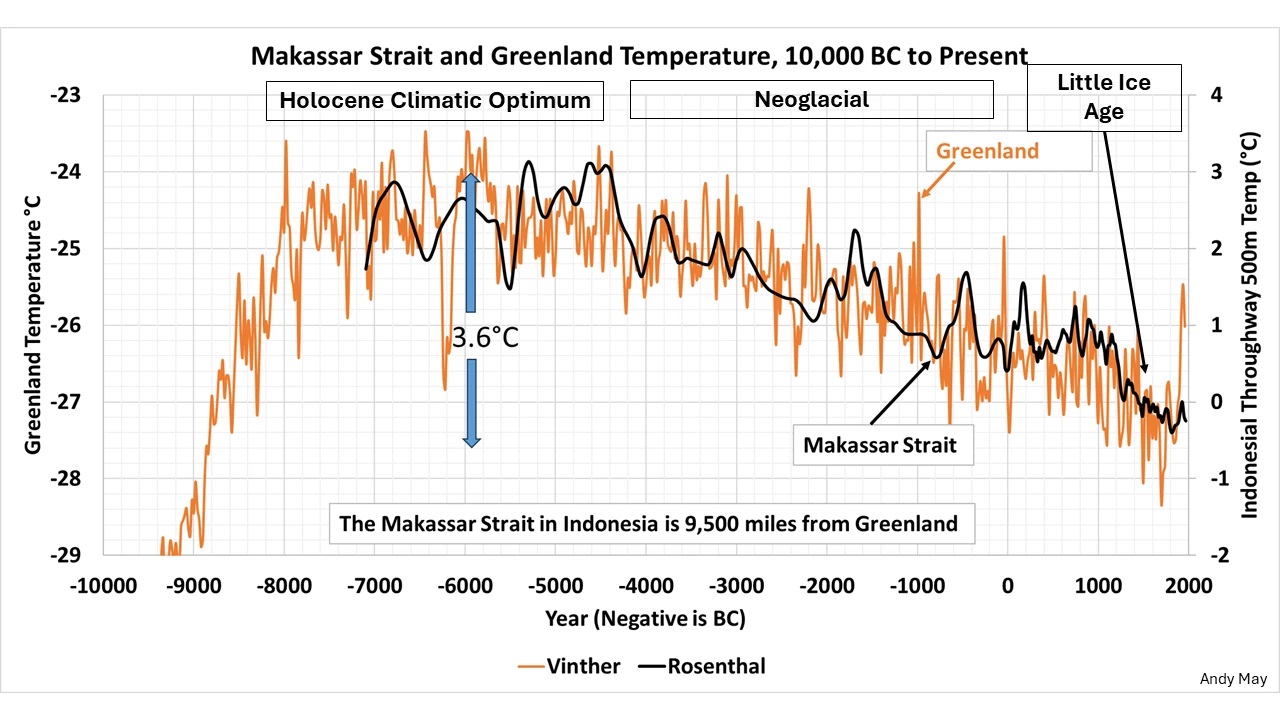
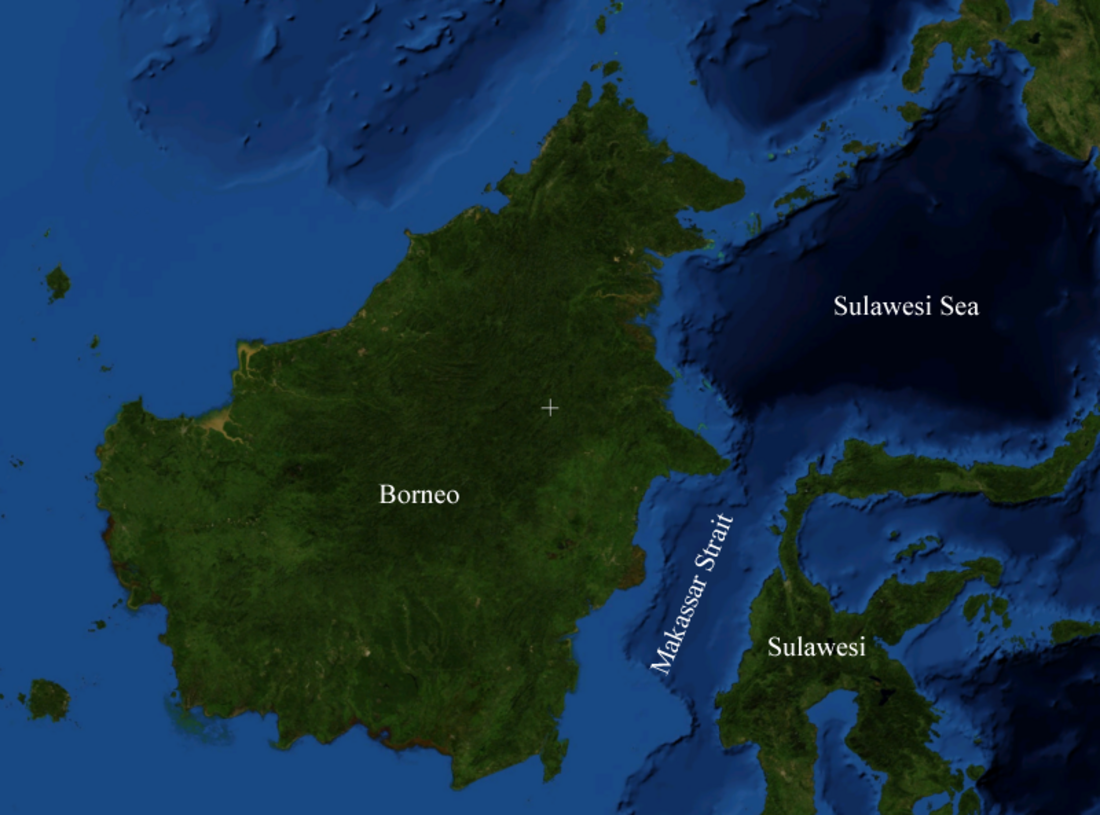
The chart above compares two temperature proxy reconstructions. The orange reconstruction is the Vinther (2009) elevation corrected Greenland temperature reconstruction from ice cores. The black reconstruction is from Rosenthal (2013) and is his 500-meter depth temperature reconstruction in the Makassar Strait, Indonesia. It is thought to represent sea surface temperatures in the North Pacific Ocean. The Greenland temperatures are taken from ice cores from Southeastern Greenland. These are all indirect measures derived from O2 isotopes in Greenland and from sea shells and other sources in the sea bottom of Makassar Strait
As the graph shows, temperatures follow each other very closely until the industrial revolution, when for the first time in 10,000 years the Greenland temperature start to increase, but the Makassar Strait temp doesn’t. One could argue that ocean temperature change lags atmospheric change by about 300 years.
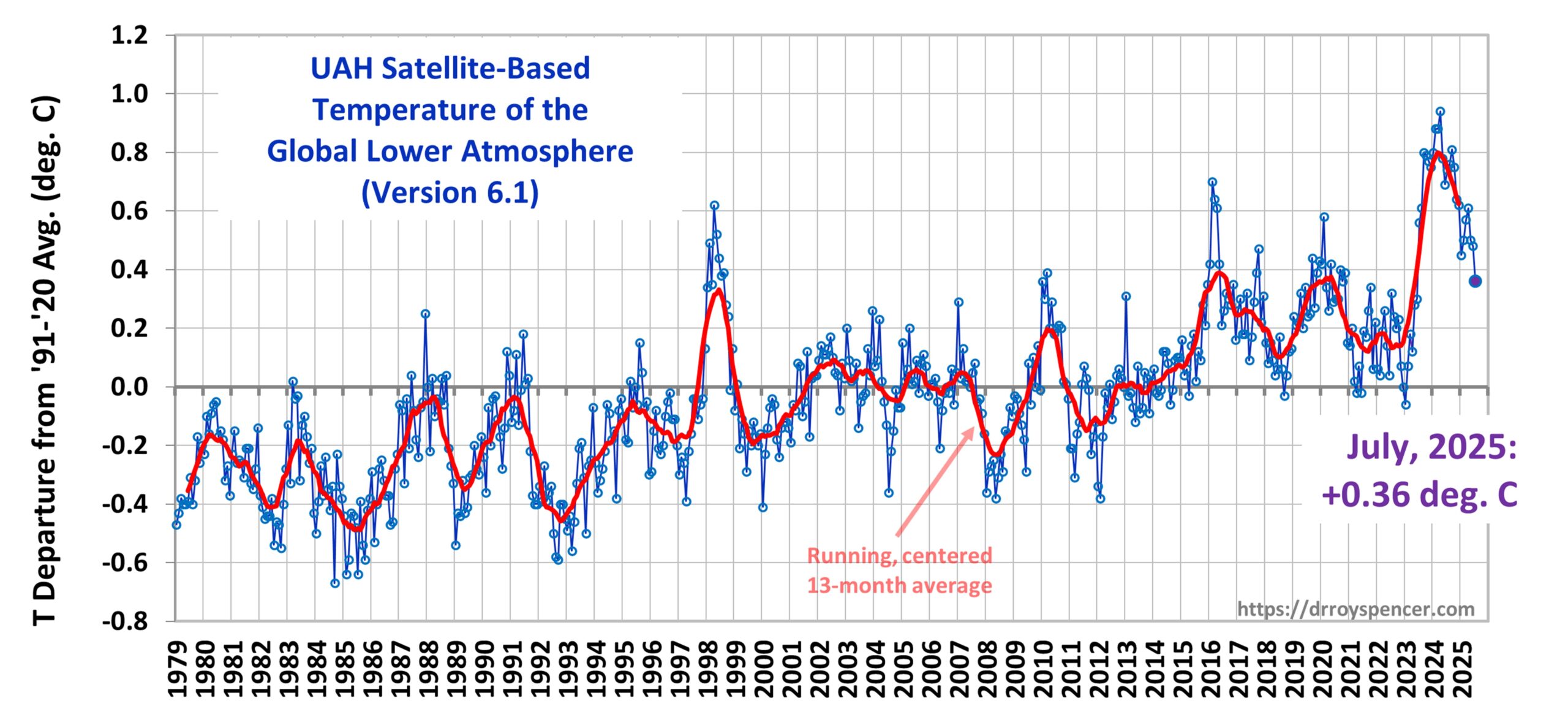
Let us take a closer look at the temperature changes in the last 46.5 years, the only time we have good satellite records of global temperatures, and they are indeed rising.
Yes. in the last 46.5 years the global lower atmosphere average temperature has risen about 0.8C. The question is: How much of this is due to rising CO2, how mush to H2O in all its forms: vapor, clouds, liquid, ice; and how much is due to other factors, such as Methane, Nitrous oxide, and the greening of the earth?
When global temperature increases 0.8 degrees Celsius and relative humidity stays the same there will be 5.5% more water vapor in the air. How much of the temperature rise is attributable to a 5.5% increase in water vapor?
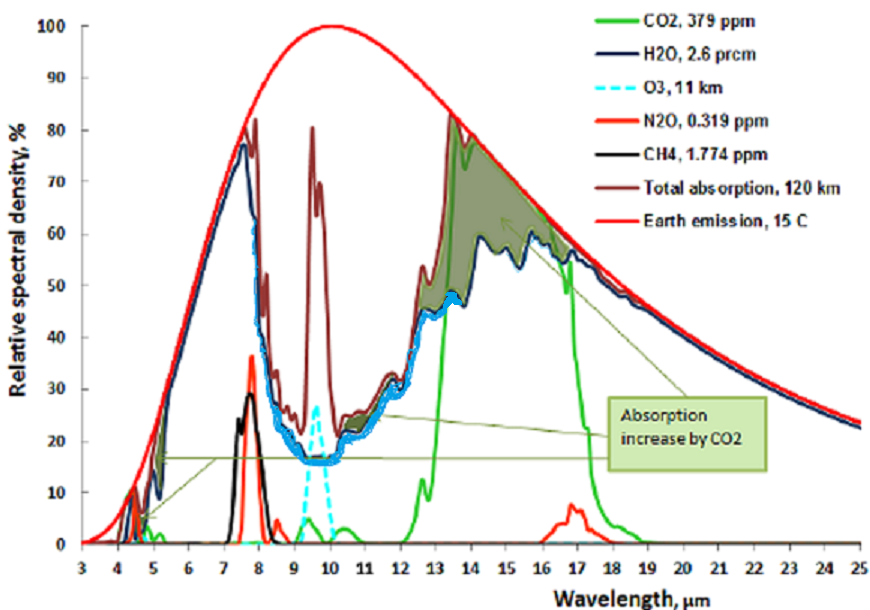
To answer that we must take a look at the greenhouse effect. Without it the earth would be an ice ball with an average temperature about 34C cooler than today. The earth can be considered a black body that obeys laws for black body radiation, the Stefan–Boltzmann law that states that the total energy radiation is proportional to the fourth power of the absolute temperature (Kelvin), so an increase in global temp from 14C to 14.8C results in an increase of 1.01% in the total greenhouse effect (a smaller increase in the atmospheric window).
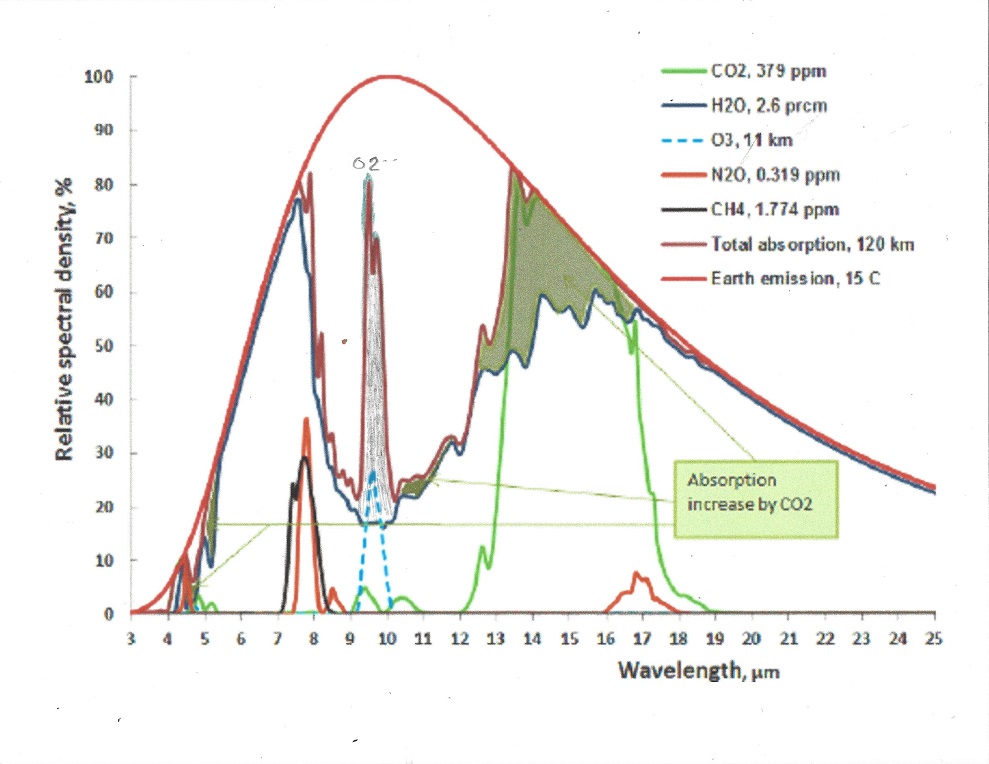
To sum it up: Since water vapor is fundamental I will count it first, and the effect of all the other greenhouse gases will be additional, remembering that the total absorption in any frequency band can never exceed 100% of available energy. Water vapor absorbs all available black body energy in all wavelengths except in the atmospheric window (7 to 17 μm) The increase of absorption occurs in the atmospheric window, and in some bands of the incoming sunlight in the near infrared region. The bands are 0.7, 0.8, 0.9, 1.1, 1.4 and 1.9 μm. Together, they make up 90% of the greenhouse gas temperature rise, or 29.9 degree C. When global temperatures increase by 0.8 C there will be 5.5% more water water vaporassuming relative humidity will stay constant, there will be an additional 0.17 C temperature rise.
Total greenhouse effect 33 C, Greenhouse effect from water vapor is 29.9C
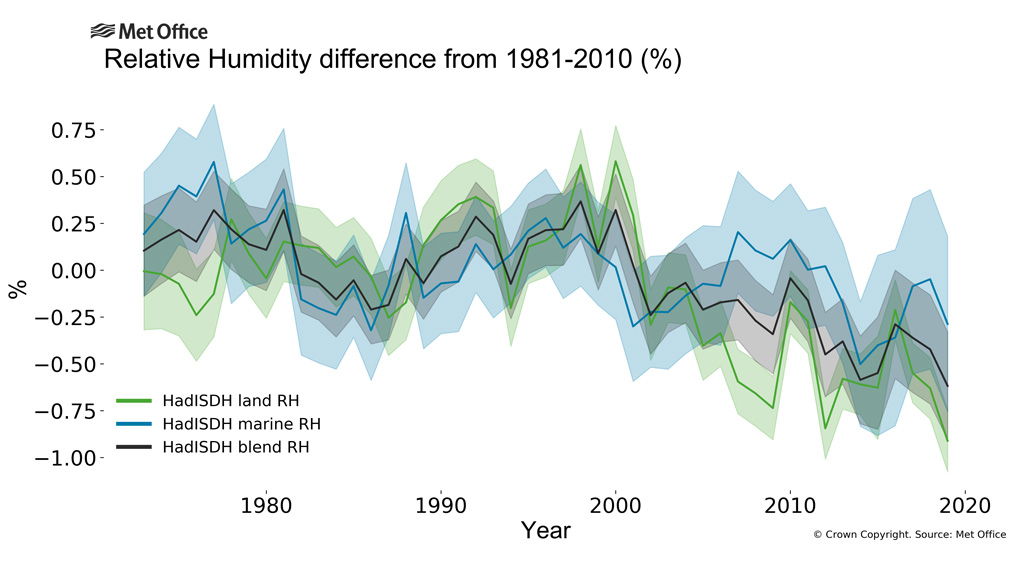
Increased greenhouse effect from 5.5 % water vapor increase 0.17C. This is true only if relative humidity stayed constant. How much has the relative humidity changed?
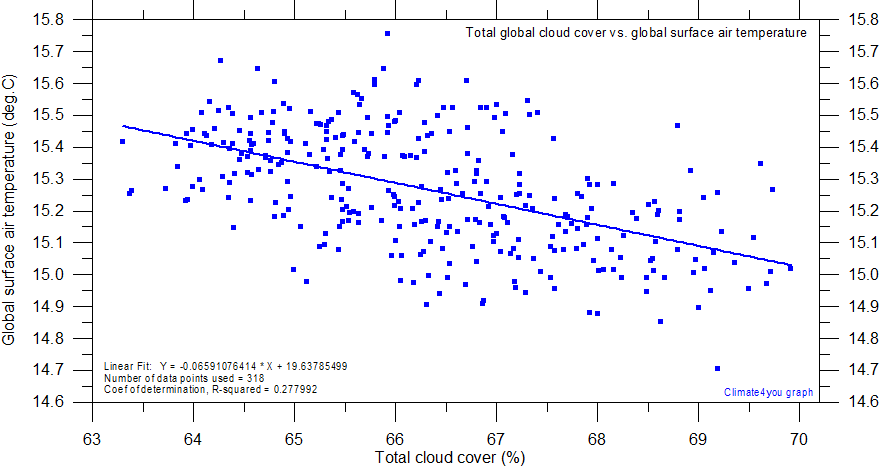
From a temperature increase standpoint the change is too small to change the results. However relative humidity has a great influence in the formation of clouds. We now has the 46.5 years of satellite data of clouds, but I only have the cloud averages. We all know that clouds cool by day and warm by night. During night, what is under clouds will absorb all the black body radiation, but re-emit as a new black body above the clouds, but at a much lower absolute temperature, depending on the cloud height. This is the smaller night effect.
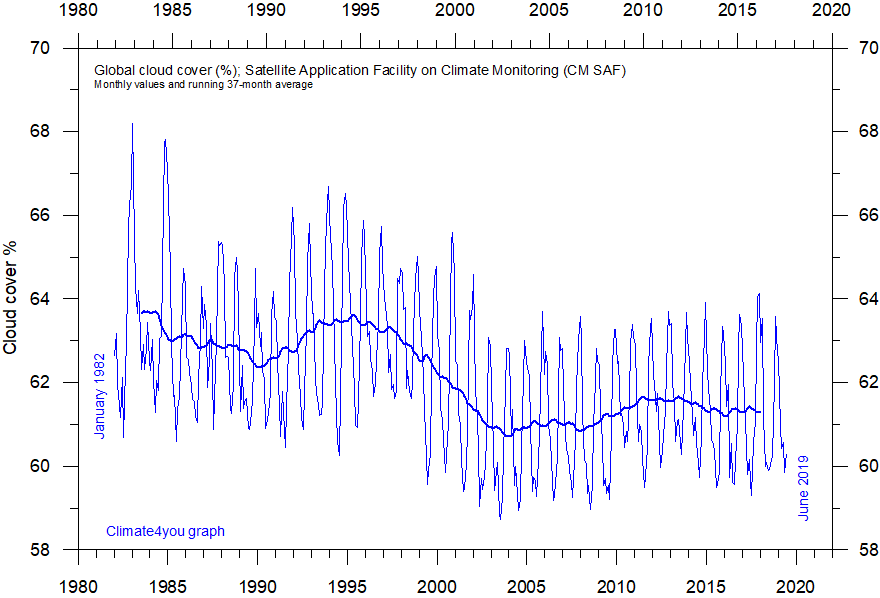
Much more important is the daytime reflection of incoming sunlight. The most important clouds are the low level cumulus clouds that forms from humid air rising in daytime sunshine and disappear in the evening, but all clouds reflect back the incoming sun. All I have is statistics of cloud averages, but not where and when they appear and dissolve, but I will make the assumption that averages prevail. This is recent statistics of world average cloud cover:
The cloud cover average (extrapolated) has decreased 3.45% in 46.5 years How much has temperature increased in the same time?
The total temperature rise due to less cloud cover over 46.5 years is 0.23C
Now it is time to see the effect of CO2 increase. In 1979 it was about 327 ppm, now it is about 427 ppm, a 27% rise in 46.5 years. If there was no water vapor in the atmosphere the greenhouse effect of CO2 would be 5.09C at 327 ppm and 5.28 C at 427 ppm. The reason it does not rise more as CO2 rises is that from 13 to 17 μm the temperature rise is limited because all available energy in that band is already fully absorbed. But it gets worse; the water vapor is already the dominant absorber, so the net addition from increased CO2 is only 30% of what would be if there was no water vapor, that is 1.527 C at 327 ppm and 1.584C at 427 ppm for a total CO2 rise of 0.057C.
Likewise Methane and N2O absorption both occur around the 8 μm wavelength, where water vapor already absorb about 80% of all available energy, so that means both Methane and N20 are attenuated by about a factor of five from what they would have been had there been no water vapor.
Methane concentration has increased from 1.6 ppm to 1.9 ppm, leading to a temperature increase of 0.03C in 46.5 years.
N2O concentration has increased from 300 ppb to 340 ppb, leading to a temperature increase of 0.006C in 46.5 years.
The Arctic has experienced a temperature rise due to increased cloud cover and snowfall. It is due to increased heat transfer from the American Gulf in the form of water vapor, clouds, rain, and snow. When water vapor condensates into clouds, over 500 calories per gram of energy is released, and when it condensates into snow, another 80 calories per gram gets released. As water vapor increases with temperature, the Arctic gets less cold but snowier. The snow acts as an insulator on the sea ice, allowing the ice to freeze slower in the winter, and melt faster from the underside. This lead to a global warming of 0.06C in the last 46.5 years.
No such heating has occurred as of yet in the Antarctic. It is still the largest desert in the world; a hostile ice desert. (I wonder why Al Gore chose this climate to represent the relation between CO2 and temperature).
Add up all temperature changes so far in the 46.5 years of satellite data
Increased greenhouse effect from 5 % water vapor increase: 0.17C.
Total temperature rise due to less cloud cover over 46.5 years is 0.23C
Total temperature rise due to increased CO2 levels in 46.5 years is 0.057C.
Total temperature rise due to increased Methane levels in 46.5 years is 0.03C.
Total temperature rise due to increased N2O levels in 46.5 years is 0.006C.
Warming in the Arctic (globalized) over 46.5 years: 0.06 C.
Warming due to increased Ozone over 46.5 years: 0.004 C.
Warming due to increased HFC gasses over 46.5 years: 0.0015 C.
The total temperature increase noticed so far: 0.5585C. CO2 is responsible for 10% of the found rise, and Methane for 6% of the experienced rise.
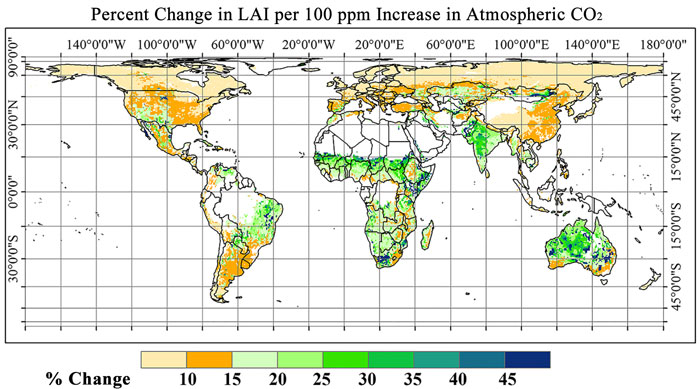
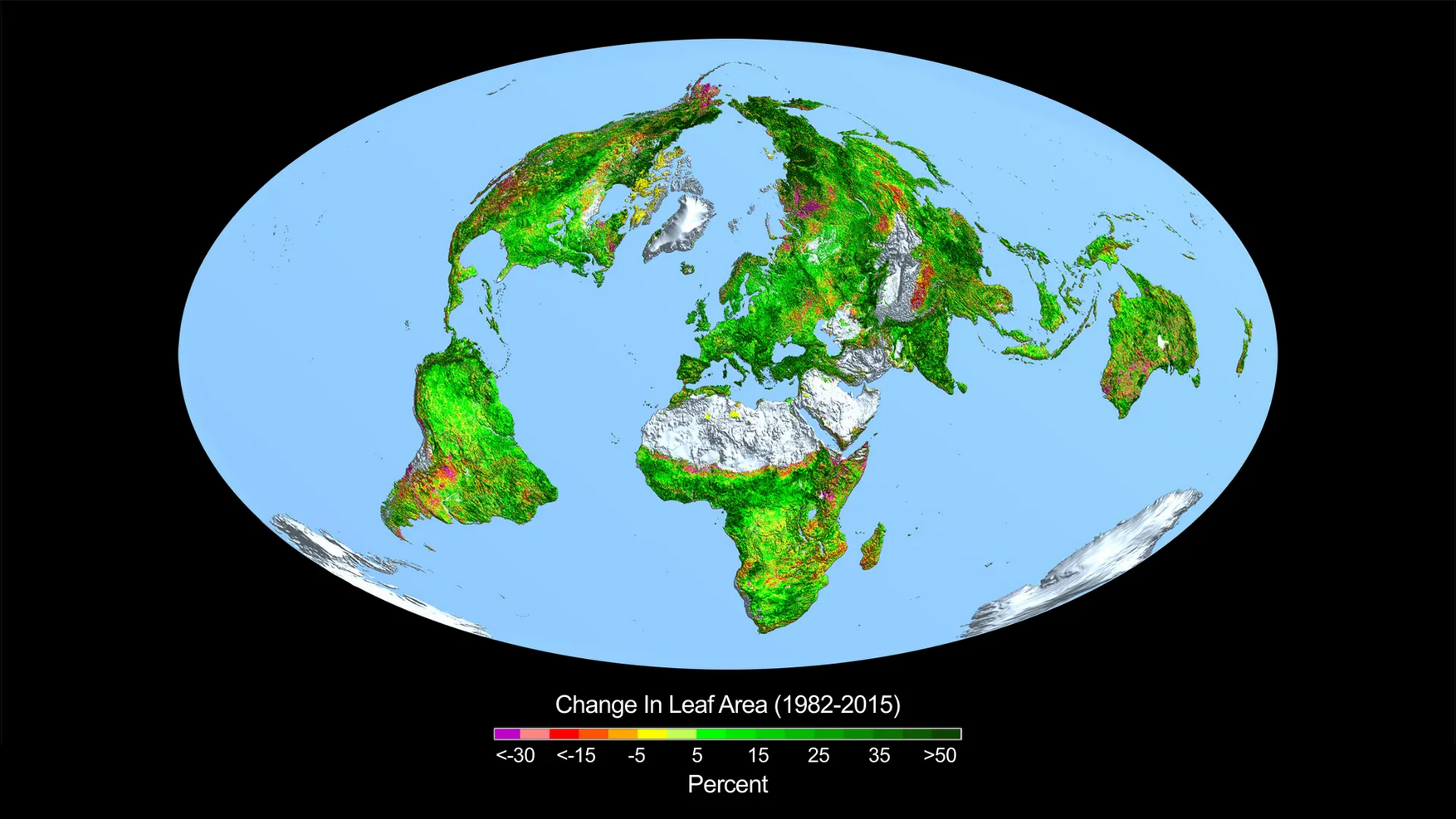
There is one very interesting side effect of rising CO2, and to a much less extent; rising Methane levels. It leads to a substantial greening of the earth. The leaf area has been steadily increasing in areas where the leaf area is not fully saturated:
This picture shows the Leaf Area Index increase over the last 46.5 years.As we can see there is no increase in the deserts and in the dense rain forests, but overall there has been between 15 and 20% increase in the LAI. More leafs, more area to absorb CO2.
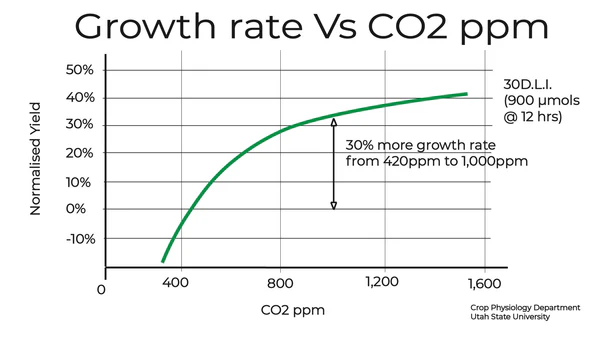
The rise in CO2 concentration from 327 ppm to 427 ppm makes the effective growth rate of vegetation increase about 25% on average. There is a wide variation between plant sensitivity to increased CO2, but they all react favorably up to more than 1000 ppm concentration.
Using this information there should have been an increase in vegetation of 25 + 15% of CO2 uptake by vegetation worldwide without any other use of fertilizer. (Notice that the leaf area index did not increase much in the tropical rain forests since the leaf area is already fully optimized.
If one looks at the total greening of the earth the total leaf area did increase even in the rain forests, in some other areas by as much as 50%.
However, there are a few areas where the leaf areas decreased. these areas are where there is a deficit of water for optimal leaf growth. This is worrying, since the areas of water deficiency are areas where people want to live. An extreme example is today’s Iran, where the water reservoirs are running dry, and all water used in the hot summer is taken from aquifers that are also running dry. And it is getting worse:
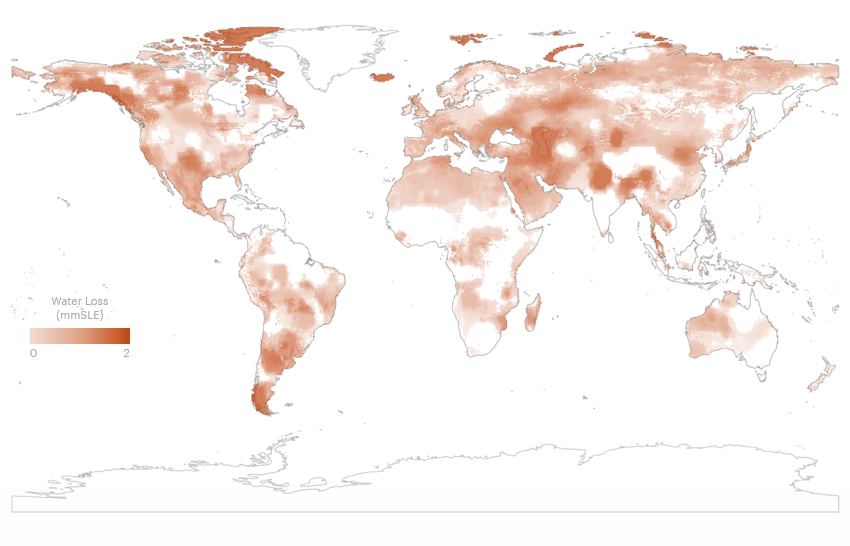
The following picture shows the drying up of the earth between 2003 and 2013 in sea level equivalence from 0 to 2 mm
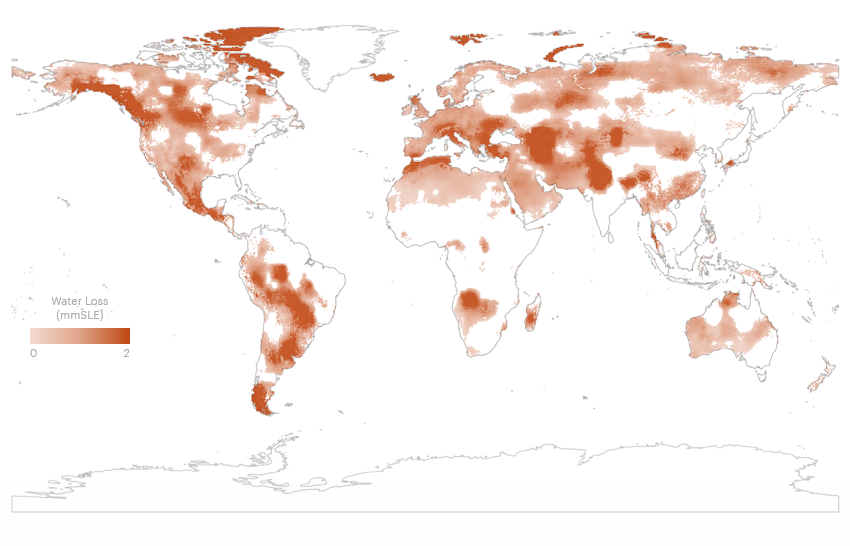
The areas most affected are the U.S. and Mexico Southwest, the South American Pampas, Southern Europe. Northern Africa, The Arabian Peninsula, The Middle East from Syria to Iraq, Iran Kazakhstan, Pakistan and North Western India, This is from 2014 to 2024 and it shows it is getting worse. The aquifers are getting consumed
To take water out of aquifers without replacing it leads to an inevitable desertification of the areas where people want to live. Desertification leads to disaster, the rivers dry up and the areas become uninhabitable.
Urban heat islands: The worlds urban areas are growing rapidly and are now housing more than half the world’s population. It is now occupying more than 1% of the land area and has grown 0.15 % of the total area of the world. People living in urban areas, especially in areas with air conditioning are experiencing ‘local global warming’ of about 7F in the U.S. It is still large in all urban areas, maybe 4F on global average. (This is why people living in a megalopolis are convinced in global warming, they are living it.) Total global warming effect in the last 46.5 years: 0.033C
Draining land for infrastructure. We are doing what we can now to preserve wetlands, but wherever a road or other structure such as an airport is being built, proper drainage and land improvement is being performed. In the last 46.5 years about 1% of the worlds land surface has been drained and made dry. This is another heat effect that I estimate to lead to about 2C in the affected areas leading to a world temperature increase of 0.04C
Temperature increase from greening of the earth (without taking into account a changing cloud cover that is accounted for separately 0.002C
Temperature decrease from desertification of the earth: 0.001C
Total estimated temperature rise: 0.6325C
Summary: Temperature change due toWhat to do
Loss of cloud cover: 0.23C or 36%
5% increase in absolute humidity: 0.17C or 27%
Warming in the Arctic: 0.06C 0r 9,5%
Increased CO2: 0.057% or 9%
Infrastructure land use change: 0.04C or 6.3%
Urban heat islands: 0.033C or 5.2%
Increased Methane levels: 4.7%
All 0ther causes: 2.3%
What to do.
To go carbon neutral and do nothing else will solve less than 10% of the perceived problem. Neutralize Methane increase will add less than 5% to the solution
No, the problem is all about water, clouds and desertification.
In the next 100 years or so we will experience a magnetic polar reversal, and this may lead to an unprecedented rash of volcanic activity since the magnetic force reversals will activate magma in ways that we cannot yet foresee. When volcanic ash reaches the stratosphere it stays there for years causing global cooling. The Milankovitch cycles points to a slow cooling down of the earth.
The current rise in CO2 is very good. It has helped us feed another 2 billion people, not to mention all the wild life and plant growth.
The CO2 increase will delay the onset of the next ice age by about 2000 years. Without it we would still be in the little ice age.
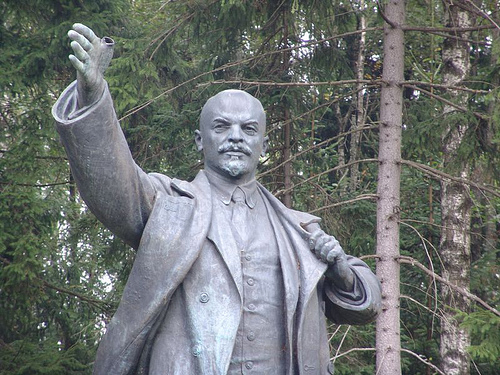
The very first Earth Day was celebrated April 22 1970, on the 100 year anniversary of the birth of Vladimir Lenin (Владимир Ильич Ленин). True green environmentalists keep telling me it is just a coincidence. I think not..
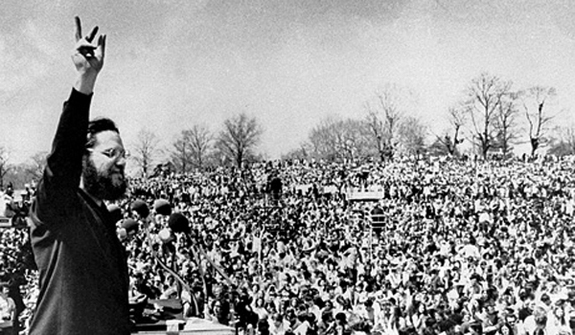
The first Earth Day in Philadelphia 1970 featured Ira Einhorn (The Unicorn Killer) as master of Ceremonies. For those too young to remember, he murdered his girlfriend , stuffed her in a piece of luggage in his apartment and kept her there for seven years, and no one smelled a dead rat). He was finally convicted many years later. The big environmental scare of that day was the threat of a new Ice Age. The clarion call was: “In the year 2000 temperatures will have fallen 10 degrees”, the culprit was pollution, especially acid rain.
Things have changed, and we have experienced decades of climate change, or so they say, but it depends very much on where you live. Most of the increased temperature since 1970 is due to cleaner air in the industrialized nations, there are now more thunderstorms as opposed to daylong rains. This leads to fewer clouds and less reflection of incoming light back into space. This means warmer days.
What forms clouds is saturated humidity with a sufficient aerosol to form condensing spots. The best solution is to plant trees that provide enough aerosols to form clouds. This is especially important in the American Southwest and the whole 10-40 degrees latitude region where the majority of the world’s population lives.
USA can be seen as two very different regions: In the West the fight is about water rights; in the East it is about water responsibilities.
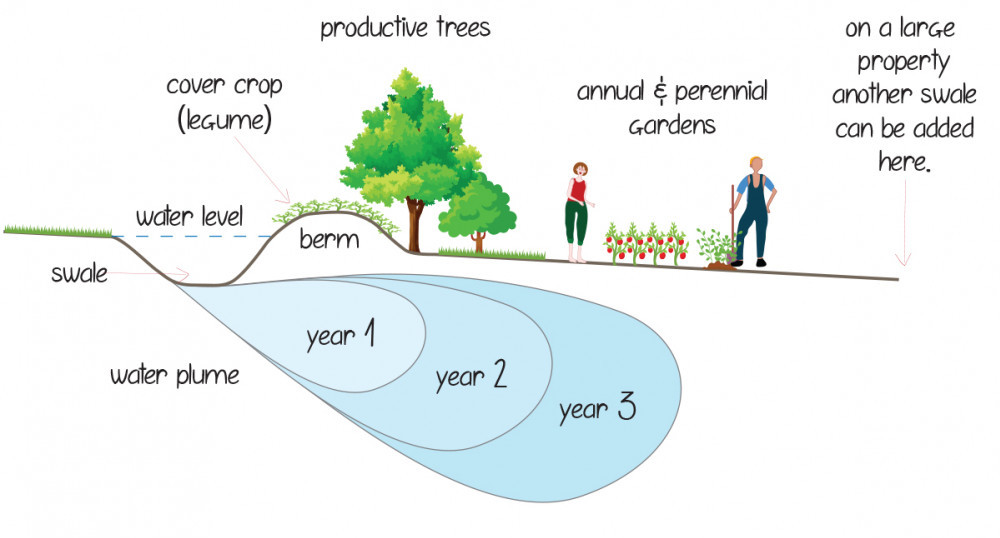
My proposal is that we reshape the water rights laws so that water rights belong to the land. Where it rains, as much as possible of the rain should remain on that land without building dams. By building swales and planting trees at high elevations the erosion from flash floods will diminish, and more water will remain in the ground, causing rivers to flow year round rather than seasonal. As it is now a house owner in Arizona cannot even water his plants from what falls on his roof or driveway.
In the East the opposite is true. When you build a house with a driveway you must also provide a catch basin capable of absorbing all the rain that falls on the improved property, sufficient to absorb a substantial rainstorm.
As it is now, the aquifers is the west are being drained, and need to be restored. Yes, without restoring the aquifers the American Southwest will experience desertification.
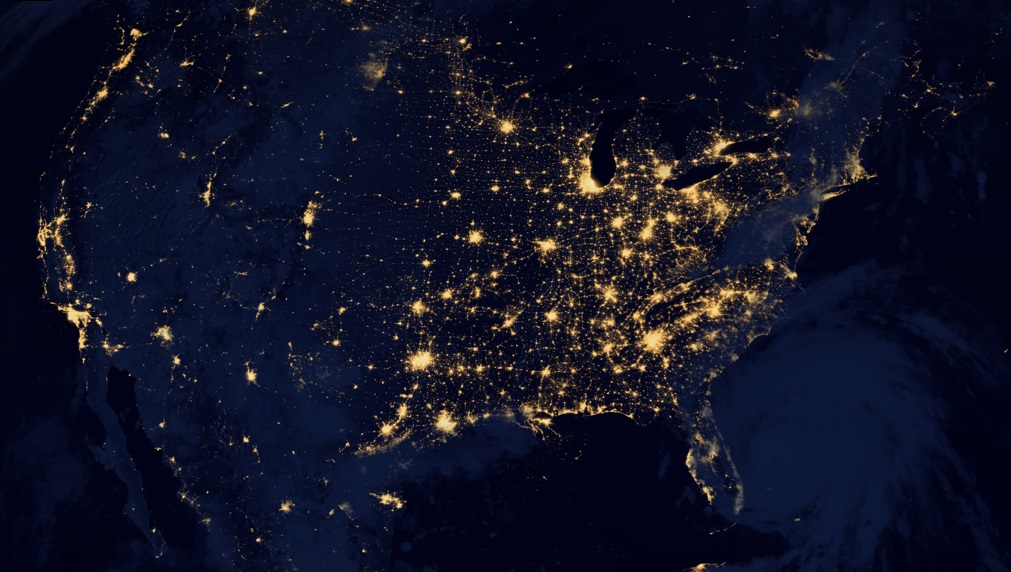
This is a satellite photo of a mostly clear night over U.S. (There are a few clouds over eastern U.S.) It shows clearly where the big cities are, and how empty the western half of U.S. is compared to the eastern half. From this we can see and guess the size of the major metropolitan areas. Looking over North Dakota there seems to be a city of about half a million people judging from the light. But North Dakota has no big cities! What is going on?
The light area below is here_______V______________________________________________
While North Dakota is the second largest oil producing state in the nation it produces very little natural gas, only what comes as a bi-product of oil recovery, in fact it is so little that the government has let the oil companies flare off the gas rather than recover it and us it for supplying the country with more natural gas. Since the government has put a halt to build the Keystone and other pipelines, the oil out of these wells are shipped by truck and train to refineries mostly in Texas at at least three times the cost (read energy usage) of a pipeline, the government is not concerned about energy usage, only control of the production means. Granted it is only a pittance in the grand scheme of energy use, only 291 million cubic feet of natural gas was officially flared off per day in Oct 2023, but it is growing as oil production is climbing.
How much is 291 million cubic feet of natural per day that is flared off? It corresponds to a little over 300 billion BTU/day, not much, but enough to supply gas for over 5 million gas stoves in normal family use. The Government is trying to prohibit any new gas stoves in new construction. This again proves that their main concern is not energy use, since it is o.k. to flare off large amounts of gas but not using it for superior cooking, it shows that their concern is people control, not energy conservation or even common sense.
When I came to the U.S. as a resident alien immigrant from a beautiful, clean Sweden in the spring of 1968 I was horrified at what I found. In Sweden they were worried about the fact that some lakes were fertilized four times more than agricultural fields, acid rain killed the trouts in the already acid lakes and seeds laced with Mercury as a preservative killed off most of the eagles and owls. None of this seemed to bother the Americans. Coming in to Rochester in N.Y the stench from the fish washing up on the shore of lake Ontario was strong, I read of a river catching on fire in Ohio and the smell of coal burning power plants without scrubbers was bad, almost as bad as in the coal and steel region of Germany. It was also the height of the Vietnam wars, and people were protesting. Many of the protestors were communists at hart, and they also turned to pollution. The aerosol pollution led to a decrease in global temperatures, so the mantra was: The ice age is coming! The worst prediction I read was that the global temperatures would be ten degrees Fahrenheit lower by the year 2000! Most predictions were not that wild, but they all pointed down, ice age, here we come! The urge to clean up the pollution grew stronger and the Earth Day movement was formed, but they had to find just the right day to have the first. Since this was to become a global movement they decided on the birthday of Lenin, his 100th, very fitting for a globalist movement. That was 1970 in Philadelphia, featured Ira Einhorn (The Unicorn Killer) as master of Ceremonies.
Now fifty four years later the mantra has changed to climate change, specifically carbon pollution and carbon footprint. As the scientists were wrong then, the ice age is coming soon, so they are wrong now. The rise in CO2 causes climate change all right, and it would be really bad unless something else also changes as the CO2 concentration changes. Water vapor is a strong greenhouse gas, much stronger than CO2, and they both add to the greenhouse effect, but only at temperatures below freezing. In the tropics there is 50 times as much water vapor as there is CO2, so the tropics is not affected at all by rising CO2 levels. In the Arctic the situation is quite different. Water vapor is also a condensing gas, and forms clouds in the atmosphere. Clouds cool by day and warm by night, but the effect of cooling by day is much larger than the warming by night, so clouds act as the major temperature regulator on earth. That is why the tropical temperature was about the same in the tropics as now when the CO2 level was over 10000 ppm, 25 times as large as now hundreds of millions of years ago. There is zero risk of overheating, there is no “tipping point” on the warm side, the clouds take care of that. On the other hand we know that because we have too little CO2 in the air we will have a new ice age. When will it come? Not in the next thousand years, in fact, by increasing the CO2 levels we will delay the onset of the next ice age. What will happen at the Poles? They will be less cold in the winters, it will snow more but the summers will be about the same, held largely at the melting point of water.
The last 44 years we have good satellite data of the temperature rise, CO2 rise, all pollutants , cloud cover and the like, so we can examine the earth how it has responded to the rising CO2 levels, and the results are very surprising: CO2 rise contributes less than 5% of the increase is due to the CO2 rise, nearly all the changes are due to water effects, either as increased water vapor and decreasing clouds. Here are the results:
Effect from rising CO2: 0.04C or 0.19 W/m2; 4,66% of total
Effect from increasing water vapor: 0.37 C or 1.75 W/m2; 42.9% of total
Effect from rising Methane: 0.036 C or 0.17 W/m2, 4.17% of total
Effect from rising N2O: 0.0065 C or 0.031 W/m2 0.8% of total
Effect from rising Ozone: 0.0034C or 0.016 W/m2 0.4% of total
Effect from rising HFCs : 0.0015 C or 0.007 W/m2 0.2% of total
Effect from decreasing cloud cover: 0.39 C or 1.89 W/m2. 46.4 % of total
Warming of the Northern Arctic: 0.1 C. or 0.475 W/m2;11.6% of total
Cooling from pollution aerosols: 0.1 C or 0.475W/m2; – 11.6% of total
Temperature increase from greening of the earth 0.0063C or 0.030 W/m2; 0.7% of total
Temperature decrease from areas of desertification 0.0015C 0.007 W/m2; 0.2% of total
TOTAL TEMPERATURE CHANGE 1980 to 2022: 0.8522 C or 4.077 W/m2
While I realize that increasing CO2 levels contribute to climate change, it is on balance positive, since the earth is increasingly fertilized by increasing CO2 In fact the earth has been more than 15% greener since industrial age by increasing CO2 alone, enabling us to feed 2 billion more people without increasing fossil fuel generated fertilizer. The extra greening means more clouds generating aerosols, which is good except where it already rains too much.
Where we have a problem is with the arid areas, where much water is drawn from the aquifers, the best clean water there is. When the aquifers are deleted desertification sets in. This has already happened in Kazakhstan, where lake Aral disappeared as soon as the Amu- and Syr-darja rivers were siphoned off to produce cotton. This worked fine for about ten years, then the lake dried up, the rains stopped and the rivers dried up. China has built 12 dams in the Mekong river, so now the once reliable yearly floodings stopped and the harvest in the lowlands are disrupted. The once reliable Nile river is a shadow of its former self, all the silt stays above the Aswan Dam rather than fertilizing the lower Nile. The U.S. southwest aquifers are being drawn down and will no longer produce anywhere near as much water as they used to. The whole American Southwest is slowly undergoing desertification. We need to rethink our use of water rather than waste trillions of dollars on CO2 control, which will solve only 5% of the problem.
The other problem with water is waste quality. A most pressing problem is micro plastics. Some of it comes from tire wear. Electric cars are heavier than gasoline cars, leading to more tire wear. Another problem is with water sanitation, Microplastics does not accumulate well in silt,neither does it break down easily. Another problem is antibiotics excreting in the urine of both people and animals, birth control and other medications excreted through urine will act as harmful pollutants,
We have our work cut out for us. There are solutions to all of these problems, but they all require energy, either as heat or electricity. The only possible solution is nuclear power, specifically molten salt nuclear power. Nuclear power can be generated from U233, U 235 and Plutonium 239. These are the available options. We have already used up most of the U 235, which is less than 0.7 percent of the available Uranium. Small modular Reactors can use Thorium, spent Nuclear fuel and depleted Uranium for fuel, all with using special mixtures to sustain a generation. One specially exciting option is to use a molten salt generator as a heat source and incinerate plastics and other trash without supplying Oxygen. That will produce hot gas that will be used for electricity generation, and the resulting Carbon can be made in the form of Graphene.
These are exciting times. We have the solutions ready to clean up the earth by going nuclear with SMRs of many types. They will lessen the mining demands on the earth significantly as they operate under atmospheric pressure. In addition they will make us less dependent on expanding the national grid, the power can be generated where it is used. I could go on, but here are The many cases why Thorium Nuclear Power is the only realistic solution to the world’s energy problems.
Thorium is the long time solution. In the short time we should deplete the nuclear Plutonium waste as fast as possible.
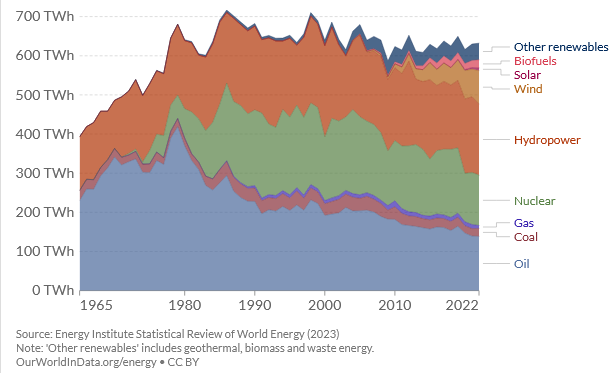
Sweden is perhaps the “greenest” country on earth. Their electric supply is a healthy mix of hydropower, wind, solar and biomass to make things go when the sun doesn’t shine and the wind doesn’t blow. Many cities are well planned where nearly all residential heat comes from spillheat from power plants. In Linköping the year 1967 the whole town was heated with surplus electricity during the spring flood. No house was allowed to have a fireplace in the regulated zone (except the city Architect’s and 3 other townhouses that somehow escaped the ordinance.) The energy use looks like this for Sweden:
Sweden once supplied nearly 40% of its energy needs via nuclear (electricity and heat) About half of the nuclear installations are retired and the last 6 are to be decommissioned before the end of the decade. To end nuclear energy was decided by a previous government in 1980 and the phase-out was to be completed in the mid 2020s. The goal was to generate 100% electric energy from renewable sources by 2040. (later changed to 2045).
Then Sweden had an election in 2022 and the Social Democrat, Green and Socialist coalition got replaced with a moderate, Christian Democrat and Liberal coalition with support of the nationalistic Sweden Democrat party. On June 20 they changed the slogan to 100% fossil-free electric energy by 2045.
This goal is impossible to meet without expanding nuclear power, especially since Sweden has specified that all new cars must be electric by 2035.
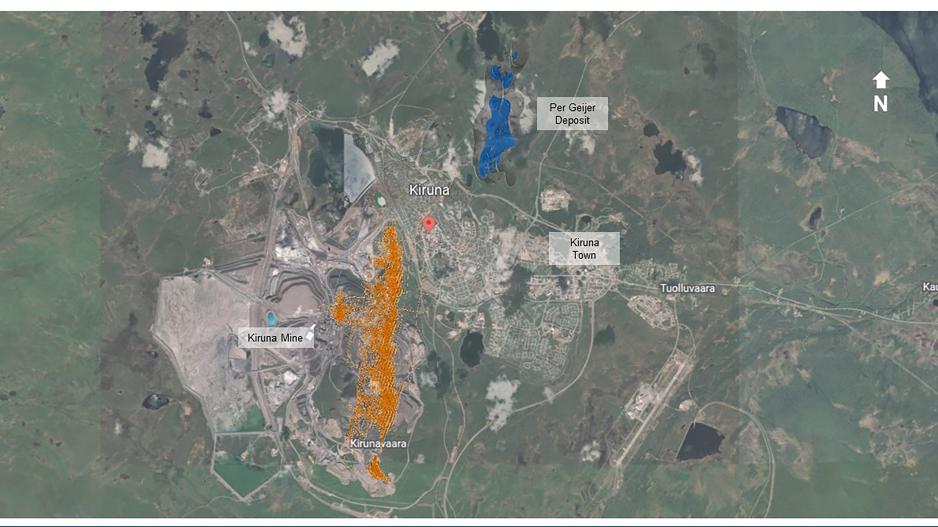
Then in January 2023 Sweden announced the largest Rare earth metals find in Europe. Europe is right now importing 98% of its rare earth metals from China. The find is called the Per Geijer deposit right next to the World’s largest underground Iron ore mine, the LKAB Kiruna mine located 120 miles north of the polar circle.
The new find is still basically a magnetite and hematite ore of excellent quality that also contains a significant amount of P2O5, which is premium fertilizer feed-stock. In addition It contains the largest find of rare earth metals in Europe. So far it is proven to contain the following Rare earth Metals:
HREO constitutes 17% within the tested apatite concentrate samples and 19% in the overall exploration samples.
LREO constitutes 83% within the tested apatite concentrate samples and 81% in the overall exploration samples.
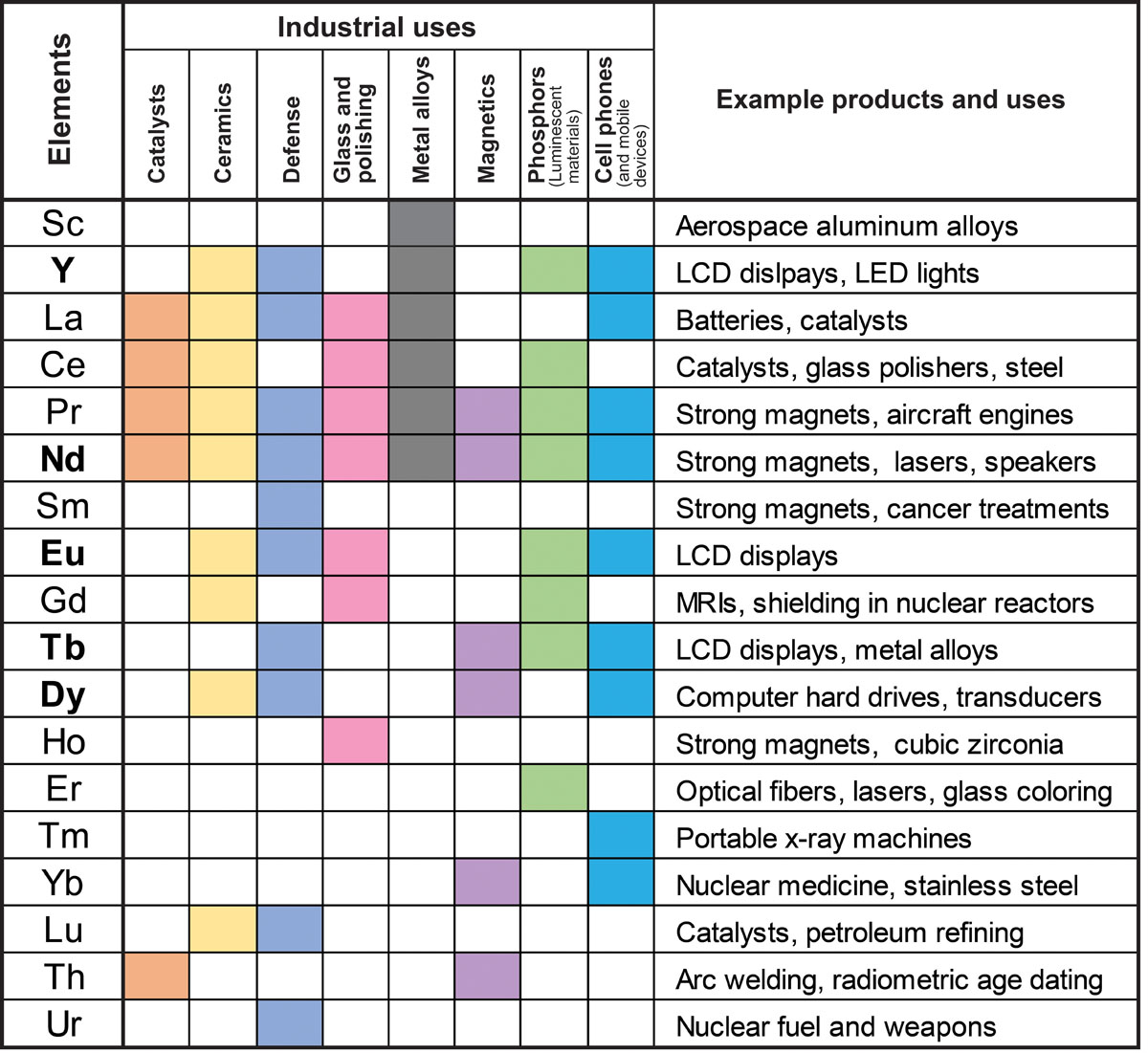
Just take a look at all the uses for rare earth metals. The most sought after pays all the cost of mining and refining, and the rest are readily available at nominal cost.
What is not mentioned is the content of Thorium and Uranium, but Thorium is always found in small amounts where ever Rare earths are found and very often some Uranium is also found in the ore.
In order to meet the need for both extraction of raw materials and at the same time increase Europe’s processing capacity LKAB has recently become the main owner of and entered into a cooperation with Norwegian REEtec. They have developed an innovative and sustainable technology for the separation of rare earth elements that can compete with the dominant Chinese production. The planned extraction site is proposed to be in the Luleå area.
Rare earth ore nearly always contains measurable amounts of Thorium and/or Uranium.The Thorium is nearly always returned to the slag heap, and sometimes the Uranium too if the concentration is low. No information has been given yet how much of anything the ore contains, but it is safe to assume that it is the largest ore find in Europe.
Sweden has a long history of mining. Before 1288 A.D. the local farmers of Falun found copper in what was called Kopparberget and the first documentary evidence of the mine appears in a letter from 1288 giving the Bishop of Västerås a one-eighth share in the mine in exchange for landholdings. The document shows that a cooperative organization by this time was managing the mine, with shares being bought and sold. The mine grew, and was once the largest copper mine in the world. This is also the reason the traditional color of Swedish farms is red, thanks to subsidies from the government if they painted their gray wooden farms and barns with Falu red paint.
Later Sweden became the producer of the best ball bearings in the world, and produced specialty steel for a variety of uses, such as the Sandviken Stradivarius musical saw.
For a while the mines in Sweden were many, but through environmental regulation and cost consideration Sweden now has only 12 mines left in operation. Many of the discontinued mines were started before there was any real environmental regulations, so the cleanup of abandoned mines is still ongoing. Sweden has no coal mines and no natural gas fields.
Sweden is the world leader in recycling everything that is economically defensible to recycle, and the rest of the waste products are, if possible incinerated, producing heat and some electricity. Very little, about one percent is returned to landfills. However, incineration is not recycling, Sweden is burning their only source of coal.
What I am proposing is somewhat akin to the old charcoal kiln; but instead of using wood, the source is trash sonverting trash to coal and gasses.
This is an opportunity for Sweden to be the world leader in recycling nearly everything, including CO2. It just takes energy.
This is my proposal:
Build small modular molten salt thorium reactors, U233 or U 233 and and Plutonium two fuel reactors, an inner shell of U233 or Plutonium as fissile source, and an outer blanket of Thorium, which is the fertile source to generate more U 233 than is consumed. It can be gas cooled, using Helium or molten lead, both work well. Power output will be 100 to 200 MW, and the output temperature will be around 600C.
Municipal, industrial and construction waste will in the first stage be dried, removing nearly all water from the trash. The trash will then be fed into an outgasser, which is fed by 600 C Nitrogen generated from the nuclear heat source, preventing combustion. This will act as a charcoal kiln leaving high quality charcoal to be separately treated and refined, separating out metals and other contaminants. The gasses will run through a turbine generating electricity and scrubbed, separating the hydrogen, carbon, oxygen, chlorine and whatever was in the gasses.
By reducing waste to coal, graphite, graphene and separate hydrogen, oxygen, other gasses and metals it will be true recycling rather than a common waste to power and heat incinerator that produces CO2 and water from H2 and O2, truly wasting energy.
What will Sweden do instead?
SMRs. In Sweden, Kärnfull Next, a subsidiary of Kärnfull Future AB, became the first company in Scandinavia in March 2022 to develop SMR (Small Modular Reactors) projects. Kärnfull Next will work together with GE Hitachi (GEH) towards the deployment of the GEH’s BWRX-300 SMR. A memorandum of understanding was signed between the two companies for this purpose. A letter of intent was also signed with the Finnish utility Fortum at the end of 2022 to explore opportunities for SMR development in Sweden.
In February 2021, the Swedish subsidiary of the energy company Uniper signed an agreement with the developer of the LeadCold SMR and the Royal Institute of Technology (KTH) with the aim of building a demonstration plant at the Oskarshamn site by 2030. It is envisaged that the LeadCold SEALER SMR will generate between 3 to 10 MW over a period of 10 to 30 years without the need for refueling.
In June 2020, Vattenfall announced that it was conducting a pilot study to examine the construction of at least two SMRs adjacent to the Ringhals nuclear power plant. If the outcome is positive, the first SMR in Sweden could be commissioned in the early 2030s to replace the Ringhals 1 and 2 units, which have been shut down. In December 2022, the French utility EdF and the Finnish company Fortum signed a framework cooperation agreement to jointly explore opportunities for collaboration on the use of SMRs and large nuclear reactors.




 Len Bilén's blog, a blog about faith, politics and the environment.