Let’s look what happens in Genesis 1: 9-13; And God said, “Let the water under the sky be gathered to one place, and let dry ground appear.” And it was so. 10 God called the dry ground “land,” and the gathered waters he called “seas.” And God saw that it was good. So now water is organized and land has appeared, and the earth is fully formed. This completes the physical creation, and in the 1983 book The Intelligent Universe, the famous astronomer Fred Hoyle wrote, “The list of anthropic properties, apparent accidents of a non-biological nature without which carbon-based and hence human life could not exist, is large and impressive.” The “fine tuning” of the universe is specifically designed to make life possible.
God is producing an ecosystem for the earth, but there is yet no physical life. Here God is silent on what lifeforms He created first. Scientists are trying to reproduce the conditions which make spontaneous creation of life possible, using all their intelligence and having the right combination of amino acids and other chemical conditions come together to form life. One thing is for sure; they did not imagine random processes in “the primordial soup” but tried to fabricate the best estimate of the environment using every ounce of scientific knowledge available. Whenever an amino acid is formed via lightning or whatever, half are created of the left type and half of the right type. (When one drinks fresh squeezed orange juice the vitamin C is all left oriented, but if the vitamin C is taken in a manufactured tablet it is half left, half right oriented. Only the left oriented vitamin is useful, the right oriented is just acid and is not generated by life and cannot be used by life.) So they are not able to reproduce life or even be able to explain how it could have happened since so many left oriented processes have to come together at the same time without being interfered by the unusable right oriented molecules hindering the process. And this is the generation of the simplest life form! Rather than trying to explain the inexplicable apart from creation, I will jump right in with Phytoplankton. These are very primitive plants, living mostly in oceans, wetlands, rivers and lakes but can also be found on land providing there is enough water, Most phytoplankton contains chlorophyll and absorbs carbon and generates oxygen.
God omits all the discussion of how life on earth started and jumps right into explaining that plant life started first, and what follows is a list of all kinds of flora. It is found in Genesis 1:11-13
Then God said, “Let the land produce vegetation: seed-bearing plants and trees on the land that bear fruit with seed in it, according to their various kinds.” And it was so. 12 The land produced vegetation: plants bearing seed according to their kinds and trees bearing fruit with seed in it according to their kinds. And God saw that it was good. 13 And there was evening, and there was morning—the third day.
In fact this is a step that evolutionists skip, because there is no plausible explanation how life could emerge out of dead matter. Some have suggested that life could have entered from outer space, and indeed the Webb telescope, when looking at the “empty” part of universe, have found that it is not totally empty but seems to have some rudimentary amino-acids and even metals, which are necessary but by no means sufficient building blocks for life.
Let us take a look at one of the simplest phytoplanktons, the cyanobacteria.
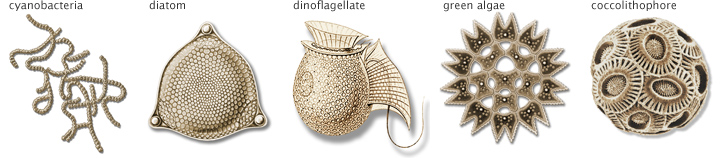
The cyanobacteria is the simplest form of reproducing organism that contains chlorophyll and produces its own food; carbohydrates:
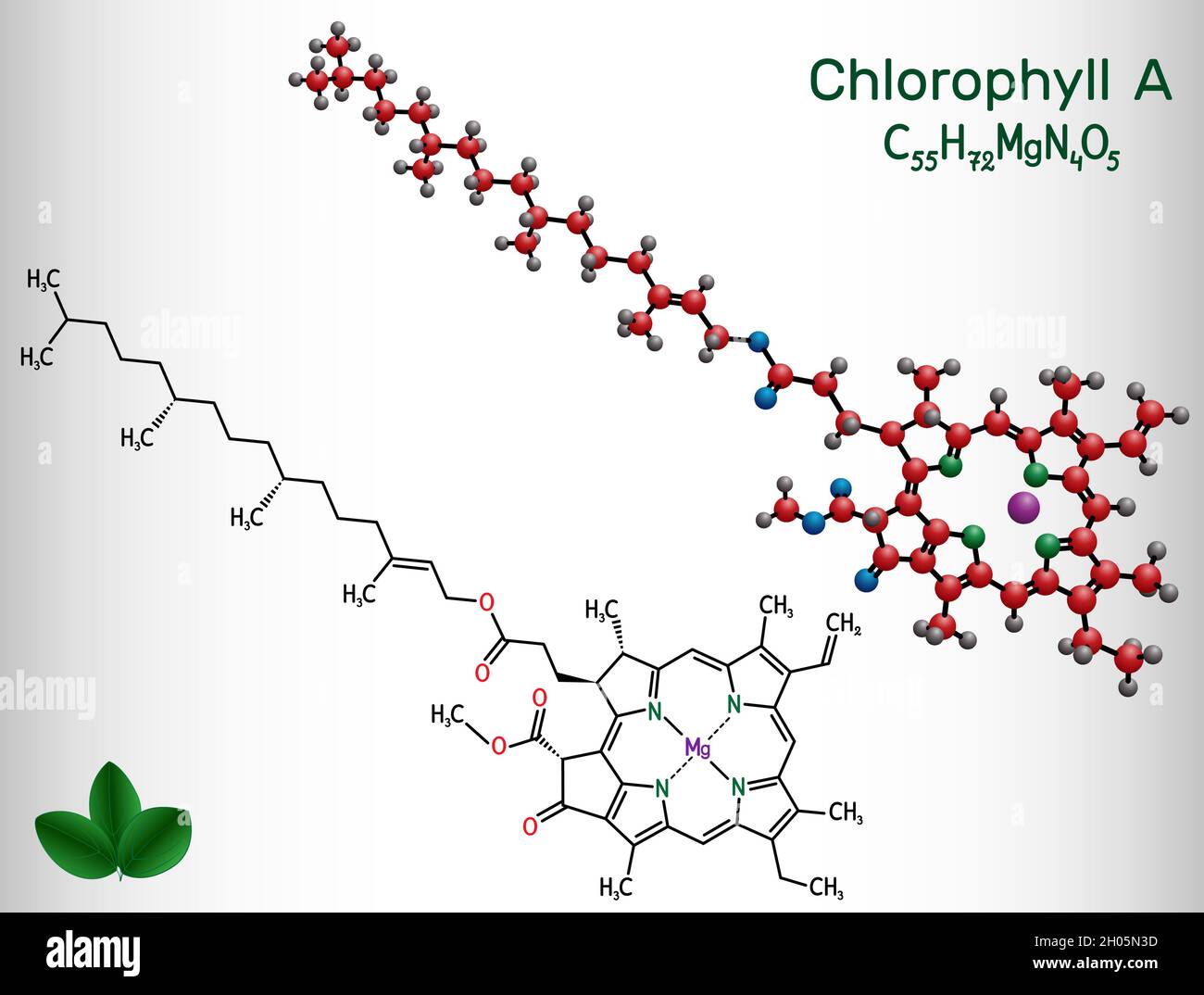
To produce its own food, it needs additional nutrition, among them Aluminum and Nitrogen compounds. They have to be included for photosynthesis to function via RNA interpreters, proteins and sunlight. The main food is CO2 and the process exhausts O2. The one celled organism looks like this:

This is the simplest of the phytoplanktons. It has all the necessary functions to be able to duplicate itself. To do it it must have a nucleus contained inside a cell wall, and how to create the cell wall is programmed in the nucleus. This is a very simple nucleus and the smallest of the cyanobacteria has a nucleus of about 1.4 million base pairs. 3 base pairs form one codon and tells which amino aid to use to add one link in the protein to build. The rest of the DNA was thought to be evolutionary redundant “junk DNA,” but recent analyses have shown that they are start codes and stop codes to show where, when and how to build it, with processes not yet understood. All this is interpreted by RNAs and other compounds, and together they enable how to build and duplicate themselves. The information stored in the DNA is about the same as is contained in a large fiction novel. All this was prepared in creation “day 3” and led to all plant life. Nowadays phytoplanktons generate about half of all carbohydrates and release half of all Oxygen in the world.
The first origin of life can only have come to pass thru a creative act of God, since it involves a catch 22 conflict many times over. But the first live substance may not have been based on sunlight and photosynthesis, but could have been microbes known as methanotrophs that convert methane gas into carbon dioxide and biomass. Scientists are unsure how these microbes get all the nutrients they need to accomplish this task. But this we know: God did not give us the story of creation to be scientifically complete. The only thing He says about mildew is that it is bad and how to get rid of it. The grass and the trees were created by God when the environmental conditions were right for them to appear, nearly all of them after the sun was lit.
Next installment: The sun, moon and the stars were formed on “day 4.”

 Len Bilén's blog, a blog about faith, politics and the environment.