January 31, read the Bible in a year in PowerPoint; commented.

John 20 deals with the resurrection, and Jesus was not there, only his grave clothes, strips of cloth, not the “Turin Shroud.” It was the first day of the week and Jesus showed himself to all the disciples except Thomas. He doubted their testimony, and it is from this we have the expression “Doubting Thomas.” Later, when even he saw Jesus, he bowed down and worshiped him saying “My Lord, and my God”. Jesus also gave the promise they would receive the Holy Spirit.

Exodus 10: Two more plagues, the plague of locusts and the plague of darkness. For these two plagues the LORD hardened Pharaoh’s heart.

In Exodus 11 Moses and Aaron proclaimed the tenth and final plague: The death of the firstborn. Interestingly enough the plagues of Egypt are also in the Quran, four are the same, five are different, and one is missing altogether. Guess which one!

Psalm 11 has the phrase “flee as a bird to the mountain”, which bring back memories of songs we used to sing in choir.

Yes, it was a long time ago, and our pastor wanted us to sing it, but our choir director thought otherwise. However, in obedience we sang it, and it was well received. The disagreement centered around: We are supposed to be in the world, but not of it. To flee to avoid all sin is not in the Gospel commandment.

When Jesus breathed on the disciples, they received the Holy Spirit, but they still had to wait until they received power from above. The Holy Spirit dwells in us, but the power of the Holy Spirit is still given only by God and only to do His will in His opportune time. This is why daily communication with God is so important, in thanksgiving , prayer, and yes ; in spiritual songs.

June 1, read the Bible in a year in PowerPoint; with comments.

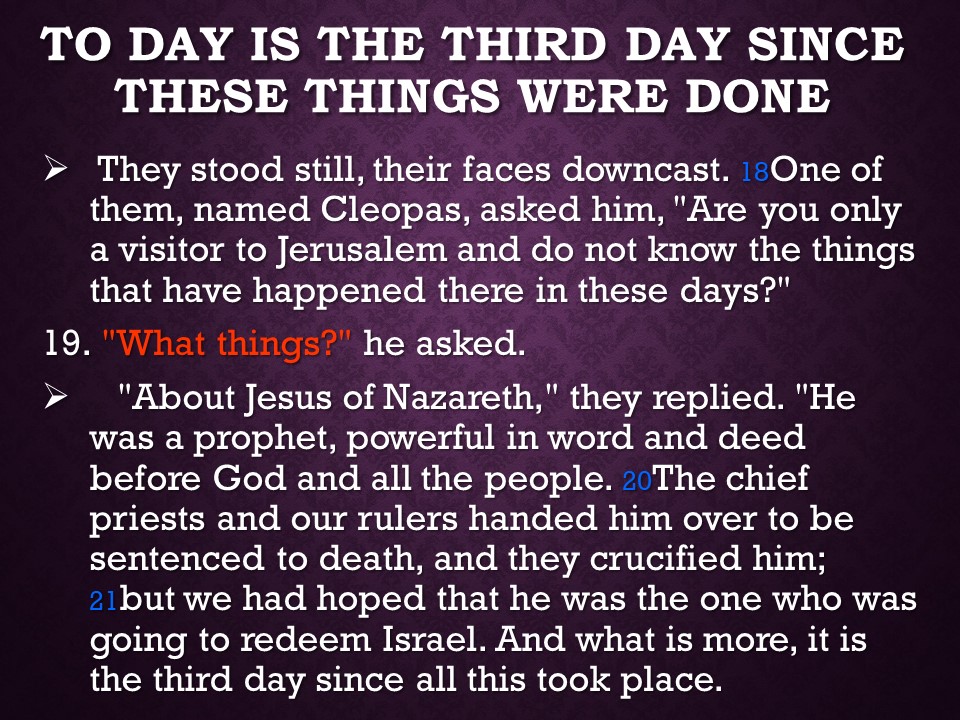
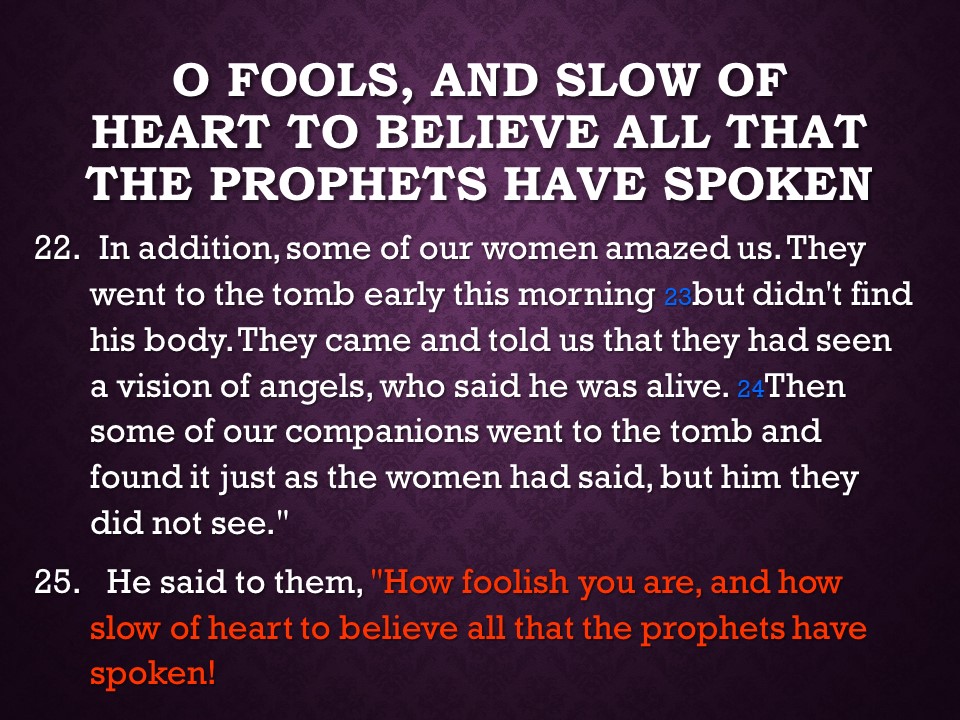
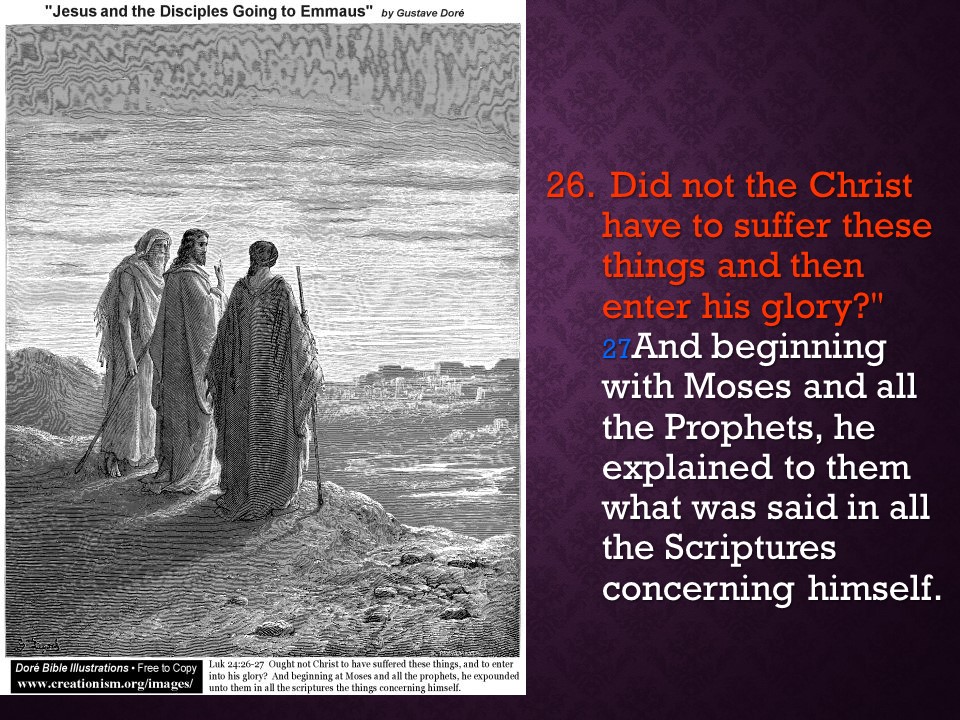
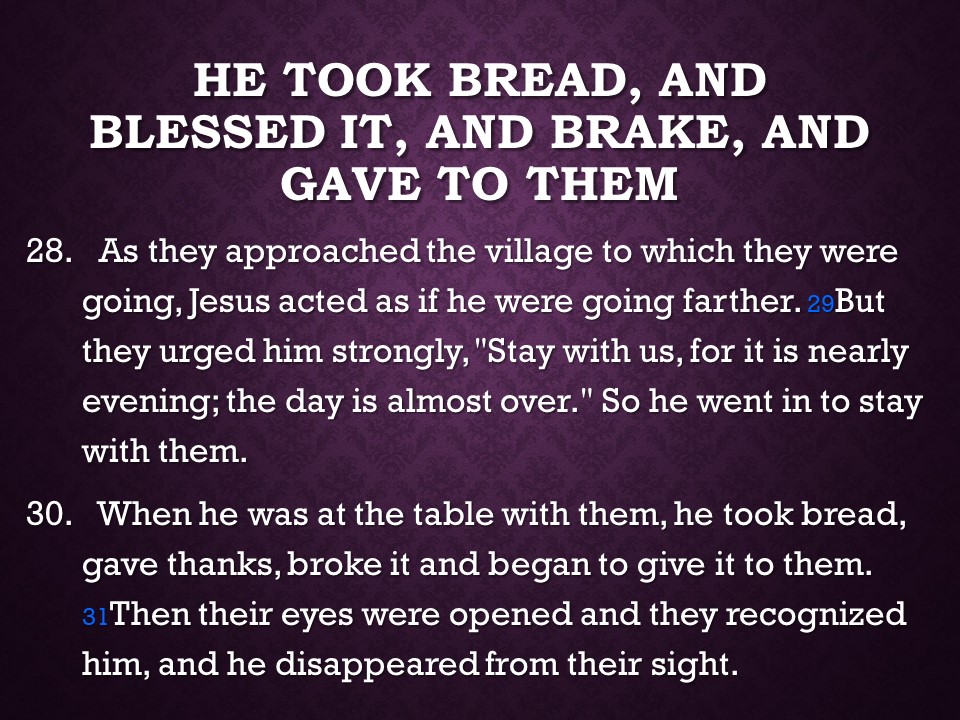
Luke 24:1-31. We call the first day of the week “The Lord’s day” to celebrate the Resurrection of Jesus Christ, the most important event in the Christian calendar! Later on the Resurrection day two dejected disciples met someone on the Road to Emmaus and finally realized they had met Jesus when he did break bread with them.

2 Kings 14. Amaziah ruled firmly in Judah and followed the law of Moses: “every man shall be put to death for his own sin.” But after a victory over the Edomites he became proud and tried to conquer Israel. This failed completely, and instead Israel broke down part of the wall of Jerusalem and raided the Temple. Finally,  Jeroboam II became king of Israel, died and his son Zechariah succeeded him.

2 Kings 15. The parade of Kings of Israel and Judah continues. Azariah reigned in Judah, Zachariah reigned in Israel, Shallum reigned in Israel, Menahem reigned in Israel, Pekahiah reigned in Israel, Pekah reigned in Israel, Jotham reigned in Judah, all recorded in chronological order.

January 31, read the Bible in a year in PowerPoint; with comments.

John 20 deals with the resurrection, and Jesus was not there, only his grave clothes, strips of cloth, not the “Turin Shroud.” It was the first day of the week and Jesus showed himself to all the disciples except Thomas. He doubted their testimony, and it is from this we have the expression “Doubting Thomas.” Later, when even he saw Jesus, he bowed down and worshiped him saying “My Lord, and my God”. Jesus also gave the promise they would receive the Holy Spirit.

Exodus 10: Two more plagues, the plague of locusts and the plague of darkness. For these two plagues the LORD hardened Pharaoh’s heart.

In Exodus 11 Moses and Aaron proclaimed the tenth and final plague: The death of the firstborn. Interestingly enough the plagues of Egypt are also in the Quran, four are the same, five are different, and one is missing altogether. Guess which one!

Psalm 11 has the phrase “flee as a bird to the mountain”, which bring back memories of songs we used to sing in choir.

June 1, read the Bible in a year; in PowerPoint, with comments.

Luke 24:1-31. We call the first day of the week “The Lord’s day” to celebrate the Resurrection of Jesus Christ, the most important event in the Christian calendar! Later on the Resurrection day two dejected disciples met someone on the Road to Emmaus and finally realized they had met Jesus when he did break bread with them.

2 Kings 14. Amaziah ruled firmly in Judah and followed the law of Moses: “every man shall be put to death for his own sin.” But after a victory over the Edomites he became proud and tried to conquer Israel. This failed completely, and instead Israel broke down part of the wall of Jerusalem and raided the Temple. Finally,  Jeroboam II became king of Israel, died and his son Zechariah succeeded him.

2 Kings 15. The parade of Kings of Israel and Judah continues. Azariah reigned in Judah, Zachariah reigned in Israel, Shallum reigned in Israel, Menahem reigned in Israel, Pekahiah reigned in Israel, Pekah reigned in Israel, Jotham reigned in Judah, all recorded in chronological order.

Day 152 of reading the Holy Bible in 365 days.

Luke 24:1-31. We call the first day of the week “The Lord’s day” to celebrate the Resurrection of Jesus Christ, the most important event in the Christian calendar! Later on the Resurrection day two dejected disciples met someone on the Road to Emmaus and finally realized they had met Jesus when he did break bread with them.

2 Kings 14. Amaziah ruled firmly in Judah and followed the law of Moses: “every man shall be put to death for his own sin.” But after a victory over the Edomites he became proud and tried to conquer Israel. This failed completely, and instead Israel broke down part of the wall of Jerusalem and raided the Temple. Finally,  Jeroboam II became king of Israel, died and his son Zechariah succeeded him.

2 Kings 15. The parade of Kings of Israel and Judah continues. Azariah reigned in Judah, Zachariah reigned in Israel, Shallum reigned in Israel, Menahem reigned in Israel, Pekahiah reigned in Israel, Pekah reigned in Israel, Jotham reigned in Judah, all recorded in chronological order.

Day 31 of reading the Holy Bible in 365 days.

John 20 deals with the resurrection, and Jesus was not there, only his grave clothes, strips of cloth, not the “Turin Shroud.” It was the first day of the week and Jesus showed himself to all the disciples except Thomas. He doubted their testimony, and it is from this we have the expression “Doubting Thomas.” Later, when even he saw Jesus, he bowed down and worshiped him saying “My Lord, and my God”. Jesus also gave the promise they would receive the Holy Spirit.

Exodus 10: Two more plagues, the plague of locusts and the plague of darkness. For these two plagues the LORD hardened Pharaoh’s heart.

In Exodus 11 Moses and Aaron proclaimed the tenth and final plague: The death of the firstborn. Interestingly enough the plagues of Egypt are also in the Quran, four are the same, five are different, and one is missing altogether. Guess which one!

Psalm 11 has the phrase “flee as a bird to the mountain”, which bring back memories of songs we used to sing in choir.

June 1: Reading the Holy Bible in a year.

Luke 24:1-31. We call the first day of the week “The Lord’s day” to celebrate the Resurrection of Jesus Christ, the most important event in the Christian calendar! Later on the Resurrection day two dejected disciples met someone on the Road to Emmaus and finally realized they had met Jesus when he did break bread with them.

2 Kings 14. Amaziah ruled firmly in Judah and followed the law of Moses: “every man shall be put to death for his own sin.” But after a victory over the Edomites he became proud and tried to conquer Israel. This failed completely, and instead Israel broke down part of the wall of Jerusalem and raided the Temple. Finally,  Jeroboam II became king of Israel, died and his son Zechariah succeeded him.

2 Kings 15. The parade of Kings of Israel and Judah continues. Azariah reigned in Judah, Zachariah reigned in Israel, Shallum reigned in Israel, Menahem reigned in Israel, Pekahiah reigned in Israel, Pekah reigned in Israel, Jotham reigned in Judah, all recorded in chronological order.

January 31, reading the Holy Bible in a year.

John 20 deals with the resurrection, and Jesus was not there, only his grave clothes, strips of cloth, not the “Turin Shroud.” It was the first day of the week and Jesus showed himself to all the disciples except Thomas. He doubted their testimony, and it is from this we have the expression “Doubting Thomas.” Later, when even he saw Jesus, he bowed down and worshiped him saying “My Lord, and my God”. Jesus also gave the promise they would receive the Holy Spirit.

Exodus 10: Two more plagues, the plague of locusts and the plague of darkness. For these two plagues the LORD hardened Pharaoh’s heart.

In Exodus 11 Moses and Aaron proclaimed the tenth and final plague: The death of the firstborn. Interestingly enough the plagues of Egypt are also in the Quran, four are the same, five are different, and one is missing altogether. Guess which one!

Psalm 11 has the phrase “flee as a bird to the mountain”, which bring back memories of songs we used to sing in choir.

June 1: Read through the Holy Bible in a year.

Luke 24:1-31. We call the first day of the week “The Lord’s day” to celebrate the Resurrection of Jesus Christ, the most important event in the Christian calendar! Later on the Resurrection day two dejected disciples met someone on the Road to Emmaus and finally realized they had met Jesus when he did break bread with them.

2 Kings 14. Amaziah firmly ruled in Judah and he followed the law of Moses: “every man shall be put to death for his own sin.” But after a victory over the Edomites he became proud and tried to conquer Israel. This failed completely, and instead Israel broke down part of the wall of Jerusalem and raided the Temple. Finally,  Jeroboam II became king of Israel, died and his son Zechariah succeeded him.

2 Kings 15. The parade of Kings of Israel and Judah continues. Azariah reigned in Judah, Zachariah reigned in Israel, Shallum reigned in Israel, Menahem reigned in Israel, Pekahiah reigned in Israel, Pekah reigned in Israel, Jotham reigned in Judah, all recorded in chronological order.