
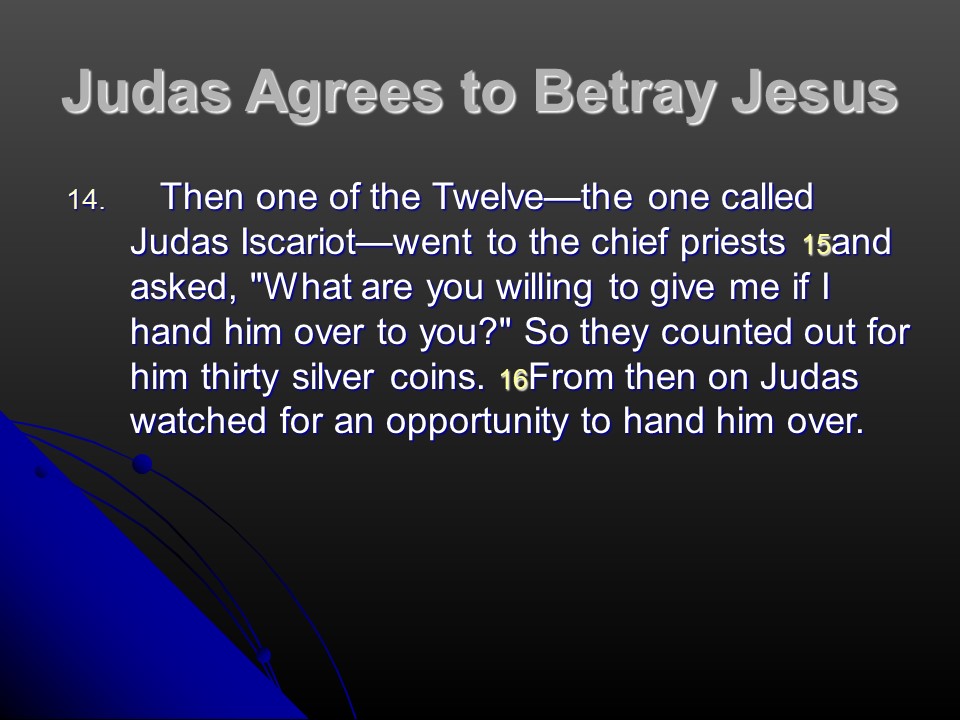
Matthew 27:1-31, Judas hangs himself, Jesus trial, the mocking of Jesus.


Matthew 6:1-18 continues the telling of the sermon on the mount. Jesus spoke of doing good, of fasting and prayer, do it without fanfare, in secret if possible and, above all, be sincere. He then instituted what is called “The Lord’s prayer” which really is a pattern prayer for us, short, direct, but covers the essentials. Fasting should go together with serious prayer, but make it simple.
Exodus 38 retells of how the altar of burnt offerings and the basin for washing was made, continuing telling about the courtyard around the tabernacle and all the materials used.
Exodus 39 retells how the priestly garments were to be made, the ephod, the breastplate, the bells and pomegranates, the mitre and undergarments and finally the words “Holy to the LORD” to be fastened to the priest’s turban.
And in Exodus 40 the tabernacle was finished, the Priests installed and finally God blessed the tabernacle with His presence when the Glory of the LORD filled it. That ends the book of Exodus.

Matthew 5:21-48 is a continuation of the sermon on the mount. Jesus first addressed murder, where vengeance is not for us to do, instead be reconciled with your adversary before you can be reconciled to God. Then He dealt with adultery, you are not only not to do it, you are not allowed to even think about it. Likewise, the only time divorce is allowed is for already committed adultery. Piling on, he addressed taking of oaths, this was serious business under the Law, but Jesus said “Let your yes be yes and your no, no”. Furthermore it was said “An eye for an eye” But Jesus told us to pray for our adversaries, no matter what, and love your enemies. This is the change between Old and New Testament Theology, and Jesus brought it fourth.
Exodus 35 is a more detailed repeat of Sabbath regulations, materials for the tabernacle and who were the leaders of building of the tabernacle.
Exodus 36 describes in detail how the tabernacle was built.
Exodus 37 continues describing how the Ark of the Covenant was built with its cherubim,( by necessity very sketchy since nobody would be allowed to see them once they were made,) the table, the lampstand and the altar of incense.


Matthew 5:1-20 retells the Beatitudes, which form the beginning of the Sermon on the Mount. Then Jesus added the spiritual dimension to the Mosaic Law. He had not come to destroy the Law, but to fulfill it.
In Exodus 33 God told the Israelites to leave the place they were staying, take off all the ornaments they were wearing and go to the promised land. Moses established the tent of meeting, and there he asked to see God. God promised Moses he would see His back while hiding “In the cleft of the rock”
After breaking the two stone tablets, Moses in Exodus 34 had to go back up the mountain and write the words of God on two new stone tablets. Then God repeated much of what was said in previous chapters, even reiterating the Covenant, but the chapter ends with the radiant face of Moses because Moses had spoken with God.
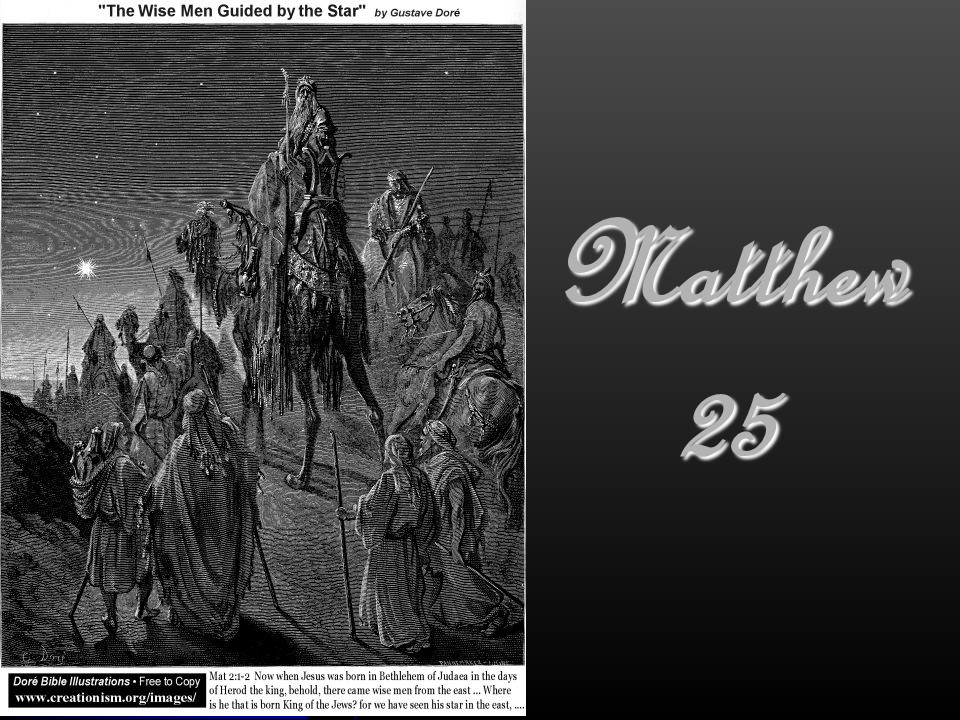




Matthew 4:12-25. After Jesus was baptized and was led into the wilderness for 40 days and 40 nights he began his ministry and called his first disciples.
Exodus 30 describes the altar of incense, mentions rules for the poll tax and the basin for washing, anointing oil and rules for sacred incense.
Exodus 31 is short; it tells of two named craftsmen to be leaders of performing the artistic aspect of all the work to build the tabernacle. Then there are rules of how to observe the Sabbath, and with that, God finished His message to Moses by giving him the two tablets of stone containing the ten commandments written by the finger of God.
In Exodus 32 Moses had come down from the mountain and what did he find? He found the Golden Calf and the people singing and dancing in orgies. Moses became so angry that he threw down the two tablets with God’s commandments, and they broke in pieces. Then he pleaded with God not to destroy His people.

This reminds me of an old Sunday School song:

Matthew 4:1-11 tells of Jesus as He was led into the wilderness to be tempted of Satan after he fasted for 40 days and 40 nights. Jesus combated Satan with scripture, but Satan could quote scripture too. In the end Satan left him “for a season”.
Exodus 27 tells how the altar of burnt offering was to be constructed and how to construct the courtyard around the tabernacle. It also specifies there must always be oil for the lampstand.
In Exodus 28 the priestly garments are specified, in detail, with the breastplate, down to the urim and thummim, and the plate “HOLINESS TO THE LORD”. Even the undergarments are specified.
Exodus 29 specifies how the consecration of priests was to be performed.

