March 16, read the Bible in a year in PowerPoint; commented

Matthew 23, Jesus warned the people about the teachers of the Law and the Pharisees. At that time they had formulated the Talmud, which regulated every aspect of Jewish life. He did it in the form of telling of seven woes. Read the chapter carefully and draw your own conclusions.

Deuteronomy 11. Love and Obey the LORD, remember all He has done, meditate day and night on it and always teach the same to your children. God set before them a blessing and a curse, it dealt with obedience.

Deuteronomy 12. God proclaimed the One Place of Worship. All other places of worship where false gods have been worshiped must be destroyed. You may eat from all clean animals, but do not drink their blood.

Deuteronomy 13. Apostates must be severely punished.

The Torah specifies clearly that if you become an apostate you must be killed. Nowadays, if a Jew converts to Christianity, the Orthodox Jewish family holds a funeral for that person. The reformed and reconstructionist Jews do not follow this practice. In Islamic states with Sharia law as their law; honor killings are common, and sometimes even includes death for association with unbelievers.

During the time of Christ the debate was raging between the teachers of the law and Pharisees about salvation among nearly all other things. The Torah clearly indicates you had no chance to be saved without God’s intervention, so every ear you had to perform the Atonement, and it was valid for one year, and had to be repeated yearly, in addition to all the other sacrifices. This was clearly insufficient, so they supplied it with additional requirements, and if you did everything right, maybe you had a chance. Most of these additional teaching were in place during the life of Christ , and the complete Babylonian Talmud was finished in the 2nd century.
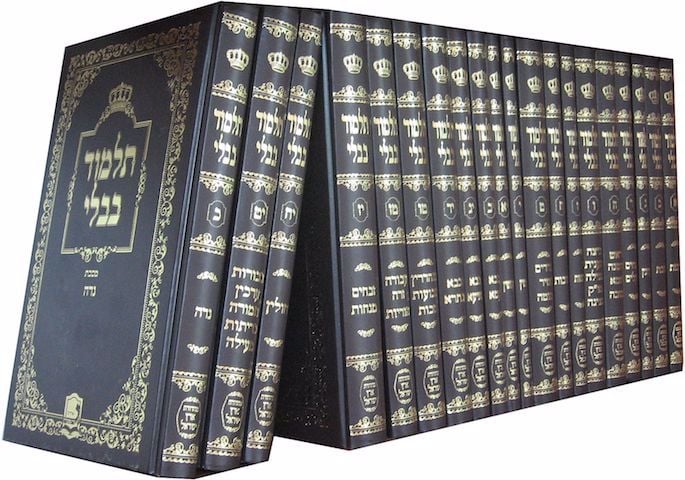
This is the complete Babylonian Talmud. It is written in Babylonian Aramaic . There is also a Jerusalem Talmud that also includes agricultural laws. This explains Jesus’ reaction to the teachers of the Law and the Pharisees. They had made understanding and applying the law the exclusive domain of the elite, thus exercising control of the people.

March 13, read the Bible in a year in PowerPoint; commented

Matthew 21:12-46. Jesus cleansed the Temple and threw out the money changers. The spiritual leaders were offended that people sang “Hosanna in the highest” at the triumphal entry, even that little children sang it. As an object lesson Jesus cursed a fig tree, the symbol of Israel, and it withered. The spiritual leaders questioned Jesus authority. Instead of giving an answer Jesus gave two parables, the one about the two sons and the parable about the wicked tenants. Moving on, Jesus quoted scripture by saying :The stone  the builders rejected has become the cornerstone” meaning that the kingdom of God will be inherited by another people.

In Deuteronomy 6 Moses laid out The Greatest Commandment, he recommended the Israelites to wear phylacteries to keep them always in remembrance of the LORD and cautioned against disobedience. It is surprising how many of New Testament references there are to the Old testament Law; some are listed in the slides.

February 1, read the Bible in a year in PowerPoint; commented.

John 21 tells of the eighth miracle of Jesus. This miracle, a great catch of fish happened after Jesus resurrection and was a sign of new beginnings. Jesus reinstated Peter and told him: “Feed my sheep.”

Exodus 12 tells of how God instituted the Passover. The name comes from the action of the night the angel of death came to kill every firstborn in Egypt; if he saw the blood of the pascal lamb om the doorposts and the lentil of the house, he would pass over that house. The chapter is fantastic, read it and marvel!

In Exodus 13 the feast of unleavened bread is defined and the consecrating of the firstborn to the LORD. The Hebrews have escaped from Egypt, and a proposed route is suggested.

We are in the middle of the battle of the centuries, and it is spiritual. Bear with me as I try to explain. Jesus asked Peter 3 times : Do you love me?; the first 2 times using agape (Gods love) and the third time using brotherly love, and every time Peter answered positively with brotherly love. Jesus then says “Feed my sheep”, but Peter answered “What about John”? and Jesus answered “What is that to thee, follow thou me”. Peter then understood that all authority was still Christs, and they were to follow the leading of the Holy Spirit. Under heavy persecution Christianity grew rapidly, and in 313 A.D. Emperor Constantine declared Christianity protected. This meant that a lot of people became Christians in name only, and to solidify Christian beliefs the Apostles’ creed was formalized in 325 A.D. establishing our belief i God the Father, God the Son and God, the Holy spirit, and Christ’s return and final judgement. Many kept their old beliefs and added Christianity to advance in society. With people in power and authority with little or no knowledge of Christ there was a period of anarchy and strife in the papacy. The Umayyad caliphate had just arisen ande declared the triune God blasphemy, only Allah, and waged war to conquer. Out of this arose Pope Leo III a byzantine from the Eastern brench of the Catholic church. He was declared Pope in 795 A.D. and in 800 A.D. Crowned emperor Charlemagne on Christmas Day in 800, thereby initiating what would become the Holy Roman Empire, which certainly wasn’t holy, nor was it Roman or even very much of an empire. Which brings us to today when Pope Leo XIV seems to undo many of the traditions that sought to cement the Papacy as a worldly power, such as the infallability of the Pope when he speaks “Ex Cathedra”. There are many old traditions going by the wayside. Time will tell if it is a restoration to original Christianity or just another upheaval in the Roman Catholic Church.

Meanwhile, every Passover Seder ends with “Next year in Jerusalem”

March 16, read the Bible in a year in PowerPoint; with comments.

Matthew 23, Jesus warned the people about the teachers of the Law and the Pharisees. At that time they had formulated the Talmud, which regulated every aspect of Jewish life. He did it in the form of telling of seven woes. Read the chapter carefully and draw your own conclusions.

Deuteronomy 11. Love and Obey the LORD, remember all He has done, meditate day and night on it and always teach the same to your children. God set before them a blessing and a curse, it dealt with obedience.

Deuteronomy 12. God proclaimed the One Place of Worship. All other places of worship where false gods have been worshiped must be destroyed. You may eat from all clean animals, but do not drink their blood.

Deuteronomy 13. Apostates must be severely punished.

February 1, read the Bible in a year in PowerPoint; with comments.

John 21 tells of the eighth miracle of Jesus. This miracle, a great catch of fish happened after Jesus resurrection and was a sign of new beginnings. Jesus reinstated Peter and told him: “Feed my sheep.”

Exodus 12 tells of how God instituted the Passover. The name comes from the action of the night the angel of death came to kill every firstborn in Egypt; if he saw the blood of the pascal lamb om the doorposts and the lentil of the house, he would pass over that house. The chapter is fantastic, read it and marvel!

In Exodus 13 the feast of unleavened bread is defined and the consecrating of the firstborn to the LORD. The Hebrews have escaped from Egypt, and a proposed route is suggested.

March 16, read the Bible in a year; in PowerPoint, with comments.

Matthew 23, Jesus warned the people about the teachers of the Law and the Pharisees. At that time they had formulated the Talmud, which regulated every aspect of Jewish life. He did it in the form of telling of seven woes. Read the chapter carefully and draw your own conclusions.

Deuteronomy 11. Love and Obey the LORD, remember all He has done, meditate day and night on it and always teach the same to your children. God set before them a blessing and a curse, it dealt with obedience.

Deuteronomy 12. God proclaimed the One Place of Worship. All other places of worship where false gods have been worshiped must be destroyed. You may eat from all clean animals, but do not drink their blood.

Deuteronomy 13. Apostates must be severely punished.

March 13, read the Bible in a year; in PowerPoint, with comments.

Matthew 21:12-46. Jesus cleansed the Temple and threw out the money changers. The spiritual leaders were offended that people sang “Hosanna in the highest” at the triumphal entry, even that little children sang it. As an object lesson Jesus cursed a fig tree, the symbol of Israel, and it withered. The spiritual leaders questioned Jesus authority. Instead of giving an answer Jesus gave two parables, the one about the two sons and the parable about the wicked tenants. Moving on, Jesus quoted scripture by saying :The stone  the builders rejected has become the cornerstone” meaning that the kingdom of God will be inherited by another people.

In Deuteronomy 6 Moses laid out The Greatest Commandment, he recommended the Israelites to wear phylacteries to keep them always in remembrance of the LORD and cautioned against disobedience. It is surprising how many of New Testament references there are to the Old testament Law; some are listed in the slides.

February 1, read the Bible in a year; in PowerPoint, with comments.

John 21 tells of the eighth miracle of Jesus. This miracle, a great catch of fish happened after Jesus resurrection and was a sign of new beginnings. Jesus reinstated Peter and told him: “Feed my sheep.”

Exodus 12 tells of how God instituted the Passover. The name comes from the action that night, when the angel of death came to kill every firstborn in Egypt, if he saw the blood of the pascal lamb om the doorposts and the lentil of the house, he would pass over that house. The chapter is fantastic, read it and marvel!

In Exodus 13 the feast of unleavened bread is defined and the consecrating of the firstborn to the LORD. The Hebrews have escaped from Egypt, and a proposed route is suggested.

March 16: Reading the Holy Bible in a year.

Matthew 23, Jesus warned the people about the teachers of the Law and the Pharisees. At that time they had formulated the Talmud, which regulated every aspect of Jewish life. He did it in the form of telling of seven woes. Read the chapter carefully and draw your own conclusions.

Deuteronomy 11. Love and Obey the LORD, remember all He has done, meditate day and night on it and always teach the same to your children. God set before them a blessing and a curse, it dealt with obedience.

Deuteronomy 12. God proclaimed the One Place of Worship. All other places of worship where false Gods have been worshiped must be destroyed. You may eat from all clean animals, but do not drink their blood.

Deuteronomy 13. Apostates must be severely punished.

March 13: Reading the Holy Bible in a year

Matthew 21:12-46. Jesus cleansed the Temple and threw out the money changers. The spiritual leaders were offended that people sang “Hosanna in the highest” at the triumphal entry, even that little children sang it. As an object lesson Jesus cursed a fig tree, the symbol of Israel, and it withered. The spiritual leaders questioned Jesus authority. Instead of giving an answer Jesus gave two parables, the one about the two sons and the parable about the wicked tenants. Moving on, Jesus quoted scripture by saying :The stone  the builders rejected has become the cornerstone” meaning that the kingdom of God will be inherited by another people.

In Deuteronomy 6 Moses laid out The Greatest Commandment, he recommended the Israelites to wear phylacteries to keep them always in remembrance of the LORD and cautioned against disobedience. It is surprising how many of New Testament references there are to the Old testament Law; some are listed here.