The stockpiles from light water reactor keep growing. The temporary storages are all full and spent nuclear fuel is still coming in with no good place to put it. This is an estimate of future stockpiles:
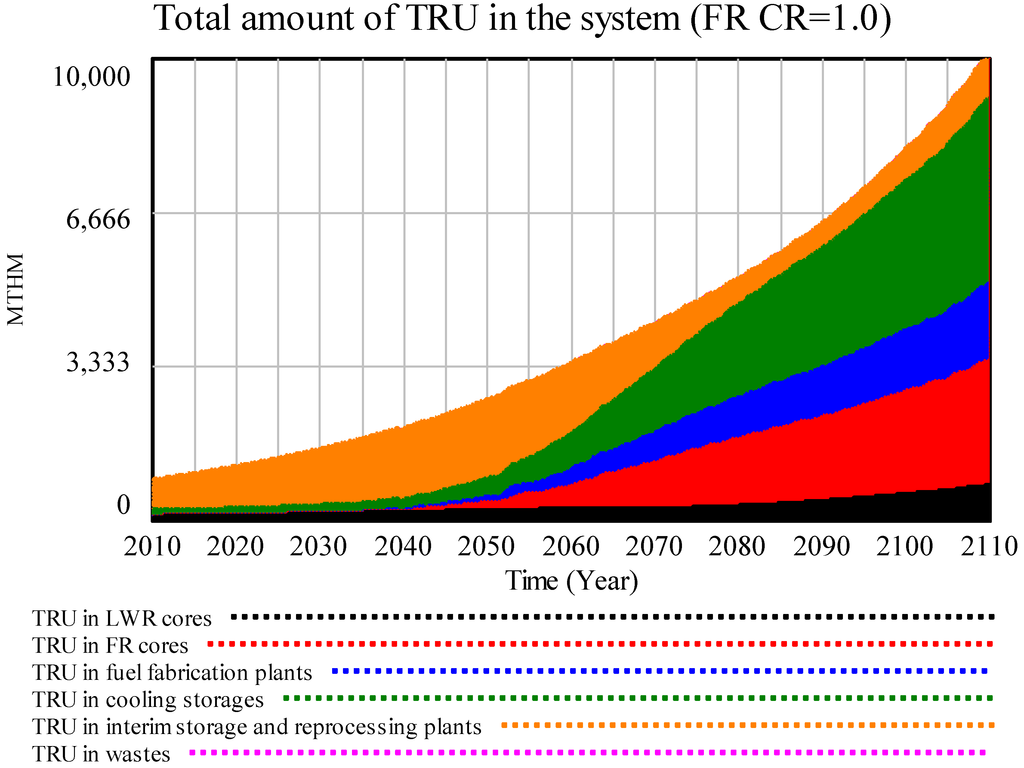
MTHM: Metric Tons Heavy Metals TRU: TRansUranium metals, a large amount of witch is Plutonium 239
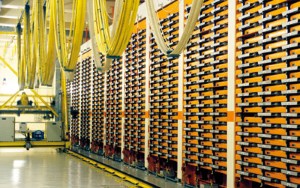
The dry storage is usually very neat and catalogued. After all Plutonium 239 is what you make atomic bombs from, so proliferation security is of utmost importance.
TRU can be reprocessed in a molten salt generator and generate far more energy than was obtained the first time around in the LWR
LFTR is a type of Molten Salt Reactor with equipment to convert plentiful thorium into uranium (U233) to use as fuel. It can also use plutonium from LWR (Light Water Reactor) waste. LFTR is not very efficient at using depleted uranium (need a Fast-Spectrum reactor to fission U-238 effectively; in a thermal-spectrum reactor like LFTR or LWR, would convert some U-238 to plutonium which is fissile). The best solution is a two-fuel molten salt reactor
Because a LFTR fissions 99%+ of the fuel (whether thorium, or plutonium from nuclear waste), it consumes all the uranium and transuraniums leaving little long-term radioactive waste. 83% of the waste products are safely stabilized within 10 years. The remaining 17% need to be stored less than 350 years to become completely benign.
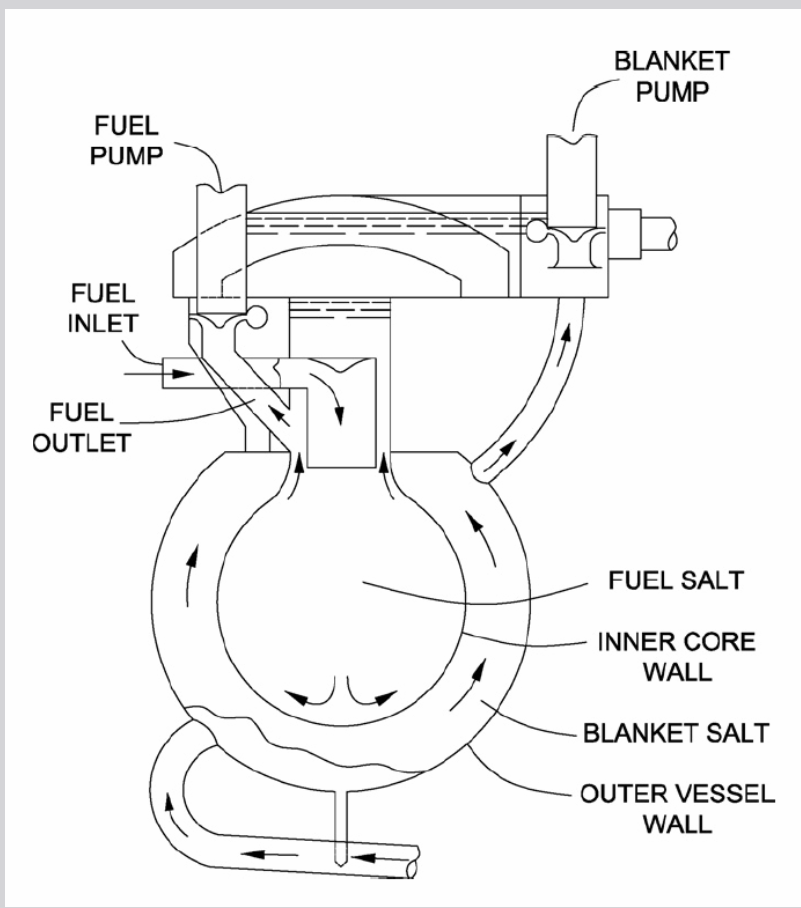
The fuel source would be Trans-Uraniums, mostly Plutonium 239 and some Uranium 233. The blanket would contain Thorium, which when converted to Protactinium would be extracted out and in 28 days half of it would be converted to Uranium 233. The temperature in the fissile core will be around 650C and in the blanker somewhat less, its only purpose is to produce U 233 to be used in other nuclear plants.
“LFTR technology can then be used to reprocess and consume the remaining fissile material in spent nuclear fuel stockpiles around the world and to extract and resell many of the other valuable fission byproducts that are currently deemed hazardous waste in their current spent fuel rod form. The U.S. nuclear industry has already allocated $25 billion for storage or reprocessing of spent nuclear fuel and the world currently has over 340,000 tons of spent LWR fuel with enough usable fissile material to start one 100 MWe LFTR per day for 93 years. (A 100 MW LFTR requires 100 kg of fissile material (U-233, U-235, or Pu-239) to start the chain reaction). LFTR can also be used to consume existing U-233 stockpiles at ORNL ($500 million allocated for stockpile destruction) and plutonium from weapons stockpiles.”
FS-MSRs essentially avoid the entire fuel qualification issue in that they are tolerant of any fissile material composition, with their inherent strong negative thermal reactivity feedback providing the control necessary to accommodate a shifting fuel feed stream. Fast Spectrum Molten Salt Reactor Options,
See also: Why Thorium? 20: Russia develops a fission-fusion hybrid reactor.
Some of the pictures are from a slide presentation given by David Archibald in Melbourne Feb 5 2011. He posted it “for the benefit of all” which I have interpreted as waving the copyright of the pictures
http://wattsupwiththat.com/2011/02/12/david-archibald-on-climate-and-energy-security/
 Len Bilén's blog, a blog about faith, politics and the environment.