“Energy is a critical asset to ensure mission continuity at our installations,” said Deputy Assistant Secretary of the Air Force for Environment, Safety, and Infrastructure Mark Correll. “Micro-reactors are a promising technology for ensuring energy resilience and reliability, and are particularly well-suited for powering and heating remote domestic military bases like Eielson AFB, 15 miles South East of North Pole, AK which is 10 miles east of Fairbanks, Alaska.”
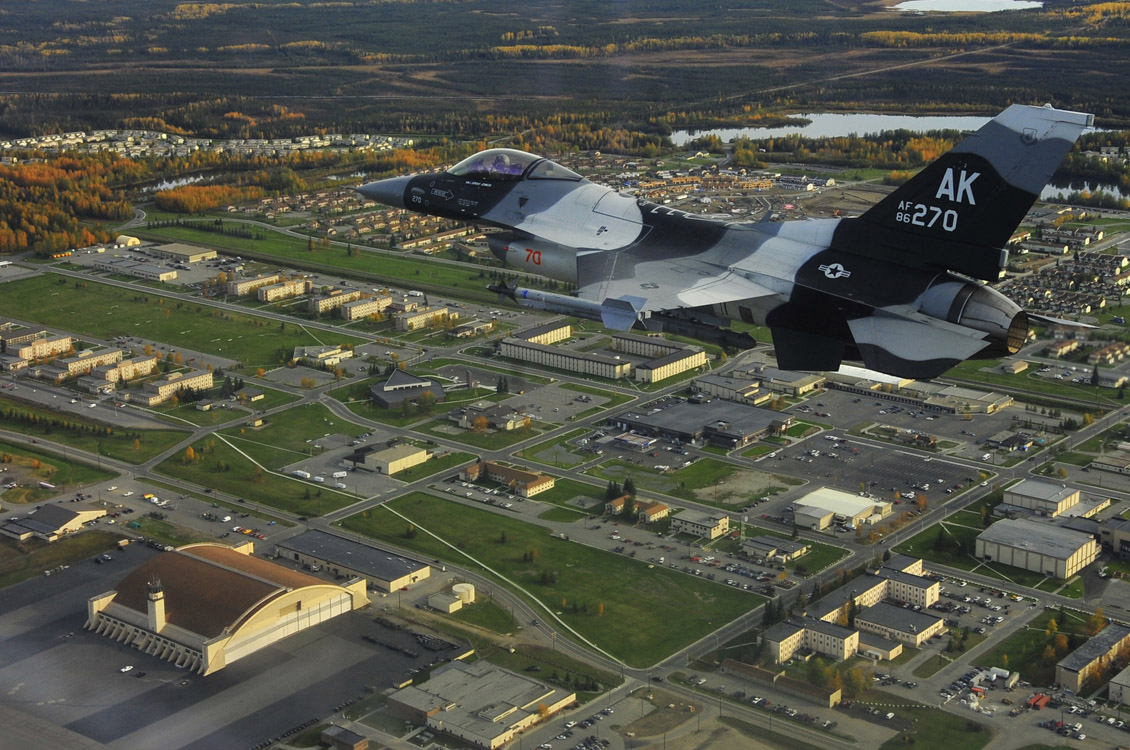
The micro-reactor pilot was initiated in response to the Fiscal Year 2019 National Defense Authorisation Act requirement to identify potential locations to site, construct, and operate a micro-reactor by the end of 2027. The micro-reactor will be commercially owned and operated and US Nuclear Regulatory Commission licensed. “This technology has the potential to provide true energy assurance, and the existing energy infrastructure and compatible climate at Eielson make for the perfect location to validate its feasibility,” said Correll.
He is working with the Air Force Office of Energy Assurance, the Office of the Deputy Assistant Secretary of Defense for Environment & Energy Resilience, the Department of Energy, and the Nuclear Regulatory Commission to facilitate the micro-reactor pilot, and to ensure this pilot is conducted with safety as the number one priority.
DAF said it is building energy resilience capabilites as a key enabler of mission success at its installations. Concurrently, the Department of Defense (DoD) is actively working to mitigate risks posed by climate change, and seeking energy sources that are reliable, resilient, and clean. To that end, the 2019 National Defense Authorisation Act (NDAA) required the Secretary of Energy to report on a pilot programme to provide resilience for DoD facilities by contracting with a commercial entity to build and operate at least one licensed micro- reactor by 31 December 2027. Building on this, Executive Order 13972, “Promoting Small Modular Reactors for National Defense and Space Exploration” outlined requirements for micro-reactor development specifically within the DoD.
The chronology is as follows:
- September 2020: Request for Information (RFI) released
- December 2020: RFI responses received
- July 2021: Data gathering and environmental baselining site visit
- October 2021: Public Announcement of Eielson as chosen micro-reactor pilot location
- Fall 2021: Draft Request for Proposal (RFP) and compile environmental data
- December 2021: RFP reviews
- February 2022: Release RFP
- Late 2022: Select vendor and release Notice of Intent to Award (NOITA)
- 2022-2023: Begin permitting and licensing
- 2024: Execute contract
- 2025: Begin construction and pilot phase
- 2026: Pre-operational testing
- 2027: End pilot phase, enter commercial operation
The reactor technology has not yet been determined.
In September 2022, the Department of the Air Force, in partnership with the Defense Logistics Agency Energy, released a request for proposal (RFP) for the project. The power purchase agreement request for proposal (RFP) closed on January 31, 2023.
DAF plans to select a vendor and release the Notice of Intent to Award in 2023. Permitting and licensing activities, including the National Environmental Policy Act assessment are expected to begin by 2025. Micro-reactor demonstration and operational testing is targeted to begin in 2027.
It seems that they will decide on s molten salt, low enriched Uranium reactor to minimize proliferation risks. One step at a time.
 Len Bilén's blog, a blog about faith, politics and the environment.