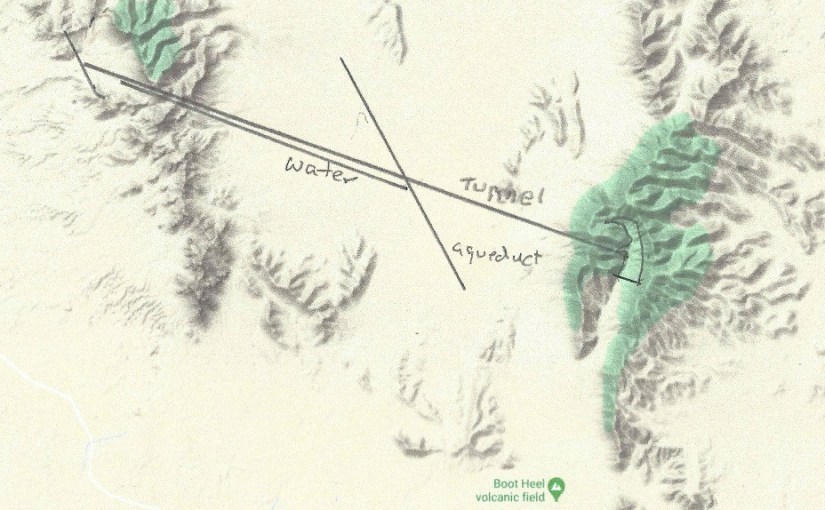
The Transcontinental Aqueduct. Leg 10, alternate solution: Poppy Canyon Reservoir to Cove Tank Reservoir, a distance of 13 miles.

Stage 9 ended up near the Poppy Canyon Reservoir. It continues directly to stage 11 without a reservoir, but has a diversion point to deliver water to stage 10 to cpmpensate for evaporation and seepage. The Poppy Canyon Reservoir is 400 feet high and will top out at 5360 feet with a maximum water level at 5350 feet. This is the western high point in the Transcontinental aqueduct. This stage can deliver peak energy only 5 hours a day, or deliver the day’s worth of peak energy whenever called for. To make this possible there will be a tunnel and pumping station capable of delivering up to 95,000 cfs when called for. The drop is maximum (5410 – 3690 – 13×2.2) = 1702 feet and minimum (5300 – 4000 -13×2.2) = 1272 feet with an average of 1500 feet, delivering 11.0 GW of pumped hydro-storage peak power for 5 hours a day for a total of 55 GWh/day For the remaining 19 hours water will be pumped up using thirty-one 100 MW MFTR reactors requiring 59 GWh/day. These 31 MW are available for 5 hours a day as extra peak power.
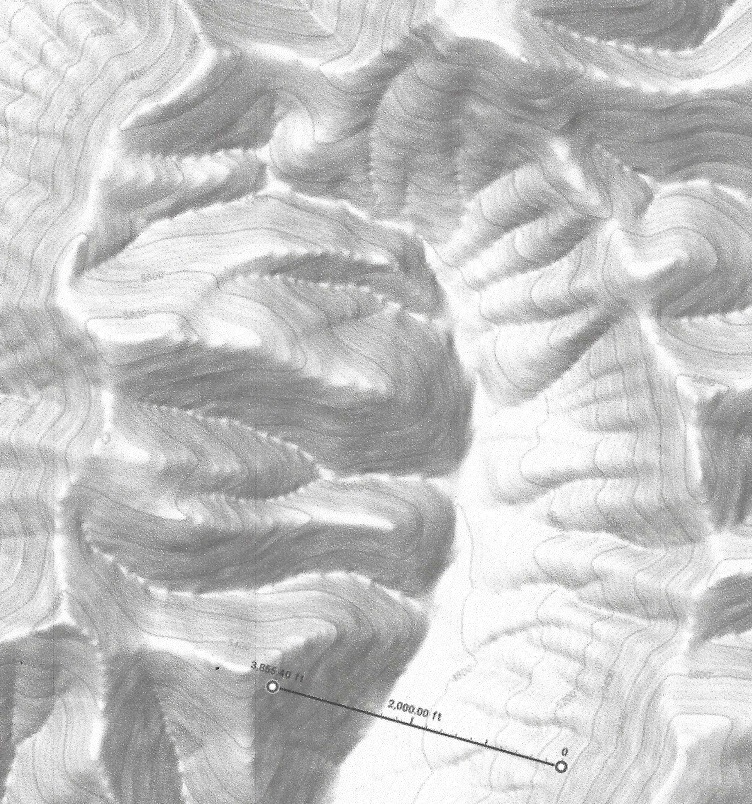
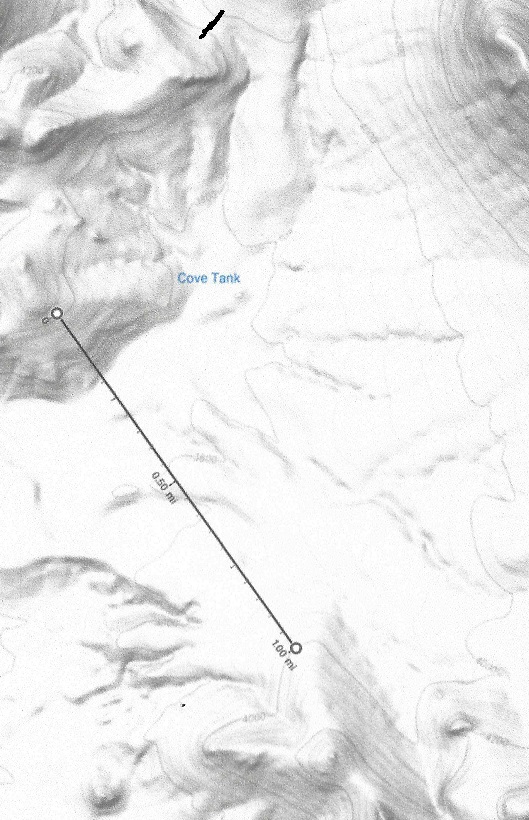
The tunnel to the Cove Tank reservoir is 13 miles long and the power station is somewhere in the tunnel’s path. 80% of the pumps are not reversible, the remaining 20% are, and pump up water for up to 19 hours. The Cove Tank Reservoir dam is 1 mile wide and 250 feet high, containing 60,000 acre-ft of water, enough for 7.5 hrs of filling it at 95,000 cfs, or maximum flow capacity of this stage.
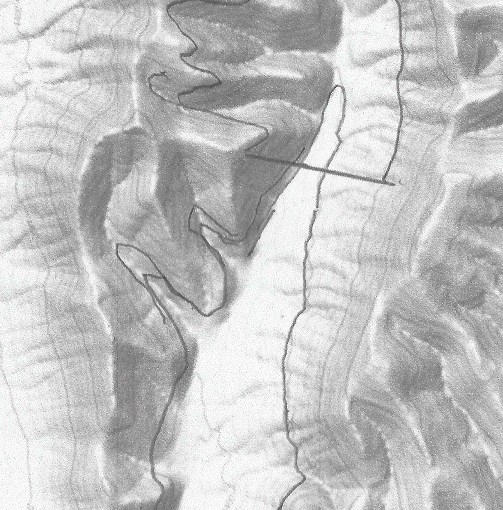
The Transcontinental Aqueduct. Leg 10: The Poppy Canyon Upper and Lower Reservoir. A Hydro-power storage peak power plant.

Stage 9 ended up near the Poppy Canyon Lower dam. The aqueduct will release water to the dams when necessary to compensate for evaporation and seepage losses, but it will otherwise be independent of the aqueduct. The upper dam is 400 feet high and will top out at 5360 feet with a maximum water level at 5350 feet. The lower dam is 480 feet high, and the water tops out at 4670 feet. This stage can deliver peak energy only 5 hours a day, or deliver the day’s worth of peak energy whenever called for. To make this possible there will be a tunnel and pumping station capable of delivering up to 95,000 cfs when called for. The drop is maximum (5360 – 4200) = 1160 feet and minimum (4950– 4670) = 280 feet with an average of 720 feet, delivering 5.3 GW of pumped hydro-storage peak power for 5 hours a day for a total of 26.5 GWh. For the other 19 hours a day water will be pumped up from the lower dam to the upper dam, requiring sixteen 100 MW LFTR power stations, or 30 GWh. the difference is because of the 93 percent efficiency in the turbines and generators. But for 5 hours a day the 16 LFTR’s will produce 1.6 GW of virtual peak power.

Here as always, the preferable power to lift the water will be produced by excess solar and wind power. But when the sun doesn’t shine and the wind doesn’t blow. the power has to be available. When excess power is available these LFTR plants are free to produce hydrogen, to be stored and used for more peak power